Tamil Nadu 12th Computer Science Model Question Paper 5 English Medium

Students can Download Tamil Nadu 12th Computer Science Model Question Paper 5 English Medium Pdf, Tamil Nadu 12th Computer Science Model Question Papers helps you to revise the complete Tamilnadu State Board New Syllabus and score more marks in your examinations.

TN State Board 12th Computer Science Model Question Paper 5 English Medium

General Instructions:

  1. The question paper comprises of four parts.
  2. You are to attempt all the parts. An internal choice of questions is provided wherever applicable.
  3. All questions of Part I, II, III and IV are to be attempted separately.
  4. Question numbers 1 to 15 in Part I are Multiple Choice Questions of one mark each.
    These are to be answered by choosing the most suitable answer from the given four alternatives and writing the option code and the corresponding answer
  5. Question numbers 16 to 24 in Part II are two-mark questions. These are to be answered in about one or two sentences.
  6. Question numbers 25 to 33 in Part III are three-mark questions. These are to be answered in about three to five short sentences.
  7. Question numbers 34 to 38 in Part IV are five-mark questions. These are to be answered in detail Draw diagrams wherever necessary.

Time: 3 Hours
Maximum Marks: 70

PART – I

All questions are compulsory. [15 × 1 = 15]

Choose the most appropriate answer from the given four ‘alternatives and write the option code with the corresponding answer.

Question 1.
Bundling two values together into one can be considered as
(a) Pair
(b) Triplet
(c) Single
(d) Quadrat
Answer:
(a) Pair

Question 2.
The kind of scope of the variable ‘a’ used in the pseudo code given below
(i) Disp():
(ii) a: = 7
(iii) print a
(iv) Disp()
(a) Local
(b) Global
(c) Enclosed
(d) Built-in
Answer:
(b) Global

Question 3.
Big Q is the reverse of…………
(a) Big O
(b) Big 0
(c) Big A
(d) Big S
Answer:
(a) Big O

Question 4.
Extension of Python files is………..
(a) .Pyt
(b) .txt
(c) .Pdm
(d) .Py
Answer:
(d) .Py

Tamil Nadu 12th Computer Science Model Question Paper 5 English Medium

Question 5.
The output of the Segment
for i in range (10, 0, 2)
print (i)
(a) 10 8 6 420
(b) 10 8 6 4 2
(c) 0 2 4 6 8 10
(d) Error
Answer:
(d) Error

Question 6.
The bin() function returns a binary string prefixed with:
(a) 0
(b) 1
(c) 0b
(d) lb
Answer:
(c) 0b

Question 7.
The positive and negative index value of’P’ in the string Strl = ‘COMPUTER’ are
(a) 3, -4
(b) 4, -4
(c) 3, -5
(d) 4, -5
Answer:
(c) 3, -5

Question 8.
Which of the following set operation includes all the elements that are in two sets but not the one that are common to two sets?
(a) Symmetric difference
(b) Difference
(c) Intersection
(d) Union
Answer:
(a) Symmetric difference

Question 9.
A variable prefixed with double underscore is
(a) private
(b) public
(c) protected
(d) static
Answer:
(a) private

Question 10.
The data model developed by IBM is
(a) hierarchical
(b) relational
(c) network
(d) ER
Answer:
(a) hierarchical

Question 11.
The SQL command to make a database as current active database is
(a) CURRENT
(b) USE
(c) DATABASE
(d) NEW
Answer:
(b) USE

Question 12.
The expansion of CRLF is…………..
(a) Control Return and Line Feed
(b) Carriage Return and Form Feed
(c) Control Router and Line Feed
(d) Carriage Return and Line Feed
Answer:
(d) Carriage Return and Line Feed

Question 13.
The function call statement of the segment………….
if_name_ == ‘_main_’:
main(sys.argv[1:])
is
(a) main(sys.argv[l:])
(b) _name_
(c) _main_
(d) argv
Answer:
(b) _name_

Question 14.
Which is not a SQL clause?
(a) GROUP BY
(b) ORDER BY
(c) HAVING
(d) CONDITION
Answer:
(d) CONDITION

Tamil Nadu 12th Computer Science Model Question Paper 5 English Medium

Question 15.
To make a bar chart with Matplotlib, which function should be used?
(a) plt.bar()
(b) plt.chart()
(c) pip.bar()
(d) pip.chart()
Answer:
(a) plt.bar()

PART – II

Answer any six questions. Question No. 21 is compulsory. [6 x 2 = 12]

Question 16.
What do you mean by Namespaces?
Answer:
Namespaces are containers for mapping names of variables to objects.

Question 17.
What is searching? Write its types.
Answer:
A search algorithm is the step-by-step procedure used to locate specific data among a collection of data. Types of searching algorithms are:

  1. Linear search
  2. Binary search
  3. Hash search
  4. Binary Tree search

Question 18.
Define Operator and Operand.
Answer:
In computer programming languages operators are special symbols which represent computations, conditional matching etc. The value of an operator used is called operands. Operators are categorized as Arithmetic, Relational, Logical, Assignment etc. Value and variables when used with operator are known as operands.

Question 19.
What are the types of looping supported by Python?
Answer:
Python provides two types of looping constructs:
while loop:
In the ‘while loop’, the condition is any valid Boolean expression returning True or False. The else part of while is optional part of while.

for loop:
‘for loop’ is the most comfortable loop. It is also an entry check loop. The condition is checked in the beginning and the body of the loop(statements-block 1) is executed if it is only True otherwise the loop is not executed.

Question 20.
What is the use of the operator += in python string operation?
Answer:
Adding more strings at the end of an existing string is known as append (+=). The operator += is used to append a new string with an existing string.
Example:
>>> strl = “Welcome to”
>>> strl += “Leam Python”
>>> print (strl)
Welcome to Learn Python

Question 21.
What will be the output of the following snippet?
alpha = list(range(65, 70))
for x in alpha:
print(chr(x), end=’\t’)
Answer:
Output:
A B C D E

Tamil Nadu 12th Computer Science Model Question Paper 5 English Medium

Question 22.
What is the use of WHERE clause in SQL?
Answer:
The WHERE clause in the SELECT command specifies the criteria for getting the desired result. The general form of SELECT command with WHERE Clause is:
SELECT[,,….] FROM WHERE condition>;
The relational operators like =, <, <=, >, >=, <> can be used to compare two values in the SELECT command used with WHERE clause. The logical operaors OR, AND and NOT can also be used to connect search conditions in the WHERE clause. For example:
SELECT Admno, Name, Age, Place FROM Student WHERE (Age>=18 AND Place = “Delhi”);

Question 23.
What are the steps involved in file operation of Python?
Answer:
When you want to read from or write to a file ,you need to open it. Once the reading is over it needs to be closed. So that, resources that are tied with the file are freed. Hence, in Python, a file operation takes place in the following order.
Step 1 → Open a file
Step 2 → Perform Read or write operation
Step 3 → Close the file

Question 24.
Distinguish compiler and interpreter.
Answer:

CompilerInterpreter
1.It converts the whole program at a timeline by line execution of the source code
2.It is fasterIt is slow
3.Error detection is difficult, e.g., C++It is easy. e.g., Python

PART – III

Answer any six questions. Question No. 29 is compulsory. [6 x 3 = 18]

Question 25.
Why strlen is called pure function?
Answer:
strlen (s) is called each time and strlen needs to iterate over the whole of ‘s’. If the compiler is smart enough to work out that strlen is a pure function and that ‘s’ is not updated in the loop, then it can remove the redundant extra calls to strlen and make the loop to execute only one time. This function reads external memory but does not change it, and the value returned derives from the external memory accessed.

Question 26.
Which strategy is used for program designing? Define the strategy.
Answer:
We are using here a powerful strategy for designing programs: ‘wishful thinking’.
Wishful Thinking is the formation of beliefs and making decisions according to what might be pleasing to imagine instead of by appealing to reality.

Question 27.
Which jump statement is used as placeholder? Why?
Answer:
pass statement is generally used as a placeholder. When we have a loop or function that is to be implemented in the future and not now, we cannot develop such functions or loops with empty body segment because the interpreter would raise an error. So, to avoid this we can use pass statement to construct a body that does nothing.

Question 28.
What are the points to be noted while defining a function?
Answer:

  1. Function blocks begin with the keyword “def ” followed by function name and parenthesis ().
  2. Any input parameters or arguments should be placed within these parentheses when you define a function.
  3. The code block always comes after a colon (:) and is indented.
  4. The statement “return [expression]” exits a function, optionally passing back an expression to the caller. A “return” with no arguments is the same as return None.

Tamil Nadu 12th Computer Science Model Question Paper 5 English Medium

Question 29.
Write a Python program to display the given pattern
COMPUTER
COMPUTE
COM PUT
COMPU
COMP
COM
CO
C
Answer:
Program:
strl = “COMPUTER”
index = len(strl)
for i in strl:
print(strl[: index])
index – = 1

Question 30.
What is the output of the following program?
class Greeting:
def_init_(self, name):
self._name = name
def displayf self):
print (“Good Morning”, self._name)
obj = Greeting(‘Tamil Nadu’)
obj.displayO
Answer:
Output: Tamil Nadu Good Morning

Question 31.
Explain Cartesian product with a suitable example.
Answer:
PRODUCT OR CARTESIAN PRODUCT (Symbol: X)
Cross -product is a way of combining two relations. The resulting relation contains, both relations being combined.
A × B means A times B, where the relation A and B have different attributes.
This type of operation is helpful to merge columns from two relations.
Tamil Nadu 12th Computer Science Model Question Paper 5 English Medium 1

Question 32.
Write a short note on (i) fetchallf) (ii) fetchonef) (iii) fetchmany
Answer:
cursor.fetchall() -fetchall ()method is to fetch all rows from the database table.
cursor. fetchoneQ – The fetchone () method returns the next row of a query result set or None in case there is no row left.
cursor, fetchmany() method that returns the next number of rows (n) of the result set

Question 33.
Write a Python code to display the following chart.
Tamil Nadu 12th Computer Science Model Question Paper 5 English Medium 2
Answer:
Import matplotlib.pyplot as pit
x = [1, 2, 3,4, 5, 7,8]
y = [1,2.5, 4, 5, 6, 7, 7]
plt.plot([1, 2, 3, 4])
plt.show()

PART – IV

Answer all the following questions. [5 x 5 = 25]

Question 34 (a).
Write any five benefits in using modular programming.
Answer:
The benefits of using modular programming include

  1. Less code to be written.
  2. A single procedure can be developed for reuse, eliminating the need to retype the code many times.
  3. Programs can be designed more easily because a small team deals with only a small part of the entire code.
  4. Modular programming allows many programmers to collaborate on the same application.
  5. The code is stored across multiple files.
  6. Code is short, simple and easy to understand.
  7. Errors can easily be identified, as they are localized to a subroutine or function.
  8. The same code can be used in many applications.
  9. The scoping of variables can easily be controlled.

Tamil Nadu 12th Computer Science Model Question Paper 5 English Medium

(OR)

(b) Explain input() and print() functions of Python with example.
Answer:
Input() function:
In Python, input() function is used to accept data as input at run time. The syntax for input() function is,
Variable = input (“prompt string”)
Where, prompt string in the syntax is a statement or message to the user, to know what input can be given.
If a prompt string is used, it is displayed on the monitor; the user can provide expected data from the input device. The input() takes whatever is typed from the keyboard and stores the entered data in the given variable. If prompt string is not given in input() no message is displayed on the screen, thus, the user will not know what is to be typed as input.
Example 1:
input() with prompt string
>>> city = input (“Enter Your City: ”)
Enter Your City: Madurai
>>> print (“I am from“, city)
I am from Madurai

Example 2:
input() without prompt string
>>> city = input()
Rajarajan
>>> print (I am from”, city)
I am from Rajarajan

The print() function:
In Python, the print() function is used to display result on the screen. The syntax for print() is as follows:
Example:
print (“string to be displayed as output ”)
print (variable)
print (“String to be displayed as output ”, variable)
print (“String 1 ”, variable, “String 2”, variable, “String 3”………. )

Example:
>>> print (“Welcome to Python Programming”)
Welcome to Python Programming
>>> x = 5
>>> y = 6
>>> z = x + y
>>> print (z)
11
>>> print (“The sum = ”, z)
The sum = 11
>>> print (“The sum of ”, x, “ and ”, y, “ is ”, z)
The sum of 5 and 6 is 11

The print () evaluates the expression before printing it on the monitor. The print () displays an entire statement which is specified within print (). Comma (,) is used as a separator in print () to print more than one item.

Question 35 (a).
Write a detail note on for loop in Python.
Answer:
for loop
for loop is the most comfortable loop. It is also an entry check loop. The condition is checked in the beginning and the body of the loop(statements-block 1) is executed if it is only True otherwise the loop is not executed.
Syntax:
for counter_variable in sequence:
statements block 1
# optional block
[else:
statements block 2]
The counter_variable mentioned in the syntax is similar to the control variable that we used in the for loop of C++ and the sequence refers to the initial, final and increment value. Usually in Python, for loop uses the range() function in the sequence to specify the initial, final and increment values. range() generates a list of values starting from start till stop-1.

The syntax of range() is as follows:
range (start, stop, [step])
Where,
start – refers to the initial value
stop – refers to the final value
step – refers to increment value, this is optional part.

Examples for range()
range (1, 30, 1) will start the range of values from 1 and end at 29
range (2, 30, 2) will.start the range of values from 2 and end at 28
range (30, 3, -3) will start the range of values from 30 and end at 6
range (20) will consider this value 20 as the end value(or upper limit) and starts the range count from 0 to 19 (remember always range() will work till stop -1 value only)
Tamil Nadu 12th Computer Science Model Question Paper 5 English Medium 3

#program to illustrate the use of for loop – to print single digit even number
for i in range (2, 10, 2):
print (i, end = ‘ ‘)
Output:
2 4 6 8

Tamil Nadu 12th Computer Science Model Question Paper 5 English Medium

[OR]

(b) Explain the different types of functions in Python with example.
Answer:
Types of Functions
Basically, we can divide functions into the following types:

  1. User-defined Functions
  2. Built-in Functions
  3. Lambda Functions
  4. Recursion Functions
FunctionsDescription
User-defined functionsFunctions defined by the users themselves.
Built-in functionsFunctions that are inbuilt with in Python.
Lambda functionsFunctions that are anonymous un-named function.
Recursion functionsFunctions that calls itself is known as recursive.

1. Syntax for User defined function
def < function_name ([parameter 1, parameter2 …… ])> :

return
Example:
def hello():
print (“hello – Python”)
return

Advantages of User-defined Functions:

  1. Functions help us to divide a program into modules. This makes the code easier to manage.
  2. It implements code reuse. Every time you need to execute a sequence of statements, all you need to do is to call the function.
  3. Functions, allows us to change functionality easily, and different programmers can work on different functions.

2. Anonymous Functions
In Python, anonymous function is a function that is defined without a name. While normal functions are defined using the def keyword, in Python anonymous functions are defined using the lambda keyword. Hence, anonymous functions are also called as lambda functions.
The use of lambda or anonymous function:

  1. Lambda function is mostly used for creating small and one-time anonymous function.
  2. Lambda functions are mainly used in combination with the functions like filter(), map() and reduce().

Syntax of Anonymous Functions:
The syntax for anonymous functions is as follows:
lambda [argument(s)]:expression
Example:
sum = lambda argl, arg2: argl + arg2
print (‘The Sum is :’, sum(30,40))
print (‘The Sum is :’, sum(-30,40))
Output:
The Sum is : 70
The Sum is : 10
The above lambda function that adds argument argl with argument arg2 and stores the result in the variable sum. The result is displayed using the print().

3. Functions using libraries
Built-in and Mathematical functions
Tamil Nadu 12th Computer Science Model Question Paper 5 English Medium 4

4. Recursive functions
When a function calls itself is known as recursion. Recursion works like loop but sometimes it makes more sense to use recursion than loop. You can convert any loop to recursion.
Example:
def fact(n):
if n = = 0:
return 1
else:
return n * fact (n – 1)
print (fact (0))
print (fact (5))
Output:
1
120

Tamil Nadu 12th Computer Science Model Question Paper 5 English Medium

Question 36 (a).
Explain about the find() function in Python with example.
Answer:
Tamil Nadu 12th Computer Science Model Question Paper 5 English Medium 5

(OR)

(b) Compare remove(), pop() and clear() function in Python.
Answer:
The remove( ) function can also be used to delete one or more elements if the index value is not known. Apart from remove() function, pop() function can also be used to delete an element using the given index value. pop() function deletes and returns the last element of a list if the index is not given.
The function clear() is used to delete all the elements in list, it deletes only the elements and retains the list. Remember that, the del statement deletes entire list.
Syntax:
List.remove(element)
# to delete a particular element
List.pop(index of an element)
List, clear ()
Example:
>>> MyList = [12, 89, 34,’Kannan’, ‘Gowrisankar’, ‘Lenin’]
>>> print(MyList)
[12, 89, 34, ‘Kannan’, ‘Gowrisankar’, ‘Lenin’]
>>> MyList.remove(89)
>>> print(MyList)
[12, 34, ‘Kannan’, ‘Gowrisankar’, ‘Lenin’]
In the above example, MyList has been created with three integer and three string elements, the following print statement shows all the elements available in the list. In the statement.
>>> MyList.remove(89), deletes the element 89 from the list and the print statement shows the remaining elements.
Example:
>>> MyList.pop(l)
34
>>> print(MyList)
[12, ‘Kannan’, ‘Gowrisankar’, ‘Lenin’]
In the above code, pop() function is used to delete a particular element using its index value, as soon as the element is deleted, the pop() function shows the element which is deleted. pop() function is used to delete only one element from a list. Remember that, del statement deletes multiple elements.
Example:
>>> MyList.clear()
>>> print(MyList)
[]
In the above code, clear() function removes only the elements and retains the list. When you try to print the list which is already cleared, an empty square bracket is displayed without any elements, which means the list is empty.

Tamil Nadu 12th Computer Science Model Question Paper 5 English Medium

Question 37 (a).
Explain the components of DBMS.
Answer:
Components of DBMS:
Tamil Nadu 12th Computer Science Model Question Paper 5 English Medium 6
The Database Management System can be divided into five major components as follows:

  1. Hardware
  2. Software
  3. Data
  4. Procedures/Methods
  5. Database Access Languages

1. Hardware: The computer, hard disk, I/O channels for data, and any other physical component involved in storage of data.
2. Software: This main component is a program that controls everything. The DBMS software is capable of understanding the Database Access Languages and interprets into database commands for execution.
3. Data: It is that resource for which DBMS is designed. DBMS creation is to store and utilize data.
4. Procedures/Methods: They are general instructions to use a database management system such as installation of DBMS, manage databases to take backups, report generation, etc.
5. DataBase Access Languages: They are the languages used to write commands to access, insert, update and delete data stored in any database.

[OR]

(b) What are the components of SOL? Write the commands in each.
Answer:
Components of SQL
SQL commands are divided into five categories:
Tamil Nadu 12th Computer Science Model Question Paper 5 English Medium 7
a. Data Definition Language
The Data Definition Language (DDL) consist of SQL statements used to define the database structure or schema. It simply deals with descriptions of the database schema and is used to create and modify the structure of database objects in databases.
SQL commands which comes under Data Definition Language are:

CreateTo create tables in the database.
AlterAlters the structure of the database.
DropDelete tables from database.
TruncateRemove all records from a table, also release the space occupied by those records.

b. Data Manipulation Language
A Data Manipulation Language (DML) is a computer programming language used for adding (inserting), removing (deleting), and modifying (updating) data in a database.
SQL commands which comes under Data Manipulation Language are :

InsertInserts data into a table
UpdateUpdates the existing data within a table.
DeleteDeletes all records from a table, but not the space occupied by them.

c. Data Control Language:
A Data Control Language (DCL) is used for controlling privileges in the database SQL commands: GRANT, REVOKE

d. Transactional Control Language;
Transactional control language (TCL) is used to manage transactions i.e. changes made to the data in the database.
SQL commands: COMMIT, ROLLBACK, SAVEPOINT.

e. Data Query Language
The Data Query Language (DQL) have commands to query or retrieve data from the database. SQL commands: SELECT.

Tamil Nadu 12th Computer Science Model Question Paper 5 English Medium

Question 38 (a).
Explain the following operators in Relational Algebra with suitable example
1. Union, (∪) 20 Intersection (∩)
UNION (Symbol :∪)
It includes all tuples that are in tables A or in B. It also eliminates duplicates. Set A Union Set B would be expressed as A ∪ B
Example 2
Consider the following tables
Tamil Nadu 12th Computer Science Model Question Paper 5 English Medium 8
INTERSECTION (symbol: ∩) A ∩ B
Defines a relation consisting of a set of all tuple that are in both in A and B. However, A and B must be union-compatible.
Example 5 (using Table B)

Table A ∩ B
StudnoName
cslKannan
cs3Lenin

[OR]

(b) Draw the output for the following data visualization plot.
import matplotlib.pyplot as pit
plt.bar([1, 3, 5, 7, 9],[5, 2, 7, 8, 2], label=”Example one”)
plt.bar([2, 4, 6, 8, 10],[8, 6, 2, 5, 6], label=”Example two”, color=’g’)
plt.legendO
plt.xlabel(‘bar number’)
plt.ylabel(‘bar height’)
plt.title(‘Epic Graph\nAnother Line! Whoa’)
plt.show()
Answer:
Tamil Nadu 12th Computer Science Model Question Paper 5 English Medium 9

Tamil Nadu 12th Computer Science Model Question Paper 5 English Medium

Samacheer Kalvi 10th Maths Solutions Chapter 2 Numbers and Sequences Additional Questions

You can Download Samacheer Kalvi 10th Maths Book Solutions Guide Pdf, Tamilnadu State Board help you to revise the complete Syllabus and score more marks in your examinations.

Tamilnadu Samacheer Kalvi 10th Maths Solutions Chapter 2 Numbers and Sequences Additional Questions

Question 1.
Use Euclid’s algorithm to find the HCF of 4052 and 12756.
Solution:
Since 12576 > 4052 we apply the division lemma to 12576 and 4052, to get HCF
12576 = 4052 × 3 + 420.
Since the remainder 420 ≠ 0, we apply the division lemma to 4052
4052 = 420 × 9 + 272.
We consider the new divisor 420 and the new remainder 272 and apply the division lemma to get
420 = 272 × 1 + 148, 148 ≠ 0.
∴ Again by division lemma
272 = 148 × 1 + 124, here 124 ≠ 0.
∴ Again by division lemma
148 = 124 × 1 + 24, Here 24 ≠ 0.
∴ Again by division lemma
124 = 24 × 5 + 4, Here 4 ≠ 0.
∴ Again by division lemma
24 = 4 × 6 + 0.
The remainder has now become zero. So our procedure stops. Since the divisor at this stage is 4.
∴ The HCF of 12576 and 4052 is 4.

Question 2.
If the HCF of 65 and 117 is in the form (65m – 117) then find the value of m.
Answer:
By Euclid’s algorithm 117 > 65
117 = 65 × 1 + 52
52 = 13 × 4 × 0
65 = 52 × 1 + 13
H.C.F. of 65 and 117 is 13
65m – 117 = 13
65 m = 130
m = \(\frac { 130 }{ 65 } \) = 2
The value of m = 2

Question 3.
Find the LCM and HCF of 6 and 20 by the prime factorisation method.
Solution:
We have 6 = 21 × 31 and
20 = 2 × 2 × 5 = 22 × 51
You can find HCF (6, 20) = 2 and LCM (6, 20) = 2 × 2 × 3 × 5 = 60. As done in your earlier classes. Note that HCF (6, 20) = 21 = product of the smallest power of each common prime factor in the numbers.
LCM (6, 20) = 22 × 31 × 51 = 60.
= Product of the greatest power of each prime factor, involved in the numbers.

Samacheer Kalvi 10th Maths Solutions Chapter 2 Numbers and Sequences Additional Questions

Question 4.
Prove that \(\sqrt { 3 }\) is irrational.
Answer:
Let us assume the opposite, (1) \(\sqrt { 3 }\) is irrational.
Hence \(\sqrt { 3 }\) = \(\frac { p }{ q } \)
Where p and q(q ≠ 0) are co-prime (no common factor other than 1)
Samacheer Kalvi 10th Maths Chapter 2 Numbers and Sequences Additional Questions 1
Hence, 3 divides p2
So 3 divides p also …………….. (1)
Hence we can say
\(\frac { p }{ 3 } \) = c where c is some integer
p = 3c
Now we know that
3q2 = p2
Putting = 3c
3q2 = (3c)2
3q2 = 9c2
q2 = \(\frac { 1 }{ 3 } \) × 9c2
q2 = 3c2
\(\frac{q^{2}}{3}\) = C2
Hence 3 divides q2
So, 3 divides q also ……………. (2)
By (1) and (2) 3 divides both p and q
By contradiction \(\sqrt { 3 }\) is irrational.

Question 5.
Which of the following list of numbers form an AP? If they form an AP, write the next two terms:
(i) 4, 10, 16, 22, …
(ii) 1, -1,-3, -5,…
(iii) -2, 2, -2, 2, -2, …
(iv) 1, 1, 1, 2, 2, 2, 3, 3, 3,…
Solution:
(i) 4, 10, 16, 22, …….
We have a2 – a1 = 10 – 4 = 6
a3 – a2 = 16 – 10 = 6
a4 – a3 = 22 – 16 = 6
∴ It is an A.P. with common difference 6.
∴ The next two terms are, 28, 34

(ii) 1, -1, -3, -5
t2 – t1 = -1 – 1 = -2
t3 – t2 = -3 – (-1) = -2
t4 – t3 = -5 – (-3) = -2
The given list of numbers form an A.P with the common difference -2.
The next two terms are (-5 + (-2)) = -7, -7 + (-2) = -9.

(iii) -2, 2,-2, 2,-2
t2 – t1 = 2-(-2) = 4
t3 – t2 = -2 -2 = -4
t4 – t3 = 2 – (-2) = 4
It is not an A.P.

(iv) 1, 1, 1, 2, 2, 2, 3, 3, 3
t2 – t1 = 1 – 1 = 0
t3 – t2 = 1 – 1 = 0
t4 – t3 = 2 – 1 = 1
Here t2 – t1 ≠ t3 – t2
∴ It is not an A.P.

Question 6.
Find n so that the nth terms of the following two A.P.’s are the same.
1, 7,13,19,… and 100, 95,90,…
Answer:
The given A.P. is 1, 7, 13, 19,….
a = 1, d = 7 – 1 = 6
tn1 = a + (n – 1)d
tn1 = 1 + (n – 1) 6
= 1 + 6n – 6 = 6n – 5 … (1)
The given A.P. is 100, 95, 90,….
a = 100, d = 95 – 100 = – 5
tn2 = 100 + (n – 1) (-5)
= 100 – 5n + 5
= 105 – 5n …..(2)
Given that, tn1 = tn2
6n – 5 = 105 – 5n
6n + 5n = 105 + 5
11 n = 110
n = 10
∴ 10th term are same for both the A.P’s.

Question 7.
In a flower bed, there are 23 rose plants in the first row, 21 in the second, 19 is the third, and so on. There are 5 rose plants in the last row. How many rows are there in the flower bed?
Answer:
The number of rose plants in the 1st, 2nd, 3rd,… rows are
23, 21, 19,………….. 5
It forms an A.P.
Let the number of rows in the flower bed be n.
Then a = 23, d = 21 – 23 = -2, l = 5.
As, an = a + (n – 1)d i.e. tn = a + (n – 1)d
We have 5 = 23 + (n – 1)(-2)
i.e. -18 = (n – 1)(-2)
n = 10
∴ There are 10 rows in the flower bed.

Samacheer Kalvi 10th Maths Solutions Chapter 2 Numbers and Sequences Additional Questions

Question 8.
Find the sum of the first 30 terms of an A.P. whose nth term is 3 + 2n.
Answer:
Given,
tn = 3 + 2n
t1 = 3 + 2 (1) = 3 + 2 = 5
t2 = 3 + 2 (2) = 3 + 4 = 7
t3 = 3 + 2 (3) = 3 + 6 = 9
Here a = 5,d = 7 – 5 = 2, n = 30
Sn = \(\frac { n }{ 2 } \) [2a + (n – 1)d]
S30 = \(\frac { 30 }{ 2 } \) [10 + 29(2)]
= 15 [10 + 58] = 15 × 68 = 1020
∴ Sum of first 30 terms = 1020

Question 9.
How many terms of the AP: 24, 21, 18, . must be taken so that their sum is 78?
Solution:
Here a = 24, d = 21 – 24 = -3, Sn = 78. We need to find n.
We know that,
Sn = \(\frac { n }{ 2 } \) (2a + (n – 1)d)
78 = \(\frac { n}{ 2 } \) (48 + 13(-3))
78 = \(\frac { n}{ 2 } \) (51 – 3n)
or 3n2 – 51n + 156 = 0
n2 – 17n + 52 = 0
(n – 4) (n – 13) = 0
n = 4 or 13
The number of terms are 4 or 13.

Question 10.
The sum of first n terms of a certain series is given as 3n2 – 2n. Show that the series is an arithmetic series.
Solution:
Given, Sn = 3n2 – 2n
S1 = 3 (1)2 – 2(1)
= 3 – 2 = 1
ie; t1 = 1 (∴ S1 = t1)
S2 = 3(2)2 – 2(2) = 12 – 4 = 8
ie; t1 + t2 = 8 (∴ S2 = t1 + t2)
∴ t2 = 8 – 1 = 7
S3 = 3(3)2 – 2(3) = 27 – 6 = 21
t1 + t2 + t3 = 21 (∴ S3 = t1 + t2 + t3)
8 + t3 = 21 (Substitute t1 + t2 = 8)
t3 = 21 – 8 ⇒ t3 = 13
∴ The series is 1,7,13, …………. and this series is an A.P. with common difference 6.

Samacheer Kalvi 10th Maths Solutions Chapter 2 Numbers and Sequences Unit Exercise 2

You can Download Samacheer Kalvi 10th Maths Book Solutions Guide Pdf, Tamilnadu State Board help you to revise the complete Syllabus and score more marks in your examinations.

Tamilnadu Samacheer Kalvi 10th Maths Solutions Chapter 2 Numbers and Sequences Unit Exercise 2

Question 1.
Prove that n2 – n divisible by 2 for every positive integer n.
Answer:
To prove n2 – n divisible by 2 for every positive integer n.
We know that any positive integer is of the form 2q or 2q + 1, for some integer q.
So, following cases arise:
Case I. When n = 2q.
In this case, we have
n2 – n = (2q)2 – 2q = 4q2 – 2q = 2q(2q – 1)
⇒ n2 – n = 2r where r = q(2q – 1)
⇒ n2 – n is divisible by 2.

Case II. When n = 2q + 1.
In this case, we have
n2 – n = (2q + 1)2 – (2q + 1)
= (2q + 1)(2q + 1 – 1) = (2q + 1)2q
⇒ n2 – n = 2r where r = q (2q + 1)
⇒ n2 – n is divisible by 2.
Hence n2 – n is divisible by 2 for every positive integer n.

Question 2.
A milk man has 175 litres of cow’s milk and 105 litres of buffalow’s milk. He wishes to sell the milk by filling the two types of milk in cans of equal capacity. Calculate the following (i) Capacity of a can
(ii) Number of cans of cow’s milk
(iii) Number of cans of buffalow’s milk.
Answer:
Cow’s milk = 175 litres
Buffalow’s milk = 105 litres
Find the H.C.F. of 175 and 105 using Euclid’s division method of factorisation method.
Samacheer Kalvi 10th Maths Chapter 2 Numbers and Sequences Unit Exercise 2 1
175 = 5 × 5 × 7
105 = 3 × 5 × 7
H.C.F. of 175 and 105 = 5 × 7 = 35
(i) The capacity of the milk can’s is 35 litres

(ii) Cows milk = 175 litres
Number of cans = \(\frac { 175 }{ 35 } \) = 5
Samacheer Kalvi 10th Maths Chapter 2 Numbers and Sequences Unit Exercise 2 2
(iii) Buffalow’s milk = 105 litres
Number of cans = \(\frac { 105 }{ 35 } \) = 3
(i) Capacity of one can = 35 litres
(ii) Number of can’s for cow’s milk= 5 litres
(iii) Number of can’s for Buffalow’s milk = 3 litres

Question 3.
When the positive integers a, b and c are divided by 13 the respective remainders are 9, 7 and 10. Find the remainder when a + 2b + 3c is divided by 13.
Answer:
Let the positive integers be a, b, and c.
a = 13q + 9
b = 13q + 7
c = 13q + 10
a + 2b + 3c = 13 q + 9 + 2(13q + 7) + 3(13q + 10)
= 13q + 9 + 269 + 14 + 39q + 30
= 78q + 53 = (13 × 6)q + 53
The remainder is 53.
But 53 = 13 × 4 + 1
∴ The remainder is 1

Samacheer Kalvi 10th Maths Solutions Chapter 2 Numbers and Sequences Unit Exercise 2

Question 4.
Show that 107 is of the form 4q + 3 for any integer q.
Answer:
Samacheer Kalvi 10th Maths Chapter 2 Numbers and Sequences Unit Exercise 2 3
107 = 4 x 26 + 3
This is in the form of a = bq + r
Hence it is proved.

Question 5.
If (m + 1)th term of an A.P. is twice the (n + 1)th term, then prove that (3m + 1)th term is twice the (m + n + 1)th term.
Solution:
tn = a + (n – 1)d
tm+1 = a + (m + 1 – 1)d
= a + md
tn+1 = a + (n + 1 – 1)d
= a + nd
2(tn+1) = 2(a + nd)
tm+1 = 2tn+1 …………… (1)
⇒ a + md = 2(a + nd)
2a + 2nd – a – md = 0
a + (2n – m)d = 0
t(3m+1) = a + (3m + 1 – 1)d
= a + 3md
t(m+n+1) = a + (m + n + 1 – 1)d
= a + (m + n)d
2(t(m+n+1)) = 2(a + (m + n)d)
= 2a + 2md + 2nd
t(3m+1) = 2t(m+n+1) ………….. (2)
a + 3md = 2a + 2md + 2nd
2a + 2md + 2nd – a – 3md = 0
a – md + 2nd = 0
a + (2n – m)d = 0
∴ It is proved that t(3m+1) = 2t(m+n+1)

Question 6.
Find the 12th term from the last term of the A.P -2, -4, -6, … -100.
Solution:
Samacheer Kalvi 10th Maths Chapter 2 Numbers and Sequences Unit Exercise 2 4
12th term from the last = 39th term from the beginning
∴ t39 = a + 38d
= -2 + 38(-2)
= – 2 – 76
= – 78

Question 7.
Two A.P.’s have the same common difference. The first term of one A.P. is 2 and that of the other is 7. Show that the difference between their 10th terms is the same as the difference between their 21st terms, which is the same as the difference between any two corresponding terms.
Answer:
Let the common difference for the 2 A.P be “d”
For the first A.P
a = 2, d = d, n = 10
tn = a + (n – 1) d
t10 = 2 + 9 d ….(1)
For the 2nd A.P
a = 7, d = d n = 10
t10 = 7 + (9)d
= 7 + 9d ….(2)
Difference between their 10th term ⇒ (1) – (2)
= 2 + 9d – (7 + 9d)
= 2 + 9d – 7 – 9d
= -5
For first A.P when n = 21, a = 2, d = d
t21 = 2 + 20d …….(3)
For second A.P when n = 21, a = 7, d = d
t21 = 7 + 20d …….(4)
Difference between the 21st term ⇒ (3) – (4)
= 2 + 20d – (7 + 20d)
= 2 + 20d – 7 – 20d
= -5
Difference between their 10th term and 21st term = -5
Hence it is proved.

Samacheer Kalvi 10th Maths Solutions Chapter 2 Numbers and Sequences Unit Exercise 2

Question 8.
A man saved ₹16500 in ten years. In each year after the first he saved ₹100 more than he did in the preceding year. How much did he save in the first year?
Solution:
S10 = ₹16500
a, a + d, a + 2d…
d = 100
n = 10
Sn = \(\frac { n }{ 2 } \)(2a+(n-1)d)
S10 = 16500
S10 = \(\frac { 10 }{ 2 } \)(2×a+9×100)
16500 = 5(2a+900)
16500 = 10a + 4500
10a = 16500 – 4500
10a = 12000
a = \(\frac { 12000 }{ 10 } \) = ₹1200
∴ He saved ₹1200 in the first year

Question 9.
Find the G.P. in which the 2nd term is \(\sqrt { 6 }\) and the 6th term is 9\(\sqrt { 6 }\).
Solution:
Samacheer Kalvi 10th Maths Chapter 2 Numbers and Sequences Unit Exercise 2 5
Samacheer Kalvi 10th Maths Chapter 2 Numbers and Sequences Unit Exercise 2 6

Question 10.
The value of a motorcycle depreciates at the rate of 15% per year. What will be the value of the motor cycle 3 year hence, which is now purchased for ₹45,000?
Answer:
Value of the motor cycyle = ₹ 45000
a = 45000
Depreciation = 15% of the cost value
= \(\frac { 15 }{ 100 } \) × 45000
= 15 × 450
= 6750
d = – 6750 (decrease it is depreciation
Value of the motor cycle lightning of the 2nd year = 45000 – 6750
= ₹ 38250
Depreciation for the 2nd year = \(\frac { 15 }{ 100 } \) × 38250
= ₹ 57370.50

Samacheer Kalvi 10th Maths Solutions Chapter 2 Numbers and Sequences Ex 2.10

You can Download Samacheer Kalvi 10th Maths Book Solutions Guide Pdf, Tamilnadu State Board help you to revise the complete Syllabus and score more marks in your examinations.

Tamilnadu Samacheer Kalvi 10th Maths Solutions Chapter 2 Numbers and Sequences Ex 2.10

Multiple choice questions
Question 1.
Euclid’s division lemma states that for positive integers a and b, there exist unique integers q and r such that a = bq + r, where r must satisfy.
(1) 1 < r < b
(2) 0 < r < b
(3) 0 < r < b
(4) 0 < r < b
Answer:
(3) 0 < r < b

Question 2.
Using Euclid’s division lemma, if the cube of any positive integer is divided by 9 then the possible remainders are
(1) 0, 1, 8
(2) 1, 4, 8
(3) 0, 1, 3
(4) 1, 3, 5
Answer:
(1) 0,1,8
Hint:
Cube of any +ve integers 13, 23, 33, 43,. . .
1, 8, 27, 64, 125, 216 …
Remainders when 27, 64, 125 are divided by 9.

Question 3.
If the H.C.F of 65 and 117 is expressible in the form of 65m -117 , then the value of m is ………………….
(1) 4
(2) 2
(3) 1
(4) 3
Answer:
(2) 2
Hint:
117 = 3 × 3 × 13
65 = 5 × 13
H.C.F = 13
65m – 117 = 13 ⇒ 65m = 117 + 13 = 130
m = \(\frac { 130 }{ 65 } \) = 2
The value of m = 2

Samacheer Kalvi 10th Maths Solutions Chapter 2 Numbers and Sequences Ex 2.10

Question 4.
The sum of the exponents of the prime factors in the prime factorization of 1729 is
(1) 1
(2) 2
(3) 3
(4) 4
Answer:
(3) 3
Hint:
1729 = 71 × 131 × 191
Samacheer Kalvi 10th Maths Chapter 2 Numbers and Sequences Ex 2.10 1

Question 5.
The least number that is divisible by all the numbers from 1 to 10 (both inclusive) is
(1) 2025
(2) 5220
(3) 5025
(4) 2520
Answer:
(4) 2520
Hint:
Samacheer Kalvi 10th Maths Chapter 2 Numbers and Sequences Ex 2.10 2
∴ L.C.M. of 1,2,3,4,…,10 is 2 × 2 × 3 × 5 × 7 × 2 × 3 = 2520

Question 6.
74k ≡ …………………. (mod 100)
(1) 1
(2) 2
(3) 3
(4) 4
Answer:
(1) 1
Hint:
74k ≡ . . . . . (mod 100)
74k = (74)k ≡ ……….. (mod 100) (74 – 2401)
The value is 1.

Question 7.
Given F1 = 1, F2 = 3 and Fn = Fn-1 + Fn-2 then
(1) 3
(2) 5
(3) 8
(4) 11
Answer:
(4) 11
Answer:
F1 = 1, F2 = 3
Fn = Fn-1 + Fn-2
F5 = F5-1 + F5-2 = F4 + F3
= F3 + F2 + F2 + F1
= F2 + F1 + F2 + F2 + F1
= 3 + 1 + 3 + 3 + 1 = 11

Samacheer Kalvi 10th Maths Solutions Chapter 2 Numbers and Sequences Ex 2.10

Question 8.
The first term of an arithmetic progression is unity and the common difference is 4. Which of the following will be a term of this A.P …………..
(1) 4551
(2) 10091
(3) 7881
(4) 13531
Answer:
(3) 7881
Hint:
Here a = 1, d = 4
tn = a + (n – 1) d = 1 + (n – 1) 4
= 1 + 4n – 4
= 4n – 3
4554
(i) 4n – 3 = 4551 ⇒ 4n = 4551 + 3 ⇒ n = \(\frac { 4554 }{ 4 } \) = 1138.5.
It is not a term of A.P.

(ii) 4n – 3 = 10091 ⇒ 4n = 10091 + 3 = 10094
n = \(\frac { 10094 }{ 4 } \) = 2523.5 it is a term of A.P.

(iii) 4n – 3 = 7881 ⇒ 4n = 7881 + 3
n = \(\frac { 7884 }{ 4 } \) = 1971.
∴ 7881 is a term of the A.P.

Question 9.
If 6 times of 6th term of an A.P is equal to 7 times the 7th term, then the 13th term of the A.P. is
(1) 0
(2) 6
(3) 7
(4) 13
Answer:
(1) 0
Hint:
6t6 = 7t7
6(a + 5d) = 7(a + 6d)
6a + 30d = 7a + 42d
7a + 42d – 6a – 30d = 0
a + 12d = 0 = t13

Question 10.
An A.P consists of 31 terms. If its 16th term is m, then the sum of all the terms of this A.P. is …………..
(1) 16m
(2) 62m
(3) 31m
(4) \(\frac { 31 }{ 2 } \)m
Answer:
(3) 31m
Hint:
M = 31
t16 = m ⇒ a + 15d = m
Sn = \(\frac { n }{ 2 } \)[2a + (n – 1)d]
Sn = \(\frac { 31 }{ 2 } \)[2a + 30d]= \(\frac { 31 }{ 2 } \) × 2[a + 15d]
= 31 (m) = 31m

Question 11.
In an A.P., the first term is 1 and the common difference is 4. How many terms of the A.P must be taken for their sum to be equal to 120?
(1) 6
(2) 7
(3) 8
(4) 9
Answer:
(3) 8
Hint:
Samacheer Kalvi 10th Maths Chapter 2 Numbers and Sequences Ex 2.10 3
Samacheer Kalvi 10th Maths Chapter 2 Numbers and Sequences Ex 2.10 4

Question 12.
If A = 265 and B = 264 + 263 + 262 + +20 which of the following is true?
(1) B is 264 more than A
(2) A and B are equal
(3) B is larger than A by 1
(4) A is larger than B by 1
Answer:
(4) A is larger than B by 1
Hint:
A = 265
B = 264 + 263 + 262 + … + 20
B = 20 + 21 + 22 + … + 264
G.P = 1 + 21 + 22 + … + 264 it is a G.P
Here a = 1, r = 2, n = 65
Samacheer Kalvi 10th Maths Chapter 2 Numbers and Sequences Ex 2.10 5
A = 265, B = 265 – 1
∴ B is smaller.
A is larger than B by 1.

Samacheer Kalvi 10th Maths Solutions Chapter 2 Numbers and Sequences Ex 2.10

Question 13.
The next term of the sequence \(\frac { 3 }{ 16 } \),\(\frac { 1 }{ 8 } \),\(\frac { 1 }{ 12 } \),\(\frac { 1 }{ 18 } \), ….
(1) \(\frac { 1 }{ 24 } \)
(2) \(\frac { 1 }{ 27 } \)
(3) \(\frac { 2 }{ 3 } \)
(4) \(\frac { 1 }{ 81 } \)
Answer:
(2) \(\frac { 1 }{ 27 } \)
Hint:
Samacheer Kalvi 10th Maths Chapter 2 Numbers and Sequences Ex 2.10 6

Question 14.
If the sequence t1, t2, t3, …………are in A.P. then the sequence t6, t12, t18, …… is ………….
(1) a Geometric progression
(2) an Arithmetic progression
(3) neither an Arithmetic progression nor a Geometric progression
(4) a constant sequence
Answer:
(2) an Arithmetic progression
Hint: t1, t2, t3 …. are in A.P
t6, t12, t18 …… is also an A.P. (6, 12, 18 …….. is an A.P.)

Question 15.
The value of (13 + 23 + 33 + … + 153) – (1 + 2 + 3 + … + 15) is
(1) 14400
(2) 14200
(3) 14280
(4) 14520
Answer:
(3) 14280
Hint:
\(\left(\frac{15 \times 16}{2}\right)^{2}-\frac{15 \times 16}{2}\) = (120)2 – 120 = 14280

Samacheer Kalvi 10th Maths Solutions Chapter 3 Algebra Additional Questions

You can Download Samacheer Kalvi 10th Maths Book Solutions Guide Pdf, Tamilnadu State Board help you to revise the complete Syllabus and score more marks in your examinations.

Tamilnadu Samacheer Kalvi 10th Maths Solutions Chapter 3 Algebra Additional Questions

Question 1.
Solve the following system of linear equations in three variables. x + y + z = 6; 2x + 3y + 4z = 20;
3x + 2y + 5z = 22
Solution:
x + y + z = 6 ………….. (1)
2x + 3y + 4z = 20 ………… (2)
3x + 2y + 5z = 22 …………(3)
Samacheer Kalvi 10th Maths Chapter 3 Algebra Additional Questions 1
Sub. z = 3 in (5) ⇒ y – 2(3) = -4
y = 2
Sub. y = 2, z = 3 in (1), we get
x + 2 + 3 = 6
x = 1
x = 1, y = 2, z = 3

Question 2.
Using quadratic formula solve the following equations.
(i) p2x2 + (p2 – q2) x – q2 = 0
(ii) 9x2 – 9 (a + b)x + (2a2 + 5ab + 2b2) = 0
Solution:
(i) p2x2 + (p2 – q2)x – q2 = 0
Comparing this with ax2 + bx + c = 0, we have
a = p2
b = p2 – q2
c = -q2
Δ = b2 – 4ac
= (p2 – q2)-4 × p2 × -q2
= (p2 – q2)2 + 4p2 q2
= (p2 + q2)2 > 0
So, the given equation has real roots given by
\(\alpha=\frac{-b-\sqrt{\Delta}}{2 a}=\frac{-\left(p^{2}-q^{2}\right)+\left(p^{2}+q^{2}\right)}{2 p^{2}}=\frac{q^{2}}{p^{2}}\)
\(\beta=\frac{-b-\sqrt{\Delta}}{2 a}=\frac{-\left(p^{2}-q^{2}\right)-\left(p^{2}+q^{2}\right)}{2 p^{2}}\)
= -1

(ii) 9x2 – 9(a + b)x + (2a2 + 5ab + 2b2) = 0
Comparing this with ax2 + bx + c = 0.
a =9
b = -9 (a + b)
c = (2a2 + 5 ab + 2b2)
Δ = B2 – 4AC
⇒ 81 (a + b)2 – 36(2a2 + 5ab + 2b2)
⇒ 9a2 + 9b2 – 18ab
⇒ 9(a – b)2 > 0
∴ the roots are real and given by
Samacheer Kalvi 10th Maths Chapter 3 Algebra Additional Questions 2

Question 3.
Find the HCF of x3 + x2 + x + 1 and x4 – 1.
Answer:
x3 + x2 + x + 1 = x2 (x + 1) + 1 (x + 1)
= (x + 1) (x2 + 1)
x4-1 = (x2)2 – 1
= (x2 + 1) (x2– 1)
= (x2 + 1) (x + 1) (x – 1)
H.C.F. = (x2 + 1)(x + 1)

Samacheer Kalvi 10th Maths Solutions Chapter 3 Algebra Additional Questions

Question 4.
Prove that the equation x2(a2 + b2) + 2x(ac + bd) + (c2 + d2) = 0 has no real root if ad ≠ bc
Solution:
Δ = b2 – 4ac
⇒ 4(ac + bd)2 – 4(a2 + b2)(c2 + d2)
⇒ 4[(ac + bd)2 – (a2 + b2)(c2 + d2)]
⇒ 4(a2c2 + b2d2 + 2acbd – a2c2b2c2 – a2d2 – b2d2]
⇒ 4[2acbd – a2d2 – b2c2]
⇒ 4 [a2c2 + b2c2 – 2adbc]
⇒ -4[ad – bc]2
We have ad ≠ bc
∴ ad – bc > 0
⇒ (ad – bc)2 > 0
⇒ -4(ad – bc)2 < 0 ⇒ Δ < 0
Hence the given equation has no real roots.

Question 5.
Find the L.C.M of 2(x3 + x2 – x – 1) and 3(x3 + 3x2 – x – 3)
Answer:
2[x3 + x2 – x – 1] = 2[x2(x+ 1)- 1 (x + 1)]
= 2(x + 1) (x2 – 1)
= 2(x + 1) (x + 1) (x – 1)
= 2(x + 1)2 (x – 1)
3[x3 + 3x2 – x – 3] = 3[x2(x + 3) -1 (x + 3)]
= 3[(x + 3)(x2 – 1)]
= 3(x + 3)(x + 1) (x – 1)
L.C.M. = 6(x + 1)2(x – 1) (x + 3)

Question 6.
A two digit number is such that the product of its digits is 12. When 36 is added to the number the digits interchange their places. Find the number.
Solution:
Let the ten’s digit of the number be x. It is given that the product of the digits is 12.
Unit’s digit = \(\frac{12}{x}\)
Number = 10x + \(\frac{12}{x}\)
If 36 is added to the number the digits interchange their places.
Samacheer Kalvi 10th Maths Chapter 3 Algebra Additional Questions 3
x = -6, 2.
But a number can never be (-ve). So, x = 2.
The number is 10 × 2 + \(\frac{12}{2}\) = 26

Question 7.
Seven years ago, Vanin’s age was five times the square of swati’s age. Three years hence Swati’s age will be two fifth of Varun’s age. Find their present ages.
Solution:
Seven years ago, let Swathi’s age be x years.
Seven years ago, let Varun’s age was 5x2 years.
Swathi’s present age = x + 7 years
Varun’s present age = (5x2 + 7) years
3 years hence, we have Swathi’s age = x + 7 + 3 years
= x + 10 years
Varun’s age = 5x2 + 7 + 3 years
= 5x2 + 10 years
It is given that 3 years hence Swathi’s age will be \(\frac{2}{5}\) of Varun’s age.
∴ x + 10 = \(\frac{2}{5}\) (5x2 + 10)
⇒ x + 10 = 2x2 + 4
⇒ 2x2 – x – 6 = 0
⇒ 2x(x – 2) + 3(x – 2) = 0
⇒ (2x + 3)(x – 2) = 0
⇒ x – 2 = 0
⇒ x = 2 (∵ 2x + 3 ≠ 0 as x > 0)
Hence Swathi’s present age = (2 + 7) years
= 9 years
Varun’s present age = (5 × 22 + 7) years = 27 years

Samacheer Kalvi 10th Maths Solutions Chapter 3 Algebra Additional Questions

Question 8.
A chess board contains 64 equal squares and the area of each square is 6.25 cm2. A border round the board is 2 cm wide find its side.
Solution:
Let the length of the side of the chess board be x cm. Then,
Samacheer Kalvi 10th Maths Chapter 3 Algebra Additional Questions 4
Area of 64 squares = (x – 4)2
(x – 4)2 = 64 × 6.25
⇒ x2 – 8x+ 16 = 400
⇒ x2 – 8x-384 = 0
⇒ x2 – 24x + 16x – 384 = 0
⇒ (x – 24)(x + 16) = 0
⇒ x = 24 cm.

Question 9.
Find two consecutive natural numbers whose product is 20.
Solution:
Let a natural number be x.
The next number = x + 1
x (x + 1) = 20
x2 + x – 20 = 0
(x + 5)(x – 4) = 0
x = -5, 4
∴ x = 4 (∵ x ≠ -5, x is natural number)
The next number = 4 + 1 = 5
Two consecutive numbers are 4, 5

Question 10.
A two digit number is such that the product of its digits is 18, when 63 is subtracted from the number, the digits interchange their places. Find the number.
Solution:
Let the tens digit be x. Then the units digits = \(\frac{18}{x}\)
Samacheer Kalvi 10th Maths Chapter 3 Algebra Additional Questions 5

Tamil Nadu 12th Computer Science Model Question Paper 2 English Medium

Students can Download Tamil Nadu 12th Computer Science Model Question Paper 2 English Medium Pdf, Tamil Nadu 12th Computer Science Model Question Papers helps you to revise the complete Tamilnadu State Board New Syllabus and score more marks in your examinations.

TN State Board 12th Computer Science Model Question Paper 2 English Medium

General Instructions:

  1. The question paper comprises of four parts.
  2. You are to attempt all the parts. An internal choice of questions is provided wherever applicable.
  3. All questions of Part I, II, III and IV are to be attempted separately.
  4. Question numbers 1 to 15 in Part I are Multiple Choice Questions of one mark each.
    These are to be answered by choosing the most suitable answer from the given four alternatives and writing the option code and the corresponding answer
  5. Question numbers 16 to 24 in Part II are two-mark questions. These are to be answered in about one or two sentences.
  6. Question numbers 25 to 33 in Part III are three-mark questions. These are to be answered in about three to five short sentences.
  7. Question numbers 34 to 38 in Part IV are five-mark questions. These are to be answered in detail Draw diagrams wherever necessary.

Time: 3 Hours
Maximum Marks: 70

PART – I

Choose the correct answer. Answer all the questions: [15 x 1 = 15]

Question 1.
The members that are accessible from within the class and are also available to its subclasses is called……….
(a) public
(b) protected
(c) secured
(d) private
Answer:
(b) protected

Question 2.
Built in scopes are called as scope.
(a) private
(b) public
(c) protected
(d) module
Answer:
(d) module

Question 3.
The complexity of Bubble sort is…………
(a) θ (n2)
(b) θ (n(logn)2)
(c) θ (n)
(d) θ (2n)
Answer:
(a) θ (n2)

Tamil Nadu 12th Computer Science Model Question Paper 2 English Medium

Question 4.
How many integer data types are there?
(a) 2
(b) 3
(c) 4
(d) 5
Answer:
(b) 3

Question 5.
Branching statements are otherwise called as………..
(a) alternative
(b) Iterative
(c) loop
(d) sequential
Answer:
(a) alternative

Question 6.
……….. functions are anonymous un-named functions.
(a) User defined
(b) Built-in
(c) Lambda
(d) Recursive
Answer:
(c) Lambda

Question 7.
The code block always comes after……..
(a) ;
(b) +
(c) =
(d) :
Answer:
(d) :

Question 8.
Which one of the following is the membership operator?
(a) is
(b) at
(c) to
(d) in
Answer:
(d) in

Question 9.
Which operator is used to join two tuples?
(a) –
(b) _
(c) +
(d) +:
Answer:
(c) +

Question 10.
A table is otherwise called as…………
(a) tuple
(b) relation
(c) attribute
(d) degree
Answer:
(b) relation

Question 11.
Who developed ER model?
(a) Chen
(b) E F Codd
(c) Chend
(d) Chand
Answer:
(a) Chen

Question 12.
The latest SQL was released in………
(a) 1987
(b) 1992
(c) 2008
(d) 2012
Answer:
(c) 2008

Question 13.
How many ways are there to read the CSV files?
(a) 2
(b) 1
(c) 3
(d) 4
Answer:
(a) 2

Question 14.
CSV files cannot be opened with………
(A) notepad
(b) MS Excel
(c) Open office
(d) html
Answer:
(d) html

Tamil Nadu 12th Computer Science Model Question Paper 2 English Medium

Question 15.
getopt mode is given by………..
(a) ;
(b) =
(c) #
(d) :
Answer:
(d) :

PART – II

Answer any six questions. Question No. 21 is compulsory. [6 x 2 = 12]

Question 16.
List the characteristics of an algorithm.
Answer:
Input, Output, Finiteness, Definiteness, Effectiveness, Correctness, Simplicity, Unambiguous, Feasibility, Portable and Independent.

Question 17.
What are the escape sequences for Backslash, Newline, Tab, Single quotes.
Answer:

  1. Backslash – \\
  2. New line – \n
  3. Tab – \t
  4. Single quotes – \’

Question 18.
Define composition.
Answer:
The value returned by a function may be used as an argument for another function in a nested manner. This is called composition.

Question 19.
Name the different types of functions.
Answer:

  1. User-defined Functions
  2. Built-in Functions
  3. Lambda Functions
  4. Recursion Functions

Question 20.
Write note on center function, center (width, fillchar)
Answer:
Returns a string with the original string centered to a total of width columns and filled with fillchar in columns that do not have characters.

Question 21.
Write a program to create a list of numbers in the range 1 to 20. Then delete all the numbers from the list that are divisible by 3.
num = []
for x in range(1 21):
num.append(x)
print(“The list of numbers from 1 to 20 =”, num)
for index, i in enumerate(num):
if (i % 3 = 0)
del num[index]
print (“The list after deleting numbers”, num)
Output:
The list of numbers from 1 to 20 = [1, 2, 3, 4… 20]
The list after deleting numbers [l, 2, 4, 5, 7, 8, 10, 11, 13, 14, 16, 17, 19, 20]

Question 22.
Write note on dictionary comprehensions.
Answer:
In Python, comprehension is another way of creating dictionary. The following is the syntax of creating such dictionary.
Syntax
Diet = {expression for variable in sequence [if condition]}

Question 23.
What is data consistency?
Answer:
On live data, it is being continuously updated and added, maintaining the consistency of data can become a challenge. But DBMS handles it by itself. Data Consistency means that data values are the same at all instances of a database.

Tamil Nadu 12th Computer Science Model Question Paper 2 English Medium

Question 24.
Define database.
Answer:
Database is a repository collection of related data organized in a way that data can be easily accessed, managed and updated. Database can be a software or hardware based, with one sole purpose of storing data.

PART – III

Answer any six questions. Question No. 29 is compulsory. [6 x 3 = 18]

Question 25.
Define constructors and selectors functions.
Answer:

  1. Constructors are functions that build the abstract data type.
  2. Selectors are functions that retrieve information from the data type.

Question 26.
What are the steps to do Dynamic programming?
Answer:

  1. The given problem will be divided into smaller overlapping sub-problems.
  2. An optimum solution for the given problem can be achieved by using result of smaller sub-problem.
  3. Dynamic algorithms uses Memoization.

Question 27.
Write note on delimiters.
Answer:
Python uses the symbols and symbol combinations as delimiters in expressions, lists, dictionaries and strings. Following are the delimiters.
Tamil Nadu 12th Computer Science Model Question Paper 2 English Medium 1

Question 28.
Write note on Nested loop structure.
Answer:
A loop placed within another loop is called as nested loop structure. One can place a while within another while; for within another for; for within while and while within for to construct such nested loops.
Following is an example to illustrate the use of for loop to print the following pattern
1
12
123
1234
12345

Question 29.
Write a program to display the sum of natural numbers upto n.
Answer:
n = input (“Enter any number”)
sum = 0
for i in range (i, n+1):
sum = sum + i
print “sum = “, sum
Output:
Enter any number 5
sum = 15

Question 30
Differentiate list and dictionary.
Answer:

listdictionary
1.List is an ordered set of elements.A dictionary is a data structure that is used for matching one element (Key) with another (Value).
2.The index values can be used to access a particular element.In dictionary key represents index. Remember that, key may be a number of a string.
3.Lists are used to look up a value.A dictionary is used to take one value and look up another value.

Question 31.
Explain the commands which comes under TCL.
Answer:
SQL command which come under Transfer Control Language are:

  1. Commit Saves any transaction into the database permanently.
  2. Roll back Restores the database to last commit state.
  3. Save point Temporarily save a transaction so that you can rollback.

Question 32.
Differentiate Python from C++.
Answer:
Tamil Nadu 12th Computer Science Model Question Paper 2 English Medium 2

Tamil Nadu 12th Computer Science Model Question Paper 2 English Medium

Question 33.
Give the Pseudo code for Bubble sort algorithm.
Answer:
Pseudo code

  1. Start with the first element i.e., index = 0, compare the current element with the next element of the array.
  2. If the current element is greater than the next element of the array, swap them.
  3. If the current element is less than the next or right side of the element, move to the next element. Go to Step 1 and repeat until end of the index is reached.

PART – IV

Answer all the questions. [5 x 5 = 25]

Question 34 (a).
Explain the rules to be followed to format data in a CSV file.
Answer:
Rules to be followed to format data in a CSV file
1. Each record (row of data) is to be located on a separate line, delimited by a line break by pressing enter key.
For example: ↵
xxx, yyy ↵
↵ denotes enter Key to be pressed

2. The last record in the file may or may not have an ending line break.
For example:
ppp, qqq ↵
yyy, xxx

3. There may be an optional header line appearing as the first line of the file with the same format as normal record lines. The header will contain names corresponding to the fields in the file and should contain the same number of fields as the records in the rest of the file.
For example: field_namel, field_name2, field_name3 ↵
aaa,bbb,ccc ↵
zzz, yyy, xxx CRLF (Carriage Return and Line Feed)

4. Within the header and each record, there may be one or more fields, separated by commas. Spaces are considered part of a field and should not be ignored. The last field in the record must not be followed by a comma. For example: Red , Blue

5. Each field may or may not be enclosed in double quotes. If fields are not enclosed with double quotes, then double quotes may not appear inside the fields.
For example:
Tamil Nadu 12th Computer Science Model Question Paper 2 English Medium 3

6. Fields containing line breaks (CRLF), double quotes, and commas should be enclosed in double-quotes.
For example:
Red, ”, “, Blue CRLF # comma itself is a field value. So it is enclosed with double quotes Red, Blue , Green.

7. If double-quotes are used to enclose fields, then a double-quote appearing inside a field ‘ must be preceded with another double quote.
For example:
“Red, ” “Blue”, “Green”, # since double quotes is a field value it is enclosed with another double quotes,, White

[OR]

(b) Write a program to add a prefix text to all the lines in a string.
Answer:
import textwrap
text =
‘”Strings are immutable. Slice is a
substring of a main string. Stride is a third argument in slicing operation'”
text_without_lndentation = textwrap.dedent(text)
wrapped = textwrap.fill(text_without_Indentation, width = 50)
print(textwrap.indent(wrapped, ‘*’)
print()
Output:

  1. Strings are immutable. Slice is a
  2. substring of a main string. Stride
  3. is a third argument in slicing operation.

Question 35 (a).
Explain the purpose of range with an example.
Answer:
The range( ) is a function used to generate a series of values in Python. Using range( ) function, you can create list with series of values. The range() function has three arguments.

Syntax of range () function:
range (start value, end value, step value)
where,
start value – beginning value of series. Zero is the default beginning value.
end value – upper limit of series. Python takes the ending value as upper limit – 1.
step value – It is an optional argument, which is used to generate different interval of values.
Example:
Generating whole numbers upto 10
for x in range (1, 11):
print(x)
Output
1
2
3
4
5
6
7
8
9
10

Tamil Nadu 12th Computer Science Model Question Paper 2 English Medium

[OR]

(b) Explain the various processing skills of SQL.
Answer:
The various processing skills of SQL are :

  1. Data Definition Language (DDL) : The SQL DDL provides commands for defining relation schemes (structure), deleting relations, creating indexes and modifying relation schemes.
  2. data Manipulation Language (DML) : The SQL DML includes commands to insert, delete, and modify tuples in the database.
  3. Embedded Data Manipulation Language : The embedded form of SQL is used in high level programming languages.
  4. View Definition : The SQL also includes commands for defining views of tables.
  5. Authorization : The SQL includes commands for access rights to relations and views of tables.
  6. Integrity : The SQL provides forms for integrity checking using condition.
  7. Transaction control : The SQL includes commands for file transactions and control over transaction processing.

Question 36 (a).
Explain various set operations.
Answer:
As we leamt in mathematics, the python is also supports the set operations such as Union, Intersection, difference and Symmetric difference.

(i) Union: It includes all elements from two or more sets
In python, the operator | is used to union of two sets. The function union() is also used to join two sets in python.
Example:
Program to Join (Union) two sets using union operator
Tamil Nadu 12th Computer Science Model Question Paper 2 English Medium 4
set_A = {2, 4, 6, 8}
set_B = {‘A’, ‘B’, ‘C, ‘D’}
U_set = set_A| set_B
print(U_set)
Output:
{2, 4, 6, 8, ‘A’, ‘D’, ‘C, ’B’}

(ii) Intersection: It includes the common elements in two sets.
The operator & is used to intersect two sets in python. The function intersection ) is also used to intersect two sets in python.
Example:
Tamil Nadu 12th Computer Science Model Question Paper 2 English Medium 5
Program to insect two sets using intersection operator
set_A = {‘A’, 2, 4, ‘D’}
set_B = {‘A’, ‘B’, ‘C’, ‘D’}
print(set_A & set_B)
Output:
{‘A’, ‘D’}

(iii) Difference: It includes all elements that are in first set (say set A) but not in the second set (say set B)
The minus (-) operator is used to difference set operation in python.
The function difference() is also used to difference operation.
Example:
Tamil Nadu 12th Computer Science Model Question Paper 2 English Medium 6
Program to difference of two sets using minus operator
set_A = {’A’, 2, 4, ’D’}
set_B = {‘A’, ’B’, ‘C’, ’D’}
print(set_A – set_B)
Output:
{2, 4}

(iv) Symmetric difference: It includes all the elements that are in two sets (say sets A and B) but not the one that are common to two sets.
The caret (^) operator is used to symmetric difference set operation in python. The function symmetric_difference() is also used to do the same operation.
Example:
Tamil Nadu 12th Computer Science Model Question Paper 2 English Medium 7
Program to symmetric difference of two sets using caret operator
set_A = {‘A’, 2, 4, ‘D’}
set_B = {‘A’, ‘B’, ’C’, ‘D’}
print(set_A ^ set_B)
Output:
{2, 4, ’B’, ‘C’}

Tamil Nadu 12th Computer Science Model Question Paper 2 English Medium

[OR|

(b) Write a program that accept a string from the user and display the same after removing vowels from it.
Answer:
def rem_vowels(s):
temp_str = ”
for i in s:
if i in “aAeEiIoOuU”:
pass
else:
temp_str+ = i
print (“The string without vowels: “, temp str)
strl= input (“Enter a String: “)
rem_vowels (strl)
Output:
Enter a String: Mathematical foundations of Computer Science The string without vowels: Mthmtcl fndtns f Cmptr Scnc

Question 37 (a).
Write a program to display all records using fetchall().
Answer:
The fetchall() method is used to fetch all rows from the database table
import sqlite3
connection = sqlite3.connect(“Academy, db”)
cursor = connection.cursor()
cursor.execute(“SELECT * FROM student”)
print(“fetchall:”)
result = cursor.fetchall()
for r in result:
print(r)
Output:
fetchall:
(1, ‘Akshay’, ‘B’, ‘M’, 87.8, ’2001-12-12′)
(2, ‘Aravind’, ’A’, ‘M’, 92.5, ‘2000-08-17’)
(3, ‘BASKAR’,’C’, ‘M’, 75.2, ‘1998-05-17’)
(4, ‘SAJINT, ‘A’, ‘F’, 95.6, ‘2002-11-01’)
(5, ‘VARUN’,’B’, ‘M’, 80.6,’2001-03-14′)
(6, ‘PRIYA’, ‘A’, ‘F’, 98.6, ‘2002-01-01’)
(7, ‘TARUN’, ‘D’, ‘M’, 62.3, ‘1999-02-01’)

[OR]

(b) Write a C++ program using user defined function to find cube of a number.
Answer:
#include <iostream>
using namespace std;
// Function declaration
int cube(int num);
int main()
{
int num;
int c;
cout <<“Enter any number: “<<endl;
cin>>num;
c = cube(num);
cout<<“Cube of” <<num<<” is “<<c;
return 0;
}
//Function to find cube of any number
int cube(int num)
{
return (num * num * num);
}
// Save this file as cubefile.cpp
#Now select File→New in Notepad and type the Python program
# Save the File as fun.py
# Program that compiles and executes a .cpp file
# Python fun.py -i c:\pyprg\cube_file.cpp
import sys, os, getopt
def main (argv):
cppfile = ”
exefile = ”
opts, args = getopt.getopt(argv, “i:”,[‘ifile=’])
for o, a in opts:
if o in (“-i”, “–ifile”):
cpp_file = a + ‘.cpp’
exe_file = a + ‘.exe’
run (cpp_file, exe_file)
def run (cpp_file, exe_file):
print(“Compiling” + cpp file)
os.system (‘g++ ‘ + cpp_file +’ -o ‘ + exe_file)
print (“Running ” + exe_file)
print(“———-“)
print
os.system(exe_file)
print
if_name_ == ‘_main_’:
main(sys.argv[l:])
Output of the above program
Compiling c:\pyprg\cube_file.cpp
Running c:\pyprg\cube_file.exe
————–
Enter any number:
5
Cube of 5 is 125

Tamil Nadu 12th Computer Science Model Question Paper 2 English Medium

Question 38 (a).
Explain reverse Indexing in list using python program.
Answer:
Python enables reverse or negative indexing for the list elements. Thus, python lists index in opposite order. The python sets -1 as the index value for the last element in list and -2 for the preceding element and so on. This is called as Reverse Indexing.
Example:
Marks = [10, 23, 41, 75]
i = -1
while i > = -4:
print (Marks[i])
i = i + -l
Output
75
41
23
10

[OR]

(b) Explain sort function in list with examples.
Answer:
Sorts the element in list
Both arguments are optional
1. If reverse is set as True, list sorting is in descending order.
2. Ascending is default.
3. Key=myFunc; “myFunc” – the name of the user defined function that specifies the sorting criteria.
MyList = [‘Thilothamma’, ‘Tharani’, ‘Anitha’, ‘SaiSree’, ‘Lavanya’]
MyList.sort( )
print (MyList)
MyList.sort(reverse = True)
print (MyList)
Output:.
[‘Anitha’, ‘Lavanya’, ‘SaiSree’, ‘Tharani’, ‘Thilothamma’]
[‘Thilothamma’, ‘Tharani’, ‘SaiSree’, ‘Lavanya’, ‘Anitha’]

Tamil Nadu 12th Computer Science Model Question Paper 2 English Medium

Tamil Nadu 12th Economics Model Question Paper 5 English Medium

Students can Download Tamil Nadu 12th Economics Model Question Paper 5 English Medium Pdf, Tamil Nadu 12th Economics Model Question Papers helps you to revise the complete Tamilnadu State Board New Syllabus and score more marks in your examinations.

TN State Board 12th Economics Model Question Paper 5 English Medium

General Instructions:

  1. The question paper comprises of four parts.
  2. You are to attempt all the parts. An internal choice of questions is provided wherever applicable.
  3. All questions of Part I, II, III and IV are to be attempted separately.
  4. Question numbers 1 to 20 in Part I are Multiple Choice Questions of one mark each.
    These are to be answered by choosing the most suitable answer from the given four alternatives and writing the option code and the corresponding answer
  5. Question numbers 21 to 30 in Part II are two-mark questions. These are to be answered in about one or two sentences.
  6. Question numbers 31 to 40 in Part III are three-mark questions. These are to be answered in above three to five short sentences.
  7. Question numbers 41 to 47 in Part IV are five-mark questions. These are to be answered in detail Draw diagrams wherever necessary.

Time: 3.00 Hours
Maximum Marks: 90

PART – I

Choose the correct answer. Answer all the questions: [20 × 1 = 20]

Question 1.
Identify the flow variable.
(a) money supply
(b) assets
(c) income
(d) foreign exchange reserves
Answer:
(c) income

Question 2.
Economic planning is an important feature of Economy………..
(a) Mixed
(b) Capitalism
(c) Socialism
(d) Traditional
Answer:
(a) Mixed

Question 3.
The financial year in India is…………
(a) April 1 to March 31
(b) March 1 to April 30
(c) March 1 to March 16
(d) January I to December 31
Answer:
(a) April 1 to March 31

Tamil Nadu 12th Economics Model Question Paper 5 English Medium

Question 4.
Match the following and choose the correct answer by using codes given below:
Tamil Nadu 12th Economics Model Question Paper 5 English Medium 1
Code:
Tamil Nadu 12th Economics Model Question Paper 5 English Medium 2
Answer:
(b) A-2, B-3, C-1, D-4

Question 5.
Aggregate supply is equal to…………
(a) C + I + G
(b) C + S + G + (x – m)
(c) C + S + T + (x – m)
(d) C + S + T + Rf
Answer:
(d) C + S + T + Rf

Question 6.
……….. means that persons who are willing to work and able to work must have employment or a job.
(a) Full employment
(b) Unemployment
(c) Educational unemployment
(d) Seasonal unemployment
Answer:
(a) Full employment

Question 7.
The average propensity to consume is measured by
(a) C/Y
(b) C × Y
(c) Y/C
(d) C + Y
Answer:
(a) C/Y

Question 8.
Additional investment that is independent of income is called…………
(a) Autonomous Investment
(b) Autonomous Consumption
(c) Average Investment
(d) Marginal Investment
Answer:
(a) Autonomous Investment

Question 9.
Money is ……….
(a) acceptable only when it has intrinsic value
(b) constant in purchasing power
(c) the most liquid of all assets
(d) needed for allocation of resources
Answer:
(c) the most liquid of all assets

Question 10.
Match the following and choose the correct answer by using codes given below:
Tamil Nadu 12th Economics Model Question Paper 5 English Medium 3
Code:
Tamil Nadu 12th Economics Model Question Paper 5 English Medium 4
Answer:
(a) A-3, B-2, C-1, D-4

Question 11.
NABARD was set up in…………
(a) July 1962
(b) July 1972
(c) July 1982
(d) July 1992
Answer:
(c) July 1982

Question 12.
Open Market operations enable the ………….. to reduce the money supply in the economy.
(a) Commercial bank
(b) SBI
(c) ICICI
(d) RBI
Answer:
(d) RBI

Tamil Nadu 12th Economics Model Question Paper 5 English Medium

Question 13.
Exchange rate for currencies is determined by supply and demand under the system of…………
(a) Fixed exchange rate
(b) Flexible exchange rate
(c) Constant
(d) Government regulated
Answer:
(b) Flexible exchange rate

Question 14.
Which of the following is correctly matched:
(a) David Ricardo – Factor Endowment Theory
(b) Eli Heckscher – British Economist
(c) Marshall – Swedish Economist
(d) Adam Smith – Theory of Absolute cost advantage
Answer:
(d) Adam Smith – Theory of Absolute cost advantage

Question 15.
Which of the following is not the member of SAARC?
(a) Pakistan
(b) Sri Lanka
(c) Bhutan
(d) China
Answer:
(d) China

Question 16.
Objectives of WTO are……..
(i) To ensure reduction of tariff and other barriers.
(ii) Low level of standard of living.
(a) Both (i) and (ii) are true
(b) Both (i) and (ii) are false
(c) (i) is true but (ii) is false
(d) (i) is false but (ii) is true
Answer:
(c) (i) is true but (ii) is false

Question 17.
The direct tax has the following merits except……….
(a) equity
(b) convenient
(c) certainty
(d) civic consciousness
Answer:
(b) convenient

Question 18.
The major contributor of Carbon monoxide is……….
(a) Automobiles
(b) Industrial process
(c) Stationary fuel combustion
(d) None of the above
Answer:
(a) Automobiles

Question 19.
Sarvodaya Plan was advocated by
(a) Mahatma Gandhi
(b) J.P. Narayan
(c) S. N Agarwal
(d) M.N. Roy
Answer:
(b) J.P. Narayan

Question 20.
To restructure the planning process into a bottom-up model is called
(a) Decentralized planning
(b) Scenario planning
(c) Partial planning
(d) Comprehensive planning
Answer:
(a) Decentralized planning

PART – II

Answer any seven question in which Question No. 30 is compulsory. [7 x 2 = 14]

Question 21.
What is meant by an ‘Economy’?
Answer:
An economy is referred to any system or area where economic activities are carried out. Each economy has its own character. Accordingly, the functions or activities also vary. An economy, the fundamental economic activities are production and consumption.

Question 22.
Define GDP deflator.
Answer:
GDP deflator is an index of price changes of goods and services included in GDP. It is a price index which is calculated by dividing the nominal GDP in a given year by the real GDP for the same year and multiplying it by 100.
GDP deflator = \(\frac{nominal GDP}{real GDP}\) × 100

Tamil Nadu 12th Economics Model Question Paper 5 English Medium

Question 23.
Write the headlines of difficulties in Measuring National Income.
Answer:
Difficulties in Measuring National Income:

  1. Transfer payments
  2. Difficulties in assessing depreciation allowance
  3. Unpaid services
  4. Income from illegal activities
  5. Production for self-consumption and changing price
  6. Capital Gains
  7. Statistical problems

Question 24.
What are the components of aggregate supply?
Answer:
Aggregate supply has the following components:

  1. Aggregate (desired) consumption expenditure (C)
  2. Aggregate (desired) private savings (S)
  3. Net tax payments (T) (Total tax payment to be received by the government minus transfer payments, subsidy and interest payments to be incurred by the government) and
  4. Personal (desired) transfer payments to the foreigners (Rf) (eg. Donations to international relief efforts)

Question 25.
What do you mean by propensity to consume?
Answer:
The consumption function or propensity to consume refers to income consumption relationship. It is a “functional relationship between two aggregates viz., total consumption and gross national income.”
Symbolically, the relationship is represented as C = f (Y)
Where, C = Consumption; Y = Income; f = Function

Thus the consumption function indicates a functional relationship between C and Y, where C is the dependent variable and Y is the independent variable, i.e., C is determined by Y. This relationship is based on the ceteris paribus (other things being same) assumption, as only income consumption relationship is considered and all possible influences on consumption are held constant.

Question 26.
Write Fisher’s Quantity Theory of money equation.
Answer:
The general form of equation given by Fisher is MV = PT. Fisher points out that in a country during any given period of time, the total quantity of money (MV) will be equal to the total value of all goods and services bought and sold (PT)
MV = PT

Question 27.
What are the credit control measures?
Answer:
Tamil Nadu 12th Economics Model Question Paper 5 English Medium 5

Question 28.
Specify any two affiliates of World Bank Group.
Answer:
Tamil Nadu 12th Economics Model Question Paper 5 English Medium 6

Question 29.
Specify the meaning of seed ball.
Answer:

  1. A seed ball (or seed bomb) is a seed that has been wrapped in soil materials, usually a mixture of clay and compost, and then dried.
  2. Essentially, the seed is ‘pre-planted’ and can be sown by depositing the seed ball anywhere suitable for the species, keeping the seed safely until the proper germination window arises.
  3. Seed balls are an easy and sustainable way to cultivate plants that provide a larger window of time when the sowing can occur.

Question 30.
What is GNP?
Answer:
Gross National Product (GNP):
GNP is the total market value of all final goods and services produced within a nation in a particular year, plus income earned by its citizens (including income of those located abroad), minus income of non-residents located in that country.

GNP is one measure of the economic condition of a country, under the assumption that a higher GNP leads to a higher quality of living, all other things being equal.

Tamil Nadu 12th Economics Model Question Paper 5 English Medium

PART – III

Answer any seven question in which Question No. 40 is compulsory. [7 x 3 = 21]

Question 31.
Describe the different types of economic systems.
Answer:
There are three major types of economic systems. They are:
Capitalistic Economy (Capitalism):

  1. Capitalistic economy is also termed as a free economy (Laissez faire, in Latin) or market
    economy where the role of the government is minimum and market determines the economic activities.
  2. The means of production in a capitalistic economy are privately owned.
  3. Manufacturers produce goods and services with profit motive.
  4. The private individual has the freedom to undertake any occupation and develop any skill.
  5. The USA, West Germany, Australia and Japan are the best examples for capitalistic economies.
  6. However, they do undertake large social welfare measures to safeguard the downtrodden people from the market forces.

Question 32.
Classify the concepts of Macro Economics.
Answer:
The important concepts used in macro economics are presented below:
Stock and Flow Variables: Variables used in economic analysis are classified as stock and flow. Both stock and flow variables may increase or decrease with time.

Stock refers to a quantity of a commodity measured at a point of time. In macro economics, money supply, unemployment level, foreign exchange reserves, capital etc are examples of stock variables.

Flow variables are measured over a period of time. National Income, imports, exports, consumption, production, investment etc are examples of flow variables.

Economic Models A model is a simplified representation of real situation. Economists use models to describe economic activities, their relationships and their behaviour. A model is an explanation of how the economy, or part of the economy, works. Most economic models are built with mathematics, graphs and equations, and attempt to explain relationships between economic variables. The commonly used economic models are the supply-demand models and circular flow models and Smith models.

Question 33.
Write briefly about national income and welfare.
Answer:
National Income and Welfare:
National Income is considered as an indicator of the economic wellbeing of a country. The per capita income as an index of economic welfare suffers from limitations which are stated below:

  1. The economic welfare depends upon the composition of goods and services provided. The greater the proportion of capital goods over consumer goods, the improvement in economic welfare will be lesser.
  2. Higher GDP with greater environmental hazards such as air, water and soil pollution will be little economic welfare.
  3. The production of war goods will show the increase in national output but not welfare.
  4. An increase in per capita income may be due to employment of women and children or forcing workers to work for long hours. But it will not promote economic welfare.

Question 34.
What do you mean by aggregate demand? Mention its components.
Answer:
The aggregate demand is the amount of money which entrepreneurs expect to get by selling the output produced by the number of labourers employed. Therefore, it is the expected income or revenue from the sale of output at different levels of employment.
Aggregate demand has the following four components:

  1. Consumption demand
  2. Investment demand
  3. Government expenditure and
  4. Net Export (export – import)

Question 35.
Differentiate autonomous and induced investment.
Answer:

SI.NoAutonomous InvestmentInduced Investment
1IndependentPlanned
2Income inelasticIncome elastic
3Welfare motiveProfit Motive

Question 36.
Explain the Trade cycle Depression.
Answer:
Depression:

  1. During depression the level of economic activity becomes extremely low.
  2. Firms incur losses and closure of business becomes a common feature and the ultimate result is unemployment.
  3. Interest prices, profits and wages are low.
  4. The agricultural class and wage earners would be worst hit.
  5. Banking institutions will be reluctant to advance loans to businessmen.
  6. Depression is the worst phase of the business cycle.
  7. Extreme point of depression is called as “trough”, because it is a deep point in business cycle.
  8. Any person fell down in deeps could not come out from that without other’s help.
  9. Similarly, an economy fell down in trough could not come out from this without external help.
  10. Keynes advocated that autonomous investment of the government alone can help the economy to come out from the depression.

Question 37.
Explain the Net Barter Terms of Trade.
Answer:
1. Net Barter Terms of Trade:
This type was developed by Taussig in 1927. The ratio between the prices of exports and of imports is called the “net barter terms of trade’. It is named by Viner as the ‘commodity terms of trade’.
It is expressed as:
Tn = (Px /Pm) × 100 Where,
Tn = Net Barter Terms of Trade
Px = Index number of export prices
Pm = Index number of import prices
This is used to measure the gain from international trade. If ‘Tn’ is greater than 100, then it is a favourable terms of trade which will mean that for a rupee of export, more of imports can be received by a country.

Question 38.
What is Multilateral Agreement?
Answer:

  1. Multilateral trade agreement: It is a multi national legal or trade agreements between countries. It is an agreement between more than two countries but not many.
  2. The various agreements implemented by the WTO such as TRIPS, TRIMS, GATS, AoA, MFA have been discussed.

Tamil Nadu 12th Economics Model Question Paper 5 English Medium

Question 39.
What is primary deficit?
Answer:
Primary Deficit:
Primary deficit is equal to fiscal deficit minus interest payments. It shows the real burden of the government and it does not include the interest burden on loans taken in the past. Thus, primary deficit reflects borrowing requirement of the government exclusive of interest payments.
Primary Deficit (PD) = Fiscal deficit (PD) – Interest Payment (IP)

Question 40.
Explain different types of air pollution.
Answer:
Types of Air pollution:

  1. Indoor Air Pollution: It refers to toxic contaminants that we encounter in our daily lives in our homes, schools and workplaces. For example, cooking and heating with solid fuels on open fires or traditional stoves results in high levels of indoor air pollution.
  2. Outdoor Air Pollution: It refers to ambient air. The common sources of outdoor air pollution are caused by combustion processes from motor vehicles, solid fuel burning and industry.

PART – IV

Answer all the questions. [7 × 5 = 35]

Question 41 (a).
Compare the features of capitalism and socialism.
Answer:
Features of Socialism:

  1. Public Ownership of Means of Production: All resources are owned by the government. It means that all the factors of production are nationalized and managed by the public authority.
  2. Central Planning: Planning is an integral part of a socialistic economy. In this system, all decisions are undertaken by the central planning authority.
  3. Maximum Social Benefit: Social welfare is the guiding principle behind all economic ‘ activities. Investments are planned in such a way that the benefits are distributed to the society at large.
  4. Non-existence of Competition: Under the socialist economic system there is absence of competition in the market. The state has full control over production and distribution of goods and services. The consumers will have a limited choice.
  5. Absence of Price Mechanism: The pricing system works under the control and regulation of the central planning authority.
  6. Equality of Income: Another essential feature of socialism is the removal and reduction of economic inequalities. Under socialism private property and the law of inheritance do not exist.

[OR]

(b) What are the difficulties involved in the measurement of national income?
Answer:
Difficulties in Measuring National Income:

  1. In India, a special conceptual problem is posed by the existence of a large, unorganised and non-monetised subsistence sector where the barter system still prevails for transacting goods and services.
  2. Here, a proper valuation of output is very difficult.

Transfer payments:

  1. Government makes payments in the form of pensions, unemployment allowance, subsidies, etc. These are government expenditure.
  2. But they are not included in the national income.
  3. Because they are paid without adding anything to the production processes.
  4. During a year, Interest on national debt is also considered transfer payments because it is paid by the government to individuals and firms on their past savings without any productive work.

Difficulties in assessing depreciation allowance:

  1. The deduction of depreciation allowances, accidental damages, repair and replacement charges from the national income is not an easy task.
  2. It requires high degree of judgment to assess the depreciation allowance and other charges.

Unpaid services:

  1. A housewife renders a number of useful services like preparation of meals, serving, tailoring, mending, washing, cleaning, bringing up children, etc.
  2. She is not paid for them and her services are not directly included in national income.

Income from illegal activities:

  1. Income earned through illegal activities like gambling, smuggling, illicit extraction of liquor, etc., is not included in national income.
  2. Such activities have value and satisfy the wants of the people but they are not considered as productive from the point of view of society.

Production for self-consumption and changing price:

  1. Farmers keep a large portion of food and other goods produced on the farm for self consumption.
  2. The problem is whether that part of the produce which is not sold in the market can be included in national income or not.

Capital Gains:

  1. The problem also arises with regard to capital gains.
  2. Capital gains arise when a capital asset such as a house, other property, stocks or shares, etc. is sold at higher price than was paid for it at the time of purchase.
  3. Capital gains are excluded from national income.

Statistical problems:

  1. There are statistical problems, too. Great care is required to avoid double counting. Statistical data may not be perfectly reliable, when they are compiled from numerous sources.
  2. Skill and efficiency of the statistical staff and cooperation of people at large are also equally important in estimating national income.

Tamil Nadu 12th Economics Model Question Paper 5 English Medium

Question 42 (a).
Explain the differences between classical theory and Keynes theory.
Answer:
Tamil Nadu 12th Economics Model Question Paper 5 English Medium 7

[OR]

(b) Explain the features of Keynesianism.
Answer:

  1. Short-run equilibrium
  2. Saving is a vice
  3. The function of money is a medium of exchange on the one side and a store of value on the other side.
  4. Macro approach to national problems
  5. State intervention is advocated.
  6. Applicable to all situations – full employment and less than full employment.
  7. Capitalism has inherent contradictions.
  8. Budgeting should be adjusted to the requirements of economy.
  9. The equality between saving and investment is advanced through changes in income.
  10. Rate of interest is determined by the demand for and supply of money.
  11. Rate of interest is a flow.
  12. Demand creates its own supply.
  13. Rate of interest is a reward for parting with liquidity.

Question 43 (a).
What are the differences between MEC and MEI?
Answer:
Tamil Nadu 12th Economics Model Question Paper 5 English Medium 8

Tamil Nadu 12th Economics Model Question Paper 5 English Medium

[OR]

(b) Describe the phases of Trade cycle.
Answer:
Phases of Trade Cycle:
The four different phases of trade cycle is referred to as

  1. Boom
  2. Recession
  3. Depression and
  4. Recovery.

These are illustrated in the figure.
Tamil Nadu 12th Economics Model Question Paper 5 English Medium 9
Phases of Trade Cycle The Economic Cycle
1. Boom or Prosperity Phase:

  • The full employment and the movement of the economy beyond full employment is characterized as boom period.
  • During this period, there is hectic activity in economy.
  • Money wages rise, profits increase and interest rates go up.
  • The demand for bank credit increases and there is all-round optimism.

2. Recession:

  • The turning point from boom condition is called recession.
  • This happens at higher rate, than what was earlier.
  • Generally, the failure of a company or bank bursts the boom and brings a phase of recession.
  • Investments are drastically reduced, production comes down and income and profits decline.
  • There is panic in the stock market and business activities show signs of dullness.
  • Liquidity preference of the people rises and money market becomes tight.

3. Depression:

  • During depression the level of economic activity becomes extremely low.
  • Firms incur losses and closure of business becomes a common feature and the ultimate result is unemployment.
  • Interest prices, profits and wages are low. The agricultural class and wage earners would be worst hit.
  • Banking institutions will be reluctant to advance loans to businessmen.
  • Depression is the worst phase of the business cycle.
  • Extreme point of depression is called as “trough”, because it is a deep point in business cycle.

4. Recovery:

  • After a period of depression, recovery sets in.
  • This is the turning point from depression to revival towards upswing.
  • It begins with the revival of demand for capital goods.
  • Autonomous investments boost the activity.
  • The demand slowly picks up and in due course the activity is directed towards the upswing with more production, profit, income, wages and employment.
  • Recovery may be initiated by innovation or investment or by government expenditure (autonomous investment).

Tamil Nadu 12th Economics Model Question Paper 5 English Medium

Question 44 (a).
What are the functions of NABARD?
Answer:
Functions of NABARD:
NABARD has inherited its apex role from RBI i.e, it is performing all the functions performed by RBI with regard to agricultural credit.
(i) NABARD acts as a refinancing institution for all kinds of production and investment credit to agriculture, small-scale industries, cottage and village industries, handicrafts and rural crafts and real artisans and other allied economic activities with a view to promoting integrated rural development.

(ii) NABARD gives long-term loans (upto 20 Years) to State Government to enable them to subscribe to the share capital of co-operative credit societies.

(iii) NABARD gives long-term loans to any institution approved by the Central Government or contribute to the share capital or invests in securities of any institution concerned with agriculture and rural development.

(iv) NABARD has the responsibility of co-ordinating the activities of Central and State Governments, the Planning Commission (now NITI Aayog) and other all India and State level institutions entrusted with the development of small scale industries, village and cottage industries, rural crafts, industries in the tiny and decentralized sectors, etc.

(v) It maintains a Research and Development Fund to promote research in agriculture and rural development

[OR]

(b) Discuss the various types of disequilibrium in the balance of payments.
Answer:
Types BOP Disequilibrium:
There are three main types of BOP Disequilibrium, which are discussed below.

  1. Cyclical Disequilibrium,
  2. Secular Disequilibrium,
  3. Structural Disequilibrium.

1. Cyclical Disequilibrium: Cyclical disequilibrium occurs because of two reasons. First, two countries may be passing through different phases of business cycle. Secondly, the elasticities of demand may differ between countries.

2. Secular Disequilibrium: The secular or long-run disequilibrium in BOP occurs because of long-run and deep seated changes in an economy as it advances from one stage of growth to another. In the initial stages of development, domestic investment exceeds domestic savings and imports exceed exports, as it happens in India since 1951.

3. Structural Disequilibrium: Structural changes in the economy may also cause balance of payments disequilibrium. Such structural changes include development of alternative sources of supply, development of better substitutes, exhaustion of productive resources or changes in transport routes and costs.

Question 45 (a).
Explain the objectives of IMF.
Answer:
Objectives Of IMF:

  1. To promote international monetary cooperation among the member nations.
  2. To facilitate faster and balanced growth of international trade.
  3. To ensure exchange rate stability by curbing competitive exchange depreciations.
  4. To eliminate or reduce exchange controls imposed by member nations.
  5. To establish multilateral trade and payment system in respect of current transactions instead of bilateral trade agreements.
  6. To promote the flow of capital from developed to developing nations.
  7. To solve the problem of international liquidity.

[OR]

(b) Explain the scope of public finance.
Answer:
Scope of Public Finance:
The subject ‘Public Finance’ includes five major sub-divisions, viz., Public Revenue, Public Expenditure, Public Debt, Financial Administration and Fiscal Policy.
Tamil Nadu 12th Economics Model Question Paper 5 English Medium 10
(i) Public Revenue:
Public revenue deals with the methods of raising public revenue such as tax and non-tax, the principles of taxation, rates of taxation, impact, incidence and shifting of taxes and their effects.

(ii) Public Expenditure:
This part studies the fundamental principles that govern the Government expenditure, effects of public expenditure and control of public expenditure.

(iii) Public Debt:
Public debt deals with the methods of raising loans from internal and external sources. The burden, effects and redemption of public debt fall under this head.

(iv) Financial Administration:

  1. This part deals with the study of the different aspects of public budget.
  2. The budget is the Annual master financial plan of the Government.
  3. The various objectives and steps in preparing a public budget, passing or sanctioning, allocation evaluation and auditing fall within financial administration.

(v) Fiscal Policy:
Taxes, subsidies, public debt and public expenditure are the instruments of fiscal policy.

Tamil Nadu 12th Economics Model Question Paper 5 English Medium

Question 46 (a).
Mention the Comparison of Direct and Indirect taxes.
Answer:
Tamil Nadu 12th Economics Model Question Paper 5 English Medium 11

[OR]

(b) Write the limitations of statistics.
Answer:
Statistics with all its wide application in every sphere of human activity has its own limitations. Some of them are given below.
(i) Statistics is not suitable to the study of qualitative phenomenon: Since statistics is basically a science and deals with a set of numerical data. It is applicable to the study of quantitative measurements. As a matter of fact, qualitative aspects like empowerment, leadership, honesty, poverty, intelligence etc., cannot be expressed numerically and statistical analysis cannot be directly applied on these qualitative phenomena.

(ii) Statistical laws are not exact: It is well known that mathematical and.physical sciences are exact. But statistical laws are not exact and statistical laws are only approximations. Statistical conclusions are not universally true. They are true only on an average.

(iii) Statistics table may be misused: Statistics must be used only by experts; otherwise, statistical methods are the most dangerous tools on the hands of the inexpert. The use of statistical tools by the inexperienced and untrained persons might lead to wrong conclusions, (zv) Statistics is only one of the methods of studying a problem: Statistical method does not provide complete solution of the problems because problems are to be studied taking the background of the countries culture, philosophy, religion etc., into consideration. Thus the statistical study should be supplemented by other evidences.

Question 47 (a).
Explain the Environmental quality?
Answer:

  1. Environmental quality is a set of properties and characteristics of the environment either generalized or local, as they impinge on human beings and other organisms.
  2. It is a measure of the condition of an environment relative to the requirements of one or more species and to any human need. Environmental quality has been continuously declining due to capitalistic mode of functioning.
  3. Environment is a pure public good that can be consumed simultaneously by everyone and from which no one can be excluded.
  4. A pure public good is one for which consumption is non-revival and from which it is impossible to exclude a consumer.
  5. Pure public goods pose a freerider problem.
  6. As a result, resources are depleted.
  7. The contribution of the nature to GDP as well as depletion of natural resources are not accounted in the present system of National Income Enumeration.

Tamil Nadu 12th Economics Model Question Paper 5 English Medium

[OR]

(b) What are the approaches to Economic Development?
Answer:
There are two main approaches to the concept of development viz

  1. the traditional approach and
  2. the new welfare oriented approach.

1. Traditional Approach:

  • The traditional approach defines development strictly in economic terms.
  • The increase in GNP is accompanied by decline in share of agriculture in output and employment while those of manufacturing and service sectors increase.
  • It emphasizes the importance of industrialization.
  • It was assumed that growth in GNP per capita would trickle down to people at the bottom.

2. New Welfare oriented Approach:

  • During 1970s, economic development was redefined in terms of reduction of poverty, ‘inequality’ and unemployment within the context of a growing economy.
  • In this phase, ‘Redistribution with Growth’ became the popular slogan.
  • To quote Michael P. Todaro, “Development must, therefore, be conceived as a multidimensional process involving major changes in social structures, popular attitudes and national institutions as well as the acceleration of growth, the reduction of inequality and the eradication of absolute poverty”.

Tamil Nadu 12th Computer Science Model Question Paper 4 English Medium

Students can Download Tamil Nadu 12th Computer Science Model Question Paper 4 English Medium Pdf, Tamil Nadu 12th Computer Science Model Question Papers helps you to revise the complete Tamilnadu State Board New Syllabus and score more marks in your examinations.

TN State Board 12th Computer Science Model Question Paper 4 English Medium

General Instructions:

  1. The question paper comprises of four parts.
  2. You are to attempt all the parts. An internal choice of questions is provided wherever applicable.
  3. All questions of Part I, II, III and IV are to be attempted separately.
  4. Question numbers 1 to 15 in Part I are Multiple Choice Questions of one mark each.
    These are to be answered by choosing the most suitable answer from the given four alternatives and writing the option code and the corresponding answer
  5. Question numbers 16 to 24 in Part II are two-mark questions. These are to be answered in about one or two sentences.
  6. Question numbers 25 to 33 in Part III are three-mark questions. These are to be answered in about three to five short sentences.
  7. Question numbers 34 to 38 in Part IV are five-mark questions. These are to be answered in detail Draw diagrams wherever necessary.

Time: 3 Hours
Maximum Marks: 70

PART – I

Choose the correct answer. Answer all the questions [15 x 1 = 15]

Question 1.
If the function is not a recursive one, then is used.
(a) abc
(b) gcd
(c) let
(d) let rec
Answer:
(c) let

Question 2.
The process of providing only the essentials and hiding the details is called
(a) modularity
(b) structure
(c) tuple
(d) abstraction
Answer:
(d) abstraction

Tamil Nadu 12th Computer Science Model Question Paper 4 English Medium

Question 3.
All members in a python class are by default.
(a) private
(b) public
(c) protected
(d) local
Answer:
(b) public

Question 4.
………… is a simple sorting algorithm.
(a) binary
(b) bubble
(c) selection
(d) insertion
Answer:
(b) bubble

Question 5.
………… is an example for octal integers.
(a) 102
(b) 08
(c) 0432
(d) 0 × 43
Answer:
(c) 0432

Question 6.
Which of the following operator is used for concatenation?
(a) +
(b) &
(c) *
(d) =
Answer:
(c) *

Question 7.
…………… function returns the sum of values in a list.
(a) sum
(b) total
(c) tot
(d) ε
Answer:
(a) sum

Question 8.
GIS stands for…………
(a) Geographic Information System
(b) Grap Individual System
(c) Graph Information System
(d) Global Information System
Answer:
(a) Geographic Information System

Question 9.
The default sorting order is…………..
(a) top
(b) bottom
(c) ascending
(d) descending
Answer:
(c) ascending

Question 10.
getopt mode is given by………..
(a) ;
(b) =
(c) #
(d) :
Answer:
(d) :

Question 11.
Which operators are used to fitter records based on more than one condition?
(a) AND
(b) NOT
(c) OR
(d) a & c
Answer:
(d) a & c

Question 12.
Which key is used to run the module?
(a) F6
(b) F4
(c) F3
(d) F5
Answer:
(d) F5

Tamil Nadu 12th Computer Science Model Question Paper 4 English Medium

Question 13.
……… is used to add the elements in the list.
(a) add
(b) insert
(c) append
(d) update
Answer:
(c) append

Question 14.
The clause used to sort data in a database ..
(a) sort by
(b) order by
(c) group by
(d) select
Answer:
(b) order by

Question 15.
Which of the following method is used as destructor?
(a) _init_( )
(b) _dest-( )
(c) _rem_( )
(d) _del_( )
Answer:
(d) _del_( )

PART – II

Answer any six questions. Question No. 21 is compulsory. [6 x 2 = 12]

Question 16.
What are the two types of parameter passing?
Answer:

  1. Parameter without type
  2. Parameter with type

Question 17.
What is mapping?
Answer:
The process of binding a variable name with an object is called mapping. = (equal to sign) is used in programming languages to map the variable and object.

Question 18.
Write note on delimiters.
Answer:
Python uses the symbols and symbol combinations as delimiters in expressions, lists, dictionaries and strings. Following are the delimiters.
Tamil Nadu 12th Computer Science Model Question Paper 4 English Medium 1

Question 19.
Write note on range () in loop.
Answer:
Usually in Python, for loop uses the range() function in the sequence to specify the initial, final and increment values. range() generates a list of values starting from start till stop-1.

Question 20.
What are the two methods of passing arguments in variable length arguments?
Answer:
In Variable Length arguments we can pass the arguments using two methods.

  1. Non keyword variable arguments
  2. Keyword variable arguments

Question 21.
Write program to remove duplicates from a list.
Answer:
Method 1:
mylist = [2, 4, 6, 8, 8, 4, 10]
myset = set(mylist)
print(myset)
Output:
{2, 4, 6, 8, 10}

Method II:
def remove(duplicate):
final_list=[]
for num in duplicate:
if num not in final list:
finallist.append(num)
return final_list
duplicate = [2, 4, 10, 20, 5, 2, 20, 4]
print(remove(duplicate))
Output:
[2, 4, 10, 20, 5]

Tamil Nadu 12th Computer Science Model Question Paper 4 English Medium

Question 22.
List some examples of RDBMS.
Answer:
SQL server, Oracle, mysql, MariaDB, SQLite.

Question 23.
Write note on drop table command.
Answer:
Drop table command is used to remove a table from the database.
DROP TABLE Student;

Question 24.
Write note on scripting language.
Answer:
A scripting language is a programming language designed for integrating and communicating with other programming languages. Some of the most widely used scripting languages are JavaScript, VBScript, PHP, Perl, Python, Ruby, ASP and Tel.

PART – III

Answer any six questions. Question No. 29 is compulsory. [6 x 3 = 18]

Question 25.
Give the syntax for getopt module.
Answer:
The syntax for this method
<opts>, <args>= getopt.getopt( argv, options, [long_options])
Here is the detail of the parameters –
Tamil Nadu 12th Computer Science Model Question Paper 4 English Medium 2

Question 26.
Differentiate Concrete data type and abstract data type.

Concrete data typeAbstract data type
A concrete data type is a data type whose representation is knownAbstract data type the representation of a data type is unknown
Concrete data types or structures (CDT’s) are direct implementations of a relatively simple concept.Abstract Data Types (ADT’s) offer a high level view (and use) of a concept independent of its implementation.

Question 27.
Write note on Asymptotic notation.
Answer:
Asymptotic Notations:
Asymptotic Notations are languages that uses meaningful statements about time and space complexity.
1. Big O: Big O is often used to describe the worst-case of an algorithm.

2. Big Ω: Big Omega is the reverse Big O, if Big O is used to describe the upper bound (worst – case) of a asymptotic function, Big Omega is used to describe the lower bound (best-case).

3. Big Θ: When an algorithm has a complexity with lower bound = upper bound, say that an algorithm has a complexity O (n log n) and Ω (n log n), it’s actually has the complexity Θ (n log n), which means the running time of that algorithm always falls in n log n in the best-case and worst-case.

Question 28.
What are string literals? Explain.
Answer:
String Literals
In Python a string literal is a sequence of characters surrounded by quotes. Python supports single, double and triple quotes for a string. A character literal is a single character surrounded by single or double quotes. The value with triple-quote ”’ ”’ is used to give multi-line string literal.
strings = “This is Python”
char = “C”
multiline_str = ‘”This is a multiline string with more than one line code.”‘

Question 29.
Write a program to display Fibonacci Series 0 1 1 2 3 5………….. (upto n terms)
Answer:
nterms = int(input(“How many terms?”))
n1 = 0
n2 = 1
count = 2
# check if the number of terms is valid
if nterms <= 0:
print(“please enter a positive integer”)
elif nterms ==1:
print(“Fibonacci sequence :”)
print (n1)
else:
print(“Fibonacci sequence : “)
print (n1, “, “, n2, end = “,”)
while count < nterms:
nth = n1 + n2
print(nth, end = ‘,’)
n1 = n2
n2 = nth
count + = 1
Output:
How many terms? 10
Fibonacci sequence:
0, 1, 1, 2, 3, 5, 8, 13, 21, 34

Tamil Nadu 12th Computer Science Model Question Paper 4 English Medium

Question 30.
Write the different types of function?
Answer:

  1. User-defined Functions
  2. Built-in Functions
  3. Lambda Functions
  4. Recursion Functions

Question 31.
Write a note on pow( ) function.
Answer:
pow ()
Description: Returns the computation of ab i.e. (a**b ) a raised to the power of b.
Syntax : pow (a, b)
Example:
a = 5
b = 2
c = 3.0
print (pow (a,b))
print (pow (a,c))
print (pow (a+b, 3))
Output:
25
125.0
343

Question 32.
Write a note on Return Statement.
Answer:

  1. The return statement causes your function to exit and returns a value to its caller. The point of functions in general is to take inputs and return something.
  2. The return statement is used when a function is ready to return a value to its caller. So, only . one return statement is executed at run time even though the function contains multiple return statements.
  3. Any number of ‘return’ statements are allowed in a function definition but only one of them is executed at run time.

Question 33.
Explain Intersection with example.
Answer:
Intersection (symbol: ∩) A ∩ B
Defines a relation consisting of a set of all tuple that are in both in A and B. However, A and B must be union-compatible.
Example:

Table A ∩ B
StudnoName
cslKannan
cs3Lenin

PART – IV

Answer all the questions. [5 × 5 = 25]

Question 34 (a).
Explain various types of variable scope.
Answer:
There are 4 types of Variable Scope, let’s discuss them one by one:
Local Scope:
Local scope refers to variables defined in current function. Always, a function will first look up for a variable name in its local scope. Only if it does not find it there, the outer scopes are checked.
Look at this example
Tamil Nadu 12th Computer Science Model Question Paper 4 English Medium 3
On execution of the above code the variable a displays the value 7, because it is defined and available in the local scope.

Global Scope:
A variable which is declared outside of all the functions in a program is known as global variable. This means, global variable can be accessed inside or outside of all the functions in a program.
Consider the following example
Tamil Nadu 12th Computer Science Model Question Paper 4 English Medium 4
On execution of the above code the variable a which is defined inside the function displays the value 7 for the function call Disp() and then it displays 10, because a is defined in global scope.

Enclosed Scope:
All programming languages permit functions to be nested. A function (method) with in another function is called nested function. A variable which is declared inside a function which contains another function definition with in it, the inner function can also access the variable of the outer function. This scope is called enclosed scope.

When a compiler or interpreter search for a variable in a program, it first search Local, and then search Enclosing scopes.
Consider the following example.
Tamil Nadu 12th Computer Science Model Question Paper 4 English Medium 5
In the above example Disp 1 () is defined with in Disp (). The variable ‘a’ defined in Disp () can be even used by Disp 1 () because it is also a member of Disp ().

Built-in Scope:
Finally, we discuss about the widest scope. The built-in scope has all the names that are pre-loaded into the program scope when we start the compiler or interpreter. Any variable or module which is defined in the library functions of a programming language has Built-in or module scope. They are loaded as soon as the library files are imported to the program.
Tamil Nadu 12th Computer Science Model Question Paper 4 English Medium 6
Normally only Functions or modules come along with the software, as packages. Therefore they will come under Built in scope.

Tamil Nadu 12th Computer Science Model Question Paper 4 English Medium

[OR]

(b) Explain pure functions with example.
Answer:
Pure functions are functions which will give exact result when the same arguments are passed. For example the mathematical function sin (0) always results 0. This means that every time you call the function with the same arguments, you will always get the same result. A function can be a pure function provided it should not have any external variable which will alter the behaviour of that variable. Let us see an example:
Tamil Nadu 12th Computer Science Model Question Paper 4 English Medium 7
The above function square is a pure function because it will not give different results for same input.
There are various theoretical advantages of having pure functions. One advantage is that if a function is pure, then if it is called several times with the same arguments, the compiler only needs to actually call the function once. Lt’s see an example:
Tamil Nadu 12th Computer Science Model Question Paper 4 English Medium 8
If it is compiled, strlen (s) is called each time and strlen needs to iterate over the whole of ‘s’. If the compiler is smart enough to work out that strlen is a pure function and that ‘s’ is not updated in the loop, then it can remove the redundant extra calls to strlen and make the loop to execute only one time. From these what we can understand, strlen is a pure function because the function takes one variable as a parameter, and accesses it to find its length. This function reads external memory but does not change it, and the value returned derives from the external memory accessed.

Question 35 (a).
Explain selection sort.
Answer:
The selection sort is a simple sorting algorithm that improves on the performance of bubble sort by making only one exchange for every pass through the list. This algorithm will first find the smallest elements in array and swap it with the element in the first position of an array, then it will find the second smallest element and swap that element with the element in the second position, and it will continue until the entire array is sorted in respective order. This algorithm repeatedly selects the next-smallest element and swaps in into the right place for every pass. Hence it is called selection sort.

Pseudo code:

  1. Start from the first element i.e., index-0, we search the smallest element in the array, and replace it with the element in the first position.
  2. Now we move on to the second element position, and look for smallest element present in the sub-array, from starting index to till the last index of sub – array.
  3. Now replace the second smallest identified in step-2 at the second position in the or original array, or also called first position in the sub array.
  4. This is repeated, until the array is completely sorted.

Let’s consider an array with values {13, 16, 11, 18, 14, 15}
Below, we have a pictorial representation of how selection sort will sort the given array.
Tamil Nadu 12th Computer Science Model Question Paper 4 English Medium 9
In the first pass, the smallest element will be 11, so it will be placed at the first position. After that, next smallest element will be searched from an array. Now we will get 13 as the smallest, so it will be then placed at the second position.

Then leaving the first element, next smallest element will be searched, from the remaining elements. We will get 13 as the smallest, so it will be then placed at the second position.

Then leaving 11 and 13 because they are at the correct position, we will search for the next smallest element from the rest of the elements and put it at third position and keep doing this until array is sorted. Finally we will get the sorted array end of the pass as shown above diagram.

[OR]

(b) Explain operators in python.
Answer:
Operators:
In computer programming languages operators are special symbols which represent computations, conditional matching etc. The value of an operator used is called operands. Operators are categorized as Arithmetic, Relational, Logical, Assignment etc. Value and variables when used with operator are known as operands.
(i) Arithmetic operators:
An arithmetic operator is a mathematical operator that takes two operands and performs a calculation on them. They are used for simple arithmetic. Most computer languages contain a set of such operators that can be used within equations to perform different types of sequential calculations.
Python supports the following Arithmetic operators.
Tamil Nadu 12th Computer Science Model Question Paper 4 English Medium 10
Program To test Arithmetic Operators:
#Demo Program to test Arithmetic Operators
a = 100
b = 10
print (“The Sum = “, a + b)
print (“The Difference = “, a – b)
print (“The Product. = “, a * b)
print (“The Quotient = “, a / b)
print (“The Remainder = “, a % 30)
print (“The Exponent = “, a ** 2)
print (“The Floor Division =”, a // 30)
#ProgramEnd
Output:
The Sum = 110
The Difference = 90
The Product = 1000
The Quotient = 10.0
The Remainder = 10
The Exponent = 10000
The Floor Division = 3

(ii) Relational or Comparative operators
A Relational operator is also called as Comparative operator which checks the relationship between two operands. If the relation is true, it returns True; otherwise it returns False.
Python supports following relational operators
Tamil Nadu 12th Computer Science Model Question Paper 4 English Medium 11
Program To test Relational Operators:
#Demo Program to test Relational Operators
a = int (input(“Enter a Value for A:”))
b = int (input(“Enter a Value for B:”))
print (“A = “, a ,” and B = “, b)
print (“The a==b = “, a == b)
print (“The a > b = “, a > b)
print (“The a < b = “, a < b)
print (“The a >= b = “, a >= b)
print (“The a <= b = “, a <= 0)
print (“The a != b = “, a!=b)
#Program End
Output:
Enter a Value for A: 35
Enter a Value for B:56
A = 35 and B = 56
The a==b = False
The a > b = False
The a < b = True
The a >= b = False
The a <= b = False
The a != b = True

Tamil Nadu 12th Computer Science Model Question Paper 4 English Medium

(iii) Logical operators
In python, Logical operators are used to perform logical operations on the given relational expressions. There are three logical operators they are and, or and not.
Tamil Nadu 12th Computer Science Model Question Paper 4 English Medium 12

(iv) Assignment operators:
In Python, = is a simple assignment operator to assign values to variable. Let a = 5 and b = 10 assigns the value 5 to a and 10 to b these two assignment statement can also be given as a, b = 5, 10 that assigns the value 5 and 10 on the right to the variables a and b respectively. There are various compound operators in Python like +=, -=, *=, /=, %=, **= and //= are also available.
Tamil Nadu 12th Computer Science Model Question Paper 4 English Medium 13
Tamil Nadu 12th Computer Science Model Question Paper 4 English Medium 14

(v) Conditional operator:
Ternary operator is also known as conditional operator that evaluate something based on a condition being true or false. It simply allows testing a condition in a single line replacing the multiline if-else making the code compact.
The Syntax conditional operator is,
Variable Name = [on_true] if [Test expression] else [on_false]
Example:
min = 50 if 49 < 50 else 70 # min = 50 min = 50 if 49 > 50 else 70 # min = 70

Program to test Conditional (Ternary) Operator:
# Program to demonstrate conditional operator.
a, b = 30, 20
# Copy value of a in min if a < b else copy b
min = a if a < b else b print (“The Minimum of A and B is “,min) # End of the Program Output: The Minimum of A and B is 20

Tamil Nadu 12th Computer Science Model Question Paper 4 English Medium

Question 36 (a).
Write a python script with SQL to display the name and grade of students who have born in the year 2001. Answer:
Querying a Date Column In this example we are going to display the name and grade of students who have born in the -year 2001
Example: import sqlite3
connection = sqlite3.connect (“Academy.db”)
cursor = connection.cursor ( )
cursor.execute(“SELECT Rollno,sname FROM student
WHERE(Birth_date >= 2001-01-01′ AND Birth_date <= ‘2001-12-01’)”)
result = cursor.fetchall( )
print(*result,sep=”\n”)
Output:
(5, ‘VARUN’)

[OR]

(b) Write a python program to display-
1
1 2
1 2 3
1 2 3 4
1 2 3 4 5
Answer:
Program to illustrate the use nested loop -for within while loop
i = 1
while (i <= 6): for j in range (1, i): print (j,end=’\t’) print (end-\n’) i + = 1
Output
1
1 2
1 2 3
1 2 3 4
1 2 3 4 5

Question 37 (a).
Explain the following built in functions.
(a) id ()
(b) Chr ()
(c) round ()
(d) type ()
(e) pow ()
Answer:
Tamil Nadu 12th Computer Science Model Question Paper 4 English Medium 15
Tamil Nadu 12th Computer Science Model Question Paper 4 English Medium 16

Tamil Nadu 12th Computer Science Model Question Paper 4 English Medium

[OR]

(b) Explain how to delete elements from a list.
Answer:
Deleting elements from a list There are two ways to delete an element from a list viz. del statement and remove() function, del statement is used to delete known elements whereas remove() function is used to delete elements of a list if its index is unknown. The del statement can also be used to delete entire list.
Syntax:
del List [index of an element]
# to delete a particular element
del List [index from : index to]
# to delete multiple elements
del List
# to delete entire list
Example:
>>> MySubjects = [‘Tamil’, ‘Hindi’, ‘Telugu’, ‘Maths’]
>>> print (MySubjects)
[‘Tamil’, ‘Hindi’, ‘Telugu’, ’Maths’]
>>> del MySubjects[1]
>>> print (MySubjects)
[‘Tamil’, ‘Telugu’, ‘Maths’]

In the above example, the list MySubjects has been created with four elements, print statement shows all the elements of the list. In >>> del MySubjects[1] statement, deletes an element whose index value is 1 and the following print shows the remaining elements of the list.
Example:
>>> del MySubjects [1 :3]
>>> print(My Subjects)
[‘Tamil’]

In the above codes, >>> del MySubjects [1 : 3] deletes the second and third elements from the list. The upper limit of index is specified within square brackets, will be taken as -1 by the python.

Question 38 (a).
Explain various data model.
Answer:

  1. A data model describes how the data can be represented and accessed from a software after complete implementation
  2. It is a simple abstraction of complex real world data gathering environment.
  3. The main purpose of data model is to give an idea as how the final system or software will look like after development is completed.

Types of Data Model
Following are the different types of a Data Model

  1. Hierarchical Model
  2. Relational Model
  3. Network Database Model
  4. Entity Relationship Model
  5. Object Model

1. Hierarchical Model:
Hierarchical model was developed by IBM as Information Management System.
Tamil Nadu 12th Computer Science Model Question Paper 4 English Medium 17
In Hierarchical model, data is represented as a simple tree like structure form. This model represents a one-to-many relationship i.e. parent – child relationship.

One child can have only one parent but one parent can have many children. This model is mainly used in IBM Main Frame computers.

2. Relational Model:
The Relational Database model was first proposed by E.F. Codd in 1970 . Now a days, it is the most widespread data model used for database applications around the world.

The basic structure of data in relational model is tables (relations). All the information’s related to a particular type is stored in rows of that table. Hence tables are also known as relations in a relational model. A relation key is an attribute which uniquely identifies a particular tuple (row in a relation (table)).
Tamil Nadu 12th Computer Science Model Question Paper 4 English Medium 18

Tamil Nadu 12th Computer Science Model Question Paper 4 English Medium

3. Network Model:
Network database model is an extended form of hierarchical data model. The difference between hierarchical and Network data model is:

  • In hierarchical model, a child record has only one parent node,
  • In a Network model, a child may have many parent nodes. It represents the data in many to – many relationships.

This model is easier and faster to access the data
Tamil Nadu 12th Computer Science Model Question Paper 4 English Medium 19
School represents the parent node
Library, Office and Staff room is a child to school (parent node)
Student is a child to library, office and staff room (one to many relationship)

4. Entity Relationship Model.
In this database model, relationship are created by dividing the object into entity and its characteristics into attributes.
Tamil Nadu 12th Computer Science Model Question Paper 4 English Medium 20
It was developed by Chen in 1976. This model is useful in developing a conceptual design for the database. It is very simple and easy to design logical view of data. The developer can easily understand the system by looking at ER model constructed.

Rectangle represents the entities. E.g. Doctor and Patient
Ellipse represents the attributes E.g. D-id, D-name, P-id, P-name. Attributes describes the characteristics and each entity becomes a major part of the data stored in the database. Diamond represents the relationship in ER diagrams
E.g. Doctor diagnosis the Patient.

5. Object Model
Object model stores the data in the form of objects, attributes and methods, classes and Inheritance. This model handles more complex applications, such as Geographic information System (GIS), scientific experiments, engineering design and manufacturing. It is ‘ used in file Management System. It represents real world objects, attributes and behaviors. It provides a clear modular structure. It is easy to maintain and modify the existing code.
Tamil Nadu 12th Computer Science Model Question Paper 4 English Medium 21
An example of the Object model is Shape,
Circle, Rectangle and Triangle are all objects in this model.

  • Circle has the attribute radius.
  • Rectangle has the attributes length and breadth.
  • Triangle has the attributes base and height.
  • The objects Circle, Rectangle and Triangle inherit from the object Shape.

[OR]

(b) Explain creating a New Normal CSV file with syntex and program.
Answer:
Creating A New Normal CSV File
When you have a set of data that you would like to store inside a CSV file, it’s time to do the opposite and use the write function.
The csv.writer() method returns a writer object which converts the user’s data into delimited strings on the given file-like object. The writerow() method writes a row of data into the specified file.
Tamil Nadu 12th Computer Science Model Question Paper 4 English Medium 22

Tamil Nadu 12th Computer Science Model Question Paper 4 English Medium
You can create a normal CSV file using writer() method of csv module having default delimiter comma (,)
Here’s an example.
The following Python program converts a List of data to a CSV file called “Pupil.csv” that uses, (comma) as a value separator.
Tamil Nadu 12th Computer Science Model Question Paper 4 English Medium 23
When you open the “Pupil.csv” file with a text editor, it will show the content as follows.
Tamil Nadu 12th Computer Science Model Question Paper 4 English Medium 24
In this program, csv.writer() method converts all the data in the list “csvData” to strings and create the content as file like object. The writerows () method writes all the data in to the new CSV file “Pupil.csv”.

Tamil Nadu 12th Economics Model Question Paper 4 English Medium

Students can Download Tamil Nadu 12th Economics Model Question Paper 4 English Medium Pdf, Tamil Nadu 12th Economics Model Question Papers helps you to revise the complete Tamilnadu State Board New Syllabus and score more marks in your examinations.

TN State Board 12th Economics Model Question Paper 4 English Medium

General Instructions:

  1. The question paper comprises of four parts.
  2. You are to attempt all the parts. An internal choice of questions is provided wherever applicable.
  3. All questions of Part I, II, III and IV are to be attempted separately.
  4. Question numbers 1 to 20 in Part I are Multiple Choice Questions of one mark each.
    These are to be answered by choosing the most suitable answer from the given four alternatives and writing the option code and the corresponding answer
  5. Question numbers 21 to 30 in Part II are two-mark questions. These are to be answered in about one or two sentences.
  6. Question numbers 31 to 40 in Part III are three-mark questions. These are to be answered in above three to five short sentences.
  7. Question numbers 41 to 47 in Part IV are five-mark questions. These are to be answered in detail Draw diagrams wherever necessary.

Time: 3.00 Hours
Maximum Marks: 90

PART – I

Choose the correct answer. Answer all the questions: [20 × 1 = 20]

Question 1.
Economic system representing equality in distribution is………..
(a) Capitalism
(b) Globalism
(c)Mixedism
(d) Socialism
Answer:
(d) Socialism

Question 2.
Which is the largest figure?
(a) Disposable income
(b) Personal income
(c) NNP
(d) GNP
Answer:
(d) GNP

Question 3.
Match the following and choose the correct answer by using codes given below:
Tamil Nadu 12th Economics Model Question Paper 4 English Medium 1
Code:
Tamil Nadu 12th Economics Model Question Paper 4 English Medium 2
Answer:
(a) A-2, B-4, C-1, D-3

Tamil Nadu 12th Economics Model Question Paper 4 English Medium

Question 4.
Classical theory advocates………..
(a) Balanced budget
(b) unbalanced budget
(c) Surplus budget
(d) deficit Budget
Answer:
(a) Balanced budget

Question 5.
Pick the odd one out.
Types of unemployment
(a) Cyclical unemployment
(b) seasonal unemployment
(c) Frictional unemployment
(d) nature unemployment
Answer:
(d) nature unemployment

Question 6.
The term MEC was introduced by
(a) Adam Smith
(b) J.M. Keynes
(c) Ricardo
(d) Malthus
Answer:
(b) J.M. Keynes

Question 7.
Match the following and choose the answer by using codes given below:
Tamil Nadu 12th Economics Model Question Paper 4 English Medium 3
Code:
Tamil Nadu 12th Economics Model Question Paper 4 English Medium 4
Answer:
(b) A-2, B-4, C-1, D-3

Question 8.
The RBI Headquarters is located at
(a) Delhi
(b) Chennai
(c) Mumbai
(d) Bengaluru
Answer:
(c) Mumbai

Question 9.
The direct exchange of goods for goods is known as
(a) Money exchange
(b) Money transfer
(c) Barter System
(d) Barter goods
Answer:
(c) Barter System

Question 10.
Monetary policy is formulated by
(a) Co-operative banks
(b) Commercial banks
(c) Central Bank
(d) Foreign banks
Answer:
(c) Central Bank

Question 11.
Assertion (A): Credit creation leads to increase in production.
Reason (R): Credit creation means the multiplication of loans and advances.
(a) Both ‘A’ and ‘R’ are true and ‘R’ is the correct explanation to ‘A’
(b) Both ‘A’ and ‘R’ are true but ‘R’ is not the correct explanation to ‘A’
(c) ‘A’ is true but ‘R’ is false
(d) ‘A’ is false but ‘R’ is true
Answer:
(a) Both ‘A’ and ‘R’ are true and ‘R’ is the correct explanation to ‘A’

Question 12.
Which of the following is correctly matched:
(a) FDI – Foreign Direct Investment
(b) FOREX – Foreign Export
(c) UDC – Under Development Consumption
(d) MNC – Multi National Country
Answer:
(a) FDI – Foreign Direct Investment

Question 13.
State whether the statement is true or false.
Major Functions of the ASEAN
(i) It fosters co-operations in many areas including agriculture.
(ii) It paves way for market and investment opportunities for the all nations.
(а) Both (i) and (ii) are true
(b) Both (i) and (ii) are false
(c) (i) is true but (ii) is false
(d) (i) is false but (ii) is true
Answer:
(b) Both (i) and (ii) are false

Question 14.
………… is the duty of the state to make provisions for education, social security, social insurance, health and sanitation.
(a) Social Welfare
(b) Infrastructure
(c) Social Justice
(d) Macro Economic Policy
Answer:
(a) Social Welfare

Question 15.
Acid rain is one of the consequences of………….
(a) Water Pollution
(b) Land pollution
(c) Noise pollution
(d) Air pollution
Answer:
(a) Water Pollution

Question 16.
Soil pollution is another form of pollution.
(a) Land
(b) Fertilizer
(c) Chemical
(d) Medicinal
Answer:
(a) Land

Tamil Nadu 12th Economics Model Question Paper 4 English Medium

Question 17.
State whether the statement is true or false.
(i) Environmental economics is a different branch of economics that recognizes the value of both the environment and economic activity.
(ii) Environmental Economics involves theoretical and empirical studies of the economic effects.
(a) Both (i) and (ii) are true
(b) Both (i) and (ii) are false
(c) (i) is true but (ii) is false
(d) (i) is false but (ii) is true
Answer:
(a) Both (i) and (ii) are true

Question 18.
Short-term plan is also known as……….
(a) Controlling Plans
(b) De-controlling Plans
(c) Rolling Plans
(d) De-rolling Plans
Answer:
(a) Controlling Plans

Question 19
…………. to central and state governments on policy and programmes.
(a) Internal consultancy
(b) Interface consultancy
(c) Conflict consultancy
(d) Monitoring consultancy
Answer:
(a) Internal consultancy

Question 20.
Econometrics is the integration of
(a) Economics and Statistics
(b) Economics and Mathematics
(c) Economics, Mathematics and Statistics
(d) None of the above
Answer:
(c) Economics, Mathematics and Statistics

PART – II

Answer any seven question in which Question No. 30 is compulsory. [7 x 2 = 14]

Question 21.
Define the term ‘Inflation’.
Answer:
Inflation refers to steady increase in general price level. Estimating the general price level by constructing various price index numbers such as wholesale Price. Index, Consumer Price Index, etc, are needed.

Question 22.
Why is self consumption difficult in measuring national income?
Answer:
Farmers keep a large portion of food and other goods produced on the farm for self consumption. The problem is whether that part of the produce which is not sold in the market can be included in national income or not.

Question 23.
Define “Marginal propensity to consume”.
Answer:
Marginal Propensity to Consume is the additional consumption due to an additional unit of income.

Question 24.
Define Multiplier.
Answer:
The multiplier is defined as the ratio of the change in national income to change in investment. If AI stands for increase in investment and ΔY stands for resultant increase in income, the multiplier K = ΔY/ΔI.
Since ΔY results from AI, the multiplier is called investment multiplier.

Question 25.
What is Stagflation?
Answer:
Stagflation is a combination of stagnant economic growth, high unemployment and high inflation.

Question 26.
Define Central bank.
Answer:
A central bank, reserve bank, or monetary authority is an institution that manages a state’s currency, money supply, and interest rates. Central banks also usually oversee the commercial banking system of their respective countries.

Question 27.
Define RBI Rural credit.
Answer:
Reserve Bank of India and Rural Credit: In a developing economy like India, the Central bank of the country cannot confine itself to the monetary regulation only, and it is expected that it should take part in development function in all sectors especially in the agriculture and industry.

Question 28.
What is Free trade area?
Answer:
A free trade area is the region encompassing a trade bloc whose member countries have signed a free-trade agreement (FTA). Such agreements involve cooperation between at least two countries to reduce trade barriers, e.g. SAFTA, EFTA.

Tamil Nadu 12th Economics Model Question Paper 4 English Medium

Question 29.
Write some of the tax revenue sources.
Answer:
Some of the tax revenue sources are

  1. Income tax
  2. Corporate tax
  3. Sales tax
  4. Surcharge and
  5. Cess

Question 30.
Mention the countries where per capita carbon dioxide emission is the highest in the world.
Answer:

  1. United States of America – (USA)
  2.  European Union – (EU)
  3. Japan
  4. Russian Federation
  5. United Arab Emirates (UAE)
  6.  Saudi Arabia
  7. China

PART- III

Answer any seven question in which Question No. 40 is compulsory. [7 x 3 = 21]

Question 31.
Distinguish between Capitalism and Globalism.
Answer:

CapitalismGlobalism
The system where the means of production are privately owned and market determines the economic activities.An economic system where the economic activities of a nation are inter connected and inter dependent on each other nation.

Question 32.
Write a short note on per capita income.
Answer:
Per Capita Income

  1. The average income of a person of a country in a particular year is called Per Capita Income.
  2. Per capita income is obtained by dividing national income by population.
    Per capita income = \(\frac{National Income}{Population}\)

Question 33.
Explain Keynes’ theory in the form of flow chart.
Answer:
Tamil Nadu 12th Economics Model Question Paper 4 English Medium 5

Question 34.
Define Accelerator.
Answer:
“The accelerator coefficient is the ratio between induced investment and an initial change in consumption.” Assuming the expenditure of ’50 crores on consumption goods, if industries lead to an investment of 100 crores in investment goods industries, we can say that the accelerator is 2.
Accelerator = \(\frac{100}{Δy}\) = 2

Question 35.
Specify the functions of IFCI.
Answer:

  1. Long-term loans; both in rupees and foreign currencies.
  2. Underwriting of equity, preference and debenture issues.
  3. Subscribing to equity, preference and debenture issues.
  4. Guaranteeing the deferred payments in respect of machinery imported from abroad or purchased in India; and
  5. Guaranteeing of loans raised in foreign currency from foreign financial institutions.

Question 36.
What are the ARDC – objectives?
Answer:
Objectives of the ARDO

  1. To provide necessary funds by way of refinance to eligible institutions such as the Central Land Development Banks, State Co-operative Banks, and Scheduled banks.
  2. To subscribe to the debentures floated by the Central Land Development banks, State Co-operative Banks, and Scheduled banks, provided they were approved by the RBI.

Question 37.
Define Terms of Trade.
Answer:
Terms of Trade:

  1. The gains from international trade depend upon the terms of trade which refers to the ratio of export prices to import prices.
  2. It is the rate at which the goods of one country are exchanged for goods of another country.
  3. It is expressed as the relation between export prices and import prices.
  4. Terms of trade improves when average price of exports is higher than average price of imports.

Tamil Nadu 12th Economics Model Question Paper 4 English Medium

Question 38.
Write the World Bank’s Lending Procedure?
Answer:

  1. Loans out of its own fund
  2. Loans out of borrowed capital and
  3. Loans through Bank’s guarantee

Question 39.
What are the remedial measures to control noise pollution?
Answer:
Remedial measures to control Noise Pollution

  1. Use of noise barriers
  2. Newer roadway for surface transport
  3. Traffic control
  4. Regulating times for heavy vehicles
  5. Installations of noise barriers in the workplace
  6. Regulation of Loudspeakers

Question 40.
Distinguish between functional and structural planning.
Answer:

Functional planningStructural planning
Functional planning refers to that planning which seeks to remove economic difficulties by directing all the planning activities within the existing economic and social structure.The structural planning refers to a good deal of changes in the socio-economic framework of the country. This type of planning is adopted mostly in under developed countries.

PART – IV

Answer all the questions. [7 x 5 = 35]

Question 41 (a).
Briefly explain the two sector circular flow model.
Answer:
Circular Flow of Income in a Two-Sector Economy:
There are only two sectors namely, household sector and firm sector.
(i) Household Sector:

  • The household sector is the sole buyer of goods and services, and the sole supplier of factors of production, i.e., land, labour, capital and organisation.
  • It spends its entire income on the purchase of goods and services produced by other business sector.
  • The household sector receives income from firm sector by providing the factors of production owned by it.

(ii) Firms:

  • The firm sector generates its revenue by selling goods and services to the household sector.
  • It hires the factors of production, i.e., land, labour, capital and organisation, owned by the household sector.
  • The firm sector sells the entire output to households.
  • In a two-sector economy, production and sales are equal and there will be a circular flow of income and goods.
  • The outer circle represents real flow (factors and goods) and the inner circle represents the monetary flow (factor prices and commodity prices).
  • Real flow indicates the factor services flow from household sector to the business sector, and goods and services flow from business sector to the household.
  • The basic identities of the two-sector economy are as under:
    Y = C + I
    Where
    Y is Income; C is Consumption; I is investment.

Tamil Nadu 12th Economics Model Question Paper 4 English Medium

[OR]

(b) List out the uses of national income.
Answer:
The following are some of the concepts used in measuring national income.
GDP:

  1. GDP is the total market value of final goods and services produced within the country during a year.
  2. This is calculated at market prices and is known as GDP at market prices. Thus GDP by expenditure method at market prices = C + I + G + (X – M)
    Where C – Consumption goods, I – Investment goods, G – Government purchases; (X – M) is net export which can be positive or negative.

Net National Product (NNP) (at Market price):

  1. Net National Product refers to the value of the net output of the economy during the year.
  2. NNP is obtained by deducting the value of depreciation, or replacement allowance of the capital assets from the GNP. It is expressed as,
    NNP = GNP – depreciation allowance.

NNP at Factor cost:

  1. NNP refers to the market value of output.
  2. NNP at factor cost is the total of income payment made to factors of production.

Personal Income:
Personal income is the total income received by the individuals of a country from all sources before payment of direct taxes in a year.

Per Capita Income:

  1. The average income of a person of a country in a particular year is called Per Capita Income.
  2. Per capita income is obtained by dividing national income by population.
    Per capita income = \(\frac{National Income}{Population}\)

Disposable Income:

  1. Disposable Income is also known as Disposable personal income.
  2. It is the individuals income after the payment of income tax.
  3. This is the amount available for households for consumption.

Real Income:
Nominal income is national income expressed in terms of a general price level of a particular year in other words, real income is the buying power of nominal income.

GDP deflator:

  1. GDP deflator is an index of price changes of goods and services included in GDP.
  2. It is a price index which is calculated by dividing the nominal GDP in a given year by the real GDP for the same year and multiplying it by 100.

Question 42 (a).
According to classical theory of employment, how wage reduction solves the problem of unemployment? Diagrammatically explain.
Answer:
The classical theory of employment assumes that the economy operates at the level of foil employment without inflation in the long period. It also assumes that wages and prices of goods are flexible and the competitive market exists in the economy (laissez-faire economy). According to the classical theory of employment, foil employment condition can be achieved by cutting down the wage rate. Unemployment would be eliminated when wages are determined by the mechanism of economy itself. The following figure shows the relationship between wage rate and employment:
Tamil Nadu 12th Economics Model Question Paper 4 English Medium 6
In the figure, when the wage rate is OW, then the employment is ON. As the wage rate is reduced to OW1 then the employment has increased to ON1 Prof. Pigou has taken this theory as base for developing the solution of unemployment problem.

[OR]

(b) Explain the differences between classical theory and Keynes theory.
Answer:
Tamil Nadu 12th Economics Model Question Paper 4 English Medium 7

Question 43 (a).
Explain the operation of the Accelerator.
Answer:
Operation of the Acceleration Principle

  1. Let us consider a simple example. The operation of the accelerator may be illustrated as follows.
  2. Let us suppose that in order to produce 1000 consumer goods, 100 machines are required.
  3. Also suppose that working life of a machine is 10 years.
  4. This means that every year 10 machines have to be replaced in order to maintain the constant flow of 1000 consumer goods. This might be called replacement demand.
  5. Suppose that demand for consumer goods rises by 10 percent (i.e. from 1000 to 1100).
  6. This results in increase in demand for 10 more machines.
  7. So that total demand for machines is 20. (10 for replacement and 10 for meeting increased demand).
  8. It may be noted here a 10 percent increase in demand for consumer goods causes a-100 percent increase in demand for machines (from 10 to 20).
  9. So we can conclude even a mild change in demand for consumer goods will lead to wide change in investment.

Diagrammatic illustration:
Operation of Accelerator.
Tamil Nadu 12th Economics Model Question Paper 4 English Medium 8

  1. SS is the saving curve. II is the investment curve. At point E1 the economy is in equilibrium with OY1, income. Saving and investment are equal at OL2. Now, investment is increased from OI2 to OI4.
  2. This increases income from OY1 to OY3, the equilibrium point being E3 If the increase in investment by I2, I4 is purely exogenous, then the increase in income by Y1, Y3 would have been due to the multiplier effect.
  3. But in this diagram it is assumed that exogenous investment is only by I213 and induced investment is by I314.
  4. Therefore, increase in income by Y1Y2 is due to the multiplier effect and the increase in income by Y2 Y3 is due to the accelerator effect.

Tamil Nadu 12th Economics Model Question Paper 4 English Medium

[OR]

(b) Briefly explain the Leakages of Multiplier.
Answer:
Leakages of multiplier:

  1. The multiplier assumes that those who earn income are likely to spend a proportion of their additional income on consumption.
  2. But in practice, people tend to spend their additional income on other items. Such expenses are known as leakages.

Payment towards past debts:
If a portion of the additional income is used for repayment of old loan, the MPC is reduced and as a result the value of multiplier is cut.

Purchase of existing wealth:

  1. If income is used in purchase of existing wealth such as land, building and shares money is circulated among people and never enters into the consumption stream.
  2. As a result the value of multiplier is affected.

Import of goods and services:

  1. Income spent on imports of goods or services flows out of the country and has little chance to return to income stream in the country.
  2. Thus imports reduce the value of multiplier.

Non availability of consumer goods:

  1. The multiplier theory assumes instantaneous supply of consumer goods following demand.
  2. But there is often a time lag.
  3. During this gap (D > S) inflation is likely to rise.
  4. This reduces the consumption expenditure and there by multiplier value.

Full employment situation:

  1. Under conditions of full employment, resources are almost fully employed.
  2. So, additional investment will lead to inflation only, rather than generation of additional real income.

Question 44 (a).
Illustrate Fisher’s Quantity theory of money.
Answer:
Fisher’s Quantity Theory of Money: The quantity theory of money is a very old theory. It was first propounded in 1588 by an Italian economist, Davanzatti. But, the credit for popularizing this theory in recent years rightly belongs to the well-known American economist, Irving Fisher who published his book, ‘The Purchasing Power of Money” in 1911. He gave it a quantitative form in terms of his famous “Equation of Exchange”.
The general form of equation given by Fisher is
MV = PT

1. Fisher points out that in a country during any given period of time, the total quantity of money (MV) will be equal to the total value of all goods and services bought and sold (PT).
MV = PT
Supply of Money = Demand for Money.

2. This equation is referred to as “Cash Transaction Equation”.
Where M = Money Supply/quantity of Money
V = Velocity of Money
P = Price level
T = Volume of Transaction.
It is expressed as P = MV / T which implies that the quantity of money determines the price level and the price level in its turn varies directly with the quantity of money, provided ‘V’ and ‘T’ remain constant.

4. According to Marshall, peoples desire to hold money (the coefficient, K) is more powerful in determination of money, rather than quantity of money (M). So, peoples desire to hold money is a determinant of value of money.

5. The above equation considers only currency money. But, in a modem economy, bank’s demand deposits or credit money and its velocity play a vital part in business. Therefore, Fisher extended his original equation of exchange to include bank deposits Mj and its velocity Vr The revised equation was:
PT = MV + M1V1
P = \(\frac{MV + M1V1}{T}\)

6. From the revised equation, it is evident, that the price level is determined by (a) the quantity of money in circulation ‘M’ (b) the velocity of circulation of money ‘V’ (c) the volume of bank credit money M1, (d) the velocity of circulation of credit money V1, and the volume of trade (T)
Tamil Nadu 12th Economics Model Question Paper 4 English Medium 9
Quantity of Money:
1. Figure (A) shows the effect of changes in the quantity of money on the price level. When the quantity of money is OM, the price level is OP. When the quantity of money is doubled to 0M2, the price level is also doubled to 0P2. Further, when the quantity of money is increased four-fold to 0M4, the price level also increases by four times to 0P4. This relationship is expressed by the curve OP =/(M) from the origin at 45°.

2. Figure (B), shows the inverse relation between the quantity of money and the value of money, where the value of money is taken on the vertical axis. When the quantity of money is 0M1 the value of money is 01 / Pr But with the doubling of the quantity of money to 0M2, the value of money becomes one-half of what it was before, (01 / P2). But, with the quantity of money increasing by four-fold to 0M4, the value of money is reduced by 01 / P4. This inverse relationship between the quantity of money and the value of money is shown by downward sloping curve 1 / 0P = f(M).
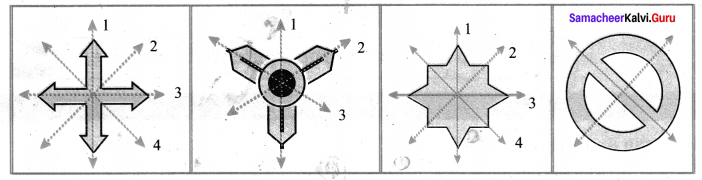
Tamil Nadu 12th Economics Model Question Paper 4 English Medium

[OR]

(b) Explain the Measures of control inflation.
Answer:
Measures to Control Inflation:
Keynes and Milton Friedman together suggested three measures to prevent and control of inflation.

  1.  Monetary measures,
  2. Fiscal measures (J.M. Keynes) and (in) Other measures.

1. Monetary Measures:
These measures are adopted by the Central Bank of the country. They are

  • Increase in Bank rate
  • Sale of Government Securities in the Open Market
  • Higher Cash Reserve Ratio (CRR) and Statutory Liquidity Ratio (SLR)
  • Consumer Credit Control and
  • Higher margin requirements
  • Higher Repo Rate and Reverse Repo Rate.

2.  Fiscal Measures:

  • Fiscal policy is now recognized as an important instrument to tackle an inflationary situation.
  • The major anti-inflationary fiscal measures are the following: Reduction of Government Expenditure and Public Borrowing and Enhancing taxation.

3. Other Measures:
These measures can be divided broadly into short-term and long-term measures.
(a) Short-term measures can be in regard to public distribution of scarce essential commodities through fair price shops (Rationing). In India whenever shortage of basic goods has been felt, the government has resorted to import so that inflation may not get triggered.

(b) Long-term measures will require accelerating economic growth especially of the wage goods which have a direct bearing on the general price and the cost of living. Some restrictions on present consumption may help in improving saving and investment which may be necessary for accelerating the rate of economic growth in the long run.

Question 45 (a).
Explain the types of exchange rate systems and types of exchange rates?
Answer:
Types of Exchange Rate Systems
Broadly, there are two major exchange rate systems, namely,
(1) fixed (or pegged) exchange rate system and
(2) flexible (or floating) exchange rate system. Managed Floating Exchange Rate system also prevails in some countries (like India).
1. Fixed Exchange Rates
Countries following the fixed exchange rate (also known as stable exchange rate and pegged exchange rate) system agree to keep their currencies at a fixed rate as determined by the Government. Under the gold standard, the value of currencies was fixed in terms of gold.

2. Flexible Exchange Rates
Under the flexible exchange rate (also known as floating exchange rate) system, exchange rates are freely determined in an open market by market forces of demand and supply.

Types of Exchange Rates
Exchange rates are also in the form of (a) Nominal exchange rate (b) Real exchange rate (c) Nominal Effective Exchange Rate (NEER) and (d) Real Effective Exchange Rate (REER)
If 1 US Dollar = Rs 75,
Nominal exchange rate = 75/1 =75.
This is the bilateral nominal exchange rate. ePf
Real Exchange rate = \(\frac{eP_f}{P}\)
P = Price levels in India
Pf = Price levels in abroad (say US)
e = nominal exchange rate.
If a pen costs Rs 50 in India and it costs 5
USD in the US,
Real Exchange Rate = \(\frac{75×5}{50}\) = 7.5
If real exchange rate is equal to 1, the currencies are at purchasing power parity.
It the price of the pen in US is 0.66 USD,
then the real exchange rate = \(\frac{0.66×75}{50}\)
then it could be said that the USD and Indian rupee are at purchasing power parity.
NEER and REER are not explained here.
Interested students and teachers can search for them.

Tamil Nadu 12th Economics Model Question Paper 4 English Medium

[OR]

(b) Bring out the objectives of IBRD.
Answer:
Objectives of World Bank

  1. Reconstruction and Development
  2. Encouragement to Capital Investment
  3. Encouragement to International Trade
  4. Establishment of Peace-time Economy
  5. Environmental Protection

The following are the objectives of the World Bank:

  1. To help member countries for economic reconstruction and development.
  2. To stimulate long-run capital investment for restoring Balance of Payments (BoP) equilibrium and thereby ensure balanced development of international trade among the member nations.
  3. To provide guarantees for loans meant for infrastructural and industrial projects of member nations.
  4. To help war ravaged economies transform into peace economies.
  5. To supplement foreign private investment by direct loans out of its own funds for productive purposes.

Question 46 (a).
Describe canons of Taxation.
Answer:
According to Adam Smith, there are four canons or maxims of taxation. They are as follows: Canons of Taxation:

  1. Economical
  2. Equitable
  3. Convenient
  4. Certain
  5. (Efficient and Flexible)

1. Canon of Ability:

  • The Government should impose tax in such a way that the people have to pay taxes according to their ability.
  • In such case a rich person should pay more tax compared to a middle class person or a poor person.

2. Canon of Certainty:

  • The Government must ensure that there is no uncertainty regarding the rate of tax or the time of payment.
  • If the Government collects taxes arbitrarily, then these will adversely affect the efficiency of the people and their working ability too.

3. Canon of Convenience:

  • The method of tax collection and the timing of the tax payment should suit the convenience of the people.
  • The Government should make convenient arrangement for all the tax payers to pay the taxes without difficulty.

4. Canon of Economy:

  • The Government has to spend money for collecting taxes, for example, salaries are given to the persons who are responsible for collecting taxes.
  • The taxes, where collection costs are more are considered as bad taxes.
  • Hence, according to Smith, the Government should impose only those taxes whose collection costs are very less and cheap.

[OR]

(b) Specify the meaning of material balance principle.
Answer:
The relationship between the economy and the environment is generally explained in the form of a “Material Balance Model” developed by AlenKneese and R.V. Ayres.
The model considers the total economic process as a physically balanced flow between inputs and outputs.
Inputs are bestowed with physical property of energy which is received from the environment.
Tamil Nadu 12th Economics Model Question Paper 4 English Medium 10
The interdependence of economics and environment.
The first law of thermodynamics, i.e. the law of conservation of matter and energy, emphasizes that in any production system “what goes in must come out”. This is known as the Material Balance Approach or Material Balance Principle.

Moreover, all resources extracted from the environment eventually become unwanted wastes and pollutants. Production of output by firms from inputs resulting in discharge of solid, liquid and gaseous wastes. Similarly, waste results from consumption activities by households. In its simple form the Material Balance Approach can be put in form equation.
Tamil Nadu 12th Economics Model Question Paper 4 English Medium 11

Tamil Nadu 12th Economics Model Question Paper 4 English Medium

Question 47 (a).
Elucidate major causes of vicious circle of poverty with diagram.
Answer:
Tamil Nadu 12th Economics Model Question Paper 4 English Medium 12

  1. There are circular relationships known as the ‘vicious circles of poverty’ that tend to perpetuate the low level of development in Less Developed Countries (LDCs).
  2. Nurkse explains the idea in these words: “It implies a circular constellation of forces tending to act and react upon one another in such a way as to keep a poor country in a state of poverty.
  3. For example, a poor man may not have enough to eat; being underfed, his health may be weak; being physically weak, his working capacity is low, which means that he is poor, which in turn means that he will not have enough to eat and so on.
  4. A situation of this sort relating to a country as a whole can be summed up in the proposition: “A county is poor because the country is poor”.
  5. The vicious circle of poverty operates both on the demand side and the supply side.
  6. On the supply side, the low level of real income means low savings.
  7. The low level of saving leads to low investment and to deficiency of capital.
  8. The deficiency of capital, in turn, leads to low levels of productivity and back to low income. Thus the vicious circle is complete from the supply side.
  9. The demand-side of the vicious circle is that the low level of real income leads to a low level of demand which, in turn, leads to a low rate of investment and hence back to deficiency of capital, low productivity and low income.

[OR]

(b) State and explain the different kinds of Correlation.
Answer:
Type I: Based on the direction of change of variables

  1. Correlation is classified into two types as Positive correlation and Negative Correlation based on the direction of change of the variables.
  2. Positive Correlation: The correlation is said to be positive if the values of two variables move in the same direction.

Tamil Nadu 12th Economics Model Question Paper 4 English Medium 13
Ex 1: If income and Expenditure of a Household may be increasing or decreasing simultaneously. If so, there is positive correlation. Ex. Y = a + bx
Negative Correlation: The Correlation is said to be negative when the values of variables move in the opposite directions. Ex. Y = a – bx
Ex 1: Price and demand for a commodity move in the opposite direction.

Type II: Based upon the number of variables studied
There are three types based upon the number of variables studied as
(a) Simple Correlation
(b) Multiple Correlation
(c) Partial Correlation

Simple Correlation: If only two variables are taken for study then it is said to be simple correlation. Ex. Y = a + bx

Multiple Correlations: If three or more than three variables are studied simultaneously, then it is termed as multiple correlation.
Ex: Determinants of Quantity demanded
Qd = f(P, Pc, Ps, t, y)
Where Qd stands for Quantity demanded,/stands for function.
P is the price of the goods,
Pc is the price of competitive goods
Ps is the price of substituting goods
t is the taste and preference
y is the income.

Partial Correlation: If there are more than two variables but only two variables are considered keeping the other variables constant, then the correlation is said to be Partial Correlation.

Type III: Based upon the constancy of the ratio of change between the variables
Correlation is divided into two types as linear correlation and Non-Linear, correlation based upon the Constancy of the ratio of change between the variables.

Linear Correlation: Correlation is said to be linear when the amount of change in one variable tends to bear a constant ratio to the amount of change in the other.
Ex. Y = a + bx

Non Linear: The correlation would be non-linear if the amount of change in one variable does not bear a constant ratio to the amount of change in the other variables.
Ex. Y = a + bx²

Tamil Nadu 12th Economics Model Question Paper 4 English Medium

Tamil Nadu 12th Computer Science Model Question Paper 3 English Medium

Students can Download Tamil Nadu 12th Computer Science Model Question Paper 3 English Medium Pdf, Tamil Nadu 12th Computer Science Model Question Papers helps you to revise the complete Tamilnadu State Board New Syllabus and score more marks in your examinations.

TN State Board 12th Computer Science Model Question Paper 3 English Medium

General Instructions:

  1. The question paper comprises of four parts.
  2. You are to attempt all the parts. An internal choice of questions is provided wherever applicable.
  3. All questions of Part I, II, III and IV are to be attempted separately.
  4. Question numbers 1 to 15 in Part I are Multiple Choice Questions of one mark each.
    These are to be answered by choosing the most suitable answer from the given four alternatives and writing the option code and the corresponding answer
  5. Question numbers 16 to 24 in Part II are two-mark questions. These are to be answered in about one or two sentences.
  6. Question numbers 25 to 33 in Part III are three-mark questions. These are to be answered in about three to five short sentences.
  7. Question numbers 34 to 38 in Part IV are five-mark questions. These are to be answered in detail Draw diagrams wherever necessary.

Time: 3 Hours
Maximum Marks: 70

PART – I

Choose the correct answer. Answer all the questions [15 x 1 = 15]

Question 1.
………. function returns the smallest integer greater than or equal to x.
(a) sqrt
(b) flow
(c) floor
(d) ceil
Answer:
(d) ceil

Question 2.
……….. is used to indicate blocks of code in python.
(a) Spaces
(b) {}
(c) []
(d) <>
Answer:
(a) Spaces

Tamil Nadu 12th Computer Science Model Question Paper 3 English Medium

Question 3.
Which amongst this is not a Jump Statement?
(a) for
(b) goto
(c) continue
(d) break
Answer:
(a) for

Question 4.
How many formats are there for format ()?
(a) 12
(b) 5
(c) 3
(d) 1
Answer:
(c) 3

Question 5.
Stings in python can be created using…………
{a) ” ”
(b) ’ ’
(c) ”’ ”’
(d) all of these
Answer:
(d) all of these

Question 6.
……….. function is used to generate a series of values in python.
(a) range
(b) series
(c) fill series
(d) auto fill
Answer:
(a) range

Question 7.
Duplicate row is. removed in………..
(a) α
(b) π
(c) x
(d) σ
Answer:
(b) π

Question 8.
Grant and Revoke commands comes under…………
(a) DML
(b) DCL
(c) DQL
(d) DDL
Answer:
(b) DCL

Question 9.
A CSV file is also called as………..file.
(a) flat
(b) 3D
(c) string
(d) random
Answer:
(a) flat

Question 10.
The module which allows you to interface with the Windows OS is…………
(a) OS module
(b) SYS module
(c) CSV module
(d) getopt module
Answer:
(a) OS module

Question 11.
The most commonly used command in SQL is…………
(a) cursor
(b) select
(c) execute
(d) commit
Answer:
(b) select

Question 12.
Which command is used to accept data during runtime in python?
(a) Insert ()
(b) Input ()
(c) create
(d) update ()
Answer:
(b) Input ()

Question 13.
The representation of information in a graphic format is…………
(a) chart
(b) graphics
(c) infographics
(d) graphs
Answer:
(c) infographics

Question 14.
What does name contains?
(a) clt filename
(b) main () name
(c) python filename
(d) OS module name
Answer:
(c) python filename

Tamil Nadu 12th Computer Science Model Question Paper 3 English Medium

Question 15.
If the precision exceeds 64, then it is………….
(a) numeric
(b) real
(c) float
(d) decimal
Answer:
(c) float

PART – II

Answer any six questions. Question No. 21 is compulsory. [6 × 2 = 12]

Question 16.
Define Pseudo code.
Answer:

  1. Pseudo code is a mix of programming-language-like constructs and Plain English.
  2. Pseudo code is a notation similar to programming languages.
  3. Algorithms expressed in pseudo code are not intended to be executed by computers, but for communication among people.

Question 17.
What is searching? Write its types.
Answer:
A search algorithm is the step-by-step procedure used to locate specific data among a collection of data. Types of searching algorithms are

  1. Linear search
  2. Binary search
  3. Hash search
  4. Binary Tree search

Question 18.
Name the factors where the program execution time depends on.
Answer:
The program execution time depends on:

  1. Speed of the machine
  2. Compiler and other system Software tools
  3. Operating System
  4. Programming language used
  5. Volume of data required

Question 19.
Give any 6 keywords in python.
Answer:
false, class, none, continue, finally, return, is

Question 20.
Give the syntax of while loop.
Answer:
The syntax of while loop in Python has the following syntax:
Syntax:
while:
statements block 1 [else:
statements block2]

Question 21.
Write a program to display all 3 digit odd numbers.
Answer:
Odd Number (3 digits)
for a in range (100, 1000):
if a % 2 = 1:
print b
Output:
101, 103, 105,107 …… 997, 999

Question 22.
Write note on pass statement.
Answer:
pass statement in Python programming is a null statement, pass statement when executed by the interpreter it is completely ignored. Nothing happens when pass is executed, it results in no operation. pass statement can be used in ‘if’ clause as well as within loop construct, when you do not want any statements or commands within that block to be executed.

Question 23.
Define default arguments.
Answer:
In Python the default argument is an argument that takes a default value if no value is provided in the function call. The following example uses default arguments, that prints default salary when no argument is passed, def printinfo (sal = 3500):

Tamil Nadu 12th Computer Science Model Question Paper 3 English Medium

Question 24.
Write a python program to find the length of the string.
Answer:
str = input(“Enter a string: “) print (len(str))
Output:
Enter a string: HELLO
5

PART – III

Answer any six questions. Question No. 29 is compulsory. [6 x 3 = 18]

Question 25.
Differentiate List and Dictionary.
Answer:

  1. List is an ordered set of elements. But, a dictionary is a data structure that is used for matching one element (Key) with another (Value).
  2. The index values can be used to access a particular element. But, in dictionary key represents index. Remember that, key may be a number of a string.
  3. Lists are used to look up a value whereas a dictionary is used to take one value and look up another value.

Question 26.
What is normalization?
Answer:

  1. Normalization is a process of organizing the data in the database to avoid data redundancy and to improve data integrity.
  2. Database normalization was first proposed by Dr. Edgar F Codd as an integral part of RDBMS.
    These rules are known as E F Codd Rules.

Question 27.
What are the advantages of DBMS?
Answer:
Advantages of DBMS

  1. Segregation of application program
  2. Minimal data duplication or Data Redundancy
  3. Easy retrieval of data using the Query Language
  4. Reduced development time and maintenance

Question 28.
Write the use of savepoint command with an example.
Answer:
SAVEPOINT command
The SAVEPOINT command is used to temporarily save a transaction so that you can rollback to the point whenever required. The different states of our table can be saved at anytime using different names and the rollback to that state can be done using the ROLLBACK command.
SAVEPOINT savepoint_name;
UPDATE Student SET Name = ‘Mini ’ WHERE Admno = 105;
SAVEPOINT A;

Question 29.
Give a program for CSV file with a line terminator.
Answer:
import csv
Data = [[‘Fruit’, ‘Quantity’], [‘Apple’, ‘5’], [‘Banana’, ‘7’], [‘Mango’, ‘8’]]
csv.register_dialect(‘myDialect’, delimiter ‘|’, lineterminator = ‘\n’)
with open(‘c:\\pyprg\ \chl3\\line.csv’, ‘w’) as f:
writer = csv.writer(f, dialect = ‘myDialect’)
writer.writerows(Data)
f.close()
Output

FruitQuantity
Apple5
Banana7
Mango8

Question 30.
What is MinGW?
Answer:
(MinGW refers to a set of runtime header files, used in compiling and linking the code of C, C++ and FORTRAN to be run on Windows Operating System.

MinGw-W64 (versionofMinGW) is the best compiler for C++ on Windows. To compile and execute the C++ program, you need ‘g++’ for Windows. MinGW allows to compile and execute C++ program dynamically through Python program using g++.

Python program that contains the C++ coding can be executed only through minGW-w64 project run terminal. The run terminal open the command-line window through which Python program should be executed.

Tamil Nadu 12th Computer Science Model Question Paper 3 English Medium

Question 31.
How will you import modules in python?
Answer:
We can import the definitions inside a module to another module. We use the import keyword . to do this. To import the module factorial we type the following in the Python prompt.
>> import factorial
Using the module name we can access the functions defined inside the module. The dot(.) operator is used to access the functions. The syntax for accessing the functions from the module is
<module name><function name>
For example:
Tamil Nadu 12th Computer Science Model Question Paper 3 English Medium 1
>>> factorial.fact(5)
120

Question 32.
Write a command to populate record in a table.
Answer:
To populate (add record) the table “INSERT” command is passed to SQLite. “execute” method executes the SQL command to perform some action. In most cases, you will not literally insert data into a SQL table. You will rather have a lot of data inside of some Python data type e.g. a dictionary or a list, which has to be used as the input of the insert statement.

Question 33.
Design an algorithm to find square of the given number and display the result.
Answer:
Problem: Design an algorithm to find square of the given number and display the result. The algorithm can be written as:
Step 1 – start the process
Step 2 – get the input x
Step 3 – calculate the square by multiplying the input value ie., square ← x * x
Step 4 – display the result square
Step 5 – stop
Algorithm could be designed to get a solution of a given problem. A problem can be solved in many ways. Among many algorithms the optimistic one can be taken for implementation.

PART – IV

Answer all the questions. [5 × 5 = 25]

Question 34 (a).
Explain about any 3 string operators in python with suitable example.
String Operators
Python provides the following operators for string operations. These operators are useful to manipulate string.
(i) Concatenation (+)
Joining of two or more strings is called as Concatenation. The plus (+) operator is used to concatenate strings in python.
Example
>>> “welcome” + “Python”
‘welcomePython’

(ii) Append (+ =)
Adding more strings at the end of an existing string is known as append. The operator += is used to append a new string with an existing string.
Example .
>>> strl =” Welcome to ”
>>> strl+=”Leam Python”
>>> print (strl)
Welcome to Learn Python

(iii) Repeating (*)
The multiplication operator (*) is used to display a string in multiple number of times.
Example
>>> strl = “Welcome ”
>>> print (strl *4)
Welcome Welcome Welcome Welcome

(iv) String slicing
Slice is a substring of a main string. A substring can be taken from the original string by using [ ] operator and index or subscript values. Thus, [ ] is also known as slicing operator. Using slice operator, you have to slice one or more substrings from a main string.
General format of slice operation:
str [start:end]
Where start is the beginning index and end is the last index value of a character in the string. Python takes the end value less than one from the actual index specified. For example, if you want to slice first 4 characters from a string, you have to specify it as 0 to 5. Because, python consider only the end value as n-1.
Example: slice a single character from a string
>>> strl = “THIRUKKURAL”
>>> print (strl[0])
T

(v) Stride when slicing string
When the slicing operation, you can specify a third argument as the stride, which refers to 1 the number of characters to move forward after the first character is retrieved from the string.
The default value of stride is 1.
Example
>>> strl = “Welcome to learn Python”
>>> print (strl [10:16])
learn
Note: Remember that, python takes the last value as n-1
You can also use negative value as stride (third argument). If you specify a negative value, it prints in reverse order.
Example
>>> strl = “Welcome to learn Python”
>>> print(strl[::-2])
nhy re teolW

Tamil Nadu 12th Computer Science Model Question Paper 3 English Medium

[OR]

(b) Write a python program to print the maximum and minimum value in a dictionary.
Answer:
my_dict = {‘x’: 500, ‘y’: 5874, ‘z’: 560}
val = my_diet.values()
print(‘max value’, max(val))
print(‘min value’, min(val))
Output:
max value 5874
min value 500

Question 35 (a).
Write a class with two private class variables and print the sum using a method.
Answer:
class Sample:
def_init_(self, n1, n2):
self._n1 = n1
self._n2 = n2
def display(self):
print(“class variable 1:”, self._nl)
print(“class variable 2:”, self._n2)
print(“sum :”, self. nl + self._n2)
s = sample(10, 20)
s.display()
Output:
class variable 1 : 10
class variable 2 : 20
sum : 30

[OR]

(b) What are the various processing skills of SQL?
Answer:
The various processing skills of SQL are :

  1. Data Definition Language (DDL) : The SQL DDL provides commands for defining relation schemes (structure), deleting relations, creating indexes and modifying relation schemes.
  2. Data Manipulation Language (DML): The SQL DML includes commands to insert, delete, and modify tuples in the database.
  3. Embedded Data Manipulation Language : The embedded form of SQL is used in high level programming languages.
  4. View Definition : The SQL also includes commands for defining views of tables.
  5. Authorization : The SQL includes commands for access rights to relations and views of tables.
  6. Integrity’: The SQL provides forms for integrity checking using condition.
  7. Transaction control : The SQL includes commands for file transactions and control over transaction processing.

Question 36 (a).
Write the steps for executing the C++ program to check whether a given number is palindrome or not.
Answer:
Step 1 : Type the C++ program to check whether the input number is palindrome or not in notepad and save it as “pali_cpp.cpp”.
Step 2: Type the Python program and save it as pali.py
Step 3: Click the Run Terminal and open the command window
Step 4: Go to the folder of Python using cd command.
Step 5: Type the command Python pali.py -i pali_cpp

Tamil Nadu 12th Computer Science Model Question Paper 3 English Medium

[OR]

(b) Explain the various buttons in a matplotlib window.
Answer:
Tamil Nadu 12th Computer Science Model Question Paper 3 English Medium 2
Home Button → The Home Button will help once you have begun navigating your chart. If you ever want to return back to the original view, you can click on this.

Forward/Back buttons → These buttons can be used like the Forward and Back buttons in your browser. You can click these to move back to the previous point you were at, or forward again.

Pan Axis → This cross-looking button allows you to click it, and then click and drag your graph around.

Zoom → The Zoom button lets you click on it, then click and drag a square that you would like I to zoom into specifically. Zooming in will require a left click and drag. You can alternatively zoom out with a right click and drag.

Configure Subplots → This button allows you to configure various spacing options with your figure and plot.

Save Figure → This button will allow you to save your figure in various forms.

Question 37 (a).
Explain the purposes of
(a) pltxlabel
(b) plt.ylabel
(c) plt.title
(d) plt.legend()
(e) plt.show()
Answer:
After installing Matplotlib, we will begin coding by importing Matplotlib using the command: import matplotlib.pyplot as pit
Now you have imported Matplotlib in your workspace. You need to display the plots. Using Matplotlib from within a Python script, you have to add plt.show() method inside the file to display your plot.

With plt.xlabel and plt.ylabel, you can assign labels to those respective axis. Next, you can assign the plot’s title with plt.title, and then you can invoke the default legend with pit.
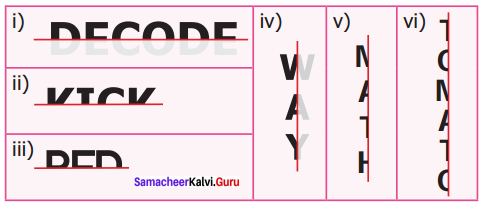
legend().
plt.plot (years, total_populations)
plt.title (“Year vs Population in India”)
plt.xlabel (“Year”)
plt.ylabel (“Total Population”)
plt.legend()
plt.show()
Plt.title() → specifies title to the graph
Plt.xlabel() → specifies label for X-axis
Plt.ylabel() → specifies label for Y-axis

Tamil Nadu 12th Computer Science Model Question Paper 3 English Medium

[OR]

(b) Evaluate the following functions and write the output.
Tamil Nadu 12th Computer Science Model Question Paper 3 English Medium 3
Output:
1. 1) 13
2)3.2

2. (1)50
2) 36

3. <class ‘str’>

4. Ob10000

5. 1) CR (carriage return)
2) It moves the cursor to the beginning of same line

Question 38 (a).
Explain If and If…. else with sample programs.
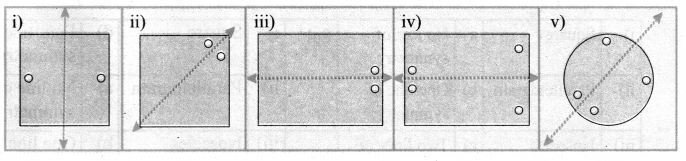
Answer:
Simple if statement
Simple if is the simplest of all decision making statements. Condition should be in the form of relational or logical expression.
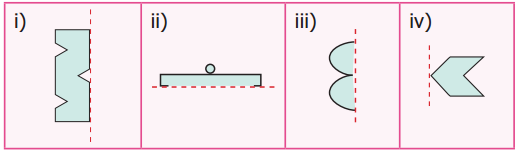
Syntax:
if :
statements-block 1
In the above syntax if the condition is true statements – block 1 will be executed.
Example
# Program to check the age and print whether eligible for voting
x = int (input(“Enter your age :”))
if x> = 18:
print (“You are eligible for voting”)
Output 1:
Enter your age : 34
You are eligible for voting Output 2:
Enter your age : 16
>>>
As you can see in the second execution no output will be printed, only the Python prompt will be displayed because the program does not check the alternative process when the condition is failed.

if..else statement:
The if., else statement provides control to check the true block as well as the false block. Following is the syntax of ‘if.else’ statement.
Tamil Nadu 12th Computer Science Model Question Paper 3 English Medium 4
Syntax:
if :
statements-block 1
else:
statements-block 2
if.else statement thus provides two possibilities and the condition determines which BLOCK is to be executed.
Example: #Program to check if the accepted number odd or even
a = int(input(“Enter any number :”))
if a%2 == 0:
print (a,” is an even number”)
else:
print (a, ” is an odd number”)
Output 1:
Enter any number :56
56 is an even number
Output 2:
Enter any number :67
67 is an odd number
An alternate method to rewrite the above program is also available in Python. The complete if.else can also written as:
Syntax:
variable = variable1 if condition else variable 2

Tamil Nadu 12th Computer Science Model Question Paper 3 English Medium

[OR]

(b) Explain while loop with sample program.
Answer:
while loop
The syntax of while loop in Python has the following syntax:
Tamil Nadu 12th Computer Science Model Question Paper 3 English Medium 5
Syntax:
while :
statements block 1
[else:
statements block 2]
In the while loop, the condition is any valid Boolean expression returning True or False. The else part of while is optional part of while. The statements blockl is kept executed till the condition is True. If the else part is written, it is executed when the condition is tested False. Recall while loop belongs to entry check loop type, that is it is not executed even once if the condition is tested False in the beginning.
Example: program to illustrate the use of while loop – to print all numbers from 10 to 15
i = 10 # initializing part of the control variable
while (i<= 15): # test condition
print (i,end=’\t’) # statements – block 1
i = i + l # Updation of the control variable
Output:
10 11 12 13 14 15

Tamil Nadu 12th Computer Science Model Question Paper 3 English Medium