Samacheer Kalvi 11th Computer Applications Solutions Chapter 15 Control Structure in JavaScript

Students can Download Computer Applications Chapter 15 Control Structure in JavaScript Questions and Answers, Notes Pdf, Samacheer Kalvi 11th Computer Applications Book Solutions Guide Pdf helps you to revise the complete Tamilnadu State Board New Syllabus and score more marks in your examinations.

Tamilnadu Samacheer Kalvi 11th Computer Applications Solutions Chapter 15 Control Structure in JavaScript

Samacheer Kalvi 11th Computer Applications Control Structure in JavaScript Text Book Back Questions and Answers

I. Choose The Correct Answer

Question 1.
Which conditional statement is used to transfer control from current statement to another statement? (LOT)
(a) Branching
(b) Sequencing
(c) Looping
(d) Iterating
Answer:
(a) Branching

Samacheer Kalvi 11th Computer Applications Solutions Chapter 15 Control Structure in JavaScript

Question 2.
……………………. statement can be used as alterative to multiple if-else statement (LOT)
(a) while
(b) if
(c) else-if
(d) switch
Answer:
(d) switch

Question 3.
Which statement in switch case is used to exit the statement once the appropriate choice is found? (MOT)
(a) exit
(b) default
(c) case
(d) break
Answer:
(d) break

Samacheer Kalvi 11th Computer Applications Solutions Chapter 15 Control Structure in JavaScript

Question 4.
Which of the following is not a looping statement? (LOT)
(a) switch
(b) while
(c) do-while
(d) for
Answer:
(a) switch

Question 5.
Which part of the loop statement determines the number of times, the loop will be iterated? (MOT)
(a) First
(b) Second
(c) Third
(d) Final
Answer:
(b) Second

Question 6.
Which of the following is not a branching statement? (LOT)
(a) Loop
(b) If-else
(c) Switch
(d) For
Answer:
(d) For

Samacheer Kalvi 11th Computer Applications Solutions Chapter 15 Control Structure in JavaScript

Question 7.
What will be the output for the following snippet? (HOT)
For (var n=0; n<10; n+1)
{
if (n==3)
{
break;
}
document write (n+ “<br>”);
}
(a) 0 1 2
(b) 0 1 2 3 4
(c) 0 1 2 3 4
(d) 0, 1, 3
Answer:
(a) 0 1 2

Samacheer Kalvi 11th Computer Applications Solutions Chapter 15 Control Structure in JavaScript

Question 8.
In which loop the condition is evaluated, before executing a statement? (MOT)
(a) while
(b) do while
(c) break
(d) continue
Answer:
(a) while

Question 9.
The …………………… statement is especially useful when testing all the possible results of an expression? (LOT)
(a) while
(b) do while
(c) switch
(d) if
Answer:
(a) while

Question 10.
In the ……………………. loop, body of the loop always executed at least once before the condition is checked? (LOT)
(a) for
(b) while
(c) if
(d) do while
Answer:
(d) do while

Samacheer Kalvi 11th Computer Applications Solutions Chapter 15 Control Structure in JavaScript

Question 11.
<script type = “text /javascript”>
x = 6 + “3”;
document Write (x);
<script> what will be the output?
(a) 6
(b) 9
(c) 63
(d) Error
Answer:
(c) 63

II. Answer To The Following Questions

Question 1.
What are the different types of control statement used in JavaScript?
Answer:
There are two types of controls,

  1. Branching / Selection
  2. Looping / repetitive

Question 2.
What is meant by conditional statements in JavaScript?
Answer:
Conditional statements execute or skip one or set of statements depending on the value of a specified conditional expression.

Samacheer Kalvi 11th Computer Applications Solutions Chapter 15 Control Structure in JavaScript

Question 3.
List out the various branching statements in JavaScript?
Answer:
There are different branching statements. They are,

  1. if statement
  2. if… else statement
  3. else if statement
  4. switch statement

Question 4.
Write the general syntax for switch statement?
Answer:
switch(expression)
{
case label 1:
statements 1;
break;
case label2:
statements 2;
break;
case labeln;
statements – N;
break;
default:
statements;
}

Samacheer Kalvi 11th Computer Applications Solutions Chapter 15 Control Structure in JavaScript

Question 5.
Differentiate the break and continue statement?
Answer:
Break Statement:

  1. The break statement will terminate the loop early.
  2. The break statement is executed and the loop is terminated.

Continue Statement:

  1. The continue statement will skip back to the loop condition check.
  2. When the continue statement is executed, the current is iteration of the enclosing loop is terminated.

III. Answer To The Following Questions

Question 1.
What is ‘if’ statement and write its types?
Answer:
The if statement is the fundamental control statement that allows Java Script to make decisions to execute statements conditionally. This statement has two forms:

  1. if form
  2. if else form

Samacheer Kalvi 11th Computer Applications Solutions Chapter 15 Control Structure in JavaScript

Question 2.
Write the syntax for else-if statement?
Answer:
if(n== 10)
{
// Execute code block #1
}
else if (n == 20)
{
// Execute code block #2
}
else if (n == 30)
{
// Execute code block #3
else
{
// If all else fails,
execute block #4
}

Samacheer Kalvi 11th Computer Applications Solutions Chapter 15 Control Structure in JavaScript

Question 3.
What is a loop and what are its types?
Answer:
In Java Script there are times when the same portion of code needs to be executed many times with slightly different values is called Loops. JavaScript supports three kinds of looping statements. They are:

  1. for loop
  2. while loop
  3. do.. while loop

Samacheer Kalvi 11th Computer Applications Solutions Chapter 15 Control Structure in JavaScript

Question 4.
Differentiate between while and do while statements.
Answer:
While:

  1. In Java Script while loop is most basic loop.
  2. First condition will be evaluated and then only based on the result of the condition the body of the loop will be executed or not.
  3. While loop is false not a single statement inside the loop is executed.

Do…while:

  1. The do…..while loop is like a while loop.
  2. The Body of the loop always executed at least once before the condition can be executed.
  3. Do while loop is false then also the body of the loop is executed.

Samacheer Kalvi 11th Computer Applications Solutions Chapter 15 Control Structure in JavaScript

Question 5.
What message will be displayed, if the input for age is given as 20, for the following snippet?
Answer:
if (age> = 18)
{
alert (“you are eligible to get Driving licence”)
}
else
{
alert (“you are not eligible to get driving licence”);
}
you are eligible to get driving license.

IV. Answer To The Following Questions.

Question 1.
Explain for loop with example?
Answer:
The for loop is a very rigid structure that loops for a pre-set number of times. In JavaScript for structure is very flexible, which makes this type is very useful. The syntax of the for loop . looks like the following: for(initialization; condition; increment/decrement)
{
Body of the loop;
}
The for structure within parenthesis there are three parts each separated by semicolon. They are,

  1. The first part of the loop initialize a variable which is also called as control variable. In most case the control variable is declared as well as initialized.
  2. The second part is the conditional statement that determines how many times the loop will be iterated.
  3. The third and final part determines how the value of control variable is changed . (Incremented/Decremented).

Using for loop
<Html>
<Head>
<Title> Program – To test for statement in JavaScript </Title>
</Head>
<Body>
<script language = “javascript” type = “text/javascript”>
var no1 = prompt(“Please enter Table You want“0”);
document.write(“<h2> Multiplication for your need </h2>”);
for( var no2=0 ;no2<= 10 ;no2++)
{
document.write(no1+ “x” + no2+ “=”+nol*no2+“<br>”);
}
</script>
</Body>
</Html>

Samacheer Kalvi 11th Computer Applications Solutions Chapter 15 Control Structure in JavaScript

Question 2.
Explain switch case statement with example?
Answer:
Java Scripts offers the switch statement as an alternate to using if…else structure. The switch statement is especially useful when testing all the possible results of an expression. The syntax of a switch structure as the following: switch(expression)
{
case label1:
statements 1;
break;
case label2:
statements2;
break;
case labeln;
statements – N;
break;
default:
statements;
}

Samacheer Kalvi 11th Computer Applications Solutions Chapter 15 Control Structure in JavaScript

Question 3.
Write the output for the following program?
Answer:
<Html>
<Head>
<Title> for statement </title>
<Head>
<Body>
<script language= “java Script” type = “text / javaScript”) var nol= prompt (“please enter table you want:”, “0” ); document write (“<h2> multiplication table </h2>”) for (Var no2= 0; no2<=10; no2++)
{
document write (nol+ “x” + no2+ “=” + nol+no2+ “<br>”);
}
</script>
</body>
</Html>
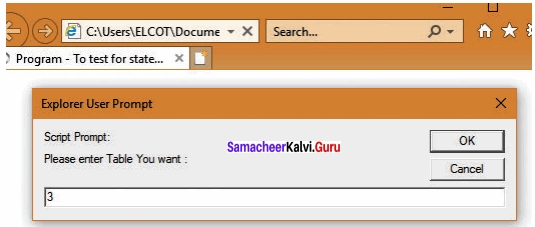
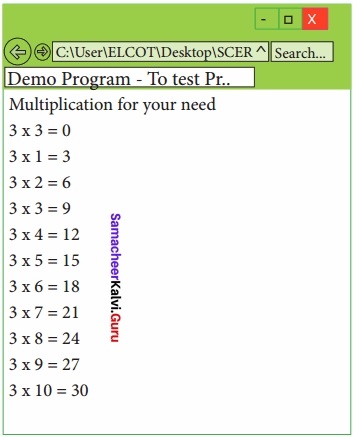
Samacheer Kalvi 11th Computer Applications Solutions Chapter 15 Control Structure in JavaScript img 1&2
Samacheer Kalvi 11th Computer Applications Solutions Chapter 15 Control Structure in JavaScript img 3

Question 4.
Write a Java Script program using while statement to display 10 numbers?
Answer:
<Html>
<Head>
<Title> Display 10 Numbers in Javascript</Title>
</Head>
<Body>
<script language = “java script” type = “text / java script”>
document.write (“<h2> using while statement </h2>”)
Var no2= 0;
while (no2<=10)
{
document.write (no2+ “ ”);
no2=no2+1;
}
</script>
</body>
</Html>

Samacheer Kalvi 11th Computer Applications Control Structure in JavaScript Additional Questions and Answers

I. Choose The Correct Answer

Question 1.
The simple if construction, no special processing is performed when the condition evaluates to false?
(a) if else
(b) switch
(c) nested if
(d) if
Answer:
(a) if else

Samacheer Kalvi 11th Computer Applications Solutions Chapter 15 Control Structure in JavaScript

Question 2.
The statement begins by evaluating an expression placed between parenthesis, much like the if statement?
(a) break
(b) default
(c) continue
(d) switch
Answer:
(d) switch

Question 3.
……………………… is can be at the end of a switch structure if the result of the expression that do not match any of the case labels?
(a) break statement
(b) switch structure
(c) continue statement
(d) default structure
Answer:
(d) default structure

Samacheer Kalvi 11th Computer Applications Solutions Chapter 15 Control Structure in JavaScript

Question 4.
The loop initialize a variable which is also called as control variable ………………………..
(a) Third
(b) First
(c) Second
(d) All the above
Answer:
(b) First

Question 5.
……………………… statement is executed, the current iteration of the enclosig loop is terminated and the next iteration begins?
(a) switch
(b) break
(c) continue
(d) if
Answer:
(c) continue

Samacheer Kalvi 11th Computer Applications Solutions Chapter 15 Control Structure in JavaScript

Question 6.
The purpose of a ………………………. is to execute a statement/block of’statement repeatedly as long as an expression is true?
(a) for loop
(b) do while loop
(c) while loop
(d) all the above
Answer:
(c) while loop

II. Short Answers

Question 1.
What is branching statements?
Answer:
Java Script supports branching statements which are used to perform different actions based on different conditions. Branching is a transfer of control from the current statement to another statement or construct in the program unit. A branch alters the execution sequence.

Samacheer Kalvi 11th Computer Applications Solutions Chapter 15 Control Structure in JavaScript

Question 2.
Write the syntax of the if else statement?
Answer:
if (expression)
{
statements if true
} else
{
statements if false
}

Question 3.
Write a short note on continue statement?
Answer:
The continue statement will skip back to the loop condition check. When the continue statement is executed, the current iteration of the enclosing loop is terminated, and the next iteration begins.

III. Explain in Brief

Question 1.
What is while loop?
Answer:
In Java Script while loop is another most basic loop. The purpose of a while loop is to execute a statement /block of statement repeatedly as long as an expression is true.
The while statement creates a loop that executes a specified statement as long as the test condition evaluates to true. The condition is evaluated before executing the statement.
The syntax is:
while (condition)
{
body of the loop
}

Samacheer Kalvi 11th Computer Applications Solutions Chapter 15 Control Structure in JavaScript

Question 2.
Write the example of break statement?
Answer:
The break statement will terminate the loop early. For example, for (var n = 0; n < = 10; n++)
{
if (n == 5)
{
break;
}
document. write(n+”<br>”);
}

Samacheer Kalvi 11th Computer Applications Solutions Chapter 15 Control Structure in JavaScript

Question 3.
What are the parts of for loops?
Answer:

  1. The first part of the loop initialize a variable which is also called as control variable. In most case the control variable is declared as well as initialized.
  2. The second part is the conditional statement that determines how many times the loop will be iterated.
  3. The third and final part determines how the value of control variable is changed (Incremented/Decremented).

IV. Explain in Detail

Question 1.
Explain if statement with suitable example?
Answer:
The if statement is the fundamental control statement that allows JavaScript to make decisions to execute statements conditionally. This statement has two forms. The form is for only true condition. The syntax is
if (condition)
{
True block;
}
In the if form, condition contains relational/logical expression is evaluated. If the resulting value is true the true block is executed. True block may contain one or more than one statement. For example.
Demo to Test if command
<Html>
<Head>
<Title>Demo Program – To test if command in JavaScript
</Title>
</Head>
<Body>
<script language = “javascript” type = “text/javascript”>
var age = prompt(“Please enter your Age “0”);
if (age >=16)
{
alert(“You Are Eligible to Vote ….”);
}
</script>
</Body>
</Html>
The output will be
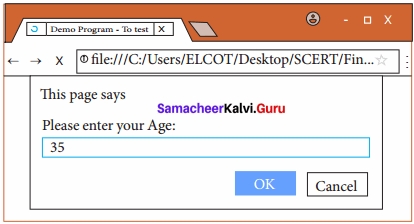
Samacheer Kalvi 11th Computer Applications Solutions Chapter 15 Control Structure in JavaScript img 4

Samacheer Kalvi 11th Computer Applications Solutions Chapter 15 Control Structure in JavaScript

Question 2.
Write the output for the following program?
Answer:
Using break statement
<Html>
<Head>
<Title>Demo Program – To test Break command in JavaScript </Title>
</Head>
<Body>
<script language = “javascript” type = “text/javascript”>
document.write(“<h2> Using Break Statement </h2>”);
for( var no2=0;no2<=l 0;no2++)
{
if(no2==5)
{break;}
document.write(no2 + “ ”);
}
</script>
</Body>
</Html>
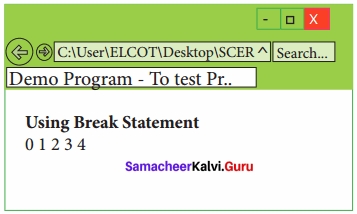
Samacheer Kalvi 11th Computer Applications Solutions Chapter 15 Control Structure in JavaScript img 5

Samacheer Kalvi 11th Computer Science Solutions Chapter 16 Inheritance

Students can Download Computer Science Chapter 16 Inheritance Questions and Answers, Notes Pdf, Samacheer Kalvi 11th Computer Science Book Solutions Guide Pdf helps you to revise the complete Tamilnadu State Board New Syllabus and score more marks in your examinations.

Tamilnadu Samacheer Kalvi 11th Computer Science Solutions Chapter 16 Inheritance

Samacheer Kalvi 11th Computer Science Inheritance Text Book Back Questions and Answers

PART – 1
I. Choose The Correct Answer

Question 1.
Which of the following is the process of creating new classes from an existing class?
(a) Polymorphism
(b) Inheritance
(c) Encapsulation
(d) super class
Answer:
(b) Inheritance

Question 2.
Which of the following derives a class student from the base class Shool?
(a) school: student
(b) class student: public School
(c) student: public school
(d) class school : public student
Answer:
(b) class student: public – School

Question 3.
The type of inheritance that reflects the transitive nature is ………………
(a) Single Inheritance
(b) Multiple Inheritance
(c) Multilevel Inheritance
(d) Hybrid Inheritance
Answer:
(c) Multilevel Inheritance

Samacheer Kalvi 11th Computer Science Solutions Chapter 16 Inheritance

Question 4.
Which visibility mode should be used when you want the features of the base class to be available to the derived class but not to the classes that are derived from the derived class?
(a) Private
(b) Public
(c) Protected
(d) All of these
Answer:
(a) Private

Question 5.
Inheritance is process of creating new class from ………………
(a) Base class
(b) abstract
(c) derived class
(d) Function
Answer:
(a) Base class

Question 6.
A class is derived from a class which is a derived class itself, then this is referred to as ……………….
(a) multiple inheritance
(b) multilevel inheritance
(c) single inheritance
(d) double inheritance
Answer:
(b) multilevel inheritance

Question 7.
Which amongst the following is executed in the order of inheritance?
(a) Destructor
(b) Member function
(c) Constructor
(d) Object
Answer:
(c) Constructor

Samacheer Kalvi 11th Computer Science Solutions Chapter 16 Inheritance

Question 8.
Which of the following is true with respect to inheritance?
(a) Private members of base class are inherited to the derived class with private
(b) Private members of base class are not inherited to the derived class with private accessibility
(c) Public members of base class are inherited but not visible to the derived class
(d) Protected members of base class are inherited but not visible to the outside class
Answer:
(b) Private members of base class are not inherited to the derived class with private accessibility

Question 9.
Based on the following class declaration answer the questions (from 9.1 to 9.4)
class vehicle
{ int wheels;
public:
void input_data(float,float);
void output_data();
protected:
int passenger;
};
class heavyvehicle : protected vehicle {
int diesel_petrol;
protected:
int load;
protected:
int load;
public:
voidread_data(float,float)
voidwrite_data(); };
class bus: private heavy vehicle {
charTicket[20];
public:
voidfetch_data(char); voiddisplay_data(); };
};

Question 9.1.
Which is the base class of the class heavy_vehicle?
(a) Bus
(b) heavy_vehicle
(c) vehicle
(d) both (a) and (c)
Answer:
(c) vehicle

Question 9.2.
The data member that can be accessed from the function displaydata()
(a) passenger
(b) load
(c) Ticket
(d) All of these
Answer:
(d) All of these

Question 9.3.
The member function that can be accessed by an objects of bus Class is
(a) input_data()
(b) read_data(), output_data()write_data()
(c) fetch_data()
(d) All of these display_data()
Answer:
(d) All of these display_data()

Samacheer Kalvi 11th Computer Science Solutions Chapter 16 Inheritance

Question 9.4.
The member function that is inherited as public by Class Bus
(a) input_data()
(b) read_data(), output_data()write_data()
(c) fetch_data()
(d) All of these display_data()
Answer:
(d) All of these display_data()

Question 10.
class x
{int a;
public :
x()
{}
};
class y
{ x x1;
public :
y()
{}
};
class z : public y, x
{ intb;
public:
z(){}
} z1;
What is the order of constructor for object z1 to be invoked?
(a) z, y, x, x
(b) x, y, z, x
(c) y, x, x, z
(d) x, y, z
Answer:
(c) y, x, x, z

PART – 2
II. Answers to all the questions

Question 1.
What is inheritance?
Answer:
Inheritance is one of the most important features of Object Oriented Programming. In object – oriented programming, inheritance enables new class and its objects to take on the properties of the existing classes.

Question 2.
What is a base class?
Answer:
A class that is used as the basis for inheritance is called a superclass or base class.

Question 3.
Why derived class is called power packed class?
Answer:
Multilevel Inheritance:
In multilevel inheritance, the constructors will be executed in the order of inheritance.

Multiple Inheritance:
If there are multiple base classes, then it starts executing from the left most base class.

Samacheer Kalvi 11th Computer Science Solutions Chapter 16 Inheritance

Question 4.
In what multilevel and multiple inheritance differ though both contains many base class?
Answer:
The derived class is a power packed class, as it can add additional attributes and methods and thus enhance its functionality.

Question 5.
What is the difference between public and private visibility mode?
Answer:
Private visibility mode:
When a base class is inherited with private visibility mode the public and protected members of the base class become ‘private’ members of the derived class.

Public visibility mode:
When a base class is inherited with public visibility mode, the protected members of the base class will be inherited as protected members of the derived class and the public members of the base class will be inherited as public members of the derived class.

PART – 3
III. Answers to all the questions

Question 1.
What are the points to be noted while deriving a new class?
Answer:
The following points should be observed for defining the derived class:

  1. The keyword class has to be used.
  2. The name of the derived class is to be given after the keyword class.
  3. A single colon.
  4. The type of derivation (the visibility mode), namely private, public or protected. If no visibility mode is specified, then by default the visibility mode is considered as private.
  5. The names of all base classes (parent classes) separated by comma.

Question 2.
What is difference between the members present in the private visibility mode and the members present in the public visibility mode.
Answer:
Members present in the private visibility mode:

  • Can be accessed only by the class members.
  • By default the members will be in private visibility mode.
  • When classes are inherited, private members are not inherited.

Members present in the public visibility mode:

  • Can be accessed by the outside members also.
  • Members, to be in public visibility mode has to be specified explicitly.
  • When classes are inherited, the public members are inherited as private, protected and public members of the derived class.

Samacheer Kalvi 11th Computer Science Solutions Chapter 16 Inheritance

Question 3.
What is the difference between polymorphism and inheritance though both are used for reusability of code?
Answer:
Polymorphism:

  • Reusability of code is implemented through functions (or) methods.
  • Polymorphism is the ability of a function to respond differently to different message.
  • Polymorphism is achieved through overloading.

Inheritance:

  • Reusability of code is implemented through classes.
  • Inheritance is the process of creating derived classes from the base class or classes.
  • Inheritance is achieved by various types of inheritances namely single, multiple, multilevel, hybrid and hierarchical inheritances.

Question 4.
What do you mean by overriding?
Answer:
When a derived class member function has the same name as that of its base class member function, the derived class member function shadows/hides the base class’s inherited function. This situation is called function overriding.

Question 5.
Write some facts about the execution of constructors and destructors in inheritance. Some Facts About the execution of constructor in inheritance
Answer:

  1. Base class constructors are executed first, before the derived class constructors execution.
  2. Derived class cannot inherit the base class constructor but it can call the base class constructor by using Base_class name: :base_class_constructor() in derived class definition
  3. If there are multiple base classes, then its start executing from the left most base class
  4. In multilevel inheritance, the constructors will be executed in the order of inheritance The destructors are executed in the reverse order of inheritance.

PART – 4
IV. Answers to all the questions

Question 1.
Explain the different types of inheritance.
Answer:
Types of Inheritance:
There are different types of inheritance viz., Single inheritance, Multiple inheritance, Multilevel inheritance, hybrid inheritance and hierarchical inheritance.

  1. Single Inheritance : When a derived class inherits only from one base class, it is known as single inheritance.
  2. Multiple Inheritance : When a derived class inherits from multiple base classes it is known as multiple inheritance.
  3. Hierarchical inheritance : When more than one derived classes are created from a single base class, it is known as Hierarchical inheritance.
  4. Multilevel Inheritance : The transitive nature of inheritance is itself reflected by this form of inheritance. When a class is derived from a class which is a derived class then it is referred to as multilevel inheritance.
  5. Hybrid inheritance : When there is a combination of more than one type of inheritance, it is known as hybrid inheritance.
  6. Hence, it may be a combination of Multilevel and Multiple inheritance or Hierarchical and Multilevel inheritance or Hierarchical, Multilevel and Multiple inheritance.

Samacheer Kalvi 11th Computer Science Solutions Chapter 16 Inheritance

Question 2.
Explain the different visibility mode through pictorial representation.
Answer:
An important feature of Inheritance is to know which member of the base class will be acquired by the derived class. This is done by using visibility modes. The accessibility of base class by the derived class is controlled by visibility modes. The three visibility modes are private, protected and public.

The default visibility mode is private. Though visibility modes and access specifiers look similar, the main difference between them is Access specifiers control the accessibility of the members within the class where as visibility modes control the access of inherited members within the class.

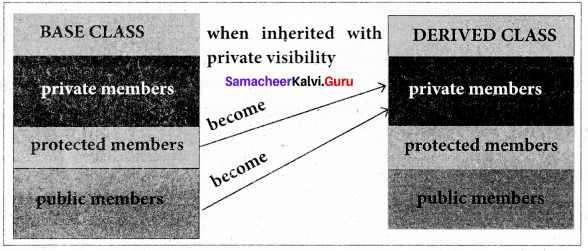
Private visibility mode:
When a base class is inherited with private visibility mode the public and protected members of the base class become ‘private’ members of the derived class
Samacheer Kalvi 11th Computer Science Solutions Chapter 16 Inheritance 1
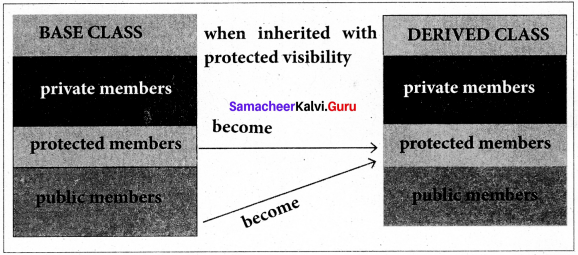
Protected visibility mode:
When a base class is inherited with protected visibility mode the protected and public members of the base class become ‘protected members ‘ of the derived class.
Samacheer Kalvi 11th Computer Science Solutions Chapter 16 Inheritance 2
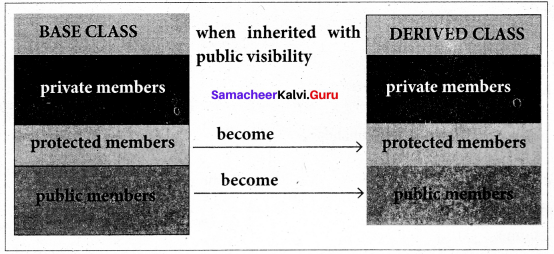
When a base class is inherited with public visibility mode, the protected members of the base class will be inherited as protected members of the derived class and the public members of the base class will be inherited as public members of the derived class.
Samacheer Kalvi 11th Computer Science Solutions Chapter 16 Inheritance 3

Question 3.
#include
#include
#include
using name spacestd;
class publisher
{
char pname[15];
char hoffice[15];
char address[25];
double turnover;
protected:
char phone[3][10];
void register();
public:
publisher();
∼ publisher);
void enter data();
void disp data();
};
class branch
{
charbcity[15];
char baddress[25];
protected:
intnoofemp;
public:
charbphone[2][10];
branch();
∼ branch();
void have data();
void give data();
};
class author: public branch, publisher
{
intaut_code;
charaname[20];
float income;
public:
author();
~author();
voidgetdata();
voidputdata();
};

Answer the following questions based on the above given program:
Question 3.1.
Which type of Inheritance is shown in the program?
Answer:
Multiple inheritance.

Question 3.2.
Specify the visibility mode of base classes.
Answer:
Private for publisher.
Public for branch.

Question 3.3.
Give the sequence of Constructor/Destructor Invocation when object of class author is created.
Answer:
branch(); // constructor of branch class
publisher (); // constructor of publisher class
author (); // constructor of author class
∼author (); // destructor of author class
∼publisher (); // destructor of publisher class
∼branch (); // destructor of branch class

Question 3.4.
Name the base class(/es) and derived class (/es).
Answer:
Base class(/es): branch and publisher
Derived class (/es): author.

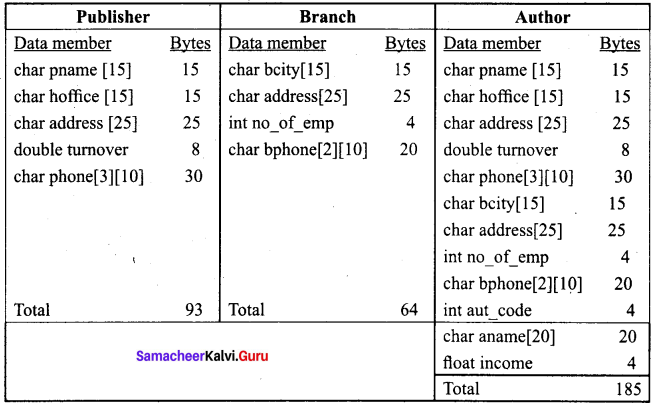
Question 3.5.
Give number of bytes to be occupied by the object of the following class:
(a) publisher
(b) branch
(c) author
Samacheer Kalvi 11th Computer Science Solutions Chapter 16 Inheritance 4

Question 3.6.
Write the names of data members accessible from the object of class author.
Answer:
The data members that can be accessed is bphone[2][10].

Question 3.7.
Write the names of all member functions accessible from the object of class author.
Answer:
Member functions that can be accessed are:
1. public member functions of branch have_data();
give_data();

2. public member functions of author:
getdata();
putdata();

Question 3.8.
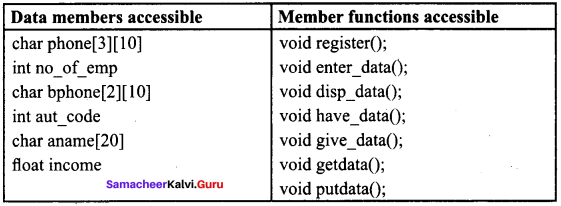
Write the names of all members accessible from member functions of class author.
Answer:
Samacheer Kalvi 11th Computer Science Solutions Chapter 16 Inheritance 5

Question 4.
Consider the following C++ code and answer the questions
Answer:
class Personal
{
int Class,Rno;
char Section;
protected:
char Name[20];
public:
personal();
void pentry();
voidPdisplay();
};
class Marks:private Personal
{
float M{5};
protected:
char Grade[5];
public:
Marks();
void M entry();
void M display 0;
};
class Result:public Marks
{
float Total, Agg;
public:
char FinalGrade, Commence[20];
Result();
void R calculate();
void R display();
}:

Question 4.1.
Which type of Inheritance is shown in the program?
Answer:
Multilevel inheritance.

Question 4.2.
Specify the visibility mode of base classes.
Answer:
Private for personal public for marks.

Samacheer Kalvi 11th Computer Science Solutions Chapter 16 Inheritance

Question 4.3.
Give the sequence of Constructor/Destructor Invocation when object of class Result is created.
Answer:
Personal (); // constructor of class personal
Marks (); // constructor of class marks
Result (); // destructor of class Result
Marks (); // destructor of class marks
Personal (); // destructor of class personal

Question 4.4.
Name the base class(/es) and derived class (/es).
Answer:
Base class of marks: → Personal
Base class of Result: → Marks
Derived classes: → Marks and Results

Question 4.5.
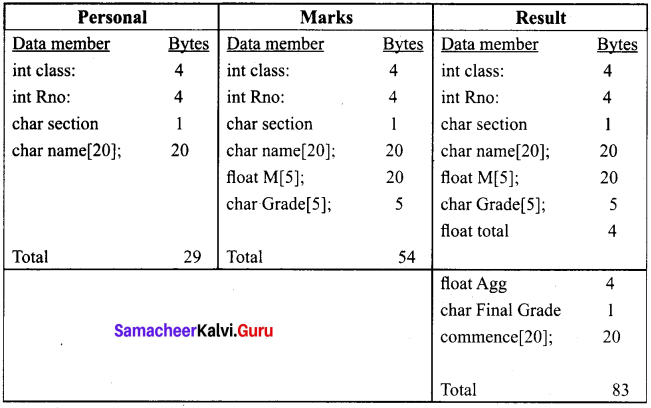
Give number of bytes to be occupied by the object of the following class:
(a) Personal
(b) Marks
(c) Result
Answer:
Samacheer Kalvi 11th Computer Science Solutions Chapter 16 Inheritance 6

Question 4.6.
Write the names of data members accessible from the object of class Result.
Answer:
Data members accessible are:

  1. The private, public and protected data members of personal cannot be accessed.
  2. The public data members of marks: Nil (i/7) Public data members of Result char Final Grade; char commence [20];

Question 4.7.
Write the names of all member functions accessible from the object of class Result. Member functions accessible are:
Answer:
1. The private, public and protected member functions of personal cannot be accessed.

2. The public member functions of marks
void mentry();
void
mdisplay();

3. Public member functions of Result
void Rcalculate();
void RdisplayO;

Question 4.8.
Write the names of all members accessible from member functionsof class Result.
Answer:
Data members accessible
char Grade[5];
float Total;
float Age;
char Final Grade;
char Commence[20];

Member functions accessible
void mentry();
void mdisplay();
void Rcalculate();
void Rdisplay();

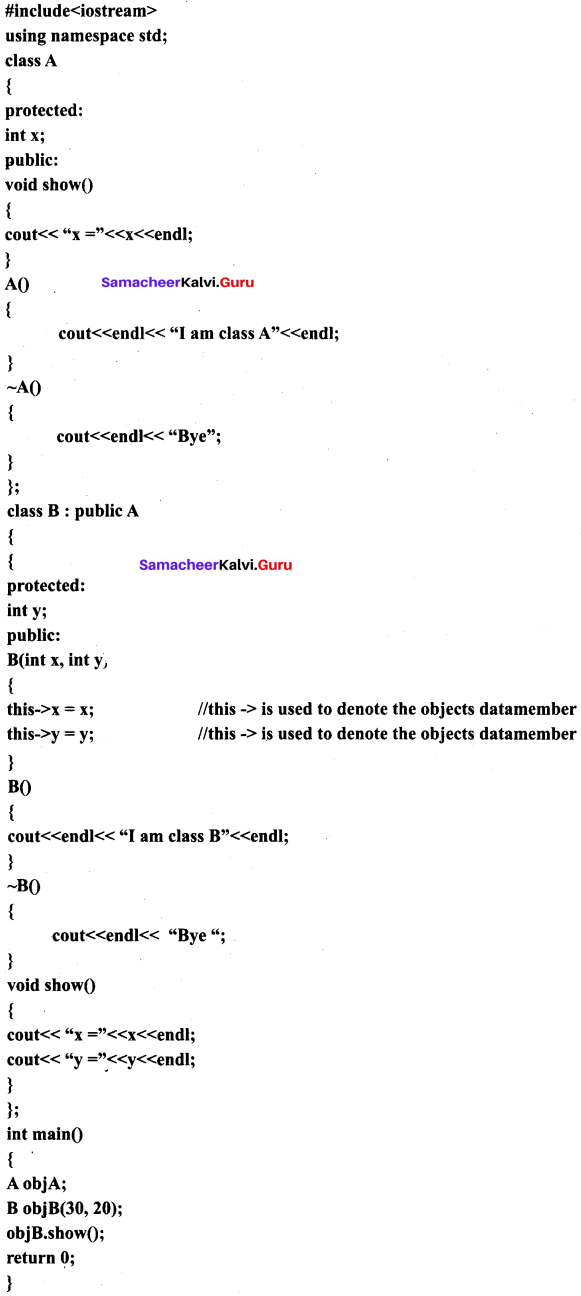
Question 5.
Write the output of the following program
Answer:
Samacheer Kalvi 11th Computer Science Solutions Chapter 16 Inheritance 7
Output:
I am class A
I am class B
X = 30 Y = 20
Bye Bye
Bye

Question 6.
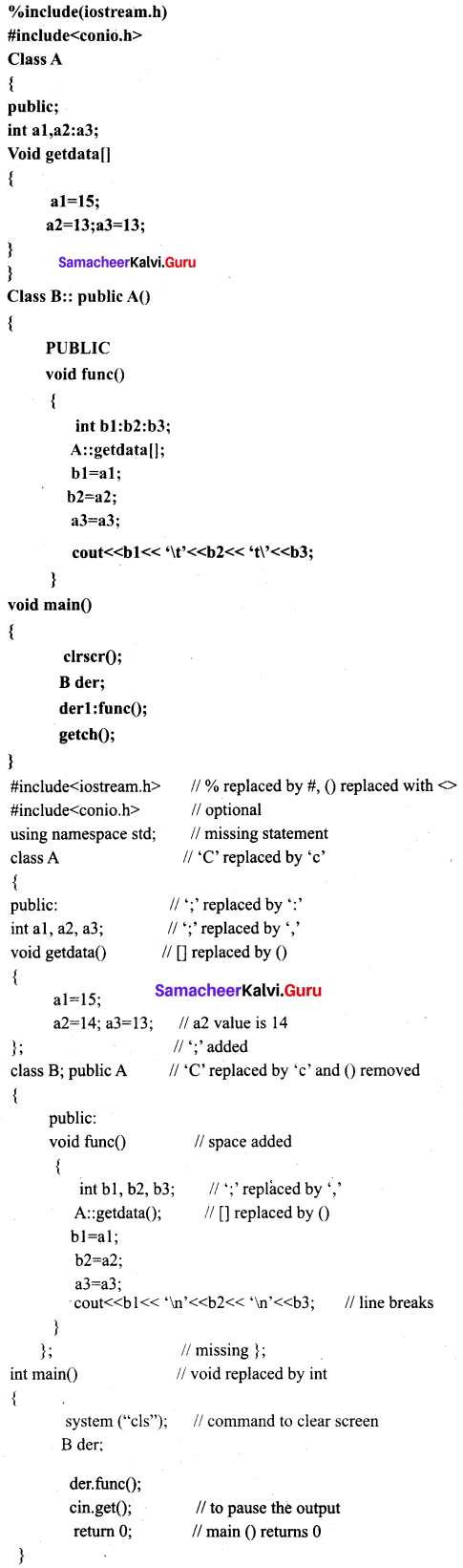
Debug the following program.
Answer:
Output:
…………………
15
14
13
Program:
…………………
Samacheer Kalvi 11th Computer Science Solutions Chapter 16 Inheritance 8

Samacheer kalvi 11th Computer Science Arrays and Structures Additional Questions and Answers

PART – 1
I. Choose the correct answer

Question 1.
When a derived class inherits only from one base class, it is known as ………………
(a) multiple inheritance
(b) multilevel inheritance
(c) hierarchical inheritance
(d) single inheritance
Answer:
(d) single inheritance

Question 2.
A class that inherits from a superclass is called ………………
(a) derived class
(b) super class
(c) base class
(d) parent class
Answer:
(a) derived class

Question 3.
When more than one derived classes are created from a single base class, it is called ………………
(a) inheritance
(b) hybrid inheritance
(c) hierarchical inheritance
(d) multiple inheritance
Answer:
(c) hierarchical inheritance

Question 4.
……………… pointer is a constant pointer that holds the memory address of the current object.
(a) member function
(b) this pointer
(c) comma operator
(d) data member
Answer:
(b) this pointer

Samacheer Kalvi 11th Computer Science Solutions Chapter 16 Inheritance

Question 5.
The ……………… are invoked in reverse order.
(a) constructor
(b) destructor
(c) pointer
(d) operator
Answer:
(b) destructor

PART – 2
II. Very Short Answers

Question 1.
Write a short note on hierarchical inheritance.
Answer:
When more than one derived classes are created from a single base class, it is known as Hierarchical inheritance.

Question 2.
Write the syntax for derived and base class.
Answer:
class derived class name : visibility_mode baseclassname
{

// members of derivedclass

};

Question 3.
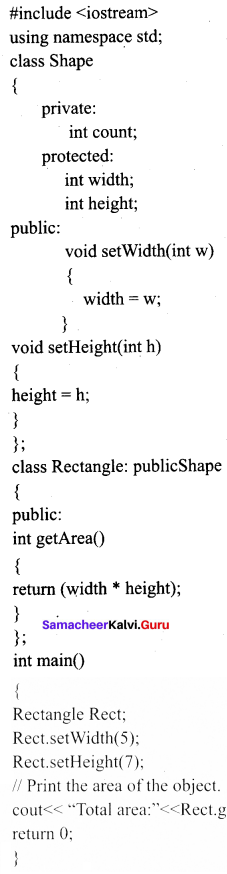
Explain the significance of different visibility modes with a program.
Answer:
Implementation of Single Inheritance using public visibility mode
Samacheer Kalvi 11th Computer Science Solutions Chapter 16 Inheritance 9
Output:
Total area : 35

Question 4.
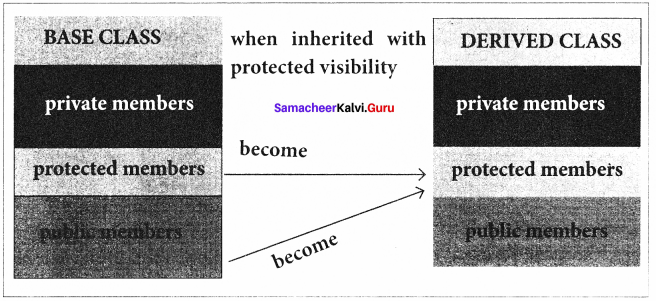
When a base class is inherited with protected visibility mode the protected and public members of the base class become protected members’ of the derived class.
Answer:
Samacheer Kalvi 11th Computer Science Solutions Chapter 16 Inheritance 10

PART – 3
III. Short Answers

Question 1.
What is inheritance and access control?
Answer:
When you declare a derived class, a visibility mode can precede each base class in the base list of the derived class. This does not alter the access attributes of the individual members of a base class , but allows the derived class to access the members of a base class with restriction. Classes can be derived using any of the three visibility mode:

  1. In a public base class, public and protected members of the base class remain public and protected members of the derived class.
  2. In a protected base class, public and protected members of the base class are protected members of the derived class.
  3. In a private base class, public and protected members of the base class become private members of the derived class.
  4. In all these cases, private members of the base class remain private and cannot be used by the derived class. However it can be indirectly accessed by the derived class using the public or protected member function of the base class since they have the access privilege for the private members of the base class.

Samacheer Kalvi 11th Computer Science Solutions Chapter 16 Inheritance

Question 2.
Write the derived class using any of the three visibility mode.
Answer:
Classes can be derived using any of the three visibility mode:

  1. In a public base class, public and protected members of the base class remain public and protected members of the derived class.
  2. In a protected base class, public and protected members of the base class are protected members of the derived class.
  3. In a private base class, public and protected members of the base class become private members of the derived class.

PART – 4
IV. Explain in Detail

Question 1.
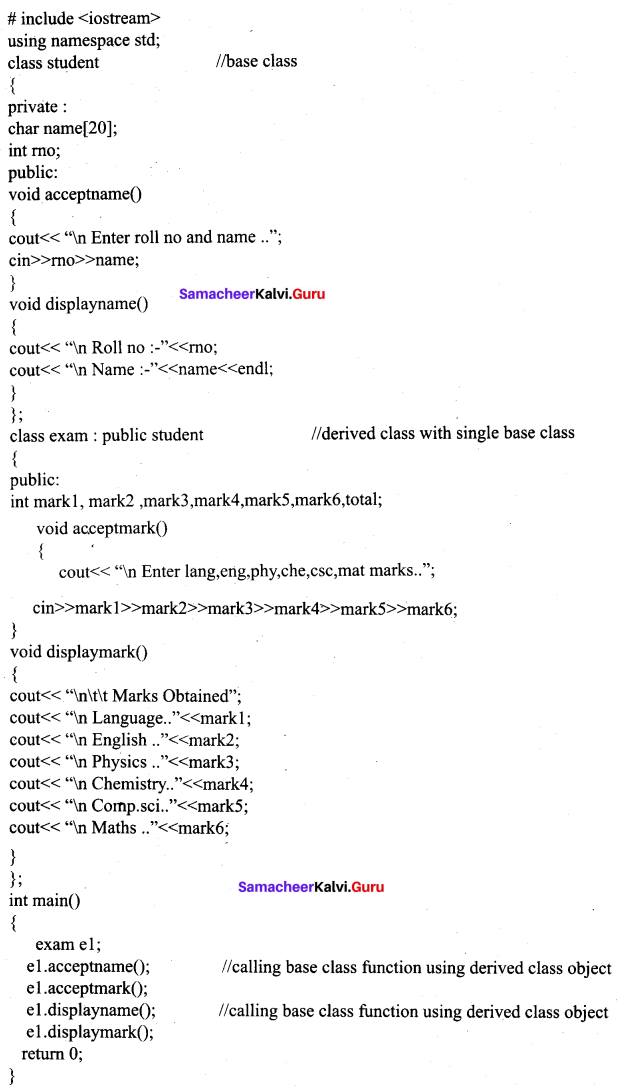
Explain single inheritance with example.
Answer:
When a derived class inherits only from one base class, it is known as single inheritance.
Samacheer Kalvi 11th Computer Science Solutions Chapter 16 Inheritance 11
Output
Enter roll no and name .. 1201 KANNAN
Enter lang, eng, phy, ehe, esc,mat marks.. 100 100 100 100 100 100
Roll no :- 1201
Name :- KANNAN
Marks Obtained
Language.. 100
English .. 100
Physics .. 100
Chemistry .. 100
Comp.sci .. 100
Maths .. 100

Question 2.
Explain this pointer.
Answer:
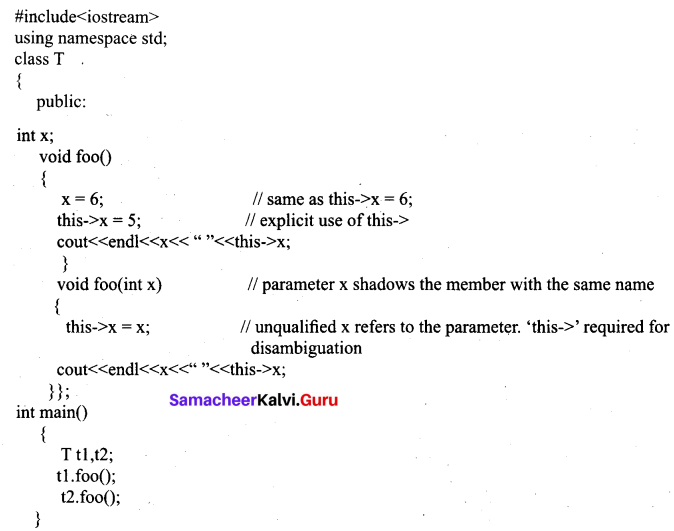
‘this’ pointer is a constant pointer that holds the memory address of the current object. It identifies the currently calling object.lt is useful when the argument variable name in the member function and the data member name are same.
Samacheer Kalvi 11th Computer Science Solutions Chapter 16 Inheritance 12
Output:
5 5
5 5
Process exited after 0.1 seconds with return value 0
Press any key to continue…

Question 3.
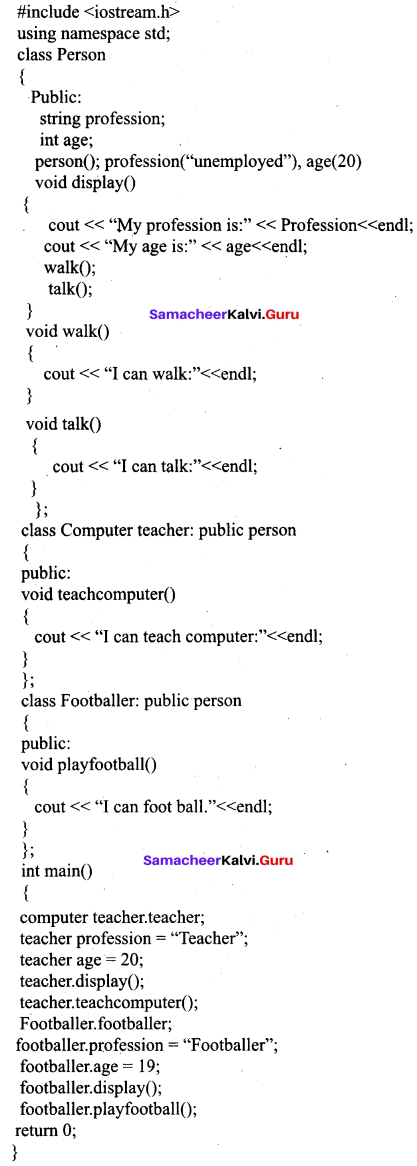
Write the output of the following program.
Samacheer Kalvi 11th Computer Science Solutions Chapter 16 Inheritance 13
Answer:
Output:
My profession is: Teacher
My age is: 20
I can walk
I can talk.
I can teach computer.
My profession is: Footballer
My age is: 19
I can walk
I can talk.
I can play football.

Samacheer Kalvi 11th Computer Applications Solutions Chapter 14 Introduction to Java Script

Students can Download Computer Applications Chapter 14 Introduction to Java Script Questions and Answers, Notes Pdf, Samacheer Kalvi 11th Computer Applications Book Solutions Guide Pdf helps you to revise the complete Tamilnadu State Board New Syllabus and score more marks in your examinations.

Tamilnadu Samacheer Kalvi 11th Computer Applications Solutions Chapter 14 Introduction to Java Script

Samacheer Kalvi 11th Computer Applications Introduction to Java Script Text Book Back Questions and Answers

I. Choose The Correct Answer

Question 1.
Which provided a common scripting language for web developers to design, test and deploy Internet Application
(a) C
(b) C++
(c) Java
(d) Java Script
Answer:
(d) Java Script

Question 2.
Expand CGI
(a) Common Gateway Interface
(b) Complex Gateway Information
(c) Common Gateway Information
(d) Complex Gateway Interface
Answer:
(a) Common Gateway Interface

Samacheer Kalvi 11th Computer Applications Solutions Chapter 14 Introduction to Java Script

Question 3.
JavaScript programming language is used to develop the
(a) Dynamic Web Page
(b) Window
(c) Web Page
(d) Home Page
Answer:
(a) Dynamic Web Page

Question 4.
The Dynamic Web Page help to save server’s
(a) Work
(b) Route
(c) Traffic
(d) Pvath
Answer:
(c) Traffic

Samacheer Kalvi 11th Computer Applications Solutions Chapter 14 Introduction to Java Script

Question 5.
User entered data, is validated before sending it to server is called ………………………
(a) Server traffic
(b) Dynamic Web Page
(c) Server Route
(d) Web server
Answer:
(b) Dynamic Web Page

Question 6.
Java Scripts can be implemented using which statements?
(a) <head>
(b) <Java>
(c) <script>
(d) <text>
Answer:
(c) <script>

Samacheer Kalvi 11th Computer Applications Solutions Chapter 14 Introduction to Java Script

Question 7.
Expand DHTML
(a) Distance Hyper Text Markup language
(b) Dynamic Hyper Text Markup language
(c) Distance High Text Markup language
(d) Dynamic High Text Markup language
Answer:
(b) Dynamic Hyper Text Markup language

Question 8.
How many attributes are used in <script> tag in the scripting
(a) 2
(b) 3
(c) 4
(d) 5
Answer:
(a) 2

Question 9.
Which attribute is used to indicate the scripting language and its value should be sent to “Text/JavaScript”
(a) Language
(b) Text 1
(c) Type
(d) Body
Answer:
(c) Type

Samacheer Kalvi 11th Computer Applications Solutions Chapter 14 Introduction to Java Script

Question 10.
The shortcut key to reload file in the browser is
(a) F2
(b) F3
(c) F4
(d) F5
Answer:
(d) F5

Question 11.
JavaScript ignores spaces that appear between
(a) Command
(b) Scripts
(c) Tokens
(d) Text
Answer:
(c) Tokens

Question 12.
A Data value for variable that appears directly in a program by using a
(a) Loop
(b) Literal
(c) Statement
(d) Text
Answer:
(b) Literal

Samacheer Kalvi 11th Computer Applications Solutions Chapter 14 Introduction to Java Script

Question 13.
Which is mostly used to give a warning message to users?
(a) Alert Dialog Box
(b) Confirm box
(c) Prompt box
(d) Display box
Answer:
(a) Alert Dialog Box

Question 14.
In the below snippet, value of x is var x = 250 + 2 – 200;
(a) 50
(b) 52
(c) 48
(d) 42
Answer:
(b) 52

II. Answer To The Following Questions

Question 1.
Write a syntax of <script> tag?
Answer:
<script language = “javascript”
type = “text/javascript”>
JavaScript code
</script>

Samacheer Kalvi 11th Computer Applications Solutions Chapter 14 Introduction to Java Script

Question 2.
What is scope of variables and types of scope variable?
Answer:
The spope of a variable is the life time of a variable of source code in which it is defined.

  1. A global variable has global scope; it can be defined everywhere in the JavaScript code.
  2. Variables declared within a function are defined only within the body of the function. They are local variables and have local scope.

Question 3.
Write a notes on type casting in JavaScript?
Answer:
Type conversion is the act of converting one data type into a different data type which is also called as casting. In JavaScript there are two type of casting:

  1. Implicit casting and
  2. Explicit casting

Question 4.
How many Literals are there in JavaScript and mention its types?
Answer:
There are five Literals in JavaScript. They are Integer, Floating point, Character, String and Boolean.

Samacheer Kalvi 11th Computer Applications Solutions Chapter 14 Introduction to Java Script

Question 5.
What is conditional operator give suitable example?
Answer:
The ?: is the conditional operator in JavaScript, which requires three operands, hence it is called the ternary operator. The syntax is:
var variablename = (condition) ?
value 1 : value2;
In the syntax, condition may be relational expression or logical expression. First condition will be evaluated, if the condition returns true then the value of the left side of the color is assigned to the variable otherwise the value of the right side of the colon will be assigned the variable.
Eg: var result = (10 > 15) ? 100 : 150;

Question 6.
What are the comments in Java Script?
Answer:
A very important aspect of good programming style is to insert remarks and comments directly in source code, making.it more readable to yourself as well as to others. Any comments you include will be ignored by the JavaScript interpreter. There are two types of comments, Single line and Multiple line comments. Single-line comments begin with a double slash (//), causing the interpreter to ignore everything from that point to the end of the line. Multiple line comments begins with /* and ends with */.
Eg:
//JavaScript single line comment//
Multiple line comments begins with /* and ends with */.

Samacheer Kalvi 11th Computer Applications Solutions Chapter 14 Introduction to Java Script

Question 7.
Write note on types of Operator?
Answer:
The type of operator is used to get the data type (returns a string) of its operand. The operand can be either a literal or a data structure such as a variable, a function, or an object. The – operator returns the data type.
Syntax
typeof operand
or
typeof (operand)

typeof returns:
boolean, function, number, string, and undefined. The following table summarizes possible values returned by the typeof operator.

Samacheer Kalvi 11th Computer Applications Solutions Chapter 14 Introduction to Java Script

Question 8.
Write the role of variable in Java Script?
Answer:
JavaScript Variables : Variable is a memory location where value can be stored. Variable is a symbolic name for a value. Variables are declared with the var keyword in JavaScript. Every variable has a name, called identifier.

Question 9.
What is the uses of prompt dialog box?
Answer:
The prompt dialog box is very useful when the user want to pop-up a text box to get user input. Thus, it enables you to interact with the user. The user needs to fill in the text box field and then click OK.

III. Answer To The Following Questions

Question 1.
What are the advantages of programming language?
Answer:

  1. In HTML we have learnt how to develop static web pages. But in real life web pages must be interactive. So to develop such interactive pages (Dynamic Web page ) JavaScript programming language is used.
  2. User entered data in the Dynamic Web page can be validated before sending it to the server. This saves server traffic, which means less load on your server.
  3. JavaScript includes such items as Textboxes, Buttons, drag-and-drop components and sliders to give a Rich Interface to site visitors. For example Creating a New email account in any service provider.

Samacheer Kalvi 11th Computer Applications Solutions Chapter 14 Introduction to Java Script

Question 2.
Brief the basic data types in Java Scripts?
Answer:
The basic data types in JavaScript are Strings, Numbers, and Booleans.

  1. A string is a list of characters, and a string literal is indicated by enclosing the characters in single or double quotes. Strings may contain a single character or multiple characters, including whitespace and special characters such as \n (the newline).
  2. Numbers can be integer or floating-point numerical value and numeric literals are specified in the natural way.
  3. Boolean can be any one of two values: true or false. Boolean literals are indicated by using true or false directly in the source code.

Question 3.
Write note on string Operator?
Answer:
The + operator performs addition on numbers but also serves as the concatenation operator for strings. Because string concatenation has precedence over “numeric addition, + will, be interpreted as string concatenation if any of the operands are strings. + operator which is also called as the string concatenation operator.

Samacheer Kalvi 11th Computer Applications Solutions Chapter 14 Introduction to Java Script

Question 4.
Write about <script> tag?
Answer:
<script language= “javascript”
type= “text / javascript”>
JavaScript code
</script>
The <SCRIPT> tag takes two important attributes

Language:
This attribute specifies that the scripting language. Typically, its value will be javascript. Although recent versions of HTML (Extensible HyperText Markup Language – XHTML, its successor) have phased out the use of this attribute is optional.

Type:
This attribute is used to indicate the scripting language and its value should be set to “text/javascript”.

Samacheer Kalvi 11th Computer Applications Solutions Chapter 14 Introduction to Java Script

Question 5.
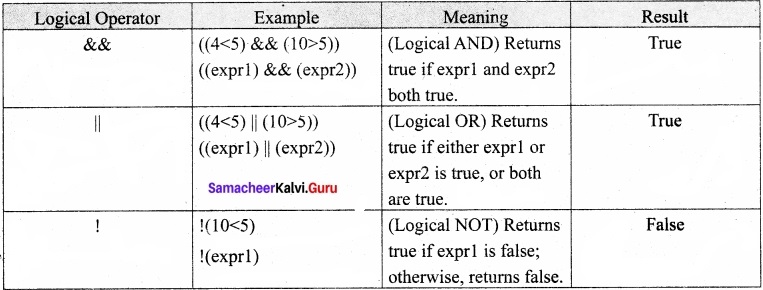
What are the uses of Logical Operators?
Answer:
Logical operators perform logical (boolean) operations. Logical operators combine or invert boolean values. Once comparisions are made , the logical operations && (AND),|| (OR) and !(NOT) can be used to create more complex conditions.
Samacheer Kalvi 11th Computer Applications Solutions Chapter 14 Introduction to Java Script img 1

Question 6.
Difference between the Increment and Decrement operator?
Answer:
Increment Operator (++):

  1. The ++ operator increments its single operand.
  2. The operator converts its operand to a number, adds 1 to that number and assigns the incremented value back into the variable.
  3.  When ++ is used before the operand, where it is known as the pre-increment operator. When used after the operand, where it is known as the post-increment operator.
    1. Eg: var m = 1, n= ++m;
    2. var m = 1, n = m++;

Decrement Operator (–):

  1. The – – operator decrement its single operand.
  2. It converts the value of the operand to a number subtracts 1 and assigns the decremented value back to the operand.
  3. When ++ is used before the operand, it decrements the value. When used after the operand, it decrements the operand but returns the undecremented value.
    1. Eg: var m = 2, n = -m;
    2. var m = 2, n= m –;

IV. Answer To The Following Questions

Question 1.
Explain about the popup dialog boxes in Java Script?
Answer:
Java Script supports three important types of dialog boxes. Dialog boxes are also called as Popup Boxes. These dialog boxes can be used to raise an alert, or to get confirmation on any input or to have a kind of input from the users. JavaScript supports three kind of popup boxes: Alert box, Confirm box, and Prompt box.

Alert Dialog Box:
An alert dialog box is mostly used to give a warning message to the users. For example, if one input field requires to enter some text but the user does not provide any input, then as a part of ‘validation, you can use an alert box to give a warning message.

Alert box gives only one button “OK” to select and proceed. The syntax of alert box is Alert (“Message”); (or) Window.alert(“Message”);

Example:
alert (“Name is compulsory entry”);
(or) window.alert (“Name is compulsory entry”);
(or) Window. alert (“Name is compulsory entry”);

Confirm Dialog Box:
A confirmation dialog box is mostly used to take user’s consent on any option. It displays a dialog box with two buttons: OK and Cancel. If the user clicks on the OK button, the confirm( ) will return true. If the user clicks on the Cancel button, then confirm( ) returns false.

The syntax of confirm dialog box is
confirm (“message”);
(or)
window confirm(“message”);
Eg:
confirm (“Hai Do you want to continue:”);

Prompt Dialog Box:
The prompt dialog box is displayed using a method called prompt( ) which takes two parameters:

(i) a label which you want to display in the text box

(ii) a default string to display in the text box. This dialog box has two buttons: OK and the prompt() will return the entered value form the text box. If the user clicks the Cancel button, the prompt() returns null, The Syntax of prompt dialog box is,
Prompt (“Message”, “defaultValue”);
(or)
window.prompt(“sometext”, “defaultText”);

Eg:
prompt (“Enter your Name:”, “Name”);
(or)
window.prompt (“Enter your Name:”, “Name”);

Samacheer Kalvi 11th Computer Applications Solutions Chapter 14 Introduction to Java Script

Question 2.
Explain about the Arithmetic operator with suitable example?
Answer:
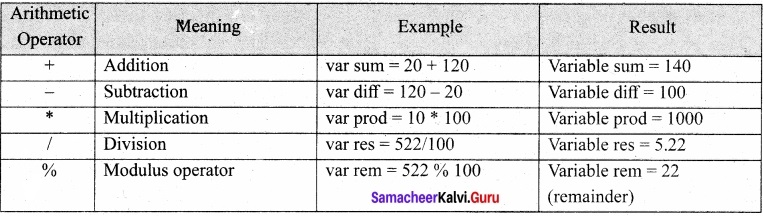
JavaScript supports all the basic arithmetic operators like addition (+), subtraction (-), multiplication (*), division (/), and modulus (%, also known as the remainder operator).
Samacheer Kalvi 11th Computer Applications Solutions Chapter 14 Introduction to Java Script img 2

Samacheer Kalvi 11th Computer Applications Introduction to Java Script Additional Questions and Answers

I.Choose The Correct Answer

Question 1.
JavaScript 1.0 was introduced by:
(a) Java corporation
(b) Netscape and Sun Inc
(c) Oracle corporation
(d) Microsoft corporation
Answer:
(b) Netscape and Sun Inc

Samacheer Kalvi 11th Computer Applications Solutions Chapter 14 Introduction to Java Script

Question 2.
Which client-side technology provides many advantages over traditional CGI server-side scripts?
Answer:
(a) C
(b) C + +
(c) JavaScript
(d) Java
Answer:
(c) JavaScript

Question 3.
Which tag is normally recommended that JavaScript should be kept it within the tag?
(a) <head>
(b) <title>
(c) <body>
(d) None of these
Answer:
(a) <head>

Samacheer Kalvi 11th Computer Applications Solutions Chapter 14 Introduction to Java Script

Question 4.
Which <script> tag attribute specifies that the scripting language?
(a) Type
(b) Language
(c) Name
(d) Value
Answer:
(b) Language

Question 5.
Which button can be used to reload the file into the browser?
(a) OK
(b) Refresh
(c) Submit
(d) Ignore
Answer:
(b) Refresh

Samacheer Kalvi 11th Computer Applications Solutions Chapter 14 Introduction to Java Script

Question 6.
JavaScript is a:
(a) Case-sensitive language
(b) Low level language
(c) Machine language
(d) Assembly language
Answer:
(a) Case-sensitive language

Question 7.
What is the JavaScript single line comment?
(a) “/”
(b) “//”
(c) */*
(d) *//*
Answer:
(b) “//”

Question 8.
What is the JavaScript multiline comment?
(a) “/**/”
(b) “*/ /*”
(c) “//”
(d) /* /*
Answer:
(a) “/**/”

Samacheer Kalvi 11th Computer Applications Solutions Chapter 14 Introduction to Java Script

Question 9.
Which is used to separate the statements in JavaScript?
(a) (:) colon
(b) (;) semicolon
(c) (,) comma
(d) (.) full stop
Answer:
(b) (;) semicolon

Question 10.
Which is a data value for variable that appears directly in a program?
(a) Variable
(b) Constant
(c) Literal
(d) Boolean
Answer:
(c) Literal

Question 11.
An identifier is simply a:
(a) Variable
(b) Name
(c) Value
(d) Boolean
Answer:
(b) Name

Question 12.
In JavaScript certain are used as reserved words?
(a) Keywords
(b) Identifiers
(c) Variable
(d) String
Answer:
(a) Keywords

Samacheer Kalvi 11th Computer Applications Solutions Chapter 14 Introduction to Java Script

Question 13.
Which is the keyword for declared variable?
(a) Float
(b) Var
(c) Int
(d) Str
Answer:
(b) Var

Question 14.
Variable name is also known as:
(a) Identifier
(b) Constant
(c) String
(d) Float
Answer:
(a) Identifier

Question 15.
…………………. is a list of characters, and a string literal by enclosing single or double quotes?
(a) Numbers
(b) Boolean
(c) String
(d) Constant
Answer:
(c) String

Samacheer Kalvi 11th Computer Applications Solutions Chapter 14 Introduction to Java Script

Question 16.
Which literals are indicated by any one of two values true or false?
(a) String
(b) Numbers
(c) Boolean
(d) Constants
Answer:
(c) Boolean

Question 17.
Which is the first character for naming a variable?
(a) Letter
(b) An underscore (_)
(c) ($) doller sign
(d) both (a) and (b)
Answer:
(d) both (a) and (b)

Question 18.
Which type of variable can be defined everywhere in the JavaScript?
(a) Global
(b) Local
(c) String
(d) Numeric
Answer:
(a) Global

Samacheer Kalvi 11th Computer Applications Solutions Chapter 14 Introduction to Java Script

Question 19.
Which type of variable can be defined only within the body of the function?
(a) Global
(b) Local
(c) String
(d) Numeric
Answer:
(b) Local

Question 20.
Which is a fixed value given to a variable in source code?
(a) String
(b) Global
(c) Literal
(d) Numeric
Answer:
(c) Literal

Question 21.
The act of converting one data type into a different data types:
(a) Type conversion
(b) Arithmetic expression
(c) Relational expression
(d) Logical expression
Answer:
(a) Type conversion

Samacheer Kalvi 11th Computer Applications Solutions Chapter 14 Introduction to Java Script

Question 22.
Which casting occurs automatically in JavaScript when you change the data stored in a variable?
(a) Implicit
(b) Explicit
(c) Internal
(d) External
Answer:
(a) Implicit

Question 23.
Which is the formation of one or more variables and / or constants joined by operators?
(a) Constant
(b) An expression
(c) Variable
(d) String
Answer:
(b) An expression

Samacheer Kalvi 11th Computer Applications Solutions Chapter 14 Introduction to Java Script

Question 24.
Which is known as the remainder / modulus operator?
(a) I
(b) *
(c) –
(d) %
Answer:
(d) %

Question 25.
Which is an assignment operator?
(a) /
(b) *
(c) =
(d) –
Answer:
(c) =

Question 26.
Relational operators are also called as:
(a) Assignment operators
(b) Arithmetic operators
(c) Comparison operators
(d) Relational operators
Answer:
(a) Assignment operators

Samacheer Kalvi 11th Computer Applications Solutions Chapter 14 Introduction to Java Script

Question 27.
Which symbol is used as ‘not equal to’ in relational operator?
(a) = =
(b) \ =
(c) !
< (d)\>
Answer:
(b) \ =

Question 28.
Which operator is used as the string concatenation of JavaScript?
(a) &
(b) +
(c) ++
(d) I
Answer:
(b) +

Question 29.
Which operator is used to increment value?
(a) +
(b) + +
(c) ~~
(d) ~
Answer:
(b) + +

Samacheer Kalvi 11th Computer Applications Solutions Chapter 14 Introduction to Java Script

Question 30.
Which operator is used to decrement value?
(a) +
(b) + +
(c) – –
(d) –
Answer:
(c) – –

Question 31.
Which operator is used to get the data type of its operand?
(a) Numeric
(b) Typeof
(c) String
(d) Float
Answer:
(b) Typeof

Question 32.
Which is the conditional operator?
(a) d
(b) :
(c) ?:
(d) ! :
Answer:
(c) ?:

Samacheer Kalvi 11th Computer Applications Solutions Chapter 14 Introduction to Java Script

Question 33.
How many dialog boxes are supported by JavaScripts?
(a) 1
(b) 2
(c) 3
(d) 4
Answer:
(c) 3

Question 34.
Dialog boxes are also called as:
(a) Text boxes
(b) Combo boxes
(c) List boxes
(d) Popup boxes
Answer:
(d) Popup boxes

Question 35.
Which is mostly used to give a warning message to the users?
(a) Alert dialog box
(b) Confirm box
(c) Prompt box
(d) Textbox
Answer:
(a) Alert dialog box

Samacheer Kalvi 11th Computer Applications Solutions Chapter 14 Introduction to Java Script

Question 36.
What is the puipose of prompt dialog box?
(a) User input
(b) User output
(c) Read data
(d) None of these
Answer:
(a) User input

Question 37.
…………………. you include will be ignored by the Java script interpreter.
(a) Constant
(b) Comment
(c) Logical operator
(d) Relational Operator
Answer:
(b) Comment

II. Answer The Following Questions

Question 1.
Define CGI?
Answer:
JavaScript had truly bridged the gap between the simple world of HTML and the more complex Common Gateway Interface (CGI) programs on the Server. It provides a common scripting language for Web developers to design, test and deploy Internet Applications.

Samacheer Kalvi 11th Computer Applications Solutions Chapter 14 Introduction to Java Script

Question 2.
How can you use <script> tag in JavaScript?
Answer:
JavaScript can be implemented using <script>… </script> tags. The <script> tag containing JavaScript can be placed anywhere within in the web page, but it is normally recommended that should be kept it within the <head> tags. The <script> tag alerts the browser program to start interpreting all the text between these tags as a script commands.

Question 3.
What is meant by lexical structure of a programming language?
Answer:
The lexical structure of a programming language is the set of elementary rules that specifies how to write programs in that language. It is the lowest-level syntax of a language. The Lexical structure specifies variable names, the delimiter characters for comments, and how one program statement is separated from the next.

Samacheer Kalvi 11th Computer Applications Solutions Chapter 14 Introduction to Java Script

Question 4.
What are the names used as tokens in JavaScript?
Answer:
Identifiers, operators, punctuator, constants and keywords.

Question 5.
What are the style of comments supported by JavaScript?
Answer:
JavaScript supports two styles of comments. Any text follow a “//” and the end of a line is treated as a single line comment and is ignored by JavaScript. Any text between the characters “ /* */” is also treated as a multiline comment.

Question 6.
What is the role of identifier?
Answer:
An identifier is simply a name. In JavaScript, identifiers are used to name variables, functions and to provide labels for certain loops in JavaScript code.

Samacheer Kalvi 11th Computer Applications Solutions Chapter 14 Introduction to Java Script

Question 7.
What is a variable?
Answer:
Variable is a memory location where value can be stored. Variable is a symbolic name for a value. Variables are declared with the var keyword in JavaScript. Every variable has a name, called identifier.

Question 8.
What are the basic types of data types?
Answer:
Every variable has a data type that indicates what kind of data the variable holds. The basic data types in JavaScript are Strings, Numbers, and Booleans.

Question 9.
What is the purpose of operator?
Answer:
An operator combines the values of its operands in some way and evaluates to a new value. Operators are used for JavaScript’s arithmetic expressions, comparison expressions, logical expressions, assignment expressions.

Samacheer Kalvi 11th Computer Applications Solutions Chapter 14 Introduction to Java Script

Question 10.
What is an expression?
Answer:
An expression is simply one or more variables and/or constants joined by operators. An expression is evaluated and produces a result. The result of all expressions may be either an integer or floating-point value or Boolean value.

Question 11.
What are the types of expression?
Answer:
There are three types of expressions as follows,

  1. Arithmetic expressions
  2. Relational expressions
  3. Logical expressions.

Samacheer Kalvi 11th Computer Applications Solutions Chapter 14 Introduction to Java Script

Question 12.
What is the Use of unary + and – operator?
Answer:
+ has no effect on numbers but causes non¬numbers to be converted into numbers.
– Negation (changes the sign of the number or converts the expression to a number and then changes its sign).

III. Answer The Following Questions

Question 1.
What are the steps to be followed to code JavaScript language?
Answer:

  1. Enter HTML and JavaScript code using any text editor.
  2. Save the latest version of this code.
  3. Use any browser to see the result. Eg: Internet Explorer, Google Chrome, etc…
  4. If this is a new document, open the file via browser’s Open Menu. If the document is already loaded in the Memory, to reload the file into the browser use “Refresh” or press F5 button.

Question 2.
How to assign values to variables in JavaScript?
Answer:
Variables can be assigned initial values when they are declared as follows:
var numericData1 = 522;
var stringData = “JavaScript
has strings\nIt sure does:;
var numericData = 3.14;
var booleanData = true;

Samacheer Kalvi 11th Computer Applications Solutions Chapter 14 Introduction to Java Script

Question 3.
Explain JavaScript literals with suitable examples?
Answer:
A literal is a fixed value given to a variable in source code. Literals are often used to initialize variables. Values may be Integer, Floating point, Character, String and Boolean.
Eg:
var int_const=250; //Integer constant//
var float_const=250.85; //
Floating point constant//
var char_const=’A’; //
Character constant//
var string_const- “Raman”; //
String constant//
var boolean_const=true; //
Boolean constant//
write statement:
General Syntax:
document write (“string” + var);

Samacheer Kalvi 11th Computer Applications Solutions Chapter 14 Introduction to Java Script

Question 4.
What is an assignment operator? Give example?
Answer:
An assignment operator is the operator used to assign a new value to a variable, Assignment operator can also be used for logical operations such as bitwise logical operations or operations on integral operands and Boolean operands.

In JavaScript = is an assignment operator, which is used to assign a value to a variable. Often this operator is used to set a variable to a literal value, for example, ..
var number1=10;
var number2=number1;
var name=”Computer Science”;
var booleanvar=true;

Samacheer Kalvi 11th Computer Applications Solutions Chapter 14 Introduction to Java Script

Question 5.
What are the rules that should be followed to use logical operators?
Answer:
Best practice is to use logical operators on boolean operands. However, operands of any type can be combined. The strict rules are as follows:

  1. For && (AND) the result is false if the first operand is false; otherwise, the result is the Boolean value of the second operand.
  2. For || (OR) the result is true if the first operand is true; otherwise, the result is the Boolean value of the second operand.
  3. For ! (NOT) the result is true if the operand is false; otherwise, the result is true.

IV. Answer The Following Questions

Question 1.
What is the lexical structure of a JavaScript program?
Answer:

  1. Though JavaScript is a case-sensitive language. It is good programming practice to type the command in lowercase.
  2. JavaScript ignores spaces that appear between tokens (identifiers, operators, punctuator, constants and keywords) in programs.
  3. JavaScript supports two styles of comments. Any text follow a “//” and the end of a line is treated as a single line comment and is ignored by JavaScript. Any text between the characters “ /* */” is also treated as a multiline comment.
  4. JavaScript uses the semicolon (;) to separate statements. Many JavaScript programmers use semicolons to explicitly mark the ends of statements.
  5. A literal is a data value for variable that appears directly in a program.

Samacheer Kalvi 11th Computer Applications Solutions Chapter 14 Introduction to Java Script

Question 2.
What are the rules that should be followed for naming variable in JavaScript?
Answer:

  1. The first character must be a letter or an underscore (_). Number cannot be as the first character.
  2. The rest of the variable name can include any letter, any number, or the underscore. You can’t use any other characters, including spaces, symbols, and punctuation marks.
  3. JavaScript variable names are case sensitive. That is, a variable named Register Number is treated as an entirely different variable than one named register number.
  4. There is no limit to the length of the variable name.
  5. JavaScript’s reserved words cannot be used as a variable name. All programming languages have a supply of words that are used internally by the language and that cannot be used for variable names.

Samacheer Kalvi 11th Computer Applications Solutions Chapter 14 Introduction to Java Script

Question 3.
Write the JavaScript program using various variables?
Answer:
<Html>
<Head>
<Title>Declaring Variables in JavaScript </Title>
</Head>
<Body>
<script language=”javascript” var numericData1 = 522;
var stringData = ” JavaScript has strings\n It sure does”;
var numericdata = 3.14;
var booleanData = true;
document.write (“Numeric Data:” +numericData 1);
document.write(“<br> String Data:” +stringData);
document.write(“<br> Floating Data:” +numericData);
</script>
</Body>
</Html>
Question 4.
Write a JavaScript program using all arithmetic operators?
Answer:
<Html>
<Head>
<Title>- To test Arithmetic Operators in JavaScript
</Title>
</Head>
<Body>
<script language=”javascript” type=” “text/javascript”>
var value1 = 522/ value2 = 10;
document.write(“<br>Data1 :” +value1);
document.write(“<br>Data2 :” +value2);
var sum = value1+value2;
var diff = value1-value2;
var prod = value1*value2;
var res = value1/value2;
var rem = value1%value2;
document.write(“<br><br>The Sum of’ Datal and Data! :” +sum);
document.write (“<br>The Difference of Data1 and Data2 :” +diff) ;
document.write(“<br>The Product of Data1 and Data2 :” +prod);
document.write(“<br>The Result after Division of Datal and Data2:” +res);
document.write(“<br>The Remainder after Division of Datal and Data2 :” +rem);
</script>
</Body>
</Html>
Samacheer Kalvi 11th Computer Applications Solutions Chapter 14 Introduction to Java Script

Question 5.
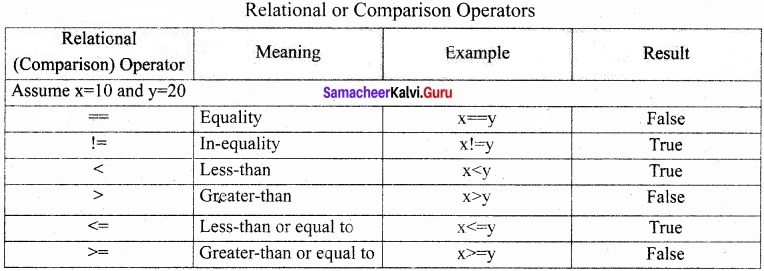
Write the relational / comparison operators using JavaScript?
Answer:
Relational operators are also called as Comparison operators, they compares two values and the result is true or false. JavaScript provides a rich set of relational operators including == (equal to), != (not equal to), < (less than), > (greater than), <= (less than or equal to), and >= (greater than or equal to). Using a relational operator in an expression causes the expression to evaluate as true if the condition holds or false if otherwise.
Samacheer Kalvi 11th Computer Applications Solutions Chapter 14 Introduction to Java Script img 3

Question 6.
Write a JavaScript program using logical operator?
Answer:
<Head>
<Body>
<script language=”javascript’ type=”text/javascript”>
var value1 = 522, value2=10;
document.write(“<br>Data1 + value1);
document.write(“<br>Data2 +value2);
var res1= ( (value1>100) && (value1>601));
var res2= ( (value1>100) || (value1>601) );
var res3=(!(value!!=value2));
document.write(“<br><br>Whether Data!>100.AND Data1>601:”+res1);
document .write (“<brxbr>Whether Data1>600 OR Data1>601:”+ res2) ;
document.write(“<br>Whether!Data!!= Data2 +res3);
</script>
</Body>
</Html>
Samacheer Kalvi 11th Computer Applications Solutions Chapter 14 Introduction to Java Script

Question 7.
Write a JavaScript program using + operator for concatenating string?
Answer:
<Html>
<Head>
<Title>- To Concatenating (+) Operators in JavaScript </Title>
</Head>
<Body>
<script language= “javascript” type=”text/javascript”>
var String1 = “Java”;

var String2 = “Script”;
var String3=String1+String2;
document.write(“<br>String1 :” +String1);
document.write(“<br>String2 :” +String2);
document.write(“<br><br>Concatenated String of String1 and String2:” +String3);
</script>
</Body>
</Html>
Samacheer Kalvi 11th Computer Applications Solutions Chapter 14 Introduction to Java Script

Question 8.
Write a JavaScript program using “typeof operator”?
Answer:
<Html>
<Head>
<Title>- To test typeof Operator in JavaScript </Title> </Head>
<Body>
<script language=”javascript” type= “text/javascript”>
var value1 = 522, value2= “JavaSript”; value3=true;
document.write(“<br>Value1=”+value1+ “and its data Type is ttypeof(value1));
document.write (“<br>Value2=” +value2+”and its data Type is : +typeof(value2));
document.write (“<br>Value3=”+value3+”and its data Type is +typeof(value3));
</script>
</Body>
</Html>
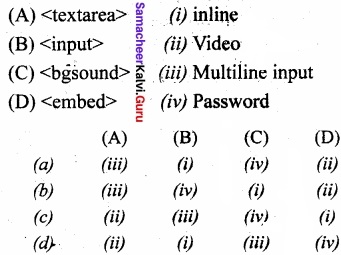
Samacheer Kalvi 11th Computer Applications Solutions Chapter 12 HTML – Adding Multimedia Elements and Forms

Students can Download Computer Applications Chapter 12 HTML – Adding Multimedia Elements and Forms Questions and Answers, Notes Pdf, Samacheer Kalvi 11th Computer Applications Book Solutions Guide Pdf helps you to revise the complete Tamilnadu State Board New Syllabus and score more marks in your examinations.

Tamilnadu Samacheer Kalvi 11th Computer Applications Solutions Chapter 12 HTML – Adding Multimedia Elements and Forms

Samacheer Kalvi 11th Computer Applications HTML – Adding Multimedia Elements and Forms Text Book Back Questions and Answers

I. Choose The Correct Answer

Question 1.
Which image format was standardize by W3C?
(a) JPEG
(b) SVG
(c) GIF
(d) PNG
Answer:
(b) SVG

Question 2.
The tag used to insert an image in HTML:
(a) Image
(b) Picture
(c) Img
(d) Pic
Answer:
(c) Img

Samacheer Kalvi 11th Computer Applications Solutions Chapter 12 HTML - Adding Multimedia Elements and Forms

Question 3.
In HTML, a piece of text or image can be moved horizontally or vertically by using:
(a) <marquee>
(b) <img>
(c) <embed>
(d) <text>
Answer:
(a) <marquee>

Question 4.
Inline sound can be inserted using which of the following tag?
(a) <inline>
(b) <backgroundsound>
(c) <bgsound>
(d) <sound>
Answer:
(c) <bgsound>

Samacheer Kalvi 11th Computer Applications Solutions Chapter 12 HTML - Adding Multimedia Elements and Forms

Question 5.
Which value causes the audio play as long as the page is in view?
(a) Stop
(b) Never Stop
(c) Continue
(d) Infinite
Answer:
(d) Infinite

Question 6.
The important attributes used with the <form> tag are:
(a) method and action
(b) name and size
(c) post and get
(d) type and name
Answer:
(a) method and action

Samacheer Kalvi 11th Computer Applications Solutions Chapter 12 HTML - Adding Multimedia Elements and Forms

Question 7.
The tag is used to create dropdown list box in HTML is:
(a) <dropdown>
(b) <select>
(c) <listbox>
(d) <input>
Answer:
(b) <select>

Question 8.
Match the following:
Samacheer Kalvi 11th Computer Applications Solutions Chapter 12 HTML - Adding Multimedia Elements and Forms
Answer:
(b) (iii) (iv) (i) (ii)

II. Answer To The Following Questions

Question 1.
List out the popular image formats?
Answer:
Most of the browsers supports, GIF, JPEG and PNG images formats. HTML – 5 introduces SVG images. One format of image can be converted to another format by using Image editing applications such as Photoshop, Picasa, GIMP etc…

Question 2.
Write down the general format of marquee?
Answer:
In HTML, a piece of text or image can be moved horizontally or vertically by using <marquee> tag. This feature makes a web page as more attractive. – General format:
<marquee> Text or image to be scroll </marquee>.

Samacheer Kalvi 11th Computer Applications Solutions Chapter 12 HTML - Adding Multimedia Elements and Forms

Question 3.
What is inline sound or movie?
Answer:
The inline refers to audio or video files are handled as part of the page. These media files play the audio or video when the page is visible in the browser window. The external refers, linking external audio or video files as url.

Question 4.
What is the purpose of <input> tag?
Answer:
Most of the form controls are created by using <input> tag. The <input> is an empty tag used to create different form elements or controls such as text box, radio buttons and so on.

Question 5.
Which tag is used to specify the list of items in dropdown list box?
Answer:
The <select> tag is used to create dropdown listbox in HTML. It provides a list of various options as a dropdown list. This element is more helpful when a number of options are to be displayed in a limited space. The <option> tag is used to specify list items.

Samacheer Kalvi 11th Computer Applications Solutions Chapter 12 HTML - Adding Multimedia Elements and Forms

Question 6.
What are the major attributes are available in <textarea> tag?
Answer:
The <Textarea> tag used to receive multi line text data as input. It is a container tag. The main attributes of <Textarea> are –
Name:
Used to define name to the control.

Rows:
Specifies the number of rows in the text area control.

Cols:
Specifies the number of columns in the text area, (number of characters in a line).

III. Answer To The Following Questions

Question 1.
Write a short note on familiar images format. GIF (Graphical Interchange Format):
Answer:
This format is one of the popular format for animated images. It was developed by CompuServe. Usually this image format is suitable for presenting tiny animated images, logos, icons, line art etc… It is not suitable for photographic work, because it uses maximum of 256 colours. Animated GIF do not support sound or playback control.

JPEG (Joint Photographic Experts Group):
JPEG is the most popular image format supported by all web browsers. This format is suitable for photographic images. Unlike GIF, JPEG can include any number of colours.

PNG (Portable Network Graphics):
PNG is designed as a replacement for GIF. It is also supported by all browsers.

SVG (Scalable Vector Graphics):
SVG is a graphics format that was developed for web. It was standardized by World Wide Web Consortium (W3C) in 2001. All current web browsers supports basic features of SVG.

Samacheer Kalvi 11th Computer Applications Solutions Chapter 12 HTML - Adding Multimedia Elements and Forms

Question 2.
How will you scroll the text in HTML?
Answer:
In HTML, a piece of text or image can be moved horizontally or vertically by using <marquee> tag. This feature makes a web page as more attractive.

General format:
<marquee> Text or image to be scroll </marquee>
Attributes of <marquee>

Height and Width:
These attributes are used to set height and width of the marquee. The values should be either in pixels or in percentage of browser window.

Direction:
This is used to specify the direction of the movement of text or image. The text or image will move towards right to left by default. So, the default direction is left. The Possible values are ‘up’, ‘down’, ‘left’ or ‘right’.

Behaviour:
This attribute is used to specify the type of scrolling. The values are ‘scroll’, ‘slide’ and ‘alternate’.

Scrolldelay:
This attribute is used to define the time delay between each jump. The time unit should be in seconds.

Scrollamount:
This is used to define the speed of the scroll.

Loop:
This is for defining how many times the marquee element should repeat on the screen. The default value is ‘infinite’, which me the marquee element scrolls endlessly.

Bgcolor:
This is used to specify the background color to the marquee elements.

Hspace and Vspace:
This is for defining the horizontal and vertical space around the marquee. The value can be in pixels or percentage.

Samacheer Kalvi 11th Computer Applications Solutions Chapter 12 HTML - Adding Multimedia Elements and Forms

Question 3.
Explain the main attributes used with <form> tag?
Answer:
The important attributes used with the <form> tag are method and action attributes.

Method:
The method attribute of the form tag is used to identify how the form element names and values will be sent to the server.

  1. The get method will append the names of the form elements and their values to the URL.
  2. The post method will send the names and values of the form elements as packets.

Action:
The action attribute identifies the server side program or script that will process the form. The action will be the name of a Common Gateway Interface (CGI) program written in programming languages like Perl, JavaScript, PHP or Active Server Pages (ASP).

Samacheer Kalvi 11th Computer Applications Solutions Chapter 12 HTML - Adding Multimedia Elements and Forms

Question 4.
Explain the values of <input> tag’s type attribute?
Answer:
Attributes of <input> tag’s Type:
This attribute is used define the type of control to be created by <input> tag. The values of type attribute is listed below:
Value of type attribute

  1. Text
  2. Password
  3. Checkbox
  4. Reset
  5. Submit
  6. Radio Button
  7. Button

Description:

  • Create a Text Box. The element used to get all kind of text input such as name, address etc…
  • Similar as Text box. But, while entering data, the characters are appearing as coded symbols such as asterisk.
  • Check box is an element appearing like a small square box. When the user click on the square a tiny tick’mark will appear inside the square. This element is used to select multiple options.
  • It is a special command button used to clear all the entries made in the form.
  • It is also a special command button used to submit all the entries made in the form to the backend server.
  • Radio button is used to select any one of the multiple options from the list. This element looks like a small circle, when the user select an item, a tiny dot will appear within the circle. If the user selects another option, previously selected option will be deselected. This means, user can select any one of the given option form a group.
  • This is a standard graphical button on the form used to call functions on click.

Samacheer Kalvi 11th Computer Applications HTML – Adding Multimedia Elements and Forms Additional Questions and Answers

I. Choose The Correct Answer

Question 1.
HTML – 5 introduces ………………….. image.
(a) GIF
(b) JPEG
(c) SVG
(d) PNG
Answer:
(c) SVG

Samacheer Kalvi 11th Computer Applications Solutions Chapter 12 HTML - Adding Multimedia Elements and Forms

Question 2.
The popular format for animated images:
(a) GIF
(b) JPEG
(c) SVG
(d) PNG
Answer:
(a) GIF

Question 3.
GIF was developed by:
(a) google
(b) microsoft
(c) sun
(d) Compuserve
Answer:
(d) Compuserve

Samacheer Kalvi 11th Computer Applications Solutions Chapter 12 HTML - Adding Multimedia Elements and Forms

Question 4.
Which format does not support animated sound and playback control?
(a) GIF
(b) JPEG
(c) SVG
(d) PNG
Answer:
(a) GIF

Question 5.
Which format is suitable for photographic images?
(a) GIF
(b) JPEG
(c) SVG
(d) PNG
Answer:
(b) JPEG

Samacheer Kalvi 11th Computer Applications Solutions Chapter 12 HTML - Adding Multimedia Elements and Forms

Question 6.
The PNG format is designed as a replacement format for:
(a) GIF
(b) JPEG
(c) SVG
(d) PNQ
Answer:
(a) GIF

Question 7.
The <IMG> tag along with the attribute is:
(a) src
(b) width
(c) height
(d) vspace
Answer:
(a) src

Question 8.
The default direction of the <marquee> is:
(a) left
(b) right
(c) top
(d) bottom
Answer:
(a) left

Samacheer Kalvi 11th Computer Applications Solutions Chapter 12 HTML - Adding Multimedia Elements and Forms

Question 9.
The default value of marquee scrolls:
(a) finite
(b) infinite
(c) 1 second
(d) many seconds
Answer:
(b) infinite

Question 10.
Which is referred to audio or video files are handled as part of the page?
(a) inline
(b) embed
(c) src
(d) img
Answer:
(a) inline

Question 11.
…………………. tag is used to attach an audio or video file easily within webpage.
(a) inline
(b) embed
(c) src
(d) no embed
Answer:
(b) embed

Samacheer Kalvi 11th Computer Applications Solutions Chapter 12 HTML - Adding Multimedia Elements and Forms

Question 12.
……………………. tag is may be used as an alternate to display some other media files.
(a) inline
(b) embed
(c) src
(d) no embed
Answer:

Question 13.
What is the primary attribute used with <embed> tag?
(a) inline
(b) embed
(c) src
(d) no embed
Answer:
(d) no embed

Samacheer Kalvi 11th Computer Applications Solutions Chapter 12 HTML - Adding Multimedia Elements and Forms

Question 14.
What is the special element of the form in html?
(a) Name
(b) Submit
(c) Text
(d) Box
Answer:
(b) Submit

Question 15.
What is the method will append the names of the form elements and their values?
(a) Form
(b) Get
(c) Post
(d) Action
Answer:
(b) Get

Samacheer Kalvi 11th Computer Applications Solutions Chapter 12 HTML - Adding Multimedia Elements and Forms

Question 16.
What method will send the names and values of the form elements as packets?
(a) Form
(b) Get
(c) Post
(d) Action
Answer:
(c) Post

Question 17.
What is the special command button used to clear all the entries made in the form?
(a) Reset
(b) Submit
(c) Button
(d) Text
Answer:
(a) Reset

Question 18.
What is the standard graphical button on the form used to call function?
(a) Reset
(b) Submit
(c) Button
(d) Text
Answer:
(c) Button

Samacheer Kalvi 11th Computer Applications Solutions Chapter 12 HTML - Adding Multimedia Elements and Forms

Question 19.
Which tag is used to receive multiline text data as input?
(a) <form>
(b) <submit>
(c) <textarea>
(d) <inline>
Answer:
(c) <textarea>

II. Answer The Following Questions

Question 1.
How can you inserts images with html document?
Answer:
The <IMG> tag along with the attribute src (Source) is used to add images in HTML document.

General format:
<img src = image_name_with_ extension>
(or)
<img src = URL>
Eg:
<img src = imagel.gif>

Samacheer Kalvi 11th Computer Applications Solutions Chapter 12 HTML - Adding Multimedia Elements and Forms

Question 2.
How can you use the Alt attribute of <img>?
Answer:
Alt (Alternative Text):
The alt attribute within <img> tag is used to describe the image, so that some text is conveyed even when the image cannot be displayed.
Eg:
<img src = bharathiyar.gif alt = “National Poet of India”>

Question 3.
What is the use of width and height attributes?
Answer:
Width and Height attributes are used to set the width and height of an image. The values of these attributes should be either pixels or percentage of its actual size.

If these attributes are not specified, the browser displays the image in its original size.
Vspace (Vertical space) and
Hspace (Horizontal space)

Samacheer Kalvi 11th Computer Applications Solutions Chapter 12 HTML - Adding Multimedia Elements and Forms

Question 4.
What is the use of <embed> ta| and <no embed> tag?
Answer:
The <embed> tag is used to attach an audio or video file easily within webpage. This tag includes the controls of the multimedia automatically in the browser. The <noembed> tag may be used as an alternate to display some other media file, in the case of the browser does not support <embed> tag.

Question 5.
What is the use of src attribute?
Answer:
Src is the primary attribute used with <embed> tag. The src attribute used to specify the name of the media file with its source location. Other attributes such as alt, height, width and align are used as it is used with <img>.

Question 6.
What is the use of <form> tag?
Answer:
The <form> tag is used to create a form. An HTML from starts with <form> and ends with </form> tag. Forms contain many types of form elements, such as text boxes, radio buttons, check boxes, buttons and drop-down lists.

Samacheer Kalvi 11th Computer Applications Solutions Chapter 12 HTML - Adding Multimedia Elements and Forms

Question 7.
What are the different types of form controls?
Answer:
In HTML, there are different types of form controls are used to collect data. They are Text box, Password, Checkbox, Radio buttons, Text area, Select box, Submit and Reset Button.

III. Answer The Following Questions

Question 1.
What are the align attributes used to align the image?
Answer:
The align attribute used to aligns the image with respect to the base line of the text. This attribute has the following values.

  1. Bottom – Aligns the bottom of the image with the baseline of the text. This is the default setting.
  2. Middle – Aligns the middle of the image with the baseline of the text.
  3. Top – Aligns the top of the image with the baseline of the text.

Question 2.
How can you define the background music attribute?
Answer:
Music can be played in the background to a webpage, while the page is viewed. This is known as ‘inline’ sound or movie. The <bgsound> tag is used to attach an inline sound file in HTML.

The src attribute is used to define the location of the media file. Volume attribute used to adjust volume control. The loop attribute defines the duration of play. The ‘infinite’ value causes the audio play as j long as the page is in view.

Samacheer Kalvi 11th Computer Applications Solutions Chapter 12 HTML - Adding Multimedia Elements and Forms

Question 3.
Explain the forms attribute submit and name?
Answer:
The form has a special element, which is submit button, which will submit the entries of a form to a server application to process the entries. Each element in the form is assigned a name using the name attribute.

Users enter values into the text boxes, or make selections from the radio buttons* check boxes, and drop down lists. The values they enter or select are passed with the name of the corresponding form element to the Web server.

Question 4.
Write the html code to insert an inline image?
Answer:
<html>
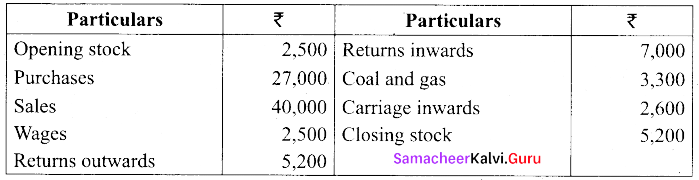
<head>
<title> Inserting Images </title>
</head>
<body>
<hl align = center>
Bharathiyar </hl>
<img src = bharathiyar.gif>
</body>
</html>
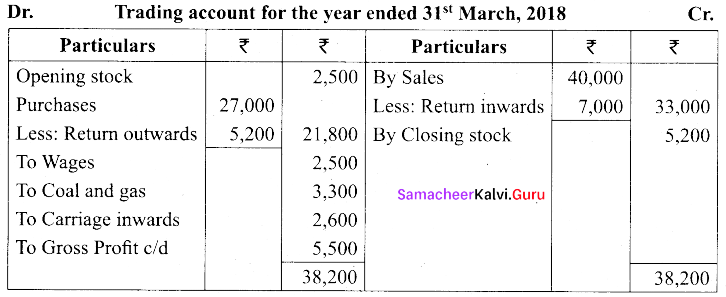
Samacheer Kalvi 11th Computer Applications Solutions Chapter 12 HTML - Adding Multimedia Elements and Forms

Question 5.
Write the html code using marquee tag?
Answer:
<html>
<head>
<title> Marquee </title>
</head>
<body>
<marquee> <b> The Government of Tamilnadu </b>,
Directorate of School
Education </marquee>
<marquee direction=right>
Welcome to <b> The State Council of Educational Research and Training </b>, Tamilnadu </marquee>
</body>
</html>
IV. Answer The Following Questions

Question 1.
Write the html code using <img> attributes?
Answer:
<html>
<head>
<title> Inserting Images </title>
</head>
<body>
<h1 align = center> Mahakavi Bharathi </h1>
<img src = bharathiyar.gif alt = “National Poet of India”
Width = 20% Height = 25% vpace = 20 Hspace = 20>
<img src = bharathiyar.gif alt = “National Poet of India”
Width = 20% Height = 25% vpace = 20 Hspace = 20>
<img src = bharathiyar.gif alt = “National Poet of India”
Width = 20% Height = 25% vpace = 20 Hspace = 20> <br>
<img src = bharathiyar.gif alt = “National Poet of India”
Width = 20% Height = 25% vpace = 20 Hspace = 20>
<img src = bharathiyar.gif alt = “National Poet of India”
Width = 20% Height = 25% vpace = 20 Hspace = 20>
<img src = bharathiyar.gif alt = “National Poet of India”
Width =20% Height = 25% vpace = 20 Hspace = 20> <br>
</body>
</html>
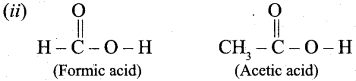
Samacheer Kalvi 11th Computer Applications Solutions Chapter 12 HTML - Adding Multimedia Elements and Forms

Question 2.
Write the html code to adding audio and video files?
Answer:
<html>
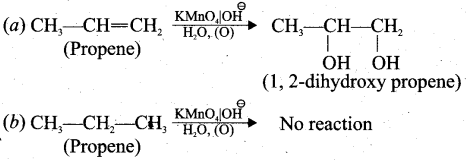
<head>
<title> Adding Multimedia Files </title>
</head>
<body>
<img src=”D:\Images\TN_Logo.png” alt=”Govt. of Tamilnadu Logo” height=25% width=15%>
<marquee> Welcome to <b> The State Council of Educational Research and Training </b>, Tamilnadu </marquee>
<embed src=”D:\CS_Videos\CS_Video.mp4″ width=50% height=50%> </embed> </body>
</html>

Samacheer Kalvi 11th Computer Applications Solutions Chapter 12 HTML - Adding Multimedia Elements and Forms

Question 3.
Write the html code to form and form controls?
Answer:
<html>
<head>
<title> Login Form </title>
<body>
<h3 align=center> TamilNadu State Council of Educational Research
and Training, Chennai </h3>
<Form Action =”mailto:abed.xyz0com” method=post>
<p> User Name:
cinput type = text name=”user_name” size = 20 maxlength = 15> </p>
<p> Password:
<Input type = password name=”pass” size = 20 maxlength = 15> </p>
<Input type = reset value =”Clear”>
<Input type = submit value =”Login”>
</Form>
</body>
</html>

Tamil Nadu 11th Accountancy Previous Year Question Paper June 2019 English Medium

Students can Download Tamil Nadu 11th Accountancy Previous Year Question Paper June 2019 English Medium Pdf, Tamil Nadu 11th Accountancy Model Question Papers helps you to revise the complete Tamilnadu State Board New Syllabus and score more marks in your examinations.

TN State Board 11th Accountancy Previous Year Question Paper June 2019 English Medium

General Instructions:

  1. The question paper comprises of four parts.
  2. You are to attempt all the parts. An internal choice of questions is provided wherever applicable.
  3. All questions of Part I, II, III, and IV are to be attempted separately.
  4. Question numbers 1 to 20 in Part I are Multiple Choice Questions of one mark each.
    These are to be answered by choosing the most suitable answer from the given four alternatives and writing the option code and the corresponding answer.
  5. Question numbers 21 to 30 in Part II are two-mark questions. These are to be answered in about one or two sentences.
  6. Question numbers 31 to 40 in Part III are three-mark questions. These are to be answered in above three to five short sentences.
  7. Question numbers 41 to 47 in Part IV are five-mark questions. These are to be answered in detail Draw diagrams wherever necessary.

Time: 2.30 Hours
Maximum Marks: 90

Part – I

Answer all the questions. Choose the correct answer: [20 × 1 = 20]

Question 1.
Financial position of a business is ascertained on the basis of ________.
(a) Journal
(b) Trial balance
(c) Balance Sheet
(d) Ledger
Answer:
(c) Balance Sheet

Question 2.
Who is considered to be the internal user of the financial information?
(a) Creditor
(b) Employee
(c) Customer
(d) Government
Answer:
(b) Employee

Question 3.
“Book-keeping is an art of recording business dealings in a set of books” is said by
(a) R.N.Carter
(b) Menhar
(c) J.R.Batlibai
(d) Kohler
Answer:
(c) J.R.Batlibai

Tamil Nadu 11th Accountancy Previous Year Question Paper June 2019 English Medium

Question 4.
In India, Accounting Standards are issued by ______.
(a) Reserve Bank of India
(b) Accountant General of India
(c) The Institute of Chartered Accountants of India
(d) The Cost and Management Accountant of India
Answer:
(d) The Cost and Management Accountant of India

Question 5.
Outstanding wages is a ________.
(a) Nominal account
(b) Personal account
(c) Real account
(d) Representative personal account
Answer:
(d) Representative personal account

Question 6.
The process of finding the net amount from the totals of debit and credit columns in a ledger is known as ______.
(a) Casting
(b) Posting
(c) Journalising
(d) Balancing
Answer:
(d) Balancing

Question 7.
The total of the debit column is short by ₹ 500 in the trial balance. This difference will be _____.
(a) Debited to suspense account
(b) Credited to suspense account
(c) Adjusted to any of the debit balance
(d) Adjusted to any of the credit balance
Answer:
(a) Debited to suspense account

Question 8.
Purchase of fixed assets on credit basis is recorded in:
(a) Purchases book
(b) Sales book
(c) Purchases returns book
(d) Journal proper
Answer:
(d) Journal proper

Question 9.
In Triple column cash book, the balance of bank overdraft brought forward will appear in ______.
(a) Cash column credit side
(b) Cash column debit side
(c) Bank column debit side
(d) Bank column credit side
Answer:
(d) Bank column credit side

Tamil Nadu 11th Accountancy Previous Year Question Paper June 2019 English Medium

Question 10.
A bank reconciliation statement is prepared with the help of ______.
(a) Bank statement
(b) Petty Cash book
(c) Cash book
(d) Bank statement and bank column of the cash book
Answer:
(d) Bank statement and bank column of the cash book

Question 11.
The total of purchases book was undercast. Which of the following accounts should be credited in the rectifying journal entry?
(a) Purchases account
(b) Creditors account
(c) Suspense account
(d) Debtors account
Answer:
(c) Suspense account

Question 12.
The difference in trial balance is taken to _______.
(a) The capital account
(b) The trading account
(c) The suspense account
(d) The profit and loss account
Answer:
(c) The suspense account

Question 13.
Under the written down value method of depreciation, the amount of depreciation is ________.
(a) Decreasing every year
(b) Uniform in all the years
(c) Increasing every year
(d) Fluctuating every year
Answer:
(a) Decreasing every year

Question 14.
Advertisement expenses amounted to ₹ 5 crores to introduce a new product is _______.
(a) Capital expenditure
(b) Revenue expenditure
(c) Deferred revenue expenditure
(d) Capital receipt
Answer:
(b) Revenue expenditure

Question 15.
Short term loan is ________.
(a) Liquid liability
(b) Current liability
(c) Fixed liability
(d) Contingent liability
Answer:
(b) Current liability

Question 16.
Bank overdraft should be shown ________.
(a) In the trading account
(b) On the assets side
(c) Profit and Loss account
(d) On the liabilities side
Answer:
(d) On the liabilities side

Question 17.
Closing stock is valued at _______.
(a) Cost price
(b) Market price
(c) Cost price or market price whichever is higher
(d) Cost price or net realisable value whichever is lower
Answer:
(d) Cost price or net realisable value whichever is lower

Question 18.
Prepaid salary will be shown on _______.
(a) Debit side of trading account
(b) Assets side of Balance sheet
(c) Debit side of profit and loss account
(d) Both (b) and (c)
Answer:
(d) Both (b) and (c)

Question 19.
One of the limitations of computerised accounting system is ________.
(a) System failure
(b) Accuracy
(c) Versatility
(d) Storage
Answer:
(a) System failure

Tamil Nadu 11th Accountancy Previous Year Question Paper June 2019 English Medium

Question 20.
Accounting software is an example of _______.
(a) Utility software
(b) System software
(c) Application software
(d) Operating software
Answer:
(c) Application software

Part – II

Answer any seven questions in which question No. 30 is compulsory: [7 × 2 = 14]

Question 21.
Complete the accounting equation
Tamil Nadu 11th Accountancy Previous Year Question Paper June 2019 English Medium 1
Tamil Nadu 11th Accountancy Previous Year Question Paper June 2019 English Medium 2
Answer:
Tamil Nadu 11th Accountancy Previous Year Question Paper June 2019 English Medium 3

Question 22.
Prepare Furniture A/c from the following transactions.

2017
Jan. 1Furniture in hand20,000
Jan. 1Purchased furniture for cash10,000
Jan. 30Sold furniture4,000

Answer:
Tamil Nadu 11th Accountancy Previous Year Question Paper June 2019 English Medium 4

Question 23.
Prepare a trial balance with the following information:
Tamil Nadu 11th Accountancy Previous Year Question Paper June 2019 English Medium 5
Answer:
Tamil Nadu 11th Accountancy Previous Year Question Paper June 2019 English Medium 6
Tamil Nadu 11th Accountancy Previous Year Question Paper June 2019 English Medium 7

Tamil Nadu 11th Accountancy Previous Year Question Paper June 2019 English Medium

Question 24.
Enter the following transactions in the Purchases book of M/s. Subhashree Home Appliances.
Tamil Nadu 11th Accountancy Previous Year Question Paper June 2019 English Medium 8
Answer:
Tamil Nadu 11th Accountancy Previous Year Question Paper June 2019 English Medium 9

Question 25.
What is bank reconciliation statement?
Answer:
If every entry in the cash book matches with the bank statement, then bank balance will be the same in both the records. But, practically it may not be possible. When the balances do not agree with each other, the need for preparing a statement to explain the causes arises. This statement is called bank reconciliation statement (BRS).

Question 26.
Rectify the following errors discovered before the preparation of trial balance:
(a) Returns inward book was undercast by ₹ 1,000
(b) Returns outward book was overcash by ₹ 2,000
Answer:
(a) Returns inward book should be debited ₹ 1,000
(b) Returns outward book should be debited ₹ 2,000

Tamil Nadu 11th Accountancy Previous Year Question Paper June 2019 English Medium

Question 27.
What is annuity method of calculating depreciation?
Answer:
To calculate the amount of depreciation, annuity factor is used. Annuity factor can be found out from the annuity table or by using formula.
Amount of depreciation is computed as follows:
Amount of depreciation = Annuity factor × Original cost of the asset.

Question 28.
What is meant by deferred revenue expenditure?
Answer:
An expenditure which is revenue expenditure in nature, the benefits of which is to be derived over a subsequent period or periods is known as deferred revenue expenditure.

Question 29.
Write the components of Computerised Accounting System (CAS)?
Answer:
Components of CAS can be classified into six categories, namely,

  • Hardware
  • Software
  • People
  • Procedure
  • Data
  • Connectivity.

Question 30.
The Trial balance as on 31st December 2018 is given below:

ParticularsDebitCredit
Loan @ 10% p.a4,00,000
Interest paid on loan30,000

Pass adjusting entry for interest on loan outstanding ₹ 10,000
Answer:
Tamil Nadu 11th Accountancy Previous Year Question Paper June 2019 English Medium 10

PART – III

Answer any seven questions in which question No. 40 is compulsory: [7 × 3 = 21]

Question 31.
Write the objectives of Accounting.
Answer:
Following are the objectives of accounting:

  • To keep a systematic record of financial transactions and events
  • To ascertain the profit or loss of the business enterprise
  • To ascertain the financial position or status of the enterprise
  • To provide information to various stakeholders for their requirements
  • To protect the properties of an enterprise and
  • To ascertain the solvency and liquidity position of an enterprise

Tamil Nadu 11th Accountancy Previous Year Question Paper June 2019 English Medium

Question 32.
In a Business concern “Only monetary transactions are recorded in accounting”. Why?
Answer:
This concept implies that only those transactions, which can be expressed in terms of money, are recorded in the accounts. Since, money serves as the medium of exchange transactions expressed in money are recorded and the ruling currency of a country is the measuring unit for accounting.

Transactions which do not involve money will not be recorded in the books of accounts.
For example, working conditions in the work place, strike by employees, efficiency of the management, etc. will not be recorded in the books, as they cannot be expressed in terms of money.

Question 33.
Complete the missing information:
Tamil Nadu 11th Accountancy Previous Year Question Paper June 2019 English Medium 11
Answer:
Tamil Nadu 11th Accountancy Previous Year Question Paper June 2019 English Medium 12

Question 34.
Balan who has a car driving school gives you the following ledger balances. Prepare trial balance as on 31st December, 2016.
Tamil Nadu 11th Accountancy Previous Year Question Paper June 2019 English Medium 13
Answer:
Tamil Nadu 11th Accountancy Previous Year Question Paper June 2019 English Medium 14

Tamil Nadu 11th Accountancy Previous Year Question Paper June 2019 English Medium

Question 35.
Prepare bank reconciliation statement as on 31st December, 2017 from the following information:
(a) Balance as per bank statement (pass book) is ₹ 25,000
(b) No record has been made in the cash book for a dishonour of a cheque for ₹ 250
(c) Cheques deposited into bank amounting to ₹ 3,500 were not yet collected
(d) Bank charges of ₹ 300 have not been entered in the cash book.
(e) Cheques issued amounting to ₹ 9,000 have not been presented for payment
Answer:
Tamil Nadu 11th Accountancy Previous Year Question Paper June 2019 English Medium 15

Question 36.
Calculate the amount of depreciation and depreciation rate from the following by using ‘straight line method’.

Purchase price of a machinery2,00,000
Transportation cost2,000
Installation cost18,000
Estimated scrap value10,000
Estimated life10 years

Answer:
Tamil Nadu 11th Accountancy Previous Year Question Paper June 2019 English Medium 16
Note:
Cost of the asset = Purchase price + Transportation cost + Installation cost
= 2,00,000 + 2,000 + 18,000 = ₹ 2,20,000

Question 37.
Write any three differences between capital, revenue and deferred revenue expenditure.
Answer:
Tamil Nadu 11th Accountancy Previous Year Question Paper June 2019 English Medium 17

Tamil Nadu 11th Accountancy Previous Year Question Paper June 2019 English Medium

Question 38.
From the following details for the year ended 31st March, 2018, prepare trading account:
Tamil Nadu 11th Accountancy Previous Year Question Paper June 2019 English Medium 18
Answer:
Tamil Nadu 11th Accountancy Previous Year Question Paper June 2019 English Medium 19

Question 39.
The Trial Balance of Mr.Aravind on 31.3.15 shows capital ₹ 15,00,000. During that year he withdrew ₹ 1,00,000 for his personal use.
Adjustment: Charge interest on drawings at 5%
Pass adjusting entry and transfer entry.
Answer:
Interest on drawings = ₹ 1,00,000 × 5/100 = ₹ 5000. The adjusting entry is:
Tamil Nadu 11th Accountancy Previous Year Question Paper June 2019 English Medium 20

Tamil Nadu 11th Accountancy Previous Year Question Paper June 2019 English Medium

Question 40.
Pass Adjusting Entries for the following adjustments in the books of Mr.MuraIi.
(a) Closing stock – ₹ 10,000
(b) Interest received in advance – ₹ 5,000
(c) Depreciation on Machinery – ₹ 8,500
Answer:
Tamil Nadu 11th Accountancy Previous Year Question Paper June 2019 English Medium 21

Part – IV

Answer all the questions: [7 × 5 = 35]

Question 41.
(a) Mrs. Saraswathy is a sole trader dealing in sports items. From the following transactions, pass journal entries for the month of March, 2017.

March

1Commenced business with cash5,00,000
2Cash deposited into bank2,50,000
3Purchased goods from Ravi1,00,000
4Sales made to Kumar, who deposited the money through CDM20,000
5Sold goods to Vivek, on credit50,000
6Cash purchases30,000
7Dividend directly received by bank3,000
8Salaries paid through ECS6,000
9Money withdrawn from ATM9,000
10Cricket balls donated to a trust2,500

Answer:
Tamil Nadu 11th Accountancy Previous Year Question Paper June 2019 English Medium 22
Tamil Nadu 11th Accountancy Previous Year Question Paper June 2019 English Medium 23

[OR]

(b) The following errors were located after the preparation of the trial balance. Assume that their exists a suspense account. Rectify them.
(i) Bought goods from Lakshmi on credit for ₹ 500. Credited to her account as ₹ 50.
(ii) Purchased machinery for cash ₹ 2,000 was posted to machinery account.
(iii) Salaries ₹ 2,800 were posted as ₹ 18,000
(iv) The total of sales book ₹ 890 was carried forward as ₹ 980
(v) The total of purchase book was undercast by ₹ 1,000
Answer:
Tamil Nadu 11th Accountancy Previous Year Question Paper June 2019 English Medium 24

Tamil Nadu 11th Accountancy Previous Year Question Paper June 2019 English Medium

Question 42.
(a) Show the direct ledger postings for the following transactions:

2015
June 1Subash commenced business with cash50,000
June 5Sold goods for cash10,000
June 8Goods purchased for cash5,000
June 20Goods purchased from Shankar on credit6,000

Answer:
Tamil Nadu 11th Accountancy Previous Year Question Paper June 2019 English Medium 25
Tamil Nadu 11th Accountancy Previous Year Question Paper June 2019 English Medium 26
Tamil Nadu 11th Accountancy Previous Year Question Paper June 2019 English Medium 27
Tamil Nadu 11th Accountancy Previous Year Question Paper June 2019 English Medium 28

[OR]

(b) Enter the following transactions in three column cash book of Mr. Raja.
Tamil Nadu 11th Accountancy Previous Year Question Paper June 2019 English Medium 29
Answer:
Tamil Nadu 11th Accountancy Previous Year Question Paper June 2019 English Medium 30

Question 43.
(a) Prepare accounting equation for the following transactions.

(i) Mrs. Rani started business with cash₹ 50,000
(ii) Opened bank account with a deposit of₹ 10,000
(iii) Bought goods from Ravi on credit for₹ 12,000
(iv) Sold goods (costing 10,000) for₹ 15,000
(v) Salaries paid for₹ 5,000

Answer:
Tamil Nadu 11th Accountancy Previous Year Question Paper June 2019 English Medium 31

(b) From the following information, prepare the necessary subsidiary books for Nalanda Book stores.
Tamil Nadu 11th Accountancy Previous Year Question Paper June 2019 English Medium 32
Answer:
Tamil Nadu 11th Accountancy Previous Year Question Paper June 2019 English Medium 33
Tamil Nadu 11th Accountancy Previous Year Question Paper June 2019 English Medium 34

Tamil Nadu 11th Accountancy Previous Year Question Paper June 2019 English Medium

Question 44.
(a) Ram and Co. purchased on 1st April 2014, a plant and machinery for ₹ 6,50,000 and spend ₹ 50,000 on its installation. After having used it for three years, it was sold for ₹ 4,00,000. Depreciation is to be provided every year at the rate of 15% per annum on the fixed instalment method. Accounts are closed on 31st March every year. Prepare plant and machinery account and depreciation account for three years.
Answer:
Workings:
Tamil Nadu 11th Accountancy Previous Year Question Paper June 2019 English Medium 35
Tamil Nadu 11th Accountancy Previous Year Question Paper June 2019 English Medium 36

[OR]

(b) From the following balances obtained from the books of Mr. Ramesh, prepare trading and profit and loss account.
Tamil Nadu 11th Accountancy Previous Year Question Paper June 2019 English Medium 37
Closing stock on December 31.12.17 was ₹ 10,000/-
Answer:
Tamil Nadu 11th Accountancy Previous Year Question Paper June 2019 English Medium 38
Tamil Nadu 11th Accountancy Previous Year Question Paper June 2019 English Medium 39

Tamil Nadu 11th Accountancy Previous Year Question Paper June 2019 English Medium

Question 45.
(a) Enter the following transactions in Rahim’s petty cash book with analytical columns under imprest system:

2017
Jan. 1Balance on hand250
Jan. 1Cash received from chief cashier1,750
Jan. 2Purchased pencil, rubber and paper200
Jan. 4Sent documents to Head office by Registered post150
Jan. 5Travelling expenses paid to salesman200
Jan. 17Paid for sundry expenses80
Jan. 19Paid for office expenses100
Jan. 11Paid for letter pad175
Jan. 13Paid to Amutha on account65
Jan. 15Paid for repairs to furniture80
Jan. 18Carriage paid90
Jan. 20Brought postal stamps50
Jan. 22Paid for telephone charges175

Answer:
Tamil Nadu 11th Accountancy Previous Year Question Paper June 2019 English Medium 40

[OR]

(b) From the following particulars of Meenakshi Traders, prepare a bank reconciliation statement as on 31st March 2018.
(i) Debit balance as per cash book ₹ 10,500.
(ii) Cheque deposited into bank amounting to ₹ 5,500 credited by bank, but entered twice in the Cash book.
(iiii) Cheques issued and presented for payment amounting to ₹ 7,000 omitted in the cash book.
(iv) Cheque book charges debited by the bank ₹ 200 not recorded in the cash book.
(v) Cash of ₹ 1,000 deposited by a customer of the business in cash deposit machine not recorded in the cash book.
Answer:
Tamil Nadu 11th Accountancy Previous Year Question Paper June 2019 English Medium 41

Tamil Nadu 11th Accountancy Previous Year Question Paper June 2019 English Medium

Question 46.
(a) The following are the extracts from the trial balance:

ParticularsDr. (₹)Cr.(₹)
Sundry Debtors Bad debts

Provision for doubtful debts

75,000

5,000

2,000

Additional Information:
(i) Additional bad debts ₹ 5,000
(ii) Provision for bad and doubtful debts @ 5% on sundry debtors.
You are required to pass necessary adjusting entries and show how these items will appear in profit and loss account and balance sheet.
Answer:
Tamil Nadu 11th Accountancy Previous Year Question Paper June 2019 English Medium 42
Tamil Nadu 11th Accountancy Previous Year Question Paper June 2019 English Medium 43

[OR]

(b) Record the following transactions in the sales book and sales returns book of M/s. Roobini and Co., and post them to ledger.
Tamil Nadu 11th Accountancy Previous Year Question Paper June 2019 English Medium 44
Answer:
Tamil Nadu 11th Accountancy Previous Year Question Paper June 2019 English Medium 45
Tamil Nadu 11th Accountancy Previous Year Question Paper June 2019 English Medium 46
Tamil Nadu 11th Accountancy Previous Year Question Paper June 2019 English Medium 47

Tamil Nadu 11th Accountancy Previous Year Question Paper June 2019 English Medium

Question 47.
(a) Consider the following balances, extracted from the books of Jain as on 31st December 2016. Prepare the final accounts.
Tamil Nadu 11th Accountancy Previous Year Question Paper June 2019 English Medium 48
Adjustments:
(i) Salaries outstanding for December, 2016 amounted to ₹ 600
(ii) Provide depreciation on furniture @ 10% p.a
(iii) Provide Interest on capital for the year @ 5 % p.a
(iv) Stock on 31st December, 2016 ₹ 14,000
Answer:
Tamil Nadu 11th Accountancy Previous Year Question Paper June 2019 English Medium 49
Tamil Nadu 11th Accountancy Previous Year Question Paper June 2019 English Medium 50

[OR]

(b) Write the advantages of Computerised Accounting System.
Answer:
Advantages of Computerised Accounting System:
The main advantages of computerised accounting system are as follows:

Faster processing: Computers require far less time than human beings in performing a particular task. Therefore, accounting data are processed faster using a computerised accounting system.

Accurate information: There is less space for error because only one account entry is needed for each transaction unlike repeated posting of the same accounting data in manual system.

Reliability: Computer systems are immune to boredom, tiredness or fatigue. Therefore, these can perform repetitive functions effectively and are highly reliable.

Easy availability of information: The data are easily available and Can be communicated to different users at the same time.

Up-to-date information: Account balances will always be up to date since the records are automatically updated as and when accounting data are entered or stored.

Efficiency: The computer based accounting system ensures better use of time and resources.

Storage and retrieval: Computer based systems require a fractional amount of physical space as compared to the books of accounts in the form of journals, ledgers and accounting registers.

Works as a motivator to employees: Employees using computer systems feel more valued as they are trained and specialised for the job.

Automated document production: Accounting reports like trial balance and financial statements are generated automatically and are easily accessible just by a click of the mouse.

MIS Reports: It is easier to monitor and control the business using the real time management reports generated by the computerised information systems.

Samacheer Kalvi 11th Computer Science Solutions Chapter 14 Classes and Objects

Students can Download Computer Science Chapter 14 Classes and Objects Questions and Answers, Notes Pdf, Samacheer Kalvi 11th Computer Science Book Solutions Guide Pdf helps you to revise the complete Tamilnadu State Board New Syllabus and score more marks in your examinations.

Tamilnadu Samacheer Kalvi 11th Computer Science Solutions Chapter 14 Classes and Objects

Samacheer Kalvi 11th Computer Science Classes and Objects Text Book Back Questions and Answers

PART – 1
I. Choose The Correct Answer

Question 1.
The variables declared inside the class are known as data members and the functions are known as ………………..
(a) data functions
(b) inline functions
(c) member functions
(d) attributes
Answer:
(c) member functions

Question 2.
Which of the following statements about member functions are True or False?
(i) A member function can call another member function directly with using the dot operator.
(ii) Member function can access the private data of the class.
(a) (i) – True, (ii) – True
(b) (i) – False, (ii)-True
(c) (i) – True, (ii) – False
(d) (i) – False, (ii) – False
Answer:
(a) (i) – True, (ii) – True

Question 3.
A member function can call another member function directly, without using the dot operator called as ………………..
(a) sub function
(b) sub member
(c) nesting of member function
(d) sibling of member function
Answer:
(c) nesting of member function

Samacheer Kalvi 11th Computer Science Solutions Chapter Classes and Objects

Question 4.
The member function defined within the class behave like ………………..
(a) inline function
(b) Non – inline function
(c) Outline function
(d) Data function
Answer:
(a) inline function

Question 5.
Which of the following access specifier protects data from inadvertent modifications?
(a) Private
(b) Protected
(c) Public
(d) Global
Answer:
(b) Protected

Question 6.
class x
{
int y; public:
x(int z){y=z;}
}x1[4];
int main()
{x x2(10);
return 0;}
How many objects are created for the above program?
(a) 10
(b) 14
(c) 5
(d) 2
Answer:
(c) 5

Question 7.
State whether the following statements about the constructor are True or False.
(i) constructors should be declared in the private section.
(ii) constructors are invoked automatically when the objects are created.
(a) True, True
(b) True, False
(c) False, True
(d) False, False
Answer:
(c) False, True

Samacheer Kalvi 11th Computer Science Solutions Chapter Classes and Objects

Question 8.
Which of the following constructor is executed for the following prototype?
add display( add &);  // add is a class name
(a) Default constructor
(b) Parameterized constructor
(c) Copy constructor
(d) Non Parameterized constructor
Answer:
(d) Non Parameterized constructor

Question 9.
What happens when a class with parameterized constructors and having no default constructor is used in a program and we create an object that needs a zero – argument constructor?
(a) Compile – time error
(b) Domain error
(c) Runtime error
(d) Runtime exception
Answer:
(d) Runtime exception

Question 10.
Which of the following create a temporary instance?
(a) Implicit call to the constructor
(b) Explicit call to the constructor
(c) Implicit call to the destructor
(d) Explicit call to the destructor
Answer:
(b) Explicit call to the constructor

PART – 2
II. Answers to all the questions

Question 1.
What are called members?
Answer:
Class comprises of members. Members are classified as Data Members and Member functions. Data members are the data variables that represent the features or properties of a class. Member functions are the functions that perform specific tasks in a class.

Question 2.
Differentiate structure and class though both are user defined data type.
Answer:
The only difference between structure and class is the members of structure are by default public where as it is private in class.

Samacheer Kalvi 11th Computer Science Solutions Chapter Classes and Objects

Question 3.
What is the difference between the class and object in terms of OOP?
Answer:
Object:

  • Object is an instance of a class.
  • Object is a real world entity such as pen, laptop, mobile, chair etc.
  • Object allocates memory when it is created.

Class:

  • Class is a blueprint or template from which objects are created.
  • Class is a group of similar objects.
  • Class doesn’t allocate memory when it is created.

Question 4.
Why it is considered as a good practice to define a constructor though compiler can automatically generate a constructor?
Answer:
Declaring a constructor with arguments hides the compiler generated constructor. After this we cannot invoke the compiler generated constructor.

Question 5.
Write down the importance of destructor.
The purpose of the destructor is to free the resources that the object may have acquired during its lifetime. A destructor function removes the memory of an object which was allocated by the constructor at the time of creating a object.

PART – 3
III. Answers to all the questions

Question 1.
Rewrite the following program after removing the syntax errors if any and underline the errors:
Answer:
Samacheer Kalvi 11th Computer Science Solutions Chapter 14 Classes and Objects 1

Question 2.
Write with example how will you dynamically initialize objects?
When the initial values are provided during runtime then it is called dynamic initialization.
Example to illustrate dynamic initialization
Answer:
Samacheer Kalvi 11th Computer Science Solutions Chapter 14 Classes and Objects 2
Output:
Enter the Roll Number 1201
Enter the Average 98.6
Roll number:- 1201
Average :- 98.6

Question 3.
What are advantages of declaring constructors and destructor under public accessability?
Answer:
When constructor and destructor are declared under public:

  1. we can initialize the object while declaring it.
  2. we can explicitly call the constructor.
  3. we can overload constructor and therefore use multiple constructors to initialize objects automatically.
  4. we can destroy the objects at the end of class scope automatically (free unused memory).

However, some C++ compiler and Dev C++ do not allow to declare constructor and destructor under private section. So it is better to declare constructor and destructor under public section only.

Question 4.
Given the following C++ code, answer the questions (i) & (ii).
Answer:
class TestMeOut
{

public:
~TestMeOut() //Function 1 {cout << “Leaving the examination hall” << endl;}
TestMeOut() //Function 2
{cout<<“Appearing for examination”<<endl;}
void MyWork() //Function 3
{cout<<“Attempting Questions//<<endl;}

};
1. In Object Oriented Programming, what is Function 1 referred as and when does it get invoked / called?
2. In Object Oriented Programming, what is Function 2 referred as and when does it get invoked / called?
Answer:
1. Function 1 is the ‘destructor’.
It is executed automatically when an object of the class TestMeOut goes out of scope.

2. Function 2 is called default ‘constructor’.
It is executed automatically when instance of the class TestMeOut comes into scope or when objects of the class TestMeOut are created.

Question 5.
Write the output of the following C++ program code :
Answer:
Samacheer Kalvi 11th Computer Science Solutions Chapter 14 Classes and Objects 3
Output:
B#0
I#1
G#1

PART – 4
IV. Answers to all the questions

Question 1.
Explain nested class with example.
Answer:
When one class become the member of another class then it is called Nested class and the relationship is called containership. When a class is declared within another class, the inner class is called as Nested class (i.e. the inner class) and the outer class is known as Enclosing class. Nested class can be defined in private as well as in the public section of the Enclosing class.

Classes can be nested in two ways:

  1. By defining a class within another class
  2. By declaring an object of a class as a member to another class
  3. By defining a class within another class

C++ program to illustrate the nested class
Samacheer Kalvi 11th Computer Science Solutions Chapter 14 Classes and Objects 4
Output:
The product of 3*2 = 6
The product of 4*4 = 16
The product of 2*2=4

By declaring an object of a class as a member to another class Whenever an object of a class is declared as a member of another class, it is known as a container class. In the containership the object of one class is declared in another class.
Samacheer Kalvi 11th Computer Science Solutions Chapter 14 Classes and Objects 5

Question 2.
Mention the differences between constructor and destructor.
Answer:
Constructor:

  • The name of the constructor must be same as that of the class.
  • No return type can be specified for constructor.
  • A constructor can have parameter list.
  • The constructor function can be overloaded.
  • They cannot be inherited but a derived class can call the base class constructor.
  • The compiler generates a constructor, in the absence of a user defined constructor.

Destructor:

  • The destructor has the same name as that of the class prefixed by the tilde character
  • It has no return type.
  • The destructor cannot have arguments
  • Destructors cannot be overloaded i.e., there can be only one destructor in a class.
  • They cannot be inherited.
  • In the absence of user defined destructor, it is generated by the compiler.

Question 3.
Define a class RESORT with the following description in C++ :
Answer:
Private members:

  1. Rno // Data member to store room number.
  2. Name // Data member to store user name.
  3. Charges // Data member to store per day charge.
  4. Days //Data member to store the number of days.
  5. Compute () // A function to calculate total amount as Days * Charges and if the //total amount exceeds 11000 then total amount is 1.02 * Days ’’’Charges.

Public member:
getinfo() // Function to Read the information like name, room no, charges and days dispinfo () // Function to display all entered details and total amount calculated
//using COMPUTE function
//include
//include
//include
Class RESORT
{

Private:
int Rno;
char name [20];
float charges; int days; float compute();
Public:
void getinfoO;
void dispinfo();

}
void RESORT: : getinfo()
{

cout << “Enter Registration number:”; cin >> Rno.;
cout << “\n Enter name:”; gets(name);
cout << “\n Enter per day charges:”; cin >> charges;
cout << “\n Enter number of days:”; cin >> days;

}
void RESORT: : dispinfo()

{

cout << “\n1. Registration number:” << Rno << “\n2. Name:”; puts(name);
cout << “\n3. charges per day:” << charges << “\n4. Number of days:” <<days;
cout<< “\n5. Amount:” << compute();

}
long float;
amount = charges*days;
if (amount> 11000)
amount = 1,02*days*charges;
return amount;
}
RESORT obj;
void main()
{

clrscr();
obj.getinfo();
obj.dispinfoQ;
getch();

}

Question 4.
Write the output of the following.
Answer:
Samacheer Kalvi 11th Computer Science Solutions Chapter 14 Classes and Objects 6
Output:
Constructing Subject
Constructing Student
Constructing Admission
Back to main()
Subject number Days:
Constructing the object
d= 150, Sn= 12
Constructing the object of students
Enter the roll number and the marks secured
mo: 12345 marks: 438
Constructing the object of admission
fees: 20000
Back in main()

Question 5.
Write the output of the following.
Answer:
Samacheer Kalvi 11th Computer Science Solutions Chapter 14 Classes and Objects 7
Output:
Constructor of class P
Constructor of class Q
Constructor of class R
Constructor of class Q
Constructor of class P
Destructor of class P
Destructor of class Q
Destructor of class R
Destructor of class Q
Destructor of class P

Samacheer kalvi 11th Computer Science Arrays and Structures Additional Questions and Answers

PART – 1
I. Choose the correct answer

Question 1.
The most important feature of C++ is ………………..
(a) object
(b) class
(c) public
(d) All the above
Answer:
(b) class

Question 2.
Objects are also called as ………………..
(a) instance of class
(b) class
(c) function
(d) scope
Answer:
(a) instance of class

Question 3.
Calling a member function of an object is also known as ……………….. to object.
(a) call function
(b) call by value
(c) call by reference
(d) sending message
Answer:
(d) sending message

Samacheer Kalvi 11th Computer Science Solutions Chapter Classes and Objects

Question 4.
Objects are passed as arguments to a ………………..
(a) call by value
(b) call by reference
(c) member function
(d) global variable
Answer:
(c) member function

Question 5.
When one class become the member of another class, the relationship is called ………………..
(a) containership
(b) partnership
(c) friendship
(d) all the above
Answer:
(a) containership

Question 6.
When a class is declared within another class, the inner class is called ……………….. and the outer class is called ………………..
(a) enclosing class, nested class
(b) nested class, enclosing class
(c) first class, second class
(d) A class, B class
Answer:
(b) nested class, enclosing class

Question 7.
……………….. can be defined either in private or in public section of a class.
(a) Object
(b) Data type
(c) Memory
(d) constructor
Answer:
(d) constructor

Question 8.
A constructor which can take arguments is called ………………..
(a) parameterised constructor
(b) default constructor
(c) copy constructor
(d) destructor
Answer:
(a) parameterised constructor

Question 9.
There are ……………….. ways to create an object using parameterized constructor.
(a) 3
(b) 2
(c) 1
(d) 4
Answer:
(c) 1

Samacheer Kalvi 11th Computer Science Solutions Chapter Classes and Objects

Question 10.
the name of the symbol is ………………..
(a) hash
(b) arrow
(c) tilde
(d) bracket
Answer:
(c) tilde

PART – 2
II. Very Short Answers

Question 1.
Define methods of a class and write its types.
Answer:
Class comprises of members. Member functions are called as methods. The member functions of a class can be defined in two ways.

  1. Inside the class definition
  2. Outside the class definition

Question 2.
What is global object?
Answer:
If an object is declared outside all the function bodies or by placing their names immediately after the closing brace of the class declaration then it is called as Global object. These objects can be used by any function in the program.

Question 3.
What is called as nesting of member functions?
Answer:
Only the public members of a class can be accessed by the object of that class, using dot operator. However a member function can call another member function of the same class directly without using the dot operator. This is called as nesting of member functions.

Question 4.
In the absence of user defined constructor, what will the constructor do?
Answer:
In the absence of user defined constructor the compiler automatically provides the default constructor. It simply allocates memory for the object.

Samacheer Kalvi 11th Computer Science Solutions Chapter Classes and Objects

Question 5.
What is parameterized constructor?
Answer:
A constructor which can take arguments is called parameterized constructor.This type of constructor helps to create objects with different initial values. This is achieved by passing parameters to the function.

Question 6.
What will be the output of the following program?
Answer:
Samacheer Kalvi 11th Computer Science Solutions Chapter 14 Classes and Objects 8
Out put:
151515

Question 7.
What will be the output for the following program?
Answer:
Samacheer Kalvi 11th Computer Science Solutions Chapter 14 Classes and Objects 9

PART – 3
III. Short Answers

Question 1.
Explain local object with an example.
Answer:
If an object is declared with in a function then it is called local object. It cannot be accessed from outside the function.
# include
# include
using namespace std
class add  //Global class
{
int a,b; public:
int sum; void
getdata()
{
a = 5; b = 10; sum
= a + b;
}
} a1;
add a2;
int main()
{
add a3;
a1.getdata();  //global object
a2.getdata();  //global object
a3.getdata();
cout << a1 .sum;  //Local object for a global class
cout << a2.sum;
cout << a3.sum;
return 0;   //public data member accessed from outside the class
}
Output:
151515

Question 2.
Explain scope resolution operator with an example.
Answer:
If there are multiple variables with the same name defined in separate blocks then :: (scope resolution) operator will reveal the hidden file scope (global) variable.
Samacheer Kalvi 11th Computer Science Solutions Chapter 14 Classes and Objects 10
Output:
120

Question 3.
What is constructor?
Answer:
The definition of a class only creates a new user defined data type. The instances of the class type should be instantiated (created and initialized). Instantiating object is done using constructor. An array or a structure in C++ can be initialized during the time of their declaration.

The initialization of class type object at the time of declaration similar to a structure or an array is not possible because the class members have their associated access specifiers (private or protected or public). Therefore Classes include special member functions called as constructors. The constructor function initializes the class object.

Samacheer Kalvi 11th Computer Science Solutions Chapter Classes and Objects

Question 4.
What are the functions of constructor?
Answer:
As we know now that the constructor is a special initialization member function of a class that is called automatically whenever an instance of a class is declared or created. The main function of the constructor is

  1. To allocate memory space to the object and
  2. To initialize the data member of the class object

Question 5.
Explain default constructor with an example.
Answer:
A constructor that accepts no parameter is called default constructor. For example in the class data program Data ::Data() is the default constructor. Using this constructor objects are created similar to the way the variables of other data types are created.

Example:
int num; //ordinary variable declaration
Data d1; // object declaration

Question 6.
What are the ways to create an object using parameterized constructor?
Answer:
There are two ways to create an object using parameterized constructor:
Implicit call:
In this method, the parameterized constructor is invoked automatically whenever an object is created. For example simple s1(10, 20); in this for creating the object s1 parameterized constructor is automatically invoked.

Explicit call:
In this method, the name of the constructor is explicitly given to invoke the parameterized constructor so that the object can be created and initialized.

Question 7.
When copy constructor is called?
Answer:
A copy constructor is called:

  1. When an object is passed as a parameter to any of the member functions. Example void simple::putdata(simple x);
  2. When a member function returns an object. Example simple getdata() {}
  3. When an object is passed by reference to an instance of its own class For example, simplest, s2(s1); // s2(s1) calls copy constructor.

Question 8.
Write the output of the following program.
Answer:
#include
using namespace std;
class simple
{
private:
int a, b;
public:
simple()
{
a= 0;
b= 0;
cout << “\n Constructor of class – simple”;
}
void getdata()
{
cout << “\n Enter values for a and b (sample data 6 and 7)…”; cin >> a >> b;
}
void putdata()
{
cout << “\nThe two integers are ..” << a << ‘\t’ << b << end1;
cout << “\n The sum of the variables” << a << “+” << b << “=” << a+b; }
~simple()
{ cout << “\n Destructor is executed to destroy the object”;}
};
int main()
{
simple s;
s.getdata();
s.putdata();
return 0;
}
Output:
Constructor of class – simple
Enter values for a and b (sample data 6 and 7)… 6 7
The two integers are .. 6 7
The sum of the variables 6 + 7 = 13
Destructor is executed to destroy the object

PART – 4
IV. Explain in Detail

Question 1.
Create a class called product with the following specifications.
Answer:
Private members:
code quantity – integer data type
price – float data type
get data() – function to accept values for all data members with no return

Public members:
tax – float
dispdata() member function to display code, quantity, price and tax. The tax is calculated as if the quantity is more than 150, tax is 3000, or else 1000.
Samacheer Kalvi 11th Computer Science Solutions Chapter 14 Classes and Objects 13

Question 2.
Explain pass by value with an example.
Answer:
When an object is passed by value the function creates its own copy of the object and works on it. Therefore any changes made to the object inside the function do not affect the original object.
Samacheer Kalvi 11th Computer Science Solutions Chapter 14 Classes and Objects 14
Output:
Example program for Pass by value
Value of object 1 before passing 10
Value of object 2 before passing 20
Changed value of object 1 100
Changed value of object 2 200
Value of object 1 after passing 10
Value of object 2 after passing 20

Question 3.
Explain pass by reference with an example.
Answer:
When an object is passed by reference, its memory address is passed to the function so the called function works directly on the original object used in the function call. So any changes made to the object inside the function definition are reflected in original object.
Samacheer Kalvi 11th Computer Science Solutions Chapter 14 Classes and Objects 15
Output:
Example program for Pass by reference
Value of object 1 before passing 10
Value of object 2 before passing 20
Changed value of object 1 100
Changed value of object 2 200
Value of object 1 after passing 100
Value of object 2 after passing 200

Question 4.
What are the ways to create an object using parameterized constructor with an example?
Answer:
There are two ways to create an object using parameterized constructor:
1. Implicit call : In this method, the parameterized constructor is invoked automatically whenever an object is created. For example simple s1( 10,20); in this for creating the object s1 parameterized constructor is automatically invoked.

2. Explicit call : In this method, the name of the constructor is explicitly given to invoke the parameterized constructor so that the object can be created and initialized.

#include
using namespace std;
class simple
{
private:
int a, b;
public:
simple(int m,int n)
{
a = m;
b = n;
cout << “\n Constructor of class – simple invoked for implicit and explicit call” << endl;
}
void putdata()
{
cout << “\n The two integers are…” << a << ‘\t’ << b << endl;
cout << “\n The sum of the variables” << a << “+” << b << “=” << a + b;
}
};
int main()
{
simple s1(10,20); //implicit call
simple s2 = simple(30,45); //explicit call
cout << “\n\t\tObject 1\n”;
s1.putdata();
s2.putdata();
return 0;
}
Output:
Constructor of class – simple invoked for implicit and explicit call
Constructor of class-simple invoked for implicit and explicit call

Object 1
The two integers are… 10 20
The sum of the variables 10 + 20 = 30

Object 2
The two integers are… 30 45.
The sum of the variables 30 + 45 = 75

Samacheer Kalvi 11th Computer Science Solutions Chapter Classes and Objects

Question 5.
Write the output of the following program.
Answer:
#include
using namespace std;
class simple
{
private:
int a, b;
public:
simple() //default constructor
{
a = 0; b = 0;
cout << “\n default constructor” << endl;
}
int getdata();
};
int simple :: getdata()
{int tot;
cout << “\n Enter two values”; cin >> a >> b;
}
tot = a + b; return tot;
}
int main()
{
int sum=0; simple s1[3];
cout << “\n\t\tObject 1 with both values \n”;
for (int i=0;i<3;i++)
sum+=s 1 [i]. getdata();
cout << “\nsum of all object values is” << sum;
return 0;
}
Output:
default constructor
default constructor
default constructor
Object 1 with both values
Enter two values 10 20
Enter two values 30 40
Enter two values 50 50
sum of all object values is 200
}

Tamil Nadu 11th Chemistry Model Question Paper 5 English Medium

Students can Download Tamil Nadu 11th Chemistry Model Question Paper 5 English Medium Pdf, Tamil Nadu 11th Chemistry Model Question Papers helps you to revise the complete Tamilnadu State Board New Syllabus and score more marks in your examinations.

TN State Board 11th Chemistry Model Question Paper 5 English Medium

Tamil Nadu 11th Chemistry Model Question Paper 5 English Medium

Part – I

Answer all the questions. [15 x 1 = 15]
Choose the most suitable answer from the given four alternatives.

Question 1.
How many equivalents of Sodium sulphate is formed when Sulphuric acid is completely neutralized with a base NaOH?
(a) 0.2
(b) 2
(c) 0.1
(d) 1
Answer:
(d) 1

Tamil Nadu 11th Chemistry Model Question Paper 5 English Medium 1
Question 2.
Consider the orbitals A, B and C, which as following n and l values,
A ⇒ n = 3 and l = 1
B ⇒ n = 4 and l = 2
C ⇒ n = 2 and l = 0
Arrange the orbitals in increasing energy level.
(a) C < B < A
(b) C < A < B
(c) A < B < C
(d) B < A < C
Answer:
(b) C < A < B

Tamil Nadu 11th Chemistry Model Question Paper 5 English Medium

Question 3.
The law of triads is obeyed by
(a) Fe, CO, Ni
(b) C, N, O
(c) He, Ne, Ar
(d) Al, Si, P
Answer:
(a) Fe, CO, Ni

Question 4.
Zeolite used to soften hardness of water is, hydrated
(a) Sodium aluminium silicate
(b) Calcium aluminium silicate
(c) Zinc aluminium borate
(d) Lithium aluminium hydride
Zeolite is sodium aluminium silicate. (NaAlSi2O6 H2O)
Answer:
(a) Sodium aluminium silicate

Question 5.
Assertion : Generally alkali and alkaline earth metals form superoxides.
Reason : There is a single bond between O and O in superoxides.
(a) both assertion and reason are true and reason is the correct explanation of assertion
(b) both assertion and reason are true but reason is not the correct explanation of assertion
(c) assertion is true but reason is false
(d) both assertion and reason are false
Answer:
(d) both assertion and reason are false

Tamil Nadu 11th Chemistry Model Question Paper 5 English Medium

Among alkali and alkaline earth metals, K, Rb and Cs alone forms superoxides. Superoxide O2- has 3 electron bond.

Question 6.
Rate of diffusion of a gas is
(a) directly proportional to its density
(b) directly proportional to its molecular weight
(c) directly proportional to its square root of its molecular weight
(d) inversely proportional to the square root of its molecular weight
Answer:
(d) inversely proportional to the square root of its molecular weight

Question 7.
The values of AH and AS for a reaction are respectively 30 kJ mol-1 and 100 JK 1 mol-1. Then the temperature above which the reaction will become spontaneous is:
(a) 300K
(b) 30K
(c) 100K
(d) 20°C
Answer:
(a) 300K

∆G = ∆H – T∆S
At 300 K, ∆G = 30000 J mol-1 – 300 K x 100 J K-1 mol-1
∆G = 0 above 300 K ; ΔG will be negative and reaction becomes spontaneous.

Question 8.
If x is the fraction of PCl5 dissociated at equilibrium in the reaction, PCl5 PCl3 + Cl2 then starting with 0.5 mole of PC15, the total number of moles of reactants and products at equilibrium is ……………………… .
(a) 0.5 – x
(b) x + 0.5
(c) 2x + 0.5
(d) x + l
Answer:
(b) x + 0.5

Tamil Nadu 11th Chemistry Model Question Paper 5 English Medium

Solution:

PCl5PC13Cl2
Initial no. of moles0.5
No . of moles dissociatedX
No. of moles at equilibrium0.5 – xXx

Total no. of moles at equilibrium = 0.5 – x + x + x = 0.5 + x

Question 9.
Which of the following concentration terms is/are independent of temperature?
(a) molality
(b) molarity
(c) mole fraction
(d) (a) and (c)
Answer:
(d) (a) and (c)

Tamil Nadu 11th Chemistry Model Question Paper 5 English Medium

Solution:
Molality and mole fraction are independent of temperature.

Question 10.
Which one of the following is a correct set?
(a) H2O, sp3, bent
(b) H2O, sp2, linear
(c) NH44+, dsp2, square planar
(d) CH4, dsp2, tetrahedral
Answer:
(a) H2O, sp3, bent

Question 11.
The IUPAC name of the compound is
Tamil Nadu 11th Chemistry Model Quest
(a) 2,3 – Diemethylheptane
(b) 3- Methyl -4- ethyloctane
(c) 5-ethyl -6-methyl octane
(d) 4- Ethyl -3 – methyloctane
Answer:
(d) 4- Ethyl -3 – methyloctane

Question 12.
Which of the following is correct order of the stability of carbocations?
(a) +CH3 > +CH2 CH2 > +CH(CH3)2 > +C(CH3)3
(b) +CH2CH3 > +CH3 > +CH(CH3)2 > +C(CH3)3
(c) +C(CH3)3 > +CH(CH3)2 > +CH2CH3 > +CH3
(d) +CH(CH3)2 > +CH3 > +CH2CH3 > +C(CH3)3
Answer:
(c) +C(CH3)3 > +CH(CH3)2 > +CH2CH3 > +CH3

Tamil Nadu 11th Chemistry Model Question Paper 5 English Medium

Question 13.
where A is,
(a) Zn
(b) Cone. H2SO4
(c) Ale. KOH
(d) Dil. H2SO4
Answer:
(c) Ale. KOH

Question 14.
Match the compounds given in Column I with suitable items given in Column II.

Column I (Compound)Column II (Uses)
A.Iodoform1.Fire extinguisher
B.Carbon tetrachloride2.Insecticide
C.CFC3.Antiseptic
D.DDT4.Refrigerants

Code:
(a) A → 2, B → 4, C → 1, D → 3
(b) A → 3, B → 2, C → M, D → 1
(c) A → 1, B → 2, C → 3, D → 4
(d) A → 3, B → 1, C → 4, D → 2
Answer:
(d) A → 3, B → 1, C → 4, D → 2

Tamil Nadu 11th Chemistry Model Question Paper 5 English Medium

Question 15.
Living in the atmosphere of CO is dangerous because it …………………………… .
(a) Combines with O2 present inside to form CO2
(b) Reduces organic matter of tissues
(c) Combines with haemoglobin and makes it incapable to absorb oxygen
(d) Dries up the blood
Answer:
(c) Combines with haemoglobin and makes it incapable to absorb oxygen

Part-II

Answer any six questions in which question No. 20 is compulsory. [6 x 2 = 12]

Question 16.
What is meant by plasma state? Give an example.
Answer:
The gaseous state of matter at very high temperature containing gaseous ions and free-electron is referred to as the Plasma state, e.g. Lightning.

Question 17.
Give the electronic configuration of Mn2+ and Cr3+.
Answer:
Mn (Z = 25) Mn → Mn2+ + 2e
Mn2+ electronic configuration is Is2 2s2 2p6 3s2 3p6 3d5
Cr (Z = 24) Cr → Cr3+ + 3e
Cr3+ electronic configuration is Is2 2s2 2p6 3s2 3p6 3d3

Tamil Nadu 11th Chemistry Model Question Paper 5 English Medium

Question 18.
Do you think that heavy water can be used for drinking purposes?
Answer:

  1. Heavy water (D2O) contains a proton and a neutron. This makes deuterium about twice as heavy as protium, but it is not radioactive. So heavy water is not radioactive.
  2. If you drink heavy water, you don’t need to worry about radiation poisoning. But it is not completely safe to drink, because the biochemical reaction in our cells are affected by the difference in the mass of hydrogen atoms.
  3. If you drink an appreciable volume of heavy water, you might feel dizzy because of the density difference. It would change the density of the fluid in your inner ear. So it is unlikely to drink heavy water.

Question 19.
Mention the methods used for liquefaction of gases.
Answer:

  1. Linde’s method: Joule-Thomson effect is used to get liquid air or any other gas.
  2. Claude’s process: In addition to Joule-Thomson effect, the gas is allowed to perform mechanical work so that more cooling is produced.
  3. Adiabatic process: This method of cooling is produced by removing the magnetic property of magnetic material e.g. Gadolinium sulphate. By this method, a temperature of 10-4 K i.e. as low as zero Kelvin can be achieved.

Question 20.
Calculate the entropy change of a process, possessing ΔHt = 2090 J mole-1. Sn(α, 13°C) = Sn(β, 13°C).
Answer:
Tamil Nadu 11th Chemistry Model Question Paper 5 English Medium 3

Tamil Nadu 11th Chemistry Model Question Paper 5 English Medium

Question 21.
What is reaction quotient?
Answer:
Consider a.homogeneous reversible reaction
For the above reaction under non-equilibrium conditions, reaction quotient Q is defined as the ratio of the product of active masses of reaction products raised to the respective stoichiometric coefficients in the balanced chemical equation to that of the reactants.

Under non equilibrium conditions,
Tamil Nadu 11th Chemistry Model Question Paper 5 English Medium 4

Question 22.
Write the structural formula for the following compounds,
(a) Cyclohexa-1,4-diene
(b) Ethynyl Cyclohexane
Answer:
Tamil Nadu 11th Chemistry Model Question Paper 5 English Medium 5

Question 23.
What are free radical initiators? Give an example.
Answer:
The types of reagents that promote homolytic cleavage in substrate are called as free radical initiators. They are short lived and are highly reactive.

Tamil Nadu 11th Chemistry Model Question Paper 5 English Medium

Example:

  • Azobisisobutyronitrile (AIBN)
  • Benzoyl peroxide

Question 24.
Complete the reaction and mention name of the reaction.
CH3CH2Br + (CH3)2 LiCu → ?
Answer:
This reaction is known as Corey-House Mechanism.

Part-III

Answer any six questions in which question No. 29 is compulsory. [6 x 3 = 18]

Question 25.
A compound contains 50% of X (atomic mass 10) and 50% Y (atomic mass 20). Give its empirical formula.
Answer:
Tamil Nadu 11th Chemistry Model Question Paper 5 English Medium 6
∴ The Empirical Formula is X2Y
Empirical Formula mass = 20 + 20 = 40
Molecular mass = Sum of atomic mass = 40
n = 1, Molecular formula = (Empirical Formula )n = (X2Y)1 = X2Y.

Question 26.
Explain Davisson and termer experiment.
Answer:

  • The wave nature of electron was experimentally confirmed by Davisson and Germer.
  • They allowed the accelerated beam of electrons to fall on a nickel crystal and recorded the diffraction pattern.
  • The resultant diffraction pattern is similar to the X-ray diffraction pattern.
  • The finding of wave nature of electron leads to the development of various experimental techniques such as electron microscope, low energy electron diffraction etc.

Tamil Nadu 11th Chemistry Model Question Paper 5 English Medium

Question 27.
What are the importance of hydrogen bonding in proteins?
Answer:

  • Hydrogen bonds occur in complex biomolecules such as proteins and in biological systems.
  • For example, hydrogen bonds play an important role in the structure of deoxyribonucleic acid (DNA), since it holds together the two helical nucleic acid chains.
  • In these systems, hydrogen bonds are formed between specific pairs, for example, with a thymine unit in one chain bonding to an adenine unit in another; similarly, a cytosine unit in one chain bonds to a guanine unit in another.
  • Intramolecular hydrogen bonding also plays an important role in the structure of polymers, both synthetic and natural.

Question 28.
What is the reason behind the cause of ear pain while climbing a mountain? How it can be rectified?
Answer:

  • When one ascends a mountain in a plain, the external pressure drops while the pressure within the air cavities remains the same. This creates an imbalance.
  • The greater internal pressure forces the eardrum to bulge outward causing pain.
  • With time and with the help of a yawn or two, the excess air within your ear’s cavities escapes thereby equalizing the internal and external pressure and relieving the pain.

Tamil Nadu 11th Chemistry Model Question Paper 5 English Medium

Question 29.
A mixture of gases contains 4.76 mole of Ne, 0.74 mole of Ar and 2.5 mole of Xe. Calculate the partial pressure of gases, if the total pressure is 2 atm, at a fixed temperature.
Answer:
Tamil Nadu 11th Chemistry Model Question Paper 5 English Medium 7

Question 30.
Write the various definition of first law of thermodynamics.
Answer:
The first law of thermodynamics states that “the total energy of an isolated system remains constant though it may change from one form to another” (or) Energy can neither be created nor destroyed, but may be converted from one form to another.

Tamil Nadu 11th Chemistry Model Question Paper 5 English Medium

Question 31.
How will you detect nitrogen from organic compounds?
Answer:
Detection of Nitrogen: The following reactions are involved in the detection of nitrogen with formation of prussian blue precipitate conforming the presence of nitrogen in an organic compound.
Tamil Nadu 11th Chemistry Model Question Paper 5 English Medium 8

Question 32.
Distinguish between carbocation and carbanion.
Answer:

CarbocationCarbanion
In a carbocation carbon bearing positive charge.In a carbanion carbon bearing negative charge.
Carbon bearing positive charge has sp2 hybridization.Carbon bearing negative charge has sp3 hybridization.
It has a planar structure.It has a pyramidal structure.
E.g.: CH3+, (CH3)2CH, (CH3)3C+etc.E.g.: CH3-CH2, CH3-CHO, (CH3)2CH etc.

Question 33.
What are particulate pollutants? Explain any three.
Answer:

  1. Particulate pollutants are small solid particles, and liquid droplets suspended in air. Examples: dust, pollen, smoke, soot and liquid aerosols.
  2. Types of Particulates: Particulates in the atmosphere may be of two types:
    • viable particulate and
    • non-viable particulate.
  3. The viable particulates are small size living organisms such as bacteria, fungi moulds and algae which are dispersed in air.
  4. The non-viable particulates are small solid particles and liquid droplets suspended in air. There are four types of non-viable particulates in the atmosphere. They are
    (a) Smoke (b) Dust (c) Mist (d) Fumes
  5. Smoke: Smoke particulate consists of solid particles formed by combustion of organic matter. For example, cigarette smoke, oil smoke, smokes from burning of fossil fuels, garbage arid dry leaves.
  6. Dust: ft is composed of fine solid particles produced during crushing and grinding of solid materials. For example, sand from sand blasting, saw dust from wood works and fly ash from power generating units.
  7. Mist: They are formed by particles of sprayed liquids and condensation of vapours in air. For example, sulphuric acid mist, herbicides and insecticides sprays can form mists.
  8. Fumes: They are obtained by condensation of vapours released during sublimation, distillation, boiling arid calcination and by several other chemical reactions. For example, organic solvents, metals and metallic oxides.

Tamil Nadu 11th Chemistry Model Question Paper 5 English Medium

Part – IV

Answer all the questions. [5 x 5 = 25]

Question 34.
(a) (i) The stabilization of a half-filled d-orbital is more pronounced than that of the p-orbital. Why? (3)
(ii) What are degenerate orbitals? (2)
[OR]
(b) (i) Explain the preparation of hydrogen using electrolysis. (3)
(ii) Why hydrogen gas is used as fuel? (2)
Answer:
(a) (i) The exactly half-filled orbitals have greater stability. The reason for their stability are.
1. symmetry
2. exchange energy.

1. Symmetry: The half filled orbitals are more symmetrical than partially filled orbitals and this symmetry leads to greater stability.

2. Exchange energy: The electrons with same spin in the different orbitals of the same subshell can exchange their position. Each such exchange release energy and this is known as exchange energy. Greater the number of exchanges, greater the exchange energy and hence greater the stability.

In d-orbital, 10 exchanges are possible but in p-orbital 6 exchanges are possible. So, d-orbital with 5 unpaired electrons (10 exchanges)n i.e. half filled is more stable than p-orbital with 3 unpaired electrons (6 exchanges).

Tamil Nadu 11th Chemistry Model Question Paper 5 English Medium

(ii)

  • Three different orientations in space that are possible for a p-orbital. All the three p-orbitals, namely px, py and pz have same energies and are called degenerate orbitals.
  • In the presence of magnetic or electric field, the degeneracy is lost.

[OR]

(b) (i) High purity of hydrogen (>99.9%) is obtained by the electrolysis of water containing traces of acid or alkali or electrolysis of aqueous solution of sodium hydroxide or potassium hydroxide using a nickel anode and iron cathode. This process is not economical for large scale production.

At anode: 2OH → H2O + ½ O2 + 2e
At cathode: 2H2O + 2e → 2OH + H2
Overall reaction: H2O → H2 + ½ O2

(ii) Hydrogen bums in air, virtually free from pollution and produces significant amount of energy. This reaction is used in fuel cells to generate electricity.
2H2(g) + O2(g) → 2H2 O(l) + energy

Tamil Nadu 11th Chemistry Model Question Paper 5 English Medium

Question 35.
(a) (i) What is lattice energy? (2)
(ii) Write down the Born-Haber cycle for the formation of CaCl2. (3)
[OR]
(b) (i) What is the effect of added inert gas on the reaction at equilibrium? (2)
(ii) Explain the equilibrium constants for heterogeneous equilibrium. (3)
Answer:
(a) (i) Lattice energy is defined as the amount of energy required to completely separate one mole of a solid ionic compound into gaseous constituent.
(ii) Born-Haber cycle for the formation of CaCl2.
Tamil Nadu 11th Chemistry Model Question Paper 5 English Medium 9

[OR]

(b) (i) When an inert gas (i.e., a gas which does not react with any other species involved in equilibrium) is added to an equilibrium system at constant volume, the total number of moles of gases present in the container increases, that is, the total pressure of gases increases, the partial pressure of the reactants and the products are unchanged. Hence at constant volume, the addition of inert gas has no effect on the equilibrium.
(ii) Equilibrium constants for heterogeneous equilibrium:
Consider the following heterogeneous equilibrium.

Tamil Nadu 11th Chemistry Model Question Paper 5 English Medium
Tamil Nadu 11th Chemistry Model Question Paper 5 English Medium 10

The equilibrium constant for the above reaction can be written as
Tamil Nadu 11th Chemistry Model Question Paper 5 English Medium 11

A pure solid always has the same concentration at a given temperature, as it does not expand to fill its container, i.e. it has same number of moles L-l of its volume. Therefore, the concentration of a pure solid is constant. The above expression can be modified as follows.
Tamil Nadu 11th Chemistry Model Question Paper 5 English Medium 12

The equilibrium constant for the above reaction depends only the concentration of carbon dioxide and pot the calcium carbonate or calcium oxide. Similarly, the active mass (concentration) of the pure liquid does not change at a given temperature. Consequently, the concentration terms of pure liquids can also be excluded from the expression of the equilibrium constant.

For example,
Tamil Nadu 11th Chemistry Model Question Paper 5 English Medium 13

Since, H2O (1) is a pure liquid the K can be expressed as \(\mathrm{K}_{\mathrm{c}}=\frac{\left[\mathrm{H}^{+}(\mathrm{aq})\right]\left[\mathrm{HCO}_{3}^{-}(\mathrm{aq})\right]}{\left[\mathrm{CO}_{2}(\mathrm{g})\right]}\)

Question 36.
(a) (i) Explain why the aquatic species are more comfortable in cold water during winter season rather than warm water during the summer? (3)
(ii) What is osmosis? (2)

Tamil Nadu 11th Chemistry Model Question Paper 5 English Medium
[OR]
(b) (i) Explain the shape of following molecule by using VSEPR theory. (3)
(a) BeCl2 (b) NH3 (c) H2O
(ii) Which bond is stronger or σ or π? Why?
Answer:
(a)
Tamil Nadu 11th Chemistry Model Question Paper 5 English Medium 14

(ii) Osmosis is a spontaneous process by which the solvent molecules pass through a semipermeable membrane from a solution of lower concentration to the solution of higher concentration.
[OR]
(b) (i)
Tamil Nadu 11th Chemistry Model Question Paper 5 English Medium 15

(ii)

  • Sigma bonds (σ) are stronger than Pi bonds (π). Because, sigma bonds are formed from bonding orbitals directly between the nuclei of the bonding atoms, resulting in greater overlap and a strong sigma bond (axial overlapping).
  • Pi bonds results from overlap of atomic orbitals that are in contact through two areas of overlap (lateral overlapping). Pi bonds are more diffused bonds than sigma bonds.

Tamil Nadu 11th Chemistry Model Question Paper 5 English Medium

Question 37.
(a) (i) How inductive effect helps to explain reactivity and acidity of carboxylic acids? (3)
(ii) HCOOH is more acidic than CH3COOH. Why? (2)
[OR]
(b) (i) Suggest a simple chemical test to distinguish propane and propene. (2)
(ii) Write a notes on Wurtz-fitting reaction. (3)
Answer:
(a) (i) Reactivity of carboxylic acid:

  • When a highly electronegative atom such as halogen is attached to a carbon then it makes the C-X bond polar.
  • In such cases the -I effect of halogen facilitates the attack of an incoming nucleophile at the polarized carbon and hence increases the reactivity.
    Tamil Nadu 11th Chemistry Model Question Paper 5 English Medium 16
  • If a -I group is attacher neared to a carbonyl carbon, it decreases the availability of electron density on the carbonyl carbon and hence increases the rate of the nucleophilic addition reaction.

Tamil Nadu 11th Chemistry Model Question Paper 5 English Medium

Acidity of carboxylic acid:
1. When a halogen atom is attached to the carbon which is neared to the carboxylic acid group, its -I effect withdraws the bonded electrons towards itself and makes the ionization of H+ easy.
2. The acidity of various chloro acetic acid is in the following order.
Cl3C –  COOH > Cl2CHCOOH > CICH2COOH. The strength of the acid increases with increase in the -effect of the group attached to the carboxyl group.
3. Similarly the following order of acidity in the carboxylic acids is due to the +1 effect of alkyl group.
(CH3)3CCOOH < (CH3)2 CHCOOH < CH3COOH

Tamil Nadu 11th Chemistry Model Question Paper 5 English Medium 17
Out of Acetic acid and Formic acid, Formic acid is conidered stronger because, CH3 group in Acetic acid contriubutes electron density towards the O – H bond, making it harder to remove the H+ ion and making Acetic acid a weaker acid that Formic acid.

∴ Formic acid is more acidic one.

[OR]

Tamil Nadu 11th Chemistry Model Question Paper 5 English Medium

(b) (i) Chemical test to distinguish between propane and propene
Bromine water test: Propene contains double bond, therefore when we pour the bromine water to propene sample, it decolourises the bromine water whereas propane which is a saturated hydrocarbon does not decolourise the bromine water.
Baeyer’s test: When propene reacts with Bayer’s reagent it gives 1,2 dihydroxy propane. Propane does not react with Baeyer’s reagent.
Tamil Nadu 11th Chemistry Model Question Paper 5 English Medium 18

(ii) When a solution of bromobenzene and iodomethane in dry ether is treated with metallic sodium, toluene is formed.
Tamil Nadu 11th Chemistry Model Question Paper 5 English Medium 19

Question 38.
(a) An organic compound (A) with molecular formula C2H5Cl reacts with KOH gives compound B and with alcoholic KOH gives compound C. Identify A, B and C explain the reactions. (5)
(b) Write an essay on water pollution. (5)
Answer:
Tamil Nadu 11th Chemistry Model Question Paper 5 English Medium 20

Tamil Nadu 11th Chemistry Model Question Paper 5 English Medium

[OR]
I – Water Pollution:

  1. Water is essential for life. The slogan “Save water, water will save you”, tell us the importance of water.
  2. Water pollution is defined as ‘The addition of foreign substances or factors like heat which degrades the quality of water, so that it becomes health hazard or unfit to use.
  3. The source of water pollution is classified as point and non-point source. Easily identified source of place of pollution is called as point source, e.g. Municipal and industrial discharge pipes. Non-point source cannot be identified easily, e.g. Acid rain and mining wastes.

II – Causes of water pollution:

  • Microbiological (Pathogens): Disease-causing micro organisms like bacteria, viruses and protozoa are most serious water pollutants. They come from domestic sewage and animal excreta.
  • Organic wastes: Organic matter such as leaves, grass, trash etc. can also pollute water. Water pollution is caused by excessive phytoplankton growth within water. Micro organisms present in water decompose these organic matter and consume dissolved oxygen in water.
  • Chemical wastes: A whole variety of chemicals from industries, such as metals and solvents are poisonous to fish and other aquatic life. Some toxic pesticides can accumulate in fish and shell fish and poison the people who eat them.

Tamil Nadu 11th Chemistry Model Question Paper 5 English Medium

Harmful effects of chemical water pollutants.

  • Cd and Hg can cause kidney damage.
  • Pb – poisoning can lead to severe damage of kidneys, liver, brain etc. It also affect central nervous system.
  • Poly-chlorinated bipbenol causes skin diseases and are carcinogenic in nature.

III – Quality of drinking water:
Now a days most of us hesitate to use natural water directly for drinking because biological, physical or chemical impurities from different sources mix with surface water or ground water.

Institutes like WHO, BIS and ICMR have prescribed standards for quality of drinking water. Standard characteristics prescribed for deciding the quality of drinking water by BIS, in 1991 are shown in below table.

CharacteristicsDesirable limit
Physico-chemical Characteristics
pH6.5 to 8.5
Total Dissolved Solids (TDS)500 ppm
Total Hardness (as CaC03)300 ppm
Nitrate45 ppm
Chloride250 ppm
Sulphate200 ppm
Fluoride1 ppm
Biological Characteristics
Escherichia Coli (E.Coli)Not at all
ColiformsNot to exceed 10 (In 100 ml water sample)

Tamil Nadu 11th Chemistry Model Question Paper 5 English Medium

Samacheer Kalvi 11th Computer Applications Solutions Chapter 10 HTML – Structural Tags

Students can Download Computer Applications Chapter 10 HTML – Structural Tags Questions and Answers, Notes Pdf, Samacheer Kalvi 11th Computer Applications Book Solutions Guide Pdf helps you to revise the complete Tamilnadu State Board New Syllabus and score more marks in your examinations.

Tamilnadu Samacheer Kalvi 11th Computer Applications Solutions Chapter 10 HTML – Structural Tags

Samacheer Kalvi 11th Computer Applications HTML – Structural Tags Text Book Back Questions and Answers

I. Choose The Correct Answer

Question 1.
HTML is acronym for:
(a) Hyper Transfer Markup Language
(b) Hyper Text Markup Language
(c) Hyper Transfer Makeup Language
(d) Hyper Text Makeup Language
Answer:
(b) Hyper Text Markup Language

Samacheer Kalvi 11th Computer Applications Solutions Chapter 10 HTML - Structural Tags

Question 2.
The coded HTML keywords that indicates how web browser should format and display the content is called:
(a) tags
(b) attribues
(c) headings
(d) body
Answer:
(a) tags

Question 3.
Which of the following is a special word used inside tag to specify additional information to the tag?
(a) Tags
(b) Attributes
(c) Headings
(d) Body
Answer:
(a) Tags

Samacheer Kalvi 11th Computer Applications Solutions Chapter 10 HTML - Structural Tags

Question 4.
HTML tags should be specified within:
(a) [ ]
(b) { }
(c) ( )
(d) <>
Answer:
(d) <>

Question 5.
An HTML document is bounded within a pair of …………………….. tags.
(a) <body> ……………… </body>
(b) <title> ………………. </title>
(c) <html> …………………. </html>
(d) <head> ……………….. </head>
Answer:
(c) <html> …………………. </html>

Question 6.
Which of the following symbol is used to define a closing tag?
(a) < >
(b) %
(c) !
(d) \
Answer:
(c) !

Samacheer Kalvi 11th Computer Applications Solutions Chapter 10 HTML - Structural Tags

Question 7.
Which section of the browser window displays the main contents?
(a) Head
(b) Body
(c) Title
(d) Heading
Answer:
(b) Body

Question 8.
Which of the following tag is a structural tag?
(a) <html>
(b) <hl>
(c) <br>
(d) <p>
Answer:
(a) <html>

Question 9.
In HTML, colours are represented as:
(a) binary values
(b) octal values
(c) decimal values
(d) hexadecimal values
Answer:
(d) hexadecimal values

Samacheer Kalvi 11th Computer Applications Solutions Chapter 10 HTML - Structural Tags

Question 10.
Which of the following symbol is used to prefix with hexadecimal value representing colour in HTML?
(a) %
(b) #
(c) @
(d) &
Answer:
(b) #

Question 11.
Which of the following attribute is used to change text colour within body tag?
(a) Bgcolor
(b) Background
(c) Text
(d) Color
Answer:
(c) Text

Question 12.
Within body section, which of the following attribute is used to set top margin?
(a) Margin
(b) Top
(c) Topmargin
(d) Leftmargin
Answer:
(c) Topmargin

Samacheer Kalvi 11th Computer Applications Solutions Chapter 10 HTML - Structural Tags

Question 13.
How many levels of heading tags available in HTML?
(a) 6
(b) 4
(c) 8
(d) 3
Answer:
(a) 6

Question 14.
The tag used to insert a line break:
(a) <hl>
(b) <br>
(c) <html>
(d) <p>
Answer:
(b) <br>

Samacheer Kalvi 11th Computer Applications Solutions Chapter 10 HTML - Structural Tags

Question 15.
The tag used to define a paragraph in HTML:
(a) <para>
(b) <p>
(c) <q>
(d) <br>
Answer:
(b) <p>

II. Answer To The Following Questions

Question 1.
Sandhiya is creating a webpage. She is entering HTML code on her computer. In between, she keeps pressing “Refresh” / “Reload” button on her browser. What is the purpose?
Answer:
Click ‘Refresh’ from Internet Explorer (or) ‘Reload’ from firefox on the address bar (or) Press Ctrl + R (or) F5 will be used to ‘Refresh’ / ‘Reload’ the modification of the source file and save the file.

Samacheer Kalvi 11th Computer Applications Solutions Chapter 10 HTML - Structural Tags

Question 2.
Explain with the help of an example the difference between container and empty elements of HTML?
Answer:
Container Elements:
The tags which are required opening and closing is known as container elements or tags.
Eg: <html>, <body>, <title>, <p> etc…

Empty Elements:
The tags which are required only opening tag is known as empty elements or tags. Eg: <br>

Question 3.
What is the wrong in the following coding?
Answer:
<html>
<my web page>
<title>
Welcome to my web page
</head>
</title>
<html>
<head>
<title> My web page </title>
</head>
<body> Welcome to my web page
</body>
</html>

Samacheer Kalvi 11th Computer Applications Solutions Chapter 10 HTML - Structural Tags

Question 4.
How do you define comments in HTML?
Answer:
Comments are used to describe the page or provide some kind of indication of the status of the page. The tag <!> is used to create comments. In HTML, the text what you type within this tag is considered as comments and it is ignored by the browser.

Comments never show up on screen. Comments can be placed anywhere in HTML document.
The general form of comments:
<! comments >

Samacheer Kalvi 11th Computer Applications Solutions Chapter 10 HTML - Structural Tags

Question 5.
How do you include an image as your web page background?
Answer:
An image or picture can be applied as background to a webpage. When you insert an image as background, the text will be displayed on top of the image. Background images can be a texture or bitmap or even a photo.
The tag to apply an image as background:
<body background = “image_name_ with_extenstiori”>

III. Answer To The Following Questions

Question 1.
Explain the attributes available with <body> tag?
Answer:
The <body> tag defines the document’s body. The contents of an HTML page reside within the <body> tag. <body> tag contains several attributes background color of the browser can be changed by using bgcolor tag.

(ii) Body text Colour: text = color
The default text colour of body section is “black”, it is often called as automatic color. Text attribute within body tag is used to change the text colour.
The tag to change body text colour:
<body text = color_name/color_code>

(iii) Background image: background = image
An image or picture can be applied as background to a webpage. When you insert an image as background, the text will be displayed on top of the image. Background images can be a texture or bitmap or even a photo.

The tag to apply an image as background:
<body background = “image_name_ with_extenstion”>
Eg: If the image file is somewhere in a folder (say Images folder in E: drive), you must specify its full path within double quotes as given below.
<body background = “E:\Images.\flower01. gif “>

(iv) Setting Margins: margin = value
The margin refers the blank area from left or top edge of the browser window. Generally there is no default margin setting in any browser. If you want to leave some space as margin to left or top; left margin or top margin attributes will be used respectively.
The tag to specify the left and top margin:
<body left margin value top margin = value>
The Value is referred as pixels (72 pixels to an inch).

Samacheer Kalvi 11th Computer Applications Solutions Chapter 10 HTML - Structural Tags

Question 2.
What are the attributes available in <html> tags?
Answer:
Attributes of <html> tag:
The <html> tag is used to specify the beginning and closing of an HTML document. This tag does not have any effect on appearance of document. This is only used to make browsers and other programs, known that this is an HTML document.
<html> tag has two attributes viz. dir and lang to specify the text direction and language setting respectively.

Samacheer Kalvi 11th Computer Applications Solutions Chapter 10 HTML - Structural Tags

Question 3.
How do you view the source file?
Answer:
Source file is an HTML document, what you actually type in text editor (Notepad or getit). You can view your original source file in the browser. The following steps are to be followed to view a source file.

  1. Right click on the browser
  2. Select View Page Source (Firefox and Chrome)/ View Source (Internet Explorer) or Press Ctrl + U (all browser)
  3. Source file will be displayed.
  4. In Internet Explorer, View → Source is also used to open source file.

Samacheer Kalvi 11th Computer Applications Solutions Chapter 10 HTML - Structural Tags

Question 4.
How do you save a file as HTML file?
Answer:

  1. Click File → Save (or) Press Ctrl + S
  2. Save as dialog box appears.
  3. In “File Name” text box, type a file name with .htm or .html extension.
  4. Select “All Files” from “Save as type” listbox.
  5. Click “Save” button.

Samacheer Kalvi 11th Computer Applications HTML – Structural Tags Additional Questions and Answers

I. Choose The Correct Answer

Question 1.
HTML is a:
(a) word processing
(b) programming language
(c) markup language
(d) high level language
Answer:
(c) markup language

Samacheer Kalvi 11th Computer Applications Solutions Chapter 10 HTML - Structural Tags

Question 2.
HTML made up of:
(a) tags
(b) comments
(c) modify
(d) symbols
Answer:
(a) tags

Question 3.
The <title> tag contains the:
(a) title of the document
(b) beginning document
(c) body of the document
(d) end of the document
Answer:
(a) title of the document

Samacheer Kalvi 11th Computer Applications Solutions Chapter 10 HTML - Structural Tags

Question 4.
To write the HTML coding using text editor is:
(a) MS-Word
(b) Notepad
(c) StarWriter
(d) Open Source Editor
Answer:
(b) Notepad

Question 5.
What is the shortcut key used to save the HTML file?
(a) Ctrl + S
(b) Ctrl + A
(c) Ctrl + W
(d) Ctrl + Q
Answer:
(a) Ctrl + S

Samacheer Kalvi 11th Computer Applications Solutions Chapter 10 HTML - Structural Tags

Question 6.
What is the extension of the HTML file name while saving the document?
(a) .htm or html
(b) .htm or.doc
(c) .html or .xls
(d) .html or .bar
Answer:
(a) .htm or html

Question 7.
How can you save the HTML file from the menu?
(a) Open → Save
(b) File → Save
(c) Edit → Save
(d) Tools → Save
Answer:
(b) File → Save

Samacheer Kalvi 11th Computer Applications Solutions Chapter 10 HTML - Structural Tags

Question 8.
How can you open the text editor from Windows 7?
(a) Start → All programs → Accessories → Notepad
(b) Start → All programs → MSOffice → MS-Word
(c) Start → All programs → Application → Notepad
(d) Start → All programs → Accessories → Start Writer
Answer:
(a) Start → All programs → Accessories → Notepad

Question 9.
How can you open the text editor from the Linux?
(a) Applications → All programs → Text editor
(b) Applications → Accessories → Text editor
(c) Applications → Accessories → Notepad
(d) Applications → Accessories → MS-Word
Answer:
(b) Applications → Accessories → Text editor

Question 10.
What is the short cut key used to open the file?
(a) Ctrl + O
(b) Alt + O
(c) Ctrl + A
(d) Alt + A
Answer:
(a) Ctrl + O

Samacheer Kalvi 11th Computer Applications Solutions Chapter 10 HTML - Structural Tags

Question 11.
How can you open the file name from the menu?
(a) File → Browse
(b) File → Open
(c) Edit → Browse
(d) Edit → Open
Answer:
(b) File → Open

Question 12.
Getitisa:
(a) software
(b) hardware
(c) text editor
(d) document
Answer:
(c) text editor

Samacheer Kalvi 11th Computer Applications Solutions Chapter 10 HTML - Structural Tags

Question 13.
What is the shortcut key used to view the source file?
(a) Ctrl + V
(b) Ctrl + O
(c) Ctrl + R
(d) Ctrl + U
Answer:
(d) Ctrl + U

Question 14.
How can you open the source file from the Internet Explorer?
(a) File → source
(b) View → source
(c) Edit → source
(d) Tools → source
Answer:
(b) View → source

Question 15.
Which function key is used to refresh / reload the modification?
(a) F2
(b) F3
(c) F4
(d) F5
Answer:
(d) F5

Samacheer Kalvi 11th Computer Applications Solutions Chapter 10 HTML - Structural Tags

Question 16.
What is the combination of shortcut key that is used to refresh/reload the modification?
(a) Ctrl + R
(b) Ctrl + M
(c) Ctrl + A
(d) Ctrl + V
Answer:
(a) Ctrl + R

Question 17.
How many attributes has <html> tag?
(a) 1
(b) 2
(c) 3
(d) 4
Answer:
(b) 2

Samacheer Kalvi 11th Computer Applications Solutions Chapter 10 HTML - Structural Tags

Question 18.
What is the default background colour of the browsers to display the text?
(a) Black
(b) Blue
(c) White
(d) Red
Answer:
(c) White

Question 19.
What is the Hexadecimal value for black colour?
(a) #000000
(b) #0000FF
(c) #008000
(d) #FFfiOOO
Answer:
(a) #000000

Samacheer Kalvi 11th Computer Applications Solutions Chapter 10 HTML - Structural Tags

Question 20.
How many colours are supported for modem browsers?
(a) 150
(b) 140
(c) 130
(d) 120
Answer:
(b) 140

Question 21.
What is the default text colour of body section?
(a) White
(b) Black
(c) Blue
(d) Red
Answer:
(b) Black

Question 22.
What should be specified while including the image file name in the body background?
(a) within double quotes
(b) within single quotes
(c) within underlined
(d) within bolded
Answer:
(a) within double quotes

Samacheer Kalvi 11th Computer Applications Solutions Chapter 10 HTML - Structural Tags

Question 23.
How many pixels to an inch?
(a) 62
(b) 12
(c) 64
(d) 74
Answer:
(b) 12

Question 24.
Which tag is included within the head tag?
(a) Body
(b) Head
(c) Title
(d) None
Answer:
(c) Title

Samacheer Kalvi 11th Computer Applications Solutions Chapter 10 HTML - Structural Tags

Question 25.
What is the default alignment of the heading section?
(a) Left
(b) Right
(c) Centre
(d) Justify
Answer:
(a) Left

Question 26.
Which tag is used for line break?
(a) <br>
(b) <hl>
(c) <LI>
(d) <p>
Answer:
(a) <br>

Samacheer Kalvi 11th Computer Applications Solutions Chapter 10 HTML - Structural Tags

Question 27.
Which tag is used to create comments in the HTML?
(a) <#>
(b) <!>
(c) <*>
(d) <@>
Answer:
(b) <!>

Question 28.
How many types are classified in the HTML elements?
(a) 3
(b) 4
(c) 2
(d) 5
Answer:
(c) 2

Samacheer Kalvi 11th Computer Applications Solutions Chapter 10 HTML - Structural Tags

Question 29.
An application to view web pages or websites:
(a) editor
(b) browser
(c) web page
(d) note pad
Answer:
(b) browser

Question 30.
Which is the default browser available with Linux?
(a) Chrome
(b) Internet explorer
(c) Getit
(d) Mozilla firefox
Answer:
(d) Mozilla firefox

II. Answer The Following Questions

Question 1.
What is a HTML?
Answer:
HTML is a special markup language used to create web pages. This language tells the browsers, how to display the text, images, animations and other contents of a hypertext document on the screen. The language also tells how to make a document interactive through special hyper links.

Samacheer Kalvi 11th Computer Applications Solutions Chapter 10 HTML - Structural Tags

Question 2.
How can you open the text editor?
Answer:
Open a text editor in,
Windows7:
Start → All Programs → Accessories → Notepad

Linux:
Applications → Accessories → Text Editor

Samacheer Kalvi 11th Computer Applications Solutions Chapter 10 HTML - Structural Tags

Question 3.
What are attributes in HTML?
Answer:
Attributes are special words used inside a tag to specify additional information to a tag. Attributes should be placed within the opening tag. Most of the tags support specialized attributes and there are also a few global elements that can be used with any tag.

Question 4.
How can you identify the colour combination of Hexadecimal value?
Answer:
The six digit hexadecimal value is the combinations of three, two digit number sequence represent a color. First two digits represent Red, next two digits for Green and last two digits for Blue (RGB) in the range of 00 – FF. Eg: 000000 is black and FFFFFF is white. FF0000 is bright red. You can try out different combinations of these values to get variety of colors.

Question 5.
What is the use of Align attribute?
Answer:
Align is an attribute to set right; center and justify alignment to headings. Left is the default alignment, so that it is not supported in latest version of HTML. Justify alignment is not supported by older browsers. The tag is to specify the alignment to headings: <h# align = value>

Samacheer Kalvi 11th Computer Applications Solutions Chapter 10 HTML - Structural Tags

Question 6.
What is meant by Browser application?
Answer:
Browser applications are having some special rules for displaying text. They do not recognize returns, tabs or even more than one space between words. If you create an HTML document with multiple lines of text, browser will display it as a single line.

Question 7.
What is the use of <br> tag?
Answer:
The <br> tag is used for line break. The <br> is an empty tag, does not have close tag and attribute. It should be placed at the end of a line.

Samacheer Kalvi 11th Computer Applications Solutions Chapter 10 HTML - Structural Tags

Question 8.
How can you create paragraphs in HTML?
Answer:
In HTML, paragraphs are created using the <pl> tag. The content what you type between <p> and </p> is identified as a paragraph and display as a paragraph by the browser. Because, the browser does not recognize returns (Pressing “Enter” Key).

III. Answer The Following Questions

Question 1.
How can you open web page in a browser?
Answer:
Step 1:
Open a Browser (Internet Explorer / Mozilla Firefox or any)

Step 2:
Click File Open File (or) Press Ctrl + O

Step 3:
From the “Open” dialog box, browse the folder in which the HTML document is saved. Choose the File name and click “Open” button.

Samacheer Kalvi 11th Computer Applications Solutions Chapter 10 HTML - Structural Tags

Question 2.
How can you change paragraph alignment?
Answer:
In HTML documents, there are four paragraph alignments viz. Left, Right, Center and Justify. The text that you type between <p> and </p> is by default aligned to left.

To change the alignment of a paragraph align attribute can be used with <p> tag. The tag to specify the alignment to paragraphs:
<p align = alignments>
Where alignment can either be Right, Center or Justify. Remember that, left is the default alignment.

IV. Answer The Following Questions

Question 1.
Write the general structure of HTML document?
Answer:
All HTML documents should follow this general format:
<html>
<head>
<title> My First Web Page </title>
</head>
<body>
This is my First Web Page
</body>
</html>

Samacheer Kalvi 11th Computer Applications Solutions Chapter 10 HTML - Structural Tags

Question 2.
Write the HTML code to change background and textcolour?
Answer:
<html>
<head>
<title> Background Colour change </title>
</head>
<body bgcolor = #FFFF0Q>
This is my browser with different dolour
</body>
</html>

Samacheer Kalvi 11th Computer Applications Solutions Chapter 10 HTML - Structural Tags

Question 3.
Write the HTML code to set left and top margin?
Answer:
<html>
<head>
<title> Setting Margins
</title>
</head>
<body leftmargin = 50
topmargin = 50>
This is my Web page with top and left margin
</body>
</html>

Samacheer Kalvi 11th Computer Applications Solutions Chapter 10 HTML - Structural Tags

Question 4.
Create a web page to the following specifications?
Answer:
Title:
My first web page </title>
<html>
<head>
<body bgcolor = Lime text
= blue leftmargin
= 72 topmargin = 72>
Welcome to Computer Applications
</body>
</htnfL>

Samacheer Kalvi 11th Computer Applications Solutions Chapter 10 HTML - Structural Tags

Question 5.
Write the HTML code with headings?
Answer:
<html>
<head>
<title> Heading </title>
</head>
<body>
<h1> Welcome to Computer
AppliCation</h1>
<h2> Welcome to Computer
Applicatioh</h2>
<h3> Welcome to Computer Application</h3>
<h4> Welcome to Computer Application</h4>
<h5> Welcome to Computer Application</h5>
<h6> Welcome to Computer Application</h6>
</body>
</html>

Samacheer Kalvi 11th Computer Applications Solutions Chapter 10 HTML - Structural Tags

Question 6.
What are the basic elements to construct a web page?
Answer:
<html>, <head>, <title> and <body> these four tags are known as structural tags. These tags are basic essential elements to construct a web page.
Samacheer Kalvi 11th Computer Applications Solutions Chapter 10 HTML - Structural Tags

Question 7.
How can you edit and reload the source file?
Answer:
The following steps are to be followed to open a source file.

  1. Go to the folder in which your source files are located.
  2. According to your default browser, your source file icon is displayed.
  3. Right click on the source file that you want to edit.
  4. From the pop-up menu, select Open With → Notepad
  5. Source file will be opened in text editor
  6. Make the changes and save the file using File → Save or Ctrl + S.

Reload/ Refresh the changes:

  1. After modify and save the source file, minimize your source file.
  2. Go to the browser.
  3. Click Refresh (Internet Explorer) / Reload Current Page (Firefox)/Reload this page (Chrome) icons on the address bar.
  4. Press Ctrl + R or F5 will toe used to refresh / reload the modifications.

Samacheer Kalvi 11th Computer Applications Solutions Chapter 10 HTML - Structural Tags

Samacheer Kalvi 11th Computer Applications Solutions Chapter 10 HTML - Structural Tags

Question 8.
Explain the two attributes of <html> tag?
Answer:
<html> tag has two attributes viz, dir and land to specify the text direction and language setting respectively.
Samacheer Kalvi 11th Computer Applications Solutions Chapter 10 HTML - Structural Tags

Question 9.
Write any 10 some basic colour names with Hexadecimal code?
Answer:
Samacheer Kalvi 11th Computer Applications Solutions Chapter 10 HTML - Structural Tags

Question 10.
Write the HTML code with heading and align attributes?
Answer:
<html>
<head>
<title> Heading </title>
</head>
<body>
<hl align=center> Welcome to Computer Application </h1>
<h2 align=right> Welcome to Computer Application </h2>
</body>
</html>

Samacheer Kalvi 11th Computer Applications Solutions Chapter 10 HTML - Structural Tags

Question 11.
Write the HTML code to apply an image as background?
Answer:
<html>
<head>
<title> Image as background </title>
</head>
<body background = “flowerOl. gif”>
This is my browser with an image as background
</body>
</html>

Tamil Nadu 11th Chemistry Model Question Paper 4 English Medium

Students can Download Tamil Nadu 11th Chemistry Model Question Paper 4 English Medium Pdf, Tamil Nadu 11th Chemistry Model Question Papers helps you to revise the complete Tamilnadu State Board New Syllabus and score more marks in your examinations.

TN State Board 11th Chemistry Model Question Paper 4 English Medium

Tamil Nadu 11th Chemistry Model Question Paper 4 English Medium

Time: 2½ Hours
Total Score: 70 Marks

General Instructions:

  1. The question paper comprises of four parts.
  2. You are to attempt all the parts. An internal choice of questions is provided wherever applicable.
  3. All questions of Part I. II, III and IV are to be attempted separately.
  4. Question numbers 1 to 15 in Part I are Multiple Choice Questions of one mark each. These are to be answered by choosing the most suitable answer from the given four alternatives and writing the option code and the corresponding answer.
  5. Question numbers 16 to 24 in Part II are two-mark questions. These are to be answered in about one or two sentences.
  6. Question numbers 25 to 33 in Part III are three-mark questions. These are to be answered in about three to five short sentences.
  7. Question numbers 34 to 38 in Part IV are five-mark questions. These are to be answered in detail. Draw diagrams wherever necessary.

Tamil Nadu 11th Chemistry Model Question Paper 4 English Medium

PART -1

Answer all the questions. [15 x 1 = 15]
Choose the most suitable answer from the given four alternatives.

Question 1.
Carbon forms two oxides, namely carbon monoxide and carbon dioxide. The equivalent mass of which element remains constant?
(a) Carbon
(b) Oxygen
(c) Both carbon and oxygen
(d) Neither carbon nor oxygen
Answer:
(b) Oxygen

Reaction 1 : 2 C + O2 → 2 CO
2 x 12 g carbon combines with 32 g ofoxygen.
Hence, Equivalent mass of carbon = \(\frac{2 \times 12}{32}\) x 8 = 6

Reaction 2 : C + O2 → CO2
12 g carbon combines with 32 g of oxygen.
Hence, Equivalent mass of carbon = \(\frac{12}{32}\) x 8 = 3

Tamil Nadu 11th Chemistry Model Question Paper 4 English Medium

Question 2.
Electronic configuration of species M2+ is Is2 2s2 2p6 3s2 3p6 3d6 and its atomic weight is 56.
The number of neutrons in the nucleus of species M is ………………… .
(i) 26
(b) 22
(c) 30
(iv) 24
Answer:
(c) 30

Solution:
M2+ : 1s2 2s2 2p6 3s2 3p6 3d6 ; M : Is2 2s2 2p6 3s2 3p6 3d8
Atomic number = 26
Mass number = 56
No. of neutrons = 56 – 26 = 30

Question 3.
Assertion: Helium has the highest value of ionization energy among all the elements known Reason: Helium has the highest value of electron affinity among all the elements known
(a) Both assertion and reason are true and reason is correct explanation for the assertion
(b) Both assertion and reason are true but the reason is not the correct explanation for the assertion
(c) Assertion is true and the reason is false
(d) Both assertion and the reason are false
Answer:
(c) Assertion is true and the reason is false

Tamil Nadu 11th Chemistry Model Question Paper 4 English Medium

Question 4.
At room temperature normal hydrogen consists of
(a) 25% ortho form + 75% para form
(b) 50% ortho form + 50% para form
(c) 75% ortho form + 25% para form
(d) 60% ortho form + 40% para form
Answer:
(c) 75% ortho form + 25% para form

Question 5.
Match the following.
List-I List-II
A. Beryllium – 1. Sacrificial anode
B. Calcium – 2. X-ray tube radiation window
C. Magnesium – 3. Scavenger to remove oxygen in TV
D. Barium – 4. Getter in vacuum tubes
Code: A B C D
(a) 4 2 3 1
(b) 2 4 1 3
(c) 3 1 4 .2
(d) 1 3 2 4
Answer:
(b) 2 4 1 3

Tamil Nadu 11th Chemistry Model Question Paper 4 English Medium

Question 6.
Which of the following pair will diffuse at the same rate?
(a) CO2 and N2O
(b) CO2 and NO
(c) CO2 and CO
(d) N2O and NO
Answer:
(a) CO2 and N2O

Question 7.
An ideal gas expands from the volume of 1 x 10⁻³ m3 to 1 x 10⁻² m3 at 300K against a constant pressure at 1 x 10³ Nm-2. The work done is ………………… .
(a) -900 J
(b) 900 kJ
(c) 270 kJ
(d) -900 kJ
Answer:
(a) -900 J

w = PΔV
w = – (1 x 10⁵ Nm-2) (1 x 10⁻² m3 – 1 x 10⁻³ m3)
w = 105 (10-2 – 10-3) Nm
w = 105(10 – 1) 10-3) J
w = 105 (9 x 10⁻³) J
w = 9 x 10² J
w = -900 J

Tamil Nadu 11th Chemistry Model Question Paper 4 English Medium

Question 8.
At a given temperature and pressure, the equilibrium constant values for the equilibria
Tamil Nadu 11th Chemistry Model Question Paper 4 English Medium image - 1
The reaction between K1 and K2 is …………………. .
Tamil Nadu 11th Chemistry Model Question Paper 4 English Medium image - 2
Answer:
b

Solution:
Tamil Nadu 11th Chemistry Model Question Paper 4 English Medium image - 3

Tamil Nadu 11th Chemistry Model Question Paper 4 English Medium

Question 9.
Consider the following statements.
(i) Henry’s law is applicable at moderate temperature and pressure only.
(ii) Highly soluble gases obey’s Henry’s law.
(iii) The gases react with the solvent do not obey Henry’s law.
Which of the above statements is/are not correct?
(a) (i) only
(b) (ii) only
(c) (iii) only
(d) (i) and (ii)
Answer:
(b) (ii) only

Question 10.
Which one of the following is the likely bond angles of sulphur tetrafluoride molecule?
(a) 120°, 80°
(b) 109°.28
(c) 90°
(d) 89°, 117°
Answer:
(d) 89°, 117°

Tamil Nadu 11th Chemistry Model Question Paper 4 English Medium

Tamil Nadu 11th Chemistry Model Question Paper 4 English Medium image - 4

Solution:
Normal bond angle in regular trigonal bipyramidal are 90° and 120°. Due to l.p – b.p repulsion, bond angle is reduced to 89°, 117° option (d).

Question 11.
The method used to estimate nitrogen in foods and fertilisers is
(a) Dumas method
(b) Kjeldahl’s method
(c) Carius method
(d) Oxide method
Answer:
(b) Kjeldahl’s method

Question 12.
Which of the following carbocation will be most stable?
Tamil Nadu 11th Chemistry Model Question Paper 4 English Medium image - 5
Answer:
d

Tamil Nadu 11th Chemistry Model Question Paper 4 English Medium

Question 13.
Which one of the following is used as a soil sterilizing agent?
Tamil Nadu 11th Chemistry Model Question Paper 4 English Medium image - 6
Answer:
Tamil Nadu 11th Chemistry Model Question Paper 4 English Medium image - 7

Question 14.
Which of the following pair of oxides is responsible for acid rain?
(a) Chloroform
(b) Chloral
(c) Iodoform
(d) Chloropicrin
Answer:
(d) Chloropicrin

Question 15.
Which of the following pair of oxides is responsible for acid rain?
(a) SO3 + NO2
(b) CO2 + CO
(c) N2O + CH4
(d) O2 + H2
Answer:
(a) SO3 + NO2

Tamil Nadu 11th Chemistry Model Question Paper 4 English Medium

PART- II

Answer any six questions.in which question No. 20 is compulsory.

Question 16.
Calculate the number of moles present in 9g of ethane?
Answer:
Mass of ethane = 9 g
Molar mass of ethane C2H6 = 30 g mol-1.
\(\text { No. of moles }=\frac{\text { Mass }}{\text { Molar mass }}=\frac{9}{30}=0.3 \mathrm{mol}\)

Question 17.
Why did halogens act as oxidizing agents?
Answer:
Halogens act as oxidizing agents. Their electronic configuration is ns2 np5. So all the halogens are ready to gain one electron to attain the nearest inert gas configuration. An oxidizing agent is the one which is ready to gain an electron. So all the halogens act as oxidizing agents. Also halogens are highly electronegative with low dissociation energy and high negative electron gain enthalpies. Therefore, the halogens have a high tendency to gain an electron. Hence they act as oxidizing agents.

Tamil Nadu 11th Chemistry Model Question Paper 4 English Medium

Question 18.
Would it be easier to drink water with a straw on the top of Mount Everest?
Answer:
It is difficult to drink water with a straw on the top of Mount Everest. This is because the reduced atmospheric pressure is less effective in pushing water into the straw at the top of the mountain because gravity falls off gradually with height. The air pressure falls off, there isn’t enough atmospheric pressure to push the water up in the straw all the way to the mouth.

Question 19.
Be(OH)2 is amphoteric in nature. Prove it.
Answer:
Be(OH)2 is amphoteric in nature as it reacts with both acid and alkali.

  • Be(OH)2 + 2NaOH → Na2BeO2 + 2H2O
    (Acidic)
  • Be(OH)2 + 2HC1 → BeCl2 + 2H2O
    (Basic)

Question 20.
An engine operating between 127°C and 47°C takes some specified amount of heat from a high temperature reservoir. Calculate the percentage efficiency of an engine.
Answer:
Given: T1 = 127°C = 127 + 273 = 400K
T2 = 47°C = 47 + 273 = 320 K
% efficiency q?
Tamil Nadu 11th Chemistry Model Question Paper 4 English Medium image - 8

Tamil Nadu 11th Chemistry Model Question Paper 4 English Medium

Question 21.
Calculate the formal charge on each atom of carbonyl chloride (COCl2)?
Answer:
Tamil Nadu 11th Chemistry Model Question Paper 4 English Medium image - 9

Question 22.
Why we need to purify the organic compounds?
Answer:
In order to study the structure, physical properties, chemical properties and biological properties of organic compounds, they must be in the pure state. So organic compounds must be purified.

Tamil Nadu 11th Chemistry Model Question Paper 4 English Medium

Question 23.
What are electrophiles? Give an example.
Answer:
Electrophiles: Electrophiles are reagents that are attracted towards negative charge or electron rich center. They are either positively charged ions or electron deficient neutral molecules.

Example:
CO2, A1Cl3, BF3, FeCl3, NO+, NO2+, etc.

Question 24.
Complete the reaction, C2H5NH2
Tamil Nadu 11th Chemistry Model Question Paper 4 English Medium image - 10
Answer:
Tamil Nadu 11th Chemistry Model Question Paper 4 English Medium image - 11

Part – III

Answer any six questions in which question No. 30 is compulsory. [6 x 3 = 18]

Question 25.
On the formation of SF6 by the direct combination of S and F2, which is the limiting reagent? Prove it.
Answer:
SF6 is formed by burning Sulphur in an atmosphere of Fluorine. Suppose 3 moles of S is allowed to react with 12 moles of Fluorine.
\(\mathrm{S}_{(\mathrm{o}}+3 \mathrm{F}_{2_{(\mathrm{g})}} \rightarrow \mathrm{SF}_{6(\mathrm{g})}\)

Tamil Nadu 11th Chemistry Model Question Paper 4 English Medium

As per the stoichiometric reaction, one mole of S reacts with 3 moles of fluorine to complete the reaction. Similarly, 3 moles of S requires only 9 moles of fluorine.

∴ It is understood that the limiting reagent is Sulphur and the excess reagent is Fluorine.

Question 26.
Explain about the significance of de-Broglie equation.
Answer:

  • \(\lambda=\frac{h}{m v}\) This equation implies that a moving particle can be considered as a wave and a wave
    can exhibit the properties of a particle.
  • For a particle with high linear momentum (mv) the wavelength will be so small and cannot be observed.
  • For a microscopic particle such as an electron, the mass is of the order of 10 31 kg, hence the wavelength is much larger than the size of atom and it becomes significant.
  • For the electron, the de Broglie wavelength is significant and measurable while for the iron ball it is too small to measure, hence it becomes insignificant.

Question 27.
What are all the factors that influences electron affinity?
Answer:
Factors that affects electron affinities are size of the atom, effective nuclear charge, screening effect.

  • \(Electron affinity \propto \frac{1}{\text { Size of the atom }}\)
  • Electron affinity QC Effective nuclear charge
  • \(Electron affinity \propto \frac{1}{\text { Screening effect }}\)

Tamil Nadu 11th Chemistry Model Question Paper 4 English Medium

Question 28.
Describe about the biological importance of sodium and potassium.
Answer:

  • Monovalent sodium and potassium ions are found in large proportions in biological fluids.
  • These ions perform important biological functions such as maintenance of ion balance and nerve impulse conduction.
  • Sodium – Potassium play an important role in transmitting nerve signals.
  • A typical 70 kg man has 90 g of Na and 170 g of K.
  • Sodium ions are found on the outside of cells, being located in blood plasma and in the interstitial fluid which surrounds the cells. These ions participate in the transmission of nerve signals, in regulating the flow of water across cell membranes and in the transport of sugars and amino acids into cells.
  • Potassium ions are the most abundant cations within cell fluids, where they activate many enzymes, participate in the oxidation of glucose to produce ATP and with sodium, are responsible for the transmission of nerve signals.

Question 29.
What are the conventions adopted in writing the thermochemical equation?
Answer:
A thermochemical equation is a balanced stoichiometric chemical equation that includes the enthalpy change (ΔH).

Conventions adopted in thermochemical equations:

  • The coefficients in a balanced thermochemical equation refer to number of moles of reactants and products involved in the reaction.
  • The enthalpy change of the reaction ΔH has unit kJ.
  • When the chemical reaction is reversed, the value of ΔH is reversed in sign with the same magnitude.
  • Physical states (gas, liquid, aqueous and solid) of all species is important and must be specified in a thermochemical reaction since ΔH depends on the phases of reactants and products.
  • If the thermochemical equation is multiplied throughout by a number, the enthalpy change is also be multiplied by the same number value.
  • The negative sign of \(\Delta \mathrm{H}_{r}^{o}\) indicates the reaction to be an exothermic and the positive sign of \(\Delta \mathrm{H}_{r}^{o}\) indicates an endothermic type of reaction.

Tamil Nadu 11th Chemistry Model Question Paper 4 English Medium

Question 30.
Calculate the work done when 2-moles of an ideal gas expands reversibly and isothermally from a volume of 500 mL to a volume 2 L at 25°C and normal pressure.
Answer:
Given
Tamil Nadu 11th Chemistry Model Question Paper 4 English Medium image - 12

Question 31.
For a gaseous homogeneous reaction at equilibrium number of moles of products are greater than the number of moles of reactants. Is K is larger or smaller than Kr.
Answer:
For a homogeneous reaction at equilibrium, number of moles of products (np) are greater than the number of moles of reactants (nR), then Δng = +ve
Tamil Nadu 11th Chemistry Model Question Paper 4 English Medium image - 13

Question 32.
Explain – Resonance.
Answer:
(i) Certain organic compounds can be represented by more than one structure and they differ only in the position of bonding and lone pair of electrons. Such structures are called resonance structure and this phenomenon is called as resonance.

Tamil Nadu 11th Chemistry Model Question Paper 4 English Medium

This phenomenon is also called as mesomerism or mesomeric effect.
(ii) For example, the structure of aromatic compounds such as benzene and conjugated system like 1,3 butadiene cannot be represent by a single structure and their observed properties can be explained on the base of a resonance hybrid.
(iii) Resonance structure of benzene.
Tamil Nadu 11th Chemistry Model Question Paper 4 English Medium image - 14
(I) and (II) are called, as resonance hybrids of benzene.
(iv) For 1,3 butadiene:
Tamil Nadu 11th Chemistry Model Question Paper 4 English Medium image - 15

(I), (II) and (III) are called as resonance hybrids of 1,3 butadiene.

Question 33.
Toluene undergoes nitration easily than benzene. Why?
Answer:

  • Toluene has a methyl group on the benzene ring which is electron releasing group and hence activate the benzene ring by pushing the electrons on the benzene ring.
  • CH3 group is ortho – para director and ring activator. Therefore in toluene, ortho and para positions are the most reactive towards an electrophile, thus promoting electrophilic substitution reaction.
  • The methyl group hence makes it around 25 times more reactive than benzene. Therefore it undergoes nitration easily than benzene.
    Tamil Nadu 11th Chemistry Model Question Paper 4 English Medium image - 18

Tamil Nadu 11th Chemistry Model Question Paper 4 English Medium

Part – IV

Answer all the questions. [5 x 5 = 25]

Question 34.
(a) (i) Explain about the classification of matter. (3)
(ii) What is a combination reaction? Give an example. (2)
[OR]
(b) (i) Define – electronegativity. (2)
(ii) How Moseley determined the atomic number of an element using X-rays. (3)
Answer:
(a) (i) Classification of matter:
Tamil Nadu 11th Chemistry Model Question Paper 4 English Medium image - 19
(ii) When two or more substances combine to form a single substance, the reactions are called combination reactions.
A + B → C
Example: 2 Mg + O2 → 2MgO
[OR]
(b) (i) Electronegativity is the relative tendency of an element present in a covalently bonded molecule, to attract the shared pair of electrons towards itself.

Tamil Nadu 11th Chemistry Model Question Paper 4 English Medium

(ii)

  • Henry Moseley studied the X-ray spectra of several elements and determined their atomic numbers (Z).
  • He discovered a correlation between atomic number and the frequency of X-rays generated by bombarding an element with high energy of electrons.
  • Moseley correlated the frequency of the X-ray emitted by an equation as, \(\sqrt{\mathfrak{v}}=a(\mathrm{Z}-b)\)
    Where u = Frequency of the X-rays emitted by the elements. a and. b = Constants.
  • From the square root of the measured frequency of the X-rays emitted, he determined the atomic number of the element.

Question 35.
(a) Explain the following observations,
(i) Aerated water bottles are kept under water during summer. (3)
(ii) Liquid ammonia bottle is cooled before opening the seal. (2)
[OR]
(b) Derive the relation between ΔH and ΔU for an ideal gas. (5)
Answer:
(a) (i) In aerated water bottles, CO2 gas is passed through the aqueous solution under pressure because the solubility of the gas in water is not very high. In summer, the solubility of the gas in water is likely to decrease because of the rise in temperature. Thus, in summer, more ’ of gas will be present above the liquid surface in the glass bottle. In case, the pressure of the gas becomes too high, the glass will not be able to withstand the pressure and the bottle may explode. To avoid this, the bottles are kept under water. As a result, the temperature is likely to decrease and the solubility of CO2 is likely to increase in aqueous solution resulting in decreased pressure.

Tamil Nadu 11th Chemistry Model Question Paper 4 English Medium

(ii) Liquid ammonia bottle contains the gas under very high pressure. If the bottle is opened as such, then the sudden decrease in pressure will lead to a large increase in volume of the gas. As a result, the gas will come out of the bottle all of a sudden with force. This will lead to the breakage of the bottle and also causes accident However, if the bottle is cooled under tap water for sometime, there will be a decrease in the volume of a gas to a large extent. If the seal is opened now, the gas will come out of the bottle at a slower rate, reduces the chances of accident.
[OR]
(b) Relation between ΔH and ΔU for an ideal gas.
1. When the system at constant pressure undergoes changes from an initial state with Hp U1, V1 and P parameters to a final state with H2, U2, V2 and P parameters, the change in enthalpy AH, is given by
∆H = U + PV
2. At initial state H1 = U1 + PV1 ……………….. (1)
At final state H2 = U2 + PV2 ……………….. (2)
(2) – (1) ⇒ (H2 – H1) = (U2 – U1) + P (V2 – V1)
∆H = ∆U + P∆V …………………… (3)
Considering ∆U = q + w ; w = – P∆V
∆H = q + w + PAV
∆H = qp – PAV+ PAV
∆H = qp ………………… (4)

Tamil Nadu 11th Chemistry Model Question Paper 4 English Medium

qp is the heat absorbed at constant pressure and is considered as heat content.

3. Consider a closed system of gases which are chemically reacting to produce product gases at constant temperature and pressure with V. and Vf as the total volumes of the reactant and product gases respectively, and n. and nf are the number of moles of gaseous reactants and products. Then,
For reactants: PVi = niRT
For products : P Vf = nf RT

Then considering reactants as initial state and products as final state,
P (Vf – Vi) = (nf – ni) RT
P∆V = ∆ng RT

We know
∆H = ∆U + P∆V
∆H = ∆U + ∆ng RT …………………. (5)

Question 36.
(a) (i) What are heterogenous equilibrium? Give an example. (2)
(ii) The atmospheric oxidation of NO 2NO(g) + O2(g) = 2NO2(g) was studied with initial pressure of 1-atm of NO and 1-atm of O2. At equilibrium partial pressure of oxygen is 0.52 atm. Calculate Kp of the reaction. (3)
[OR]
(b) (i) Explain the factors influencing the solubility of the solutes. (3)
(ii) Why the carbonated drinks are stored in a pressurised container? (2)
Answer:
(a) (i) Heterogeneous equilibrium: If the reactants and products of a reaction in equilibrium are in different phases, then it is called as heterogeneous equilibrium.
Tamil Nadu 11th Chemistry Model Question Paper 4 English Medium image - 20

Tamil Nadu 11th Chemistry Model Question Paper 4 English Medium

(b) (i) Factors influencing solubility:
Nature of solute and solvent: Sodium chloride, an ionic compound readily dissolves in , polar solvent such as water but it does not dissolve in non polar solvent such as benzene. Most of the organic compounds dissolve in organic solvent and do not dissolve in water.

Effect of temperature: Generally, the solubility of a solid solute in a liquid solvent increases with increase in temperature. The dissolution of NaCl does not vary as the maximum solubility is achieved at normal temperature. The dissolution of ammonium nitrate is endothermic, the solubility increases with increase in temperature. The dissolution of ceric sulphate is exothermic and the solubility decreases with increase of temperature. In the case of gaseous solute in liquid solvent the solubility decreases with increase in temperature.

Effect of pressure: Generally the change in pressure does not have any significant effect in the solubility of solids and liquids as they are not compressible. However, the solubility of gases generally increases with increase of pressure.

(ii)

  • The carbonated beverages contain CO2 dissolved in them. To dissolve the CO2 in these drinks, CO2 gas is bubbled through them under high pressure.
  • These containers are sealed to maintain the pressure. When we open these containers at atmospheric pressure, the pressure of the CO2 drops to the atmospheric pressure level and hence bubbles of CO2 rapidly escape from the solution and show effervescence.

Tamil Nadu 11th Chemistry Model Question Paper 4 English Medium

Question 37.
(a) (i) Explain – paper chromatography. (3)
(ii) What are stereo-isomerism? (2)
[OR]
(b) (i) Explain the homolytic fission of a covalent bond? (3)
(ii) Why chloroacetic acid is more acidic than acetic acid? (2)
Answer:
(a) (i) 1. It is an example of partition chromatography. A strip of paper acts as an adsorbent.
This method involves continues differential pardoning of components of a mixture between stationary and mobile phase. In paper chromatography, a special quality paper known as chromatographic paper is used. This paper act as a stationary phase.
2. A strip of chromatographic paper spotted at the base with the solution of the mixture is suspended in a suitable solvent which acts as the mobile phase. The solvent rises up and flows over the spot. The paper selectivity retains different components according to their different partition in the two phases where a chromatogram is developed.
3. The spots of the separated coloured components are visible at different heights from the position of initial spots on the chromatogram. The spots of the separated colourless compounds may be observed either under ultraviolet light or by the use of an appropriate spray reagent.

(ii) Stereo-isomerism: The isomers which have same bond connectivity but different arrangement of groups or atoms in space are known as stereoisomers. This phenomenon is known as stereoisomerism.

[OR]

Tamil Nadu 11th Chemistry Model Question Paper 4 English Medium

(b) (i)

  • Homolytic cleavage is the process in which a covalent bond breaks symmetrically in such way that fcach of the bonded atoms retains one electron.
  • This type of cleavage occurs under high temperature or in the presence of UV light.
  • In a compound containing non-‘polar covalent bond formed between atoms of similar electronegativity, in such molecules the cleavage of bonds results into free radicals.
  • For example, ethane undergo homolytic fission to produce, two methyl free radicals.
    Tamil Nadu 11th Chemistry Model Question Paper 4 English Medium image - 21

(ii) Chloro acetic acid:
Tamil Nadu 11th Chemistry Model Question Paper 4 English Medium image - 22
Chloro acetic acid has Cl-group and it has high electronegativity and shows -I effect. Therefore Cl-atom to facilitate the dissociation of O-H bond very fastly. Whereas in the – case of acetic acid, has CH3 group and it shows +1 effect, therefore dissociation of O-H bond will be more difficult. Thus chloro acetic acid is stronger acid than acetic acid.

Tamil Nadu 11th Chemistry Model Question Paper 4 English Medium

Question 38.
(a) Tamil Nadu 11th Chemistry Model Question Paper 4 English Medium image - 23
Identify A and B (major products).
(ii) Describe the mechanism of sulphonation of benzene. (3)
[OR]
(b) An organic compounds A of a molecular formula C6H6 which is simple aromatic hydrocarbon. A reacts with Cl2 in presence of FeCl3 to give B. B reacts with NaOH at 350°C and 300 atm pressure to give C. B again reacts with ammonia at 250°C and 50 atm pressure to give D. Identify A, B, C and D explain the reaction. (5)
Answer:
Tamil Nadu 11th Chemistry Model Question Paper 4 English Medium image - 24
(ii) Step 1: Generation of SO3 electrophile: 2H2SO4 → H3O + SO3 + HSO4
Step 2: Attack of the electrophilic on benzene ring to form Armenian ion:
Tamil Nadu 11th Chemistry Model Question Paper 4 English Medium image - 25
Tamil Nadu 11th Chemistry Model Question Paper 4 English Medium image - 26

Tamil Nadu 11th Chemistry Model Question Paper 4 English Medium

AC6H6Benzene
BC6H5ClChlorobenzene
CC6H5OHPhenol
DC6H5NH2Aniline

Samacheer Kalvi 11th Computer Applications Solutions Chapter 9 Introduction to Internet and Email

Students can Download Computer Applications Chapter 9 Introduction to Internet and Email Questions and Answers, Notes Pdf, Samacheer Kalvi 11th Computer Applications Book Solutions Guide Pdf helps you to revise the complete Tamilnadu State Board New Syllabus and score more marks in your examinations.

Tamilnadu Samacheer Kalvi 11th Computer Applications Solutions Chapter 9 Introduction to Internet and Email

Samacheer Kalvi 11th Computer Applications Introduction to Internet and Email Text Book Back Questions and Answers

I. Choose The Correct Answer

Question 1.
What is the expansion of WLAN?
(a) Wireless Local Area Network
(b) Wired Local Area Network
(c) Wireless Local Area Netware
(d) Wireless Area Netbande
Answer:
(a) Wireless Local Area Network

SamacheerKalvi.Guru

Question 2.
Range of Campus Network is:
(a) 10 KM
(b) 5 KM
(c) 25 KM
(d) 20 KM
Answer:
(b) 5 KM

Question 3.
Each computer on net is called:
(a) host
(b) server
(c) workstation
(d) node
Answer:
(a) host

SamacheerKalvi.Guru

Question 4.
The Internet is governed by:
(a) ICANM
(b) ICANN
(c) ICMA
(d) ICNNA
Answer:
(b) ICANN

Question 5.
Expansion of W3C:
(a) World Wide Web Consortium
(b) Wide World Web Consortium
(c) World Web Wide Consortium
(d) World Wide Web Consortium
Answer:
(a) World Wide Web Consortium

SamacheerKalvi.Guru

Question 6.
W3C was established in 1994 by:
(a) Tim Berners-Lee
(b) Tim Bumard-Lee
(c) Kim Berners
(d) Kim Bernard-Lee
Answer:
(a) Tim Berners-Lee

Question 7.
Hotspot uses which type of network services?
(a) LAN
(b) PAN
(c) WLAN
(d) CAN
Answer:
(c) WLAN

SamacheerKalvi.Guru

Question 8.
USB WiFi adapters are often called as:
(a) data card
(b) pen drive
(c) dongles
(d) memory card
Answer:
(c) dongles

Question 9.
Looking for information on the Internet is called:
(a) surfing
(b) searching
(c) finding
(d) glancing
Answer:
(a) surfing

SamacheerKalvi.Guru

Question 10.
Safari web browser was developed by:
(a) Google
(b) Apple
(c) Microsoft
(d) Linux Corpn
Answer:
(b) Apple

Question 11.
How many types of websites are available?
(a) 3
(b) 2
(c) 4
(d) 6
Answer:
(b) 2

II. Answer To The Following Questions

Question 1.
List any four types of available networks. Depending upon geographical area covered by a network, it is classified as:
Answer:

  1. Local Area Network (LAN)
  2. Metropolitan Area Network (MAN)
  3. Wide Area Network (WAN)
  4. Personal Area Network (PAN)
  5. Campus Area Network (CAN)
  6. Wireless Local Area Network (W-LAN)

SamacheerKalvi.Guru

Question 2.
Name the two important protocols for Internet?
Answer:
The Internet is a globally connected network system that uses TCP/IP (Transmission Control Protocol/Intemet Protocol) to transmit data via various types of media.

Question 3.
What is a network?
Answer:
A network is a collection of interconnected devices. (Eg: Computers, printers, etc…).

SamacheerKalvi.Guru

Question 4.
What is the role of ICANN ?
Answer:
Internet Corporation for Assigned Names and Numbers (ICANN) administers the domain name registration. It helps to avoid a name which is already registered.

Question 5.
What is a search engine?
Answer:
A search engine is a software system that is designed to search for information on the World Wide Web.
Eg: Yahoo, Lycos, Altavista, Hotbot, Google and Askjeeves.

SamacheerKalvi.Guru

Question 6.
What is a browser?
Answer:
A web browser is a software application for accessing information on the World-Wide Web. Eg: Internet Explorer, Chrome, Firefox, etc…

Question 7.
What are the components of url addressing?
Answer:

  1. Protocol
  2. Sub-domain
  3. Domain
  4. Top level domain.

Eg:
Samacheer Kalvi 11th Computer Applications Solutions Chapter 9 Introduction to Internet and Email

Question 8.
What is a website?
Answer:
A website is a collection of webpages.
Eg: If there is a company that owns sricompany. com then this Website will have several Webpages like Home, About Us, Contact Us, Testimonials, Products, Services, FAQ’s and others.

SamacheerKalvi.Guru

Question 9.
What is CC and BCC in an email?
Answer:
The CC (Carbon Copy) field allows you to specify recipients who are not direct addressees (listed in the “To” field). This field is optional. The BCC (Blind Carbon Copy) field is similar to CC, except the recipients are secret. Each BCC recipient will receive the e-mail, but will not see who else received a copy.

Question 10.
What is a Static Web Page?
Answer:
Web pages are called Static websites as they remain the same whenever it is visited. Examples of static Websites are website owned by Small business organizations, School websites etc…

SamacheerKalvi.Guru

Question 11.
What is a Dynamic Web Page?
Answer:
Websites that displays marks of Public Examinations and Entrance Examinations changes when different register numbers are given. Such websites are called as Dynamic Websites.
Eg: Websites of Government and Entrance Exams.

Question 12.
What are the benefits of e-governance?
Answer:

  1. Reduced corruption,
  2. High transparency,
  3. Increased convenience,
  4. Reduction in overall cost,
  5. Expanded reach of government.

SamacheerKalvi.Guru

Question 13.
What is Phishing?
Answer:
Phishing scams are fraudulent attempts by cyber criminals to obtain private information. Phishing scams often appear in the guise of email messages designed to appear as though they are from legitimate sources. For example, the message would try to lure you into giving your personal information by pretending that your bank.

III. Answer To The Following Questions

Question 1.
Differentiate PAN and CAN network?
Answer:
PAN:

  1. Personal Area Network, its ranges upto 100 meters.
  2. Speed upto 250 Kbps.
  3. Hotspot may connect upto 8 devices.

CAN:

  1. Campus Area Network, its range upto 5 km.
  2. Speed upto 40 Kb/s to 1 MB/s.
  3. High Bandwdith Multi- departmental Network access.

Question 2.
What is TCP/IP?
Answer:
The Internet uses TCP/IP (Transmission Control) to transmit data via various types of media. TCP/IP is not a single networking protocol. It is a suite of protocols named after the two most important protocols or layers within it TCP and IP. As with any form of communication, two things are needed: a message to transmit and the me to reliably transmit the message.

SamacheerKalvi.Guru

Question 3.
Write a note on Hotspot Internet service?
Answer:
Hotspots are sites that offer Internet access over a Wireless Local Area Network (WLAN) by way of a router that then connects to an Internet service provider.

Hotspots utilize Wi-Fi technology, which allows electronic devices to connect to the Internet or exchange data wirelessly through radio waves. Hotspots can be phone-based or free-standing, commercial or free to the public.

Question 4.
Differentiate Data Card and Dongles?
Answer:
Data card:
It is a removable electronic card which is used for storing data. Types of datacard are –

  1. Expansion Card
  2. Memory Card or Flash Card
  3. Identification Card

Dongle:
Refers to any removable component used for enabling extra security. USB Dongles can be divided into

  1. Wi-Fi Dongles
  2. BlueTooth Dongle
  3. Memory Dongle

SamacheerKalvi.Guru

Question 5.
Write a note on two access methods of connecting to Internet?
Answer:
There are two access methods Direct and Indirect and these can be either fixed or mobile.

Indirect Access:
This is most common method used in home and office networks.

The device (Eg: Computer) connects to a network using Ethernet or Wi-Fi and the network connects to the Internet using Asymmetric Digital Subscriber Line ADSL (cable or fibre.)

Direct Access:
This is most common method used when travelling. The device (Eg: smart phone) connects directly to the Internet using 3G/4G mobile networks or public Wi-Fi.

SamacheerKalvi.Guru

Question 6.
Differentiate browser and a search engine with suitable examples?
Answer:
Browser:

  1. A browser is used to access website and web pages.
  2. A browser is used to access the Internet.
  3. Eg: Internet explorer, Chrome and Firefox.

Search Engine:

  1. A search engine is used to search for particular information.
  2. A search engine to search for information on the World Wide Web.
  3. Eg: Yahoo, Lycos, Altavista and Google.

Question 7.
Differentiate Website and Webpage?
Answer:
Webpage:

  1. Consists of a Single document displayed by a browser.
  2. Shares a unique domain name.
  3. Makes up a website.
  4. Static web pages directly run on the browser and do not require any server side application program.
  5. Static Web pages are easy to develop.

Website:

  1. A collection of multiple documents displayable by a browser.
  2. Has its own unique domain name .
  3. Contains one or more webpages.
  4. Dynamic web pages runs on the server side application programs and displays the results.
  5. Dynamic web page development requires programming skills.

SamacheerKalvi.Guru

Question 9.
Write a note on W3C?
Answer:
W3C stands for “World Wide Web Consortium.” The W3C is an international community that includes a full-time staff, industry experts, and several member organizations. These groups work together to develop standards for the World Wide Web.

It is made up of several hundred member organizations from a variety of related IT industries. W3C sets standards for the World Wide Web (WWW) to facilitate better communication ability and cooperation among all web stakeholders.

Question 10.
What are Advantages of e-mail?
Answer:
(i) Free delivery:
Sending an e-mail is virtually free, outside the cost of Internet service. There is no need to buy a postage stamp to send a letter.

(ii) Global delivery:
E-mail can be sent to nearly anywhere around the world, to any country.

(iii) Instant delivery:
An e-mail can be instantly sent and received by the recipient over the Internet.

(iv) File attachment:
An e-mail can include one or more file attachments, allowing a person to send documents, pictures, or other files with an e-mail.

IV. Answer To The Following Questions

Question 1.
Compare the different geographical types of Network?
Answer:
(I) LAN -Local Area Network:

1. Range:
Upto 10 Km.

2. Location:
Refers to same office, same building, same company and in same schools.

3. Speed:
Upto 10-100 Mbps.

4. Advantages:
Low Cost, Resource Sharing, Security.

5. Disadvantages:
Area Covered Limited. When number of nodes increases, performance decreases.

(II) MAN – Metropolitan Area Network:

1. Range:
10 to 15 Miles.

2. Location:
MAN is a network designed to extend over an entire city.

3. Speed:
Upto 5-10 Mbps.

4. Advantages:
Wider than LAN.

5. Disadvantages:
Data rate is slow compared to LAN and Cost is higher than LAN.

(III) WAN – Wide Area Network:
Range: Above 1000 Kms.

1. Location:
It Span entire countries and continents.

2. Speed:
Upto 256 Kbps to 2 Mbps. Advantages: Large geographical Area.

3. Disadvantages:
Complicated and Complex, High Cost, Requires high Performance Devices, Low security, Cost is higher than LAN.

(IV) PAN – Personal Area Network:

1. Range:
Upto 100 meters.

2. Location:
Used for shorter distance, controlled by a single person within a single building.

3. Speed:
Upto 250 Kbps.

4. Advantages:
Efficient, Cost effective and convenient. Controlled by a single person. Hotspot may connect upto 8 devices.

5. Disadvantages:
Shorter distance upto 10 meters only. Data rate is low compared to other network.

(V) CAN – Campus Area Network:

1. Range:
Upto 5 Kms.

2. Location:
Larger than LAN, but smaller than MAN. University, school or small business, enterprise.

3. Speed:
40 Kb/s to 1 MB/s

4. Advantages:
Cost effective,Wired or Wireless Network, High Bandwidth Multi-departmental Network access.

5. Disadvantages:
Difficult to manage

(VI) WLAN – Wireless Local Area Network:

1. Range:
Upto 50 Kms

2. Location:
Ranges from a single room to an entire campus: Uses Wi-Fi or Bluetooth, Radio waves.

3. Speed:
1 Mbps to 54 Mbps

4. Advantages:
Portable Installation is quick and easy.

5. Disadvantages:
Low Bandwidth due to interference.

SamacheerKalvi.Guru

Question 2.
Explain any five types of Internet services?
Answer:
(i) Wireless:
Radio frequency bands are used in place of telephone or cable networks. One of the greatest advantages of wireless Internet connections is the “always-on” connection that can be accessed from any location that falls within network coverage. Wireless connections are made possible through the use of a modem, which picks up Internet signals and sends them to other devices.

(ii) Mobile:
Many cell phone and smartphone providers offer voice plAnswer:w ith Internet access. Mobile Internet connections provide good speeds and allow you to access the Internet.

(iii) Hotspots:
Hotspots are sites that offer Internet access over a Wifeless Local Area Network (WLAN) by way of a router that then connects to an Internet service provider.

Hotspots utilize Wi-Fi technology, which allows electronic devices to connect to the Internet or exchange data wirelessly through radio waves. Hotspots can be phone-based or free-standing, commercial or free to the public.

(iv) Broadband:
This high-speed Internet connection is provided through either cable or telephone companies. One of the fastest options available, broadband Internet uses multiple data channels to send large quantities of information.

The term broadband is shorthand for broad bandwidth. Broadband Internet connections such as DSL and cable are considered high-bandwidth connections. Although many DSL connections can be considered broadband, not all broadband connections are DSL.

(v) DSL:
DSL, which stands for Digital Subscriber Line, uses existing 2-wire copper telephone line connected to one’s home. So service is delivered at the same time as landline telephone service. Customers can still place calls while surfing the Internet.

SamacheerKalvi.Guru

Question 3.
Explain any five Internet applications with suitable examples?
Answer:
(i) Internet telephony:
Internet telephony (Eg: Skype) is another common communications service made possible by the creation of the Internet. VoIP stands for Voice-over-Internet Protocol, referring to the protocol that underlies all Internet communication.

(ii) Job search:
Nowadays, many people search for their jobs online as it is quicker and there is a larger variety of job vacancies present. People can publish resume online for prospective job. Some of the web sites providing this service are naukri.com, monster.com, summer iob. com, recruitment india ofii etc…

(iii) Online Shopping:
The Internet has also facilitated the introduction of a new market concept consisting of virtual shops. They provide information about products or services for sale through www servers.

Using the Internet services customers can submit specific product queries and request specific sales quotes. For example amazon.com is a www based bookshop on the Internet where information on all types of international books can be found and books can be ordered online.

(iv) Stock market updates:
Selling or buying shares sitting on computer through Internet. Several websites like ndtvprofit.com, moneypore.com, provide information regarding investment.

(v) Travel:
One can use Internet to gather information about various tourist place. It can be used for booking Holiday tours, hotels, train, bus, flights and cabs. Some of the websites providing this service are goibibo.com, makemytrip.com, olacabs. com.

SamacheerKalvi.Guru

Question 4.
Write a note on any five Internet browsers other than that given in the book?
Answer:
(i) Microsoft Edge:
The faster, safer way to get things done on the web. Edge go from your mobile device or tablet.

(ii) Opera:
Opera browser for windows with a built-in ad blocker and VPN. Our free web browser for windows brings you more speed and privacy.

(iii) Vivaldi:
We use cookies to offer you a better browsing experience and analyze site traffic. If you continue to use this site, you consent to our use of cookies.

(iv) Comodo Dragon:
It helps you stay safe and secure. Provides unsurpassed speed. Friendly user interface, customized plug-ins and add-ons. No more crashes or frozen screens.

(v) Brave:
Brave is on a mission to fix the Web. Much more than a browser, Brave is a new way of thinking about how the Web works. No more data changes to download unwanted content.

SamacheerKalvi.Guru

Question 5.
Classify and explain any five e-commerce parties with suitable examples?
Answer:
(i) Business to Consumer (B2C):
Transactions happen between businesses and consumers. In B2C e-commerce, businesses are the ones selling products or services to end-users (i.e., consumers).

(ii) Business to Business (B2B):
As its name states, B2B e-commerce pertains to transactions conducted between two businesses. Any company whose customers are other businesses operate on a B2B model. .

(iii) Consumer to Business (C2B):
Consumer to business e-commerce happens when a consumer sells or contributes monetary value to a business. Many crowdsourcing campaigns fall under C2B e-commerce.

(iv) Consumer to Consumer (C2C):
As you might have guessed, C2C e-commerce happens when something is bought and sold between two consumers. C2C commonly takes place on online market places such as e-Bay, in which one individual sells a product or service to another.

(v) Government to Business (G2B):
G2C transactions take place when a company pays for government goods, services, or fees online. Examples could be a business paying for taxes using the Internet.

Question 6.
Explain the different types of interactions in e-governance?
Answer:
(i) G2G (Government to Government):
When the exchange of information and services is within the periphery of the government, is termed as G2G interaction. This Can be both horizontal, i.e., among vanous government entities and vertical, i.e., between national, state and local government entities and within different levels of the entity.

(ii) G2C (Government to Citizen):
The interaction amidst the government and general public is G2C interaction. Here an interface is set up between government and citizens, which enables citizens to get access to wide variety of public services. The citizens has the freedom to share their views and grievances on government policies anytime, anywhere.

(iii) G2B (Government to Business):
In this case, the e-govemance helps the business class to interact with the government seamlessly. It aims at eliminating red-tapism, saving time, cost and establish transparency in the business environment, while interacting with government.

(iv) G2E (Government to Employees):
The government of any country is the biggest employer and so it also deals with employees on a regular basis, as other employers do. ICT helps in making the interaction between government and employees fast and efficient, along with raising their level of satisfaction by providing perquisites and add-on benefits.

E-govemance has a great role to play, that improves and supports all tasks performed by the government department and agencies, because it simplifies the task on the one hand and increases the quality of work on the other.

Samacheer Kalvi 11th Computer Applications Introduction to Internet and Email Additional Questions and Answers

I. Choose The Correct Answer

Question 1.
Which type of Network is covered within a building or company?
(a) LAN
(b) MAN
(c) WAN
(d) PAN
Answer:
(a) LAN

SamacheerKalvi.Guru

Question 2.
Which Network is covered over entire city?
(a) LAN
(b) MAN
(c) WAN
(d) PAN
Answer:
(b) MAN

Question 3.
The Network is span entire countries and continents:
(a) LAN
(b) MAN
(c) WAN
(d) PAN
Answer:
(c) WAN

SamacheerKalvi.Guru

Question 4.
Which network is controlled by a single person within a single building?
(a) LAN
(b) MAN
(c) WAN
(d) PAN
Answer:
(d) PAN

Question 5.
Which network is used for High Bandwidth Multi-departmental wired network?
(a) MAN
(b) CAN
(c) PAN
(d) WAN
Answer:
(b) CAN

Question 6.
Which network is used for wi-fi or Bluetooth?
(a) WLAN
(b) LAN
(c) MAN
(d) WAN
Answer:
(a) WLAN

SamacheerKalvi.Guru

Question 7.
The protocol by used Internet:
(a) TCP/IP
(b) http
(c) HTT
(d) TC/IP
Answer:
(a) TCP/IP

Question 8.
A private network that uses Internet Technologies:
(a) Internet
(b) Network
(c) Extranet
(d) LAN
Answer:
(c) Extranet

Question 9.
Who is called Father of the Internet?
(a) Vinton Gray Cerf
(b) Tim Berners-Lee
(c) Charless Babbage
(d) William Cerf
Answer:
(a) Vinton Gray Cerf

SamacheerKalvi.Guru

Question 10.
Who was also involved in the formation of ICANN?
(a) Vinton Gray Cerf
(b) Tim Berners-Lee
(c) Bob Kahn
(d) William Cerf
Answer:
(a) Vinton Gray Cerf

Question 11.
Which name is used to online identity and can be access by the web browser when connected the Internet?
(a) E-mail
(b) Domain name
(c) FTP
(d) Profocol
Answer:
(b) Domain name

SamacheerKalvi.Guru

Question 12.
The Generic domain name system of Government Institutions:
(a) .com
(b) .gov.
(c) -org
(d) .edu
Answer:
(b) .gov.

Question 13.
The Generic domain nam? system of Educational Institution:
(a) .com
(b) .gov
(c) .org
(d) .edu
Answer:
(d) .edu

SamacheerKalvi.Guru

Question 14.
The heart of intranets and the Internet is called as:
(a) DNS
(b) IP
(c) TCP
(d) FTP
Answer:
(a) DNS

Question 15.
Which is used as Internet address information?
(a) IP
(b) DNS
(c) TC
(d) FTP
Answer:
(a) IP

Question 16.
Which system is used to deliver mail and other information from computer to computer?
(a) IP
(b) DNS
(c) TC
(d) FTP
Answer:
(b) DNS

SamacheerKalvi.Guru

Question 17.
The country level domain name system in India is:
(a) . in
(b) .us
(c) -sg
(d) .ru
Answer:
(a) . in

Question 18.
TJie country level domain name system in USA is:
(a) .in
(b) .us
(c) sg
(d) .ru
Answer:
(b) .us

Question 19.
The country level domain name system in Singapore is:
(a) .in
(b) .us
(c) .sg
(d) .ru
Answer:
(c) .sg

SamacheerKalvi.Guru

Question 20.
How many parts are IP address?
(a) 2
(b) 3
(c) 4
(d) 5
Answer:
(c) 4

Question 21.
IP address is separated by:
(a) dots
(b) comma
(c) ‘semi-colon’
(d) colon
Answer:
(a) dots

Question 22.
URL abbreviation is:
(a) Uniform Resource Locator
(b) Uniform Reserve Locator
(c) Uniform Resistance Locator
(d) Uniform Read Locator
Answer:
(a) Uniform Resource Locator

SamacheerKalvi.Guru

Question 23.
ICANN stands for:
(a) Internet Corporation for Assigned Names and Numbers
(b) Intranet Corporation for Assigned Names and Numbers
(c) Internet Corporation for Assigned Names and Natives
(d) Internet Community for Assigned Names and Numbers
Answer:
(a) Internet Corporation for Assigned Names and Numbers

Question 24.
ICANN head quarters is:
(a) Los Angeles
(b) New York
(c) Playa Vista
(d) San Francisco
Answer:
(c) Playa Vista

Question 25.
W3C stands for:
(a) World Wide Work Consortium
(b) World Wide Web Consortium
(c) World Wide Web Connector
(d) World Wide Web Council
Answer:
(b) World Wide Web Consortium

SamacheerKalvi.Guru

Question 26.
What is the greatest advantage of Wireless Internet Connection?
(a) Fast
(b) Easy way
(c) Always-on
(d) Accessed
Answer:
(c) Always-on

Question 27.
Which device is used to pick up and send Internet signals?
(a) Modem
(b) Cable
(c) Telephone
(d) Wireless
Answer:
(a) Modem

Question 28.
Which device provides good speed and allow you to access the Internet anywhere?
(a) Cellphone
(b) Desktop computer
(c) Removable device
(d) None
Answer:
(a) Cellphone

SamacheerKalvi.Guru

Question 29.
Which technology allows to connect the Internet or exchanges data wirelessly through radio waves?
(a) Wi-Fi
(b) LAN
(c) WAN
(d) PAN
Answer:
(a) Wi-Fi

Question 30.
The term broadband is shorthand for:
(a) broad bandwidth
(b) broad banding
(c) broad bandlength
(d) none
Answer:
(a) broad bandwidth

Question 31.
DSL stands for:
(a) Digital Subscriber Line
(b) Digital Super Line
(c) Digital Secondary Line
(d) Digital Source Line
Answer:
(a) Digital Subscriber Line

SamacheerKalvi.Guru

Question 32.
Which network allows user to send data, voice and video content?
(a) Wireless
(b) ISDN
(c) WLAN
(d) DSL
Answer:
(b) ISDN

Question 33.
ISDN stands for:
(a) Integrated Services Digital Network
(b) International Services Digital Network
(c) International Source Digital Network
(d) Integrated Services Digital Node
Answer:
(a) Integrated Services Digital Network

Question 34.
ADSL stands for:
(a) Asymmetric Digital Subscriber Line
(b) Assume Digital Subscriber Line
(c) Arrange Digital Subscriber Line
(d) Asymmetric Digital Secondary Line
Answer:
(a) Asymmetric Digital Subscriber Line

SamacheerKalvi.Guru

Question 35.
VoIP stands for:
(a) Value-over Internet Protocol
(b) Voiee-over Internet Protocol
(c) Volume-over Internet Protocol
(d) Visual-over Internet Protocol
Answer:
(b) Voiee-over Internet Protocol

Question 36.
Which system is sending message over the phone and they can listen to their message later?
(a) Video conferencing
(b) Voice mail
(c) Chatting
(d) e-Banking
Answer:
(b) Voice mail

Question 29.
Which technology allows to connect the Internet or exchanges data wirelessly through radio waves?
(a) Wi-Fi
(b) LAN
(c) WAN
(d) PAN
Answer:
(a) Wi-Fi

SamacheerKalvi.Guru

Question 30.
The term broadband is shorthand for:
(a) broad bandwidth
(b) broad banding
(c) broad bandlength
(d) none
Answer:
(a) broad bandwidth

Question 31.
DSL stands for:
(a) Digital Subscriber Line
(b) Digital Super Line
(c) Digital Secondary Line
(d) Digital Source Line
Answer:
(a) Digital Subscriber Line

Question 32.
Which network allows user to send data, voice and video content?
(a) Wireless
(b) ISDN
(c) WLAN
(d) DSL
Answer:
(b) ISDN

SamacheerKalvi.Guru

Question 33.
ISDN stands for:
(a) Integrated Services Digital Network
(b) International Services Digital Network
(c) International Source Digital Network
(d) Integrated Services Digital Node
Answer:
(a) Integrated Services Digital Network

Question 34.
ADSL stands for:
(a) Asymmetric Digital Subscriber Line
(b) Assume Digital Subscriber Line
(c) Arrange Digital Subscriber Line
(d) Asymmetric Digital Secondary Line
Answer:
(a) Asymmetric Digital Subscriber Line

SamacheerKalvi.Guru

Question 35.
VoIP stands for:
(a) Value-over Internet Protocol
(b) Voiee-over Internet Protocol
(c) Volume-over Internet Protocol
(d) Visual-over Internet Protocol
Answer:
(b) Voiee-over Internet Protocol

Question 36.
Which system is sending message over the phone and they can listen to their message later?
(a) Video conferencing
(b) Voice mail
(c) Chatting
(d) e-Banking
Answer:
(b) Voice mail

Question 37.
Which system is taking in Internet can be on going or scheduled for a particular time or duration?
(a) Video conferencing
(b) Voice mail
(c) Chatting
(d) e-Banking
Answer:
(c) Chatting

SamacheerKalvi.Guru

Question 38.
Which system is known as Internet banking?
(a) Video conferencing
(b) Voice mail
(c) Chatting
(d) e-Banking
Answer:
(d) e-Banking

Question 39.
The system is utilizing electronic technologies to access educational curriculam outside of a traditional class room:
(a) video mail
(b) c-learning
(c) chatting
(d) e-banking
Answer:
(b) c-learning

SamacheerKalvi.Guru

Question 40.
Who was sent a first e-mail?
(a) Ray Tomlinson
(b) Bob Kahn
(c) Vinton Gray Cerf
(d) Tim Berners-Lee
Answer:
(a) Ray Tomlinson

Question 41.
What is the use of compose button in die mail window?
(a) Writting e-mail content
(b) Searching files
(c) Copy the file
(d) Modifing the file
Answer:
(a) Writting e-mail content

SamacheerKalvi.Guru

Question 42.
Which software is created by cyber criminals to spy on their victims?
(a) Virus
(b) Malicious spyware
(c) Spam
(d) Phishing
Answer:
(b) Malicious spyware

Question 43.
Which software program can copy itself from one computer to another without human Interaction?
(a) Malware
(b) Botnet
(c) Computer worm
(d) Spam
Answer:
(c) Computer worm

SamacheerKalvi.Guru

Question 44.
The group of computers connected to the Internet that have been compromised by a hacker using a computer virus:
(a) malware
(b) botnet
(c) computer worm
(d) spam
Answer:
(b) botnet

Question 45.
Which is described as unwanted messages in your e-mail box and is a nuisance as it can . clutter your mail box?
(a) Malware
(b) Botnet
(c) Computer worm
(d) Spam
Answer:
(b) Botnet

Question 46.
The scams are fraudulent attempts by cyber criminals to obtain private information:
(a) phishing
(b) malware
(c) botnet
(d) spam
Answer:
(a) phishing

SamacheerKalvi.Guru

Question 47.
Which tools are used to obtain administrator- level access to a computer or a network of computers?
(a) Phishing
(b) Malware
(c) Root kit
(d) Spam
Answer:
(c) Root kit

Question 48.
Browsing for information on the Internet is called:
(a) surfing
(b) phishing
(c) spam
(d) worm
Answer:
(a) surfing

Question 49.
To browse the Internet, a software is called:
(a) Botnet
(b) Spam
(c) Web browser
(d) Phishing
Answer:
(c) Web browser

SamacheerKalvi.Guru

Question 50.
Google Inc. was developed for familiar web browser is:
(a) chrome
(b) firefox
(c) safari
(d) vivaldi
Answer:
(a) chrome

Question 51.
Safari is a web browser, who was developed by:
(a) Google Inc.
(b) Mozilla foundation
(c) Apple Inc
(d) Microsoft Corp
Answer:
(c) Apple Inc

Question 52.
A collection of webpages is called:
(a) website
(b) e-mail
(c) web service
(d) home page
Answer:
(a) website

SamacheerKalvi.Guru

Question 53.
Every web page has a unique address called the:
(a) URL
(b) ICANN
(c) CC
(d) BCC
Answer:
(a) URL

Question 54.
Which type of websites remain the same whenever it is visited?
(a) Static
(b) Dynamic
(c) Both (a) & (b)
(d) URL
Answer:
(a) Static

SamacheerKalvi.Guru

Question 55.
Which website content and layout may change during run time?
(a) Static
(b) Dynamic
(c) Both (a) & (b)
(d) URL
Answer:
(b) Dynamic

Question 56.
The activity of buying or selling of products on online services or over the Internet:
(a) e-mail
(b) e-commerce:
(c) e-leaming
(d) e-govemance
Answer:
(b) e-commerce:

Question 57.
Which term is used by transactions happen between business and consumers?
(a) B2C
(b) B2B
(c) C2B
(d) C2C
Answer:
(a) B2C

SamacheerKalvi.Guru

Question 58.
Which term is used to pertain transactions conducted between two business?
(a) B2C
(b) B2B
(c) C2B
(d) C2C
Answer:
(b) B2B

Question 59.
The application of information and communication technology for delivering government services are:
(a) G2C
(b) e-govemance
(c) e-commerce
(d) e-leaming
Answer:
(b) e-govemance

Question 60.
A great role to play, that improves and supports all tasks performed by the government department and agencies are:
(a) e-commerce
(b) e-govemance
(c) e-leaming
(d) e-mail
Answer:
(b) e-governance

SamacheerKalvi.Guru

Question 61.
Which month can be celebrated ‘Safer Internet Day’of every year?
(a) January
(b) February
(c) March
(d) May
Answer:
(b) February

Question 62.
Which is a software managing technique through which programs that are suspected to be infected with a virus can be run?
(a) Sandboxing
(b) Spam
(c) Phishing
(d) Botnet
Answer:
(a) Sandboxing

Question 63.
IoT – means:
(a) Internet of Things
(b) International of Things
(c) Internet of Timings
(d) Internet of Teachings
Answer:
(a) Internet of Things

SamacheerKalvi.Guru

Question 64.
USB, Wi-Fi are removable component and it refers:
(a) device
(b) dongle
(c) electronic parts
(d) electronic governance
Answer:
(b) dongle

II. Answer To The Following Questions

Question 1.
Any two advantages for necessity of using Internet in commerce?
Answer:
The cost, time and effort involved in transferring data was much higher without , networks. So networks, decrease cost, time, and effort and thereby increase productivity. They also help in resource optimization by helping to share resources.

Question 2.
What are the disadvantages of using WAN?
Answer:

  1. Complicated and complex.
  2. High cost.
  3. Requires high performance devices.
  4. Low security.
  5. Cost higher than LAN.

Question 3.
What are the advantages of using PAN network?
Answer:

  1. Efficient.
  2. Cost effective and convenient.
  3. Controlled by a single person.
  4. Hotspot may connect upto 8 devices.

SamacheerKalvi.Guru

Question 4.
Write any four popular social sharing tools.
Answer:

  1. Facebook
  2. Twitter
  3. Linkedin
  4. Whatsapp

Question 5.
What is a domain name?
Answer:
It is a name or an identity which become a online identity and can be accessed by the web browser when connected to Internet.

Question 6.
Write any four country level domain name?
Ans
Description:

  1. India
  2. Australia
  3. United States of America
  4. Japan

Country level Domain Name:

  1. .in
  2. .au
  3. .us
  4. .jp

SamacheerKalvi.Guru

Question 7.
what is an URL?
Answer:
A URL is an address that shows where a particular page can be found on the World Wide Web. URL is an abbreviation for ‘Uniform Resource Locator (URL)’.

Question 8.
Who governs the Internet?
Answer:
The Internet as a whole does not have a single controller. But the Internet. society, which is a voluntary membership organization, takes the responsibility to promote global information exchange through the Internet technology.

Question 9.
What is a ISDN?
Answer:
ISDN (Integrated Services Digital Network) allows users to send data, voice and video content over digital telephone lines or standard telephone wires. The installation of an ISDN adapter is required at both ends of the transmission – on the part of the user as well as the Internet access provider.

Question 10.
What is an Indirect Access in Internet?
Answer:
This is most common method used in home and office networks.
The device (Eg: Computer) connects to a network using Ethernet or Wi-Fi and the network connects to the Internet using Asymmetric Digital Subscriber Line ADSL, (cable or fibre.)

SamacheerKalvi.Guru

Question 11.
What is an Direct Access in Internet?
Answer:
This is most common method used when travelling. The device (Eg: Smart phone) connects directly to the Internet using 3G/4G mobile networks or public Wi-Fi.

Question 12.
Give some most popular search engines?
Answer:
Yahoo, Lycos, Altavista, Hotbot, Google and Askjeeves are the most popular search engines.

Question 13.
What is the purpose of voicemail in Internet?
Answer:
Voicemail is a system of sending messages over the phone. Calls are answered by a machine which connects you to the person you want to leave a message for, and they can listen to their messages later.

Question 14.
What is sent in an e-mail?
Answer:
Text messages being sent over e-mail, it is also possible to attach a file or other data in , an e-mail. For example, an attachment could be a picture, PDF,word processor document, or any file stored on the computer.

SamacheerKalvi.Guru

Question 15.
What is a computer virus?
Answer:
A computer virus is a small piece of software that can spread from one infected computer to another. The virus could corrupt, steal, or delete data on your computer-even erasing everything on your hard drive. A virus could also use other programs like your e-mail program to spread itself to other computers.

Question 16.
What is a malicious software?
Answer:
Malware is short for “malicious software.” Malware is used to mean a “variety of forms of hostile, intrusive, or annoying software or program code.” Malware could be computer viruses, worms, Trojan horses, dishonest spyware, and malicious rootkits all of which are .defined below.

Question 17.
What is an Trojan horse software?
Answer:
Users can infect their computers with Trojan horse software simply by downloading an application they thought was legitimate but was in fact malicious.

Once it enters inside the computer, a Trojan horse can do anything from recording your passwords by logging its keystrokes, hijacking your webcam to watch and record every movement.

SamacheerKalvi.Guru

Question 18.
What is a Botnet?
Answer:
A botnet is a group of computers connected to the Internet that have been compromised by a hacker using a computer virus or Trojan horse. An individual computer in the group is known as a “zombie” computer.

Question 19.
What is a spam?
Answer:
Spam in the security context is primarily used to describe e-mail spam. Unwanted messages in your e-mail inbox. Spam, or electronic junk mail, is a nuisance as it can clutter your mailbox as well as potentially take up space on your mail server.

However, spam messages can contain links that when clicked on could go to a website that installs malicious software onto your computer.

Question 20.
What is a Rootkit?
Answer:
A root kit is a collection of tools that are used to obtain administrator-level access to a computer or a network of computers. A root kit could be installed on your computer by a cyber criminal exploiting a vulnerability or security hole in a legitimate application on your PC and may contain spyware that monitors and records keystrokes.

SamacheerKalvi.Guru

Question 21.
What is a web page?
Answer:
A webpage is a page of a Website. A web that page can be copied and or send to a friend for review whereas websites are collections of multiple page that must be navigated to view other content.

Question 22.
What is an commerce?
Answer:
e-commerce is the activity of buying or selling of products on online services or over the Internet. Electronic commerce draws on technologies such as mobile commerce, electronic funds transfer, supply chain management, Internet marketing, online transaction processing, electronic data interchange (EDI), inventory management systems, and automated data collection systems.

Question 23.
What is a purpose of sandboxing software?
Answer:
Sand boxing is a software managing technique through which programs that are suspected to be infected with a virus can be run. The programs are run in a separated memory area and therefore cannot damage the operating systems.

Question 24.
What is mean by Hotspots?
Answer:
Hotspots are sites that offer Internet access over Wireless Local Network (WLAN) by way of a router that then connects to an Internet service provider.

SamacheerKalvi.Guru

Question 25.
What is a Internet telephony?
Answer:
Internet telephony (Eg: Skype) is another common communications service made possible by the creation of the Internet. VoIP stands for Voice-over-Internet Protocol.

Question 26.
What is a Dongle?
Answer:
Dongle refers to removable component used for enabling software protection.
Eg: USB, Wi-Fi.

SamacheerKalvi.Guru

Question 27.
What are the ways to lookfor the information on the web?
Answer:
There are two ways to look for the information on the web.

  1. If the URL of the website is known, enter it on the address bar.
  2. If is the URL is not known, then ‘Search Engines’ will help us to get the information.

III. Answer To The Following Questions

Question 1.
Differentiate an extranet and an intranet?
Answer:
Extranet:
An extranet is a private network that uses Internet technology and the public telecommunication system to securely share part of a business’s information or operations with Suppliers, vendors, partners, customers, or other businesses.

Intranet:
An Intranet is a website used by organizations to provide a place where employees can access company information (Eg: policies, procedures, staff, directory, department info), tools (quick links to common apps, forms etc…) and (collaborate to social sharing tools similar facebook).

SamacheerKalvi.Guru

Question 2.
What are the services available from Internet?
Answer:

  1. Email.
  2. Web-enabled audio/video conferencing services.
  3. Online movies and gaming.
  4. Data transfer/file-sharing, often through File Transfer Protocol (FTP).
  5. Instant messaging.
  6. Internet forums.
  7. Social networking.
  8. Online shopping.
  9. Financial services.

Question 3.
What is the purpose of DNS?
Answer:
The heart of intranets and the Internet is called as the Domain Name System(DNS), the way computers can contact each other and do things such as exchange electronic mail or display Web pages. The Internet Protocol (IP) uses this Internet address information and the DNS to deliver mail and other information from computer to computer.

SamacheerKalvi.Guru

Question 4.
What is meant by Broadband?
Answer:
High-speed Internet connection is provided through either cable or telephone companies. One of the fastest options available, broadband Internet uses multiple data channels to send large quantities of information.

The term broadband is shorthand for broad bandwidth. Broadband Internet connections such as DSL and cable are considered high- bandwidth connections. Although many DSL connections can be considered broadband, not all broadband connections are DSL.

Question 5.
What is chatting on the Internet?
Answer:
On the Internet, chatting is talking to other people who are using the Internet at the same time you are. Usually, this “talking” is the exchange of typed-in messages and a group of users who take part from anywhere on the Internet. Chats can be ongoing or scheduled for a particular time and duration.

Most chats are focused on a particular topic of interest and some involve guest experts or famous people who “talk” to anyone joining the chat. Transcripts of a chat can be archived for later reference.

SamacheerKalvi.Guru

Question 6.
What is online banking services?
Answer:
e-banking (Online banking), also known as Internet banking, it is an electronic payment system that enables customers of a bank or other financial institution to conduct a range of financial transactions through the financial institution’s website.

The online banking system will typically connect to or be part of the core banking system operated by a bank and is in contrast to branch banking which was the traditional way customers accessed banking services.

Question 7.
What is a e-learning?
Answer:
e-Leaming are courses that are specifically delivered via the Internet to somewhere other than the classroom where the professor is teaching. It is not a course delivered via a DVD or CD-ROM, video tape or over a television channel. e-leaming is utilizing electronic technologies to access educational curriculum outside of a traditional classroom. It is a program delivered completely online.

E-leaming is interactive in that you can also communicate with teachers, professors or other students in a class. Sometimes it is delivered live, where you can “electronically” raise your hand and interact in real time and sometimes it is a lecture that is prerecorded. There is always a teacher/professor interacting/ communicating, grading participation, giving assignments and conducting tests.

SamacheerKalvi.Guru

Question 8.
What is a Malicious spyware software?
Answer:
Malicious spyware:
Malicious spyware is used to describe the Trojan application that was created by cyber criminals to on their victims. An example would be key logger software that records a victim’s every keystroke on his or her keyboard.

The recorded information is periodically sent back to the originating cyber criminal over the Internet. Key logging software is widely available and is marketed to parents or businesses that want to monitor their kid’s or employee’s Internet usage.

Question 9.
What is a computer worm software?
Answer:
A computer worm is a software program that can copy itself from one computer to another, without human interaction. Worms can replicate in great volume and with great speed. For example, a worm can send copies of itself to every contact in your email address book and then send itself to all the contacts in your contact’s address books.

Because of their speed of infection, worms often gain notoriety overnight infecting computers across the globe as quickly as victims around the world and switch them on to open their e-mail.

SamacheerKalvi.Guru

Question 10.
What are the familiar Internet Browsers?
Answer:
(i) Google-Chrome:
It is a freeware familiar web browser developed by Google Inc, It is best for its speed, simplicity, security, privacy and customization features. Google Chrome supports on Android 4.0 or higher, iOS 6.0 or higher, Mac OSX 10.6 or higher and Windows (XP sp2 or higher) and Linux system.

(ii) Mozila Firefox:
It is a free and open source web browser developed by Mozilla Foundation and Mozilla Corporation. Firefox is default browser in Ubuntu. It supports Windows, Mac OS X, Linux and Android system.

(iii) Internet Explorer:
It is commonly known as Microsoft Internet Explorer or Windows Internet Explorer is the first or default browser for a Windows PC. It is developed by Microsoft.

(iv) Safari:
It is a web browser developed by Apple Inc. and comes with OS X and iOS. Some version of safari browser also supports in Windows Operating System. Exclusively used in Apple Mac system.

SamacheerKalvi.Guru

Question 11.
What is the Internet of Things (loT)?
Answer:
The Internet of Things (IoT) is the network of physical devices, such as vehicles, home appliances, and other items embedded with electronics, software, sensors, actuators and connectivity which enables these things to connect and exchanges data creating opportunities for more direct integration of the physical world into computer – based systems, resulting in effficiency improvements, economic benefits, and reduced human exertions.

IV. Answer To The Following Questions

Question 1.
Write the any five Generic Domain Name?
Answer:
Generic Domain Name:

  1. .com
  2. .gov
  3.  .org
  4. .net
  5. .edu

Description:

  1. Commercial Organisation
  2. Government institution
  3. Non-profit Organisation
  4. Network Support Group
  5. Educational Institution

SamacheerKalvi.Guru

Question 2.
Write the steps of structure of e-mail?
Answer:
Click the Compose button and then writing an e-mail contents.
When sending an e-mail message, several fields are required to be filled:

  • The To field is where you type the e-mail address of the person who is the recipient of your message.
  • The From field should contain your e-mail address.
  • If you are replying to a message, the To and From fields are automatically filled out; if it’s a new message, you’ll need to enter them manually.
  • The Subject should consist of a few words describing the e-mail’s contents. The Subject lets the recipient see what the e-mail is about, without opening and reading the full e-mail. This field is optional.
  • The CC (Carbon Copy) field allows you to specify recipients who are not direct addresses (listed in the “To” field). This field is optional.
  • The BCC (Blind Carbon Copy) field is similar to CC, except the recipients are secret. Each BCC recipient will receive the e-mail, but will not see who else received a copy. The addresses (anyone listed in the “To” field) remain visible to all recipients. This field is optional.
  • Finally, the Message Body is the location you type your main message. It often contains your signature at the bottom; similar to a hand-written letter.

Question 3.
Write the any five points do’s and don’t of safe surfing on Internet?
Answer:
(i) Don’tgiveoutyourpersonal information:
Don’t put personal details such as your home address, telephone numbers or parent’s work address online as cybercriminals can use this information to create a fake profile with your details.

(ii) What goes online, stays online:
Use privacy settings to make sure only your friends and family can see photos you post. Avoid posting holiday plAnswer:as criminals have been known to track your movements.

(iii) Check your security and privacy settings:
Make sure your social network privacy settings are secured so only your friends can see your personal information and use your privacy settings to restrict who can see your posts, videos and photos.

(iv) Password safety:
Sharing your password with your parents is a sensible idea, but avoid sharing your password with your friends, even if they promise they won’t tell anyone! Also, when setting your password, make sure it isn’t something people may guess such as your pet’s name. Use a mixture of letters, numbers and upper and lower case characters.

(v) Always protect your mobile device:
Make sure your mobile phone is pin-protected. So all your personal information stored on it is safe. Download a security app which allows you to remotely wipe any personal data, should your mobile be lost or stolen.