Samacheer Kalvi 11th English Report Writing

Students who are interested in learning of 11th English Writing Report Writing Questions and Answers can use Tamilnadu State Board Solutions of 11th English Chapter Wise Pdf. First check in which chapter you are lagging and then Download Samacheer Kalvi 11th English Book Solutions Questions and Answers Summary, Activity, Notes Chapter Wise. Students can build self confidence by solving the solutions with the help of Tamilnadu State Board English Solutions. English is the scoring subject if you improve your grammar skills. Because most of the students will lose marks by writing grammar mistakes. So, we suggest you to Download Tamilnadu State Board 11th English Solutions according to the chapters.

Tamilnadu Samacheer Kalvi 11th English Report Writing

Check out the topics covered in Writing Report Writing Questions and Answers before you start your preparation. Improve your grammar skills with the help of Samacheer Kalvi 11th English Book Solutions Questions and Answers pdf links. The solutions for Tamilnadu State Board 11th English Textbook are prepared by the English experts. So, if you follow Tamilnadu State Board Solutions 11th English Textbook Solutions you can cover all the topics in Writing Report Writing Questons and Answers. This helps to improve your communication skills.

Report writing is an attempt to gather information about an event, incident or accident from the persons concerned, the parties involved, the victims and authorities. The third-person point of view ensures objectivity in the report.


Guidelines
The heading is essential. The report may be in one or two paragraphs.

  • Be objective.
  • Organize the details properly. and logically.
  • Present the material systematically

How should a report be written?
Answer:
A report should:

– be in the form of a narrative
– include all relevant details
– mention the date and time of occurrence
– mention the facts
– be in the past tense
– focus on one particular event only
– mention the venue
– mention the cause, result, etc.


Report For A School Magazine
Format:
(a) Heading
(b) Writer’S Name And Class.

Heading/Title Of The Happening
[by Dhanwanth/Aditi]
…………………………………………………………………………
…………………………………………………………………………
…………………………………………………………………………
…………………………………………………………………………

Language: Should be semi-formal. Try to be simple but attractive and appealing. Avoid displaying your linguistic ability.


Content :

– factual information about school activity/event
– date, time, venue of the activity/event
– a sequence of event/program
– information about participants/chief guests/judges
– kind of organisation, people responsible for programme/arrangements
– results, if describing a contest

Report For A Newspaper
Usual subjects: Political news, sports news, crimes, accidents, natural disasters, etc.

Format :
(a) Headline
(b) ‘Byline’, i. e., by a correspondent/reporter or an agency as its source and
(c) Date-line-date and place of occurrence


Headline
[by Sudhir/Sudha, TOI Correspondent/Staff reporter]

Chennai, 9 March
…………………………………………………………………………
…………………………………………………………………………
…………………………………………………………………………
…………………………………………………………………………

Language and Style :

– quite formal
– passive voice is preferred
– journalistic jargon (vocabulary/expressions), e.g., according to ministry/party spokesman or according to government sources
– use of words like ‘alleged’ or ‘suspected’ before ‘murderer’, ‘smuggler’, ‘thief’, etc.


Content:
It is most important. The main information is given in the first two or
three sentences. Other essential information like date, place, occasion, etc., follow. The presentation should be symmetrical.

Solved Questions
(a) Write a report for your school magazine.
Answer:

The Annual Sports Day
[by Shekhar]

12th February, 20XX, was a big occasion for our school. The Annual Sports of our school were held on that day at our school playground. A colorful shamiana was erected for guests and teachers. The stands were also tastefully decorated. The athletes gathered in front of the stage at 8.30 a.m. There was a march-past. The Principal took the oath and declared the sports- meet open. At 9.30 the track events began with 200 metre race for boys and 100 metre race for girls. Field events like long jump, high jump, javelin throw and discus throw were held in between the races. The programme was beautifully planned. In the afternoon the cycle race, sack race and three legged-race provided amusement. The musical chair race for guests provided a lot of fun. Kamal of XIIA was declared the best athlete.


(b) The floods in the State of Tamil Nadu, adversely affected the area causing destruction to life, property, cattle and crops. As a news correspondent, you visited this state. Write the details of this disaster in 150-200 words. Also give a suitable title to your write up.
Answer:

Devastation By Floods
[XYZ, News Correspondent, The Express]

A visit to the flood-hit districts of the State of Tamil Nadu fills one with depressing thoughts. How can nature be so cruel? The cyclonic storm has proved a disaster for the state. Coastal areas have been hit hard. The villages and hamlets have been adversely affected. Thousands of acres of land having crops are still submerged in water. Millions of cattle have been washed away or perished in the flood waters. Thousands of the villagers have been rendered homeless. Hundreds of children and the aged have been swept off. Thus there has been an all round destruction of life, property, cattle and crops. Government agencies and voluntary groups have rushed to the help of the flood-affected victims. The situation is grim and calls for more concerted efforts.


The main aim is to share the knowledge and help the students of 11th English to secure the best score in their final exams. Use the concepts of Samacheer Kalvi 11th English Book Solutions Writing Report Writing Questions and Answers in Real time to enhance your skills. If you have any doubts you can post your comments in the comment section, We will clarify your doubts as soon as possible without any delay.


Samacheer Kalvi 11th English Solutions Prose Chapter 6 The Accidental Tourist

Students who are interested in learning of 11th English Prose Chapter 6 The Accidental Tourist Questions and Answers can use Tamilnadu State Board Solutions of 11th English Chapter Wise Pdf. First check in which chapter you are lagging and then Download Samacheer Kalvi 11th English Book Solutions Questions and Answers Summary, Activity, Notes Chapter Wise. Students can build self confidence by solving the solutions with the help of Tamilnadu State Board English Solutions. English is the scoring subject if you improve your grammar skills. Because most of the students will lose marks by writing grammar mistakes. So, we suggest you to Download Tamilnadu State Board 11th English Solutions according to the chapters.

Tamilnadu Samacheer Kalvi 11th English Solutions Prose Chapter 6 The Accidental Tourist

Check out the topics covered in Prose Chapter 6 The Accidental Tourist Questions and Answers before you start your preparation. Improve your grammar skills with the help of Samacheer Kalvi 11th English Book Solutions Questions and Answers pdf links. The solutions for Tamilnadu State Board 11th English Textbook are prepared by the English experts. So, if you follow Tamilnadu State Board Solutions 11th English Textbook Solutions you can cover all the topics in Prose Chapter 6 The Accidental Tourist Questons and Answers. This helps to improve your communication skills.

Warm up

Question 1.
Often on formal occasions, we admire friends and strangers who appear elegant, who are pleasant to converse with and who conduct themselves gracefully. At times, we also see people who are awkward, nervous and doubtful about their next move.
Recall a few examples of awkward actions that can cause discomfort or disturbance to others like spilling a cup of hot drink on someone nearby.
Answer:
Mr. X has travelling sickness. Once he was in a city bus, his wife advised him to take a polythene bag so that he can vomit inside it if he felt like it. But he forgot her advice. As the bus moved on, he had a feeling that he wasn’t fine. He craned his neck out of the window of the bus and vomited his undigested breakfast.

As the bus was moving fast, people seated behind him had their shirts and sarees sprinkled with the undigested breakfast and dinner. The conductor and driver got upset. The whole day, passengers refused to sit on those three seats.

Samacheer Kalvi 11th English The Accidental Tourist Textual Questions

A. Based on your understanding of the lesson, answer the following questions in one or two sentences each:

Question 1.
Give a few instances of Bryson’s confused acts.
Answer:
He would end up standing in an alley on the wrong side of a self-locking door trying to locate a restroom in a cinema theatre. He would often go to the hotel desk, atleast two to three times a day asking what was his room number. The author had a serious problem of orientation in any new place:

Question 2.
What were the contents of the bag?
Answer:
The contents of the bag were frequent flyercard, newspaper cuttings, loose papers, tobacco pipe, magazines, passport, English money and film.


Question 3.
Describe the Buttery cascade of things tumbling from the bag.
Answer:
The side of the bag flew open and everything within was extravagantly ejected over an area about the size of a tennis court. The carefully stored documents came raining down in a fluttery cascade. Coins bounced to a variety of noisy oblivions. Lidless tobacco tin rolled crazily across the concourse disgorging its content as it went.

Question 4.
Why did the author’s concern over tobacco shift to his finger?
Answer:
When the author saw the racing tobacco box disgorging its content, he worried about the need to buy expensive tobacco in England. But when he saw his own bleeding finger that he had gashed while forcefully opening the jammed zip, he shifted his cry to his finger.

Question 5.
What happened to Bryson when he leaned to tie his shoelace?
Answer:
When Bryson leaned to tie a shoe lace inside the air-craft, some one in the seat ahead of him threw his seat back into full recline. The author found himself pinned helplessly in a crash position.

Question 6.
How did Bryson free himself from the crash position?
Answer:
Bryson was able to disentangle himself only by clawing the leg of the man sitting next to him.

Question 7.
Give a brief account of the embarrassing situation of Bryson when he knocked down the drink.
Answer:
Bryson rose from the dinner table looking as if he had just experienced a localized seismic event. While opening the lid, he used to spill the contents on his family and fellow passengers and thus embarrassing them. To avoid such anxious moments, his wife used to give directions to the children. “Take the lids off the food for daddy”.

Question 8.
What was Bryson’s worst accident on a plane?
Answer:
During one of the flights, the author was jotting down his thoughts on a notebook. The important thoughts reflected how well he behaves in public places. His recorded thoughts were, “buy socks”, “clutch drinks carefully”. He was sucking the pen thoughtfully. He was oblivious of the fact that the pen was leaking. The leaked ink had left scrub-resistant navy blue on his mouth, gum, chin, tongue and teeth for several days.

Question 9.
What did Bryson wish to avoid in his life?
Answer:
Bryson wished to avoid air travel especially with his family members.

Question 10.
How would staying away from liquid mischief benefit Bryson?
Answer:
Staying away from liquid mischief would naturally reduce the expense on laundry bills.

B. Answer the following questions in about three to four sentences each:

Question 1.
Why doesn’t Bryson seem to be able to do easily what others seem to? Give a few reasons.
Answer:
Bryson lacks orientation. He has. great capacity in forgetting hotel rooms, the location of rest rooms in a cinema hall and the number of his room in a hotel. He goes atleast three times a day to the reception desk to ask which room is allotted to him.

Question 2.
What was the reaction of Bryson’s wife to his antics?
Answer:
Mrs. Bryson saw the quixotic behaviour of her husband. She was neither angry nor exasperated. But she just expressed her deep sense of wonder. She said, ‘I can’t believe you do this for a living”.

Question 3.
Briefly describe the ‘accidents’ encountered on the flight by Bryson.
Answer:
Once the author was trying to tie a shoe lace. He bent to tie it. Just that moment, the passenger in the front seat reclined in full swing. The author was pinned down in a crash position. On another occasion, he engaged an attractive woman in a witty conversation. While talking to her, he sucked his pen. The pen left a scrub-resistant navy blue on his gum, mouth, teeth and his chin for several days.

C. Based on your understanding of the text, answer the following questions in a paragraph of about 100 – 150 words:

Question 1.
‘To this day, I don’t know how I did it’ – What does ‘it’ refer to?
Answer:
Once, the author knocked a soft drink onto the lap of a sweet little lady sitting beside him. The flight attendant came and cleaned her up and brought him a replacement drink. Instantly he knocked ‘it’ onto the woman again. To this day, the author does not remember how he spilled the drink twice on the same lady passenger seated next to him in the aeroplane.

He just remembers reaching out for the new drink and watch helplessly as his arm, like some cheap prop in one of those 1950 horror movies with a name swept the drink from its perch and on to her lap. The sweet lady was a mm. She looked at him with a stupefied expression. She uttered an oath that started with oh! and ended with sake. In between she used some words the author had never heard before in public.

“I don’t know what is more messy, my room or my life. ”

Question 2.
But, when it’s my own – well, I think hysterics are fully justified’ – How?
Answer:
The author had planned to go to England with all his family members. He arrived at the Logan airport at Boston. When they were checking in, he suddenly remembered that he forgot to use his frequent flier card (British Airways). He also remembered how he had left it in a bag. He tried to open the bag. The zip was jammed. He tried to open it by force. After several attempts, it gave away spilling all the contents in a sprawling corridor in the airport. He ignored the flying documents, silver coins and even passport.

He worried about the tobacco box which was rolling away crazily disgorging its content on the way. He cried “My Tobacco” remembering how expensive it would be to buy tobacco for his pipe in England. Just then he realized that he was bleeding profusely. He had made a gash on his finger while trying to open the zip of his bag by force. He cried hysterically on seeing his own blood, “My finger” My finger”. In general, he was not comfortable flowing other’s blood. But when it came to spilling his own blood “hysterics” was really justified.

“Relived stress through hysterical screaming.”

Question 3.
Bring out the pun in the title ‘The Accidental Tourist’ (one who happens to travel by accident or one who meets with accidents often on his or her trips!).
Answer:
The title “accidental tourist” implies that a man travels a lot and is always confused. He gets into trouble because of his unintentional acts and clumsiness. He does not happen to travel by accident because he should buy a ticket, go to the airport and board the aircraft . wit(i careful plan. But during his travel he does meet with numerable accidents.

The later interpretation is very apt for the author. The story depicts many humorous travel experiences like being pinned in a crash position in his own seat by a fellow passenger, spilling drink on a co-passenger, making his own teeth, gum, chin and tongue scrub-resistant navy blue by his unwise mannerism of sucking the pen, while thinking. The author accidentally gets into trouble often. Hence the pun in the use of “accidental” is pertinent.

“Fill your life with adventures, not things Have stories to tell, not stuff to show.”

Question 4.
Can a clumsy person train himself/herself to overcome short comings? How could this be done?
Answer:
Yes, a clumsy person can train himself to overcome his short comings. People with severe Parkinsons’s disease too learn to hold a spoon and eat with great difficulties. Children with multiple disabilities and nervous problems learn to button up their shirts, tie the shoe laces and even assist friends with similar ailments. There is no difficulty in the world that is insurmountable. Practice makes one perfect. The author’s wife, without rebuking him publicly for his callous clumsiness, trains her children to be supportive of their father Mr. Bryson who always spills drinks or bumps on something or even sits on chewing gum or spilled oil.

As clumsiness is not a welcome behaviour pattern among adults, one must learn how to mend oneself and try to overcome one eccentricity per day with deliberate effort. The author does admit to restrain himself to reduce the laundry bill. But if he extends his efforts even during the presence of his family on long distance air-travels, it would be nice. Cultivating an acceptable behaviour in public places is not an impossible task for any sensible man.

‘‘I am not clumsy. It s just the floor that hates me.
The tables and chairs are bullies
And the wall gets in the way.”

Question 5.
As a fellow passenger of Bill Bryson on the flight, make a diary entry describing his clumsy behaviour during the trip and the inconveniences caused to others as a result of his nervousness.
Answer:
On that fatefulday, I was standing infront of the check in counter just behind a crazyman. He was making odd movement with his hands. It appeared that he was trying to open something. He had yanked the zip of his bag open. It spilled ejecting all the important contents. The funny thing was, the funny man was running behind a tin of tobacco which had already disgorged its content. Then he suddenly cried, “My finger”. May be he had hurt his finger. The funniest side of the whole episode was that he ignored passport, currency, coins and other fluttering travel documents. I had my sincere sympathy with the man but I couldn’t help laughing noiselessly because the fellow was really eccentric.

He did not have a sense of proportion. He gave importance to trifles and ignored the major things lying down fluttering in the corridor of the airport. During his flight he disgorged/spilled the contents of his drink and profusely tendered his apology to the lady next to him. He appeared as real as a buffoon when he appeared sheepish with navy blue ink smeared on his gum, teeth, chin and tongue. It reminded me of a lion faced monkey.

‘‘I have always had a reputation as a Bufoon.”

Additional Questions

Question 6.
Bill Bryson “ached to be suave”. Was he successful in his mission? List his “unsuave ways.
Answer:
Bill Bryson expresses his genuine desire to be “suave”. He would love just once in his life time to rise from the dinner table as if he had experienced an “extremely localized seismic event, get into a car without leaving 14 inch coat outride, wear light-coloured trousers without ever discovering at the end of the day that he had at various times and places sat on chewing gum, ice-cream cough syrup and motor oil. No, Bill Bryson was not successful in his mission. Twice he spilled his drinks on a sweet nun who happened to sit next to him. He tried to show off his wisdom to another attractive lady. As usual, he was sucking his pen.

His shirt, teeth and gum carried the unscrubbable navy blue stain for many days. He always did “liquid mischief’. His clumsy behaviour in the aeroplane made the saintly mm use abusive language. To avoid unsuave ways, he gave up air-travel with his family members. His wife and children supported him yet failed to be refined in manners.
‘‘Heroes, well, they don’t live so long.
But they ’re too suave, and we all admire them.”

Vocabulary

A. Foreign words and phrases .
You have come across the French phrases ‘en famille’ an <famille> and ‘bons mots’ ,ban ma:ts in the lesson. Now look at the following phrases and their meanings.

(a) viva voce – /vaivo vausi /- a spoken examination
(b) sine die -/sina’dAii:/- without a date being fixed
(c) resume -/rezju:mei/- a brief summary
(d) rapport -/rae’pa:(r)/- close relationship with good understanding
(e) bonafide – /bauna faidi/- genuine

B. Refer to the dictionary and find out the meanings of the following foreign words /phrases. Use them in sentences of your own:

  1. bon voyage
  2. in toto
  3. liaison
  4. ex gratia
  5. en masse
  6. en route
  7. ad hoc
  8. faux pas

1. Bon voyage – Express good wishes to some on leaving for a long journey.Hemalatha went to the airport and said “Bon voyage” to Keerthi who was about to leave for UK.

2. In toto- as a wholeThey accepted the business plan of Murali in toto.

3. Liaison – a close working relationship between people and organization. .The bank clerk regretted his liaison with the watchman who robbed the bank and vanished.

4. Ex gratia-compensation paid by the Government to the victim of an accident.
The Hon’ble Chief Minister gave each of the eight survivors of the Road accident an ex gratia of . two lakh rupees.

5. En masse – in a group all together
The striking workers ran en masse to the gate when the boss arrived.

6. Enroute – on the way
He stopped in Mumbai enroute to Kolkatta.


7. Adhoc – created for a particular
An adhoc committee was set up to probe the scam in the universities.

8. Faux pas – an embarrassing or tactless act, blunder
I did not disclose his fauxpas till he joined a college. .

Here is a list of some words borrowed from Indian languages and have been included in the Dictionary of English. Add more words to the table.

WORDORIGINMEANING
verandaHindia roofed platform along the outside of a house
bungalowHindia house in the Bengal style
chutneyHindia ground or mashed relish
cheetahSanskrituniquely marked
coirMalayalamrope
bambooKannadawood
bandicootTelugukind of rat
catamaranTamilmulti-hulled watercraft
guruSanskritmaster

C. Idioms

Look at the list of idioms given below. Find their meanings from a dictionary. Read the sentences that follow and replace the words in italics with the appropriate idioms, making suitable changes wherever necessary.

(a) right up one’s alley –
(b) drive one up the wall –
(c) hit the road-
(d) take (one) for a ride –
(e) in panic mode-

(a) The old man got irritated at the loud noise outside.
(b) We were driving, when it started raining heavily. After stopping for an hour, we began the journey again.
(c) Ramesh gave false excuses for not attending the meeting and deceived me.
(d) At the interview when questions were fired at me rapidly, I forgot every thing and grew irritated.
(e) I love thrillers and this book appeals to me strongly.
Answers
(a) driven up the wall
(b) hit the road
(c) he took me for a ride
(d) got into a panic mode
(e) is right up to my alley

listening Activity

Bala : Hello, Mahesh; where did you spend your holidays?
Mahesh : Well Bala, I had been to a place of ethereal beauty, Kerala.
Bala : Did you spend the three day holiday at Kerala?
Mahesh : Yes Bala. I visited Trivandrum, Quilon and Cochin.
Bala : What are the important tourist spots you visited there?
Mahesh : I shall just mention a few – The Art Museum called Chitralayam at Trivandrum, the King’s palace and the Kovalam Beach.
Bala : What did you see in Quilon?
Mahesh : The lovely scenery at Varkala, the oldest port of Quilon and the Periyar Lake Wild Life Sanctuary.
Bala : Tell me something about Cochin.
Mahesh : Cochin has earned the title ‘Venice of the East’. It is famous for coir and there are many historical monuments there. .
Bala : Oh, I see! I think you should take me to these spots next time you visit Kerala.
Mahesh : Of course! We shall explore its beauties and learn more about our motherland.

Listen to the dialogue read out by the teacher or to the recorded version and answer the questions that follow:

Question (i)
______ was one of the places visited by Mahesh.
(a) Srilanka
(b) Goa
(c) Kasi
(d) Cochin
Answer:
(d) Cochin

Question (ii)
The Art Museum at Trivandrum is called ________
(a) Swamalayam
(b) Gitalayam
(c) Chitralayam
(d) Saranalayam
Answer:
(c) Chitralayam

Question (iii)
Varkala is the oldest port of ________
(a) Quilon
(b) Andhra
(c) Puducherry
(d) the Andamans
Answer:
(a) Quilon

Question (iv)
Mahesh had been to the ________ Lake Wild Life Sanctuary.
(a) Chidambaram
(b) Pulicat
(c) Kovalam
(d) Periyar
Answer:
(d) Periyar

Question (v)
Cochin is called the ________ of the East.
(a) Granary
(b) Cuba
(c) Venice
(d) Pearl
Answer:
(c) Venice

Speaking Activity

(a) Build a dialogue of 8-10 exchanges between your friend and yourself, on the following situation:

You were to board a train to Delhi. By mistake you got into the wrong train and fought for your seat there. On realising your mistake, you left the train shamefaced, after creating a commotion there. Role-play this situation before the class.
James : Last Friday I was caught in an embarrasing situation.
Rahim: Where? How?
James : All the passengers were waiting at the Chennai central station.
Rahim : Where were you heading to? .
James : Well, I was heading to New Delhi.
Rahim: What was the cause of your embarrassment?
James : I did not know about the last minute change of platform. I had got an open ticket to Delhi. Along with many other passengers, I rushed to the unreserved compartment and I boarded it in platform 6. But the platform was changed to 11. I got a comer seat and had a sense of pride.
Rahim : Then when did you realize your mistake?
James : A well-dressed boy asked me if I was going to Mysore. I was surprised and said that I was going to Delhi. He laughed aloud and said to the fellow passengers look, this young man is going to Delhi by Cauvery express. The train had started moving. I rushed out with my luggage and jumped out.
Rahim : Did you catch Tamil Nadu express or not?
James : Of course I did, but I had to travel standing for one night.
Rahim : I’m really sorry to hear it. Be careful in future.

(b) Speak to the class for a minute, as to how one should conduct oneself on formal occasions. (You could talk about table-manners especially while eating, general appearance, manner of speaking, etc.)

Manners maketh a man. While talking, one must look into the eyes of the person spoken to.
When someone else is talking, one should have the decency to pay attention and restate what was gathered to confirm one has understood the essence of the talk. When someone is asking something or enquiring something, one should not be meddling with other things. Such a behaviour amounts to an insult to the speaker. While eating along with friends, when you finish, never get up and leave the table to wash the hands. While eating, one must eat without making much noise. Care must be taken not to spill curry, drinks on the fellow diners.

While attending an interview or going to the college, one must wear neat dress and greet others with a cheerful face. While talking to elders one must always use “Sir” or Madam. While requesting use “please”. When receiving a help, remember to say ‘thank you’. When someone is hurt by an un wise remark, be quick to apologise or say “sorry”.

Reading

Caesar, the Hero of Mumbai on 26/11

1. Mumbai Caesar, the last surviving hero of his kind, died after the attack on one Thursday. Caesar, a Labrador retriever, was covered with tri-colour and given an emotional farewell from the city Police Force. The Mumbai Police Commissioner too marked the passing of the hero with a tweet.

2. Caesar, who was 11 years old was the sole survivor among the dogs of Mumbai Police who took part in bomb detection operations during the terrorist attack on Mumbai that began on November 26, .2008. He died of heart attack at a farm in Virar where he and his three canine buddies had been sent after retirement. During the terror attack in Mumbai, Caesar saved several lives when he sniffed out the hand grenades left by the terrorists at the busy CST railway station.


3. Caesar was also a part of the search team at Nariman house, where terrorists were held up for three days. Earlier he was also pressed into service for bomb search operation after the 2006 serial train blasts and July 2017 blast in Mumbai. The Mumbai police officials also tweeted their grief saying, “Services of retired members of Dog Squad during 26/11 will be unforgettable. We will remember our heroes forever.”

Answer the following questions.

Question 1.
Labrador retriever was covered with tri-colour. What does this signify?
The use of tri colour flag on the body of Labrador retriever signifies that it has served the nation like a soldier and deserves our homage.

Question 2.
How did Caesar save several lives at the CST railway station?
Answer:
During the terror attack at Mumbai, Caesar saved several lives when he sniffed out the hand grenades left by the terrorists at the busy CST railway station.

Question 3.
Which word in the passage (paragraph 3) means the same as ‘forced’.
Answer:
Pressed into means “forced”.

Question 4.
“Services of retired members of Dog Squad during 26/11 will be unforgettable”. Mention three services rendered by Caesar.
Answer:
Caesar had taken part in the bomb detection operations during the terrorist attack on Mumbai that began on Novmeber 26, 2008. Caeser saved several lives when he sniffed out the hand grenades left by the terrorists at the busy CST railway station. Caesar was also a part of bomb search operation after 2006 serial train blasts and July 2017 blast in Mumbai.

Question 5.
Caesar is a Labrador breed of dogs. Name a few other native breeds that are used by the Police force.
Answer:
The Blood hound, The German short haired pointer, The Boxer, The Doberman, The Dutch German Shepherd and The Giant Schnauzer are some of the famous breeds used by police force.

Question 6.
Try to rewrite the news item in your mother tongue without losing the spirit and flavour of the text. Give a suitable title to your translated version.
Answer:
வீரமரணம்
மும்பை 26\11 தாக்குதலில் குண்டு கண்டுபிடிக்கும் வீரநாய் சீசர் மரணம்.
1. மும்பை சீசர், அவரது சகாக்களில் கடைசியாக எஞ்சியிந்த மும்பை தாக்குதலுக்குப் பின் ஓர் வியாழக்கிழமை மரணமடைந்தது மீட்புப் பணியில் ஈடுபட்ட அந்த லப்ராடர் இனநாய் மூவ்வண்ணக் கொடியால் போர்த்தப்பட்டு ஓர் உணர்ச்சி மயமான பிரிவு உபச்சாரம் நகர காவல்துறையால் வழங்கப்பட்டது. சீசரின் வீரமரணத்தைப் பற்றி மும்பை காவல் ஆணையர் ட்வீட் செய்துள்ளார்.

2. பதினோறு வயது நிரம்பிய சீசர் மும்பை காவல்துறையில் பணியில் இருந்தது. தீவிரவாதத் தாக்குதலின் போது குண்டு கண்டுபிடிக்கும் பணியில் நவம்பர் 26, 2008 முதல் ஈடுபடுத்தப்பட்டு பயிற்சி பெற்ற பல நாய்களில் உயிர்தப்பிய ஒரே ஒரு நாயாகும். விரார் அருகே உள்ள பண்ணை வீட்டில் அது மாரடைப்பால் மரணமடைந்தது. அங்குதான் அதுவும் அதன் மூன்று தோழர்களும் பணி ஓய்வுக்குப் பின் அனுப்பப் பட்டிருந்தனர். மும்பை தீவிரவாதத் தாக்குதலின் போது, சீசர் தீவிரவாதிகள் விட்டுச் சென்ற பல கையெறிகுண்டுகளை மோப்பம் பிடித்து கண்டுபிடித்து மிகவும் பரப்பரப்பாக இயங்கிக் கொண்டிருந்த சத்ரபதிசிவாஜி இரயில் நிறுத்தத்தில் (CST) பல உயிர்களைக் காப்பாற்றியது.

3. மூன்று நாட்களாக தீவிரவாதிகள் பதுங்கியிருந்த நரிமன் பாயின்டில் தேடும் குழுவின் ஓர் அங்கமாக சீசரும் இருந்தது. 2006 ஆம் ஆண்டு தொடர்வண்டி குண்டுவெடிப்புச் சம்பவத்தின் போதும், ஜுலை 2017 மும்பை குண்டுவெடிப்புக்கு முன்னரும் பல முறை குண்டு தேடும் பணியில் அது ஈடுபடுத்தப்பட்டது. மும்பை காவல் அதிகாரிகளும் தமது துயரத்தை ட்விட்டர் வலை தளத்தில் “26/11 நாய் படையிலிருந்து ஓய்வுபெற்றவர்களது சேவை மறக்க இயலாதது. எங்களது வீரர்களை நாங்கள் என்றும் நினைவில் வைத்துப் போற்றுவோம்” எனப் பதிவு செய்தனர்.

Grammar

Now complete the following.

(a) Do as directed.

Question 1.
Dinesh and Prabhu wanted to meet Varsha at the bus stop. They went to the bus stop. (Change into a compound sentence)
Answer:
Dinesh and Prabhu wanted to meet Varsha at the bus stop and so they went to the bus stop.

Question 2.
Varsha reached the railw ay station. She was waiting for them there.(Change into a compound sentence)
Answer:
Varsha reached the railway station and she was waiting for them there.


Question 3.
While she waited at the train station, Varsha realized that the train was late. (Change into a simple sentence)
Answer:
Waiting at the railway station, Varsha realized that her train was late.

Question 4.
Dinesh and Prabhu left the bus stop. Varsha rang them. (Change into a complex sentence)
Answer:
After /When Dinesh and Prabhu left the bus stop, Varsha rang them.

Question 5.
The trio met at the station. Varsha left for Madurai. (Change into a complex sentence)
Answer:
After the trio met at the railway station, Varsha left for Madurai.

Question (b)
This paragraph has only simple sentences. Combine them into compound and complex sentences. The first one is done for you.
Answer:
One day Ajay and Tijo went to the canal. They wanted to catch some fish. Some people were playing nearby. They chose a better place. They took out the fishing rods. Suddenly there was a loud splash. They also heard a loud scream. Both Ajay and Tijo looked up. They saw something moving in the water. Then they saw a hand waving. Someone had fallen in the water. It was Yusuf. He had jumped into the water. He wanted to swim.
One day Ajay and Tijo went to the canal to catch some fish

One day Ajay and Tijo wanted to catch some fish and so they went to the canal. As some people were playing nearby, they chose a better place. When they took out the fishing rods, there was a loud splash and scream. As they looked up, they saw something like a hand waving, in the water. It was obvious that someone had fallen into the water. It was Yusuf who had jumped into the water to swim.

Question (c)
Here is one long sentence. Split them into smaller sentences.
Like all living things, human beings also need food in order to live as every part of the body must get a steady supply of food so that it can work properly, but first the food eaten has to be broken down through a process called digestion so that it can dissolve in the blood and carried to all parts of the body.
Answer:
Like all living things, human beings need food to live. Every part of the body must get a steady ‘ supply of food. Only then it can work properly. First the eaten food has to be broken down through digestion. The digested food dissolves into the blood. It is then carried to all parts of the body.

Writing

Now write a short story to explain these proverbs.

Question 1.
Actions speak louder than words.
Answer:
Vivek Pradhan was not a happy man.. Even the plush comfort of the air-conditioned compartment of the Shatabdi express could not cool his frayed nerves. He was the Project Manager and still not entitled to air travel. It was not the prestige he sought, he had tried to reason with the admin person, it was the savings in time. As Project Manager, he had so many things to do!!
He opened his case and took out the laptop, determined to put the time to some good use.

‘Are you from the software industry sir?’ the man beside him was staring appreciatively at the laptop. Vivek glanced briefly and mumbled in affirmation, handling the laptop now with exaggerated care and importance as if it were an expensive car.

‘You people have brought so much advancement to the country, Sir. Today everything is getting computerized.’ ‘Thanks,’ smiled Vivek, turning around to give the man a look. He always found it difficult to resist appreciation. The man was young and stockily built like a sportsman. He looked simple and strangely out of place in that little lap of luxury like a small town boy in a prep school. He probably was a railway sportsman making the most of his free travelling pass.

‘You people always amaze me,’ the man continued, ‘You sit in an office and write something on a computer and it does so many big things outside.’ Vivek smiled deprecatingly. Naiveness demanded reasoning not anger. ‘It is not as simple as that my friend. It is not just a question of writing a few lines. There is a lot of process that goes behind it.’ For a moment, he was tempted to explain the entire Software Development Lifecycle but restrained himself to a single statement.

‘It is complex, very complex.’ ‘It has to be. No wonder you people are so highly paid,’ came the reply. This was not turning out as Vivek had thought. A hint of belligerence crept into his so far affable, persuasive tone. ‘Everyone just sees the money. No one sees the amount of hard work we have to put in. Indians have such a narrow concept pf hard work. Just because we sit in an air-conditioned office, does not mean our brows do not sweat. You exercise the muscle;
‘we exercise the mind and believe me that is no less taxing.’

He could see, he had the man where he wanted, and it was time to drive home the point.

‘Let me give you an example. Take this train. The entire railway reservation system is computerized. You can book a train ticket between any two stations from any of the hundreds of computerized booking centers across the country. Thousands of transactions accessing a single database, at a time concurrently; data integrity, locking, data security. Do you understand the complexity in designing and coding such a system?’ The man was awestruck; quite like a child at a planetarium. This was something big and beyond his imagination.

‘You design and code such things?’ ‘I used to,’ Vivek paused for effect, ‘but now I am the Project Manager.’ ‘Oh! ’ sighed the man, as if the storm had passed over, ‘so your life is easy now.’ This was like the last straw for Vivek. He retorted, ‘Oh come on, does life ever get easy as you go up the ladder. Responsibility only brings more work. Design and coding! That is i the easier part. Now I do not do it, but I am responsible for it and believe me, that is far more

stressful. My job is to get the work done in time and with the highest quality. To tell you about the pressures, there is the customer at one end, .always changing his requirements, the user at the other, wanting something else, and your boss, always expecting you to have finished it i yesterday.’ Vivek paused in his diatribe, his belligerence fading with self-realization. What he had said, was not merely the outburst of a wronged man, it was the truth. And one need not get angry while defending the truth. ‘My friend,’ he concluded triumphantly, ‘you don’t know what it is to be in the Line of Fire’. The man sat back in his chair, his eyes closed as if in realization. When he spoke after sometime, it was with a calm certainty that surprised Vivek. ‘I know sir, I know what it is to be in the Line of Fire ’He was staring blankly, as if no passenger,
no train existed, just a vast expanse of time.

‘There were 30 of us when we were ordered to capture Point 4875 in the cover of the night. The enemy was firing from the top. There was no knowing where the next bullet was going to come from and for whom. In the morning when we finally hoisted the tri-colour at the top only four of us were alive.’ ‘You are a…?’ ‘I am Subedar Sushant from the 13 J&K Rifles on duty at Peak 4875 in Kargil. They tell me 1 have completed my term and can opt for a soft assignment. But, tell me sir, can one give up duty just because it makes life easier? On the dawn of that capture, one of my colleagues lay injured in the snow, open to enemy fire while we were hiding behind a bunker.

It was my job to go and fetch that soldier to safety. But my captain sahib refused me permission and went ahead himself. He said that the first pledge he had taken as a Gentleman Cadet was to put the safety and welfare of the nation foremost followed by the safety and welfare of the men he commanded his own personal safety came last, always and every time.’

‘He was killed as he shielded and brought that injured soldier into the bunker. Every morning thereafter, as we stood guard, I could see him taking all those bullets, which were actually meant for me . I know sir….I know, what it is to be in the Line of Fire.’ Vivek looked at him in disbelief not sure of how to respond. Abruptly, he switched off the laptop. It seemed trivial, even insulting to edit a Word document in the presence of a man for whom valour and duty was a daily part of life; valour and sense of duty which he had so far attributed only to epical heroes. The train slowed down as it pulled into the station, and Subedar Sushant picked up his bags to alight.

‘It was nice meeting you sir.’ Vivek fumbled with the handshake.

This hand… had climbed mountains, pressed the trigger, and hoisted the tri-colour. Suddenly, as if by impulse, he stood up in attention and his right hand went up in an impromptu salute,… It was the least he felt he could do for the country.

PS: The incident he narrated during the capture of Peak 4875 is a true-life incident during the Kargil war. Capt. Batra sacrificed his life while trying to save one of the men he commanded, as victory was within sight. For this and various other acts of bravery, he was awarded the Param Vir Chakra, the nation’s highest military award. Live humbly, there are great people around us, let us learn! Action speaks louder than words


Question 2.
Despair gives courage to a coward.
Answer:
Most of the time, we do not realize the talent that is within us. Certain situations help to bring out these special qualities to the fore. Just as a drowning man tries to hold on to anything that comes his way to save his life, we too come up with remedies beyond our imagination in desperate situations. We find the courage to do extraordinary things when we are in despair. Even a coward can be turned into a brave warrior in a life-threatening situation. Once there was an ant that lived in a tree by the side of a pond. He was very timid and was scared of even the slightest disturbance in the tree. One day a heavy wind blew across the tree and the ant fell into the pond and was struggling to swim and stay afloat. A pigeon that lived in the same tree broke a twig of the tree and threw it to the ant. The ant got on to the twig and the pigeon swooped down picked up the twig and placed it back on the tree. The ant thanked the pigeon profusely for saving his life.

As the days went by the ant and the pigeon became good friends. The pigeon always told the ant that he should learn to be a bit braver and face life boldly. But the ant remained the same. One day a hunter came to the pond to quench his thirst. As he was drinking water from the pond he noticed the pigeon sitting on the tree. The hunter wanted to shoot the pigeon and got his bow and arrow ready. The ant noticed this and wanted to desperately save his friend. The pigeon was fast asleep and there was no way to warn him since he was sitting a long way the ant jumped down from the tree and crawled as fast as he could and bit the toe of the hunter hard as he could. The hunter cried out in pain and missed his aim.

The pigeon woke up hearing the noise and noticed the hunter with his bow and arrow. It flew away to safety. The ant was very happy that it could save his friend and felt elated for having acted bravely for once in his life.

The story clearly illustrates that when placed in a desperate situation the ant could rise above its limitations and act bravely in order to save the pigeon’s life. So when the situation demands even a coward can turn into a courageous person.

Develop the following hints into a paragraph

As is the King, So are the Subjects

Once upon a time two kings ruled neighbouring kingdoms. King Arya was a great warrior. He looked after his subjects very well. People loved him. He was always looking for ways to increase their safety and welfare. All his subjects were happy. On the other hand, king Vaishal was a very lazy man. He spent his time entertaining himself. There was always singing, dancing and merry making. His subjects were very angry with him as he never came out of the palace to listen to their woes.

A powerful Sultan attacked both the kingdoms. King Arya’s army, being well-prepared was

Very alert. The enemy forces were really powerful. But men, women and even children i joined the hands of army to protect their king. King Vaishal’s subject soon after sensing the

impending war, started fleeing the kingdom. King was left all alone. People were not interested in protecting him as he was not interested in their welfare and safety.

King Vaishal realized his foolishness but it was too late. He was defeated in war and fled his country in disgrace to save his own life. King Arya defeated Sultan. This happened because King Arya always kept the welfare of his people in his heart all the time. His subjects reciprocated his love. They were loyal and supportive during testing times.

Writing A Curriculum Vitae

Vijayraj Joseph
Task: Write a CV for the post of a DTP operator at ABC Publishing House and send it to P.O. Box No. 2345 or E-mail it to [email protected]

Curriculum Vitae
Name : Vijay
Mobile No : 8765412385
email : [email protected]
Address : 17/2 Beach road,
Neelangarai Chennai

Career objective:
Looking for a challenging job in the field of Desk top publishing-which requires the optimum use of my skills in typing and designing and provides me opportunities for vertical growth.

Synopsis:
A graduate with a degree in computer science from Loyola college, Madras

Profile

  • Good working knowledge of computers.
  • Good at typing .
  • Excellent at wrapper designing and editing
  • Profound knowledge in Corel draw and photoshop
  • Expertise in MS word and Excel file handling.

Educational Qualification

  • B.Sc Computer Science with a second class
  • 12th with aggregate of 67% from GHSS, Koovathur
  • 10th with aggregate of 55% from GHSS, pudhupattinam, Kalpakkam

Previous Experience

  • Two years experience in student Xerox as a DTP operator

Projects done

  • Typed about 50 PhD dissertation and 20 M. Phil thesis

Extra-curricular Activities

  • NSS volunteer in college
  • Volleyball District player Strength:
  • A team player
  • Devoted and smart in work
  • Optimistic

Personal Details:
Date of birth : 06.09.1993
Sex : Male
Marital status : Single
Languages known : Tamil and English

Declaration
I hereby declare that the above furnished information is true to the best of my knowledge. If I am offered an opportunity, I shall prove my mettle and be worthy of your choice
S/d
Vijay

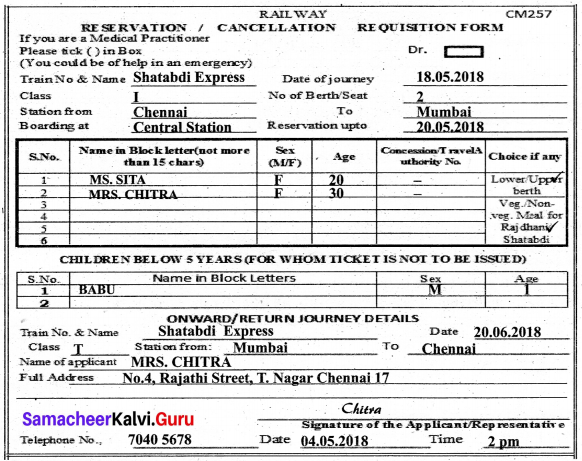
Task 1:
You see an advertisement in the newspaper. A publishing house in Chennai has brought out a paperback edition of the complete works of Khushwant Singh. You want to buy it. You are asked to send a Demand Draft for Rs.1000/- Fill in the following DD challan in favour of ‘X publishing house, New Delhi’, payable at Chennai. The surcharge for Rs.1000/- is Rs.25/-

Samacheer Kalvi 11th English Solutions Prose Chapter 6 The Accidental Tourist 4
Answer:
Samacheer Kalvi 11th English Solutions Prose Chapter 6 The Accidental Tourist 1
Task 2:
Fill in the following forms with imaginary details.
Question (a)
Samacheer Kalvi 11th English Solutions Prose Chapter 6 The Accidental Tourist 2

Answer:

Samacheer Kalvi 11th English Solutions Prose Chapter 6 The Accidental Tourist 5

Question (b)

Samacheer Kalvi 11th English Solutions Prose Chapter 6 The Accidental Tourist 3

Answer:

Samacheer Kalvi 11th English Solutions Prose Chapter 6 The Accidental Tourist 6

Question (c)

Samacheer Kalvi 11th English Solutions Prose Chapter 6 The Accidental Tourist 8

Answer:

Samacheer Kalvi 11th English Solutions Prose Chapter 6 The Accidental Tourist 9

The Accidental Tourist About the Author

Samacheer Kalvi 11th English Solutions Prose Chapter 6 The Accidental Tourist 7

Bill Bryson is an Anglo-American author of books on travel, English language, science and non-fiction topics. He stayed in Great Britain during his adult years. He served as the Chancellor of Durham University from 2005 to 2011. ’Neither here not there’, ‘Notes from a small island’, ‘A Walk in the woods’
‘A Short history of nearly everything’, ‘The Life and Times of the Thunderbolt Kid’, and Icons of England are some his famous

The Accidental Tourist Summary

The whole story revolves around the author’s inability to do ordinary things that other people do in public places like a cinema theatre or a plane. He has problems of orientation. He would try to reach a rest room but find himself behind a self-locking door. The author recounts how his anxiety ruined the happiness of people at the airport and how he himself suffered. For fear of such life-time incompatibility, the author refrained from making frequent trips and could never use his frequent flier miles for a trip to Bali island. The author had a flash of memory that he had joined British Airways frequent flier programme. His entire family arrived at Logan Airport in Boston. Unfortunately, he had placed the card in a carry-on-bag hanging around his neck.

The zip on’ the bag was jammed. He tried pulling it hard. He used force instead of commonsense, the zip gave way spilling the contents over an area as large as tennis court.

To the great embarrassment of all fellow passengers waiting at the airport, 14 ounce tin pipe, coins and other important documents flew helter-skelter. He was annoyed to see the snuff box rolling and emptying its content. Instead of trying to collect coins, documerit and important papers, he went behind the tobacco box crazily shouting, “My tobacco”. When he sensed oozing of blood from his finger that he had gashed while opening the bag’s jammed zip he shifted his attention immediately to his finger. The author’s wife, wondering at his hysterics said, “I can’t believe you do this for a living”.

Once in an aeroplane, the author leaned to tie his shoe lace. Just then some one in the front seat leaned back into full recline. The author found himself pinned helplessly in a crash position. Once the author spilled drinks on a fellow passenger too. He did it twice. He did not know how he did it.

The author was recording his important thoughts in a note book. They were as silly as he was “Buy socks, clutch drinks carefully”. He had fallen into a deep conversation with an attractive young lady in the next seat. Having lost his head, he amused her for about twenty minutes exchanging witty remarks to impress her. When he went to a rest room, he realized that the pen head leaked. His mouth, teeth and gums appeared in striking, scrub-resistent navy blue. To his disgust, it remained blue for many days.

The author wanted to be polished and sophisticated in his manners; But as serendipity would have it, he never left a dinner without making fellow diners realize that he had just experienced a local seismic event. Whenever he entered a car, he closed the door when his coat was still 14 inches outside the door. His trousers always brought evidence of his having sat on chewing gum, ice-cream, cough syrup or motor oil.

The author had clear prediction of the catastrophe he intended to venture into unconsciously. So, his wife would give directions to children like,

“Take the lid off the food for daddy” or put your hoods up children, Daddy’s going to cut his meat”. The author does all such cranky things only during his flight with his family.

While staying alone the author sat on his own down turned palms to prevent himself from doing some “liquid mischief ”. When alone, he never does things which would land him in some sure catastrophe.

The author admits his peculiar inability of earning flyer miles. He has a habitual forgetting of his “Frequent flyer mile card” while collecting his Boarding pass. Though he deserves to have earned 100,000 miles a year, and visited Bali on a free air ticket, he had earned only 212 air miles. While on a flight to Australia, the airline agency refused to grant air miles because the flyer mile card read as W. Bryson where as the name in the ticket read as B. Bryson.


He admits that he would never go to Bali because he has a peculiar habit of spilling the contents of food on board. People who have clumsy habits do overcome their awkwardness in public places with careful practice. As we live in a society, we should leam to conform to the norms of the society including table manners.

Textual:
alley – a narrow passage-way between or behind buildings
Bill – William (the letter W is changed to B and William is called Bill)
bons mots – (French) witty remarks
cascade – waterfall
catastrophe – a terrible disaster
concourse – the open central area in a
large public building (here‘airport’) /hall
consternation – worry
disgorging -discharging
en famille – (French) as a family
exasperation – irritation
extravagantly – excessively
gashed – cut deeply
hysterics – a fit of uncontrollable laughing or crying
suave – polite and sophisticated
venerable – valued
yanked – pulled with a jerk

Additional:
abruptly – suddenly
accumulated – collected
annoyed – angry and irritated
anxiety – worry
confused – disoriented
constantly – all the time
dumbstruck – shocked and speechless
entitled – deserving special treatment
evident – obvious
frequent – often
frustration – vexation
hysteries – uncontrolled emotion
jammed – packed tightly
oblivions – forgetfulness
panic – intense fear
specialty – particular skill

The Accidental Tourist Synonyms

Choose the most appropriate synonyms for the underlined words,

Question 1.
I am constantly filled with wonder.
(a) hardly
(b) regularly
(c) rarely
(d) sparsely
Answer:
(b) regularly

Question 2.
I yanked at the zip of the bag.
(a) pushed
(b) dragged
(c) jerked
(d) closed
Answer:
(c) jerked

Question 3.
He had always ended up in standing in an alley.
(a) maze
(b) road
(c) pathway
(d) hospital
Answer:
(c) pathway

Question 4.
He tried pulling it with great consternation.
(a) anger
(b) hatred
(c) pity
(d) worry
Answer:
(d) worry


Question 5.
All the contents of the bag were extravagantly ejected.
(a) frugally
(b) judiciously
(c) vainly
(d) lavishly
Answer:
(d) lavishly

Question 6.
The tin of tobacco rolled crazily across the concourse,
(a) closure
(b) locked up
(c) hall
(d) strait
Answer:
(c) hall

Question 7.
I had gashed my finger.
(a) bandaged
(b) plastered
(c) cut
(d) healed
Answer:
(c) cut

Question 8.
The tobacco tin went disgorging its content.
(a) attacking
(b) discharging
(c) collecting
(d) dusting
Answer:
(b) discharging

Question 9.
I always have catastrophies when I travel.
(a) condy
(b) disasters
(c) jokes
(d) joy
Answer:
(b) disasters

Question 10.
The author’s wife did not show anger or exasperation.
(a) pleasure
(b) irritation
(c) pain
(d) hatred
Answer:
(b) irritation

Question 11.
He amused her with urbane bons mots.
(a) news
(b) puzzles
(c) witticism/repartee jokes
(d) joked
Answer:
(c) witticism/repartee jokes

Question 12.
He explained the venerable relationship between Bill and William but in vain.
(a) loathsome
(b) valued
(c) hurt
(d) howled
Answer:
(b) valued

Question 13.
I ache to be suave.
(a) rude
(b) indecent
(c) dishonest
(d) polite / sophisticated
Answer:
(d) polite / sophisticated


Question 14.
When it’s my own blood, I think hysterics is justified.
(a) frenzied
(b) whisper
(c) rustle
(d) hustle
Answer:
(a) frenzied

Question 15.
My hair went into panic mode.
(a) courage
(b) fear
(c) joy
(d) pleasure
Answer:
(b) fear

The Accidental Tourist Antonyms

Choose the most appropriate antonyms for the underlined words.

Question 1.
I was shedding blood in a lavish manner.
(a) Extravagant
(b) frugal
(c) easy
(d) tough
Answer:
(b) frugal

Question 2.
I am constantly filled with wonder.
(a) inconstantly/rarely
(b) incorrectly
(c) infrequently
(d) incessantly
Answer:
(a) inconstantly/rarely

Question 3.
I pulled it with a frown.
(a) Scowl
(b) grimace
(c) mockery
(d) smile
Answer:
(d) smile

Question 4.
I managed to get myself freed.
(a) cleared
(b) disentagled
(c) imprisoned trapped
(d) discharged
Answer:
(c) imprisoned trapped

Question 5.
I watched dumbstruck as the carefully sorted documents came down in a cascade.
(a) ruffled
(b) excited
(c) expected
(d) petrified
Answer:
(c) expected

Question 6.
I was talking to an attractive lady.
(a) charming
(b) captivating
(c) unattractive / ugly
(d) ravishing
Answer:
(c) unattractive / ugly

Question 7.
I cried in horror.
(a) alarm
(b) antipathy
(c) disgust
(d) pleasure
Answer:
(d) pleasure

Question 8.
The author amused the lady with some witty remarks.
(a) bored
(b) doted
(c) delighted
(d) entertained
Answer:
(a) bored

Question 9.
Coins bounced to variety of noisy oblivions.
(a) Nuisance
(b) awareness
(c) forgetfulness
(d) unconscious
Answer:
(b) awareness


Question 10.
This had become a real frustration.
(a) Disappointment
(b) cramp
(c) discontentment
(d) fulfilment
Answer:
(d) fulfilment

The main aim is to share the knowledge and help the students of 11th English to secure the best score in their final exams. Use the concepts of Samacheer Kalvi 11th English Book Solutions Prose Chapter 6 The Accidental Tourist Questions and Answers in Real time to enhance your skills. If you have any doubts you can post your comments in the comment section, We will clarify your doubts as soon as possible without any delay.
Samacheer Kalvi 11th Physics Solutions Chapter 11 Waves

For those looking for help on 11th Physics can use the Tamilnadu State Board Solutions for 11th Physics Chapter 11 Waves prevailing for free of cost.

Download the Samacheer Kalvi 11th Physics Book Solutions Questions and Answers Notes Pdf, for all Chapter Wise through the direct links available and take your preparation to the next level. The Tamilnadu State Board Solutions for 11th Physics Chapter 11 Waves Questions and Answers covers all the topics and subtopics within it. Practice using these Samacheer Kalvi 11th Physics Book Solutions Questions and Answers for Chapter 11 Waves PDF and test your preparation level and bridge the knowledge gap accordingly.

Tamilnadu Samacheer Kalvi 11th Physics Solutions Chapter 11 Waves

If you have any queries take the help of the Tamilnadu State Board Solutions for 11th Physics Chapter 11 Waves Questions and Answers learn all the topics in it effectively. We have everything covered and you can Practice them often to score better grades in your exam. By going through the Samacheer Kalvi 11th Physics Book Solutions Questions and Answers you can attempt the actual exam with utmost confidence.

Samacheer Kalvi 11th Physics Waves Textual Evaluation Solved

Samacheer Kalvi 11th Physics Waves Multiple Choice Questions
Question 1.
A student tunes his guitar by striking a 120 Hertz with a tuning fork, and simultaneously plays the 4th string on his guitar. By keen observation, he hears the amplitude of the combined sound oscillating thrice per second. Which of the following frequencies is the most likely the frequency of the 4th string on his guitar?
(a) 130
(b) 117
(c) 110
(d) 120
Answer:
(b) 117

Question 2.
A transverse wave moves from a medium A to a medium B. In medium A, the velocity of the transverse wave is 500 ms-1 and the wavelength is 5 m. The frequency and the wavelength of the wave in medium B when its velocity is 600 ms-1, respectively are
(a) 120 Hz and 5 m
(b) 100 Hz and 5 m
(c) 120 Hz and 6 m
(d) 100 Hz and 6 m
Answer:
(d) 100 Hz and 6 m

Question 3.
For a particular tube, among six harmonic frequencies below 1000 Hz, only four harmonic frequencies are given : 300 Hz, 600 Hz, 750 Hz and 900 Hz. What are the two other frequencies missing from this list?
(a) 100 Hz, 150 Hz
(b) 150 Hz, 450 Hz
(c) 450 Hz, 700 Hz
(d) 700 Hz, 800 Hz
Answer:
(b) 150 Hz, 450 Hz
Hint:
If the tube is open at both ends so the harmonic frequencies are based on 150 Hz.
1st = 150 Hz ; 2nd = 300 Hz ; 3rd = 450 Hz ; 4th = 600 Hz ; 5th = 750 Hz ; 6th = 900 Hz
The above frequencies the missing frequency in the list 150 Hz, 450 Hz

Question 4.
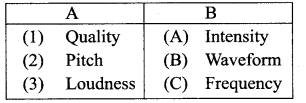
Which of the following options is correct?
Samacheer Kalvi 11th Physics Solutions Chapter 11 Waves 1
Options for (1), (2) and (3), respectively are
(a) (B), (C) and (A)
(b) (C), (A) and (B)
(c) (A), (B) and (C)
(d) (B), (A) and (C)
Answer:
(a) (B), (C) and (A)

Question 5.
Compare the velocities of the wave forms given below, and choose the correct option.
Samacheer Kalvi 11th Physics Solutions Chapter 11 Waves 2
where, vA, vB, vC and vD are velocities given in (A), (B), (C) and (D), respectively.
(a) VA > VB > VD > VC
(b) VA < VB < VD < VC
(c) VA = VB = VD = VC
(d) VA > VB = VD > VC
Answer:
(c) VA = VB = VD = VC

Question 6.
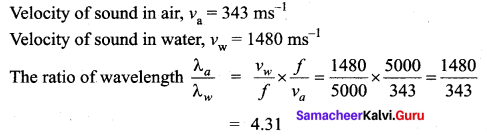
A sound wave whose frequency is 5000 Hz travels in air and then hits the water surface. The ratio of its wavelengths in water and air is …….
(a) 4.30
(b) 0.23
(c) 5.30
(d) 1.23
Answer:
(a) 4.30
Hint.
Frequency of sound, f = 5000 Hz
Samacheer Kalvi 11th Physics Solutions Chapter 11 Waves 5

Question 7.
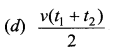
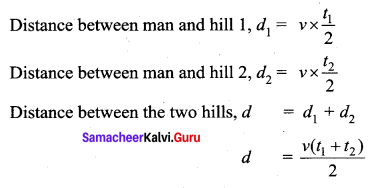
A person standing between two parallel hills fires a gun and hears the first echo after t1 sec and the second echo after t2 sec. The distance between the two hills is …..
Samacheer Kalvi 11th Physics Solutions Chapter 11 Waves 6
Answer:
Samacheer Kalvi 11th Physics Solutions Chapter 11 Waves 7
Hint:
Samacheer Kalvi 11th Physics Solutions Chapter 11 Waves 8

Question 8.
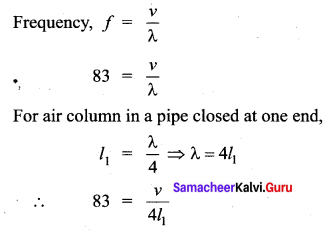
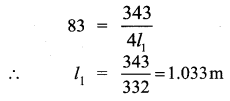
An air column in a pipe which is closed at one end, will be in resonance with the vibrating body of frequency 83 Hz. Then the length of the air column is ………
(a) 1.5 m
(b) 0.5 mSamacheer Kalvi 11th Physics Solutions Chapter 11 Waves
(c) 1.0 m
(d) 2.0 m
Answer:
(c) 1.0 m
Hint:
Samacheer Kalvi 11th Physics Solutions Chapter 11 Waves 9
Velocity of sound in air y = 343 ms-1
Samacheer Kalvi 11th Physics Solutions Chapter 11 Waves 10

Question 9.
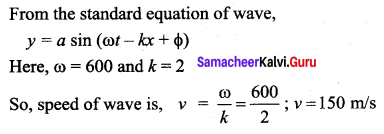
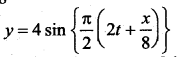
The displacement y of a wave travelling in the x direction is given by Samacheer Kalvi 11th Physics Solutions Chapter 11 Waves 11 where x and y are measured in metres and t in second. The speed of the wave is ………
(a) 150 ms-1
(b) 300 ms-1
(c) 450 ms-1
(d) 600 ms-1
Answer:
(a) 150 ms-1
Hint:
Samacheer Kalvi 11th Physics Solutions Chapter 11 Waves 111

Question 10.
Consider two uniform wires vibrating simultaneously in their fundamental notes. The tensions, densities, lengths and diameter of the two wires are in the ratio 8 : 1, 1 : 2, x : y and 4 : 1 respectively. If the note of the higher pitch has a frequency of 360 Hz and the number of beats produced per second is 10, then the value of x : y is ……….
(a) 36 : 35
(b) 35 : 36
(c) 1 : 1
(d) 1 : 2
Answer:
(a) 36 : 35

Question 11.
Which of the following represents a wave?
(a) (x – vt)3
(b) x(x + vt)
(c) \(\frac{1}{(x+v t)}\)
(d) sin (x + vt)
Answer:
(d) sin (x + vt)

Question 12.
A man sitting on a swing which is moving to an angle of 60° from the vertical is blowing a whistle which has a frequency of 2.0 k Hz. The whistle is 2.0 m from the fixed support point of the swing. A sound detector which detects the whistle sound is kept in front of the swing. The maximum frequency the sound detector detected is …….
(a) 2.027 kHz
(b) 1.947 kHz
(c) 9.74 kHz
(d) 1.011 kHz
Answer:
(a) 2.027 kHz

Question 13.
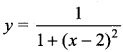
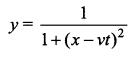
Let. y = \(\frac{1}{1+x^{2}}\) at t = 0s be the amplitude of the wave propagating in the positive x-direction. At t = 2s, the amplitude of the wave propagating becomes Samacheer Kalvi 11th Physics Solutions Chapter 11 Waves 13. Assume that the shape of the wave does not change during propagation. The velocity of the wave is …..
(a) 0.5 ms-1
(b) 1.0 ms-1
(c) 1.5 ms-1
(d) 2.0 ms-1
Answer:
(b) 1.0 ms-1
Hint.
The general expression y in terms of x
Samacheer Kalvi 11th Physics Solutions Chapter 11 Waves 131
The shape of wave does not change, also wave move in 2 sec, 2m in positive ‘x’ direction. So, wave moves 2m in 2 sec.
Samacheer Kalvi 11th Physics Solutions Chapter 11 Waves 14

Question 14.
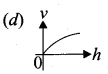
A uniform rope having mass m hangs vertically from a rigid support. A transverse wave pulse is produced at the lower end. Which of the following plots shows the correct variation of speed v with height h from the lower end?
Samacheer Kalvi 11th Physics Solutions Chapter 11 Waves 15
Answer:
Samacheer Kalvi 11th Physics Solutions Chapter 11 Waves 16

Question 15.
An organ pipe A closed at one end is allowed to vibrate in its first harmonic and another pipe B open at both ends is allowed to vibrate in its third harmonic. Both A and B are in resonance with a given tuning fork. The ratio of the length of A and B is …….
Samacheer Kalvi 11th Physics Solutions Chapter 11 Waves 17
Answer:
(c) \(\frac{1}{6}\)
Hint:
(c) \(\frac{1}{6}\)

Samacheer Kalvi 11th Physics Waves Short Answer Questions

Question 1.
What is meant by waves?
Answer:
The disturbance which carries energy and momentum from one point in space to another point in space without the transfer of the medium is known as a wave.

Question 2.
Write down the types of waves.
Answer:
Waves can be classified into two types:
(a) Transverse waves
(b) Longitudinal waves

Question 3.
What are transverse waves? Give one example.
Answer:
In transverse wave motion, the constituents of the medium oscillate or vibrate about their mean positions in a direction perpendicular to the direction of propagation (direction of energy transfer) of waves.
Example: light (electromagnetic waves)

Question 4.
What are longitudinal waves? Give one example.
Answer:
In longitudinal wave motion, the constituent of the medium oscillate or vibrate about their mean positions in a direction parallel to the direction of propagation (direction of energy transfer) of waves.
Example: Sound waves travelling in air.

Question 5.
Define wavelength.
Answer:
For transverse waves, the distance between two neighbouring crests or troughs is known as the wavelength. For longitudinal waves, the distance between two neighbouring compressions or rarefactions is known as the wavelength. The SI unit of wavelength is meter.

Question 6.
Write down the relation between frequency, wavelength and velocity of a wave.
Answer:
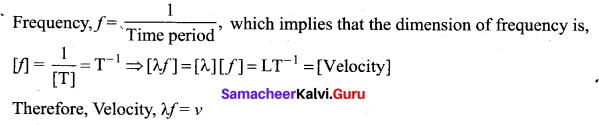
Samacheer Kalvi 11th Physics Solutions Chapter 11 Waves 19

Question 7.
What is meant by interference of waves?
Answer:
Interference is a phenomenon in which two waves superimpose to form a resultant wave of greater, lower or the same amplitude.

Question 8.
Explain the beat phenomenon.
Answer:
When two or more waves superimpose each other with slightly different frequencies, then a sound of periodically varying amplitude at a point is observed. This phenomenon is known as beats. The number of amplitude maxima per second is called beat frequency. If we have two. sources, then their difference in frequency gives the beat frequency. Number of beats per second n = | f1 – f2| per second

Question 9.
Define intensity of sound and loudness of sound.
Answer:

  1. The loudness of sound is defined as “the degree of sensation of sound produced in the ear or the perception of sound by the listener”.
  2. The intensity of sound is defined as “the sound power transmitted per unit area taken normal to the propagation of the sound wave”.

Question 10.
Explain Doppler Effect.
Answer:
When the source and the observer are in relative motion with respect to each other and to the medium in which sound propagates, the frequency of the sound wave observed is different from the frequency of the source. This phenomenon is called Doppler Effect.

Question 11.
Explain red shift and blue shift in Doppler Effect.
Answer:
If the spectral lines of the star are found to shift towards red end of the spectrum (called as red shift) then the star is receding away from the Earth. Similarly, if the spectral lines of the star are found to shift towards the blue end of the spectrum (called as blue shift) then the star is approaching Earth.

Question 12.
What is meant by end correction in resonance air column apparatus?
Answer:
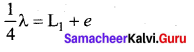
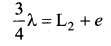
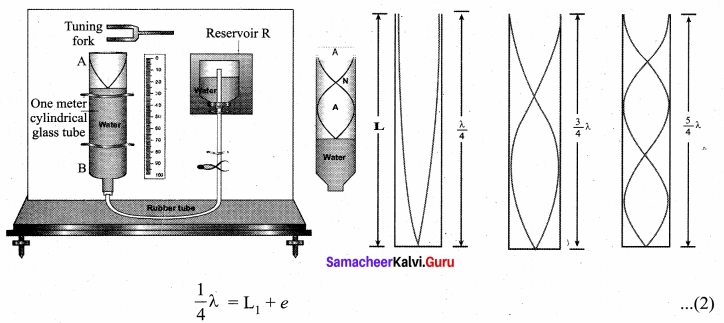
The antinodes are not exactly formed at the open end, we have to include a correction, called end correction e, by assuming that the antinode is formed at some small distance above the open end. Including this end correction, the first resonance is
Samacheer Kalvi 11th Physics Solutions Chapter 11 Waves 20
Again taking end correction into account, we have
Samacheer Kalvi 11th Physics Solutions Chapter 11 Waves 21

Question 13.
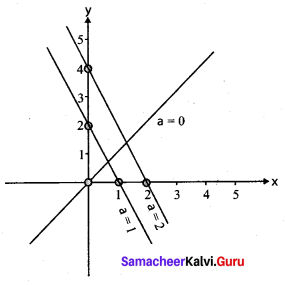
Sketch the function Y = x + a. Explain your sketch
Answer:
When a = 0, y = x
when a = 1; x = 1: y = 1 + 1 = 2
when a = 2; x = 2; y = 2 + 2 = 4
Samacheer Kalvi 11th Physics Solutions Chapter 11 Waves 22
Explanation: This implies, when increasing the value of a, the line shifts towards right side at a = 0, and line shifts towards left side at a = 1, 2, ….For a = vt, y = x – vt satisfies the differential equation. Though this function satisfies the differential equation, it is not finite for all values of x and t. Hence it does not represent a waves.

Question 14.
Write down the factors affecting velocity of sound in gases.
Answer:
(a) Effect of pressure
(b) Effect of temperature
(c) Effect of density
(e) Effect of wind

Question 15.
What is meant by an echo? Explain.
Answer:
Echo: An echo is a repetition of sound produced by the reflection of sound waves from a wall, mountain or other obstructing surfaces.
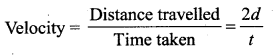
Explanation: The speed of sound in air at 20°C is 344 m s-1. If we shout at a wall which is at 344 m away, then the sound will take 1 second to reach the wall. After reflection, the sound will take one more second to reach us. Therefore, we hear the echo after two seconds. Scientists have estimated that we can hear two sounds properly if the time gap or time interval between each sound is \(\left(\frac{1}{10}\right)^{\text {th }}\) of a second (persistence of hearing) i.e., 0.1 s. Then,
Samacheer Kalvi 11th Physics Solutions Chapter 11 Waves 221
2d= 344 × 0.1 = 34.4m ;d= 17.2m
The minimum distance from a sound reflecting wall to hear an echo at 20°C is 17.2 meter.

Samacheer Kalvi 11th Physics Waves Long Answer Questions

Question 1.
Discuss how ripples are formed in still water.
Answer:
Suppose we drop a stone in a trough of still water, we can see a disturbance produced at the place where the stone strikes the water surface. We find that this disturbance spreads out (diverges out) in the form of concentric circles of ever increasing radii (ripples) and strike the boundary of the trough. This is because some of the kinetic energy of the stone is transmitted to the water molecules on the surface. Actually the particles of the water (medium) themselves do not move outward with the disturbance. This can be observed by keeping a paper strip on the water surface. The strip moves up and down when the disturbance (wave) passes on the water surface. This shows that the water molecules only undergo vibratory motion about their – mean positions.

Question 2.
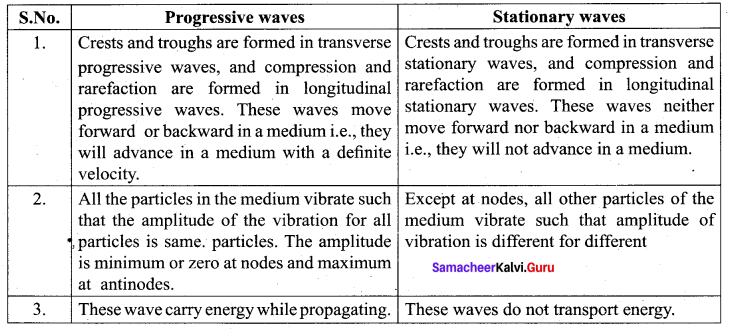
Briefly explain the difference between travelling waves and standing waves.
Answer:
Samacheer Kalvi 11th Physics Solutions Chapter 11 Waves 23

Question 3.
Show that the velocity of a travelling wave produced in a string is v =\(\sqrt{\frac{\mathrm{T}}{\mu}}\)
Answer:
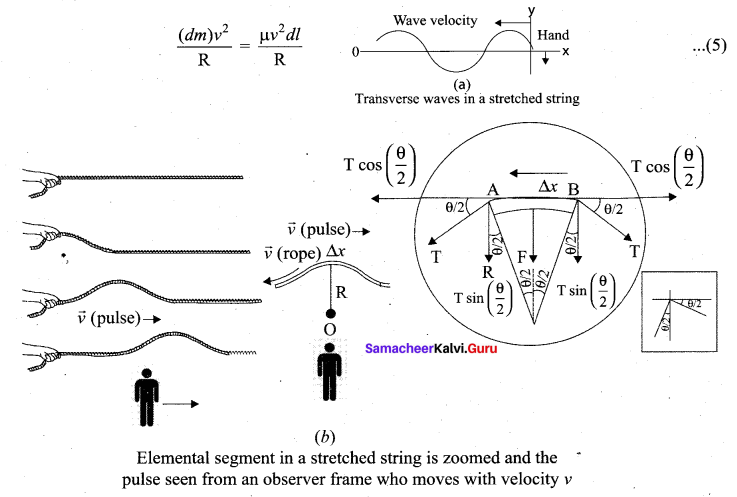
Velocity of transverse waves in a stretched string: Let us compute the velocity of transverse travelling waves on a string. When a jerk is given at one end (left end) of the rope, the wave pulses move towards right end with a velocity v. This means that the pulses move with a velocity v with respect to an observer who is at rest frame. Suppose an observer also moves with same velocity v in the direction of motion of the wave pulse, then that observer will notice that the wave pulse is stationary and the rope is moving with pulse with the same velocity v. Consider an elemental segment in the string. Let A and B be two points on the string at an instant of time. Let dl and dm be the length and mass of the elemental string, respectively. By definition, linear mass density, μ is
Samacheer Kalvi 11th Physics Solutions Chapter 11 Waves 24
The elemental string AB has a curvature which looks like an arc of a circle with centre at O, radius R and the arc subtending an angle θ at the origin O. The angle θ can be written in terms of arc length and radius as θ = \(\frac{d l}{R}\). The centripetal acceleration supplied by the tension in the string is
Samacheer Kalvi 11th Physics Solutions Chapter 11 Waves 25
Then, centripetal force can be obtained when mass of the string (dm) is included in equation (3)
Samacheer Kalvi 11th Physics Solutions Chapter 11 Waves 26
The centripetal force experienced by elemental string can be calculated by substituting equation (2) in equation (4) we get
Samacheer Kalvi 11th Physics Solutions Chapter 11 Waves 27
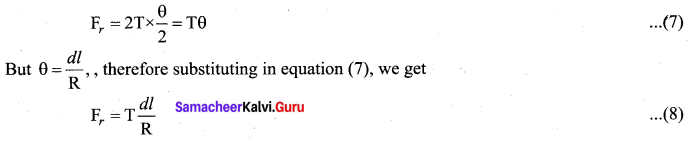
The tension T acts along the tangent of the elemental segment of the string at A and B. Since the arc length is very small, variation in the tension force can be ignored. We can resolve T into horizontal component T cos \(\left(\frac{\theta}{2}\right)\) and vertical component T sin \(\left(\frac{\theta}{2}\right)\) The horizontal component at A and B are equal in magnitude but opposite in direction; therefore, they cancel each other. Since the elemental arc length AB is taken to be very small, the vertical components at A and B appears to acts Vertical towards the centre of the arc and hence, they add up. The net radial force Fr is
Samacheer Kalvi 11th Physics Solutions Chapter 11 Waves 28
Since the amplitude of the wave is very small when it is compared with the length of the spring, the sine of small angle is approximated as sin \(\left(\frac{\theta}{2}\right) \approx \frac{\theta}{2}\). Hence equation (6) can be written as
Samacheer Kalvi 11th Physics Solutions Chapter 11 Waves 29
Applying Newton’s second law to the elemental string in the radial direction, under equilibrium, the radial component of the force is equal to the centripetal force. Hence equating equation (5)
Samacheer Kalvi 11th Physics Solutions Chapter 11 Waves 30

Question 4.
Describe Newton’s formula for velocity of sound waves in air and also discuss the Laplace’s correction.
Answer:
Newton’s formula for speed of sound waves in air: Sir Isaac Newton assumed that when sound propagates in air, the formation of compression and rarefaction takes place in a very slow manner so that the process is isothermal in nature. That is, the heat produced during compression (pressure increases, volume decreases), and heat lost during rarefaction (pressure decreases, volume increases) occur over a period of time such that the temperature of the medium remains constant. Therefore, by treating the air molecules to form an ideal gas, the changes in pressure and volume obey Boyle’s law, Mathematically
PV = constant …(1)
Differentiating equation (1), we get
Samacheer Kalvi 11th Physics Solutions Chapter 11 Waves 31
where, BT is an isothermal bulk modulus of air. Substituting equation (2) in equation the speed of sound in air is
Samacheer Kalvi 11th Physics Solutions Chapter 11 Waves 32
Since P is the pressure of air whose value at NTP (Normal Temperature and Pressure) is 76 cm of mercury, we have
Samacheer Kalvi 11th Physics Solutions Chapter 11 Waves 33
Here ρ is density of air, then the speed of sound in air at Normal Temperature and Pressure (NTP) is
Samacheer Kalvi 11th Physics Solutions Chapter 11 Waves 34
But the speed of sound in air at 0°C is experimentally observed as 332 m s-1 which is close upto 16% more than theoretical value (Percentage error is Samacheer Kalvi 11th Physics Solutions Chapter 11 Waves 35). This error is not small.
Laplace’s correction: In 1816, Laplace satisfactorily corrected this discrepancy by assuming that when the sound propagates through a medium, the particles oscillate very rapidly such that the compression and rarefaction occur very fast. Hence the exchange of heat produced due to compression and cooling effect due to rarefaction do not take place, because, air (medium) is a bad conductor of heat. Since, temperature is no longer considered as a constant here, sound propagation is an adiabatic process. By adiabatic considerations, the gas obeys Poisson’s law (not Boyle’s law as Newton assumed), which is
Samacheer Kalvi 11th Physics Solutions Chapter 11 Waves 351
Since air contains mainly, nitrogen, oxygen, hydrogen etc, (diatomic gas), we take γ = 1.47.
Samacheer Kalvi 11th Physics Solutions Chapter 11 Waves 36

Question 5.
Write short notes on reflection of sound waves from plane and curved surfaces. Reflection of sound through the plane surface
Answer:
When the sound waves hit the plane wall, they bounce off in a manner similar to that of light. Suppose a loudspeaker is kept at an angle with respect to a wall (plane surface), then the waves coming from the source (assumed to be a point source) can be treated as spherical wave fronts (say, compressions moving like a spherical wave front). Therefore, the reflected wave front on the plane surface is also spherical, such that its centre of curvature (which lies on the other side of plane surface) can be treated as the image of the sound source (virtual or imaginary loud speaker) which can be assumed to be at a position behind the plane surface.
Samacheer Kalvi 11th Physics Solutions Chapter 11 Waves 37
Reflection of sound through the curved surface: The behaviour of sound is different when – it is reflected from different surfaces-convex or concave or plane. The sound reflected from a convex surface is spread out and so it is easily attenuated and weakened. Whereas, if it is reflected from the concave surface it will converge at a point and this can be easily amplified. The parabolic reflector (curved reflector) which is used to focus the sound precisely to a point is used in designing the parabolic mics which are known as high directional microphones.
Samacheer Kalvi 11th Physics Solutions Chapter 11 Waves 38
We know that any surface (smooth or rough) can absorb sound. For example, the sound produced in a big hall or auditorium or theatre is absorbed by the walls, ceilings, floor, seats etc. To avoid such losses, a curved sound board (concave board) is kept in front of the speaker, so that the board reflects the sound waves of the speaker towards the audience. This method will minimize the spreading of sound waves in all possible direction in that hall and also enhances the uniform distribution of sound throughout the hall. That is why a person sitting at any position in that hall can hear the sound without any disturbance.

Question 6.
Briefly explain the concept of superposition principle.
Answer:
Superposition Principle: When a jerk is given to a stretched string which is tied at one end, a wave pulse is produced and the pulse travels along the string. Suppose two persons holding the stretched string on either side give a jerk simultaneously, then these two wave pulses move towards each other, meet at some point and move away from each other with their original identity. Their behaviour is very different only at the crossing/meeting points; this behaviour depends on whether the two pulses have the same or different shape.
When the pulses have the same shape, at the crossing, the total displacement is the algebraic sum of their individual displacements and hence its net amplitude is higher than the amplitudes of the individual pulses. Whereas, if the two pulses have same amplitude but shapes are 180° out of phase at the crossing point, the net amplitude vanishes at that point and the pulses will recover their identities after crossing.
Samacheer Kalvi 11th Physics Solutions Chapter 11 Waves 39
Only waves can possess such a peculiar property and it is called superposition of waves. This means that the principle of superposition explains the net behaviour of the waves when they overlap. Generalizing to any number of waves i.e., if two are more waves in a medium move simultaneously, when they overlap, their total displacement is the vector sum of the individual displacements. We know that the waves satisfy the wave equation which is a linear second order homogeneous partial differential equation in both space coordinates and time. Hence, their linear combination (often called as linear superposition of waves) will also satisfy the same differential equation. To understand mathematically, let us consider two functions which characterize the displacement of the waves, for example,
y1 = A1 sin (kx – ωt) and y2= A2 cos (kx – ωt)
Since, both y1 and y2 satisfy the wave equation (solutions of wave equation) then their algebraic sum
y = y1 + y2
also satisfies the wave equation. This means, the displacements are additive. Suppose we multiply y1 and y2 with some constant then their amplitude is scaled by that constant Further, if C1 and C2 are used to multiply the displacements y1 and y2, respectively, then, their net displacement y is
C = C1y1 + C2y2
This can be generalized to any number of waves. In the case of n such waves in more than one dimension the displacements are written using vector notation. Here, the net displacement \(\vec{y}\) is
Samacheer Kalvi 11th Physics Solutions Chapter 11 Waves 42
The principle of superposition can explain the following :
(a) Space (or spatial) Interference (also known as Interference)
(b) Time (or Temporal) Interference (also known as Beats)
(c) Concept of stationary waves
Waves that obey principle of superposition are called linear waves (amplitude is much smaller than their wavelengths). In general, if the amplitude of the wave is not small then they are called non-linear waves. These violate the linear superposition principle, e.g., laser. In this chapter, we will focus our attention only on linear waves.

Question 7.
Explain how the interference of waves is formed.
Answer:
Consider two harmonic waves having identical frequencies, constant phase difference cp and same wave form (can be treated as coherent source), hut having amplitudes A1 and A2, then
Samacheer Kalvi 11th Physics Solutions Chapter 11 Waves 43
Suppose they move simultaneously in a particular direction, then interference occurs (i.e., overlap of these two waves). Mathematically
y = y1 + y2 …. (3)
Therefore, substituting equation (1) and equation (3) in equation (3), we get
Samacheer Kalvi 11th Physics Solutions Chapter 11 Waves 46
By squaring and adding equation (5) and equation (6), we get
Samacheer Kalvi 11th Physics Solutions Chapter 11 Waves 461
Since, intensity is square of the amplitude (I = A2), we have
Samacheer Kalvi 11th Physics Solutions Chapter 11 Waves 462
This means the resultant intensity at any point depends on the phase difference at that point.

(a) For constructive interference:
When crests of one wave overlap with crests of another wave, their amplitudes will add up and we get constructive interference. The resultant wave has a larger amplitude than the individual waves as shown in figure (a).
Samacheer Kalvi 11th Physics Solutions Chapter 11 Waves 4611
The constructive interference at a point occurs if there is maximum intensity at that point, which means that
Samacheer Kalvi 11th Physics Solutions Chapter 11 Waves 47
This is the phase difference in which two waves overlap to give constructive interference. Therefore, for this resultant wave,
Samacheer Kalvi 11th Physics Solutions Chapter 11 Waves 48
Samacheer Kalvi 11th Physics Solutions Chapter 11 Waves 49

(b) For destructive interference: When the trough of one wave overlaps with the crest of another wave, their amplitudes “cancel” each other and we get destructive interference as shown in figure (b). The resultant amplitude is nearly zero. The destructive interference occurs if there is minimum intensity at that point, which means cos φ = – 1 ⇒ φ = π, 3π, 5π,… = (2n – 1) K, where n = 0, 1, 2, …. i.e. This is the phase difference in which two waves overlap to give destructive interference. Therefore,
Samacheer Kalvi 11th Physics Solutions Chapter 11 Waves 50
Hence, the resultant amplitude A = |A1 – A2|

Question 8.
Describe the formation of beats.
Answer:
Formation of beats: When two or more waves superimpose each other with slightly different frequencies, then a sound of periodically varying amplitude at a point is observed. This phenomenon is known as beats. The number of amplitude maxima per second is called beat frequency. If we have two sources, then their difference in frequency gives the beat frequency. Number of beats per second
n = |f1 – f2|

Question 9.
What are stationary waves?. Explain the formation of stationary waves and also write down the characteristics of stationary waves.
Answer:
Explanation of stationary waves: When the wave hits the rigid boundary it bounces back to the original medium and can interfere with the original waves. A pattern is formed, which are known as standing waves or stationary waves.
Explanation: Consider two harmonic progressive waves (formed by strings) that have the same amplitude and same velocity but move in opposite directions. Then the displacement of the first wave (incident wave) is
y1 = A sin (kx – ωt) (waves move toward right) …(1)
and the displacement of the second wave (reflected wave) is
y2 = A sin (kx + ωt) (waves move toward left) …(2)
both will interfere with each other by the principle of superposition, the net displacement is
y = y1 + y2 …… (3)
Substituting equation (1) and equation (2) in equation (3), we get
y = A sin (kx – ωt) + A sin (kx + ωt) …(4)
Using trigonometric identity, we rewrite equation (4) as
y(x, t) = 2A cos (ωt) sin (kx) …(5)
This represents a stationary wave or standing wave, which means that this wave does not move either forward or backward, whereas progressive or travelling waves will move forward or backward. Further, the displacement of the particle in equation (5) can be written in more compact form,
y(x, t) = A’ cos (ωt)
where, A’ = 2A sin (foe), implying that the particular element of the string executes simple harmonic motion with amplitude equals to A’. The maximum of this amplitude occurs at positions for which
Samacheer Kalvi 11th Physics Solutions Chapter 11 Waves 52
where m takes half integer or half integral values. The position of maximum amplitude is known as antinode. Expressing wave number in terms of wavelength, we can represent the anti-nodal positions as
Samacheer Kalvi 11th Physics Solutions Chapter 11 Waves 53
The distance between two successive antinodes can be computed by
Samacheer Kalvi 11th Physics Solutions Chapter 11 Waves 54
Similarly, the minimum of the amplitude A’ also occurs at some points in the space, and these points can be determined by setting
sin (kx) = 0 ⇒ kx = 0, π, 2π, 3π, … = nπ
where n takes integer or integral values. Note that the elements at these points do not vibrate (not move), and the points are called nodes. The nth nodal positions is given by,
Samacheer Kalvi 11th Physics Solutions Chapter 11 Waves 55

Characteristics of stationary waves:

  1. Stationary waves are characterised by the confinement of a wave disturbance between two rigid boundaries. This means, the wave does not move forward or backward in a medium (does not advance), it remains steady at its place. Therefore, they are called “stationary waves or standing waves”.
  2. Certain points in the region in which the wave exists have maximum amplitude, called as anti-nodes and at certain points the amplitude is minimum or zero, called as nodes.
  3. The distance between two consecutive nodes (or) anti-nodes is \(\frac{\lambda}{2}\)
  4. The distance between a node and its neighbouring anti-node is \(\frac{\lambda}{4}\)
  5. The transfer of energy along the standing wave is zero.

Question 10.
Discuss the law of transverse vibrations in stretched strings.
Answer:
Laws of transverse vibrations in stretched strings: There are three laws of transverse vibrations of stretched strings which are given as follows:
(i) The law of length: For a given wire with tension T (which is fixed) and mass per unit length µ (fixed) the frequency varies inversely with the vibrating length. Therefore,
Samacheer Kalvi 11th Physics Solutions Chapter 11 Waves 58
⇒ l × f = C, where C is a constant

(ii) The law of tension: For a given vibrating length l (fixed) and mass per unit length p , (fixed) the frequency varies directly with the square root of the tension T,
Samacheer Kalvi 11th Physics Solutions Chapter 11 Waves 59

(iii) The law of mass: For a given vibrating length l (fixed) and tension T (fixed) the frequency varies inversely with the square root of the mass per unit length µ,
Samacheer Kalvi 11th Physics Solutions Chapter 11 Waves 60

Question 11.
Explain the concepts of fundamental frequency, harmonics and overtones in detail. Fundamental frequency and overtones in detail.
Answer:
Fundamental frequency and overtones: Let us now keep the rigid boundaries at x = 0 and x = L and produce a standing waves by wiggling the string (as in plucking strings in a guitar). Standing waves with a specific wavelength are produced. Since, the amplitude must vanish at the boundaries, therefore, the displacement at the boundary must satisfy the following conditions
x(x = 0, t) = 0 and y(x = L, t) = 0
Since, the nodes formed at a distance \(\frac{\lambda_{n}}{2}\) apart, we have \(n\left(\frac{\lambda_{n}}{2}\right)=\mathrm{L}\), where n is an integer, L is the length between the two boundaries and λn is the specific wavelength that satisfy the specified boundary conditions. Hence,
Samacheer Kalvi 11th Physics Solutions Chapter 11 Waves 63
Therefore, not all wavelengths are allowed. The (allowed) wavelengths should fit with the specified boundary conditions, i.e., for n = 1, the first mode of vibration has specific wavelength λ1 = 2L. Similarly for n = 2, the second mode of vibration has specific wavelength
Samacheer Kalvi 11th Physics Solutions Chapter 11 Waves 64
For n = 3, the third mode of vibration has specific wavelength
Samacheer Kalvi 11th Physics Solutions Chapter 11 Waves 65
The frequency of each mode of vibration (called natural frequency) can be calculated.
Samacheer Kalvi 11th Physics Solutions Chapter 11 Waves 66
The lowest natural frequency is called the fundamental frequency.
Samacheer Kalvi 11th Physics Solutions Chapter 11 Waves 67
The second natural frequency is called the first over tone.
Samacheer Kalvi 11th Physics Solutions Chapter 11 Waves 68
The third natural frequency is called the second over tone.
Samacheer Kalvi 11th Physics Solutions Chapter 11 Waves 69
Therefore, the nth natural frequency can be computed as integral (or integer ) multiple of fundamental frequency, i.e.,
fn = nf1 where n is an integer …(5)
If natural frequencies are written as integral multiple of fundamental frequencies, then the frequencies are called harmonics. Thus, the first harmonic is f1 = f1 (the fundamental frequency is called first harmonic), the second harmonic is f2 = 2f1, the third harmonic is f3 = 3f1 etc.

Question 12.
What is a sonometer? Give its construction and working. Explain how to determine the frequency of tuning fork using sonometer.
Answer:
Stationary waves in sonometer: Sono means sound related, and sonometer implies sound-related measurements.
It is a device for demonstrating the relationship between the frequency of the sound produced in the transverse standing wave in a string, and the tension, length and mass per unit length of the string. Therefore, using this device, we can determine the following quantities:
Samacheer Kalvi 11th Physics Solutions Chapter 11 Waves 70
(a) the frequency of the tuning fork or frequency of alternating current
(b) the tension in the string
(c) the unknown hanging mass
Construction: The sonometer is made up of a hollow box which is one meter long with a uniform metallic thin string attached to it. One end of the string is connected to a hook and the other end is connected to a weight hanger through a pulley as shown in figure. Since only one string is used, it is also known as monochord. The weights are added to the free end of the wire to increase the tension of the wire. Two adjustable wooden knives are put over the board, and their positions are adjusted to change the vibrating length of the stretched wire.
Working: A transverse stationary or standing wave is produced and hence, at the knife edges P and Q, nodes are formed. In between the knife edges, anti-nodes are formed. If the length of the vibrating element is then
Samacheer Kalvi 11th Physics Solutions Chapter 11 Waves 71
Let f be the frequency of the vibrating element, T the tension of in the string and p the mass per unit length of the string. Then using equation, we get
Samacheer Kalvi 11th Physics Solutions Chapter 11 Waves 72
Let ρ be the density of the material of the string and d be the diameter of the string. Then the mass per unit length μ
Samacheer Kalvi 11th Physics Solutions Chapter 11 Waves 73

Question 13.
Write short notes on intensity and loudness.
Answer:
Intensity and loudness: Consider a source and two observers (listeners). The source emits sound waves which carry energy. The sound energy emitted by the source is same regardless of whoever measures it, i.e., it is independent of any observers standing in that region. But the sound received by the two observers may be different; this is due to some factors like sensitivity of ears, etc. To quantify such thing, we define two different quantities known as intensity and loudness of sound.
Samacheer Kalvi 11th Physics Solutions Chapter 11 Waves 74
Intensity of sound: When a sound wave is emitted by a source, the energy is carried to all possible surrounding points. The average sound energy emitted or transmitted per unit time or per second is called sound power.
Therefore, the intensity of sound is defined as “the sound power transmitted per unit area taken normal to the propagation of the sound wave ”.
For a particular source (fixed source), the sound intensity is inversely proportional to the square of the distance from the source.
Samacheer Kalvi 11th Physics Solutions Chapter 11 Waves 75
This is known as inverse square law of sound intensity.
the power output does not depend on the observer and depends on the baby. Therefore, Loudness of sound: Two sounds with same intensities need not have the same loudness. For example, the sound heard during the explosion of balloons in a silent closed room is very loud when compared to the same explosion happening in a noisy market. Though the intensity of the sound is the same, the loudness is not. If the intensity of sound is increased then loudness also increases. But additionally, not only does intensity matter, the internal and subjective experience of “how loud a sound is” i.e., the sensitivity of the listener also matters here. This is often called loudness. That is, loudness depends on both intensity of sound wave and sensitivity of the ear (It is purely observer dependent quantity which varies from person to person) whereas the intensity of sound does not depend on the observer. The loudness of sound is defined as “the degree of sensation of sound produced in the ear or the perception of sound by the listener”.

Question 14.
Explain how overtones are produced in a:
(a) Closed organ pipe
(b) Open organ pipe
Answer:
(a) Closed organ pipes: Clarinet is an example of a closed organ pipe. It is a pipe with one end closed and the other end open. If one end of a pipe is closed, the wave reflected at this closed end is 180° out of phase with the incoming wave. Thus there is no displacement of the particles at the closed end. Therefore, nodes are formed at the closed end and anti-nodes are formed at open end.
Samacheer Kalvi 11th Physics Solutions Chapter 11 Waves 76
Let us consider the simplest mode of vibration of the air column called the fundamental mode. Anti-node is formed at the
open end and node at closed end. From the figure, let L be the length of the tube and the wavelength of the wave produced. For the fundamental mode of vibration, we have,
Samacheer Kalvi 11th Physics Solutions Chapter 11 Waves 77
which is called the fundamental note
Samacheer Kalvi 11th Physics Solutions Chapter 11 Waves 771
The frequencies higher than fundamental frequency can be produced by blowing air strongly at open end. Such frequencies are called overtones.
Samacheer Kalvi 11th Physics Solutions Chapter 11 Waves 78
The figure (b) shows the second mode of vibration having two nodes and two antinodes,
Samacheer Kalvi 11th Physics Solutions Chapter 11 Waves 79
is called first over tone, since here, the frequency is three times the fundamental frequency it is called third harmonic.
The figure (c) shows third mode of vibration having three nodes and three anti-nodes.
Samacheer Kalvi 11th Physics Solutions Chapter 11 Waves 80
is called second over tone, and since n = 5 here, this is called fifth harmonic. Hence, the closed organ pipe has only odd harmonics and frequency of the nth harmonic is fn = (2n + 1)f1. Therefore, the frequencies of harmonics are in the ratio
f1 : f2 : f3 : f4 …… = 1 : 3 : 5 : 7 : …… ……… (3)

(b) Open organ pipes: Flute is an example of open organ pipe. It is a pipe with both the ends open. At both open ends, anti-nodes are formed. Let us consider the simplest mode of vibration of the air column called fundamental mode. Since anti-nodes are formed at the open end, a node is formed at the mid-point of the pipe.
Samacheer Kalvi 11th Physics Solutions Chapter 11 Waves 81
From figure (d), if L be the length of the tube, the wavelength of the wave produced is given by
Samacheer Kalvi 11th Physics Solutions Chapter 11 Waves 82
The frequency of the note emitted is
Samacheer Kalvi 11th Physics Solutions Chapter 11 Waves 83
which is called the fundamental note. The frequencies higher than fundamental frequency can be produced by blowing air strongly at one of the open ends. Such frequencies are called overtones.
Samacheer Kalvi 11th Physics Solutions Chapter 11 Waves 84
The Figure (e) shows the second mode of vibration in open pipes. It has two nodes and three anti-nodes, and therefore,
Samacheer Kalvi 11th Physics Solutions Chapter 11 Waves 85
is called first over tone. Since n = 2 here, it is called second harmonic.
The Figure (f) above shows the third mode of vibration having three nodes and four anti-nodes.
Samacheer Kalvi 11th Physics Solutions Chapter 11 Waves 86
Samacheer Kalvi 11th Physics Solutions Chapter 11 Waves 87
is called second over tone. Since n = 3 here, it is called the third harmonic.
Hence, the open organ pipe has all the – harmonics and frequency of nth harmonic is fn = nf1. Therefore, the frequencies of harmonics are in the ratio
f1 : f2 : f3 : f4 … = 1 : 2 : 3 : 4 : … …(6)

Question 15.
How will you determine the velocity of sound using resonance air column apparatus?
Answer:
Resonance air column apparatus:
The resonance air column apparatus and first, second and third resonance The resonance air column apparatus is one of the simplest techniques to measure the speed of sound in air at room temperature. It consists of a cylindrical glass tube of one meter length whose one end A is open and another end B is connected to the water reservoir R through a rubber tube as shown in figure. This cylindrical glass tube is mounted on a vertical stand with a scale attached to it. The tube is partially filled with water and the water level can be adjusted by raising or lowering the water in the reservoir R. The surface of the water will act as a closed erid and other as the open end. Therefore, it behaves like a closed organ pipe, forming nodes at the surface of water and antinodes at the closed end. When a vibrating tuning fork is brought near the open end of the tube, longitudinal waves are formed inside the air column. These waves move downward as shown in Figure, and reach the surfaces of water and get reflected and produce standing waves. The length of the air column is varied by changing the water level until a loud sound is produced in the air column. At this particular length the frequency of Waves in the air column resonates with the frequency of the tuning fork (natural frequency of the tuning fork). At resonance, the frequency of sound waves produced is equal to the frequency of the tuning fork. This will occur only when the length of air column is proportional to \(\left(\frac{1}{4}\right)^{t h}\) of the wavelength of the sound waves produced. Let the first resonance occur at length L1, then
Samacheer Kalvi 11th Physics Solutions Chapter 11 Waves 88
But since the antinodes are not exactly formed at the open end, we have to include a correction, called end correction e, by assuming that the antinode is formed at some small distance above the open end. Including this end correction, the first resonance is
Samacheer Kalvi 11th Physics Solutions Chapter 11 Waves 881
Now the length of the air column is increased to get the second resonance. Let L2 be the length at which the second resonance occurs. Again taking end correction into account, we have
Samacheer Kalvi 11th Physics Solutions Chapter 11 Waves 90
In order to avoid end correction, let us take the difference of equation (3) and equation (2)
Samacheer Kalvi 11th Physics Solutions Chapter 11 Waves 91
The speed of the sound in air at room temperature can be computed by using the formula
Samacheer Kalvi 11th Physics Solutions Chapter 11 Waves 92
Further, to compute the end correction, we use equation (2) and equation (3), we get
Samacheer Kalvi 11th Physics Solutions Chapter 11 Waves 93

Question 16.
What is meant by Doppler effect? Discuss the following cases
(1) Source in motion and Observer at rest
(a) Source moves towards observer
(b) Source moves away from the observer
(2) Observer in motion and Source at rest.
(a) Observer moves towards Source
(b) Observer resides away from the Source
(3) Both are in motion
(a) Source and Observer approach each other
(b) Source and Observer resides from each other
(c) Source chases Observer
(d) Observer chases Source
Answer:
Doppler Effect: When the source and the observer are in relative motion with respect to each other and to the medium in which sound propagates, the frequency of the sound wave observed is different from the frequency of the source. This phenomenon is called Doppler Effect.
1. Source in motion and the observer at rest
(a) Source moves towards the observer: Suppose a source S moves to the right (as shown in figure) with a velocity vs and let the frequency of the sound waves produced by the source be fs. We assume the velocity of sound in a medium is v.
Samacheer Kalvi 11th Physics Solutions Chapter 11 Waves 94
The compression (sound wave front) produced by the source S at three successive instants of time are shown in the figure. When S is at position x1 the compression is at C1. When S is at position x2, the compression is at C2 and similarly for x3 and C3. Assume that if reaches the observer’s position A then at that instant C2 reaches the point B and C3 reaches the point C as shown in the figure. It is obvious to see that the distance between compressions C2 and C3 is shorter than distance between C1 and C2. This means the wavelength decreases when the source S moves towards the observer O (since sound travels longitudinally and wavelength is the distance between two consecutive compressions). But frequency is inversely related to wavelength and therefore, frequency increases.
Let λ be the wavelength of the source S as measured by the observer when S is at position x1 and λ’ be wavelength of the source observed by the observer when S moves to position x2. Then the change in wavelength is ∆λ = λ – λ’ = vs t, where t is the time taken by the source to travel between x1 and x2. Therefore,
Samacheer Kalvi 11th Physics Solutions Chapter 11 Waves 95
On substituting equation (2) in equation (1), we get Samacheer Kalvi 11th Physics Solutions Chapter 11 Waves 96
Samacheer Kalvi 11th Physics Solutions Chapter 11 Waves 961

(b) Source moves away from the observer: Since the velocity here of the source is opposite in direction when compared to case (a), therefore, changing the sign of the velocity of the source in the above case i.e, by substituting (vs ➝ – vs) in equation (1), we get
Samacheer Kalvi 11th Physics Solutions Chapter 11 Waves 962
Using binomial expansion again, we get,
Samacheer Kalvi 11th Physics Solutions Chapter 11 Waves 963

2. Observer in motion and source at rest:
(a) Observer moves towards Source:
Let us assume that the observer O moves towards the source S with velocity vo. The source S is at rest and the velocity of sound waves (with respect to the medium) produced by the source is v. From the figure, we observe that both vo and v are in opposite direction. Then, their relative velocity is vr = v + vo. The wavelength of the sound wave is \(\lambda=\frac{v}{f}\), which means the frequency observed by the observer O is f’ = \(\). Then
Samacheer Kalvi 11th Physics Solutions Chapter 11 Waves 964
Samacheer Kalvi 11th Physics Solutions Chapter 11 Waves 9641

(b) Observer recedes away from the Source: If the observer O is moving away (receding away) from the source S, then velocity v0 and v moves in the same direction. Therefore, their relative velocity is vr = v – vr. Hence, the frequency observed by the observer O is
Samacheer Kalvi 11th Physics Solutions Chapter 11 Waves 965

3. Both are in motion:
(a) Source and observer approach each other:
Samacheer Kalvi 11th Physics Solutions Chapter 11 Waves 9651
Let vs and vo be the respective velocities of source and observer approaching each other as shown in figure. In order to calculate the apparent frequency observed by the observer, as a simple calculation, let us have a dummy (behaving as observer or source) in between the source and observer. Since the dummy is at rest, the dummy (observer) observes the apparent frequency due to approaching source as given in equation (3) as
Samacheer Kalvi 11th Physics Solutions Chapter 11 Waves 966
At that instant of time, the true observer approaches the dummy from the other side. Since the source (true source) comes in a direction opposite to true observer, the dummy (source) is treated as stationary source for the true observer at that instant. Hence, apparent frequency when the true observer approaches the stationary source (dummy source), from equation (7) is
Samacheer Kalvi 11th Physics Solutions Chapter 11 Waves 967
Since this is true for any arbitrary time, therefore, comparing equation (9) and equation (10), we get
Samacheer Kalvi 11th Physics Solutions Chapter 11 Waves 958

(b) Source and observer resides from each other
Samacheer Kalvi 11th Physics Solutions Chapter 11 Waves 969
Here, we can derive the result as in the previous case. Instead of a detailed calculation, by inspection from figure, we notice that the velocity of the source and the observer each point in opposite directions with respect to the case in (a) and hence, we substitute (vs ➝ – vs) and (v0 ➝ – vo) in equation (11), and therefore, the apparent frequency observed by the observer when the source and observer recede from each other is
Samacheer Kalvi 11th Physics Solutions Chapter 11 Waves 970

(c) Source chases the observer
Samacheer Kalvi 11th Physics Solutions Chapter 11 Waves 971
Only the observer’s velocity is oppositely directed when compared to case (a).
Samacheer Kalvi 11th Physics Solutions Chapter 11 Waves 972

(d) Observer chases the source
Samacheer Kalvi 11th Physics Solutions Chapter 11 Waves 973
Only the source velocity is oppositely directed when compared to case (a). Therefore, substituting vs ➝ – vs in equation (12), we get
Samacheer Kalvi 11th Physics Solutions Chapter 11 Waves 9731

Samacheer Kalvi 11th Physics Waves Numerical Problems

Question 1.
The speed of a wave in a certain medium is 900 m/s. If 3000 waves passes over a certain point of the medium in 2 minutes, then compute its wavelength?
Answer:
Speed of the wave in medium v = 900 ms-1
Samacheer Kalvi 11th Physics Solutions Chapter 11 Waves 974

Question 2.
Consider a mixture of 2 mol of helium and 4 mol of oxygen. Compute the speed of sound in this gas mixture at 300 K.
Answer:
The mixture of helium and oxygen.
Samacheer Kalvi 11th Physics Solutions Chapter 11 Waves 975
Samacheer Kalvi 11th Physics Solutions Chapter 11 Waves 976

Question 3.
A ship in a sea sends SONAR waves straight down into the seawater from the bottom of the ship. The signal reflects from the deep bottom bed rock and returns to the ship after 3.5 s. After the ship moves to 100 km it sends another signal which returns back after 2s. Calculate the depth of the sea in each case and also compute the difference in height between two cases.
Answer:
Speed of SONAR waves in water c = 1500 ms-1
Time taken to reflect from the bottom of the sea, 2t = 3.5 sec
∴ t = 1.75 sec
Distance covered in forward and reflected backward (d1) = c × t
d2 = 1500 × 1.75 = 2625 m
After ship moves in a distance = 150 km
Time taken to reflect by the waves 2t = 2s
t = 1s
Distance covered by the waves (d2) = c × t = 1500 × 1 = 1500 m
The different between the height of two cases = 2625 – 1500
hdifference = 1124 m

Question 4.
A sound wave is transmitted into a tube as shown in figure. The sound wave splits into two waves at the point A which recombine at point B. Let R be the radius of the semicircle which is varied until the first minimum. Calculate the radius of the semi-circle if the wavelength of the sound is 50.0 m
Answer:
The sound travelling in the curved path distance = πR
L1 = πR
The sound travelling in the straight path distance = 2R
L2 = 2R
Samacheer Kalvi 11th Physics Solutions Chapter 11 Waves 977
The path distance of straight and curved path AP = L1 – L2
Samacheer Kalvi 11th Physics Solutions Chapter 11 Waves 978

Question 5.
N tuning forks are arranged in order of increasing frequency and any two successive tuning forks give n beats per second when sounded together. If the last fork gives double the frequency of the first (called as octave), Show that the frequency of the first tuning fork is f = (N – 1)n.
Answer:
Total number of fork = N
The frequency of the 1st fork = f
The frequency of the last fork = 2f
∴ an = a + (n – 1)d
2f = f + (N – 1)n
2f – f = (N – 1)n
∴ f = (N – 1)n

Question 6.
Let the source propagate a sound wave whose intensity at a point (initially) be I. Suppose we consider a case when the amplitude of the sound wave is doubled and the frequency is reduced to one-fourth. Calculate now the new intensity of sound at the same point?
Answer:
Intensity of sound wave (old) = I1
Amplitude of sound wave (A2) = 2A1
Frequency of the sound wave I2 = ?
Samacheer Kalvi 11th Physics Solutions Chapter 11 Waves 979
Samacheer Kalvi 11th Physics Solutions Chapter 11 Waves 9781

Question 7.
Consider two organ pipes of same length in which one organ pipe is closed and another organ pipe is open. If the fundamental frequency of closed pipe is 250 Hz. Calculate the fundamental frequency of the open pipe.
Answer:
Fundamental frequency of closed organ pipe
Samacheer Kalvi 11th Physics Solutions Chapter 11 Waves 9791
Fundamental frequency:f open organ pipe \(f_{o}=\frac{v}{2 l}=?\)
Samacheer Kalvi 11th Physics Solutions Chapter 11 Waves 980

Question 8.
A police in a siren car moving with a velocity 20 ms chases a thief who is moving in a car with a velocity v0 ms-1. The police car sounds at frequency 300 Hz, and both of them move towards a stationary siren of frequency 400 Hz. Calculate the speed in which thief is moving.
(Assume the thief does not observe any beat)
Answer:
Velocity of sound v = 330 ms-1
Velocity of car (vs ) = 20 ms-1
Frequency of car (f1) = 300 Hz
Frequency of stationary siren (f2) = 400 Hz
The speed of the thief (vo ) = ?
Samacheer Kalvi 11th Physics Solutions Chapter 11 Waves 981
330 – vo = 413.325 + 1.2525vo
2.2525vo = – 83. 325
vo = – 36.99
∴ speed of the thief in moving = 36.99 ms-1

Question 9.
Consider the following function:
(a) y = x2 + 2 α tx
(b) y = (x + vt)2 which among the above function can be characterized as a wave?
Answer:
(a) y = x2 + 2 α tx. This expression is not a wave equation.
(b) y = (x + vt)2 . This expression is satisfies the wave equation.

Samacheer Kalvi 11th Physics Waves Conceptual Questions

Question 1.
Why is it that transverse waves cannot be produced in a gas? Can the transverse waves can be produced in solids and liquids?
Answer:
Transverse waves travel in the form of crests and through. They involve changes in the shape of the medium. As gas has no elasticity of shape, hence transverse waves cannot be produced in it. So, they can be transmitted through media which sustain shearing stress such as solids, strings and liquid surface.

Question 2.
Why is the roar of our national animal different from the sound of a mosquito?
Answer:
Both sounds travel at the speed of sound. The speed of sound varies according to the density and temperature of the air, but not according to the loudness of the sound,at least not for the levels of loudness we talking about here.
The roaring of the lion will be audible a lot further away, but that’s simply because it’s louder.

Question 3.
A sound source and listener are both stationary and a strong wind is blowing. Is there a Doppler effect?
Answer:
Yes, It does not matter whether the sound source or the transmission media are in motion, vibrations will be compressed in the direction of convergence and dilated in the direction of divergence.

Question 4.
In an empty room why is it that a tone sounds louder than in the room having things like furniture etc.
Answer:
Because in a furniture room will absorb the sound waves, hence there went be any echo. But in an empty room reflect the sound. Therefore there will be echo hence we hear sound louder.

Question 5.
How do animals sense impending danger of hurricane?
Answer:
Some animals are believed to be sensitive to be low frequency sound waves emitted by hurricanes, they can also detect the slight drops in air and water pressure that signal a storm’s approach.

Question 6.
Is it possible to realize whether a vessel kept under the tap is about to fill with water?
Answer:
The frequency of the note produced by an air column is inversely proportional to its length. As the level of water is the vessel rises, the length of the air column above it decreases. It produces sound of decreasing frequency, i.e., the sound becames shorter. From the shrillness of sound, it is possible to realize whether the vessel is filled which water.
vmin = 11.71 ms-1

Samacheer Kalvi 11th Physics Waves Textual Evaluation Solved Additional Questions Solved

I. Choose the correct answer from the following:

Question 1.
Mechanical Waves
(a) are longitudinal only
(b) are transverse only
(c) can be both longitudinal and transverse.
(d) are neither longitudinal for transverse waves.
Answer:
(c) can be both longitudinal and transverse.

Question 2.
Sound whose frequency is 50 Hz?
(a) has a relatively short wavelength.
(b) has a relatively long wavelength
(c) is very loud
(d) is very intense
Answer:
(a) has a relatively short wavelength.

Question 3.
Sound travels fastest in …….
(a) Steel
(b) air
(c) water
(d) vaccum
Answer:
(a) steel

Question 4.
A boat at anchor is rocked by waves of velocity 25m/s, having crests 100 m apart. The boat bounches up once in every
(a) 4.0s
(b) 2500s
(c) 0.25s
(d) 75s
Answer:
(a) 4.0s
Hint:
λ = distance between crests = 100 m frequency v = \(\frac{25}{100}=\frac{1}{4} \mathrm{s}^{-1}\)
Therefore, the crests reach the boat once every 4 seconds.

Question 5.
Choose the correct statement:
(a) sound waves are transverse waves
(b) sound travels fastest through vaccum.
(c) sound travels faster in solids than in gases.
(d) sound travels faster in gases than in liquids.
Answer:
(c) sound travels faster in solids than in gases.

Question 6.
Transverse waves can propagate ……
(a) both in a gas and in a metal
(b) in a gas but not in a metal
(c) not in a gas but in a metal
(d) neither in a gas nor in a metal
Answer:
(a) not in a gas but in a metal.

Question 7.
The speed of the wave represented by y = A sin(ωt – kx) is ……..
(a) k/ω
(b) ω/k
(c) ωk
(d) 1/ωk
Answer:
(b) ω/k

Question 8.
The equation of a wave travelling in a string can be written as y = 3 cos {π(100t – x)} where y and x are in cm and t is in seconds. Then the value of wavelength is …….
(a) 100 cm
(b) 2 cm
(c) 50 cm
(d) 4 cm
Answer:
(b) 2 cm
Hint:
On comparing given equation with y = A cos (kx – ωt), we get
Samacheer Kalvi 11th Physics Solutions Chapter 11 Waves 985

Question 9.
A wave of frequency 500 Hzhas a velocity 300 m/s. The distance between two nearest points which are 60° out of phase, is ……
(a) 0.2 m
(b) 0.1 m
(c) 0.4 m
(d) 0.5 m
Answer:
(a) 0.1 cm
Samacheer Kalvi 11th Physics Solutions Chapter 11 Waves 986

Question 10.
The equation of a wave travelling on a string is Samacheer Kalvi 11th Physics Solutions Chapter 11 Waves 9792, where x, y are in cm and t in seconds. The velocity of the waves is ……..
(a) 64 cm/s in – x direction
(b) 32 cm/s in – x direction
(c) 32 cm/s in +x direction
(d) 64 cm/s in + x direction
Answer:
(d) 64 cm/s in + x direction to S
Samacheer Kalvi 11th Physics Solutions Chapter 11 Waves 9793

Question 11.
The equation of a wave is Samacheer Kalvi 11th Physics Solutions Chapter 11 Waves 9794 where y, x are in cm and t in seconds. The amplitude wavelength, velocity and frequency of the wave are, respectively, …….
(a) 4 cm, 32 cm, 16 cm/s, 0.5 Hz
(b) 8 cm, 16 cm, 32 cm/s, 1.0 Hz
(c) 4 cm, 32 cm, 32 cm/s, 0.5 Hz
(d) 8 cm, 16 cm, 16 cm/s, 1.0 Hz
Answer:
(a) 4 cm, 32 cm, 16 cm/s, 0.5 Hz

Question 12.
The diagram shows the profile of a wave, which of the following pairs of points are in phase?
(a) A, B
(b) B, C
(c) B, D
(d) B, E
Samacheer Kalvi 11th Physics Solutions Chapter 11 Waves 120
Answer:
(d) B, E

Question 13.
Ultrasonic waves are those waves which ………
(a) human beings cannot hear
(b) human beings can hear
(c) have high velocity
(d) have large amplitude
Answer:
(a) human beings cannot hear

Question 14.
A transverse wave of amplitude 0.5m, wavelength 1 m and frequency 2Hz is propogating in a string in the negative x direction. The equation of this wave is ….
(a) y = 0.5 sin (2πx – 4πt)
(b) y = 0.5 sin (2πx + 4πt)
(c) y = 0.5 sin (πx – 2πt)
(d) y = 0.5 cos (kx – 2πt)
Answer:
(b) y = 0.5 sin (2πx + 4πt)
Hint:
y = A sin(kx + ωt)
Here A = 0.5 m
Samacheer Kalvi 11th Physics Solutions Chapter 11 Waves 121

Question 15.
With the rise of temperature, the speed of sound in a gas ……..
(a) increases
(b) decreases
(c) remain the same
(d) may increase or decrease depending on the corresponding change in pressure.
Answer:
(a) increases

Question 16.
Speed of sound in a gas in proportional to …….
(a) square root of isothermal elasticity
(b) square root of adiabatic elasticity
(c) isothermal elasticity
(d) adiabatic elasticity
Answer:
(b) square root of adiabatic elasticity

Question 17.
The velocity of sound in are is not affected by change in the …….
(a) atmospheric pressure
(b) moisture content of air
(c) temperature of air
(d) composition of air
Answer:
(a) atmospheric pressure

Question 18.
A longitudinal wave is described by the equation y = y0 sin 2π (ft – x/λ). The maximum particle velocity is equal to four times the wave velocity if ……..
Samacheer Kalvi 11th Physics Solutions Chapter 11 Waves 122
Answer:
Samacheer Kalvi 11th Physics Solutions Chapter 11 Waves 123

Question 19.
If v0 and v denote the sound velocity and the rms velocity of the molecules in a gas, then ……..
Samacheer Kalvi 11th Physics Solutions Chapter 11 Waves 124
Answer:
Samacheer Kalvi 11th Physics Solutions Chapter 11 Waves 125
Samacheer Kalvi 11th Physics Solutions Chapter 11 Waves 1256

Question 20.
With the propagation of a longitudinal wave through a material medium, the quantities transferred in the direction of propagation are ……..
(a) energy, momentum and mass
(b) energy and momentum
(c) energy and mass
(d) energy
Answer:
(b) energy and momentum

Question 21.
If the amplitude of sound is doubled and the frequency reduced to one-fourth, the intensity will ………
(a) increase by a factor of 2
(b) decrease by a factor of 2
(c) decrease by a factor of 4
(d) remain unchanged
Answer:
(c) decrease by a factor of 4
Samacheer Kalvi 11th Physics Solutions Chapter 11 Waves 1241

Question 22.
When a source of sound is in motion towards a stationary observer, the effect observed is
(a) increase in the velocity of sound only
(b) decrease in the velocity of sound only
(c) increase in frequency of sound only
(d) increase in both the velocity and the frequency of sound
Answer:
(c) increase in frequency of sound only

Question 23.
The apparent wavelength of the light from a star, moving away from the earth, is 0.01% more than its real wave length. The speed of the star with respect to the earth is ……
(a) 10 km/s
(b) 15 km/s
(c) 30 km/s
(d) 60 km/s
Answer:
(c) 30 km/s
Samacheer Kalvi 11th Physics Solutions Chapter 11 Waves 1253

Question 24.
The frequency of a radar is 780 MHz. When it is reflected from an approaching aeroplane the opponent frequency is more than the actual frequency by 2.6 kHz. The speed of the aeroplane is ……
(a) 0.25 km/s
(b) 0.5 km/s
(c) 1.0 km/s
(d) 2.0 km/s
Answer:
(b) 0.5 km/s
Samacheer Kalvi 11th Physics Solutions Chapter 11 Waves 126

Question 25.
The temperature at which the speed of sound in air becomes double its value at 27°C is …….
(a) 54°C
(b) 327°C
(c) 927°C
(d) -123°C
Answer:
(c) 927°C
Samacheer Kalvi 11th Physics Solutions Chapter 11 Waves 127

Question 26.
The equation of a transverse wave is given by y = 10 sin{π(0.01x – 2t)} where y and x are in cm and t is in seconds. Its frequency is …….
(a) 10 s-1
(b) 2 s-1
(c) 1 s-1
(d) 0.01 s-1
Answer:
(c) 1 s-1
Hint:
Comparing with the standard equation y = A sin(kx – ωt),
Samacheer Kalvi 11th Physics Solutions Chapter 11 Waves 128

Question 27.
When sound waves travel from air to water, which of the following remains constant?
(a) velocity
(b) frequency
(c) wavelength
(d) all of these
Answer:
(b) frequency

Question 28.
The speed of sound in oxygen is 332 m/s at STP. The speed of sound in hydrogen at STP will be ……..
(a) 53/2 m/s
(b) 2546 m/s
(c) 1328 m/s
(d) 664 m/s
Answer:
(c) 1328 m/s
Samacheer Kalvi 11th Physics Solutions Chapter 11 Waves 129

Question 29.
If va, vh, and vm are the speeds of sound in air, hydrogen and a metal at the same temperature, then ……..
(a) vh > va > vm
(b) vm > vh > va
(c) vh > vm > va
(d) va > vh > vm
Answer:
(b) vm > vh > va

Question 30.
Ultrasonic waves can be detected by ……
(a) telephone
(b) Hebb’s method
(c) Kundt’s tube
(d) Quincke’s tube
Answer:
(c) Kundt’s tube

Question 31.
The velocity of sound in a gas depends on ….
(a) Wavelength only
(b) density and elasticity of gas
(c) intensity only
(d) amplitude and frequency
Answer:
(b) density and elasticity of gas

Question 32.
When sound waves travel from air to water, which of these remains constant?
(a) velocity
(b) wavelength
(c) frequency
(d) all the above
Answer:
(c) frequency

Question 33.
When a wave goes from one medium to another, there is a change in
(a) velocity
(b) amplitude
(c) wavelength
(d) all the above
Answer:
(d) all the above

Question 34.
The equation of a sound wave is y = 0.0015 sin (62.8x + 316t). Find the wave length of the above ……
(a) 0.2 units
(b) 0.3 units
(c) 0.1 units
(d) 0.15 units
Answer:
(c) 0.1 units
Samacheer Kalvi 11th Physics Solutions Chapter 11 Waves 130

Question 35.
Red shift is an illustration of ……….
(a) low temperature emission
(b) high frequency absorption
(c) Doppler effect
(d) Same unknown Phenomenon.
Answer:
(c) Doppler effect

Question 36.
The ratio of the velocity of sound in a monatomic gas to that in a triatomic gas having same molar mass, under similar conditions of temperature and pressure, is ………
(a) 1.12
(6) 1.25
(c) 1.50
(d) 1.6
Answer:
(a) 1.12
Samacheer Kalvi 11th Physics Solutions Chapter 11 Waves 1312

Question 37.
Doppler shift in frequency does not depend upon …….
(a) the actual frequency of the wave
(b) the velocity of the source from the listener.
(c) the velocity of the source.
(d) the velocity of the observer.
Answer:
(b) the velocity of the source from the listener.

Question 38.
If the density of oxygen is 16 times that of hydrogen, what will be the ratio of the velocities of sound in them?
(a) 1 : 4
(b) 4 : 1
(c) 2 : 1
(d) 1 : 16
Answer:
(a) 1 : 4
Samacheer Kalvi 11th Physics Solutions Chapter 11 Waves 132

Question 39.
Pitch of sound depends on ……
(a) frequency
(b) wavelength
(c) amplitude
(d) speed
Answer:
(a) frequency

Question 40.
Samacheer Kalvi 11th Physics Solutions Chapter 11 Waves 133
Answer:
Samacheer Kalvi 11th Physics Solutions Chapter 11 Waves 134
Samacheer Kalvi 11th Physics Solutions Chapter 11 Waves 135

Question 41.
Which of the following equations represents a wave?
(a) y = A(ωt – kx)
(b) y = A sin ωt
(c) y = A cos kx
(d) y = A sin (at – bx + c)
Answer:
(d) y = A sin (at -bx + c)

Question 42.
A wave travels in a medium according to the equation of displacement given by y(x, t) = 0.03 sin{π(2t – 0.01 x)} where y and x are in metres and t in seconds. The wave length of the wave is …..
(a) 200 m
(b) 100 m
(c) 20 m
(d) 10 m
Answer:
(a) 200 m
Samacheer Kalvi 11th Physics Solutions Chapter 11 Waves 140

Question 43.
The equation of a wave moving on string is y = 8 sin{π(0.002 x – 4t)} where x, y are in centimeter and t in seconds. The velocity of the wave is ……
(a) 100 cm/s
(b) 0.2π cm/s
(c) 4π cm/s
(d) 200 cm/s
Answer:
(d) 200 cm/s
Samacheer Kalvi 11th Physics Solutions Chapter 11 Waves 141

Question 44.
If the velocity of sound in air is 340 ms-1, a person singing a note of frequency 250 cps is producing sound waves with a wavelength of ……..
(a) 0.7
(b) 1.36 cm
(c) 1.36 m
(d) 85 km
Answer:
(c) 1.36
Samacheer Kalvi 11th Physics Solutions Chapter 11 Waves 142

Question 45.
Asa transverse wave strikes against a fixed end …….
(a) its phase changes by 180°, but velocity does not change.
(b) its phase does not change, but velocity changes
(c) its velocity changes and phase too changes by 180°
(d) nothing can be predicted about changes in its velocity and phase.
Answer:
(a) its phase changes by 180°, but velocity does not change

Question 46.
A source of sounds is travelling with a velocity of 40 km/hr towards an observer and emits sound of frequency 2000 Hz. If the velocity of sound is 1220 km/hr, then what is the apparent frequency heard by the observer?
(a) 2068 Hz
(b) 2180 Hz
(c) 2000 Hz
(d) 1980 Hz
Answer:
(a) 2068 Hz
Samacheer Kalvi 11th Physics Solutions Chapter 11 Waves 143

Question 47.
A vehicle with a horn of frequency n is moving with a velocity of 30m/s in a direction perpendicular to the straight line joining the observer and the vehicle. The observer perceives the sound to have a frequency n + n1. Then (if the sound velocity in air is 300 m/s)
(a) n1 = 10 n
(b) n1 = 0
(c) n1 = – 0.1 n
(d) n1 = 0.1 n
Answer:
(b) n1 = 0
Hint:
No Doppler effect is observed if the source moves perpendicular to the line joining the source and the observer. Therefore, the correct choice is (b).

Question 48.
The Doppler effect is applicable for ……..
(a) light waves
(b) sound waves
(c) space waves
(d) both (a) and (b)
Answer:
(d) both (a) and (b)

Question 49.
The speed of a wave in a medium is 760 m/s. If 3600 waves are passing through a point in the medium in 2 minutes, then its wavelength is ……
(a) 13.8 m
(b) 25.3 m
(c) 41.5 m
(d) 57.2 m
Answer:
(b) 25.3 m
Samacheer Kalvi 11th Physics Solutions Chapter 11 Waves 150

Question 50.
If a sound wave travels from air to water, the quantity that remain unchanged is …….
(a) velocity
(b) wavelength
(c) frequency
(d) amplitude
Answer:
(c) frequency

Question 51.
Asa spherical wave propagates, …….
(a) the wave intensity remains constant
(b) the wave intensity decrease as the inverse of the distance from the source
(c) the wave intensity decreases as the inverse square of the distance from the source.
(d) The wave intensity decreases as the inverse cube of the distance from the source.
Answer:
(c) The wave intensity decreases as the inverse square of the distance from the source.

Question 52.
A source of sound and a listener are approaching each other with a speed of 40ms-1.The apparent frequency of a note produced by the source is 400 Hz. Then its true frequency is (velocity of sound in air = 360 ms-1)
(a) 320 Hz
(b) 400 Hz
(c) 360 Hz
(d) 420 Hz
Answer:
(a) 320 Hz
Samacheer Kalvi 11th Physics Solutions Chapter 11 Waves 160

Question 53.
Sound waves of wavelength greater than that of audible sound are called ……
(a) infrasonic waves
(b) ultrasonic waves
(c) sonic waves
(d) seismic waves
Answer:
(a) infrasonic waves

Question 54.
The frequency of a sound wave is/and its velocity is v. If the frequency is increased to 4 f the velocity of the wave will be:
(a) v
(b) 2v
(c) 4 v
(d) v/4
Answer:
(a) v
Hint:
The velocity is a characteristic of the medium and, therefore, it remains constant.

Question 55.
Which of the following statement is untrue? The velocity of sound in a gas …….
(a) is independent of pressure
(b) increases with increase in temperature
(c) is dependent on molecular weight
(d) is greater in dry air than in moist air
Answer:
(d) is greater in dry air than in moist air

Question 56.
When a stone is dropped on the surface of still water, the waves produced are …….
(a) transverse
(b) longitudinal
(c) Stationary
(d) partly longitudinal and partly transverse.
Answer:
(d) Partly longitudinal and partly transverse.

Question 57.
The equation of a wave is y = 0.1 sin (100πt – kx) where x, y are in metres and t in seconds. If – the velocity of the wave is 100 m/s, then the value of k is
(a) 1 m-1
(b) 2m-1
(c) πm-1
(d) 2πm-1
Answer:
(c) πm-1

Question 58.
A transverse wave propagating on a stretched string of linear density 3 × 10⁻⁴ kg m-1 is represented by the equation, y = 0.2 sin (1.5x + 60t)
Where x is in metres and t is in seconds. The tension in the string (in newtons) is:
(a) 0.24
(b) 0.48
(c) 1.20
(d) 1.80
Answer:
(a) 0.48
Samacheer Kalvi 11th Physics Solutions Chapter 11 Waves 500

Question 59.
A transverse wave propagating along x-axis is represented by
Samacheer Kalvi 11th Physics Solutions Chapter 11 Waves 170
where x is in metres and t is in seconds. The speed of the wave is ……….
Samacheer Kalvi 11th Physics Solutions Chapter 11 Waves 171
Answer:
(c) 8m/s
Hint:
Samacheer Kalvi 11th Physics Solutions Chapter 11 Waves 172

Question 60.
Two waves represented by the following equation are travelling in the same medium: y1 = 5 sin 2π (75t – 0.25 x) and y2 = 10 sin 2π (150 – 0.25x) The intensity ratio of the two waves is ……..
(a) 1 : 2
(b) 1 : 4
(c) 1 : 8
(d) 1 : 16
Answer:
(b) 1 : 4
Samacheer Kalvi 11th Physics Solutions Chapter 11 Waves 173

Question 61.
A point source emits sound equally in all direction is a non-absorbing medium. Two points P and Q are at distances of 2m and 3m, respectively, from the source. The ratio of the intensities of the waves at P and Q is …….
(a) 3 : 2
(b) 4 : 9
(c) 2 : 3
(d) 9 : 4
Answer:
(d) 9 : 4
Samacheer Kalvi 11th Physics Solutions Chapter 11 Waves 174

Question 62.
The waves produced by a motor boat sailing in water are ……..
(a) transverse
(b) longitudinal
(c) longitudinal and transverse
(d) stationary
Answer:
(c) longitudinal and transverse

Question 63.
Doppler effect in sound is due to ………
(a) motion of source
(b) motion of observer
(c) relative motion of source and observer
(d) none of the above
Answer:
(c) relative motion of source and observer

Question 64.
The velocity of sound in air at NTP is 330m/s. What will be its value when temperature is doubled and pressure is halved?
(a) 165 m/s
(b) 330 m/s
(c) 330 /\(\sqrt{2}\)
(d) 300/\(\sqrt{2}\) m/s
Answer:
(c) 330 /\(\sqrt{2}\)
Hint:
There is no effect of change of pressure on the velocity of sound in air. Further, v ∝ \(\sqrt{\mathrm{T}}\)

Question 65.
Sound waves travel at 350 m/s through warm air and at 3500 m/s through brass. The wavelength of a 700 Hz acoustic wave as it enters brass from warm air
(a) increases by a factor 20
(b) increases by a factor 10
(c) decreases by a factor 20
(d) decreases by a factor 10
Answer:
(b) increase by a factor 10
Hint:
Since the frequency remains the same, we have
Samacheer Kalvi 11th Physics Solutions Chapter 11 Waves 1701

Question 66.
A train moving at a speed of 220 m/s towards a stationary object, emits a sound of frequency 1000 Hz. Some of the sound reaching the object gets reflected back to the train as echo. The frequency of the echo as detected by the driver of the train is
(a) 3000 Hz
(b) 3500 Hz
(c) 4000 Hz
(d) 5000 Hz
Answer:
(d) 5000 Hz
Samacheer Kalvi 11th Physics Solutions Chapter 11 Waves 1711

Question 67.
A source of sounds emitting waves of frequency 100 Hz and an observer O are located at same distance from each other The source is moving with a speed of 19.4 ms-1 at an angle of 60° with the source-observer line as shown in the figure. The observer is at rest. The apparent frequency observed by the observer (velocity of sound in air 330 ms-1) is ……
Samacheer Kalvi 11th Physics Solutions Chapter 11 Waves 1721
(a) 97 Hz
(b) 100 Hz
(c) 103 Hz
(d) 106 Hz
Answer:
(c) 103 Hz
Samacheer Kalvi 11th Physics Solutions Chapter 11 Waves 1723

Question 68.
Beats occur because of
(a) interference
(b) reflection
(c) refraction
(d) Doppler effect
Answer:
(a) interference

Question 69.
A vibrating stretched string resonates with a tuning fork of frequency 512 Hz when the length of the string is 0.5 m. The length of the string required to vibrate resonantly with a tuning fork of frequency 256 Hz would be ……
(a) 0.25 m
(b) 0.75 m
(c) 1.0 m
(d) 2.0 m
Answer:
(c) 1.0 m
Samacheer Kalvi 11th Physics Solutions Chapter 11 Waves 600

Question 70.
A cylindrical tube, open at both ends has a fundamental frequency f in air. The tube is dipped vertically in water so that half of it is in water. The fundamental frequency of the air column is now …….
(a) f/2
(b) f
(c) 3f/4
(d) 2f
Answer:
(a) f
Hint:
When the tube is dipped in water, it become a closed pipe of length L/2. Its fundamental frequency is
Samacheer Kalvi 11th Physics Solutions Chapter 11 Waves 1734

Question 71.
With the increase in temperature, the frequency of the found from an organ pipe
(a) decrease
(b) increase
(c) remains unchanged
(d) changes erractically
Answer:
(b) increase
Hint:
Frequency ∝ v/L. Now v and L both increase with temperature but increase of v is much more than the increase of L which is negligible. Thus frequency increases with temperature.

Question 72.
Two waves of the same frequency and amplitude super impose to produce a resultant disturbance of the same amplitude. The phase difference between the waves is ……
(a) zero
(b) π/3
(c) π/4
(d) 2π/3
Answer:
(d) 2π/3
Hint:
Let the amplitude of each wave be A and phase difference between them be φ. Then,
Samacheer Kalvi 11th Physics Solutions Chapter 11 Waves 1742

Question 73.
A sonometer wire is vibrating in the second overtone. In the wire there are ……
(a) two nodes and two antinodes
(b) one node and two antinodes
(c) four nodes and three antinodes
(d) three nodes and three antinodes
Answer:
(c) four nodes and three antinodes

Question 74.
If a resonance tube is sounded with a tuning fork of frequency 256 Hz, resonance occurs at 35 cm and 105 cm. The velocity of sound is about ……
(a) 358 m/s
(b) 512 m/s
(c) 524 m/s
(d) none of these
Answer:
(a) 358 m/s
Hint:
Samacheer Kalvi 11th Physics Solutions Chapter 11 Waves 175

Question 75.
A wave of frequency 100 Hz is sent along a string towards a fixed end when this wave travels back after reflection, a node is formed at a distance of 10 cm from the fixed end of the string. The speed of the incident wave is ……
(a) 40 m/s
(b) 20 m/s
(c) 10 m/s
(d) 5 m/s
Answer:
(b) 20 m/s
Hint:
The fixed end is also a node distance between two nodes = \(\frac{\lambda}{2}\) = 10 cm
or λ = 20 cm = 0.2 cm
Speed v = fλ = 100 × 0.2 = 20 m/s

Question 76.
A standing wave is represented by y = A sin (100t) cos (0.01x) where y and A are in millimetres, t in seconds and x in metres. The velocity of the wave is ………
(a) 104 m/s
(b) 1 m/s
(c) 10-4 m/s
(d) not derivable from the above information
Answer:
(a) 104 m/s
Samacheer Kalvi 11th Physics Solutions Chapter 11 Waves 176

Question 77.
Two waves of the same frequency and intensity superimpose with each other in opposite phases. Then after superposition the ……
(a) intensity increases to four times
(b) intensity increase to two times
(c) frequency increases to four times
(d) none of the above
Answer:
(d) none of the above
Hint:
Since the waves are in opposite phases, the resultant intensity will be zero. The frequency remains the same. So, the correct choice is (d).

Question 78.
Two open organ pipes of lengths 50 cm and 50.5 cm produce 3 beats/s. Then the velocity of sound is …….
(a) 300 m/s
(b) 30 m/s
(c) 303 m/s
(d) 30.3 m/s
Answer:
(c) 303 m/s
Samacheer Kalvi 11th Physics Solutions Chapter 11 Waves 1865

Question 79.
If the ratio of the amplitudes of two waves is 4 : 3, then the ratio of maximum and minimum intensities is …….
(a) 16 : 9
(b) 49 : 16
(c) 7 : 1
(d) 49 :1
Answer:
(d) 49 : 1

Question 80.
An air column in a pipe, which is closed at one end, will be in resonance with a vibrating tuning fork of frequency 256 Hz, if the length of the column in centimeter is (velocity of sound in air = 340 m/s)
(a) 21.25
(b) 125
(c) 62.50
(d) 33.2
Answer:
(d) 33.2
Hint:
Samacheer Kalvi 11th Physics Solutions Chapter 11 Waves 187

Question 81.
Two sound waves with wavelengths 5.0 cm and 5.5 cm, respectively each propagate in a gas with velocity 330 m/s. The number of beats per second will be ……..
(a) 0
(b) 1
(c) 6
(d) 12
Answer:
(c) 6
Hint:
Samacheer Kalvi 11th Physics Solutions Chapter 11 Waves 188

Question 82.
Two vibrating tuning forks produce progressive waves given be y1 =4 sin 500 πt and y2 = 2 sin 506 πt where t is in seconds number of beats produced per minute is ……..
(a) 60
(b) 3
(c) 369
(d) 180
Answer:
(d) 180
Samacheer Kalvi 11th Physics Solutions Chapter 11 Waves 189

Question 83.
The ratio of intensities of two waves is 16 : 9. If they produce interference, then the ratio of maximum and minium intensities will be ……..
(a) 4 : 3
(b) 49 : 1
(c) 64 : 27
(d) 81 : 49
Answer:
(b) 49 : 1
Samacheer Kalvi 11th Physics Solutions Chapter 11 Waves 190

Question 84.
A closes organ pipe of length 20 cm is sounded with a tuning fork in resonance. What is the frequency of the tuning fork? (v = 332 m/s)
(a) 300 Hz
(b) 350 Hz
(c) 375 Hz
(d) 415 Hz
Answer:
(d) 415 Hz So,
Hint: In resonance, the frequency of the fork is equal to the frequency of the organ pipe,
Samacheer Kalvi 11th Physics Solutions Chapter 11 Waves 191

Question 85.
In a resonance tube, the first resonance is obtained at 40 cm length, using a tuning fork of frequency 450 Hz. Ignoring end correction, the velocity of sound in air is
(a) 620 m/s
(b) 720 m/s
(c) 820 m/s
(d) 1020 m/s
Answer:
(b) 720 m/s
Samacheer Kalvi 11th Physics Solutions Chapter 11 Waves 192

Question 86.
If we study the vibration of a pipe open at both ends, then which of the following statement is not true?
(a) open end will be antinode
(b) odd harmonics of the fundamental frequency will be generated
(c) all harmonics of the fundamental
(d) pressure change will be maximum at both ends.
Answer:
(d) pressure change will be maximum at both ends.
Hint:
Pressure change at open ends is zero.

Question 87.
The fundamental frequency of a closes organ pipe of length 20 cm is equal to the second overtone of an organ pipe open at both the ends. The length of the organ pipe open at both the ends is ……
(a) 80 cm
(b) 100 cm
(c) 120 cm
(d) 140 cm
Answer:
(c) 120 cm
Samacheer Kalvi 11th Physics Solutions Chapter 11 Waves 200

Samacheer Kalvi 11th Physics Waves 2 Mark Questions

Question 1.
Define the term wave motion?
Answer:
Wave motion is a kind of disturbances which travels through a medium due to repeated vibrations of the particles of the medium about their mean positions, the disturbance being handed over from one particle to the next.

Question 2.
What is a progressive wave?
Answer:
A wave that travels from one point of the medium to another is called a progressive wave.

Question 3.
What is a plane progressive harmonic wave?
Answer:
If during the propagation of a wave through a medium the particles of the medium vibrate simple harmonically about their mean positions, than the wave is said to be plane progressive harmonic wave.

Question 4.
What do you mean by phase of a wave?
Answer:
The phase of a harmonic is a quantity that gives complete information of the wave at any time and at any position.

Question 5.
Define wave velocity or phase velocity?
Answer:
The distance covered by a wave in the direction of its propagation per unit time is called the wave velocity.

Question 6.
What are stationary waves?
Answer:
When two identical waves of same amplitude and frequency travelling in opposite directionals with the same speed along the same path superpose each other, the resultant wave does not travel in the either direction and is called stationary or standing waves.

Question 7.
What is meant by threshold of heating?
Answer:
The lowest intensity of sound that can be perceived by the human ear is called threshold of hearing. For a sound of frequency 10 kHz, the threshold of hearing is 10-12 Wm-2

Question 8.
What is meant by reverberation?
Answer:
The persistence of audible sound after the source has ceased to emit sound is called reverberation.

Question 9.
What is musical scale?
Answer:
A series of notes whose fundamental frequencies have definite ratios and which produce a pleasing effect on the ear when sounded in succession constitute a musical scale.

Question 10.
Define reverberation time?
Answer:
It is defined as the time which sound takes to fall in intensity to one millionth (10-6) part of its original intensity after it was stopped.

Samacheer Kalvi 11th Physics Waves Numerical Problems

Question 1.
The fundamental frequency in an open organ pipe is equal to the 3rd harmonic of a closed organ pipe. If the length of the closed organ pipe is 20 cm. What is the length of the open organ pipe.
Answer:
Samacheer Kalvi 11th Physics Solutions Chapter 11 Waves 210

Question 2.
Two cars moving in opposite directions approach each other with speed of 22 ms-1 and 16.5 ms-1 respectively. The driver of the first car blows a horn having a frequency 400 Hz. To find the frequency heard by the driver of the second car.
Answer:
Samacheer Kalvi 11th Physics Solutions Chapter 11 Waves 211
Samacheer Kalvi 11th Physics Solutions Chapter 11 Waves 212

Question 3.
The second overtone of an open organ pipe has the same frequency as the 1st overtone of a closed pipe L metre long. Then what will be the length of the open pipe.
Answer:
Samacheer Kalvi 11th Physics Solutions Chapter 11 Waves 213
The Length of the open pipe is two times of the length of the closed pipe.

Question 4.
A steel wire 0.72 m long has a mass of 5.0 × 10⁻³ kg. If the wire is under a tension of 60 N. What is the speed of transverse waves on the wire?
Answer:
Samacheer Kalvi 11th Physics Solutions Chapter 11 Waves 214

Question 5.
Estimate the speed of sound ¡n air at standard temperature and pressure by using
(i) Newton’s formula and
(ii) Laplace formula. The mass of 1 moIe of air = 29. 0 × 10-3 kg. For air, γ = 1.4
Answer:
Samacheer Kalvi 11th Physics Solutions Chapter 11 Waves 215
(ii) According to Newton’s formula speedof sound in air at S.T.P is
Samacheer Kalvi 11th Physics Solutions Chapter 11 Waves 216

Question 6.
An observer moves towards a stationary source of sound with a velocity one-fifth of the velocity of sound. What Is the percentage increase in the apparent frequency?
Answer:
Here observer moves towards the stationary source.
Samacheer Kalvi 11th Physics Solutions Chapter 11 Waves 217
The percentage increase in apparent frequency
Samacheer Kalvi 11th Physics Solutions Chapter 11 Waves 218

Question 7.
Tube A has both ends open, while B has on end closed otherwise the two tubes are identical. What Is the ratio of fundamental frequency of the tubes A and B?
Answer:
The fundamental frequency for tube A with both ends open is fA = \(\frac{v}{2 \mathrm{L}}\)
The fundamental frequency for tube B with one end closed is fB = \(\frac{v}{4 \mathrm{L}}\)
Samacheer Kalvi 11th Physics Solutions Chapter 11 Waves 219

Question 8.
A train moves towards a stationary observer with speed 34 mIs. The train sounds a whistle and its frequency registered by the observer is f1. If the train’s speed is reduced to 17 m/s, the frequency registered f2. If the speed of sound is 340 m/s, then find the ratio f1/f2
Answer:
Samacheer Kalvi 11th Physics Solutions Chapter 11 Waves 220

Question 9.
A police car with a siren of frequency 8 kHz ¡s moving with uniform velocity 36 km/h towards a tall building which reflect the sound waves. The speed of sound In air is 320m/s. What is the frequency of the siren heard by the car driver?
Answer:
(a) Frequency received by the building.
Samacheer Kalvi 11th Physics Solutions Chapter 11 Waves 2211
The wall (source) reflect this frequency, So frequency heard by the car driver is
Samacheer Kalvi 11th Physics Solutions Chapter 11 Waves 222

Question 10.
The displacement y of a wave travelling in the x-direction ¡s given by y = 10-4 sin (600t – 2x + π/3)
Where x is expressed in metres and t is seconds. What is the speed of the wave motion (in ms-1)?
Answer:
Samacheer Kalvi 11th Physics Solutions Chapter 11 Waves 223

We as a team believe the knowledge shared on our page regarding the Samacheer Kalvi 11th Physics Book Solutions Questions and Answers for Chapter 11 Waves has cleared all your queries. For any other help don’t hesitate and leave us a comment so that we will get back to you at the soonest. Stay connected to our page to avail the latest updates regarding the Tamilnadu State Board Solutions for various subjects in a matter of seconds.

Samacheer Kalvi 11th English Posters Writing

Students who are interested in learning of 11th English Writing Posters Writing Questions and Answers can use Tamilnadu State Board Solutions of 11th English Chapter Wise Pdf. First check in which chapter you are lagging and then Download Samacheer Kalvi 11th English Book Solutions Questions and Answers Summary, Activity, Notes Chapter Wise. Students can build self confidence by solving the solutions with the help of Tamilnadu State Board English Solutions. English is the scoring subject if you improve your grammar skills. Because most of the students will lose marks by writing grammar mistakes. So, we suggest you to Download Tamilnadu State Board 11th English Solutions according to the chapters.

Tamilnadu Samacheer Kalvi 11th English Posters Writing

Check out the topics covered in Writing Posters Writing Questions and Answers before you start your preparation. Improve your grammar skills with the help of Samacheer Kalvi 11th English Book Solutions Questions and Answers pdf links. The solutions for Tamilnadu State Board 11th English Textbook are prepared by the English experts. So, if you follow Tamilnadu State Board Solutions 11th English Textbook Solutions you can cover all the topics in Writing Posters Writing Questons and Answers. This helps to improve your communication skills.


Poster
Posters are placards displayed in a public place announcing or advertising something. Posters are notices, advertisements and invitations—all in one.

Purpose
The purpose of designing a poster is either to create social awareness about issues related to current problems and needs, or to advertise or even to extend public invitations and display notices.

Drafting
Posters should be colourful, attractive and tempting.

  1. They must be drafted carefully to attract the attention of the readers, excite their imagination and influence their minds.
  2. Posters are read from a distance. Do not give many details in a poster. Highlight only important issue/issues.


Main Features
(i) Layout

  • Visually attractive/Eye Catching
  • Title-suggestive/catchy
  • Use slogan, jingle or short verse
  • Sketch or simple drawings
  • Letters of different size and shape
  • Proportionate spacing, etc.

(ii) Contents

  • The theme or subject of the poster
  • Description or details associated with the theme
  • Essential details like time, date, venue, (for an event)
  • Name(s) of issuing authority/organisation, etc.

(iii) Expression

  • Phrases, slogans, persuasive language
  • Creativity in terms of content and design
  • Overall organisation and sequencing of the matter


Solved Questions
(a) As the Manager of ‘Excellent Coaching Centre’ run by you, prepare a poster calling the attention of students desirous of attending IIT, CPMT coaching to join your coaching centre.
Answer:
Samacheer Kalvi 11th English Notice Writing 1


(b) You were very upset about the reports on communal riots in various parts of the country. As a concerned social worker, design a poster in not more than 50 words, highlighting the importance of communal harmony. You are Vinaya/Vaneetha.
Answer:
Samacheer Kalvi 11th English Notice Writing 2


(c) Design a poster for promoting the need for joining the Defence Services. Answer:
Answer:
Samacheer Kalvi 11th English Notice Writing 3


The main aim is to share the knowledge and help the students of 11th English to secure the best score in their final exams. Use the concepts of Samacheer Kalvi 11th English Book Solutions Writing Posters Writing Questions and Answers in Real time to enhance your skills. If you have any doubts you can post your comments in the comment section, We will clarify your doubts as soon as possible without any delay.
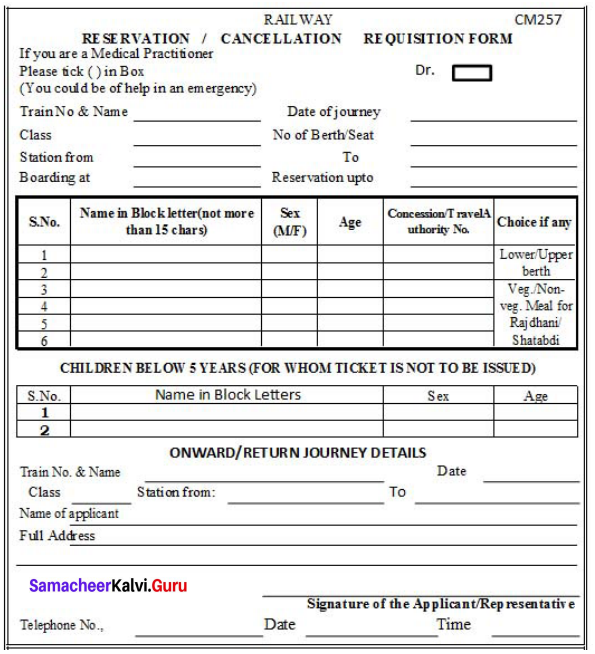
Samacheer Kalvi 11th English Notice Writing

Students who are interested in learning of 11th English Writing Notice Writing Questions and Answers can use Tamilnadu State Board Solutions of 11th English Chapter Wise Pdf. First check in which chapter you are lagging and then Download Samacheer Kalvi 11th English Book Solutions Questions and Answers Summary, Activity, Notes Chapter Wise. Students can build self confidence by solving the solutions with the help of Tamilnadu State Board English Solutions. English is the scoring subject if you improve your grammar skills. Because most of the students will lose marks by writing grammar mistakes. So, we suggest you to Download Tamilnadu State Board 11th English Solutions according to the chapters.

Tamilnadu Samacheer Kalvi 11th English Notice Writing

Check out the topics covered in Writing Notice Writing Questions and Answers before you start your preparation. Improve your grammar skills with the help of Samacheer Kalvi 11th English Book Solutions Questions and Answers pdf links. The solutions for Tamilnadu State Board 11th English Textbook are prepared by the English experts. So, if you follow Tamilnadu State Board Solutions 11th English Textbook Solutions you can cover all the topics in Writing Notice Writing Questons and Answers. This helps to improve your communication skills.

Notice
A notice is a written or printed news, announcement or information. A notice may contain news/information about something that has happened or is likely to happen. It may be a formal announcement of public importance or an advance warning meant for compliance and information. A notice can be about a meeting, an event, an excursion/a historical trip/a picnic, lost and found, change of name/address/uniform/timings/venue, etc.


Purpose
Notices are effective means of disseminating information related to different issues or occasions. They reach to a large number of persons in a short time. Hence, a notice is written in simple and formal language. It is clear, brief and to the point.

Display
(a) School/College Notice Boards
(b) Newspapers/Magazines
(c) Public Notice Boards

Main Characteristics
(a) Format: It includes the word ‘notice’, date, heading, writer’s name and designation.
(b) Content: It must answer the questions What? When? Where? How? etc.
(c) Expression: It relates to the overall organisation and relevance of the content as well as grammatical accuracy and fluency.


Remember:

  • It must contain complete information.
  • The order of the presentation should be clear.
  • State the purpose of notice clearly.
  • Content should include all necessary information, e.g., for a meeting- the time, venue, date, and agenda.
  • Use impersonal language, i.e., third person. Avoid ‘I’ and ‘You’,
  • Give the designation of the writer just below the signature.
  • The date of writing notice is generally at the top.

Solved Questions
(a) You are the president of the Cultural Society of your school. You are planning to organize a cultural program: Write a notice for the school notice-board inviting names of students willing to participate. You are Sudhir, the secretary of the society.
Answer:

Cultural Society
St. Patrick School, Coimbatore

9 Aug. 20XX

Notice
Opportunity For Budding Artists
Talented students are invited to submit their names for a musical evening to be held on 21st August 20XX in the school open-air theatre from 6 p.m. onwards:
Items : (i) Light vocal music (solo) (ii) Group Song
(iii) Group Dance (iv) Classical Dance (Solo)

Contact the undersigned before 16th Aug. 20XX
Sudhir
Secretary
Cultural Society


(b) The 10th International Book Fair is being held at YMCA Ground between 7 Feb. to 14 Feb 20XX. As Secretary of Literary Association, write a notice informing students about it.
Answer:

1 Feb. 20XX

Notice

The 10th International Book Fair is being organised as per details given below:

Venue : YMCA Ground, Chennai
Dates : 7 Feb. – 14 Feb. 20XX
Time : 11a.m.-7 p.m.
Entry fee : Free for students, conducted tours

All students are requested to visit.
Contact the undersigned for class-wise programme.
Shashi/Sachin
Secretary
Literary Association


(c) You are Hari/Dipti, School Captain. The Principal has permitted you to organise a class picnic to Mahabalipuram under the supervision of your class teachers. Write a notice for the school notice-board inviting the names of those who would like to join the picnic.
Answer:

6 Aug. 2OXX

Notice
Picnic At Mahabalipuram

A Picnic at Mahabalipuram is being organised on Sunday, the 14th August 2OXX for class XII.

Departure : 8 a.m. (School bus)
ArrivaI : 6 p.m.
Fees : Rs 50 per head
Attraction : Fun Games/Boating/Crafts Exhibition
Guidance : Mr. J.P. Thilagan & Ms. S. Pushpa, class teachers

Those interested may give their names to the undersigned by 11th August 2OXX
Hari/Dipti
School Captain


The main aim is to share the knowledge and help the students of 11th English to secure the best score in their final exams. Use the concepts of Samacheer Kalvi 11th English Book Solutions Writing Notice Writing Questions and Answers in Real time to enhance your skills. If you have any doubts you can post your comments in the comment section, We will clarify your doubts as soon as possible without any delay.
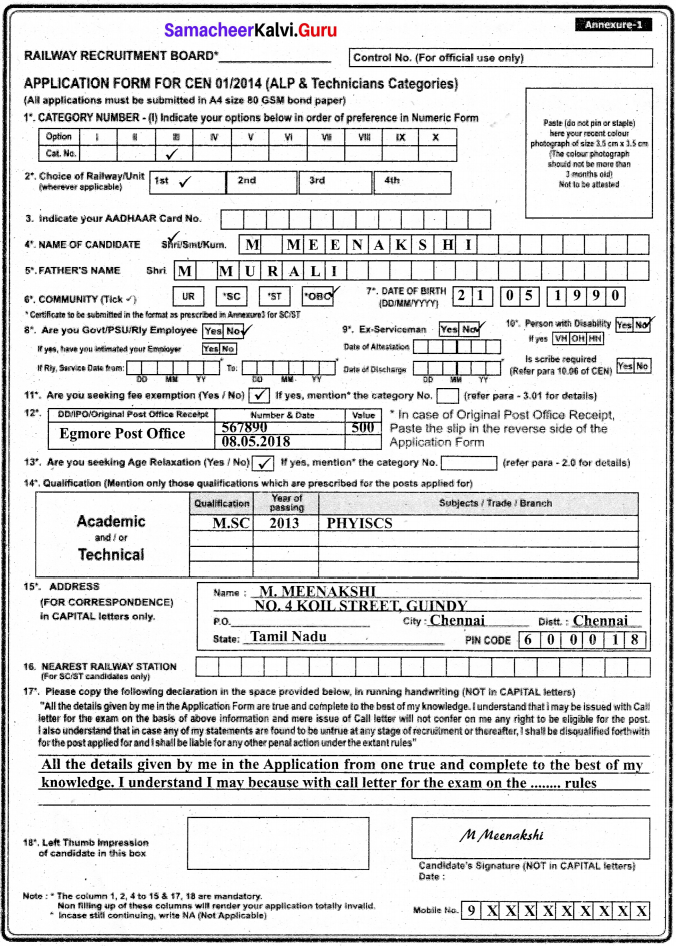
Samacheer Kalvi 11th English Solutions Supplementary Chapter 6 The Never – Never Nest

Students who are interested in learning of 11th English Supplementary Chapter 6 The Never – Never Nest Questions and Answers can use Tamilnadu State Board Solutions of 11th English Chapter Wise Pdf. First check in which chapter you are lagging and then Download Samacheer Kalvi 11th English Book Solutions Questions and Answers Summary, Activity, Notes Chapter Wise. Students can build self confidence by solving the solutions with the help of Tamilnadu State Board English Solutions. English is the scoring subject if you improve your grammar skills. Because most of the students will lose marks by writing grammar mistakes. So, we suggest you to Download Tamilnadu State Board 11th English Solutions according to the chapters.

Tamilnadu Samacheer Kalvi 11th English Solutions Supplementary Chapter 6 The Never – Never Nest

Check out the topics covered in Supplementary Chapter 6 The Never – Never Nest Questions and Answers before you start your preparation. Improve your grammar skills with the help of Samacheer Kalvi 11th English Book Solutions Questions and Answers pdf links. The solutions for Tamilnadu State Board 11th English Textbook are prepared by the English experts. So, if you follow Tamilnadu State Board Solutions 11th English Textbook Solutions you can cover all the topics in Supplementary Chapter 6 The Never – Never Nest Questons and Answers. This helps to improve your communication skills.

Warm up

A. What are the essentials one needs to lead a comfortable life? Fill in the empty bubbles with some of them.

Samacheer Kalvi 11th English Solutions Supplementary Chapter 6 The Never - Never Nest
Answer:

Samacheer Kalvi 11th English Solutions Supplementary Chapter 6 The Never - Never Nest

B. List six gadgets that you want to purchase. Write them according to your priorities and state the reasons.

S.No.GadgetsReasons
1.
2.
3.
4.
5.
6.

Answer:

S.No.GadgetsReasons
1.Refrigeratorto preserve vegetables in shape
2.Gas stoveto cook food quickly
3.Micro ovento bake things quickly
4.Washing Machineto wash clothes
5.Televisionto entertain self
6.Mobilefor outside contact

C. Answer the following questions.

Question (a)
Do you think you can afford to buy all of these at once?
Answer:
No, we can’t afford to buy all gadgets at a time

Question (b)
We may not have money to buy all our wants at the same time. In such a situation, what are the options available?
Answer:
We can buy them on loan by paying equal monthly instalment schemes.


Question (c)
Expand EMI
Answer:
EMI – Equal Monthly Instalment

Samacheer Kalvi 11th English The Never – Never Nest Textual Questions

A. Reading Comprehension Questions:

Question 1.
What did Aunt Jane like about Jack’s ‘little nest?
Answer:
Aunt Jane liked the furniture, the car, the piano, the refrigerator and the radio in the house.

Question 2.
Aunt Jane seemed to think that there was a mistake in the wedding present she had given Jack. Why?
Answer:
Aunt Jane had given Jack and Jill just 200 pounds as wedding gift. But Jack claimed to have bought the house. He had the car and all gadgets at home. So, she wondered if she had given them 2000 pounds instead.

Question 3.
What would make Jack the owner instead of being the tenant?
Answer:
Paying ten pounds and a few quarterly payments have made Jack Mr. Owner of the house

Question 4.
What sounded absurd to Aunt Jane?
Answer:
Aunt Jane realized that the house and all the gadgets in Jacks’s home were bought on loan. He was paying EMI more than his salary. He was steadily borrowing to pay his EMI. So, living beyond the means sounded absurd for her.

Question 5.
How did Jack manage to pay seven pounds eighty and eighty pence out of six pounds? Jack managed to pay seven pounds eight and eight pence out of his salary of six pounds by borrowing the rest of the money from “Thrift and providence trust corporation”

Question 6.
What advice did Aunt Jane offer the couple?
Answer:
Aunt Jane advised Jack not to continue their borrowing spree. She gave them ten pounds to settle atleast one of their bills. –

Question 7.
For what purpose did Aunt Jill wish to use the cheque given by Aunt Jane?
Answer:
Jill wished to pay Dr. Martin who had helped her deliver the baby. She owed still 20 dollars more to him. She used ten dollars to pay the doctor.

Question 8.
‘Just one more instalment and BABY’S REALLY OURS!’ This tells us that the couple
Answer:
The couple did not even have sufficient money to pay the doctor’s bill when Jill delivered the baby. Jane had a guilty feeling that she should pay ten more pounds to claim the baby as “theirs”.

B. Answer the following questions in about a paragraph of 100 -150 words each:

Question 1.
Why is there a double negative in the title: The Never – Never Nest? Elucidate with reasons from the play.
Answer:
Never – Never Nest is the title. It is absolutely justified because Jack and Jill, were living on a limited earning of just six pounds a month. The seed money given by Jane, as wedding gift was squandered by them in making advance payment for the house, fridge, piano etc. They continued to make EMI payments for all the items. The furniture, car and even the baby’s delivery fees was, running on EMI. There was nothing in the home they could call as completely their own.

Jack called himself the owner of the home but the EMI for the housing loan was going on and he had to continue it for many years. They are glad to be freed of the drudgery of paying rent. But they are entangled in paying EMI for the house, car, piano the bed, cot and the cozy furniture. It is very doubtful if ever the “nest” would be called a real nest. Would Jack and Jill ever become the real owners of the house and often gadgets at home is a pretty disturbing questions because Jack is borrowing every month to pay back his EMIs. Living beyond the means can never help a person to settle down in life. Such a person will have, insecurity every month.

Question 2.
Bring out the humorous elements in the play.
Answer:
Jane, Aunt of Jack, gives a wedding gift of two hundred pounds to him and Jill to start a contented life. But Jane buys a home, a car, piano, dining table, cot, sofa and even a radio on loan. Every month he pays more than his salary towards the payment of EMIs. Initially Aunt Jane is pleased with Jack’s comfortable life. The dramatic irony of the whole play starts when Jack tells Jane that he owes his comfortable life to her. She asks if she had given to them two thousand pounds instead of two hundred by an oversight.

Aunt Jane infers that the house would cost a great deal of rent. It was only then she has a rollercoaster ride on the shocking truth about all Jack’s worldly possessions. He says that they thought it uneconomic to go on paying rent and be Mr. Tenant. To be wise, he decided to become Mr. Owner by just paying ten pounds and a few quarterly payments. Jill supports her husband’s wisdom saying that he had a pay hike of five shillings. Then it dawns on Jane that all the possessions may be bought on hire purchase of long term EMI based loans. Such loans collect a lot of interest concealed under EMIs. She asks if they own the car. Jack says the steering wheel, one of the tyres , about two of the cylinders belong to them . Jack and Jill reveal the wonderful strategy of living on future earnings.

They explain that radio, piano and the furniture have been purchased on EMI from Mr. Sage. Mrs. Jane is dumbstruck. She abhors sitting on the furniture and the cot which do not belong to her relatives but to some creditors like Mr. Sage or Spencer. She gives 10 pounds as gift and leaves. She turns down the offer of a car ride as one tyre and two cylinders only belong to Jack. As soon as they leave, Jill sends the giftcheque to Dr. Martin. The black comedy apparent is that with one more installment, she could call the baby their own.

Question 3.
How does the play ‘The Never – Never Nest’ expose the harsh reality of modern living?
Answer:
In modem times, plastic currency has become popular in India, as a country known for saving for future needs; a country which is proud of the adage “save for a rainy day” has undergone drastic changes. Consumer culture has eroded into every common man’s home. Credit card has swindled the younger generation of their capacity to spend hard cash. Their future earnings are pledged for purchase of luxurious things. Modem man buys things which are heavily advertised and which are often caused by jealousy. Supermarkets, Amazon, Flipkart and other online commercial organizations encourage purchase of everything ranging to laptop, electronic items and from home appliances to undergarments and shoes using credit cards.

Popular malls, Hire purchase corporate giants like Vasanth & co, Rathna Fan house offer costly consumables with a down payment of just one rupee and the rest in easy equated monthly installments. Tempted by such fabulous offers, modem men and women lose their heads and go on a spending spree. They, like Jack and Jill, spend beyond their means.

Many of them eat into their future earnings. They buy house loans and when corporate giants like Sathyam sacks young Engineers out of jobs, they end up as chain snatchers and vehicle robbers unable to payback EMIs Or credit card monthly payments. Spending on future earnings is like issuing a post – dated cheque on a crashing bank. One must be very cautious. The best way out would be to avoid immediate gratification but save money and wait until enough money is there to purchase what one wants.

Question 4.
Jill said that they owned the steering wheel of a car, one of the tyres, two of the cylinders and leg of the sofa. What does this convey?
Answer:
Jills claim that they owned the steering wheel of the car, one of the tyres, two of the cylinders and leg of the sofa. This implies that none of the things that are in their home and even their home did not belong to them. His salary is six pounds but he has to pay seven pounds and eight pence. The Equated monthly installments ate away all his salary.

Jack was borrowing for the excess money from “ Thrift and providence Trust corporation”. The pathetic things that melts one’s heart is seen towards the end of the play. The gift cheque of 10 pounds is released to Mr. Martin. When Jack says doctors don’t expect to be paid so soon, Jill says that with one more installment the baby will be absolutely “theirs”. This reveal the fact, Jack and Jill do not have anything left even for medical emergencies like child – delivery or sickness. Such life is not to be flaunted but pitied.

listening Activity

C. Listen to the passage read out aloud by the teacher or played on a recorder and answer the questions that follow.

Listen to the views of a leading economist R. Azhagarasan about EMI in an interview.
We live in a world where everyone likes to lead a comfortable and luxurious life, though our salaries are not enough to meet our needs. In such situation, the EMI seems to be the only option. It helps people pay for the expensive things, they have purchased, in parts as instalments. It gives monetary power to buy expensive things beyond the capacity of a common man. Otherwise, many people will never be able to buy such things. This proves beneficial for people in purchasing a house and other essential appliances and accessories.

It also has some negative unavoidable results. If people are not able to pay EMI on time, they have to keep on paying the loan amount for years together with interest. If people are not able pay EMI on time, they may face serious problems such as penalty for default, repossession of the purchased items and might even be subjected to legal actions. Moreover, people may have the tendency to buy things that are not at all necessary, paying EMIs over a longer period of time. This may lead them into never ending debts. Hence, people should learn to spend within their means.

Questions:

Question (i)
The speaker says that our income is sufficient to meet our needs. Is it true or false?
Answer:
False

Question (ii)
EMI is the only ______ for people who buy veiy expensive things.
(a) consolation
(b) setback
(c) option
(d) debt
Answer:
(b) setback


Question (iii)
One is able to buy costly things with ______ power offered by EMI.
(a) physical
(b) withstanding
(c) honorary
(d) monetary
Answer:
(d) monetary

Question (iv)
If people fail to pay EMIs, they may be subjected to ______
(a) expulsion
(b) high pressure
(c) legal action
(c) dejection
Answer:
(c) legal action

Question (v)
People should learn to spend ______ their means.
(a) within
(b) beyond
(c) above
(d) beneath
Answer:
(a) within

Speaking Activity

D. Based on your understanding of the play ‘The Never-Never Nest’, organise a classroom debate on the topic: ‘Is Equated Monthly Instalment Scheme – a boon or bane to middle- class families?’

A : Equated Monthly Installment scheme is a boon. Middle class people who can’t dream of owning a home or even buying a two wheeler get the benefit.
B : How do you prove it?
A : Well, a person who earns 15,000 rupees a month is able to take a house loan. Shri Ram, Finance Investment company of Bajaj Fin Serve offers scooter, car loans on as low as 7% interest. So a man can avail the benefits first but pay later.
B : My dear friend you present the matter as if it is just easy. What happens if a medical emergency happens and if the person is unable to pay back EMI for housing loan or vehicle loan. Don’t you know a farmer was beaten by “Collection agents” for not . being able to pay back EMI arrears of just 50,000 rupees? The farmer, unable to face
the disgrace committed suicide. Didn’t your read it in the news papers? EMI scheme is a bane.
A : My dear friends, such rare occurrence should not be blown out of proportion. For health emergency, one can join Prime Minister’s health insurance scheme by just paying 12 rupees a month. Besides, there are also Health insurance schemes by Tamil Nadu state Government which covers the cost of critical Health care upto 60%. I assert EMI scheme is a boon for all middle class people who keep EMI to less than 50% of their total earnings and have 10% for other unforeseen expenses. If one leads a planned life, EMI scheme, I reiterate is a bane.
Judge : Now both the teams have argued their case very well. Now team A has almost justified that EMI scheme is a boon.
B : Sir, I would like you to take a look at the notice released by all leading bank containing the list of housing property confiscated due to non – payment of EMIs.
A : Every middle class Indian has dream of owning a house. If one save money say for twenty years to purchase a land or a house the cost would definitely go up by 10 times. Save now and buy later doesn’t suit modem lifestyle. It is true that we should not speculate much. At the same time one can calculate earnings, future pay hike and keep the EMIs within payable limits – such a judicious spending will really make EMI schemes a great boon.
J : Listening to the arguments of both the team, I conclude EMI scheme is both a bane and a boon. Those who are always on a spending spree irrespective of their limited income, EMI scheme is a bane. For those who think twice before making a hasty purchase and narrow down their choice only to vital needs, definitely EMI scheme is a boon. Use EMI scheme wisely. Good luck.

Writing

Writing Task

E. Aunt Jane was shocked to see the life of Jack and Jill during her visit to their place. Put yourself in the place of Aunt Jane and write a letter to the couple advising them not to spend beyond their means. Make more suggestions to enable them lead a debt-free life.

West Avenue,
New York, .
18.10.20XX
Dear Jack & Jill,

I reached back home safely. After returning from your home, I could not sleep properly for three days, I have always purchased things with cash. I feel it is a disgrace to buy things on long term hire purchase schemes. I gave you two hundred pounds to help you start your married life. But you have squandered all that seed money in making advance payment on expensive purchases like piano, furniture, car and even a home on loan. You pay equated .

monthly instalments that exceed your monthly salary. You are borrowing every month to pay your dues I’m really upset. I don’t know what you did with the ten pounds, I gave you. I wish to give you the following recommendation. You can print them and display them in your drawing room. So, that you‘11 try to follow them seriously in your life.

  1. Let you first expenditure be saving 10% of salary for future.
  2. Never buy things you don’t need.
  3. Cut your cloth according to your size.
  4. If you spend on future income you will become a pauper.
  5. A penny saved, is penny earned.
  6. Contentment is the greatest wealth in the world.
  7. Lead a simple life befitting your income.
  8. Don’t ever try to complete with others.
  9. Those who are thrifty invariably become rich.
  10. Those who spend all their money in haste will regret in leisure.

Your loving aunt,
Jane

To
Jack,
15, Gandhi Road,
New Jersey,
United States of America

Additional Questions

I. Fill in the blanks with the right options:

Question 1.
Jack insisted that one must have ______ these days.
(a) TV
(b) Tab
(c) Phone
(d) Radiogram
Answer:
(d) Radiogram


Question 2.
When Jack is away ______ gets all her entertainment from her radiogram at the kitchen.
(a) Jane
(b) Jack
(c) Jill
(d) Mary
Answer:
(c) Jill

Question 3.
Jack and Jill regards their home as their little ______
(a) hut
(b) abode
(c) home
(d) nest
Answer:
(d) nest

Question 4.
Jane had given Jack and Jill a wedding gift of ______ pounds.
(a) 2
(b) 20
(c) 200
(d) 2000
Answer:
(c) 200

Question 5.
The possessions of Jack and Jill ______ Aunt Jane.
(a) gladdened
(b) worried
(c) teased
(d) annoyed
Answer:
(b) worried

Question 6.
Aunt Jane doubted if she had presented a cheque for ______ pounds by an oversight as the wedding gift to Jack and Jill.
(a) 20,000
(b) 200
(c) 20
(d) 2000
Answer:
(d) 2000

Question 7.
Aunt Jane was under the impression that Jack and Jill were living on a/an ______ home.
(a) own
(b) rented
(c) leased
(d) old age
Answer:
(b) rented

Question 8.
Jack said that they don’t pay ______ for their home.
(a) EMI
(b) electricity bill
(c) water charges
(d) rent
Answer:
(d) rent

Question 9.
Aunt Jane was worried that if Jack and Jill did not pay the rent for the home ______
(a) they will be threatened
(b) owners will evict them
(c) they will be sued
(d) they will be ill-treated
Answer:
(b) owners will evict them

Question 10.
Jack and Jill don’t pay rent because the house is ______
(a) leased
(b) owned
(c) bought
(d) loaned
Answer:
(b) owned

Question 11.
Jill had become owner by just making an initial payment of ______ pounds.
(a) 200
(b) 2000
(c) 10
(d) 50
Answer:
(c) 10

Question 12.
Jack and Jill thought it ______ to pay rent.
(a) frugal
(b) uneconomic
(c) unwise
(d) absurd
Answer:
(b) uneconomic

Question 13.
Jill supported Jack by explaining they could afford all the loans for Jack had a pay hike of ______ shillings.
(a) 50
(b) 100
(c) 5
(d) 10
Answer:
(c) 5

Question 14.
Jill admitted that the steering wheel and ______ of the tyres belonged to them.
(a) two
(b) three
(c) one
(d) some
Answer:
(c) one

Question 15.
Jack enjoyed all the pleasure of motoring for a mere down payment of ______ pounds.
(a) fifty
(b) hundred
(c) five
(d) twenty
Answer:
(c) five

Question 16.
Jane understood that Jack intended to pay the balance amount for the car through easy ______
(a) loans
(b) instalments
(c) schemes
(d) ways
Answer:
(b) instalments

Question 17.
Jack earned ______ pounds a month.
(a) ten
(b) six
(c) eight
(d) two
Answer:
(b) six


Question 18.
Jack had to pay ______ pounds eight pence for EMI.
(a) four
(b) six
(c) seven
(d) eight
Answer:
(d) eight

Question 19.
As the EMI payments exceeded Jack’s salary, he steadily borrowed the balance amount every month from ______
(a) friends
(b) bank
(c) money lenders
(d) Thrift and Providence Trust Corporation
Answer:
(d) Thrift and Providence Trust Corporation

Question 20.
Aunt Jane had ______ as her motto in life.
(a) cash later
(b) cash down
(c) hire purchase
(d) buy now pay later
Answer:
(b) cash down

Question 21.
Aunt Jane gave Jack and Jill a cheque for ______ pounds so that they could have at least one item as their own.
(a) 20
(b) 40
(c) 200
(d) 10
Answer:
(d) 10

Question 22.
Jill sent the gift cheque immediately to ______ for the penultimate payment for medical services received during delivery of the baby.
(a) Joseph
(b) husband
(c) Dr. Martin
(d) Annamalai
Answers
(c) Dr. Martin

II. Identify the speaker:

1. Why, of course, Aunt Jane. You simply must have a radio set now a days. – Jack
2. What do you think of our little nest? – Jill
3. Charming! Charming! Such a cosy little room! – Aunt Jane
4. Rent? Oh, no, we don’t pay rent – Jack
5. We don’t pay rent because the house is ours. – Jack
6. Why be Mr. Tenant when you can be Mr. Owner? – Jack
7. And it’s so nice for me when Jack’s away at business. – Jill
8. Oh, I should say the steering wheel and one of the tyres… and about two of the cylinders. – Jack
9. Even so, you must be getting on very well to keeping a place like this. – Aunt Jane
10. But, Jack if you don’t pay rent you’ll get turned out into the street. You’ve Jill and the baby to think of now, you know. – Aunt Jane
11. Oh, nurse, I want you to run and post this for me. I’ll look after the body when you’re gone.- Jill
12. But why waste money on the Doctor? Doctors don’t expect to be paid any way. – Jack
13. Oh, have you got a radiogram as well as a car and a piano? – Aunt Jane
14. What! Travel in a car that has only one tyre and two thingummies! No thank you. I’ll take the bus. – Aunt Jane
15. But that’s absurd! How can you pay seven pounds eight and eight pence out of six pounds? – Aunt Jane

III. Re arrange the sentences

Question 1.
(a) She wondered how it was pdssible with a limited income as low as six pounds a month.
(b) She did not understand how Jack was able to pay rent for such a lovely home.
(c) Aunt Jane visited Jack and Jill.
(d) She found all modem amenities like sofa, cosy bed, car, radiogram, piano and a lovely home.
(e) She was pleasantly surprised to see them leading a comfortable life.
Answer:
(a) Aunt Jane visited Jack and Jill.
(b) She was pleasantly surprised to see then leading a comfortable life.
(c) She found all modem amenities like sofa, cosy bed, car, radiogram, piano and a lovely home.
(d) She did not understand how Jack was able to pay sent for much a lovely home.
(e) She wondered how it was possible with a limited income as low as six pounds a month.

Question 2.
(a) Aunt Jane was worried.
(b) It slowly dawned on Aunt Jane that they were living beyond the means .
(c) Then Jack boasted of his smart plan of becoming Mr. owner of the house by just a down payment of ten pounds and the rest by easy installments.
(d) Jack said to Aunt Jane that they owed their comfortable living to her .
(e) She asked Jack and Jill if she had written 2000 instead of 200 pounds in the gift cheque.
Answer:
(a) Jack said to Aunt Jane that they owed their comfortable living to her
(b) Aunt Jane was worried
(c) She asked Jack and Jill if she had written 2000 instead of200 pounds in the gift cheque.
(d) Then Jack boasted of his smart plan of becoming Mr. Owner of the house by just a downpayment of ten pounds and the rest by easy installments.
(e) It slowly dawned on Aunt Jane that they were living beyond the means


Question 3.
(a) Jill sends the cheque to Mr. Martin so that she could call her baby “theirs’ with just one more instalment.
(b) She doesn’t want to sit on the furniture which does not belong to Jack.
(c) Aunt Jane is deeply disturbed to find out that Jack and Jill have now been addicted to “Buy now, pay later” culture.
(d) She realizes that they have not made complete payment for any item in the house.
(e) She gives them a gift cheque for ten pounds with a serious advice to become a real owner of atleast one item in their house.
Answer:
(a) Aunt Jane is deeply disturbed to find out that Jack and Jill have not addicted to “Buy now, pay later” culture.
(b) She realizes that they have not made complete payment for any item in the house.
(c) She doesn’t want to sit on the furniture which does not belong to Jack.
(d) She gives them a gift cheque for ten pounds with a serious advice to become a real owner of atleast one item in their house.
(e) Jill sends the cheque to Mr. Martin so that she could call her baby “theirs’ with just one more installment.

IV. Read the following and answer the questions given below.

Question 1.
Jack: No, no, Aunt Jane. You misunderstood me. We don’t pay rent because the house is ours. Aunt Jane: YOURS?
Jill: Why, yes; you just pay ten pounds and it’s yours.
Jack: You see, Aunt Jane, we realized how uneconomic it is to go on paying rent year after year, when you can buy and enjoy a home of your own for ten pounds and a few quarterly payments, of course. Why be Mr .Tenant when you can be Mr. Owner?
Aunt Jane: I see. Yes, there’s something in that. Even so, you must be getting on very well to keep up a place like this.
Jill: Oh, he is, Aunt Jane. Why, only last year he had a five shilling rise—didn’t you, Jack? Jack (modestly): Of course that was nothing, really. I’m expecting ten this Christmas.
Aunt Jane (suddenly): Jack! I’ve just thought of something. That car—is it yours?
Jill: Of course it’s ours.
Aunt Jane : All yours?
Jack : Well, no. Not exactly all.

Question (a)
Why doesn’t Jack pay rent?
Answer:
Jack doesn’t pay rent because he has brought the house on EMI loan scheme.

Question (b)
How much had Jack paid for his house?
Answer:
Jack had made an initial payment of ten pounds and was paying the rest in instalments.

Question (c)
Was Aunt Jane pleased to know Jack’s promotion to Mr. Owner from Mr. Tenant? How?
Answer:
No, she was not pleased. Aunt Jane was a practical lady. She wondered how on earth Jack was maintaining such a lovely house with a lot of amenities.

Question (d)
How did Jill support her husband’s penny wise and pound foolish investments?
Answer:
Jill said that they were well off as Jack was given a pay hike of five shillings.

Question (e)
What was Jack’s response to Aunt Jane’s questions about the ownership of the car?
Answer:
He said that the car was his but not all the parts.

Question 2.
Aunt Jane: Now, I’m sorry if I sounded rude, but really I’m shocked to find the way (relenting a little) you’re living. I’ve never owed a penny in my life – cash down, that’s my motto and I want you to do the same. (She opens her handbag.) Now look, here’s a little cheque I was meaning to give you, anyway. (She hands it to Jill.) Suppose you take it and pay off just one of your bills –  so that you can say one thing at least really belongs to you.
Jill: Er – thank you. Aunt Jane. It’s very nice of you. (awkwardly)
Aunt Jane: There! Now I must be going, (patting her arm)
Jack: I’ll see you to the bus, anyway.
Jill: Good-bye, Aunt Jane – and thanks so much for the present.
Aunt Jane: Good – bye, my dear. (She and Jack go out. Jill looks at the cheque and (kissing her) exclaims ‘Ten pounds! ’ Then she hurries to the table, addresses an envelope, endorses the cheque and slips it inside with a bill which she takes from the bag and seals the envelope. Then she rings the bell. In a moment the NURSE comes in with the baby in her arms.)
Jill: Oh, nurse. I want you to run and post this for me. I’ll look after baby while you’re gone.

Question (a)
Why was Aunt Jane shocked?
Answer:
Aunt Jane was shocked to find Jack and Jill living beyond their means.

Question (b)
What was Aunt Jane’s motto in life?
Answer:
Aunt Jane has never owed a penny in her life. ‘Cash down’ – that was her motto.

Question (c)
Why did Aunt Jane give Jack and Jill a cheque for ten pounds?
Answer:
Aunt Jane wanted Jack and Jill to pay atleast one of their bills so that they can become the owner of atleast one item in their house.

Question (d)
Who did Jane send the cheque?
Answer:
Jane sent the cheque to Dr. Martin.

Question (e)
Why did Jane decide to send the cheque to Mr. Martin?
Answer:
Jane believed that she could call the baby ‘theirs’ only if she could make one more instalments. This reveals her real distress.

The Never – Never Nest About the Author

Samacheer Kalvi 11th English Solutions Supplementary Chapter 6 The Never - Never Nest

Cedric Mount is a considerable distinguished playwright of his age. Me wrote some thoughtful plays, which include Twentieth Century Lullahy. “lo cut a l.ong Short Story Short and Nature Abhors a Vacuum. His one act plays are easy to perform, satirical, w itty and insightful. These one art plays expose the shams of contemporary society besides delicately admonishing the guilty.

The Never – Never Nest Summary

Aunt Jane is quite impressed with the small house Jack and Jill live in with all modem amenities. She is amazed at their acquisitions such as piano, refrigerator, radio and furniture. Aunt Jane had given only two hundred pounds as a wedding gift to Jack. But she finds that they own a house and all modem amenities. She is unable to conclude how on earth they accomplished all those comfort when Jack earned so little as six pounds. She is mdely shocked to know the house, fridge, furniture, car, piano and even the radio are all bought on EMIs. They have not made a complete payment for a single item. It sounded absurd that Jack is earning only six pounds a week. But he is paying seven pounds eight and eight pence towards EMI.

The rest is borrowed every month from Thrift and providence Trust corporation. It is so disgusting for Aunt Jane. She doesn’t want to sit on the furniture which belongs to someone else. She gives them a gift of 10 pounds with a sharp advice that they should try to pay full amount for atleast one item and call it theirs. Jane refuses to travel in Jack’s EMI car for which he has paid for steering wheel and one tyre only. He accompanies Aunt Jane to the bus stop. Before he returns, Jill sends the cheque to Dr. Martin through her nlxrse. Jack is not happy. Jack says doctors never expect to be paid quickly. But she tells him that the baby will be their’s with just one more payment.


The Never – Never Nest Glossary

Textual:
absurd – ridiculously unreasonable and meaningless
cosy – comfortable
endorse – to make over to another
instalment – one of the parts into which a debt is divided when payment is made at intervals
lounge – a place in a home or public building for leisure activities, living room
motto – a short sentence or phrase that expresses a rule guiding the behaviour of
possessed – a particular person or group completely controlled by an evil spirit
propose – intend to do something
realise – to understand or become aware of
tartar – a person of irritable temper
thingummies – small articles the names of which are not remembered

Additional:
accomplished – achieved
acquisitions – possessions
amenities – facilities
disgusting – revolting

The main aim is to share the knowledge and help the students of 11th English to secure the best score in their final exams. Use the concepts of Samacheer Kalvi 11th English Book Solutions Supplementary Chapter 6 The Never – Never Nest Questions and Answers in Real time to enhance your skills. If you have any doubts you can post your comments in the comment section, We will clarify your doubts as soon as possible without any delay.

Samacheer Kalvi 11th English Solutions Supplementary Chapter 5 The Singing Lesson

Students who are interested in learning of 11th English Supplementary Chapter 5 The Singing Lesson Questions and Answers can use Tamilnadu State Board Solutions of 11th English Chapter Wise Pdf. First check in which chapter you are lagging and then Download Samacheer Kalvi 11th English Book Solutions Questions and Answers Summary, Activity, Notes Chapter Wise. Students can build self confidence by solving the solutions with the help of Tamilnadu State Board English Solutions. English is the scoring subject if you improve your grammar skills. Because most of the students will lose marks by writing grammar mistakes. So, we suggest you to Download Tamilnadu State Board 11th English Solutions according to the chapters.

Tamilnadu Samacheer Kalvi 11th English Solutions Supplementary Chapter 5 The Singing Lesson

Check out the topics covered in Supplementary Chapter 5 The Singing Lesson Questions and Answers before you start your preparation. Improve your grammar skills with the help of Samacheer Kalvi 11th English Book Solutions Questions and Answers pdf links. The solutions for Tamilnadu State Board 11th English Textbook are prepared by the English experts. So, if you follow Tamilnadu State Board Solutions 11th English Textbook Solutions you can cover all the topics in Supplementary Chapter 5 The Singing Lesson Questons and Answers. This helps to improve your communication skills.

Warm up

Question 1.
What are all the factors that influence our moods?
Human beings are bundles of emotions, A small angry look from a friend, a scolding from a teacher one admires, a taunt from mom could influence our moods the whole day.

Question 2.
How do you behave under the spells of different moods?
Answer:
When good things keep happening, we are happy. If we don’t get an easy question paper or the expected questions don’t appear we feel quite upset. If a close friend becomes angry, instead of analysing what caused it, we feel dejected. When centum is the goal, even 99% of marks disappoints us.

Question 3.
Do you think it is important not to be swayed by every passing mood?
Answer:
Yes, we should not be swayed by every passing emotions. But we are the sum total of our experiences. What ever bitter sweet experiences that occur do influence us. Latest researches . say that the food we eat, weather, clothes, the colour around us and punishing work schedules can adversely affect our moods. It would be ideal if we don’t allow external circumstances to influence our equanimity of mind and the ability to stay focused on our goals.


Question 4.
Suggest some ways by which we can maintain a calm temperament under all circumstances.
Answer:
Early morning walks, meditation and the practice of treating both success and failure, joy and sorrow with the same composure will naturally increase our life span on this planet. Listening to good music and reading good books, not only text books, can drastically reduce unpleasant stress. Thus we can maintain a calm temperament at all occasions.

Samacheer Kalvi 11th English The Singing Lesson Textual Questions

A. Based on your understanding of the story, answer the following questions in about 30 – 50 words each.

Question 1.
What was the knife that Miss Meadows carried with her?
Answer:
Miss. Meadows had received a letter from Mr. Basil calling off the marriage. She deemed it a kind of personal failure. Her anger and disappointed became despair. She carried cold despair buried deep in her heart like a wicked knife.

Question 2.
What kind of relationship existed between Miss Meadows and the Science Mistress?
Answer:
Both hated each other. Science Miss gave her a “Sugary smile” concealing her hostility. But Miss. Meadows enquiries responded to her deception always with a cold grimace.

Question 3.
Why was Miss Meadows upset and dejected?
Answer:
Mr. Basil had written a disquieting letter after his engagement with her. He had claimed that he was not a “Marrying man”. The thought of marriage gave him a feeling of disgust. He had struck out the word disgust and replaced it with ‘regret’ to lessen the hurt. So, Miss. Meadows was upset and dejected.

Question 4.
How would Miss Meadows usually treat Mary? How did her behaviour towards the girl change that day?
Answer:
Usually she would receive the flower from her favourite pupil Mary Beazley. She would tuck it in her belt with great tenderness and give a smile to her. The music class would start with a joyful note.

Question 5.
Why had Miss Meadows chosen ‘A Lament’ as the lesson that particular day?
Answer:
Miss. Meadows had chosen “A lament” as a lesson for that particular day. She was only in a mood to lament her broken engagement and shattered dreams. The choice of the music lesson reflected her real mood of dejection and despondency.

Question 6.
What brought agony to the girls during the music lessons?
Answer:
During the music lesson, Miss. Meadows did not show any warmth. She was icy cold and mechanical in her instructions. Children could easily realize that Miss. Meadow was in a wax. Miss. Meadow totally ignored the chrysanthemum from her favourite pupil. She also did not respond to her greeting. This sent tremors across the class. Young ones quickly understood the unstated message that music Miss was in one of her worst moods confirming their guess, she gave them “a lament” to practice.

The lesson was devoid of any warmth and joy. The lyrics of the song was so gloomy that children entered the world of unnatural agony and despair.

Question 7.
Bring out the substance of Basil’s letter to Miss Meadows.
Answer:
The content of Basil’s letter read, “I feel more and more strongly that our marriage would be a mistake. Not that I don’t love you. I love you as much as it is possible for me to love any woman but, truth to tell, I have come to the conclusion that I am not a marrying man and the idea of settling down fills me with nothing but – the word “disgust” was scratched out and “regret” written over the top.

Question 8.
Why did Miss. Wyatt summon Miss. Meadows to her room?
Answer:
A telegram addressed to Miss. Meadows was received at the school’s office. The Head mistress could not fathom the content of the Telegram. Believing that the telegram must be a harbinger of a tragedy, the Headniistress Miss. Wyatt summoned Miss. Meadows to her room.

Question 9.
How did Miss. Meadows express her joy, when she returned to the music class?
Answer:
Miss. Meadows changed the song for the children. She asked them to sing a joyful song beginning with flowers o’er laden. When she found that some children were still stuck up in the despondent mood, she reprimanded them. She told the girls, don’t look so doleful. It ought to sound warm, joyful and eager. And this time Miss. Meadow’s voice dominated the voices of all the little angels in her classroom. It was deep and glowing with a cheerful expression.

Question 10.
Briefly explain the cause of Miss Meadows’ joy at the end.
Answer:
Contrary to the expectation of Miss. Wyatt, the telegram was from Basil. It was an apology and reconciliatory in nature. In the telegram, her fiance had asked her to ignore the letter written when he must have been mad. A few hours before, she was the embodiment of disappointment and self-pity. The telegram had restored her joy. She could gather the pieces of her shattered dreams and hopes and built them anew. She was so happy that Miss. Wyatt’s warnings fell into deaf ears.

Vocabulary

A. Note the following words from the story. They all refer to different ways of walking. Find out their meanings and use each of them in meaningful sentences of your own. Refer a thesaurus and add a few more to the list.

(a) trod (b) fluttered (c) hurried (d) skipped (e) strode (f) sped

(a) trod – walked, stepped, strode, went
(b) fluttered – hovered, danced, flitted, flapped, oscillated, twitched, vibrated, flickered
(c) hurried – went fast, hastened, sped, charged, sprinted, chased, scampered, galloped, scrambled.
(d) skipped – capered, bobbed, bounded, jumped, leapt, gambolled,’frisked, romped
(e) strode – marched, trod, paced, stalked, dashed, ran, flaunted, joggled, tramped, rushed,zoomed
(f) sped – hurried, rushed, zipped, spurred, hurtled, sailed, hastened, quickened

B. Complete the mind map given below and write a brief summary of the story in your own words.

Samacheer Kalvi 11th English Solutions Supplementary Chapter 5 The Singing Lesson
Answer:

(i) a letter from Basil breaking the engagement
(ii) irritable
(iii) sing a lament
(iv) Basil as a knife piercing her heart
(v) deserted her
(vi) of mpod
(vii) Head mistress Miss. Wyatt
(viii) the letter

A brief summary:
Miss Meadows was upset over a letter from Basil breaking the engagement. She remains gloomy and irritable in class. She taxes the students making them sing a lament. She thinks of the letter from Basil as a knife piercing her heart. Basil seems to have deserted her. Suddenly she is called by Head mistress Miss. Wyatt. The headmistress gives her a telegram which asks her to forget the letter. Miss Meadows feels happy and returns to the class with vigour and good cheer.

C. Answer the following questions in a paragraph of about 150 words each.

Question 1.
Describe Miss Meadows’ mood before and after receiving the telegram. How did it affect her class?
Answer:
Miss. Meadow was heart-broken. The letter written by Basil had pierced her heart and she was bleeding. Her hatred and anger became a knife and she carried it with her. Her icy cold response to science Miss demonstrates it. She is least bothered about the tender feelings of young children who look at her face all time for a friendly nod or smile of approval. Her favourite pupil Mary Beazley is baffled at her treatment of the chrysanthemum she had brought with so much love. The choice of the song “A lament” perfectly jells well with her worst mood. She is in fact in her heart lamenting over the loss of love, trust and future hopes. She is unnecessarily severe with young children forcing them to redo the singing which drives them to despair, pain and tears they manage to stifle.

After she receives the telegram from Basil apologizing for his insane letter, her mood changes to joy. She takes the chrysanthemum and keeps it close to her lips to conceal her blush. She goads the children to sing a song of joy congratulating some one for success. She persuades them to show warmth in their voices. Her warm and lively voice dominates the tremulous voices of the young ones. The young ones now realize that Miss Meadow who was in a wax earlier is now in her elements.

“My moods don’t just swing – they bounce, pivot, recoil, rebound, oscillate, fluctuate and occasionally PIROUETTE. ”


Question 2.
‘The only difference between a good day and a bad day is your attitude.’Relate this to a real life experience you have had. Share your thoughts in class.
Answer:
It is true that attitude makes or mars things. I was waiting for my Std X public exam resuls. I had put in 10 hours of work everyday. I was an average boy but I hoped to join the top five any time. The results were scheduled to be out the next morning. I have no internet connectivity at home. But one of my friends had it. His name is Murali. His father had come to my home. When I was out, he had told my parents I had failed in one subject. When I returned home, I found both my parents upset. I asked them what was wrong. They said it was a bad day. I asked them to tell me what was in their mind. They asked me to take things as they come by.

I didn’t understand. My dad told philosophically that failure is a stepping stone to success. Still they were not open with me. When I went out for tea, the local newspapers carried Std X public exam results. To my joy, I had passed with a first class. When I broke the news, my parents disclosed what had upset them. If they had just not reacted to the wrong information, their natural joy would not have been robbed. Now that they knew the information, they were over joyed. I just wondered at the human capacity to go down in misery and bounce back to extreme joy just by a turn of events. The best course of action to be happy all the time would be to. retain the key to our happiness and never give up on our joy to any external event.

“Don’t take it on yourself to repay a wrong. Trust the Lord and He will make it right.”

Question 3.
You are busy getting ready for school. You receive a Whats App message from your best friend, saying that he/she is very upset over the fight you had yesterday and doesn’t want to talk to you any more. This distresses you as she sounds very firm. However, today is a big day at school with two tests lined up. What will be your state of mind? How will you handle this situation?
Answer:
I always remember an anecdote. Kannadasan has recounted this anecdote. A temple elephant was proceeding to the temple. It’s mahout had washed him and applied sandal paste and holy ash on his forehead. Passerby greeted him like a God. As he was walking majestically, he was followed by a she elephant. A pig crossing the male elephant told its wife, “You see how the elephant was scared of me and gave way”. Overhearing the arrogant words of the pig, “The ‘she-elephant’ asked the ‘male elephant’ if it was true. The gentle animal smiled wisely and said, “I always focus on my goal.

We are on our way to a holy place. Even if I stamp on the pig by mistake, he would die. But I need to return to the tank for another wash.” “In life we need to avoid confrontation to ensure continuous progress in the chosen path. When I am a student, academics is quite important. Friendship is also important.

If a friend gets upset and if she really values my friendship, I can always say sorry and bring her around after the examination. If she is pig-headed and refuses to give up arrogance or anger, I will tell her I shall pray for her and move on. I will definitely find some one worthy of my true friendship. In reality, true friends, can’t be angry for long with each other. Realizing the value of true friends .

I’ll send a message wishing her the very best of luck for her exam and promise to sort out the issue in the evening. Nothing needs to be taken as a permanent failure in relationship or even in examination. I would like to remember the Chinese proverb “One can’t help birds of sorrow hover over one’s head. But one can prevent them from building nest in one’s head”.

“Never leave a true relationship for a few faults. Nobody is perfect; Nobody is correct. In the end… Affection is always greater than perfection. ”

Additional Question

Question 1.
Attempt a character sketch of Miss. Meadows.
Answer:
Miss. Meadows is a 30 year old lady. Mr. Basil a 25 year old young man gets engaged to her. When she is cherishing the dreams of a happy married life, a letter lands on her heart like a bombshell. It shatters her dreams. It pierces her heart. Being a sensitive lady, she feels her heart is bleeding. The contents of the letter keep haunting her memory. She is unable to focus in her music classes. The miraculous engagement was almost broken. The words, “our marriage could be a mistake” leaves her bleeding. She interpreted the scornful glance of science miss . as if she had known about the “break”. He had mentioned that he was not a marrying man”.

She wondered how she would react to the disclosure of the shattered engagement to the colleagues and the villagers. She even harboured the idea of leaving her job and go into hiding somewhere. As she is in a glooming mood, she doesn’t respond to the offer of chrysanthemum with a warm smile and thanks. She gives a ‘lament’ for practice. It is only when she receives a telegram of apology from her fiance her mood gets lifted. She flits on the wings of hope and sings a joyous song along with her students. She is a perfect example of ordinary mortals who are early hurt and quickly bounce back to hopeful life as well.

“Please don’t expect me to always be good, kind and loving. There are times when I will be cold, thoughtless and hard to understand.”

Additional Questions

I. Answer the following choosing from the options give below.

Question 1.
Miss. Meadows hugging the __________ stared in hatred at the science mistress.
(a) baton
(b) books
(c) bite
(d) knife
Answer:
(d) knife

Question 2.
Everything about Miss. Meadows was sweet, pale like __________
(a) money
(b) honey
(c) flower
(d) rose
Answer:
(b) honey

Question 3.
Science mistress was good at showing a __________ smile whenever she came across Miss. Meadows.
(a) honey
(b) sugary
(c) feigned
(d) deceptive
Answer:
(b) sugary

Question 4.
The story is set in __________ season.
(a) winter
(b) spring
(c) autumn
(d) rainy
Answer:
(c) autumn

Question 5.
One could witness an excitement in the school __________
(a) drowsy
(b) insipid
(c) gleeful
(d) sensational
Answer:
(c) gleeful

Question 6.
Everyday the presentation of a beautiful flower to Miss. Meadows by __________ her favourite has pupil become a ritual.
(a) Muriel
(b) Mr. Basil
(c) Rosy
(d) Mary Beazley
Answer:
(d) Mary Beazley

Question 7.
The little children in the music were thinking __________ is in a wax.
(a) Rowdy
(b) Meady
(c) Rosy
(d) Miss. Wyatt
Answer:
(b) Meady

Question 8.
The letter from Mr. Basil had __________ Miss. Meadows heart.
(a) gladdened
(b) soothed
(c) pierced
(d) embalmed
Answer:
(c) pierced

Question 9.
Mary’s __________ was totally ignored by Miss. Meadows.
(a) Rose
(b) Lilly
(c) Chrysanthemum
(d) apple
Answer:
(c) Chrysanthemum

Question 10.
The song chosen for practice in the music class was a __________
(a) love song
(b) lament
(c) joyous song
(d) hymn
Answer:
(b) lament


Question 11.
The rejection of the flower was a __________ moment in Mary Beazley’S school life.
(a) memorable
(b) unforgettable
(c) staggering
(d) astonishing
Answer:
(c) staggering

Question 12.
Nothing could be more __________ than the lament.
(a) important.
(b) beautiful
(c) tragic
(d) fabulous
Answer:
(c) tragic

Question 13.
The last time Mr. Basil had come to see Miss. Meadow, he had worn a __________ in his buttonhole.
(a) diamond
(b) pearl
(c) rose
(d) chrysanthemum
Answer:
(c) rose

Question 14.
Mr. Basil could not refuse the headmaster’s wife’s invitation for a __________ because he couldn’t afford to be unpopular.
(a) party
(b) lecture
(c) card game
(d) dinner
Answer:
(d) dinner

Question 15.
Basil had written to Miss. Meadows that their marriage would be a __________
(a) boon
(b) mistake
(c) marvel
(d) wonder
Answer:
(b) mistake

Question 16.
Mr. Basil’s previous letter was about a __________ book-case.
(a) sandal
(b) teak
(c) neem
(d) fumed-oak
Answer:
(d) fumed-oak

Question 17.
The tiny one who clung to the lament wriggled like __________ caught on a line.
(a) dogs
(b) cats
(c) elephant
(d) fishes
Answer:
(d) fishes

Question 18.
Miss. Meadows compliment with a strange, stony tone positively __________ the younger girls.
(a) encouraged
(b) boosted
(c) frightened
(d) pleased
Answer:

Question 19.
Miss. Meadows went on recalling the struck out word __________ in his letter.
(a) ‘pale’
(b) ‘white’
(c) ‘pleasing’
(d) ‘disgust’
Answer:
(d) ‘disgust’

Question 20.
Miss __________ was the school headmistress.
(a) Glory
(b) Mary
(c) Victoria
(d) Wyatt
Answer:
(d) Wyatt

Question 21.
Mrs. Wyatt really hoped for a news about a __________ through the telegram.
(a) marriage
(b) tragedy
(c) comedy
(d) practical joke
Answer:
(b) tragedy

Question 22.
Miss. Wyatt had sent for Miss. Meadow because __________ a had been received at the school office.
(a) letter
(b) money order
(c) book parcel
(d) telegram
Answer:
(d) telegram

Question 23.
On hearing the news of a telegram Miss. Meadows thought that __________ must have I committed suicide.
(a) Ryan
(b) Mary
(c) Mr. Basil
(d) Osborne
Answer:
(c) Mr. Basil

Question 24.
The telegram received the stress of Miss. Meadows but added to that of Miss __________
(a) Rose
(b) Beadle
(c) Mary
(d) Wyatt
Answer:
(d) Wyatt

Question 25.
Miss. Meadows had to struggle to lift the little girl from __________ spirit to a cheerful mood.
(a) doleful
(b) hateful
(c) disdainful
(d) cheerful
Answer:
(a) doleful

Question 26.
In order to indicate that she was her normal self again she took the __________ and held it to her lips.
(a) baton
(b) knife
(e) book
(d) chrysanthemum
Answer:
(d) chrysanthemum


Question 27.
The song after receiving the telegram sounded __________ , joyful and eager.
(a) cold
(b) distasteful
(c) mournful
(d) warm
Answer:
(d) warm

Question 28.
The fateful letter made Miss. Meadows even think of __________ her job and go into hiding.
(a) taking
(b) building
(c) resigning
(d) up scaling
Answer:
(c) resigning

Question 29.
After her brief visit to Miss. Wyatt’s room, dominated the students and it was glowing with __________
(a) pain
(b) bliss
(c) expression
(d) depression
Answer:
(c) expression

Question 30.
Miss Wyatt learnt that the telegram was Miss. Meadows’ __________
(a) dad
(b) fiance
(c) brother
(d) correspondent
Answer:
(b) fiance

II. Rearrange the sentences

Question 1.
(a) She did not say thanks with warmth to her favourite pupil for the flower.
(b) Most of the children realized with alarm that Miss. Meady was in a wax.
(c) Miss. Meadows looked dejected.
(d) Meadows, responding with a grimace went away and started her music.
(e) Science mistress greeted her with a sugary smile.
Answers:
(c) Miss. Meadows looked dejected.
(e) Science mistress greeted her with a sugary smile.
(d) Meadows, responding with a grimace went away and started her music.
(a) She did not say thanks with warmth to her favourite pupil for the flower
(b) Most of the children realized with alarm that Miss. Meady was in a wax.

Question 2.
(a) She was called to Miss. Wyatt’s room and given a telegram.
(b) Miss. Meadows, reflecting her despair, asked the children to sing “a lament”
(c) Miss. Meadows was upset over her fiance’s letter calling off the marriage
(d) After seeing the contents of the telegram, Miss. Meadows almost flew back to her class on the wings of hope and gave the class a joyful song to sing.
(e) Basil seemed to have deserted her.
Answers:
(c) Miss. Meadows was upset over her fiance’s letter calling off the marriage
(e) Basil seemed to have deserted her.
(b) Miss. Meadows, reflecting her despair, asked the children to sing “a lament”
(a) She was called to Miss. Wyatt’s room and given a telegram.
(d) After seeing the contents of the telegram, Miss. Meadows almost flew back to her class on the wings of hope and gave the class a joyful song to sing.

III. Identify the speaker

  1. “Isn’t it cold? It might be winter” – science mistress to Miss. Meadows
  2. “It is rather sharp – Miss Meadows to science mistress
  3. You look frozen – Science mistress to Miss. Meadows
  4. Oh! not quite as bad as that – Miss. Meadows to science mistress
  5. ‘sh – sh! gives’ – Mary Beazley to fellow students
  6. Silence, please! Immediately” – Miss Meadows to her student
  7. “Good morning Miss. Meadows” – Mary Beasley to music miss
  8. “Thank you Mary, How very nice! Turn to page 32” – Miss Meadows to Mary Beasley
  9. Page fourteen, please mark the accent – Miss. Meadows to the music class children
  10. What could have possessed him to write such a letter? – Monologue from Miss. Meadows
  11. The third line should be one crescendo – Miss. Meadows to her class
  12. “Away’ you must begin to die – to fade – until the listening ear” is nothing more than a whisper – Miss Meadows, to her music class students
  13. Well, Monica, what is it? – Miss Meadows to Monica
  14. Miss. Wyatt wants to see you in the mistress’s room. – Miss Monica to Miss. Meadows
  15. “I shall met you in honour to talk quietly while I am away,” – Miss to her students in music class
  16. “I sent for you just now because this telegram has come for you” – Miss Wyatt to Miss Meadows
  17. “A telegram for me, Miss. Wyatt” – Miss Meadows to Miss Wyatt
  18. “I hope it’s not bad news” – Miss Wyatt to Miss. Meadows
  19. “I do hope, it’s nothing serious” – Miss Meadows to Miss Wyatt
  20. Oh, no, thank you, Miss. Wyatt – Miss. Meadows to Miss Wyatt
  21. You’ve fifteen minutes more of your class … Miss Meadows, haven’t you? – Miss Wyatt to Miss Meadows.
  22. ”It’s from my fiance saying that… “ – Miss Meadows to Miss. Wyatt.

IV. Reading comprehension.

1. With despair – cold, sharp despair – buried deep in her heart like a wicked knife, Miss Meadows, in cap and gown and carrying a little baton, trod the cold corridors that led to the music hall. Girls of all ages, rosy from the air, and bubbling over with that gleeful excitement that comes from running to school on a fine autumn morning, hurried, skipped, fluttered by; from the hollow classrooms came a quick drumming of voices; a bell rang; a voice like a bird cried, “Muriel.”

And then there came from the staircase a tremendous knock-knock-knocking. Someone had dropped her dumb bells. The Science Mistress stopped Miss Meadows. “Good morning,” she cried, in her sweet, affected drawl. “Isn’t it cold? It might be winter.” Miss Meadows, hugging the knife, stared in hatred at the Science Mistress. Everything about her was sweet, pale, like honey. You would not have been surprised to see a bee caught in the tangles of that yellow hair. “It is rather sharp,” said Miss Meadows, grimly. The other smiled her sugary smile.

Question (a)
What is a baton used for?
Answer:
A baton is a long stick used for conducting a music orchestra.

Question (b)
What was the wicked knife?
Answer:
Sharp despair was the wicked knife.

Question (c)
Why was Miss. Meadows in a state of despair?
Answer:
Mr. Basic had written a letter calling of their engagement. So, Miss. Meadows was in a state of despair.

Question (d)
Why was the greeting of science mistress affected?
Science mistress did not have real feelings for Miss. Meadows. It was out of courtesy that she offered a sugary smile to Miss. Meadows and asked after the weather.

2. Forms Four, Five, and Six were assembled in the music hall. The noise was deafening. On the platform, by the piano, stood Mary Beazley, Miss Meadows’ favourite, who played accompaniments. She was turning the music stool. When she saw Miss Meadows, she gave a loud, warning “Sh-sh! Girls!” and Miss Meadows, her hands thrust in her sleeves, the baton under her arm, strode down the centre aisle, mounted the steps, turned sharply, seized the brass music stand, planted it in front of her, and gave two sharp taps with her baton for silence.

“Silence, please! Immediately!” and, looking at nobody, her glance swept over that sea of coloured flannel blouses, with bobbing pink faces and hands, quivering butterfly hair-bows, and music-books outspread. She knew perfectly well what they were thinking. “Meady is in a wax.” Well, let them think it! Her eyelids quivered; she tossed her head, defying them. What could the thoughts of those creatures matter to someone who stood there bleeding to death, pierced to the heart, by such a letter

Question (a)
Who was Miss. Meadows favourite pupil?
Answer:
Mary Beazley was Miss. Meadows’favourite pupil.


Question (b)
How did Mary alert the fellow students?
Answer:
On seeing Miss. Meadows, Mary alerted the fellow students saying,” sh – sh! girls”.

Question (c)
How did Miss. Meadows silence the music class?
Answer:
There was a brass music stand. Miss. Meadows gave two sharp taps with her baton to silence the music class.

Question (d)
According to Miss. Meadows, what were the children thinking about her on that bad day?
Answer:
Children were thinking that Miss. Meady is in a wax”.

Question (e)
What did the thoughts of children not affect Miss. Meadows?
Answer:
The letter from Mr. Basil had pierced her heart. She was bleeding to death. In such a state, Miss. Meadows could not possibly think about what the children were thinking about her.

The Singing Lesson About the Author

Samacheer Kalvi 11th English Solutions Supplementary Chapter 5 The Singing Lesson

Kathleen Mansfield Murry (1888 – 1923) was a New Zealand short story writer who wrote under the pen-name Katherine Mansfield. She left New Zealand at the age of 19 and settled in the United Kingdom where she gained the friendship of great writers such as 0.11. Lawrence and Virginia Woolf. Bliss and The Garden Party were collections of short stories written by her. She wrote many poems and her collected letters were a great success.

The Singing Lesson Summary

This story depicts the fact that human moods are often influenced by experiences good or bad. The story revolves around the swings of mood experienced by Miss. Meadows and how it affected her work directly. Miss. Meadows, a music teacher aged 30, is engaged to 25 years old Basil. It was a huge surprise to everyone including the science teacher whom Miss. Meadows hates with all her heart. Suddenly she receives a disheartening letter from Basil that he is not a ‘marrying type of man’. The very idea of marriage gives him a feeling of “disgust”. But out of courtesy he had struck down the word disgust and written “regret”. After reading the letter Miss. Meady became gloomy. She had a feeling that her engagement was broken and it would soon come to the knowledge of everyone.

She would be a laughing stock. She will have to resign her job and go into hiding somewhere. This feeling of despair and disappointment had hurt her so much that she did not even accept the chrysanthemum from her favourite student Mary Beazley. A Chinese proverb says, “One cannot prevent. Under normal circumstances, she would have tucked the flower in her belt and returned a beaming smile to her favourite pupil. Miss. Meady made the children sing a lament creating an atmosphere of icy gloom befitting an occasion of mourning. She was very severe with young ones who didn’t evidence considerable pain and expression in her voice. A relief came to the drudgery of lament in the form of a telegram. Monica informed Miss. Meadows to meet the Headmistress. Miss. Meadows wondered if Mr. Basil had committed suicide. Her hands flew out in anxiety to collect the telegram from Miss. Wyatt.

Miss. Wyatt hoped it was bad news but out of politeness said, “I hope it is not bad news.” Miss. Meadows tore open the telegram. To her great relief it read, “Pay no attention to letter. Must have been mad, bought hat-stand today-Basil”. To answer the anxious query of Miss. Wyatt, Miss. Meadows blushed and said it was from her fiance. This happy turn of events upset Miss. Wyatt who disallowed telegrams on happy occasions. She reminded her of the 15 minutes left of her music class. Miss. Meadows ran all the way back to the music class. It appeared that she was flying on the wings of hope, love and joy. She picked up the deserted yellow chrysanthemum and held it to her lips to hide her smile.

Samacheer Kalvi 11th English Solutions Supplementary Chapter 5 The Singing Lesson

Her mood suddenly switched over boundless joy. It reflected in the music lesson. She asked her pupils to turn to page 32 and sing the most joyous song the children had ever practised. Those who were blowing their nose from feigned sorrow and rigidity of the music, couldn’t suddenly move on to a joyful note. Miss. Meadow chided them for lack of feeling and expression.

Conclusion: The telegram restores her hopes, joy and faith in future, Many of us become prisoners of circumstances and over react to pinpricks in life. One should learn to be composed and take all kinds of information with a pinch of salt. Birds of sorrow hovering over one’s head. But one can prevent them from building nests in one’s head.

Textual:
accompaniments – music played to support an instrument, voice or group
aisle – a passage between rows of seats
drawl – slow, lazy way of talking
fiance – a man to whom one is engaged to be married
forte – a musical tone played loudly
grimace – expression of disgust on a person’s face of a music orchestra
tangles – a contused mass, twisted


Additional:
chided -rebuked
digust – revulsion
disallow – refuse
gloom – dejection
joyful – cheerful
joyous – happy
lament – expression of grief
regret – feel sad
relief – feeling of relaxation from tension
suicide – killing oneself
upset – pained

The main aim is to share the knowledge and help the students of 11th English to secure the best score in their final exams. Use the concepts of Samacheer Kalvi 11th English Book Solutions Supplementary Chapter 5 The Singing Lesson Questions and Answers in Real time to enhance your skills. If you have any doubts you can post your comments in the comment section, We will clarify your doubts as soon as possible without any delay.
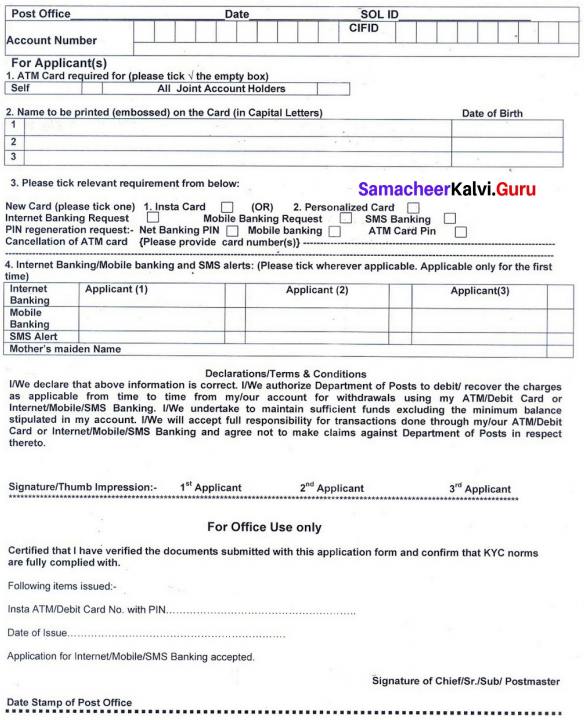
Samacheer Kalvi 11th English Speech Writing

Students who are interested in learning of 11th English Writing Speech Writing Questions and Answers can use Tamilnadu State Board Solutions of 11th English Chapter Wise Pdf. First check in which chapter you are lagging and then Download Samacheer Kalvi 11th English Book Solutions Questions and Answers Summary, Activity, Notes Chapter Wise. Students can build self confidence by solving the solutions with the help of Tamilnadu State Board English Solutions. English is the scoring subject if you improve your grammar skills. Because most of the students will lose marks by writing grammar mistakes. So, we suggest you to Download Tamilnadu State Board 11th English Solutions according to the chapters.

Tamilnadu Samacheer Kalvi 11th English Speech Writing

Check out the topics covered in Writing Speech Writing Questions and Answers before you start your preparation. Improve your grammar skills with the help of Samacheer Kalvi 11th English Book Solutions Questions and Answers pdf links. The solutions for Tamilnadu State Board 11th English Textbook are prepared by the English experts. So, if you follow Tamilnadu State Board Solutions 11th English Textbook Solutions you can cover all the topics in Writing Speech Writing Questons and Answers. This helps to improve your communication skills.

(i) You are Arun/Akila. You have to deliver a speech on the topic ‘Education Gives One Power’. You have jotted down the following notes:


Education trains mind—sharpens skill and abilities—Education: a source of power— improve self—be independent—earn money—ignorance to knowledge—removes superstition—develops a free spirit—important for women: gives them freedom from social ills—independent—responsible.
Write your speech in 150-200 words.
Answer:

Education Gives Power

Respected Principal, teachers and friends!

Education provides us knowledge. It trains our mind and sharpens our skills and abilities. Education refines our tastes and temperaments and builds our thought process. Vocational courses help young boys to earn and learn together. They provide means of earning livelihood and open the route to employment. Professional courses, as is evident from the name itself, equip us for adopting various professions. Some of these highly skilled professionals seek placements or jobs in esteemed companies and business concerns. Thus education is important for our survival. Decent living is impossible without good income or high salary.


Education improves the quality of our life and frees us of superstition, foolish, meaningless mind-blocks and rituals. If women are educated the whole family benefits as the food is hygienically prepared, children are healthy, well-mannered and disciplined. Education gives us power over our environment. We can control the situation and shape our destiny. Education spreads awareness among people and gives them freedom from social ills. It makes people independent by providing them means to earn their living. They become responsible citizens and realise their rights and duties. In short, education gives one power.

Thank you.

(ii) Shweta has to deliver a speech in the morning assembly on the topic: ‘The Generation Gap is Destroying Family Life’.
Write her speech in about 150-200 words.
Answer:
The Generation Gap Is Destroying Family Life

Respected Chairman, honorable judges, members of the staff and my dear friends!


I stand before you to speak my mind on ‘The Generation Gap is Destroying Family Life’. There are many points to support this contention.

The generation gap has caused a chasm between the old and the young. There is a clash of ideas and ideals, tastes, way of thinking and life-style. The young hanker after luxury, comfort and material happiness. They believe in full enjoyment and complete freedom. The elders insist on moral and spiritual values. They advocate renunciation and control on desires. The children think that their parents are slave to customs.

The generation gap is evident in the behaviour and manners of the two classes. The elders believe in strict obedience to a superior authority. They want that children must respect their elders and leam to be polite. The children pine for freedom. They resent all sorts of curbs. They demand freedom of expression. They want to have a say in family affairs. They insist that their views must be given proper consideration. This leads to bickerings, heart-burning and . tension in the family.


The elders insist on discipline and strict compliance of their orders. They advocate smiling acceptance of punishment meted out for breach of discipline. The young insist on unrestrained freedom and frankness. They advocate freedom of self-expression and are unwilling to tolerate any interference in their personal affairs—career, love-affair or marriage. Thus there is a wide gap between the two generations. This difference in their way of thinking and behavior is destroying family life.

Hence, I conclude that ‘The generation gap is destroying family life’.

Thank you.


The main aim is to share the knowledge and help the students of 11th English to secure the best score in their final exams. Use the concepts of Samacheer Kalvi 11th English Book Solutions Writing Speech Writing Questions and Answers in Real time to enhance your skills. If you have any doubts you can post your comments in the comment section, We will clarify your doubts as soon as possible without any delay.

Samacheer Kalvi 11th English Debate Writing

Students who are interested in learning of 11th English Writing Debate Writing Questions and Answers can use Tamilnadu State Board Solutions of 11th English Chapter Wise Pdf. First check in which chapter you are lagging and then Download Samacheer Kalvi 11th English Book Solutions Questions and Answers Summary, Activity, Notes Chapter Wise. Students can build self confidence by solving the solutions with the help of Tamilnadu State Board English Solutions. English is the scoring subject if you improve your grammar skills. Because most of the students will lose marks by writing grammar mistakes. So, we suggest you to Download Tamilnadu State Board 11th English Solutions according to the chapters.

Tamilnadu Samacheer Kalvi 11th English Debate Writing

Check out the topics covered in Writing Debate Writing Questions and Answers before you start your preparation. Improve your grammar skills with the help of Samacheer Kalvi 11th English Book Solutions Questions and Answers pdf links. The solutions for Tamilnadu State Board 11th English Textbook are prepared by the English experts. So, if you follow Tamilnadu State Board Solutions 11th English Textbook Solutions you can cover all the topics in Writing Debate Writing Questons and Answers. This helps to improve your communication skills.


(i) You are chosen for representing your school at the regional level inter-school debate contest. Prepare a debate for the same on the topic given below:
‘Newspapers ought to contain more news and fewer advertisements
Answer:

Newspapers Ought to Contain More News and Fewer Advertisements
(by Pradeepa)

Respected Chairperson, August faculty and dear friends,

It is painful to see that journalists have lost all ethics and professionalism today. They adopt diverse techniques to increase the revenue of their paper. They try to sensationalise the news to win more readers. However, even the newspaper having the largest circulation is not self-dependent. It must have plenty of commercial advertisements to meet its running costs. In fact, it is these ads which provide the owners the requisite funds. Thus, advertisements cannot be ruled out. They are a necessary evil and must stay.

The owners and editors of the newspapers must also realise their responsibility to the nation. The press is the strongest pillar of democracy. It creates sensible public opinion in favor of good policies and criticises the wrong policies. The newspapers must maintain a balance between news and advertisements. A common man buys a newspaper for news. It would be better that the editors publish a classified advertisement supplement twice or thrice a week and save the general reader from the proliferation of advertisements while scanning the pages for views and news.


(ii) Prepare a debate on the topic ‘Corruption’.
Answer:
Corruption
Yesterday we had a debate about corruption. Of course, everybody was against it, particularly in Third World countries where it undermines economic progress and social and political institutions. But when it comes to business some people weren’t so sure. Corruption is often hidden in the form of fees or taxes or commissions. If these are needed to help get the business instead of your competitor, then a little flexibility is needed.

Fortunately, I was faced with this very early in my business career. I told their Lordships a little cautionary tale. My company developed some new technology in the textile industry and the way it could be used in many countries was through licensing. On one occasion, I had to convince an official to give us a permit. In his bookcase were copies of Dickens, Shakespeare, the Oxford English Dictionary and so I complimented him on his interest in English literature. He looked at me and handed me a copy of Dombey and Son. I opened it up and inside was a cutout which exactly fitted American dollar bills.

As I said in the debate, I am not sure whether it was my distaste for corruption, my uncertainty about the law, my concern for our reputation or my love of books, but this deal never did go through.


However, we did sell that technology in 23 other countries and later several people told me that they bought our license instead of others exactly because we did not pay bribes. This gave them more confidence that our technology would work.

It was the cash flow from these licenses that helped the early business grow. It also convinced me that a strong ethical culture is good for a business.

This is why we should stop watering down the Bribery Act and bring it into force now.

(iii) Impact of Demonetization on Common Man
Answer:
At the stroke of the hour on midnight of 9th November 2016, India lost 86% of its monetary base. The print, electronic and social media has been praising Prime Minister’s masterstroke by which he has reportedly destroyed the base of corruption in India. In this single move, the Government has attempted to tackle all the three issues affecting the economy, /.<?., a parallel economy, counterfeit currency in circulation and terror financing. There is no doubt that Prime Minister has pulled out a major coop and substantially enhanced his reputation as a strong leader.


Views and Counterviews:

The idea of demonetization is good but it has to be taken into consideration that most of the black money is kept in the form of.land, buildings or gold or kept abroad. What is in cash constitutes only 4% of the total amount of black money on which taxes are not being paid.

Out of this, a lot of money is in circulation in an everyday transaction like if someone is building a house; the bill is not paid through banks for sand, bricks, etc. This money goes into the other systems though it has been drawn from bank. These things will come under control with this step.

Small farmers, sellers, merchants, daily wage labourers and traders are suffering because of lack of proper planning, intelligence and foresight such as recaliberation of ATM machines. There was need to pile up enough 100 Rupee notes and other smaller denomination notes in the market before taking this step. It is being said by critics that this step was taken only to bolster the image of the Prime Minister as he has been unable to deliver on GDP growth, inflation and bringing the black money from abroad.

Demonetization is an established practice in monetary policy to tackle black money. The Prime Minister has explained why this is a financial surgical strike. It was meant to be suddenly implemented. In the past, demonetization has taken place twice but it fails because the idea is to tackle the black money existing in circulation. This is not to tackle corruption per se or the Government is not saying that 100% corruption will be tackled. If announcement and time would have been given, this step might not have been successful in controlling black money and counterfeit currency in circulation coming from Pakistan, Nepal or other countries.


People are facing problems because the limit of withdrawal has not been kept at a higher level. If this would have been kept at a higher level, there were chances that the recycling of black money might begin. The ideal money in circulation has to come to the banking channels.

It is also being said that what is being attempted is replacement of currency and not demonetization itself which was unnecessary. This is a terrible setback for the international standing of the Indian economy. At this time, the economy is struggling with slowdown. There is demand sluggishness in the economy leading to practically no private sector investment and stagnant industrial growth. If we look at the farm sector, this is the harvest time. Farmers generally deal in cash and India is also largely a cash economy. The cash transactions in this economy are far more than the total number of electronic transactions done on a daily basis. In the tribal heartland of the country, the poor people through middlemen are getting their currencies exchanged for Rs 300 or Rs 400 because of lack of proper information which is hitting them.

The stock of the black economy that constitutes a major part of the GDP is significant. Even if 50% of this amount is withdrawn, the kind of relief that RBI will get on its liabilities and the sort of deposits commercial banks will get will lead to a rise in the deposit and later on there will be decrease in lending rates plus fiscal deficit. The black money in circulation is like a steroid in the economy which keeps the demand going and gives a feeling that everything is working well. The problem is that investment is not taking place in the economy and the rate of growth of capital formation is down. The only way to bring this up is to divert more funds into investments which will happen when the cost of capital comes down.


Conclusion:
So far, it can be said that this is a historical step and should be supported by all. One should look at the bigger picture which will definitely fetch results in the long term. This is what the people have been asking for a long time which has finally happened.

The main aim is to share the knowledge and help the students of 11th English to secure the best score in their final exams. Use the concepts of Samacheer Kalvi 11th English Book Solutions Writing Debate Writing Questions and Answers in Real time to enhance your skills. If you have any doubts you can post your comments in the comment section, We will clarify your doubts as soon as possible without any delay.

Samacheer Kalvi 11th English Speaking Group Discussion

Students who are interested in learning of 11th English Speaking Group Discussion Questions and Answers can use Tamilnadu State Board Solutions of 11th English Chapter Wise Pdf. First check in which chapter you are lagging and then Download Samacheer Kalvi 11th English Book Solutions Questions and Answers Summary, Activity, Notes Chapter Wise. Students can build self confidence by solving the solutions with the help of Tamilnadu State Board English Solutions. English is the scoring subject if you improve your grammar skills. Because most of the students will lose marks by writing grammar mistakes. So, we suggest you to Download Tamilnadu State Board 11th English Solutions according to the chapters.

Tamilnadu Samacheer Kalvi 11th English Speaking Group Discussion

Check out the topics covered in Speaking Group Discussion Questions and Answers before you start your preparation. Improve your grammar skills with the help of Samacheer Kalvi 11th English Book Solutions Questions and Answers pdf links. The solutions for Tamilnadu State Board 11th English Textbook are prepared by the English experts. So, if you follow Tamilnadu State Board Solutions 11th English Textbook Solutions you can cover all the topics in Speaking Group Discussion Questons and Answers. This helps to improve your communication skills.

(i) Intelligent Quotient (IQ) Versus Emotional Quotient (EQ)

RAJ:
According to my opinion, those who have a good IQ level will always have the ability to reason out things and find an amicable solution to any problem that he/she faces in life. Even in today’s world, when a young aspirant is made to face an interview with a board of panelist, one of the key methods to finalise the situation is a problem solving abilities a candidate possesses. Nowadays, your mental appearance is more important than your physical appearance. Though eloquence in communication was given weight age, the skill and ability to convince others is much more important than flamboyant language. Presence of mind, common sense and practicality is more important than bookish knowledge. Therefore people with more IQ is needed than people with better EQ.


Chandran:
According to my understanding, I strongly contradict the views of Raj. It is the character that brings you huge success and I think good character, good personalities and good leaders are mostly driven by emotions.

Emotional quotient and intelligence quotient are undoubtedly the most important aspects of a person’s life and can make a huge difference between an average life and a successful life. To be successful, one may want to have a great IQ but, that success will not last long if your EQ is not appropriate. But on the contrary, if you have a good EQ and a little less IQ, then the chances of you becoming successful to carry on a successful career increases.

LEELA:
Everyone is equal. All should be recognised. One needs to be balanced with all qualities just as a balanced diet is needed for healthy living. It is illogical for learned people to say that IQ is much more needed than EQ or vice versa. I feel everyone is unique and is important. There is always something that one can contribute to. It needs to be balanced. Team play is vital at such a situation. A person with better IQ/EQ has his own workspace and methodology he contributes to the work differently as a person with different IQ/EQ. One who has a high IQ level can work smartly to do even the toughest tasks easily and hence procure popularity and wealth. Likewise, one who has better EQ can develop the same popularity and also leadership qualities. He/She can withstand adverse condition and overcome them.
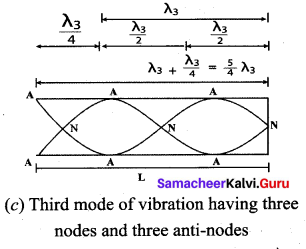
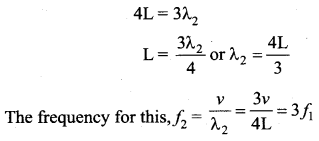
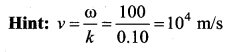
 

Let me detail you with examples. To manage a team, a person of high EQ is needed whereas someone who needs to plan tasks and perform it in the best possible way, a person with high IQ should be there.

A person with higher IQ may work on any area and be extremely successful but may lack good social circle. This will surely lead to depression or emotional setbacks.

A person with higher EQ may win a large social circle of friends and supporters who are a big pillar of support at difficult times but due to their lack of technical abilities that needs better IQ, will turn out to be failure.

Hence, I want to reiterate that a person with an average IQ level and an equal amount of EQ level will be the best to survive in the present society. He can work anywhere happily with a fair wealth and fair emotional stability. He would be the most satisfied person.

Therefore a balanced IQ & EQ is the most desirable to be successful.


RAJ:
But I strongly feel that IQ is more important than EQ. Emotions are the biggest barrier to decision-making abilities. If we think about what others say and starts taking into consideration of others opinion, we get messed up and hence lack in making the right decision. Aren’t we living in a world where everything changes in an instant. So, we need someone who is confident of themselves and not get carried away by emotions. Hence I would prefer IQ over EQ,

Chandran:
I strongly opine that you consider the weight age of EQ more than IQ because if you . are perfect in EQ then you can manage with less IQ. For instance, if you have the qualities of EQ such as good personality skills, a better way of communication, and good attitude you can face any competitive situation. On the contrary, although you have strong IQ but poor EQ, then no one will take you seriously or you will be less focused leading to a few people joining you. So overall conclusion is that you don’t need to have a balanced or same level of IQ or EQ. If you are the best in EQ, then you can easily survive in this competitive era with less IQ.


LEELA:
There is no point in Mr. Raj arguing for IQ and Mr.Chandran taking sides with those who have better EQ, IQ and EQ have their own importance in our life and both should be in balanced proportion. I feel IQ makes us ambitious but EQ put limits on these ambitions. High IQ and Low EQ are the traits that can be observed in terrorists. So today, our topic is IQ vs EQ. I stay strong in both needed for a successful person. EQ is important for our social . life. AS we live in a society, we need good EQ levels for our personal and social behaviour and character to be well accepted in the society. Whereas, better IQ is surely the need for enhancing our knowledge to take the right decisions in this society and be a successful person. A balance between both is the need of the hour for both act as the two wheels in our journey of a successful life cycle.

(ii) To Live or Not

Kiruba:
We live in a world where most of us have a pet at home. When they fall sick, we rush them to the hospital. When our heart melts to see an animal or a bird suffer because of sickness, how will our conscience allow us to kill a fellow human being just because he is incurably ill? Moreover, he has done no harm to the society and his illness is not because of his fault.Therefore, we must provide him proper treatment and allow him to live as long as nature and God has willed his life span to be in this world.


Suganthi:
Exactly. Well said. God has gifted us life. So, he alone has the right to take it back. No human being has the right to interfere in His decisions or will for us in this world. Every man/woman has the right to live as long as God intends him/her to lead a life in this world.

Therefore, the illogical reasoning that a man suffering from an incurable disease, should be put to death is inexcusable beyond reason and a thought to be condemned.

Babu:
This world is governed by Darwin’s survival of the fittest principle. Darwin drew parallels between his own economic theories and his biological ones: “This survival of the fittest”, which he had sought to express in mechanical terms, is that which he has also called ‘natural selection’, or the preservation of favoured races in the struggle for life. An incurably diseased person is weak and has no value whatsoever to the society. More so, he has no means to live. Therefore, it would be in the fitness of things to kill him even against his wish. Therefore I bring to your kind notice that it is the natural selection to kill a person who cannot live befitting the needs of the society.


Kiruba:
Now a days, new vistas of progress have been opened in medical sciences and alternative ‘ medicine like Acupuncture, Acupressure, Reiki Pranik healing, Touch therapy, Herbal therapy, Diet therapy, etc. hold a ray of hope for the so called incurably diseased persons. So, why snatch life from them? When the kith and kin are ready to try all the means for survival, why should one interfere and speak things agaainst their survival. Miracles do happen and ‘ prayers are surely answered. Nothing wrong in giving a chance for someone fighting and struggling to live. We have no right to speak about putting another person to death.

Babu:
An incurably diseased person is the cause of constant worry to his family. His demands are unending and not withstanding the best possible attention, care and treatment given to him, he always remains dissatisfied and disgruntled. This adversely affects the peace of mind and comfort of the family members and all those who are trying to help them. Many a times, the physical worry and mental agony faced by the caretakers fall a prey to many other difficult situations and even fall sick being in an unhealthy environment for weeks and months. Therefore, the best way out of such a situation is to put an end to his life.


Suganthi:
It is not always the case that incurably diseased persons spread contagious diseases as some might argue. Even in those rare cases where it may be true, these persons are not real health hazards because it is medically established now that all incurable diseases are not contagious. However, as a precautionary measure, we should open separate hospitals or isolation wards for persons suffering from incurable contagious diseases and thus quarantine them. Isn’t that a better solution than thinking of putting an end to their life? To me, it’s a murder under legal permits.

Babu:
But these days we are burdened with the responsibility of reducing our rapidly increasing population. The many diseased persons constitute a good part of it. Even otherwise their contribution to society is a burden. It would be justified and reasonable not to allow them to drag on their agonizing life. Killing an incurably diseased person will put an end to research work in medical science. As I have already stated, there are many hospitals and many doctors who start experimenting with diseased persons. Even otherwise, suffering people have been the subject of research work for those who are into higher education. Thereby, its appropriate to free them from pain and suffering!


Kiruba:
Such an act only points out to the degenerated values in this society. It is almost compared to that of an individual throwing an appliance when it is old and doesn’t yield good results. Isn’t there a difference between living and non-living? How can a living human being be treated like a material object? What has happened to the values that students were taught or imbibed in their life? Such a thinking is only an assertion of degenerated moral values.

Conclusion:
India is a land of values. We are a secular society. We believe in respecting each other. Let us not be carried away by degenerated moral values and learn to respect one another and help them to live in peace without a feeling of guilt.


The main aim is to share the knowledge and help the students of 11th English to secure the best score in their final exams. Use the concepts of Samacheer Kalvi 11th English Book Solutions Speaking Group Discussion Questions and Answers in Real time to enhance your skills. If you have any doubts you can post your comments in the comment section, We will clarify your doubts as soon as possible without any delay.