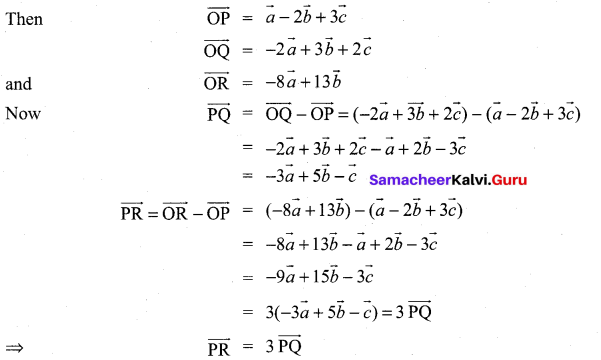
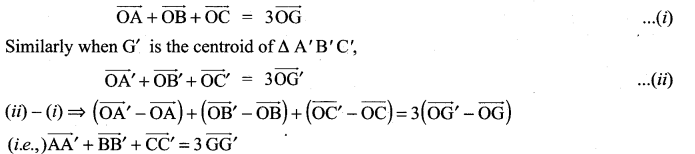
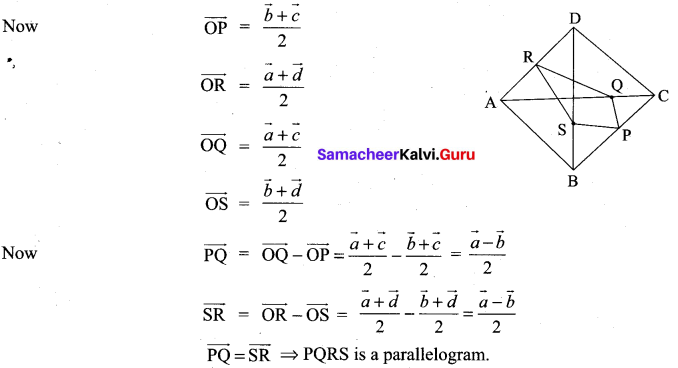
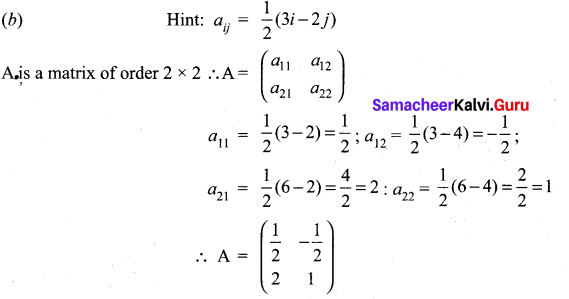
Samacheer Kalvi 9th Social Science Economics Solutions Chapter 5 Migration

You can Download Samacheer Kalvi 9th Social Science Book Solutions Guide Pdf, Tamilnadu State Board help you to revise the complete Syllabus and score more marks in your examinations.

Tamilnadu Samacheer Kalvi 9th Social Science Economics Solutions Chapter 5 Migration

Migration Textual Exercise

I. Choose the correct answer.

Question 1.
According to 2011 census, the total population of India was
(a) 121 crore
(b) 221 crore
(c) 102 crore
(d) 100 crore
Answer:
(a) 121 crore

Samacheer Kalvi 9th Social Science Economics Solutions Chapter 5 Migration

Question 2
……… has recorded the maximum number of out migrants.
(a) Ramanathapuram
(b) Coimbatore
(c) Chennai
(d) Vellore
Answer:
(c) Chennai

Question 3.
During 2015, …….. illiterates were migrants from Tamil Nadu.
(a) 7%
(b) 175%
(c) 23%
(d) 9%
Answer:
(a) 7%

Question 4.
The poorer sections of the population people migrate for ……….
(a) Survival strategy
(b) Improve their living standards
(c) Service
(d) Getting experience
Answer:
(a) Survival strategy

II. Fill in the blanks.
1. Migration is enumerated ……. on ……. and bases.
2. The mobility of population is rural areas is ……. than urban areas.
3. In rural India, as per census 2011, …… percent of the population are counted as migrants.
4. …….. is the major reason for female migration.
5. Any migrant stream would consist of …….. sub streams.
Answers:
1. place of birth, place of residence
2. greater
3. 37 %
4. Saratoga
5. heterogenous

III Match the following:

Samacheer Kalvi 9th Social Science Economics Solutions Chapter 5 Migration 1
Answers:
1. (e)
2. (d)
3. (c)
4. (f)
5. (b)
6. (a)

IV. Give short Answers

Question 1.
Enlist the reasons for migration.
Answer:
The reasons for migration include; Work/Employment, Business, Education, Marriage and other such reasons.

Samacheer Kalvi 9th Social Science Economics Solutions Chapter 5 Migration

Question 2.
What are the major factors responsible for female migrants in India?
Answer:
Marriage and the movement associated with marriage appear to be a major factor responsible for women’s mobility in India and Tamil Nadu.

Question 3.
Name four districts in Tamil Nadu which record low number of imigration.
Answer:
Cuddalore, Karur, Thiruvannamalai, Vellore, Namakkal, Salem, Dindigul, Krishnagiri, Nilgiris and Dharmapuri districts record low number of emigrants.

Question 4.
What are the factors responsible for the poorer sections and better-off sections to migrate.
Answer:
The poorer sections of the people migrate for survival, but migrants from better-off sections migrate to improve their living standards.

Samacheer Kalvi 9th Social Science Economics Solutions Chapter 5 Migration

Question 5.
List the four destinations and the percentage of migrants from Tamil Nadu.
Answer:
Of the total migrants who go to foreign countries, nearly 20% have chosen to go to Singapore, while 18% to the United Arab Emirates, 16% to Saudi Arabia, 13 % to the United States of America.

Question 6.
What does the study reveal about the occupation undertaken by migrants?
Answer:
The study clearly reveals various occupations undertaken by the migrants: highly skilled proffessions on one hand and low skilled occupations on the other, along with a large number of semi-skilled occupations.

Samacheer Kalvi 9th Social Science Economics Solutions Chapter 5 Migration

V. Answer in Detail

Question 1.
State the aims of migration policies.
Answer:
Policies to address the problem of migration in developing countries like India essentially aim at the following:
• To reduce the volume of migration: As a large part of migration is a reflection of poverty
and insecurity faced by large sections of the rural people, the focus of intervention has to be in rural areas. Rural development policies to reduce poverty and insecurity would be essential to reduce the rate of migration.

• To redirect the migrant streams: Redirection of migrant streams, away from big metropolitan cities is a desirable policy option. This policy can help in reducing spatial inequalities by suitable strategies, such as developing a more dispersed pattern of urbanisation.

Question 2.
Discuss the patterns of migration.
Answer:
The pattern of migration is very complex, comprising of a number of streams:

  • rural to rural; rural to urban; urban to rural; urban to urban
  • short, medium and long distance migration streams
  • long-term stable migration and short-term circulatory type of movements

Each of these streams would consist of different types of migrants, (from different social classes) each with its own reason for migration. The extent and nature of these migrant streams would essentially depend on.

  • pressures and aspirations experienced by people at the origin of migration
  • constraints imposed on mobility at the origin of migration
  • opportunities at the destination and availability of information regarding these opportunities and
  • the cost of migration.

Question 3.
Elucidate about some of the interesting findings on migration in Tamil Nadu.
Answer:
In Tamil Nadu, two out of every five persons is reported to be a migrant in the year 2011. Incidence of migrants is higher in rural areas and larger among women. Tamil Nadu has a history of migration and people have moved for various reasons such as trade, business, employment etc, to various countries. During the colonial period, labourers had moved to other colonies seeking work and wages. In the more recent period workers from Tamil Nadu have been moving to countries in the Gulf, United States of America and Australia. In 2015, an independent research study was conducted to understand the level, nature and pattern of migration in Tamil Nadu. This study has made some interesting findings, as discussed below:

  • Of the total migrants in Tamil Nadu, 65 percent have migrated or moved abroad while 35 percent have moved within the country.
  • Chennai district has recorded the maximum number of emigrants followed by Coimbatore, Ramanathapuram and Tiruchirapalli districts.
    Cuddalore, Karur, Thiruvannamalai, Vellore, Namakkal, Salem, Dindigul, Krishnagiri, Nilgirfs and Dharmapuri districts record low number of emigrants. This study also provides information about the sex and destination of migrants Tamil Nadu.
  • Of the total migrants who go to foreign countries, nearly 20% have chosen to go to Singapore, while 18% to the United Arab Emirates, 16% to Saudi Arabia, 13 % to the United States of America; and Malaysia, Kuwait, Oman, Qatar, Australia and England are also refered as important destinations for migrants from Tamil Nadu in the year 2015.
  • Of the international migrants, 15 percent are women, while 85 percent are men.

Samacheer Kalvi 9th Social Science Economics Solutions Chapter 5 Migration

Question 4.
Analyse the educational qualification of migrants from Tamil Nadu in 2015.
Answer:
On the question of educational qualifications of migrants from Tamil Nadu, the study reveals that in 2015 about 7 % were illiterates; 30 % have completed. Class X; 10 % have completed Class XII; 15 % had undergone vocational training; 11 % were graduates; 12% were professionally qualified and 11 % had Post Graduate degrees.

VI Write the correct statement

Question 1.
In recent times workers from Tamil Nadu are moving to Africa.
Answer:
In the more recent period workers from Tamil Nadu have been moving to countries in the Gulf, United States of America and Australia.

Question 2.
In Tamil Nadu, the extent of migration is much higher in urban areas compared to rural areas.
Answer:
In Tamil Nadu the extent of migration is much higher in rural areas.

Question 3.
Any migrant stream would consist of homogenous sub streams.
Answer:
Any migrant stream would consist of heterogenous-sub streams.

Question 4.
Two out of every 10 persons is reported to be a migrant.
Answer:
Two out of every 5 persons is reported to be a migrant.

Samacheer Kalvi 9th Social Science Economics Solutions Chapter 5 Migration

VII. Project & Activity

Question 1.
Prepare statistical data by interacting with your class mates and school mates and find out how many families have migrated.
Answer:
You can prepare the assignment using internet, under the guidance of your teacher.

Question 2.
Prepare an album of pictures on Rural to Rural, Rural to Urban, Urban to Rural and Urban to Urban migration.
Answer:
You can prepare the assignment using internet, under the guidance of your teacher.

VIII. Life Skills

Question 1.
Collect data on various languages spoken in your class and represent through a pie chart.
Answer:
You can prepare the assignment using internet, under the guidance of your teacher.

Migration Additional Questions

I. Choose the correct answer.

Question 1.
The percentage of migrants in Tamil Nadu is ……… percent.
(a) 40
(b) 42
(c) 43
(d) 41
Answer:
(c) 43

Samacheer Kalvi 9th Social Science Economics Solutions Chapter 5 Migration

Question 2.
The percent of female migrants in 2011 ……. literally means “rule of the people”.
(a) 53
(b) 52
(c) 51
(d) 50
Answer:
(a) 53

Question 3.
Out of 7.2 crore people ….. crore people were counted as migrants.
(a) 3.11
(b) 3.13
(c) 3.12
(d) 3.14
Answer:
(b) 3.13

Question 4.
The largest migration corridor in the world in 2010 was …….
(a) Mexico
(b) Australia
(c) Dubai
(d) Saudi
Answer:
(a) Mexico

Samacheer Kalvi 9th Social Science Economics Solutions Chapter 5 Migration

Question 5.
Of the International migrants % are women.
(a) 10
(b) 20
(c) 15
(d) 25
Answer:
(c) 15

II. Match the following:

Samacheer Kalvi 9th Social Science Economics Solutions Chapter 5 Migration 65
Answers:
1. (e)
2. (d)
3. (b)
4. (a)
5. (c)

III. Fill in the blanks.

1. The percentage of migrants in Tamil Nadu in 2011 is ………
2. The male migrants in Tamil Nadu is …… in 2011.
3. Movement related to …… and ……. appears to be the driving force for migration
among men.
Answers:
1. 43
2. 35
3. work, employment

IV. Give short answers.

Question 1.
The percentage of migrants was at a much higher rate in Tamil Nadu. Comment.
Answer:
In Tamil Nadu out of 7.2 crore people, 3.13 crore people were counted as migrants, in 2011. That is, the percentage of migrants was 37 percent in the country, while it was at a much higher rate in Tamil Nadu at 43 percent.

Question 2.
Write a short note on “Female Migration”.
Answer:
However, an examination of .data clearly indicates that a larger proportion of females are reported to be migrants compared to males. In the country as a whole, 53 percent are female migrants while 23 percent are male migrants, in 2011. In Tamil Nadu, the picture is very similar, with more than half the females (52%) reporting their status as migrants, by place of last residence, and 35 percent are male migrants.

Samacheer Kalvi 9th Social Science Economics Solutions Chapter 5 Migration

Question 3.
What does the recent study say about the mobility in Tamil Nadu?
Answer:
In the more recent period workers from Tamil Nadu have been moving to countries in the Gulf, United States of America and Australia. In 2015, an independent research study was conducted to understand the level, nature and pattern of migration in Tamil Nadu.

V. Answer in detail.

Question 1.
On what factors the extent and nature of migration depend?
Answer:
Each of these streams would consist of different types of migrants, (from different social classes) each with its own reason for migration. The extent and nature of these migrant streams would essentially depend on.

  • pressures and aspirations experienced by people at the origin of migration
  • constraints imposed on mobility at the origin of migration
  • opportunities at the destination and availability of information regarding these opportunities
  • the cost of migration

Samacheer Kalvi 9th Social Science Economics Solutions Chapter 5 Migration 75
Samacheer Kalvi 9th Social Science Economics Solutions Chapter 5 Migration 76
Samacheer Kalvi 9th Social Science Economics Solutions Chapter 5 Migration 77
Samacheer Kalvi 9th Social Science Economics Solutions Chapter 5 Migration 78
Samacheer Kalvi 9th Social Science Economics Solutions Chapter 5 Migration 79
Samacheer Kalvi 9th Social Science Economics Solutions Chapter 5 Migration 80
Samacheer Kalvi 9th Social Science Economics Solutions Chapter 5 Migration 81
Samacheer Kalvi 9th Social Science Economics Solutions Chapter 5 Migration 82
Samacheer Kalvi 9th Social Science Economics Solutions Chapter 5 Migration 83
Samacheer Kalvi 9th Social Science Economics Solutions Chapter 5 Migration 90
Samacheer Kalvi 9th Social Science Economics Solutions Chapter 5 Migration 84
Samacheer Kalvi 9th Social Science Economics Solutions Chapter 5 Migration 85
Samacheer Kalvi 9th Social Science Economics Solutions Chapter 5 Migration 86
Samacheer Kalvi 9th Social Science Economics Solutions Chapter 5 Migration 87
Samacheer Kalvi 9th Social Science Economics Solutions Chapter 5 Migration 88
Samacheer Kalvi 9th Social Science Economics Solutions Chapter 5 Migration 89

Samacheer Kalvi 9th Social Science Economics Solutions Chapter 5 Migration 91

Samacheer Kalvi 11th Maths Solutions Chapter 1 Sets Ex 1.5

You can Download Samacheer Kalvi 11th Maths Book Solutions Guide Pdf, Tamilnadu State Board help you to revise the complete Syllabus and score more marks in your examinations.

Tamilnadu Samacheer Kalvi 11th Maths Solutions Chapter 1 Sets Ex 1.5

Choose the correct or the most suitable answer.

Question 1.
If A = {(x, y) : y = ex ; x ∈ R } and B = {(x, y) : y = e-x, x ∈ R } then n(A ∩ B)
(a) Infinity
(b) 0
(c) 1
(d) 2
Solution:
(c) 1
Hint.
A∩B = (0, 1)
n(A∩B) = 1
Samacheer Kalvi 11th Maths Solutions Chapter 1 Sets Ex 1.5 1

Question 2.
IfA {(x, y) : y = sin x, x ∈ R) and 8= (x, y) : y = cos x, x ∈ R) then A∩B contains ……..
(a) no element
(b) infinitely many elements
(c) only one element
(d) cannot be determined.
Solution:
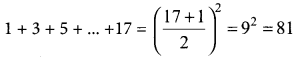
(b) infinitely many elements
Samacheer Kalvi 11th Maths Solutions Chapter 1 Sets Ex 1.5
Question 3.
The relation R defined on a set A = {0, -1, 1, 2} by xRy if |x2 +y2| ≤ 2, then which one of the following is true?
(a) R = {(0, 0), (0, -1), (0, 1), (-1, 0), (-1, 1), (1, 2), (1, 0)}
(b) R = {(0, 0), (0, -1), (0, 1), (-1, 0), (1, 0)
(c) Domain of R is {0, -1, 1, 2}
Solution:
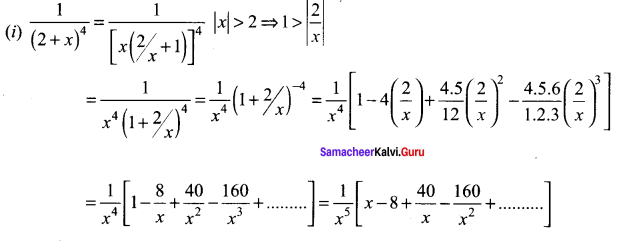
(a) Range of R is {0, -1, 1}
Hint.
A= {0, -1, 1, 2}
|x2 + y2| ≤ 2
The values of x and y can be 0, -1 or 1
So range = {0, -1, 1}

Question 4.
If f(x) = |x – 2| + |x + 2|, x ∈ R, then
Samacheer Kalvi 11th Maths Solutions Chapter 1 Sets Ex 1.5 2
Solution:

Samacheer Kalvi 11th Maths Solutions Chapter 1 Sets Ex 1.5 3
Hint.
f(x) = |x – 2| + |x + 2|
Samacheer Kalvi 11th Maths Solutions Chapter 1 Sets Ex 1.5 4

Samacheer Kalvi 11th Maths Solutions Chapter 1 Sets Ex 1.5

Question 5.
Let R be the set of all real numbers. Consider the following subsets of the plane R x R: S = {(x, y): y = x + 1 and 0 < x < 2} and T = {(x, y) : x – y is an integer} Then which of the following is true?
(a) T is an equivalence relation but S is not an equivalence relation.
(b) Neither S nor T is an equivalence relation
(c) Both S and T are equivalence relation
(d) S is an equivalence relation but T is not an equivalence relation.
Solution:
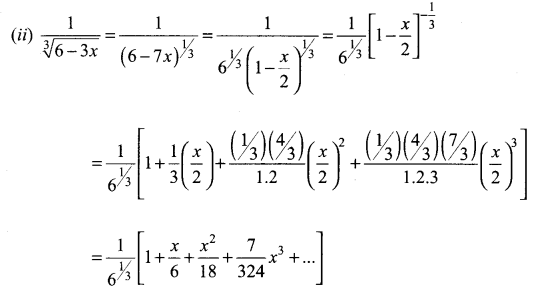
(a) T is an equivalence relation but S is not an equivalence relation.
Hint.
(0, 1), (1, 2) it is not an equivalence relation
T is an equivalence relation

Samacheer Kalvi 11th Maths Solutions Chapter 1 Sets Ex 1.5

Question 6.
Let A and B be subsets of the universal set N, the set of natural numbers. Then
A’ ∪ [(A ∩ B) ∪ B’] is ………
(a) A
(b) A’
(c) B
(d) N
Solution:

(d) N
Hint.
Samacheer Kalvi 11th Maths Solutions Chapter 1 Sets Ex 1.5 9

Question 7.
The number of students who take both the subjects Mathematics and Chemistry is 70. This represents 10% of the enrollment in Mathematics and 14% of the enrollment in Chemistry. How many students take at least one of these two subjects?
(a) 1120
(b) 1130
(c) 1100
(d) insufficient data
Solution:
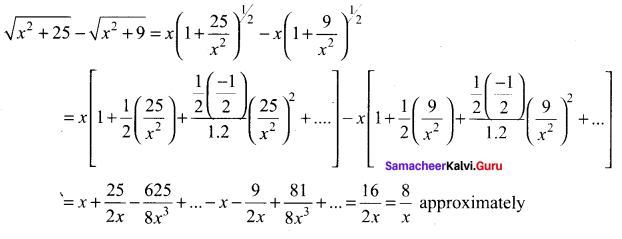
(b) 1130
Hint.
n(M ∪ C) = n(M) + n(C) – n(M ∩ C)
= 700 + 500 – 70 = 1130

Samacheer Kalvi 11th Maths Solutions Chapter 1 Sets Ex 1.5

Question 8.
If n[(A × B) ∩ (A × C)] = 8 and n(B ∩ C) = 2 , then n(A) is
(a) 6
(b) 4
(c) 8
(d) 16
Solution:

(b) 4

Samacheer Kalvi 11th Maths Solutions Chapter 1 Sets Ex 1.5

Question 9.
If n(A) = 2 and n(B ∪ C) = 3, then n[(A × B) ∪ (A × C)] is …….
(a) 23
(b) 32
(c) 6
(d) 5
Solution:
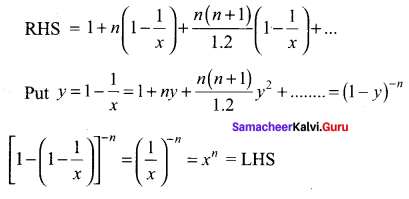
(c) 6
Hint.
n[(A × B) ∪ (A × C)] = n[ A × (B ∪ C)] = n(A) × n(B ∪ C) = 2 × 3 = 6

Question 10.
If two sets A and B have 17 elements in common, then the number of elements common to the set A × B and B × A is
(a) 217
(b) 172
(c) 34
(d) insufficient data
Solution:
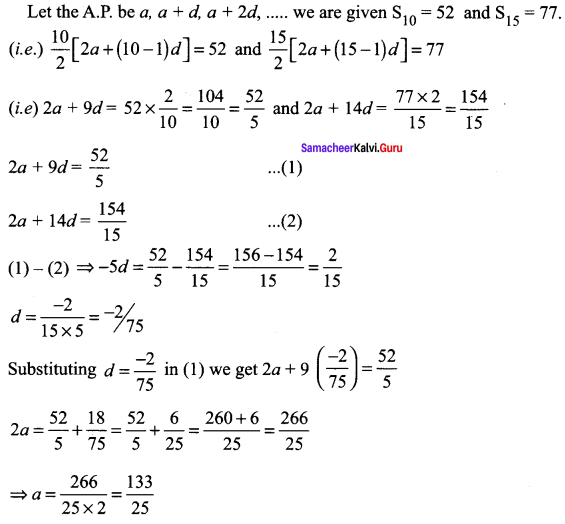
(b) 172
Hint.
n (A ∩ B) = 17
So n [(A × B) ∩ (B × A)]
= n(A ∩ B) × n(B ∩ A) = 17 × 17 = 172

Samacheer Kalvi 11th Maths Solutions Chapter 1 Sets Ex 1.5

Question 11.
For non-empty sets A and B, if A ⊂ B then (A × B) ∩ (B × A) is equal to ……….
(a) A ∩ B
(b) A × A
(c) B × B
(d) None of these
Solution:
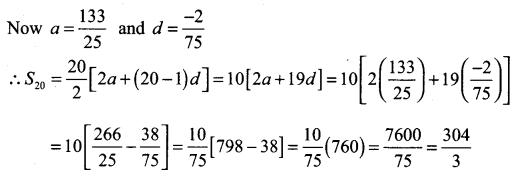
(b) A × A
Hint.

When A ⊂ B, (A × B) ∩ (B × A) = A × A

Question 12.
The number of relations on a set containing 3 elements is
(a) 9
(b) 81
(c) 512
(d) 1024
Solution:

(c) 512
Hint.
Number of relations = 2n2 = 232 = 29 = 512

Samacheer Kalvi 11th Maths Solutions Chapter 1 Sets Ex 1.5

Question 13.
Let R be the universal relation on a set X with more than one element. Then R is
(a) Not reflexive
(b) Not symmetric
(c) Transitive
(d) None of the above
Solution:
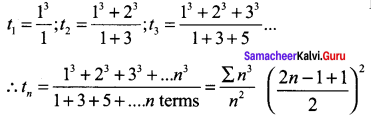
(c) Transitive

Question 14.
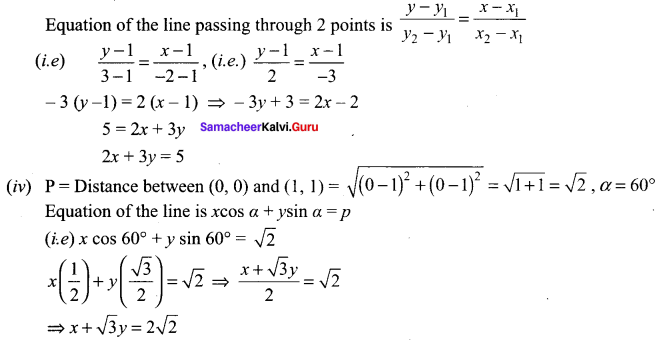
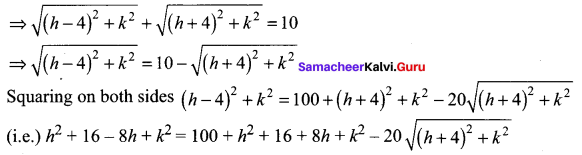
Let X = {1, 2, 3, 4} and R = {(1, 1), (1, 2), (1, 3), (2, 2), (3, 3), (2, 1), (3, 1), (1,4), (4, 1)}. Then R is ……..
(a) Reflexive
(b) Symmetric
(c) Transitive
(d) Equivalence
Solution:
(b) Symmetric
Hint.
(4, 4} ∉ R ⇒ R is not reflexive
(1, 4), (4, 1) ∈ R ⇒ R is symmetric
(1, 4), (4, 1) ∈ R but (4, 4) ∉ R
So R is not transitive

Samacheer Kalvi 11th Maths Solutions Chapter 1 Sets Ex 1.5

Question 15.
Samacheer Kalvi 11th Maths Solutions Chapter 1 Sets Ex 1.5 20
Solution:
Samacheer Kalvi 11th Maths Solutions Chapter 1 Sets Ex 1.5 21

Question 16.
Samacheer Kalvi 11th Maths Solutions Chapter 1 Sets Ex 1.5 22
Solution:
(c) [0, 1)
Samacheer Kalvi 11th Maths Solutions Chapter 1 Sets Ex 1.5 23

Question 17.
The rule f(x) = x2 is a bijection if the domain and the co-domain are given by …..
(a) R,R
(b) R, (0, ∞)
(c) (0, ∞), R
(d) [0, ∞), [0, ∞)
Solution:
(d) [0, ∞), [0, ∞)

Samacheer Kalvi 11th Maths Solutions Chapter 1 Sets Ex 1.5

Question 18.
The number of constant functions from a set containing m elements to a set containing n elements is
(a) mn
(b) m
(c) n
(d) m + n
Solution:
(c) n
Samacheer Kalvi 11th Maths Solutions Chapter 1 Sets Ex 1.5 25

Question 19.
The function f: [0, 2π] ➝ [-1, 1] defined by f(x) = sin x is
(a) One to one
(b) Onto
(c) Bijection
(d) Cannot be defined
Solution:
(b) Onto
Samacheer Kalvi 11th Maths Solutions Chapter 1 Sets Ex 1.5 26
So it is not one-to-one
So it is an onto function

Samacheer Kalvi 11th Maths Solutions Chapter 1 Sets Ex 1.5

Question 20.
If the function f : [-3, 3] ➝ S defined by f(x) = x2 is onto, then S is ………
(a)[-9, 9]
(b) R
(c) [-3, 3]
(d) [0, 9]
Solution:
(d) [0, 9]

Question 21.
Let X = {1, 2, 3, 4}, Y = {a, b, c, d) and f = {(1, a), (4, b), (2, c), (3, d) (2, d)}. Then f is ………
(a) An one-to-one function
(b) An onto function
(c) A function which is not one-to-one
(d) Not a function
Solution:
(d) Not a function
Hint.
Samacheer Kalvi 11th Maths Solutions Chapter 1 Sets Ex 1.5 266
Since the element 2 has two images, it is not a function

Question 22.
Samacheer Kalvi 11th Maths Solutions Chapter 1 Sets Ex 1.5 28
Solution:
Samacheer Kalvi 11th Maths Solutions Chapter 1 Sets Ex 1.5 29
Samacheer Kalvi 11th Maths Solutions Chapter 1 Sets Ex 1.5 30
Samacheer Kalvi 11th Maths Solutions Chapter 1 Sets Ex 1.5 45

Samacheer Kalvi 11th Maths Solutions Chapter 1 Sets Ex 1.5

Question 23.
Let f : R ➝ R be defined by f(x) = 1 – |x|. Then the range of f is ………
(a) R
(b) (1, ∞)
(c) (-1, ∞)
(d) (-∞, 1]
Solution:
(d) (-∞, 1]
Hint.
f: R ➝ R defined by
f(x) = 1 – |x|
For example,
f(1) = 1 – 1 = 0
f(8) = 1 – 8 = -1
f(-9) = 1 – 9 = -8
f(-0.2) = 1 – 0.2 = 0.8
so range = (-∞, 1]

Samacheer Kalvi 11th Maths Solutions Chapter 1 Sets Ex 1.5

Question 24.
The function f : R ➝ R is defined by f(x) = sin x + cos x is ……
(a) An odd function
(b) Neither an odd function nor an even function
(c) An even function
(d) Both odd function and even function
Solution:
(b) Neither an odd function nor an even function

Question 25.
Samacheer Kalvi 11th Maths Solutions Chapter 1 Sets Ex 1.5 32
(a) An odd function
(b) Neither an odd function nor an even function
(c) An even function
(d) Both odd function arid even function
Solution:
(c) An even function
Samacheer Kalvi 11th Maths Solutions Chapter 1 Sets Ex 1.5 33
Samacheer Kalvi 11th Maths Solutions Chapter 1 Sets Ex 1.5 34

Samacheer Kalvi 6th Maths Solutions Term 3 Chapter 3 Perimeter and Area Additional Questions

You can Download Samacheer Kalvi 6th Maths Book Solutions Guide Pdf, Tamilnadu State Board help you to revise the complete Syllabus and score more marks in your examinations.
Samacheer Kalvi 6th Maths Solutions Term 3 Chapter 3 Perimeter and Area Additional Questions

Tamilnadu Samacheer Kalvi 6th Maths Solutions Term 3 Chapter 3 Perimeter and Area Additional Questions

Question 1.
The length of a rectangular field is twice its breadth. Ramu runs around it four times and covered a distance of 6 km. What is the length of the field.
Solution:
Breadth of rectangular field = b m
Length of the field = 2b m
Distance covered in one round = perimeter
Distance covered in 4 rounds = 4 × perimeter
Samacheer Kalvi 6th Maths Solutions Term 3 Chapter 3 Perimeter and Area Additional Questions 1
Length of the field = 2 × 250 = 500 m
Samacheer Kalvi 6th Maths Solutions Term 3 Chapter 3 Perimeter and Area Additional Questions

Question 2.
How many tiles whose length and breadth are 12 cm and 5 cm respectively will be needed to fit in a rectangular region whose length and breadth are 70 cm and 36 cm?
Solution:
Given length of the rectangular region = 70 cm
Samacheer Kalvi 6th Maths Solutions Term 3 Chapter 3 Perimeter and Area Additional Questions 2

Question 3.
A room is 4m long and 3m 50cm wide, How many square metres of carpet is needed to cover the floor of the room?
Solution:
Given length of the room = 4 m
Breadth = 3 m 50 cm = 3 m + 50 cm
Samacheer Kalvi 6th Maths Solutions Term 3 Chapter 3 Perimeter and Area Additional Questions 3
Carpet needed = Area of the floor = length × breadth
= 4 × 3.5 m = 14 sq. m

Samacheer Kalvi 6th Maths Solutions Term 3 Chapter 3 Perimeter and Area Additional Questions

Question 4.
Find the area of the square Whose side is 14 cm.
Solution:
Side of the square = 14 cm
Area of the square = side × side = (14 × 14) cm2 = 196 sq cm.

Question 5.
Two sides of a triangle are 12 cm and 14 cm. The perimeter of the triangle is 36 cm. What is its third side.
Solution:
Given two sides of a triangle = 12 cm and 14 cm
∴ Perimeter = 36 cm
12 cm + 14 cm + third side = 36 cm
Third side = 36 – 26 = 10 cm
∴ Length of the third side

Samacheer Kalvi 6th Maths Solutions Term 2 Chapter 5 Information Processing Intext Questions

You can Download Samacheer Kalvi 6th Maths Book Solutions Guide Pdf, Tamilnadu State Board help you to revise the complete Syllabus and score more marks in your examinations.
Samacheer Kalvi 6th Maths Solutions Term 2 Chapter Chapter 5 Information Processing Intext Questions

Tamilnadu Samacheer Kalvi 6th Maths Solutions Term 2 Chapter 5 Information Processing Intext Questions

Question 1.
Check whether the Tree diagrams are equal or not.
Samacheer Kalvi 6th Maths Solutions Term 2 Chapter 5 Information Processing Intext Questions Q1
Solution:
(i) Their algebraic expressions are a × (b – c) and (a × b) – (a × c)
∴ distributive property of multiplication over subtraction
∴ They are equal
(ii) Their algebraic expressions are a × (b – c) and (a × b) – c
Both are not equal [By BODMAS rule]

Question 2.
Check whether the following algebraic expressions are equal or not by using Tree diagrams.
(i) (x + y) + z and x + (y + z)
(ii) (p × q) × r and p × (q × r)
(iii) a – (b – c) and (a – b) – c
Solution:
(i) (x + y) + z and x + (y + z)
The tree diagrams are
Samacheer Kalvi 6th Maths Solutions Term 2 Chapter 5 Information Processing Intext Questions Q2
Subtraction is not associative and the expressions are not equal.
(ii) (p × q) × r and p × (q × r)
The tree diagram is
Samacheer Kalvi 6th Maths Solutions Term 2 Chapter 5 Information Processing Intext Questions Q2.1
Multiplication is associative
∴ Both expressions are equal.

Samacheer Kalvi 6th Maths Solutions Term 2 Chapter Chapter 5 Information Processing Intext Questions

(iii) a – (b – c) and (a – b) – c
Their tree diagrams are
Samacheer Kalvi 6th Maths Solutions Term 2 Chapter 5 Information Processing Intext Questions Q2.2
Subtraction is not associative
∴ Both expressions are not equal.

Samacheer Kalvi 6th Maths Solutions Term 2 Chapter 5 Information Processing Additional Questions

You can Download Samacheer Kalvi 6th Maths Book Solutions Guide Pdf, Tamilnadu State Board help you to revise the complete Syllabus and score more marks in your examinations.
Samacheer Kalvi 6th Maths Solutions Term 2 Chapter Chapter 5 Information Processing Additional Questions

Tamilnadu Samacheer Kalvi 6th Maths Solutions Term 2 Chapter 5 Information Processing Additional Questions

Question 1.
Draw tree diagrams for the following questions:
(i) The number of books sold in a book fair is as follows. First day 1,82,192, Second day 1,28,194, Third day 80,520 fourth day 92,004 and the fifth day 50,020. Find the total number of the book sold.
(ii) A water purification project cost 1,82,71,000. The machinery was bought for ₹ 69,12,000. What is the amount needed to complete the project?
(iii) The number of flowers needed to arrange in a flower pot is 62. Find the number of flowers needed to arrange in 55 pots?
(iv) If the total scholarship money sanctioned for 50 students are ₹ 62,000. Find the amount that each student can get?
Solution:
Samacheer Kalvi 6th Maths Solutions Term 2 Chapter 5 Information Processing Additional Questions Q1
Samacheer Kalvi 6th Maths Solutions Term 2 Chapter 5 Information Processing Additional Questions Q1.1

Samacheer Kalvi 6th Maths Solutions Term 2 Chapter Chapter 5 Information Processing Additional Questions

Question 2.
Convert into tree diagrams
(i) (10 × 5) + (2 × 16)
(ii) (5 × 3) – (8 × 6) + 9
(iii) [9 + (3 × 2)] – [(6 × 4) + 5]
(iv) [(4 – 1) × 16] + [(16 + 9) × 3]
(v) {[(10 × 6) + 5] × [ 4 + (3 – 2)]} ÷ [4 × (2 + 9)]
(vi) 4 + [8 × 6 + {(4 × 3) – (10 ÷ 4)}]
Solution:
Samacheer Kalvi 6th Maths Solutions Term 2 Chapter 5 Information Processing Additional Questions Q2
Samacheer Kalvi 6th Maths Solutions Term 2 Chapter 5 Information Processing Additional Questions Q2.1

Question 3.
Convert the following tree diagrams into numerical expressions.
Samacheer Kalvi 6th Maths Solutions Term 2 Chapter 5 Information Processing Additional Questions Q3

Samacheer Kalvi 6th Maths Solutions Term 2 Chapter Chapter 5 Information Processing Additional Questions

Solution:
(a) [4 × (6 + 2)] – [(4 – 2) ÷ 2]
(b) (12 × 6) + (6 ÷ 3)
(c) [4 × (10 – 2)] + [(4 + 9) × 3]

Samacheer Kalvi 6th Maths Solutions Term 2 Chapter 5 Information Processing Ex 5.2

You can Download Samacheer Kalvi 6th Maths Book Solutions Guide Pdf, Tamilnadu State Board help you to revise the complete Syllabus and score more marks in your examinations.
Samacheer Kalvi 6th Maths Solutions Term 2 Chapter Chapter 5 Information Processing Ex 5.2

Tamilnadu Samacheer Kalvi 6th Maths Solutions Term 2 Chapter 5 Information Processing Ex 5.2

Miscellaneous Practice Problems

Question 1.
Write the missing numbers.
Samacheer Kalvi 6th Maths Solutions Term 2 Chapter 5 Information Processing Ex 5.2 Q1
Solution:
(i) 15 × (9 ÷ 3)
Samacheer Kalvi 6th Maths Solutions Term 2 Chapter 5 Information Processing Ex 5.2 Q1.1
(ii) 65 ÷ (9 + 3)
Samacheer Kalvi 6th Maths Solutions Term 2 Chapter 5 Information Processing Ex 5.2 Q1.2
(iii) (8 + 5) – (9 + 2)
Samacheer Kalvi 6th Maths Solutions Term 2 Chapter 5 Information Processing Ex 5.2 Q1.3

Question 2.
Write the missing operations in the trees.
Samacheer Kalvi 6th Maths Solutions Term 2 Chapter 5 Information Processing Ex 5.2 Q2
Solution:
(i) 8 + (6 ÷ 2)
Samacheer Kalvi 6th Maths Solutions Term 2 Chapter 5 Information Processing Ex 5.2 Q2.1
(ii) 39 – (6 × 5)
Samacheer Kalvi 6th Maths Solutions Term 2 Chapter 5 Information Processing Ex 5.2 Q2.2

Samacheer Kalvi 6th Maths Solutions Term 2 Chapter Chapter 5 Information Processing Ex 5.2

Question 3.
Check whether the Tree diagrams are equal or not.
Samacheer Kalvi 6th Maths Solutions Term 2 Chapter 5 Information Processing Ex 5.2 Q3
Solution:
c ÷ (a ÷ b) ≠ a(b ÷ c)

Challenge Problems

Question 4.
Convert the following questions into tree diagrams:
(i) The number of people who visited a library in the last 5 months was 1210, 2100, 2550, 3160 and 3310. Draw the tree diagram of the total number of people who had used the library for the 5 months.
(ii) Ram had a bank deposit of ₹ 7,55,250 and he had withdrawn ₹ 5,34,500 for educational purpose. Find the amount left in his account. Draw a tree diagram for this.
(iii) In a cycle factory, 1,600 bicycles were manufactured on a day. Draw tree diagram to find the number of bicycles produced in 20 days.
(iv) A company with 30 employees decided to distribute ₹ 90,000 as a special bonus equally among its employees. Draw tree diagram to show how much will each receive?
Solution:
(i) People who visited the library for the past 5 months = 1210 + 2100 + 2550 + 3160 + 3310 = 12,330
Total number of people visited = 12,330
Tree Diagram
Samacheer Kalvi 6th Maths Solutions Term 2 Chapter 5 Information Processing Ex 5.2 Q4
(ii) Total bank deposit of Ram = ₹ 7,55,250
Amount withdrawn for educational purpose = ₹ 5,34,500
Amount left in his account = ₹ 2,20,750
Amount left in Ram’s Account = ₹ 2,20,750
Tree Diagram
Samacheer Kalvi 6th Maths Solutions Term 2 Chapter 5 Information Processing Ex 5.2 Q4.1
(iii) Number of bicycles manufactured in a day = 1600
Number of bicycles manufactured in 20 days = 1600 × 20 = 32,000
Number of bicycles manufactured in 20 days = 32,000
Tree Diagram
Samacheer Kalvi 6th Maths Solutions Term 2 Chapter 5 Information Processing Ex 5.2 Q4.2
(iv) Total amount distributed to 30 employees = 90,000
Amount received by one employee = \(\frac { 90000 }{ 30 }\) = 3000
Each employee receive Rs. 3,000
Tree Diagram
Samacheer Kalvi 6th Maths Solutions Term 2 Chapter 5 Information Processing Ex 5.2 Q4.3

Samacheer Kalvi 6th Maths Solutions Term 2 Chapter Chapter 5 Information Processing Ex 5.2

Question 5.
Write the numerical expression which gives the answer 10 and also convert into a tree diagram.
Solution:
Numerical expression 15 – (3 + 2)
Tree Diagram
Samacheer Kalvi 6th Maths Solutions Term 2 Chapter 5 Information Processing Ex 5.2 Q5

Question 6.
Use brackets inappropriate place to the expression 3 × 8 – 5 which gives 19 and convert it into tree diagram for it.
Solution:
Numerical expression (3 × 8) – 5
Tree Diagram
Samacheer Kalvi 6th Maths Solutions Term 2 Chapter 5 Information Processing Ex 5.2 Q6

Question 7.
A football team gains 3 and 4 points for successive 2 days and loses 5 points on the third day. Find the total points scored by the team and also represent this in the tree diagram.
Solution:
Total points scored by the team = 3 + 4 – 5 = 2
Tree Diagram
Samacheer Kalvi 6th Maths Solutions Term 2 Chapter 5 Information Processing Ex 5.2 Q7

Samacheer Kalvi 6th Maths Solutions Term 2 Chapter Chapter 5 Information Processing Ex 5.2

Samacheer Kalvi 6th Maths Solutions Term 2 Chapter 5 Information Processing Ex 5.1

You can Download Samacheer Kalvi 6th Maths Book Solutions Guide Pdf, Tamilnadu State Board help you to revise the complete Syllabus and score more marks in your examinations.
Samacheer Kalvi 6th Maths Solutions Term 2 Chapter Chapter 5 Information Processing Ex 5.1

Tamilnadu Samacheer Kalvi 6th Maths Solutions Term 2 Chapter 5 Information Processing Ex 5.1

Question 1.
Convert the following numerical expressions into Tree diagrams.
(i) 8 + (6 × 2)
(ii) 9 – (2 × 3)
(iii) (3 × 5) – (4 ÷ 2)
(iv) [(2 × 4) + 2] × (8 ÷ 2)
(v) [(6 + 4) × 7] ÷ [2 × (10 – 5)]
(vi) [(4 × 3) ÷ 2] + [8 × (5 – 3)]
Solution:
(i) 8 + (6 × 2)
Samacheer Kalvi 6th Maths Solutions Term 2 Chapter 5 Information Processing Ex 5.1 Q1
(ii) 9 – (2 × 3)
Samacheer Kalvi 6th Maths Solutions Term 2 Chapter 5 Information Processing Ex 5.1 Q1.1
(iii) (3 × 5) – (4 ÷ 2)
Samacheer Kalvi 6th Maths Solutions Term 2 Chapter 5 Information Processing Ex 5.1 Q1.2
(iv) [(2 × 4) + 2] × (8 ÷ 2)
Samacheer Kalvi 6th Maths Solutions Term 2 Chapter 5 Information Processing Ex 5.1 Q1.3
(v) [(6 + 4) × 7] ÷ [2 × (10 – 5)]
Samacheer Kalvi 6th Maths Solutions Term 2 Chapter 5 Information Processing Ex 5.1 Q1.4
(vi) [(4 × 3) ÷ 2] + [8 × (5 – 3)]
Samacheer Kalvi 6th Maths Solutions Term 2 Chapter 5 Information Processing Ex 5.1 Q1.5
The first expression goes to the right side branch. So that the value does not change.

Samacheer Kalvi 6th Maths Solutions Term 2 Chapter Chapter 5 Information Processing Ex 5.1

Question 2.
Convert the following Tree diagrams into numerical expressions.
Samacheer Kalvi 6th Maths Solutions Term 2 Chapter 5 Information Processing Ex 5.1 Q2
Solution:
(i) The numerical Expression is 9 × 8
(ii) The numerical expression is (7 + 6) – 5
(iii) The numerical expression is (8 + 2) – (6 + 1)
(iv) The numerical expression is (5 × 6) – (10 ÷ 2)

Question 3.
Convert the following algebraic expressions into tree diagrams.
(i) 10 V
(ii) 3a – b
(iii) 5x + y
(iv) 20t × p
(v) 2(a + b)
(vi) (x × y) – (y × z)
(vii) 4x + 5y
(viii) (lm – n) ÷ (pq + r)
Solution:
(i) 10 V
Samacheer Kalvi 6th Maths Solutions Term 2 Chapter 5 Information Processing Ex 5.1 Q3
(ii) 3a – b
Samacheer Kalvi 6th Maths Solutions Term 2 Chapter 5 Information Processing Ex 5.1 Q3.1
(iii) 5x + y
Samacheer Kalvi 6th Maths Solutions Term 2 Chapter 5 Information Processing Ex 5.1 Q3.2
(iv) 20t × p
Samacheer Kalvi 6th Maths Solutions Term 2 Chapter 5 Information Processing Ex 5.1 Q3.3
(v) 2(a + b)
Samacheer Kalvi 6th Maths Solutions Term 2 Chapter 5 Information Processing Ex 5.1 Q3.4
(vi) (x × y) – (y × z)
Samacheer Kalvi 6th Maths Solutions Term 2 Chapter 5 Information Processing Ex 5.1 Q3.5
(vii) 4x + 5y
Samacheer Kalvi 6th Maths Solutions Term 2 Chapter 5 Information Processing Ex 5.1 Q3.6
(viii) (lm – n) ÷ (pq + r)
Samacheer Kalvi 6th Maths Solutions Term 2 Chapter 5 Information Processing Ex 5.1 Q3.7

Samacheer Kalvi 6th Maths Solutions Term 2 Chapter Chapter 5 Information Processing Ex 5.1

Question 4.
Convert tree diagram into Algebraic expression.
Samacheer Kalvi 6th Maths Solutions Term 2 Chapter 5 Information Processing Ex 5.1 Q4
Solution:
(i) Algebraic Expression is p + q
(ii) Algebraic Expression is l – m
(iii) Algebraic Expression is (a × b) – c (or) (ab) – c
(iv) Algebraic Expression is (a + b) – (c + d)
(v) Algebraic Expression is (8 ÷ a) + [ (6 ÷ 4) + 3]

Samacheer Kalvi 6th Maths Solutions Term 2 Chapter 4 Geometry Intext Questions

You can Download Samacheer Kalvi 6th Maths Book Solutions Guide Pdf, Tamilnadu State Board help you to revise the complete Syllabus and score more marks in your examinations.
Samacheer Kalvi 6th Maths Solutions Term 2 Chapter Chapter 4 Geometry Intext Questions

Tamilnadu Samacheer Kalvi 6th Maths Solutions Term 2 Chapter 4 Geometry Intext Questions

Try These (Textbook Page No. 61)

Question 1.
Complete the following table. In any triangle.
Samacheer Kalvi 6th Maths Solutions Term 2 Chapter 4 Geometry Intext Questions Q1
Solution:
Samacheer Kalvi 6th Maths Solutions Term 2 Chapter 4 Geometry Intext Questions Q1.1

Try These (Textbook Page No. 62)

Question 1.
Complete the table.
Samacheer Kalvi 6th Maths Solutions Term 2 Chapter 4 Geometry Intext Questions Q2
Solution:
Samacheer Kalvi 6th Maths Solutions Term 2 Chapter 4 Geometry Intext Questions Q2.1

Samacheer Kalvi 6th Maths Solutions Term 2 Chapter Chapter 4 Geometry Intext Questions

Try These (Textbook Page No. 64)

Question 1.
Can a triangle be formed with the given sides? If yes, state the type of triangle formed.
Samacheer Kalvi 6th Maths Solutions Term 2 Chapter 4 Geometry Intext Questions Q3
Solution:
Samacheer Kalvi 6th Maths Solutions Term 2 Chapter 4 Geometry Intext Questions Q3.1

Samacheer Kalvi 6th Maths Solutions Term 2 Chapter 4 Geometry Additional Questions

You can Download Samacheer Kalvi 6th Maths Book Solutions Guide Pdf, Tamilnadu State Board help you to revise the complete Syllabus and score more marks in your examinations.
Samacheer Kalvi 6th Maths Solutions Term 2 Chapter Chapter 4 Geometry Ex Additional Questions

Tamilnadu Samacheer Kalvi 6th Maths Solutions Term 2 Chapter 4 Geometry Additional Questions

Question 1.
Name the type of the following triangles.
(a) ∆PQR with m∠Q = 90°
(b) ∆ABC with m∠B = 90° and AB = BC
Solution:
(a) One of the angles is 90°
It is a right-angled triangle
(b) Since two sides are equal.
It is an isosceles triangle. Also m∠B = 90°
It is an Isosceles right-angled triangle

Question 2.
Classify the triangles (scalene, isosceles, equilateral) given below.
(a) ∆ABC, AB = BC
(b) ∆PQR, PQ = QR = RP
(c) ∆ABC, ∠B = 90°
(d) ∆EFG, EF = 3 cm, FG = 4 cm and GE = 3 cm
Solution:
(a) Isosceles triangle
(b) Equilateral triangle
(c) Right angled triangle
(d) Isosceles triangle

Question 3.
In triangle ∆ABC, AB = BC = CA = 5 cm. Then what is the value of ∠A, ∠B and ∠C?
Solution:
Since AB = BC = CA
∠A = ∠B = ∠C
We know that ∠A + ∠B + ∠C = 180°
∴ ∠A = ∠B = ∠C = 60°

Question 4.
In ∆PQR, ∠P = ∠Q = ∠R = 60°, then what can you say about the length of sides of ∆PQR? Also, write the name of the triangle?
Solution:
∠P = ∠Q = ∠R = 60°
So PQ = QR = RP
∆PQR is equilateral triangle

Question 5.
In ∆ABC, AB = BC and ∠A = 50°. Then find the value of ∠C?
Solution:
Samacheer Kalvi 6th Maths Solutions Term 2 Chapter 4 Geometry Additional Questions Q5
It is an isosceles triangle.
∠A = ∠C
∠C = 50°

Samacheer Kalvi 6th Maths Solutions Term 2 Chapter Chapter 4 Geometry Ex Additional Questions

Question 6.
(a) Try to construct triangles using matchsticks.
(b) Can you make a triangle with?
(i) 3 matchsticks?
(ii) 4 matchsticks?
(iii) 5 matchsticks?
(iv) 6 matchsticks?
Name the type of triangle in each case. If you cannot make a triangle think of the reason for it.
Solution:
Samacheer Kalvi 6th Maths Solutions Term 2 Chapter 4 Geometry Additional Questions Q6
(b) (i) With the help of 3 matchsticks, we can make an equilateral triangle. Since all three matchsticks are of equal length.
Samacheer Kalvi 6th Maths Solutions Term 2 Chapter 4 Geometry Additional Questions Q6.1
(ii) With the help of 4 matchsticks, we cannot make any triangle because in this case, sum of two sides is equal to the third side and we know that the sum of the lengths of any two sides of a triangle is always greater than the length of the third side.
(iii) With the help of 5 matchsticks, we can make an isosceles triangle. Since we get two sides equal in this case.
Samacheer Kalvi 6th Maths Solutions Term 2 Chapter 4 Geometry Additional Questions Q6.2
(iv) With the help of 6 matchsticks, we can make an equilateral triangle. Since we get three sides equal in length.
Samacheer Kalvi 6th Maths Solutions Term 2 Chapter 4 Geometry Additional Questions Q6.3

Question 7.
A table is bought for ₹ 4500 and sold for ₹ 4800. Find the profit or loss.
Solution:
C.P = ₹ 4500
S.P. = ₹ 4800
Here S.P< C.P
Profit = S.P – C.P = ₹ 4800 – ₹ 4500 = ₹ 300

Samacheer Kalvi 6th Maths Solutions Term 2 Chapter Chapter 4 Geometry Ex Additional Questions

Question 8.
Draw any line segment \(\overline{\mathbf{P Q}}\). Take any point R not on it. Through R, draw a perpendicular to \(\overline{\mathbf{P Q}}\).
Solution:
Construction:
(i) Drawn a line segment \(\overline{\mathbf{P Q}}\) using scale and taken a point R outside of \(\overline{\mathbf{P Q}}\).
(ii) Placed a set-square on \(\overline{\mathbf{P Q}}\) such that one arm of its right angle aligns along \(\overline{\mathbf{P Q}}\).
(iii) Placed a scale along the other edge of the right angle of the set-square
(iv) Slide the set-square along the line till the point R touches the other arm of its right angle.
(v) Joined RS along the edge through R meeting \(\overline{\mathbf{P Q}}\) at S.
Hence \(\overline{\mathbf{R S}}\) ⊥ \(\overline{\mathbf{P Q}}\).
Samacheer Kalvi 6th Maths Solutions Term 2 Chapter 4 Geometry Additional Questions Q8

Samacheer Kalvi 6th Maths Solutions Term 2 Chapter 4 Geometry Ex 4.2

You can Download Samacheer Kalvi 6th Maths Book Solutions Guide Pdf, Tamilnadu State Board help you to revise the complete Syllabus and score more marks in your examinations.
Samacheer Kalvi 6th Maths Solutions Term 2 Chapter Chapter 4 Geometry Ex 4.2

Tamilnadu Samacheer Kalvi 6th Maths Solutions Term 2 Chapter 4 Geometry Ex 4.2

Question 1.
Draw a line segment AB = 7 cm and Mark a point P on it. Draw a line perpendicular to the given line segment at P.
Solution:
Construction:
(i) Drawn a segment \(\overline{\mathrm{AB}}\) such that \(\overline{\mathrm{AB}}\) = 7 cm and took a point P anywhere on the line.
(ii) Placing the set square on the line in such a way that the vertex of its right angle coincides with P and one arm of the right angle coincides with the line AB.
(iii) Drawn a line PQ through P along the other arm of the right angle of the set square,
(iv) The line PQ is perpendicular to the line AB at P. ie PQ ⊥ AB and ∠APQ = ∠BPQ = 90°
Samacheer Kalvi 6th Maths Solutions Term 2 Chapter 4 Geometry Ex 4.2 Q1

Question 2.
Draw a line segment LM = 6.5 cm and take a point P not lying on it. Using set square construct a line perpendicular to LM through P.
Solution:
Construction:
(i) Drawn a line segment \(\overline{\mathbf{L M}}\) such that \(\overline{\mathbf{L M}}\) = 6.5 cm and marked a point P anywhere above \(\overline{\mathbf{L M}}\)
(ii) Placing one of the arms of the right angle of the set square along the line segment LM.
(iii) Sliding the set square along the line segment in such a way that the other arm of its right angle touches the point P. Draw a line along this side, passing through point P meeting \(\overline{\mathbf{L M}}\) at Q.
(iv) The line PQ is perpendicular to the line segment LM. ie LM ⊥ PQ.
Samacheer Kalvi 6th Maths Solutions Term 2 Chapter 4 Geometry Ex 4.2 Q2

Question 3.
Find the distance between the given lines using a set square at two different points on each of the pairs of lines and check whether they are parallel.
Samacheer Kalvi 6th Maths Solutions Term 2 Chapter 4 Geometry Ex 4.2 Q3
Solution:
Making the points P, Q, R, S and A, B, C, D on the given lines
PQ = RS = 0.9 cm
AB = CD = 1 cm
Distance between the two lines are equal.
They are parallel lines.
Samacheer Kalvi 6th Maths Solutions Term 2 Chapter 4 Geometry Ex 4.2 Q3.1

Samacheer Kalvi 6th Maths Solutions Term 2 Chapter Chapter 4 Geometry Ex 4.2

Question 4.
Draw a line segment measuring 7,8cm. Mark a point B above it at a distance of 5 cm. Through B draw a line parallel to the given line segment.
Solution:
Construction:
(i) Using a scale drawn a line segment \(\overline{\mathrm{PQ}}\) = 7.8 cm. Marked a point A on the line.
(ii) Placing the set square in such a way that the vertex of the right angle coincides with A and one of the edges of right angle lies along the line segment PQ. Mark a point B. Such that AB = 5 cm above the line PQ.
(iii) Placed the scale and the set square in such a way the set square is below PQ and one edge that form right angle with PQ. Placed the scale along the other edge of the right angle.
(iv) Holding the scale firmly and sliding the set square along the edge of the scale until the edge touches the point B. Drawn the line BC through B.
(v) Now the line BC is parallel to PQ i.e, BC || PQ.
Samacheer Kalvi 6th Maths Solutions Term 2 Chapter 4 Geometry Ex 4.2 Q4

Question 5.
Draw a line. Mark a point R below it at a distance of 5.4 cm. Through R draw a line parallel to the given line.
Solution:
(i) Using a scale drawn a line AB and marked a point Q on the line.
(ii) Placing the set square in such a way that the vertex of the right angle coincides with Q and one of the edges of the right angle lies along AB. Marked the Point R such that QR = 5.4 cm.
(iii) Placing the set square above AB in such a way that one of the edges that form a right angle with AB. Placed the scale along the other edge of the right angle.
(iv) Holding the scale firmly and slide the set square along the edge of the scale until the edge touches the point R. Drawn the line RS through R. The line RS is parallel to AB i.e RS || AB.
Samacheer Kalvi 6th Maths Solutions Term 2 Chapter 4 Geometry Ex 4.2 Q5