Tamil Nadu 12th Biology Model Question Paper 1 English Medium

Students can Download Tamil Nadu 12th Biology Model Question Paper 1 English Medium Pdf, Tamil Nadu 12th Biology Model Question Papers helps you to revise the complete Tamilnadu State Board New Syllabus and score more marks in your examinations.

TN State Board 12th Biology Model Question Paper 1 English Medium

General Instructions:

  1. The question paper comprises of four parts. Questions for Botany and Zoology are asked separately.
  2. You are to attempt all the parts. An internal choice of questions is provided wherever applicable.
  3. All questions of Part I, II, III and IV are to be attempted separately.
  4. Question numbers 1 to 8 in Part I are Multiple Choice Questions of one mark each. These are to be answered by choosing the most suitable answer from the given four alternatives and writing the option code and the corresponding answer.
  5. Question numbers 9 to 14 in Part II are two-marks questions. These are to be answered in about one or two sentences.
  6. Question numbers 15 to 19 in Part III are three-marks questions. These are to be answered in about three to five short sentences.
  7. Question numbers 20 and 21 in Part IV are five-marks questions. These are to be answered in detail. Draw diagrams wherever necessary.

Time: 2.30 Hours
Maximum Marks: 70

Bio-Botany [Maximum Marks: 35]

Part – I

Choose the correct answer. [8 × 1 = 8]

Question 1.
Identify plant species which is popularly called as “Terror of Bengal”.
(a) Eichornia Crassipes
(b) Vallisneria spiralis
(c) Pistia stratiotes
(d) Zostera marina
Answer:
(a) Eichornia Crassipes

Question 2.
‘Gametes are never hybrid’ is concluded by __________.
(a) Law of dominance
(b) Law of segregation
(c) Law of lethality
(d) Law of independent assortment
Answer:
(b) Law of segregation

Tamil Nadu 12th Biology Model Question Paper 1 English Medium

Question 3.
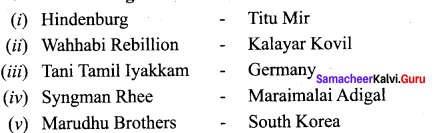
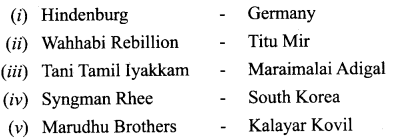
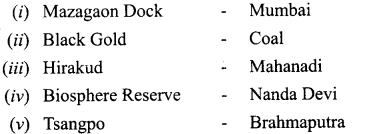
Match list I with list II
Tamil Nadu 12th Biology Model Question Paper 1 English Medium img 1
(a) A-i, B-iii, C-ii, D-iv
(b) A-ii, B-iii, C-iv, D-i
(c) A-ii, B-iii, C-i, D-iv
(d) A-iii, B-ii, C-i, D-iv
Answer:
(c) A-ii, B-iii, C-i, D-iv

Question 4.
EcoRI cleaves the DNA at _______.
(a) AGGGTT
(b) GTATATC
(c) GAATTC
(d) TATAGC
Answer:
(c) GAATTC

Question 5.
________ is the climax community of hydrosere.
(a) Reed Swamp stage
(b) Marsh meadow stage
(c) Shrub stage
(d) Forest stage
Answer:
(d) Forest stage

Question 6.
People’s movement for the protection of environment in Sirsi of Karnataka is ________.
(a) Chipko movement
(b) Appiko movement
(c) Amirtha Devi Bishwas movement
(d) None of the above
Answer:
(b) Appiko movement

Tamil Nadu 12th Biology Model Question Paper 1 English Medium

Question 7.
Which of the following is incorrectly paired?
(a) Wheat – Himgiri
(b) Rice – Ratna
(c) Milch breed – sahiwal
(d) Pusa komal – Brassica
Answer:
(d) Pusa komal – Brassica

Question 8.
Tectona grandis is coming under the family _______.
(a) Lamiaceae
(b) Fabaceae
(c) Dipterocaipaceae
(d) Ebenaceae
Answer:
(a) Lamiaceae

Part – II

Answer any four of the following questions. [4 x 2 = 8]

Question 9.
Draw and label the structure of a mature embryo sac of angiosperm.
Answer:
Tamil Nadu 12th Biology Model Question Paper 1 English Medium img 2

Question 10.
What are plasmogenes?
Answer:
Plasmogenes are independent, self-replicating, extra-chromosomal units located in cytoplasmic organelles, chloroplast and mitochondrion.

Tamil Nadu 12th Biology Model Question Paper 1 English Medium

Question 11.
Define the terms
(a) Bioventing
(b) Bioaugmentation
Answer:
(a) Bioventing is the process that increases the oxygen or air flow to accelerate the degradation of environmental pollutants.
(b) Bioaugmentation is the addition of selected microbes to speed up degradation process.

Question 12.
Differentiate between Eurythermal animals and Stenothermal animals.
Answer:
Eurythermal: Organisms which can tolerate a wide range of temperature fluctuations. Example: Zostera.
Stenothermal: Organisms which can tolerate only small range of temperature variations. Example: Mango.

Question 13.
What are Blue carbon ecosystems?
Answer:
Sea grasses and mangroves of Estuarine and coastal ecosystems are the most efficient in carbon sequestration. Hence, these ecosystems are called as “ Blue carbon ecosystems”.

Tamil Nadu 12th Biology Model Question Paper 1 English Medium

Question 14.
What is silvopasture system? How it helps economy?
Answer:
The production of woody plants combined with pasture is referred to silvopasture system. The trees and shrubs may be used primarily to produce fodder for livestock or they may be grown for timber, fuel wood and fruit or to improve the soil.

Part – III

Answer any three questions in which question number 19 is compulsory. [3 × 3 = 9]

Question 15.
Given an account an king of spices and its uses.
Answer:
King of Spices:
Pepper is one of the most important Indian spices referred to as the “King of Spices” and also termed as “Black Gold of India”. Kerala, Karnataka and Tamil Nadu are the top producers in India. The characteristic pungency of the pepper is due to the presence of alkaloid Pipeline. There are two types of pepper available in the market namely black and white pepper.

Uses:
It is used for flavouring in the preparation of sauces, soups, curry powder and pickles. It is used in medicine as an aromatic stimulant for enhancing salivary and gastric secretions and also as a stomachic. Pepper also enhances the bio-absorption of medicines.

Question 16.
Distinguish between primary production and secondary production.
Answer:

Primary ProductionSecondary Production
When the introduced variety is well adapted to the new environment without any alternation to the original genotype.When the introduced variety is subjected to selection to isolate a superior variety and hybridized with a local variety to transfer one or a few characters to them.

Tamil Nadu 12th Biology Model Question Paper 1 English Medium

Question 17.
What is co-evolution? Explain with example.
Answer:
The interaction between organisms, when continues for generations, involves reciprocal changes in genetic and morphological characters of both organisms. This type of evolution is called Co-evolution. It is a kind of co-adaptation and mutual change among interactive species.

Examples:

  • Corolla length and proboscis length of butterflies and moths (Habenaria and Moth).
  • Bird’s beak shape and flower shape and size.

Question 18.
What do you mean by Germplasm conservation? Describe it.
Answer:
Germplasm conservation refers to the conservation of living genetic resources like pollen, seeds or tissue of plant material maintained for the purpose of selective plant breeding, preservation in live condition and used for many research works.

Germplasm conservation resources is a part of collection of seeds and pollen that are stored in seed or pollen banks, so as to maintain their viability and fertility for any later use such as hybridization and crop improvement. Germplasm conservation may also involve a gene bank, DNA bank of elite breeding lines of plant resources for the maintenance of biological diversity and also for food security.

Tamil Nadu 12th Biology Model Question Paper 1 English Medium

Question 19.
Point out the reasons for Mendels’ success in his breeding experiment.
Answer:

  1. He applied mathematics and statistical methods to biology and laws of probability to his breeding experiments.
  2. He followed scientific methods and kept accurate and detailed records that include quantitative data of the outcome of his crosses.
  3. His experiments were carefully planned and he used large samples.
  4. The pairs of contrasting characters which were controlled by factor (genes) were present on separate chromosomes.
  5. The parents selected by Mendel were pure breed lines and the purity was tested by self crossing the progeny for many generations.

Part – IV

Answer all the questions. [2 × 5 = 10]

Question 20.
(a) Explain how Nicotiana exhibit self-compatibility in detail.
Answer:
Tamil Nadu 12th Biology Model Question Paper 1 English Medium img 3
Self-sterility means that the pollen from a plant is unable to germinate on its own stigma and will not be able to bring about fertilization in the ovules of the same plant. East (1925) observed multiple alleles in Nicotiana which are responsible for self-incompatibility or self-sterility. The gene for self-incompatibility can be designated as S, which has allelic series S1, S2, S3, S4 and S5

The cross-fertilizing tobacco plants were not always homozygous as S1S1 or S2S2, but all plants were heterozygous as S1S2, S3S4 and S5S6. When crosses were made between different S1S2 plants, the pollen tube did not develop normally. But effective pollen tube development was observed when crossing was made with other than S1S2 for example S3S4.
Tamil Nadu 12th Biology Model Question Paper 1 English Medium img 4
When crosses were made between seed parents with S1S2 and pollen parents with S2S3, two kinds of pollen tubes were distinguished. Pollen grains carrying S3 were not effective, but the pollen grains carrying S3 were capable of fertilization. Thus, from the cross S1, S2 X S3, S4, all the pollens were effective and four kinds of progency resulted: S1S3, S1S4, S2S3 and S2S4.

[OR]

(b) Point out the applications of plant tissue culture.
Answer:
Plant tissue culture techniques have several applications such as:

  • Improved hybrids production through somatic hybridization.
  • Somatic embryoids can be encapsulated into synthetic seeds (synseeds). These encapsulated seeds or synthetic seeds help in conservation of plant biodiversity.
  • Production of disease resistant plants through meristem and shoot tip culture.
  • Production of stress resistant plants like herbicide tolerant, heat tolerant plants.
  • Micro-propagation technique to obtain large numbers of plantlets of both crop and tree species useful in forestry within a short span of time and all through the year.
  • Production of secondary metabolites from cell culture utilized in pharmaceutical, cosmetic and food industries.

Tamil Nadu 12th Biology Model Question Paper 1 English Medium

Question 21.
(a) Describe the various stages of decomposition process.
Answer:
(1) Fragmentation: The breaking down of detritus into smaller particles by detritivores like bacteria, fungi and earth worm is known as fragmentation. These detritivores secrete certain substances to enhance the fragmentation process and increase the surface area of detritus particles.

(2) Catabolism: The decomposers produce some extracellular enzymes in their surroundings to break down complex organic and inorganic compounds in to simpler ones. This is called catabolism.

(3) Leaching or Eluviation: The movement of decomposed, water soluble organic and inorganic compounds from the surface to the lower layer of soil or the carrying away of the same by water is called leaching or eluviation.

(4) Humification: It is a process by which simplified detritus is changed into dark coloured amorphous substance called humus. It is highly resistant to microbial action, therefore decomposition is very slow. It is the reservoir of nutrients.

(5) Mineralisation: Some microbes are involved in the release of inorganic nutrients from the humus of the soil, such process is called mineralisation.

[OR]

(b) Explain the steps involved in hybridization.
Answer:
Steps involved in hybridization are as follows:

  • Selection of Parents: Male and female plants of the desired characters are selected. It should be tested for their homozygosity.
  • Emasculation: It is a process of removal of anthers to prevent self pollination before anthesis (period of opening of a flower).
  • Bagging: The stigma of the flower is protected against any undesirable pollen grains, by covering it with a bag.
  • Crossing: Transfer of pollen grains from selected male flower to the stigma of the female emasculated flower.
  • Harvesting seeds and raising plants: The pollination leads to fertilization and finally seed formation takes place. The seeds are grown into new generation which are called hybrid.

Bio-Zoology [Maximum Marks: 35]

Part – I

Choose the correct answer. [8 × 1 = 8]

Question 1.
Assertion (A): In bee society, all the members are diploid, except drones.
Reason (R): Drones are produced by parthenogenesis.
(a) A and R are true, R is the correct explanation for A
(b) A and R are true, R is not the correct explanation for A
(c) A is true, R is false
(d) Both A and R are false
Answer:
(a) A and R are true, R is the correct explanation for A

Tamil Nadu 12th Biology Model Question Paper 1 English Medium

Question 2.
Colotrum is rich in ______.
(a) IgE
(b) IgA
(c) IgD
(d) IgM
Answer:
(b) IgA

Question 3.
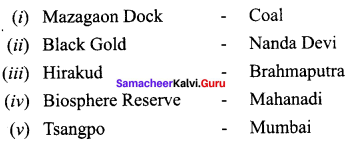
Match column I with column II
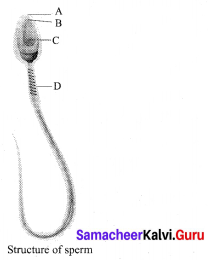
Tamil Nadu 12th Biology Model Question Paper 1 English Medium img 5
(a) A-iv, B-ii, C-i, D-iii
(b) A-iv, B-i, C-ii, D-iii
(c) A-iv, B-i, C-ii, D-iii
(d) A-i, B-iv, C-iii, D-ii
Answer:
(b) A-iv, B-i, C-ii, D-iii

Question 4.
Which of the following is the correct sequence of event with reference to central dogma?
(a) Transcription, Translation, Replication
(b) Transcription, Replication, Translation
(c) Duplication, Transcription, Translation
(d) Replication, Transcription, Translation
Answer:
(d) Replication, Transcription, Translation

Question 5.
Spread of cancerous cells to distant sites is termed as ______.
(a) Metastasis
(b) Oncogenes
(c) Proto-oncogenes
(d) Malignant neoplasm
Answer:
(a) Metastasis

Question 6.
How many amino acids are arranged in the two chains of Insulin?
(a) Chain A has 12 and Chain B has 13 amino acids
(b) Chain A has 21 and Chain B has 30 amino acids
(c) Chain A has 20 and chain B has 30 amino acids
(d) Chain A has 12 and chain B has 20 amino acids
Answer:
(b) Chain A has 21 and Chain B has 30 amino acids

Tamil Nadu 12th Biology Model Question Paper 1 English Medium

Question 7.
Who introduced the term biodiversity?
(a) Edward Wilson
(b) Walter Rosen
(c) Norman Myers
(a) Alice Norman
Answer:
(b) Walter Rosen

Question 8.
What is the name of the action plan for sustainable development framed in Rio conference in 1992?
(a) Action 21
(b) Agenda 21
(c) Declaration 21
(d) Protocol 21
Answer:
(b) Agenda 21

Part – II

Answer any four of the following questions. [4 × 2 = 8]

Question 9.
How is polyspermy avoided in humans?
Answer:
Once fertilization is accomplished, cortical granules from the cytoplasm of the ovum form a barrier called the fertilization membrane around the ovum preventing further penetration of other sperms. Thus polyspermy is prevented.

Question 10.
What are holandric genes?
Answer:
The genes present in the differential region of Y chromosome are called Y- linked or holandric genes. The Y linked genes have no corresponding allele in X chromosome.

Tamil Nadu 12th Biology Model Question Paper 1 English Medium

Question 11.
What are connecting links? Give example.
Answer:
The organisms which possess the characters of two different groups (transitional stage) are called connecting links. Example Peripatus (connecting link between Annelida and Arthropoda) Archaeopteryx (connecting link between Reptiles and Aves).

Question 12.
Saccharomyces cerevisiae is called as brewer’s yeast. Justify.
Answer:
Saccharomyces cerevisiae commonly called brewer’s yeast is used for fermenting malted cereals and fruit juices to produce various alcoholic beverages. Wine and beer are produced without distillation, whereas whisky, brandy and rum are obtained by fermentation and distillation.

Question 13.
Give the diagnostic characters of a Biome.
Answer:

  • Location, Geographical position (Latitude and Longitude)
  • Climate and physiochemical environment
  • Predominant plant and animal life
  • Boundaries between biomes are not always sharply defined. Transition or transient zones are seen.

Question 14.
What would Earth be like without the greenhouse effect?
Answer:
Greenhouse effect is vital for the sustenance of life. Greenhouse gases like CO2, water vapour etc absorb some of the reflected sun’s radiation and radiate back it to the Earth surface, thus maintaining the Earth’s warm condition. Without this effect, life on Earth would be difficult or rather impossible for existence or become hostile to most living organisms.
Part – III

Answer any three questions in which question number 19 is compulsory. [3 × 3 = 9]

Question 15.
Write a short note on phases of life cycle.

Answer:

  • Juvenile phase – Period of growth between birth of an individual and reproductive maturity.
  • Reproductive phase – Period of growth when an organism attain reproductive maturity and produces new offsprings.
  • Senescent plane – Period of growth when the structure and functioning of body starts degenerating.

Tamil Nadu 12th Biology Model Question Paper 1 English Medium

Question 16.
What is MTP? Add a note on it.
Answer:
Medical Termination of Pregnancy (MTP): Medical method of abortion is a voluntary or intentional termination of pregnancy in a non-surgical or non-invasive way. Early medical termination is extremely safe upto 12 weeks (the first trimester) of pregnancy and generally has no impact on a women’s fertility. Abortion during the second trimester is more risky as the foetus becomes intimately associated with the maternal tissue.
Question 17.
Genetic code is ‘universal’. Give reason.
Answer:
The genetic code is universal. It means that all known living systems use nucleic acids and the same three base codons (triplet codon) direct the synthesis of protein from amino acids. For example, the mRNA (UUU) codon codes for phenylalanine in all cells of all organisms. Some exceptions are reported in prokaryotic, mitochondrial and chloroplast genomes. However similarities are more common than differences.

Question 18.
Autoimmunity is a misdirected immune response. Justify.
Answer:
Autoimmune diseases : Autoimmunity is due to an abnormal immune response in which the immune system fails to properly distinguish between self and non-self and attacks its own body. Our body produces antibodies (auto antibodies) and cytotoxic T cells that destroy our own tissues. If a disease-state results, it is referred to as auto-immune disease. Thus, autoimmunity is a misdirected immune response.

Question 19.
PCR is a useful tool for early diagnosis of an Infectious disease. Elaborate.
Answer:
The specificity and sensitivity of PCR is useful for the diagnosis of inherited disorders (genetic diseases), viral diseases, bacterial diseases, etc., The diagnosis and treatment of a particular disease often requires identifying a particular pathogen. Traditional methods of identification involve culturing these organisms from clinical specimens and performing metabolic and other tests to identify them.

The concept behind PCR based diagnosis of infectious diseases is simple – if the pathogen is present in a clinical specimen its DNA will be present. Its DNA has unique sequences that can be detected by PCR, often using the clinical specimen (for example, blood, stool, spinal fluid, or sputum) in the PCR mixture.

Part – IV

Answer all the questions. [2 × 5 = 10]

Question 20.
(a) Give an detailed account on various natural methods of contraception.
Answer:
Natural method is used to prevent meeting of sperm with ovum, i.e., Rhythm method (safe period), coitus interruptus, continuous abstinence and lactational amenorrhoea.

1. Periodic abstinence/rhythm method: Ovulation occurs at about the 14th day of the menstrual cycle. Ovum survives for about two days and sperm remains alive for about 72 hours in the female reproductive tract. Coitus is to be avoided during this time.

2. Continuous abstinence is the simplest and most reliable way to avoid pregnancy is not to have coitus for a defined period that facilitates conception.

3. Coitus interruptus is the oldest family planning method. The male partner withdraws his penis before ejaculation, thereby preventing deposition of semen into the vagina.

4. Lactational amenorrhoea : Menstrual cycles resume as early as 6 to 8 weeks, from parturition. However, the reappearance of normal ovarian cycles may be delayed for six months during breast-feeding. This delay in ovarian cycles is called lactational amenorrhoea. It serves as a natural, but an unreliable form of birth control. Suckling by the baby during breast-feeding stimulates the pituitary to secrete increased prolactin hormone in order to increase milk production.

This high prolactin concentration in the mother’s blood may prevent menstrual cycle by suppressing the release of GnRH (Gonadotropin Releasing Hormone) from hypothalamus and gonadotropin secretion from the pituitary.

[OR]

(b) Explain the three major categories in which fossilization occur.
Answer:
(1) Actual remains is the most common method of fossilization. When marine animals die, their hard parts such as bones and shells, etc. are covered with sediments and are protected from further deterioration. They get preserved as such as they are preserved in vast ocean; the salinity in them prevents decay.

The sediments become hardened to form definite layers or strata. For example, Woolly Mammoth that lived 22 thousand years ago were preserved in the frozen coast of Siberia as such. Several human beings and animals living in the ancient city of Pompeii were preserved intact by volcanic ash which gushed out from Mount Vesuvius.

(2) Petrifaction – When animals die the original portion of their body may be replaced . molecule for molecule by minerals and the original substance being lost through disintegration. This method of fossilization is called petrifaction. The principle minerals involved in this type fossilization are iron pyrites, silica, calcium carbonate and bicarbonates of calcium and magnesium.

(3) Natural moulds and casts – Even after disintegration, the body of an animal might leave indelible impression on the soft mud which later becomes hardened into stones. Such impressions are called moulds. The cavities of the moulds may get filled up by hard minerals and get fossilized, which are called casts. Hardened faecal matter termed as coprolites occur as tiny pellets. Analysis of the coprolites enables us to understand the nature of diet, the prehistoric animals thrived.

Tamil Nadu 12th Biology Model Question Paper 1 English Medium

Question 21.
(a) Explain in detail about stem cell therapy.
Answer:
Stem cells are undifferentiated cells found in most of the multi cellular animals. These cells maintain their undifferentiated state even after undergoing numerous mitotic divisions.

Stem cell research has the potential to revolutionize the future of medicine with the ability to regenerate damaged and diseased organs. Stem cells are capable of self renewal and exhibit ‘cellular potency’. Stem cells can differentiate into all types of cells that are derived from any of the three germ layers ectoderm, endoderm and mesoderm.

In mammals there are two main types of stem cells – embryonic stem cells (ES cells) and adult stem cells. ES cells are pluripotent and can produce the three primary germ layers ectoderm, mesoderm and endoderm. Embryonic stem cells are multipotent stem cells that can differentiate into a number of types of cells. ES cells are isolated from the epiblast tissue of the inner cell mass of a blastocyst. When stimulated ES can develop into more than 200 cells types of the adult body. ES cells are immortal i.e. they can proliferate in a sterile culture medium and maintain their undifferentiated state.

Adult stem cells are found in various tissues of children as well as adults. An adult stem cell or somatic stem cell can divide and create another cell similar to it. Most of the adult stem cells are multipotent and can act as a repair system of the body, replenishing adult tissues.The red bone marrow is a rich source of adult stem cells.

The most important and potential application of human stem cells is the generation of cells and tissues that could be used for cell based therapies. Human stem cells could be used to test new drugs.

[OR]

(b) Explain in detail about various types of extinctions.
Answer:
There are three types of Extinctions
(1) Natural extinction: It is a slow process of replacement of existing species with better adapted species due to changes in environmental conditions, evolutionary changes, predators and diseases. A small population can get extinct sooner than the large population due to inbreeding depression (less adaptivity and variation)

(2) Mass extinction: The Earth has experienced quite a few mass extinctions due to environmental catastrophes. A mass extinction occurred about 225 million years ago during the Permian, where 90% of shallow water marine invertebrates disappeared.

(3) Anthropogenic extinctions: These are abetted by human activities like hunting, habitat destruction, over exploitation, urbanization and industrialization. Some examples of extinctions are Dodo of Mauritius and Steller’s sea cow of Russia. Amphibians seem to be at higher risk of extinction because of habitat destruction. The most serious aspect of the loss of biodiversity is the extinction of species. The unique information contained in its genetic material (DNA) and the niche it possesses are lost forever.

Tamil Nadu 12th Chemistry Model Question Paper 5 English Medium

Students can Download Tamil Nadu 12th Chemistry Model Question Paper 5 English Medium Pdf, Tamil Nadu 12th Chemistry Model Question Papers helps you to revise the complete Tamilnadu State Board New Syllabus and score more marks in your examinations.

TN State Board 12th Chemistry Model Question Paper 5 English Medium

Instructions:

  1. The question paper comprises of four parts
  2. You are to attempt all the parts. An internal choice of questions is provided wherever: applicable
  3. All questions of Part I, II, III and IV are to be attempted separately
  4. Question numbers 1 to 15 in Part I are Multiple choice Questions of one mark each.  These are to be answered by choosing the most suitable answer from the given four alternatives and writing the option code and the corresponding answer
  5. Question numbers 16 to 24 in Part II are two-mark questions. These are lo be answered in about one or two sentences.
  6. Question numbers 25 to 33 in Part III are three-mark questions. These are lo be answered in about three to five short sentences.
  7. Question numbers 34 to 38 in Part IV are five-mark questions. These are lo be answered in detail. Draw diagrams wherever necessary.

Time: 3 Hours
Maximum Marks: 70

Part – I

Answer all the questions. Choose the correct answer. [15 × 1 = 15]

Question 1.
Which one of the following ore is best concentrated by froath – floatation method?
(a) Magnetite
(b) Haematite
(c) Galena
(d) Cassiterite
Answer:
(c) Galena

Tamil Nadu 12th Chemistry Model Question Paper 5 English Medium

Question 2.
Which compound is used as flux in metallurgy?
(a) Boric acid
(b) Borax
(c) Diborane
(d) BF3
Answer:
(b) Borax

Question 3.
The shape of XeOF4 is
(a) T Shaped
(b) Pyramidal
(c) Square planar
(d) Square pyramidal
Answer:
(d) Square pyramidal

Question 4.
How many moles of acidified KMnO4 required to oxidise one mole of oxalic acid?
(a) 5
(b) 0.6
(c) 1.5
(s) 0.4
Answer:
(b) 0.6

Question 5.
The type of isomerism exhibited by [Pt(NH3)2 Cl2] ?
(a) coordination isomerism
(b) linkage isomerism
(c) optical isomerism
(d) geometrical isomerism
Answer:
(d) geometrical isomerism

Tamil Nadu 12th Chemistry Model Question Paper 5 English Medium

Question 6.
The fraction of the total volume occupied by the atoms in a fcc is
Tamil Nadu 12th Chemistry Model Question Paper 5 English Medium - 1
Answer:
(a) \(\frac{\pi \sqrt{2}}{6}\)

Question 7.
The half life period of a radioactive element is 140 days. After 280 days 1g of element will be
reduced to which amount of the following?
(a) 1/4
(b) 1/16
(c) 1/8
(d) 1/2
Answer:
(a) 1/4
Solution:
Tamil Nadu 12th Chemistry Model Question Paper 5 English Medium - 2

Question 8.
Which is not a Lewis base?
(a) BF3
(b) PF3
(c) CO
(d) F
Answer:
(a) BF3

Question 9.
During electrolysis of molten copper chloride, the time required to produce 0.2 mole of chlorine gas using a current of 2A is ………..
(a) 32.66 min
(b) 321.66 min
(c) 378 min
(d) 260 min
Solution:
m = ZIt (mass of 1 mole of Cl2 gas = 71) m
t = \(\frac{\mathrm{m}}{\mathrm{Zl}}\) (mass of 0.2 mole of Cl2 gas = 14.2 g)
Tamil Nadu 12th Chemistry Model Question Paper 5 English Medium - 3

Question 10.
Smoke is a colloidal solution of …………
(a) Solid in gas
(b) Gas in gas
(c) Liquid in gas
(d) Gas in liquid
Answer:
(c) Liquid in gas

Question 11.
Iso propyl benzene on oxidation in presence of air and dilute acid gives
(a) C6H5COOH
(b) C6H5COCH3
(c) C6H5COC6H5
(d) C6H5OH
Answer:
(d) C6H5OH

Tamil Nadu 12th Chemistry Model Question Paper 5 English Medium

Question 12.
But-2 ene on ozonolyis followed by subsequent cleavage with Zn and water gives …………….
(a) ethanal
(b) Propanal
(c) Propanone
(d) Methanal
Answer:
(a) ethanal

Question 13.
3(i)
This reaction is known as
(a) Friedal- craft’s reaction
(b) HVZ reaction
(c) Schotten – Baumann reaction
(d) Cannizaro reaction
Answer:
(c) Schotten – Baumann reaction

Question 14.
The pyrimidine bases present in DNA are
(a) Cytosine and Adenine
(b) Cytosine and Guanine
(c) Cytosine and Thiamine
(d) Cytosine and Uracil
Answer:
(c) Cytosine and Thiamine

Question 15.
Nylon is an example of
(a) Polyamide
(b) Polythene
(c) Polyester
(d) Polysaccharide
Answer:
(a) Polyamide

Part – II

Answer any six questions. Question No. 24 is compulsory. [6 × 2 = 12]

Question 16.
Write a test to identify borate radical?
Answer:
When boric acid or borate salt is heated with ethyl alcohol in presence of concentrated H2SO4, an ester triethyl borate is formed. The Vapour of this ester bums with a green edged flame and this reaction is used to identify the presence of borate.
Tamil Nadu 12th Chemistry Model Question Paper 5 English Medium - 4

Question 17.
How is pure phosphine prepared from phosphorous acid ?
Answer:
Phosphine is prepared in pure form by heating phosphorous acid.
Tamil Nadu 12th Chemistry Model Question Paper 5 English Medium - 5

Question 18.
What are ionisation isomers? Explain with an example.
Answer:
1. Ionisation isomerism arises when an ionisable counter ion (simple ion) itself can act as a ligand.

2. The exchange of such counter ions with one or more ligands in the coordination entity will result in ionisation isomers. These isomers will give different ions in solution.

3. For example, consider the coordination compound [Pt (en)2 Cl2]Br2. In this compound, both Br and Cl have the ability to act as a ligand and the exchange of these two ions result in a different isomer [Pt(en)2Br2]Cl2. In solution, the first compound gives Br ions while the later gives Cl ions and hence these compounds are called ionization isomers.

Question 19.
What is pseudo first order reaction? Give one example.
Answer:
A second order reaction can be altered to a first order reaction by taking one of the reactant in large excess, such reaction is called pseudo first order reaction.
Let us consider the acid hydrolysis of an ester,
Tamil Nadu 12th Chemistry Model Question Paper 5 English Medium - 6
If the reaction is carried out with the large excess of water, there is no significant change in the concentration of water during hydrolysis, i.e., concentration of water remains almost a constant.
Now we can define k [H2O] = k’
.’. The above rate equation becomes, Rate = k’ [CH3COOCH3]
Thus it follows first order kinetics.

Tamil Nadu 12th Chemistry Model Question Paper 5 English Medium

Question 20.
State Faraday’s second law of electrolysis.
Answer:
When the same quantity of charge is passed through the solutions of different electrolytes, the , amount of substances liberated at the respective electrodes are directly proportional to their electrochemical equivalents.

Question 21.
How will you convert glycerol into acrolein?
Answer:
Tamil Nadu 12th Chemistry Model Question Paper 5 English Medium - 7


Question 22.
Give any four differences between DNA and RNA.
DNA

  1. It is mainly present in nucleus, mitochondria and chloroplast
  2. It contains deoxyribose sugar
  3. It’s life time is high
  4. It is stable and not hydrolysed easily by alkalis
  5. It can replicate itself

RNA

  1. It is mainly present in cytoplasm, nucleolus and ribosomes
  2. It contains ribose sugar
  3. It is Short lived
  4. It is unstable and hydrolyzed easily by alkalis
  5. It cannot replicate itself. It is formed from DNA.

Question 23.
Write short notes on Antioxidants.
Answer:

  • Antioxidants are substances which retard the oxidative deteriotations of food. Food containing fats and oils is easily oxidised and turn rancid.
  • To prevent the oxidation of fats and oils, chemical BHT (butyl hydroxy toluene), BHA (butylated hydroxy anisole) are added as antioxidants.
  • These materials readily undergo oxidation by reacting with free radicals generated by the oxidation of oils there by stop the chain reaction of oxidation of food.
  • Sulphur dioxide, sulphites are also used as antioxidant and also act as antimicrobial agents and
    enzyme inhibitors.

Question 24.
50ml of 0.05M HNO3 is added to 50ml of 0.025M KOH. Calculate the pH of the resultant solution.
Answer:
Number of moles of HNO3 = 0.05 × 50 × 10-3 = 2.5 × 10⁻³
Number of moles of KOH = 0.025 × 50 × 10-3 = 1.25 × 10⁻³
Number of moles of HNC3 after mixing = 2.5 × 10⁻³ – 1.5 × 10 -3 = 1.25 × 10⁻³
Tamil Nadu 12th Chemistry Model Question Paper 5 English Medium - 8
After mixing, total volume = 100 ml = 100 × 10-3 L
Tamil Nadu 12th Chemistry Model Question Paper 5 English Medium - 9
pH = – log [H+]
pH = -log(l.25 × 10-2) = 2 – 0.0969
= 1.9031

Part – III

Answer any six questions. Question No. 33 is compulsory. [6 × 3 = 18]

Question 25.
Explain the electro metallurgy of aluminium.
Answer:
Electrochemical extraction of aluminium -Hall-Herold process: In this method, electrolysis is carried out in an iron tank lined with carbon, which acts as a cathode. The carbon blocks immersed in the electrolyte acts as a anode. A 20% solution of alumina, obtained from the bauxite ore is mixed with molten cyrolite and is taken in the electrolysis chamber. About 10% calcium chloride is also added to the solution. Here calcium chloride helps to lower the melting point of the mixture. The fused mixture is maintained at a temperature of above 1270 K. The chemical reactions involved in this process are as follows:

Ionisation of alumina : Al2O3 → 2Al3+ + 3O2-
Reaction at cathode : 2Al3+ (melt) + 6e → 2Al (l)
Reaction at anode : 6O2- (melt) → 3O2 + 12e
Since carbon acts as anode the following reaction also takes place on it.
C (s) + O2- (melt) → CO + 2e ; C(s) + 2O2- (melt) → CO2 + 4e

Due to the above two reactions, anodes are slowly consumed during the electrolysis. The pure aluminium is formed at the cathode and settles at the bottom. The net electrolysis reaction can be written as follows:

4Al3+ (melt) + 6O2- (melt) + 3C(s) → 4Al(l) + 3CO2(g)

Tamil Nadu 12th Chemistry Model Question Paper 5 English Medium

Question 26.
Give the uses of helium.
Answer:

  • Helium and oxygen mixture is used by divers in place of air oxygen mixture. This prevents the painful dangerous condition called bends.
  • Helium is used to provide inert atmosphere in electric arc welding of metals
  • Helium has lowest boiling point hence used in cryogenics (low temperature science).
  • It is much less denser than air and hence used for filling air balloons.

Question 27.
Explain chromyl chloride Test.
Answer:
(i) When potassium dichromate is heated with any chloride salt in the presence of Conc.H2SO4, orange red vapours of chromyl chloride (CrO2Cl2) is evolved. This reaction is used to confirm the presence of chloride ion in inorganic qualitative analysis.
Tamil Nadu 12th Chemistry Model Question Paper 5 English Medium - 10

(ii) The chromyl chloride vapours are dissolved in sodium hydroxide solution and then acidified with acetic acid and treated with lead acetate. A yellow precipitate of lead chromate is obtained. Cr02Cl2 + 4NaOH -► Na2Cr04 Tamil Nadu 12th Chemistry Model Question Paper 5 English Medium - 11

Question 28.
A face centred cubic solid of an element (atomic mass 60 g mol ) has a cube edge of 4A. Calculate its density.
Answer:
For FCC unit cell n 4
Edge length(a) = 4A = 4 × 10⁻⁸cm
Mass (M) = 60 g mol-1
Dcnsity(ρ) = ?
Tamil Nadu 12th Chemistry Model Question Paper 5 English Medium - 12

Question 29.
Describe the construction of Daniel cell and write its cell reaction.
Answer:
The separation of half reaction is the basis for the construction of Daniel cell. It consists of two half cells.

Oxidation half cell: The metallic zinc strip that dips into an aqueous solution of zinc sulphate taken in a beaker.
Reduction half cell: A copper strip that dips into an aqueous solution of copper sulphate taken in a beaker.
Joining the half cell : The zinc and copper strips are externally connected using a wire through a switch (k) and a load (example: volt meter). The electrolytic solution present in the cathodic and anodic compartment are connected using an inverted U tube containing a agar-agar gel mixed with an inert electrolyte such as KCl, Na2SO4 etc., The ions of inert electrolyte do not react with other ions present in the half cells and they are not either oxidised (or) reduced at the electrodes. The solution in the salt bridge cannot get poured out, but through which the ions can move into (or) out of the half cells.

When the switch (k) closes the circuit, the electrons flows from zinc strip to copper strip. This is due to the following redox reactions which are taking place at the respective electrodes.

Anodic oxidation:- The electrode at which the oxidation occur is called the anode. In Daniel cell, the oxidation take place at zinc electrode, i.e., zinc is oxidised to Zr2+ ions and the electrons. The Zn2+ ions enters the solution and the electrons enter the zinc metal, then flow through the external wire and then enter the copper strip. Electrons are liberated at zinc electrode and hence it is negative (- ve).
Zn(s) → Zn2++(aq) + 2e
(loss of electron-oxidation)

Cathodic reduction:
As discussed earlier, the electrons flow through the circuit from zinc to copper, where the Cu ions in the solution accept the electrons, get reduced to copper and the same get deposited on the electrode. Here, the electrons are consumed and hence it is positive (+ve).

cu2+ 2e cu(s)( gain of electron – reduction)
Tamil Nadu 12th Chemistry Model Question Paper 5 English Medium - 13

Salt bridge: -The electrolytes present in two half cells are connected using a salt bridge. We have learnt that the anodic oxidation of zinc electrodes results in the increase in concentration of Zn2+ in solution, i.e., the solution contains more number of Zn2+ ions as compared to SO2-4 and hence the solution in the anodic compartment would become positively charged. Similarly, the solution in the cathodic compartment would become negatively charged as the Cu2+ ions are reduced to copper i.e., the cathodic solution contain more number of SO2-4 ions compared to Cu2+ .

Completion of circuit:- Electrons flow from the negatively charged zinc anode into the positively charged copper electrode through the external wire, at the same time, anions move towards anode and cations move towards the cathode compartment. This completes the circuit.

Consumption of Electrodes :- As the Daniel cell operates, the mass of zinc electrode gradually decreases while the mass of the copper electrode increases and hence the cell will function until the entire metallic zinc electrode is converted into Zn2+ or the entire Cu2+ ions are converted into mettalic copper.
Daniel cell is represents as

Tamil Nadu 12th Chemistry Model Question Paper 5 English Medium - 14

Question 30.
Write short notes on (i) Negative catalyst (ii) Phase transfer catalyst
Answer:
(i) Negative catalyst:
(i) In certain reactions, presence of certain substances decreases the rate of the reaction. Such
substances are called negative catalyst and the process is called negative catalysis.

(ii) In oxidation of chloroform, ethanol decreases the rate of the reaction and ethanol act as negative catalyst.
Tamil Nadu 12th Chemistry Model Question Paper 5 English Medium - 15

(iii) Decomposition of H202 rate is decreased by glycerol and it act as negative catalyst
Tamil Nadu 12th Chemistry Model Question Paper 5 English Medium - 16

(ii) Phase transfer catalyst:

(i) Consider the reactant of a reaction is present in one solvent and the other reactant is present in an another solvent. The reaction between them is very slow, if the solvents are immisible.

(ii) As the solvents form separate phases, the reactants have to migrate across the boundary to react. But migration of reactants across the boundary is not easy. For such situation, a third solvent is added which is miscible with both. So, the phase boundary is eliminated the reactants freely mix and react fast.

(iii) But for large scale preparation of any product, use of a third solvent is not convenient as it . may be expensive. For such problems, phase transfer catalysis provides a simple solution, which avoids the use of solvents.

(iv) It directs the use of a phase transfer catalyst (a phase transfer reagent) to facilitate transport of a reactant in one solvent to other solvent where the second reactant is present. As the reactants are now brought together, they rapidly react and form the product.

(v) Example : Substitution of Cl and CN in the following reaction.
Tamil Nadu 12th Chemistry Model Question Paper 5 English Medium - 17
R Cl = 1- chloro octane
R CN = 1- cyano octane
(vi) By direct heating of two phase mixture of organic 1- chloro octane with aqueous sodium cyanide for several days, 1- cyano octane is not obtained. However, if a small amount of quartemary ammonium salt like tetra alkyl ammonium cation which has hydrophobic and hydrophilic ends, transports CN- from the aqueous phase to the organic phase using its hydrophilic end and facilitates the reactions with 1- chloro octane as shown below
Tamil Nadu 12th Chemistry Model Question Paper 5 English Medium - 18

(vii) So phase transfer catalyst, speeds up the reaction by transporting one reactant from one phase to another.
Tamil Nadu 12th Chemistry Model Question Paper 5 English Medium

Question 31.
Explain the mechanism of Aldol condensation of acetaldehyde.
Answer:
In presence of dilute base NaOH, or KOH, two molecules of an aldehyde or ketone having α – hydrogen add together to give β- hydroxyl aldehyde (aldol) or β – hydroxyl ketone (ketol). The reaction is called aldol condensation reaction.
Tamil Nadu 12th Chemistry Model Question Paper 5 English Medium - 19

Mechanism
The mechanism of aldol condensation Of acetaldehyde takes place in three steps.
Step 1: The carbanion is formed as the a – hydrogen atom is removed as a proton by the base.
Tamil Nadu 12th Chemistry Model Question Paper 5 English Medium - 20

Step 2: The carbanion attacks the carbonyl carbon of another unionized aldehyde to form an alkoxide ion.
Tamil Nadu 12th Chemistry Model Question Paper 5 English Medium - 21

Step 3: The alkoxide ion formed is protonated by water to form aldol.
Tamil Nadu 12th Chemistry Model Question Paper 5 English Medium - 22
The aldol rapidly undergoes dehydration on heating with acid to form a, p unsaturated aldehyde.
Tamil Nadu 12th Chemistry Model Question Paper 5 English Medium - 23

Question 32.
Explain the preparation of Nylon – 6,6 and Buna- S.
Answer:
Nylon 6,6 can be prepared by mixing equimolar adipic acid and hexamethylene diamine. With the elimination of water to form amide bonds.
Tamil Nadu 12th Chemistry Model Question Paper 5 English Medium - 24

Buna – S is prepared by the polymerisation of buta -1,3 – diene and styrene in the ratio of 3:1 in the presence of sodium.
Tamil Nadu 12th Chemistry Model Question Paper 5 English Medium - 25

Question 33.
Identify A to C in the following sequence.
Tamil Nadu 12th Chemistry Model Question Paper 5 English Medium - 26
Tamil Nadu 12th Chemistry Model Question Paper 5 English Medium - 27

Part – IV

Answer all the questions. [5 × 5 = 25]

Question 34.
(a) (i) Explain how gold ore is leached by cyanide process
(ii) Explain the classification of lnosilicates

[OR]

(b) (i) What are interhalogen compounds? Give examples
(ii) Explain the preparation of KMn04.
Answer:
(a) (i) 4Au (s) + 8CN (aq) + 2H2O(aq) + O2(g)→ 4Au(CN)2](aq) + 4OH
2[Au(CN)2](aq) + Zn (s) → 2Au (s) + [Zn(CN)4]-2(aq)
In the first reaction Au changes into Au+, i.e. its oxidation takes place. In the second reaction: Au+ → Au° (i.e. ) reduction takes place.

(ii) Ino silicones: Silicates which contain V number of silicate units liked by sharing two or more oxygen atoms are called inosilicates. They are further classified as chain silicates and double chain silicates.

Chain silicates (or pyroxenes): These silicates contain [(SiO3)n]2n- ions formed by linking ‘ri number of tetrahedral [SiO4]4- units linearly. Each silicate unit shares two of its oxygen atoms with other units.
Tamil Nadu 12th Chemistry Model Question Paper 5 English Medium - 28
Example: Spodumene – LiAl(SiO3)2 Double chain silicates (or amphiboles): These silicates contains [Si4O11] n6n-. ions. In these silicates there are two different types of tetrahedra : (i) Those sharing 3 vertices (ii) those sharing only 2 vertices.

Examples:
Asbestos: These are fibrous and noncombustible silicates. Therefore they are used for thermal insulation material, brake linings, construction material and filters. Asbestos being carcinogenic silicates, their applications are restricted.
Tamil Nadu 12th Chemistry Model Question Paper 5 English Medium - 29

[OR]

(b) (i) Each halogen combines with other halogens to form a series of compounds called interhalogen compounds, e.g., ClF3, IF5, IF7
(ii) Potassium permanganate is prepared from pyrolusite (MnO2) ore. The preparation involves the following steps.

Conversion of MnO2 to potassium manganate:
Powdered ore is fused with KOH in the presence of air or oxidising agents like KNO3 A green coloured potassium manganate is formed.
Tamil Nadu 12th Chemistry Model Question Paper 5 English Medium - 30

Oxidation of potassium manganate to potassium permanganate:
Potassium manganate can be oxidised in two ways, either by chemical oxidation or electrolytic oxidation.

Chemical oxidation: In this method potassium manganate is treated with ozone (O3) or chlorine to get potassium permanganate.
Tamil Nadu 12th Chemistry Model Question Paper 5 English Medium - 31

Electrolytic oxidation: In this method aqueous solution of potassium manganate is electrolyzed in the presence of little alkali.
K2MnO4 ⇌ 2K+ + MnO42-
H2O ⇌ H+ + OH

Manganate ions are converted into permanganate ions at anode.
Tamil Nadu 12th Chemistry Model Question Paper 5 English Medium - 32
The purple coloured solution is concentrated by evaporation and forms crystals of potassium permanganate on cooling.

Tamil Nadu 12th Chemistry Model Question Paper 5 English Medium

Question 35.
(a) (i) Explain [Fe(CN)6]3- is paramagnetic, using Crystal Field theory
(ii) What is schottky detect?

[OR]

(A) (0 Derive Henderson – Hassel balch equation
(ii) What is kohlraush’s law?
Answer:
(a) (i)
Tamil Nadu 12th Chemistry Model Question Paper 5 English Medium - 33
Tamil Nadu 12th Chemistry Model Question Paper 5 English Medium - 34

(ii) Schottky defect arises due to the missing of equal number of cations and anions from the crystal lattice. This effect does not change the stoichiometry of the crystal.Ionic solids in which the cation and anion are of almost of similar size show schottky defect. Example: NaCl.
Tamil Nadu 12th Chemistry Model Question Paper 5 English Medium - 35

Presence of large number of schottky defects in a crystal, lowers its density.
For example, the theoretical density of vanadium monoxide (VO) calculated using the edge length of the unit cell is 6.5 g cm-3 , but the actual experimental density is 5.6 g cm-3 .It indicates that there is approximately 14% Schottky defect in VO crystal. Presence of Schottky defect in the crystal provides a simple way by which atoms or ions can move within the crystal lattice.

[OR]

(b) (i) Henderson – Hasselbalch equation:
1. The concentration of hydronium ion in acidic buffer solution depends on the ratio of concentration of the weak acid to the concentration of its conjugate base present in the solution, i.e.,
Tamil Nadu 12th Chemistry Model Question Paper 5 English Medium - 36

2. The weak acid is dissociated only to a small extent. Moreover due to common ion effect, the dissociation is further suppressed and hence the equilibrium concentration of the acid is nearly equal to the initial concentration of the unionised acid. Similarly the concentration of the conjugate base is nearly equal to the initial concentration of the added salt.
Tamil Nadu 12th Chemistry Model Question Paper 5 English Medium - 37

3. [Acid] and [Salt] represent the initial concentration of the acid and salt, respectively used to prepare the buffer solution.

4. Taking logarithm on both sides of the equation
Tamil Nadu 12th Chemistry Model Question Paper 5 English Medium - 38

5. Reverse the sign on both sides
Tamil Nadu 12th Chemistry Model Question Paper 5 English Medium - 39
Equation (6) & (7) are called Henderson – Hasselbalch equations.

(ii) Kohlrauselrs law: It is defined as, at infinite dilution the limiting molar conductivity of an electrolyte is equal to the sum of the limiting molar conductivities of its constituent ions.

Question 36.
(a) (i) Explain Intermediate compound formation theory.
(ii) Write short notes on ultra filtration.

[OR]

(b) How the following conversions are effected?
(i) Phenol → Salicylaldehvde
(ii) Phenol → Phenolphthalein
(iii) Glycol → 1.4dioxane
Answer:
(a) (i) The intermediate compound formation theory:
A catalyst acts by providing a new path with low energy of activation.. In homogeneous catalysed reactions a catalyst may combine with one or more reactant to form an intermediate which reacts with other reactant or decompose to give products and the
catalyst is regenerated.
Consider the reactions:
A+B → AB (1)
A+C →AC (intermediate) (2)
C is the catalyst
AC+B → AB+C (3)

Activation energies for the reactions (2) and (3) are lowered compared to that of (1). Hence the formation and decomposition of the intermediate accelerate the rate of the reaction.

(ii) Ultrafiltration:

  • The pores of ordinary filter papers permit the passage of colloidal solutions. In ultrafilteration, the membranes are made by using collodion, cellophane or visiking.
  • When a colloidal solution is filtered using such a filter, colloidal particles are separated on the filter and the impurities are removed as washings.
  • This process is quickened by application of pressure. The separation of sol particles from electrolyte by filtration through an ultrafilter is called ultrafiltration.
  • Collodian is 4% solution of nitrocellulose in a mixture of alcohol and water.

[OR]

(b) (i) Phenol → Salicylaldehyde:
Tamil Nadu 12th Chemistry Model Question Paper 5 English Medium - 40

(ii) Phenol → Phenolphthalcin:
On heating phenol with phthalic anhydride in presence of con.H2S04, phenolphthalein
is obtained.
Tamil Nadu 12th Chemistry Model Question Paper 5 English Medium - 41

(iii) Glycol →1,4 dioxane:
When distilled with Conc.112S04, glycol forms 1, 4-dioxane
Tamil Nadu 12th Chemistry Model Question Paper 5 English Medium - 42

Tamil Nadu 12th Chemistry Model Question Paper 5 English Medium

Question 37.
(a) Write short notes on
(i) Mustard oil reactions
(ii) Carbylamine reaction
(iii) Gabriel pathalimide synthesis

[OR]

(b) Explain the structure of Fructose.
Answer:
(a) (i) Mustard oil reactions:
When primary amines are treated with carbon disulphide (CS2), N – alkyldithio carbonic acid is formed which on subsequent treatment with HgCl2, give an alkyl isothiocyanate.
Tamil Nadu 12th Chemistry Model Question Paper 5 English Medium - 43

(ii) Carbylamine reaction:
Aliphatic (or) aromatic primary amines react with chloroform and alcoholic KOH to give isocyanides (carbylamines), which has an unpleasant smell. This reaction is known as carbylamines test. This test is used to identify the primary amines.
Tamil Nadu 12th Chemistry Model Question Paper 5 English Medium - 44

(iii) Gabriel pathalimide synthesis:
Gabriel synthesis is used for the preparation of Aliphatic primary amines. Phthalimide on treatment with ethanolic KOH forms potassium salt of phthalimide which on heating with alkyl halide followed by alkaline hydrolysis gives primary amine.
Tamil Nadu 12th Chemistry Model Question Paper 5 English Medium - 45

[OR]

Structure of Fructose:

  • Elemental analysis and molecular weight determination of fructose show that it has the molecular formula C6H12O6.
  • Fructose on reduction with HI and red phosphorus gives a mixture of n – hexane (major product) and 2 – iodohexane (minor product). This reaction indicates that the six carbon atoms in fructose are in a straight chain.
    Tamil Nadu 12th Chemistry Model Question Paper 5 English Medium - 46
  • Fructose reacts with NH2OH and HCN. It shows the presence of carbonyl groups in the molecules of fructose.
  • Fructose reacts with acetic anhydride in the presence of pyridine to form penta acetate. This reaction indicates the presence of five hydroxyl groups in a fructose molecule.
  • Fructose is not oxidized by bromine water. This rules out the possibility of presence of an aldehyde (-CHO) group.
  • Partial reduction of fructose with sodium amalgam and water produces mixtures of sorbitol and mannitol which are epimers at second carbon. New asymmetric carbon is formed at C-2. This confirms the presence of keto group.
    Tamil Nadu 12th Chemistry Model Question Paper 5 English Medium - 47

On oxidation with nitric acid, it gives glycolic acid and tartaric acids which contain smaller number of carbon atoms than in fructose.
Tamil Nadu 12th Chemistry Model Question Paper 5 English Medium - 48
This shows that a keto group is present in C-2. It also shows the presence of 10 alcoholic groups at C- 1 and C- 6. From the above reaction the structure of fructose is
Tamil Nadu 12th Chemistry Model Question Paper 5 English Medium - 49

Question 38.
(a) (i) A first order reaction is 40% complete in 50 minutes. Calculate the value of the rate constant. In what time will the reaction be 80% complete?
(ii) Ksp of Ag2CrO4 is 1.1 x 10⁻¹². What is the solubility of Ag2CrO4 in 0.1M K2CrO4?
[OR]
(b) Compound A of molecular formula C7H6O reduces Tollen’s reagent when A reacts with 50% NaOH gives compound B of molecular formula C7H8O and C of molecular formula C7H5O7Na. Compound C on treatment with dil.HCl gives compound D of molecular formula C7H6O2. When D is heated with sodalime gives compound E.
Identify A,B,C,D & E. Write the corresponding equations.
Answer:
(a) (i) 1. For the first order reaction k =\(\frac{2.303}{t} \log \frac{a}{(a-x)}\)
Assume, a = 100 %, x = 40%, t = 50 minutes
Therefore, a – x = 100 – 40 = 60.
k = (2.303/ 50) log (100/ 60)
k = 0.010216 min-1
Hence the value of the rate constant is 0.010216 min-1
2. t = ?, when x = 80%
Therefore, a – x = 100 – 80 = 20
From above, k = 0.010216 min-1
t = (2.303/0.010216) log (100/20)
t = 157.58 min
The time at which the reaction will be 80% complete is 157.58 min.

(ii)
Tamil Nadu 12th Chemistry Model Question Paper 5 English Medium - 49(i)
Tamil Nadu 12th Chemistry Model Question Paper 5 English Medium - 49(ii)

[OR]

(b)
Tamil Nadu 12th Chemistry Model Question Paper 5 English Medium - 51
Tamil Nadu 12th Chemistry Model Question Paper 5 English Medium - 52

Tamil Nadu 12th Physics Model Question Paper 3 English Medium

Students can Download Tamil Nadu 12th Physics Model Question Paper 3 English Medium Pdf, Tamil Nadu 12th Physics Model Question Papers helps you to revise the complete Tamilnadu State Board New Syllabus and score more marks in your examinations.

TN State Board 12th Physics Model Question Paper 3 English Medium

Instructions:

  1. The question paper comprises of four parts
  2. You are to attempt all the parts. An internal choice of questions is provided wherever: applicable
  3. All questions of Part I, II, III and IV are to be attempted separately
  4. Question numbers 1 to 15 in Part I are Multiple choice Questions of one mark each.  These are to be answered by choosing the most suitable answer from the given four alternatives and writing the option code and the corresponding answer
  5. Question numbers 16 to 24 in Part II are two-mark questions. These are lo be answered in about one or two sentences.
  6. Question numbers 25 to 33 in Part III are three-mark questions. These are lo be answered in about three to five short sentences.
  7. Question numbers 34 to 38 in Part IV are five-mark questions. These are lo be answered in detail. Draw diagrams wherever necessary.

Time: 3 Hours
Max Marks: 70

PART -1

Answer all the questions. Choose the correct answer. [15 × 1 = 15]

Question 1.
Two metallic spheres of radii 1 cm and 3 cm are given charges of -1 × 10⁻² C and 5 × 10⁻² C respectively. If these are connected by a conducting wire, the final charge on the bigger sphere is
(a) 3 × 10⁻² C
(b) 4 × 10⁻² C
(c) 1 × 10⁻² C
(d) 2 × 10⁻² C
Answer:
(a) 3 × 10⁻² C

Question 2.
What is the value of resistance of the following resistor?
Tamil Nadu 12th Physics Model Question Paper 3 English Medium - 2
(a) 100 k Ω
(b) 10 kΩ
(c) 1 k Ω
(d) 1000 k Ω
Answer:
(a) 100 k Ω

Tamil Nadu 12th Physics Model Question Paper 3 English Medium

Question 3.
A flow of 107 electrons per second in a conduction wire constitutes a
(a) 1.6 × 10⁻²⁶A
(b) 1.6 × 10¹²A
(c) 1.6 × 10⁻¹²A
(d) 1.6 × 1026A
Hint:
Tamil Nadu 12th Physics Model Question Paper 3 English Medium - 1
Answer:
(c) 1.6 x 10⁻¹²A

Question 4.
The force experienced by a particle having mass m and charge q accelerated through a potential difference V when it is kept under perpendicular magnetic field B is ……………….. .
(a) \(\sqrt{\frac{2 q^{3} \mathrm{BV}}{m}}\)
(b) \(\sqrt{\frac{q^{3} \mathrm{B}^{2} V}{2 m}}\)
(c) \(\sqrt{\frac{2 q^{3} \mathbf{B}^{2} \mathbf{V}}{m}}\)
(d) \(\sqrt{\frac{2 q^{3} B V}{m^{3}}}\)
Answer:
(c) \(\sqrt{\frac{2 q^{3} \mathbf{B}^{2} \mathbf{V}}{m}}\)

Question 5.
A magnetic needle is kept in a non-uniform magnetic field. It experiences
(a) a force and a torque
(b) a force but not a torque
(c) a torque but not a force
(d) neither a force nor a torque
Answer:
(a) a force and a torque

Question 6.
The instantaneous values of alternating current and voltage in a circuit are i = \(\frac{1}{\sqrt{2}}\) sin( 100πt) A and v = \(\frac{1}{\sqrt{2}} \sin \left(100 \pi t+\frac{\pi}{3}\right) \mathrm{V}\) The average power in watts consumed in the circuit is
(a) \(\frac{1}{4}\)
(b) \(\frac{\sqrt{3}}{4}\)
(c) \(\frac{1}{2}\)
(d) \(\frac{1}{8}\)
Answer:
(d) \(\frac{1}{8}\)

Question 7.
Which of the following is an electromagnetic wave’?
(a) α – rays
(b) β – rays
(c) γ – rays
(d) all of them
Answer:
(c) γ – rays

Question 8.
When light is incident on a soap film of thickness 5 × 10⁻⁵ cm, the wavelength of light reflected maximum in the visible region is 5320 Å. Refractive index of the film will be.
(a) 1.22
(b) 1.33
(c) 1.51
(d) 1.83
Hint. The condition for constructive interference, (for reflection)
Tamil Nadu 12th Physics Model Question Paper 3 English Medium - 3
Answer:
(b) 1.33

Question 9.
A plane glass is placed over a various coloured letters (violet, green, yellow, red) The letter which appears to be raised more is,
(a) red
(b) yellow
(c) green
(d) violet
Hint. Letters appear to be raised depending upon the refractive index of the material. Since violet has a higher refractive index than red (the index increases with frequency), red will be the lowermost.
Answer:
(d) violet

Tamil Nadu 12th Physics Model Question Paper 3 English Medium

Question 10.
In photoelectric emission, a radiation whose frequency is 4 times threshold frequency of a certain metal is incident on the metal. Then the maximum possible velocity of the emitted electron will be
(a) \(\sqrt{\frac{h v_{0}}{m}}\)
(b) \(\sqrt{\frac{6 h u_{0}}{m}}\)
(c) \(2 \sqrt{\frac{h v_{0}}{m}}\)
(d) \(\sqrt{\frac{h v_{0}}{2 m}}\)

Hint: From Einstein’s photoelectric equation
Kmax = hυ – hυ0 [υ = 4υ0]
\(\frac { 1 }{ 2 }\) mV2max = 4hυ0 – hυ0
V2max = \(\frac{6 h v_{0}}{m}\)
Vmax = \(\sqrt{\frac{6 h v_{0}}{m}}\)
Answer:
(b) \(\sqrt{\frac{6 h u_{0}}{m}}\)

Question 11.
The number of photo-electrons emitted for light of a frequency u (higher than the threshold frequency υ0) is proportional to
(a) Threshold frequency (υ0)
(b) Intensity of light
(c) Frequency of light (υ)
(d) υ – υ0
Hint: Photoelectric current of Intensity of incident light
Answer:
(b) Intensity of light

Question 12.
Atomic number of H-like atom with ionization potential 122.4 V for n = 1 is
(a) 1
(b) 2
(c) 3
(d) 4
Hint: The ionisation energy of a hydrogen atom is, IE = \(\frac{13.6 z^{2}}{n^{2}}\)
Tamil Nadu 12th Physics Model Question Paper 3 English Medium - 4
Answer:
(c) 3

Question 13.
The given electrical network is equivalent to ………….. .
(а) AND gate
(b) OR gate
(c) NOR gate
(d) NOT gate
Tamil Nadu 12th Physics Model Question Paper 3 English Medium - 5
Answer:
(c) NOR gate

Question 14.
The frequency range of 3 MHz to 30 MHz is used for
(a) Ground wave propagation
(b) Space wave propagation
(c) Sky wave propagation
(d) Satellite communication
Answer:
(c) Sky wave propagation

Question 15.
Which one of the following is the natural nanomaterial?
(a) Peacock feather
(b) peacock beak
(c) Grain of sand
(d) Skin of the wale
Answer:
(a) Peacock feather

PART – II

Answer any six questions in which Q. No 21 is compulsory. [6 × 2 = 12]

Question 16.
When two objects are rubbed with each other, approximately a charge of 50 nC can be produced in each object. Calculate the number of electrons that must be transferred to produce this charge.
Answer:
Charge produced in each object q = 50 nC
q = 50 × 10-9C
Charge of electron (e) = 1.6 × 10⁻¹⁹C
Number of electron transferred, n = \(\frac{q}{e}=\frac{50 \times 10^{-9}}{1.6 \times 10^{-19}}\) = ,n =31.25 × 10-9 × 1019
n = 31.25 × 1o10 electrons

Question 17.
State Kirchhoff’s voltage rule.
Answer:
It states that in a closed circuit the algebraic sum of the products of the current and resistance of each part of the circuit is equal to the total emf included in the circuit. This rule follows from the law of conservation of energy for an isolated system.

Tamil Nadu 12th Physics Model Question Paper 3 English Medium

Question 18.
Define magnetic dipole moment.
Answer:
The magnetic dipole moment is defined as the product of its pole strength and magnetic length.
\(\overrightarrow{\mathrm{P}}\) = qm\(\overrightarrow{\mathrm{d}}\)

Question 19.
What is meant by ‘Wattful current’?
Answer:
The component of current (IRMS cos Φ) which is in phase with the voltage is called active component. The power consumed by this current = VRMSIRMS cos Φ . So that it is also known as ‘WattfuT current.

Question 20.
What are electromagnetic waves?
Answer:
Electromagnetic waves are non-mechanical waves which move with speed equals to the speed of light (in vacuum).

Question 21.
Two light sources have intensity of light as 10. What is the resultant intensity at a point where the two light waves have a phase difference of π/3?
Answer:
Let the intensities be I0.
The resultant intensity is, I = 4 I0 cos2 (φ/2)
Resultant intensity when, Φ = π / 3, is I = 4I0 cos2 (π / 6)
I = 4I0(√3/2)2 = 3I0

Question 22.
State de Broglie hypothesis.
Answer:
De Broglie hypothesis, all matter particles like electrons, protons, neutrons in motion are associated with waves.

Question 23.
Calculate the energy equivalent of 1 atomic mass unit.
Answer:
We take, m = 1 amu = 1.66 × 1027 kg
c = 3 × 10⁸ ms-1
Then, E = mc2 = 1.66 × 1027 × (3 × 1o8)27 J
Tamil Nadu 12th Physics Model Question Paper 3 English Medium - 6
E ≈ 981 MeV
∴ 1 amu = 931 MeV

Question 24.
hat do you mean by doping?
Answer:
The process of adding impurities to the intrinsic semiconductor is called doping.

Tamil Nadu 12th Physics Model Question Paper 3 English Medium

PART III

Answer any six questions in which Q.No. 32 is compulsory. [6 × 3 = 18]

Question 25.
What are the differences between Coulomb force and gravitational force?
Answer:

  • The gravitational force between two masses is always attractive but Coulomb force between two charges can be attractive or repulsive, depending on the nature of charges.
  • The value of the gravitational constant G = 6.626 × 10¹¹ N m2 kg-2. The value of the constant k in Coulomb law is k = 9 × 10⁹ N m2 C-2.
  • The gravitational force between two masses is independent of the medium. The electrostatic force between the two charges depends on nature of the medium in which the two charges are kept at rest.
  • The gravitational force between two point masses is the same whether two masses are at rest or in motion. If the charges are in motion, yet another force (Lorentz force) comes into play in addition to coulomb force.

Question 26.
The resistance of a nichrome wire at 0 °C is 10 Ω. If its temperature coefficient of resistance is 0.004/°C, find its resistance at boiling point of water. Comment on the result.
Answer:
Resistance of a nichrome wire at 0°C, R0 = 10 Ω
Temperature co-efficient of resistance, α = 0.004/°C
Resistance at boiling point of water, RT = ?
Temperature of boiling point of water, T = 100 °C
RT = R0 ( 1 + α T) = 10[1 + (0.004 × 100)]
RT = 10(1 + 0.4) = 10 × 1.4
RT = 14Ω
As the temperature increases the resistance of the wire also increases.


Question 27.
What is meant by magnetic induction?
Answer:
The magnetic induction (total magnetic held) inside the specimen \(\overrightarrow{\mathrm{B}}\) is equal to the sum of the magnetic field \(\overrightarrow{\mathrm{B}}\)0 produced in vacuum due to the magnetising field and the magnetic field \(\overrightarrow{\mathrm{B}}\)m due to the induced magnetisation of the substance.
Tamil Nadu 12th Physics Model Question Paper 3 English Medium - 7

Question 28.
An inductor blocks AC but it allows DC. Why? and How?
Answer:
An inductor L is a closely wound helical coil. The steady DC current flowing through L produces uniform magnetic field around it and the magnetic flux linked remains constant. Therefore there is no self-induction and self-induced emf (back emf). Since inductor behaves like a resistor, DC flows through an inductor.

The AC flowing through L produces time-varying magnetic field which in turn induces self- induced emf (back emf)- This back emf, according to Lenz’s law, opposes any change in the current. Since AC varies both in magnitude and direction, its flow is opposed in L. For an ideal inductor of zero ohmic resistance, the back emf is equal and opposite to the applied emf. Therefore L blocks AC.

Question 29.
Derive the relation between/and R for a spherical mirror.
Answer:
Let C be the centre of curvature of the mirror. Consider a light ray parallel to the principal axis is incident on the mirror at M and passes through the principal focus F after reflection. The geometry of reflection of the incident ray is shown in figure. The line CM is the normal to the mirror at M. Let i be the angle of incidence and the same will be the angle of reflection.
If MP is the perpendicular from M on the principal axis, then from the geometry, The angles
Tamil Nadu 12th Physics Model Question Paper 3 English Medium - 8
∠MCP = i and ∠MFP = 2i From right angle triangles ∆MCP and ∆MFP,
tan i = \(\frac{P M}{P C}\) and tan 2i = \(\frac{P M}{P F}\)
As the angles are small, tan i ≈ i, i = \(\frac{P M}{P C}\) and 2i = \(\frac{P M}{P F}\)
Simplifying further, 2 \(\frac{\mathrm{PM}}{\mathrm{PC}}=\frac{\mathrm{PM}}{\mathrm{PF}}\) ; 2PF = PC
PF is focal length f and PC is the radius of curvature R.
2f = R (or) f = \(\frac{R}{2}\)
f = \(\frac{R}{2}\) is the relation between/and R.

Tamil Nadu 12th Physics Model Question Paper 3 English Medium

Question 30.
What is a photo cell? Mention the different types of photocells.
Answer:
photocells: Photo electric cell or photo cell is a device which converts light energy into electrical energy. It works on the principle of photo electric effect.
Types:

  • Photo emissive cell
  • Photo voltaic cell
  • Photo conductive cell

Question 31.
Show that nuclear density is almost constant for nuclei with Z > 10.
Answer:
Tamil Nadu 12th Physics Model Question Paper 3 English Medium - 9
The expression shows that the nuclear density is independent of the mass number A. In other words, all the nuclei (Z >10) have the same density and it is an important characteristics of the nuclei.

Question 32.
Calculate the range of the variable capacitor that is to be used in a tuned-collector oscillator which has a fixed inductance of 150 pH. The frequency band is from 500 kHz to 1500 kHz.
Answer:
Resonant frequency f0 = \(\frac{1}{2 \pi \sqrt{\mathrm{LC}}}\)
On simplifying we get C = \(\frac{1}{4 \pi^{2} f_{0}^{2} L}\)
When frequency is equal to 500 kHz
Tamil Nadu 12th Physics Model Question Paper 3 English Medium - 10
When frequency is equal to 1500 kHz
Tamil Nadu 12th Physics Model Question Paper 3 English Medium - 11
There fore, the capacitor range is 75 – 676 pF

Question 33.
Distinguish between wireline and wireless communication.
Answer:

Wireline communication

Wireless communication

It is a point-to-point communication.It is a broadcast mode communication.
It uses mediums like wires, cable and optical fibres.It uses free space as a communication medium.
These systems cannot be used for long distance transmission as they are connected.These systems can be used for long distance transmission.
Ex. telephone, intercom and cable TV.Ex. mobile, radio or TV broadcasting and satellite communication.

Tamil Nadu 12th Physics Model Question Paper 3 English Medium

PART – IV

Answer all the questions. [5 × 5 = 25]

Question 34.
(a) Explain in detail the construction and working of a Van de Graaff generator.
Answer:
Principle: Electrostatic induction and action at points.
Construction: A large hollow spherical conductor is fixed on the insulating stand. A pulley B is mounted at the center of the hollow sphere and another pulley C is fixed at the bottom. A belt made up of insulating materials like silk or rubber runs over both pulleys. The pulley C is driven continuously by the electric motor. Two comb shaped metallic conductors E and D are ‘ fixed near the pulleys.
The comb D is maintained at a positive potential of 104 V by a power supply. The upper comb E is connected to the inner side of the hollow metal sphere.

Working: Due to the high electric field near comb D, air between the belt and comb D gets ionized. The positive charges are pushed towards the belt and negative charges are attracted towards the comb D. The positive charges stick to the belt and move up. When the positive charges reach the comb E, a large amount of negative and positive charges are induced on either side of comb E due to electrostatic induction. As a result, the positive charges are pushed away from the comb E and they reach the outer surface of the sphere. Since the sphere is a conductor, the positive charges are distributed uniformly on the outer surface of the hollow sphere. At the same time, the negative charges nullify the positive charges in the belt due to corona discharge before it passes over the pulley.
Tamil Nadu 12th Physics Model Question Paper 3 English Medium - 12
When the belt descends, it has almost no net charge. At the bottom, it again gains a large positive charge. The belt goes up and delivers the positive charges to the outer surface of the sphere. This process continues until the outer surface produces the potential difference of the order of 107 V which is the limiting value. We cannot store charges beyond this limit since the extra charge starts leaking to the surroundings due to ionization of air. The leakage of charges can be reduced by enclosing the machine in a gas filled steel chamber at very high pressure. Uses: The high voltage produced in this Van de Graaff generator is used to accelerate positive ions (protons and deuterons) for nuclear disintegrations and other applications.

[OR]

Question 34.
(b) Explain the equivalent resistance of a series resistor network.
Answer:
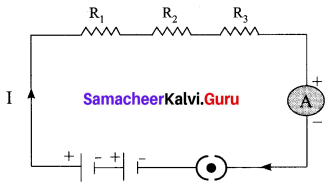
Resistors in series: When two or more resistors are connected end to end, they are said to be in series. The resistors could be simple resistors or bulbs or heating elements or other devices. Fig. (a) shows three resistors R1, R2 and R3 connected in series.
Tamil Nadu 12th Physics Model Question Paper 3 English Medium - 13
Tamil Nadu 12th Physics Model Question Paper 3 English Medium - 14
The amount of charge passing through resistor R1 must also pass through resistors R2 and R3 since the charges cannot accumulate anywhere in the circuit. Due to this reason, the current I passing through all the three resistors is the same. According to Ohm’s law, if same current pass through different resistors of different values, then the potential difference across each resistor must be different. Let V1, V2 and V3 be the potential difference (voltage) across each of the resistors R1, R2 and R3 respectively, then we can write V1 = IR1 V2 = IR2 and V3 = IR3. But the total voltage V is equal to the sum of voltages across each resistor.
V = V1 + V2 + V3
= IR1 + IR2 + IR3 ….. (1)
V = I(R1 + R2 + R3)
V = I.Rs ….. (2)
where Rs is the equivalent resistance,
Rs = R1 + R2 + R3 ….. (3)
When several resistances are connected in series, the total or equivalent resistance is the sum of the individual resistances as shown in fig. (b).
Note: The value of equivalent resistance in series connection will be greater than each individual resistance.

Tamil Nadu 12th Physics Model Question Paper 3 English Medium

Question 35.
(a) Deduce the relation for the magnetic induction at a point due to an infinitely long straight conductor carrying current.
Answer:
Magnetic field due to long straight conductor carrying current: Consider a long straight wire NM with current I flowing from N to M. Let P be the point at a distance a from point O. Consider an element of length dl of the wire at a distance l from point O and \(\vec{r}\) be the vector joining the element dl with the point P. Let θ be the angle between dl and \(\vec{r}\) Then, the magnetic field at P due to the element is
\(d \overrightarrow{\mathrm{B}}=\frac{\mu_{0} \mathrm{Id} \vec{l}}{4 \pi r^{2}} \sin \theta\) (unit vector perpendicular to \(d \vec{l}\) and \(\vec{r}\) )-(1)
The direction of the field is perpendicular to the plane of the paper and going into it. This can be determined by taking the cross product between two vectors \(d \vec{l}\) and \(\vec{r}\) (let it be n̂). The net magnetic field can be determined by integrating equation with proper limits.
\(\vec{B}\) = ∫d\(\vec{B}\)
From the figure, in a right angle triangle PAO,
Tamil Nadu 12th Physics Model Question Paper 3 English Medium - 15
tan (π – θ) = \(\frac{a}{l}\)
l = \(-\frac{a}{\tan \theta}\) (since tan (π – θ) = – tan θ) ⇒ \(\frac{1}{\tan \theta}\) = cot θ
l = -a cot θ and r = a cosecθ

Differentiating,
dl = a cosec2θ dθ
Tamil Nadu 12th Physics Model Question Paper 3 English Medium - 16
This is the magnetic field at a point P due to the current in small elemental length. Note that we have expressed the magnetic field OP in terms of angular coordinate i.e. θ. Therefore, the net magnetic field at the point P which can be obtained by integrating \(d \vec{B}\) by varying the angle from θ = φ1 to θ = φ2 is
Tamil Nadu 12th Physics Model Question Paper 3 English Medium - 17
For a an infinitely long straight wire, l = 0 and 2 = , the magnetic field is
\(\overrightarrow{\mathrm{B}}=\frac{\mu_{0} I}{2 \pi a} \hat{n}\) …… (3)
Note that here n̂ represents the unit vector from the point O to P.

[OR]

Question 35.
(b) Show that the mutual inductance between a pair of coils is same (M12 = M21).
Answer:
Mutual induction: When an electric current passing through a coil changes with time, an emf is induced in the neighbouring coil. This phenomenon is known as mutual induction and the emf is called mutually induced emf.
Tamil Nadu 12th Physics Model Question Paper 3 English Medium - 18
Consider two coils which are placed close to each other. If an electric current q is sent through coil i1 the magnetic field produced by it is also linked with coil 2.
Let Φ21 be the magnetic flux linked with each turn of the coil 2 of N2 turns due to coil 1, then the total flux linked with coil 2 (N2Φ21) is proportional to the current i1 in the coil 1.
N2Φ21 ∝ i1
N2Φ21 = M21i1 or M21 = \(\frac{N_{2} \Phi_{21}}{i_{1}}\)
The constant of proportionality M21 is the mutual inductance of the coil 2 with respect to coil 1. It is also called as coefficient of mutual induction. If i1 = 1 A, then M21 = N2Φ21.
Therefore, the mutual inductance M21 is defined as the flux linkage of the coil 2 when 1A current flows through coil 1.
When the current i1 changes with time, an emf ξ2 is induced in coil 2. From Faraday’s law of electromagnetic induction, this mutually induced emf ξ21 is given by

Tamil Nadu 12th Physics Model Question Paper 3 English Medium - 19

The negative sign in the above equation shows that the mutually induced emf always opposes the change in current with respect to time. If \(\frac{d i_{1}}{d t}\) = 1 As-1, then M21 = -ξ2.
Mutual inductance M21 is also defined as the opposing emf induced in the coil 2 when the rate of change of current through the coil I is l As-1.
Similarly, if an electric current i2 through coil 2 changes with time, then emf ξ1 is induced in coil 1. Therefore, N
Tamil Nadu 12th Physics Model Question Paper 3 English Medium - 20
where M12 is the mutual inductance of the coil I with respect to coil 2. It can be shown that for a given pair of coils, the mutual inductance is same. i.e., M21 = M12 = M.
In general, the mutual induction between two coils depends on size, shape, the number of turns of the coils, their relative orientation and permeability of the medium.

Tamil Nadu 12th Physics Model Question Paper 3 English Medium

Question 36.
(a) Derive the equation for refraction at single spherical surface. Equation for refraction at single spherical surface:
Answer:
Let us consider two transparent media having refractive indices n1 and n2 are separated by a spherical surface. Let C be the centre of curvature of the spherical surface. Let a point object O be in the medium n1. The line OC cuts the spherical surface at the pole P of the surface. As the rays considered are paraxial rays, the perpendicular dropped for the point of incidence to the principal axis is very close to the pole or passes through the pole itself.
Tamil Nadu 12th Physics Model Question Paper 3 English Medium - 21
Light from O falls on the refracting surface at N. The normal drawn at the point of incidence passes through the centre of curvature C. As n2 > n1, light in the denser medium deviates towards the normal and meets the principal axis at I where the image is formed. Snell’s law in product form for the refraction at the point N could be written as,
n1 sin i = n2 sin r …… (1)
As the angles are small, sin of the angle could be approximated to the angle itself.
n1i = n2r ……… (2)
Let the angles
∠NOP = α ∠NCP = β ∠NIP = γ
tan α = \(\frac{P N}{P O}\) tan β = \(\frac{P N}{P C}\) tan γ = \(\frac{P N}{P I}\)
As these angles are small, tan of the angle could be approximated to the angle itself.
α = \(\frac{P N}{P O}\) ; β = \(\frac{P N}{P C}\) ; γ = \(\frac{P N}{P I}\) …… (3)
For the triangle, ∆ONC,
i = α + β ….. (4)
For the triangle, ∆INC,
β = r + γ (or) r = β – γ …… (5)
Substituting for i and r from equations (4) and (5) in the equation (2).
n1 (α + β) = n2 (β – γ)
Rearranging,
n1α + n2γ = (n2 – n1
Substituting for α, β and γ from equation (3)
\(n_{1}\left(\frac{\mathrm{PN}}{\mathrm{PO}}\right)+n_{2}\left(\frac{\mathrm{PN}}{\mathrm{PI}}\right)=\left(n_{2}-n_{1}\right)\left(\frac{\mathrm{PN}}{\mathrm{PC}}\right)\)
Further simplifying by cancelling method
\(\frac{n_{1}}{\mathrm{PO}}+\frac{n_{2}}{\mathrm{PI}}=\frac{n_{2}-n_{1}}{\mathrm{PC}}\) ….. (6)
Following sign conventions, PO = -υ , PI = +ν and PC = +R in equation (6),
\(\frac{n_{1}}{-u}+\frac{n_{2}}{v}=\frac{\left(n_{2}-n_{1}\right)}{\mathrm{R}}\)
After rearranging, finally we get,
\(\frac{n_{2}}{v}-\frac{n_{1}}{u}=\frac{\left(n_{2}-n_{1}\right)}{\mathrm{R}}\) ……… (7)
Equation (7) gives the relation among the object distance υ, image distance ν , refractive indices of the two media (nl and n2) and the radius of curvature R of the spherical surface. It holds for any spherical surface.
If the first medium is air then, n1 = 1 and the second medium is taken just as n2 = n, then the equation is reduced to,
\(\frac{n}{v}-\frac{1}{u}=\frac{(n-1)}{\mathrm{R}}\) ……… (8)

Tamil Nadu 12th Physics Model Question Paper 3 English Medium

[OR]

Question 36.
(b) What do you mean by electron emission? Explain briefly various methods of electron emission.
Answer:
Electron emission:

  • Free electrons possess some kinetic energy and this energy is different for different electrons. The kinetic energy of the free electrons is not sufficient to overcome the surface barrier.
  • Whenever an additional energy is given to the free electrons, they will have sufficient energy to cross the surface barrier. And they escape from the metallic surface.
  • The liberation of electrons from any surface of a substance is called electron emission. There are mainly four types of electron emission which are given below.

(i) Thermionic emission:
When a metal is heated to a high temperature, the free electrons on the surface of the metal get sufficient energy in the form of thermal energy so that they are emitted from the metallic surface. This type of emission is known as thermionic emission.
Tamil Nadu 12th Physics Model Question Paper 3 English Medium - 22
The intensity of the thermionic emission (the number of electrons emitted) depends on the metal used and its temperature.
Tamil Nadu 12th Physics Model Question Paper 3 English Medium - 23
Examples: cathode ray tubes, electron microscopes, X-ray tubes etc.

(ii) Field emission:
Electric field emission occurs when a very strong electric field is applied across the metal. This strong field pulls the free electrons and helps them to overcome the surface barrier of the metal.
Tamil Nadu 12th Physics Model Question Paper 3 English Medium - 24
Field emission
Examples: Field emission scanning electron microscopes, Field-emission display etc.

(iii) Photo electric emission:
When an electromagnetic radiation of suitable frequency is incident on the surface of the metal, the energy is transferred from the radiation to the.free electrons. Hence, the free electrons get sufficient energy to cross the surface barrier and the photo electric emission takes place. The number of electrons emitted depends on the intensity of the incident radiation.
Tamil Nadu 12th Physics Model Question Paper 3 English Medium - 25
Examples: Photo diodes, photo electric cells etc.

(iv) Secondary emission:
When a beam of fast moving electrons strikes the surface of the metal, the kinetic energy of the striking electrons is transferred to the free electrons on the metal surface. Thus the free electrons get sufficient kinetic energy so that the secondary emission of electron occurs.
Tamil Nadu 12th Physics Model Question Paper 3 English Medium - 26
Examples: Image intensifires, photo multiplier tubes etc.

Question 37.
(a) Discuss the spectral series of hydrogen atom.
Answer:
The spectral lines of hydrogen are grouped in separate series. In each series, the distance of separation between the consecutive wavelengths decreases from higher wavelength to the lower wavelength, and also wavelength in each series approach a limiting value known as the series limit. These series are named as Lyman series. Balmer series, Paschen series, Brackett series, Pfund series, etc. The wavelengths of these spectral lines perfectly agree with the equation derived from Bohr atom model.
\(\frac{1}{\lambda}=\mathrm{R}\left(\frac{1}{n^{2}}-\frac{1}{m^{2}}\right)=\bar{v}\) …… (1)
where ν̂ is known as wave number which is inverse of wavelength, R is known as Rydberg constant whose value is 1.09737 × 10⁷ m-1 and m and n are positive integers such that m > n. The various spectral series are discussed below:

(a) Lyman series:
Put n = 1 and m = 2,3,4 in equation (I). The wave number or wavelength of spectral lines of Lyman series which lies in ultra-violet region is
\(\bar{v}=\frac{1}{\lambda}=\mathrm{R}\left(\frac{1}{1^{2}}-\frac{1}{m^{2}}\right)\)

(b) Balmer series:
Put n = 2 and m = 3,4,5 in equation (I). The wave number or wavelength of spectral lines of Balmer series which lies in visible region is
\(\bar{v}=\frac{1}{\lambda}=\mathrm{R}\left(\frac{1}{2^{2}}-\frac{1}{m^{2}}\right)\)

(c) Paschen series:
Put n = 3 and m = 4,5,6 in equation (I). The wave number or wavelength of spectral lines of Paschen series which lies in infra-red region (near IR) is
\(\bar{v}=\frac{1}{\lambda}=\mathrm{R}\left(\frac{1}{3^{2}}-\frac{1}{m^{2}}\right)\)

(d) Brackett series:
Put n = 4 and m = 5,6,7 in equation (I). The wave number or wavelength of spectral lines of Brackett series which lies in infra-red region (middle IR) is
\(\bar{v}=\frac{1}{\lambda}=\mathrm{R}\left(\frac{1}{4^{2}}-\frac{1}{m^{2}}\right)\)

(e) Pfund series:
Put n = 5 and m = 6,7,8 in equation (I). The wave number or wavelength of spectral lines of Pfund series which lies in infra-red region (far IR) is
\(\bar{v}=\frac{1}{\lambda}=\mathrm{R}\left(\frac{1}{5^{2}}-\frac{1}{m^{2}}\right)\)

Tamil Nadu 12th Physics Model Question Paper 3 English Medium

[OR]

Question 37.
(b) State and prove De Morgan’s First and Second theorems.
Answer:
De Morgan’s First Theorem:
The first theorem states that the complement of the sum of two logical inputs is equal to the product of its complements.

Proof:
The Boolean equation for NOR gate is Y = \(\overline{\mathrm{A}+\mathrm{B}}\) . The Boolean equation for a bubbled AND gate is Y = \(\overline{\mathrm{A}} \cdot \overline{\mathrm{B}}\) Both cases generate same outputs for same inputs. It can be verified using the following truth table.
Tamil Nadu 12th Physics Model Question Paper 3 English Medium - 27
From the above truth table, we can conclude \(\overline{\mathrm{A}+\mathrm{B}}=\overline{\mathrm{A}} \cdot \overline{\mathrm{B}}\). Thus De Morgan’s First Theorem is proved. It also says that a NOR gate is equal to a bubbled AND gate. The corresponding logic circuit diagram is shown in figure.
Tamil Nadu 12th Physics Model Question Paper 3 English Medium - 28

De Morgan’s Second Theorem:
The second theorem states that the complement of the product of two inputs is equal to the sum of its complements.

Proof
The Boolean equation for NAND gate is Y = \(\overline{\mathrm{AB}}\)
The Boolean equation for bubbled OR gate is Y = \(\overline{\mathrm{A}}+\overline{\mathrm{B}}\) . A and B are the inputs and Y is the output. The above two equations produces the same output for the same inputs. It can be verified by using the truth table.
Tamil Nadu 12th Physics Model Question Paper 3 English Medium - 29
From the above truth table we can conclude \(\overline{\mathrm{A} . \mathrm{B}}=\overline{\mathrm{A}}+\overline{\mathrm{B}}\). Thus De Morgan’s Second Theorem is proved. It also says, a NAND gate is equal to a bubbled OR gate. The corresponding logic circuit diagram is shown in figure.
Tamil Nadu 12th Physics Model Question Paper 3 English Medium - 30

Tamil Nadu 12th Physics Model Question Paper 3 English Medium

Question 38.
(a) What is modulation? Explain the types of modulation with necessary diagrams.
Answer:
Modulation: For long distance transmission, the low frequency baseband signal (input signal) is superimposed onto a high frequency radio signal by a process called modulation.
There are 3 types of modulation based on which parameter is modified. They are
(i) Amplitude modulation,
(ii) Frequency modulation, and
(iii) Phase modulation.

(i) Amplitude Modulation (AM):
If the amplitude of the carrier signal is modified according to the instantaneous amplitude of the baseband signal, then it is called amplitude modulation. Here the frequency and the phase of the carrier signal remain constant. Amplitude modulation is used in radio and TV broadcasting.

The signal shown in figure (a) is the message signal or baseband signal that carries information, figure (b) shows the high frequency carrier signal and figure (c) gives the amplitude modulated signal. We can see clearly that the carrier wave is modified in proportion to the amplitude of the baseband signal.
Amplitude Modulation
Tamil Nadu 12th Physics Model Question Paper 3 English Medium - 31

(ii) Frequency Modulation (FM):
The frequency of the camer signal is modified according to the instantaneous amplitude of the baseband signal in frequency modulation. Here the amplitude and the phase of the carrier signal remain constant. Increase in the amplitude of the baseband signal increases the frequency of the carrier signal and vice versa. This leads to compressions and rarefactions in the frequency spectrum of the modulated wave. Louder signal leads to compressions and relatively weaker signals to rarefactions. When the amplitude of the baseband signal is zero in Figure (a), the frequency of the modulated signal is the same as the carrier signal. The frequency of the modulated wave increases when the amplitude of the baseband signal increases in the positive direction
(A, C). The increase in amplitude in the negative half cycle (B,D) reduces the frequency of the modulated wave (figure (c)).
Tamil Nadu 12th Physics Model Question Paper 3 English Medium - 32

(iii) Phase Modulation (PM):
The instantaneous amplitude of the baseband signal modifies the phase of the camer signal keeping the amplitude and frequency constant is called phase modulation. This modulation is used to generate frequency modulated signals. It is similar to frequency modulation except that the phase of the carrier is varied instead of varying frequency. The carrier phase changes according to increase or decrease in the amplitude of the baseband signal. When the modulating signal goes positive, the amount of phase
lead increases with the amplitude of the modulating signal. Due to this, the carrier signal is compressed or its frequency is increased.

On the other hand, the negative half cycle of the baseband signal produces a phase lag in the carrier signal. This appears to have stretched the frequency of the carrier wave. Hence similar to frequency modulated wave, phase modulated wave also comprises of
compressions and rarefactions. When the signal voltage is zero (A, C and E) the carrier frequency is unchanged.
Tamil Nadu 12th Physics Model Question Paper 3 English Medium - 33

[OR]

Tamil Nadu 12th Physics Model Question Paper 3 English Medium

Question 38.
(b) Elaborate any two types of Robots with relevant examples.
Answer:
(i) Human Robot:
Certain robots are made to resemble humans in appearance and replicate the human activities like walking, lifting, and sensing, etc.

  • Power conversion unit: Robots are powered by batteries, solar power, and hydraulics.
  • Actuators: Converts energy into movement. The majority of the actuators produce rotational or linear motion.
  • Electric motors: They are used to actuate the parts of the robots like wheels, arms, fingers, legs, sensors, camera, weapon systems etc. Different types of electric motors are used. The most often used ones are AC motor, Brushed DC motor, Brushless DC motor, Geared DC motor, etc.
  • Pneumatic Air Muscles: They are devices that can contract and expand when air is pumped inside. It can replicate the function of a human muscle. They contract almost 40% when the air is sucked inside them.
  • Muscle wires: They are thin strands of wire made of shape memory alloys. They can contract by 5% when electric current is passed through them.
  • Piezo Motors and Ultrasonic Motors: Basically, we use it for industrial robots.
  • Sensors: Generally used in task environments as it provides information of real-time knowledge.
  • Robot locomotion: Provides the types of movements to a robot. The different types are (a) Legged (b) Wheeled (c) Combination of Legged and Wheeled Locomotion (d) Tracked slip/skid

(ii) Industrial Robots:
Six main types of industrial robots:

  1. Cartesian
  2. SCARA (Selective Compliance Assembly Robot Arm)
  3. Cylindrical
  4. Delta
  5. Polar
  6. Vertically articulated

Six-axis robots are ideal for:

  • Arc Welding
  • Spot Welding
  • Material Handling
  • Machine Tending
  • Other Applications

Tamil Nadu 12th Biology Model Question Paper 3 English Medium

Students can Download Tamil Nadu 12th Biology Model Question Paper 3 English Medium Pdf, Tamil Nadu 12th Biology Model Question Papers helps you to revise the complete Tamilnadu State Board New Syllabus and score more marks in your examinations.

TN State Board 12th Biology Model Question Paper 3 English Medium

General Instructions:

  1. The question paper comprises of four parts. Questions for Botany and Zoology are asked separately.
  2. You are to attempt all the parts. An internal choice of questions is provided wherever applicable.
  3. All questions of Part I, II, III and IV are to be attempted separately.
  4. Question numbers 1 to 8 in Part I are Multiple Choice Questions of one mark each. These are to be answered by choosing the most suitable answer from the given four alternatives and writing the option code and the corresponding answer.
  5. Question numbers 9 to 14 in Part II are two-marks questions. These are to be answered in about one or two sentences.
  6. Question numbers 15 to 19 in Part III are three-marks questions. These are to be answered in about three to five short sentences.
  7. Question numbers 20 and 21 in Part IV are five-marks questions. These are to be answered in detail. Draw diagrams wherever necessary.

Time: 2.30 Hours
Maximum Marks: 70

Bio-Botany [Maximum Marks: 35]

Part – I

Choose the correct answer. [8 × 1 = 8]

Question 1.
Match the following:
Tamil Nadu 12th Biology Model Question Paper 3 English Medium img 1
(a) A – (iv), B – (iii), C – (i), D – (ii)
(b) A – (ii), B – (iv), C – (i), D – (iii)
(c) A – (iii), B – (iv), C – (ii), D – (i)
(d) A – (iii), B – (i), C – (iv), D – (i)
Answer:
(b) A – (ii), B – (iv), C – (i), D – (iii)

Question 2.
Changing the codon AGC to AGA represents ___________.
(a) Mis-sense mutation
(b) Non-sense mutation
(c) Frame-shift mutation
(d) Deletion mutation
Answer:
(a) Mis-sense mutation

Tamil Nadu 12th Biology Model Question Paper 3 English Medium

Question 3.
Restriction enzymes are ______.
(a) Not always required in genetic engineering
(b) Essential tools in genetic engineering ‘
(c) Nucleases that cleave DNA at specific sites
(d) Both b and c
Answer:
(d) Both b and c

Question 4.
Totipotency refers to _________.
(а) capacity to generate genetically identical plants
(b) capacity to generate a whole plant from any plant cell/explant
(c) capacity to generate hybrid protoplasts
(d) recovery to healthy plants from diseased plants
Answer:
(b) capacity to generate a whole plant from any plant cell/explant

Question 5.
In soil water available for plants is ________.
(a) gravitational water
(b) Chemically bound water
(c) Capillary water
(d) hygroscopic water
Answer:
(c) Capillary water

Question 6.
Which one is in descending order of a food chain?
(a) Producers → Secondary consumers → Primary consumers → Tertiary consumers
(b) Tertiary consumers → Primary consumers → Secondary consumers → Producers
(c) Tertiary consumers → Secondary consumers → Primary consumers → Producers
(d) Tertiary consumers → Producers → Primary consumers → Secondary consumers
Answer:
(c) Tertiary consumers → Secondary consumers → Primary consumers → Producers

Question 7.
Clean Development Mechanism (CDM) is defined is _______.
(a) Copenhagen Acord
(b) Montreal protocol
(c) Paris Agreement
(d) Kyoto protocol
Answer:
(d) Kyoto protocol

Tamil Nadu 12th Biology Model Question Paper 3 English Medium

Question 8.
Pick out the odd pair.
(a) Man selection – Morphological characters
(b) Pureline selection – Repeated self pollinartion
(c) Clonal selection – Sexually propagated
(d) Natural selection – Involves nature
Answer:
(a) Man selection – Morphological characters

Part – II

Answer any four of the following questions. [4 × 2 = 8]

Question 9.
Write a short note on pollen kitt.
Answer:
Pollenkitt is contributed by the tapetum and coloured yellow or orange and is chiefly made of carotenoids or flavonoids. It is an oily layer forming a thick viscous coating over pollen surface. It attracts insects and protects damage from UV radiation.

Question 10.
What is back cross?
Answer:
Back cross is a cross of F1 hybrid with any one of the parental genotypes. The back cross is of two types; they are dominant back cross and recessive back cross. It involves the cross between the F1 off spring with either of the two parents.

Tamil Nadu 12th Biology Model Question Paper 3 English Medium

Question 11.
Productivity of profundal zone will be low. why?
Answer:
The producers of the pond ecosystem depends on phytoplankton through photosynthesis. Profundal zone lies below the limnetic zone with no effective light penetration, hence productivity rate is very low.

Question 12.
Explants for tissue culturing has to be surface sterilized. How?
Answer:
The explants are surface sterilized by first exposing the material is running tap water and then treating it in surface sterilizing agents like 0.1 % Mercuric chloride, 70% ethanol under aseptic condition inside the laminar air flow chamber.

Question 13.
Define heterosis, through which way does this condition can be maintained for generation.
Answer:
The superiority of F1 hybrid in performance over its parents is called heterosis or hybrid vigour. Vigour refers to increase in growth, yield, adaptability resistance to disease, pest, etc., Vegetative propogation is the best suited method to maintain hybrid vigour.

Question 14.
Discuss which wood is better for making furniture.
Answer:
Teak wood is the ideal type of wood for making household furnitures because, it is highly durable and shows great resistance against the attack of termites and fungi. Moreover it does not split or crack and is a carpenter friendly wood.

Part – III

Answer any three questions in which question number 19 is compulsory. [3 × 3 = 9]

Question 15.
Give the names of the scientists who rediscovered mendel’s work.
Answer:

  • Hugo de Vries of Holland
  • Carl Correns of Germany
  • Erich von Tschermark of Austria.

Tamil Nadu 12th Biology Model Question Paper 3 English Medium

Question 16.
Write the advantages and disadvantages of Bt cotton.
Answer:
The advantages of Bt cotton are:

  • Yield of cotton is increased due to effective control of bollworms.
  • Reduction in insecticide use in the cultivation of Bt cotton
  • Potential reduction in the cost of cultivation.

Bt cotton has some limitations:

  • Cost of Bt cotton seed is high.
  • Effectiveness upto 120 days after that efficiency is reduced.
  • Ineffective against sucking pests like jassids, aphids and whitefly.
  • Affects pollinating insects and thus yield.

Question 17.
How cryopreservation works?
Answer:
Cryopreservation, also known as Cryo-conservation, is a process by which protoplasts, cells, tissues, organelles, organs, extracellular matrix, enzymes or any other biological materials are subjected to preservation by cooling to very low temperature of -196°C using liquid nitrogen. At this extreme low temperature any enzymatic or chemical activity of the biological material will be totally stopped and this leads to preservation of material in dormant status. Later these materials can be activated by bringing to room temperature slowly for any experimental work.

Question 18.
What is Co-evolution? Give examples.
Answer:
The interaction between organisms, when continues for generations, involves reciprocal changes in genetic and morphological characters of both organisms. This type of evolution is called Co-evolution. It is a kind of co-adaptation and mutual change among interactive species.

Examples:

  • Corolla length and proboscis length of butterflies and moths (Habenaria and Moth).
  • Bird’s beak shape and flower shape and size.

Tamil Nadu 12th Biology Model Question Paper 3 English Medium

Question 19.
Write a short note on Chipko Movement.
Answer:
Chipko Movement:
The tribal women of Himalayas protested against the exploitation of forests in 1972. Later on it transformed into Chipko Movement by Sundarlal Bahuguna in Mandal village of Chamoli district in 1974. People protested by hugging trees together which were felled by a sports goods company. Main features of Chipko movement were,

  • This movement remained non political
  • It was a voluntary movement based on Gandhian thought.
  • It was concerned with the ecological balance of nature
  • Main aim of Chipko movement was to give a slogan of five F’s – Food, Fodder, Fuel, Fibre and Fertilizer, to make the communities self sufficient in all their basic needs.

Part – IV

Answer all the questions. [2 × 5 = 10]

Question 20.
(a) Name the tissue that nourishes the embryo in angiospermic seeds. Explain its types.
Answer:
Structure of ovuIe (Megasporangium)
Endosperm: The primary endosperm nucleus (PEN) divides immediately after fertilization but before the zygote starts to divide, into an endosperm. The primary endosperm nucleus is the result of triple fusion (two polar nuclei and one sperm nucleus) and thus has 3n number of chromosomes. It is a nutritive tissue and regulatory structure that nourishes the developing embryo. Depending upon the mode of development three types of endosperm are recognized in angiosperms. They are nuclear endosperm, cellular endosperm and helobial endosperm.

Nuclear endosperm: Primary Endosperm Nucleus undergoes several mitotic divisions without cell wall formation thus a free nuclear condition exists in the endosperm.
Examples: Coccinia, Capsella and Arachis.
Tamil Nadu 12th Biology Model Question Paper 3 English Medium img 2
Cellular endosperm:
Primary endosperm nucleus divides into 2 nuclei and it is immediately followed by wall formation. Subsequent divisions also follow cell wall formation.
Examples: Adoxa, Helianthus and Scoparia.

Helobial endosperm: Primary Endosperm Nucleus moves towards base of embryo sac and divides into two nuclei. Cell wall formation takes place leading to the formation of a large micropylar and small chalazal chamber. The nucleus of the micropylar chamber undergoes several free nuclear division whereas that of chalazal chamber may or may not divide. Examples : Hydrilla and Vallisneria.

Ruminate endosperm: The endosperm with irregularity and unevenness in its surface forms ruminate endosperm. Examples : Areca catechu, Passiflora and Myristica.

[OR]

(b) Describe the basic steps involved in recombinant DNA technology.
Answer:

  • Isolation of a DNA fragment containing a gene of interest that needs to be cloned. This is called an insert.
  • Generation of recombinant DNA (rDNA) molecule by insertion of the DNA fragment into a carrier molecule called a vector that can self-replicate within the host cell.
  • Selection of the transformed host cells that is carrying the rDNA and allowing them to multiply thereby multiplying the rDNA molecule.
  • The entire process thus generates either a large amount of rDNA or a large amount of protein expressed by the insert.
  • Wherever vectors are not involved the desired gene is multiplied by PCR technique. The multiple copies are injected into the host cell protoplast or it is shot into the host cell protoplast by shot gun method.
    Tamil Nadu 12th Biology Model Question Paper 3 English Medium img 3

Tamil Nadu 12th Biology Model Question Paper 3 English Medium

Question 21.
(a) Derive the protocol for micro propagation of banana.
Answer:
Tamil Nadu 12th Biology Model Question Paper 3 English Medium img 4
Tamil Nadu 12th Biology Model Question Paper 3 English Medium img 7

[OR]

(b) Expand NBT and Explain how it is involved in developing new traits in plant breeding.
Answer:
New Breeding Techniques (NBT) are a collection of methods that could increase and accelerate the development of new traits in plant breeding. These techniques often involve genome editing, to modify DNA at specific locations within the plants to produce new traits in crop plants. The various methods of achieving these changes in traits include the following,

  • Cutting and modifying the genome during the repair process by tools like CRISPR /Cas.
  • Genome editing to introduce changes in few base pairs using a technique called Oligonucleotide-directed mutagenesis (ODM).
  • Transferring a gene from an identical or closely related species (cisgenesis).
  • Organising processes that alter gene activity without altering the DNA itself (epigenetic methods).

Bio-Zoology [Maximum Marks: 35]

Part – I

Choose the correct answer. [8 × 1 = 8]

Question 1.
Assertion (A): Organisms show three phases in their life cycle.
Reason (R): Juvenile phase is a degenerative phase.
(a) A is correct. R is incorrect
(b) Both A and R are incorrect
(c) R is the correct explantation for A
(d) A is not correct but R is correct.
Answer:
(a) A is correct. R is incorrect

Tamil Nadu 12th Biology Model Question Paper 3 English Medium

Question 2.
Find the wrongly matched pair
(a) Bleeding phase – fall in oestrogen and progesterone
(b) Follicular phase – rise in oestrogen
(c) Luteal phase – rise in FSH level
(d) Ovulatory phase – LH surge
Answer:
(c) Luteal phase – rise in FSH level

Question 3.
Identify the correct statements from the following.
(a) chlamydiasis is a viral disease
(b) Gonorrhoea is caused by a spirochaete bacterium, Treponema palladium
(c) The incubation period for syphilis is 2 to 14 days is males and 7 to 21 days in males.
(d) Both syphilis and gonorrhoea are easily cured with antibiotics.
Answer:
(d) Both syphilis and gonorrhoea are easily cured with antibiotics.

Question 4.
Klinefelter’s syndrome is characterized by a karyotype of _______.
(a) XYY
(b) XO
(C) XXX
(d) XXY
Answer:
(d) XXY

Question 5.
The golden age of repetails was _______.
(a) Mesozoic era
(b) Cenozoic era
(c) Paleozoic era
(d) Proterozoic era
Answer:
(a) Mesozoic era

Question 6.
Match list I with list II
Tamil Nadu 12th Biology Model Question Paper 3 English Medium img 5
(a) A – 2, B – 4, C – 3, D – 1
(b) A – 4, B – 3, C – 2, D – 1
(c) A – 2, B – 3, C – 4, D – 1
(d) A – 3, B – 1, C – 4, D – 2
Answer:
(b) A – 4, B – 3, C – 2, D – 1

Tamil Nadu 12th Biology Model Question Paper 3 English Medium

Question 7.
The relation ship between sucker fish and shark is ________.
(a) Competition
(b) Commensalism
(c) Predation
(d) Parasitism
Answer:
(b) Commensalism

Question 8.
Who is called as the forest man of India?
(a) Sunderlal Bahuguna
(b) M.S. Swamination
(c) Dr. V. Kurier
(d) Jadav Payeng
Answer:
(d) Jadav Payeng

Part – II

Answer any four of the following questions. [4 × 2 = 8]

Question 9.
Mention the importance of the position of the testes in humans.
Answer:
The testes are positioned in such a way hanging out from the body in scrotal sac that provides optimal temperature 2°C to 3°C lower than internal body temperature for effective sperm production.

Tamil Nadu 12th Biology Model Question Paper 3 English Medium

Question 10.
Type A blood should not be injected to a person having B-blood group. Why?
Answer:
When two different incompatible blood types are mixed, agglutination (clumping together) of erythrocytes (RBC) occurs. The basis of these chemical differences is due to the presence of antigens (surface antigens) on the membrane of RBC and epithelial cells.

Question 11.
Name the anticodons required to recognize the following codons. AAU, CGA, UAU, GCA.
Answer:
UUA, GCU, AUA and CGU.

Question 12.
What is diapedesis?
Tissue damage and infection induce leakage of vascular fluid, containing chemotactic signals like serotonin, histamine and prostaglandins. They influx the phagocytic cells into the affected area. This phenomenon is called diapedesis.

Question 13.
How was Insulin obtained before the advent of rDNA technology? What were the problems encountered?
Answer:
Conventionally, Insulin was isolated and refined from the pancreas of pigs and cows to treat diabetic patients. Though it is effective, due to minor structural changes, the animal insulin caused allergic reactions in few patients.

Question 14.
How many hotspots are there is India? Name them.
Answer:
India encloses 4 biodiversity hotspots. They are

  1. Himalayan
  2. Indo-Burma
  3. Western ghats
  4. Sundalands

Part – III

Answer any three questions in which question number 19 is compulsory. [3 × 3 = 9]

Question 15.
Define surrogacy.
Answer:
Surrogacy is a method of assisted reproduction or agreement whereby a woman agrees to carry a pregnancy for another person, who will become the newborn child’s parent after birth. Through In Vitro Fertilization (IVF), embryos are created in a lab and are transferred into the surrogate mother’s uterus.

Tamil Nadu 12th Biology Model Question Paper 3 English Medium

Question 16.
Differentiate between divergent evolution and convergent evolution with one example for each.
Answer:

Divergent EvolutionConvergent Evolution
Divergent evolution is a result of homology.
eg: The wings of bird and the forelimbs of human both are homologous structures modified according to functions. In birds, it is used for flight and in humans used for writing and other purposes.
Convergent evolution is a result of analogy.
eg: Root modification in sweet potato, and stem modification in potato are analogous structures both performing same function i.e., storage.

Question 17.
Under which conditions does a bacterium develops resistance against antibiotics?
Answer:
Antibiotic resistance occurs when bacteria develop the ability to defeat the drug designed to kill or inhibit their growth. It is one of the most acute threat to public health. Antibiotic resistance is accelerated by the misuse and over use of antibiotics, as well as poor infection prevention control.

Antibiotics should be used only when prescribed by a certified health professional. When the bacteria become resistant, antibiotics cannot fight against them and the bacteria multiply. Narrow spectrum antibiotics are preferred over broad spectrum antibiotics. They effectively and accurately target specific pathogenic organisms and are less likely to cause resistance.

Question 18.
Expand (i) CFC (ii)AQI (w) PAN
Answer:
(i) CFC – Chloro fluro carbon
(ii) AQI – Air Quality Index
(iii) PAN – Peroxyacetyl nitrate .

Tamil Nadu 12th Biology Model Question Paper 3 English Medium

Question 19.
Mention the number of primers required in each cycle of PCR. Write the role of primers arid DNA polymerase in PCR. Name the source organism of DNA polymerase used in PCR.
Answer:

  • For each cycle of PCR two primers are required.
  • Primers are the small fragments of single stranded DNA or RNA which serves as template for initiating DNA polymerization.
  • DNA polymerase is an enzyme that synthesize DNA molecules by pairing the Deoxyribo Nucleotides leading to formation of new strands.
  • DNA polymerase used in PCR is Taq polymerase which is isolated from a thermophilic bacteria called Thermus aquatics. Taq polymerase will remain active ever at very high temperature (80°C) and hence used in PCR amplification technique.

Part – IV

Answer all the questions. [2 × 5 = 10]

Question 20.
(a) Menstruation – a cyclic event occurring in every normal woman throughout her fertile period. Name the various phases of the menstruation and explain it.
Answer:
Menstrual cycle: The menstrual or ovarian cycle occurs approximately once in every 28/29 days during the reproductive life of the female from menarche (puberty) to menopause except during pregnancy. The cycle of events starting from one menstrual period till the next one is called the menstrual cycle during which cyclic changes occurs in the endometrium every month. Cyclic menstruation is an indicator of normal reproductive phase.

Menstrual cycle comprises of the following phases:

  1. Menstrual phase
  2. Follicular or proliferative phase
  3. Ovulatory phase
  4. Luteal or secretory phase

1. Menstrual phase: The cycle starts with the menstrual phase when menstrual flow occurs and lasts for 3-5 days. Menstrual flow is due to the breakdown of endometrial lining of the uterus, and its blood vessels due to decline in the level of progesterone and oestrogen. Menstruation occurs only if the released ovum is not fertilized. Absence of menstruation may be an indicator of pregnancy. However it could also be due to stress, hormonal disorder and anaemia.

2. Follicular or proliferative phase: The follicular phase extends from the 5th day of the cycle until the time of ovulation. During this phase, the primary follicle in the ovary grows to become a fully mature Graafian follicle and simultaneously, the endometrium regenerates through proliferation. These changes in the ovary and the uterus are induced by the secretion of gonadotropins like FSH and LH, which increase gradually during the follicular phase. It stimulates follicular development and secretion of oestrogen by the follicle cells.

3. Ovulatory phase: Both LH and FSH attain peak level in the middle of the cycle (about the 14th day). Maximum secretion of LH during the mid cycle called LH surge induces the rupture of the Graafian follicle and the release of the ovum (secondary oocyte) from the ovary wall into the peritoneal cavity. This process is called as ovulation.

4. Luteal or secretory phase: During luteal phase, the remaining part of the Graafian follicle is transformed into a transitory endocrine gland called corpus luteum. The corpus luteum secretes large amount of progesterone which is essential for the maintenance of the endometrium. If fertilization takes place, it paves way for the implantation of the fertilized ovum. The uterine wall secretes nutritious fluid in the uterus for the foetus. So, this phase is also called as secretory phase. During pregnancy all events of menstrual cycle stop and there is no menstruation.

In the absence of fertilization, the corpus luteum degenerates completely and leaves a scar tissue called corpus albicans. It also initiates the disintegration of the endometrium leading to menstruation, marking the next cycle.

[OR]

(b) Deoxy Ribo Nucleic Acid the life thread which acts as a genetic material for majority of living organism. Enlist the properties of DNA that makes it an ideal genetic material.
Answer:
(1) Self Replication: It should be able to replicate. According to the rule of base pairing and complementarity, both nucleic acids (DNA and RNA) have the ability to direct duplications. Proteins fail to fulfill this criteria.

(2) Stability: It should be stable structurally and chemically. The genetic material should be stable enough not to change with different stages of life cycle, age or with change in physiology of the organism. Stability as one of property of genetic material was clearly evident in Griffith’s transforming principle. Heat which killed the bacteria did not destroy some of the properties of genetic material. In DNA the two strands being complementary, if separated (denatured) by heating can come together (renaturation) when appropriate condition is provided.

Further 2’ OH group present at every nucleotide in RNA is a reactive group that makes RNA liable and easily degradable. RNA is also known to be catalytic and reactive. Hence, DNA is chemically more stable and chemically less reactive when compared to RNA. Presence of thymine instead of uracil in DNA confers additional stability to DNA.

(3) Information storage: It should be able to express itself in the form of ‘Mendelian characters’. RNA can directly code for protein synthesis and can easily express the characters. DNA, however depends on RNA for synthesis of proteins. Both DNA and RNA can act as a genetic material, but DNA being more stable stores the genetic information and RNA transfers the genetic information.

(4) Variation through mutation: It should be able to mutate. Both DNA and RNA are able to mutate. RNA being unstable, mutates at a faster rate. Thus viruses having RNA genome with shorter life span can mutate and evolve faster. The above discussion indicates that both RNA and DNA can function as a genetic material. DNA is more stable, and is preferred for storage of genetic information.

Tamil Nadu 12th Biology Model Question Paper 3 English Medium

Question 21.
(a) Explain the structure of Immunoglobulin molecule with a suitable diagram.
Answer:
An antibody molecule is Y shaped structure that comprises of four polypeptide chains, two identical light chains (L) of molecular weight 25,000 Da (approximately 214 amino acids) and two identical heavy chains (H) of molecular weight 50,000 Da (approximately 450 amino acids). The polypeptide chains are linked together by di-sulphide (S-S) bonds. One light chain is attached to each heavy chain and two heavy chains are attached to each other to form a Y shaped structure. Hence, an antibody is represented by H2 L2. The heavy chains have a flexible hinge region at their approximate middles.
Tamil Nadu 12th Biology Model Question Paper 3 English Medium img 6
Each chain (L and H) has two terminals. They are C – terminal (Carboxyl) and amino or N-terminal. Each chain (L and H) has two regions. They have variable (V) region at one end and a much larger constant (C) region at the other end.

Antibodies responding to different antigens have very different (V) regions but their (C) regions are the same in all antibodies. In each arm of the monomer antibody, the (V) regions of the heavy and light chains combines to form an antigen – binding site shaped to ‘fit’ a specific antigenic determinant.

Consequently each antibody monomer has two such antigen – binding regions. The (C) regions that forms the stem of the antibody monomer determine the antibody class and serve common functions in all antibodies.

[OR]

(b) List out the uses of Transgenesis.
Answer:
(1) Transgenesis is a powerful tool to study gene expression and developmental processes in
higher organisms.

(2) Transgenesis helps in the improvement of genetic characters in animals. Transgenic animals serve as good models for understanding human diseases which help in the investigation of new treatments for diseases. Transgenic models exist for many human diseases such as cancer, Alzheimer’s, cystic fibrosis, rheumatoid arthritis and sickle cell anemia.

(3) Transgenic animals are used to produce proteins which are important for medical and pharmaceutical applications.

(4) Transgenic mice are used for testing the safety of vaccines.

(5) Transgenic animals are used for testing toxicity in animals that carry genes which make them sensitive to toxic substances than non-transgenic animals exposed to toxic substances and their effects are studied.

(6) Transgenesis is important for improving the quality and quantity of milk, meat, eggs and wool production in addition to testing drug resistance.

Tamil Nadu 12th Biology Model Question Paper 2 English Medium

Students can Download Tamil Nadu 12th Biology Model Question Paper 2 English Medium Pdf, Tamil Nadu 12th Biology Model Question Papers helps you to revise the complete Tamilnadu State Board New Syllabus and score more marks in your examinations.

TN State Board 12th Biology Model Question Paper 2 English Medium

General Instructions:

  1. The question paper comprises of four parts. Questions for Botany and Zoology are asked separately.
  2. You are to attempt all the parts. An internal choice of questions is provided wherever applicable.
  3. All questions of Part I, II, III and IV are to be attempted separately.
  4. Question numbers 1 to 8 in Part I are Multiple Choice Questions of one mark each. These are to be answered by choosing the most suitable answer from the given four alternatives and writing the option code and the corresponding answer.
  5. Question numbers 9 to 14 in Part II are two-marks questions. These are to be answered in about one or two sentences.
  6. Question numbers 15 to 19 in Part III are three-marks questions. These are to be answered in about three to five short sentences.
  7. Question numbers 20 and 21 in Part IV are five-marks questions. These are to be answered in detail. Draw diagrams wherever necessary.

Time: 2.30 Hours
Maximum Marks: 70

Bio-Botany [Maximum Marks: 35]

Part – I

Choose the correct answer. [8 × 1 = 8]

Question 1.
In majority of plants, pollen is liberated at _______.
(a) 1 celled stage
(b) 2 celled stage
(c) 3 celled stage
(d) 4 celled stage
Answer:
(b) 2 celled stage

Question 2.
Which one of the following is an example for polygenic inheritance?
(a) Flower color in Mirabilis jalapa
(b) Pod shape in garden pea
(c) Production of male honey bee
(d) Skin color in humans
Answer:
(d) Skin color in humans

Tamil Nadu 12th Biology Model Question Paper 2 English Medium

Question 3.
Assertion (A): Complete linkage is noticed in male species of Drosophila.
Reason (R): Completely linked genes show some crossing over.
(a) A is true, R is false
(b) Both A and R are false
(c) A is true, R is not correct explanation of A
(d) R explains A
Answer:
(a) A is true, R is false

Question 4.
Virus free germ plants are developed from _______.
(a) Organ culture
(b) Meristem culture
(c) Protoplast culture
(d) Cell suspension culture
Answer:
(b) Meristem culture

Question 5.
The unit of measuring ozone thickness is ______.
(a) Joule
(b) Kilos
(c) Dobson
(d) Watt
Answer:
(c) Dobson

Tamil Nadu 12th Biology Model Question Paper 2 English Medium

Question 6.
If 1200 Joules of solar energy is trapped by producers, how much of joules of energy does the organism in the third tropic level will receive?
(a) 120 joules
(b) 12 joules
(c) 1.2 joules
(d) 0.12 joules
Answer:
(c) 1.2 joules

Question 7.
Dwarfing gene of wheat is ______.
(a) Pal 1
(b) Atomita 1
(c) Norin 10
(d) Pelita 2
Answer:
(c) Norin 10

Question 8.
Which one of the following match is correct.
(a) Palmyra – Native of Brazil
(b) Saccharum – Abundant in Kanyakumari
(c) Steveocide – Natural sweetner
(d) Palmyra sap – fermented to give ethanol
Answer:
(c) Steveocide – Natural sweetner

Part – II

Answer any four of the following questions. [4 × 2 = 8]

Question 9.
Write the origin and area of cultivation of green gram and red gram.
Answer:

Origin

Cultivation

Green gram.Maharashtra (India).Madhya Pradesh, Karnataka and Tamil Nadu.
Red gram.South India.Maharashtra, Andhra Pradesh, Madhya Pradesh, Karnataka and Gujarat.

Tamil Nadu 12th Biology Model Question Paper 2 English Medium

Question 10.
State the law of independent assortment.
Answer:
When two pairs of traits are combined in a hybrid, segregation of one pair of characters is independent to the other pair of characters. Genes that are located in different chromosomes assort independently during meiosis.

Question 11.
Expand (i) PEG (ii) PHB
Answer:
(i) PEG – Poly Ethylene Glycol
(ii) PHB – Poly Hydroxy Butyrate

Question 12.
Based on the materials used, how will you classify the culture technology. Explain.
Answer:
Based on explants used culture technology are of following types:
Organ culture – Embryos, anthers, root and shoot part are used.
Meristem culture – Meristematic tissues are used.
Protoplast culture – Protoplasts are used.
Cell culture – Single cells or aggregate of cells from callus are used.

Question 13.
Give four examples of plants cultivated in commercial agroforestry.
Answer:
Casuarina, Eucalyptus, Teak, Malaivembu

Tamil Nadu 12th Biology Model Question Paper 2 English Medium

Question 14.
How does an orchid ophrys ensures its pollination by bees?
Ahnswer:
The plant, Ophrys an orchid, the flower looks like a female insect to attract the male insect to get pollinated by the male insect and it is otherwise called ‘floral mimicry’.

Part – III

Answer any three questions in which question number 19 is compulsory. [3 × 3 = 9]

Question 15.
List out the objectives of plant breeding.
Answer:

  • To increase yield, vigour and fertility of the crop.
  • To increase tolerance to environmental condition, salinity, temperature and drought.
  • To prevent the premature falling of buds and fruits, etc.
  • To improve synchronous maturity.
  • To develop resistance to pathogens and pests.
  • To develop photosensitive and thermos-sensitive varieties.

Question 16.
Spindle shaped pyramid of number is noticed in forest ecosystem. Give Reasons.
Answer:
In a forest ecosystem the pyramid of number is spindle in shape, it is because the base (T1) of the pyramid occupies large sized trees (Producer) which are lesser in number. Herbivores (T2) (Fruit eating birds, elephant and deer) occupying second trophic level, are more in number than the producers. In final trophic level (T4), tertiary consumers (lion) are lesser in number than the secondary consumer (T3) (fox and snake).

Tamil Nadu 12th Biology Model Question Paper 2 English Medium

Question 17.
Distinguish between mound layering and air layering.
Answer:

Mound Layering

Air Layering

In mound layering, lower flexible branch with leaves is bent to ground and a part of the stem is buried in the soil and the tip of branch is exposed above the soil. After the roots emerge from the buried stem, a cut is made in parent plant so that the buried plant grows into a new plant.In air layering, the stem is girdled at nodal part and hormones are applied and covered with moist soil using polythene sheet. Roots emerge in these branches after 2-4 months. Such branches are removed from parent plant and grown separately.

Tamil Nadu 12th Biology Model Question Paper 2 English Medium

Question 18.
Explain the sex determination mechanism in Carica papaya.
Answer:
Tamil Nadu 12th Biology Model Question Paper 2 English Medium img 1
Carica papaya, 2n = 36 (Papaya) has 17 pairs of autosomes and one pair of sex chromosomes. Male papaya plants have XY and female plants have XX. Unlike human sex chromosomes, papaya sex chromosomes look like autosomes and it is evolved from autosome. The sex chromosomes are functionally distinct because the Y chromosome carries the genes for male organ development and X bears the female organ developmental genes. In papaya sex determination is controlled by three alleles. They are m, M1 and M2 of a single gene.
Tamil Nadu 12th Biology Model Question Paper 2 English Medium img 2

Question 19.
Write the protocol for artificial seed preparation.
Answer:
Tamil Nadu 12th Biology Model Question Paper 2 English Medium img 3
Later these seeds are grown in vitro medium and converted into piantiets. These piantiets require a hardening period (either green house or hardening chamber) and then shifted to normal environment condition.

Part – IV

Answer all the questions. [2 × 5 = 10]

Question 20.
(a) Bring out the inheritance of chloroplast gene with on example.
Answer:
Chloroplast Inheritance:
It is found in 4 O’ Clock plant (Mirabilis jalapa). In this, there are two types of variegated leaves namely dark green leaved plants and pale green leaved plants. When the pollen of dark green leaved plant (male) is transferred to the stigma of pale green leaved plant (female) and pollen of pale green leaved plant is transferred to the stigma of dark green leaved plant, the F, generation of both the crosses must be identical as per Mendelian inheritance.
Chloroplast inheritance.

But in the reciprocal cross the F1 plant differs from each other. In each cross, the F1 plant reveals the character of the plant which is used as female plant.

This inheritance is not through nuclear gene. It is due to the chloroplast gene found in the ovum of the female plant which contributes the cytoplasm during fertilization since the male gamete contribute only the nucleus but not cytoplasm.

[OR]

(b) Explain in detail about various types of direct gene transfer method.
Answer:
Tamil Nadu 12th Biology Model Question Paper 2 English Medium img 4
(1) Chemical mediated gene transfer:
Certain chemicals like polyethylene glycol (PEG) and dextran sulphate induce DNA uptake into plant protoplasts.

(2) Microinjection: The DNA is directly injected into the nucleus using Electroporation Methods of Gene Transfer fine tipped glass needle or micro pipette to transform plant cells. The protoplasts are immobilised on a solid support (agarose on a microscopic slide) or held with a holding pipette under suction.

(3) Electroporation Methods of Gene Transfer: A pulse of high voltage is applied to protoplasts, cells or tissues which makes transient pores in the plasma membrane through which uptake of foreign DNA occurs.

(4) Liposome mediated method of Gene Transfer: Liposomes the artificial phospholipid vesicles are useful in gene transfer. The gene or DNA is transferred from liposome into vacuole of plant cells. It is carried out by encapsulated DNA into the vacuole. This technique is advantageous because the liposome protects the introduced DNA from being damaged by the acidic pH and protease enzymes present in the vacuole. Liposome and tonoplast of vacuole fusion resulted in gene transfer. This process is called lipofection.

(5) Biolistics: The foreign DNA is coated onto the surface of minute gold or tungsten particles (1-3 mm) and bombarded onto the target tissue or cells using a particle gun (also called as gene gun/micro projectile gun/shotgun). Then the bombarded cells or tissues are cultured on selected medium to regenerate plants from the transformed cells.

Tamil Nadu 12th Biology Model Question Paper 2 English Medium

Question 21.
(a) Explain the steps involved in protoplast culture.
Answer:
Protoplasts are cells without a cell wall, but bounded by a cell membrane or plasma membrane. Using protoplasts, it is possible to regenerate whole plants from single cells and also develop somatic hybrids. The steps involved in protoplast culture are:

(1) Isolation of protoplast: Small bits of plant tissue like leaf tissue are used for isolation of protoplast. The leaf tissue is immersed in 0.5% Macrozyme and 2% Onozuka cellulase enzymes dissolved in 13% sorbitol or mannitol at pH 5.4. It is then incubated over-night at 25°C. After a gentle teasing of cells, protoplasts are obtained, and these are then transferred to 20% sucrose solution to retain their viability. They are then centrifuged to get pure protoplasts as different from debris of cell walls.

(2) Fusion of protoplast: It is done through the use of a suitable fusogen. This is normally PEG (Polyethylene Glycol). The isolated protoplast are incubated in 25 to 30% concentration of PEG with Ca++ ions and the protoplast shows agglutination (the formation of clumps of cells) and fusion.

(3) Culture of protoplast: MS liquid medium is used with some modification in droplet, plating or micro-drop array techniques. Protoplast viability is tested with fluorescein diacetate before the culture. The cultures are incubated in continuous light 1000-2000 lux at 25 °C. The cell wall formation occurs within 24-48 hours and the first division of new cells occurs between 2-7 days of culture.

(4) Selection of somatic hybrid cells: The fusion product of protoplasts without nucleus of different cells is called a hybrid. Following this nuclear fusion happen. This process is called somatic hybridization.

[OR]

(b) Write a note on Henna.
Answer:
Botanical name: Lawsonia inermis.
Family: Lythraceae.
Origin and Area of cultivation: It is indigenous to North Africa and South-west Asia. It is grown mostly throughout India, especially in Gujarat, Madhya Pradesh and Rajasthan.

Uses:
An orange dye ‘Henna’ is obtained from the leaves and young shoots of Lawsonia inermis. The principal colouring matter of leaves ‘lacosone’ is harmless and causes no irritation to the skin. This dye has long been used to dye skin, hair and finger nails. It is used for colouring leather, for the tails of horses and in hair-dyes.

Bio-Zoology [Maximum Marks: 35]

Part – I

Choose the correct answer. [8 × 1 = 8]

Question 1.
Animals giving birth to young ones are ______.
(a) Oviparous
(b) Ovoviviparous
(c) Viviparous
(d) Both a and b
Answer:
(c) Viviparous

Question 2.
Messelson and Stahl’s experiment proved ________.
(a) Transduction
(b) Transformation
(c) DNA is the genetic material
(d) Semi-conservative nature of DNA reflication.
Answer:
(d) Semi-conservative nature of DNA reflication.

Tamil Nadu 12th Biology Model Question Paper 2 English Medium

Question 3.
Match column I with column II
Tamil Nadu 12th Biology Model Question Paper 2 English Medium img 5
(a) A – (iv), B – (ii), C – (i), D – (iii)
(b) A – (iv), B – (i), C – (iii), D – (ii)
(c) A – (i), B – (iv), C – (ii), D – (iii)
(d) A – (iv), B – (i), C – (ii), D – (iii)
Answer:
(d) A – (iv), B – (i), C – (ii), D – (iii)

Question 4.
Choose the correctly matched pair.
(a) Amphetamines – Stimulant
(b) LSD – Narcotic
(c) Heroin – Psychotropic
(d) Benzodiazepine – Pain killer
Answer:
(a) Amphetamines – Stimulant

Question 5.
The first clinical gene therapy was done for the treatment of ________.
(a) AIDS
(b) Cancer
(c) Cystic fibrosis
(d) SCID
Answer:
(d) SCID

Question 6.
Some organisms are able to maintain homeostasis by physical means ________.
(a) Conform
(b) Regulate
(c) Migrate
(d) Suspend
Answer:
(b) Regulate

Question 7.
Select the correct linear equation describing the species area relationship?
(a) log C = log S + Z log A
(b) Z log A = log S + log C
(c) log S = log C + Z log A
(d) log C = log S ± Z log C
Answer:
(b) Z log A = log S + log C

Tamil Nadu 12th Biology Model Question Paper 2 English Medium

Question 8.
Oil strains in laundry can be removed using _______.
(a) Peptidane
(b) Protease
(c) Amylase
(d) Lipase
Answer:
(d) Lipase

Part – II

Answer any four of the following questions. [4 × 2 = 8]

Question 9.
The unicellular organisms which reproduce by binary fission are considered immortal. Justify.
Answer:
In unicellular organisms during binary fission, the entire cell (organism) divides completely to form two daughter cells which later on develop into adult and the process goes on repeatedly during each division leading to immortality of cell (organism). Hence unicellular organisms like amoeba are ‘biologically immortal’.

Question 10.
What is colostrum? Write its significance.
Answer:
The mammary glands secrete a yellowish fluid called colostrum during the initial few days after parturition. It has less lactose than milk and almost no fat, but it contains more proteins, vitamin A and minerals. Colostrum is also rich in IgA antibodies. This helps to protect the infant’s digestive tract against bacterial infection.

Question 11.
Define haplodiploidy.
Answer:
In haplodiploidy, the sex of the offspring is determined by the number of sets of chromosomes it receives. Fertilized eggs develop into females (Queen or Worker) and unfertilized eggs develop into males (drones) by parthenogenesis. It means that the males have half the number of chromosomes (haploid) and the females have double the number (diploid).

Question 12.
Mention the main objections to Darwinism.
Answer:
Some objections raised against Darwinism were –

  • Darwin failed to explain the mechanism of variation.
  • Darwinism explains the survival of the fittest but not the arrival of the fittest.
  • He focused on small fluctuating variations that are mostly non-heritable.
  • He did not distinguish between somatic and germinal variations.
  • He could not explain the occurrence of vestigial organs, over specialization of some organs like large tusks in extinct mammoths and over sized antlers in the extinct Irish deer, etc.

Question 13.
Differentiate between cell mediated Immunity and Antibody Mediated Immunity.
Answer:

Cell Mediated Immunity (CMI)

Antibody Mediated Immunity (AMI)

1. In CMI, pathogens are destroyed by cells without producing antibodies.1. In AMI, pathogens are destroyed by antibodies.
2. It is carried out by T cells, Macrophages, NK cells2. It is carried out by B cells, T helper cells, APC cells.

Tamil Nadu 12th Biology Model Question Paper 2 English Medium

Question 14.
What are attenuated recombinant vaccines?
Answer:
Attenuated recombinant vaccines includes genetically modified pathogenic organisms (bacteria or viruses) that are made nonpathogenic and are used as vaccines. Such vaccines are referred to as attenuated recombinant vaccines.

Part – III

Answer any three questions in which question number 19 is compulsory. [3 × 3 = 9]

Question 15.
Alien species invasion is a threat to endemic species – substantiate this statement.
Answer:
Exotic species are organisms often introduced unintentionally or deliberately for commercial purpose, as biological control agents and other uses. They often become invasive and drive away the local species and is considered as the second major cause for extinction of species. Tilapia fish (Jilabi kendai) (Oreochromis mosambicus) introduced from east coast of South Africa in 1952 for its high productivity into Kerala’s inland waters, became invasive, due to which the native species such as Puntius dubius and Labeo kontius face local extinction.

Amazon sailfin catfish is responsible for destroying the fish population in the wetlands of Kolkata. The introduction of the Nile Perch, a predatory fish into Lake Victoria in East Africa led to the extinction of an ecologically unique assemblage of more than 200 nature species of cichlid fish in the lake.

Question 16.
In what way Peyang conserved the forests?
Answer:
The ‘Forest man of India’, Jadav Payeng who created 1,360 acres of dense and defiant forest was born in Arunasapori (a river island on the Brahmaputra). He had just completed his Class X exams in 1979 when he started to sow the seeds and shoots on the eroded island covered with sand and silt. Thirty-six years later he had converted the once unproductive land into a forest.

Payeng’s forest is now home to five Royal Bengal tigers, over a hundred deer, wild boar, vultures, and several species of birds. For his remarkable initiative, the Jawaharlal Nehru University invited Payeng in 2012 on Earth Day and honoured him with the title of the ‘ Forest Man of India ’.

Tamil Nadu 12th Biology Model Question Paper 2 English Medium

Question 17.
Amniocentesis, the foetal sex determination test, is banned in our country. Is it necessary comment?
Answer:
Amniocentesis is a prenatal technique used to detect any chromosomal abnormalities in the foetus and it is being often misused to determine the sex of the foetus. Once the sex of the foetus is known, there may be a chance of female foeticide. Hence, a statutory ban on amniocentesis is imposed.

Question 18.
Write the objectives of Human Genome project.
Answer:
The main goals of Human Genome Project are as follows:

  • Identify all the genes (approximately 30000) in human DNA.
  • Determine the sequence of the three billion chemical base pairs that makeup the human DNA
  • To store this information in databases.
  • Improve tools for data analysis.
  • Transfer related technologies to other sectors, such as industries.
  • Address the ethical, legal and social issues (ELSI) that may arise from the project.

Question 19.
Explain the role of cry-genes in genetically modified crops.
Answer:
Bacillus thuringiensis is a soil dwelling bacterium which is commonly used as a biopesticide and contains a toxin called cry toxin. Scientists have introduced this toxin producing genes into cotton and have raised genetically engineered insect resistant cotton plants.

During sporulation Bacillus thuringiensis produces crystal proteins called Delta-endotoxin which is encoded by cry genes. Delta-endotoxins have specific activities against the insects of the orders Lepidoptera, Diptera, Coleoptera and Hymenoptera. When the insects ingest the toxin crystals their alkaline digestive tract denatures the insoluble crystals making them soluble. The cry toxin then gets inserted into the gut cell membrance and paralyzes the digestive tract. The insect then stops eating and starves to death.

Part – IV

Answer all the questions. [2 × 5 = 10]

Question 20.
(a) Describe the structure of human spermatozoa with a labelled diagram.
Answer:
Tamil Nadu 12th Biology Model Question Paper 2 English Medium img 6
The human sperm is a microscopic, flagellated and motile gamete. The whole body of the sperm is enveloped by plasma membrane and is composed of a head, neck and a tail. The head comprises of two parts namely acrosome and nucleus. Acrosome is a small cap like pointed structure present at the tip of the nucleus and is formed mainly from the Golgi body of the spermatid.

It contains hyaluronidase, a proteolytic enzyme, popularly known as sperm lysin which helps to penetrate the ovum during fertilization. The nucleus is flat and oval. The neck is very short and is present between the head and the middle piece. It contains the proximal centriole towards the nucleus which plays a role in the first division of the zygote and the distal centriole gives rise to the axial filament of the sperm. The middle piece possesses mitochondria spirally twisted around the axial filament called mitochondrial spiral or nebenkem.

It produces energy in the form of ATP molecules for the movement of sperms. The tail is the longest part of the sperm and is slender and tapering. It is formed of a central axial filament or axoneme and an outer protoplasmic sheath. The lashing movements of the tail push the sperm forward.

[OR]

(b) Explain the Mechanism of ‘lac’ – operon of the E-coli.
Answer:
The Lac (Lactose) operon: The metabolism of lactose in E.coli requires three enzymes-permease, P-galactosidase (β-gal) and transacetylase. The enzyme permease is needed for entry of lactose into the cell, P-galactosidase brings about hydrolysis of lactose to glucose and galactose, while transacetylase transfers acetyl group from acetyl Co A to β-galactosidase.

The lac operon consists of one regulator gene (‘i’ gene refers to inhibitor) promoter sites (p), and operator site (o). Besides these, it has three structural genes namely lac z, y and lac a. The lac ‘z’ gene codes for β-galactosidase, lac ‘y’ gene codes for permease and ‘a’ gene codes for transacetylase. Jacob and Monod proposed the classical model of Lac operon to explain gene expression and regulation in E.coli.

In lac operon, a polycistronic structural gene is regulated by a common promoter and regulatory gene. When the cell is using its normal energy source as glucose, the ‘i’ gene transcribes a repressor mRNA and after its translation, a repressor protein is produced. It binds to the operator region of the operon and prevents translation, as a result, β-galactosidase is not produced. In the absence of preferred carbon source such as glucose, if lactose is available as an energy source for the bacteria then lactose enters the cell as a result of permease enzyme. Lactose acts as an inducer and interacts with the repressor to inactivate it.

The repressor protein binds to the operator of the operon and prevents RNA polymerase from transcribing the operon. In the presence of inducer, such as lactose or allolactose, the repressor is inactivated by interaction with the inducer. This allows RNA polymerase to bind to the promotor site and transcribe the operon to produce lac mRNA which enables formation.
Tamil Nadu 12th Biology Model Question Paper 2 English Medium img 7

Tamil Nadu 12th Biology Model Question Paper 2 English Medium

Question 21.
(a) Explain stabilizing, directional and disruptive selection with examples.
Answer:
(1) Stabilising selection (centipetal selection): This type of selection operates in a stable environment. The organisms with average phenotypes survive whereas the extreme individuals from both the ends are eliminated. There is no speciation but the phenotypic stability is maintained within the population over generation. For example, measurements of sparrows that survived the storm clustered around the mean, and the sparrows that failed to survive the storm clustered around the extremes of the variation showing stabilizing selection.

(2) Directional Selection: The environment which undergoes gradual change is subjected to directional selection. This type of selection removes the individuals from one end towards the other end of phenotypic distribution. For example, size differences between male and female sparrows. Both male and female look alike externally but differ in body weight. Females show directional selection in relation to body weight.

(3) Disruptive selection: (centrifugal selection) When homogenous environment changes into heterogenous environment this type of selection is operational. The organisms of both the extreme phenotypes are selected, whereas individuals with average phenotype are eliminated. This results in splitting of the population into sub population/species.

This is a rare form of selection but leads to formation of two or more different species. It is also called adaptive radiation. (e.g:) Darwin’s finches beak size in relation to seed size inhabiting Galapagos islands. Group selection and sexual selection are other types of selection. The two major group selections are Altrusim and Kin selection.
Tamil Nadu 12th Biology Model Question Paper 2 English Medium img 8
Operation of natural selection on different traits (a) Stablishing (b) Directional and (c) Disruptive

[OR]

(b) Tabulate the various types of innate immunity and their action mechanism.
Answer:
Tamil Nadu 12th Biology Model Question Paper 2 English Medium img 9

Tamil Nadu 12th Physics Model Question Paper 4 English Medium

Students can Download Tamil Nadu 12th Physics Model Question Paper 4 English Medium Pdf, Tamil Nadu 12th Physics Model Question Papers helps you to revise the complete Tamilnadu State Board New Syllabus and score more marks in your examinations.

TN State Board 12th Physics Model Question Paper 4 English Medium

Instructions:

  1. The question paper comprises of four parts
  2. You are to attempt all the parts. An internal choice of questions is provided wherever: applicable
  3. All questions of Part I, II, III and IV are to be attempted separately
  4. Question numbers 1 to 15 in Part I are Multiple choice Questions of one mark each.  These are to be answered by choosing the most suitable answer from the given four alternatives and writing the option code and the corresponding answer
  5. Question numbers 16 to 24 in Part II are two-mark questions. These are lo be answered in about one or two sentences.
  6. Question numbers 25 to 33 in Part III are three-mark questions. These are lo be answered in about three to five short sentences.
  7. Question numbers 34 to 38 in Part IV are five-mark questions. These are lo be answered in detail. Draw diagrams wherever necessary.

Time: 3 Hours
Max Marks : 70

PART -1

Answer all the questions. Choose the correct answer. [15 × 1 = 15]

Question 1.
Two identical conducting balls having positive charges q1 and q2 are separated by a center to center distance r. If they are made to touch each other and then separated to the same distance, the force between them will be …………………… .
(a) less than before
(b) same as before
(c) more than before
(d) zero
Answer:
(c) more than before

Tamil Nadu 12th Physics Model Question Paper 4 English Medium

Question 2.
Two plates are 1 cm apart and the potential difference between them is 10 V. The electric field between the plates is …………………. .
(a) 10 NC-1
(b) 250 NC-1
(c) 500 NC-1
(d) 1000 NC-1
Hint: E = \(\frac{V}{d}=\frac{10}{1 \times 10^{-2}}\) = 1000 NC-1
Answer:
(d) 1000 NC-1

Question 3.
A toaster operating at 240 V has a resistance of 120 Ω. The power is ………………… .
(a) 400 W
(b) 2 W
(c) 480 W
(d) 240 W
Answer:
(c) 480 W

Question 4.
Three wires of equal lengths are bent in the form of loops. One of the loops is circle, another is a semi-circle and the third one is a square. They are placed in a uniform magnetic field and same electric current is passed through them. Which of the following loop configuration will experience greater torque ?
(a) circle
(b) semi-circle
(c) square
(d) all of them
Answer:
(a) circle

Question 5.
A bar magnet of magnetic moment M is cut into two parts of equal length. The magnetic moment of either part is ………………….. .
(a) M
(b) 2M
(c) \(\frac{M}{2}\)
(d) Zero
Answer:
(c) \(\frac{M}{2}\)

Tamil Nadu 12th Physics Model Question Paper 4 English Medium

Question 6.
The current flowing in a coil varies with time as shown in ® the figure. The variation of induced emf with time would be …………….. .
Tamil Nadu 12th Physics Model Question Paper 4 English Medium - 1
Tamil Nadu 12th Physics Model Question Paper 4 English Medium - 2
Answer:
Tamil Nadu 12th Physics Model Question Paper 4 English Medium - 3

Question 7.
Which of the following electromagnetic radiation is used for viewing objects through fog?
(a) microwave
(b) gamma rays
(c) X- rays
(d) infrared
Answer:
(d) infrared

Question 8.
Stars twinkle due to …………………. .
(a) reflection
(b) total internal reflection
(c) refraction
(d) polarisation
Answer:
(c) refraction

Tamil Nadu 12th Physics Model Question Paper 4 English Medium

Question 9.
When a plane electromagnetic wave enters a glass slab, then which of the following will not change?
(a) Wavelength
(b) Frequency
(c) Speed
(d) Amplitude
Hint: Only the frequency of the electromagnetic wave remains unchanged.
Answer:
(b) Frequency

Question 10.
In an electron microscope, the electrons are accelerated by a voltage of 14 kV. If the voltage is changed to 224 kV, then the de Broglie wavelength associated with the electrons would …………………… .
(a) increase by 2 times
(b) decrease by 2 times
(c) decrease by 4 times
(d) increase by 4 times
Hint: At Voltage, V = 14 kV
de-Broglie wavelength of electron, λ = \(\frac{12.3}{\sqrt{14000}}\) Å = 0.104 Å
At voltage, V = 224 kV
λ’ = \(\frac{12.3}{\sqrt{224000}}\) Å = 0.026 Å
\(\frac{\lambda}{\lambda^{\prime}}=\frac{0.104}{0.0260}\) = 4 ⇒ λ = 4λ’ ⇒ λ’ = \(\frac{\lambda}{4}\)
Answer:
(c) decrease by 4 times

Question 11.
The charge of cathode rays is …………………. .
(a) positive
(b) negative
(c) neutral
(d) not defined
Answer:
(a) positive
(b) negative

Question 12.
The primary use of a zener diode is …………………… .
(a) Rectifier
(b) Amplifier
(c) Oscillator
(d) Voltage regulator
Answer:
(d) Voltage regulator

Question 13.
For a common base circuit if \(\frac{I_{C}}{I_{E}}\) = 0.98, then current gain for common emitter circuit will be ………………. .
(a) 49
(b) 98
(c) 4.9
(d) 25.5
Ir a 0 98
Tamil Nadu 12th Physics Model Question Paper 4 English Medium - 4
Answer:
(a) 49

Question 14.
The internationally accepted frequency deviation for the purpose of FM broadcasts.
(a) 75 kHz
(b) 68 kHz
(c) 80 kHz
(d) 70 kHz
Answer:
(a) 75 kHz

Tamil Nadu 12th Physics Model Question Paper 4 English Medium

Question 15.
“Sky wax” is an application of nano product in the field of …………………….. .
(a) Medicine
(b) Textile
(c) Sports
(d) Automotive industry
Answer:
(c) Sports

PART – II

Answer any six questions. Question No. 23 is compulsory. [6 × 2 = 12]

Question 16.
The electric field lines never intersect. Justify.
Answer:
As a consequence, if some charge is placed in the intersection point, then it has to move in two different directions at the same time, which is physically impossible. Hence, electric field lines do not intersect.

Question 17.
A potential difference across 24 ft resistor is 12 V. What is the current through the resistor?
Answer:
V = 12 V
and R = 24 Ω
Current, I = ?
From Ohm’s law, \(I=\frac{V}{R}=\frac{12}{24}=0.5 \mathrm{A}\)
Tamil Nadu 12th Physics Model Question Paper 4 English Medium - 5

Question 18.
State Coulomb’s inverse law.
Answer:
The force of attraction or repulsion between two magnetic poles is directly proportional to the product of their pole strengths and inversely proportional to the square of the distance between ‘ them.
\(\overrightarrow{\mathrm{F}} \propto \frac{q_{m_{\mathrm{A}}} q_{m_{b}}}{r^{2}} \hat{r}\)

Question 19.
State Lenz’s law.
Answer:
Lenz’s law states that the direction of the induced current is such that it always opposes the cause responsible for its production.

Question 20.
What is angle of deviation due to reflection?
Answer:
The angle between the incident and deviated light ray is called angle of deviation of the light ray. It is written as, d = 180 – (i + r). As, i = r in reflection, we can write angle of deviation in  reflection at plane surface as. d = 180 – 2i

Question 21.
What is photoelectric effect?
Answer:
The ejection of electrons from a metal plate when illuminated by light or any other electromagnetic radiation of suitable wavelength (or frequency) is called photoelectric effect.

Question 22.
Define impact parameter.
Answer:
The impact parameter is defined as the perpendicular distance between the centre of the gold nucleus and the direction of velocity vector of alpha particle when it is at a large distance.

Question 23.
In a transistor connected in the common base configuration, α = 0.95, IE = mA. Calculate the values of Ic and IB
Answer:
α = \(\frac{\mathrm{I}_{\mathrm{C}}}{\mathrm{I}_{\mathrm{E}}}\)
Ic = αIE = 0.95 × 1 = 0.95 mA
IE = IB + Ic
∴ IB = Ic – IE = 1 – 0.95 = 0.05 mA

Tamil Nadu 12th Physics Model Question Paper 4 English Medium

Question 24.
What do you mean by Internet of Things?
Answer:
Internet of Things (IoT), it is made possible to control various devices from a single device. Example: home automation using a mobile phone.

PART-III

Answer any six questions. Question No. 28 is compulsory. [6 × 3 = 18]

Question 25.
Write down Coulomb’s law in vector form and mention what each term represents.
Answer:
The force on a charge q1 exerted by a point charge q2 is given by
\(\overrightarrow{\mathrm{F}}_{12}=\frac{1}{4 \pi \varepsilon_{0}} \frac{q_{1} q_{2}}{r^{2}} \hat{r}_{21}\)
Here r̂21 is the unit vector from charge q2 to q1
But r̂21 = -r̂21
Tamil Nadu 12th Physics Model Question Paper 4 English Medium - 6
Therefore, the electrostatic force obeys Newton’s third law.

Question 26.
Write down the various forms of expression for power in electrical circuit.
Answer:
The electric power P is the rate at which the electrical potential energy is delivered,
\(P=\frac{d U}{d t}=\frac{1}{d t}(V \cdot d Q)=V \cdot \frac{d Q}{d t}\)
[dU = V.dQ]
The electric power delivered by the battery to any electrical system.
P = VI
The electric power delivered to the resistance R is expressed in other forms.
P = VI = I(IR) = I2R
P = IV = \(\left(\frac{V}{R}\right) V=\frac{V^{2}}{R}\)

Question 27.
The repulsive force between two magnetic poles in air is 9 × 10⁻³ N. If the two poles are equal in strength and are separated by a distance of 10 cm, calculate the pole strength of each pole.
Answer:
The force between two poles are given by \(\overrightarrow{\mathrm{F}}=k \frac{q_{m_{\mathrm{A}}} q_{m_{\mathrm{B}}}}{r^{2}}\)
The magnitude of the force is F = \(F=k \frac{q_{m_{A}} q_{m_{B}}}{r^{2}}\)
Given : F = 9 × 10⁻³ N, r = 10 cm = 10 × 10-2 m
Therefore 9 × 10-3 = 10-7 × \(\frac{q_{m}^{2}}{\left(10 \times 10^{-2}\right)^{2}}\) ⇒ qm = 30NT-1

Question 28.
A 200 turn coil of radius 2 cm is placed co-axially within a long solenoid of 3 cm radius. If the turn density of the solenoid is 90 turns per cm, then calculate mutual inductance of the coil.
Answer:
Numbef of turns of the solenoid, N2 = 200
Radius of the solenoid, r cm = 2 × 10⁻² m
Area of the solenoid, A = πr2 = 3.14 × (2 × 10-2)-2 = 1.256 × 10⁻³ m2
Turn density of long solenoid per cm, N1 = 90 × 102
Tamil Nadu 12th Physics Model Question Paper 4 English Medium - 7
= 283956.48 × 10-8 ⇒ M = 2.84 mH

Tamil Nadu 12th Physics Model Question Paper 4 English Medium

Question 29.
Compute the speed of the electromagnetic wave in a medium if the amplitude of electric and magnetic fields are 3 × 10⁴ N C-1 and 2 × 10⁻⁴ T, respectively.
Answer:
The amplitude of the electric field, E0 = 3 × 10⁴ N C-1.
The amplitude of the magnetic field, Bo = 2 × 10⁻⁴ T. Therefore, speed of the electromagnetic wave in a medium is
\(v=\frac{3 \times 10^{4}}{2 \times 10^{-4}}=1.5 \times 10^{8} \mathrm{ms}^{-1}\)

Question 30.
State the laws of refraction.
Answer:
Law of refraction is called Snell’s law.
Snell’s law states that,
(a) The incident ray, refracted ray and normal to the refracting surface are all coplanar (i.e. lie in the same plane).
(b) The ratio of angle of incident i in the first medium to the angle of reflection r in the second medium is equal to the ratio of refractive index of the second medium n2 to that of the refractive index of the first medium n1.
\(\frac{\sin i}{\sin r}=\frac{n_{2}}{n_{1}}\)

Question 31.
A proton and an electron have same de Broglie wavelength. Which of them moves faster and which possesses more kinetic energy?
Answer:
We know that λ = \(\frac{h}{\sqrt{2 m K}}\)
Since proton and electron have same de Broglie wavelength, we get
Tamil Nadu 12th Physics Model Question Paper 4 English Medium - 8
Since me < mp , Kp < Ke, the electron has more kinetic energy than the proton.
Tamil Nadu 12th Physics Model Question Paper 4 English Medium - 9
Since me < mp νp < νe , the electron moves faster than the proton.

Tamil Nadu 12th Physics Model Question Paper 4 English Medium

Question 32.
In alpha decay, why the unstable nucleus emits 42He nucleus? Why it does not emit four separate nucleons?
Answer:
After all 42He consists of two protons and two neutrons. For example, if 23892U nucleus decays into 23490Th by emitting four separate nucleons (two protons and two neutrons), then the disintegration energy Q for this process turns out to be negative. It implies that the total mass of products is greater than that of parent (23892U) nucleus. This kind of process cannot occur in nature because it would violate conservation of energy. In any decay process, the conservation of energy, conservation of linear momentum and conservation of angular momentum must be obeyed.

Question 33.
Distinguish between intrinsic and extrinsic semiconductors.
Answer:

Intrinsic semiconductors

Extrinsic semiconductors

These are pure semiconducting tetravalent crystals.These are semiconducting tetravalent crystals doped with impurity atoms group III (or) V
Their electrical conductivity is low.Their electrical conductivity is high.
There is no permitted energy state between valence and conduction band.There is no permitted energy state of the impurity atom between valence and conduction band.
Their electrical conductivity depends on temperature.Their electrical conductivity depends on temperature as well as dopant concentration.

PART – IV

Answer all the questions. [5 × 1 = 5]

Question 34.
(a) Derive an expression for electrostatic potential due to an electric dipole.
Answer:
Electrostatic potential at a point due to an electric dipole: Consider two equal and opposite charges separated by a small distance 2a. The point P is located at a distance r from the midpoint of the dipole. Let θ be the angle between the line OP and dipole axis AB.
Let r1 be the distance of point P from +q and r2 be the distance of point P from -q.
Potential at P due to charge +q = \(\frac{1}{4 \pi \varepsilon_{0}} \frac{q}{r_{1}}\)
Potential at P due to charge -q = \(-\frac{1}{4 \pi \varepsilon_{0}} \frac{q}{r_{2}}\)
Total potential at the point P,
V = \(\frac{1}{4 \pi \varepsilon_{0}} q\left(\frac{1}{r_{1}}-\frac{1}{r_{2}}\right)\) ……… (1)
Suppose if the point P is far away from the dipole, such that r>>a, then equation can be expressed in terms of r. By the cosine law for triangle BOP,
Tamil Nadu 12th Physics Model Question Paper 4 English Medium - 10
r21 = r2 + a2 – 2ra cos θ = r2\(\left(1+\frac{a^{2}}{r^{2}}-\frac{2 a}{r} \cos \theta\right)\)

Since the point P is very far from dipole, then r >> a. As a result the term \(\frac{a^{2}}{r^{2}}\) is very small and can be neglected. Therefore
Tamil Nadu 12th Physics Model Question Paper 4 English Medium - 11
since \(\frac{a}{r}\)<< 1, we can use binominal theorem and retain the terms up to first order r
\(\frac{1}{r_{1}}=\frac{1}{r}\left(1+\frac{a}{r} \cos \theta\right)\) …… (2)
Similarly applying the cosine law for triangle AOP,
r22 = r2 + a2 – 2ra cos(180 – θ) since cos (180 – θ) = -cos θ we get
r22 = r2 + a2 + 2ra cos θ
Neglecting the term \(\frac{a^{2}}{r^{2}}\) (because r >> a)
Tamil Nadu 12th Physics Model Question Paper 4 English Medium - 12
Using Binomial theorem, we get
\(\frac{1}{r_{2}}=\frac{1}{r}\left(1-a \frac{\cos \theta}{r}\right)\) ………. (3)
Substituting equations (3) and (2) in equation (1)
Tamil Nadu 12th Physics Model Question Paper 4 English Medium - 13
But the electric dipole moment p = 2qa and we get,
\(\mathrm{V}=\frac{1}{4 \pi \varepsilon_{0}}\left(\frac{p \cos \theta}{r^{2}}\right)\)
Now we can write p cos θ = \(\vec{r}\) . r̂ where r̂ is the unit vector from the point O to point P.
Hence the electric potential at a point P due to an electric dipole is given by
V = \(\frac{1}{4 \pi \varepsilon_{0}} \frac{\vec{p} \cdot \hat{r}}{r^{2}}\) (r >> a) …(4)
Equation (4) is valid for distances very large compared to the size of the dipole. But for a point dipole, the equation (4) is valid for any distance.

Special cases:
Case (1) If the point P lies on the axial line of the dipole on the side of +q, then θ = 0. Then the electric potential becomes
\(V=\frac{1}{4 \pi \varepsilon_{0}} \frac{p}{r^{2}}\)

Case (ii) If the point Plies on the axial line of the dipole on the side of -q. then θ = 180°, then
\(\mathrm{V}=-\frac{1}{4 \pi \varepsilon_{0}} \frac{p}{r^{2}}\)

Case (iii) If the point P lies on the equatorial line of the dipole, then θ = 90°. Hence, V = 0.

Tamil Nadu 12th Physics Model Question Paper 4 English Medium

Question 34.
(b) Explain the determination of the internal resistance of a cell using voltmeter.
Answer:
Determination of internal resistance: The emf of cell ξ is measured by connecting a high resistance voltmeter across it without connecting the external resistance R. Since the voltmeter draws very little current for deflection, the circuit may be considered as open. Hence, the voltmeter reading gives the emf of the ceíl. Then, external resistance R is included in the circuit and current I is established in the circuit. The potential difference across R is equal to the potential difference across the cell (V).
Tamil Nadu 12th Physics Model Question Paper 4 English Medium - 14
The potential drop across the resistor R is
V = IR …….. (1)

Due to internal resistance r of the cell, the voltmeter reads a value V, which is less than the emf of cell ξ. It is because, certain amount of voltage (Ir) has dropped across the internal resistance r.
Then V = ξ – Ir
Ir = ξ – V ……… (2)
Dividing equation (2) by equation (1), we get
\(\frac{I r}{I R}=\frac{\xi-V}{V}\)
\(r=\left|\frac{\xi-V}{V}\right| R\) ……… (3)
since ξ, V and R are known, internal resistance r can be determined

Question 35.
(a) Calculate the magnetic induction at a point on the axial line of a bar magnet.
Answer:
Magnetic field at a point along the axial line of the magnetic dipole (bar magnet): Consider a bar magnet NS. Let N be the North Pole and S be the south pole of the bar magnet, each of pole strength q, and separated by a distance of 2l. The magnetic field at a point C (lies along the axis of the magnet) at a distance from the geometrical center O of the bar magnet
can be computed by keeping unit north pole (qMC = 1 A m) at C. The force experienced by the unit north pole at C due to pole strength can be computed using Coulomb’s law of magnetism as follows:
The force of repulsion between north pole of the bar magnet and unit north pole at point C (in free space) is
\(\overrightarrow{\mathrm{F}}_{\mathrm{N}}=\frac{\mu_{0}}{4 \pi} \frac{q_{m}}{(r-l)^{2}} \hat{l}\) …. (1)
where r – l is the distance between north pole of the bar magnet and unit north pole at C.
The force of attraction between South Pole of the bar magnet and unit North Pole at point C (in free space) is
\(\overrightarrow{\mathrm{F}}_{\mathrm{S}}=-\frac{\mu_{0}}{4 \pi} \frac{q_{m}}{(r+l)^{2}} \hat{l}\) ……. (2)
where r + l is the distance between South pole of the bar magnet and unit north pole at C.
Tamil Nadu 12th Physics Model Question Paper 4 English Medium - 15
From equation (1) and (2), the net force at point C is \(\vec{F}\) = \(\vec{F}\)N + \(\vec{F}\)s . From definition, this net force is the magnetic field due to magnetic dipole at a point C (\(\vec{F}\) = \(\vec{B}\))
Tamil Nadu 12th Physics Model Question Paper 4 English Medium - 16
Since, magnitude of magnetic dipole moment is |\(\vec{P}\)m| = Pm = qm .2l the magnetic field point C equation (3) can be written as
\(\vec{B}\)axial = \(\frac{\mu_{0}}{4 \pi}\left(\frac{2 r p_{m}}{\left(r^{2}-l^{2}\right)^{2}}\right) \hat{i}\) …… (4)
If the distance between two poles in a bar magnet are small (looks like short magnet) compared to the distance between geometrical centre O of bar magnet and the location of point C i.e.,
r >> l then (r2 – l2)2 ≈ r4 ……. (5)
Therefore, using equation (5) in equation (4), we get
Tamil Nadu 12th Physics Model Question Paper 4 English Medium - 17

[OR]

Tamil Nadu 12th Physics Model Question Paper 4 English Medium

Question 35.
(b) Show mathematically that the rotation of a coil in a magnetic field over one rotation induces an alternating emf of one cycle.
Answer:
Induction of emf by changing relative orientation of the coil with the magnetic field:
Consider a rectangular coil of N turns kept in a uniform magnetic field \(\vec{B}\) figure (a). The coil rotates in anti-clockwise direction with an angular velocity co about an axis, perpendicular to the field.

At time = 0, the plane of the coil is perpendicular to the field and the flux linked with the coil has its maximum value Φm = BA (where A is the area of the coil).
Tamil Nadu 12th Physics Model Question Paper 4 English Medium - 18
In a time t seconds, the coil is rotated through an angle θ (= ωt) in anti-clockwise direction. In this position, the flux linked is Φm cos ωt., a component of Φm normal to the plane of the coil (figure (b)). The component parallel to the plane (Φm sinωt) has no role in electromagnetic induction. Therefore, the flux linkage at this deflected position is NΦB = NΦm cos ωt. According to Faraday’s law, the emf induced at that instant is
Tamil Nadu 12th Physics Model Question Paper 4 English Medium - 19
Tamil Nadu 12th Physics Model Question Paper 4 English Medium - 20
ε = \(-\frac{d}{d t}\) (NΦB) = \(-\frac{d}{d t}\) (NΦm cos ωt)
= -NΦm (-sin ωt)ω = NΦm ω sin ωt
When the coil is rotated through 90° from initial position, sin ωt = 1. Then the maximum value of induced emf is
εm = NΦm ω = NBAω since Φm = BA
Therefore, the value of induced emf at that instant is then given by
ε = εm sin ωt
It is seen that the induced emf varies as sin ωt function of the time angle ωt. The graph between induced emf and time angle for one rotation of coil will be a sine curve and the emf varying in this manner is called sinusoidal emf or alternating emf.

Question 36.
(a) Write down the properties of electromagnetic waves.
Answer:
Properties of electromagnetic waves:
1. Electromagnetic waves are produced by any accelerated charge.

2. Electromagnetic waves do not require any medium for propagation. So electromagnetic wave is a non-mechanical wave.

3. Electromagnetic waves are transverse in nature. This means that the oscillating electric field vector, oscillating magnetic field vector and propagation vector (gives direction of propagation) are mutually perpendicular to each other.

4. Electromagnetic waves travel with speed which is equal to the speed of light in vacuum or free space, c = \(\frac{1}{\sqrt{\varepsilon_{0} \mu_{0}}}\) = 3 × 10⁸ ms-1

5. The speed of electromagnetic wave is less than speed in free space or vacuum, that is, v < c. In a medium of refractive index,
Tamil Nadu 12th Physics Model Question Paper 4 English Medium - 21

Question 36.
(b) Derive the equation for acceptance angle and numerical aperture, of optical fiber.
Answer:
Acceptance angle in optical fibre:
To ensure the critical angle incidence in the core-cladding boundary inside the optical fibre, the light should be incident at a certain angle at the end of the optical fiber while entering in to it. This angle is called acceptance angle. It depends on the refractive indices of the core n1 cladding n2 and the outer medium n3. Assume the light is incident at an angle ia called acceptance angle i at the outer medium and core boundary at A.
The Snell’s law in the product form, equation for this refraction at the point A.
Tamil Nadu 12th Physics Model Question Paper 4 English Medium - 22
n3 sin ia = n1 sin ra …(1)
To have the total internal reflection inside optical fibre, the angle of incidence at the core-cladding interface at B should be atleast critical angle ic . Snell’s law in the product form, equation for the refraction at point B is,
n1 sin ic = n2 sin 90° …(2)
n1 sin ic = n2 ∵ sin 90° = 1
∴ sin ic = \(\frac{n_{2}}{n_{1}}\) …(3)
From the right angle triangle ∆ABC,
ic = 90° – ra
Now, equation (3) becomes, sin (90° – ra) = \(\frac{n_{2}}{n_{1}}\)
Using trigonometry, cos ra = \(\frac{n_{2}}{n_{1}}\) …(4)
sin ra = \(\sqrt{1-\cos ^{2} r_{a}}\)
Substituting for cos ra
sin ra = \(\sqrt{1-\left(\frac{n_{2}}{n_{1}}\right)^{2}}=\sqrt{\frac{n_{1}^{2}-n_{2}^{2}}{n_{1}^{2}}}\) …… (5)
Substituting this in equation (1)
n3 sin ia = \(n_{1} \sqrt{\frac{n_{1}^{2}-n_{2}^{2}}{n_{1}^{2}}}=\sqrt{n_{1}^{2}-n_{2}^{2}}\) ….. (6)
On further simplification,
Tamil Nadu 12th Physics Model Question Paper 4 English Medium - 23
If outer medium is air, then n3 = 1. The acceptance angle ia becomes,
ia = sin-1\((\sqrt{n_{1}^{2}-n_{2}^{2}})\) …… (9)

Light can have any angle of incidence from 0 to ia with the normal at the end of the optical fibre forming a conical shape called acceptance cone. In the equation (6), the term (n3 sin ia) is called numerical aperture NA of the optical fibre.
NA = n3 sin ia \((\sqrt{n_{1}^{2}-n_{2}^{2}})\) ….. (10)

If outer medium is air, then n3 = 1. The numerical aperture NA becomes,
NA = sin ia \(\sqrt{n_{1}^{2}-n_{2}^{2}}\) ….. (11)

Tamil Nadu 12th Physics Model Question Paper 4 English Medium

Question 37.
(a) Explain the effect of potential difference on photoelectric current.
Answer:
Effect of potential difference on photoelectric current:
To study the effect of potential difference V between the electrodes on photoelectric current, the frequency and intensity of the incident light are kept constant. Initially the potential of A is kept positive with respect to C and the cathode is irradiated with the given light.

Now, the potential of A is increased and the corresponding photocurrent is noted. As the potential of A is increased, photocurrent is also increased. However a stage is reached where photocurrent reaches a saturation value (saturation current) at which all the photoelectrons from C are collected by A. This is represented by the flat portion of the graph between potential of A and photocurrent.
Tamil Nadu 12th Physics Model Question Paper 4 English Medium - 24

When a negative (retarding) potential is applied to A with respect to C, the current does not immediately drop to zero because the photoelectrons are emitted with some definite and different kinetic energies. .

The kinetic energy of some of the photoelectrons is such that they could overcome the retarding electric field and reach the electrode A.

When the negative (retarding) potential of A is gradually increased, the photocurrent starts to decrease because more and more photoelectrons are being repelled away from reaching the electrode A. The photocurrent becomes zero at a particular negative potential V0 , called stopping or cut-off potential.

Stopping potential is that the value of the negative (retarding) potential given to the collecting electrode A which is just sufficient to stop the most energetic photoelectrons emitted and make the photocurrent zero.

At the stopping potential, even the most energetic electron is brought to rest. Therefore, the initial kinetic energy of the fastest electron (Kmax) is equal to the work done by the stopping potential to stop it (eV0).
Kmax = \(\frac { 1 }{ 2 }\) mv2maxK = eV0 ……… (1)
where vmax is the maximum speed of the emitted photoelectron.
Tamil Nadu 12th Physics Model Question Paper 4 English Medium - 25
From equation (1),
Kmax = eV0 (in joule) (or) Kmax – V0 (in eV)

From the graph, when the intensity of the incident light alone is increased, the saturation current also increases but the value of V0 remains constant.

Thus, for a given frequency of the incident light, the stopping potential is independent of intensity of the incident light. This also implies that the maximum kinetic energy of the photoelectrons is independent of intensity of the incident light.

[OR]

Tamil Nadu 12th Physics Model Question Paper 4 English Medium

Question 37.
(b) Explain the J.J. Thomson experiment to determine the specific charge of electron.
Answer:
In 1887, J. J. Thomson made remarkable improvement in the scope of study of gases in discharge tubes. In the presence of electric and magnetic fields, the cathode rays are deflected. By the variation of electric and magnetic fields, mass normalized charge or the specific charge (charge per unit mass) of the cathode rays is measured.
Tamil Nadu 12th Physics Model Question Paper 4 English Medium - 26
A highly evacuated discharge tube is used and cathode rays (electron beam) produced at cathode are attracted towards anode disc A. Anode disc is made with pin hole in order to allow only a narrow beam of cathode rays. These cathode rays are now allowed to pass through the parallel metal plates, maintained at high voltage. Further, this gas discharge tube is kept in between pole pieces of magnet such that both electric and magnetic fields are perpendicular to each other. When the cathode rays strike the screen, they produce scintillation and hence bright spot is observed. This is achieved by coating the screen with zinc sulphide.

(i) Determination of velocity of cathode rays
For a fixed electric field between the plates, the magnetic field is adjusted such that the cathode rays (electron beam) strike at the original position O. This means that the magnitude of electric force is balanced by the magnitude of force due to magnetic field. Let e be the charge of the cathode rays, then
eE eBv
⇒ ν = \(\frac{E}{B}\) …… (1)
Tamil Nadu 12th Physics Model Question Paper 4 English Medium - 27

(ii) Determination of specific charge:
Since the cathode rays (electron beam) are accelerated from cathode to anode, the potential energy of the electron beam at the cathode is converted into kinetic energy of the electron beam at the anode. Let V be the potential difference between anode and cathode, then the potential energy is eV. Then from law of conservation of energy,
eV = \(\frac{1}{2}\)mV2 ⇒ \(\frac{e}{m}=\frac{v^{2}}{2 \mathrm{V}}\)
Substituting the value of velocity from equation (1), we get
\(\frac{e}{m}=\frac{1}{2 \mathrm{V}} \frac{\mathrm{E}^{2}}{\mathrm{B}^{2}}\) ….. (2)
Substituting the values of E, B and V, the specific charge can be determined as
\(\frac{e}{m}\) = 1.7 × 10¹¹ C kg-1

(iii) Deflection of charge only due to uniform electric field:
When the magnetic field is turned off, the deflection is only due to electric field. The deflection in vertical direction is due to the electric force.
Tamil Nadu 12th Physics Model Question Paper 4 English Medium - 28
Fe = eE …(3)
Let m be the mass of the electron and by applying Newton’s second law of motion, acceleration of the electron is
ae = \(\frac{1}{m}\) Fe ……. (4)
Substituting equation (4) in equation (3),
ae = \(\frac{1}{m} e E=\frac{e}{m} E\)

Let y be the deviation produced from Deviation of path by applying uniform electric field original position on the screen. Let the initial upward velocity of cathode ray be u = 0 before entering the parallel electric plates. Let t be the time taken by the cathode rays to travel in electric field. Let l be the length of one of the plates, then the time taken is
t = \(\frac{1}{v}\) …(5)
Hence, the deflection y’ of cathode rays is (note: u = 0 and ae = \(\frac{e}{m}\)E)
Tamil Nadu 12th Physics Model Question Paper 4 English Medium - 28
Therefore, the deflection y on the screen is
y ∝ y’ ⇒ y = Cy’
where C is proportionality constant which depends on the geometry of the discharge tube and substituting y’ value in equation (6), we get y = C \(\frac{1}{2} \frac{e}{m} \frac{l^{2} \mathrm{B}^{2}}{\mathrm{E}}\) ……. (7)
Rearranging equation (7) as \(\frac{e}{n}=\frac{2 y \mathrm{E}}{\mathrm{Cl}^{2} \mathrm{B}^{2}}\) …… (8)
Substituting the values on RHS, the value of specific charge is calculated as
\(\frac{e}{m}\) = 1.7 × 10¹¹Ckg-1m

(iv) Deflection of charge only due to uniform magnetic field
Suppose that the electric field is switched off and only the magnetic field is switched on. Now the deflection occurs only due to magnetic field. The force experienced by the electron in uniform magnetic field applied perpendicular to its path is
Fm = evB (in magnitude)
Since this force provides the centripetal force, the electron beam undergoes a semicircular path. Therefore, we can equate Fm to centripetal force \(\frac{m v^{2}}{R}\)
Fm = evB = \(m \frac{v^{2}}{R}\)
where v is the velocity of electron beam at the point where it enters the magnetic field and R is the radius of the circular path traversed by the electron beam.
eB = \(m \frac{v}{\mathrm{R}} \Rightarrow \frac{e}{m}=\frac{v}{\mathrm{BR}}\) ……. (9)
Further, substituting equation (1) in equation (9), we get
\(\frac{e}{m}=\frac{E}{B^{2} R}\) …….. (10)
By knowing the values of electric field, magnetic field and the radius of circular path, the value of specific charge \(\left(\frac{e}{m}\right)\) can be calculated

Question 38.
(a) Draw the circuit diagram of a half wave rectifier and explain its working
Answer:
Half wave rectifier circuit:
The half wave rectifier circuit. The circuit consists of a transformer, a p-n junction diode and a resistor. In a half wave rectifier circuit, either a positive half or the negative half of the AC input is passed through while the other half is blocked. Only one half of the input wave reaches the output. Therefore, it is called halfwave rectifier. Here, a p-n junction diode acts as a rectifying diode.
Tamil Nadu 12th Physics Model Question Paper 4 English Medium - 29

During the positive half cycle:
When the positive half cycle of the ac input signal passes through the circuit, terminal A becomes positive with respect to terminal B. The diode is forward biased and hence it conducts. The current flows through the load resistor RL and the AC voltage developed across RL constitutes the output voltage V0 and the waveform of the diode current.

During the negative half cycle:
When the negative half cycle of the ac input signal passes through the circuit, terminal A is negative with respect to terminal B. Now the diode is reverse biased and does not conduct and hence no current passes through RL. The reverse saturation current in a diode is negligible. Since there is no voltage drop across RL, the negative half cycle of ac supply is suppressed at the output.

The output of the half wave rectifier is not a steady dc voltage but a pulsating wave. This pulsating voltage is not sufficient for electronic equipments. A constant or a steady voltage is required which can be obtained with the help of filter circuits and voltage regulator circuits. Efficiency (η) is the ratio of the output dc power to the ac input power supplied to the circuit. Its value for half wave rectifier is 40.6 %

[OR]

Tamil Nadu 12th Physics Model Question Paper 4 English Medium

Question 38.
(b) Fiber optic communication is gaining popularity among the various transmission media – justify.
Answer:
The method of transmitting information from one place to another in terms of light pulses through an optical fiber is called fiber optic communication. It is in the process of replacing wire transmission in communication systems.
Light has very high frequency (400 THz – 790 THz) than microwave radio systems. The fibers are made up of silica glass or silicon dioxide which is highly abundant on Earth.
Now it has been replaced with materials such as chalcogenide glasses, fluoroaluminate crystalline materials because they provide larger infrared wavelength and better transmission capability.
As fibers are not electrically conductive, it is preferred in places where multiple channels are to be laid and isolation is required from electrical and electromagnetic interference.

Applications
Optical fiber system has a number of applications namely, international communication, inter¬city communication, data links, plant and traffic control and defense applications.

Merits

  • Fiber cables are very thin and weight lesser than copper cables.
  • This system has much larger bandwidth. This means that its information carrying capacity is larger.
  • Fiber optic system is immune to electrical interferences.
  • Fiber optic cables are cheaper than copper cables.

Demerits

  • Fiber optic cables are more fragile when compared to copper wires.
  • It is an expensive technology.

Tamil Nadu 12th Physics Model Question Paper 2 English Medium

Students can Download Tamil Nadu 12th Physics Model Question Paper 2 English Medium Pdf, Tamil Nadu 12th Physics Model Question Papers  helps you to revise the complete Tamilnadu State Board New Syllabus and score more marks in your examinations.

TN State Board 12th Physics Model Question Paper 2 English Medium

Instructions:

  1. The question paper comprises of four parts
  2. You are to attempt all the parts. An internal choice of questions is provided wherever: applicable
  3. All questions of Part I, II, III and IV are to be attempted separately
  4. Question numbers 1 to 15 in Part I are Multiple choice Questions of one mark each.  These are to be answered by choosing the most suitable answer from the given four alternatives and writing the option code and the corresponding answer
  5. Question numbers 16 to 24 in Part II are two-mark questions. These are lo be answered in about one or two sentences.
  6. Question numbers 25 to 33 in Part III are three-mark questions. These are lo be answered in about three to five short sentences.
  7. Question numbers 34 to 38 in Part IV are five-mark questions. These are lo be answered in detail. Draw diagrams wherever necessary.

Time: 3 Hours
Max Marks: 70

PART -1

Answer all the questions. Choose the correct answer. [15 × 1 = 15]

Question 1.
A parallel plate capacitor stores a charge Q at a voltage V. Suppose the area of the parallel plate capacitor and the distance between the plates are each doubled then which is the quantity that will change?
(a) Capacitance
(b) Charge
(c) Voltage
(d) Energy density
Answer:
(d) Energy density

Tamil Nadu 12th Physics Model Question Paper 2 English Medium

Question 2.
A carbon resistance has colour bands in order yellow, brown, red. Its resistance is
(a) 41 Ω
(b) 41 × 102
(c) 4 × 10³
(d) 4.2 Ω
Answer:
(b) 41 × 102

Question 3.
The magnetic field at the center O of the following
(a) \(\frac{\mu_{0} \mathbf{I}}{4 r} \otimes\)
(b) \(\frac{\mu_{0} I}{4 r} \odot\)
(c) \(\frac{\mu_{0} I}{2 r} \otimes\)
(d) \(\frac{\mu_{0} I}{2 r} \odot\)
Tamil Nadu 12th Physics Model Question Paper 2 English Medium - 1
Answer:
(a) \(\frac{\mu_{0} \mathbf{I}}{4 r} \otimes\)

Question 4.
The horizontal component of earth’s magnetic field at a place is 3.6 × 10⁻⁵T. If the angle of dip at this place is 60°, the vertical components of earth’s field at this place is
(a) 1.2 × 10⁻⁵T
(b) 2.4 × 10⁻⁵T
(c) 4 × 10⁻⁵T
(d) 6.2 × 10⁻⁵T
Hint: Bv = BH tan δ = 3.6 × 10⁻⁵ × tan 60°
Bv = 6.2 × 10⁻⁵ T
Answer:
(d) 6.2 × 10⁻⁵T

Question 5.
In a series RL circuit, the resistance and inductive reactance are the same. Then the phase difference between the voltage and current in the circuit is
(a) \(\frac{\pi}{4}\)
(b) \(\frac{\pi}{2}\)
(c) \(\frac{\pi}{6}\)
(d) zero
Answer:
(a) \(\frac{\pi}{4}\)

Tamil Nadu 12th Physics Model Question Paper 2 English Medium

Question 6.
Alternating current can be measured by
(a) moving coil galvanometer
(b) hot wire ammeter
(c) tangent galvanometer
(d) none of the above
Answer:
(b) hot wire ammeter

Question 7.
Let E = E0 sin[106 × -ωt] be the electric field of plane electromagnetic wave, the value of ω is
(a) 0.3 × 10⁻¹⁴ rad s-1
(b) 3 × 10-14 rad s-1
(c) 0.3 × 10¹⁴ rad s-1
(d) 3 × 10¹⁴ rad s-1
Answer:
(d) 3 × 10¹⁴ rad s-1

Question 8.
Two coherent monochromatic light beams of intensities I and 41 are superposed. The maximum and minimum possible intensities in the resulting beam are
(A) 51 and I
(b) 51 and 31
(c) 91 and I
(d) 91 and 31
Answer:
(c) 91 and I

Question 9.
The transverse nature of light is shown in,
(a) interference
(b) diffraction
(c) scattering
(d) polarisation
Answer:
(d) polarisation

Tamil Nadu 12th Physics Model Question Paper 2 English Medium

Question 10.
Emission of electrons by the absorption of heat energy is called emission.
(a) photoelectric
(b) field
(c) thermionic
(d) secondary
Answer:
(c) thermionic

Question 11.
Proton and α – particle have the same de-Broglie wavelength. What is same for both of them?
(a) Time period
(b) Energy
(c) Frequency
(d) Momentum
Hint: λ = h/p, when wavelength λ is same, momentum p is also same.
Answer:
(d) Momentum

Question 12.
The ratio of the wavelengths for the transition from n = 2 to n = 1 in Li++, He+ and H is
(a) 1:2: 3
(b) 1:4: 9
(c) 3:2:1
(d) 4: 9: 36
Answer:
(d) 4: 9: 36

Question 13.
The principle in which a solar cell operates
(a) Diffusion
(b) Recombination
(c) Photovoltaic action
(d) Carrier flow
Answer:
(c) Photovoltaic action

Question 14.
The output transducer of the communication system converts the radio signal into
(a) Sound
(b) Mechanical energy
(c) Kinetic energy
(d) None of the above
Answer:
(a) Sound

Question 15.
The alloys used for muscle wires in Robots are
(a) Shape memory alloys
(b) Gold copper alloys
(c) Gold silver alloys
(d) Two dimensional alloys
Answer:
(a) Shape memory alloys

Tamil Nadu 12th Physics Model Question Paper 2 English Medium

PART – II

Answer any six questions in which Q. No 22 is compulsory. [6 × 2 = 12]

Question 16.
What is Polarisation?
Answer:
Polarisation \(\overrightarrow{\mathrm{P}}\) is defined as the total dipole moment per unit volume of the dielectric.
\(\overrightarrow{\mathrm{P}}\) = χe \(\overrightarrow{\mathrm{P}}\)ext

Question 17.
Why current is a scalar?
Answer:
The current I is defined as the scalar product of current density and area vector in which the charges cross.
I = \(\overrightarrow{\mathrm{j}}\) . \(\overrightarrow{\mathrm{A}}\)
The dot product of two vector quantity is a scalar form. Hence, current is called as a scalar quantity.

Question 18.
The horizontal component and vertical components of Earth’s magnetic field at a place are 0.15 G and 0.26 G respectively. Calculate the angle of dip and resultant magnetic field.
Answer:
BH = 0.15 G and Bv = 0.26 G
tan I = \(\frac{0.26}{0.15}\) ⇒ I = tan-1 (1.732) = 60°
The resultant magnetic field of the Earth is
\(\mathrm{B}=\sqrt{\mathrm{B}_{\mathrm{H}}^{2}+\mathrm{B}_{\mathrm{H}}^{2}}=0.3 \mathrm{G}\)

Question 19.
State Fleming’s right hand rule.
Answer:
The thumb, index finger and middle finger of right hand are stretched out in mutually perpendicular directions. If the index finger points the direction of the magnetic field and the thumb indicates the direction of motion of the conductor, then the middle finger will indicate the direction of the induced current.

Question 20.
The wavelength of a light is 450 nm. How much phase it will differ for a path of 3 mm?
Answer:
The wavelength is, λ = 450 nm = 450 × 10-9 m
Path difference is, δ = 3 mm = 3 × 10⁻³ m
Relation between phase difference and path difference is, Φ = \(\frac{2 \pi}{\lambda} \times \delta\)
Substituting, Φ = \(\frac{2 \pi}{450 \times 10^{-9}} \times 3 \times 10^{-3}=\frac{\pi}{75} \times 10^{6}\)
Φ = \(\frac{\pi}{75} \times 10^{6} \mathrm{rad}\)

Tamil Nadu 12th Physics Model Question Paper 2 English Medium

Question 21.
How will you define threshold frequency?
Answer:
For a given surface, the emission of photoelectrons takes place only if the frequency of incident light is greater than a certain minimum frequency called the threshold frequency.

Question 22.
Calculate the number of nuclei of carbon-14 undecayed after 22,920 years if the initial number of carbon-14 atoms is 10,000. The half-life of carbon-14 is 5730 years.
Answer:
To get the time interval in terms of half-life, n = \(\frac{t}{\mathrm{T}_{1 / 2}}=\frac{22,920 \mathrm{yr}}{5730 \mathrm{yr}}=4\)
The number of nuclei remaining undecayed after 22,920 years
\(\mathrm{N}=\left(\frac{1}{2}\right)^{n} \mathrm{N}_{0}=\left(\frac{1}{2}\right)^{4} \times 10,000 \Rightarrow \mathrm{N}=625\)

Question 23.
A diode is called as a unidirectional device. Explain
Answer:
Diode is called as a unidirectional device, i.e., current flows in only one direction (anode to cathode internally) when a forward voltage is applied, the diode conducts and when reverse voltage is applied, there is no conduction. A mechanical analogy is a rat chat, which allows motion in one direction only.

Question 24.
Give the factors that are responsible for transmission impairments.
Answer:

  • Attenuation
  • Distortion (Harmonic)
  • Noise

Tamil Nadu 12th Physics Model Question Paper 2 English Medium

PART-III

Answer any six questions ¡n which Q.No. 26 ¡s compulsory. (6 × 3 = 18)

Question 25.
A sample of HO gas ¡s placed in a uniform electric field of magnitude 3 × 10⁴ N C-1. The dipole moment of each HCI molecule is 3.4 × 10⁻³⁰ Cm. Calculate the maximum torque experienced by each HCl molecule.
Answer:
The maximum torque experienced by the dipole is when it is aligned perpendicular to the applied field.
\(\tau_{\max }\) = pE sin90° = 3.4 × 10-30 × 3 × 104Nm
\(\tau_{\max }\) =10.2 × 10⁻²⁶Nm

Question 26.
The resistance ola wire is 20 Ω . What will be new resistance, ¡fit is stretched uniformly 8 times its original length?
Answer:
R1 = 20 Ω, R2 = ?
Let the original length (l1) be 1.
The new length, l2 = 8l1 (i.,e) l2 =8l
The original resistance,
Tamil Nadu 12th Physics Model Question Paper 2 English Medium - 2
Tamil Nadu 12th Physics Model Question Paper 2 English Medium - 3
Though the wire is stretched, its volume is unchanged.
Initial volume = Final volume
A1l1 = A2l2 , A1l =A28l
\(\frac{A_{1}}{A_{2}}=\frac{8 l}{l}=8\)
By dividing equation R2 by equation R1, we get
Tamil Nadu 12th Physics Model Question Paper 2 English Medium - 4
Substituting the value of \(\frac{A_{1}}{A_{2}}\) we get
\(\frac{R_{1}}{R_{2}}\) = 8 × 8 = 64 ⇒ R2 = 64 × 20 = 1280 Ω
Hence, strecthing the length of the wire has increased its resistance.

Question 27.
State Biot-Savart’s law.
The magnitude of magnetic field \(d \vec{B}\) at a point P at a distance r from the small elemental length taken on a conductor carrying current varies

  • directly as the strength of the current I
  • directly as the magnitude of the length element \(d \vec{l}\)
  • directly as the sine of the angle (say,0) between d\(d \vec{l}\) and r̂ .
  • inversely as the square of the distance between the point P and length element \(d \vec{l}\).
    This is expressed as
    \(d \mathrm{B} \propto \frac{\mathrm{I} d l}{r^{2}} \sin \theta\)

Tamil Nadu 12th Physics Model Question Paper 2 English Medium

Question 28.
Give the principle of AC generator.
Answer:
Alternators work on the principle of electromagnetic induction. The relative motion between a conductor and a magnetic field changes the magnetic flux linked with the conductor which in turn, induces an emf. The magnitude of the induced emf is given by Faraday’s law of electromagnetic induction and its direction by Fleming’s right hand rule.

Question 29.
A transformer is used to light a 140 W, 24 V bulb from a 240 V AC mains. The current in the main cable is 0.7 A. Find the efficiency of the transformer.
Answer:
Tamil Nadu 12th Physics Model Question Paper 2 English Medium - 5

Question 30.
What are the Cartesian sign conventions for a spherical mirror?
Answer:

  • The Incident light is taken from left to right (i.e. object on the left of mirror).
  • All the distances are measured from the pole of the mirror (pole is taken as origin).
  • The distances measured to the right of pole along the principal axis are taken as positive.
  • The distances measured to the left of pole along the principal axis are taken as negative,
  • Heights measured in the upward perpendicular direction to the principal axis are taken as positive.
  • Heights measured in the downward perpendicular direction to the principal axis, are taken as negative.

Question 31.
Write the relationship of de Broglie wavelength k associated with a particle of mass m in terms of its kinetic energy K.
Answer:
Kinetic energy of the particle, K = \(\frac{1}{2}\) mv2 = \(\frac{p^{2}}{2 m}\)
p = \(\sqrt{2 m \mathrm{K}}\)
de-Broglie wavelength of the particle λ = \(\frac{h}{p}=\frac{h}{\sqrt{2 m \mathrm{K}}}\)

Question 32.
What is binding energy of a nucleus? Give its expression.
Answer:
when Z protons and N neutrons combine to form a nucleus, mass equal to mass defect disappears and the corresponding energy is released. This is called the binding energy of the nucleus (BE) and is equal to (Δm)c2 .
BE = (Zmp + Nmn – M ) c2

Question 33.
Distinguish between avalanche and zener breakdown.
Answer:

Avalanche Breakdown

Zener Breakdown

It occurs injunctions which are lightly and have wide depletion widths.It occurs injunctions which are heavily doped and have narrow depletion widths.
It occurs at higher reverse voltages when thermally generated electrons get enough kinetic energy to produce more electrons by collision.It occurs due to rupture of covalent bonds by strong electric fields set up in depletion region by the reverse voltage.
At reverse voltage above 6V breakdown is due to avalanche effect.At reverse voltage below 6V breakdown is due to zener effect.
Electric field produced is weak in nature.A strong electric field is produced
Charge carriers obtain energy from the applied potential.Zener current is independent of applied voltage.

Tamil Nadu 12th Physics Model Question Paper 2 English Medium

PART – IV

Answer all the questions. [5 × 5 = 25]

Question 34.
(a) Calculate the electric field due to a dipole on its axial line and equatorial plane.
Answer:
Case (i) Electric field due to an electric dipole at points on the axial line. Consider an electric dipole placed on the x-ax is as shown in figure. A point C is located at a distance of r from the midpoint O of the dipole along the axial line. line
The electric field at a point C due to +q is
Tamil Nadu 12th Physics Model Question Paper 2 English Medium - 7
Tamil Nadu 12th Physics Model Question Paper 2 English Medium - 6
Since the electric dipole moment vector \(\vec{p}\) is from -q to +q and is directed along BC, the above equation is rewritten as
Tamil Nadu 12th Physics Model Question Paper 2 English Medium - 8
where P̂ is the electric dipole moment unit vector from -q to +q.
The electric field at a point C due to -q is
Tamil Nadu 12th Physics Model Question Paper 2 English Medium - 9
Since +q is located closer to the point C than -q, \(\vec{E}\) \(\vec{E}\)+ us stronger than \(\vec{E}\). Therefore, the length of the \(\vec{E}\)+ vector is drawn large than that of \(\vec{E}\) vector.
The total electric field at point C is calculated using the superposition principle of the electric field.
Tamil Nadu 12th Physics Model Question Paper 2 English Medium - 10
Note that the total electric field is along \(\vec{E}\)+ since +q is closer to C than -q.
Tamil Nadu 12th Physics Model Question Paper 2 English Medium - 11
The direction of \(\vec{E}\)tot is shown in Figure
If the point C is very far away from the dipole then (r >> a).
Under this limit the term(r2 – a2) ≈ r4 Substituting this into equation, we get
Tamil Nadu 12th Physics Model Question Paper 2 English Medium - 12
If the point C is chosen on the left side of the dipole, the total electric field is still in the direction of \(\vec{p}\).

Case (ii) Electric field due to an electric dipole at a point on the equatorial plane

Consider a point C at a distance r from the midpoint O of the dipole on the equatorial plane as shown in Figure. Since the point C is quite-distant from +q and -q, the magnitude of the electric fields of +q and -q are the same. The direction of E is along BC and the direction of \(\vec{E}\)+ is along and the direction of \(\vec{E}\) CA. \(\vec{E}\)+ and \(\vec{E}\) are resolved into two components; one component parallel to the dipole axis and the other perpendicular to it. The perpendicular components \(\left|\overrightarrow{\mathrm{E}}_{+}\right|\) sin θ and \(\left|\overrightarrow{\mathrm{E}}_{-}\right| sin θ\) are oppositely directed and cancel each other. The magnitude of the total electric field at point C is the sum of the parallel components of \(\vec{E}\)+ and \(\vec{E}\) and its direction is along -P̂
Tamil Nadu 12th Physics Model Question Paper 2 English Medium - 14
The magnitudes \(\vec{E}\)+ and \(\vec{E}\) are the same and are given by
Tamil Nadu 12th Physics Model Question Paper 2 English Medium - 15
Tamil Nadu 12th Physics Model Question Paper 2 English Medium - 16
By substituting equation (1) into equation (2), we get
Tamil Nadu 12th Physics Model Question Paper 2 English Medium - 17

Tamil Nadu 12th Physics Model Question Paper 2 English Medium

Question 34.
(b) Obtain the condition for bridge balance in Wheatstone’s bridge.
Answer:
An important application of Kirchhoff’s rules is the Wheatstone’s bridge. It is used to compare resistances and also helps in determining the unknown resistance in electrical network. The bridge consists of four resistances P, Q, R and S connected, A galvanometer G is connected between the points B and D. The battery is connected between the points A and C. The current through the galvanometer is IG and its resistance is G.
Tamil Nadu 12th Physics Model Question Paper 2 English Medium - 18
Applying Kirchhoff’s current rule to junction B,
I1 – IG – I3 = 0 ……. (1)
Applying Kirchhoff’s current rule to junction D,
I2 + IG – I4 = 0 ……. (2)
Applying Kirchhoff’s voltage rule to loop ABDA,
I1p + IGG – I2R = 0 ……. (3)
Applying Kirchhoff’s voltage rule to loop ABCDA,
I1p – I3Q – I4S – I2R = 0 ……. (4)
When the points B and D are at the same potential, the bridge is said to be balanced. As there is no potential difference between B and D, no current flows through galvanometer (IG = 0).
Substituting IG = O in equation, (I), (2) and (3), we get
I1 = I3 …… (5)
I2 = I4 ……… (6)
I1p = I2R ………. (7)
Substituting the equation (5) and (6) in equation (4)
I1P + I1Q – I2S – I2R= 0
I1(P + Q) = I2(R+S) …… (8)
Dividing equation (8) By equation (7), we get
Tamil Nadu 12th Physics Model Question Paper 2 English Medium - 19
This is the bridge balance condition. Only under this condition, galvanometer shows null deflection. Suppose we know the values of two adjacent resistances, the other two resistances can be compared. If three of the resistances are known, the value of unknown resistance (fourth one) can be determined.

Tamil Nadu 12th Physics Model Question Paper 2 English Medium

Question 35.
(a) Show the time period of oscillation when a bar magnet is kept in a uniform magnetic field is T = 2π\(\sqrt{\frac{1}{p_{m} \mathrm{B}}}\). in second, where I represents moment of interia of the bar magnet, p<sub<m is the magnetic moment and is the magnetic field.
Answer:
The magnitude of deflecting torque (the torque which makes the object rotate) acting on the bar magnet which will tend to align the bar magnet parallel to the direction of the uniform magnetic field \(\overrightarrow{\mathrm{B}}\) is
\(\vec{\tau}\) = pm B sin θ
The magnitude of restoring torque acting on the bar magnet can be written as
\(|\vec{\tau}|=\mathrm{I} \frac{d^{2} \theta}{d t^{2}}\)
Under equilibrium conditions, both magnitude of deflecting torque and restoring torque will be equal but act in the opposite directions, which means
\(\mathrm{I} \frac{d^{2} \theta}{d t^{2}}=-p_{m} \mathrm{B} \sin \theta\)
The negative sign implies that both are in opposite directions. The above equation can be written as
\(\frac{d^{2} \theta}{d t^{2}}=-\frac{p_{m} B}{I} \sin \theta\)
This is non-linear second order homogeneous differential equation. In order to make it linear, we use small angle approximation, i.e., sin θ ≈ θ, we get
\(\frac{d^{2} \theta}{d t^{2}}=-\frac{p_{m} \mathrm{B}}{\mathrm{I}} \theta\)
This linear second order homogeneous differential equation is a Simple Harmonic differential equation. Therefore,
Comparing with Simple Harmonic Motion (SHM) differential equation \(\frac{d^{2} x}{d t^{2}}=-\omega^{2} x\)
where ω is the angular frequency of the oscillation.
Tamil Nadu 12th Physics Model Question Paper 2 English Medium - 20
where, BH is the horizontal component of Earth’s magnetic field.

[OR]

Question 35.
(b) An inductor of inductance L carries an electric current i. How much energy is stored while establishing the current in it?
Answer:
Energy stored in an inductor: Whenever a current is established in the circuit, the inductance opposes the growth of the current. In order to establish a current in the circuit, work is done against this opposition by some external agency. This work done is stored as magnetic potential energy. Let us assume that electrical resistance of the inductor is negligible and inductor effect alone is considered. The induced emf eat any instant t is
ℰ = \(-\mathrm{L} \frac{d i}{d t}\) …(1)
Let dW be work done in moving a charge dq in a time dt against the opposition, then
dW = -edq = -ℰdq = -ℰidi [ ∵ dq = idt]
Substituting for e value from equation (1)
= \(-\left(-\mathrm{L} \frac{d i}{d t}\right) i d t\)
dW = Lidt ……. (2)
Total work done in establishing the current i is
This work done is stored as magnetic potential energy.
Tamil Nadu 12th Physics Model Question Paper 2 English Medium - 28
W = \(\frac{1}{2}\) Li2 ………. (3)
This work done is stored as magnetic potential energy.
∴ UB = \(\frac{1}{2}\) Li2

Tamil Nadu 12th Physics Model Question Paper 2 English Medium

Question 36.
(a) Using Faraday’s law of electromagnetic induction, derive an equation for motional emf.
Answer:
Motional emf from Faraday’s law: Let us consider a rectangular conducting loop of width l in a uniform magnetic field \(\overrightarrow{\mathrm{B}}\) which is perpendicular to the plane of the loop and is directed inwards. A part of the loop is in the magnetic field while the remaining part is outside the field.
Tamil Nadu 12th Physics Model Question Paper 2 English Medium - 21
When the loop is pulled with a constant velocity \(\overrightarrow{\mathrm{v}}\) to the right, the area of the portion of the loop within the magnetic field will decrease. Thus, the flux linked with the loop will also decrease. According to Faraday’s law, an electric current is induced in the loop which flows in a direction so as to oppose the pull of the loop.
Let x be the length of the loop which is still within the magnetic field, then its area is lx. The magnetic flux linked with the loop is
ΦB = \(\int_{A} \vec{B} \cdot d \vec{A}=B A \cos \theta\)
Here θ = 0° and cos 0° = 1
= BA
ΦB = Blx ……… (1)

As this magnetic flux decreases due to the movement of the loop, the magnitude of the induced emf is given by
\(\varepsilon=\frac{d \Phi_{\mathrm{B}}}{d t}=\frac{d}{d t}(\mathrm{B} l x)\)
Here, both B and l are constants. Therefore,
\(\varepsilon=\mathrm{B} l \frac{d x}{d t}=\mathrm{B} l v\) …… (2)
where v = \(\frac{d x}{d t}\) is the velocity of the loop. This emf is known as motional emf since it is produced due to the movement of the loop in the magnetic field.

Tamil Nadu 12th Physics Model Question Paper 2 English Medium

[OR]

Question 36.
(b) Derive the mirror equation and the equation for lateral magnification. The mirror equation:
Answer:
The mirror equation establishes a relation among object distance u, image distance v and focal length/for a spherical mirror. An object AB is considered on the principal axis of a concave mirror beyond the center of curvature C.
Let us consider three paraxial rays from point B on the object.
The first paraxial ray BD travelling parallel to principal axis is incident on the concave mirror at D, close to the pole P. After reflection the ray passes through the focus F. The second paraxial ray BP incident at the pole P is reflected along PB’. The third paraxial ray BC passing through centre of curvature C, falls normally on the mirror at E is reflected back along the same path.
The three reflected rays intersect at the point B’. A perpendicular drawn as A’ B’ to the principal axis is the real, inverted image of the object AB.

As per law of reflection, the angle of incidence ∠BPA is equal to the angle of reflection ∠B’PA’ . The triangles ∆BPA and ∆B’PA’ are similar. Thus, from the rule of similar triangles,
\(\frac{A^{\prime} B^{\prime}}{A B}=\frac{P A^{\prime}}{P A}\) …… (1)
The other set of similar triangles are, ∆DPF and ∆ BA.’ F. (PD is almost a straight vertical line)
\(\frac{A^{\prime} B^{\prime}}{P D}=\frac{A^{\prime} F}{P F}\)
As, the distances PD = AB the above equation becomes,
\(\frac{A^{\prime} B^{\prime}}{A B}=\frac{A^{\prime} F}{P F}\) …….. (2)
From equations (1) and (2) we can write,
\(\frac{P A^{\prime}}{P A}=\frac{A^{\prime} F}{P F}\)
Tamil Nadu 12th Physics Model Question Paper 2 English Medium - 22
As, A’ F PA’ – PF, the above equation becomes,
\(\frac{P A^{\prime}}{P A}=\frac{P A^{\prime}-P F}{P F}\)
We can apply the sign conventions for the various distances in the above equation.
PA= -u. PA’= -v, PF = -f
All the three distances are negative as per sign convention, because they are measured to the left of the pole. Now, the equation (3) becomes.
Tamil Nadu 12th Physics Model Question Paper 2 English Medium - 23
The above equation (4) is called mirror equation

Lateral magnification in spherical mirrors:
The lateral or transverse magnification is defined as the ratio of the height of the image to the height of the object. The height of the object and image are measured perpendicular to the principal axis.
Tamil Nadu 12th Physics Model Question Paper 2 English Medium - 24
m = \(\frac{h^{\prime}}{h}\) …… (5)
Applying proper sign conventions for equation (1), A’B’ PA’
\(\frac{A^{\prime} B^{\prime}}{A B}=\frac{P A^{\prime}}{P A}\)
A’B’ = -h, AB = h, PA’ = -v, PA = -u
\(\frac{-h^{\prime}}{h}=\frac{-v}{-u}\)
On simplifying we get,
\(m=\frac{h^{\prime}}{h}=-\frac{v}{u}\) …….(6)
Using mirror equation, we can further write the magnification as,
\(m=\frac{h^{\prime}}{h}-\frac{f-v}{f}=\frac{f}{f-u}\) ……… (7)

Tamil Nadu 12th Physics Model Question Paper 2 English Medium

Question 37.
(a) Obtain Einstein’s photoelectric equation with necessary explanation.
Answer:
Einstein’s explanation of photoelectric equation:
When a photon of energy hv is incident on a metal surface, it is completely absorbed by a single electron and the electron is ejected.

In this process, a part of the photon energy is used for the ejection of the electrons from the metal surface (photoelectric work function Φ0) and the remaining energy as the kinetic energy of the ejected electron. From the law of conservation of energy,
hυ = Φ0 + \(\frac { 1 }{ 2 }\) mv2 …… (1)
where m is the mass of the electron and u its velocity
Tamil Nadu 12th Physics Model Question Paper 2 English Medium - 25
If we reduce the frequency of the incident light, the speed or kinetic energy of photo electrons is also reduced. At some frequency v0 of incident radiation, the photo electrons are ejected with almost zero kinetic energy. Then the equation (1) becomes
0 = Φ0
where v0 is the threshold frequency. By rewriting the equation (1), we get
hυ = hυ0 + \(\frac { 1 }{ 2 }\) mv2 …….(2)
The equation (2) is known as Einstein’s Photoelectric equation.
If the electron does not lose energy by internal collisions, then it is emitted with maximum kinetic energy Kmax. Then
Kmax = \(\frac { 1 }{ 2 }\) mv2max
where υmax is the maximum velocity of the electron ejected. The equation (1) is rearranged as follows:
Kmax = hυ – Φ0

Tamil Nadu 12th Physics Model Question Paper 2 English Medium

[OR]

Question 37.
(b) Derive the energy expression for hydrogen atom using Bohr atom model.
Answer:
The energy of an electron in the nth orbit
Since the electrostatic force is a conservative force, the potential energy for the orbit is
Tamil Nadu 12th Physics Model Question Paper 2 English Medium - 26
This implies that Un = -2 KEn. Total energy in the «th orbit is
En = KEn + Un = KEn – 2KEn = -KEn
En = \(-\frac{m e^{4}}{8 \varepsilon_{0}^{2} h^{2}} \frac{Z^{2}}{n^{2}}\)
For hydrogen atom (Z = 1),
En = \(\frac{m e^{4}}{8 \varepsilon_{0}^{2} h^{2}} \frac{1}{n^{2}} \text { joule }\) ……. (1)
where n stands for principal quantum number. The negative sign in equation (1) indicates that the electron is bound to the nucleus.
Substituting the values of mass and charge of an electron (m and e), permittivity of free space s0 and Planck’s constant h and expressing in terms of eW. we get
En = -13.6\(\frac{1}{n^{2}}\)eV
For the first orbit (ground state), the total energy of electron is E1 = – 13.6 eV. For the second orbit (first excited state), the total energy of electron is E2 = -3.4 eV. For the third orbit (second excited state), the total energy of electron is E3 =1.51 eV and so on.

Notice that the energy of the first excited state is greater than the ground state, second excited state is greater than the first excited state and so on. Thus, the orbit which is closest to the nucleus (r1) has lowest energy (minimum energy compared with other orbits). So, it is often called ground state energy (lowest energy state). The ground state energy of hydrogen (-13.6 eV ) is used as a unit of energy called Rydberg (1 Rydberg = -13.6 eV ).

The negative value of this energy is because of the way the zero of the potential energy is defined. When the electron is taken away to an infinite distance (very far distance) from nucleus, both the potential energy and kinetic energy terms vanish and hence the total energy also vanishes.

Question 38.
(a) Explain the construction and working of a full wave rectifier.
Full wave rectifier:
The positive and negative half cycles of the AC input signal pass through the full wave rectifier circuit and hence it is called the full wave rectifier. It consists of two p-n junction diodes, a center tapped transfonner, and a load resistor (RL). The centre is usually taken as the ground or zero voltage reference point. Due to the centre tap transformer, the output voltage rectified by each diode is only one half of the total secondary voltage.
Tamil Nadu 12th Physics Model Question Paper 2 English Medium - 27
During positive half cycle:
When the positive half cycle of the ac input signal passes through the circuit, terminal M is positive, G’ is at zero potential and N is at negative potential. This forward biases diode D1 and reverse biases diode D2 Hence, being forward biased, diode D1 conducts and current flows along the path MD1 AGC . As a result, positive half cycle of the voltage appears across RL in the direction G to C.

During negative half cycle:
When the negative half cycle of the ac input signal passes through the circuit, terminal N is positive, G is at zero potential and M is at negative potential. This forward biases diode D2 and reverse biases diode D1. Hence, being forward biased, diode D2 conducts and current flows along the path ND2 BGC . As a result, negative half cycle of the voltage appears across RL in the same direction from G to C

Hence in a full wave rectifier both positive and negative half cycles of the input signal pass through the circuit in the same direction as shown in figure (b). Though both positive and negative half cycles of ac input are rectified, the output is still pulsating in nature.

The efficiency ( η) of full wave rectifier is twice that of a half wave rectifier and is found to be 81.2 %. It is because both the positive and negative half cycles of the ac input source are rectified.

Tamil Nadu 12th Physics Model Question Paper 2 English Medium

[OR]

Question 38.
(b) Give the applications of ICT in mining and agriculture sectors.
Answer:
(i) Agriculture
The implementation of information and communication technology (ICT) in agriculture sector enhances the productivity, improves the living standards of farmers and overcomes the challenges and risk factors.
(a) ICT is widely used in increasing food productivity and farm management.
(b) It helps to optimize the use of water, seeds and fertilizers etc.
(c) Sophisticated technologies that include robots, temperature and moisture sensors, aerial images, and GPS technology can be used.
(d) Geographic information systems are extensively used in farming to decide the suitable place for the species to be planted.

(ii) Mining
(a) ICT in mining improves operational efficiency, remote monitoring and disaster locating system.
(b) Information and communication technology provides audio-visual warning to the trapped underground miners.
(c) It helps to connect remote sites.

Tamil Nadu 12th Chemistry Model Question Paper 3 English Medium

Students can Download Tamil Nadu 12th Chemistry Model Question Paper 3 English Medium Pdf, Tamil Nadu 12th Chemistry Model Question Papers helps you to revise the complete Tamilnadu State Board New Syllabus and score more marks in your examinations.

TN State Board 12th Chemistry Model Question Paper 3 English Medium

Instructions:

  1. The question paper comprises of four parts
  2. You are to attempt all the parts. An internal choice of questions is provided wherever: applicable
  3. All questions of Part I, II, III and IV are to be attempted separately
  4. Question numbers 1 to 15 in Part I are Multiple choice Questions of one mark each.  These are to be answered by choosing the most suitable answer from the given four alternatives and writing the option code and the corresponding answer
  5. Question numbers 16 to 24 in Part II are two-mark questions. These are lo be answered in about one or two sentences.
  6. Question numbers 25 to 33 in Part III are three-mark questions. These are lo be answered in about three to five short sentences.
  7. Question numbers 34 to 38 in Part IV are five-mark questions. These are lo be answered in detail. Draw diagrams wherever necessary.

Time: 3 Hours
Maximum Marks: 70

Part-I

Answer all the questions. Choose the correct answer. [15 × 1 = 15]

Question 1.
Gibbs free energy change for the electrolysis process is expressed by
(a) ∆G° = – nFE°
(b) ∆G° = – nF
(c) ∆G° = – nE°
(d) ∆G° = nFE°
Answer:
(a) ∆G° = – nFE°

Question 2.
Match items in column -II with the items of column – II and assign the correct code.
Tamil Nadu 12th Chemistry Model Question Paper 3 English Medium 1
Answer:
(a)
A – 2
B – 1
C – 4
D – 3

Tamil Nadu 12th Chemistry Model Question Paper 3 English Medium

Question 3.
Shape of ClF3 is  ……………..
(a) Linear
(b) T-shape
(c) Pyrimidal
(d) Square planar
Answer:
(b) T-shape

Question 4.
The catalytic behaviour of transition metals and their compounds is ascribed mainly due to ……………..
(a) their magnetic behaviour
(b) their unfilled d orbitals
(c) their ability to adopt variable oxidation states
(d) their chemical reactivity
Answer:
(c) their ability to adopt variable oxidation states

Question 5.
Which one of the following pairs represents linkage isomers?
(a) [CU(NH3)4] [PtCl4] and [Pt(NH3)4] [CuCl4]
(b) [CO(NH3)5(NO3)]SO4 and [CO(NH3)5(ONO)]
(c) [CO(NH3)4(NCS)2]Cl and [CO(NH3)4(SCN)2]Cl
(d) both (b) and (c)
Answer:
(c) [CO(NH3)4(NCS)2]Cl and [CO(NH3)4(SCN)2]Cl’

Question 6.
Each atom in the comer of the cubic unit cell is shared by how many unit cells?
(a) 8
(b) 6
(c) 1
(d) 12
Answer:
(a) 8

Tamil Nadu 12th Chemistry Model Question Paper 3 English Medium

Question 7.
The rate constant of a reaction is 5.8 × 10⁻² s-1 . The order of the reaction is ……………..
(a) First order
(b) zero order
(c) Second order
(d) Third order
Answer:
(a) First order
Solution:
The unit of rate constant is s”1 and it indicates that the reaction is first order.

Question 8.
The hydrogen ion concentration of a buffer solution consisting of a weak acid and its salts is given by…………………
(a) [H+] = \(\frac{\mathbf{K}_{\mathrm{a}}[\mathrm{a} \mathrm{cid}]}{[\mathrm{salt}]}\)
(b) [H+] = Ka[salt]
(c) [H+] = Ka[acid]
(d) [H+] = \(\frac{\mathrm{K}_{\mathrm{a}}[\mathrm{salt}]}{[\text { acid }]}\)
According to Henderson equation
Tamil Nadu 12th Chemistry Model Question Paper 3 English Medium 2

Question 9.
Kohlrausch’s law is applied to calculate ……………..
(a) molar conductance at infinite dilution of a weak electrolyte
(b) degree of dissociation of weak electrolyte
(c) solubility of a sparingly soluble salt
(d) all the above
Answer:
(d) all the above

Question 10.
For freudlich isotherm a graph of \(\log \frac{x}{\mathrm{m}}\) is plotted against log P. The slope of the line and its y – axis intercept respectively corresponds to ………
(a) 1/n , k
(b) log 1/n ,k
(c) 1/n , log k
(d) log 1/n, log k
Answer:
(c) 1/n , log k
Solution:
Tamil Nadu 12th Chemistry Model Question Paper 3 English Medium 3

Question 11.
]The reaction of sodium methoxide with ethyl bromide follows
(a) SN1 mechanism
(b) SN2 mechanism
(c) E1 reaction
(d) E2 reaction
Answer:
(b) SN2 mechanism

Question 12.
In which of the following reactions new carbon – carbon bond is not formed?
(a) Aldol condensation
(b) Friedel craft reaction
(c) Kolbe’s reaction
(d) Wolf kishner reduction
Answer:
(d) Wolf kishner reduction

Tamil Nadu 12th Chemistry Model Question Paper 3 English Medium

Question 13.
The reagent used to convert Nitromet’nane to methyl amine is
(a) Zn/NH4Cl
(b) Sn/HCl
(c) H2SO5
(d) H2S2O8
Answer:
(b) Sn/HCl

Question 14.
If one strand of the DNAhas the sequence ‘ATGCTTGA’, then the sequence of complementary
strand would be
(a) TACGAACT
(b) TCCGAACT
(c) TACGTACT
(d) TACGRAGT
Answer:
(a) TACGAACT

Question 15.
The ratio between the maximum tolerated dose of a drug and a minimum curative dose is called ……………..
(a) iso electric point
(b) therapeutic index
(c) critical point
(d) iso thermal point
Answer:
(b) therapeutic index

Part – II

Answer any six questions. Question No. 20 is compulsory. [6 × 2 = 12]

Question 16.
Describe the role of Sodium cyanide in froth floatation.
Answer:

  • Sulphide ores are concentrated by the froth floatation process.
  • Depressants are used to prevent certain type of particles from forming the froth.
  • NaCN act as a depressant to separate ZnS from PbS.

Question 17.
Which is more stable? Fe3+ or Fe2+ – explain.
Fe (Z = 26) Fe → Fe2+ + 2e
Fe → Fe3+ + 3e
Fe2+ [Number of electrons 24]
Electronic configuration = [Ar]3d6
Fe3+ [Number of electrons 23]
Electronic configuration = [Ar]3d5
Among Fe3+ and Fe2+, Fe3+ is more stable due to half filled d-orbital. This can be explained by Aufbau principle. Half filled and completely filled d-orbitals are more stable than partially filled d-orbitals. So Fe3+ is more stable than Fe2+ .

Question 18.
Write briefly about the applications of coordination compounds in volumetric analysis.
Answer:
Hardness of water is due to the presence of Ca2+ and Mg2+ions in water. EDTA forms stable complexes with Ca2+ and Mg2+ . So the total hardness of water can be estimated by simple volumetric titration of water with EDTA.

Question 19.
Classify the following solids
(a) P4 (b) Brass
(c) Diamond
(d) NaCl
(e) Iodine
Answer:
(a) P4 – Molecular solid
(b) Brass – Metallic solid
(c) Diamond – Covalent solid
(d) NaCl – Ionic solid .
(e) Iodine – Molecular solid

Tamil Nadu 12th Chemistry Model Question Paper 3 English Medium

Question 20.
A lab assistant prepared a solution by adding a calculated quantity of HC1 gas 25°C to get a solution with [H3O+]= 4 × 10⁻⁵ s M. Is the solution neutral (or) acidic (or) basic.
Answer:
[H3O+] = 4 × 10-55 M
pH = -log10[H3O+]
PH = – log10 [4 × 10⁻⁵]
pH = -log10[4]-log1o[10-5]
pH = – 0.6020 – (-5) = – 0.6020 + 5
pH = 4.398
Therefore, the solution is acidic.

Question 21.
0.1M copper sulphate solution in which copper electrode is dipped at 25°C. Calculate the electrode potential of copper. [Given: E° Cu2+|Cu = 0.341
Answer:
Given that
[Cu2+] = 0.1M
Cu2+|Cu = 0.34
ECell = ?
Cell reaction is Cu2+(aq) + 2e → Cu (s)
Tamil Nadu 12th Chemistry Model Question Paper 3 English Medium 4

Question 22.
Can we use nucelophiles such as NH3,CH3O for the Nucleophilic substitution of alcohols
Answer:
Increasing order of nucelophilicity,

  • Higher electron density will increase the nucelophilicity.
  • Negatively charged species are almost always more nucelophiles than neutral species.
  • ROe has an alkyl group attached, allowing a greater amount of polarizability. This means oxygen’s lone pairs will be more readily available to reach in \(\mathrm{RO}^{\ominus}\) than in \(\mathrm{OH}^{\ominus}\) . Hence CH3O is the better nucelophile for the nucleophilic substitution of alcohols.
  • NH3 cannot act as nucelophile for the nucleophilic substitution of alcohols.

Question 23.
Aniline does not undergo Friedel – Crafts reaction. Explain.
Answer:
Aniline being a Lewis base reacts with Lewis acid AlCl3 to form a salt.
Tamil Nadu 12th Chemistry Model Question Paper 3 English Medium 6

Due to the presence of a positive charge on N-atom in the salt the group – NH2 AlCl acts as a strongly deactivating group. As a result, it reduces the electron density in the benzene ring and which inhibits the electrophilic substitution reaction. Therefore aniline does not undergo Friedel – Crafts reaction.

Question 24.
What are hormones? Give examples.
Answer:
Hormone is an organic substance that is secreted by one tissue into the blood stream and induces a physiological response in other tissues. It is an inter cellular signaling molecule. Virtually every process is a complex organism is regulated by one or more hormones. Example, insulin, epinephrine, estrogen, androgen etc.

Part – III

Answer any six questions. Question No. 32 is compulsory. [6 × 3 = 18]

Question 25.
Write a note on zeolites.
Answer:
Zeolites:

  • Zeolites are three dimensional crystalline solids containing aluminium, silicon and oxygen in their regular three dimensional framework.
  • They are hydrated sodium alumino silicates with general formula.
    Na2O.(Al3O3).x(SiO2)y(H2O)
    (x – 2 to 10; y = 2 to 6)
  • Zeolites have porous structure in which the monovalent sodium ions and water molecules are loosely held.
  • The Si and A1 atoms are tetrahederally coordinated with each other through shared oxygen atoms.
  • Zeolites structure looks like a honeycomb consisting of a network of interconnected tunnels and cages.
  • Zeolite crystal act as a molecular sieve. They help to remove permanent hardness of water.

Question 26.
What is Royal water? Mention its uses.
Answer:
When three parts of concentrated hydrochloric acid and one part of concentrated nitric acid are mixed, aquaregia is obtained. This is also known as Royal water. This is used for dissolving gold, platinum etc.
Au + 4H+ + NO3 + 4 Cl → AUCl4 + NO + 2H2O
3Pt + 16H+ + 4NO3 + 18Cl → 3PtCl32- + NO + 8H2O

Question 27.
Ni(CN)4]2- is diamagnetic, while [NiCl4]2- is paramagnetic , explain using crystal field theory.
Answer:
(a) [Ni(CN)4]2-
Ni = 3d8 4S2
Ni2+ = 3d8
Tamil Nadu 12th Chemistry Model Question Paper 3 English Medium 7

  • Nature of the complex – Low spin (Spin paired)
  • Ligand filled electronic configuration of central metal ion, t62g e6g
  • Magnetic property : No unpaired electron (CN is strong filled ligand), hence it is diamagnetic.
  • Magnetic moment : μs = 0

(b) [NiDl4]2-
Ni = 3d8 4S2
Ni2+ = 3d8
Tamil Nadu 12th Chemistry Model Question Paper 3 English Medium 8

  • Nature of the complex, – high spin
  • Ligand filled electronic configuration of central metal ion, t62g e2g
  • Magnetic property : Two unpaired electron (CF is weak field ligand). Hence it is paramagnetic
  • Magnetic moment : μs= \(\sqrt{2(2+2)}\) = √8 = 2.83BM

Tamil Nadu 12th Chemistry Model Question Paper 3 English Medium

Question 28.
Calculate the number of atoms per unit cell of bcc type.
Answer:

  • In a body centered cubic unit cell, each comer is occupied by an identical particle and in addition to that one atom occupied the body centre.
  • Those atoms which occupy the comers do not touch each other, however they all touch the one that occupies the body centre.
  • Hence each atom is surrounded by eight nearest neighbours and coordination number is 8. An atom present at the body centre belongs to only a particular unit cell, i.e., unshared by other unit cell.

∴ number of atoms in a bcc unit cell = \(\frac{N_{c}}{8}+\frac{N_{b}}{1}=\frac{8}{8}=\frac{1}{1}\)
= 1 + = 2.
Tamil Nadu 12th Chemistry Model Question Paper 3 English Medium 9

Question 29.
Identify the order for the following reactions
(i) Rusting of Iron
(ii) Radioactive disintegration of 92U238
(iii) 2A + B → products ; rate = K[A]1/2[B]2
Answer:
(i)Tamil Nadu 12th Chemistry Model Question Paper 3 English Medium 10
Theoritically order value may be more than one but practically one.
(ii) All radioactive disintegrations are first order reactions
(iii) 2 A + 3B → products
rate = K[A]1/2[B]2
Order = \(\frac{1}{2}+2=\frac{5}{2}=2.5\)

Question 30.
Calculate the (i) hydrolysis constant, (ii) degree of hydrolysis and (iii) pH of 0.05M sodium carbonate solut
Answer:
(i) Hydrolysis constant:
Tamil Nadu 12th Chemistry Model Question Paper 3 English Medium 11
Given Kw = 1 × 10-14
c = 0.05M
pKa = 10.26
pK = -log ka
Ka = antilog of (-pKa)
Ka = antilog of (-10.26)
Ka = 5.49 × 10⁻¹¹
Tamil Nadu 12th Chemistry Model Question Paper 3 English Medium 12
Tamil Nadu 12th Chemistry Model Question Paper 3 English Medium 13

Tamil Nadu 12th Chemistry Model Question Paper 3 English Medium

Question 31.
Write the structure of the aldehyde, carboxylic acid and ester that yield 4 – methylpent -2-en-l-ol.
Answer:
(i) Aldehyde yield 4-methylpent-2-en-l-ol is,

Tamil Nadu 12th Chemistry Model Question Paper 3 English Medium 14
(ii) Acid yield 4-methylpent-2-en-l-ol is,

Tamil Nadu 12th Chemistry Model Question Paper 3 English Medium 15
(iii) Ester yield 4-methylpent-2-en-l-ol is,

Tamil Nadu 12th Chemistry Model Question Paper 3 English Medium 16
The above shown compounds udergo reduction reaction to yield 4-methylpent-2-en-l-ol.

Tamil Nadu 12th Chemistry Model Question Paper 3 English Medium 17

Question 32.
Predict the major product that would’ be obtained on nitration of the following compounds.
Tamil Nadu 12th Chemistry Model Question Paper 3 English Medium 18
Answer:
Tamil Nadu 12th Chemistry Model Question Paper 3 English Medium 19
Tamil Nadu 12th Chemistry Model Question Paper 3 English Medium 20

Question 33.
What are the biological functions of nucleic acids?
Answer:

  • Energy carriers (ATP)
  • Components of enzyme cofactors. Example : Co enzyme A, NAD+, FAD
  • Chemical messengers. Example : Cyclic AMP, CAMP

Tamil Nadu 12th Chemistry Model Question Paper 3 English Medium

Part – IV

Answer all the questions. [5 × 5 = 25]

Question 34.
(a) (i) Explain the observations from the Ellingham diagram. (3)
(ii) Write a short note on anamolous properties of the first element of p-block. (2)
[OR]
(b) (i) Write the products formed in the reaction of concentrated nitric acid with zinc. (2)
(ii) d-block elements readily form complexes. Give reason. (3)
Answer:
(a) (i) 1. For most of the metal oxide formation, the slope is positive. It can be explained as follows.
Oxygen gas is consumed during the formation of metal oxides which results in the decrease in randomness. Hence, ∆S becomes negative and it makes the term, T∆S positive in the straight line equation.

2. The graph for the formation of carbon monoxide is a straight line with negative slope. In this case ∆S is positive as 2 moles of CO gas is formed by the consumption of one mole of oxygen gas. It indicates that CO is more stable at higher temperature.

3. As the temperature increases, generally ∆G value for the formation of the metal oxide become less negative and becomes zero at a particular temperature. Below this temperature, ∆G is negative and the oxide is stable and above this temperature ∆G is positive. This general trend suggests that metal oxides become less stable at higher temperature and their decomposition becomes easier.

4. There is a sudden change in the slope at a particular temperature for some metal oxides like MgO, HgO. This is due to the phase transition (melting or evaporation).

(ii) In p-block elements the first member of each group differs from the other elements of the corresponding group. The following factors are responsible for this anomalous behaviour.

  • Small size of the first member.
  • High ionisation enthalpy and high electronegativity.
  • Absence of d-orbitals in their valance shell.

The first member of the group-13, boron is a metalloid while others are reactive metals. Moreover, boron shows diagonal relationship with silicon of group 14. The oxides of boron and silicon are similar in their acidic nature.

[OR]

(b) (i) Zinc with Cone.
Tamil Nadu 12th Chemistry Model Question Paper 3 English Medium 21
(ii) 1. Transition elements (d-block elements) have a tendency to form coordination • compounds (complexes) with a species that has an ability to donate an electron pair to
form a coordinate covalent bond.

2. Transition metal ions are small and highly charged and they have vacant low energy orbitals to accept an electron pair donated by other groups. Due to these properties, transition metals form large number of complexes.

3. Examples: [Fe(CN)6]4- , [CO(NH3)6]3+

Tamil Nadu 12th Chemistry Model Question Paper 3 English Medium

Question 35.
(a) (i) Write the IUPAC names for the following complexes. (2)
1. Na2[Ni(EDTA)]
2. [CO(en)3]2(SO4)3
(ii) What is meant by piezo electricity? (3)
[OR]
(b) (i) Consider the oxidation of nitric oxide to form NO2 (3)
2NO(g) + O2(g) 2NO2(g)
(a) Express the rate of the reaction in terms of changes in the concentration of NO, O2 and NO 2
(b) At a particular instant, when [O2]is decreasing at 0.2 mol L-1s-1 at what rate is [NO2] increasing at that instant?
(ii) Classify the following as acid (or) base using Arrhen ¡us concept (2)
1. HNO3 2. Ba(OH)2 3. H3PO4 4. CH3COOH
Answer:
(a) (1) 1. Na2[Ni(EDTA)] = Sodium Ethylenediaminetetraacetatonickelate (Il) (or)
Sodium 2,2′,2”,2”’-(ethane- I ,2-diyldinitrilo) tetraacetatonickelate(II)
2. [CO(en)3]2(SO4)3 = tris(ethylenediamine)cobalt(III) sulphate

(ii) Piezo electricity is the appearance of an electrical potential across the sides of a crystal. When you subject it to mechanical stress. The word piezo electricity means electricity resulting from pressure and latent heat. Even the inverse is possible which is known as inverse piezo electric effect.

(b) (i)
Tamil Nadu 12th Chemistry Model Question Paper 3 English Medium 22
Tamil Nadu 12th Chemistry Model Question Paper 3 English Medium 23

(ii) 1. HNO3 : Nitric acid, dissociates to give hydrogen ions in water. .. HNOS is acid.
2. Ba(OH)2 : Barium hydroxide, dissociates to give hydroxyl ions in water.
∴ Ba(OH)2 is base.
3. H3PO4: Orthophosphoric acid, dissociates to give hydrogen ions in water.
∴ H3PO4 is acid.
4. CH3COOH : Acetic acid, dissociates to give hydrogen ions in water.
∴ CH3COOH is acid.

Question 36.
(a) Derive an expression for Nernst equation. (5)
[OR]
(b) Describe adsorption theory of catalysis. (5)
(a) Nernst equation is the one which relates the cell potential and the concentration of the specie:
involved in an electrochemical reaction.
Let us consider an electrochemical cell for which the overall redox reaction is,
xA+yB ⇌ lC+mD
The reaction quotient Q is,
Tamil Nadu 12th Chemistry Model Question Paper 3 English Medium 24
We know that,
∆G = ∆G°+RT In Q ……..(1)
∴ ∆G = -nFEcell ;∆G°=-nFE°cell
∴ equation (1) becomes
– nFEcell = nFE°cell + RT lnQ ………(2)
Substitute the Q value in equation (2)
Tamil Nadu 12th Chemistry Model Question Paper 3 English Medium 25
This is called the Nernst equation.
At 25°C (298 K) equation (4) becomes,
Tamil Nadu 12th Chemistry Model Question Paper 3 English Medium 26

[OR]

(b) Adsorption theory:
Langmuir explained the action of catalyst in heterogeneous catalysed reactions based on adsorption. The reactant molecules are adsorbed on the catalyst surfaces, so this can also be called as contact catalysis.
According to this theory, the reactants are adsorbed on the catalyst surface to form an activated complex which subsequently decomposes and gives the product.
The various steps involved in a heterogeneous catalysed reaction are given as follows:

  • Reactant molecules diffuse from bulk to the catalyst surface.
  • The reactant molecules are adsorbed on the surface of the catalyst.
  • The adsorbed reactant molecules are activated and form activated complex which is decomposed to form the products.
  • The product molecules are desorbed.
  • The product diffuse away from the surface of the catalyst.

Advantages of adsorption theory:
The adsorption theory explains the following

  • Increase in the activity of a catalyst by increasing the surface area. Increase in the surface area of metals and metal oxides by reducing the particle size increases the rate of the reaction.
  • The action of catalytic poison occurs when the poison blocks the active centres of the catalyst.
  • A promoter or activator increases the number of active centres on the surfaces.

Question 37.
(a) (i) What is the major product obtained when two moles of ethyl magnesium bromide is treated with methyl benzoate followed by acid hydrolysis. (3)
(ii) What are essential and non-essential amino acids? Give one example of each type. (2)
[OR]
(b) How are the following conversions effected (5)
1. propanal into butanone
2. Hex-3-yne into hexan-3-one
3. phenylmethanal into benzoic acid
4. phenylmethanal into benzoin
Answer:
(a)
Tamil Nadu 12th Chemistry Model Question Paper 3 English Medium 27

(ii) Essential amino acids: Amino acids which are not synthesised by the human body are called essential amino acids. Example: Valine, Leucine.
Non-essential amino acids: Amino acids which are synthesised by human body are called non-essential amino acids. Example: Glycine, Aspartic acid, etc.

[OR]

(b) 1. Propanal into butanone:
Tamil Nadu 12th Chemistry Model Question Paper 3 English Medium 28

2. Hex-3-yne into hexan-3-one:
Tamil Nadu 12th Chemistry Model Question Paper 3 English Medium 29
3. Phenylmeihanal into benzoic acid:
Tamil Nadu 12th Chemistry Model Question Paper 3 English Medium 30
4. Phenyl methanal into benzoin:
Tamil Nadu 12th Chemistry Model Question Paper 3 English Medium 31

Tamil Nadu 12th Chemistry Model Question Paper 3 English Medium

Question 38.
(a) Identify A to E in the following frequency. of reactions. (5)
Tamil Nadu 12th Chemistry Model Question Paper 3 English Medium 32
[OR]
(b) (i) What are the biological importance of proteins? (3)
(ii) Name one substance which can act as both analgesic and antipyretic. (2)
(a)
Tamil Nadu 12th Chemistry Model Question Paper 3 English Medium 33
Tamil Nadu 12th Chemistry Model Question Paper 3 English Medium 34

[OR]

(b) (i) Proteins are the functional units of living things play vital role in all biological processes

  • All biochemical reactions occur in the living systems are catalysed by the catalytic proteins called enzymes.
  • Proteins such as keratin, collagen acts as structural back bones.
  • Proteins are used for transporting molecules (Haemoglobin), organelles (Kinesins) in the cell and control the movement of molecules in and out of the cells (Transporters).
  • Antibodies help the body to fight various diseases.
  • Proteins are used as messengers to coordinate many functions. Insulin & glucagon controls the glucose level in the blood.
  • Proteins act as receptors that detect presence of certain signal molecules and activate the proper response.
  • Proteins are also used to store metals such as iron (Ferritin) etc.

(ii) Aspirin (acetylsalicylic acid) is a chemical substance which lowers body temperature (to normal) and also reduces body pain. Therefore it acts as both antipyretic and analgesic.

Samacheer Kalvi 12th Computer Science Solutions Chapter 12 Structured Query Language (SQL)

Students can Download Computer Science Chapter 12 Structured Query Language (SQL) Questions and Answers, Notes Pdf, Samacheer Kalvi 12th Computer Science Book Solutions Guide Pdf helps you to revise the complete Tamilnadu State Board New Syllabus and score more marks in your examinations.

Tamilnadu Samacheer Kalvi 12th Computer Science Solutions Chapter 12 Structured Query Language (SQL)

Samacheer Kalvi 12th Computer Science Structured Query Language (SQL) Text Book Back Questions and Answers

PART – 1
I. Choose The Best Answer

Question 1.
Which commands provide definitions for creating table structure, deleting relations, and modifying relation schemes?
(a) DDL
(b) DML
(c) DCL
(d) DQL
Answer:
(a) DDL

Question 2.
Which command lets to change the structure of the table?
(a) SELECT
(b) ORDER BY
(c) MODIFY
(d) ALTER
Answer:
(d) ALTER

Samacheer Kalvi 12th Computer Science Solutions Chapter 12 Structured Query Language (SQL)

Question 3.
The command to delete a table is ……………………..
(a) DROP
(b) DELETE
(c) DELETE ALL
(d) ALTER TABLE
Answer:
(a) DROP

Question 4.
Queries can be generated using …………………….
(a) SELECT
(b) ORDER BY
(c) MODIFY
(d) ALTER
Answer:
(a) SELECT

Samacheer Kalvi 12th Computer Science Solutions Chapter 12 Structured Query Language (SQL)

Question 5.
The clause used to sort data in a database ……………………….
(a) SORT BY
(b) ORDER BY
(c) GROUP BY
(d) SELECT
Answer:
(b) ORDER BY

PART – II
II. Answer The Following Questions

Question 1.
Write a query that selects all students whose age is less than 18 in order wise?
Answer:
SELECT * FROM STUDENT WHERE AGE <= 18 ORDER BY NAME.

Samacheer Kalvi 12th Computer Science Solutions Chapter 12 Structured Query Language (SQL)

Question 2.
Differentiate Unique and Primary Key constraint?
Answer:
The unique constraint ensures that no two rows have the same value in the specified columns. Primary key constraint declares a field as a Primary key which helps to uniquely identify a record. The primary key is similar to unique constraint except that only one field of a table can be set as primary key.

Question 3.
Write the difference between table constraint and column constraint?
Column constraint:
Column constraint apply only to individual column.

Table constraint:
Table constraint apply to a group of one or more columns.

Samacheer Kalvi 12th Computer Science Solutions Chapter 12 Structured Query Language (SQL)

Question 4.
Which component of SQL lets insert values in tables and which lets to create a table?
Answer:
Insert values in tables – DML Create a table – DDL

Question 5.
What is the difference between SQL and MySQL?
Answer:
SQL-Structured Query Language is a language used for accessing databases while MySQL is a database management system, like SQL Server, Oracle, Informix, Postgres, etc. MySQL is a RDBMS.

PART – III
III. Answer The Following Questions

Question 1.
What is a constraint? Write short note on Primary key constraint?
Answer:
Constraints are used to limit the type of data that can go into a table. This ensures the accuracy and reliability of the data in the database. Constraints could be either on a column level or a table level.

Primary Key Constraint:
This constraint declares a field as a Primary key which helps to uniquely identify a record. It is similar to unique constraint except that only one field of a table can be set as primary key. The primary key does not allow NULL values and therefore a field declared as primary key must have the NOT NULL constraint.
Example showing Primary Key Constraint in the student table:
CREATE TABLE Student
(
Admno integer NOT NULL PRIMARY KEY, → Primary Key constraint
Name char(20)NOT NULL,
Gender char(l),
Age integer,
Place char(10),
);

Samacheer Kalvi 12th Computer Science Solutions Chapter 12 Structured Query Language (SQL)

Question 2.
Write a SQL statement to modify the student table structure by adding a new field?
Answer:
ALTER TABLE Student MODIFY Address char(25);

Question 3.
Write any three DDL commands
a. CREATE TABLE Command
Answer:
You can create a table by using the CREATE TABLE command.
CREATE TABLE Student
(Admno integer,
Name char(20), \
Gender char(1),
Age integer,
Place char(10),
);

b. ALTER COMMAND
The ALTER command is used to alter the table structure like adding a column, renaming the existing column, change the data type of any column or size of the column or delete the column from the table.
Alter table Student add address char;

c. DROP TABLE:
Drop table command is used to remove a table from the database.
DROP TABLE Student;

Samacheer Kalvi 12th Computer Science Solutions Chapter 12 Structured Query Language (SQL)

Question 4.
Write the use of Savepoint command with an example?
SAVEPOINT command
Answer:
The SAVEPOINT command is used to temporarily save a transaction so that you can rollback to the point whenever required. The different states of our table can be saved at anytime using different names and the rollback to that state can be done using the ROLLBACK command.
SAVEPOINT savepoint_name;
UPDATE Student SET Name = ‘Mini ’ WHERE Admno=105;
SAVEPOINT A;

Question 5.
Write a SQL statement using DISTINCT keyword?
Answer:
DISTINCT Keyword:
The DISTINCT keyword is used along with the SELECT command to eliminate duplicate rows in the table. This helps to eliminate redundant data. For Example:
SELECT DISTINCT Place FROM Student;
Will display the following data as follows :
SELECT * FROM Student;
Output
Place
Chennai
Bangalore
Delhi

PART – IV
IV. Answer The Following Questions

Question 1.
Write the different types of constraints and their functions?
Answer:
Type of Constraints
Constraints ensure database integrity, therefore known as database integrity constraints. The different types of constraints are :
Samacheer Kalvi 12th Computer Science Solutions Chapter 12 Structured Query Language (SQL) img 2

(i) Unique Constraint
This constraint ensures that no two rows have the same value in the specified columns. For example UNIQUE constraint applied on Admno of student table ensures that no two students have the same admission number and the constraint can be used as:
CREATE TABLE Student
(
Admno integer NOT NULL UNIQUE, → Unique constraint
Name char (20) NOT NULL,
Gender char (1),
Age integer,
Place char (10),
);
The UNIQUE constraint can be applied only to fields that have also been declared as NOT NULL.
When two constraints are applied on a single field, it is known as multiple constraints. In the above Multiple constraints NOT NULL and UNIQUE are applied on a single field Admno, the constraints are separated by a space and at the end of the field definition a comma(,) is added. By adding these two constraints the field Admno must take some value ie. will not be NULL and should not be duplicated.

(ii) Primary Key Constraint
This constraint declares a field as a Primary key which helps to uniquely identify a record. It is similar to unique constraint except that only one field of a table can be set as primary key. The primary key does not allow NULL values and therefore a field declared as primary key must have the NOT NULL constraint.
Example showing Primary Key Constraint in the student table:
CREATE TABLE Student
(
Admno integer NOT NULL PRIMARY KEY, → Primary Key constraint
Name char(20)NOT NULL,
Gender char(I),
Age integer,
Place char(10),
);
In the above example the Admno field has been set as primary key and therefore will help us to uniquely identify a record, it is also set NOT NULL, therefore this field value cannot be empty.

(iii) DEFAULT Constraint
The DEFA ULT constraint is used to assign a default value for the field. When no value is given for the specified field having DEFAULT constraint, automatically the default value will be assigned to the field.
Example showing DEFAULT Constraint in the student table:
CREATE TABLE Student
(
Admno integer NOT NULL PRIMARY KEY,
Name char(20)NOTNULL,
Gender char(1),
Age integer DEFAULT = “17”, → Default Constraint
Place char(10),
);
In the above example the “Age” field is assigned a default value of 17, therefore when no value is entered in age by the user, it automatically assigns 17 to Age.

(iv) Check Constraint:
This constraint helps to set a limit value placed for a field. When we define a check constraint on a single column, it allows only the restricted values on that field. Example showing check constraint in the student table:
CREATE TABLE Student
(
Admno integer NOT NULL PRIMARY KEY
Name char(20)NOTNULL,
Gender char(1),
Age integer (CHECK<=19),
→ Check Constraint
Place char(10),
);
In the above example the check constraint is set to Age field where the value of Age must be less than or equal to 19.
Note
The check constraint may use relational and logical operators for condition.

(v) TABLE CONSTRAINT
When the constraint is applied to a group of fields of the table, it is known as Table constraint. The table constraint is normally given at the end of the table definition. Let us take a new table namely Studentl with the following fields Admno, Firstname, Lastname, Gender, Age, Place: CREATE TABLE Student 1
Admno integer NOT NULL,
Firstname char(20),
Lastname char(20),
Gender char(1),
Age integer,
Place char(10),
PRIMARY KEY (Firstname, Lastname) → Table constraint
);
In the above example, the two fields, Firstname and Lastname are defined as Primary key which is a Table constraint.

Samacheer Kalvi 12th Computer Science Solutions Chapter 12 Structured Query Language (SQL)

Question 2.
Consider the following employee table. Write SQL commands for the qtns.(i) to (v)?
Answer:
Samacheer Kalvi 12th Computer Science Solutions Chapter 12 Structured Query Language (SQL) img 3

  1. To display the details of all employees in descending order of pay.
  2. To display all employees whose allowance is between 5000 and 7000.
  3. To remove the employees who are mechanic.
  4. To add a new row.
  5. To display the details of all employees who are operators.

Output:

  1. SELECT * FROM employee ORDER BY DESC;
  2. SELECT * FROM employee WHERE ((allowance >= 5000) AND(allowance <= 7000));
  3. DELETE FROM employee WHERE desig = “Mechanic”;
  4. INSERT INTO employee(Empcode, Name, desig, pay, allowance) VALUES(‘M1006’, ‘RAM’, ‘Mechanic’,22000, 8000);
  5. SELECT * FROM employee WHERE desig = ‘operator’;

Samacheer Kalvi 12th Computer Science Solutions Chapter 12 Structured Query Language (SQL)

Question 3.
What are the components of SQL? Write the commands in each? Components of SQL?
SQL commands are divided into five categories:
Answer:
Samacheer Kalvi 12th Computer Science Solutions Chapter 12 Structured Query Language (SQL) img 4

a. Data Definition Language
The Data Definition Language (DDL) consist of SQL statements used to define the database structure or schema. It simply deals with descriptions of the database schema and is used to create and modify the structure of database objects in databases.
SQL commands which comes under Data Definition Language are:
Samacheer Kalvi 12th Computer Science Solutions Chapter 12 Structured Query Language (SQL) img 5

b. Data Manipulation Language
A Data Manipulation Language (DML) is a computer programming language used for adding (inserting), removing (deleting), and modifying (updating) data in a database.
SQL commands which comes under Data Manipulation Language are :
Samacheer Kalvi 12th Computer Science Solutions Chapter 12 Structured Query Language (SQL) img 6

c. Data Control Language:
A Data Control Language (DCL) is used for controlling privileges in the database SQL commands: GRANT, REVOKE

d. Transactional Control Language:
Transactional control language (TCL) is used to manage transactions i.e. changes made to the data in the database.
SQL commands: COMMIT, ROLLBACK, SAVEPOINT

e. Data Query Language:
The Data Query Language (DQL) have commands to query or retrieve data from the database.
SQL commands: SELECT.

Samacheer Kalvi 12th Computer Science Solutions Chapter 12 Structured Query Language (SQL)

Question 4.
Construct the following SQL statements in the student table –
(i) SELECT statement using GROUP BY clause.
(ii) SELECT statement using ORDER BY clause.

(i) GROUP BY clause
The GROUP BY clause is used with the SELECT statement to group the students on rows or columns having identical values or divide the table into groups. For example to know the number of male students or female students of a class, the GROUP BY clause may be used. It is mostly used in conjunction with aggregate functions to produce summary reports from the database.
The syntax for the GROUP BY clause is
SELECT <column-names> FROM <table-name> GROUP BY <column-name>HAVING condition];
To apply the above command on the student table :
SELECT Gender FROM Student GROUP BY Gender;
The following command will give the below given result:
Samacheer Kalvi 12th Computer Science Solutions Chapter 12 Structured Query Language (SQL) img 22
SELECT Gender, count(*) FROM Student GROUP BY Gender;
Samacheer Kalvi 12th Computer Science Solutions Chapter 12 Structured Query Language (SQL) img 23

(ii) ORDER BY clause
The ORDER RTclause in SQL is used to sort the data in either ascending or descending based on one or more columns.
1. By default ORDER BY sorts the data in ascending order.
2. We can use the keyword DESC to sort the data in descending order and the keyword ASC to sort in ascending order.
The ORDER BY clause is used as:
SELECT <column-name> [,<column-name>,….] FROM <table-name> ORDER
BY <column1>,<column2>, …ASC\ DESC;
For example :
To display the students in alphabetical order of their names, the command is used as
SELECT * FROM Student ORDER BY Name;
The above student table is arranged as follows :
Samacheer Kalvi 12th Computer Science Solutions Chapter 12 Structured Query Language (SQL) img 7

Question 5.
Write a SQL statement to create a table for employee having any five fields and create a table constraint for the employee table?
Answer:
CREATE TABLE EMPLOYEE
(Empcode integer NOT NULL,
Name char(20),
desig char(20),
pay integer,
allowance integer,
PRIMARY KEY(Name, desig));

Practice Programs

Question 1.
Create a query of the student table in the following order of fields name, age, place and admno?
Answer:
CREATE TABLE Student(Name char(30), age integer, place char(30), admno integer)).

Samacheer Kalvi 12th Computer Science Solutions Chapter 12 Structured Query Language (SQL)

Question 2.
Create a query to display the student table with students of age more than 18 with unique city?
Answer:
SELECT * FROM student WHERE age >= 18 GROUP BY city.

Question 3.
Create a employee table with the following fields employee number, employee name, designation, date of joining and basic pay?
Answer:
CREATE TABLE employee(empNo integer, ename char(30), desig char(30), doj datetime, basic integer);

Samacheer Kalvi 12th Computer Science Solutions Chapter 12 Structured Query Language (SQL)

Question 4.
In the above table set the employee number as primary key and check for NULL values in any field?
Answer:
CREATE TABLE employee(empno integer NOT NULL PRIMARY KEY, ename char(30) NOT NULL, desig char(30), doj datetime, basic integer).

Question 5.
Prepare a list of all employees who are Managers?
Answer:
SELECT * FROM employee WHERE desig = ’Managers’.

Samacheer kalvi 12th Computer Science Structured Query Language (SQL) Additional Questions and Answers

PART – I
I. Choose the correct answer

Question 1.
The SQL was called as …………………….. in early 1970’s.
(a) squel
(b) sequel
(c) seqel
(d) squeal
Answer:
(b) sequel

Question 2.
SQL means ………………………..
Answer:
Structured Query Language

Samacheer Kalvi 12th Computer Science Solutions Chapter 12 Structured Query Language (SQL)

Question 3.
RDBMS Expansion ………………………
Answer:
Relational DataBase Management System

Question 4.
Expand ANSI ………………………
(a) American North South Institute
(b) Asian North Standard Institute
(c) American National Standard Institute
(d) Artie National Standard Institute
Answer:
(c) American National Standard Institute

Samacheer Kalvi 12th Computer Science Solutions Chapter 12 Structured Query Language (SQL)

Question 5.
ANSI Published SQL standard in the year ………………………..
(a) 1986
(b) 1982
(c) 1984
(d) 1989
Answer:
(a) 1986

Question 6.
The latest SQL was released in ……………………….
(a) 1987
(b) 1992
(c) 2008
(d) 2012
Answer:
(c) 2008

Samacheer Kalvi 12th Computer Science Solutions Chapter 12 Structured Query Language (SQL)

Question 7.
The latest SQL standard as of now is …………………….
Answer:
SQL 2008

Question 8.
Identify which is not a RDBMS package …………………….
(a) MySQL
(b) IBMDB2
(c) MS-Access
(d) Php
Answer:
(d) Php

Samacheer Kalvi 12th Computer Science Solutions Chapter 12 Structured Query Language (SQL)

Question 9.
A ……………………… is a collection of tables.
Answer:
database

Question 10.
CRUD means ……………………
(a) creative reasoning under development
(b) create read update delete
(c) create row update drop
(d) calculate relate update data
Answer:
(b) create read update delete

Samacheer Kalvi 12th Computer Science Solutions Chapter 12 Structured Query Language (SQL)

Question 11.
A …………………… is a collection of related data entries and it consist of rows and columns.
Answer:
table

Question 12.
……………………….. is the vertical entity that contains all information associated with a specific field in a table
(a) Field
(b) tuple
(c) row
(d) record
Answer:
(a) Field

Samacheer Kalvi 12th Computer Science Solutions Chapter 12 Structured Query Language (SQL)

Question 13.
A ………………………… is a horizontal entity in the table.
Answer:
record

Question 14.
DDL means …………………………
Answer:
Data Defnition Language

Question 15.
Match the following:
1. DDL – (i) Modify Tuples
2. Informix – (ii) Create Indexes
3. DML – (iii) MySQL
4. DCL – (iv) Grant
(a) 1-ii, 2-iii, 3-i, 4-iv
(b) 1-i, 2-ii, 3-iii, 4-iv
(c) 1-iv, 2-iii, 3-ii, 4-i
(d) 1-iv, 2-i, 3-ii, 4-iiii
Answer:
(a) 1-ii, 2-iii, 3-i, 4-iv

Samacheer Kalvi 12th Computer Science Solutions Chapter 12 Structured Query Language (SQL)

Question 16.
The SQL used in high level programming languages is ………………………….
Answer:
Embedded Data Manipulation Language

Question 17.
WAMP stands for ……………………….
Answer:
Windows, Apache, MySQ1 and PHP

Question 18.
To work with the databases, the command used is …………………….. database
(a) create
(b) modify
(c) use
(d) work
Answer:
(c) use

Samacheer Kalvi 12th Computer Science Solutions Chapter 12 Structured Query Language (SQL)

Question 19.
Which is used to serve live websites?
(a) WAMP
(b) SAMP
(c) DAMP
(d) TAMP
Answer:
(a) WAMP

Question 20.
How many components of SQL are there?
(a) 3
(b) 4
(c) 5
(d) 6
Answer:
(c) 5

Samacheer Kalvi 12th Computer Science Solutions Chapter 12 Structured Query Language (SQL)

Question 21.
Which among the following is not a WAMP?
(a) PHP
(b) MySQL
(c) DHTML
(d) Apache
Answer:
(c) DHTML

Question 22.
Which is used to define database structure or schema?
(a) DML
(b) DDL
(c) DCL
(d) DQL
Answer:
(b) DDL

Samacheer Kalvi 12th Computer Science Solutions Chapter 12 Structured Query Language (SQL)

Question 23.
Identify which is not a SQL DDL command?
(a) create
(b) delete
(c) drop
(d) truncate
Answer:
(b) delete

Question 24.
Which command changes the structure of the database?
(a) update
(b) alter
(c) change
(d) modify
Answer:
(b) alter

Samacheer Kalvi 12th Computer Science Solutions Chapter 12 Structured Query Language (SQL)

Question 25.
Identify which statement is given wrongly?
(a) DDL statement should specify the proper data type
(b) DDL should not identify the type of data division
(c) DDL may define the range of values
(d) DDL should define the size of the data item
Answer:
(b) DDL should not identify the type of data division

Question 26.
Identify which is wrong?
DML means
(a) Insertion
(b) Retrieval
(c) Modification
(d) alter
Answer:
(d) alter

Question 27.
How many types of DML commands are there?
(a) 1
(b) 2
(c) 3
(d) 4
Answer:
(b) 2

Samacheer Kalvi 12th Computer Science Solutions Chapter 12 Structured Query Language (SQL)

Question 28.
Pick the odd out
Insert, update, alter, delete
Answer:
alter

Question 29.
Grant and Revoke commands comes under ……………………..
(a) DML
(b) DCL
(c) DQL
(d) DDL
Answer:
(b) DCL

Question 30.
…………………….. is a DQL command
(a) select
(b) commit
(c) update
(d) delete
Answer:
(a) select

Samacheer Kalvi 12th Computer Science Solutions Chapter 12 Structured Query Language (SQL)

Question 31.
Which one restores the database to last commit state?
(a) commit
(b) Grant
(c) rollback
(d) save point
Answer:
(c) rollback

Question 32.
Which is used to query or retrieve data from a database?
(a) DQL
(b) DML
(c) DCL
(d) DCM
Answer:
(a) DQL

Question 33.
Variable width character string is given by the data type ……………………….
(a) char
(b) varchar
(c) dec
(d) real
Answer:
(b) varchar

Samacheer Kalvi 12th Computer Science Solutions Chapter 12 Structured Query Language (SQL)

Question 34.
If the precision exceeds 64, then it is
(a) float
(b) real
(c) float
(d) decimal
Answer:
(c) float

Question 35.
…………………… have special meaning in SQL
(a) keywords
(b) commands
(c) clauses
(d) arguments
Answer:
(a) keywords

Question 36.
…………………… are the values given to make the clause complete
Answer:
Arguments

Samacheer Kalvi 12th Computer Science Solutions Chapter 12 Structured Query Language (SQL)

Question 37.
Each table must have at least ………………………. column
(a) 1
(b) 2
(c) 3
(d) 4
Answer:
(a) 1

Question 38.
Which one of the following ensures the accuracy and reliability of the data in the database?
(a) Arguments
(b) constraints
(c) column
(d) clauses
Answer:
(b) constraints

Samacheer Kalvi 12th Computer Science Solutions Chapter 12 Structured Query Language (SQL)

Question 39.
How many types of constraints are there?
(a) 2
(b) 3
(c) 4
(d) 5
Answer:
(c) 4

Question 40.
The …………………….. constraint can be applied only to fields that have also been declared a NOT Null.
Answer:
unique

Question 41.
When two constraints are applied on a single field, it is known as ……………………….. constraints.
Answer:
multiple

Samacheer Kalvi 12th Computer Science Solutions Chapter 12 Structured Query Language (SQL)

Question 42.
Which key helps to uniquely identify the record in the table?
(a) unique
(b) primary
(c) secondary
(d) null
Answer:
(b) primary

Question 43.
Which constraint is used to assign a default value for the field?
(a) unique
(b) primary
(c) secondary
(d) default
Answer:
(d) default

Samacheer Kalvi 12th Computer Science Solutions Chapter 12 Structured Query Language (SQL)

Question 44.
The check constraint may use ………………….. operators for condition.
(a) relational
(b) logical
(c) both
(d) None of these
Answer:
(c) both

Question 45.
When the constraint is applied to a group of fields of the table, then it is ………………………. constraint.
(a) table
(b) column
(c) multiple
(d) primary
Answer:
(a) table

Samacheer Kalvi 12th Computer Science Solutions Chapter 12 Structured Query Language (SQL)

Question 46.
The …………………….. command is used to insert, delete and update rows into the table.
(a) DCL
(b) DML
(c) DTL
(d) TCL
Answer:
(b) DML

Question 47.
If the data is to be added for all columns in a table
(a) specifying column is optional
(b) specifying column is must
Answer:
(a) specifying column is optional

Samacheer Kalvi 12th Computer Science Solutions Chapter 12 Structured Query Language (SQL)

Question 48.
Find the wrong statement from the following delete command
(a) permanently removes one or more records
(b) removes entire row
(c) removes individual fields
(d) deletes the record
Answer:
(c) removes individual fields

Question 49.
The update command specifies the rows to be changed using the …………………….. clause.
(a) where
(b) why
(c) what
(d) how
Answer:
(a) where

Samacheer Kalvi 12th Computer Science Solutions Chapter 12 Structured Query Language (SQL)

Question 50.
Set keyword in update command is used to assign new data.
True / false
Answer:
True

Question 51.
Find the wrong one about alter command
(a) remove a column
(b) remove all columns
(c) rename a column
(d) delete row
Answer:
(d) delete row

Question 52.
The keyword …………………….. is used along with the select command to eliminate duplicate rows in the table.
Answer:
distinct

Question 53.
The ……………………. keyword in select command includes an upper value and a lower value.
Answer:
betweeen

Samacheer Kalvi 12th Computer Science Solutions Chapter 12 Structured Query Language (SQL)

Question 54.
How many types of sorting are there?
(a) 2
(b) 3
(c) 4
(d) 5
Answer:
(a) 2

Question 55.
The default sorting order is ……………………….
Answer:
ascending

Question 56.
……………………. clause is used to filter the records.
Answer:
where

Question 57.
The ……………………… clause is used to select the group of students on rows or columns having identical values.
Answer:
group by

Samacheer Kalvi 12th Computer Science Solutions Chapter 12 Structured Query Language (SQL)

Question 58.
Which is to count the records?
(a) +
(b) *
(c) =
(d) /
Answer:
(b) *

PART – II
II. Answer The Following Questions

Question 1.
Write note on RDBMS?
Answer:
RDBMS stands for Relational DataBase Management System. Orqcle, MySQL, MS SQL Server, IBM DB2 and Microsoft Access are RDBMS packages. RDBMS is a type of DBMS with a row-based table structure that connects related data elements and includes functions related to Create, Read, Update and Delete operations, collectively known as CRUD.

Samacheer Kalvi 12th Computer Science Solutions Chapter 12 Structured Query Language (SQL)

Question 2.
What does data manipulation means?
Answer:
By Data Manipulation we mean,

  1. Insertion of new information into the database
  2. Retrieval of information stored in a database.
  3. Deletion of information from the database.
  4. Modification of data stored in the database.

Samacheer Kalvi 12th Computer Science Solutions Chapter 12 Structured Query Language (SQL)

Question 3.
What are the 2 types of DML?
Answer:
The DML is basically of two types:
Procedural DML – Requires a user to specify what data is needed and how to get it. Non-Procedural DML – Requires a user to specify what data is needed without specifying how to get it.

Question 4.
What is meant by data type?
Answer:
The data in a database is stored based on the kind of value stored in it. This is identified as the data type of the data or by assigning each field a data type. All the values in a given field must be of same type.

Samacheer Kalvi 12th Computer Science Solutions Chapter 12 Structured Query Language (SQL)

Question 5.
Write about ALL keyword in select?
Answer:
ALL Keyword
The ALL keyword retains duplicate rows. It will display every row of the table without considering duplicate entries.
SELECT ALL Place FROM Student:
The above command will display all values of place field from every row of the table without considering the duplicate entries.
Samacheer Kalvi 12th Computer Science Solutions Chapter 12 Structured Query Language (SQL) img 8

PART – III
III. Answer The Following Questions

Question 1.
Write note on SQL?
Answer:

  1. The Structured Query Language (SQL) is a standard programming language to access and manipulate databases.
  2. SQL allows the user to create, retrieve, alter, and transfer information among databases.
  3. It is a language designed for managing and accessing data in a Relational Data Base Management System (RDBMS).

Samacheer Kalvi 12th Computer Science Solutions Chapter 12 Structured Query Language (SQL)

Question 2.
What are the various processing skills of SQL?
Answer:
The various processing skills of SQL are :
(i) Data Definition Language (DDL) :
The SQL DDL provides commands for defining relation schemes (structure), deleting relations, creating indexes and modifying relation schemes.

(ii) Data Manipulation Language (DML) :
The SQL DML includes commands to insert, delete, and modify tuples in the database.

(iii) Embedded Data Manipulation Language :
The embedded form of SQL is used in high level programming languages.

(iv) View Defintion :
The SQL also includes commands for defining views of tables.

(v) Authorization :
The SQL includes commands for access rights to relations and views of tables.

(vi) Integrity :
The SQL provides forms for integrity checking using condition.

(vii) Transaction control :
The SQL includes commands for file transactions and control over transaction processing.

Samacheer Kalvi 12th Computer Science Solutions Chapter 12 Structured Query Language (SQL)

Question 3.
How to create and work with database?
Answer:
Creating Database
(i) To create a database, type the following command in the prompt:
CREATE DATABASE database_name;
For example to create a database to store the tables:
CREATE DATABASE stud;

(ii) To work with the database, type the following command.
USE DATABASE;
For example to use the stud database created, give the command
USE stud;

Question 4.
What are the functions performed by DDL?
Answer:
A DDL performs the following functions :

  1. It should identify the type of data division such as data item, segment, record and database file.
  2. It gives a unique name to each data item type, record type, file type and data base.
  3. It should specify the proper data type.
  4. It should define the size of the data item.
  5. It may define the range of values that a data item may use.
  6. It may specify privacy locks for preventing unauthorized data entry.

Samacheer Kalvi 12th Computer Science Solutions Chapter 12 Structured Query Language (SQL)

Question 5.
Name the SQL Commands under TCL. Explain?
Answer:
SQL command which come under Transfer Control Language are:
Samacheer Kalvi 12th Computer Science Solutions Chapter 12 Structured Query Language (SQL) img 9

Question 6.
Write about the parts of SQL Commands?
Answer:
Keywords They have a special meaning in SQL. They are understood as instructions.
Commands They are instructions given by the user to the database also known as statements.
Clauses They begin with a keyword and consist of keyword and argument.
Arguments They are the values given to make the clause complete.

Samacheer Kalvi 12th Computer Science Solutions Chapter 12 Structured Query Language (SQL)

Question 7.
Write note on delete command?
Answer:
DELETE COMMAND
The DELETE command permanently removes one or more records from the table. It removes the entire row, not individual fields of the row, so no field argument is needed. The DELETE command is used as follows :
DELETE FROM table-name WHERE condition;
For example to delete the record whose admission number is 104 the command is given as follows:
DELETE FROM Student WHERE Admno=104;
Samacheer Kalvi 12th Computer Science Solutions Chapter 12 Structured Query Language (SQL) img 10
The following record is deleted from the Student table.
To delete all the rows of the table, the. command is used as :
DELETE * FROM Student;
The table will be empty now and could be destroyed using the DROP command.

Samacheer Kalvi 12th Computer Science Solutions Chapter 12 Structured Query Language (SQL)

Question 8.
Write note on delete, truncate, drop commands?
Answer:
DELETE, TRUNCATE AND DROP statement:
The DELETE command deletes only the rows from the table based on the condition given in the where clause or deletes all the rows from the table if no condition is specified. But it does not free the space containing the table.
The TRUNCATE command is used to delete all the rows, the structure remains in the table and free the space containing the table.
The DROP command is used to remove an object from the database. If you drop a table, all the rows in the table is deleted and the table structure is removed from the database. Once a table is dropped we cannot get it back.

Samacheer Kalvi 12th Computer Science Solutions Chapter 12 Structured Query Language (SQL)

Question 9.
Differentiate between and not between?
Answer:
BETWEEN and NOT BETWEEN Keywords
The BETWEEN keyword defies a range of values the record must fall into to make the condition true. The range may include an upper value and a lower value between which the criteria must fall into.
SELECT Admno, Name, Age, Gender FROM Student WHERE Age BETWEEN 18 AND 19;
Samacheer Kalvi 12th Computer Science Solutions Chapter 12 Structured Query Language (SQL) img 11
The NOT BETWEEN is reverse of the BETWEEN operator where the records not satisfying the condition are displayed.
SELECT Admno, Name, Age FROM Student WHERE Age NOT BETWEEN 18 AND 19;
Samacheer Kalvi 12th Computer Science Solutions Chapter 12 Structured Query Language (SQL) img 12

Question 10.
Differentiate IN and NOT IN
Answer:
IN Keyword
The IN keyword is used to specify a list of values which must be matched with the record values. In other words it is used to compare a column with more than one value. It is similar to an OR condition.
For example:
SELECT Admno, Name, Place FROM Student WHERE Place IN (“Chennai, “Delhi ”);
Samacheer Kalvi 12th Computer Science Solutions Chapter 12 Structured Query Language (SQL) img 13
NOT IN: The NOT IN keyword displays only those records that do not match in the list. For example:
SELECT Admno, Name, Place FROM Student WHERE Place NOT IN (“Chennai”, ‘ “Delhi”);
will display students only from places other than “Chennai” and “Delhi”.
Samacheer Kalvi 12th Computer Science Solutions Chapter 12 Structured Query Language (SQL) img 14

Question 11.
Write note on NULL?
Answer:
NULL Value:
The NULL value in a field can be searched in a table using the IS NULL in the WHERE c lause. For example to list all the students whose Age contains no value, the command is used as:
SELECT * FROM Student WHERE Age IS NULL.

Samacheer Kalvi 12th Computer Science Solutions Chapter 12 Structured Query Language (SQL)

Question 12.
Write note on Roll Back?
Answer:
ROLLBACK command
The ROLLBACK command restores the database to the last committed state. It is used with SAVEPOINT command to jump to a particular savepoint location. The syntax for the ROLLBACK command is :
ROLL BACK TO Save point name.

Samacheer Kalvi 12th Computer Science Solutions Chapter 12 Structured Query Language (SQL)

Question 13.
Write note on having clause?
Answer:
HAVING clause:
The HAVING clause can be used along with GROUP BY clause in the SELECT statement to place condition on groups and can include aggregate functions on them. For example to count the number of Male and Female students belonging to Chennai.
SELECT gender, COUNT(*) FROM Student GROUP BY Gender HAVING Place = ‘Chennai’;
Samacheer Kalvi 12th Computer Science Solutions Chapter 12 Structured Query Language (SQL) img 15
The above output shows the number of Male and Female students in Chennai from the table student.

PART – IV
IV. Answer The Following Questions

Question 1.
Write about data type and description?
Answer:
Samacheer Kalvi 12th Computer Science Solutions Chapter 12 Structured Query Language (SQL) img 16

Samacheer Kalvi 12th Computer Science Solutions Chapter 12 Structured Query Language (SQL)

Question 2.
Write about DML Commands?
Answer:
DML COMMANDS
Once the schema or structure of the table is created, values can be added to the table. The DML commands consist of inserting, deleting and updating rows into the table.

(i) INSERT command
The INSERT command helps to add new data to the database or add new records to the table. Syntax:
INSERT INTO <table-name> [column-list] VALUES (values);

(a) INSER T INTO Student (Admno, Name, Gender, Age, Place)
VALUES (100, ‘Ashish ’, ‘M\ 17, ‘Chennai);

(b) INSERT INTO Student (Admno, Name, Gender, Age, Place)
VALUES (10, ‘Adarsh’, ‘M’, 18, ‘Delhi);

(c) INSERT INTO Student VALUES (102, ‘Akshith \ ‘M’, ‘17, ’ ‘Bangalore);
The above command inserts the record into the student table.
To add data to only some columns in a record by specifying the column name and their data, it can be done by:

(d) INSERT INTO Student(Admno, Name, Place) VALUES (103, ‘Ayush’, ‘Delhi’);

(e) INSERT INTO Student (Admno, Name, Place) VALUES (104, ‘Abinandh ‘Chennai); The student table will have the following data:
Samacheer Kalvi 12th Computer Science Solutions Chapter 12 Structured Query Language (SQL) img 17

(ii) DELETE COMMAND
The DELETE command permanently removes one or more records from the table. It removes the entire row, not individual fields of the row, so no field argument is needed. The DELETE command is used as follows:
DELETE FROM table-name WHERE condition;
For example to delete the record whose admission number is 104 the command is given as follows:
DELETE FROM Student WHERE Admno=104;

Samacheer Kalvi 12th Computer Science Solutions Chapter 12 Structured Query Language (SQL) img 18

The following record is deleted from the Student table.
To delete all the rows of the table, the command is used as :
DELETE * FROM Student;
The table will be empty now and could be destroyed using the DROP command.

(iii) UPDATE COMMAND
The UPDATE command updates some or all data values in a database. It can update one or more records in a table. The UPDATE command specifies the rows to be changed using the WHERE clause and the new data using the SET keyword. The command is used as follows: UPDATE <table-name> SET column-name = value, column-name = value,… WHERE condition;
For example to update the following fields:
UPDATE Student SET Age = 20 WHERE Place = “Bangalore ”;
The above command will change the age to 20 for those students whose place is “Bangalore”.
The table will be as updated as below:
Samacheer Kalvi 12th Computer Science Solutions Chapter 12 Structured Query Language (SQL) img 19
To update multiple fields, multiple field assignment can be specified with the SET clause separated by comma. For example to update multiple fields in the Student table, the command is given as:
UPDATE Student SETAge=18, Place = ‘Chennai’ WHERE Admno = 102;
Samacheer Kalvi 12th Computer Science Solutions Chapter 12 Structured Query Language (SQL) img 20
The above command modifies the record in the following way.
Samacheer Kalvi 12th Computer Science Solutions Chapter 12 Structured Query Language (SQL) img 21

Tamil Nadu 12th Chemistry Model Question Paper 2 English Medium

Students can Download Tamil Nadu 12th Chemistry Model Question Paper 2 English Medium Pdf, Tamil Nadu 12th Chemistry Model Question Papers helps you to revise the complete Tamilnadu State Board New Syllabus and score more marks in your examinations.

TN State Board 12th Chemistry Model Question Paper 2 English Medium

Instructions:

  1. The question paper comprises of four parts
  2. You are to attempt all the parts. An internal choice of questions is provided wherever: applicable
  3. All questions of Part I, II, III, and IV are to be attempted separately
  4. Question numbers 1 to 15 in Part I are Multiple choice Questions of one mark each.  These are to be answered by choosing the most suitable answer from the given four alternatives and writing the option code and the corresponding answer
  5. Question numbers 16 to 24 in Part II are two-mark questions. These are lo be answered in about one or two sentences.
  6. Question numbers 25 to 33 in Part III are three-mark questions. These are lo be answered in about three to five short sentences.
  7. Question numbers 34 to 38 in Part IV are five-mark questions. These are lo be answered in detail. Draw diagrams wherever necessary.

Time: 3 Hours
Maximum Marks: 70

Part-I

Answer all the questions. Choose the correct answer. [15 × 1 = 15]

Question 1.
The following set of reactions are used in refining Zirconium
Tamil Nadu 12th Chemistry Model Question Paper 2 English Medium - 1
This method is known as ……………..
(a) Liquation
(b) Van Arkel process
(c) Zone refining
(d) Mond’s process
Answer:
(b) Van Arkel process

Question 2.
The stability of+1 oxidation state increases in the sequence ……………
(a) Al < Ga < In < Tl
(b) Tl < In < Ga < Al
(c) In < Tl < Ga < Al
(d) Ga < In < Al < Tl
Answer:
(a) A1 < Ga < In < Tl

Tamil Nadu 12th Chemistry Model Question Paper 2 English Medium

Question 3.
Assertion : bond dissociation energy of fluorine is greater than chlorine gas.
Reason: chlorine has more electronic repulsion than fluorine.
(a) Both assertion and reason are true and reason is the correct explanation of assertion
(b) Both assertion and reason are true but reason is not the correct explanation of assertion
(c) Assertion is true but reason is false
(d) Both assertion and reason are false
Answer:
(d) Both assertion and reason are false

Question 4.
Which of the following pair has d10 electrons?
(a) Ti3+ , V4+
(b) CO3+ , Fe2+
(c) Cu+, Zn2+
(d) Mn2+, Fe3+
Answer:
(c) Cu+, Zn2+

Question 5.
Which is used for the separation of lanthanides, in softening of hard water and also in removing lead poisoning?
(a) [Ni(CO)4]
(b) EDTA
(c) [Ni(DMG)2]
(d) TiCl4 + Al (C2H5 )3
Answer:
(b) EDTA

Question 6.
The yellow colour in NaCl crystal is due to ……………..
(a) excitation of electrons in F centers
(b) reflection of light from CF ion on the surface
(c) refraction of light from Na+ ion
(d) all of the above
Answer:
(a) excitation of electrons in F centers

Tamil Nadu 12th Chemistry Model Question Paper 2 English Medium

Question 7.
For a reaction Rate = k[acetone] then unit of rate constant and rate of reaction respectively is
(a) (mol L-1 s-1),(mol-1/2 L1/2 s-1)
(b) (mol-1/2 L-1/2 s-1) , (mol L-1 s-1)
(c) (mol-1/2 L-1/2 s-1), (mol L-1 s-1)
(d) (mol L s-1), (mol-1/2 L-1/2 s)
Answer:
Tamil Nadu 12th Chemistry Model Question Paper 2 English Medium - 2

In this case, rate = k [Acetone]3/2
n= 3/2
mol1-(3/2)L(3/2)-1s-1 ⇒ mol-(1/2)L(1/2)s-1

Question 8.
Arrange the acids
(i) H2SO3
(ii) H3PO3 and
(iii) HClO3 in the decreasing order of acidity.

(a) (i) > (iii) > (ii)
(b) (i) > (ii) > (iii)
(c) (ii) > (iii) > (i)
(d) (iii) > (i) > (ii)
Answer:
(d) (iii) > (i) > (ii)
Acidity is directly proportional to oxidation number. As the oxidation number of S, P and Cl in H2SO3, H3PO3 and HClO3 is +4, +3, +5 respectively. So decreasing order of acidity will be (iii) > (i) > (ii)

Question 9.
The value of cell emf of Mercury button cell is –
(a) 1.35 V
(b) – 0.76 V
(c) 0.34 V
(d) 100 V
Answer:
(a) 1.35 V

Question 10.
In an electrical field, the particles of a colloidal system move towards cathode. The coagulation of the same sol is studied using K2SO4 (i), Na3O4 (ii), K4[Fe(CN)6] (iii) and NaCl (iv). Their coagulating power should be ……….
(a) II > I > IV > III
(b) III > II > I > IV
(c) I > II > III > IV
(d) none of these
Answer:
(b) III > II > I > IV

Question 11.
Which compound has the highest boiling point?
(a) Acetone
(b) Diethyl ether
(c) Methanol
(d) Ethanol
Answer:
(d) Ethanol

Tamil Nadu 12th Chemistry Model Question Paper 2 English Medium

Question 12.
The reagent used to distinguish between acetaldehyde and benzaldehyde is
(a) Tollens reagent
(b) Fehling’s solution
(c) 2,4 – dinitrophenyl hydrazine
(d) semicarbazide
Answer:
(b) Fehling’s solution

Question 13.
Tamil Nadu 12th Chemistry Model Question Paper 2 English Medium - 3
(a) bromomethane
(b) a – bromo sodium acetate
(c) methanamine
(d) acetamide
Tamil Nadu 12th Chemistry Model Question Paper 2 English Medium - 4
Answer:
(c) methanamine

Question 14.
Match the following.
Tamil Nadu 12th Chemistry Model Question Paper 2 English Medium - 5
Answer:
(a) A – 3, B – 1, C – 4, D – 2

Question 15.
Regarding cross-linked or network polymers, which of the following statement is incorrect?
(a) Examples are Bakelite and melamine
(b) They are formed from bi and tri-functional monomers
(c) They contain covalent bonds between various linear polymer chains
(d) They contain strong covalent bonds in their polymer chain
Answer:
(d) They contain strong covalent bonds in their polymer chain

Part – II

Answer any six questions. Question No. 21 is compulsory. [6 × 2 = 12]

Question 16.
Give the uses of zinc.
Answer:

  • Metallic zinc is used in galvanising metals such as iron and steel structures to protect them . from rusting and corrosion.
  • Zinc is also used to produce die-castings in the automobile, electrical and hardware industries.
  • Zinc oxide is used in the manufacture of many products such as paints, rubber, cosmetics, pharmaceuticals, plastics, inks, batteries, textiles and electrical equipment. Zinc sulphide is used in making luminous paints, fluorescent lights and x-ray screens.
  • Brass an alloy of zinc is used in water valves and communication equipment as it is highly resistant to corrosion.

Question 17.
Explain why fluorine always exhibit an oxidation state of-1?
Answer:
Fluorine the most electronegative element than other halogens and cannot exhibit any positive oxidation state. Fluorine does not have d-orbital while other halogens have d-orbitals. Therefore fluorine always exhibit an oxidation state of-1 and others in halogen family shows +1, +3, +5 and +7 oxidation states.

Question 18.
What is Zeigler -Natta catalyst? In which reaction it is used? Give equation.
Answer:
A mixture of TiCl4 and trialkyl aluminium is Zeigler – Natta catalyst. It is used in the polymerization.
Tamil Nadu 12th Chemistry Model Question Paper 2 English Medium - 6

Question 19.
Give any three characteristics of ionic crystals.
Answer:

  • Ionic solids have high melting points.
  • These solids do not conduct electricity, because the ions are fixed in their lattice positions. ‘
  • They do conduct electricity in molten state (or) when dissolved in water because, the ions are free to move in the molten state or solution.

Question 20.
How is surface area of the reactant affect the rate of the reaction?
Answer:

  • In heterogeneous reactions, the surface area of the solid reactants play an important role in deciding the rate.
  • For a given mass of a reactant, when the particle size decreases surface area increases. Increase in surface area of reactant leads to more collisions per litre per second and hence the rate of reaction is increased.
  • For example, powdered calcium carbonate reacts much faster with dilute HCl than with the same mass of CaCO3 as marble.

Question 21.
Ksp of Al(OH)3 is 1 x 10-15M. At whatpH does 1.0 × 10⁻³ 3M Al3+ precipitate on the addition of buffer of NH4Cl and NH4OH solution?
Answer:
Al(OH)3 ⇌ Al3+ (aq) + 3OH (aq)
Ksp – [Al3+ ][OH]3
Al(OH)3 precipitates when
[Al3+ ] [OH ]3 > Ksp
(1 × 10⁻³ )[OH ]3 > 1 × 10-15
[OH]-3] > 1 × 10-12
[OH ] > 1 × 10⁻⁴ M
[OH ] = 1 × 10⁻⁴ M
pOH = – log1o[OH] = – log(1 × 10⁻⁴) = 4
pH = 14 – 4 = 10
Thus, Al(OH)3 precipitates at a pH of 10

Tamil Nadu 12th Chemistry Model Question Paper 2 English Medium

Question 22.
Arrange the following in the increasing order of their boiling point and give a reason for your ordering: Butan – 2- ol, Butan -l-ol, 2 -methylpropan -2-ol
Answer:
Boiling points increases regularly as the molecular mass increases due to a corresponding increase in their Van der waal’s force of attraction. Among isomeric alcohols 2°-alcohols have lower boiling points than 1 “-alcohols due to a corresponding decreases in the extent of H-bonding because of steric hindrance. Thus the boiling point of Butan – 2- ol is lower than that of Butan – l-ol. Overall increasing order of boiling points is,
2-methylpropan-2-ol < Butan-2- ol < Butan – l-ol

Question 23.
What are the uses of Benzaldehyde?
Answer:

  • as a flavoring agent
  • in perfumes
  • in dye intermediates
  • as starting material for the synthesis of several other organic compounds like cinnamaldehyde, cinnamic acid, benzoyl chloride etc.

Question 24.
What are anti fertility drugs? Give examples.
Answer:
Artificially drugs are chemical substances which suppress the action of hormones that promote pregnancy. These drugs actually reduce the chances of pregnancy and act as a protection. Antifertility drugs are made up of derivatives of synthetic progesterone or a combination of derivatives of oestrogen and progesterone.
Example : Ethynylestradiol, menstranol and norethynodrel etc.

Part – III

Answer any six questions. Question No. 30 is compulsory. [6 ×3 = 18]

Question 25.
Give the uses of silicones.
Answer:
Uses of silicones:

  • Silicones are used for low temperature lubrication and in vacuum pumps, high temperature oil baths etc.
  • They are used for making water proofing clothes
  • They are used as insulting material in electrical motor and other appliances
  • They are mixed with paints and enamels to make them resistant towards high temperature, sunlight, dampness and chemicals.

Question 26.
Complete the following reactions.
1. NaCl + MnO2 + H2SO4
2. I2 + S2O32-
3. P4 + NaOH + H2O →
Answer:
1. 4NaCl + MnO2 + 4H2SO4 → Cl2 + MnCl2 + 4NaHSO4 + 2H2O
2. I2 + 2S2O32- → S4O62- + 2I
3. P4 + 3NaOH + 3H2O → 3NaH2PO2 + PH3

Question 27.
Draw and explain about the structure of chromate and dichromate ion,
Tamil Nadu 12th Chemistry Model Question Paper 2 English Medium - 7
Answer:

  • Both chromate and dichromate ions are oxo anions of chromium and they are moderately strong oxidising agents.
  • In both structures, chromium is in +6 oxidation state.
  • In an aqueous solution, chromate and dichromate ions can be inter convertible, and in an alkaline solution, chromate ion is predominant, whereas dichromate ion becomes predominant in acidic solutions.

Question 28.
Why ionic crystals are hard and brittle?
Answer:
The ionic compounds are very hard and brittle. In ionic compounds the ions are rigidly held in a lattice because the positive and negative ions are strongly attracted to each other and difficult to separate. But the brittleness of a compound is now easy to shift the position of atoms or ions in a lattice. If we apply a pressure on the ionic compounds the layers shifts slightly. The same charged ions in the lattice comes closer. A repulsive forces arises between same charged ions, due to this repulsions the lattice structure breaks down chemical bonding.

Tamil Nadu 12th Chemistry Model Question Paper 2 English Medium

Question 29.
Paracetamol is prescribed to take once in 6 hours. Justify this statement.
Answer:

  • Paracetamol is a well known antipyretic and analgesic that is prescribed in cases of fever
    and body pain.
  • Paracetamol has a half life of 2.5 hours within the body, (i.e) the plasma concentration of the drug is halved after 2.5 hours. So after 10 hours (4 half lives), only 6.25% of drug remains. Based on this, the dosage and frequency will be decided.
  • In the case of paracetamol, it is usually prescribed to take once in 6 hours.

Question 30.
A solution of a salt of metal was electrolysed for 150 minutes with a current of 0. 15 amperes. The mass of the metal deposited at the cathode is 0.783g. Calculate the equivalent mass of the metal.
Answer:
Given, I = 0.15 amperes
t = 150 mins ⇒ t = 150 x 60 sec ⇒ t = 9000 sec
Q = It ⇒ Q = 0.15 x 9000 coulombs ⇒ Q = 1350 coulombs Hence, 135 coulombs of electricity deposit is equal to \(\frac{0.783 \times 96500}{1350}=55.97\) g of metal.
∴ Hence equivalent mass of the metal is 55.97

Question 31.
What happens when
i. 2 – Nitropropane boiled with HCl
ii. Nitrobenzen electrolytic reduction in strongly acidic medium.
Answer:
i. 2 – Nitropropane boiled with HCl: 2-nitropropane upon hydrolysis with boiling HCl give a ketone (2-propanone) and nitrous oxide.
Tamil Nadu 12th Chemistry Model Question Paper 2 English Medium - 8

ii. Nitrobenezen electrolytic reduction in strongly acidic medium: Electrolytic reduction of nitrobenzene in weakly acidic medium gives aniline but in strongly acidic medium, it gives p-aminophenol obviously through the acid – catalysed rearrangement of the initially formed phenylhydroxylamine.
Tamil Nadu 12th Chemistry Model Question Paper 2 English Medium - 9

Question 32.
Write a short note on peptide bond.
Answer:

  • The amino acids are linked covalently by peptide bonds.
  • The carbonyl group of the first amino acid react with the amino group of the second amino acid to give an amide linkage (-CONH) between these aminoacids. This amide linkage is called peptide bond.

Tamil Nadu 12th Chemistry Model Question Paper 2 English Medium - 10

  • The resulting compound is called a dipeptide. Because, two amino acids are inovlved for getting one peptide bond.
  • If large number of amino acids combined through peptide bond, the resulting giant molecule is called a protein.
  • The amino end of the peptide is known as N-terminal, while the carboxy end is called C – terminal.

Tamil Nadu 12th Chemistry Model Question Paper 2 English Medium

Question 33.
(i) What class of drug is Ranitidine?
(ii) If water contains dissolved Ca ions, out of soaps and synthetic detergents, which will you use for cleaning clothes?
(iii) Which of the following is an antisepctic? 0.2% phenol, 1% phenol.
Answer:
(i) It is an antacid.
(ii) In this case we use synthetic detergents because it give foam with hard water.
(iii) 0.2% solution of phenol acts as antiseptic.

Part – IV

Answer all the questions. [5 × 5 = 25]

Question 34.
(a) (0 Explain the concentration of copper pyrites and galena ores. (3)
(ii) Out of LU(OH)3 and La(OH)3 which is more basic and why? (2)
(b) Explain the preparation of silicones. (5)
Answer:
(a) (i) Froth floatation: This method is commonly used to concentrate sulphide ores such as galena (PbS), zinc blende (ZnS) etc. In this method, the metallic ore particles which are preferentially wetted by oil can be separated from gangue.
Tamil Nadu 12th Chemistry Model Question Paper 2 English Medium - 11

In this method, the crushed ore is suspended in water and mixed with frothing agent such as pine oil, eucalyptus oil etc. A small quantity of sodium ethyl xanthate which acts as a collector is also added. A froth is generated by blowing air through this mixture.

The collector molecules attach to the ore particle and make them water repellent. As a result, ore particles, wetted by the oil, rise to the surface along with the froth. The froth is skimmed off and dried to recover the concentrated ore. The gangue particles that are preferentially wetted by water settle at the bottom.

When a sulphide ore of a metal of interest contains other metal sulphides as impurities, depressing agents such as sodium cyanide, sodium carbonate etc are used to selectively prevent other metal sulphides from coming to the froth. For example, when impurities such as ZnS is present in galena (PbS), sodium cyanide (NaCN) is added to depresses the floatation property of ZnS by forming a layer of zinc complex Na2[Zn(CN)4] on the surface of zinc sulphide.

(ii) 1. As we move from Ce3+ to Lu3+, the basic character of Lu3+ ions decreases.
2. Due to the decrease in the size of Lu3+ ions, the ionic character of Lu – OH bond decreases, covalent character increases which results in the decrease in the basicity.
3. Hence, La(OH)3 is more basic than Lu(OH)3.

[OR]

(b) Generally silicones are prepared by the hydrolysis of dialkyldichlorosilanes (R2SiCl2 ) or diaryldichlorosilanes Ar2SiCl2, which are prepared by passing vapours of RCl or ArCl over silicon at 570 K with copper as a catalyst.
Tamil Nadu 12th Chemistry Model Question Paper 2 English Medium - 12
The hydrolysis of dialkylchloro silanes R2SiCl2 yields to a straight chain polymer which grown from both the sides
Tamil Nadu 12th Chemistry Model Question Paper 2 English Medium - 13

The hydrolysis of monoalkylchloro silanes RSiCl3 yields to a very complex cross linked polymer. Linear silicones can be converted into cyclic or ring silicones when water molecules is removed from the terminal -OH groups.
Tamil Nadu 12th Chemistry Model Question Paper 2 English Medium - 14

Question 35.
(a) Bleaching action of chlorine is permanent – Justify this statement and also give the uses of chlorine. (5)
[OR]
(b) (i) Complete the following (3)
Tamil Nadu 12th Chemistry Model Question Paper 2 English Medium - 15
Tamil Nadu 12th Chemistry Model Question Paper 2 English Medium - 16
(ii) What is linkage isomerism? Explain with an example.
Answer:
(a) Chlorine is a strong oxidising and bleaching agent because of the nascent oxygen.
H2O + Cl2 → HCl + HOCl (Hypo chlorous acid)
HOCl → HCl + (O)

Colouring matter + Nascent oxygen → Colourless oxidation product
Therefore, bleaching of chlorine is permanent. It oxidises ferrous salts to ferric, sulphites to sulphates and hydrogen sulphide to sulphur.
Tamil Nadu 12th Chemistry Model Question Paper 2 English Medium - 17

Uses of chlorine:

  • Purification of drinking water
  • Bleaching of cotton textiles, paper and rayon
  • It is used in extraction of gold and platinum

[OR]

(b) (i)
Tamil Nadu 12th Chemistry Model Question Paper 2 English Medium - 18

(ii) This type of isomers arises when an ambidentate ligand is bonded to the central metal atom/ion through either of its two different donor atoms.
For examples,
[CO(NH3)5ONO]Cl2
(Pentaammine nitrito cobalt (III) chloride)
O – attached. (Red in colour).
[CO(NH3)5NO2]Cl2
(Pentaammine nitro cobalt (III) chloride)
N – attached (Yellow-brown in colour).

Tamil Nadu 12th Chemistry Model Question Paper 2 English Medium

Question 36.
(a) (i) What is the two dimensional coordination number of a molecule in square close packed layer? (2)
(ii) Derive the integrated rate law for a first order reaction? (3)
[OR]
(b) (i) Define solubility product. (2)
(ii) What is the pH of an aqueous solution obtained by mixing 6 gram of acetic acid and 8.2 gram of sodium acetate and making the volume equal to 500 ml. (Given: Ka for acetic acid is 1.8 × 10⁻⁵) (3)
Answer:
(a) (i) Square close packing : When the spheres of the second ” row are placed exactly above those of the first row.
This way the spheres are aligned horizontally as well as vertically. The arrangement is AAA type. Coordination number is 4.
(ii) Areaction whose rate depends on the reactant concentration raised to the first power is called a first order reaction.
First order reaction is A → product
Tamil Nadu 12th Chemistry Model Question Paper 2 English Medium - 19
Rate law can be expressed as, Rate = k [A]1
Where, k is the first order rate constant
Tamil Nadu 12th Chemistry Model Question Paper 2 English Medium - 20
Integrate the above equation (1) between the limits of time t = O and time equal to t,
while the concentration varies from initial concentration [A0]to [A] at the later time.
Tamil Nadu 12th Chemistry Model Question Paper 2 English Medium - 21
This equation (2) is in natural logarithm. To convert it into usual logarithm with base 10,
we have to multiply the term by 2.303
Tamil Nadu 12th Chemistry Model Question Paper 2 English Medium - 22
[OR]

(b) (i) Solubility product : It is defined as the product of the molar concentration of the constituent ions, each raised to the power of its stoichiometric co-efficient in a balanced equilibrium equation.
Tamil Nadu 12th Chemistry Model Question Paper 2 English Medium - 23
(ii) According to Henderson — Hessalbalch equation,
Tamil Nadu 12th Chemistry Model Question Paper 2 English Medium - 24

Question 37.
(a) (i) Why for CH3COOH cannot be determined experimentally? (2)
(ii) Write about the classification of organic nitro compounds. (3)
[OR]
(b) Describe about condensation methods of preparation of colloids. (OR)
Describe chemical methods of preparation of colloids. (5)
Answer:
(a) (i) Molar conductivity of weak electrolytes keeps on increasing with dilution and does not
become constant even at very large dilution.

(ii)
Tamil Nadu 12th Chemistry Model Question Paper 2 English Medium - 25

[OR]

(b) When the substance for colloidal particle is present as small sized particle, molecule or ion, they are brought to the colloidal dimension by condensation methods.
i. Oxidation method:- When hydroiodic acid is treated with iodic acid I sol is obtained.
HIO3 +5HI → 3H2O + 3I 2(sol)

ii. Reduction method:- Gold sol is prepared by reduction of auric chloride using formaldehyde.
2 AuCl3 + 3 HCHO + 3 H2O (sol) → 2 Au(sol) + 6HCl + 3HCOOH

iii. Hydrolysis:- Ferric chloride is hydrolysed to get ferric hydroxide colloid
FeCl3 + 3H2O → Fe(OH)3 (sol) + 3HCl

iv. Double decomposition:- When hydrogen sulphide gas is passed through a solution of arsenic oxide, a yellow coloured arsenic sulphide is obtained as a colloidal solution.
As2O3 + 3H2 → As 2S3 + 3H2O

v. Decomposition:- When few drops of an acid is added to a dilute solution of sodium thiosulphate, sulphur colloid is produced by the decomposition of sodium thio sulphate.
S2O32- + 2H+ → S(sol) + H2O + SO2

Question 38.
(a) (i) What is Clemmensen reduction ? Explain it. (2)
(ii) Write the structure of the major product of the aldol condensation of benzaldehyde
with acetone. (3)
[OR]
(b) (i)How will you convert nitrobenzene into (2)
1. 1,3, 5 – trinitrobenzene 2. o añd p- nitrophenol
(ii) Differentiate between Globular and fibrous proteins. (3)
Answer:
(a) (i) Aldehyde and ketones when heated with zinc amalgam and concentrated hydrochloric acid give hydrocarbons. This reaction is known as Clemmensen reduction.
Tamil Nadu 12th Chemistry Model Question Paper 2 English Medium - 26

(ii) Aldol condensation of benzaldehyde with acetone:
Tamil Nadu 12th Chemistry Model Question Paper 2 English Medium - 27
Tamil Nadu 12th Chemistry Model Question Paper 2 English Medium - 28

(b) (i) 1. Conversion of nitrobenzene into 1,3,5 – trinitrobenzene:
Tamil Nadu 12th Chemistry Model Question Paper 2 English Medium - 29

2. Conversion of nitrobenzene into o and p- nitrophenol:
Nitrobenzene heated with solid KOH at 340 K gives a low yield of a mixture of O-and P-nitrophenols.
Tamil Nadu 12th Chemistry Model Question Paper 2 English Medium - 30

Tamil Nadu 12th Chemistry Model Question Paper 2 English Medium

(ii) Difference between Globular and fibrous proteins.

No.Globular proteinsFibrous Proteins
iThey form a-helix structureThey have (3-pleated structure.
iiThey are soluble in water:They are insoluble in water.
iiiThey are cross lined condensation polymers of acidic and basic amino acids.They are linear condensation polymeric proteins.