Samacheer Kalvi 7th Science Solutions Term 3 Chapter 4 Chemistry in Daily Life

Students can Download Science Chapter 4 Chemistry in Daily Life Questions and Answers, Notes Pdf, Samacheer Kalvi 7th Science Book Solutions Guide Pdf helps you to revise the complete Tamilnadu State Board New Syllabus and score more marks in your examinations.

Tamilnadu Samacheer Kalvi 7th Science Solutions Term 3 Chapter 4 Chemistry in Daily Life

Samacheer Kalvi 7th Science Chemistry in Daily Life Textual Evaluation

I. Choose the correct answers :

Question 1.
A drug effective in the treatment of pneumonia, and bronchitis, is ______
(a) Streptomycin
(b) Chloramphenicol
(c) Penicillin
(d) Sulphaguanidine
Answer:
(c) Penicillin

Question 2.
Aspirin is ______
(a) Antibiotic
(b) Antipyretic
(c) Sedative
(d) Psychedelic
Answer:
(b) Antipyretic

SamacheerKalvi.Guru

Question 3.
______ are that neutralize stomach acid.
(a) Antacid
(b) Antipyretic
(c) Analgesic
(d) Antihistanics
Answer:
(a) Antacid

Question 4.
The lowest temperature at which a substance catch the fire is called its ______
(a) Boiling point
(b) Melting point
(c) Critical temperature
(d) Ignition temperature
Answer:
(d) Ignition temperature

Question 5.
Which is the hottest part in the flame of candle ______
(a) Blue
(b) Yellow
(c) Black
(d) Way part
Answer:
(a) Blue

II. Fill in the blanks :

  1. Penicillin was first discovered by ______
  2. World ORS Day is ______
  3. Combustion is a chemical reaction in which and substance react with ______
  4. In the presence of water, the ignition temperature of paper is ______
  5. Fire produced by oil cannot be controlled by ______

Answer:

  1. Alexander Fleming
  2. July 29
  3. oxidizing agent
  4. not reached
  5. water

III. True or False – If False, give the correct answer :

Question 1.
Antibiotics does work for viruses like cold and
Answer:
(False)
Correct statement: Antibiotics does not work for viruses like cold and flu

Question 2.
Analgesics are the substances that lower the temperature during fever.
Answer:
(False)
Correct statement : Antipyretic are the substances that lower the temperature during fever.

SamacheerKalvi.Guru

Question 3.
All fuels form flame.
Answer:
(False)
Correct statement: All fuels do not form flame.

Question 4.
Oxygen is necessary for combustion.
Answer:
True

Question 5.
Burning wood and coal causes pollution of air.
Answer:
True

IV. Match the following :

Question 1.

1. AntipyreticReduce pain
2. AnalgesicReduce body temperature
3. AntacidSpontaneous combustion
4. PhosphorusORS Solution
5. Carbon – di – oxideLeads to respiratory problem

Answer:

1. AntipyreticReduce body temperature
2. AnalgesicReduce pain
3. AntacidORS Solution
4. PhosphorusSpontaneous combustion
5. Carbon – di – oxideLeads to respiratory problem.

V. Analogy:

Question 1.
Inner zone of flame:: ______, outer zone of flame : : ________
Anwer:
Black, Blue

Question 2.
Tincture:: ______, Histamine : : _______
Answer:
Antiseptic, Chemical messenger

VI. Very short answer :

Question 1.
First viral disease detected in human being was : _____ (Yellow fever / dengue fever)
Answer:
Yellow fever.

Question 2.
______,:_______,:_______ are called green house gases
Answer:
CO2 , Methane, Chlorofluorocarbons

Question 3.
Name a substance which can be used as an antiseptic as well as disinfectant.
Answer:
Garlic, Turmeric, Aloe vera.

SamacheerKalvi.Guru

Question 4.
What are the main constituents of dettol?
Answer:
Mixture of chloroxylenol and terpincol

Question 5.
Name the unit in which the calorific value of a fuel is expressed.
Answer:
KJ/Kg.

Question 6.
How many types of combustion are there?
Answer:

  1. Rapid combustion
  2. Spontaneous combustion
  3. Explosion

Question 7.
What are the essential requirements for producing fire?
Answer:
Fuel, Heat and Oxygen.

VII. Short Answer Questions:

Question 1.
Why should not medicines be taken without consulting doctors?
Answer:
One should not take medicines without consulting doctors because if a wrong medicine is accidently eaten for a disease, it may not cure the disease but actually can have harmful side effects to the body.

Question 2.
Why do antiseptics differ from disinfectants? Give one example of each.
Answer:
Difference between Antiseptic and Disinfectants

AntisepticDisinfectants
1.All antiseptic are disinfectants


1.       All disinfectants are not antiseptic


2.It can be applied on the live tissue2.        It can be apply on in animate object


3.E.g. skin / Mucous3.        E.g. Surface, lab working tables, floor.


Question 3.
What is ignition temperature?
Answer:
The minimum temperature at which a substance catches fire and burns is called its ignition temperature..

Question 4.
If 4.5kg of fuel is completely burnt and amount of heat produced stands measured at 1,80,000 KJ. What is the calorific value?
Answer:
Amount of fuel = 4.5 kg
Heat produced = 1,80,000 kj
Calorific value = ?
Solution:

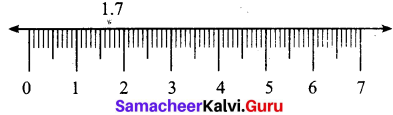
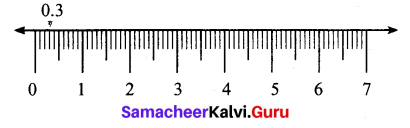
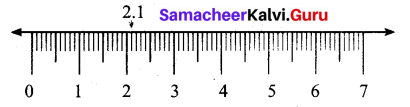
Samacheer Kalvi 7th Science Solutions Term 3 Chapter 4 Chemistry in Daily Life
∴ Calorific value = 40,000 kj/kg

VIII. Answer in Detail:

Question 1.
Explain briefly about antibiotic and analgesic.
Answer:

  1. Many micro organisms and plants synthesize chemicals which are toxic in nature to protect them from invading organisms.
  2. Those biosynthesized chemicals can be isolated from the plants/micro organisms and was used as medicines against infectious diseases, these substances were called as antibiotics.
  3. Ex: Chloramphenicols, tetracyclines, Penicillin derivatives, cephalosporin’s and their derivatives.
  4. The world’s first antibiotic penicillin was discovered by Dr. Alexander Fleming.

Analgesics:

  1. Analgesics or pain killers that react like the pain-suppressing chemicals released by the body.
  2. They suppress the feeling of ‘pain.
  3. This analgesics drug selectively relieves pain by acting either in CNS (Central Nerves System) or on peripheral pain mechanism, without significantly altering consciousness.

Question 2.
Make labeled diagram of a candle flame.
Answer:
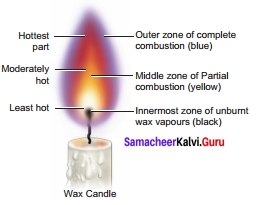
Samacheer Kalvi 7th Science Solutions Term 3 Chapter 4 Chemistry in Daily Life

IX. Picture based question

Question 1.
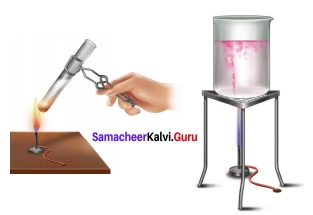
Arul and Aakash were doing an experiment in which water was to be heated in a beaker. Arul kept the beaker near the wick in the yellow part of candle flame. Aakash kept the beaker in the outer most part to the flame. Whose water will get heated in a shorter time?
Samacheer Kalvi 7th Science Solutions Term 3 Chapter 4 Chemistry in Daily Life
Answer:
The water heated by Akash will get heated in a shorter time because he kept his beaker near the hottest (non- luminous) zone of the flame. But Arul kept the beaker in the luminous zone which is moderately hot. So, it will take longer time.

Samacheer Kalvi 7th Science Chemistry in Daily Life Intext Activities

Activity

Question 1.
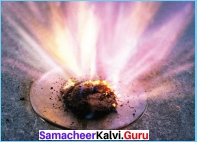
What happens when you add with these chemicals?
Sugar + Potassium permanganate + Glycerin
Samacheer Kalvi 7th Science Solutions Term 3 Chapter 4 Chemistry in Daily Life
Answer:

  1. After adding sugar, potassium permanganate and glycerin to the dish, immediately step back because spark and solid potassium permanganate will be expelled from the dish.
  2. When potassium permanganate mixes with glycerin, a redox reaction starts. This reaction starts out really slow, but produces a lot of heat, so it will start to speed up bit by bit. As the potassium permanganate oxidises the sugar, it will speed up more and more until it finally starts to smoke and after that it will ignite.

Samacheer Kalvi 7th Science Chemistry in Daily Life Additional Questions

I. Choose the correct answer.

Question 1.
is a special combination of dry salt that is mixed with safe water.
(a) PRS
(b) ORS
(c) SOR
(d) ROS
Answer:
(b) ORS

Question 2.
Which of the following conditions is not necessary for combustion?
(a) Oxygen
(b) Adequate ignition temperature
(c) Combustible substance
(d) High calorific value
Answer:
(d) High calorific value

Question 3.
During diarrhoea the intestine is still able to absorb molecules.
(a) glucose
(b) sodium
(c) citrate
(d) none
Answer:
(a) glucose

SamacheerKalvi.Guru

Question 4.
Antacids are actually .
(a) weak acids
(b) weak bases
(c) strong acids
(d) strong bases
Answer:
(b) weak bases

Question 5.
Our stomach naturally produce to help digest and breakdown food.
(a) Sulphuric acid
(b) acetic acid
(c) hydrochloric acid
(d) none of these
Answer:
(c) hydrochloric acid

Question 6.
_______ are substances applied to the exterior of a body that kill microbes.
(a) Antiseptics
(b) Antihistamine
(c) Antipyretic
(d) ORS
Answer:
(a) Antiseptics

Question 7.
All combustion reactions are .
(a) endothermic
(b) exothermic
(c) both a and b
(d) None of these
Answer:
(b) exothermic

Question 8.
Any reaction that involves reaction with oxygen is called reaction.
(a) reduction
(b) ignition
(c) oxidation
(d) none
Answer:
(c) oxidation

SamacheerKalvi.Guru

Question 9.
Which is the luminous part of the plame?
(a) Outer zone
(b) Middle zone
(c) Inner zone
(d) None
Answer:
(b) middle zone

II. Fill in the Blanks.

  1. The chemical process in which a substance reacts with oxygen to produce heat is called _________
  2. Substances which vapourise during burning produce _________
  3.  _________ is one that neutralize stomach acid
  4.  _________ is a chemical messenger involved in number of complex biological reactions.
  5.  _________ are used to treat the disease and to improve our health.
  6. Once infection is sensed, the immune system releases a chemical called _________
  7. Sensing the pyrogens, hypothalamus increases the body temperature by releasing a chemical _________
  8.  _________ that react like the pain – suppressing chemicals released by the body.
  9.  _________ resistane is defined as the ability of the microorganisms to resist the effects of an antibiotic to which they were once sensitive.
  10. The process of osmosis, the salts and sugars pull water into your bloodstream and speed up _________

Answer:

  1. Combustion
  2. flames
  3. Antacid
  4. Histamine
  5. Medicines
  6. pyrogen
  7. prostaglandin
  8. Analgesics
  9. Antibiotic
  10. rehydration

III. True or False – if false, give the correct statement.

Question 1.
If there is inadequate salt in the intestinal wall, the body will not be able to absorb water.
Answer:
True

Question 2.
Acidity issues arise when there is excess production of acetic acid due to triggers.
Answer:
Correct statement : Acidity issues arise when there is excess production of due to triggers.

Question 3.
The lining of our stomach with a pH of 4 to 6 is designed as such to withstand a high acidic environment.
Answer:
False
Correct statement: The lining of our stomach with a pH of 1 to 3 is designed as such to withstand a high acidic environment.

Question 4.
The bacteria staphylococcus is meant to cause deadly diseases such as pneumonia sour throat etc.
Answer:
True

Question 5.
Fleming named the mould penicillum notatum, from which the antibiotic penicillin was isolated.
Answer:
True

SamacheerKalvi.Guru

Question 6.
Paracetamol interact with the receptors and reduce the intensity of pain signals to the brain.
Answer:
True

Question 7.
Bacteria and virus can thrive above a certain temperature.
Answer:
Correct statement: Bacteria and virus thrive above a certain temperature.

Question 8.
The adverse effects of antihistamines are mouth dryness and sleepiness.
Answer:
True

Question 9.
Complete combustion of the fuel takes place and the colour of the flame is yellow and is the hottest part of the flame.
Answer:
False
Correct statement: Complete combustion of the fuel takes place and the colour of the flame is blue and is the hottest part of the flame.

IV. Match the following :

Question 1.

1.White flame(a)Table salt
2.Indigo flame(b)Bleaching powder
3.Blue flame(c)Potassium chloride
4.Orange flame(d)Epsom salt

Answer:

  1. d
  2. c
  3. b
  4. a

Question 2.

1.Inner zone(a)Yellow
2.Outer zone(b)Borax powder
3.Middle zone(c)Blue
4.Green flame(d)Black

Answer:

  1. d
  2. c
  3. a
  4. b

V. Very short Answers:

Question 1.
What is antipyretics?
Answer:

  1. Antipyretics (anti – against and pyretic – feverish) are chemical substances that reduce fever.
  2. They suppress the release of prostaglandin and reduce fever.

Question 2.
What is antiseptics?
Answer:
Antiseptics are substances applied to the exterior of a body that kill or inhibit microbes and infective agents.

Question 3.
Name few natural antiseptics.
Answer:

  1. Garlic
  2. Turmeric
  3. Aloevera.

Question 4.
Define histamine.
Answer:
Histamine is a chemical messenger involved in number of complex biological reactions.

Question 5.
Complete the oxidation reaction.
Answer:
CH4 + 2O2 → ______ + ______ + Heat energy
CO2 + 2H2O

Question 6.
Name a few substances which produce flames on burning.
Answer:
Wax, Kerosene.

Question 7.
Give one example for spontaneous combustion.
Answer:
Phosphorous burns spontaneously at room temperature.

Question 8.
Give one example for slow combustion.
Answer:
Respiration.

SamacheerKalvi.Guru

Question 9.
What are the classes of fire?
Answer:
There are 5 classes of fire.

  1. Class A
  2. Class B
  3. Class C
  4. Class D
  5. Class D.

Question 10.
Give example for class B fires.
Answer:
Petrol, turpentine or paint.

VI. Short Answer.

Question 1.
Mention some of the common antacids.
Answer:

  1. Sodium bicarbonate (NaHC03)
  2. Calcium carbonate (CaC03)
  3. Magnesium Hydroxide (MgOH)2
  4. Magnesium carbonate (MgCOs)
  5. Aluminium Hydroxide Al (OH)3

Question 2.
What is antibiotic resistance?
Answer:
Antibiotic resistance is defined as the ability of the microorganisms to resist the effects of an antibiotic to which they were once sensitive.

SamacheerKalvi.Guru

Question 3.
What is fever?
Answer:
In normal course, our body temperature is one degree below or one degree above 98.6 degrees Fahrenheit. When the temperature goes above this level it is called fever.

Question 4.
Mention the ways to intake the medicine.
Answer:

  1. Oral use
  2. External use
  3. Injections (Intramuscular/Intra venous).

Question 5.
What do you mean by inflammable substance?
Answer:

  1. Substances which have very low ignition temperature and can easily catch fire with a flame are called inflammable substances.
  2. E.g. Petrol. Alcohol, LPG (Liquefied Petroleum Gas), CNG (Compressed Natural Gas), etc.

Question 6.
Write a note on flame.
Answer:

  1. Flame is actually a chemical reaction.
  2. To be specific, the flame is a mixture of gases (vaporized fuel, oxygen, carbon dioxide, carbon monoxide, water vapor, and many volatile materials) and so is matter.
  3. The light and heat produced by the flame is energy, not matter. But fire is a matter.

Question 7.
What is slow combustion? Give example.
Answer:
Slow combustion is a form of combustion which takes place at low temperatures. Respiration is an example of slow combustion.

Question 8.
Mention the conditions necessary for producing fire.
Answer:
The conditions necessary for producing fire are,

  1. Fuel
  2. Air (to supply oxygen)
  3. Heat (to raise the temperature of the fuel beyond its ignition temperature)

Question 9.
Mention the most common types of fire extinguishers.
Answer:

  1. Air pressurized water extinguishers
  2. Carbon-di-oxide extinguishers
  3. Dry chemical powder extinguishers.

VII. Long Answer

Question 1.
Explain the structure of a candle flame.
Answer:
A candle flame has three main zones, they are

  1. The outer zone – complete combustion of the fuel takes place and the colour of the flame is blue and is the hottest part of the flame. It is the non-luminous part of the flame.
  2. The middle zone – partial combustions of the fuel takes place and the colour of the flame is yellow and is moderately hot part of the flame. It is the luminous part of the flame.
  3. The inner zone – There are unburnt vapours of the fuel and the colour is black and is least hot part.

Question 2.
Write the characteristics of a good fuel.
Answer:

  1. Readily available
  2. Cheap
  3. Easy transport and store
  4. Burns at moderate rate
  5. Produce large amount of heat
  6. Do not leave behind any undesirable substances.
  7. Does not cause pollution.

SamacheerKalvi.Guru

Question 3.
How do fire extinguishers work? Explain.
Answer:

  1. Portable fire extinguishers apply an extinguishing agent that will either cool burning fuel, displace or remove oxygen, or stop the chemical reaction so fire cannot continue to burn.
  2. When the candle of an extinguisher is compressed, it opens and inner canister of high pressure gases forces the extinguishing agent from the main cylinder through a siphon tube and out the nozzle.
  3. A fire extinguisher works much like a can of hair spray.

VIII. HOTS:

Question 1.
Why a person is covered with a blanket when the clothes of that person catch fire?
Answer:
When the clothes of a person catch fire, the person is covered with a blanket to extinguish
the fire. This is because the supply of air to the burning clothes is cut off by blanket, due to this the clothes stop burning and the fire gets extinguished.

SamacheerKalvi.Guru

Question 2.
Why is the candle flame straight?
Answer:
A candle flame is caused by vapour burning above the candle. This burning vapour is hotter than the surrounding air and is therefore less dense. So, by the principle of convection, it “rises” so the flame is always upwards

Samacheer Kalvi 7th Social Science Geography Solutions Term 3 Chapter 2 Map Reading

Students can Download Social Science Geography Chapter 2 Map Reading Questions and Answers, Notes Pdf, Samacheer Kalvi 7th Social Science Book Solutions Guide Pdf helps you to revise the complete Tamilnadu State Board New Syllabus and score more marks in your examinations.

Tamilnadu Samacheer Kalvi 7th Social Science Geography Solutions Term 3 Chapter 2 Map Reading

Samacheer Kalvi 7th Social Science Map Reading Textual Evaluation

I. Choose the correct answer.

Question 1.
The science of map making is called ___________
(a) Geography
(b) Cartography
(c) Physiography
(d) Physical Geography
Answer:
(b) Cartography

Question 2.
North, South, East and West are four directions are called as
(a) Cardinal
(b) Geographical
(c) Latitudinal
(d) Angels
Answer:
(a) Cardinal

Samacheer Kalvi 7th Social Science Geography Solutions Term 3 Chapter 2 Map Reading

Question 3.
Cultural maps are those which shows the ___________features
(a) Natural
(b) Man-made
(c) Artificial
(d) Environmental
Answer:
(b) Man-made

II. Fill in the blanks

  1. ______ is an essential tool of a geographer.
  2. The directions in between the cardinal directions are the inter mediate
  3. ______ in a map which explains the different colours and symbols used in it.
  4. Cadastral maps are known as _______
  5. Small scale maps are helpful to us to show large areas like ______ and ______

Answer:

  1. Map
  2. direction
  3. Legend
  4. Village and town maps
  5. continents, countries

III. Circle the Odd one

Question 1.
North East, Scale, North West and East.
Answer:
North East, (Scale) North West and East.

Question 2.
White, Snow, High land, and Plains.
Answer:
White, Snow, High land, and (Plains)

Samacheer Kalvi 7th Social Science Geography Solutions Term 3 Chapter 2 Map Reading

Question 3.
Relief map, Soil map, Physical map and Atlas.
Answer:
Relief map, Soil map, Physical map and (Atlas)

Question 4.
Weather Forecasting, Climate, Rainfall and Temperature.
Answer:
Weather Forecasting,(Climate) Rainfall and Temperature.

IV. Match the following

Upper right cornerDensity and growth
Key (or) legendDistrict (or) town
Large Scale mapNatural relief features
Physical mapColours and Symbols
Population map‘N’ letter

Answer:

Upper right corner‘N’ letter
Key (or) legendColours and Symbols
Large Scale mapDistrict (or) town
Physical mapNatural relief features
Population mapDensity and growth

V. Examine the Following Statements

Question 1.
1. An Atlas is a bound volume of different types of maps.
2. Atlas maps are drawn on smaller scale.
3. Insignificant details are omitted
(a) 1 and 3 are correct
(b) 2 and 3 are correct
(c) 1 and 2 are correct
(d) 1,2 and 3 are correct
Answer:
(d) 1, 2 and 3 are correct

Samacheer Kalvi 7th Social Science Geography Solutions Term 3 Chapter 2 Map Reading

Question 2.
Statement I : Globe is a three dimensional model of the Earth.
Statement II : It is easy to handle and to carry, as it can be rolled up or folded.
(a) Statement I is correct and II is wrong.
(b) Statement I is wrong and II is correct.
(c) Both the statements are correct.
(d) Both the statements are wrong.
Answer:
(a) Statement I is correct and II is wrong

VI. Name the following

Question 1.
Representing the earth on a flat surface.
Answer:
Map

Question 2.
Ratio between the distance on a map and distance on the ground.
Answer:
Scale

Question 3.
Symbols which help to show road ways and railways.
Answer:
Samacheer Kalvi 7th Social Science Geography Solutions Term 3 Chapter 2 Map Reading

Question 4.
A book which contains different kinds of maps.
Answer:
Atlas

Question 5.
A map which shows administration divisions.
Answer:
Political map

VII. Answer the following.

Question 1.
What is a map?
Answer:

  1. A map is an essential tool of a geographer.
  2. Map is a representation of the earth as a whole or a part of the earth drawn on a flat surface according to a given scale.
  3. It can show continents, countries, cities and even a local area are drawn with specific details.

Question 2.
What is cartography?
Answer:
The science of map-making is called cartography (carte means ‘map’ and graphic means ‘drawing’).One who draws maps is called a Cartographer.

Samacheer Kalvi 7th Social Science Geography Solutions Term 3 Chapter 2 Map Reading

Question 3.
What are cardinal directions?
Answer:

  1. The cardinal direction are North, South, East and West.
  2. A legend (or) key of a map explain the details in the map.

Question 4.
What is an Atlas?
Answer:

  1. Atlas is a collection of maps in a book.
  2. Atlas maps are small-scale maps covering large areas like continents and countries.
  3. Only prominent relief features, main roads and railways important towns are shown in Atlas maps.
  4. The study of geographic characteristics of a large area is possible at the time with the help of an atlas.

Question 5.
Name the types of Atlas.
Answer:

  1. School Atlas
  2. Advanced Atlas
  3. Regional Atlas
  4. National Atlas

Question 6.
What are the uses of maps?
Answer:
Uses of Maps:

  1. Maps enable us to know details of the landforms and other ground features without seeing the area.
  2. Maps are of immense importance to the military personnel for planning campaigns.
  3. It is used in the aero planes to reach their destinations and the ships to sail safely in the oceans.
  4. Maps are used for weather forecasting and agricultural operations.
  5. We can study and interpret the future possibilities of soil erosion, settlement patterns, drainage patterns, land utilization, etc.,

VIII. Answer in Detail:

Question 1.
What are the elements of maps? Write about it.
Answer:
Elemehts of maps:

  1. Maps provide us with a lot of information and one must know how to read and interpret them.
  2. Every map is provided with certain features that act as an aid to study the information presented in it.
  3. The basic essential elements of a map are title, direction, scale and legend (or) key of symbol.

Title:
Every map has a title that describes the information given in the map. For example, a map with the title India Rivers shows Rivers of India.

Direction:

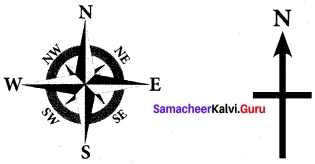
  1. In general maps are drawn with north orientation it helps us to find other direction on the map like East, West and South. In addition to the North notation, latitudes and longitudes were depicted in the margins.
  2. The North is notified by letter ‘N’ with an arrow mark.

Samacheer Kalvi 7th Social Science Geography Solutions Term 3 Chapter 2 Map Reading

Scale:

  1. The scale of a map is the ratio between the distance on the map between two points and actual distance between the two places on the ground.
  2. The scales can be represented as 1cm = 10km.
  3. It means 1 cm on the map is equal to 10 km on the ground. It helps to find the distance on the map between two points.

Samacheer Kalvi 7th Social Science Geography Solutions Term 3 Chapter 2 Map Reading

Legend:

  1. A legend or key of a map explain the symbols that are used on it to represent various physical and cultural features. .
  2. The common signs and symbols are internationally accepted and used in maps are called conventional signs and symbols.
  3. Every map has a legend or a key which explains the different colours and symbols used in it.
  4. They are depicted by using certain colours, symbols or letters.

Samacheer Kalvi 7th Social Science Geography Solutions Term 3 Chapter 2 Map Reading

Question 2.
What are the three ways of representation of maps?
Answer:
Maps are a graphical representation of the world or a section of the world. As a representation of the world, maps are compressed versions of the real world meaning that a large piece of land is recreated onto a smaller piece of paper or digital file. The relationship between the real world size of a geographic feature and its representative feature on a map is known as scale. There are three main ways that scale is indicated on a map: graphic (or bar), Verbal and representative fraction (RF).

Question 3.
Classify the maps based on functions.
Answer:

  1. Physical maps show natural features such as relief, geology, soils, drainage, elements weather, and vegetation.
  2. Relief Maps show general topography like mountains valleys, plains, plateaus and rivers.
  3. Geological Maps are drawn to show geological structures, rocks and minerals.
  4. Climatic Maps show the distribution of temperature, rainfall, clouds, relative humidity, direction and velocity of winds and other elements of weather.
  5. Soil Maps which are drawn to show the distribution of different types of soil and their properties.
  6. Cultural Maps which shows the man-made features are called cultural maps. Political Maps show the administrative divisions of a country, state or district. These maps facilitate the administration in planning and management of the concerned administrative units.
  7. Population Maps show the distribution, density and growth of population, occupation structure and literacy.
  8. Economic Maps depict the production and distribution of different types of crops and minerals, location of industries, trade routes and flow of commodities.
  9. Transportation Maps show roads, railway lines and the location of railway station, airports and seaports, etc.,
  10. Thematic maps are all such maps that represent the distribution of a particular feature or theme and its spatial variation.
  11. Google maps is a web-based service that provides detailed information about geographical regions and sites around the world.

Question 4.
Write about comparison of map and Globe.
Answer:

S.noMapGlobe
1.A map is a two dimensional form of the EarthA globe is three- dimensional model of the Earth
2.A map shows a small or a large area.A globe is a true model of the earth
3.A map can show a detailed information about an areaA globe cannot show the detailed information for an area.
4.A map acannot be turned to explain rotationA globe can be turned to show rotation
5.A map is very easy to carryA globe is not easy to carry

Question 5.
Describe the types of maps based on the scale? Write about it?
Answer:
Maps on the basis of scale:

  1. Large scale maps show small areas in greater details because they are drawn on a relatively large scale.
  2. Cadastral maps are village and town maps which show individual fields and house sites.
  3. Topographical Maps shows smaller areas in much greater detail. These maps are prepared by Survey of India. These are also large scale maps which show both natural features like hills and valleys as well as man-made features like buildings, road and canals.
  4. Small scale maps that show large areas like continent or countries. These maps are drawn on 1cm = 1000 kms. These are called small-scale maps.
  5. Wall maps are small-scale maps showing large areas. They are useful for students in classrooms and offices, small scale maps covers a larger area and depicts with limited information.
  6. Atlas is a collection of maps in a book. Atlas maps are small-scale maps covering large areas like continents and countries. Only prominent relief features, main roads and railways important towns are shown in Atlas maps. The study of geographic characteristics of a large area is possible at the time with the help of an atlas.

IX. Hots

Question 1.
Map is an essential tool for a traveler why?
Answer:
Map is an essential tool for a traveller, It helps a traveller to find out direction. It also tells about the latitudinal and longitudinal extent of a place. It helps one to locate a place easily and follow the correct travelling route.

X. Activity

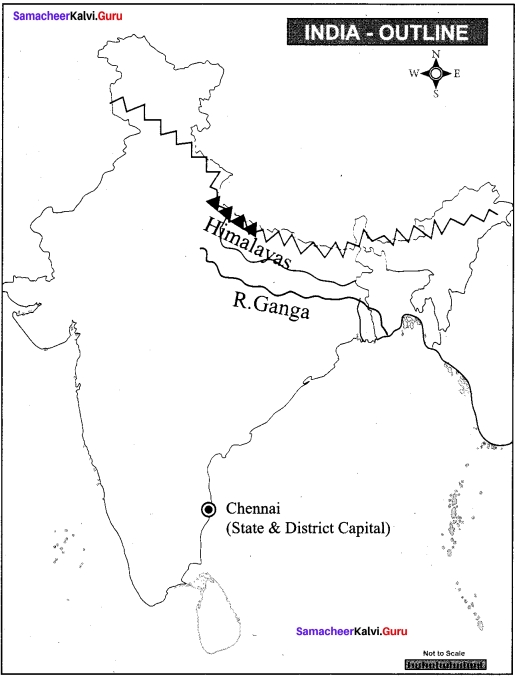
Question 1.
In an outline map of India mark the following features by using symbols and colours
a) Mark any one of the District capitals
b) Draw any one river path
c) Mark any one of the mountains
Answer:
Samacheer Kalvi 7th Social Science Geography Solutions Term 3 Chapter 2 Map Reading

Samacheer Kalvi 7th Social Science Geography Solutions Term 3 Chapter 2 Map Reading

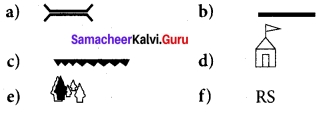
Question 2.
Draw the convectional signs and symbols to given points
(a) Bridge
(b) Canal
(c) Dam
(d) Temple
(e) Forest
(f) Railway Station
Answer:
Samacheer Kalvi 7th Social Science Geography Solutions Term 3 Chapter 2 Map Reading

Samacheer Kalvi 7th Social Science Map Reading Additional Questions

I. Choose the correct answer:

Question 1.
The ________ of a map describes the information given in the map.
(a) title
(b) scale
(c) direction
(d) legend
Answer:
(a) title

Question 2.
________ maps show distribution of temperature.
(a) Soil
(b) Weather
(c) Climatic
(d) Rainfall
Answer:
(c) Climatic

Samacheer Kalvi 7th Social Science Geography Solutions Term 3 Chapter 2 Map Reading

Question 3.
Political Maps show the ________ divisions of a country
(a) administrative
(b) economic
(c) Cultural
(d) Relief
Answer:
(a) administrative

Question 4.
Agriclture is shown in maps using ________ colour.
(a) brown
(b) yellow
(c) green
(d) blue
Answer:
(b) yellow

Question 5.
Black colour indicate ________ line.
(a) railway
(b) transport
(c) settlement
(d) road
Answer:
(a) railway

II. Fill in the blanks:

  1. Topographical maps show ________ areas in much greater detail.
  2.  ________ that show large areas like continent or countries.
  3.  ________ are small scale maps showing large areas.
  4. Relief maps show general ________ like amountain vally ,plains ,plateaus and rivers
  5.  ________ maps are drawn to show geological structures.
  6. Every map has a ________ that describes the information given in the map.
  7. The North is notified by letter ________ with an arrow mark
  8. A sign is a widely used ________ or a ________ Pattern
  9. The ________ have standardized a set of conventional signs and symbols.

Answer:

  1. smaller
  2. Small scale maps
  3. wall maps
  4. topography
  5. Geological
  6. title
  7. ‘N’
  8. symbol,line
  9. Survey of India (SOI)

III. Match the following.

ColourFeatures
Browna) Settlements, Road
Yellowb) Forest
Greenc) Water bodies
Blued) Agriculture
Rede) Mountain, Hells

Answer:

  1. e
  2. d
  3. b
  4. c
  5. a

IV. Answer the following briefly

Question 1.
Write a note on conventional signs and symbols.
Answer:
A sign is a symbol or a line pattern or a colour on a map that relates to and represents a feature on the ground and is widely used. The Survey of India (SOI) have standardized a set of convectional signs and symbols. Several colours are commonly used in the map.

Samacheer Kalvi 7th Social Science Geography Solutions Term 3 Chapter 2 Map Reading

Question 2.
What are the colours used in the maps?
Answer:

ColoursFeatures
WhiteSnow
YellowAgriculture
GreenForest
BlueWater bodies (oceans, seas and rivers)
BrownMountain, Hills and contour
RedSettlements, Road
BlackRailway line

Question 3.
Define scale
Answer:
The scale of a map is the ratio between the distance on the map between two points and actual distance between the two places the ground

Question 4.
What are Economic maps?
Answer:
Economic Maps depict the production and distribution of different types of crops and minerals, location of industries, trade routes and flow of commodities.

Question 5.
What are transporation maps?
Answer:
Transportation Maps show roads, railway lines and the location of railway station, airports and seaports, etc.,

Question 6.
What is a legend?
Answer:
A legend or key of a map explain the symbols that are used on it to represent various physical and cultural features.

Samacheer Kalvi 7th Social Science Geography Solutions Term 3 Chapter 2 Map Reading

Question 7.
What do you mean by conventional signs and symbols?
Answer:
The common signs and symbols are internationally accepted and used in maps are called conventional signs and symbols.

V. Answer the following in detail

Question 1.
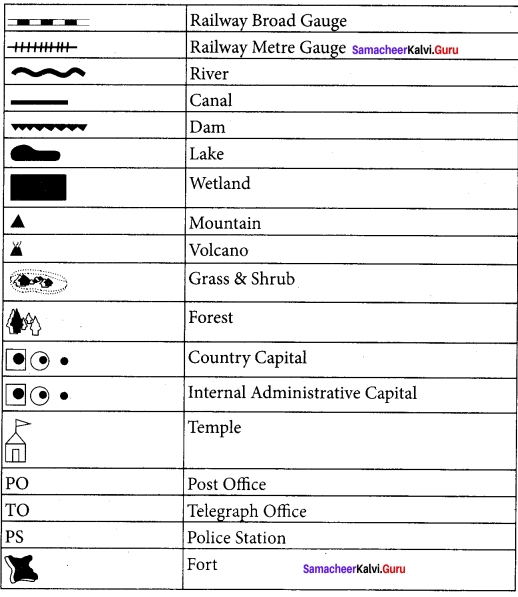
Draw the various symbols used in a map.
Answer:

Samacheer Kalvi 7th Social Science Geography Solutions Term 3 Chapter 2 Map Reading

Samacheer Kalvi 7th Social Science Civics Solutions Term 3 Chapter 3 Road Safety

Students can Download Social Science Civics Chapter 3 Road Safety Questions and Answers, Notes Pdf, Samacheer Kalvi 7th Social Science Book Solutions Guide Pdf helps you to revise the complete Tamilnadu State Board New Syllabus and score more marks in your examinations

Tamilnadu Samacheer Kalvi 7th Social Science Civics Solutions Term 3 Chapter 3 Road Safety

Samacheer Kalvi 7th Social Science Road Safety Textual Evaluation

I. Choose the correct answer:

Question 1.
Road safety is meant for
(a) Passersby
(b) drivers
(c) public
(d) all who use roads
Answer:
(d) all who use roads

Samacheer Kalvi 7th Social Science Civics Solutions Term 3 Chapter 3 Road Safety

Question 2.
Road accidents affect a country’s
(a) improvement
(b) life
(c) finance
(d) all the above
Answer:
(d) all the above

Question 3.
Permit refers to
(a) permission for driving
(b) permission for carrying goods
(c) certificate for drivers
(d) registration of vehicles
Answer:
(a) permission for driving

Question 4.
Raksha safe drive is a device useful for
(a) pedestrians
(b) motorists
(c) car drivers
(d) passengers
Answer:
(c) car drivers

Samacheer Kalvi 7th Social Science Civics Solutions Term 3 Chapter 3 Road Safety

Question 5.
Road safety week celebration was first imitated in India in the year
(a) 1947
(b) 1989
(c) 1990
(d) 2019
Answer:
(b) 1989

II. Fill in the blanks

  1. The most useful invention of man for transport is __________
  2. Using __________ is inevitable in our journey of life.
  3. Too many vehicles on the road cause __________ and __________ pollution.
  4. __________ is the monetary supporter of a family.
  5. In case of emergency for medical assistance call __________ for help.

Answer:

  1. wheel
  2. vehicles
  3. traffic jam, more
  4. Breadwinners
  5. 108

III. Match the following

Informatory signTraffic lights
Zebra crossingNarrow bend sign
Mandatory signPetrol pump sign
Cautionary signLicense
Right to drive a vehicleWalkers

Answer:

Informatory signPetrol pump sign
Zebra crossingWalkers
Mandatory signTraffic lights
Cautionary signNarrow bend sign
Right to drive a vehicleLicense

IV. Consider the following statements:

Question 1.
Tick the appropriate answer:
Assertion : Car pooling is the use of vehicles by turns.
Result : It saves fuel, time and money and also
(a) A is correct and R is not correct
(b) A is correct and R is also correct
(c) A is wrong and R is correct
(d) Both are wrong
Answer:
(b) A is correct and R is also correct

Question 2.
Find the odd one
(a) car
(b) trucks
(c) tempos
(d) aero planes
Answer:
(d) aero planes

Samacheer Kalvi 7th Social Science Civics Solutions Term 3 Chapter 3 Road Safety

Question 3.
Find the following statements are true or false.

  1. Road safety education in the school curriculum is an additional burden for the students
  2. An ounce of practice is worth more than tons of preaching.
  3. Hoarding on roads has to be banned.
  4. Following road safety rules from childhood will become a habit in future.

Answer:

  1. False
  2. True
  3. True
  4. True

V. Answer in one or two sentences

Question 1.
What are the distracters while driving?
Answer:
Talking over the mobile phone or texting message or engaging in any activities attention diverted from driving.

Question 2.
Mention the 2 safety gears for safe driving.
Answer:

  1. Use of helmets for two wheelers and
  2. Seat belts for four wheelers are the two safety gears for safe driving.

Question 3.
Why is not safe to drive in nights?
An extra alertness is needed while driving at night. The uncontrolled sleep, tiredness due to long drive, poor lighting on the road can cause fatal accidents.

Question 4.
When can a person obtain the right to drive a vehicle?
Answer:

  1. One should be eligible to get a driving license at the age of 18.
  2. One who drives a vehicle should have undergone the training and tests to obtain a driving license.

Question 5.
How can media promote road safety among the public?
Answer:
Mass media and journals could play a key role to raise awareness on road safety. In particular, they can disseminate preventive messages and promote safe behaviours, increase peoples knowledge and understanding of the gravity of the problem and advocate for safer roads and systems.

VI. Answer the following in detail:

Question 1.
List out the documents necessary for an Indian while driving.
Answer:

  1. One who drives a vehicle should have undergone the training and tests to obtain a driving license.
  2. It is compulsory to have the following documents – driving license, registration certificate of the vehicle, Insurance certificate, Taxation certificate, fitness certificate and permit.

Samacheer Kalvi 7th Social Science Civics Solutions Term 3 Chapter 3 Road Safety

Question 2.
What is the need for including road safety education in the school curriculum?
Answer:

  1. Parents and Teachers play a vital role in imparting road safety Education to young ones.
  2. If a child’s parent violates the traffic rules, the child too will imitate the same in future. So the elders have to set an example for them in adhering to the safety rules and regulations.
  3. Road Safety education should be provided since childhood.
  4. It has to be made a part of school curriculum, syllabus, text book and included in competition on road safety.
  5. Activities like writing of slogans, essays and paintings on this theme should be conducted for reinforcement.

Question 3.
How can parents teach their children road safety rules?
Answer:

  1. Parents and Teachers play a vital role in imparting road safety Education to young ones.
  2. If a child’s parent violates the traffic rules, the child too will imitate the same in future.
  3. So the elders have to set an example for them in adhering to the safety rules and regulations.
  4. Video and computer games that simulate receiving should be banned by the government or discouraged by parents as it will develop racing habit in children.
  5. Parents should help children learn about the traffic signals and rules.
  6. They should be instructed to wait for the right signal and to use the zebra crossing while crossing the road.
  7. They should be warn them not to run across or along the road and to use the footpath, while walking on the road.

VII. Hots

Question 1.
Knowing the road safety rules, how will you influence your parents and relatives?
Answer:

  1. We will educate parents on following road safety rules.
  2. When they don’t wear a helmet, we can urge them to wear and also tell them the risk of not wearing it.
  3. We will insist our parents to wear seat belt while driving a car.
  4. We will tell them not to exceed the speed limit while riding or driving.

Samacheer Kalvi 7th Social Science Civics Solutions Term 3 Chapter 3 Road Safety

Question 2.
If wheel had not been invented, what might have been our mode of transport?
Answer:
If wheel had not been invented, we would not have been able to ride a two wheeler or use a car. Walking would have been the only mode of transport. Which would have been a very tough job.

Samacheer Kalvi 7th Social Science Road Safety Additional Questions

I. Choose the correct answer:

Question 1.
India accounts for about __________ of road accident fatalities at worldwide.
(a) 12%
(b) 10%
(c) 15%
(d) 8%
Answer:
(b) 10%

Question 2.
__________ is a larger threat and the leading cause for road accidents.
(a) Distracted driving
(b) Heavy traffic
(c) Night driving
(d) Tailgating
Answer:
(a) Distracted driving

Question 3.
The Motor Vehicle Act, 1988 passed by the Parliament came into force in __________
(a) 2000
(b) 1990
(c) 1989
(d) 1991
Answer:
(c) 1989

Samacheer Kalvi 7th Social Science Civics Solutions Term 3 Chapter 3 Road Safety

Question 4.
The Mumbai police has released his video of __________ to create awareness among the motorists.
(a) M.S.Dhoni
(b) Kapil Dev
(c) Amitabh Bhcchan
(d) Sachin Tendulkar
Answer:
(d) Sachin Tendulkar

Question 5.
The Government of India observes Road safety week1 awareness during, __________
(a) January
(b) March
(c) April
(d) July
Answer:
(a) January

II. Fill in the blanks:

  1. _______ is a major traffic violation of rules.
  2. _______ is very slow when compared to the expansion of vehicles.
  3. _______ is prohibited near a hospital or a school zone.
  4. _______ the seat belts while driving a car for both the driver and co-passenger.
  5. Two wheeler can carry only _______ adult pillion rider.
  6. _______ can result in crucial collisions.
  7. _______ is a healthy habit and reduces pollution.

Answer:

  1. Reckless Driving
  2. Road expansion
  3. Sound horn
  4. Fasten
  5. one
  6. Brake failure
  7. Cycling

III. Match the following:

CCTV camerasa) cordial relationship
Raksha safe driveb) Annual celebration
Car poolingc) high speed offences
Road safety weekd) automatic crash detection

Answer:

  1. c
  2. d
  3. a
  4. b

IV. Give short Answers

Question 1.
What is road safety?
Answer:
Road safety refers to the methods and measures used to prevent road users from being killed or seriously injured.

Question 2.
What is Reckless driving?
Answer:
Reckless driving is a major traffic violation of rules. It is defined as the mental state in which the driver purposely disregard the rules of the road.

Question 3.
What do you mean by Taligating?
Answer:
Tailgating refers to a condition where a driver drives behind another vehicle without leaving sufficient distance between them. In this condition, if the vehicle in front of him, stops suddenly, his own vehicle will crash with it.

Samacheer Kalvi 7th Social Science Civics Solutions Term 3 Chapter 3 Road Safety

Question 4.
Mention a few causes for road accidents.
Answer:

  1. Impatience of Pedestrians and violation of traffic rules result in accidents.
  2. Drunken driving, jumping red light over speeding and unmanned railway crossings cause great damage to valuable lives.

Question 5.
Why are road safety rules designed?
Answer:

  1. Every country has its own road safety rules and regulations for the best interests of its citizens.
  2. India also has designed road safety rules for protecting the road users from meeting with accidents and injury.

Question 6.
Write a short note on Raksha safe drive device.
Answer:

  1. To avoid accidents because of potholes and road humps, users can opt to use the Raksha safe drive device.
  2. It is attached with velcro to the car and alerts the driver about road humps, bad roads and on crossing the speed limits.
  3. It is a device capable of automatic crash detection, two – way call connectivity, GPS tracking, engine health monitoring and smart panic button.

Question 7.
What is carpooling? How is it useful?
Answer:
Carpooling will reduce the number of vehicles on the road. It will pave way for a cordial relationship and better understanding among the fellowmen.

Samacheer Kalvi 7th Social Science Civics Solutions Term 3 Chapter 3 Road Safety

Question 8.
Why is road safety week celebrated?
Answer:
Road Safety Week:

  1. Road safety week is a national event which aims at promoting public awareness about traffic rules and to reduce causalities due to road accidents.
  2. It is observed annually.
  3. It is celebrated with great joy and enthusiasm. A variety of programmes related to road safety is conducted.
  4. Educational banners, safety posters, leaflets, and pocket guides related to read safety are distributed to the public.

V. Answer in Detail

Question 1.
Mention some road safety rules.
Answer:

  1. Use standard helmets while driving two wheeler vehicle and strap it before mounting the vehicle.
  2. Fasten the seat belts while driving a car for both the driver and co-passenger.
  3. Avoid carrying heavy load while riding a two wheeler.
  4. Two wheeler can carry one adult pillion rider and not the whole family.
  5. Keep a safe distance from the vehicle ahead of yours.
  6. Slow down on bends and turns, especially in hill stations.

Question 2.
What are the Preventive measures taken by the Government to reduce the number of road accidents?
Answer:
Preventive Measures:
Government:
The Ministry of Road Transport and Highways, Government of India has taken earnest steps for reducing the number of road accidents.

  1. Taking steps for the rectification of accident black spots and improvement of road engineering.
  2. Ensuring the good functioning of the traffic signals and road signs at busy crossing roads.
  3. Constructing and manufacturing proper roads both in urban and rural areas.
  4. Installation of CCTV cameras to record high speed offences which can detect the offenders.
  5. Prohibiting the act of digging or hoarding on roads.
  6. Remove encroachments and maintain proper pedestrian ways for ensuring road safety.
  7. Stringent actions to be taken for the violation of any road safety rules.

Samacheer Kalvi 7th Social Science Civics Solutions Term 3 Chapter 3 Road Safety

Question 3.
What are the suggestion to reduce vehicle pollution?
Answer:

  1. Walking is a good alternative and cycling is a good exercise for a distance of 1 to 2 kms.
  2. Use eco-friendly vehicles.
  3. Implement the idea of installing bollards near unmanned railway crossings. A separate unhindered passage for cyclists would yield many benefits and also reducing road crashes.
  4. Cycling is a healthy habit and reduces pollution.
  5. Motorcycle manufacturers should be asked to design two wheelers with a designed maximum speed of 50 km ph.
  6. An awareness programme can be used by narrating live examples and also projecting videos.

Samacheer Kalvi 7th Social Science Civics Solutions Term 3 Chapter 2 Market and Consumer Protection

Students can Download Social Science Civics Chapter 2 Market and Consumer Protection Questions and Answers, Notes Pdf, Samacheer Kalvi 7th Social Science Book Solutions Guide Pdf helps you to revise the complete Tamilnadu State Board New Syllabus and score more marks in your examinations

Tamilnadu Samacheer Kalvi 7th Social Science Civics Solutions Term 3 Chapter 2 Market and Consumer Protection

Samacheer Kalvi 7th Social Science Market and Consumer Protection Textual Evaluation

I. Choose the correct answer:

Question 1.
In which case a consumer cannot complain against the manufacturer for a defective product?
(a) Date of expiry unspecified
(b) Price of the commodity
(c) Batch number of the commodity
(d) Address of the manufacturer
Answer:
(c) Batch number of the commodity

Samacheer Kalvi 7th Social Science Civics Solutions Term 3 Chapter 2 Market and Consumer Protection

Question 2.
Consumer’s face various problems from the producer’s end due to
(a) Unfair trade practices
(b) Wide range of goods
(c) Standard quality goods
(d) Volume of production
Answer:
(a) Unfair trade practices

Question 3.
Consumers must be provided with adequate information about a product to make
(a) Investment in production
(b) Decision in sale of goods
(c) Credit purchase of goods
(d) Decision in purchase of goods
Answer:
(d) Decision in purchase of goods

Question 4.
The system of consumer courts at the national, state, and district levels, looking into consumers grievances against unfair trade practices of businessmen and providing necessary compensation, is called
(a) Three tier system
(b) One tier system
(c) Two tier system
(d) Four tier system
Answer:
(a) Three tier system

Question 5.
Mixing other extraneous material of inferior quality with a superior quality material is called
(a) Purification
(b) Adulteration
(c) Refinement
(d) Alteration
Answer:
(b) Adulteration

Samacheer Kalvi 7th Social Science Civics Solutions Term 3 Chapter 2 Market and Consumer Protection

II. Fill in the blanks

  1. A set up where two or more parties engage in __________ of goods, service and information is called a market.
  2. In regulated Markets, there is some oversight by appropriate __________ authoriries
  3.  __________ refers to a market structure in which there is a single producer or seller that has a control on the entire market.
  4.  __________ statue is regarded as the ‘Magna Carta in the field of consumer protection for checking unfair trade practices.

Answer:

  1. exchange
  2. Government
  3. Monopoly
  4. COPRA

III. Match the following

The Consumer Protection Act1955
The Legal Metrology Act1986
The Bureau of Indian Standards Act2009
The Essential Commodities Act1986

Answer:

The Consumer Protection Act1986
The Legal Metrology Act2009
The Bureau of Indian Standards Act1986
The Essential Commodities Act1955

IV. Consider the following statements:

Question 1.
Tick the appropriate answer:
Assertion: In local Markets the buyers and sellers are limited to the local region or are
Reason: A market is not restricted to one physical or geographical location.
(a) Both, A and R, are true and R is the correct explanation of A
(b) Both, A and R, are true but R is not the correct explanation of A
(c) If A is true but R is false
(d) If A is false but R is true
Answer:
(b) Both, A and R, are true but R is not the correct explanation of A

V. Answer the following questions

Question 1.
What is market?
Answer:
A set up where two or more parties engaged in exchange of goods, services and information is called a market.

Samacheer Kalvi 7th Social Science Civics Solutions Term 3 Chapter 2 Market and Consumer Protection

Question 2.
Describe consumer protection.
Answer:
Consumer protection is a group of laws enacted to protect the rights of consumers, fair trade, competition and accurate information in the market place.

Question 3.
List out the rights of consumers.
Answer:
The Eight Basic Consumer Rights:

  1. The Right to Basic Needs.
  2. The Right to Safety.
  3. The Right to Information.
  4. The Right to Choose.
  5. The Right to Representation.
  6. The Right to Redress.
  7. The Right to Consumer Education.
  8. The Right to a Healthy Environment.

Samacheer Kalvi 7th Social Science Civics Solutions Term 3 Chapter 2 Market and Consumer Protection

Question 4.
Discuss about the role of consumer courts.
Answer:
Consumer courts in India:

  1. National Consumer Disputes Redressal Commission (NCDRC): A national level court works for the whole country and deals compensation claimed exceeds rupees one core. The National Commission is the Apex body of Consumer Courts; it is also the highest appellate court in the hierarchy. The commission is headed by a sitting or retired judge of the Supreme Court of India.
  2. State Consumer Disputes Redressal Commission (SCDRC): A state level cour works at the state level with cases where compensation claimed is above 20 lakhs but up to one core.
  3. District Consumer Disputes Redressal Forum (DCDRF): A district level court works at the district level with cases where the compensation claimed is up to 20 lakhs.

Question 5.
Write about the types of market and its functions.
Answer:
On the Basis of Geographic Location:

  1. Local Markets: In such a market the buyers and sellers are limited to the local region or area.
  2. Regional Markets: These markets cover a wider are than local markets like a district, or a cluster of few smaller states
  3. National Market: This is when the demand for the goods is limited to one specific country. Or the government may not allow the trade of such goods outside national boundaries.
  4. International Market: When the demand for the product is international and the goods are also traded internationally in bulk quantities, we call it as an international market.

On the Basis of Time:

  1. Very Short Period Market: This is when the supply of the goods is fixed, and so it cannot be changed instantaneously. For example the market for flowers, vegetables. Fruits etc.
  2. Short Period Market: The market is slightly longer than the previous one. Here the supply can be slightly adjusted. Example: The demand of fish, milk or egg,
  3. Long Period Market: Here the supply can be changed easily by scaling production. So it can change according to the demand of the market.

On the Basis of Nature of Transaction

  1. Spot Market: This is where spot transactions occur, that is the money is paid immediately. There is no system of credit.
  2. Future Market: This is where the transactions are credit transactions. There is a promise to pay the consideration sometime in the future.

On the Basis of Regulation:

  1. Regulated Market: In such a market there is some oversight by appropriate government authorities. For example, the stock market is a highly regulated market.
  2. Unregulated Market: This is an absolutely free market. There is no oversight or regulation, the market forces decide everything.

On the basis of Nature of competition:

  1. Monopoly:
    Monopoly refers to a market structure in which there is a single producer or seller that has a control on the entire market. This single seller deals in the products that have no closesubstitutes.
  2. Monopolistic Competition:
    Monopolistic competition refers to a market situation in which there are a large number of buyers and sellers of products.

Samacheer Kalvi 7th Social Science Market and Consumer Protection Additional Questions

I. Choose the correct answer:

Question 1.
There are _________ classifications of markets.
(a) 5
(b) 2
(c) 3
(d) 4
Answer:
(b) 2

Samacheer Kalvi 7th Social Science Civics Solutions Term 3 Chapter 2 Market and Consumer Protection

Question 2.
_________ market is where the transactions are credit transactions.
(a) National
(b) Spot
(c) Future
(d) Monopoly
Answer:
(c) Future

Question 3.
_________ has widened the definition of ‘Consumer’
(a) The Consumer Protection Act 1986
(b) National Consumer Disputes Redressal Commission
(c) District Forum
(d) The Consumer protection Act of 2019
Answer:
(d) The Consumer protection Act of 2019

Question 4.
The CCPA may impose a penalty of up to INR _________ on a manufacturer or an endorser, for a false or misleading advertisement.
(a) 1,000,000
(b) 1,00,00,000
(c) 50,000
(d) 10,000,000
Answer:
(a) 1,000,000

Samacheer Kalvi 7th Social Science Civics Solutions Term 3 Chapter 2 Market and Consumer Protection

Question 5.
The NCDRC is headed by _________
(a) Chief justice of the supreme court of India
(b) One of the judges of the high court
(c) Sitting or retired judge of the supreme court of India
(d) Attorney General
Answer:
(c) Sitting or retired judge of the supreme court of India

II. Fill in the blanks:

  1. There has to more than one buyer or seller for the market to be _________
  2. In a _________ market, the supply can be changed easily by scaling production.
  3. In a _________ market, there is no system of credit.
  4. The stock market is a highly _________ market.
  5. The term monopolistic competition was given by _________

Answer:

  1. Competitive
  2. Long period
  3. spot
  4. regulated
  5. Prof Edward H. Chamberlin

III. Match the following:

Unfair Trade practicesa) Few
Oligoib) Quasi-judicial commission
E-commercec) False representation
NCDRCd) Tele shopping

Answer:

  1. c
  2. a
  3. d
  4. b

IV. Consider the following statements: Tick the appropriate answer.

Question 1.
Tick the appropriate answer:
Assertion (A) : Hoardings goods is an unifair Trade practice.
Reason (R) : It has an intention of raising the cost of these or similar goods.
(a) Both, A and R, are true and R is the correct explanation of A
(b) Both, A and R, are true but R is not the correct explanation of A
(c) If A is true but R is false
(d) If A is false but R is true
Answer:
(a) Both, A and R, are true and R is the correct explanation of A

V. Answer in one or two sentences.

Question 1.
Who are the two parties involved in a transaction?
Answer:
The two parties involved in a transaction are called seller and buyer. The seller sells goods and services to the buyer in exchange of money.

Samacheer Kalvi 7th Social Science Civics Solutions Term 3 Chapter 2 Market and Consumer Protection

Question 2.
Who is a consumer?
Answer:
A Consumer is a person who purchases a product or avails a service for a consideration, either for his personal use or to earn his livelihood by means of self employment.

Question 3.
What is unfair trade practice?
Answer:
An “unfair trade practice” means a trade practice, which, for the purpose of promoting any sale, use or supply of any goods or services, adopts unfair method, or unfair or deceptive practice.

Question 4.
Give few examples of unfair trade practices.
Answer:

  1. False representation
  2. When goods and services are not of stated standard, quality or grade
  3. When second hand, renovated goods are sold as new ones
  4. When goods and services do not have the claimed use, usefulness or benefit
  5. When products / services do not have the claimed warranty / guarantee
  6. When the price of product or service is misleading.
  7. False and misleading advertisement of selling at bargain price.

Question 5.
Why are consumer protection controls established?
Answer:
Consumer Protection Councils are established at the national, state and district level to increase consumer awareness.

Question 6.
Write a short note on E-commerce Transaction.
Answer:
The New Act has widened the definition of consumer’. The definition now includes any person who buys any goods, whether through offline or online transactions, electronic means, teleshopping, direct selling or multi-level marketing.

Question 7.
How can consumers e-file complaints?
Answer:
The New Act contains enabling provisions for consumers to file complaints electronically and for hearing and/or examining parties through video-conferencing.

Samacheer Kalvi 7th Social Science Civics Solutions Term 3 Chapter 2 Market and Consumer Protection

Question 8.
Name the important Acts passed for consumer protection.
Answer:

  1. The Consumer Protection Act, 1986. (ii) The Legal Metrology Act, 2009.
  2. The Bureau of Indian Standards Act, 1986.
  3. The Essential Commodities Act, 1955.
  4. The prevention of Black Marketing and maintenance of supplies of essential.
  5. Commodities Act, 1980.

VI. Answer in Detail

Question 1.
Explain the features of a market.
Answer:

  1. A market is also not restricted to one physical or geographical location. It covers a general wide area and the demand and supply forces of the region.
  2. There must be a group of buyers and sellers of the commodity to constitute a market.
    And the relations between these sellers and buyers must be business relations.
  3. Both the sellers and buyers must have access to knowledge about the market. There should be an awareness of the demand for products, consumer choices, and preferences, fashion trends, etc.
  4. At any given time only one price can be prevalent in the market for the goods and services. This is only possible in the existence of perfect competition.

Samacheer Kalvi 7th Social Science Civics Solutions Term 3 Chapter 1 Women Empowerment

Students can Download Social Science Civics Chapter 1 Women Empowerment Questions and Answers, Notes Pdf, Samacheer Kalvi 7th Social Science Book Solutions Guide Pdf helps you to revise the complete Tamilnadu State Board New Syllabus and score more marks in your examinations.

Tamilnadu Samacheer Kalvi 7th Social Science Civics Solutions Term 3 Chapter 1 Women Empowerment

Samacheer Kalvi 7th Social Science Women Empowerment Textual Evaluation

I. Choose the correct answer.

Question 1.
Which of the following is NOT a consequence of gender inequality?
(a) Poor maternal health
(b) Greater insecurity for men
(c) The spread of HIV/AIDS
(d) Lower literacy rates for women
Answer:
(b) Greater insecurity for men

Question 2.
Gender equality is an issue that is relevant to
(a) Girls and women; its a womens issue
(b) All societies, women and men alike
(c) Third world countries only
(d) Developed Countries only
Answer:
(b) All societies, women and men alike

Samacheer Kalvi 7th Social Science Civics Solutions Term 3 Chapter 1 Women Empowerment

Question 3.
Which of the following strategies will help women become more socially and economically empowered?
(a) Women working together to challenge discrimination
(b) More income sources for women
(c) Improved access to education
(d) All of the above
Answer:
(d) All of the above

Question 4.
Why are girls more likely than boys to miss out on secondary education in the developing world?
(a) Because of high school fees, only boys are sent to school
(b) Girls are expected to help out at home
(c) Child Marriage restricts girls mobility and freedom
(d) All of the above
Answer:
(b) Girls are expected to help out at home

II. Fill in the blanks

  1. Jyotirao Phule is remembered as the champion of womens education in India. He, along with his wife ______ ,opened the first school for girls in 1848.
  2. ________ is the first Woman to hold a Union Foreign Minister’s post.
  3. ________ is the first Woman Director General of Police (DGP).
  4. ________ is the first Indian Woman to win Booker

Answer:

  1. Savitribai Phule
  2. Sushma Swaraj
  3. Kanchan Chaudhary Bhattacharya
  4. Arundhati Roy

III. Match the following

Sirimavo BandaranaikeEngland
Valentina TereshkovaJapan
Junko TabeiSri Lanka
Charlotte CooperUSSR

Answer:

Sirimavo BandaranaikeSri Lanka
Valentina TereshkovaUSSR
Junko TabeiJapan
Charlotte CooperEngland

IV. Consider the following statements:

Question 1.
Tick the appropriate answer:
Assertion: Now women are being integrated at all steps of humanitarian operations.
Reason: Women and girls suffer the most from any kind of conflict in the society.
(a) Both, A and R, are true and R is the correct explanation of A
(b) Both, A and R, are true but R is not the correct explanation of A
(c) If A is true but R is false
(d) If A is false but R is true
Answer:
(a) Both, A and R, are true and R is the correct explanation of A

Samacheer Kalvi 7th Social Science Civics Solutions Term 3 Chapter 1 Women Empowerment

Question 2.
Assertion: Violence against women cuts across caste, class, religion, age and even education. Reason: Domestic violence is manifested in the form of foeticide, infanticide, dowry murder, marital cruelty, battering, child abuse etc.
(a) Both, A and R, are true and R is the correct explanation of A
(b) Both, A and R, are true but R is not the correct explanation of A
(c) If A is true but R is false
(d) If A is false but R is true
Answer:
(b) Both, A and R, are true but R is not the correct explanation of A

V. Answer the following questions

Question 1.
Discuss about various roles played by woman in Society.
Answer:

  1. Importance of womens economic empowerment in society is inevitable.
  2. Women’s economic empowerment is central to realising womens rights and gender equality.
  3. Empowering women in the economy and bridging gender gaps in the world of work are key to achieving the agenda for Sustainable Development
  4. When ‘more women work, economies grow. 4. Increasing women’s and girls’ educational attainment contributes to women’s economic empowerment and more inclusive economic growth.
  5. Other than these, women also play the role of caretakers of children and elders at home.
  6. Women have the capacity to transform a society for the better.

Question 2.
What is gender equality?
Answer:
Gender equality is the state of equal case of access to resources and opportunities regardless of gender.

Samacheer Kalvi 7th Social Science Civics Solutions Term 3 Chapter 1 Women Empowerment

Question 3.
Explain woman’s right.
Answer:
Womans rights are the fundamental human rights which include the right to live free from violence, slavery and discrimination, to be educated, to own property, to vote and to earn a fair and equal wage.

Question 4.
List out the essential factors of woman empowerment.
Answer:
The essential factors for empowerment are :

  1. Education: Education gives one the ability to think wisely and take thoughtful decisions.
  2. Gender Discrimination: A Society which discriminates between the two genders can never be empowered.
  3. Discrimination based on caste, creed, religion etc.

Question 5.
Write an essay on importance of woman’s education.
Answer:
Importance of woman’s education:

  1. Increased Literacy: Offering all children education will prop up literacy rates, pushing forward development in struggling regions.
  2. Human Trafficking: Women are most vulnerable to trafficking when they are undereducated and poor. Through providing young girls with opportunities and fundamental skills, Human Trafficking can be significantly undermined.
  3. Political Representation: Across the globe, women are under represented as voters and restricted from political involvement. Civic education, training and all around empowerment will reduce this gap.
  4. Thriving Babies: Children of educated mothers are twice as likely to survive past the age of five.
  5. Later Marriage: As suggested by the United Nations Population Fund, in underdeveloped countries, one in every three girls is married before reaching the age of 18. In a region where a girl receives seven or more years of education, the wedding date is delayed by four years.
  6. Income Potential: According to (UNESCO) a single year of primary education has shown to increase a girl’s wages later in life by 20 percent.
  7. Prospering GDP: Gross Domestic Product also rises when both girls and boys are being offered educational opportunities.
  8. Poverty Reduction: When women are provided with equal rights and equal access to education, they go on to participate in economic activity. Increased earning power leads to reduction in poverty level.

Samacheer Kalvi 7th Social Science Women Empowerment Additional Questions

I. Choose the correct answer:

Question 1.
First Women’s University _____ starts, SNDT University in Pune with five students.
(a) Vijaya lakshmi pandit
(b)Maharshi Karve
(c) Mother Teresa
(d) Arundhati Roy
Answer:
(b) Maharshi Karve

Samacheer Kalvi 7th Social Science Civics Solutions Term 3 Chapter 1 Women Empowerment

Question 2.
First Woman Prime Minister of India _____
(a) Fathima Beevi
(b) Kiran Bedi
(c) Indira Gandhi
(d) Meira Kumar
Answer:
(c) Indira Gandhi

Question 3.
First woman defence Minister of India _____
(a) Smt. Nirmala Sitharaman
(b) Meira Kumar
(c) Sushma Swaraj
(d) Pratibha Patil
Answer:
(a) Smt. Nirmala Sitharaman

Question 4.
The women population shared _____ of the total population of the world.
(a) 75%
(b) 25%
(c) 40%
(d) 50%
Answer:
(d) 50%

II. Fill in the blanks:

  1. ______ is the first Woman President of India.
  2. ______ is the first Woman President of the UN General Assembly.
  3. The First Woman Speaker of LokSabha is ______
  4. The First Woman to win Nobel Peace Prize is ______
  5. The first indian women to clime Mount Everest _______

Answer:

  1. Pratibha Patil
  2. Vijaya Lakshmi Pandit
  3. Meira Kumar
  4. Mother Teresa
  5. Bachendri Pal

III. Match the following:

First Woman Chief Minister of an Indian Statea) Kiran Bedi
First Woman IPS Officer of Indiab) Champion of women’s education
Barrack Obamac) Sucheta Kripalani
Jyotirao Phuled) 2012 UN General Assembly

Answer:

  1. c
  2. a
  3. d
  4. b

IV. Consider the following statements

Question 1.
Assertion (A): It is everyone’s responsibility to make each woman into an independent and empowered woman.
Reason (R): World peace and prosperity cannot be achieved without empowering each and every woman on this planet.
a) A is true but R is false
b) A is false but R is true
c) Both, A and R, are true but R is not the correct explanation of A
d) Both, A and R, are true and R is the correct explanation of A
Answer:
(d) Both, A and R, are true and R is the correct explanation of A

Samacheer Kalvi 7th Social Science Civics Solutions Term 3 Chapter 1 Women Empowerment

V. Answer the following questions.

Question 1.
What is feminism?
Answer:
“Feminism is not about making women stronger. Women are already strong. It’s about changing the way the world perceives that strength”.

Question 2.
Define Education.
Answer:
Education is one of the most important means of empowering women with the knowledge, skills and self-confidence necessary to participate fully in the development process.

Samacheer Kalvi 7th Social Science Civics Solutions Term 3 Chapter 1 Women Empowerment

Question 3.
What are the advantages of educating a girl child?
Answer:

  1. Educating the girl child produces mothers who are educated and who will, in turn, educate their children care for their families and provide their children care and support.
  2. The girl child needs to be educated to acquire knowledge and skills needed to advance her status for social interactions and self-improvement.

Question 4.
What the factors responsible for poor female literacy rate?
Answer:

  1. Gender based inequality.
  2. Social discrimination and economic exploitation.
  3. Occupation of girl child in domestic chores.
  4. Low enrolment of girls in schools.
  5. Low retention rate and high dropout rate.

Question 5.
What are the important aspects of woman empowerment?
Personal rights, Social equality, Political power, and Economic opportunity are the important aspects of woman empowerment.

Samacheer Kalvi 7th Social Science Civics Solutions Term 3 Chapter 1 Women Empowerment

VI. Answer in detail.

Question 1.
Explain the need for economic empowerment of woman.
Answer:

  1. Gender differences in laws affect both developing and developed economies, and women in all regions.
  2. Women remain less likely to participate in the labour market than men around the world.
  3. Women are more likely to be unemployed than men.
  4. Women are over-represented in informal and vulnerable employment.
  5. Globally, women are paid less than men.
  6. Women bear disproportionate responsibility for unpaid care and domestic work.
  7. Women are still less likely to have access to social protection.

Samacheer Kalvi 7th Science Solutions Term 3 Chapter 6 Visual Communication

Students can Download Science Chapter 6 Visual Communication Questions and Answers, Notes Pdf, Samacheer Kalvi 7th Science Book Solutions Guide Pdf helps you to revise the complete Tamilnadu State Board New Syllabus and score more marks in your examinations.

Tamilnadu Samacheer Kalvi 7th Science Solutions Term 3 Chapter 6 Visual Communication

Samacheer Kalvi 7th Science Visual Communication Textual Evaluation

I. Choose the correct answer :

Question 1.
The Keyboard shortcut is used to copy the selected text
(a) Ctrl+c
(b) Ctrl+v
(c) Ctrl+x
(d) Ctrl+A
Answer:
(a) Ctrl+c

SamacheerKalvi.Guru

Question 2.
The Keyboard shortcut is used to cut the selected text
(a) Ctrl+ c
(b) Ctrl+v
(c) Ctrl+x
(d) Ctrl+A
Answer:
(c) Ctrl+x

Question 3.
How many types of page orientation are there in Libre office Writer?
(a) 1
(b) 2
(c) 3
(d) 4
Answer:
(b) 2

Question 4.
If the ruler is not displayed in the screen, ________ option is clicked.
(a) View → ruler
(b) view → task
(c) file → save
(d) edit →paste
Answer:
(a) View → ruler

Question 5.
The menu is used to save the document
(a) File → open
(b) file → print
(c) file → save
(d) file → close
Answer:
(c) file → save

II. Answer the following Questions:

Question 1.
What is the use for Text document software?
Answer:

  1. A text file is used to store standard and structured textual data or information that is human readable.
  2. It is defined in several different formats, including the most popular ASCII for cross.
  3. Platform usage and ANSI for windows – based operating platforms.

Question 2.
What is selecting text?
Answer:
Selecting is the process of highlighting text or picking an object. For example, a user may select text to copy, cut or move that text to an alternate location or select a file they want to view.

Question 3.
How to close a document?
Answer:
Close the current document by selecting File Close command on the menu bar or click the Close icon if it is visible on the Standard toolbar.

SamacheerKalvi.Guru

Question 4.
What is right alignment?
Answer:
Right alignment is text or page formatting that aligns text along the right side of a page or containing element.

Question 5.
How to open an existing document?
Answer:
To open an existing document, do any one of the following methods:

  1. Click the Open File button on the menu bar.
  2. Choose File → Open command from the menu bar.
  3. Press CTRL+O keys on the keyboard. Each of the above method will show the Open dialog box. Choose the file and click the Open button

Samacheer Kalvi 7th Science Visual Communication Additional Questions

I. Choose the correct answer.

Question 1.
_________ is a powerful and free office suite, used by millions of people.
(a) LibreOffice
(b) Microsoft window
(c) JAVA
(d) HTML
Answer:
(a) LibreOffice

Question 2.
_________ can create and edit forms, views and relations.
(a) Calc
(b) Impress
(c) Base
(d) Math
Answer:
(c) Base

SamacheerKalvi.Guru

Question 3.
_________ is the LibreOmce formula or equation editor.
(a) Impress
(b) Drawing
(a) Base
(d) Math
Answer:
(d) Math

Question 4.
The menu is used to print the document.
(a) File → open
(b) File → Print
(c) File → save
(d) File → save
Answer:
(b) File → Print

Question 5.
A _________ is a set Of characters and numbers in a certain style.
(a) Font
(b) Bullets
(c) Underline
(d) Paragraph
Answer:
(a) Font

Question 6.
_________ alignment refers to the appearance of the left and right sides of the Paragraph.
(a) Right
(b) Left
(c) Paragraph
(d) None
Answer:
(c) Paragraph

Question 7.
How many types of alignment can be selected in LibreOffice?
(a) two
(b) three
(c) four
(d) five
Answer:
(c) four

SamacheerKalvi.Guru

Question 8.
A _________ orientation means a horizontal display.
(a) Landscape
(b) Portrait
(c) Both (a) and (b)
(d) None of these
Answer:
(a) Landscape

Question 9.
_________ page is shorter in height but wider in width
(a) Landscape
(b) Portrait
(c) Both (a) and (b)
(d) None of these
Answer:
(b) Portrait

II. Answer the following question:

Question 1.
What is drawing?
Answer:
Draw is a vector drawing tool that can produce everything from simple diagrams or flowcharts to 3D artwork.

Question 2.
How can you create a new document?
Answer:
To create a new document, do any one of the following methods

  1. Click the New Document button on the menu bar.
  2. Choose File → New command from the menu bar.
  3. Press CTRL+N keys on the keyboard.

Question 3.
How can you print a document?
Answer:
To print a document or selected pages follow the steps given below:

  1. Open the document to be printed.
  2. Choose File → Print command on the menu bar.
  3. The Print dialog box will open. Select the Options like print range, Number of copies, Printer name etc. See that printer is switched on and the paper is available in the printer tray.
  4. Click OK.

Question 4.
What is the difference between cut and copy?
Answer:
The main difference between Cut and Copy is that cut removes the selected data from its original position while copy creates a duplicate of the original content.

SamacheerKalvi.Guru

Question 5.
What is font?
Answer:
A font is a set of characters and numbers in a certain style. Each font looks different from other fonts.

Question 6.
What is paragraph alignment?
Answer:
Paragraph alignment refers to the appearance of the left and right sides of the paragraph

III. Paragraph Questions:

Question 1.
What are the components of Libre Office?
Answer:
LibreOffice includes the following components.
Text Document:
Writer is a featurerich tool for creating letters, books, reports, newsletters, brochures, and other documents.

Calc (spreadsheet):
Calc has all of the advanced analysis, charting, and decision making features expected from a high-end spreadsheet. It includes over 300 functions for financial, statistical and mathematical operations, among others.

Impress (presentations):
Impress provides all the common multimedia presentation tools, such as special effects, animation, and drawing tools.

Base (database):
Base provides tools for day-to-day database work within a simple interface. It can create and edit forms, reports, queries, tables, views, and relations, so that managing a relational database is much the same as in other popular database applications.

Math (formula editor):
Math is the LibreOffice formula or equation editor. You can use it to create complex equations that include symbols or characters not available in standard font sets.

SamacheerKalvi.Guru

Question 2.
How can you selecting the text?
Answer:
For selecting text, the mouse or the keyboard can be used.
Selecting Text with Mouse: Following steps are to be followed:

  1. Insertion point is moved to the start of the text to be selected.
  2. The left mouse button should be clicked, held down and dragged across the text to be selected.
  3. When the intended text is selected, the mouse button should be released.

Selecting Text with Keyboard: Following are the steps to be followed:

  1. Insertion point is moved to the start of the text to be selected.
  2. The Shift key is pressed down and the movement keys are used to highlight the required text.
  3. When the Shift key is released, the text is selected.

Question 3.
List the steps of moving the text.
Answer:
The selected text can be easily cut and pasted in the required location. Following steps are to be followed.

  1. The text to be moved to a new location is selected.
  2. Edit → Cut is selected or in the tool bar is selected to cut the selected text.
  3. Insertion point is moved to the place where the text is to be pasted.
  4. Edit → Paste is selected or in the tool bar is selected to paste the text in the new location.
  5. The text can also be pasted in this way to another or another type of document.
  6. The following keyboard shortcuts can be used to move text.
    Ctrl + X → to Cut, Ctrl + V → to Paste

SamacheerKalvi.Guru

Question 4.
Hew can you change the margins?
Answer:
If the user is not having the exact value for the margins then the Ruler option on the View menu can be used to change the margins.
Following steps are used in this method:

  1. If the ruler is not displayed in the screen, View → Ruler option is clicked.
  2. The gray area of the ruler indicates the margin’s top area.
  3. The mouse pointer is then moved in between the gray and white area of the ruler.
  4. When the pointer is in the right spot, it changes into a line with arrows on both sides.
  5. The margin guide is dragged to a new location.

Samacheer Kalvi 7th Maths Solutions Term 2 Chapter 1 Number System Ex 1.3

Students can Download Maths Chapter 1 Number System Ex 1.3 Questions and Answers, Notes Pdf, Samacheer Kalvi 7th Maths Book Solutions Guide Pdf helps you to revise the complete Tamilnadu State Board New Syllabus and score more marks in your examinations.

Tamilnadu Samacheer Kalvi 7th Maths Solutions Term 2 Chapter 1 Number System Ex 1.3

Question 1.
Compare the following decimal numbers and find out the smaller number.
(i) 2.08,2.086
(ii) 0.99,1.9
(iii) 3.53,3.35
(iv) 5.05,5.50
(v) 123.5,12.35
Solution:
(i) 2.08, 2.086
Let us take 2.080, 2.086.
Comparing 2.08 and 2.086 the whole number part, tenths place digit and the digit in the hundredths place are equal.
Comparing the digits at thousandths place we get 0 < 6.
Therefore 2.08 < 2.086.
Smallest number is 2.08

(ii) 0.99, 1.9
Comparing 0.99 and 1.9.
First when we compare the digit in the whole number parts we get 0 < 1.
∴ 0.99 < 1.9 Smallest number is 0.99

(iii) 3.53,3.35
Comparing 3.53 and 3.35
Here the whole number parts of the given two numbers are equal.
Comparing the digits at tenths place, we get 3 < 5
∴ 3.35 < 3.53
Smallest number is 3.35

(iv) 5.05, 5.50
Comparing 5.05 and 5.50
Here the whole number parts of the given two numbers are equal.
Comparing the digits at tenths place, we get 0 < 5.
∴ 5.5 < 5.50
Smallest number is 5.05

(v) 123.5, 12.35
Comparing 123.5 and 12.35.
Comparing the whole number parts, we get 12 < 123
∴ 12.35 < 123.5
Smallest number is 12.35

Samacheer Kalvi 7th Maths Solutions Term 2 Chapter 1 Number System Ex 1.3

Question 2.
Arrange the following in ascending order.
(i) 2.35, 2.53, 5.32, 3.52, 3.25
(ii) 123.45, 123.54,125.43, 125.34,125.3
Solution:
(i) 2.35, 2.53, 5.32, 3.52, 3.25
Comparing the whole number parts of all the numbers 5 is the greatest and 5 > 3 > 2.
∴ Greatest number is 5.32
Next 3.52 and 3.25 are equal in their whole number.
So comparing their digits in tenths place, we get 5 > 2
So 3.52 > 3.25
Now comparing 2.35 and 2.53 their whole number parts also equal.
∴ Comparing the digit in tenths place we get
2.53 > 2.35 ……(2)
Ascending order :
2.35 < 2.53 < 3.25 < 3.52 < 5.32

(ii) 123.45, 123.54, 125.43, 125.34, 125.3
Comparing the whole number parts we have 123 is the smallest number and two numbers 123.45 and 123.54 have same whole number part.
So in 123.45 and 123.54 comparing their digits in the tenths place we get 4 < 5
∴ 123.45 < 123.54 …(1)
Now comparing the remaining numbers
125.43, 125.34, 125.3 they all have the same whole number part.
Comparing the numbers in the tenths place we have 3 < 4
∴ 125.43 is the greatest …(2)
Also tenths place value 3 = 3 in 125.34 and 125.3
Again comparing the hundredths place value in 125.34 and 125.3, we get
125.3 < 125.34 …(3)
From (1), (2) and (3) we have,
123.45 < 123.54 < 125.3 < 125.34 < 125.43

Samacheer Kalvi 7th Maths Solutions Term 2 Chapter 1 Number System Ex 1.3

Question 3.
Compare the following decimal numbers and find the greater number.
(i) 24.5,20.32
(ii) 6.95,6.59
(iii) 17.3,17.8
(iv) 235.42,235.48
(v) 0.007,0.07
(vi) 4.571,4.578
Solution:
(i) 24.5, 20.32
Comparing the whole number part we get 24 > 20
∴ 24.5 > 20.32
greater number is 24.5

(ii) 6.95,6.59
Here the whole number part of given two numbers are equal.
Comparing the digits at tenths place we get 9 > 5.
∴ 6.95 > 6.59
Greater number is 6.95

(iii) 17.3,17.8
Here the whole number part of given two numbers are equal.
Comparing the digits at tenths place we get 8 > 3.
∴ 17.8 > 17.3
Greater number is 17.8

(iv) 235.42,235.48
Here the whole number part of given two numbers are equal.
Also the digits at tenths place also equal.
Comparing the digits at the hundredths place we get 8 > 4.
∴ 235.48 > 235.42
Greater number is 235.48

(v) 0.007,0.07
Here the whole number part of given two numbers are equal.
Also the digits at the tenths place also equal.
∴ Comparing the the digits at the hundredths place we get 7 > 0.
0. 07 > 0.007
greater number is 0.07.

(vi) 4.571,4.578
Here the whole number part of given two numbers are equal.
Also the digits at the tenths place and the hundredths place also equal.
Again comparing the digits in the thousandths place we get 8 > 1.
∴ 4.578 > 4.571
∴ Greater number is 4.578

Question 4.
Arrange the given decimal numbers in descending order.
(i) 17.35, 71.53, 51.73, 73.51,37.51
(ii) 456.73, 546.37, 563.47, 745.63 457.71
Solution:
(i) 17.35,71.53,51.73,73.51,37.51
Comparing the whole number parts of the given numbers we get
73 > 71 > 51 > 37 > 17.
Descending order:
73.51,71.53,51.73,37.51, 17.35

(ii) 456.73, 546.37, 563.47, 745.63 457.71
Comparing the whole number parts of the given numbers from left to right we get
745 > 563 > 546 > 457 > 456
Descending Order: 745.63, 563.47, 546.37, 457.71, 456.73

Samacheer Kalvi 7th Maths Solutions Term 2 Chapter 1 Number System Ex 1.3

Objective Question

Question 5.
0.009 is equal to
(i) 0.90
(ii) 0.090
(iii) 0.00900
(iv) 0.900
Answer:
(iii) 0.00900

Question 6.
37.70 [ ] 37.7
(i) =
(ii) <
(iii) >
(iv) ≠
Answer:
(i) =

Question 7.
78.56 [ ] 78.57
(i) <
(ii) >
(iii) =
(iv) ≠
Answer:
(i) <

Samacheer Kalvi 7th Maths Solutions Term 2 Chapter 1 Number System Ex 1.2

Students can Download Maths Chapter 1 Number System Ex 1.2 Questions and Answers, Notes Pdf, Samacheer Kalvi 7th Maths Book Solutions Guide Pdf helps you to revise the complete Tamilnadu State Board New Syllabus and score more marks in your examinations.

Tamilnadu Samacheer Kalvi 7th Maths Solutions Term 2 Chapter 1 Number System Ex 1.2

Question 1.
Fill in the following place value table.
Samacheer Kalvi 7th Maths Solutions Term 2 Chapter 1 Number System Ex 1.2 2
Answer:
Samacheer Kalvi 7th Maths Solutions Term 2 Chapter 1 Number System Ex 1.2 1

Samacheer Kalvi 7th Maths Solutions Term 2 Chapter 1 Number System Ex 1.2

Question 2.
Write the decimal numbers from the following place value table.
Samacheer Kalvi 7th Maths Solutions Term 2 Chapter 1 Number System Ex 1.2 3
Answer:
Samacheer Kalvi 7th Maths Solutions Term 2 Chapter 1 Number System Ex 1.2 4

Question 3.
Write the following decimal numbers in the place value table.
(i) 25.178
(ii) 0.025
(iii) 428.001
(iv) 173.178
(v) 19.54
Solution:
(i) 25.178
Samacheer Kalvi 7th Maths Solutions Term 2 Chapter 1 Number System Ex 1.2 5
(ii) 0.025
Samacheer Kalvi 7th Maths Solutions Term 2 Chapter 1 Number System Ex 1.2 6
(iii) 428.001
Samacheer Kalvi 7th Maths Solutions Term 2 Chapter 1 Number System Ex 1.2 7
(iv) 173.178
Samacheer Kalvi 7th Maths Solutions Term 2 Chapter 1 Number System Ex 1.2 8
(v) 19.54
Samacheer Kalvi 7th Maths Solutions Term 2 Chapter 1 Number System Ex 1.2 9

Samacheer Kalvi 7th Maths Solutions Term 2 Chapter 1 Number System Ex 1.2

Question 4.
Write each of the following as decimal numbers.
(i) 20 + 1 + \(\frac { 2 }{ 10 } \) + \(\frac { 3 }{ 100 } \) + \(\frac { 7 }{ 1000 } \)
(ii) 3 + \(\frac { 8 }{ 10 } \) + \(\frac { 4 }{ 100 } \) + \(\frac { 5 }{ 1000 } \)
(iii) 6 + \(\frac { 0 }{ 10 } \) + \(\frac { 0 }{ 100 } \) + \(\frac { 9 }{ 1000 } \)
(iv) 900 + 50 + 6 + \(\frac { 3 }{ 100 } \)
(v) \(\frac { 6 }{ 10 } \) + \(\frac { 3 }{ 100 } \) + \(\frac { 1 }{ 1000 } \)
Solution:
(i) 20 + 1 + \(\frac { 2 }{ 10 } \) + \(\frac { 3 }{ 100 } \) + \(\frac { 7 }{ 1000 } \) = 21 + 2 × \(\frac { 1 }{ 10 } \) + 3 × \(\frac { 1 }{ 100 } \) + 7 × \(\frac { 1 }{ 1000 } \) = 21.237

(ii) 3 + \(\frac { 8 }{ 10 } \) + \(\frac { 4 }{ 100 } \) + \(\frac { 5 }{ 1000 } \) = 3 + 8 × \(\frac { 1 }{ 10 } \) + 4 × \(\frac { 1 }{ 100 } \) + 5 × \(\frac { 1 }{ 1000 } \) = 3.845

(iii) 6 + \(\frac { 0 }{ 10 } \) + \(\frac { 0 }{ 100 } \) + \(\frac { 9 }{ 1000 } \) = 6 + 0 × \(\frac { 1 }{ 10 } \) + 0 × \(\frac { 1 }{ 100 } \) + 9 × \(\frac { 1 }{ 1000 } \) = 6.009

(iv) 900 + 50 + 6 + \(\frac { 3 }{ 100 } \) = 956 + 0 × \(\frac { 1 }{ 10 } \) + 3 × \(\frac { 1 }{ 100 } \) = 956.03

(v) \(\frac { 6 }{ 10 } \) + \(\frac { 3 }{ 100 } \) + \(\frac { 1 }{ 1000 } \) = 6 × \(\frac { 1 }{ 10 } \) + 3 × \(\frac { 1 }{ 100 } \) = 0.631

Question 5.
Convert the following fractions into decimal numbers.
(i) \(\frac { 3 }{ 10 } \)
(ii) 3 \(\frac { 1 }{ 2 } \)
(iii) 3 \(\frac { 3 }{ 5 } \)
(iv) \(\frac { 3 }{ 2 } \)
(v) \(\frac { 4 }{ 5 } \)
(vi) \(\frac { 99 }{ 100 } \)
(vii) 3 \(\frac { 19 }{ 25 } \)
Solution:
(i) \(\frac { 3 }{ 10 } \) = 0.3
(ii) 3 \(\frac { 1 }{ 2 } \) = \(\frac { 7 }{ 2 } \) = \(\frac{7 \times 5}{2 \times 5}\) = \(\frac { 35 }{ 10 } \) = 3.5
(iii) 3 \(\frac { 3 }{ 5 } \) = \(\frac { 18 }{ 5 } \) = \(\frac{18 \times 2}{5 \times 2}\) = \(\frac { 36 }{ 10 } \) = 3.6
(iv) \(\frac { 3 }{ 2 } \) = \(\frac{3 \times 5}{2 \times 5}\) = \(\frac { 15 }{ 10 } \) = 1.5
(v) \(\frac { 4 }{ 5 } \) = \(\frac{4 \times 2}{5 \times 2}\) = \(\frac { 8 }{ 10 } \) = 0.8
(vi) \(\frac { 99 }{ 100 } \) = 0.99
(vii) 3 \(\frac { 19 }{ 25 } \) = \(\frac { 94 }{ 25 } \) = \(\frac{94 \times 4}{25 \times 4}\) = \(\frac { 376 }{ 100 } \) = 3.76

Question 6.
Write the following decimals as fractions.
(i) 2.5
(ii) 6.4
(iii) 0.75
Solution:
(i) 2.5 = 2 + \(\frac { 5 }{ 10 } \) = \(\frac { 25 }{ 10 } \)
(ii) 6.4 = 6 + \(\frac { 4 }{ 10 } \) = \(\frac { 64 }{ 10 } \)
(iii) 0.75 = 0 + \(\frac { 7 }{ 10 } \) + \(\frac { 5 }{ 100 } \) = \(\frac { 70+5 }{ 100 } \) = \(\frac { 75 }{ 100 } \)

Question 7.
Express the following decimals as fractions in lowest form.
(i) 2.34
(ii) 0.18
(iii) 3.56
Solution:
(i) 2.34 = 2 + \(\frac { 34 }{ 100 } \) = 2 + \(\frac{34 \div 2}{100 \div 2}\) = 2 + \(\frac { 17 }{ 50 } \) = 2\(\frac { 17 }{ 50 } \) = \(\frac { 117 }{ 50 } \)
(ii) 0.18 = 0 + \(\frac { 18 }{ 100 } \) = \(\frac{18 \div 2}{100 \div 2}\) = \(\frac { 9 }{ 50 } \)
(iii) 3.56 = 3 + \(\frac { 56 }{ 100 } \) = 3 + \(\frac{56 \div 4}{100 \div 4}\) = 3 + \(\frac { 14 }{ 25 } \) = 3 \(\frac { 14 }{ 25 } \) = \(\frac { 89 }{ 25 } \)

Samacheer Kalvi 7th Maths Solutions Term 2 Chapter 1 Number System Ex 1.2

Objective Questions

Question 8.
3 + \(\frac { 4 }{ 100 } \) + \(\frac { 9 }{ 1000 } \) = ?
(i) 30.49
(ii) 3049 9
(iii) 3.0049
(iv) 3.049
Answer:
(iv) 3.049
Hint: = 3 × 1 + \(\frac { 0 }{ 10 } \) + \(\frac { 4 }{ 100 } \) + \(\frac { 9 }{ 1000 } \) = 3.049

Question 9.
\(\frac { 3 }{ 5 } \) = _______
(i) 0.06
(ii) 0.006
(iii) 6
(iv) 0.6
Answer:
(iv) 0.6
Hint: \(\frac { 3 }{ 5 } \) = \(\frac{3 \times 2}{5 \times 2}\) = \(\frac { 6 }{ 10 } \) = 0.06

Samacheer Kalvi 7th Maths Solutions Term 2 Chapter 1 Number System Ex 1.2

Question 10.
The simplest form of 0.35 is
(i) \(\frac { 35 }{ 1000 } \)
(ii) \(\frac { 35 }{ 10 } \)
(iii) \(\frac { 7 }{ 20 } \)
(iv) \(\frac { 7 }{ 100 } \)
Answer:
(iii) \(\frac { 7 }{ 20 } \)
Hint: 0.35 = \(\frac { 35 }{ 100 } \) = \(\frac{35 \div 5}{100 \div 5}\) = \(\frac { 7 }{ 20 } \)

Samacheer Kalvi 7th Maths Solutions Term 2 Chapter 1 Number System Ex 1.4

Students can Download Maths Chapter 1 Number System Ex 1.4 Questions and Answers, Notes Pdf, Samacheer Kalvi 7th Maths Book Solutions Guide Pdf helps you to revise the complete Tamilnadu State Board New Syllabus and score more marks in your examinations.

Tamilnadu Samacheer Kalvi 7th Maths Solutions Term 2 Chapter 1 Number System Ex 1.4

Question 1.
Write the decimal numbers represented by the points P, Q, R and S on the given number line.
Samacheer Kalvi 7th Maths Solutions Term 2 Chapter 1 Number System Ex 1.4 1
Solution:
The unit length between 1 and 2 is divided into 10 equal parts and the third part is taken as Q.
∴ Q represents 1 + 0.3 = 1.3
The unit lenth between 3 and 4 is divided into 10 equal parts and the 6th part is taken as P.
∴ P represents 3 + 0.6 = 3.6
The unit length between 4 and 5 is divied into 10 equal parts and the second part is taken as S.
∴ S represents 4 + 0.2 = 4.2
The unit length between 6 and 7 is divided into 10 equal parts and the 8th part is taken.
∴ R represents 6 + 0.8 = 6.8
P(3.6), Q(1.3), R(6.8), S(4.2).

Samacheer Kalvi 7th Maths Solutions Term 2 Chapter 1 Number System Ex 1.4

Question 2.
Represent the following decimal numbers on the number line.
(i) 1.7
(ii) 0.3
(iii) 2.1
Solution:
(i) 1.7
We know that 1.7 is more than 1, but less than 2.
There are one ones and 7 tenths in it. Divide the unit length between 1 and 2 on the number line into 10 equal parts and take 7 parts which represents 1.7 = 1 + 0.7
Samacheer Kalvi 7th Maths Solutions Term 2 Chapter 1 Number System Ex 1.4 2

(ii) 0.3
We know that 0.3 is more than 0, but less than 1.
There are 3 tenths in it. Divide the unit lenght between 0 and 1 on the number line into 10 equal parts and take 3 parts, which represent 0.3.
Samacheer Kalvi 7th Maths Solutions Term 2 Chapter 1 Number System Ex 1.4 3

(iii) 2.1
We knowthat 2.1 is more than 2 and less than 3.
There are 2 ones and 1 tenths in it.
Divide the unit length between 2 and 3 into 10 equal parts and take 1 part, which represemt 2.1 = 2 + 0.1
Samacheer Kalvi 7th Maths Solutions Term 2 Chapter 1 Number System Ex 1.4 4

Question 3.
Between which two whole numbers, the following decimal numbers lie?
(i) 3.3
(ii) 2.5
(iii) 0.9
Solution:
(i) 3.3 – 3.3 lies between 3 and 4.
(ii) 2.5 – 2.5 lies between 2 and 3.
(iii) 0.9 – 0.9 lies between 0 and 1.

Question 4.
Find the greater decimal number in the following.
(i) 2.3,3.2
(ii) 5.6,6.5
(iii) 1.2,2.1
Solution:
(i) 2.3, 3.2
Comparing the whole number parts of 2.3 and 3.2 we get 3 > 2.
3.2 > 2.3 – Greater number is 3.2

(ii) 5.6, 6.5
Comparing the whole number parts of 5.6 and 6.5, we get 6 > 5.
6.5 > 5.6 – Greater number is 6.5

(iii) 1.2, 2.1
Comparing the whole number parts of 1.2 and 2.1, we get 2 > 1.
2.1 > 1.2 – Greater number is 2.1

Samacheer Kalvi 7th Maths Solutions Term 2 Chapter 1 Number System Ex 1.4

Question 5.
Find the smaller decimal number in the following.
(i) 25.3,25.03
(ii) 7.01,7.3
(iii) 5.6,6.05
Solution:
(i) 25.3, 25.03
The whole number parts of both the numbers are equal.
∴ Comparing the digits at tenths place we get 0 < 3.
∴ 25.03 < 25.3 – Smaller number 25.03

(ii) 7.01,7.3
The whole number parts of both the numbers are equal.
Comparing the digits at tenths place we get 0 < 3.
∴ 7.01 < 7.3 – Smaller number is 7.01.

(iii) 5.6, 6.05
Comparing the whole number parts, we get 5 < 6.
∴ 5.6 < 6.05 – Smaller number is 5.6

Samacheer Kalvi 7th Maths Solutions Term 2 Chapter 1 Number System Ex 1.4

Objective Question

Question 6.
Between which two whole numbers 1.7 lie?
(i) 2 and 3
(ii) 3 and 4
(iii) 1 and 2
Answer:
(iii) 1 and 2

Question 7.
The decimal number which lies between 4 and 5 is _______
(i) 4.5
(ii) 2.9
(iii) 1.9
Answer:
(i) 4.5

Samacheer Kalvi 7th Science Solutions Term 2 Chapter 6 Digital Painting

You can Download Samacheer Kalvi 7th Science Book Solutions Guide Pdf, Tamilnadu State Board help you to revise the complete Syllabus and score more marks in your examinations.

Tamilnadu Samacheer Kalvi 7th Science Solutions Term 2 Chapter 6 Digital Painting

Samacheer Kalvi 7th Science Digital Painting Textual Evaluation

I. Choose the correct answer:

Question 1.
Tux paint software is used to
(a) Paint
(b) Program
(c) Scan
(d) PDF
Answer:
(a) Paint

Question 2.
Which toolbar is used for drawing and editing controls in tux paint software?
(a) Left Side: Toolbar
(b) Right side : Toolbar
(c) Middle : Tool bar
(d) Bottom : Tool bar
Answer:
(a) Left Side: Toolbar

SamacheerKalvi.Guru

Question 3.
What is the shortcut key for undo option?
(a) Ctrl + Z
(b) Ctrl + R
(c) Ctrl + Y
(d) Ctrl+N
Answer:
(a) Ctrl + Z

Question 4.
Tux Math software helps in learning the
(a) Painting
(b) Arithmetic
(c) Programming
(d) Graphics
Answer:
(b) Arithmetic

Question 5.
In Tux Math, Space cadet option is used for
(a) Simple addition
(b) Division
(c) Drawing
(d) Multiplication
Answer:
(a) Simple addition

II. Answer the following Questions:

Question 1.
What is Tux Paint ?
Answer:
Tux Paint is a free drawing program designed for young children.

SamacheerKalvi.Guru

Question 2.
What is the use of Text Tool ?
Answer:
Text tool is used to type texts.

Question 3.
What is the Shortcut key for Save option?
Answer:
Ctrl + S

Question 4.
What is Tux Math?
Answer:
Tux Math is an open source arcade – style video game for learning arithmetic.

Question 5.
What is the use of Ranger?
Answer:
Ranger is used to do addition, subtraction, multiplication and division to ten.

Samacheer Kalvi 7th Science Digital Painting Additional Questions

I. Choose the correct answer.

Question 1.
Which tool is used to open an existing file
(a) Line
(b) Open
(c) New
(d) Undo
Answer:
(b) Open

Question 2.
What is the shortcut key for printing option?
(a) Ctrl + S
(b) Ctrl + O
(c) Ctrl + P
(d) Ctrl + Y
Answer:
(c) Ctrl + P

SamacheerKalvi.Guru

Question 3.
In tux paint scout option is used for
(a) Simple addition
(b) Addition and subtraction to ten
(c) Division
(d) Multiplication
Answer:
(b) Addition and subtraction to ten

Question 4.
Which tool is used to cancel a command given earlier.
(a) Quit
(b) magic
(c) eraser
(d) undo
Answer:
(d) undo

SamacheerKalvi.Guru

Question 5.
Which tool is like a rubber stamps or stickers
(a) text
(b) stamp
(c) eraser
(d) magic
Answer:
(b) stamp

II.Fill in the Blanks

  1. When Tux paint first loads, a ________ screen will appear.
  2. The ________ tool helps us to draw freehand drawings.
  3. The ________ tool is used to draw lines.
  4. The ________ tool has a set of special tools.
  5. Clicking the ________ button will start a new drawing.

Answer:

  1. title / credits
  2. paint brush
  3. line
  4. Magic
  5. New

III. Question and answers:

Question 1.
What is the use of shapes tool?
Answer:
Shape tool is used to draw some simple filled and un-filled shapes.

SamacheerKalvi.Guru

Question 2.
What is play Arcade Game?
Answer:
This option is used to select and play one of the four open ended “arcade style”games.

Question 3.
Which tool is used to closed Tux Paint window?
Answer:
Quit tool is used to close Tux Paint window.

Question 4.
What is the use of selector?
Answer:
Selector display the options associated with the specific tool.

Question 5.
What is help area?
Answer:
Help area is in the bottom of the screen. It provides tips and other information while you draw.

SamacheerKalvi.Guru

Question 6.
What is magic tool?
Answer:
Magic tool is a set of special tools, selecting one of the ‘magic’ effects from the selector situated in the right side. This tool provides countless number of special visual effects if it is used in various combination with other tools.

IV. Give Long answers:

Question 1.
What are the short keys in computers?
Answer:

Tool NameKey board Short Key
NewCtrl+N
OpenCtrl+O
SaveCtrl+S
PrintCtrl+P
QuitEsc
UndoCtrl+Z
RedoCtrl+Y