Samacheer Kalvi 3rd Standard Social Science Guide Term 3 Chapter 3 Child Safety

Samacheer Kalvi 3rd Standard Social Science Book Solutions Term 3 Chapter 3 Child Safety

I. Choose the correct answer.

Question 1.
What is the Childline number?
(a) 1099
(b) 1098
(c) 1089
Answer:
(b) 1098

Question 2.
Childline helps children under the age of _______.
(a) twenty
(b) nineteen
(c) eighteen
Answer:
(c) eighteen

Samacheer Kalvi 3rd Standard Social Science Guide Term 3 Chapter 3 Child Safety

Question 3.
Childline helps children who ________.
(a) work as labourers
(b) needs help with homework
(c) both a and b
Answer:
(a) work as labourers

Question 4.
A doctor touching a child’s private part of the body while check-up while the child’s father or mother is in the same room is _______ touch.
(a) unsafe
(b) safe
(c) none of the above
Answer:
(b) safe

Question 5.
If someone gives you a unsafe touch, what will you do?
(a) inform parents
(b) keep it as a secret
(c) both a and b
Answer:
(a) inform parents

Samacheer Kalvi 3rd Standard Social Science Guide Term 3 Chapter 3 Child Safety

II. Write True or False.

Question 1.
Child labour is not an offence.
Answer:
False

Question 2.
If someone is asking to touch the private parts of their body, it is unsafe touch.
Answer:
True

Samacheer Kalvi 3rd Standard Social Science Guide Term 3 Chapter 3 Child Safety

Question 3.
If someone gives us an unsafe touch, we must tell our parents or teacher.
Answer:
True

Question 4.
Indian Penal Code 1820 punishes people involved in child trafficking. ,
Answer:
False

Question 5.
The Childline helps children who work as labourers.
Answer:
True

Samacheer Kalvi 3rd Standard Social Science Guide Term 3 Chapter 3 Child Safety

III. Answer the following.

Question 1.
Write a short note on Childline.
Answer:
Childline helps children who

  • are working as labourers.
  • are abandoned by their parents
  • are differently abled.
  • are live in streets.

Question 2.
When was Childline established? Which ministry does it fall under?
Answer:

  1. Childline service was first established as a project in the year 1996.
  2. Childline was established all across India under the Ministry of Women and Child development.

Samacheer Kalvi 3rd Standard Social Science Guide Term 3 Chapter 3 Child Safety

Question 3.
What is safe touch?
Answer:
Hugs from family, or high-fives with your friends are all safe touch.

Question 4.
What is unsafe touch?
Answer:
Someone touches your chest, between your legs or lips or asks you to touch theirs, it is unsafe touch.

Question 5.
What should you do if someone touches you unsafely?
Answer:
If you are ever touched on any of these parts of your body by someone you know or someone in the family, then you must inform your teacher, parents and another family member.

Samacheer Kalvi 3rd Standard Social Science Guide Term 3 Chapter 3 Child Safety

Activity Let us do (Text Book Page No. 139):

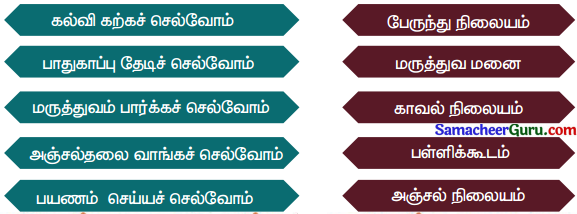
Which is the safest way of travelling? Put (✓) or (✗) in the boxes.

Samacheer Kalvi 3rd Standard Social Science Guide Term 3 Chapter 3 Child Safety 1

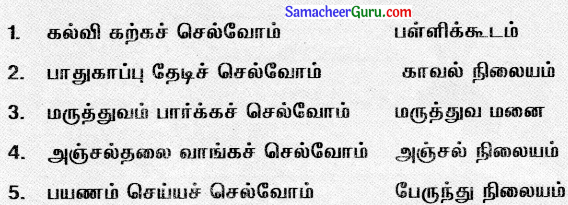
Answer:

Samacheer Kalvi 3rd Standard Social Science Guide Term 3 Chapter 3 Child Safety 2

Samacheer Kalvi 3rd Standard Social Science Guide Term 3 Chapter 3 Child Safety

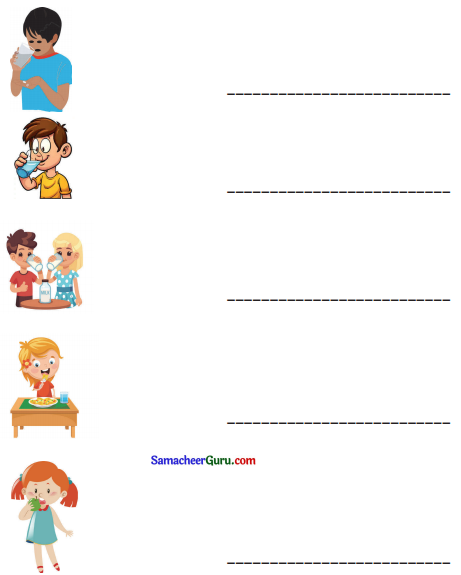
Activity Let us write (Text Book Page No. 141):

Which is safe touch / unsafe touch?

Question 1.

Samacheer Kalvi 3rd Standard Social Science Guide Term 3 Chapter 3 Child Safety 3

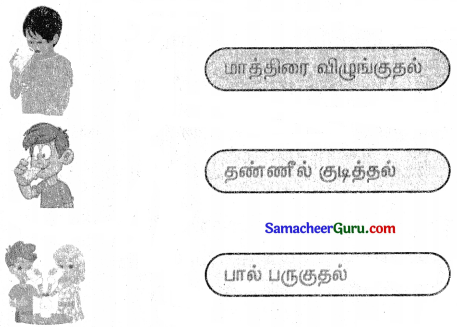
Answer:
Safe touch

Question 2.

Samacheer Kalvi 3rd Standard Social Science Guide Term 3 Chapter 3 Child Safety 4

Answer:
Unsafe touch

Samacheer Kalvi 3rd Standard Social Science Guide Term 3 Chapter 3 Child Safety

3rd Standard Social Science Guide Child Safety Additional Questions and Answers

I. Choose the correct answer.

Question 1.
Child line service was first established as a project in the year __________.
(a) 1969
(b) 1986
(c) 1996
Answer:
(c) 1996

Question 2.
_______ have been set up to rehabilitate child labour.
(a) National Child Labour projects
(b) Integrated Child Development Services
(c) National policy
Answer:
(a) National Child Labour projects.

Question 3.
The Prohibition of child Marriage Act, that prevents .
(a) Child Marriages
(b) Child education
(c) Widow marriages
Answer:
(a) Child Marriages

Samacheer Kalvi 3rd Standard Social Science Guide Term 3 Chapter 3 Child Safety

II. Fill in the blanks.

Question 1.
________ is an offence ¡n India.
Answer:
Child Labour

Question 2.
_______ is a centrally sponsored scheme of government of India.
Answer:
Integrated Child bevèlopment services

Question 3.
A Child’s safety is very _________.
Answer:
important

Samacheer Kalvi 3rd Standard Social Science Guide Term 3 Chapter 3 Child Safety

III. Match the following.

1. Laboura. Refusal to approve
2. Prohibitionb. Save from danger
3. Rescuec. Heavy Physical work

Answer:

1. Laboura. Heavy Physical work
2. Prohibitionb. Refusal to approve
3. Rescuec. Save from danger

Samacheer Kalvi 3rd Standard Social Science Guide Term 3 Chapter 3 Child Safety

IV. Answer the following.

Question 1.
What is NCLPs?
Answer:

  1. The National Child Labour Projects (NCLPs) have been set up to rehabilitate child labour.
  2. The children identified by the NCLP are to be withdrawn from the dangerous occupations and put into special schools.

Question 2.
Write about the Indian Penal Code.
Answer:

  1. The Indian Penal Code 1860, punishes people who involve ¡n child trafficking.
  2. There is also The Prohibition of Child Marriage Act, which prevents child marriages.

Samacheer Kalvi 3rd Standard Social Science Guide

Samacheer Kalvi 3rd Standard Social Science Guide Term 3 Chapter 2 Mineral Resources

Samacheer Kalvi 3rd Standard Social Science Book Solutions Term 3 Chapter 2 Mineral Resources

I. Choose the correct answer.

Question 1.
The metal inside the wires are made up of ______
(a) Iron
(b) Zinc
(c) Copper
Answer:
(c) Copper

Question 2.
_______ is used for making jewels.
(a) Zinc
(b) Bauxite
(c) Gold
Answer:
(c) Gold

Question 3.
Which mineral is used as fertilizer?
(a) Zinc Oxide
(b) Potash
(c) Iron ore
Answer:
(b) Potash

Samacheer Kalvi 3rd Standard Social Science Guide Term 3 Chapter 2 Mineral Resources

Question 4.
Zinc is found in _______.
(a) Milk
(b) Biscuit
(c) Fish
Answer:
(c) Fish

Question 5.
Which mineral is used in Aircraft making industry^
(a) Zinc
(b) Bauxite
(c) Potash
Answer:
(b) Bauxite

Samacheer Kalvi 3rd Standard Social Science Guide Term 3 Chapter 2 Mineral Resources

II. Match the following.

1. Bauxitea. Railway tracks
2. Iron oreb. Copper
3. Zinc oxidec. Aluminium
4. Metal wiresd. Soap
5. Potashe. Rubber products

Answer:

1. Bauxitea. Aluminium
2. Iron oreb. Railway tracks
3. Zinc oxidec. Rubber products
4. Metal wiresd. Copper
5. Potashe. Soap

Samacheer Kalvi 3rd Standard Social Science Guide Term 3 Chapter 2 Mineral Resources

III. Answer the following.

Question 1.
Name some minerals found on the earth.
Answer:
Copper, Iron ore, Gold, Bauxite, Zinc, Potash, Calcium, Aluminium.

Question 2.
Name some minerals that are conductors of electricty.
Answer:
Gold, Copper, Silver, Aluminium.

Question 3.
Write few uses of Copper.
Answer:

  • Copper is used in electrical equipment such as wiring and motors.
  • It also uses in construction and industrial machinery.

Samacheer Kalvi 3rd Standard Social Science Guide Term 3 Chapter 2 Mineral Resources

Question 4.
Give a short note on Iron ore.
Answer:
Iron ore is mainly used to produce iron. It is found at Kanjamalai in Tamil Nadu.

Question 5.
Why Zinc is called the essential trace element?
Answer:

  1. Zinc is called the essential trace element because very small amount of zinc is necessary for human health.
  2. Our body does not store excess zinc, it must be consumed regularly as part of the diet.
  3. Common food sources of zinc include red meat, white meat and seafood.

Activity (Text Book Page No. 124):

Question 1.

Samacheer Kalvi 3rd Standard Social Science Guide Term 3 Chapter 2 Mineral Resources 1

Answer:
Iron rod

Question 2.

Samacheer Kalvi 3rd Standard Social Science Guide Term 3 Chapter 2 Mineral Resources 2

Answer:
Copper bowl

Question 3.

Samacheer Kalvi 3rd Standard Social Science Guide Term 3 Chapter 2 Mineral Resources 3

Answer:
Gold bangles

Samacheer Kalvi 3rd Standard Social Science Guide Term 3 Chapter 2 Mineral Resources

3rd Standard Social Science Guide Mineral Resources Additional Questions and Answers

I. Choose the correct answer.

Question 1.
_________ is very good conductor of electricity.
(a) Copper
(b) Zinc
(c) Iron
Answer:
(a) Copper

Question 2.
________ is considered as one of the most precious mineraf.
(a) Aluminium
(b) Iron
(c) Gold
Answer:
(c) Gold

Question 3.
________ of potash is used for making fertilizers.
(a) 60%
(b) 95%
(c) 100%
Answer:
(b) 95%

Question 4.
Non-renewable resources can be divided into ________ types.
(a) 2
(b) 3
(c) 4
Answer:
(b) 3

Samacheer Kalvi 3rd Standard Social Science Guide Term 3 Chapter 2 Mineral Resources

II. Fill in the blanks.

Question 1.
Iron ores are found at _______ in Tamil Nadu.
Answer:
Kanjamalai

Question 2.
Gold is extracted from ________.
Answer:
Gold ore

Question 3.
Bauxite is used to make __________.
Answer:
Aluminium

Question 4.
_________ is also used to manufacture rubber and cosmetics.
Answer:
Bauxite

Samacheer Kalvi 3rd Standard Social Science Guide Term 3 Chapter 2 Mineral Resources

III. Write True or False.

Question 1.
Gold is also a very good conductor of electricity.
Answer:
True

Question 2.
The Bauxite are found at Kanjamalai in Tamil Nadu.
Answer:
False

Question 3.
The remaining 5% Potash is used in commercial and industrial products.
Answer:
True

Question 4.
Iron, Copper and Gold are called Non – mineral resources.
Answer:
False

Samacheer Kalvi 3rd Standard Social Science Guide Term 3 Chapter 2 Mineral Resources

IV. Match the following.

1. Natural Gasa. Bicycles
2. Mineral resourcesb. Aircraft industry
3. Ironc. Electrical equipments
4. Bauxited. Silver
5. Zinc Oxidee. Fossil fuels

Answer:

1. Natural Gasa. Fossil fuels
2. Mineral resourcesb. Silver
3. Ironc. Bicycles
4. Bauxited. Aircraft industry
5. Zinc Oxidee. Electrical equipment

Samacheer Kalvi 3rd Standard Social Science Guide Term 3 Chapter 2 Mineral Resources

V. Answer the following.

Question 1.
Write about Copper.
Answer:

  1. Copper is one of the most used mineral in today’s world.
  2. It is very good conductor of electricity.
  3. Copper is used in all electrical appliances including computers, televisions, mobile phones and other electronic devices.

Question 2.
What is Natural resources?
Answer:
Natural resources are important to us because they satisfy the daily needs of man such as food, clothing and shelter.

Samacheer Kalvi 3rd Standard Social Science Guide Term 3 Chapter 2 Mineral Resources

Question 3.
What is non-renewable resources?
Answer:
Natural resources that once consumed, cannot be replaced are called non-renewable resources.

Question 4.
Write a note on i) Fossil fuels ii) Mineral resources
Answer:

  1. Fossil fuels: Coal, Petroleum and Natural gas are called Fossil fuels.
  2. Mineral resources: Iron, Copper, Bauxite, Gold, Silver and others are called Mineral resources.

Question 5.
What are the types of Non-renewable resources?
Answer:
Non-renewable resources can be divided into three types. They are:

  • Metallic resources
  • Non – metallic resources
  • Fossil fuel resources

Samacheer Kalvi 3rd Standard Social Science Guide Term 3 Chapter 2 Mineral Resources

Question 6.
What are the uses of Bauxite?
Answer:

  1. Bauxite is used to make aluminium.
  2. It is used in Aircraft making industry, electrical industry and is also used in making machines.
  3. It is also used to manufacture rubber and cosmetics.

Samacheer Kalvi 3rd Standard Social Science Guide

Samacheer Kalvi 3rd Standard Social Science Guide Term 3 Chapter 1 Freedom Fighters of Tamil Nadu

Samacheer Kalvi 3rd Standard Social Science Book Solutions Term 3 Chapter 1 Freedom Fighters of Tamil Nadu

I. Choose the correct answer.

Question 1.
Where was Bharathiyar born?
(a) Ettayapuram
(b) Madurai
(c) Dindugal
Answer:
(a) Ettayapuram

Question 2.
_________ was not composed by Bharathiyar.
(a) Vande Matharam
(b) Acham Illai
(c) Kaththiyindri
Answer:
(c) Kaththiyindri

Question 3.
_______ is known as Kappalottaiya Tamilan,
(a) Subramania Siva
(b) Bharatiyar
(c) V. 0. Chidambaran
Answer:
(c) V. 0. Chidambaran

Samacheer Kalvi 3rd Standard Social Science Guide Term 3 Chapter 1 Freedom Fighters of Tamil Nadu

Question 4.
Who coined the slogan ‘Jai Hind’?
(a) Bharatiyar
(b) Chempakaraman
(c) Kumaran
Answer:
(b) Chempakaraman

Question 5.
Who started a monthly newspaper ‘Gnanabhanu’?
(a) Subramania Siva
(b) Bharatiyar
(c) V.O .Chidambaram
Answer:
(a) Subramania Siva

Samacheer Kalvi 3rd Standard Social Science Guide Term 3 Chapter 1 Freedom Fighters of Tamil Nadu

II. Match the following.

1. Desa Bandhu Youth Associationa. Bharatiyar
2. Dindugalb. Tiruppur Kumaran
3. International pro Indian Committeec. Subramania Siva
4. Swadesamitrand. V. O. Chidambaran
5. Lawyere. Chempakaraman

Answer:

1. Desa Bandhu Youth Associationa. Tiruppur Kumaran
2. Dindugalb. Subramania Siva
3. International pro Indian Committeec. Chempakaraman
4. Swadesamitrand. Bharatiyar
5. Lawyere. V. O. Chidambaran

Samacheer Kalvi 3rd Standard Social Science Guide Term 3 Chapter 1 Freedom Fighters of Tamil Nadu

III. Answer the following.

Question 1.
Name the freedom fighters of Tamil Nadu.
Answer:
Subramaniya Bharathi, V. O. Chidambaram, Chempakaraman, Tiruppur Kumaran

Question 2.
Nome some poems written by Bharatiyar.
Answer:
Vande Matharam, Acham Illai, Enthaiyum Thaayum and Jaya Bharatham.

Question 3.
Write about the Swadeshi Steam Shipping Company.
Answer:
Vallinayagan Ulaganathan Chidambaram known as V.O. Chidambaram started the Swadeshi Steam Shipping between Tuticorin and Colombo against British ships.

Samacheer Kalvi 3rd Standard Social Science Guide Term 3 Chapter 1 Freedom Fighters of Tamil Nadu

Question 4.
What is the contribution of Chempakaraman in freedom struggle?
Answer:
i. When was the first world war began in 1914, Chempakaraman pillai, formed the Indian Independence committee in Germany along with some revolutionaries from India.
ii. He Joined Emden as an officer and masterminded the attack on Madras mainly aimed at the British navy.

Question 5.
Write a short note on Tiruppur Kumaran.
Answer:

  1. Tiruppur Kumaran was born in Tiruppur. During his young age, he actively involved himself in the freedom movement.
  2. He started Desa Bandhu Youth Association. It inspired many young people of Tamil Nadu to take part in the freedom struggle.
  3. He is called Kodikaththa Kumaran.

Samacheer Kalvi 3rd Standard Social Science Guide Term 3 Chapter 1 Freedom Fighters of Tamil Nadu

Think (Text Book Page No. 107):

Question 1.
When do we celebrate our Republic Day?.
Answer:
We are celebrating Republic Day on January 26th every year.

Activity (Text Book Page No. 114):

Name the freedom fighters of Tamil Nadu.

Question 1.

Samacheer Kalvi 3rd Standard Social Science Guide Term 3 Chapter 1 Freedom Fighters of Tamil Nadu 1

Answer:
Veera Pandiya Kattabomman

Question 2.

Samacheer Kalvi 3rd Standard Social Science Guide Term 3 Chapter 1 Freedom Fighters of Tamil Nadu 2

Answer:
Velu Nechiyar

Samacheer Kalvi 3rd Standard Social Science Guide Term 3 Chapter 1 Freedom Fighters of Tamil Nadu

3rd Standard Social Science Guide Freedom Fighters of Tamil Nadu Additional Questions and Answers

I. Choose the correct answer.

Question 1.
Subramaniya Bharathi worked as a ___________.
(a) teacher
(b) lawyer
(c) doctor
Answer:
(a) teacher

Question 2.
V.0. Chidambaram was born in ___________.
(a) Madurai
(b) Tuticorin
(c) Chennai
Answer:
(b) Tuticorin

Question 3.
Chempakaraman completed his schooling in ___________.
(a) Chennai
(b) England
(c) Austria
Answer:
(c) Austria

Samacheer Kalvi 3rd Standard Social Science Guide Term 3 Chapter 1 Freedom Fighters of Tamil Nadu

Question 4.
Tiruppur kumoran was born in ___________.
(a) Tiruppur
(b) Erode
(c) Chennai ppur
Answer:
(a) Tiruppur

Question 5.
_________ was a revolutionary of the Indian independence movement.
(a) Jhansi Rani
(b) Meera bai
(c) Lakshmi Sahgal
Answer:
(c) Lakshmi Sahgal

Samacheer Kalvi 3rd Standard Social Science Guide Term 3 Chapter 1 Freedom Fighters of Tamil Nadu

II. Match the following.

1. Subramaniya Bharathia. Swadeshi steam shipping
2. V.O.Chidambaranb. Sir Walter Strickland
3. Chempakaramanc. Bandhu Youth Association
4.  Tiruppur kumarand. Captain Lakshmi
5. Lakshmi Sahgale. Jaya Bharatham

Answer:

1. Subramaniya Bharathia. Jaya Bharatham
2. V.O.Chidambaranb. Swadeshi steam shipping
3. Chempakaramanc. Sir Walter Strickland
4.  Tiruppur kumarand. Bandhu Youth Association
5. Lakshmi Sahgale. Captain Lakshmi

Samacheer Kalvi 3rd Standard Social Science Guide Term 3 Chapter 1 Freedom Fighters of Tamil Nadu

III. Fill in the blanks.

Question 1.
Bharathi became the Assistant editor of the _______ newspaper in 1904.
Answer:
Swadesamitran

Question 2.
V.O. Chidambaram took part ¡n the _______ movement.
Answer:
Indian Independence

Question 3.
Chempakaraman was born ¡n _______.
Answer:
Thiruvananthapuram

Samacheer Kalvi 3rd Standard Social Science Guide Term 3 Chapter 1 Freedom Fighters of Tamil Nadu

Question 4.
Subramania Siva started a monthly newspaper called __________.
Answer:
Gnanabanu

Question 5.
The collector office of Dindugal district is named as _________.
Answer:
Thiagi Subramania Siva Maaligai

Samacheer Kalvi 3rd Standard Social Science Guide Term 3 Chapter 1 Freedom Fighters of Tamil Nadu

IV. Write True or False.

Question 1.
Bharathi also called kappalottiya Tamilan.
Answer:
False

Question 2.
V.O.Chidambaram started the first Indian shipping company.
Answer:
True

Question 3.
Subramaniya Siva was born in Ettayapuram.
Answer:
False

Samacheer Kalvi 3rd Standard Social Science Guide Term 3 Chapter 1 Freedom Fighters of Tamil Nadu

Question 4.
Tiruppur Kumaran started Desa Bandhu Youth Association.
Answer:
True

Question 5.
Chempakaraman coined the slogan ‘Jai Hind’.
Answer:
True

Samacheer Kalvi 3rd Standard Social Science Guide Term 3 Chapter 1 Freedom Fighters of Tamil Nadu

V. Answer the following.

Question 1.
Write a note on Subramaniya Bharathi.
Answer:
The title Bharati, a name of the Goddess of Knowledge, was conferred upon him at the age of eleven by the court of Ettayapuram for his ability to compose poems on any subject, at any moment.

Question 2.
Write a note on V.O.Chidambaram.
Answer:

  • V. O. Chidambaram was born in Tuticorin,
  • He was a lawyer and was also a good orator.
  • He took part in the Indian Independence movement.
  • V. O. Chidambaram was also called Kappalottiya Tamilan.

Question 3.
What is Swadeshi Shipping Company?
Answer:
V.O. Chidambaram started the first Indian shipping company. It was called Swadeshi Shipping Company.

Samacheer Kalvi 3rd Standard Social Science Guide Term 3 Chapter 1 Freedom Fighters of Tamil Nadu

Question 4.
Name some books written by Subramania Siva.
Answer:
Subramania Siva wrote many books namely Ramanuja Vijayam, Sankara Vijayam, and so on.

Question 5.
Write about Lakshmi Sahgal.
Answer:

  • Lakshmi Sahgal was a revolutionary of the Indian independence movement.
  • She was an officer of the Indian National Army.
  • She is commonly called Captain Lakshmi.

Samacheer Kalvi 3rd Standard Social Science Guide

Samacheer Kalvi 3rd Standard Social Science Guide Term 2 Chapter 3 District Administration

Samacheer Kalvi 3rd Standard Social Science Book Solutions Term 2 Chapter 3 District Administration

I. Choose the correct answer.

Question 1.
_________ administrative head of the district.
(a) District collector
(b) Judge
(c) Superintendent of Police
Answer:
(a) District collector

Question 2.
_______ are responsible for government hospitals.
(a) Policemen
(b) Forest Officer
(c) Drivers
Answer:
(*) Health Officers

Samacheer Kalvi 3rd Standard Social Science Guide Term 2 Chapter 3 District Administration

Question 3.
_________ is maintained by the police department.
(a) Health
(b) Forest
(c) Law and order
Answer:
(c) Law and order

Question 4.
___________ ensures the proper functioning of educational department in a district.
(a) Forest Officer
(b) Chief Educational OHicer
(c) Health Officer
Answer:
(b) Chief Educational Officer

Question 5.
_______ advises on sanitation of the district.
(a) Health Officer
(b) Forest Officer
(c) Revenue Officer
Answer:
(a) Health Officer

Samacheer Kalvi 3rd Standard Social Science Guide Term 2 Chapter 3 District Administration

II. True or False.

Question 1.
District Collectors are appointed through exams conducted by U.P.S.C.
Answer:
True

Question 2.
Teacher gives order to make sure different policies reach people in the district.
Answer:
False

Question 3.
Chief Educational Officer takes care of the education department.
Answer:
True

Samacheer Kalvi 3rd Standard Social Science Guide Term 2 Chapter 3 District Administration

Question 4.
Police officertiare responsible for the government hospitals.
Answer:
False

Question 5.
Forest officer takes care of the forest department.
Answer:
True

III. Answer the following.

Question 1.
Who is the Administrative head of the district?
Answer:
District collector is the Administrative head of the district.

Question 2.
How are the District Collectors selected?
Answer:
I.A.S. officers are recruited by U.P.S.C. (Union Public Service Commission). These I.A.S. officers are appointed as district collectors.

Samacheer Kalvi 3rd Standard Social Science Guide Term 2 Chapter 3 District Administration

Question 3.
Name any three departments of the district.
Answer:

  1. Police department
  2. Medical department
  3. Educational department

Question 4.
Who maintains law and order in the district?
Answer:
Law and order is maintained in the district wiUrthet^ssistance from all police officers like inspectors and constables.

Question 5.
Write about the Health Officer.
Answer:
Health officers are responsible for government hospitals in the \ district. The person in charge advises on health and sanitation of the district.

Samacheer Kalvi 3rd Standard Social Science Guide Term 2 Chapter 3 District Administration

Project work:

Question 1.
Name some of the departments functioning in your district.
Answer:

  1. Police department
  2. Medical department
  3. Educational department
  4. Revenue deportment
  5. Forest department
  6. Production department.
  7. Health department.

Samacheer Kalvi 3rd Standard Social Science Guide Term 2 Chapter 3 District Administration

Think (Text Book Page No. 101):

Name some of the duties of Policemen.
Answer:
The primary duty of a Police officer is to protect people and property. Common duties of police include controlling traffic, patrolling neighborhoods, responding to emergency calls, writing citations, delivering warrants, arresting violators, and submitting incident reports in a timely manner.

Activity Let us Paste (Text Book Page No. 102):

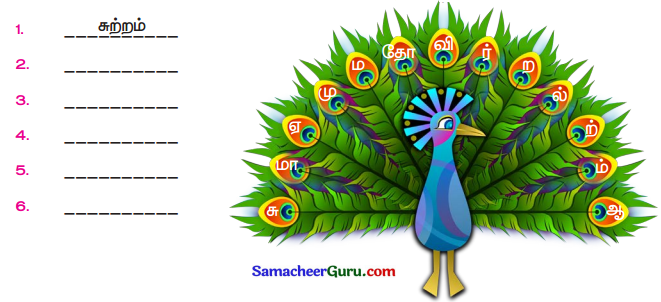
Find the missing letters using the hints.

Samacheer Kalvi 3rd Standard Social Science Guide Term 2 Chapter 3 District Administration 1

Question 1.
Administrative head of the district. C_l_ect_r.
Answer:
Collector.

Question 2.
Maintains law in and order. P_li_e
Answer:
Police.

Question 3.
Advises on health. D_c_ _r
Doctor.

Question 4.
Teaches morality. T_ _ch _ r
Answer:
Teacher.

Samacheer Kalvi 3rd Standard Social Science Guide Term 2 Chapter 3 District Administration

Activity Let us write (Text Book Page No. 105):

Write True or False.

Question 1.
A District collector takes actions during natural disaster.
Answer:
True

Question 2.
District collector does not supervise local bodies.
Answer:
False

Question 3.
The Superintendent of police does not make sure that policy reaches the people.
Answer:
False

Question 4.
District collector works along with different department heads for the smooth functioning of the district.
Answer:
True

Samacheer Kalvi 3rd Standard Social Science Guide Term 2 Chapter 3 District Administration

3rd Standard Social Science Guide District Administration Additional Questions and Answers

I. Choose the correct answer.

Question 1.
________ is responsible for proper and smooth functioning of the district.
(a) District Collector
(b) Judge
(c) Police
Answer:
(a) District Collector

Question 2.
I.A.S officers are recruited by ________.
(a) TNP5C
(b) U.P.S.C.
(c) TNEO
Answer:
(b) U.P.S.C.

Question 3.
________ makes sure that the policies should reach the people.
(a) Judge
(b) Police
(c) District Collector
Answer:
(c) District Collector

Question 4.
________ is the head of the revenue department,
(a) Judge
(b) Doctor
(c) District Collector
Answer:
(c) District Collector

Samacheer Kalvi 3rd Standard Social Science Guide Term 2 Chapter 3 District Administration

II. True or False:

Question 1.
Superindent is responsible for the police force ¡n the district.
Answer:
True

Question 2.
Call ‘103’ to reach out to police in case of emergency.
Answer:
False

Question 3.
I.A.S officers are appointed as district collectors.
Answer:
True

Question 4.
District collector has a major role in the development of the government.
Answer:
True

Samacheer Kalvi 3rd Standard Social Science Guide Term 2 Chapter 3 District Administration

III. Match the following.

1. District collectora. Law and order
2. Health Officersb. State’s Public Service
3. Inspectorsc. Government Hospitals
4. TNPSCd. Administrative head

Answer:

1. District collectora. Administrative head
2. Health Officersb. Government Hospitals
3. Inspectorsc. Law and order
4. TNPSCd. State’s Public Service

Samacheer Kalvi 3rd Standard Social Science Guide Term 2 Chapter 3 District Administration

IV. Answer the following.

Question 1.
What is Natural disaster?
Answer:
A natural event that results in huge damage.

Question 2.
Who are the subordinates of the district collector?
Answer:
District Medical Officer, Superintendent of Police, District Forest Officer, Chief Educational Officer and Revenue Divisional Officer.

Question 3.
Who is the head of the Revenue Department?
Answer:
District Collector is the head of the Revenue Department.

Samacheer Kalvi 3rd Standard Social Science Guide Term 2 Chapter 3 District Administration

Question 4.
What are the departments overseen by the District Collector?
Answer:
District Collector also supervises local bodies like district boar village panchayat and municipal committees.

Samacheer Kalvi 3rd Standard Social Science Guide

Samacheer Kalvi 3rd Standard Social Science Guide Term 2 Chapter 2 Sanctuaries

Samacheer Kalvi 3rd Standard Social Science Book Solutions Term 2 Chapter 2 Sanctuaries

I. Choose the correct answer.

Question 1.
Corbett National Park is at __________.
(a) Uttarakhand
(b) Bangaluru
(c) Chennai
Answer:
(a) Uttarakhand

Question 2.
The National Park in West Bengal is __________.
(a) Sunderbans National Park
(b) Gir National Park
(c) Anna National Park
Answer:
(a) Sunderbans National park

Samacheer Kalvi 3rd Standard Social Science Guide Term 2 Chapter 2 Sanctuaries

Question 3.
__________ sanctuary is at Vedanthangal.
(a) Lions
(b) Birds
(c) Tigers
Answer:
(b) Birds

Question 4.
There are __________ Biosphere Reserves in Tamil Nadu.
(a) three
(b) five
(c) four
Answer:
(a) three

Question 5.
Gir national Park is in __________.
(a) Gujarat
(b) Assam
(c) Hyderabad
Answer:
(a) Gujarat

Samacheer Kalvi 3rd Standard Social Science Guide Term 2 Chapter 2 Sanctuaries

II. Match the following.

1. Tigera. Nilgiris
2. Lionb. West Bengal
3. Elephantc. Assam
4. Birdsd. Gujarat
5. One horned rhinocerose. Vedanthangal

Answer:

1. Tigera. West Bengal
2. Lionb. Gujarat
3. Elephantc. Nilgiris
4. Birdsd. Vedanthangal
5. One horned rhinocerose.  Assam

Samacheer Kalvi 3rd Standard Social Science Guide Term 2 Chapter 2 Sanctuaries

III. Answer the following.

Question 1.
What is sanctuary?
Answer:
Sanctuary is a place where animals and birds are protected from hunting and other human activities.

Question 2.
What are the animals protected in the Corbett National Park?
Answer:
Elephants, tigers, crocodiles, deer, para or hog deer, leopards, langurs, wild boars, gharial etc.

Samacheer Kalvi 3rd Standard Social Science Guide Term 2 Chapter 2 Sanctuaries

Question 3.
Name the animals in Nilgiris Biosphere.
Answer:
Bengal tiger, Indian leopard, Black panther, Mongoose, Nilgiri langur, and Nilgiri Tahr.

Question 4.
Where are one-horned rhinoceros protected?
Answer:
Kaziranga National Park is in Assam.

Question 5.
How should we treat animals?
Answer:
Animals should be treated with kindness and love. They can act as great companions in our life.

Samacheer Kalvi 3rd Standard Social Science Guide Term 2 Chapter 2 Sanctuaries

Project:

Question 1.
Name the state for the following Sanctuary / National Park / Biosphere Reserve.
1) Vedanthangal Bird Sanctuary
2) &ir National Park
3) Nilgiri Biosphere reserve
4) Kaziranga National Park
5) Corbett National Park
Answer:
1) Vedanthangal Bird Sanctuary – Tamil Nadu
2) Gir National Park – Gujarat
3) Nilgiri Biosphere Reserve – Parts of Tamil. Nodu (Kerala and Kczrnataka)
4) Kaziranga National Park – Assam
5) Corbett National Park – Uttarakhand.

Samacheer Kalvi 3rd Standard Social Science Guide Term 2 Chapter 2 Sanctuaries

Activity Let us Write (Text Book Page No. 89):

Question 1.
Write the differences between the following.

Samacheer Kalvi 3rd Standard Social Science Guide Term 2 Chapter 2 Sanctuaries 1

Answer:

SanctuaryNational parkBiosphere reserve
Sanctuary is a place where animals and birds are protected from hunting and other human activities.A National park is a large area of land which is protected by the government because of its natural beauty and in which public can visit.A biosphere reserve is an eco system with plants and animals of unusual scientific and natural interest.

Question 2.
If you want to see the Bengal tigers, which National Park will you visit? Write the name of the park and its location.
Answer:
Sunderbans National Park in West Bengal.

Samacheer Kalvi 3rd Standard Social Science Guide Term 2 Chapter 2 Sanctuaries

Think (Text Book Page No. 90):

Question 1.
When International Tiger Day is celebrated?
Answer:
29th July.

Activity Let us discuss and write (Text Book Page No. 94):

Question 1.
Name some of the animals or birds found in the following places.

Samacheer Kalvi 3rd Standard Social Science Guide Term 2 Chapter 2 Sanctuaries 2

Answer:

Viralimalai SanctuaryNilgiri Biosphere ReserveKaziranga National ParkCorbett National Park
Peacock,

Gar ganey, Blue-winged teal

Nilgiri langur, Nilgiri tahr, Indian leopardOne-horned Rhinoceros, Asiatic water buffalo, SambarTigers, Leopards, Deer, Elephants’

Samacheer Kalvi 3rd Standard Social Science Guide Term 2 Chapter 2 Sanctuaries

3rd Standard Social Science Guide Sanctuaries Additional Questions and Answers

I. Choose the correct answer.

Question 1.
__________ are places where wild animals are protected.
(a) National Parks
(b) Biosphere reserves
(c) None
Answer:
(a) National Parks

Question 2.
Kurinchi flower which blossoms once in __________ years.
(a) ten
(b) eleven
(c) twelve
Answer:
(c) twelve

Samacheer Kalvi 3rd Standard Social Science Guide Term 2 Chapter 2 Sanctuaries

Question 3.
Vedanthangal Bird sanctuary is 25 kms from _________.
(a) Kanchipuram
(b) Chengalpattu
(c) Trichy
Answer:
(b) Chengalpattu

Question 4.
________ has around two-thirds of all rhinoceros in the world.
(a) Kaziranga National Park
(b) Corbett National Park
(c) Sunderbans National Park
Answer:
(a) Kaziranga National Park

Question 5.
Peacocks can be found in their natural habitat at Viralimalai in ________.
(a) Chennai
(b) Trichy
(c) Salem
Answer:
(b) Trichy

Samacheer Kalvi 3rd Standard Social Science Guide Term 2 Chapter 2 Sanctuaries

II. Match the following.

1. Corbett National parka. Black Panther
2. Sunder National Parkb. Assam
3. Nilgiri Biosphere Reservec. Gujarat
4. Kaziranga National Parkd. West Bengal
5. Gir National Parke. Uttarakhand

Answer:

1. Corbett National parka. Uttarakhand
2. Sunder National Parkb. West Bengal
3. Nilgiri Biosphere Reservec. Black Panther
4. Kaziranga National Parkd. Assam
5. Gir National Parke. Gujarat

Samacheer Kalvi 3rd Standard Social Science Guide Term 2 Chapter 2 Sanctuaries

III. Answer the following.

Question 1.
What is Biosphere reserves?
Answer:
Biosphere reserves are the places where plants, animals, and birds are protected.

Question 2.
What is an environment?
Answer:
The natural place where the plant or animal life is called the environment.

Samacheer Kalvi 3rd Standard Social Science Guide Term 2 Chapter 2 Sanctuaries

Question 3.
Describe the Kaziranga National Park,
Answer:
Kaziranga national Park is the home of one-horned rhinoceros. It has around two-thirds of all rhinoceros in the world.

Question 4.
What is migrate?
Answer:
A bird or an animal moves from one place to another due to changes in seasons.

Question 5.
What are the Biosphere Reserves in Tamil Nadu?
Answer:
The three Biosphere Reserves in Tamil Nadu are :

  • Nilgiri Biosphere Reserve.
  • Gulf of Mannar Biosphere Reserve.
  • Agasthyamalai Biosphere Reserve.

Samacheer Kalvi 3rd Standard Social Science Guide

Samacheer Kalvi 3rd Standard Social Science Guide Term 2 Chapter 1 Historical Places

Samacheer Kalvi 3rd Standard Social Science Book Solutions Term 2 Chapter 1 Historical Places

I. Choose the correct answer.

Question 1.
Sea shore temple is at _________.
(a) Mahabalipuram
(b) Trichy
(c) Madurai
Answer:
(a) Mahabalipuram

Question 2.
Fort St. George is at _________.
(a) Kanchipuram
(b) Chennai
(c) Trichy
Answer:
(b) Chennai

Question 3.
There are _________ styles of architectures at Mahabalipuram. , .
(a) six
(b) three
(c) four
Answer:
(c) Four

Question 4.
Thiruvalluvar wrote _________.
(a) Thirukkural
(b) Nannerr
(c) Athichudi
Answer:
(a) Thirukkural

Question 5.
Nandhi in Thanjavur Periya Kovil was built with _________.
(a) multiple stones
(b) two stones
(c) single stone
Answer:
(c) Single stone

Samacheer Kalvi 3rd Standard Social Science Guide Term 2 Chapter 1 Historical Places

II. Match the following.

1. Vivekananda rocka. St. George fort
2. Museumb. Villupuram
3. Gingee fortc. Pallavas
4. Mahabalipuramd. Cholas
5. Periyakovile. Kanyakumari

Answer:

1. Vivekananda rocka. Kanyakumari
2. Museumb. St. George fort
3. Gingee fortc. Villupuram
4. Mahabalipuramd. Pallavas
5. Periya kovile. Cholas

Samacheer Kalvi 3rd Standard Social Science Guide Term 2 Chapter 1 Historical Places

III. Answer the following.

Question 1.
What are inside fort St. George?
Answer:
The fort has a museum and a church. The Secretariat of Tamil Nadu is also inside the fort.

Question 2.
Write a short note on Thiruvalluvar statue.
Answer:
Thiruvalluvar statue in Kanyakumari. It is 133 feet tall. Thiruvalluvar statue’s height denotes the number of chapters in Thirukural.

Question 3.
Name the three water bodies which are surrounded the Thiruvalluvar statue.
Answer:
Arabian Sea, Indian Ocean and Bay of Bengal.

Samacheer Kalvi 3rd Standard Social Science Guide Term 2 Chapter 1 Historical Places

Question 4.
Who built Thanjavur Periya kovil? Write any special feature of the temple.
Answer:
Thanjavur Periya Kovil was built by Raja Raja Cholan. The Nandi inside the temple was built using a single stone. It is one of the largest temples in India.

Question 5.
Describe the Gingee fort.
Answer:
Gingee fort in Villupuram district. This is one of the oldest forts in Tamil Nadu. It was built at a height of 800 feet and protected by a 80 feet wide moat.

Samacheer Kalvi 3rd Standard Social Science Guide Term 2 Chapter 1 Historical Places 

3rd Standard Social Science Guide Historical Places Additional Questions and Answers

I. Choose the correct answer.

Question 1.
Mahabalipuram is near at ___________.
(a) Kanchipuram
(b) Chennai
(c) Trichy
Answer:
(b) Chennai

Question 2.
_________ is the first English fort in India.
(a) Fort St. George
(b) Mount Fort
(c) Ellis Fort
Answer:
(a) Fort St. George

Samacheer Kalvi 3rd Standard Social Science Guide Term 2 Chapter 1 Historical Places

Question 3.
Thiruvalluvar statue is in __________.
(a) Chennai
(b) Trichy
(c) Kanyakumari
Answer:
(c) Kanyakumari

Question 4.
Thirukural has ______ adhikarams.
(a) 133
(b) 1330
(c) 150
Answer:
(a) 133

Question 5.
____________ is one of the oldest forts in Tamil Nadu.
(a) Fort St. George
(b) Gingee Fort
(c) Ellis Fort
Answer:
(b) Gingee Fort

Samacheer Kalvi 3rd Standard Social Science Guide Term 2 Chapter 1 Historical Places

II. Match the following.

1. Mahabalipurama. Brihadeeshwara Temple
2. Thiruvalluvarb. Vilupuram
3. Thanjavur Periyakovilc. Place of exhibition
4. Gingee fortd. Thirukural
5. Museume. Pallavas

Answer:

1. Mahabalipurama. Pallavas
2. Thiruvalluvarb. Thirukural
3. Thanjavur Periyakovilc. Brihadeeshwara Temple
4. Gingee fortd. Vilupuram
5. Museume. Place of exhibition

Samacheer Kalvi 3rd Standard Social Science Guide Term 2 Chapter 1 Historical Places

III. Answer the following.

Question 1.
What is Architecture?
Answer:
The art of making buildings is called Architecture.

Question 2.
Describe the Mahabalipuram Temples.
Answer:
Temples at Mahabalipuram were built by three generations of the Pallava Kings and it took nearly 200 years to plan and create the site.

Question 3.
What is Monuments?
Answer:
A building, structure or site that is of historical importance.

Samacheer Kalvi 3rd Standard Social Science Guide Term 2 Chapter 1 Historical Places

Question 4.
What are historical places?
Answer:
Historical places are the places where buildings, idols, and arts were made long ago.

Question 5.
Who built Mahabalipuram?
Answer:
Mahabalipuram was built by Pallavas.

Question 6.
Where is Fort St. George?
Answer:
Fort St. George is in Chennai.

Samacheer Kalvi 3rd Standard Social Science Guide

Samacheer Kalvi 3rd Standard Social Science Guide Term 1 Chapter 4 Safety

Samacheer Kalvi 3rd Standard Social Science Book Solutions Term 1 Chapter 4 Safety

I. Choose the correct answer from the list given below.

(Fire, Water, Electricity, Snake, Traffic light)

Question 1.
If it is touched, It will be hot
If it is left, it will burn
What is it? __________
Answer:
Fire

Question 2.
I use it everyday. I see it during rainy day.
What is it? __________
Answer:
Water

Question 3.
I spread through lines, but I’m not a climber :
I help to glow the bulbs.
Who am I? _________
Answer:
Electricity

Question 4.
He who doesn’t have legs, slithers and wanders in Jungles.
Who is he? _________
Answer:
Snake

Question 5.
The one who stands on the road and guides us has three eyes of three colours.
Who is he? _________
Answer:
Traffic light

Samacheer Kalvi 3rd Standard Social Science Guide Term 1 Chapter 4 Safety

II. Write True or false.

Question 1.
We shouldn’t play in the kitchen.
Answer:
True

Question 2.
We can go to the deep part of the river to bath.
Answer:
False

Question 3.
Never touch the electrical appliances with wet hand.
Answer:
True

Question 4.
We should keep the house and surroundings clean.
Answer:
True

Question 5.
We can play with glassware.
Answer:
False

Samacheer Kalvi 3rd Standard Social Science Guide Term 1 Chapter 4 Safety

III. Answer the following questions.

Question 1.
Write some factors that can cause accidents.
Answer:

  1. Haste / urgency
  2. Carelessness / Negligence
  3. Lack of awareness
  4. Violation of rules

Question 2.
What should we do, if our clothes catch fire?
Answer:

  1. We shouldn’t run.
  2. Drop down and roll on the ground.

Samacheer Kalvi 3rd Standard Social Science Guide Term 1 Chapter 4 Safety

Question 3.
How should we protect ourselves from accidents caused by electricity?
Answer:

  1. We do touch switches, plugs or electrical wires with wet hand.
  2. We do touch the iron box and other electrical appliances when they are switched on.
  3. We do play near electrical towers or transformers.
  4. We do climb on electrical posts.

Question 4.
Where should we cross the road?
Answer:
We should cross the road only at the zebra crossing.

Question 5.
Mention the names of some toxic organisms.
Answer:
Snake, Scorpion, Spider, Wasp.

Samacheer Kalvi 3rd Standard Social Science Guide Term 1 Chapter 4 Safety

IV. Let us colour.

Samacheer Kalvi 3rd Standard Social Science Guide Term 1 Chapter 4 Safety 1

Answer:

Samacheer Kalvi 3rd Standard Social Science Guide Term 1 Chapter 4 Safety 2

Samacheer Kalvi 3rd Standard Social Science Guide Term 1 Chapter 4 Safety

Project Work:

Question 1.
Write your experience of firing crackers during Diwali.

Samacheer Kalvi 3rd Standard Social Science Guide Term 1 Chapter 4 Safety 3

Answer:
Diwali is a very Popular festival in India. I like sound-free crackers. Mathappu, Poovanam and Saram which makes no noise. Our surroundings are most affected by the eruption of sooty crackers.

Samacheer Kalvi 3rd Standard Social Science Guide Term 1 Chapter 4 Safety

Think Zone (Text Book Page No. 182):

Question 1.
How the forest fire occur?
Answer:
Forest fires always start by one of two ways – naturally caused or human-caused. Natural fires are generally started by lightning, with a very small percentage started by spontaneous combustion of dry fuel such as sawdust and leaves. On the other hand, human-caused fires can be due to any number of reasons.

Question 2.
Have you ever seen Fire Extinguisher? If yes, where have you seen it?
Answer:
Yes. I have seen in my school.

Question 3.
Have you ever bathed in lake or river? If yes, with whom did you go?
Answer:
Yes, I took bath in a river with my father.

Samacheer Kalvi 3rd Standard Social Science Guide Term 1 Chapter 4 Safety

Activity (Text Book Page No. 184):

Question 1.
How fire is used in our daily life?
Answer:

  1. Fire is used to cook meals.
  2. It can be used to generate heat and like light.
  3. It cane be used in incineration of waste.

Activity (Text Book Page No. 187):

Question 1.
Write the names of the electrical appliances which are used in your house.
Answer:

  1. Electric Lights
  2. Fan
  3. Radio
  4. Television
  5. DVD Player
  6. Iron Box
  7. Refrigerator
  8. Washing machine

Samacheer Kalvi 3rd Standard Social Science Guide Term 1 Chapter 4 Safety

Think Zone (Text Book Page No. 189):

Samacheer Kalvi 3rd Standard Social Science Guide Term 1 Chapter 4 Safety 4

Question 1.
Have you ever seen these traffic signs?
Answer:
Yes

Question 2.
Where did you see?
Answer:
Infront of my School.

Samacheer Kalvi 3rd Standard Social Science Guide Term 1 Chapter 4 Safety

Activity (Text Book Page No. 190):

Question 1.
Write down the slogans of awareness which you have observed while travelling.
Answer:

  1. Don’t watch her behind. Keep safety in mind.
  2. Driving faster can cause disaster.
  3. Fast drive could be last drive.
  4. Follow traffic rules, save for future.

Samacheer Kalvi 3rd Standard Social Science Guide Term 1 Chapter 4 Safety

3rd Standard Social Science Guide Safety Additional Questions and Answers

I. Choose the correct answer from the bracket.

(Water, pesticides, Fire, Electricity, Zebra crossing)

Question 1.
__________ is the man’s marvelous creation.
Answer:
Fire

Question 2.
__________ is very important in our daily life.
Answer:
Water

Question 3.
__________ is used in houses, factories and other work places.
Answer:
Electricity

Question 4.
Pedestrians should cross the road only at the __________.
Answer:
Zebra crossing

Question 5.
__________ are very dangerous.
Answer:
Pesticides

Samacheer Kalvi 3rd Standard Social Science Guide Term 1 Chapter 4 Safety

II. Write True or False.

Question 1.
We shouldn’t close the cylinder valve after cooking.
Answer:
False

Question 2.
We have to wear life jacket when we travel in water.
Answer:
True

Question 3.
Do not climb on electrical posts.
Answer:
True

Question 4.
We shouldn’t wear seat belt when we travel in a car.
Answer:
False

Question 5.
Do not cross the road hastily by running.
Answer:
True

Samacheer Kalvi 3rd Standard Social Science Guide Term 1 Chapter 4 Safety

III. Answer the following.

Question 1.
Write any three precautions to avoid fire accidents.
Answer:

  1. We should handle the highly inflammable things carefully.
  2. The person who cooks can wear cotton clothes.
  3. Don’t play with fire.

Question 2.
What to do during a fire accident?
Answer:

  • Use fire extinguisher.
  • Execute fire warning system in buildings.

Samacheer Kalvi 3rd Standard Social Science Guide

Samacheer Kalvi 3rd Standard Social Science Guide Term 1 Chapter 3 Panchayat

Samacheer Kalvi 3rd Standard Social Science Book Solutions Term 1 Chapter 3 Panchayat

I. Choose the correct answer.

Question 1.
Panchayat is a _________ level government.
a) District
b) State
c) Village
Answer:
c) Village

Question 2.
________ introduced the word ‘Gram Swaraj’.
a) Kamarajar
b) Mahatma Gandhi
c) Nehru
Answer:
b) Mefliatma Gandhi

Question 3.
The lower level of the three tier system is ________ panchayat.
a) District
b) Block level
c) Village
Answer:
c) Village

Question 4.
Who elects / elect the Vice President of the Panchayat?
a) People
b) Ward members
c) District collector
Answer:
a) People

Question 5.
The tenure of the members of the Panchayat is ________
a) 15 years
b) 10 years
c) 5 years
Answer:
c) 5 years

Samacheer Kalvi 3rd Standard Social Science Guide Term 1 Chapter 3 Panchayat

II. Match the following.

1. Kudavolaia. development of plan
2. Gram Panchayatb. obligatory function
3. Planting treesc. old system of election
4. Street lightsd. discretionary function
5. Gram sabhae. people above 500

Answer:

1. Kudavolaia. old system of election
2. Gram Panchayatb. people above 500
3. Planting treesc. discretionary function
4. Street lightsd. obligatory function
5. Gram sabhae. development of plan

Samacheer Kalvi 3rd Standard Social Science Guide Term 1 Chapter 3 Panchayat

III. Answer the following.

Question 1.
What is Village Panchayat?
Answer:
Village panchayat is the root of Panchayat Raj system. It provides the basic facilities for the village people.

Question 2.
Illustrate the Three tier system.
Answer:
Panchayat Raj is the three-tier system, they are

  1. District Level: District Panchayat (Zilla Parishad)
  2. Block Level: Panchayat Union (Mandal Parishad/Panchyat Samiti)
  3. Village Level: Village Panchayat (Gram Parishad)

Question 3.
Write any three obligatory functions of the Panchayat.
Answer:

  1. Providing electricity and maintaining the street lights.
  2. Construction and maintenance of village wells.
  3. Providing drinking water.

Samacheer Kalvi 3rd Standard Social Science Guide Term 1 Chapter 3 Panchayat

Question 4.
Write any three discretionary functions of the Panchayat.
Answer:

  1. Planting trees on either sides of roads
  2. Setting up and maintenance of public markets
  3. Setting up of “Gardens”.

Question 5.
When is the Gram Sabha meeting held?
Answer:
Gram Sabha meeting must be held at least four times a year.
Meeting must be conducted on following dates.

  1. 26th January
  2. 1st – May
  3. 15th – August
  4. 2nd – October

Samacheer Kalvi 3rd Standard Social Science Guide Term 1 Chapter 3 Panchayat

Project work:

Question 1.
Write the facilities which you get from your Panchayat.
Answer:

  1. We get good drinking water facilities.
  2. We get good road and gardens in our village.
  3. Maintaining the village wells.
  4. Setting and maintaining the village library.
  5. We get good electricity facilities.
  6. Providing and maintaining sanitation facilities.
  7. Setting up sewage channels.
  8. Setting up and maintenance of playgrounds.
  9. Setting up and maintenance of public market.

Samacheer Kalvi 3rd Standard Social Science Guide Term 1 Chapter 3 Panchayat

Activity Let us Answer (Text Book Page No. 172):

Question 1.
Write the name of your village panchayat president?
Answer:
Mr. Vellaisamy

Question 2.
How many ward members are there in your village panchayat?
Answer:
12

Samacheer Kalvi 3rd Standard Social Science Guide Term 1 Chapter 3 Panchayat

Think Zone (Text Book Page No. 175):

Question 1.
Is there any library, in your village?
Answer:
Yes, we have one small library in our village.

Question 2.
Is there any park, in your village?
Answer:
No, there is no park in my village

Question 3.
Is there any playground in your village?
Answer:
Yes, we have a big play ground in our village.

Samacheer Kalvi 3rd Standard Social Science Guide Term 1 Chapter 3 Panchayat

3rd Standard Social Science Guide Panchayat Additional Questions and Answers

I. Choose the correct answer.

Question 1.
_________ is the root of panchayat raj system.
a) Village panchayat
b) Municipality
c) Town panchayat
Answer:
a) Village panchayat

Question 2.
The 73rd Constitutional Amendment Act was passed by the parliment in _________.
a) March, 1993
b) April, 1993
c) April, 1995
Answer:
b) April, 1993

Question 3.
Gram sabha meeting must be held at least _________ times a year.
a) two
b) three
c) four
Answer:
c) four

Question 4.
Collection tax is a compulsory duty of _________.
a) panchayat
b) village officer
c) councellor
Answer:
a) panchayat

Samacheer Kalvi 3rd Standard Social Science Guide Term 1 Chapter 3 Panchayat

II. Match the following.

1. Grama sabhaa. election
2. 73rd Constitutional Amendment Actb. chola kingdom
3. Presidentc. Mahatma Gandhi
4. Gram Swarajd. April 1993
5. Kudavalaie. root of democracy

Answer:

1. Grama sabhaa. root of democracy
2. 73rd Constitutional Amendment Actb. April 1993
3. Presidentc. election
4. Gram Swarajd. Mahatma Gandhi
5. Kudavalaie. chola kingdom

Samacheer Kalvi 3rd Standard Social Science Guide Term 1 Chapter 3 Panchayat

III. Answer the following.

Question 1.
What is the Gram sabha meeting?
Answer:
People of our village gather together and discuss the roles of the panchayat board.

Question 2.
How the panchayat members are selected?
Answer:
Village people select the president and members through the election. There is one elected every five years.

Question 3.
Write the duties of Gram Sabha.
Answer:

  1. Planning and executing village developmental programs.
  2. Verifying income and expenditure of village funds.
  3. Planning to rectify the grievances of the people.

Samacheer Kalvi 3rd Standard Social Science Guide

Samacheer Kalvi 3rd Standard Social Science Guide Term 1 Chapter 2 Our Friends

Samacheer Kalvi 3rd Standard Social Science Book Solutions Term 1 Chapter 2 Our Friends

I. Choose the correct answer from the list given below.
(roads, judge, first aid, doctor, teacher)

Question 1.
________ is a lifesaving treatment which is given before the actual treatment to a victim.
Answer:
first aid

Question 2.
Nurse assists the _______.
Answer:
doctor

Question 3.
________ is giving justice to the people in various cases.
Answer:
judge

Question 4.
________ enlightens us with knowledge.
Answer:
teacher

Question 5.
Road workers lay ________.
Answer:
roads

Samacheer Kalvi 3rd Standard Social Science Guide Term 1 Chapter 2 Our Friends

II. Write True or False.

Question 1.
A tailor stitches the Clothes.
Answer:
True

Question 2.
An electrician fits pipes and tubes.
Answer:
False

Question 3.
Traffic police man controls traffic.
Answer:
True

Question 4.
Doctors protect people and properties.
Answer:
False

Question 5.
The Supreme court is the guardian of the constitution.
Answer:
True

Samacheer Kalvi 3rd Standard Social Science Guide Term 1 Chapter 2 Our Friends

III. Answer the following.

Question 1.
Name some people who serve us.
Answer:
Farmers, Doctor, Engineer, Police, Nurse.

Question 2.
Who are firefighters?
Answer:
Firefighters are save people and properties from fire.

Question 3.
What does a civil engineer do?
Answer:
Engineer designs houses, schools, colleges, bridges, multi storey buildings, temples, settlements, shops, factories, etc., Buildings are constructed using a plan and made by an engineer.

Samacheer Kalvi 3rd Standard Social Science Guide Term 1 Chapter 2 Our Friends

Question 4.
Write about farmers.
Answer:
A farmer is a person engaged in agriculture, raising living organisms for food or raw materials.

Question 5.
How do the soldiers protect our country?
Answer:
The soldiers are fighting with invaders to product our country. They are sacrificing their own lives and family. Project work.

Samacheer Kalvi 3rd Standard Social Science Guide Term 1 Chapter 2 Our Friends

Project work:

Match the tools with the community helpers and write the task they perform.

Samacheer Kalvi 3rd Standard Social Science Guide Term 1 Chapter 2 Our Friends 1

Answer:

Samacheer Kalvi 3rd Standard Social Science Guide Term 1 Chapter 2 Our Friends 2

Samacheer Kalvi 3rd Standard Social Science Guide Term 1 Chapter 2 Our Friends

Activity Let us Write (Text Book Page No. 157):

Samacheer Kalvi 3rd Standard Social Science Guide Term 1 Chapter 2 Our Friends 3

Answer:

Samacheer Kalvi 3rd Standard Social Science Guide Term 1 Chapter 2 Our Friends 4

Think Zone (Text Book Page No. 158):

Question 1.
How can one call the ambulance?
Answer:

  • Make the phone call to No. 108
  • Inform the accidental.
  • Try to help the injured person by giving first aids.
  • Till the ambulance reaches the spot be with the injured person.

Samacheer Kalvi 3rd Standard Social Science Guide Term 1 Chapter 2 Our Friends

Think (text Book Page No. 158):

Samacheer Kalvi 3rd Standard Social Science Guide Term 1 Chapter 2 Our Friends 5

Answer:

Samacheer Kalvi 3rd Standard Social Science Guide Term 1 Chapter 2 Our Friends 6

In emergency we must know the phone numbers.

  • For Police – 100;
  • For Fire Service – 101:
  • For Ambulance – 108.

Samacheer Kalvi 3rd Standard Social Science Guide Term 1 Chapter 2 Our Friends

Activity (Text Book Page No. 161):

Question 1.
You can hear my ding dong before I come. Lives are saved, properties are protected from fire. Who am I ________?
Answer:
iefr eginen

Question 2.
I keep people safe. I protect our community from crime. I make sure people follow the rules. Who am I _______?
Answer:
ecplio

Question 3.
I toil (hard work) in the soil. I plough to sow, so that mud could give us food. Who am I _________?
Answer:
emarfr

Samacheer Kalvi 3rd Standard Social Science Guide Term 1 Chapter 2 Our Friends

Activity Who Am I? (Text Book Page No. 163):

Question 1.

Samacheer Kalvi 3rd Standard Social Science Guide Term 1 Chapter 2 Our Friends 7

I _________ Clothes.
I am a _________.
Answer:
Stitch, Tailor.

Question 2.

Samacheer Kalvi 3rd Standard Social Science Guide Term 1 Chapter 2 Our Friends 8

I _________ wall.
I am a _________.
Answer:
Paint, Painter.

Question 3.

Samacheer Kalvi 3rd Standard Social Science Guide Term 1 Chapter 2 Our Friends 9

I _________ pipes and taps.
I am a _________.
Answer:
repair the, plumber.

Samacheer Kalvi 3rd Standard Social Science Guide Term 1 Chapter 2 Our Friends

Question 4.

Samacheer Kalvi 3rd Standard Social Science Guide Term 1 Chapter 2 Our Friends 10

I _________ houses and people.
I am a _________.
Answer:
Guard, Watchman.

Question 5.

Samacheer Kalvi 3rd Standard Social Science Guide Term 1 Chapter 2 Our Friends 11

I _________ electrical appliances.
I am a _________.
Answer:
repair, Electrician.

Samacheer Kalvi 3rd Standard Social Science Guide Term 1 Chapter 2 Our Friends

3rd Standard Social Science Guide Our Friends Additional Questions and Answers

I. Choose the correct answer from the bracket.

(Nethaji, Firefighters, Supreme court, engineer, Traffic police)

Question 1.
_________ wear protective jackets.
Answer:
Firefighters

Question 2.
Buildings are constructed using a plan and made by an _________.
Answer:
engineer

Question 3.
_________ formed Indian National Army.
Answer:
Nethaji

Question 4.
_________ is standing in the middle of the road.
Answer:
Traffic police

Question 5.
_________ is the ‘Guardian of the constitution’.
Answer:
Supreme court.

Samacheer Kalvi 3rd Standard Social Science Guide Term 1 Chapter 2 Our Friends

II. Write True or False.

Question 1.
Fire fighters save people and properties from fire.
Answer:
True

Question 2.
Doctors protect our country.
Answer:
False

Question 3.
We are getting food from farmers.
Answer:
True

Question 4.
An engineer gives structure to the building.
Answer:
True

Question 5.
Nurses help in giving justice to the people in various cases.
Answer:
False

Samacheer Kalvi 3rd Standard Social Science Guide Term 1 Chapter 2 Our Friends

III. Answer the following.

Question 1.
Write about Nurse.
Answer:
Nurse is a person who assists the doctor and takes care of the patients.

Question 2.
What is First aid?
Answer:
First aid is a life-saving aid that is given before the actual treatment of a victim.

Samacheer Kalvi 3rd Standard Social Science Guide Term 1 Chapter 2 Our Friends

Question 3.
Who is standing in the middle of the road?
Answer:
The traffic police are standing in the middle of the road.

Question 4.
Who is an engineer?
Answer:
Buildings are constructed using a plan and made by an engineer.

Samacheer Kalvi 3rd Standard Social Science Guide

Samacheer Kalvi 3rd Standard Social Science Guide Term 1 Chapter 1 Family

Samacheer Kalvi 3rd Standard Social Science Book Solutions Term 1 Chapter 1 Family

I. Choose the correct answer:

Question 1.
The basic unit of the society is ________.
a) village
b) town
c) family
Answer:
c) family

Question 2.
________ is one of our basic needs.
a) Sofa
b) Shelter
c) Car
Answer:
b) Shelter

Question 3.
Father, mother and children live together is called __________.
a) small family
b) big family
c) joint family
Answer:
a) small family

Question 4.
________ is the best cultural value of Tamilians.
a) Hospitality
b) Celebrating festivals
c) Going to temple
Answer:
a) Hospitality

Question 5.
Running the family by preparing ________ is the best way to improve economy.
a) wealth
b) money
c) budget
Answer:
c) budget

Samacheer Kalvi 3rd Standard Social Science Guide Term 1 Chapter 1 Family

II. Match the following.

1. Charactera. should live in unity
2. Sharing workb. uncle
3. Maternal relationc. vegetable vendors
4. Outsidersd. improve relationships
5. Neighbourse. respect

Answer:

1. Charactera. respect
2. Sharing workb. should live in unity
3. Maternal relationc. uncle
4. Outsidersd. vegetable vendors
5. Neighbourse. improve relationships

Samacheer Kalvi 3rd Standard Social Science Guide Term 1 Chapter 1 Family

III. True or False.

Question 1.
A family fulfills all our basic needs.
Answer:
True

Question 2.
Our neighbours are our relatives.
Answer:
False

Question 3.
Our economy improves when expenditure exceeds income.
Answer:
False

Question 4.
We must keep our things in their respective places.
Answer:
True

Question 5.
Simplicity is the best policy for every family
Answer:
True

Samacheer Kalvi 3rd Standard Social Science Guide Term 1 Chapter 1 Family

IV. Answer the following.

Question 1.
Name the types of families.
Answer:

  • Small family or nuclear family
  • large family or extended family
  • Joint family.

Question 2.
What do you mean by joint family?
Answer:
Two or three generations live together. This type of family is called a Joint family.

Samacheer Kalvi 3rd Standard Social Science Guide Term 1 Chapter 1 Family

Question 3.
What are the values that we learn from our family?
Answer:
Affection, Respect, Protection, Sharing.

Question 4.
Who are our neighbours?
Answer:
Many families live near our home. We call them neighbours.

Question 5.
Write a note on ‘Budget’.
Answer:
Income and Expenditure is important for any family. We must spend according to our income. Basic needs should be fulfilled first. We must act according to the budget system.

Samacheer Kalvi 3rd Standard Social Science Guide Term 1 Chapter 1 Family

Project work:

Samacheer Kalvi 3rd Standard Social Science Guide Term 1 Chapter 1 Family 1

Question 1.
Income and Expenditure are same
Answer:

Question 2.
Income is more than expenditure
Answer:

Question 3.
Income is lesser than expenditure
Answer:

Samacheer Kalvi 3rd Standard Social Science Guide Term 1 Chapter 1 Family

Let us Write (Text Book page No. 145):

Question 1.
List out the names of your Maternal relations and Paternal relations of your family.

Samacheer Kalvi 3rd Standard Social Science Guide Term 1 Chapter 1 Family 2

Answer:

My Maternal relativesMy Paternal relatives
Grand MotherGrand Mother
Grand FatherGrand Father
UncleUncle
AuntAunt

Samacheer Kalvi 3rd Standard Social Science Guide Term 1 Chapter 1 Family

Think (Text Book page No. 146):

Question 1.
Have you seen families with two or three generations living together in your area?
Answer:
No, I have never seen such familes having two or three generations living together in my area.

Activity (Text Book page No. 147):

Question 1.
List out the other values that bind the family members together.
Answer:
Tolerance, Forgiveness, Kindness, Helping to others.

Samacheer Kalvi 3rd Standard Social Science Guide Term 1 Chapter 1 Family

Think Zone (Text Book page No. 148):

Question 1.
How do you manage your things? Discuss with your friend.
Answer:

  • I use my things when ever I need.
  • I always use them carefully.
  • I use minimum things for my needs.

Question 2.
How do you call your relations?
Answer:

  1. Mothers mother – Grand Mother
  2. Father’s father – Grand Father
  3. F ler’s sister – Aunt
  4. Mother’s brother – Uncle

Question 3.
How should you behave when the relatives come?
Answer:

  1. I welcome my relatives with love.
  2. I give water to welcome home.
  3. I converse some time with them.
  4. I spend my time with them.

Samacheer Kalvi 3rd Standard Social Science Guide Term 1 Chapter 1 Family

Activity Let us find (Text Book page No. 149):

Samacheer Kalvi 3rd Standard Social Science Guide Term 1 Chapter 1 Family 3

Answer:

Samacheer Kalvi 3rd Standard Social Science Guide Term 1 Chapter 1 Family 4

Samacheer Kalvi 3rd Standard Social Science Guide Term 1 Chapter 1 Family

Think Zone (Text Book page No. 151):

Question 1.
Is there any pet animal in your house?
Answer:
Yes, I have a cat as my pet animal.

Question 2.
Before lying any object, have you ever thought of its necessity?
Answer:
Yes, I think about the necessity of the object, before I buy it.

Samacheer Kalvi 3rd Standard Social Science Guide Term 1 Chapter 1 Family

Question 3.
How many members in your family earn for livelihood?
Answer:
My father and mother both of them earn for our livelihood.

Question 4.
Do you save money?
Answer:
Yes, I save little money which get from my parents.

Samacheer Kalvi 3rd Standard Social Science Guide Term 1 Chapter 1 Family

3rd Standard Social Science Guide Family Additional Questions and Answers

I. Choose the correct answer.

Question 1.
People who are related through our mother are called________ relations.
a) Maternal
b) Paternal
c) public
Answer:
a) Maternal

Question 2.
Two or three generations live together. This type of family is called a __________.
a) small family
b) big family
c) joint family
Answer:
c) joint family

Question 3.
___________ fulfill our basic needs like food, dress and shelter.
a) Village
b) Family
c) Town
Answer:
b) Family

Question 4.
__________ crisis occur when expenditure exceeds income.
a) Economic
b) Society
c) Family
Answer:
a) Economic

Question 5.
__________ helps us to feel safe and secure.
a) Village
b) Town
c) Family
Answer:
c) Family

Samacheer Kalvi 3rd Standard Social Science Guide Term 1 Chapter 1 Family

II. Match the following:

1. Small familya. two or three ganerations
2. Large familyb. protection
3. Joint familyc. milk man
4. Valuesd. extended family
5. Outsiderse. nuclear family

Answer:

1. Small familya. nuclear family
2. Large familyb. extended family
3. Joint familyc. two or three ganerations
4. Valuesd. protection
5. Outsiderse. milk man

Samacheer Kalvi 3rd Standard Social Science Guide Term 1 Chapter 1 Family

III. True or False.

Question 1.
Basic unit of the society is family.
Answer:
True

Question 2.
Town helps us to feel safe and secure.
Answer:
False

Question 3.
Income and Expenditure is important for any family.
Answer:
True

Question 4.
All the members meet during hospitals.
Answer:
False

Samacheer Kalvi 3rd Standard Social Science Guide Term 1 Chapter 1 Family

IV. Answer the following.

Question 1.
What is family?
Answer:
Father, mother, children, and other close relations live together in a family.

Question 2.
Write the types of relations.
Answer:
The types of relations are

  • Maternal relations
  • Paternal relations.

Question 3.
What are paternal relations?
Answer:
People who are related through our father are called paternal relations.

Samacheer Kalvi 3rd Standard Social Science Guide