Samacheer Kalvi 10th Social Science History Solutions Chapter 6 Early Revolts against British Rule in Tamil Nadu

Guys who are planning to learn and understand the topics of 10th Social Science History can grab this Tamilnadu State board solutions for Chapter 6 Early Revolts against British Rule in Tamil Nadu Questions and Answers from this page for free of cost. Make sure you use them as reference material at the time of preparation & score good grades in the final exams.

Students who feel tough to learn concepts can take help from this Samacheer Kalvi 10th Social Science Book Solutions Guide Pdf, all the Questions and Answers can easily refer in the exams. Go to the below sections and get 10th Social Science History Chapter 6 Early Revolts against British Rule in Tamil Nadu Tamilnadu State Board Solutions PDF.

Tamilnadu Samacheer Kalvi 10th Social Science History Solutions Chapter 6 Early Revolts against British Rule in Tamil Nadu

Do you feel scoring more marks in the 10th Social Science History Grammar sections and passage sections are so difficult? Then, you have the simplest way to understand the question from each concept & answer it in the examination. This can be only possible by reading the passages and topics involved in the 10th Social Science History Board solutions for Chapter 6 Early Revolts against British Rule in Tamil Nadu Questions and Answers. All the Solutions are covered as per the latest syllabus guidelines. Check out the links available here and download 10th Social Science History Chapter 6 textbook solutions for Tamilnadu State Board.

Early Revolts against British Rule in Tamil Nadu Textual Exercise

I. Choose the correct answer.

Early Revolts Against British Rule In Tamil Nadu Question 1.
Who was the first Palayakkarar to resist the East India Company’s policy of territorial aggrandizement?
(a) Marudhu brothers
(b) Puli Thevar
(c) Velunachiyar
(d) Veera Pandya Kattabomman
Answer:
(b) Puli Thevar

Early Revolts Against British Rule In Tamil Nadu Book Back Answers Question 2.
Who had borrowed money from the East India Company to meet the expenses he had incurred during the Carnatic wars?
(a) Velunachiyar
(b) Puli Thevar
(c) Nawab of Arcot
(d) Raja of Travancore
Answer:
(c) Nawab of Arcot

Early Revolts Against British Rule Question 3.
Who had established close relationship with the three agents of Chanda Sahib?
(a) Velunachiyar
(b) Kattabomman
(c) Puli Thevar
(d) Oomai thurai
Answer:
(c) Puli Thevar

Early Revolts Against British Rule In Tamilnadu Question 4.
Where was Sivasubramanianar executed?
(a) Kayathar
(b) Nagalapuram
(c) Virupachi
(d) Panchalamkurichi
Answer:
(b) Nagalapuram

Question 5.
Who issued the Tiruchirappalli proclamation of Independence?
(a) Marudhu brothers
(b) Puli Thevar
(c) Veera Pandya Kattabomman
(d) Gopala Nayak
Answer:
(a) Marudhu brothers

Question 6.
When did the Vellore Revolt breakout?
(a) 24 May 1805
(b) 10 July 1805
(c) 10 July 1806
(d) 10 September 1806
Answer:
(c) 10 July 1806

Question 7.
Who was the Commander-in-Chief responsible for the new military regulations in Vellore Fort?
(a) Col. Fancourt
(b) Major Armstrong
(c) Sir John Cradock
(d) Colonel Agnew
Answer:
(c) Sir John Cradock

Question 8.
Where were the sons of Tipu Sultan sent after the Vellore Revolt?
(a) Calcutta
(b) Mumbai
(c) Delhi
(d) Mysore
Answer:
(a) Calcutta

II. Fill in the blanks.

1. The Palayakkarar system was put in place in Tamil Nadu by ……………..
2. Except the Palayakkarars of ……………., all other western Palayakkarars supported Puli-Thevar.
3. Velunachiyar and her daughter were under the protection of …………… for eight years.
4. Bennerman deputed ……………… to convey his message, asking Kattabomman to surrender.
5. Kattabomman was hanged to death at ……………..
6. The Rebellion of Marudhu Brothers was categorized in the British records as the ……………….
7. …………. was declared the new Sultan by the rebels in Vellore Fort.
8. ……………. suppressed the revolt in Vellore Fort.
Answers:
1. Viswanatha Nayaka
2. Sivagiri
3. GopalaNayaker
4. Ramalinga Mudaliar
5. Kayathar
6. South Indian Rebellion
7. Fateh Hyder
8. Col. Gillespie

III. Choose the correct statement.

Question 1.
(i) The Palayakkarar system was in practice in the Kakatiya Kingdom.
(ii) Puli Thevar recaptured Nerkattumseval in 1764 after the death of Khan Sahib.
(iii) Yusuf Khan who was negotiating with the Palayakkarars, without informing the Company administration was charged with treachery and hanged in 1764.
(iv) Ondiveeran led one of the army units of Kattabomman.
(a) (i) (ii) and (iv) are correct
(b) (i) (ii) and (iii) are correct
(c) (iii) and (iv) are correct
(d) (i) and (iv) are correct
Answer:
(b) (i) (ii) and (iii) are correct

Question 2.
(i) Under Colonel Campbell, the English Army went along with Mafuzkhan’s army.
(ii) After Muthu Vadugar’s death in Kalaiyar Kovil battle, Marudhu Brothers assisted Velunachiyar in restoring the throne to her.
(iii) Gopala Nayak spearheaded the famous Dindigul League.
(iv) In May 1799 Cornwallis ordered the advance of Company armies to Tirunelveli.
(a) (i) and (ii) are correct
(b) (ii) and (iii) are correct
(c) (ii) (iii) and (iv) are correct
(d) (i) and (iv) are correct.
Answer:
(b) (ii) and (iii) are correct

Question 3.
Assertion (A): Puli Thevar tried to get the support of Hyder Ali and the French.
Reason (R): Hyder Ali could not help Puli Thevar as he was already in a serious conflict with the Marathas.
(a) Both (A) and (R) are correct, but (R) is not the correct explanation of (A)
(b) Both (A) and (R) are wrong
(c) Both (A) and (R) are correct and R is the correct explanation of (A)
(d) (A) is wrong and (R) is correct
Answer:
(d) (A) is wrong and (R) is correct

Question 4.
Assertion (A): Apart from the new military Regulations the most objectionable was the addition of a leather cockade in the turban.
Reason (R): The leather cockade was made of animal skin.
(a) (A) is wrong and (R) is correct
(b) Both. (A) and (R) are correct and (R) is the correct explanation of (A)
(c) Both (A) and (R) are wrong
(d) Both (A) and (R) are correct, but (R) is not the correct explanation of (A)
Answer:
(b) Both. (A) and (R) are correct and (R) is the correct explanation of (A)

IV. Match the following.

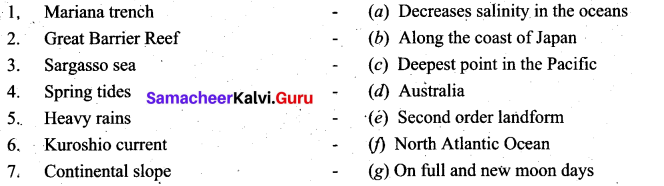
Early Revolts Against British Rule In Tamil Nadu Samacheer Kalvi 10th Social Science History Solutions Chapter 6
Answer:
1. (e)
2. (c)
3. (b)
4. (a)
5.(d)

V. Answer the questions briefly.

Question 1.
What were the duties of the Palayakkarars?
Answer:

  1. The Palayakkarars were free to collect revenue.
  2. Administer the territory.
  3. Settle disputes and maintain law and order also.
  4. Helped the Nayak rulers to restore the kingdom.

Question 2.
Identify the Palayams based on the division of east and west.
Answer;
Among the 72 Palayakkarars, there were two blocks namely the eastern and the western Palayams.

  • The eastern Palayams were – Sattur, Nagalapuram, Ettayapuram and Panchalam Kurichi.
  • The western Palayams were – Uttrumalai, Thalavankottai, Naduvakurichi, Singampatti and Seithur.

Question 3.
Why was Heron dismissed from service?
Answer:

  1. Puli Thevar continued were defy the authority of the English East India Company.
  2. Col. Heron was urged by the company to deal the issue of Puli Thevar.
  3. For want of canon and of supplies and pay to soldiers, colonel Heron abandoned the plan. Hence he was dismissed from service.

Question 4.
What was the significance of the Battle of Kalakadu?
Answer:
In the Battle of Kalakadu, Mahfuzkhan’s troops were routed by the huge forces of Puli Thevar.

Question 5.
What was the bone of contention between the Company and Kattabomman?
Answer:

  1. The company gained the right to collect taxes from Panchalamkurichi which was under Kattabomman.
  2. The company appointed collectors to collect taxes from all the Palayams.
  3. The collectors humiliated the Palayakkarars and adopted force to collect the taxes.
  4. This was the bone of contention between the company and Kattabomman.

Question 6.
Highlight the essence of the Tiruchirappalli Proclamation of 1801.
Answer:
The Tiruchirappalli Proclamation of 1801 was the first call to the Indians to unite against the British, cutting across region, caste, creed and religion. The Proclamation was pasted on the walls of the Nawab’s palace in Tiruchirappalli Fort and on the walls of the Srirangam Temple. As a result, many Palayakkarars of Tamil country rallied together to fight against the English.

Question 7.
Point out the importance of the Treaty of 1801.
Answer:

  1. The Treaty of 1801 was known as “Carnatic Treaty”. Under the terms of the camatic Treaty of 31st July 1801.
  2. The British assumed the direct control over Tamilagam.
  3. The Palayakkarar system came to an end with the demolition of all forts and disbandment of their army.

VI. Answer all the questions given under each caption.

Question 1.
Velunachiyar
(a) Who was the military chief of Velunachiyar?
Answer:
Gopala Nayaker

(b) What were the martial arts in which she was trained?
Answer:
The martial arts in which she was trained were valari, stick fighting and to wield weapons.

(c) Whom did she marry?
Answer:
She was married to Muthu Vadugar, the Raja of Sivagangai.

(d) What was the name of her daughter?
Answer:
Her Daughter’s name was Vellachinachiar.

Question 2.

Dheeran Chinnamalai

(a) When was Dheeran Chinnamalai bom?
Answer:
Dheeran Chinnamalai was bom in 1756.

(b) How did he earn the title “Chinnamalai”?
Answer:
The tax money collected by Tipu’s Diwan was confiscated by Theerthagiri (original name of Dheeran Chinnamalai) While returning to Mysore. He let Diwan to go by instructing him to tell his sultan that “Chinnamalai” who is between Sivamalai and Chennimalai was the one who took away taxes. Thus he gained the name “Dheeran Chinnamalai”.

(c) Name the Diwan of Tipu Sultan.
Answer:
Diwan of Tipu Sultan was Mohammed Ali.

(d) Why and where was he hanged to death?
Answer:
Dheeran Chinnamalai refused to accept the overlordship of the British. So he was captured and imprisoned. In 31st July 1805 he was hanged to death at the top of the Sankagiri Fort.

VII. Answer the following in detail.

Question 1.
Attempt an essay of the heroic fight Veerapandya Kattabomman conducted against the East India Company.
Answer:
(i) Veera Pandya Kattabomman became the Palayakkarar of Panchalamkurichi after the death of his father, Jagavira Pandya Kattabomman. The company administrators did not give him much importance. But soon several events led to the conflict between him and the East India Company.

(ii) The Company had gained the right to collect taxes from Panchalamkurichi. The Collectors adopted force to collect the taxes. This was the bone of contention between the English and Kattabomman.

(iii) When Kattabomman refused to pay the land revenue, he was asked to meet Jackson, the company official in Ramanathapuram where he had to stand for hours before the official. Kattabomman somehow escaped from there.

(iv) On his return to Panchalamkuruchi, Kattabomman represented to the Madras council about how he was ill-treated by the collector Jackson. The council asked Kattabomman to appear before a Committee with William Brown, William Oram and John Casamajor as members. The committee found Kattabomman innocent and Jackson was dismissed from service.

(v) Thereafter Kattabomman along with Marudhu Brothers confronted with the English. Kattabomman was asked to surrender. But his ‘evasive reply’ prompted Major Bannerman to attack his fort. The major soon seiged Panchalamkuruchi.

(vi) Kattabomman escaped to Pudukottai where he was captured. During the trail Kattabomman bravely admitted all the charges levelled against him. He was hanged from a tamarind tree in the old fort of Kayathar.

Question 2.
Highlight the tragic fall of Sivagangai and its outcome.
Answer:
Tragic fall of Sivagangai: In May 1801, the English attacked the rebles in Thanjaviir and Tiruchirapaili.

  1. The rebels went to piranmalai and Kalaiyar kovil.
  2. They were again defeated by the able commanders and superior military strength of the English company.
  3. The rebellion failed and Sivagangai was annexed in 1801.
  4. In 24th October 1801 the Marudhu brothers were executed in the Fort of Thirupathur near Ramanathapuram.

Outcomes:

  1. The exploits and sacrifices of the Palayakkarars inspired later generations.
  2. The Rebellion of Murudhu brothers called as “South Indian Rebellion is a landmark event in the history of Tamil Nadu.
  3. The rebellion resulted in the liquidation of all the chieftains of Tamil Nadu.
  4. The British assumed direct control over Tamilagam.
  5. The Palayakkarar system came to an end with the demolition of all Forts and disbandment of their army.

Question 3.
Account for the outbreak of Vellore Revolt in 1806.
Answer:
After the suppression of resistance of Kattabomman and Marudhu Brothers in 1801, the British charged the Nawab of Arcot with disloyalty and forced a treaty on him. According to this treaty, the Nawab was forced to cede the districts of North Arcot, South Arcot, Tiruchirappalli, Madurai and Tirunelveli to the Company and transfer all the administrative powers to it.

But the resistance did not die down. The dispossessed little kings and feudal chieftains were continuously deliberating on the future course of action against the company. This finally resulted in the Vellore Revolt of 1806. The sepoys of the British Indian army nursed a strong sense of resentment over low salary and poor prospects of promotion. The English army officers gave little respect for the social and religious sentiments of the Indian sepoys also angered them.

The immediate cause of the revolt came in the form of a new military regulation according to which the Indian soldiers were asked not to wear caste marks or ear rings when in uniform. They were to be cleanly shaven on the chin and maintain uniformity how their moustache looked. The new turban added fuel to fire. The new turban had the leather cockade made of animal skin. The sepoys refused to wear it.

On 10 July 1806, in the early hours, guns began to boom. The Indian sepoys revolted against the company rule. However, the revolt was suppressed brutally.

VIII. Activity

Question 1.
Teacher can ask the students to prepare an album of patriotic leaders of early revolts against the British rule in Tamil Nadu. Using their imagination they can also draw pictures of different battles in which they attained martyrdom.
Answer:
Do it yourself.

Question 2.
Stage play visualizing the conversation between Jackson and Kattabomman be attempted by students with the help of teachers.
Answer:
Do it yourself.

Question 3.
A comparative study of Vellore Revolt and 1857 Revolt by students be tried enabling them to find out to what extent Vellore Revolt had all the forebodings of the latter.
Answer:
The Vellore Mutiny took place on July 10, 1806. This major act of defiance happened even before the famous Rebellion of 1857. Though lasting only for a day, the Vellore Mutiny marked the first ever large-scale and violent mutiny by Indian sepoys against the East India Company. It was triggered by the English disregard to the religious sensitivities of the Hindu and Muslim Indian sepoys. The Revolt of 1857 was a rather large revolt which went on for days. It was fed by resentments bom of diverse perceptions, including invasive British-style social reforms, harsh land taxes, as well as scepticism about the improvements brought about by British rule.
Students can make a comparative study under the guidance of their teacher.

Early Revolts against British Rule in Tamil Nadu Additional Questions

I. Choose the correct answer.

Question 1.
Palayakkarar system was in practice during the rule of ………………. of Warangal.
(a) Rajendra Chola
(b) Prataba Rudhra
(c) Ashoka
Answer:
(b) Prataba Rudhra

Question 2.
Puli Thevar’s three major ports came under the control of Yusuf khan on
(a) 18th August 1798
(b) 16th May 1761
(c) 19th September 1798
(d) 16th October 1799
Answer:
(b) 16th May 1761

Question 3.
On many occasions the Palayakarars helped the ………….. rulers to restore the kingdom.
(a) Nayak
(b) Pallava
(c) Pandya
Answer:
(a) Nayak

Question 4.
Muthu vadagar died in the battle of :
(a) Kalakad
(b) Tiruchirapalli
(c) Kalaiyar kovil
(d) Palayamkottai
Answer:
(c) Kalaiyar kovil

Question 5.
The Proclamation of ………………. was the first call to the Indians to unite against the British.
(a) 1805
(b) 1809
(c) 1801
Answer:
(c) 1801

Question 6.
As per this treaty of 1801 Nawab of Arcot transferred all the administrative powers to the company:
(a) Treaty of Mangalore
(b) Treaty of Madras
(c) Treaty of Carnatic
(d) None of the above
Answer:
(c) Treaty of Carnatic

Question 7.
Hyder Ali could not help Puli Thevar because ……………..
(a) he was not well
(b) he was in a serious conflict with the Marathas
(c) he did not like Puli Thevar
(d) he was hostile to Puli Thevar
Answer:
(b) he was in a serious conflict with the Marathas

Question 8.
Puli Thevar was defeated by:
(a) Colonel Heron
(b) Captain campbell
(c) Major cootes
(d) Colonel Fancourt
Answer:
(b) Captain campbell

Question 9.
Dheeran was well trained in ……………..
(a) modem warfare
(b) archery
(c) horse riding
(d) all of the above
Answer:
(d) all of the above

Question 10.
………………….. ordered the release of Sivasubramanianar and the suspension of the collector Jackson.
(a) Lord Wellesley
(b) John casamajor
(c) Governor edward clive
(d) General Bannerman
Answer:
(c) Governor edward clive

II. Fill in the blanks :

1. Chinna Marudhu collected nearly ……………. men to challenge the English army.
2. ……………. tried to get the support of Hyder Ali and the French.
3. Puli Thevar wielded much influence over the ………………
4. …………… was the military chief of Velunachiyar.
5. The leather cockade was made of ……………..
6. The Marudhu brothers were executed in the Fort of Tirupathur near …………… on 24 October 1801.
7. ………….. policy of the English split the forces of the Palayakkarars.
8. ………….. wielded much influence over the western Palayakkarars.
9. Trained by the French Dheeran mobilised the …………….. youth in thousands and fought the British together with Tipu.
10. Tipu was killed at the end of the Anglo-Mysore war in …………….
Answers :
1. 1.20,000
2. Puli Thevar
3. Western Palayakkarars
4. Gopala Nayakar
5. animal skin
6. Ramanathapuram
7. Divide and Rule
8. Puli Thevar
9. Kongu 10.1799

III. Choose the correct statement.

Question 1.
(i) Kuyili was a faithful friend of Velunachiyar.
(ii) She led the unit of women soldiers named after Udaiyaal.
(iii) Udaiyaal was a timid girl who divulged information on Kuyili.
(iv) Kuyili is said to have walked into the British arsenal after setting herself on fire.
(a) (i), (ii) and (iii) are correct
(b) (i), (iii) and (iv) are correct
(c) (i), (ii) and (iv) are correct
(d) (ii),(iii) and (iv) are correct
Answer:
(c) (i), (ii) and (iv) are correct

Question 2.
(i) Velunachiyar was crowned as Queen with the help of Puli Thevar.
(ii) She was the first female ruler or queen to resist the British colonial power in India.
(iii) Gopala Nayak drew inspiration from Tipu Sultan.
(iv) The Carnatic Treaty took place in the year 1801.
(a) (i), (ii) and (iv) are correct
(b) (ii), (iii) and (iv) are correct
(c) (i) and (iii) are correct
(d) (i), (iii) and (iv) are correct
Answer:
(b) (ii), (iii) and (iv) are correct

IV. Match the following

Question 1.

1.Khan Sahib(a)Friend of Velunachiyar
2.Velunachiyar(b)Kattabomman’s brother
3.Kuyili(c)Tipu’s diwan
4.Oomathurai(d)Marudhanayagam Pillai
5.Mohammed Ali(e)Bom in 1730

Answer:
1. (d)
2. (e)
3. (a)
4. (b)
5. (c)

Question 2.

1.Yusuf Khan(a)Military chief
2.Dalavay(b)guerrilla attack
3.Pagodas(c)Khan Sahib
4.Dheeran Chinnamalai(d)Raja of Sivagangai
5.Muthu Vadugar Periya Udaya Thevar(e)Forced labour

Answer:
1. (c)
2. (a)
3. (e)
4. (b)
5. (d)

V. Answer briefly:

Question 1.
Name the Palayakkarars who revolted against the British rule in Tamil Nadu.
Answer:
Puli Thevar, Velunachiyar, Dheeran chinnamalai, Marudhu brothers and Veerapandiya Kattabomman were some of the prominent Palayakkarars who revolted against the British rule in Tamil Nadu.

Question 2.
Explain about Ondiveeran’s bravery.
Answer:
Ondiveeran led one of the army units of Puli Thevar. Fighting by the side of Puli Thevar, he caused much damage to the company’s army. According to oral tradition, in one battle, Ondiveeran’s hand was chopped off and Puli Thevar was saddened. But Ondiveeran said it was a reward for his penetration into enemy’s fort causing many heads to roll.

Question 3.
Who supported the British and who did not join the confederacy of Puli Thevar?
Answer:
The English succeeded in getting the support of the Raj as of Ramanathapuram and Pudukkottai. The Palayakkarars of Ettayapuram, Panchalamkurichi and Sivagiri did not join the confederacy of Puli Thevar.

Question 4.
Who was Muthu Vadugar? How was he killed?
Answer:
Muthu Vadugar was the Raja of Sivagangai. He was married to Velunachiyar. In 1772, the Nawab of Arcot and the Company troops under the command of Lt. col. Bon Jour stormed the Kalaiyar Kovil Palace. In the ensuing battle Muthu Vadugar was killed.

Question 5.
Write a short note on Velunachiyar.
Answer:
Velunachiyar was bom in 1730 she was the only daughter of Raja Sellamuthu sethupathy of Ramanathapuram. She was trained in martial arts like valari, stick fighting and wield weapons. She was expert in horse riding and archery and had proficiency in English, French and Urdu.

Question 6.
What status did the Palayakkarars avail during the seventeenth and eighteenth centuries?
Answer:
During the seventeenth and eighteenth centuries the Palayakkarars dominated the politics of Tamil country. They functioned as independent sovereign authorities within their respective Palayams.

Question 7.
Write a brief note on Marudhu brothers.
Answer:

  1. Periya Marudhu or Vella Marudhu and his younger brother Chinna Marudhu were the able generals of Muthuvadugar of Sivagangai.
  2. After Muthuvadugar’s death in the Kalaiyur kovil battle, they assisted in restoring the throne to Velunachiyar.
  3. In the last years of the eighteenth century Marudhu brothers organised resistance against the British.

Question 8.
Give an estimate of the Vellore Revolt of 1806.
Answer:
The Vellore Revolt failed because there was no immediate help from outside. According to recent studies, the organizing part of the revolt was done perfectly by Subedars Sheik Adam and Sheik Hamid and Jamedar Sheik Hussain of the 2nd Battalion of 23rd regiment. Vellore revolt had all the forebodings of the Great Rebellion of 1857. The only difference was that there was no civil rebellion following the mutiny.

VI. Answer all the questions given under each caption:

Question 1.
Vellore Revolt:

(a) When did the outbreak of Vellore revolt occur?
Answer:
Out break of Vellore revolt occurred on 10th July 1806.

(b) Who commanded the garrison?
Answer:
Colonel Fancourt commanded the garrison.

(c) By whom was the organising part of the revolt done?
Answer:
The organising part of the revolt was done perfectly by Subedars Sheik Adam and Sheik Hamid and Jamedar Shiek Hussain of 2nd battalion of 23rd regiment and subedar Jamedar Sheik Kasim of the 1st battalion of 1st regiment.

(d) Name the places where the Vellore revolt of 1806 echoed?
Answer:
Vellore Revolt of 1806 had its echoes in Bellary, Walajabad, Hyderabad, Bengaluru, Nandydurg and Sankaridurg.

Question 2.
Appearance Before Madras Council

(a) Whom did the Madras council ask to appear before the committee?
Answer:
Kattabomman.

(b) Who were the committee members of Madras council?
Answer:
William Brown, William oram, John Casamajor.

(c) When did Kattabomman appear before the committee?
Answer:
Kattabomman appeared before the committee on 15th December 1798.

(d) What did Kattabomman report to the committee? What was the result?
Answer:
Kattabomman reported on what transpired in Ramanathapuram. The committee found Kattabomman was not guilty.

VII. Answer the following in detail.

Question 1.
Give an estimation of Revolt at Vellore (1806).
Answer:

  1. General Gillespie from Arcot along with the captain young cavalry commander crushed the revolt. Nearly eight hundred soldiers were found dead. The organising part of the revolt was done perfectly by the subedars of 1st battalion of the 1st regiment and the 2nd battalion of 23rd regiment.
  2. The Vellore revolt failed because there was no immediate help from outside.
  3. It was the 1st open uprising of the Indian soldiers under British army.
  4. This revolt was not confined to Vellore Fort alone but echoed outside regions also.
  5. Vellore Revolt had all the forebodings of the Great Rebellion of 1857.
  6. This was also called as Vellore mutiny as it arose only from the soldiers.

Question 2.
Give on assessment of Velunachiyar’s resistance to the British colonial power in India,
Answer:
Velunachiyar belonged to the royal family. She was brought up as a princess and was trained in marital arts. She was also adept in horse riding and archery. She was married to Muthu Vadugar, the Raja of Sivangangai. When the Raja was killed in the battle, Velunachiyar had to live under the protection of Gopala Nayakar at Virupachi near Dindigul for eight years. During her period in hiding, Velunachiyar organised an army and succeeded in securing an alliance with not only Gopala Nayakar but Hyder Ali as well. Dalavay (military chief) Thandavarayanar wrote a letter to Sultan Flyder Ali on behalf of Velunachiyar asking for 5000 infantry and 5000 cavalry to defeat the English. Velunachiyar explained in detail in Urdu all the problems she had with East India Company.

She conveyed her strong determination to fight the English. Impressed by her courage, Hyder Ali ordered his commandant Syed in Dindigul Fort to provide the required military assistance. Velunachiyar employed agents for gathering intelligence to find where the British had stored their ammunition. With military assistance from Gopala Nayakar and Hyder Ali, She recaptured Sivagangai. She was crowned as Queen with the help of Marudhu Brothers. ” She became the first female ruler to resist the British colonial power in India.

Impotant Events And Years:

Years

Events

1730Velunachiyar born
1801Sivagangai annexed, Carnatic Treaty
1799Anglo – Mysore war
1806Vellore (Revolt) Mutiny

We think the data given here clarify all your queries of Chapter 6 and make you feel confident to attempt all questions in the examination. So, practice more & more from Tamilnadu State Board solutions for 10th Social Science History Chapter 6 Early Revolts against British Rule in Tamil Nadu Questions and Answers & score well. Need any information regarding this then ask us through comments & we’ll give the best possible answers very soon.

Samacheer Kalvi 7th Tamil Solutions Term 2 Chapter 2.5 ஒரெழுத்து ஒருமொழி, பகுபதம், பகாப்பதம்

Students can Download Tamil Chapter 2.5 ஒரெழுத்து ஒருமொழி, பகுபதம், பகாப்பதம் Questions and Answers, Summary, Notes Pdf, Samacheer Kalvi 7th Tamil Book Solutions Guide Pdf helps you to revise the complete Tamilnadu State Board New Syllabus and score more marks in your examinations.

Tamilnadu Samacheer Kalvi 7th Tamil Solutions Term 2 Chapter 2.5 ஒரெழுத்து ஒருமொழி, பகுபதம், பகாப்பதம்

மதிப்பீடு

சரியான விடையைத் தேர்ந்தெடுத்து எழுதுக.

Question 1.
நன்னூலின்படி தமிழிலுள்ள ஓரெழுத்து ஒரு மொழிகளின் எண்ணிக்கை …………..
அ) 40
ஆ) 42
இ) 44
ஈ) 46
Answer:
ஆ) 42

Question 2.
எழுதினான்’ என்பது ………………..
அ) பெயர்ப் பகுபதம்
ஆ) வினைப் பகுபதம் இ) பெயர்ப் பகாப்பதம்
ஈ) வினைப் பகாப்பதம்
Answer:
ஆ) வினைப் பகுபதம்

Question 3:
பெயர்ப்ப குபதம் ……………… வகைப்படும்.
அ) நான்கு
ஆ) ஐந்து
இ) ஆறு
ஈ) ஏழு
Answer:
இ) ஆறு

Question 4.
காலத்தைக் காட்டும் பகுபத உறுப்பு ……………….
அ) பகுதி
ஆ) விகுதி
இ) இடைநிலை
ஈ) சந்தி
Answer:
இ) இடைநிலை

பொருத்துக

1. பெயர்ப் பகுபதம் – வாழ்ந்தான்
2. வினைப் பகுபதம் – மன்
3. இடைப் பகாப்பதம் – நனி
4. உரிப் பகாப்பதம் – பெரியார்
Answers:
1. பெயர்ப் பகுபதம் – பெரியார்
2. வினைப் பகுபதம் – வாழ்ந்தான்
3. இடைப் பகாப்பதம் – மன்
4. உரிப் பகாப்பதம் – நனி

சரியான பகுபத உறுப்பை எழுதுக
Samacheer Kalvi 7th Tamil Solutions Term 2 Chapter 2.5 ஒரெழுத்து ஒருமொழி, பகுபதம், பகாப்பதம் - 7

1. போவாள் – போ + வ் + ஆள்
போ – பகுதி
வ் – எதிர்கால இடைநிலை
ஆள் – படர்க்கைப் பெண்பால் வினைமுற்று விகுதி

2. நடக்கின்றான் – நட + க் + கின்று + ஆன்
நட – பகுதி
க் – சந்தி
கின்று – நிகழ்கால இடைநிலை
ஆன் – படர்க்கை ஆண்பால் வினைமுற்று விகுதி

பின்வரும் சொற்களைப் பிரித்துப் பகுபத உறுப்புகளை எழுதுக

1. பார்த்தான் – பார் + த் + த் + ஆன்
பார் – பகுதி
த் – சந்தி
த் – இறந்தகால இடைநிலை
ஆன்- படர்க்கை ஆண்பால் வினைமுற்று விகுதி

2. பாடுவார் – பாடு + வ் + ஆர்
பாடு – பகுதி
வ் – எதிர்கால இடைநிலை
ஆர் – படர்க்கைப் பலர்பால் வினைமுற்று விகுதி

குறுவினா

Question 1.
ஓரெழுத்து ஒருமொழி என்றால் என்ன?
Answer:
(i) ஓரெழுத்து தனித்து நின்று பொருள் தரும் சொல்லாக அமைவதே ஓரெழுத்து ஒரு மொழி ஆகும்.
(ii) எ.கா. (தீ, நீ, வா, போ).

Question 2.
பதத்தின் இரு வகைகள் யாவை?
Answer:
பதம் இரண்டு வகைப்படும். அவை, பகுபதம், பகாப்பதம்.

Question 3.
பகுபத உறுப்புகள் எத்தனை வகைப்படும்?
Answer:
அவை யாவை? பகுபத உறுப்புகள் ஆறு வகைப்படும். அவை, பகுதி, விகுதி, இடைநிலை, சந்தி, சாரியை, விகாரம்.

சிறுவினா

Question 1.
விகுதி எவற்றைக் காட்டும்?
Answer:
சொல்லின் இறுதியில் நிற்கும் உறுப்பே விகுதி ஆகும். இது திணை, பால், எண், இடம்,
முற்று, எச்சம் போன்றவற்றைக் காட்டும். (எ.கா.) படித்தான் = ஆன் – விகுதி

Question 2.
விகாரம் என்பது யாது? எடுத்துக்காட்டுடன் விளக்குக.
Answer:
பகுதி, விகுதி, சந்தி, இடைநிலை இவற்றில் ஏற்படும் மாற்றமே விகாரம் எனப்படும்.
(எ. கா.) வந்தான் = வா – பகுதி வா ‘வ’ எனக் குறுகியது விகாரம்.

Question 3.
பெயர்ப்பகுபதம் எத்தனை வகைப்படும்? அவை யாவை?
Answer:
பெயர்ப் பகுபதம் ஆறு வகைப்படும். அவை
(i) பொருள் – பொன்னன் (பொன் + அன்)
(ii) இடம் – நாடன் (நாடு + அன்)
(iii) காலம் சித்திரையான் (சித்திரை + ஆன்)
(iv) சினை கண்ண ன் (கண் + அன்)
(v) பண்பு இனியன் (இனிமை + அன்)
(vi) தொழில் – உழவன் (உழவு + அன்)

கற்பவை கற்றபின்

Question 1.
பாடப்பகுதியில் இடம்பெற்ற சொற்களில் பகுபதம், பகாப்பதம் ஆகியவற்றைக் கண்டறிந்து தனித்தனியே தொகுக்க.
Answer:
பகுபதம்
பெயர்ப்பகுபதம் :
பொருள் – பொன்னன் (பொன் + அன்)
இடம் – நாடன் (நாடு + அன்)
காலம் – சித்திரையான் (சித்திரை + ஆன்)
சினை – கண்ண ன் (கண் + அன் )
பண்பு – இனியன் (இனிமை + அன்)
தொழில் – உழவன் (உழவு + அன்)
வினைப்பகுபதம் : உண்கின்றான் – உண் + கின்று + ஆன்

பகாப்பதம் :
பெயர்ப் பகாப்பதம் – நிலம், நீர், நெருப்பு, காற்று
வினைப் பகாப்பதம் – நட, வா, படி, வாழ்.
இடைப் பகாப்பதம் – மன், கொல், தில், போல்
உரிப் பகாப்பதம் – உறு, தவ, நனி, கழி.

Question 2.
உங்கள் வகுப்பு மாணவ – மாணவிகளின் பெயர்களைப் பகுபதம், பகாப்பதம் என வகைப்படுத்துக.
Answer:
மாணவர்கள் தாங்களாகவே செய்ய வேண்டியவை.

கூடுதல் வினாக்கள்

நிரப்புக.

Question 1.
தே என்பதன் பொருள் ………….. எனப்படும்.
Answer:
கடவுள்

Question 2.
நன்னூல் என்னும் இலக்கண நூலை எழுதியர் ………….
Answer:
பவணந்தி முனிவர்

ஓரெழுத்து ஒரு மொழிகளும் அவற்றின் பொருளும்
Samacheer Kalvi 7th Tamil Solutions Term 2 Chapter 2.5 ஒரெழுத்து ஒருமொழி, பகுபதம், பகாப்பதம் - 1

மொழியை ஆள்வோம்

கேட்க.

Question 1.
சிறந்த கல்வியாளர்களின் சொற்பொழிவுகளை இணையத்தில் கேட்டு மகிழ்க.
Answer:
மாணவர்கள் தாங்களாகவே செய்ய வேண்டியவை

கீழ்க்காணும் தலைப்பில் இரண்டு நிமிடம் பேசுக

Question 1.
கல்வியின் சிறப்பு
Answer:
அனைவருக்கும் வணக்கம்!
நான் கல்வியின் சிறப்பு என்ற தலைப்பில் பேசவிருக்கிறேன். இன்றைய உலகின் தே இன்றியமையாத ஒன்றாகத் திகழ்வது யாதெனில் கல்வியே ஆகும். அனைவருக்கும் பகுத்தறிவு தேவைப்படுகிறது. அவர்களுக்குப் பகுத்தறியும் சக்தியைக் கொடுப்பதே கல்வியின் சிறப்பாகும்.

கல்வியின் சிறப்பு என்றாலே கல்வி கற்றவன் எங்குச் சென்றாலும் சிறப்பிக்கப்படுபவன் – என்பதே நினைவுக்கு வரும். அவனுக்கு எல்லா நாட்டினரும் உறவினர்கள் ஆவார்கள். எல்லா நாடும் சொந்த நாடாகும். கல்வி கற்கவில்லையெனில் வாழ்நாள் முழுவதும் அனைவராலும் அவமதிக்கப்படுவான். இதனையே வள்ளுவர்.

“யாதானும் நாடாமல் ஊர்ஆமால் என்னொருவன் சாந்துணையும் கல்லாத வாறு. என்று கூறுகிறார்.
அதுமட்டுமா? கற்றவரைக் கண்ணுடையார்’ என்றும் கல்லாதவரை முகத்தில் இரண்டு புண்ணுடையவர் என்றும் இடித்துரைக்கிறார் வள்ளுவர்.

கற்றோர்க்கு அணிகலன் கல்வியே; கற்றோரே கண்ணுடையவர்; கற்றாரே தேவர் எனப் போற்றப்படத்தக்கவர்; கற்றோரே மேலானவர் என்பதை அனைவரும் உணர வேண்டும்.
“கல்வி வந்தது எனில் கடைத்தேறிற்று உலகே!” என்று புரட்சிக்கவி கூறுகின்றார். கல்வியால் எல்லா வளங்களும் கிடைக்கும் என்பதே இதன் பொருளாகும்.

கல்வி உடையவர் எல்லா மக்களிடமும், நன்றாக பழகிக் கொள்வதோடு மட்டுமல்லாமல் அவர்களுடன் மகிழ்ச்சியாக சேர்ந்து வாழ்வதையே விரும்புவர்.

மனிதன் வாழ்நாள் முழுவதும் கற்றுக் கொண்டே இருக்க வேண்டும். கற்க மறுப்பவன் வாழ மறுப்பவன் ஆகின்றான். கல்வி என்னும் விளக்கால் வாழ்க்கையில் எதிர்ப்படும் இருள்களையெல்லாம் நீக்க முடியும். கல்வி போல மனப்பயத்தைப் போக்கும் மருந்து வேறொன்றுமில்லை. கல்வித் துணை வறுமையில் கை கொடுக்கும். கல்வியின் பயனே மனித வாழ்வின் பெரும்பேறாகும்.

கல்வி, தொழிலுக்கு வழி காட்டும். கல்வி என்பது வாழ்வதற்கு உதவும் கருவியாகும். வாழ்க்கையின் வெற்றிக்குக் கல்வி மிகவும் இன்றியமையாததாகிறது. வாழ்க்கையை நெறிப்படுத்தவும் மேம்படுத்தவும் கல்வி பயன்படுகிறது. கல்வி கற்ற பண்பு, நீதி, நேர்மை இவைகள் அனைத்தும் ஒருங்கே அமைந்து காணப்படும்.

கல்வியினால் மட்டுமே உலக அறிவினை வளர்த்துக் கொள்ள முடியும். உலகை முழுமையாகப் படிக்கவும் முடியும். கல்வி மனிதனுக்கு ஓர் உன்னதமான தேவையாகும்”
“கற்கை நன்றே! கற்றை நன்றே! பிச்சைப் புகினும் கற்கை நன்றே!” என்ற கூற்றினை மனதில் நிறுத்தி அள்ள அள்ளக் குறையாதக் கல்வியை அள்ளிப் பருகுவோம்.
கல்வி என்பது பலமே !
கற்றல் என்பது சுகமே!

Question 2.
குழந்தைத் தொழிலாளர் முறை ஒழிப்பு
Answer:
ஒரு குழந்தை கூலிக்காக வேலை பார்ப்பது மிகவும் தவறு. இளமைக் காலம் கல்வி கற்பதற்கே. குழந்தைத் தொழிலாளர்கள் இல்லாத நிலை உருவாக வேண்டும்.
பள்ளி செல்லாத குழந்தைகள், குழந்தைத் தொழிலாளர் ஆகிறார்கள். இது ஒரு பக்கம் இருக்க; வேலைவாய்ப்புக்காக இடம்பெயர்ந்து மாநிலம் விட்டு மாநிலம், மாவட்டம் விட்டு மாவட்டம் என்று செல்கின்றனர். இவ்விரண்டு நிலைகளில் ஒரு சிலர் தங்கள் பெற்றோருடன் சேர்ந்து வேலை செய்வார்கள் அல்லது தனியாகச் செல்வார்கள்.

மூன்றாவது நிலையில் உள்ளவர்கள் மிகவும் பரிதாபத்துக்குரியவர்கள். கொத்தடிமை முறையில் வேலைக்குச் செல்கிறார்கள். பெற்றோர் வாங்கிய கடனை ஈடுகட்டுவதற்காக பிள்ளைகள் வேலைக்குச் செல்கிறார்கள்.

குழந்தைத் தொழிலாளர்கள் உடல் ரீதியாகப் பாதிக்கப்படுகிறார்கள். உளவியல் ரீதியான பாதிப்பு, உணர்வு மற்றும் சமூக ரீதியான பாதிப்பு ஏற்படுகிறது.

கொடிய வறுமை, ஊட்டச்சத்துக் குறைவு, கல்வியறிவு பெற முடியாத நிலை, உடல் நலனைப் பாதிக்கக் கூடிய ஆபத்தான சூழல், காற்றோட்டம் இல்லாத குறுகிய அறை போன்றவை குழந்தைகளின் உடல் நலனைப் பெரிதும் பாதிப்பதால் ஆஸ்துமா, காசநோய் போன்ற நோய்கள் தாக்குகிறது. இதனைத் தடுக்க வேண்டும்.

குழந்தைகளுக்குத் தொடக்கக் கல்வி கட்டாயம் ஆக்கப்பட வேண்டும். பள்ளி மற்றும் கல்லூரிகளில் குழந்தைத் தொழிலாளர் ஒழிப்பு பற்றிய விழிப்புணர்வு முகாம்களை நடத்தலாம்.

சொல்லக் கேட்டு எழுதுக

1. இளமைப் பருவத்திலேயே கல்வி கற்க வேண்டும்.
2. கல்வியே அழியாத செல்வம்.
3. கல்வி இல்லாத நாடு விளக்கு இல்லாத வீடு.
4. பள்ளித்தலம் அனைத்தும் கோயில் செய்குவோம்.
5. நூல்களை ஆராய்ந்து ஆழ்ந்து படிக்க வேண்டும்.

கீழ்க்காணும் சொற்களை அறுவகைப் பெயர்களாக வகைப்படுத்துக

நல்லூர், வடை, கேட்டல், முகம், அன்னம், செம்மை, காலை, வருதல், தோகை, பாரதிதாசன், பள்ளி, இறக்கை, பெரியது, சோலை, ஐந்து மணி, விளையாட்டு, புதன்
Samacheer Kalvi 7th Tamil Solutions Term 2 Chapter 2.5 ஒரெழுத்து ஒருமொழி, பகுபதம், பகாப்பதம் - 8
Answer:
Samacheer Kalvi 7th Tamil Solutions Term 2 Chapter 2.5 ஒரெழுத்து ஒருமொழி, பகுபதம், பகாப்பதம் - 2

அறிந்து பயன்படுத்துவோம்

மூவிடம் :

இடம் மூன்று வகைப்படும். அவை 1. தன்மை, 2. முன்னிலை, 3. படர்க்கை
தன்னைக் குறிப்பது தன்மை.
(எ.கா.) நான், நாம், நாங்கள், என், எம், எங்கள்.
முன்னால் இருப்பவரைக் குறிப்பது முன்னிலை.
(எ.கா.) நீ , நீங்கள், நீர், நீவிர், உன், உங்கள்.
தன்னையும், முன்னால் இருப்பவரையும் அல்லாமல் மூன்றாமவரைக் குறிப்பது – படர்க்கை .
(எ.கா.) அவன், அவள், அவர், அவர்கள், அது, அவை, இவன், இவள், இவை.

சரியான சொல்லைக் கொண்டு நிரப்புக

(அது, நீ, அவர்கள், அவைகள், அவை, நாம், உன்)

Question 1.
……… பெயர் என்ன ?
Answer:
உன்

Question 2.
ஏழாம் வகுப்பு மாணவர்கள்.
Answer:
நாம்

Question 3.
………….. எப்படி ஓடும்?
Answer:
அது

Question 4.
………………என்ன செய்து கொண்டிருக்கிறாய்?
Answer:
நீ

Question 5.
…. வந்து கொண்டு இருக்கிறார்கள்.
Answer:
அவர்கள்

பின்வரும் தொடர்களில் மூவிடப் பெயர்களை அடிக்கோடிடுக. அவற்றை வகைப்படுத்துக.

1. எங்கள் வீட்டு நாய்க்குட்டி ஓடியது.
2. இவர்தான் உங்கள் ஆசிரியர்.
3. நீர் கூறுவது எனக்குப் புரியவில்லை
4. எனக்கு, அது வந்ததா என்று தெரியவில்லை , நீயே கூறு.
5. உங்களோடு நானும் உணவு உண்ணலாமா?
Samacheer Kalvi 7th Tamil Solutions Term 2 Chapter 2.5 ஒரெழுத்து ஒருமொழி, பகுபதம், பகாப்பதம் - 9
Answer:
Samacheer Kalvi 7th Tamil Solutions Term 2 Chapter 2.5 ஒரெழுத்து ஒருமொழி, பகுபதம், பகாப்பதம் - 3

கடிதம் எழுதுக

உங்கள் பகுதியில் நூலகம் ஒன்று அமைத்துத் தர வேண்டி நூலக ஆணையருக்குக் கடிதம் எழுதுக.
Answer:
அனுப்புநர் :
ஊர்ப் பொதுமக்கள்,
மறைமலை நகர்,
காஞ்சிபுரம் மாவட்டம்

பெறுநர் :
நூலக ஆணையர்,
பொதுநூலகத் துறை,
சென்னை – 600 002.

மதிப்பிற்குரிய ஐயா,
பொருள் : நூலகம் அமைத்துத் தர வேண்டுதல் தொடர்பாக

எங்கள் ஊர் மறைமலைநகர். இங்கு இரண்டாயிரம் பேருக்கு மேல் வாழ்கிறோம். பள்ளி மாணவர்கள், கல்லூரி மாணவர்கள், போட்டித் தேர்வுக்குப் படிக்கும் இளைஞர்கள், அன்றாடச் செய்தியை அறிந்து கொள்ளும் ஆர்வலர், பணி ஓய்வு பெற்றவர்கள் எனப் பலரும் உள்ளனர்.

அவரவர்களுக்குத் தேவையான நூல்கள், செய்தித்தாள்கள், இதழ்கள் போன்றவை இங்குக் கிடைப்பதற்கரிதாக உள்ளது. இவர்கள் அனைவரும் பயன்பெறும் வகையில் நூலகம் ஒன்றை எங்கள் ஊரில் அமைத்துத்தர ஆவன செய்யுமாறு கேட்டுக் கொள்கிறோம்.

நன்றி!
இடம் : மறைமலை நகர்,
தேதி : 5-2-2020

இப்படிக்கு ,
தங்கள் உண்மையுள்ள,
ஊர்ப் பொதுமக்கள்

Samacheer Kalvi 7th Tamil Solutions Term 2 Chapter 2.5 ஒரெழுத்து ஒருமொழி, பகுபதம், பகாப்பதம் - 4

மொழியோடு விளையாடு

கீழே உள்ள குறிப்புகளைப் பயன்படுத்திக் கட்டத்தில் எழுத்துகளை நிரப்புக.
1. காலையில் பள்ளி மணி……………………
2. திரைப்படங்களில் விலங்குகள் ……………………… காட்சி குழந்ை தகளுக்குப் பிடிக்கும்.
3. கதிரவன் காலையில் கிழக்கே ………………
4. நாள்தோறும் செய்தித்தாள் ………………. வழக்கம் இருக்க வேண்டும்.
Samacheer Kalvi 7th Tamil Solutions Term 2 Chapter 2.5 ஒரெழுத்து ஒருமொழி, பகுபதம், பகாப்பதம் - 10
Answer:

1. காலையில் பள்ளி மணி அடிக்கும்.
2. திரைப்படங்களில் விலங்குகள் நடிக்கும் காட்சி குழந்ை தகளுக்குப் பிடிக்கும்.
3. கதிரவன் காலையில் கிழக்கே உதிக்கும்.
4. நாள்தோறும் செய்தித்தாள் படிக்கும் வழக்கம் இருக்க வேண்டும்.
Samacheer Kalvi 7th Tamil Solutions Term 2 Chapter 2.5 ஒரெழுத்து ஒருமொழி, பகுபதம், பகாப்பதம் - 5

ஓர் எழுத்துச் சொற்களால் நிரப்புக

Question 1.
…………………… புல்லை மேயும்.
Answer:

Question 2.
……………………… சுடும்.
Answer:
தீ

Question 3.
……………….. பேசும்.
Answer:
நா

Question 4.
…………………… பறக்கும்.
Answer:

Question 5.
…………….. மணம் வீசும்
Answer:
பூ

பின்வரும் எழுத்துகளுக்குப் பொருள் எழுதுக

(எ.கா.) தா – கொடு
Samacheer Kalvi 7th Tamil Solutions Term 2 Chapter 2.5 ஒரெழுத்து ஒருமொழி, பகுபதம், பகாப்பதம் - 11
Answer:

1. தீ – நெருப்பு
2. பா – பாடல்
3. தை – தை மாதம்
4. வை – புல், வைக்கோல்
5. மை – அஞ்சனம்

பின்வரும் சொற்களை இருபொருள் தருமாறு தொடரில் அமைத்து எழுதுக

(ஆறு, விளக்கு, படி, சொல், கல், மாலை, இடி)
(எ.கா.) ஆறு – ஈ ஆறு கால்களை உடையது.
தஞ்சாவூரில் காவிரி ஆறு பாய்கிறது.

விளக்கு : இலக்கணப் பாடத்தை விளக்கிக் கூறு.
அறியாமை என்னும் இருளைப் போக்குவது கல்வி என்னும் விளக்கு.

படி : காலையில் தினமும் படி.
மாடிப்படி ஏறி வா.

சொல் : சொற்கள் சேர்ந்தால் பாமாலை.
பெரியோர் சொல் கேட்டு சிறியோர் நடக்க வேண்டும்.

கல் : கற்களால் ஆனது கோபுரம்.
இளமையில் கல்.

மாலை : நேற்று மாலை பூங்காவிற்குச் சென்றேன்.
பூ மாலை நல்ல மணம் வீசியது.

இடி இடிக்கும் சப்தம் கேட்டது.
தவறுகளைக் கண்டால் இடித்துரைத்தல் வேண்டும்.

நிற்க அதற்குத் தக

என் பொறுப்புகள்

  1. பாடப்புத்தகங்கள் மட்டுமன்றிப் பிற புத்தகங்களையும் படிப்பேன்.
  2. பெற்றோர், ஆசிரியர், மூத்தோர் இவர்களை எப்போதும் மதித்து நடப்பேன்.

கலைச்சொல் அறிவோம்Samacheer Kalvi 7th Tamil Solutions Term 2 Chapter 2.5 ஒரெழுத்து ஒருமொழி, பகுபதம், பகாப்பதம் - 6

Samacheer Kalvi 11th Chemistry Solutions Chapter 3 Periodic Classification of Elements

Enhance your subject knowledge with Tamilnadu State Board for Chapter 3 Periodic Classification of Elements and learn all the underlying concepts easily. Make sure to Download Samacheer Kalvi 11th Chemistry Book Solutions, Notes Pdf Chapter 3 Periodic Classification of Elements Questions and Answers PDF on a day to day basis and score well in your exams. Are given after enormous research by people having high subject knowledge. You can rely on them and prepare any topic of Chemistry as per your convenience easily.

Tamilnadu Samacheer Kalvi 11th Chemistry Solutions Chapter 3 Periodic Classification of Elements

Students looking for Chapter 3 Periodic Classification of Elements Concepts can find them all in one place from our Tamilnadu State Board Solutions. Simply click on the links available to prepare the corresponding topics of Chemistry easily. Samacheer Kalvi 11th Chemistry Chapter wise Questions and Answers are given to you after sample research and as per the latest edition textbooks. Clarify all your queries and solve different questions to be familiar with the kind of questions appearing in the exam. Thus, you can increase your speed and accuracy in the final exam.

Samacheer Kalvi 11th Chemistry Chapter 3 Periodic Classification of Elements Textual Evaluation Solved

Choose The Correct Answer from The Following

11th Chemistry Chapter 3 Book Back Answers Question 1.
What would be the IUPAC name for an element with atomic number 222?
(a) bibibiium
(b) bididium
(c) didibium
(d) bibibium
Answer:
(d) bibibium

11th Chemistry Lesson 3 Book Back Answers Question 2.
The electronic configuration of the elements A and B are 1s2, 2s2, 2p6, 3s2 and 1s2, 2s2, 2p5, respectively. The formula of the ionic compound that can be formed between these elements is ……….
(a) AB
(b) AB2
(c) A2B
(d) none of the above.
Answer:
(a) AB2

11th Chemistry Unit 3 Book Back Answers Question 3.
The group of elements in which the differentiating electron enters the anti-penultimate shell of atoms are called –
(a) p-block elements
(b) d-block elements
(c) s-block elements
(d) f-block elements
Answer:
(d) f-block elements

11th Chemistry 3rd Lesson Answers Question 4.
In which of the following options the order of arrangement does not agree with the variation of property indicated against it? (NEET 2016 Phase 1)
(a) I < Br < Cl < F (increasing electron gain enthalpy)
(b) Li < Na < K < Rb (increasing metallic radius)
(c) Al3+< Mg2+< Na+ < F(increasing ionic size)
(d)  B < C < O < N (increasing first ionization enthalpy)
Answer:
(a) I < Br < Cl < F (increasing electron gain enthalpy)

11th Chemistry 3rd Lesson Book Back Answers Question 5.
Which of the following elements will have the highest electro negativity?
(a) Chlorine
(b) Nitrogen
(c) Cesium
(d) Fluorine
Answer:
(d) Fluorine

Question 6.
Various successive ionization enthalpies (in kJ mol-1) of an element are given below. The element is ………….
11th Chemistry Chapter 3 Book Back Answers Samacheer Kalvi Periodic Classification Of Elements
(a) phosphorus
(b) sodium
(c) aluminium
(d) silicon table
Answer:
(c) aluminium

11th Chemistry 3rd Lesson Question 7.
In the third period, the first ionization potential is of the order …………..
(a) Na > Al > Mg > Si > P
(b) Na < Al < Mg < Si < P
(c) Mg > Na > Si > P > Al
(d) Na< Al < Mg < Si < P
Answer:
(b) Na < Al < Mg < Si < P

11th Chemistry Chapter 3 Question 8.
Identify the wrong statement ……………..
(a) Among st the iso electronic species, smaller the positive charge on cation, smaller is the ionic radius
(b) Among-st iso electric species greater the negative charge on the anion, larger is the ionic radius
(c) Atomic radius of the elements increases as one moves down the first group of the periodic table
(d) Atomic radius of the elements decreases as one moves across from left to right in the 2nd period of the periodic table.
Answer:
(a) Among-st the iso electronic species, smaller the positive charge on cation, smaller is the ionic radius

Samacheer Kalvi Guru 11th Chemistry Question 9.
Which one of the following arrangements represent the correct order of least negative to most negative electron gain enthalpy?
(a) Al< O<C< Ca< F
(b) Al < Ca<O< C< F
(c) C < F < O < Al < Ca
(d) Ca < Al < C < O < F
Answer:
(d) Ca < Al < C < O < F

Samacheer Kalvi Class 11 Chemistry Solutions Question 10.
The correct order of electron gain enthalpy with negative sign of F, Cl, Br and I having atomic number 9, 17, 35 and 53, respectively is ………..
(a) J > Br > Cl >F
(b) F > Cl > Br >I
(c) Cl > F > Br >I
(d) Br > I > Cl > F
Answer:
(c) Cl > F > Br > I

Samacheer Kalvi 11 Chemistry Solutions Question 11.
Which one of the following is the least electro negative element?
(a) Bromine
(b) Chlorine
(c) Iodine
(d) Hydrogen
Answer:
(d) Hydrogen.
Solution:
Hydrogen is the least electro negative element. Since electro negativity increases across the period from left to right. Hydrogen is the first element and it has less electro negativity and down the group electro negativity decreases.

Samacheer Kalvi 11th Chemistry Chapter 1 Solutions Question 12.
The element with positive electron gain enthalpy is ……….
(a) hydrogen
(b) sodium
(c) argon
(d) fluorine
Answer:
(c) argon
Solution:
Argon has completely filled configuration. So addition of the electron is not possible and has positive electron gain enthalpy.

11th Chemistry 3rd Chapter Question 13.
The correct order of decreasing electro negativity values among the elements X, Y, Z and A with atomic numbers 4, 8, 7 and 12 respectively –
(a) Y > Z > X > A
(b) Z > A > Y > X
(c) X > Y > Z > A
(d) X > Y >A >Z
Answer:
(a) Y > Z > X > A

Periodic Classification Of Elements Class 11 Question 14.
Assertion : Helium has the highest value of ionization energy among all the elements known Reason: Helium has the highest value of electron affinity among all the elements known –
(a) Both assertion and reason are true and reason is correct explanation for the assertion
(b) Both assertion and reason are true but the reason is not the correct explanation for the assertion
(c) Assertion is true and the reason is false
(d) Both assertion and the reason are false
Answer:
(c) Assertion is true and the reason is false

Periodic Classification Of Elements Class 11 Notes Pdf Question 15.
The electronic configuration of the atom having maximum difference in first and second ionization energies is ……….
(a) 1s2, 2s2, 2p6, 3s1
(b) 1s2, 2s2, 2p6, 3s2
(c) 1s2, 2s2, 2p6, 3s2, 3s2, 3p6, 4s1
(d) 1s2, 2s2, 2p6, 3s2, 3p1
Answer:
(a) 1s2, 2s2, 2p6, 3s1

Chemistry Chapter 3 Answers Question 16.
Which of the following is second most electro negative element?
(a) Chlorine
(b) Fluorine
(c) Oxygen
(d) Sulphur
Answer:
(a) Chlorine

Periodic Classification Of Elements Class 11 Questions And Answers Question 17.
IE1  and IE2 of Mg are 179 and 348 k cal mol-1 respectively. The energy required for the reaction
Mg → Mg2+ + 2e is ……..
(a) +169 kcal mol-1
(b) -169 kcal mol-1
(c) +527 kcal mol-1
(d) -527 kcal mol-1
Answer:
(c) +527 kcal mol-1

Class 11 Chemistry Chapter 3 Important Questions With Answers Question 18.
In a given shell the order of screening effect is …………..
(a) s > p > d > f
(b) s > p > f > d
(c) f > d > p > s
(d) f > p > s > d
Answer:
(a) s > p > d > f

Samacheerkalvi.Guru 11th Chemistry Question 19.
Which of the following orders of ionic radii is correct?
(a) H > H+ > H
(b) Na+ > F“ > O
(c) F > O2- > Na+
(d) None of these
Answer:
(d) None of these

Samacheer Kalvi.Guru 11th Chemistry Question 20.
The first ionization potential of Na, Mg and Si are 496, 737 and 786 kJ mol-1 respectively. The ionization potential of Al will be closer to
(a) 760 kJ mol-1
(b) 575 kJ mol-1
(c) 801 kJ mol-1
(d) 419 kJ mol-1
Answer:
(b) 575 kJ mol-1

Class 11 Chemistry Samacheer Solutions Question 21.
Which one of the following is true about metallic character when we move from left to right in a period and top to bottom in a group?
(a) Decreases in a period and increases along the group
(b) Increases in a period and decreases in a group
(c) Increases both in the period and the group
(d) Decreases both in the period and in the group
Answer:
(a) Decreases in a period and increases along the group

11th Chemistry Solutions Samacheer Kalvi Question 22.
How does electron affinity change when we move from left to right in a period in the periodic table?
(a) Generally increases
(b) Generally decreases
(c) Remains unchanged
(d) First increases and then decreases
Answer:
(a) Generally increases.

Samacheer Kalvi Guru 11 Chemistry Question 23.
Which of the following pairs of elements exhibit diagonal relationship?
(a) Be and Mg
(b) Li and Mg
(c) Be and B
(d) Be and Al
Answer:
(d) Be and Al

II. Write brief answer to the following questions

Samacheer Kalvi 11th Chemistry Solution Question 24.
Define modern periodic law.
Answer:
The modem periodic law states that, “The physical and chemical properties of the elements are periodic function of their atomic numbers.”

Question 25.
What are isoelectronic ions? Give examples.
Answer:
There are some ions of different elements having the same number of electrons are called isoelectronic ions.
Example:
Na+, Mg2+, Al3+, F , O2- and N3-

Question 26.
What is effective nuclear charge?
Answer:
The net nuclear charge experienced by valence electrons in the outermost shell is called the effective nuclear charge.
Zeff = Z – S
Where,
Z = Atomic number
S = Screening constant calculated by using Slater’s rules.

Question 27.
Is the definition given below for ionization enthalpy is correct?
“Ionization enthalpy is defined as the energy required to remove the most loosely bound electron from the valence shell of an atom”
Answer:
No. It is not correct. The accurate and absolute definition is as follows:
Ionization energy is defined as the minimum amount of energy required to remove the most loosely bound electron from the valence shell of the isolated neutral gaseous atom in its ground state.

Question 28.
Magnesium loses electrons successively to form Mg+, Mg2+ and Mg3+ ions. Which step will have the highest ionization energy and why?
Answer:
11th Chemistry Lesson 3 Book Back Answers Samacheer Kalvi Periodic Classification Of Elements

  • The third step will have the highest ionization energy. I.E3>I.E2>I.E1
  • Because from a neutral gaseous atom, the electron removal is easy and less amount of energy is required. But from a di positive cation, there will be more number of protons than the electrons and there is more forces of attraction between the nucleus and electron. So the removal of electron in a di positive cation, becomes highly difficult and more energy is required.

Question 29.
Define electro negativity.
Answer:
Electro negativity is the relative tendency of an element present in a covalently bonded molecule, to attract the shared pair of electrons towards itself.

Question 30.
How would you explain the fact that the second ionization potential is always higher than first ionization potential?
Answer:

  • Second ionization potential is always higher than first ionization potential.
  • Removal of one electron from the valence orbit of a neutral gaseous atom is easy so first ionization energy is less. But from a uni positive ion, removal of one more electron becomes difficult due to the more forces of attraction between the excess of protons and less number of electrons.
  • Due to greater nuclear attraction, second ionization energy is higher than first ionization energy.

Question 31.
Energy of an electron in the ground state of the hydrogen atom is -2.18 x 10⁻¹⁸ J. Calculate the ionization enthalpy of atomic hydrogen in terms of kJ mol-1.
Answer:
Energy of an electron in the ground state of the hydrogen atom = -2.18 x 10⁻¹⁸ J
H → H+ + e
Energy required to ionize 1 mole of hydrogen atoms, we multiply by the Avogadro constant.
E = 2.18 x 10-18 x 6.023 x 1023
= 13.123 x 10⁵ J mol-1
I.E = +1312 K J mol-1

Question 32.
The electronic configuration of an atom is one of the important factor which affects the value of ionization potential and electron gain enthalpy. Explain.
Answer:

  • Electronic configuration of an atom affects the value of ionization potential and electron gain enthalpy.
  • Half filled valence shell electronic configuration and completely filled valence shell electronic configuration are more stable than partially filled electronic configuration.
  • For e.g. Beryllium (Z = 4) 1s2 2s2 (completely filled electronic configuration)
    Nitrogen (Z = 7) 1s2  2s2  2px1  2py1 2pz1 (half filled electronic configuration) Both beryllium and nitrogen have high ionization energy due to more stable nature.
  • In the case of beryllium (1s2 2s2), nitrogen (1s2 2s2 2p3) the addition of extra electron will disturb their stable electronic configuration and they have almost zero electron affinity.
  • Noble gases have stable ns2 np6 configuration and the addition of further electron is unfavorable and they have zero electron affinity.

Question 33.
In what period and group will an element with Z = 118 will be present?
Answer:
The element with atomic number Z = 118 is present in 7th period and 18th group.

Question 34.
Justify that the fifth period of the periodic table should have 18 elements on the basis of quantum numbers.
Answer:
Fifth period of the periodic table have 18 elements. 5th period starts from Rb to Xe (18 elements). 5th period starts with principal quantum number n = 5 and 1 = 0, 1,2,3 and 4. When n = 5, the number of orbitals = 9.
1 for 5s
5 for 4d
3 for 5p
Total number of orbitals = 9.
Total number of electrons that can be accommodated in 9
orbitals = 9 x 2 = 18. Hence the number of elements in 5th period is 18.

Question 35.
Elements a, b, c and d have the following electronic configurations:
a : 1s2, 2s2, 2p6
b : 1s2, 2s2, 2p6, 3s2, 3p1
c : 1s2, 2s2, 2p6 3s2,3p6
d : 1s2, 2s2, 2p1
Which elements among these will belong to the same group of periodic table?
Answer:

  1. 11th Chemistry Unit 3 Book Back Answers Samacheer Kalvi Periodic Classification Of Elements
  2. In the above elements, Ne and Ar belong to same group (Noble gases – 18th group).
  3. Al and B belong to the same group (13th group).

Question 36.
Give the general electronic configuration of lanthanides and actinides?
Answer:

  • The electronic configuration of lanthanides is 4f1-14 5d0-16s2.
  • The electronic configuration of actinides is 5f1-14 6d0-1 7s2.

Question 37.
Why halogens act as oxidizing agents?
Answer:
Halogens act as oxidizing agents. Their electronic configuration is ns2 np5. So all the halogens are ready to gain one electron to attain the nearest inert gas configuration. An oxidizing agent is the one which is ready to gain an electron. So all the halogens act as oxidizing agents. Also halogens are highly electro negative with low dissociation energy and high negative electron gain enthalpies. Therefore, the halogens have a high tendency to gain an electron. Hence they act as oxidizing agents.

Question 38.
Mention any two anomalous properties of second period elements.
Answer:

  • In the 1st group, lithium forms compounds with more covalent character while the other elements of this group form only ionic compounds.
  • In the 2nd group, beryllium forms compounds with more covalent character while the other elements of this family form only ionic compounds.

Question 39.
Explain the Pauling’s method for the determination of ionic radius.
Answer:
1. Ionic radius is defined as the distance from the center of the nucleus of the ion up-to which it exerts its influence on the electron cloud of the ion.
2. Ionic radius of uni-univalent crystal can be calculated from the inter-ionic distance between the nuclei of the cation and anion.
3. Pauling assumed that ions present in a crystal lattice are perfect spheres and they are in contact with each other, therefore
d = rC+ + rA ………(1)
Where, d = distance between the center of the nucleus of cation C+ and the anion A-
rC+ = radius of cation
rA = radius of anion.
4. Pauling assumed that the radius of the ion having noble gas configuration (Na+ and F having 1s2, 252, 2p6 configuration) is inversely proportional to the effective nuclear charge felt at the periphery of the ion.
11th Chemistry 3rd Lesson Answers Samacheer Kalvi Periodic Classification Of Elements
Where Zeff is the effective nuclear charge
Zeff = Z – S
5. Dividing the equation (2) by (3)
11th Chemistry 3rd Lesson Book Back Answers Samacheer Kalvi Periodic Classification Of Elements
On solving equation (1) and (4), the values of rC+ and rA can be obtained.

Question 40.
Explain the periodic trend of ionization potential.
Answer:
(a) The energy required to remove the most loosely held electron from an isolated gaseous atom is called as ionization energy.
(b) Variation in a period:
Ionization energy is a periodic property. On moving across a period from left to right, the ionization enthalpy value increases. This is due to the following reasons.

  • Increase of nuclear charge in a period
  • Decrease of atomic size in a period

Because of these reasons, the valence electrons are held more tightly by the nucleus. Therefore, ionization enthalpy increases.

(c) Variation in a group:
As we move from top to bottom along a group, the ionization enthalpy decreases. This is due to the following reasons.

  • A gradual increase in atomic size
  • Increase of screening effect on the outermost electrons due to the increase of number of inner electrons.

Hence, ionization enthalpy is a periodic property.

Question 41.
Explain the diagonal relationship.
Answer:

  • On moving diagonally across the periodic table, the second and the third period elements show certain similarities.
  • Even though the similarity is not same as we see in a group, it is quite pronounced in the following pair of elements.
  • 11th Chemistry 3rd Lesson Samacheer Kalvi Periodic Classification Of Elements
  • The similarity in properties existing between the diagonally placed elements is called “diagonal relationship”.

Question 42.
Why the first ionization enthalpy of sodium is lower than that of magnesium while its second ionization enthalpy is higher than that of magnesium?
Answer:
The 1st ionization enthalpy of magnesium is higher than that of Na due to higher nuclear charge and slightly smaller atomic radius of Mg than Na. After the loss of first electron, Na+ formed has the electronic configuration of neon (2,8). The higher stability of the completely filled noble gas configuration leads to very high second ionization enthalpy for sodium. On the other hand, Mg+ formed after losing first electron still has one more electron in its outermost (3 s) orbital. As a result, the second ionization enthalpy of magnesium is much smaller than that of sodium.

Question 43.
By using Pauling’s method calculate the ionic radii of K+ and Cl ions in the potassium chloride crystal. Given that \(\mathrm{d}_{\mathrm{K}}+_{-} \mathrm{cl}^{-}\) = 3.14 Å
Answer:
Given
11th Chemistry Chapter 3 Samacheer Kalvi Periodic Classification Of Elements
We know that,
Samacheer Kalvi Guru 11th Chemistry Solutions Chapter 3 Periodic Classification Of Elements
(Zeff)Cl = Z – S
= 17 – [(0.35 x 7) + (0.85 x 8) + (1 x 2)]
= 17 – 11.25 = 5.75
(Zeff)K+ = Z – S
= 19 – [(0.35 x 7) + (0.85 x 8) + (1 x 2)]
= 19 – 11.25 = 7.75
Samacheer Kalvi Class 11 Chemistry Solutions Chapter 3 Periodic Classification Of Elements
r(K+) = 0.74 r(Cl)
Substitute the value of r(K+) in equation (1)
0.74 r(Cl) + r(Cl) = 3.14 Å
1.74 r(Cl) = \(\frac {3.14 Å}{1.74}\) = 1.81 Å.

Question 44.
Explain the following, give appropriate reasons.

  1. Ionization potential of N is greater than that of O
  2. First ionization potential of C-atom is greater than that of B-atom, where as the reverse is true for second ionization potential.
  3. The electron affinity values of Be, Mg and noble gases are zero and those of N (0.02 eV) and P (0.80 eV) are very low
  4. The formation of F (g) from F(g) is exothermic while that of O2-(g) from O (g) is endothermic.

Answer:
1. N (Z = 7) 1s2 2s2 2px1 12py1 2pz1. It has exactly half filled electronic configuration and it is more stable. Due to stability, ionization energy of nitrogen is high.
O (Z = 8) 1s2 2s2 2px1 2py1 2pz1. It has incomplete electronic configuration and it requires less ionization energy.
I.E1 N > I.E1O

2. C (Z = 6) 1s2 2s2 2px1 2py1. The electron removal from p orbital is very difficult. So carbon has highest first ionization potential. B (Z = 5) 1s2 2s2 2p1. In boron nuclear charge is less than that of carbon, so boron has lowest first ionization potential.
I.E1 C > I.E1 B
But it is reverse in the case of second ionization energy. Because in case of B+ the electronic configuration is 1s2 2s2, which is completely filled and it has high ionization energy. But in C+ the electronic configuration is 1s2 2s2 2p1, one electron removal is easy so it has low ionization energy.
I.E2 B > I.E2 C

3. Be (Z = 4) 1s2 2s2
Mg (Z = 12) 1s2 2s2 2p6 3s2
Noble gases has the electronic configuration of ns2 np6. All these are completely filled and are more stable. For all these elements Be, Mg and noble gases, addition of electron is unfavorable and so they have zero electron affinity.

Nitrogen (Z = 7) 1s2 2s2 2px1 2py1 2pz1. It has half filled electronic configuration. So addition of electron is unfavorable and it has very low electron affinity value of 0.02 eV. Phosphorus (Z = 15) 1s2 2s2 2p6 3s2 3px1 3py1 3pz1. It also has half filled electronic configuration. Due to the symmetry and more stability, it has very low electron affinity value of 0.80 eV.

4. F(g) + e → F(g) exothermic
F (Z = 9) 1s2 2s2 2p5. It is ready to gain one electron to attain the nearest inert gas configuration. By gaining one electron, energy is released, so it is an exothermic reaction.
O(g) + 2e → O2-(g) endothermic
O (Z = 8) 1s2 2s2 2px1 2py1 2pz1. It is the small atom with high electron density. The first electron affinity is negative because energy is released in the process of adding one electron to the neutral oxygen atom. Second electron affinity is always endothermic (positive) because the electron is added to an ion which is already negative, therefore it must overcome the repulsion.

Question 45.
What is screening effect? Briefly give the basis for Pauling’s scale of electro negativity. Screening effect:
Answer:
The repulsive force between inner shell electrons and the valence electrons leads to a decrease in the electrostatic attractive forces acting on the valence electrons by the nucleus. Thus the inner shell electrons act as a shield between the nucleus and the valence electrons. This effect . is called shielding effect (or) screening effect.

Pauling’s scale:

  • Electro negativity is the relative tendency of an element present in a covalently bonded molecule to attract the shared pair of electrons towards itself.
  • Pauling assigned arbitrary value of electronegativities for hydrogen and fluorine as 2.2 and 4, respectively.
    • Based on this the electronegativity values for other elements can be calculated using the following expression.
      (XA-XB) = 0.182 √EAB – (EAA EBB)
      Where EAB , EAA and EBB are the bond dissociation energies of AB, A2 and B2 molecules respectively.
      XA and XB are electronegativity values of A and B.

Question 46.
State the trends in the variation of electro negativity in period and group.
Answer:
Variation of electron negativity in a period:
The electro negativity increases across a period from left to right. Since the atomic radius decreases in a period, the attraction between the valence electron and the nucleus increases. Hence the tendency to attract shared pair of electrons increases. Therefore, electro negativity increases in a period.
Samacheer Kalvi 11 Chemistry Solutions Chapter 3 Periodic Classification Of Elements

Variation of electro negativity in a group:
The electro negativity decreases down a group. As we move down a group, the atomic radius increases and the nuclear attractive force on the valence electron decreases. Hence electro negativity decreases in a group.
11th Chemistry 3rd Chapter Samacheer Kalvi Periodic Classification Of Elements

Samacheer Kalvi 11th Chemistry Periodic Classification of Elements  In-Text Question – Evaluate your self

Question 1.
What is the basic difference in approach between Mendeleev’s periodic table and modern periodic table?
Answer:
The main basic difference between Mendeleev’s periodic table and modem periodic table is that first one is constructed on the basis of atomic weight and the later is constructed on the basis of atomic number.

Question 2.
The element with atomic number 120 has not been discovered so far. What would be the IUPAC name and the symbol for this element? Predict the possible electronic configuration of this element.
Answer:
Atomic number : 120
IUPAC temporary symbol : Unbinilium
IUPAC temporary symbol : Ubn
Possible electronic configuration : [Og] 8s2

Question 3.
Predict the position of the element in periodic table satisfying the electronic configuration (n – 1 )d2 ns2 where n = 5?
Answer:
Electronic Configuration : (n – 1 )d2 ns2
for n = 5, the electronic configuration is,
1s2 2s2 2p6 3s2 3p6 4s2 3d10 4p6 4d2 5s2
Atomic number : 40
4th group 5th period (d block element) = Zirconium

Question 4.
Using Slater’s rule calculate the effective nuclear charge on a 3p electron in aluminium and chlorine. Explain how these results relate to the atomic radii of the two atoms.
Answer:
Electronic Configuration of Aluminium
Periodic Classification Of Elements Class 11 Samacheer Kalvi Chemistry Solutions Chapter 3
Effective nuclear charge = Z – S = 13 – 9.5
(Zeff)Al = 3.5
Electronic Configuration of chlorine
Periodic Classification Of Elements Class 11 Notes Pdf Samacheer Kalvi Chapter 3
Effective nuclear charge = Z- S = 17 – 10.9
(Zeff)Cl = 6.1
(Zeff)Cl > (Zeff)Cl and hence rCl< rAl

Question 5.
A student reported the ionic radii of iso electronic species X3+ , Y2+ and Z as 136 pm, 64 pm and 49 pm respectively. Is that order correct? Comment.
Answer:
X3+, Y2+, Z are iso electronic.
∴ Effective nuclear charge is in the order
(Zeff)Cl < (Zeff)YY2+ < (Zeff)X3+ and hcnce, ionic radii should be in the order rZ > rY2+ > rX3+
∴ The correct values are:
Chemistry Chapter 3 Answers Samacheer Kalvi 11th Periodic Classification Of Elements

Question 6.
The first ionisation energy (IE1) and second ionisation energy (IE2) of elements X, Y and Z are given below.
Periodic Classification Of Elements Class 11 Questions And Answers Samacheer Kalvi Chapter 3
Which one of the above elements is the most reactive metal, the least reactive metal and a noble gas?
Answer:
Noble gases:
Ioniation energy ranging from 2372 KJmol-1 to 1037 kJ mol-1. For element X, the IE1 value is in the range of noble gas, moreover for this element both IE1 and IE2 are higher and hence X is the noble gas. For Y, the first ionisation energy is low and second ionisation energy is very high and hence Y is most reactive metal.
For Z, both IE1 and IE2 are higher and hence it is least reactive.

Question 7.
The electron gain enthalpy of chlorine is 348 kJ mol-1. How much energy in kJ is released when 17.5 g of chlorine is completely converted into Cl ions in the gaseous state?
Cl(g)+ e → Cl(g)
∆H = 348 kJ mol-1
For one mole (35.5g) 348 kJ is released.
∴ For 17.5g chlorine, Class 11 Chemistry Chapter 3 Important Questions With Answers Periodic Classification Of Elements Samacheer Kalvi energy leased.
∴ The amount of energy released = \(\frac {348}{2}\) = 174 kJ.

Samacheer Kalvi 11th Chemistry Periodic Classification of Elements  Additional Questions

Question 1.
The chemical symbol of carbon and cobalt are
(a) Ca and CO
(b) Ca and Cl
(c) C and CO
(d) Cr and Cb
Answer:
(c) C and CO

Question 2.
Consider the following statements.
(i) The chemical symbol of nickel is N.
(ii) An element is a material made up of different kind of atoms.
(iii) The physical state of bromine is liquid.
Which of the above statement is/are not correct?
(a) (i) and (iiii)
(b) (iii) only
(c) (ii) and (iii)
(d) (i) and (ii)
Answer:
(d) (i) and (ii)

Question 3.
Match the list-I and list-II using the correct code given below the list.
List – I
A. Jewels
B. Bolts and cot
C. Table salt
D. Utensils

List – II
1. Sodium chloride
2. Copper
3. Gold
4. Iron
Samacheerkalvi.Guru 11th Chemistry Solutions Chapter 3 Periodic Classification Of Elements
Answer:
Samacheer Kalvi.Guru 11th Chemistry Solutions Chapter 3 Periodic Classification Of Elements

Question 4.
The law of triads is not obeyed by
(a) Ca, Sr, Ba
(b) Cl, Br, I
(c) Li, Na, K
(d) Be, B, C
Answer:
(d) Be, B, C

Question 5.
The law of triads is obeyed by
(a) Fe, CO, Ni
(b) C, N, O
(c) He, Ne, Ar
(d) Al, Si, P
Answer:
(a) Fe, CO, Ni

Question 6.
Match the list-I and list-II using the code given below the list.
List-I
A. Law of triads
B. Law of octaves
C. First periodic law
D. Modem periodic law

List-II
1. Chancourtois
2. Henry Moseley
3. Newland
4. Johann Dobereiner
Class 11 Chemistry Samacheer Solutions Chapter 3 Periodic Classification Of Elements
Answer:
11th Chemistry Solutions Samacheer Kalvi Chapter 3 Periodic Classification Of Elements

Question 7.
Consider the following statements.
(i) In Chancourtois classification, elements differed from each other in atomic weight by 16 or multiples of 16 fell very nearly on the same vertical line.
(ii) Mendeleev’s periodic law is based on atomic weight.
(iii) Mendeleev listed the 117 elements known at that time and are arranged in the order of atomic numbers.
Which of the following statement is/are not correct?
(a) (i) only
(b) (ii) and (iii)
(c) (iii) only
(d) (i),(ii), (iii)
Answer:
(c) (iii) only

Question 8.
Which of the following elements were unknown at that time of Mendeleev?
(a) Na, Mg
(b) Fe, CO
(c) K, Cu
(d) Ga, Ge
Answer:
(d) Ga, Ge

Question 9.
Consider the following statements.
(i) Position of hydrogen could not be made clear.
(ii) Isotopes find correct place in Mendeleev’s periodic table.
(iii) Mendeleev’s periodic table could not explain the variable valencies of elements.
Which of the above statement is/are not correct?
(a) (i) only
(b) (i) and (iii)
(c) (ii) only
(d) (i), (ii), (iii)
Answer:
(c) (ii) only

Question 10.
According to modem periodic law, the physical and chemical properties of the elements are periodic functions of their
(a) atomic volume
(b) atomic numbers
(c) atomic weights
(d) valency
Answer:
(B) atomic numbers

Question 11.
Which period contain 32 elements?
(a) Period 1
(b) Period 4
(c) Period 5
(d) Period 6
Answer:
(d) Period 6

Question 12.
There are horizontal rows of the periodic table known as
(a) groups
(b) periods
(c) families
(d) chalcogens
Answer:
(b) periods

Question 13.
The shortest period contains elements.
(a) H, He
(b) Li, Be
(c) B, C
Answer:
(a) H, He

Question 14.
The longest form of periodic table was constructed by
(a) Dmitri Mendeleev
(b) Henry Moseley
(c) Lothar Meyer
(d) New lands
Answer:
(b) Henry Moseley

Question 15.
Match the list-I and list-II using the correct code given below the list.
List – I
Z = 100
Z = 101
Z = 102
Z = 103

List – II
1. Mendelevium
2. Lawrencium
3. Fermium
4. Nobelium
Samacheer Kalvi Guru 11 Chemistry Solutions Chapter 3 Periodic Classification Of Elements
Answer:
Samacheer Kalvi 11th Chemistry Solution Chapter 3 Periodic Classification Of Elements

Question 16.
Which one of the following is the first transition series?
(a) Sc
(b) Zn
(c) Ti
(d) Cu
Answer:
(a) Sc

Question 17.
Which period mostly include man made radioactive elements?
(a) 4th period
(b) 7th period
(c) 6th period
(d) 31 period
Answer:
(b) 7th period

Question 18.
Which one of the following is called halogen family?
(a) Group 17
(b) Group 16
(c) Group 1
(d) Group 2
Answer:
(a) Group 17

Question 19.
Group 16 constitutes family.
(a) halogen
(b) nobel gas
(c) chalcogen
(d) alkali metals
Answer:
(c) chalcogen

Question 20.
Consider the following statements.
(i) The valency of the elements increases from left to right in a period.
(ii) Valency decreases from 7 to I with respect to oxygen.
(iii) The metallic character of the elements decreases across a period.
Which of the above statement is/are not correct?
(a) (i) only
(b) (ii) only
(c) (i) and (iii)
(d) (i) (ii) and (iii)
Answer:
(b) (ii) only

Question 21
Match the list – I and list -II using the correct code given below the list.
List – I
A. Li
B. Na
C. K
D. Cs

List – II
1. 2,8,8,1
2. 2,1
3. 2,8, 18, 18, 8, 1
4. 2,8, 1
Samacheer Kalvi 11th Chemistry Solutions Chapter 3 Periodic Classification of Elements
Answer:
Samacheer Kalvi 11th Chemistry Solutions Chapter 3 Periodic Classification of Elements

Question 22.
What will be the change in valency down the group in the periodic table?
(a) increases
(b) decreases
(c) remains same
(d) zero
Answer:
(c) remains same

Question 23.
Which one of the following is a metalloid?
(a) N
(b) P
(c) Bi
(d) Sb
Answer:
(d) Sb

Question 24.
Which one of the following is a metal?
(a) N
(b) Br
(c) Bi
(d) As
Answer:
(c) Bi

Question 25.
Match the list – I and list – II using the correct code given below the list.
List – I
A. Alkali metal
B. Alkaline earth metals
C. d-block elements
D. p-block elements

List – II
1. ns2 np1-6
2. ns1
3. ns2
4. (n – 1)d1-10 ns0-2
Samacheer Kalvi 11th Chemistry Solutions Chapter 3 Periodic Classification of Elements
Answer:
Samacheer Kalvi 11th Chemistry Solutions Chapter 3 Periodic Classification of Elements

Question 26.
Consider the following statements.
(i) Oxidation character increases from left to right in a period.
(ii) Reducing character increases from left to right in a period.
(iii) Metallic character increases from left to right in a period.
Which of the above statement is/are not correct?
(a) (i) only
(b) (i) and (iii)
(c) (ii) and (iii)
(d) (i), (ii), (iii)
Answer:
(c) (ii) and (iii)

Question 27.
The general electronic configuration of d-block elements is
(a) ns2 nd1-10 10
(b) (n-1)d1-10 ns0-2
(c) (n-2)d1-10 (n – 1)0-2
(d) ns2nd5
Answer:
(b) (n-1)d1-10 ns0-2

Question 28.
Consider the flowing statements.
(i) d-block elements show variable oxidate states.
(ii) Mostly d-block elements form colourless compounds.
(iii) Mostly d-block elements are diamagnetic due to paired electrons.
Which of the above statement is/are not correct?
(a) (i) only
(b) (ii) only
(c) (i) and (ii)
(d) (ii) and (iii)
Answer:
(d) (ii) and (iii)

Question 29.
All the s – block and p-block elements excluding l8 group are called elements.
(a) representative
(b) transition
(c) inner – transition
(d) trans uranium
Answer:
(a) representative

Question 30.
Which of the following is the correct electronic configuration of noble gases?
(a) ns2 np6 nd10
(b) ns2 np5
(c) ns2 np6
(d) ns2 np3
Answer:
(c) ns2 np6

Question 31.
Group numbers 13 to 12 in the periodic table are called …………..
(a) inner transition elements
(b) Representative elements
(c) synthetic elements
(d) transition elements
Answer:
(d) transition elements

Question 32.
Which one of the following is in solid state at room temperature?
(a) Bromine
(b) Mercury
(c) Bismuth
(d) Gallium
Answer:
(c) Bismuth

Question 33.
Which of the following is not a metalloid (or) semi-metal?
(a) Silicon
(b) Arsenic
(c) Germanium
(d) Sodium
Answer:
(d) Sodium

Question 34.
Which of the following metal is not in liquid state?
(a) Gallium
(b) Aluminium
(c) Mercury
(d) Calsium
Answer:
(b) Aluminium

Question 35.
Which of the following is not a periodic property?
(a) Atomic radius
(b) Ionization enthaphy
(c) Electron affinity
(d) Oxidation number
Answer:
(d)Oxidation number

Question 36.
Which of the following property increases as we go down the group in the periodic property?
(a) ionization energy
(b) Electro negativity
(c) Atomic radius
(d) Electron affinity
Answer:
(c) Atomic radius

Question 37.
The metallic radius of copper is ………………
(a) 0.99 Å
(b) 1.28 Å
(c) 1.98 Å
(d) 2.56 Å
Answer:
(5) 1.28 Å

Question 38.
Consider the following statements………………
(i) Atomic radius of elements increases with increase in atomic number as we go down the group.
(ii) Atomic radius of elements increases with increase in atomic number as we go across the period.
(iii) Atomic radius of elements decreases as we go from left to right in a period.
Which of the above statement is/are not correct?
(a) (i) only
(b) (i) and (ii)
(c) (ii) only
(d) (i) and (iii)
Answer:
(c) (ii) only

Question 39.
Which one of the following is not an iso electronic ion?
(a) Na+
(b) Mg2+
(c) Cl
(d) O2-
Answer:
(c) Cl

Question 40.
Which one of the following is not an isoelectronic ion?
(a) Al3+
(b) N3-
(c) Mg2+
(d) K+
Answer:
(d) K+

Question 41.
Which of the following possess almost same properties due to lanthanide contraction?
(a) Zr, HF
(b) Na, K
(c) Zn, Cd
(d) Ag. Au
Answer:
(a) Zr, HF

Question 42.
Consider the following statements.
(i) Ionization is always an exothermic process.
(ii) Ionization energies always increase in the order I.E1> IE2>I.E3.
(iii) Ionization energy measurements are carried out with atoms in the solid state.
Which of the above statement is/are not correct?
(a) (i) only
(b) (i) and (ii)
(c) (iii) only
(d) (i), (ii) and (iii)
Answer:
(d) (i), (ii) and (iii)

Question 43.
Statement-I : Ionization enthalpy of Be is greater than that of 13.
Statement-II : The nuclear charge of B is greater than that of Be.
(a) Statement-I and II are correct and statement-II is the correct explanation of statement-I.
(b) Statement-I and II are correct but statement-II is not the correct explanation of statement-I.
(c) Statement-I is correct but statement-II is wrong.
(d) Statement-I is wrong but statement-II is correct.
Answer:
(b) Statement-I and II are correct but statement-II is not the correct explanation of statement-I.

Question 44.
Statement-I: Ionization enthalpy of nitrogen is greater than that of oxygen.
Statement-lI: Nitrogen has exactly half filled electronic configuration which is more stable than electronic configuration of oxygen.
(a) Statement-I is wrong but statement-II is correct.
(b) Statement-I is correct but statement-II is wrong.
(c) Statement-I and II are correct and statement-TI is the correct explanation of statement-I.
(d) Statement-I and II are correct but statement-II is not the correct explanation of statement-I.
Answer:
(c) Statement-I and II are correct and statement-II is the correct explanation of statement-I.

Question 45.
Which of the following does not have zero electron gain enthalpy?
(a) Be
(b) Cl
(c) Mg
(d) N
Answer:
(b) Cl

Question 46.
Which of the following have zero electron gain enthalpy?
(a) Halogens
(b) Noble gases
(c) Chalcogens
(d) Gold
Answer:
(b) Noble gases

Question 47.
Which of the following have the highest value of electronegativity?
(a) Halogens
(b) Alkali metals
(c) Alkaline earth metals
(d) Transition metals
Answer:
(a) Halogens

Question 48.
Among all the elements which one has the highest value of electronegativity?
(a) Chlorine
(b) Bromine
(c) Fluorine
(d) Iodine
Answer:
(c) Fluorine

Question 49.
Among the alkali metals which one form compounds with more covalent character?
(a) Sodium
(b) Potassium
(c) Rubidium
(d) Lithium
Answer:
(d) Lithium

Question 50.
Which of the following pair is not diagonally related?
(a) Li, Mg
(b) Li, Na
(c) Be, Al
(d) B, Si
Answer:
(b) Li, Na

Question 51.
In the modern periodic table, the period indicates the value of
(a) atomic number
(b) mass number
(c) principal quantum number
(d) azimuthal quantum number
Answer:
(c) principal quantum number
Hint:
In the modern periodic table, each period begins with the filling of a new shell. Therefore, the period indicates the value of principal quantum number. Thus, option (c) is correct.

Question 52.
Which of the following statements related to the modern periodic table is incorrect?
(a) The p-block has 6 columns, because a maximum of 6 electrons can occupy all the orbitais in a p-subshell.
(b) The d-block has 8 columns, because a maximum of 8 electrons can occupy all the orbitais in a d-subsheli.
(c) Each block contains a number of columns equal to the number of electrons that can occupy that subshell.
(d) The block indicates value of azimuthal quantum number (1) for the last subshell that received electrons in building up the electronic configuration.
Answer:
(b)The d-block has 8 columns, because a maximum of 8 electrons can occupy all the orbitais in a d-subshell.

Question 53.
The size of isoelectronic species- F, Ne and Na+ is affected by
(a) nuclear charge (Z)
(b) valence principal quantum number (n)
(c) electron-electron interaction in the outer orbitais
(d) none of the factors because their size is the same
Answer:
(a) nuclear charge (Z).

Question 54.
Which of the following statements is incorrect in relation to ionization enthalpy?
(a) Ionization enthalpy increases for each successive electron.
(b) The greatest increase in ionization enthalpy is experienced on removal of electrons from core noble gas configuration.
(c) End of valence electrons is marked by a big jump in ionization enthalpy.
(d) Removal of electron from orbitais bearing lower n value is easier than from orbital having high n value.
Answer:
(d)Removal of electron from orbitais bearing lower n value Is easier than from orbital having high n value.

Question 55.
Considering the elements B, Al, Mg and K, the correct order of their metallic character is:
(a) B > Al >Mg > K
(b) Al > Mg > B > K
(c) Mg > Al > K > B
(d) K > Mg > Al > B
Answer:
(d) K > Mg > Al> B
Hint:
In a period, metallic character decreases as we move from left to right. Therefore, metallic character of I< Mg and Al decreases in the order: K> Mg > Al. However, within a group, the metallic character, increases from top to bottom. Thus, Al is more metallic than B.Therefore, the correct sequence of decreasing metallic character is K> Mg >Al > B, i.e,
option (d) is correct.

Question 56.
Considering the elements B, C, N, F and Si, the correct order of their non-metallic character is
(a) B>C>Si>N>F
(b) Si>C>B>N>F
(c) F>N>C>B>Si
(d) F>N>C>Si>B
Answer:
(c) F>N>C>B> Si
Hint:
In a period, the non-metallic character increases from left to right. Thus, among B, C, N and F, non-metallic character decreases in the order: F > N > C> B. However, within a group, non-metallic character decreases from top to bottom. Thus, C is more non-metallic than Si. Therefore, the correct sequence of decreasing non-metallic character is: F> N > C > B > Si, i.e., option (c) is correct.

Question 57.
Considering the elements F, Cl, O and N, the correct order of their chemical reactivity in terms of oxidizing property is
(a) F>Cl>O>N
(b) F>O>Cl>N
(c) Cl>F>O>N
(d) O>F>N>Cl
Answer:
(b) F>O>Cl>N.
Hint:
Within a period, the oxidizing character increases from left to right. Therefore, among F, O and N,oxidizing power decreases in the order: F> O> N. However, within a group, oxidizing power decreases from top to bottom. Thus, F is a stronger oxidizing agent than Cl. Further because O is more electronegative than Cl, therefore, O is a stronger oxidizing agent than Cl. Thus, overall decreasing order of oxidizing power is: F > O > Cl > N, i.e.,
option (b) is correct.

Question 58.
The highest ionization energy is exhibited by ………………
(a) halogens
(b) alkaline earth metals
(c) transition metals
(d) noble gases
Answer:
(b) alkaline earth metals

Question 59.
Which of the following is arranged in order of increasing radius?
(a) K+(aq) < Na+(aq) <Li+(aq)
(b) K+(aq)> Na+(aq)> Zn2+(aq)
(c) K+(aq)> Li+(aq) > Na+(aq)
(d) Li+(aq)< Na+(aq) < K+(aq)
Answer:
(d) Li+(aq)< Na+(aq) < K+(aq)

Question 60.
Among the following elements, which has the least electron affinity?
(a) Phosphorous
(b) Oxygen
(c) Sulphur
(d) Nitrogen
Answer:
(d) Nitrogen

Question 61.
Which one of the following is isoelectronic with Ne?
(a) N3-
(b) Mg2+
(c) Al3+
(d) All the above
Answer:
(d) All the above

Question 62.
Which clement has smallest size?
(a) B
(b) N
(c) Al
(d) P
Answer:
(b) N

Question 63.
In halogens, which of the following decreases from iodine to fluorine?
(a) Bond length
(b) Electronegativity
(c) ionization energy
(d) Oxidizing power
Answer:
(a) Bond length

Question 64.
What is the electronic configuration of the elements of group 14?
(a) ns2 np4
(b) ns2 np6
(c) ns2 np2
(d) ns2
Answer:
(c) ns2 np2

Samacheer Kalvi 11th Chemistry Periodic Classification of Elements  2-Mark Questions

Write brief answer to the following questions:

Question 1.
State Johann Dobereiner’s law of triads.
Answer:
Johann Dobereiner noted that elements with similar properties occur in groups of three which he called triads. It was seen that invariably, the atomic weight of the middle number of the triad was nearly equal to the arithmetic mean of the weights of the other two numbers of the triad.
For e.g.,
Samacheer Kalvi 11th Chemistry Solutions Chapter 3 Periodic Classification of Elements

Question 2.
Write a note about Chancourtois classification.
Answer:
in this system, elements that differed from each other in atomic weight by 16 or multiples of 16 fell very nearly on the same vertical line. Elements lying directly under each other showed a definite similarity. This was the first periodic law.

Question 3.
State the New land’s law of octaves.
The Law of octaves states that, “when elements are arranged in the order of increasing atomic weights, the properties of the eighth element are a repetition of the properties of the first element.

Question 4.
State Mendeleev’s periodic law.
Answer:
This law states that “The physical and chemical properties of elements are a periodic function of their atomic weights.”

Question 5.
Explain about the relationship between the atomic number of an element and frequency of the X-ray emitted from the elements.
Answer:
Henry Moseley studied the X-ray spectra of several elements and determined their atomic numbers (Z). He noticed that the frequencies of X-ray emitted from the elements concerned could be correlated by the equation
\(\sqrt{υ}\) = a(Z – b)
Where, υ Frequency of the X-ray emitted by the element.
a and b = Constants and have same values for all the elements.
Z = Atomic number of the element.

Question 6.
State modern periodic law.
Answer:
The modem periodic law states that, “The physical and chemical properties of the elements are periodic function of their atomic numbers.”

Question 7.
What are the anomalies of the long form of periodic table?
Answer:
The long form of periodic table need clarification about the following:

  • Position of hydrogen is not defined till now.
  • Lanthanides and actinides still find place in the bottom of the table.

Question 8.
Mention the names of the elements with atomic number 101, 102, 109 and 110.
Z = 101  IUPAC  name : Mendelevium
Z = 102  IUPAC  name : Nobelium
Z = 109  IUPAC  name : Meitnerium
Z = 110  IUPAC  name : Darmstadtium

Question 9.
Write a note about the electronic configuration of elements in groups.
Answer:
A vertical column of the periodic table is called a group. A group consists of a series of elements having similar configuration of the outermost shell. There are 18 groups in the periodic table. it may be noted that the elements belonging to the same group are said to constitute a family. For example, elements of group 17 are called halogen family.

Question 10.
Give the name and electronic configuration of elements of group and 2 group.
Answer:

  • Elements of 1st group are called alkali metals. Their electronic configuration is ns1.
  • Elements of 2nd group are called alkaline earth metals. Their electronic configuration is ns2.

Question 11.
Write any two characteristic properties of alkali metals.
Answer:

  • Alkali metals readily lose their outermost electron to form +1 ion.
  • Alkali metals are soft metals with low melting and boiling points.

Question 12.
Write any two characteristic properties of alkaline earth metals.
Answer:

  • Alkaline earth metals readily lose their outermost electrons to form +2 ion.
  • As we go down the group. their metallic character and reactivity are increased.

Question 13.
Groups from 13 to 1 in the periodic table are called p-block elements. Give reason.
Answer:

  • The elements whose last electron enters into the p-orbital of the outermost shell are having similar properties and thus form a group. The ‘np’ orbital of these elements is being progressively tilled. Hence, these elements are named as p-block elements.
  • The groups of 3th to 18th in the periodic table belongs to p-block.

Question 14.
Why noble gases do not show much of chemical reactivity?
Answer:
Noble gases having closed valence shell configuration as ns2 np6. The valence shell orbitais of noble gases are completely filled by electrons and it is very difficult to alter this stable arrangement by the addition or removal of electrons. Because of these reasons noble gases do not show much of chemical reactivity.

Question 15.
Halogens and chalcogens have highly negative electron gain enthalpies. Why?
Answer:

  • Group 16 (chaicogens) and Group 17 (halogens) are interested to add two or one electrons respectively to attain stable noble gas configuration.
  • Because of this interest these elements have highly negative electron gain enthalpies.

Question 16.
What are d-biock elements? Why are they called so?
Answer:

  • The elements whose last electron enters into the d-orbitalof the penultimate shell (n-1) are having similar properties and called as d-block elements.
  • The groups of 3 to 12 in the center of the periodic table belongs to d-block.

Question 17.
Elements Zn, Cd and Hg with electronic configuration (n-1)d10 ns2 do not show most of transition elements properties. Give reason.
Answer:

  • Zn, Cd and Hg are having completely filled d-orbitais (d10 electronic configuration).
  • They do not have partially filled d-orbitais Like other transition elements. So they do not show much of the transition elements properties.

Question 18.
Why Zn, Cd and Hg are considered as soft metals?
Answer:

  • Zinc, cadmium and mercury are metals with low melting points. This is because they have an especially stable electronic configuration.
  • Mercury is so poor at forming metallic bonds that it is liquid at room temperature.
  • Zinc and cadmium arc soft metals that oxidize to the +2 oxidation states.

Question 19.
Why d-block elements are called as transition elements?
Answer:
d-block elements form a bridge between the chemically active metals of s-block elements and the less active elements of groups of 13th and 14th and thus take their familiar name transition elements.

Question 20.
What are f-block elements? how many series are there? Why they are called f-block elements?
Answer:

  • The elements, whose last electron enters into the f-orbital of the ante-penultimate shell (n-2) are having similar properties are called f-block elements. In these elernents (n-2)f orbitais are being filled progressively.
  • The two rows of elements placed at the bottom of the periodic table. They are lanthanides and actinides.

Question 21.
Write the electronic configuration of lanthanides and actinides?
Answer:

  • The electronic configuration of lanthanides is 4f1-144 5d0-11 6s2.
  • The electronic configuration of actinides is 5f1-14 6d0-17s2.

Question 22.
What are lanthanides and actinides? ,
Answer:

  • In 4f senes, 4f’orbitals arc being progressively filled with electrons, 4f1-14 5d0-1 6s2. These elements lie in 6th period and are called rare earths or lanthanides or lanthanones.
  • In 5f series, 5f orbitais are being progressively filled with electrons, 5f16d0-1 7s2. These elements lie in 7th period and are called actinides or actonones.

Question 23.
What are semi-metals? Give example.
Answer:

  • Some elements in the periodic table show properties that are characteristic of both metals and non-metals. These elements are called semi-metals or metalloids.
  • Example: Silicon. germanium, arsenic, antimony and tellurium.

Question 24.
What are periodic properties? Give example.
Answer:
The term periodicity of properties indicates that the elements with similar properties reappear at certain regular intervals of atomic number in the periodic table.
Example:

  • Atomic radii
  • Ionisation energy
  • Electron affinity
  • Electronegativity.

Question 25.
Define ionic radius.
Answer:
The ionic radius of an ion is the distance between the center of the ion and the outermost point of its electron cloud.


Question 26.
Cationic radius is smaller than its corresponding neutral atom. Justify this statement.
Answer:

  • When an neutral atom lose one or more electrons it forms cation.
    Na → Na+ + e
  • The radius of this cation (rNa+)is decreased than its parent atom (rNa).
  • When an atom is charged to cation, the number of nuclear charge becomes greater than the number of orbital electrons. Hence the remaining electrons are more strongly attracted by the nucleus. Hence the cationic radius is smaller than its corresponding neutral atom.

Question 27.
Anionic radius is higher than the corresponding neutral atom. Give reason.
Answer:
When an atom gain one or more electrons it forms anion. During the formation of anion, the number of orbital electrons become greater than the nuclear charge. Hence, the electrons are not strongly attracted by the lesser number of nuclear charges. Hence anionic radius is higher than the corresponding neutral atom.

Question 28.
What are iso electronic ions? Give example.
Answer:
There are some ions of different elements having the same number of electrons are called isoelectronic ions.
Example: Na+ Mg2+, Al3+, F, O2-, N3-

Question 29.
Define ionization energy. Give its unit.
Answer:
The energy required to remove the most loosely held electron from an isolated gaseous atom is called ioniiation energy.
M(g) + energy M+(g) + electron
The unit of ionization energy is KJ mole-1.

Question 30.
Ionization energy of beryllium is greater than the ionization energy of boron. Why?
Answer:
Be (Z= 4) 1s2 2s2. it has completely filled valence electrons, which requires high IE1.
B (Z =5) 1s2 2s2 2p1. It has incompletely filled valence electrons, which requires comparatively
less IE1 Hence I.E1 Be > I.E1 B.

Question 31.
Ionization energy of nitrogen is greater than the ionization energy of oxygen. Give reason.
Answer:
7N 1s2 2s1 2p3 (or) Samacheer Kalvi 11th Chemistry Solutions Chapter 3 Periodic Classification of Elements . Nitrogen has exactly half filled valence electrons, which requires high I.E1.
8O 1s2 2s2 2p4 (or)Samacheer Kalvi 11th Chemistry Solutions Chapter 3 Periodic Classification of Elements . Oxygen has incomplete valence shell electrons, which requires comparatively less I.E1.
I.E1N>I.E1O

Question 32.
Define electron gain enthalpy or electron affinity. Give its unit.
Answer:
The electron gain enthalpy of an element is the amount of energy released when an electron is added to the neutral gaseous atom.
A + electron → A + energy (E.A)
Unit of electron affinity is KJ mole.


Question 33.
Electron gain enthalpy of F ¡s less negative than Cl. Why?
Answer:
When an electron is added to F, the added electron goes to the L shell (n = 2). As the ‘L’ shell possess smaller region of space, the added electron feels significant repulsion from the other electrons present in this level.
E.A of F = -328 KJ mole-1
E.A of Cl = -349 KJ mole-1

Question 34.
Electron affinity of oxygen is less negative than sulphur. Justify this statement.
Answer:
When an electron is added to oxygen, the added electron goes to the ‘L’ shell (n 2). As the ‘L’ shell possess smaller region of space, the added electron feels significant repulsion from the other electrons present in this level.
E.A of O = – 141 KJ mole.
E.A of S = – 200 KJ mole.

Question 35.
Explain about the factors that affect electro negativity.
Answer:

  • Effective nuclear charge:
    As the nuclear charge increases, electro negativity also increases along the periods.
  • Atomic radius:
    The atoms in smaller size will have larger electronegativity.

Question 36.
Explain about periodic variation of electro negativity across a period.
Answer:
As we move from left to right in a period, electro negativity increases. This is due to the following reasons:

  • Nuclear charge increases in a period
  • Atomic size decrease in a period

Halogens have the highest value of electro negativity in their respective periods.

Question 37.
Explain about the period variation of electro negativity along a group.
Answer:
As we move down from top to bottom in a group, electro negativity decreases due to increased atomic radius. Fluorine has the highest value of clectro negativity among all the elements.

Question 38.
Define valency. How is it determined?
Answer:
The valency of an element may be defined as the combining capacities of elements. The electrons present in the outermost shell are called valence electrons and these electrons determine the valency of the atom.

Question 39.
What is the basic difference in approach between Mendeleev’s periodic law and the modern periodic law?
Answer:
The basic difference in approach between Mendeleev’s periodic law and modern periodic law is the change in basis of classification of elements from atomic weight to atomic number.

Question 40.
On the basis of quantum numbers, justify that the sixth period of the periodic table should have 32 elements.
Answer:
The sixth period corresponds to sixth shell. The orbitais present in this shell are 6s, 4f. 5p and 6d. The maximum number of electrons which can be present in these sub-shell is 2 + 14 + 6 + 10 = 32. Since the number of elements in a period corresponds to the number of electrons in the shells, the sixth period should have a maximum of 32 elements.


Question 41.
Why do elements in the same group have similar physical and chemical properties?
Answer:
The elements in a group have same valence shell electronic configuration and hence have similar physical and chemical properties.

Question 42.
How do atomic radius vary in a period and in a group? How do you explain the variation.
Answer:
Within a group atomic radius increases down the group Reason :
This is due to continuous increases in the number of electronic shells or orbit numbers in the structure of atoms of the elements down a group.

Variation across period:
Atomic radii:
From left to right across a period atomic radii generally decreases due to increase in effective nuclear charge from left to right across a period.

Question 43.
Explain why cation are smaller and anions are larger ¡n radii than their parent atoms?
Answer:
A cation is smaller than the parent atom because it has fewer electrons while its nuclear charge remains the same. The size of anion will be larger than that of parent atom because the addition of one or more electrons would result in increased repulsion among the electrons and a decrease in effective nuclear charge.

Question 44.
What is basic difference between the terms electron gain enthalpy and electronegativity?
Answer:
Electron gain enthalpy refers to tendency of an isolated gaseous atom to accept an additional electron to form a negative ion. Whereas electronegativity refers to tendency of the atom of an clement to attract shared pair of electrons towards it in a covalent bond.

Question 45.
Would you expect the first ionization enthalpies of two isotopes of the same element to be the same or different? Justify your answer.
Answer:
Ionization enthalpy, among other things, depends upon the electronic configuration (number of electrons) and nuclear charge (number of protons). Since isotopes of an element have the same electronic configuration and same nuclear charge, they have same ionization enthalpy.


Question 46.
Write the general electronic configuration of s-, p-, d-, and f-block elements?
Answer:

  • s-block elements : ns1-2 where n 2 – 7.
  • p-block elements : ns2 np1-6 where n = 2 – 6.
  • d-block elements : (n – 1) d1-0 ns0-2 where n = 4 – 7.
  • f-block elements : (n – 2) f0-14 (n – 1) d0-1 ns2 where n = 6 – 7.

Samacheer Kalvi 11th Chemistry Periodic Classification of Elements 3-Mark Questions

Question 1.
Why there is a need for classification of elements?
Answer:

  • Classification is a fundamental and essential process in our day-to-day life for the effective utilization of resources, daily events and materials.
  • In such a way, for the effective utilization of discovered elements becomes fundamentally essential process.
  • The periodic classification of the elements is one of the outstanding contributions to the progress of chemistry.

Question 2.
Prove that the halogens, chlorine, bromine and iodine follow the law of triads.
Answer:
When the halogens, chlorine, bromine and iodine are placed on below the others, they had similar properties. The atomic weight of bromine was close to the average of the atomic weights of chlorine and iodine.
Samacheer Kalvi 11th Chemistry Solutions Chapter 3 Periodic Classification of Elements

Question 3.
What are the salient features of New land’s law of octaves?
Answer:

  1. This law is quite well for lighter elements but not supported to heavier elements.
  2. Elements were arranged in increasing atomic masses without taking an account on the properties of elements.
  3. This law was seemed to be applicable only for elements upto calcium.

Question 4.
How the properties of Eka – silicon was related to germanium?
Answer:
Samacheer Kalvi 11th Chemistry Solutions Chapter 3 Periodic Classification of Elements

Question 5.
Compare the properties of Eka – aluminium and gallium.
Answer:
Samacheer Kalvi 11th Chemistry Solutions Chapter 3 Periodic Classification of Elements

Question 6.
How Moseley determined the atomic number of an element using X-rays?
Answer:

  • Henry Moseley studied the X-ray spectra of several elements and determined their atomic numbers (Z).
  • He discovered a correlation between atomic number and the frequency of X-rays generated by bombarding an clement with high energy of electrons.
  • Moseley correlated the frequency of the X-ray emitted by an equation as,
    \(\sqrt{v}\) = a (Z – b)
    Where υ = Frequency of the X-rays emitted by the elements.
    a and b = Constants.
  • From the square root of the measured frequency of the X-rays emitted, he determined the atomic number of the element.


Question 7.
What are the reasons behind the Moseley’s attempt in finding atomic number?
Answer:

  • The number of electrons increases by the same number as the increase in the atomic number.
  • As the number of electrons increases, the electronic structure of the atom changes.
  • Electrons in the out cannost shell of an atom (valence shell electrons) determine the chemical properties of the elements.

Question 8.
Draw a simplified form of periods and elements present in modern period table.
Answer:
Samacheer Kalvi 11th Chemistry Solutions Chapter 3 Periodic Classification of Elements

Question 9.
Write the electronic configuration of alkali metals 2Li,11Na, 19K, 37Rb, 55Cs and 87Fr.
Answer:
Samacheer Kalvi 11th Chemistry Solutions Chapter 3 Periodic Classification of Elements

Question 10.
Explain about the classification of elements based on electronic configuration.
Answer:

  • The distribution of electrons into orbitais, s, p, d and f of an atom is called its electronic configuration. The electronic configuration of an atom is characterized by a set of four quantum numbers, n, l, m and s. of these the principal quantum number (n) defines the main energy level known as shells.
  • The position of an element in the periodic table is related to the configuration of that element and thus reflects the quantum numbers of the last orbital filled.
  • The electronic configuration of elements in the periodic table can be studied along the periods and groups separately for the best classification of elements.
  • Elements placed in a horizontal row of a periodic table is called a period. There are seven periods.
  • A vertical column of the periodic table is called a group. A group consists of a series of elements having similar configuration of the outermost shell. There are 18 groups in periodic table.


Question 11.
Write about the electronic configuration of 1st and 2nd period.
Answer:
Electronic configuration of t period:
In 1 period only two elements are present. This period starts with the filling of electrons in first energy level, n1. This level has only one orbital as is. Therefore it can accommodate two electrons maximum.

Electronic configuration of 2nd period:
In the 2’ period 8 elements are present. This period starts with filling of electrons in the second energy level, n = 2. In this level four orbitais (one 2s and three 2p) are present. Hence the second energy level can accommodate 8 electrons. Thus, second period has eight elements.

Question 12.
How many elements are there in 4th period? Prove it.
Answer:
In fourth period, 18 elements are present. In this period electrons are entering into fourth energy level, i.e., n = 4. it starts with the filling of 4s-orbitals. However, after the 4s, but before the 4p orbitais, there are five 3d-orbitais also to be filled. Thus, nine orbitais (one 4s, five 3d and three 4p) have to be filled. These nine orbitais can accommodate (9 x 2 = 18)18 electrons. Hence, period contain 18 elements in it.

Question 13.
How many elements are there in 6th period? Prove it.
Answer:
In sixth period, 32 elements are present. This period starts with the filling of 6th energy shell, n = 6. There are sixteen orbitais (one 6s, seven 4f, five 4d and three 6p) to be filled. These sixteen orbitais can accommodate 32 (16 × 2 = 32) electrons. Hence, 32 elements are present in sixth period.

Question 14.
What are the two exceptions of block division in the periodic table?
Answer:
1. Helium has two electrons. Its electronic configuration is 1s2. As per the configuration, it is supposed to be placed in ‘s’ block, but actually placed in s group which belongs to ‘p’ block. Because it has a completely filled valence shell as the other elements present in 18th group. It also resembles with 18th group elements in other properties. Hence helium is placed with other noble gases.

2. The other exception is hydrogen. it has only one s-electron and hence can be placed in group 1. It can also gain an electron to achieve a noble gas arrangement and hence it can behave as halogens (17th group elements). Because of these assumptions, position of hydrogen becomes a special case. Finally, it is placed separately at the top of the periodic table.


Question 15.
Explain about the salient features of metals.
Answer:

  • Metals comprise more than 78% of all known elements. They are present on the left side of the periodic table.
  • They are usually solids at room temperature. [Mercury is an exception (Hg-liquid), gallium (303 K) and cesium (302 K) also have very low melting points].
  • Metals usually have high melting and boiling points.
  • They are good conductors of heat and electricity.
  • They are malleable and ductile, and also can be flattened into thin sheets by hammering and drawn into thin wires.

Question 16.
Explain about the characteristics of non-metals.
Answer:

  • Non-metals are located at the top right hand side of the periodic table.
  • In a period, as we move from left to right the non-metallic character increases while the metallic character increases as we go down a group.
  • Non-metals are usually solids or liquids or gases at room temperature with low melting and low boiling points (Exceptions : boron and carbon).
  • They are poor conductors of heat and electricity.
  • Most of the non-metallic solids are brittle and are neither malleable nor ductile.

Question 17.
Periodic change in electronic configuration is responsible for the physical and chemical properties of element. Justify this statement.
Answer:

  • The electronic configuration of the elements changes periodically in a period and group as well.
  • We could find a pattern in the physical and chemical properties as we go down in a group or move across a period.
  • For example : The chemical reactivity is high at the beginning, lower at the middle and increases to a maximum at group 17 in a period.
  • The reactivity increases on moving down the group of alkali metals. But the reactivity decreases on moving down the group of halogens.
  • Atomic radii increases down the group and decreases across the period.

Question 18.
What is covalent radius? How would you determine the covalent radius of chlorine atom?
Answer:
The distance between the nuclei of two covalent bonded atoms is known as covaLent distance or inter-nuclear distance. The one – half of this inter-nuclear distance is called covalent radius. The covalent distance (Cl – Cl) of Cl2 molecule is experimentally found as 198 pm (1.98 A). Its covalent radius is 99 pm (0.99 Å).
Cl – Cl Inter nuclear distance = 1.98 Å
∴ rCl = 1.98 / 2=0.99 Å.


Question 19.
Write a note about metallic radius.
Answer:

  • It is defined as one half of the distance between the centers of nuclei of the two adjacent atoms in the metallic crystal.
  • The metallic radius is always larger than its covalent radius.
  • The distance between two adjacent copper atoms in solid copper is 2.56 A. Hence, the metallic radius of copper is 1.28 A.

Question 20.
Arrange Na+, Mg2+ and Al3+ in the increasing order of ionic radii. Give reason.
Answer:
Na+, Mg2+ and Al3+ are iso electronic cations.
Samacheer Kalvi 11th Chemistry Solutions Chapter 3 Periodic Classification of Elements
The cation with the greater positive charge will have a smaller radius because of the greater attraction of the electrons to the nucleus. Hence the increasing order of ionic radii is,
rNa+ > rMg2+ > rAl3+

Question 21.
Arrange the ions F, O2- and N3- ¡n the increasing order of their ionic radii. Give reason.
Answer:
F, O2- and N3- are isoelectronic species.
Samacheer Kalvi 11th Chemistry Solutions Chapter 3 Periodic Classification of Elements
The anion with the greater negative charge will have a larger radius because of the lesser attraction of the electrons to the nucleus. Hence the increasing order of ionic radii is,
rNa3 > rO2 > rF

Question 22.
Mention some characteristics of ionization energy.
Answer:

  • Ionization is always an endothermic process. It absorbs energy.
  • Ionization energies always increase in the order, I.E1< I.E2<IE3.
  • Ionization energy measurements are carried out with atoms in the gaseous state.

Question 23.
Why ionization energy and electron affinity are calculated in gaseous state?
Answer:

  • Inter molecular force can affect the value of ionization energy and electron affinity.
  • In gaseous state, there is little inter molecular force in a substance and it can be considered negligible In some cases. So the value of I.E and E.A are almost unaffected if they are calculated for gaseous atoms.
  • When we arc talking about ionization energy and electron affinity, we need to consider
    atoms and we can find free atoms only when the substance is in gaseous state.

Question 24.
How is screening effect of inner electrons affect ionization energy?
Answer:

  • The electrons of inner shells form a cloud of negative charge. This cloud shields the outer electron from the nucleus and also acts as a screen between the nucleus and the outer electrons.
  • This screen reduces the coulombic attraction between the positive nucleus and the negative outer electrons. Therefore, the outer electrons do not feel the full effect of the positive charge of the nucleus.
  • If screening effect increases, ionization energy decreases.


Question 24.
How is screening effect of inner electrons affect ionization energy?
Answer:

  • The electrons of inner shells form a cloud of negative charge. This cloud shields the outer electron from the nucleus and also acts as a screen between the nucleus and the outer electrons.
  • This screen reduces the coulombic attraction between the positive nucleus and the negative outer electrons. Therefore, the outer electrons do not feel the full effect of the positive charge of the nucleus.
  • If screening effect increases, ionization energy decreases.

Question 25.
Ionization energy of Mg is greater than that of Al. Why?
Answer:
Mg (Z = 12) 1s2 2s2 2p6 3s2.
Al (Z = 13) 1s2 2s2 2p6 3s2 3p1.
Although the nuclear charge of aluminium is greater than that of magnesium, I.E of Mg is greater than that of Al. It is because Mg atom has more stable configuration than Al atom. IE1 of Mg > IE1 of Al.

Question 26.
What are all the factors that influences electron gain enthalpy?
Answer:
1. Size of the atom:
The new electron which was added experiences stronger attraction to its nucleus if the atoms are smaller in size.
Atomic size α \(\frac {1}{ Electron gain enthalpy }\)

2. Nuclear charge:
The new electron which was added experiences stronger attraction to its nucleus if the atom possess greater nuclear charge. Nuclear charge α Electron gain enthalpy

3. Electronic configuration:
An atom with stable electronic configuration has no tendency to gain an electron. Such atoms have zero or almost zero electron gain enthalpy.

Question 27.
Explain about the periodic variation of electron gain enthalpy in a period and in a group.
Answer:
1. The electron gain enthalpy increases as we move from left to right in a period due to the increase of nuclear charge. However, Be, Mg, N and noble gases have almost zero value of electron gain enthalpy due to extra stability of completely and half filled orbitais.

2. When we move in a group of periodic table, the size and nuclear charge increase. But the effect of increase in atomic size is much more pronounced than that of nuclear charge and thus the additional electron feels less attraction by the large atom. Consequently, electron gain enthalpy decreases.


Question 28.
Explain about the electro negativity and non-metallic character across the period and down the group.
Answer:
Eletro negativity α Non-metallic character:

  • As the electro negativity is directly proportional to the non-metallic character, thus across the period, with an increase in electro negativity. the non-metallic character also increases.
  • As we move down the group. decrease in electro negativity is accompanied by a decrease in non-metallic character.

Question 29.
Prove that valency is a periodic property.
Answer:
Variation in period:
The number of valence electrons increases from I to 8 on moving across a period. The valency of the elements with respect to hydrogen and chlorine increases from 1 to 4 and then decreases from 4 to zero.

Variation in group:
On moving down a group, the number of valence electrons remains same. All the elements in a group exhibit same valency. For example, all the elements of group I have valency equal to 1. Hence. valency is a periodic property.

Question 30.
Write a note about periodic trends and chemical reactivity.
Answer:

  • The group 1 elements are extremely reactive because these elements can lose one electron to form cation. Their ionization enthalpy is also least.
  • The high reactivity of halogens is due to the ease with which these elements can gain an electron to form anion. Their electron gain enthalpy is most negative.
  • The elements at the extreme left (alkali) exhibit strong reducing behavior, whereas the elements at the extreme right (halogens) exhibit strong oxidizing behaviour.
  • The reactivity of elements at the center of the periodic table becomes low when compared with extreme right and left.

Question 31.
How would you explain the fact that the first ionization enthalpy of sodium ¡s lower than that of magnesium but its second ionization enthalpy is higher than that of magnesium?
Answer:
Electronic configuration of Na and Mg are
Na = 1s2 2s2 2p6 3s1
Mg = 1s2 2s2 2p6 3s2
First electron in both cases has to be removed from 3s-orbital but the nuclear charge of Na (+11) is lower than that of Mg (+12) therefore first ionization energy of sodium is lower than that of magnesium.

After the loss of first electron, the electronic configuration of
Na = 1s2 2s2 2p6
Mg = 1s22s22p63s1
Here electron is to be removed from inert (neon) gas configuration which is very stable and hence removal of second electron requires more energy when compared to Mg. Therefore, second ionization enthalpy of sodium is higher than that of magnesium.


Question 32.
What are the various factors due to which the ionization enthalpy of the main group elements tends to decrease down the group?
Answer:
Atomic size:
With the increase in atomic size, the number of electron shells increase. Therefore, the force that binds the electrons with the nucleus decreases. The ionization enthalpy thus decreases with the increase in atomic size.

Screening or shielding effect of inner shell electron:
With the addition of new shells, the number of inner electron shells which shield the valence electrons increases. As a result, the force of attraction of the nucleus for the valence electrons further decreases and hence the ionization enthalpy decreases.

Question 33.
Which of the following pairs of elements would have more negative electron gain enthalpy?

  1. O or F
  2. F or Cl.

Answer:
1. O or F. Both O and F lie in 2e” period. As we move from O to F the atomic size decreases. Due to smaller size off nuclear charge increases. Further, gain of one electron by
F → F
F ion has inert gas configuration, While the gain of one electron by
O → O
gives O ion which does not have stable inert gas configuration. Consequently, the energy released is much higher in going from
F → F
than going from O → O. In other words electron gain enthalpy off is much more negative than that of oxygen. –

2. The negative electron gain enthalpy of Cl (e.g. ∆H = – 349 mol-1) is more than that of F (e.g. ∆H = -328 U mol-1).

The reason for the deviation is due to the smaller size off. Due to its small size, the electron repulsion in the relatively compact 2p-subshell are comparatively large and hence the attraction for incoming electron is less as in the case of Cl.

Question 34.
Would you expect the second electron gain enthalpy of O as positive, more negative or less negative than the first? Justify your answer.
For oxygen atom:
O(g) + e → O-1(g) (e.g. ∆H = -141 Id mor-1)
O-1(g) + e → O2-(g) (e.g. ∆H = + 780 kJ mol-1)
The first electron gain enthalpy of oxygen is negative because energy is released when a gaseous atom accepts an electron to form monovalent anion. The second electron gain enthalpy is positive because energy is needed to overcome the force of repulsion between monovalent anion and second incoming electron.

Question 35.
What are major differences between metals and non-metals?
Metals:

  • Have a strong tendency to lose electrons to form cations.
  • Metals are strong reducing agents.
  • Metals have low ionization enthalpies.
  • Metals form basic oxides and ionic compounds.

Non-Metals:

  • Non-metals have a strong tendency to accept electrons to form anions.
  • Non-metals are strong oxidizing agents.
  • Non-metals have high ionization enthalpies.
  • Non-metals form acidic oxides and covalent compounds.

Question 36.
The increasing order of reactivity among group 1 elements is Li < Na < K < Rb Cl> Br>. Explain.
Answer:
The elements of group 1 have only one electron in their respective valence shells and thus have a strong tendency to lose this electron. The tendency to lose electrons in turn, depends upon the ionization enthalpy. Since the ionization enthalpy decreases down the group therefore, the reactivity of group 1 elements increases in the same order Li


Question 37.
Arrange the following as stated:

  1. N2 O2, F2, Cl2 (Increasing order of bond dissociation energy)
  2. F, Cl, Br, I (Increasing order of electron gain enthalpy)
  3. F2, N2, Cl2, O2 (Ipcreasing order of bond length).

Answer:

  1. F2, N2, Cl2, O2
  2. I< Br < F < Cl
  3. N2 O2, F2, Cl2

Question 38.
The first ionization enthalpy of magnesium is higher than that of sodium. On the other hand, the second ionization enthalpy of sodium is very much higher than that of magnesium. Explain.
Answer:
The 1st ionization enthalpy of magnesium is higher than that of Na+ due to higher nuclear charge and slightly smaller atomic radius of Mg than Na. After the loss of first electron, N& formed has the electronic configuration of neon (2, 8). The higher stability of the completely filled noble gas configuration leads to very high second ionization enthalpy for sodium. On the other hand. Mg+ formed after losing first electron still has one more electron in its outermost (3s) orbital. As a result, the second ionization enthalpy of magnesium is much smaller than that of sodium.

Question 39.
Give reasons:

  1. lE1 of sodium is lower than that of magnesium whereas IE2 of sodium is higher than that of magnesium.
  2. Noble gases have positive value of electron gain enthalpy.

Answer:
1. The effective nuclear charge of magnesium is higher than that of sodium. For these reasons, the energy required to remove an electron from magnesium is more than the energy required in sodium. Hence, the first ionization enthalpy of sodium is lower than that of magnesium.

2. Noble gases have completely filled electronic configuration and they are more stable. So in Noble gases addition of electron is not possible. Electron gain enthalpy is always the amount of energy released (-ve sign) when an electron is added to an atom. – Butin noble gases, if an electron is added, they have positive value of electron gain enthalpy.

Samacheer Kalvi 11th Chemistry Periodic Classification of Elements 5-Mark Questions

Question 1.
(a) State Mendeleev’s periodic law.
(b) Describe about the merits of Mendeleev’s periodic table.
Answer:
(a) Mendeleev’s periodic law:
Mendeleev’s periodic law states that the physical and chemical properties of elements are a periodic function of their atomic weights.

(b) Merits of Mendeleev’s periodic table:

  • The comparative studies of elements were made easier.
  • The table shóws the relationship in properties of elements in a group.
  • The table helped to correct the atomic masses of some elements later on, At the time of Mendeleev, the atomic weight of Au and Pt were known as 196.2 and 196.7 respectively. However, Mendeleev placed Au (196.2) after Pt (196.7) saying that atomic weight of Au is incorrect, which was later on found to be 197.
  • At the time of MendeLeev, about 70 elements were known and thus blank spaces were left for unknown elements which helped further discoveries.
  • Both Gallium (Ga) in III group and Germanium (Ge) in IV group, were unknown at that time by Mendeleev predicted their existence and properties. He referred the predicted elements as eka-aluminium and eka-silicon. After discovery of the actual elements, their properties were found to match closely to those predicted by Mendeleev.

Question 2.
Explain about the anomalies of Mendeleev’s periodic table. Anomalies of Mendeleev’s periodic table
Answer:

  1. Some elements with similar properties were placed in different groups whereas some elements having dissimilar properties were placed in same group, but iodine (127) was placed in VII group.
    Example: Tellurium (127.6) was placed in VI group.
  2. Some elements with higher atomic weights were placed before lower atomic masses in order to maintain the similar chemical nature of elements. This concept was called inverted pair of elements concept.
    Example : 5927CO and 58.728Ni
  3. Isotopes did not find any place in Mendeleev’s periodic table.
  4. Position of hydrogen could not be made clear.
  5. He did not leave any space for lanthanides and actinides which were discovered later on.
  6. Elements with different nature were placed in one group,
    Example: Alkali metals and coinage metals were placed together.
  7. Diagonal and horizontal relationships were not explained.

Question 3.
Explain about the structural features of Moseley’s long form of periodic table.
Answer:

  • The long form of periodic table of the elements is constructed on the basis of modem periodic law. The arrangement resulted in repeating electronic configurations of atoms at regular intervals.
  • The elements placed in horizontal rows are called periods and in vertical columns are called groups.
  • According to IUPAC, the groups are numbered from I to 18.
  • There are 18 vertical columns which constitute 18 groups or families. All the members of a particular group have similar outer shell electronic configuration.
  • There are 7 horizontal rows called periods.
    Samacheer Kalvi 11th Chemistry Solutions Chapter 3 Periodic Classification of Elements
    The elements are shown in the above table along with its atomic numbe.
  • The atomic number also indicates the number of electrons in the atoms of an element.
  • This periodic table is important and useful because we can predict the properties of any element using periodic trend, even though that element may be unfamiliar to us.

Question 4.
Explain the merits of Moseley’s long form of periodic table.
Answer:
Merits of Moseley’s long form of periodic table:

  •  As this classification is based on atomic number, it relates the position of an element to its electronic configuration.
  • The elements having similar electronic configuration fall in a group. They also have similar physical and chemical properties.
  • The completion of each periõd is more logical. In a period as the atomic number increases, the energy shells are gradually filled up until an inert gas configuration is reached.
  • The position of zero group is also justified in the table as group 18.
  • The table completely separates metals and non-metals.
  • The table separates two sub groups. lanthanides and actinides, dissimilar elements do not fall together.
  • The greatest advantage of this periodic table is that this can be divided into four blocks namely s, p. d and f-block elements.
  • This arrangement of elements is easier to remember, understand and reproduce.


Question 5.
Explain about the general characteristics of periods.
Answer:
1. Number of electrons in outermost shell:
The number of electrons present in the outermost shell increases from 1 to 8 as we proceed in a period.

2. Number of shells:
As we move from left to right in a period the shells remains the same. The number of shells present in the elements corresponds to the period number. For example : all the elements of 2 period have on 2 shells (K, L)

3. Valency:
The valency of the elements increases from left to right in a period. With respect to hydrogen. the valency of period elements increases from 1 to 4 and then falls to one. With respect to oxygen, the valency increases from1 to 7.

4. Metallic character:
The metallic character of the elements decreases across a period.
For example:
Samacheer Kalvi 11th Chemistry Solutions Chapter 3 Periodic Classification of Elements

Question 6.
Explain about the salient features of groups.
Answer:
1. Number of electrons in outermost shell:
The number of electrons present in the outermost shells does not change on moving down in a group, i.e remains the same. Hence, the valency also remains same within a group.

2. Number of shells:
In going down a group the number of shells increases by one at each step and ultimately becomes equal to the period number to which the element belongs.

3. Valency:
The valencies of all the elements of the same group are the same. The valency of an element with respect to oxygen is same in a group.

4. Metallic character:
The metallic character of the elements increases in moving from top to bottom in a group.

Question 7.
Explain the classification of elements based on chemical behaviour and on physical properties.
Answer:
Samacheer Kalvi 11th Chemistry Solutions Chapter 3 Periodic Classification of Elements

Based of chemical behavior:

  1. Main group elements:
    All s-block and p-block elements excluding group elements are called representative elements.
  2. Noble gases:
    The 18th group elements are exclusively called noble gases. They have completely filled electronic configuration as ns2 np6. These elements are highly stable.
  3. Transition elements:
    The elements of d-block are called transition elements. These include elements of groups from 3 to 12 lying between s-block and p-block elements.
  4. Inner transition elements.
    The elements of f-block are called inner-transition elements. These consist of lanthanides and actinides, with 14 elements in each.

Based of physical properties:

  1. Metals:
    Metals comprise more than 78% of all known elements. They are usually solids at room temperature (except Hg, Ga and Cs). They have high melting and boiling points. They are good conductors of heat and electricity.
  2. Non-metals:
    Non-metals are usually solids or liquids or gases at room temperature with low melting and low boiling points (except boron and carbon). They are poor conductors of heat and electricity. Most of the non-metallic solids are brittle and are neither malleable nor ductile.
  3.  Metalloids or Semi-metals:
    Some elements in the periodic tables show properties that are characteristic of both metals and non-metals. They are called metalloids. Example : Silicon, germanium, arsenic, antimony and tellurium.


Question 8.
(a) Define atomic radius.
(b) What are the difficulties in determining atomic radius?
Answer:
(a) Atomic radius is the distance between the center of its nucleus and the outermost shell
containing the electron.
(b) Difficulties in determining atomic radius

  • The size of an atom is very small (∼ 1.2Å i.e 1.2 × 10¹⁰)
  • The atom is not a rigid sphere; it is more like a spherical cotton ball rather than like a cricket ball.
  •  It is not possible to isolate an atom and measure its radius.
  • The size of an atom depends upon the type of atoms in its neighborhood and also the nature of bonding between them.

Question 9.
Prove that the atomic radii is a periodic property.
Answer:
Atomic radius is the distance between the center of its nucleus and the outermost shell containing the electron.

Atomic radius is a periodic property.
1. Variation in periods:
The atomic radius decreases while going from left to right in a period. As we move from left to right in a period, the nuclear charge increases by one unit in each succeeding element. But the number of the shell remains same. Hence, the electrons are attracted strongly by the nucleus. Hence the atomic radius decreases along the period. In 2nd period rLi>rBe>rB>rC>rN>rO>rF

2. Variation in a group:
The atomic radius of elements increases with increase in atomic number as we move from top to bottom in a group. The attraction of the nucleus for the electrons decreases as shell number increases. Hence atomic radius increases along the group. In 1 group rLi < rNa < rK <rRb < rCs
Hence, atomic radii is a periodic property.

Question 10.
Explain about the factors that influence the ionization enthalpy. Factors influencing ionization enthalpy:
Answer:
1. Size of the atom:
If the size of an atom is larger, the outermost electron shell from the nucleus is also larger and hence the outermost electrons experience lesser force of attraction. Hence it would be more easy to remove an electron from the outermost shell. Thus, ionization energy decreases with increasing atomic sizes.
Samacheer Kalvi 11th Chemistry Solutions Chapter 3 Periodic Classification of Elements

2. Magnitude of nuclear charge:
As the nuclear charge increases, the force of attraction between the nucleus and valence electrons also increases. So, more energy is required to remove a valence electron. Hence I.E increases with increase in nuclear charge.
Ionization enthalpy α nuclear charge

3. Screening or shielding effect of the inner electrons:
The electrons of inner shells form a cloud of negative charge and this shields the outer electron from the nucleus. This screen reduces the coulombic attraction between the positive nucleus and the negative outer electrons. 1f screening effect increases, ionization energy decreases.
Samacheer Kalvi 11th Chemistry Solutions Chapter 3 Periodic Classification of Elements

4. Penetrating power of sub shells s, p, d and f:
The s-orbital penetrate more closely to the nucleus as compared to p-orbitais. Thus, electrons in s-orbitals are more tightly held by the nucleus than electrons in p-orbitais. Due to this, more energy is required to remove a electron from an s-orbital as compared to a p-orbital. For the same value of ‘n’, the penetration power decreases in a given shell in the order.
s > p > d > f.

5. Electronic configuration:
If the atoms of elements have either completely filled or exactly half filled electronic configuration, then the ionization energy increases.


Question 11.
Define ionization energy.
Prove that ionization energy is a periodic property.
Answer:
(a) The energy required to remove the most loosely held electron from an isolated gaseous atom is called as ionization energy.
(b) (i) Variation in a period:
On moving across a period from left to right, the ionization enthalpy value increases. This is due to the following reasons:

  • Increase of nuclear charge in a period
  • Decrease of atomic size in a period

Because of these reasons, the valence electrons are held more tightly by the nucleus, thus ionization enthalpy increases. Hence, ionization energy is a periodic property.

(ii) Variation in a group:
As we move from top to bottom along a group, the ionization enthalpy decreases. This is due to the following reasons:

  • A gradual increase in atomic size
  • Increase of screening effect on the outermost electrons due to the increase of number of inner electrons.
    Hence, ionization enthalpy is a periodic property.

Question 12.
Distinguish between electron affinity and electron negativity.
Answer:
Electron affinity:

  • It is the tendency of an isolated gaseous atom to gain an electron.
  • Ills the property of an isolated atom.
  • It does not change regularly in a period or a group.
  • It is measured in electron volts/atom or kcal/mole or kJ/mole.

Electron negativity:

  • It is the tendency of an atom in a molecule to attract the shared pair of electrons.
  • It is the property of bonded atom.
  • It changes regularly in a period or a group.
  • It is a number and has no units.

Question 13.
What are the anomalous properties of second period elements?
Answer:

  1. In the Pt group, lithium differs in many aspects from its own family elements. Similarly, in the 2rd group, beryllium differs in many aspects from its own family.
  2. For example. lithium forms compounds with more covalent character. But other alkali metals of this group form only ionic compounds.
  3. Similarly, beryllium forms compounds with more covalent character while the other elements of this family form only ionic compounds.
  4. Lithium and beryllium resemble more with the elements lying at their right hand side in the 3t1 period than with the other members of their own family.
  5. These kinds of anomalies are also observed from 13th to 17th groups.
  6. This sort of similarity is commonly referred to as diagonal relationship in the periodic properties.
  7. The anomalous behaviors are attributed to the following factors:
    • Smaller atomic size
    • Higher ionization enthalpy
    • High electronegativity

Activity 3.1

Covalent radii (in Å) for sonic elements of different groups and periods are listed below. Plot these values against atomic number. From the plot, explain the variation along a period and a group.
2nd group elements : Be (0.89), Mg (1.36), Ca (1.74), Sr (1.91) Ba( 1.98)
17th group elements : F (0.72), Cl (0.99), Br (l.14),I (1.33)
3nd Period elements : Na (1.57), Mg(1.36),AI (1.25), Si (1.17), P(1.10), S (1.04), Cl (0.99)
4thperiod elements : K (2.03), Ca (1.74), Sc (l.44), Ti(1.32), V (1.22), Cr (1.17), Mn (1.17), Fe( 1.17), CO (1.16), Ni (1.15), Cu (1.17), Zn(1.25), Ga(1.25), Ge(1.22), As(1.21), Se(1.14), Br( 1. 14)
Solution:
2nd group elements:
Samacheer Kalvi 11th Chemistry Solutions Chapter 3 Periodic Classification of Elements
17th group elements:
Samacheer Kalvi 11th Chemistry Solutions Chapter 3 Periodic Classification of Elements

As we move down the group, atomic radii increases with the increase in atomic number . As we move down the group, the number energy levels increases, as the number of electrons Periodic.


17th group elements: F (4.i), Cl (3.0), Br (2.8), I (2.5)
3rd Period elements : Na(0.9), Mg(l.2), Al (1.5), Si(l.8), P(2.1), S(2.5), Cl(3.0)
4th period elements : K(O.8), Ca (1.0), Sc (1.3), Ti (l.5), V(1.6), Cr(1.6), Mn(1.5), Fe(l.8), CO(1.9), Ni(1.9), Cu(1.9), Zn(1.6), Ga(1.6), Ge(1.8), As(2.0), Se(2.4), Br(2.8)
Solution:
2nd group elements:
Samacheer Kalvi 11th Chemistry Solutions Chapter 3 Periodic Classification of Elements
17th group elements:
Samacheer Kalvi 11th Chemistry Solutions Chapter 3 Periodic Classification of Elements
As we go down the group, the electro negativity value decreases. Moving down the group, the electro negativity decreases due to the longer distance between the nucleus and the valence electron shell thereby decreasing the attraction making the atom have less attraction for electrons or protons.
3rd period:
Samacheer Kalvi 11th Chemistry Solutions Chapter 3 Periodic Classification of Elements
4th period:
Samacheer Kalvi 11th Chemistry Solutions Chapter 3 Periodic Classification of Elements
The positively charged protons in the nucleus attract the negatively charged electrons. As the number of protons in the nucleus increases, the electro negativity or attraction will increase. Therefore electro negativity increases from left to right across the period. This occurs due to the greater charge on the nucleus, causing the electron bonding pairs to be very attracted to atoms placed further right on the periodic table.

We as a team believe the information prevailing regarding the Samacheer Kalvi Solutions for 11th Chemistry Chapter 3 Periodic Classification of Elements has been helpful in clearing your doubts to the fullest. For any other help do leave us your suggestions and we will look into them. Stay in touch to get the latest updates on Tamilnadu State Board Solutions for different subjects in the blink of an eye.

Samacheer Kalvi 7th Tamil Solutions Term 2 Chapter 3.3 பேசும் ஓவியங்கள்

Students can Download Tamil Chapter 3.3 பேசும் ஓவியங்கள் Questions and Answers, Summary, Notes Pdf, Samacheer Kalvi 7th Tamil Book Solutions Guide Pdf helps you to revise the complete Tamilnadu State Board New Syllabus and score more marks in your examinations.

Tamilnadu Samacheer Kalvi 7th Tamil Solutions Term 2 Chapter 3.3 பேசும் ஓவியங்கள்

மதிப்பீடு

சரியான விடையைத் தேர்ந்தெடுத்து எழுதுக.

Question 1.
குகை ஓவியங்களில் வண்ண ம் தீட்டப் பயன்பட்ட பொருள்களில் ஒன்று ………….
அ) மண்துகள்
ஆ) நீர் வண்ணம்
இ) எண்ணெய் வண்ணம்
ஈ) கரிக்கோல்
Answer:
அ) மண்துகள்

Question 2.
நகைச்சுவை உணர்வு வெளிப்படுமாறு வரையப்படும் ஓவியம் …
அ) குகை ஓவியம்
ஆ) சுவர் ஓவியம்
இ) கண்ணாடி ஓவியம்
ஈ) கேலிச்சித்திரம்
Answer:
ஈ) கேலிச்சித்திரம்

Question 3.
‘கோட்டோவியம்’ என்னும் சொல்லைப் பிரித்து எழுதக் கிடைப்பது ………………..
அ) கோடு + ஓவியம்
ஆ) கோட்டு + ஓவியம்
இ) கோட் + டோவியம்
ஈ) கோடி + ஓவியம்
Answer:
அ) கோடு + ஓவியம்

Question 4.
‘செப்பேடு’ என்னும் சொல்லைப் பிரித்து எழுதக் கிடைப்பது …………
அ) செப்பு + ஈடு
ஆ) செப்பு + ஓடு
இ) செப்பு + ஏடு
ஈ) செப்பு + யேடு
Answer:
இ) செப்பு + ஏடு

Question 5.
எழுத்து + ஆணி என்பதனைச் சேர்த்தெழுதக் கிடைக்கும் சொல் ………………
அ) எழுத்து ஆணி
ஆ) எழுத்தாணி
இ) எழுத்துதாணி
ஈ) எழுதாணி
Answer:
ஆ) எழுத்தாணி

கோடிட்ட இடங்களை நிரப்புக

Question 1.
கருத்துப் படங்களை அறிமுகப்படுத்தியவர் ……………..
Answer:
பாரதியார்

Question 2.
கலம்காரி ஓவியம் என்று அழைக்கப்படுவது ……………………
Answer:
துணி ஓவியம்

Question 3.
மன்னர்களின் ஆணைகளையும் அரசு ஆவணங்களையும் ……………… மீது பொறித்துப் பாதுகாத்தனர்.
Answer:
செப்பேடுகளின்

குறுவினா

Question 1.
ஓவியங்களின் வகைகள் யாவை?
Answer:
ஓவியங்களின் வகைகள் : குகை ஓவியம், சுவர் ஓவியம், துணி ஓவியம், ஓலைச்சுவடி ஓவியம், செப்பேட்டு ஓவியம், தந்த ஓவியம், கண்ணாடி ஓவியம், தாள் ஓவியம், கருத்துப்படம் ஓவியம், நவீன ஓவியம்.

Question 2.
குகை ஓவியங்களில் இருந்து நாம் அறியும் செய்திகள் யாவை?
Answer:
பழங்கால மனிதர்கள் குகைகளில் வாழ்ந்தனர். அவர்கள் செய்திகளைப் பிறருக்குத் தெரிவிக்கவே குகை ஓவியங்களை வரையத் தொடங்கினர்.

Question 3.
தாள் ஒவியங்களை எவற்றைக் கொண்டு வரைவர்?
Answer:
கரிக்கோல், நீர்வண்ணம், எண்ணெய் வண்ணம் முதலியனவற்றைக் கொண்டு தாள் ஓவியங்கள் வரையப்படுகின்றன.

Question 4.
சுவர் ஓவியங்கள் காணப்படும் இடங்களைக் கூறுக.
Answer:
அரண்மனைகள், மண்டபங்கள், கோயில்கள் போன்றவற்றின் சுவர்களிலும் மேற்கூரைகளிலும் சுவர் ஓவியங்களைக் காணலாம்.

Question 5.
செப்பேட்டு ஓவியங்களில் காணப்படும் காட்சிகள் யாவை?
Answer:

  • நீர்நிலைகள்
  • செடி கொடிகள்
  • பறவைகள்
  • விலங்குகள்
  • குறியீடுகள்

சிறுவினா

Question 1.
கேலி சித்திரம் என்றால் என்ன?
Answer:

  • அரசியல் கருத்துகளை எளிமையான படங்களைக் கொண்டு விளக்க உருவாக்கப்பட்டதே கருத்துப்பட ஓவியம் ஆகும்.
  • கருத்துப்பட ஓவியங்களின் மற்றொரு வடிவமே கேலிச்சித்திரம் எனப்படும்.
  • தமிழ்நாட்டில் முதன் முதலாக கருத்துப்படங்களை வெளியிட்டவர் பாரதியார். ஆங்கிலேயர் ஆட்சியின் குறைகளை இந்தியா என்னும் இதழில் கேலிச்சித்திரங்களின் மூலம் வெளியிட்டார். இப்பொழுது பெரும்பாலான இதழ்களில் இவை இடம் பெறுகின்றன.
  • மனித உருவங்களை விந்தையான தோற்றங்களில் நகைச்சுவை உணர்வு
    தோன்றும்படி வரைவதே கேலிச்சித்திரம் ஆகும்.

Question 2.
ஓலைச்சுவடி ஓவியங்கள் குறித்து நீங்கள் அறிந்து கொண்டவற்றை எழுதுக.
Answer:

  • ஓலைச்சுவடிகள் மீது எழுத்தாணிகளைக் கொண்டு கோட்டோவியமாகவும், வண்ணப் பூச்சு ஓவியமாகவும் ஓலைச்சுவடி ஓவியங்கள் வரையப்பட்டன.
  • இதிகாசம் மற்றும் புராணக் காட்சிகளாகவே இத்தகைய ஓவியங்கள் இடம் பெற்றிருக்கும்.
  • தஞ்சாவூர் சரசுவதி மகால் நூலகத்தில் ஓலைச்சுவடி ஓவியங்கள் பாதுகாத்து வைக்கப்பட்டுள்ளன.
  • தற்காலத்தில் ஓலைச்சுவடி ஓவியங்களைக் காண்பது அரிது.

சிந்தனை வினா

Question 1.
தந்த ஓவியங்கள் கேரளாவில் அதிகம் காணப்படுவது ஏன்?
Answer:
கேரளா இயற்கையன்னையின் உறைவிடமாக உள்ளது. தொடர்ச்சியான மலைகள், அழகான நீர்நிலைகள் எனக் கொஞ்சும் இயற்கை அமைப்பு. இதனால் இம்மாநிலத்தில் வனவிலங்குகள் பெருகியுள்ளன. யானைகளும் அதிகமாக இரு வனத்துறையினரால் யானைகள் பாதுகாக்கப்படுகின்றன. யானைகள் வாழ்வ சூழல் இருப்பதால் அதிக அளவில் யானைகள் இங்கு இருக்கின்றன. அதனால் தந்தத்தால் ஆன ஓவியங்கள் அதிகம் காணப்படுகின்றன.

கற்பவை கற்றபின்

Question 1.
உமக்குப் பிடித்த காட்சியை வரைந்து வண்ணம் தீட்டுக.
Answer:
மாணவர்கள் தாங்களாகவே செய்ய வேண்டியவை.

Question 2.
பருவ இதழ்களில் வெளிவந்த பலவகை ஓவியங்களைச் சேகரித்துப் படத்தொகுப்பு உருவாக்குக.
Answer:
மாணவர்கள் தாங்களாகவே செய்ய வேண்டியவை.

கூடுதல் வினாக்கள்

நீரப்புக.

Question 1.
…………. சுவர் ஓவியங்களை ஏராளமாகக் காண முடியும்.
Answer:
தஞ்சைப் பெரிய கோயிலில்

Question 2.
சீவகசிந்தாமணிக் காப்பியத்தில் ………………… என்னும் தலைவி யானையைக் கண்டு அஞ்சிய காட்சியைச் சீவகன் துணியில் வரைந்ததாகக் கூறப்பட்டுள்ளது.
Answer:
குணமாலை

Question 3.
ஐரோப்பியக் கலை நுணுக்கத்துடன் இந்தியக் கதை மரபுகளை இணைத்து ஓவியங்களில் புதுமைகளைப் புகுத்தியவர் ………………….
Answer:
இராஜா இரவிவர்மா

Question 4.
நாட்காட்டி ஓவியம் வரையும் முறையின் முன்னோடிகளுள் ஒருவராகக் கருதப்படுபவர்
Answer:
கொண்டையராஜு

Question 5.
நாட்காட்டி ஓவியங்களைப் …………….. என்றும் அழைப்பர்.
Answer:
பசார் பெயிண்டிங்

விடையளி :

Question 1.
ஓவியம் வரைபவரின் வேறு பெயர்களை எழுதுக.
Answer:
கண்ணுள் வினைஞர், ஓவியப் புலவர், ஓவமாக்கள், கிளவி வல்லோன், சித்திரக்காரர், வித்தகர்.

Question 2.
ஓவியம் வேறு பெயர்கள் யாவை?
Answer:
ஓவு, ஓவியம், ஓவம், சித்திரம், படம், படாம், வட்டிகைச்செய்தி.

Question 3.
ஓவியக் கூடம் வேறு பெயர்கள் யாவை?
Answer:
எழுதெழில் அம்பலம், எழுத்துநிலை மண்டபம், சித்திர அம்பலம், சித்திரக்கூடம், சித்திரமாடம், சித்திர மண்டபம், சித்திர சபை.

Question 4.
தந்த ஓவியம் பற்றி எழுதுக.
Answer:
வயது முதிர்ந்து இறந்த யானையின் தந்தங்களின் மீது பலவகை நீர் வண்ணங்களைப் பயன்படுத்தி அழகான ஓவியங்களாக வரைவார்கள். தந்த ஓவியர்களைக் கேரள மாநிலத்தில் அதிகமாகக் காணமுடியும்.

Question 5.
கண்ணாடி ஓவியம் பற்றி எழுதுக.
Answer:
அழகிய வண்ண ஓவியங்கள் வரைய கண்ணாடிகளைப் பயன்படுத்துகின்றனர். கண்ணாடி ஓவியங்களை உருவாக்கும் ஓவியர்கள் தஞ்சாவூரில் மிகுதியாக உள்ளனர்.

Samacheer Kalvi 10th Maths Solutions Chapter 3 Algebra Ex 3.2

You can Download Samacheer Kalvi 10th Maths Book Solutions Guide Pdf, Tamilnadu State Board help you to revise the complete Syllabus and score more marks in your examinations.

Tamilnadu Samacheer Kalvi 10th Maths Solutions Chapter 3 Algebra Ex 3.2

10th Maths Exercise 3.2 Samacheer Kalvi Question 1.
Find the GCD of the given polynomials
(i) x4 + 3x3 – x – 3, x3 + x2 – 5x + 3
(ii) x4 – 1, x3 – 11x2 + x – 11
(iii) 3x4 + 6x3 – 12x4 – 24x, 4x4 + 14x3 + 8x2 – 8x
(iv) 3x3 + 3x2 + 3x + 3, 6x3 + 12x2 + 6x + 12
Solution:
x4 + 3x3 – x – 3, x3 + x2 – 5x + 3
Let f(x) = x4 + 3x3 – x – 3
g(x) = x3 + x2 – 5x + 3
10th Maths Exercise 3.2 Samacheer Kalvi Chapter 3
Note that 3 is not a divisor of g(x). Now dividing g(x) = x3 + x2 – 5x + 3 by the new remainder x2 + 2x – 3 (leaving the constant factor 3) we get
Ex 3.2 Class 10 Samacheer Kalvi Chapter 3 Algebra Ex 3.2
Here we get zero remainder
G.C.D of (x4 + 3x3 – x – 3), (x3 + x2 – 5x + 3) is (x2 + 2x – 3)

(ii) x4 – 1, x3 – 11x2 + x – 11
Exercise 3.2 Class 10 Maths Samacheer Kalvi Chapter 3 Algebra

(iii) 3x4 + 6x3 – 12x2 – 24x, 4x4 + 14x3 + 8x2 – 8x
4x4 + 14x3 + 8x2 – 8x = 2 (2x4 + 7x3 + 4x2 -4x)
Let us divide
(2x4 + 7x3 + 4x2 + 4x) by x4 + 2x3 – 4x2 – 8x
10th Maths Exercise 3.2 Samacheer Kalvi Chapter 3 Algebra
(x3 + 4x3 + 4x) ≠ 0
Now let us divide
x4 + 2x3 – 4x2 – 8x by x3 + 4x2 + 4x
10th Maths 3.2 Samacheer Kalvi Chapter 3 Algebra
∴ x3 + 4x2 + 4x is the G.C.D of 3x4 + 6x3 -12x2 – 24x, 4x4 + 14x3 + 8x2 -8x
∴ Ans x (x2 + 4x + 4)

(iv) f(x) = 3x3 + 3x2 + 3x + 3 = 3(x3 + x2 + x + 1)
g(x) = 6x3 + 12x2 + 6x + 12
= 6(x3 + 2x2 + x + 2)
= 2 × 3 (x3 + 2x2 + x + 2)
f(x) ⇒ x3 + x2 + x + 1
10th Maths Ex 3.2 Samacheer Kalvi Chapter 3 Algebra

Ex 3.2 Class 10 Samacheer Question 2.
Find the LCM of the given expressions,
(i) 4x2y, 8x3y2
(ii) -9a3b2, 12a2b2c
(iii) 16m, -12m2n2, 8n2
(iv) p2 – 3p + 2, p2 – 4
(v) 2x2 – 5x – 3, 4x2 – 36
(vi) (2x2 – 3xy)2, (4x – 6y)3, 8x3 – 27y3
Solution:
(i) 4x2y, 8x3y2
4x2y = 2 × 2 x2y
8x3y2 = 2 × 2 × 2 x3y2
L.C.M. = 2 × 2 × 2 x3y2
= 8x3 y2

(ii) -9a3b2 = -3 × 3 a3b2
12a2b2c = 2 × 3 × 2a2b2c
L.C.M. = -3 × 3 × 2 × 2 a3b2c
= -36a3b2c

(iii) 16m, -12m2n2, 8n2
16 m = 2 × 2 × 2 × 2 × m
-12m2n2 = -2 × 2 × 3 × m2n2
8n2 = 2 × 2 × 2 × n2
L.C.M.= -2 × 2 × 2 × 2 × 3 m2n2
= -48 m2n2

10th Maths Exercise 3.2 1st Sum Samacheer Kalvi Chapter 3 Algebra

(v) 2x2 – 5x – 3, 4x2 – 36
2x2 – 5x – 3 = (x – 3)(2x + 1)
4x2 – 36 = 4(x + 3)(x – 3)
L.C.M. = 4(x + 3)(x – 3)(2x + 1)

(vi) (2x2 – 3xy)2 = (x(2x – 3y))2
(4x – 6y)3 = (2(2x – 3y))3
8x3 – 27y3= (2x)3 – (3y)3
= (2x – 3y) (4x2 + 6xy + 9y2)
L.C.M. = 23 × x2 (2x – 3y)3 (4x2 + 6xy + 9y2)

Samacheer Kalvi 10th Maths Solutions Chapter 1 Relations and Functions Ex 1.4

You can Download Samacheer Kalvi 10th Maths Book Solutions Guide Pdf, Tamilnadu State Board help you to revise the complete Syllabus and score more marks in your examinations.

Tamilnadu Samacheer Kalvi 10th Maths Solutions Chapter 1 Relations and Functions Ex 1.4

Exercise 1.4 Class 10 Maths Samacheer Question 1.
Determine whether the graph given below represent functions. Give reason for your answers concerning each graph.
Exercise 1.4 Class 10 Maths Samacheer Kalvi Chapter 1 Relations And Functions
Solution:
10th Maths Exercise 1.4 Samacheer Kalvi Chapter 1 Relations And Functions
(i) It is not a function. The graph meets the vertical line at more than one points.
(ii) It is a function as the curve meets the vertical line at only one point.
(iii) It is not a function as it meets the vertical line at more than one points.
(iv) It is a function as it meets the vertical line at only one point.

10th Maths Exercise 1.4 Samacheer Kalvi Question 2.
Let f :A → B be a function defined by f(x) = \(\frac{x}{2}\) – 1, Where A = {2, 4, 6, 10, 12},
B = {0, 1, 2, 4, 5, 9}. Represent f by
(i) set of ordered pairs;
(ii) a table;
(iii) an arrow diagram;
(iv) a graph
Solution:
f: A → B
A = {2, 4, 6, 10, 12}, B = {0, 1, 2, 4, 5, 9}
Ex 1.4 Class 10 Samacheer Kalvi Chapter 1 Relations And Functions
(i) Set of ordered pairs
= {(2, 0), (4, 1), (6, 2), (10, 4), (12, 5)}
(ii) a table
10th Maths Exercise 1.4 Samacheer Kalvi Chapter 1 Relations And Functions
(iii) an arrow diagram;
10th Maths 1.4 Exercise Samacheer Kalvi Chapter 1 Relations And Functions

Ex 1.4 Class 10 Samacheer Question 3.
Represent the function f = {(1, 2),(2, 2),(3, 2), (4,3), (5,4)} through
(i) an arrow diagram
(ii) a table form
(iii) a graph
Solution:
f = {(1, 2), (2, 2), (3, 2), (4, 3), (5, 4)}
(i) An arrow diagram.
10th Maths Ex 1.4 Samacheer Kalvi Chapter 1 Relations And Functions

10th Maths Exercise 1.4 Question 4.
Show that the function f : N → N defined by f{x) = 2x – 1 is one – one but not onto.
Solution:
f: N → N
f(x) = 2x – 1
N = {1, 2, 3, 4, 5,…}
f(1) = 2(1) – 1 = 1
f(2) = 2(2) – 1 = 3
f(3) = 2(3) – 1 = 5
f(4) = 2(4) – 1 = 7
f(5) = 2(5) – 1 = 9
10th Maths Exercise 1.4 Answers Samacheer Kalvi Chapter 1 Relations And Functions
In the figure, for different elements in x, there are different images in f(x).
Hence f : N → N is a one-one function.
A function f: N → N is said to be onto function if the range of f is equal to the co-domain of f
Range = {1, 3, 5, 7, 9,…}
Co-domain = {1, 2, 3,..}
But here the range is not equal to co-domain. Therefore it is one-one but not onto function.

10th Maths 1.4 Exercise Question 5.
Show that the function f: N → N defined by f (m) = m2 + m + 3 is one – one function.
Solution:
f: N → N
f(m) = m2 + m + 3
N = {1, 2, 3, 4, 5…..}m ∈ N
f{m) = m2 + m + 3
f(1) = 12 + 1 + 3 = 5
f(2) = 22 + 2 + 3 = 9
f(3) = 32 + 3 + 3 = 15
f(4) = 42 + 4 + 3 = 23
Samacheer Kalvi 10th Maths Book Graph Solution Chapter 1 Relations And Functions Ex 1.4
In the figure, for different elements in the (X) domain, there are different images in f(x). Hence f: N → N is a one to one but not onto function as the range of f is not equal to co-domain.
Hence it is proved.

10th Maths Ex 1.4 Question 6.
Let A = {1,2, 3, 4} and B = N .
Let f: A → B be defined by f(x) = x3 then,
(i) find the range of f
(ii) identify the type of function
Answer:
A = {1,2, 3,4}
B = {1,2, 3, 4, 5,….}
f(x) = x3
f(1) = 13 = 1
f(2) = 23 = 8
f(3) = 33 = 27
f(4) = 43 = 64
(i) Range = {1,8, 27, 64}
(ii) one -one and into function.

10th Maths Exercise 1.4 Answers Question 7.
In each of the following cases state whether the function is bijective or not. Justify your answer.
(i) f: R → R defined by f(x) = 2x + 1
(ii) f: R → R defined by f(x) = 3 – 4x2
Solution:
(i) f : R → R
f(x) = 2x + 1
f(1) = 2(1) + 1 = 3
f(2) = 2(2) + 1 = 5
f(-1) = 2(-1) + 1 = -1
f(0) = 2(0) + 1 = 1
It is a bijective function. Distinct elements of A have distinct images in B and every element in B has a pre-image in A.
(ii) f: R → R; f(x) = 3 – 4x2
f(1) = 3 – 4(12) = 3 – 4 = -1
f(2) = 3 – 4(22) = 3 – 16 = -13
f(-1) = 3 – 4(-1)2 = 3 – 4 = -1
It is not bijective function since it is not one-one

Samacheer Kalvi 10th Maths Book Graph Solution Question 8.
Let A = {-1, 1} and B = {0, 2}. If the function f: A → B defined by f(x) = ax + b is an onto function? Find a and b.
Solution:
A= {-1, 1},B = {0, 2}
f: A → B, f(x) = ax + b
f(-1) = a(-1) + b = -a + b
f(1) = a(1) + b = a + b
Since f(x) is onto, f(-1) = 0
⇒ -a + b = 0 …(1)
& f(1) = 2
⇒ a + b = 2 …(2)
-a + b = 0
10th Maths Exercise 1.4 In Tamil Samacheer Kalvi Chapter 1 Relations And Functions

10th Maths Exercise 1.4 In Tamil Question 9.
If the function f is defined by
Samacheer Kalvi 10th Maths Exercise 1.4 Chapter 1 Relations And Functions
(i) f(3)
(ii) f(0)
(iii) f(-1.5)
(iv) f(2) + f(-2)
Solution:
(i) f(3) ⇒ f(x) = x + 2 ⇒ 3 + 2 = 5
(ii) f(0) ⇒ 2
(iii) f (- 1.5) = x – 1
= -1.5 – 1 = -2.5
(iv) f(2) + f(-2)
f(2) = 2 + 2 = 4     [∵ f(x) = x + 2]
f(-2) = -2 – 1 = -3    [∵ f(x) = x – 1]
f(2) + f(-2) = 4 – 3 = 1

Samacheer Kalvi 10th Maths Exercise 1.4 Question 10.
A function f: [-5,9] → R is defined as follows:
10th Maths 1.4 Samacheer Kalvi Chapter 1 Relations And Functions
Solution:
f : [-5, 9] → R
(i) f(-3) + f(2)
f(-3) = 6x + 1 = 6(-3) + 1 = -17
f(2) = 5 × 2 – 1 = 5(22) – 1 = 19
∴ f(-3) + f(2) = -17 + 19 = 2

(ii) f(7) – f(1)
f(7) = 3x – 4 = 3(7) – 4 = 17
f(1) = 6x + 1 = 6(1) + 1 = 7
f(7) – f(1) = 17 – 7 = 10

(iii) 2f(4) + f(8)
f(4) = 5x2 – 1 = 5 × 42 – 1 = 79
f(8) = 3x – 4 = 3 × 8 – 4 = 20
∴ 2f(4) + f(8) = 2 × 79 + 20 = 178
Samacheer Kalvi 10th Maths Book Graph Solutions Chapter 1 Relations And Functions Ex 1.4

10th Maths 1.4 Question 11
The distance S an object travels under the influence of gravity in time t seconds is 1 2 given by S(t) = \(\frac { 1 }{ 3 } \)gt2 + at + b, where, (g is the acceleration due to gravity), a, b are constants. Check if the function S(t) is one-one.
Answer:
S(t) = \(\frac { 1 }{ 2 } \)gt2 + at + b
Let the time be 1, 2, 3 …. n seconds
S(1) = \(\frac { 1 }{ 2 } \)g(1)2 + a(1) + b
= \(\frac { g }{ 2 } \) + a + b
S(2) = \(\frac { 1 }{ 2 } \) g(2)2 + a(2) + b
= \(\frac { 4g }{ 2 } \) + 2a + b
= 2g + 2a + b
S(3) = \(\frac { 1 }{ 2 } \) g(3)2 + a(3) + 6
= \(\frac { 9 }{ 2 } \) g + 3a + b
For every different value of t, there will be different distance.
∴ It is a one-one function.

Samacheer Kalvi 10th Maths Book Graph Solutions Question 12.
The function ‘t’ which maps temperature in Celsius (C) into temperature in Fahrenheit (F) is defined by t(C)= F where F = \(\frac{9}{5}\) C + 32 . Find,
(i) t(0)
(ii) t(28)
(iii) t(-10)
(iv) the value of C when t(C) = 212
(v) the temperature when the Celsius value is equal to the Farenheit value.
Solution:
10th Maths Relation And Function Samacheer Kalvi Chapter 1 Ex 1.4
10th Maths Exercise 1.4 10th Sum Samacheer Kalvi Chapter 1 Relations And Functions

Samacheer Kalvi 7th Tamil Solutions Term 2 Chapter 1.2 கவின்மிகு கப்பல்

Students can Download Tamil Chapter 1.2 கவின்மிகு கப்பல் Questions and Answers, Summary, Notes Pdf, Samacheer Kalvi 7th Tamil Book Solutions Guide Pdf helps you to revise the complete Tamilnadu State Board New Syllabus and score more marks in your examinations.

Tamilnadu Samacheer Kalvi 7th Tamil Solutions Term 2 Chapter 1.2 கவின்மிகு கப்பல்

மதிப்பீடு

சரியான விடையைத் தேர்ந்தெடுத்து எழுதுக.

Question 1.
இயற்கை வங்கூழ் ஆட்ட – அடிக்கோடிட்ட சொல்லின் பொருள்
அ) நிலம்
ஆ) நீர்
இ) காற்று
ஈ) நெருப்பு
Answer:
இ) காற்று

Question 2.
மக்கள் ………………….. ஏறி வெளிநாடுகளுக்குச் சென்றனர்.
அ) கடலில்
ஆ) காற்றில்
இ) கழனியில்
ஈ) வங்கத்தில்
Answer:
ஈ) வங்கத்தில்

Question 3.
புலால் நாற்றம் உடையதாக அகநானூறு கூறுவது ……………….
அ) காற்று
ஆ) நாவாய்
இ) கடல்
ஈ) மணல்
Answer:
இ) கடல்

Question 4.
‘பெருங்கடல்’ என்னும் சொல்லைப் பிரித்து எழுதக் கிடைப்பது
அ) பெரு + கடல்
ஆ) பெருமை + கடல்
இ) பெரிய + கடல்
ஈ) பெருங் + கடல்
Answer:
ஆ) பெருமை + கடல்]

Question 5.
இன்று + ஆகி என்பதனைச் சேர்த்தெழுதக் கிடைக்கும் சொல் …….
அ) இன்று ஆகி
ஆ) இன்றி ஆகி
இ) இன்றாகி
ஈ) இன்றா ஆகி
Answer:
இ) இன்றாகி

Question 6.
எதுகை இடம்பெறாத இணை ………..
அ) இரவு – இயற்கை
ஆ) வங்கம் – சங்கம்
இ) உலகு – புலவு
ஈ) அசைவு – இசைவு
Answer:
அ) இரவு – இயற்கை

பொருத்துக

1. வங்கம் – பகல்
2. நீகான் – கப்பல்
3. எல் – கலங்கரை விளக்கம்
4. மாட ஒள்ளெரி – நாவாய் ஓட்டுபவன்
Answer:
1. வங்க ம் – கப்பல்
2. நீகான் – நாவாய் ஓட்டுபவன்
3. எல் – பகல்
4. மாட ஒள்ளெரி – கலங்கரை விளக்கம்

குறுவினா

Question 1.
நாவாயின் தோற்றம் எவ்வாறு இருந்ததாக அகநானூறு கூறுகிறது?
Answer:
நாவாயின் தோற்றம் : உலகம் புடைபெயர்ந்தது போன்ற அழகு பொருந்திய தோற்றத்தை உடையது நாவாய் என்று அகநானூறு நாவாயின் தோற்றத்தைப் பற்றி கூறுகிறது.

Question 2.
நாவாய் ஓட்டிகளுக்குக் காற்று எவ்வாறு துணை செய்கிறது?
Answer:
இரவும் பகலும் ஓரிடத்தும் தங்காமல் வீசுகின்ற காற்றானது நாவாயை அசைத்துச் செலுத்தி நாவாய் ஓட்டிகளுக்கு உறுதுணையாக நிற்கிறது.

சிறுவினா

கடலில் கப்பல் செல்லும் காட்சியை அகநானூறு எவ்வாறு விளக்குகிறது?
Answer:

  • உலகம் புடைபெயர்ந்தது போன்ற அழகு பொருந்திய தோற்றத்தை உடையது நாவாய்.
  •  அந்த நாவாய் புலால் நாற்றமுடைய அலைவீசும் பெரிய கடலின் நீரைப் பிளந்து கொண்டு செல்லும்.
  • இரவும் பகலும் ஓரிடத்தும் தங்காமல் வீசுகின்ற கடற்காற்றானது நாவாயை அசைத்துச் செலுத்த பெரிதும் துணை புரிகின்றது.
  • உயர்ந்த கரையை உடைய மணல் நிறைந்த துறைமுகத்தில் கலங்கரை விளக்கத்தின் ஒளியால் திசை அறிந்து நாவாய் ஓட்டுபவன் நாவாயைச் செலுத்துவான் என்று அகநானூறு கடலில் கப்பல் செல்லும் காட்சியை விளக்குகிறது.

சிந்தனை வினா

தரைவழிப் பயணம், கடல்வழிப் பயணம் ஆகியவற்றுள் நீங்கள் விரும்புவது எது? ஏன்?
Answer:

  • நான் விரும்பும் பயணம் கடல்வழிப் பயணம்.
  • ஏனென்றால் கடலில் செல்லும் போது கடலில் வீசும் இதமான காற்று உடலை வருடிச் செல்லும். மேலும் கீழுமாக தாவிச் செல்லும் அலைகள் காண்பதற்கு கவினுற அமைந்திருக்கும்.
  • கடலில் வாழும் பல்வகை மீன்கள் கடல் நீரில் நீந்திச் செல்லும் காட்சி பார்ப்பதற்கு மிக அழகாக இருக்கும்.
  • இரவு நேரத்தில் கப்பலிலிருந்து ஆகாயத்தைப் பார்க்கும் போது பல்வகை விண்மீன்கள் மற்றும் நிலவு நம்முடனே பயணிப்பது போன்ற தோற்றம் நம்மை மகிழ்ச்சியில் ஆழ்த்தும்.

கற்பவை கற்றபின்

Question 1.
கடலில் கிடைக்கும் பொருள்களின் பெயர்களைத் தொகுக்க.
Answer:
கடலில் கிடைக்கும் பொருட்களின் பெயர்கள் :

  • பல்வகை மீன்கள், சிப்பிகள், சங்குகள், நண்டுகள் கடலின் மூலம் கிடைக்கின்றன.
  • சுண்ணாம்பு. மணல், சரளை போன்ற பொருட்கள் மற்றும் கடல் அடிவாரத்தில் கரைந்துள்ள கனிமங்கள்.
  • கச்சா எண்ணெய் மற்றும் எரிவாயு.
  • கடல் நீரில் இருந்து உப்பு கிடைக்கிறது.
  • கடல்வாழ், உயிரினங்களில் முத்துக்களை உற்பத்தி செய்யும் திறனுடைய யூனியோ, க்வாட்ருலா என்ற பெயருடைய சிப்பிகள் உள்ளன.
  • ஆழ்கடலில் எடுக்கப்படும் முத்து உயர் ரகமாகும். முத்தை அணிந்தால் முத்து உடலில் பட்டு கரையும். அப்போது உடல் சூடு நீங்கும் என மருத்துவர்கள் குறிப்பிடுகின்றனர்.

Question 2.
கடற்பயணம் பற்றிய சிறுகதை ஒன்றை அறிந்து வந்து வகுப்பறையில் பகிர்க.
Answer:
மாணவர்கள் தாங்களாகவே செய்ய வேண்டியவை.

கூடுதல் வினாக்கள்

சொல்லும் பொருளும் :

1. உரு – அழகு
2. வங்கம் – கப்பல்
3. போழ – பிளக்க
4. எல் – பகல்
5. வங்கூழ் – காற்று
6. கோடு உயர் – கரை உயர்ந்த
7. நீகான் – நாவாய் ஓட்டுபவன்
8. மாட ஒள்ளெரி – கலங்கரை விளக்கம்

சரியான விடையைத் தேர்ந்தெடுத்து எழுதுக.

Question 1.
‘உரு’ என்பதன் பொருள் …..
அ) நாவாய் ஓட்டுபவன்
ஆ) கப்பல்
இ) கரை உயர்ந்த
ஈ) அழகு
Answer:
:ஈ) அழகு

Question 2.
‘போழ’ என்பதன் பொருள் …………………
அ) பிளக்க
ஆ) காற்று
இ) கப்பல்
ஈ) கலங்கரை விளக்கம்
Answer:
அ) பிளக்க

Question 3.
‘வங்கூழ்’ என்பதன் பொருள் ……………….
அ) காற்று
ஆ) அழகு
இ) பிளக்க
ஈ) பகல்
Answer:
அ) காற்று

Question 4.
‘நீகான்’ என்னும் சொல்லுக்கு …………………………. என்பது பொருள்.
அ) நாவாய் ஓட்டுபவன்
ஆ) கலங்கரை விளக்கம்
இ) பகல்
ஈ) கப்பல்
Answer:
அ) நாவாய் ஓட்டுபவன்

Question 5.
‘வங்கம்’ என்பதன் பொருள் ……………….
அ) கப்பல்
ஆ) பகல்
இ) அழகு
ஈ) காற்று
Answer:
அ) கப்பல்

Question 6.
கோடு உயர் என்பதன் பொருள் ……………..
அ) கரை உயர்ந்த
ஆ) கப்பல்
இ) காற்று
ஈ) பிளக்க
Answer:
அ) கரை உயர்ந்த

Question 7.
மாட ஒள்ளெரி என்பதன் பொருள் ………………
அ) கலங்கரை விளக்கம்
ஆ) பிளக்க
இ) கரை உயர்ந்த
ஈ) காற்று
Answer:
அ) கலங்கரை விளக்கம்

விடையளி:

Question 1.
அகநானூறு எட்டுத்தொகை நூல்களுள் ஒன்றா?
Answer:
ஆம். இது எட்டுத் தொகை நூல்களுள் ஒன்று.

Question 2.
எட்டுத் தொகை நூல்களை வரிசைப்படுத்துக:
Answer:
நற்றிணை, குறுந்தொகை, ஐங்குறுநூறு, பதிற்றுப்பத்து, பரிபாடல், கலித்தொகை, அகநானூறு, புறநானூறு.

Question 3.
மருதன் இளநாகனார் குறிப்பு வரைக.
Answer:

  • மருதன் இளநாகனார் சங்ககாலப் புலவர்களுள் ஒருவர்.
  • கலித்தொகையின் மருதத்திணையில் உள்ள முப்பத்தைந்து பாடல்களையும் பாடியவர்.
  • மருதத்திணை பாடுவதில் வல்லவர் என்பதால் மருதன் இளநாகனார் என அழைக்கப்படுகிறார்.

பாடலின் பொருள்

உலகம் புடைபெயர்ந்தது போன்ற அழகு பொருந்திய தோற்றத்தை உடையது நாவாய். அது புலால் நாற்றமுடைய அலைவீசும் பெரிய கடலின் நீரைப் பிளந்து கொண்டு செல்லும். இரவும் பகலும் ஓரிடத்தும் தங்காமல் வீசுகின்ற காற்றானது நாவாயை அசைத்துச் செல்லும். உயர்ந்த கரையை உடைய மணல் நிறைந்த துறைமுகத்தில் கலங்கரை விளக்கத்தின் ஒளியால் திசை அறிந்து நாவாய் ஓட்டுபவன் நாவாயைச் செலுத்துவான்.

Samacheer Kalvi 10th Maths Solutions Chapter 8 Statistics and Probability Ex 8.1

You can Download Samacheer Kalvi 10th Maths Book Solutions Guide Pdf, Tamilnadu State Board help you to revise the complete Syllabus and score more marks in your examinations.

Tamilnadu Samacheer Kalvi 10th Maths Solutions Chapter 8 Statistics and Probability Ex 8.1

10th Maths Exercise 8.1 Samacheer Kalvi Question 1.
Find the range and coefficient of range of the following data.
(i) 63, 89, 98, 125, 79, 108, 117, 68
(ii) 43.5, 13.6, 18.9, 38.4, 61.4, 29.8
Solution:
Range R = L – S.
Samacheer Kalvi 10th Maths Chapter 8 Statistics and Probability Ex 8.1 1
L – Largest value,
S – Smallest value.

(i) 63, 89, 98, 125, 79, 108, 117, 68.
Here L = 125
S = 63
∴ R = L – S = 125 – 63 = 62
Samacheer Kalvi 10th Maths Chapter 8 Statistics and Probability Ex 8.1 2

Exercise 8.1 Class 10 Samacheer Question 2.
If the range and the smallest value of a set of data are 36.8 and 13.4 respectively, then find the largest value.
Answer:
Range = 36.8
Smallest value (S) = 13.4
Range = L – S
36.8 = L – 13.4
L = 36.8 + 13.4 = 50.2
Largest value = 50.2

Ex 8.1 Class 10 Samacheer Question 3.
Calculate the range of the following data.
Samacheer Kalvi 10th Maths Chapter 8 Statistics and Probability Ex 8.1 3
Solution:
Here the largest value = 650
The smallest value =400
∴ Range = L – S = 650 – 400
= 250

10th new syllabus maths exercise 8.1 Question 4.
A teacher asked the students to complete 60 pages of a record notebook. Eight students have completed only 32, 35, 37, 30, 33, 36, 35 and 37 pages. Find the standard deviation of the pages yet to be completed by them.
Solution:
Samacheer Kalvi 10th Maths Chapter 8 Statistics and Probability Ex 8.1 4

10th Maths Statistics And Probability Question 5.
Find the variance and standard deviation of the wages of 9 workers given below:
₹ 310, ₹ 290, ₹ 320, ₹ 280, ₹ 300, ₹ 290, ₹ 320, ₹ 310, ₹ 280.
Solution:
Samacheer Kalvi 10th Maths Chapter 8 Statistics and Probability Ex 8.1 5
Samacheer Kalvi 10th Maths Chapter 8 Statistics and Probability Ex 8.1 6

10th Maths Exercise 8.1 Question 6.
A wall clock strikes the bell once at 1 o’clock, 2 times at 2 o’clock, 3 times at 3 o’clock and so on. How many times will it strike in a particular day? Find the standard deviation of the number of strikes the bell make a day.
Solution:
Samacheer Kalvi 10th Maths Chapter 8 Statistics and Probability Ex 8.1 7
Samacheer Kalvi 10th Maths Chapter 8 Statistics and Probability Ex 8.1 8

10th Maths Ex 8.1 Question 7.
Find the standard deviation of the first 21 natural numbers.
Solution:
Samacheer Kalvi 10th Maths Chapter 8 Statistics and Probability Ex 8.1 9
Samacheer Kalvi 10th Maths Chapter 8 Statistics and Probability Ex 8.1 10

10th Maths Exercise 8.1 In Tamil Question 8.
If the standard deviation of a data is 4.5 and if each value of the data is decreased by 5, then find the new standard deviation.
Answer:
The standard deviation of the data = 4.5
Each data is decreased by 5
The new standard deviation = 4.5

10th Maths 8.1 Question 9.
If the standard deviation of a data is 3.6 and each value of the data is divided by 3, then find the new variance and new standard deviation.
Solution:
If the standard deviation of a data is 3.6, and each of the data is divided by 3 then the new standard deviation is also divided by 3.
∴ The new standard deviation = \(\frac{3.6}{3}\)
= 1.2
The new variance = (standard deviation)2
\(=\sigma^{2}=1.2^{2}=1.44\)

10th Maths Chapter 8 Exercise 8.1 Question 10.
The rainfall recorded in various places of five districts in a week are given below.
Samacheer Kalvi 10th Maths Chapter 8 Statistics and Probability Ex 8.1 11
Find its standard deviation.
Solution:
Samacheer Kalvi 10th Maths Chapter 8 Statistics and Probability Ex 8.1 12
Samacheer Kalvi 10th Maths Chapter 8 Statistics and Probability Ex 8.1 13

10th Maths 8.1 Tamil Question 11.
In a study about viral fever, the number of people affected in a town were noted as
Samacheer Kalvi 10th Maths Chapter 8 Statistics and Probability Ex 8.1 14
Find its standard deviation.
Solution:
Let the assumed mean A = 35, C = 10
Samacheer Kalvi 10th Maths Chapter 8 Statistics and Probability Ex 8.1 15
Samacheer Kalvi 10th Maths Chapter 8 Statistics and Probability Ex 8.1 16

10th Maths 8th Chapter Question 12.
The measurements of the diameters (in cms) of the plates prepared in a factory are given below. Find its standard deviation.
Samacheer Kalvi 10th Maths Chapter 8 Statistics and Probability Ex 8.1 17
Solution:
Assumed mean A = 30.5, C = 4
Samacheer Kalvi 10th Maths Chapter 8 Statistics and Probability Ex 8.1 18
Samacheer Kalvi 10th Maths Chapter 8 Statistics and Probability Ex 8.1 19

12th Maths Exercise 8.1 Samacheer Kalvi Question 13.
The time taken by 50 students to complete a 100 meter race are given below. Find its standard deviation.
Samacheer Kalvi 10th Maths Chapter 8 Statistics and Probability Ex 8.1 20
Solution:
Assumed mean A = 11, C = 1
Samacheer Kalvi 10th Maths Chapter 8 Statistics and Probability Ex 8.1 21
Samacheer Kalvi 10th Maths Chapter 8 Statistics and Probability Ex 8.1 22

Samacheer Kalvi Guru 10th Maths Question 14.
For a group of 100 candidates the mean and standard deviation of their marks were found to be 60 and 15 respectively. Later on it was found that the scores 45 and 72 were wrongly entered as 40 and 27. Find the correct mean and standard deviation.
Solution:
Samacheer Kalvi 10th Maths Chapter 8 Statistics and Probability Ex 8.1 23
Samacheer Kalvi 10th Maths Chapter 8 Statistics and Probability Ex 8.1 24
Samacheer Kalvi 10th Maths Chapter 8 Statistics and Probability Ex 8.1 25

Samacheer Kalvi.Guru 10th Question 15.
The mean and variance of seven observations are 8 and 16 respectively. If five of these are 2, 4, 10, 12 and 14, then find the remaining two observations.
Solution:
Samacheer Kalvi 10th Maths Chapter 8 Statistics and Probability Ex 8.1 26>
The given 5 number are 2, 4, a, b, 10, 12, 14.
a, b are 6 and 8.

Samacheer Kalvi 10th Science Solutions Chapter 7 Atoms and Molecules

Students who are preparing for the Science exam can download this Tamilnadu State Board Solutions for Class 10th Science Chapter 7 from here for free of cost. These Tamilnadu State Board Textbook Solutions PDF cover all 10th Science Nuclear Physics Book Back Questions and Answers.

All these concepts of Chapter 7 Atoms and Molecules are explained very conceptually by the subject teachers in Tamilnadu State Board Solutions PDF as per the prescribed Syllabus & guidelines. You can download Samacheer Kalvi 10th Science Book Solutions Chapter 7 Atoms and Molecules State Board Pdf for free from the available links. Go ahead and get Tamilnadu State Board Class 10th Science Solutions of Chapter 7 Atoms and Molecules.

Tamilnadu Samacheer Kalvi 10th Science Solutions Chapter 7 Atoms and Molecules

Kickstart your preparation by using this Tamilnadu State Board Solutions for Class 10th Science Chapter 7 Atoms and Molecules Questions and Answers and get the max score in the exams. You can cover all the topics of Chapter 7 easily after studying the Tamilnadu State Board Class 10th Science Textbook solutions pdf. Download the Tamilnadu State Board Science Chapter 7 Atoms and Molecules solutions of Class 10th by accessing the links provided here and ace up your preparation.

Samacheer Kalvi 10th Science Atoms and Molecules Textual Solved Problems

I. Calculation of molar mass:

Atoms And Molecules Class 10 Samacheer Question 1.
Calculate the gram molar mass of the following.
(i) H2O
(ii) CO2
(iii) Ca3(PO4)2
Solution:
(i) H2O
Atomic masses of H = 1, O = 16
Gram molar mass of H2O = (1 × 2) + (16 × 1) = 2 + 16
Gram molar mass of H2O = 18 g.

(ii) CO2
Atomic masses of C = 12, O = 16
Gram molar mass of CO2 = (12 × 1) + (16 × 2) = 12 + 32
Gram molar mass of CO2 = 44 g.

(iii) Ca3(PO4)2
Atomic masses of Ca = 40, P = 30, O = 16.
Gram molar mass of Ca3(PO4)2 = (40 × 3) + [30 + (16 × 4)] × 2
= 120 + (94 × 2)
= 120 + 188
Gram molar mass of Ca3(PO4)2 = 308 g.

You can Download Samacheer Kalvi 10th Science Guide Pdf Tamilnadu State Board help you to revise the complete Syllabus and score more marks in your examinations.

II. Calculation based on number of moles from mass and volume:

Atoms And Molecules Class 10 Pdf Question 1.
Calculate the number of moles in 46 g of sodium.
Solution:
Number of moles = \(\frac{\text { Mass of the element }}{\text { Atomic mass of the element }}\)
Atomic mass of the element = \(\frac { 46 }{ 23 }\) = 2 moles of sodium

10th Science Atoms And Molecules Question 2.
5.6 litre of Oxygen at S.T.P?
Solution:
Given volume of O2 at,
Number of moles = \(\frac{\text { S.T.P. }}{\text { Molar volume at } \mathrm{S} . \mathrm{T} \cdot \mathrm{P}}\)
Molar volume at S.T.P = \(\frac { 46 }{ 23 }\) = 2 moles
Number of moles of oxygen = \(\frac{5.6}{22.4}\) = 0.25 mole of oxygen

10th Science Atoms And Molecules Book Back Answers Question 3.
Calculate the number of moles of a sample that contains 12.046 × 10²³ atoms of iron?
Solution:
Number of moles = \(\frac{\text { Number of atoms of iron }}{\text { Avogadro’s number }}\)
= 12.046 × 10²³ / 6.023 × 1023
= 2 moles of iron.

III. Calculation of mass from a mole.

Atoms And Molecules Class 10 Book Back Answers Question 1.
0.3 mole of aluminium (Atomic mass of Al = 27).
Solution:
Number of moles = \(\frac{\text { Mass of Al }}{\text { Atomic mass of Al }}\)
Mass = No. of moles × atomic mass
So, mass of Al = 0.3 × 27 = 8.1 g.

Atoms And Molecules – Class 10 Samacheer Question 2.
2.24 litre of SO2 gas at S.T.P?
Solution:
Molecular mass of SO2 = 32 + (16 × 2) = 32 + 32 = 64
Number of moles of SO2 = \(\frac{\text { Given volume of } \mathrm{SO}_{2} \text { at } \mathrm{S} . \mathrm{T.P}}{\text { Molar volume } \mathrm{SO}_{2} \text { at } \mathrm{S} . \mathrm{T.P}}\)
= \(\frac{2.24}{22.4}=0.1 \mathrm{mole}\)
Number of moles = \(\frac{\text { Mass }}{\text { Molecular mass }}\)
Mass = No. of moles × molecular mass
Mass = 0.1 × 64
Mass of SO2 = 6.4 g.

10th Chemistry Atoms And Molecules Question 3.
1.51 × 10²³ molecules of water
Solution:
Molecular mass of H2O = 18
Number of moles = \(\frac{\text { Number of molecules of water }}{\text { Avogadro’s number }}\)
= 1.51 × 10²³ / 6.023 × 1023 = 1 / 4 = 0.25 mole
Number of moles = \(\frac{\text { Mass }}{\text { Molecular mass }}\)
0.25 = mass / 18
Mass = 0.25 × 18
Mass = 4.5 g.

Atoms And Molecules Class 10 Questions And Answers Question 4.
5 × 10²³ molecules of glucose?
Solution:
Molecular mass of glucose = 180
Mass of glucose = \(\frac{\text { Molecular mass } \times \text { number of particles }}{\text { Avogadro’s number }}\)
= (180 × 5 × 1023) / 6.023 × 1023
= 149.43 g.

IV. Calculation based on the number of atoms/molecules.

10th Science Atoms And Molecules Pdf Question 1.
Calculate the number of molecules in 11.2 litre of CO2 at S.T.P
Solution:
Number of moles of CO2 = \(\frac{\text { Volume at S.T.P }}{\text { Molar volume }}\)
= \(\frac { 11.2 }{ 22.4 }\)
= 0.5 mole.
Number of molecules of CO2 = Number of moles of CO2 × Avogadro’s number
= 0.5 × 6.023 × 1023
= 3.011 × 10²³ molecules of CO2.

Atoms And Molecules Class 10 Question 2.
Calculate the number of atoms present in 1 gram of gold (Atomic mass of Au = 198).
Solution:
Number of atoms of Au = \(\frac{\text { Mass of Au } \times \text { Avogadro’s number }}{\text { Atomic mass of Au }}\)
Atomic mass of Au = \(\frac{1}{198} \times 6.023 \times 10^{23}\)
Number of atoms of Au = 3.042 × 10²¹ g.

10th Atoms And Molecules Book Back Answers Question 3.
Calculate the number of molecules in 54 gm of H2O
Solution:
Number of molecules = \(\frac{(\text { Avogadro number } \times \text { Given mass })}{\text { Gram molecular mass }}\)
Number of molecules of water = 6.023 × 10²³ × \(\frac { 54 }{ 18 }\)
= 18.069 × 10²³ molecules.

Atom And Molecules Class 10 Question 4.
Calculate the number of atoms of oxygen and carbon in 5 moles of CO2.
Solution:

  • 1 mole of CO2 contains 2 moles of oxygen.
  • 5 moles of CO2 contains 10 moles of oxygen
    Number of atoms of oxygen = number of moles of oxygen × Avogadro’s number
    = 10 × 6.023 × 1023 = 6.023 × 1024 atoms of Oxygen.
  • 1 mole of CO2 contains 1 mole of carbon
  • 5 moles of CO2 contains 5 moles of carbon
    No. of atoms of carbon = No.of moles of carbon × Avogadro’s number
    = 5 × 6.023 × 1023 = 3.011 × 1024 atoms of Carbon.

V. Calculation based on molar volume

Calculate the volume occupied by:
Question 1.
2.5 mole of CO2 at S.T.P.
Solution:
\(\begin{array}{l}{\text { Number of moles of } \mathrm{CO}_{2}=\frac{\text { Given volume at S.T.P }}{\text { Molar volume at S.T.P }}} \\ {\qquad 2.5 \text { mole of } \mathrm{CO}_{2}=\frac{\text { Volume of } \mathrm{CO}_{2} \text { at } \mathrm{S} . \mathrm{TP}}{22.4}}\end{array}\)
Volume of CO2 at S.T.P = 22.4 × 2.5 = 56 litres.

Question 2.
3.011 × 10²³ of ammonia gas molecules?
Solution:
Number of moles = \(\frac{\text { Number of molecules }}{\text { Avogadro’s number }}\)
= 3.011 × 10²³ / 6.023 × 1023
= 2 moles
Volume occupied by NH3 = number of moles × molar volume
= 2 × 22.4 = 44.8 litres at S.T.P.

Question 3.
14 g nitrogen gas?
Solution:
Number of moles = \(\frac { 14 }{ 28 }\) = 0.5 mole
Volume occupied by N2 at S.T.P = No. of moles × molar volume
= 0.5 × 22.4
= 11.2 litres.

VI. Calculation based on % composition.

Question 1.
Calculate % of S in H2SO4
Solution:
Molar mass of H2SO4 = (1 × 2) + (32 × 1) + (16 × 4)
= 2 + 32 + 64
= 98 g.
\(\begin{array}{l}{\% \text { of } \mathrm{S} \text { in } \mathrm{H}_{2} \mathrm{SO}_{4}=\frac{\text { Mass of sulphur }}{\text { Molar mass of } \mathrm{H}_{2} \mathrm{SO}_{4}} \times 100} \\ {\% \text { of } \mathrm{S} \text { in } \mathrm{H}_{2} \mathrm{SO}_{4}=\frac{32}{98} \times 100}\end{array}\)
= 32.65 %.

Samacheer Kalvi 10th Science Atoms and Molecules Textual Evaluation Solved

I. Choose the best answer.

Question 1.
Which of the following has the smallest mass?
(a) 6.023 × 10²³ atoms of He
(b) 1 atom of He
(c) 2 g of He
(d) 1 mole atoms of He.
Answer:
(b) 1 atom of He
Hint:
(a) 6.023 × 10²³ atoms of He = 1 mole
Mass of 1 mole of He = 4 g (or) 0.004 kg.

(b) Mass of 1 atom of He =?
Mass of 6.023 × 10²³ atoms of He = 0.004 kg.
Mass of 1 atom of He = \(\frac{0.004}{6.023 \times 10^{23}}=6.6423 \times 10^{-27} \mathrm{kg}\)

(c) 2 g of He = Mass = 0.002 kg.

(d) 1 mole atoms of He = 4 g = 0.004 kg.
So (b) is the smallest mass as 6.6423 × 10⁻²⁷ kg.

Question 2.
Which of the following is a triatomic molecule?
(a) Glucose
(b) Helium
(c) Carbon dioxide
(d) Hydrogen
Answer:
(c) Carbon dioxide

Question 3.
The volume occupied by 4.4 g of CO2 at S.T.P _____.
(a) 22.4 litre
(b) 2.24 litre
(c) 0.24 litre
(d) 0.1 litre.
Answer:
(b) 2.24 litre
Hint:
Molar volume of CO2 = 22.4 litre.
The volume occupied by 1 mole.
i.e. 44 g (molar mass) of CO2.
44 g of CO2 occupied 22.4 litre of volume.
4.4 g of CO2 will occupy \(\frac{22.4}{44}\) × 4.4 = \(\frac{22.4}{10}\) = 2.24 litre.
So, answer (b) is correct.

Question 4.
Mass of 1 mole of Nitrogen atom is:
(a) 28 amu
(b) 14 amu
(c) 28 g
(d) 14 g
Answer:
(c) 28 g

Question 5.
Which of the following represents 1 amu?
(a) Mass of a C – 12 atom
(b) Mass of a hydrogen atom
(c) \(\frac { 1 }{ 2 }\)th of the mass of a C – 12 atom
(d) Mass of O – 16 atom
Answer:
(c) 1 / 12th of the mass of a C – 12 atom
Hint: By definition 1 amu is defined as precisely 1 / 12th the mass of an atom of carbon – 12.
So, answer (c) is correct.

Question 6.
Which of the following statement is incorrect?
(a) One gram of C – 12 contains Avogadro’s number of atoms.
(b) One mole of oxygen gas contains Avogadro’s number of molecules.
(c) One mole of hydrogen gas contains Avogadro’s number of atoms.
(d) One mole of electrons stands for 6.023 × 10²³ electrons.
Answer:
(a) One gram of C – 12 contains Avogadro’s number of atoms.

Question 7.
The volume occupied by 1 mole of a diatomic gas at S.T.P is _____.
(a) 11.2 litre
(b) 5.6 litre
(c) 22.4 litre
(d) 44.8 litre.
Answer:
(c) 22.4 litre
Hint: By definition 1 mole of any gas at S.T.P occupies molar volume i.e. 22.4 litres.
So (c) is the correct answer.

Question 8.
In the nucleus of \(_{20} \mathrm{Ca}^{40}\), there are _____.
(a) 20 protons and 40 neutrons
(b) 20 protons and 20 neutrons
(c) 20 protons and 40 electrons
(d) 40 protons and 20 electrons.
Answer:
(b) 20 protons and 20 neutrons
Hint:
\(_{20} \mathrm{Ca}^{40}\)
20 = Atomic number = Number of protons (or) Number of electrons
40 = Mass number = Number of protons + Number of neutrons
\(_{20} \mathrm{Ca}^{40}\) contains 20 protons, 20 electrons and 20 neutrons.
So the answer (b) is correct.

Question 9.
The gram molecular mass of oxygen molecule is:
(a) 16 g
(b) 18 g
(c) 32 g
(d) 17 g
Answer:
(b) 18 g

Question 10.
1 mole of any substance contains ______ molecules.
(a) 6.023 × 10²³
(b) 6.023 × 10⁻²³
(c) 3.0115 × 10²³
(d) 12.046 × 10²³.
Answer:
(a) 6.023 × 10²³
Hint:
Avogadro’s law states that 1 mole of any substance contains 6.023 × 10²³ molecules.
So the answer (a) is correct.

II. Fill in the blanks

Question 1.
Atoms of different elements having ______ mass number, but ______ atomic numbers are called isobars.
Answer:
Same, different.

Question 2.
Atoms of different elements having the same number of _____ are called isotones.
Answer:
Neutrons.

Question 3.
Atoms of one element can be transmuted into atoms of other elements by _____.
Answer:
Artificial transmutation.

Question 4.
The sum of the numbers of protons and neutrons of an atom is called its _____.
Answer:
Mass number.

Question 5.
Relative atomic mass is otherwise known as _____.
Answer:
Standard atomic weight.

Question 6.
The average atomic mass of hydrogen is _____ amu.
Answer:
1.008 amu.

Question 7.
If a molecule is made of similar kind of atoms, then it is called ______ atomic molecule.
Answer:
Homo.

Question 8.
The number of atoms present in a molecule is called its _____.
Answer:
Atomicity.

Question 9.
One mole of any gas occupies _____ ml at S.T.P.
Answer:
22400.

Question 10.
Atomicity of phosphorous is _____.
Answer:
4.

III. Match the following.

Question 1.

a. 8 g of O2i. 4 moles
b. 4 g of H2ii. 0.25 moles
c. 52 g of Heiii. 2 moles
d. 112 g of N2iv. 0.5 moles
e. 35.5 g of Cl2v. 13 moles

Answer:
a – ii, b – iii, c – v, d – i, e – iv.

IV. True or False: (If false give the correct statement)

Question 1.
Two elements sometimes can form more than one compound.
Answer:
True.

Question 2.
Noble gases are Diatomic
Answer:
False.
Correct Statement: Noble gases are monoatomic

Question 3.
The gram atomic mass of an element has no unit?
Answer:
False.
Correct Statement: The gram atomic mass of an element is expressed in the unit grams.

Question 4.
1 mole of Gold and Silver contain the same number of atoms?
Answer:
True

Question 5.
The molar mass of CO2 is 42 g?
Answer:
False.
Correct Statement: The molar mass of CO2 is (12 + 32) = 44 g.

V. Assertion and Reason:

Answer the following questions using the data given below:
(i) A and R are correct, R explains the A.
(ii) A is correct, R is wrong.
(iii) A is wrong, R is correct.
(iv) A and R are correct, R doesn’t explain A.

Question 1.
Assertion: Atomic mass of aluminium is 27
Reason: An atom of aluminium is 27 times heavier than 1 / 12th of the mass of the C – 12 atoms.
Answer:
(i) A and R are correct, R explains the A.

Question 2.
Assertion: The Relative Molecular Mass of Chlorine is 35.5 a.m.u.
Reason: The natural abundance of Chlorine isotopes are not equal.
Answer:
(i) A and R are correct, R explains the A.

VI. Short Answer Questions

Question 1.
Define Relative atomic mass.
Answer:
Relative atomic mass of an element is the ratio between the average mass of its isotopes to 1 / 12th part of the mass of a carbon – 12 atom. It is denoted as Ar.
\(\text { Relative atomic mass }=\frac{\text { Average mass of the isotopes of the element }}{1 / 12^{\text {th }} \text { of the mass of one Carbon- } 12 \text { atom }}\).

Question 2.
Write the different types of isotopes of oxygen and its percentage abundance.
Answer:
Isotopes of oxygen:
Atoms And Molecules Class 10 Samacheer Science Solutions Chapter 7
The atomic mass of oxygen = (15.9949 × 0.99757) + (16.9991 × 0.00038) + (17.9992 × 0.00205) = 15.999 amu.

Question 3.
Define Atomicity.
Answer:
The number of atoms present in the molecule is called atomicity.

Question 4.
Give any two examples for heteroatomic molecules.
Answer:
Heterodiatomic molecules.
e.g.,

  • HCl
  • NaCl.

Question 5.
What is Molar volume of a gas?
Answer:
The volume occupied by one mole of any gas at STP is called molar volume. Its value is equal to 22.4 litre or 22400 ml or 22400 cm³ or 2.24 × 10⁻² m³.

Question 6.
Find the percentage of nitrogen in ammonia.
Answer:
Ammonia – NH3 = Molar mass = 14 + 3 = 17
Mass % of Nitrogen = \(\frac{14}{17} \times 100\) = 82.35%.

VII. Long Answer Questions.

Question 1.
Calculate the number of water molecule present in one drop of water which weighs 0.18 g.
Answer:
One mole of water weighs 18 g.
18 g of water contains 6.023 × 10²³ water molecules.
∴ 0.18 g of water contains
= \(\frac{6.023×10^{23}}{18}\) × 0.18
= 6.023 × 10²¹ water molecules

Question 2.
N2 + 3H2 → 2NH3 (The atomic mass of nitrogen is 14, and that of hydrogen is 1)

  • 1 mole of nitrogen (____ g) + ____.
  • 3 moles of hydrogen (____ g) → ____.
  • 2 moles of ammonia (____ g).

Answer:
N2 + 3H2 → 2NH3

  • 1 mole of N2 = 28 g
  • 3 moles of H2 = 6 g
  • 2 moles of NH3 = 34 g
    ⇒ 1 mole of nitrogen (28 g) + 3 moles of hydrogen (6 g) → 2 moles of Ammonia (34 g).

Question 3.
Calculate the number of moles in:
(i) 27 g of Al
(ii) 1.51 × 10²³ molecules of NH4Cl
Answer:
(i) 27 g of Al
Number of moles = \(\frac{\text { Mass }}{\text { Atomic mass }}\)
Number of moles in 27 g of Al = \(\frac{27}{27}\) = 1 mole.

(ii) 1.51 × 10²³ molecules of NH4Cl
Number of moles = \(\frac{\text { Number of molecules }}{\text { Avogadro’s number }}=\frac{1.51 \times 10^{23}}{6.023 \times 10^{23}}=0.25 \text { moles. }\).

Question 4.
Give the salient features of ‘Modern atomic theory’.
Answer:
(i) An atom is no longer indivisible.
(ii) Atoms of the same element may have different atomic mass.
Eg: isotopes 17Cl35, 17Cl37.
(ii) Atoms of different elements may have same atomic masses.
Eg: Isobars 18Ar40, 20Ca40.
(iv) Atoms of one element can be transmuted into atoms of other elements. An atom is no longer indestructible.
(v) Atoms may not always combine in a simple whole number ratio.
Eg: Glucose C6H12O6 C : H : O = 6 : 12 : 6 or 1 : 2 : 1.
(vi) Atom is the smallest particle that takes part in a chemical reaction.
(vii) The mass of an atom can be converted into energy (E = mc²).

Question 5.
Derive the relationship between Relative molecular mass and Vapour density.
Answer:
(i) The Relative Molecular Mass of a gas or vapour is the ratio between the mass of one molecule of the gas or vapour to mass of one atom of Hydrogen.

(ii) Vapour density is the ratio of the mass of a certain volume of a gas or vapour, to the mass of an equal volume of hydrogen, measured under the same conditions of temperature and pressure.
Vapour Density (V.D.) = \(\frac{\text { Mass of a given volume of gas or vapour at S.T.P }}{\text { Mass of same volume of hydrogen }}\).

(iii) According to Avogadro’s law, equal volumes of all gases contain equal number of molecules. Thus, let the number of molecules in one volume = n, then

(iv) V.D at STP = \(\frac{\text { Mass of “n’molecules of a gas or vapour at S.T.P }}{\text { Mass of ‘n’molecules of hydrogen }}\)
Cancelling ‘n’ which is common, you get
V.D = \(\frac{\text { Mass of } 1 \text { molecule of a gas or vapour at S.T.P. }}{\text { Mass of } 1 \text { molecules of hydrogen }}\).

(v) Since hydrogen is diatomic
\(\mathrm{V} . \mathrm{D} .=\frac{\text { Mass of } 1 \text { molecule of a gas or vapour at S.T.P. }}{\text { Mass of } 2 \text { atoms of hydrogen }}\).

(vi) By comparing the definition of relative molecular mass and vapour density we can write as follows.
\(\mathrm{V.D.}=\frac{\text { Mass of } 1 \text { molecule of a gas or vapour at S.T.P. }}{2 \times \text { Mass of } 1 \text { atom of hydrogen }}\)
Relative molecular mass (hydrogen scale) \(=\frac{\text { Mass of } 1 \text { molecule of a gas or vapour at STP. }}{\text { Mass of } 1 \text { atom of hydrogen }}\).

(vii) By substituting the relative molecular mass value in vapour density definition, we get
Vapour density (V.D.) = Relative molecular mass / 2
⇒ 2 × vapour density = Relative molecular mass of a gas.

VIII. HOT Questions

Question 1.

Calcium carbonate is decomposed on heating in the following reaction CaCO3 → CaO + CO2
(i) How many moles of Calcium carbonate are involved in this reaction?
Answer:
One mole

(ii) Calculate the gram molecular mass of calcium carbonate involved in this reaction.
Answer:
Gram molecular mass of CaCO3
= 40 + 12 + 3(16)
= 100 g

(iii) How many moles of CO2 are there in this equation?
Answer:
One mole.
IX. Solve the following problems.

Question 1.
How many grams are there in the following?
Answer:
Formula = No. of moles (n) × (Gram molecular mass)

(i) 2 moles of hydrogen molecule, H2
Answer:
Mass of 2 moles of H2 molecule
= 2 × 2 = 4 g

(ii) 3 moles of chlorine molecule, Cl2
Answer:
Gram molecular mass of 3 moles of Cl2
= 3 × 71 = 213 g

(iii) 5 moles of sulphur molecule, S2
Answer:
Gram molecular mass of 5 moles of S2
= 5 × 8(32)
= 5 × 256 = 1280 g

(iv) 4 moles of phosphorous molecule, P4
Answer:
Gram molecular mass of 4 moles of P2
= 4 × 4(31)
= 4 × 124 = 496 g

Question 2.
Calculate the % of each element in calcium carbonate. (Atomic mass: C – 12, O – 16, Ca – 40)
Solution:
Calcium carbonate: CaCO3
Molar mass of CaCO3 = 40 + 12 + (16 × 3) = 100 g
% of Calcium \(=\frac{40}{100} \times 100=40 \%\)
% of Carbon \(=\frac{12}{100} \times 100=12 \%\)
% of Oxygen \(=\frac{48}{100} \times 100=48 \%\).

Question 3.
Calculate the % of oxygen in Al2(SO4)3. (Atomic mass: Al – 12, O – 16, S – 32)
Solution:
Aluminium Sulphate – Al2(SO4)3
Molar mass of Aluminium Sulphate = (27 × 2) + (32 × 3) + (16 × 12) = 54 + 96 + 192 = 342 g
% of Oxygen \(=\frac{192}{342} \times 100=56.14 \%\).

Question 4.
Calculate the % relative abundance of B – 10 and B – 11, if its average atomic mass is 10.804 amu.
Solution:
The average atomic mass of Boron = 10.804 amu.
% relative abundance of B – 10 = ?
% relative abundance of B – 11 = ?
Let the fraction of relative abundance of B – 10 = x
Let the fraction of relative abundance of B – 11 = y
x + y = 1
y = 1 –  x
Relative abundance = x (10) + (1 – x) (11) = 10.804 amu
⇒ 10x + 11 – 11x = 10.804 amu
⇒ 11 – x = 10.804 amu
⇒ -x = 10.804 – 11
⇒ -x = -0.196
⇒ x = 0.196
x = % abundance of B – 10 = 0.196 × 100 = 19.6 %
y = % abundance of B – 11 = 100 – 19.6 = 80.4 %
Percentage abundance of B – 10 = 19.6 %
Percentage abundance of B – 11 = 80.4 %.

Activities

Question 1.
Complete the following table by filling the appropriate values / terms
Atoms And Molecules Class 10 Pdf Samacheer Kalvi Chapter 7
Solution:
10th Science Atoms And Molecules Solutions Chapter 7

Question 2.
Classify the following molecules based on their atomicity and fill in the table:
Fluorine (F2), Carbon dioxide (CO2), Phosphorous (P4), Sulphur (S8), Ammonia (NH3), Hydrogen iodide (HI), Sulphuric Acid (H2SO4), Methane (CH4), Glucose (C6H12O6), Carbon monoxide (CO)
10th Science Atoms And Molecules Book Back Answers Samacheer Kalvi
Solution:
Atoms And Molecules Class 10 Book Back Answers Chapter 7 Samacheer Kalvi

Question 3.
Under same conditions of temperature and pressure if you collect 3 litres of O2, 5 litres of Cl2 and 6 litres of H2,

  1. Which has the highest number of molecules?
  2. Which has the lowest number of molecules?

Solution:
Number of moles of O2 \(=\frac{\text { Volume at S.T.P }}{\text { Molar volume }}\) \(=\frac{3}{22.4}\) = 0.1339 moles
Number of molecules = Number of moles × Avogadro number
= 0.1339 × 6.023 × 1023
= 0.8064 × 1023
= 8.064 × 10²² O2 molecules.
Number of moles of Cl2 = \(\frac{5}{22.4}\) = 0.2232 moles
Number of molecules = 0.2232 × 6.023 × 1023 = 1.344 × 10²³ molecules.
Number of moles of H2 = \(\frac{6}{22.4}\) = 0.2678 moles
Number of molecules = 0.2678 × 6.023 × 1023 = 1.6129 × 10²³ molecules.

  1. 6 litres of H2 has the highest number of molecules.
  2. 3 litres of O2 has the lowest number of molecules.

Samacheer Kalvi 10th Science Atoms and Molecules Additional Question Solved

I. Choose the best answer.

Question 1.
Which of the following pair indicates isotopes?
(a) \(_{17} \mathrm{Cl}^{35},_{17} \mathrm{Cl}^{37}\)
(b) \(_{18} \mathrm{Ar}^{40},_{20} \mathrm{Ca}^{40}\)
(c) \(_{6} \mathrm{C}^{13},_{7} \mathrm{N}^{14}\)
(d) \(_{33} \mathrm{As}^{77},_{34} \mathrm{Se}^{78}\).
Answer:
(a) \(_{17} \mathrm{Cl}^{35},_{17} \mathrm{Cl}^{37}\)

Question 2.
The mass of a proton is equal to:
(a) 1 amu
(b) \(\frac{1}{12^{th}}\) of the mass of a C – 12 atom
(c) zero
(d) both (a) and (b)
Answer:
(d) both (a) and (b)

Question 3.
The sum of the number of protons and neutrons of an atom is called its _____.
(a) nucleus
(b) atomic number
(c) mass number
(d) relative atomic mass.
Answer:
(c) mass number

Question 4.
Total number of electrons present in 1.7 g of NH3 is:
(a) 6.023 × 10²³
(b) 6.023 × 1024
(c) 6.023 × 10²²
(d) 6.023 × 1025
Answer:
(a) 6.023 × 10²³

Question 5.
An isotope of hydrogen without neutrons is _____.
(a) Deuterium \(_{1} \mathrm{H}^{2}\)
(b) Protium \(_{1} \mathrm{H}^{1}\)
(c) Tritium \(_{1} \mathrm{T}^{3}\)
(d) Heavy hydrogen \(_{1} \mathrm{D}^{2}\).
Answer:
(b) Protium \(_{1} \mathrm{H}^{1}\)

Question 6.
The isotope tritium contains 1 proton and neutron in the nucleus.
(a) 1
(b) 2
(c) 3
(d) none
Answer:
(b) 2

Question 7.
Which one of the following element is used as the standard for measuring the relative atomic mass of an element in now a days?
(a) \(_{1} \mathrm{H}^{2}\)
(b) \(6^{\mathrm{O}^{12}}\)
(c) C – 12
(d) C – 14.
Answer:
(c) C – 12

Question 8.
The atom with no neutrons in the nucleus is:
(a) He
(b) Deuterium
(c) Tritium
(d) Protium
Answer:
(d) Protium

Question 9.
The average atomic mass of carbon is _____.
(a) 12 amu
(b) 12.84 amu
(c) 24.011 amu
(d) 12.011 amu.
Answer:
(d) 12.011 amu.

Question 10.
Which one of the following is the most abundant element in both the Earth’s crust and in the human body?
(a) Carbon
(b) Silicon
(c) Oxygen
(d) Hydrogen.
Answer:
(c) Oxygen

Question 11.
Gram molecular mass of H2SO4 is:
(a) 49 g
(b) 54 g
(c) 98 g
(d) 100 g
Answer:
(c) 98 g

Question 12.
Boron – 10 and Boron – 11 are called _____.
(а) isotopes
(b) isobars
(c) isotones
(d) isomers.
Answer:
(c) isotopes

Question 13.
Which of the following are found in the elementary state in nature?
(a) Hydrogen chloride
(b) Carbon dioxide
(c) Noble gases
(d) Oxygen.
Answer:
(c) Noble gases

Question 14.
Ammonia gas is formed by the following reaction
N2(g) + 3H2(g) → 2NH3(g)
The volume of H2 required to form 6 dm3 of NH3 is:
(a) 9 dm³
(b) 10 dm³
(c) 4 dm³
(d) 2 dm³
Answer:
(a) 9 dm³

Question 15.
Which one of the following is a hetero diatomic molecule?
(a) O2
(6) N2
(c) HI
(d) CH4.
Answer:
(c) HI

Question 16.
Which one of the following is a hetero triatomic molecule?
(a) H2O
(b) BCl3
(c) CH4
(d) PCl5.
Answer:
(a) H2O

Question 17.
1 gm atom of nitrogen represents:
(a) 6.023 × 10² N2 molecules
(b) 22.4 litre of N2 at STP
(c) 11.2 L of N2 at STP
(d) 28 g of nitrogen
Answer:
(c) 11.2 L of N2 at STP

Question 18.
Find out the hetero diatomic molecule?
(a) Hydrogen
(b) Hydrogen chloride
(c) Methane
(d) Ammonia.
Answer:
(b) Hydrogen chloride

Question 19.
Which one of the following is an example of a polyatomic molecule?
(a) Sulphur
(b) Gold
(c) Sodium
(d) Helium.
Answer:
(a) Sulphur

Question 20.
The gram molar mass of CO2 is:
(a) 44 g
(b) 100 g
(c) 4.4 g
(d) 22 g
Answer:
(a) 44 g

Question 21.
Which one of the following is an example of a polyatomic molecule?
(a) Fluorine
(b) Glucose
(c) Oxygen
(d) Sodium.
Answer:
(b) Glucose (C6H12O6)

Question 22.
The gram molecular mass of water is _____.
(a) 18 amu
(b) 18 g
(c) 18 u
(d) 18.
Answer:
(b) 18 g

Question 23.
The value of Avogadro’s number is _____.
(a) 6.023 × 10⁻²³
(b) 6.023 × 10²³
(c) 22.4
(d) 22400.
Answer:
(b) 6.023 × 10²³

Question 24.
The value of molar volume is _____.
(a) 22.4 ml
(b) 22.4 litres
(c) 22400 litres
(d) 2.24 litres.
Answer:
(b) 22.4 litres

Question 25.
Which one of the following represent Avogadro’s law?
(a) V ∝ \(\frac{1}{n}\)
(b) V ∝ n
(c) V ∝ \(\frac{1}{n^{2}}\)
(d) V2 ∝ \(\frac{1}{n}\).
Answer:
(b) V ∝ n

Question 26.
Which of the following has the highest number of molecules?
(a) 1 litre of N2
(b) 2 litres of oxygen
(c) 5 litres of Cl2
(d) 6 litres of Hydrogen.
Answer:
(d) 6 litres of Hydrogen.

Question 27.
Which one of the following has the lowest number of molecules?
(a) 1 litre of N2
(b) 2 litres of H2
(c) 3 litres of O2
(d) 4 litres of Cl2
Answer:
(a) 1 litre of N2

Question 28.
2 × Vapour density is equal to _____.
(a) atomic mass
(b) valency
(c) relative molecular mass
(d) atomic number.
Answer:
(c) relative molecular mass

Question 29.
The value of gram molar mass of CO2 is _____.
(a) 44 amu
(b) 44 g
(c) 44
(d) 44 kg.
Answer:
(b) 44 g
Hint: Molar mass = 12 + (16 × 2) = 44 g.

Question 30.
The number of moles of a sample that contain 36 g of water is _____.
(a) 1 mole
(b) 0.5 mole
(c) 4 moles
(d) 2 moles.
Answer:
(d) 2 moles
Hint: 18 g of water = 1 mole
36 g of water = \(\frac{1}{18} \times 36\) = 2 moles

Question 31.
Which of the following has the largest number of particles?
(a) 8 g of CH4
(b) 4.4 g of CO2
(c) 34.2 g of C12H22O11
(d) 2 g of H2.
Answer:
(d) 2 g of H2.
Hint. 2 g = Molar mass = 1 mole = 6.023 × 10²³ particles.
Others are less.

Question 32.
The number of molecules in 16.0 g of oxygen is _____.
(a) 6.023 × 10²³
(b) 6.023 × 10⁻²³
(c) 3.01 × 10⁻²³
(d) 3.011 × 10²³
Answer:
(d) 3.011 × 10²³
Hint: 32 g of oxygen contain 6.023 × 10²³ molecules.
16 g of oxygen will contain
\(\frac{6.023 \times 10^{23}}{32} \times 16=3.011 \times 10^{23}\)

Question 33.
The percentage of hydrogen in H2O is _____.
(a) 8.88
(b) 11.2
(c) 20.60
(d) 80.0.
Answer:
(b) 11.2
Hint: 1 mole of H2O has 2.016 g of H2
Percentage of H2 = \(\frac{2.016}{18}\) × 100 = 11.2

Question 34.
Which of the following contains the largest number of molecules?
(a) 0.2 mole of H2
(b) 8.0 g of H2
(c) 17 g of H2O
(d) 6.0 g of CO2
Answer:
(b) 8.0 g of H2
Hint: No. of moles = \(\frac{8}{2}\) = 4 moles.
No. of molecules = mole × Avogadro number = 4 × 6.023 × 1023 = 2.409 × 1024

Question 35.
One gram of which of the following contains the largest number of oxygen atoms?
(a) O
(b) O2
(c) O3
(d) All contain the same
Answer:
(c) O3

Question 36.
The percentage by weight of O2 in CaSO4. (O = 16, Ca = 40, S = 32) is _____.
(a) 64 %
(b) 28.2 %
(c) 47.05 %
(d) 16.2 %.
Answer:
(c) 47.05 %
Hint: % by weight of O2 = \(\frac{64}{136}\) × 100 = 47.05 %.

Question 37.
One mole of a gas occupies a volume of 22.4 L. This is derived from _____.
(a) Berzilliu’s hypothesis
(b) Gay – Lussac’s law
(c) Avogadro’s law
(d) Dalton’s law.
Answer:
(c) Avogadro’s law

Question 38.
Volume of gas at STP is 1.12 × 10⁻⁷ cc. Calculate the number of molecules in it.
(a) 3.011 × 10²⁰
(b) 3.011 × 10¹²
(c) 3.011 × 10²³
(d) 3.011 × 1024
Answer:
(b) 3.011 × 10¹²
Hint. 2.24 × 10⁻³ c molecules 6.023 × 10²³ molecules
1.12 × 10⁻⁷ cc contains = \(\frac{6.023 \times 10^{23}}{22400} \times 1.12 \times 10^{-7}\)
= 3.011 × 10¹².

Question 39.
The number of molecules of CO2 present in 44 g of CO2 is _____.
(a) 6.023 × 10²³
(b) 3.011 × 10²³
(c) 12 × 1023
(d) 3 × 10¹⁰.
Answer:
(a) 6.023 × 10²³ (Avogadro number).

Question 40.
The volume occupied by 4.4 g of CO2 at S.T.P is _____.
(a) 22.4 L
(b) 2.24 L
(c) 0.224 L
(d) 0.1 L.
Answer:
(b) 2.24 L
Hint. 44 g of CO2 at S.T.P occupies 22.4 L
4.4 g of CO2 at S.T.P will occupy \(\frac{22.4}{44}\) × 4.4 = 2.24 L.

Question 41.
How many molecules at present in one gram of hydrogen?
(a) 6.023 × 10²³
(b) 3.011 × 10²³
(c) 2.5 × 10²³
(d) 1.5 × 10²³
Answer:
(b) 3.011 × 10²³
Hint: H2 = Molar mass = 2 g
2 g of H2 contains 6.023 × 10²³ molecules
∴ 1 g of H2 will contain = \(\frac{6.023 \times 10^{23}}{2} \times 1\)
= 3.011 × 10²³ molecules.

Question 42.
Atoms which have the same number of protons but different number of neutrons are called _____.
(a) isotopes
(b) isomers
(c) allotropes
(d) isotones.
Answer:
(a) isotopes

Question 43.
Number of atoms which a molecule to sulphur contains is _____.
(a) 3
(b) 8
(c) 4
(d) 2.
Answer:
(b) 8 (S8)

Question 44.
An example of a triatomic molecule is _____.
(a) Ozone
(b) Nitrogen
(c) Hydrogen
(d) Ammonia.
Answer:
(a) Ozone

Question 45.
The atomic mass of sodium is 23. The number of moles in 46 g of sodium is _____.
(a) 0.5
(b) 2
(c) 1
(d) 0.25.
Answer:
(b) 2
Hint:
No. of moles = \(\frac{\text { Mass }}{\text { Atomic mass }}=\frac{46}{23}\) = 2.

Question 46.
The number of atoms in a molecule of the elementary substance is called _____.
(a) Atomic number
(b) Avogadro number
(c) Atomic mass
(d) Atomicity.
Answer:
(d) Atomicity.

Question 47.
Avogadro number represents the number of atoms in _____.
(a) 12 g of C – 12
(b) 4.4 g of CO2
(c) 320 g of Sulphur
(d) 1 g of C – 12
Answer:
(a) 12 g of C – 12

Question 48.
The number of moles in 5 grams of Calcium is _____.
(a) 0.5 mole
(b) 0.125 mole
(c) 1.25 mole
(d) 12.5 mole.
Answer:
(a) 0.125 mole
Hint:
No. of moles = \(\frac{\text { Mass }}{\text { Atomic mass }}\)
\(=\frac{5}{40}=\frac{1}{8}\) = 0.125 mole.

Question 49.
One mole of H2O corresponds to _____.
(a) 22.4 litre at 1 atm and 250°C
(b) 6.023 × 10²³ atoms of hydrogen and 6.023 × 10²³ atoms of oxygen
(c) 18 g
(d) 1 g.
Answer:
(c) 18 g
Hint: One mole = Molar mass = 2 + 16 = 18 g.

Question 50.
Which one of the following has the maximum number of atoms?
(a) 18 g of H2O
(b) 18 g of O2
(c) 18 g of CO2
(d) 18 g of CH4.
Answer:
(d) 18 g of CH4.
Hint:
Atoms And Molecules - Class 10 Samacheer Solutions Chapter 7
10th Chemistry Atoms And Molecules Samacheer Kalvi Chapter 7

Question 51.
The atomicity of K2Cr2O7 is _____.
(a) 9
(b) 11
(c) 10
(d) 12.
Answer:
(b) 11

Question 52.
All noble gases are _____ molecules.
(a) diatomic
(b) triatomic
(c) mono atomic
(d) poly atomic.
Answer:
(c) mono atomic

Question 53.
The total number of atoms represented by the compound CuSO4 . 5H2O is ____.
(a) 27
(b) 21
(c) 5
(d) 8.
Answer:
(b) 21

Question 54.
Which one of the following represents the mass of 0.5 moles of water molecules?
(a) 18 g
(b) 1.8 g
(c) 9 g
(d) 4.5 g.
Answer:
(c) 9 g
\(\text { Mole }=\frac{\text { Mass }}{\text { Molecular mass }}\)
Mass = Mole × Molecular mass = 0.5 × 18 = 9 g.

Question 55.
The atomic mass of Calcium is 40. Calculate the number of moles in 16 g of Calcium.
(a) 0.4 mole
(b) 4 moles
(c) 640 moles
(d) \(\frac { 1 }{ 4 }\) mole.
Answer:
(a) 0.4 mole
Hint:
\(\text { Mole }=\frac{\text { Mass }}{\text { Atomic mass }}=\frac{16}{40}=\frac{8{}}{20}\) \(=\frac{4}{10}=0.4 \mathrm{mole}\).

Question 56.
If the atomic mass of sodium is 23 amu, then the mass of 3.011 × 10²³ sodium atoms is _____.
(a) 11.5 kg
(b) 23 g
(c) 0.5 mole
(d) 11.5 g.
Answer:
(d) 11.5 g.
Hint: Mass of 6.023 × 10²³ sodium atoms = 23 amu = 23 g.
∴ Mass of 3.011 × 10²³ sodium atoms
\(=\frac{23}{6.023 \times 10^{23}} \times 3.011 \times 10^{23}=11.5 \mathrm{g}\).

Question 57.
Which of the following will have maximum mass?
(а) 0.1 mole of NH2
(b) 1022 atoms of carbon
(c) 1022 molecules of CO2
(d) 1 g of Fe
Answer:
(a) 0.1 mole of NH3
Hint:
(a) 0.1 mole of NH3 has 6.023 × 10²³ atoms.
Mass of 1 mole of NH3 = 17 g
Mass of 0.1 mole of NH3 = 1.7 g.

(b) Mass of 1022 atoms of carbon
6.023 × 10²³ c atoms mass = 12 g
1022 atoms of C has the mass
\(=\frac{12}{6.023 \times 10^{23}} \times 1022=2.036 \times 10^{-20} \mathrm{g}\).

(c) Mass of 1022 molecules of CO2
CO2 = molar mass = 44 g
6.023 × 10²³ CO2 molecules has the mass = 44 g
∴ 1022 CO2 molecules has the mass 44
\(=\frac{44}{6.023 \times 10^{23}} \times 1022=7.466 \times 10^{-20} \mathrm{g}\).

(d) 1 g of Fe
∴ (a) 1.7 g of NH3 has the highest mass.

Question 58.
Which of the following correctly represents 360 g of water?
(i) 2 moles of water
(ii) 20 moles of water
(iii) 6.023 × 10²³ molecules of water
(iv) 1.2044 × 1025 molecules of water
(a) (i) only
(b) (i) and (iv)
(c) (ii) and (iii)
(d) (ii) and (iv).
Answer:
(d) (ii) and (iv).
Hint: (i) 2 moles of water
Mass of 1 mole of water = 18 g
Mass of 2 moles of water = 18 × 2 = 36 g.

(ii) 20 moles of water
Mass of 1 mole of water = 18 g
Mass of 20 moles of water = 18 × 20 = 360 g.

(iii) 6.023 × 10²³ molecules of water = 1 mole = 18 g.

(iv) 1.2044 × 1025 molecules of water
6.23 × 10²³ molecules of water = 1 mole
∴ 1.2044 × 1025 molecules
\(=\frac{1}{6.023 \times 10^{23}} \times 1.2044 \times 10^{25}\)
= 20 moles.
∴ Mass of 20 moles = 20 × 18 = 360 g.
So (d) is correct.

Question 59.
Which of the following contains maximum number of molecules?
(a) 1 g of CO2
(b) 1 g of N2
(c) 1 g of H2
(d) 1 g of CH4
Answer:
(b) 1 g of H2
Hint:
(a) 1 g of CO2
No. of moles = \(\frac{\text { Mass }}{\text { Atomic mass }}\) (or) \(\frac{\text { Mass }}{\text { Molecular mass }}\)
No. of moles of 1 g of CO2 = \(\frac{1}{44}\)
No. of molecules = \(\frac{1}{44}\) × 6.023 × 1023
= 1.368 × 10²² molecules of CO2.

(b) 1 g of N2
No. of molecules = \(\frac{1}{28}\) × 6.023 × 1023
= 2.151 × 10²² molecules of N2.

(c) 1 g of H2
No. of molecules = \(\frac{6.023 \times 10^{23} \times 1}{2}\)
= 3.011 × 10²³ molecules of H2

(d) 1 g of CH4
No. of molecules = \(\frac{6.023 \times 10^{23} \times 1}{16}\)
= 3.764 × 10²² molecules of CH4
So (c) is the correct answer.

Question 60.
Which of the following pair is an example of isotopes?
\(\begin{array}{l}{\text { (a) } 21 \mathrm{Sc}^{45} \text { and }_{23} \mathrm{V}^{50}} \\ {\text { (b) }_{22} \mathrm{Ti}^{48} \text { and }_{22} \mathrm{Ti}^{50}} \\ {\text { (c) }_{22} \mathrm{Ti}^{50} \text { and }_{23} \mathrm{V}^{50}} \\ {\text { (d) }_{21} \mathrm{Sc}^{45} \text { and }_{22} \mathrm{Ti}^{50}}\end{array}\)
Answer:
(b) \(\text { (b) }_{22} \mathrm{Ti}^{48} \text { and }_{22} \mathrm{Ti}^{50}\).

II. Fill in the blanks.

Question 1.
Amedeo Avogadro put forward a hypothesis based on the relation between the number of _____ and the _____ of gases.
Answer:
Molecules, volume.

Question 2.
The molar volume of a gas at STP is _____ and the value of Avogadro Number is _____.
Answer:.
22.4.litres, 6.023 x 10²³.

Question 3.
Nitrogen and oxygen are _____ molecules whereas Helium and Neon are ____ molecules.
Answer:
Diatomic, monoatomic

Question 4.

  1. _____ are the building blocks of matter.
  2. ______ is a triatomic molecule.

Answer:

  1. Atoms and molecules
  2. Ozone

Question 5.
NH3, H2O are _____ molecules whereas N2, O2 are _____ molecules.
Answer:
Heteroatomic, Homoatomic

Question 6.
____ and ____ are polyatomic molecules.
Answer:
Phosphorous (P4), Sulphur (S8)

Question 7.

  1. Atoms of the same element with same atomic number but a different mass number are called _____.
  2. Atoms of different elements with the same number of neutrons are called _____.

Answer:

  1. Isotopes
  2. Isotones

Question 8.
Atomicity of Nitrogen is _____ whereas the atomicity of Helium is _____.
Answer:
2, 1.

Question 9.
Atoms of the same element with same atomic number but having different mass number are called _____.
Answer:
Isotopes.

Question 10.
Atoms of different elements with the same atomic mass but a different atomic number are called _____.
Answer:
Isobars.

Question 11.
Atoms of different elements having the same number of neutrons but a different atomic number and different mass number are called _____.
Answer:
Isotones.

Question 12.
_____ is the smallest particle that takes part in the chemical reaction.
Answer:
Atom.

Question 13.
Anything that has mass and occupies space is called _____.
Answer:
Matter.

Question 14.
Protons and neutrons have considerable mass, but _____ don’t have considerable mass.
Answer:
Atoms.

Question 15.
_____ is one-twelfth of the mass of C – 12 atom, an isotope of carbon which contains _____ protons and ____ neutrons.
Answer:
The atomic mass unit, 6, 6.

Question 16.
_____ are the building blocks of matter.
Answer:
Atoms.

Question 17.
The stable isotope of _____ is used as the standard for measuring the relative atomic mass of an element.
Answer:
Carbon C – 12.

Question 18.
Modem methods of determination of atomic mass by _____ use C – 12 as standard.
Answer:
Mass Spectrometry.

Question 19.
The relative atomic mass of sulphur is _____.
Answer:
32.

Question 20.
The average atomic mass of carbon is ______.
Answer:
12.011 amu.

Question 21.
The average atomic mass of an element becomes fractional due to the presence of ______.
Answer:
Isotopes.

Question 22.
_____ is the most abundant element in both the Earth’s crust and the human body.
Answer:
Oxygen.

Question 23.
Except for _____ atoms of most of the elements are found in the combined form with itself or atoms of other elements.
Answer:
Noble gases.

Question 24.
A molecule is a combination of two or more atoms held together by _____.
Answer:
Chemical bonds.

Question 25.
If the molecule is made of similar kind of atoms, it is called ______.
Answer:
Homo atomic molecule.

Question 26.
The molecule that consists of atoms of different elements is called _____.
Answer:
Hetero atomic molecule.

Question 27.
The number of _____ present in the molecule is called its atomicity.
Answer:
atoms.

Question 28.
The atomicity of ozone is _____.
Answer:
3.

Question 29.
The atomicity of hydrogen chloride is _____.
Answer:
2.

Question 30.
Water is a _____ molecule.
Answer:
Hetero triatomic.

Question 31.
One mole of an element contains ______ atoms and it is equal to its gram atomic mass.
Answer:
6.023 × 10²³

Question 32.
One mole of any gas occupies ______ or _____ at S.T.P.
Answer:
22.4 litre, 22400 ml.

Question 33.
The _____ is useful to determine the empirical formula and molecular formula.
Answer:
Percentage composition.

Question 34.
The percentage composition of elements is useful to determine _____ and _____.
Answer:
Empirical formula, molecular formula.

Question 35.
Avogadro’s law is in agreement with ______.
Answer:
Dalton’s atomic theory.

Question 36.
_____ determines the relation between molecular mass and vapour density.
Answer:
Avogadro’s law.

Question 37.
Relative molecular mass is equal to _____.
Answer:
2 × Vapour density.

Question 38.
Atomicity of sulphur is _____.
Answer:
8.

Question 39.
The metals Cu, Ag, Au are _____ elements.
Answer:
Monoatomic.

Question 40.
The atomicity of H2SO4 is ______.
Answer:
7.

Question 41.
Atomicity of an element is equal to _____.
Answer:
\(\frac{\text { Molecular mass }}{\text { Atomic mass }}\)

III. Match the following.

Question 1.

i. Monoatomic molecule(a) Ozone
ii. Diatomic molecule(b) Phosphorous
iii. Triatomic molecule(c) Helium
iv. Polyatomic molecule(d) Oxygen

Answer:
i – c, ii – d, iii – a, iv – b.

Question 2.

i. 22.4 litres(a) Avogadro Number
ii. 6.023 × 10²³(b) Molar volume
iii. 2 × vapour density(c) 1 mole
iv. Mass / Atomic mass(d) Molecular mass

Answer:
i – b, ii – a, iii – d, iv – c.

Question 3.

i. \(_{17} \mathrm{Cl}^{35},_{17} \mathrm{Cl}^{37}\)(a) Isotones
ii. \(_{6} \mathrm{Cl}^{13},_{7} \mathrm{N}^{14}\)(b) Isobars
iii. \(_{18} \mathrm{Ar}^{40},_{20} \mathrm{Ca}^{40}\)(c) E = mc2
iv. Einstein’s equation(d) Isotopes

Answer:
i – d, ii – a, iii – b, iv – c.

Question 4.

i. H2O(a) 180 g
ii. NH3(b) 44 g
iii. CO2(c) 17 g
iv. C6H12O6(d) 18 g

Answer:
i – d, ii – c, iii – b, iv – a.

Question 5.

i. NH3, CH4(a) Polyatomic molecule
ii. O2, N2(b) Monoatomic molecule
iii. He, Ne(c) Heteroatomic molecule
iv. Sulphur(d) Diatomic molecule

Answer:
i – c, ii – d, iii – b, iv – a.

Question 6.

i. F2(a) Polyatomic molecule
ii. O3(b) Monoatomic molecule
iii. P4(c) Diatomic molecule
iv. He(d) Triatomic molecule

Answer:
i – c, ii – d, iii – a, iv – b.

Question 7.

i. H2(a) Hetero diatomic molecule
ii. HCl(b) Monoatomic molecule
iii. H2O(c) Homo diatomic molecule
iv. Ne(d) Hetero triatomic molecule

Answer:
i – c, ii – a, iii – d, iv – b.

Question 8.

i. Isotopes(a) S8, P4
ii. Isobars(b) \(_{6} \mathrm{C}^{13},_{7} \mathrm{N}^{14}\)
iii. Isotones(c) \(_{1} \mathrm{H}^{1},_{1} \mathrm{H}^{2},_{1} \mathrm{H}^{3}\)
iv. Polyatomic molecule(d) \(_{18} \mathrm{Ar}^{40},_{20} \mathrm{Ca}^{40}\)

Answer:
i – c, ii – d, iii – b, iv – a.

Question 9.

i. H2O(a) 16
ii. CO2(b) 18
iii. C6H12O6(c) 44
iv. CH4(d) 180

Answer:
i – b, ii – c, iii – d, iv – a

Question 10.

i. 22 g of CO2(a) 2 moles
ii. 18 g of H2O(b) 4 moles
iii. 360 g of Glucose(c) 0.5 mole
iv. 64 g of CH4(d) 1 mole

Answer:
i – c, ii – d, iii – a, iv – b.

IV. State whether true or false. If false, give the correct statement.

Question 1.
Isotopes are the atoms of the same element may not be similar in all respects.
Answer:
True.

Question 2.
Isobars are the atoms of the different elements with the same atomic number and different mass numbers.
Answer:
False.
Correct statement: Isobars are the atoms of the different elements with the same mass number but a different atomic number.

Question 3.
Isotones are the atoms of different elements with the same number of neutrons.
Answer:
True.

Question 4.
The number of molecules present in one mole of an element is called atomicity of an element.
Answer:
False.
Correct statement: The number of atoms present in one molecule of an element is called the atomicity of an element.

Question 5.
Avogadro’s hypothesis is used in the deduction of atomicity of elementary gases.
Answer:
True.

Question 6.
The volume of a gas at a given temperature and pressure is proportional to the number of particles.
Answer:
True.

Question 7.
The value of Gram molar volume at STP is 11.2 litres.
Answer:
False.
Correct statement: The value of Gram molar volume at STP is 22.4 litres.

Question 8.
The atomicity of nitrogen, oxygen and hydrogen is two.
Answer:
True.

Question 9.
Atoms and molecules are the building blocks of matter.
Answer:
True.

Question 10.
The atoms of certain elements such as hydrogen, oxygen and nitrogen have an independent existence.
Answer:
False.
Correct statement: The atoms of certain elements such as hydrogen, oxygen and nitrogen do not have an independent existence.

Question 11.
A molecule is the simplest structural unit of an element or compound which contains one or more atoms.
Answer:
True.

Question 12.
Phosphorous and sulphur are monoatomic molecules.
Answer:
False.
Correct statement: Phosphorous and sulphur are polyatomic molecules.

Question 13.
H2O, NH3, CH4 are examples of homoatomic molecules.
Answer:
False.
Correct statement: H2O, NH3, CH4 are examples of heteroatomic molecules.

Question 14.
An atom of one element can be transmuted into an atom of other element is known as artificial transmutation.
Answer:
True.

Question 15.
The molecule is the smallest particle that takes part in a chemical reaction.
Answer:
False.
Correct statement: Atom is the smallest particle that takes part in a chemical reaction.

Question 16.
The sum of the number of protons and neutrons of an atom is called Atomic number.
Answer:
False.
Correct statement: The sum of the number of protons and neutrons of an atom is called mass number.

Question 17.
The stable isotope of carbon (C – 12) with atomic mass 12 is used as the standard for measuring the relative atomic mass of an element.
Answer:
True.

Question 18.
The gram atomic mass of oxygen is 16 g.
Answer:
True.

Question 19.
Silicon is the most abundant element in the Earth’s crust.
Answer:
False.
Correct statement: Oxygen is the most abundant element in the Earth’s crust.

Question 20.
Except for noble gases, atoms of most of the elements are found in the combined form.
Answer:
True.

Question 21.
The number of atoms present in the molecule is called the Avogadro number.
Answer:
False.
Correct statement: The number of atoms present in the molecule is called its Atomicity.

Question 22.
O2, N2, H2, Cl2, Br2, F2, I2 are hetero diatomic molecules.
Answer:
False.
Correct statement: O2, N2, H2, Cl2, Br2, F2, I2 are homo diatomic molecules.

Question 23.
Water is an example of Hetero triatomic molecule.
Answer:
True.

Question 24.
One molecule of an element contains 6.023 × 10²³ atoms and it is equal to its gram atomic mass.
Answer:
True.

Question 25.
An equal volume of all gases under similar conditions of temperature and pressure contain a different number of molecules.
Answer:
False.
Correct statement: Equal volume of all gases under similar conditions of temperature and pressure contain the same number of molecules.

Question 26.
The mathematical representation of Avogadro’slawisV/n=Constant(or)Vccn(or) V = Constant × n.
Answer:
True.

Question 27.
The molecular formula of gases can be derived using Avogadro’s law.
Answer:
True.

Question 28.
The number of moles of a sample that contains 12.046 x 10²³ atoms of iron is 2.
Answer:
True.

Question 29.
The volume occupied by 14 g of Nitrogen gas is 22.4 litres.
Answer:
False.
Correct statement: The volume occupied by 14 g of Nitrogen gas is 11.2 litres.

Question 30.
Avogadro’s law determines the relation between molecular mass and absolute density.
Answer:
False.
Correct statement: Avogadro’s law determines the relation between molecular mass and vapour density.

V. Assertion and Reason

Question 1.
Assertion (A): C12H22O11 is not a simple ratio.
Reason (R): The ratio of atoms in a molecule may be fixed and integral but may not be simple.
(a) Both (A) and (R) are correct
(b) Both (A) and (R) are wrong
(c) (A) is correct but (R) is wrong
(d) (A) is wrong but (R) is correct.
Answer:
(a) Both (A) and (R) are correct

Question 2.
Assertion (A): \(_{6} \mathrm{C}^{13}\) and \(_{7} \mathrm{N}^{4}\) are called Isotones.
Reason (R): Isotones are the atoms of the different elements with different atomic number but the same mass number.
(a) Both (A) and (R) are correct
(b)Both (A) and (R) are wrong
(c) (A) is correct but (R) is wrong
(d) (A) is wrong but (R) is correct.
Answer:
(c) (A) is correct but (R) is wrong

Question 3.
Assertion (A): Nitrogen, oxygen and hydrogen are diatomic molecules.
Reason (R): N2, O2, H2 contain two atoms in one molecule and so they are a diatomic molecule.
(a) Both (A) and (R) are correct
(b) Both (A) and (R) are wrong
(c) (A) is correct but (R) is wrong
(d) (A) is wrong but (R) is correct.
Answer:
(a) Both (A) and (R) are correct

Question 4.
Assertion (A): Atoms and molecules are the building blocks of matter.
Reason (R): Atom is the ultimate particle of an element which may or may not have an independent existence.
(a) Both (A) and (R) are wrong]
(b) (A) is correct but (R) does not explain (A)
(c) Both (A) and (R) are correct
(d) (A) is wrong but (R) is correct.
Answer:
(c) Both (A) and (R) are correct

Question 5.
Assertion (A): Hydrogen, Oxygen and Ozone are called homoatomic molecules.
Reason (R): Homoatomic molecules are made up of atoms of the same element.
(a) Both (A) and (R) are wrong
(b) (A) is correct but (R) is wrong
(c) (A) is wrong but (R) is correct
(d) Both (A) and (R) are correct.
Answer:
(d) Both (A) and (R) are correct.

Question 6.
Assertion (A): Water, Ammonia (H2O, NH3) are heteroatomic molecules.
Reason (R): Most of the elementary gases and compounds consist of atoms of the same element.
(a) Both (A) and (R) are correct
(b) Both (A) and (R) are wrong
(c) (A) is correct but (R) is wrong
(d) (A) is wrong but (R) is correct.
Answer:
(c) (A) is correct but (R) is wrong

Question 7.
Assertion (A): 18 g water contains Avogadro number (6.023 × 10²³) of particles.
Reason (R): 18 g of water is the molecular mass (or) 1 mole of water. One mole is defined as the amount of the substance which contains 6.023 × 10²³ number of particles.
(a) (A) is correct and (R) explains (A)
(b) (A) is correct but (R) is wrong
(c) (A) is wrong but (R) is correct
(d) Both (A) and (R) are wrong
Answer:
(a) (A) is correct and (R) explains (A)

Question 8.
Assertion (A): Atoms of the same element may not be similar in all respects.
Reason (R): Atoms of the same element have the same atomic number but a different number of neutrons.
(a) Both (A) and (R) are correct
(b) (A) is correct but (R) is wrong
(c) Both (A) and (R) are wrong
(d) (A) is wrong but (R) is correct.
Answer:
(b) (A) is correct but (R)is wrong

Question 9.
Assertion (A): The atomicity of ozone is three.
Reason (R): 1 molecule of ozone contains 3 atoms of oxygen.
(a) Both (A) and (R) are correct
(b) Both (A) and(R) are wrong
(c) (A) is correct but (R) is wrong
(d) (A) is wrong but (R) is correct.
Answer:
(a) Both (A) and (R) are correct

Question 10.
Assertion (A): \(_{1} \mathrm{H}^{1}, \quad_{1} \mathrm{H}^{2},_{1} \mathrm{H}^{3}\) are the isotopes of hydrogen.
Reason (R): The atoms of the same element with the same mass number but different at numbers are called isotopes.
(a) Both (A) and (R) are correct
(b) Both (A) and (R) are wrong
(c) (A) is correct but (R) is wrong
(d) (A) is wrong but (R) is correct.
Answer:
(c) (A) is correct but (R) is wrong

Assertion (A) & Reason (R):
(i) (A) and (R) are correct. (R) explain (A)
(ii) (A) is correct (R) is wrong
(iii) (A) is wrong (R) is correct
(iv) (A) and (R) are correct. (R) does not explain (A).

Question 11.
Assertion (A): An atom is no longer indivisible.
Reason (R): The subatomic particles protons, electrons and neutrons were discovered.
Answer:
(i) (A) and (R) are correct. (R) explain (A)

Question 12.
Assertion (A): \(_{18} \mathrm{Ar}^{40}\) and \(_{20} \mathrm{Ca}^{40}\) are isobars.
Reason (R): They have the same atomic mass but a different atomic number.
Answer:
(i) A) and (R) are correct; (R) explain (A)

Question 13.
Assertion (A): \(_{17} \mathrm{Cl}^{35}\) and \(_{17} \mathrm{Cl}^{37}\) are isotones.
Reason (R): Atoms of the same element have the same atomic number but a different mass number.
Answer:
(iii) (A) is wrong (R) is correct

Question 14.
Assertion (A): NH3, H2O, HCl are heteroatomic molecules.
Reason (R): The molecule that consists of atoms of different elements is called heteroatomic molecules.
Answer:
(i) (A) and (R) are correct. (R) explain (A)

Question 15.
Assertion (A): \(_{6} \mathrm{C}^{13}\) and \(_{7} \mathrm{N}^{14}\) are called isotones.
Reason (R): Atoms of different elements having the same number of neutrons, but a different atomic number and different mass number are called isotones.
Answer:
(i) (A) and (R) are correct. (R) explain (A)

VI. Short Answer Questions.

Question 1.
What are isotopes? Give an example.
Answer:
Atoms of the same element that have same atomic number but different mass number are called isotopes.
e.g., \(_{1} \mathrm{H}^{1},_{1} \mathrm{H}^{2},_{1} \mathrm{H}^{3}\).

Question 2.
State Avogadro Hypothesis.
Answer:
Equal volumes of all gases under similar conditions of temperature and pressure contain equal number of molecules.

Question 3.
What are isotones? Give an example.
Answer:
Atoms of different elements having the same number of neutrons but a different atomic number and different mass numbers are called isotones.
e.g., \(_{6} \mathrm{C}^{13},_{7} \mathrm{N}^{14}\).

Question 4.
Define Mole.
Answer:
Mole is defined as the amount of substance that contains as many specified elementary particles as the number of atoms in 12 g of C-12 isotope.
It is also defined as the amount of substance which contains Avogadro number (6.023 × 10²³) of particles.

Question 5.
Define

  1. Atomic number
  2. Mass number

Answer:

  1. The atomic number of an element is the number of protons or number of neutrons and electrons present in it.
  2. The mass number is the sum of the number of protons and neutrons in an atom.

Question 6.
How many grams are there in
(i) 5 moles of H2O
Answer:
5 moles of H2O = 5 × 18 = 90 g

(ii) 1 mole of Glucose (C6H12O6)
Answer:
1 mole of Glucose (C6H12O6) = 180 g

Question 7.
Define molecule.
Answer:
A molecule is a combination of two or more atoms held together by the strong chemical force of attraction, i.e. Chemical bonds.

Question 8.
What is homo atomic molecule? Give two examples.
Answer:
If the molecule is made of similar kind of atoms, then it is called homoatomic molecule. e.g. H2, Cl2

Question 9.
What is a heteroatomic molecule? Give two examples.
Answer:
The molecule that consists of atoms of different elements is called a heteroatomic molecule. e.g. HCl, H2O

Question 10.
Consider the following and classify them on the basis of their atomicity.
H2, CCl4, O3, BF3, HCl, HNO3, C12H22O11, NO, Cl2, He, Au, P4

  • Monoatomic molecule – He, Au
  • Homo diatomic molecule – H2, Cl2
  • Homo triatomic molecule – O3
  • Homo polyatomic molecule – P4
  • Hetero diatomic molecule – HCl, NO
  • Hetero polyatomic molecule – CCl4, BF3, HNO3, C12H22O11.

Question 11.
Define Relative molecular mass.
Answer:
The Relative molecular mass of a molecule is the ratio between the mass of one molecule of the substance to 1 / 12th mass of an atom of Carbon – 12 isotope.

Question 12.
Define Mole.
Answer:
The mole is the amount of the substance that contains as many elementary entities as there are atoms in exactly 12 g of the carbon – 12 isotope.

Question 13.
Define the Avogadro number.
Answer:
The actual number of atoms in 12 g of carbon – 12 is called the Avogadro number.
It is equal to 6.023 × 10²³ (NA).

Question 14.
What is meant by percentage composition? What is its use?
Answer:
The percentage composition of a compound represents the mass of each element present in 100 g of the compound. It is useful to determine the empirical formula and molecular formula.

Question 15.
State Avogadro hypothesis (or) Avogadro’s Law.
Answer:
The Avogadro’s law states that “equal volume of all gases under similar conditions of temperature and pressure contain the equal number of molecules”.
[V ∝ n].

Question 16.
What are the applications of Avogadro’s Law?
Answer:

  • It explains Gay – Lussac’s law.
  • It helps in the determination of atomicity of gases.
  • The molecular formula of gases can be derived using Avogadro’s law.
  • It determines the relation between molecular mass and vapour density.
  • It helps to determine the gram molar volume of all gases, (i.e, 22.4 litres at S.T.P).

Question 17.
How is Average atomic mass calculated?
Answer:
The average atomic mass of an element is calculated by adding the masses of its isotopes, each multiplied by their natural abundance on the Earth.

Question 18.
Define Vapour density.
Answer:
The vapour density is defined as the ratio between the masses of equal volumes of a gas (or vapour) and hydrogen under the same condition.

Question 19.
Write the relationship between

  1. Atomicity and Molecular mass
  2. Molecular mass and Vapour density.

Answer:

  1. Atomicity = \(\frac{\text { Molecular mass }}{\text { Atomic mass }}\)
  2. Molecular mass = 2 × Vapour density

Question 20.
Distinguish between isotopes and isobars.
Answer:

IsotopesIsobars
The atoms of the same element with same atomic number (Z) but different mass number (A) are called isotopes.
e.g. \(_{17} \mathrm{Cl}^{35},_{17} \mathrm{Cl}^{37}\)
The atoms of the different element with the same mass number (A) but different atomic number (Z) are called isobars.
e.g. \(_{18} \mathrm{Ar}^{40},_{20} \mathrm{Ca}^{40}\)

Question 21.
What are the types of molecules? Give an example for each type?
Answer:
Molecules are of two types:

  • Homoatomic molecule: The molecules which are made up of atoms of the same element are called Homoatomic molecule, e.g., N2, O2, H2
  • Heteroatomic molecule: The molecules which are made up of atoms of different elements are called Heteroatomic molecule, e.g., NH3, H2O, CH4

VII. HOT Questions.

Question 1.
Calculate the mass of CO2 which contains the same number of molecules as are contained in 40 g of SO2.
Answer:
Gram molecular mass of SO2 = 32 + 2(16)
= 64 g
No. of moles of SO2 = \(\frac{GivenMass}{Mol.Mass}\)
= \(\frac{40}{64}\) = 0.625 moles
∵ Equal moles contains equal number of molecules.
Mass of CO2 which contains the same number of molecules,
= 0.625 × mol. mass of CO2
= 0.625 × 44
= 27.5 g

Question 2.
A flask P contains 0.5 moles of oxygen gas. Another flask Q contains 0.4 moles of ozone gas. Which of the two flasks contains greater number of oxygen atoms?
Answer:
1 molecule of oxygen (O2) = 2 atoms of oxygen
1 molecule of ozone (O3) = 3 atoms of oxygen
In flask P:
1 mole of oxygen gas = 6.022 × 10²³ molecules
0.5 mole of oxygen gas = 6.022 × 1023 × 0.5 molecules
= 6.022 × 1023 × 0.5 × 2 atoms
= 6.022 × 10²³ atoms.

In flask Q:
1 mole of ozone gas = 6.022 × 10²³ molecules
0.4 mole of ozone gas = 6.022 × 1023 × 0.4 molecules
= 6.022 × 1023 × 0.4 × 3 atoms
= 7.23 × 10²² atoms
Flask Q has a greater number of oxygen atoms as compared to the flask P.

Question 3.
Chlorophyll, the green pigment of plants responsible for photosynthesis contain 2.68% of Mg by weight. Calculate the number of magnesium atoms in 20 g of chlorophyll.
Answer:
The weight % of Mg as 2.68
i.e.,100 g of chlorophyll contains 2.68 g of Mg
∴ 2 g of chlorophyll will contain Mg
\(\frac{2.68}{100}\) × 20
= 0.5369
1 mole of Mg = 24 g = 6.023 × 10²³ atoms
∴ 0.0536 g of Mg will have = \(\frac{6.023×10^{23}}{24}\) × 0.536
= 0.1345 × 10²³ atoms of Mg = 1.345 × 10²²
Number of Magnesium atoms present in 20 g of chlorophyll is 1.345 × 10²²

Question 4.
In three moles of ethane (C2H6), calculate the following:

  1. Number of moles of carbon atoms
  2. Number of moles of hydrogen atoms
  3. Number of molecules of ethane

Answer:

  1. 1 mole of C2H6 contains 2 moles of carbon atoms
    3 moles of C2H6 will C – atoms = 6 moles
  2. 1 mole of C2H6 contains 6 moles of hydrogen atoms
    3 moles of C2H6 will contain H-atoms = 18 moles
  3. 1 mole of C2H6 contains Avogadro’s number. i.e., 6.023 × 10²³ molecules.
    3 moles of C2H6 will contain ethane molecules = 3 × 6.023 × 1023 = 18.06 × 10²³ molecules.

Question 5.
If ten volumes of dihydrogen gas react with five volumes of dioxygen gas, how many volumes of water vapour could be produced?
Answer:
H2 and O2 react according to the equation
H2 (g) + O2 (g) → 2H2O (g)
Thus, 2 volumes of H2 react with 1 volume of O2 to produce 2 volumes of water vapour.
Hence, 10 volumes of H2 will react completely with 5 volumes of O2 to produce 10 volumes of water vapour.

VIII. Long Answer Questions.

Question 1.
What are the differences between atoms and molecules?
Answer:

AtomMolecule
An atom is the smallest particle of an elementA molecule is the smallest particle of an element or compound.
Atom does not exist in the free state except in a noble gasThe molecule exists in the free state
Except some of the noble gas, other atoms are highly reactiveMolecules are less reactive
Atom does not have a chemical bondAtoms in a molecule are held by chemical bonds
Example: NaExample: N2

Question 2.
Write the applications of Avogadro’s Law.
Answer:
(i) It explains Gay-Lussac’s law.
(ii) It helps in the determination of atomicity of gases.
(iii) Molecular formula of the gases can be derived.
(iv) It determines the relation between molecular mass and vapour density.
(v) It helps to determine gram molar volume of all gases

Question 3.
State and explain the applications of Avogadro’s law.
(OR)
Give any two applications of Avogadro’s law.
(OR)
Write any three applications of Avogadro’s law.
Answer:
Avogadro’s law: Equal volumes of all gases under the same conditions of temperature and pressure contain an equal number of molecules.
Applications of Avogadro’s law:

  • It is used to determine the atomicity of gases.
  • It is helpful in determining the molecular formula of gaseous compounds.
  • It establishes the relationship between the vapour density and molecular mass of a gas.
  • It gives the value of the molar volume of gases at STP. Molar volume of a gas at STP = 22.4 litres.
  • It explains Gaylussac’s law effectively.

Question 4.
Explain the classification of molecules based on atomicity.
Answer:
In accordance with the number of atoms present in the molecules, they are classified as monoatomic, diatomic, triatomic and polyatomic molecules showing that they contain one, two, three or more than 3 atoms respectively.

AtomicityNumber of atoms per moleculeExample
Monoatomic molecule1Helium (He), Neon (Ne) metals (Fe, Cu)
Diatomic molecule2Hydrogen (H2), Chlorine (Cl2)
Triatomic molecule3Ozone (O3)
Polyatomic molecule>3Phosphorous (P4), Sulphur (S8)

Question 5.
A compound made up of two elements A and B has A = 70%, B = 30%. Their relative number of moles in the compound are 1.25 and 1.88. Calculate.
(a) Atomic masses of the elements A and B.
(b) The molecular formula of the compound, if its molecular mass is found to be 160.
Answer:

ElementsRelative no. of molesSimplest molar ratioSimplest whole no. molar ratio
A1.25\(\frac{1.25}{1.25}=1\)2
B1.88\(\frac{1.88}{1.25}=1.5\)3

(a) Atomic mass of A = \(\frac{70}{1.25}\) = 56
Atomic mass of B = \(\frac{30}{1.88}\) = 16

(b) The molecular mass of the compound = 160
The molecular formula of the compound = Fe2O3

IX. Solve the following problems.

Question 1.
Calculate the gram molar mass of the following.
(a) NaOH
(b) C12H22O11
(c) H3PO4
(Atomic mass of Na – 23, O -16, H – 1, C – 12, P – 31)
Answer:
(a) NaOH (Sodium hydroxide)
GMM = 23 + 16 + 1
= 40 g
Gram molar mass of NaOH = 40 g

(b) C12H22O11 (Sucrose)
GMM = 12 × 12 + 22 × 1 + 11(16)
= 342 g
Gram molar mass of sucrose = 342 g

(c) H3 PO4 (Phosphoric acid)
GMM = 3(1) + 1(31)+ 4(16) = 98 g
Gram molar mass of Phosphoric acid = 98 g.

Question 2.
Calculate the percentage composition of oxygen and hydrogen by taking the example of H2O
Solution:
Mass % of an element = \(\frac{\text { Mass of that element in the compound }}{\text { Molar mass of the compound }} \times 100\)
Now, Molar mass of H2O = 2(1) + 16 = 18 g
Mass % of Hydrogen = \(\frac{2}{18} \times 100\) = 11.11 %
Mass % of Oxygen = \(\frac{16}{18} \times 100\) = 88.89 %.

Question 3.
What is the mass of 1 atom of Gold? (At. mass of Au = 197)
Answer:
The mass of 6.023 × 10²³ atoms of Gold = 197 g
∴ The mass of 1 atom of gold = \(\frac{197}{6.023×10^{23}}\) × 1
= 3.27 × 10⁻²² g

Question 4.
Find the gram molecular mass of the following from the data given:
(i) H2O
(ii) CO2
(iii) NaOH
(iv) NO2
(v) H2SO4

ElementSymbolAtomic No.Atomic Mass
HydrogenH11
CarbonC612
OxygenO816
NitrogenN714
SodiumNa1123
SulphurS1632

Solution:
(i) H2O
Atomic mass of 2(H) = 2 × 1 = 2
Atomic mass of 1(O) = 1 × 16 = 16
Molecular mass of H2O = 2 + 16 = 18

(ii) CO2
Atomic mass of 1(C) = 1 × 12 = 12
Atomic mass of 2(O) = 2 × 16 = 32
Molecular mass of CO2 = 12 + 32 = 44 g

(iii) NaOH
Atomic mass of 1(Na) = 1 × 23 = 23
Atomic mass of 1(O) = 1 × 16 = 16
Atomic mass of 1(H) 1 × 1 = 1
Molecular mass of NaOH = 23 + 16 + 1 = 40 g

(iv) NO2
Atomic mass of 1(N) = 1 × 14 = 14
Atomic mass of 2(O) = 2 × 16 = 32
Molecular mass of NO2 = 14 + 32 = 46 g.

(v) H2SO24
Atomic mass of 2(H) = 2 × 1= 2
Atomic mass of 1(S) = 1 × 32 = 32
Atomic mass of 4(O) = 4 × 16 = 64
Molecular mass of H2SO4 = 64 + 32 + 2 = 98 g.

Question 5.
Complete the table given below.

ElementAtomic MassMolecular MassAtomicity
Chlorine35.571
Ozone453
Sulphur328

Solution:

ElementAtomic MassMolecular MassAtomicity
Chlorine35.5712
Ozone16483
Sulphur322568

Question 6.
Fill in the blanks using the given data:
The formula of Calcium oxide is CaO. The atomic mass of Ca is 40, Oxygen is 16 and Carbon is 12.

  • 1 mole of Ca (….. g) and 1 mole of the Oxygen atom (…… g) combine to form mole of CaO (….. g).
  • 1 mole of Ca (…… g) and 1 mole of C (…… g) and 3 moles of the Oxygen atom (…… g) combine to form 1 mole of CaCO3 (…… g).

Solution:

  • 1 mole of Ca (40 g) and 1 mole of the Oxygen atom (16 g) combine to form 1 mole of CaO (56 g).
  • 1 mole of Ca (40 g) and 1 mole of C (12 g) and 3 moles of the Oxygen atom (48 g) combine to form 1 mole of CaCO3 (100 g).

Question 7.
Calculate the average atomic mass of naturally occurring magnesium using the following data.
Mg – 24 = 78.99% , Mg – 25 = 10%, Mg – 26 = 11.01%
Answer:
Average atomic mass of Magnesium = atomic mass of Mg – 24 × % + atomic mass of Mg – 25 × % + atomic mass of Mg – 26 × %
= 24 × \(\frac{78.99}{100}\) + 25 × \(\frac{10}{100}\) + 26 × \(\frac{11.01}{100}\)
= 18.9576 + 2.5 + 2.8626
= = 24.3202 amu
∴ Average atomic mass of Magnesium is 24.3202 amu

Question 8.
Analyse the table and fill in the blanks.

GasAtomic massMolecular massAtomicity
Ozone1648
Nitrogen142

Solution:

GasAtomic massMolecular massAtomicity
Ozone16483
Nitrogen14282

Question 9.
Analyse the table and fill in the blanks.

SubstanceMassNo.of moles
(a) Al81 g
(b) Fe0.5

Solution:

SubstanceMassNo.of moles
(a) Al81 g3
(b) Fe27.95 g0.5

Question 10.
When ammonia reacts with hydrogen chloride gas, it produces white fumes of ammonium chloride. The volume occupied by NH3 in glass bulb A is three times more than the volume occupied by HCl in glass bulb B at STP.
Atoms And Molecules Class 10 Questions And Answers Samacheer Kalvi Chapter 7
(i) How many moles of ammonia are present in glass bulb A?
(ii) How many grams of NH4Cl will be formed when the stopper is opened? (Atomic mass of N = 14, H = 1, Cl = 35.5)
(iii) Which gas will remain after completion of the reaction?
(iv) Write the chemical reaction involved in this process.
Solution:
(i) Capacity of NH3 bulb = 67.2 litre
22.4 litre of NH3 = 1 mole
67.2 litre of NH3 = \(\frac{1}{22.4} \times 67.2\) = 3 moles of NH3

(ii) Atomic mass of 1(N) = 1 × 14 = 14 g
Atomic mass of 4(H) = 4 × 1 = 4 g
Atomic mass of 1(Cl) = 1 × 35.5 = 35.5 g
Mass of NH4Cl = 53.5 g.

(iii) NH3 (Ammonia) gas will remain after the completion of the reaction.

(iv) Chemical equation of the reaction
NH3 (Ammonia) + HCl (Hydrochloric acid) → NH4Cl (Ammonium chloride)

Question 11.
Nitroglycerine is used as an explosive. The equation for the explosive reaction is
4C3H5((NO3))3 (l) → 12CO2 (g) + 10H2O (l) + 6N2 (g) + O2 (g)
(Atomic mass of C = 12, H = 1, N = 14, O = 16)
(i) How many moles does the equation show for:
(a) Nitroglycerine
(b) gas molecules produced?
(ii) How many moles of gas molecules are obtained from 1 mole of nitroglycerine?
(iii) What is the mass of 1 mole of nitroglycerine?
Solution:
(i) 4 moles of Nitroglycerine

(ii) 4 moles of Nitroglycerine produce 19 moles of gas molecules
1 mole of Nitroglycerine produces 19 / 4 = 4.75 moles

(iii) Mass of 1 mole of Nitroglycerine C3H5(NO3)3
Atomic mass of C = 12
Atomic mass of 3(C) = 3 × 12 = 36
Atomic mass of 5(H) = 5 × 1 = 5
Atomic mass of 3(N) = 3 × 14 = 42
Atomic mass of 9(O) = 9 × 16 = 144
Mass of 1 mole of Nitroglycerine = 227 g

Question 12.
Sodium bicarbonate breaks down on heating:
2NaHCO3 → Na2CO3 + H2O + CO2
(Atomic mass of Na = 23, C = 12, H = 1, O = 16)
(i) How many moles of sodium bicarbonate are there in this equation?
(ii) What is the mass of sodium bicarbonate used in this equation?
(iii) How many moles of carbon dioxide are there in this equation?
Solution:
\(2 \mathrm{NaHCO}_{3} \stackrel{\Delta}{\longrightarrow} \mathrm{Na}_{2} \mathrm{CO}_{3}+\mathrm{H}_{2} \mathrm{O}+\mathrm{CO}_{2} \uparrow\)
(i) 2 moles of NaHCO3 (sodium bicarbonate) are there in the above equation.

(ii) Mass of sodium bicarbonate in this equation is mass of 2 moles of NaHCO3.
Atomic mass of 1(Na) = 1 × 23 = 23 g
Atomic mass of 1(H) = 1 × 1 = 1 g
Atomic mass of 1(C) = 1 × 12 = 12 g
Atomic mass of 3(O) = 3 × 16 = 48 g
Mass of 1 mole of NaHCO3 = 84 g
Mass of 2 moles of NaHCO3 = 84 × 2 = 168 g.

(iii) Number of moles of CO2 in this equation = 1 mole.

Question 13.
40 g of calcium was extracted from 56 g of calcium oxide (Atomic mass of Ca = 40, O = 16)
(i) What mass of oxygen is there in 56 g of calcium oxide?
(ii) How many moles of oxygen atoms are there in this?
(iii) How many moles of calcium atoms are there in 40 g of calcium?
(iv) What mass of calcium will be obtained from 1000 g of calcium oxide?
Solution:
(i) Mass of CaO = 56 g
Mass of Ca = 40 g
Mass of oxygen = 56 – 40 = 16 g

(ii) \(\frac{\text { No of moles of oxygen atom }}{\text { Mole }=\text { mass/atomic mass }}=\frac{16}{16}=1 \text { mole }\)
1 mole of oxygen atom.

(iii) \(\frac{\text { No of moles of calcium }}{\text { Mole }=\text { mass/atomic mass }}=\frac{40}{40}=1 \text { mole }\)
1 mole of calcium atom.

(iv) 56 g calcium oxide gives 40 g of calcium
1000 g of calcium oxide give = \(\frac{40}{56} \times 1000\)
= 714.285 g of calcium
= 714.29 g of calcium.

Question 14.
How many grams are there in the following?
(i) 1 mole of chlorine molecule, Cl2
(ii) 2 moles of sulphur molecules, S8
(iii) 4 moles of ozone molecules, O3
(iv) 2 moles of nitrogen molecules, N2
Solution:
(i) 1 mole of chlorine molecule Cl2
Atomic mass of chlorine = 35.5 g
Mass of 1 mole of chlorine = Atomic mass × Atomicity = 35.5 × 2 = 71 g.

(ii) 2 moles of sulphur molecules S8
Atomic mass of S8 = 8 × 32 = 256 g
Mass of 2 moles of S8 = Atomic mass × Number of moles = 256 × 2 = 512 g.

(iii) 4 moles of ozone molecule O3
Atomic mass of O3 = 3 × 16 = 48 g
Mass of 4 moles of ozone = 48 × 4 = 192 g.

(iv) 2 moles of Nitrogen molecule N2
Atomic mass of N2 = 2 × 14 = 28 g
Mass of 2 moles of Nitrogen = 28 × 2 = 56 g.

Question 15.
Find how many moles of atoms are there in:
(i) 2 g of nitrogen
(ii) 23 g of sodium
(iii) 40 g of calcium
(iv) 1.4 g of lithium
(v) 32 g of sulphur.
Solution:
(i) 2 g of nitrogen
Number of moles = \(\frac{\text { Mass }}{\text { atomic mass }}\)
Atomic mass of Nitrogen =14; Mass of Nitrogen = 2 g
Number of moles = \(\frac{2}{14}\) = 0.142 moles of Nitrogen.

(ii) 23 g of sodium
Atomic mass of sodium = 23
Mass of sodium = 23 g
Number of moles = \(\frac{\text { Mass }}{\text { atomic mass }}=\frac{23}{23}\) = 1 mole of sodium.

(iii) 40 g of calcium
Atomic mass of calcium = 40
Mass of calcium = 40 g
Number of moles = \(\frac{\text { Mass }}{\text { atomic mass }}=\frac{40}{40}\) = 1 mole of calcium.

(iv) 1.4 g of lithium
Atomic mass of lithium = 7
Mass of lithium = 1.4 g
Number of moles = \(\frac{\text { Mass }}{\text { atomic mass }}=\frac{1.4}{7}\) = 0.2 mole of lithium.

(v) 32g of sulphur
Atomic mass of sulphur = 32
Mass of sulphur = 32 g
Number of moles = \(\frac{\text { Mass }}{\text { atomic mass }}=\frac{32}{32}\) = 1 mole of sulphur.

Question 16.
Find the atomicity of chlorine, if its atomic mass is 35.5 and its molecular mass is 71.
Solution:
Atomicity = \(\frac{\text { Molecular mass }}{\text { Atomic mass }}\)
Atomicity of chlorine = \(\frac{71}{35.5}\) = 2.

Question 17.
Find the atomicity of ozone if its atomic mass is 16 and its molecular mass is 48.
Solution:
Atomicity = \(\frac{\text { Molecular mass }}{\text { Atomic mass }}\)
Atomicity of chlorine = \(\frac{48}{16}\) = 3.

Question 18.
How many atoms are present in 5 moles of oxygen?
Solution:
One mole of oxygen contains 6.023 × 10²³ atoms
5 moles of oxygen contain = 5 × 6.023 × 1023
= 30.115 × 1023
= 3.0115 × 1024 atoms.

Question 19.
Calculate the number of moles in

  1. 81 g of Aluminium
  2. 4.6 g of sodium
  3. 5.1 g of ammonia
  4. 90 g of water
  5. 2 g of NaOH.

Solution:
No of moles = \(\frac{\text { Given mass }}{\text { Atomic mass }}\)

  1. No. of moles of Aluminium = \(\frac { 81 }{ 27 }\) = 3 moles of aluminium
  2. No. of moles of Sodium = \(\frac { 4.6 }{ 23 }\) = 0.2 moles of sodium
  3. No. of moles of Ammonia = \(\frac { 5.1 }{ 17 }\) = 0.3 moles of ammonia
  4. No. of moles of Water = \(\frac { 90 }{ 18 }\) = 5 moles of water
  5. No. of moles of NaOH = \(\frac { 2 }{ 40 }\) = 0.05 moles of NaOH

Question 20.
Calculate the mass of 0.5 moles of iron.
Solution:
Mass = Atomic mass × number of moles
Mass of iron = 55.9 × 0.5 = 27.95 g.

Question 21.
Find the mass of 2.5 moles of oxygen atoms.
Solution:
Mass = Atomic mass × number of moles
Mass of oxygen = 16 × 2.5 = 40 g.

Question 22.
Calculate the number of molecules in 11 g of CO2.
Solution:
Gram molecular mass of CO2 = 44 g
Number of molecules = \(\frac{\text { Avogadro number } \times \text { given mass }}{\text { Gram molecular mass }}\)
= \(\frac{6.023 \times 10^{23} \times 11}{44}\)
= 1.51 × 10²³ CO2 molecules.

Question 23.
Calculate the number of molecules in 360 g of glucose.
Solution:
Number of molecules = \(\frac{\text { Avogadro number } \times \text { given mass }}{\text { Gram molar mass }}\)
Gram molar mass of glucose (C6H12O6) = (6 × 12) + (12 × 1) + (6 × 16)
= 72 + 12 + 96
= 180 g
Number of molecules = \(\frac{6.023 \times 10^{23} \times 360}{180}\)
= 6.023 × 1023 × 2
= 12.046 × 10²³ molecules.
(or)
1.2046 × 1024 glucose molecules.

Question 24.
Calculate the mass of 18.069 × 10²³ molecules of SO2?
Solution:
Mass of the substance = \(\frac{\text { Gram molecular mass } \times \text { Number of particles }}{\text { Avogadro number }}\)
Gram molecular mass of SO2 = 32 + 16(2) = 64 g
Mass of SO2 = \(\frac{64 \times 18.069 \times 10^{23}}{6.023 \times 10^{23}}\)
= 64 × 3 = 192 g.

Question 25.
Calculate the mass of glucose in 2 × 1024 molecules.
Solution:
Gram molecular mass of glucose = 180 g
Mass of glucose = \(\frac{180 \times 2 \times 10^{24}}{6.023 \times 10^{23}}\) = 597.7 g

Question 26.
Calculate the mass of 12.046 × 10²³ molecules of CaO.
Solution:
Gram molecular mass of CaO = 40 + 16 = 56 g
Mass of CaO = \(\frac{56 \times 12.046 \times 10^{23}}{6.023 \times 10^{23}}\)
56 × 2 = 112 g.

Question 27.
Calculate the number of moles for a substance containing 3.0115 × 10²³ molecules in it.
Solution:
Number of moles = \(\frac{\text { No. of molecules }}{\text { Avogadro number }}\)
= \(\frac{12.046 \times 10^{22}}{6.023 \times 10^{23}}\)
= 0.5 mole.

Question 28.
Calculate the number of moles in 12.046 × 10²² atoms of copper.
Solution:
No. of moles of atoms
\(\begin{array}{l}{=\frac{\text { No. of atoms }}{\text { Avogadro number }}} \\ {=\frac{12.046 \times 10^{22}}{6.023 \times 10^{23}}=2 \times 10^{-1}} \\ {=0.2 \text { mole. }}\end{array}\).

Question 29.
Calculate the number of moles in 24.092 × 10²² molecules of water.
Solution:
Number of moles =
\(\begin{array}{l}{=\frac{\text { No. of molecules }}{\text { Avogadro number }}} \\ {=\frac{24.092 \times 10^{22}}{6.023 \times 10^{23}}}\end{array}\)
= 4 × 1022 × 10-23
= 4 × 10-1
= 0.4 mole.

Question 30.
Which one of the following will have largest number of atoms?

  1. 1 g Au (s)
  2. 1 g Na (s)
  3. 1 g Li (s)
  4. 1 g of Cl2 (g)
    (Atomic masses: Au = 197, Na = 23, Li = 7, Cl = 35.5 amu)

Solution:

  1. 1 g Au = \(\frac{1}{197}\) mol = \(\frac{1}{197}\) × 6.02 × 10²³ atoms
  2. 1 g Na = \(\frac{1}{23}\) mol = \(\frac{1}{23}\) × 6.02 × 10²³ atoms
  3. 1 g Li = \(\frac{1}{7}\) mol = \(\frac{1}{7}\) × 6.02 × 10²³ atoms
  4. 1 g Cl2 = \(\frac{1}{71}\) mol = \(\frac{1}{71}\) × 6.02 × 10²³molecules = \(\frac{2}{71}\) × 6.02 × 10²³ atoms.

Thus, 1 g of Li has the largest number of atoms.

Question 31.
Calculate the number of atoms in each of the following:
(i) 52 moles of He
(ii) 52 u of He
(iii) 52 g of He
Solution:
(i) 1 mol of He = 6.022 × 10²³ atoms
52 mol of He = 52 × 6.022 × 1023 atoms = 3.131 × 1025 atoms.

(ii) 1 atom of He = 4 u of He
4 u of He = 1 atom of He
52 u of He = \(\frac{1}{4}\) × 52 atoms = 13 atoms.

(iii) 1 mole of He = 4 g = 6.022 × 10²³ atoms
52 g of He = \(\frac{6.022 \times 10^{23}}{4} \times 52\) atoms = 7.8286 × 1024 atoms.

Question 32.
Calculate the number of moles in each of the following.
(i) 392 g of sulphuric acid
(ii) 44.8 litres of sulphur dioxide at N.T.P.
(iii) 6.022 × 10²² molecules of oxygen
(iv) 8 g of calcium
Solution:
(i) 392 g of sulphuric acid
Molar mass of H2SO4 = 2 × 1 + 32 + 4 × 16 = 98 g
98 g of sulphuric acid = 1 mol
392 g of sulphuric acid = 1 mol × \(\frac{392 g}{(98 g)}\) = 4 mol.

(ii) 44.8 litres of sulphur dioxide at N.T.P.
22.4 litres of sulphur dioxide at N.T.P. = 1 mol
44.8 litres of sulphur dioxide at N.T.P. = \(\frac{1 \mathrm{mol}}{(22.4 \mathrm{L})} \times(44.8 \mathrm{L})\) = 2.0 mol.

(iii) 6.022 × 10²² molecules of oxygen
6.022 × 10²² molecules of oxygen = 1 mol
6.022 × 10²² molecules of oxygen = 1 mol × \(\frac{6.022 \times 10^{22}}{6.022 \times 10^{23}}\) = 0.1 mol.

(iv) 8 g of calcium
Gram atomic mass of Ca = 40 g
40 g of calcium = 1 mol
8.0 g of calcium = 1 mol × \(\frac{(8.0 \mathrm{g})}{(40 \mathrm{g})}\) = 0.2 mol.

Question 33.
The density of water at room temperature is 1.0 g/mL. How many molecules are there in a drop of water if its volume is 0.05 mL?
Solution:
Volume of a drop of water = 0.05 mL
Mass of a drop of water = Volume × density = (0.05 mL) × (1.0 g/mL) = 0.05 g
Gram molecular mass of water (H2O) = 2 × 1 + 16 = 18 g
18 g of water = 1 mol
0.05 g of water = \(\frac{1 \mathrm{mol}}{(18 \mathrm{g})} \times(0.05 \mathrm{g})\) = 0.0028 mol
No. of molecules present
1 mole of water contain molecules = 6.022 × 10²³
0.0028 mole of water contain molecules = 6.022 × 1023 × 0.0028 = 1.68 × 10²¹ molecules.

Question 34.
Calculate the total number of electrons present in 1.6 g of methane.
Solution:
(i) Molar mass of methane (CH4) = 12 + 4 × 1 = 16 g
16 g of methane contain molecules = 6.022 × 10²³
1.6 g of methane contain molecule = \(=\frac{6.022 \times 10^{23}}{(16 \mathrm{g})} \times(1.6 \mathrm{g})\) = 6.022 × 10²²

(ii) Number of electrons in 6.022 × 10²² molecules of methane
1 molecule of methane contains electrons = 6 + 4 = 10
6.022 × 10²² molecules of methane contain electrons = 6.022 × 1022 × 10 = 6.022 × 10²³

Question 35.
The Vapour Density of a gaseous element is 5 times that of oxygen under similar conditions. If the molecule is triatomic, what will be its atomic mass?
Solution:
Molecular mass of oxygen = 32 u
Density of oxygen = \(\frac{32}{2}\) = 16 u
Density of gaseous element = 16 × 5 = 80 u
Molecular mass of gaseous element = 80 × 2 = 160 u
Atomicity of the element = 3
Atomic mass of the element = \(\frac{\text { Molecular mass }}{\text { Atomicity }}=\frac{160}{3}\) = 53.33 u.

Believing that the Tamilnadu State Board Solutions for Class 10th Science Chapter 7 Atoms and Molecules Questions and Answers learning resource will definitely guide you at the time of preparation. For more details about Tamilnadu State Board Class 10th Science Chapter 7 textbook solutions, ask us in the below comments and we’ll revert back to you asap.

Samacheer Kalvi 10th Maths Solutions Chapter 3 Algebra Ex 3.8

You can Download Samacheer Kalvi 10th Maths Book Solutions Guide Pdf, Tamilnadu State Board help you to revise the complete Syllabus and score more marks in your examinations.
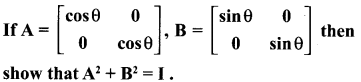
Tamilnadu Samacheer Kalvi 10th Maths Solutions Chapter 3 Algebra Ex 3.8

10th Maths Exercise 3.8 Samacheer Kalvi Question 1.
Find the square root of the following polynomials by division method
(i) x4 – 12x3 + 42x2 – 36x + 9
(ii) 37x2 – 28x3 + 4x4 + 42x + 9
(iii) 16x4 + 8x2 + 1
(iv) 121x4 – 198x3 – 183x2 + 216x + 144
Solution:
The long division method in finding the square root of a polynomial is useful when the degrees of a polynomial is higher.
10th Maths Exercise 3.8 Samacheer Kalvi Chapter 3 Algebra
Ex 3.8 Class 10 Samacheer Maths Solutions Chapter 3 Algebra
10th Maths Exercise 3.8 Samacheer Kalvi Maths Solutions Chapter 3 Algebra

Ex 3.8 Class 10 Samacheer Question 2.
Find the square root of the expression \(\frac{x^{2}}{y^{2}}-10 \frac{x}{y}+27-10 \frac{y}{x}+\frac{y^{2}}{x^{2}}\)
Solution:
Exercise 3.8 Class 10 Samacheer Maths Solutions Chapter 3 Algebra

10th Maths Exercise 3.8 Question 3.
Find the values of a and b if the following polynomials are perfect squares
(i) 4x4 – 12x3 + 37x2 + bx + a
(ii) ax4 + bx3 + 361ax2 + 220x + 100
Solution:
(i)
10th Maths Exercise 3.8 In Tamil Samacheer Kalvi Chapter 3 Algebra
Since it is a perfect square.
Remainder = 0
⇒ b + 42 = 0, a – 49 = 0
b = -42, a = 49

(ii) ax4 + bx3 + 361ax2 + 220x + 100
10th Maths 3.8 Samacheer Kalvi Maths Solutions Chapter 3 Algebra
Since remainder is 0
a = 144
b = 264

Exercise 3.8 Class 10 Samacheer Question 4.
Find the values of m and n if the following expressions are perfect squares
(i) \(\frac{1}{x^{4}}-\frac{6}{x^{3}}+\frac{13}{x^{2}}+\frac{m}{x}+n\)
(ii) x4 – 8x3 + mx2 + nx + 16
Solution:
(i)
Exercise 3.8 Class 10 Maths Samacheer Kalvi Chapter 3 Algebra

(ii)
10th Maths Exercise 3.8 3rd Sum Samacheer Kalvi Chapter 3 Algebra
Since remainder is 0,
m = 24, n = -32