Samacheer Kalvi 12th Commerce Solutions Chapter 11 Employee Selection Process

Enhance your subject knowledge with Tamilnadu State Board Solutions for 11th Commerce Chapter 11 Employee Selection Process Questions and Answers and learn all the underlying concepts easily. Make sure to learn the subject from Tamilnadu State Board Solutions Chapter 11 Employee Selection Process Questions and Answers PDF on a day to day basis and score well in your exams. You can Download Samacheer Kalvi 11th Commerce Book Solutions Questions and Answers are given after enormous research by people having high subject knowledge and for better scoring grade. You can rely on them and prepare any topic of Commerce as per your convenience easily.

Tamilnadu Samacheer Kalvi 12th Commerce Solutions Chapter 11 Employee Selection Process

Students those who are looking for Tamilnadu State Board Solutions Chapter 11 Employee Selection Process Questions and Answers Concepts can find them all in one place from our site Tamilnadu State Board Solutions. Simply click on the links available to prepare the corresponding topics of Samacheer Kalvi 11th Commerce Book Solutions Questions and Answers easily. Clarify all your queries from chapter wise different questions to be familiar with the kind of questions appearing in the exam. Thus, you can increase your score and get higher grade in the final exam.

Samacheer Kalvi 12th Commerce Employee Selection Process Textbook Exercise Questions and Answers

I. Choose the Correct Answer

Question 1.
The recruitment and Selection Process aimed at right kind of people.
(a) At right people
(b) At right time
(c) To do right things
(d) All of the above
Answer:
(d) All of the above

Question 2.
The poor quality of selection will mean extra cost on _________ and supervision.
(a) Training
(b) Recruitment
(c) work quality
(d) None of these
Answer:
(a) Training

Question 3.
_________ refers to the process of identifying and attracting job seekers so as to build a pool of qualified job applicants.
(a) Selection
(b) Training
(c) Recruitment
(d) Induction
Answer:
(c) Recruitment

Question 4.
Selection is usually considered as a _________ process.
(a) Positive
(b) Negative
(c) Natural
(d) None of these
Answer:
(b) Negative

Question 5.
Which of the following test is used to measure the various characteristics of the candidate?
(a) physical Test
(b) Psychological Test
(c) attitude Test
(d) Proficiency tests
Answer:
(b) Psychological Test

Question 6.
Wfifich of the following orders is followed in a typical selection process? .
(a) application form test and or interview, reference check and physical examination
(b) Application form test and or interview, reference check, and physical examination
(c) Reference check, application form, test and interview and physical examination
(d) physical examination test and on interview application term and reference check.
Answer:
(b) Application form test and or interview, reference check, and physical examination

Question 7.
The purpose of an application blank is to gather information about the
(a) Company
(b) Candidate
(c) Questionnaire or Interview Schedule
(d) Competitors
Answer:
(b) Candidate

Question 8.
Identify the test that acts as an instrument to discover the inherent ability of a candidate.
(a) Aptitude Test
(b) Attitude Test
(c) Proficiency Test
(d) Physical Test
Answer:
(a) Aptitude Test

Question 9.
The process of eliminating unsuitable candidate is called _________
(a) Selection
(b) Recruitment
(c) Interview
(d) Induction
Answer:
(a) Selection

Question 10.
Scrutiny of application process is the _________
(a) Last step in Selection process
(b) First step in Selection process
(c) Third step in Selection Process Selection process
(d) None of the above
Answer:
(b) First step in Selection process

Question 11.
Scrutiny of application process is the
(a) Locating candidates
(b) Determinining the suitable of the candidates
(c) preparing employees for training
(d) None of the above
Answer:
(b) Determinining the suitable of the candidates

Question 12.
The process of placing the right man on the right job is called _________
(a) Training
(b) Placement
(c) Promotion
(d) Transfer
Answer:
(b) Placement

Question 13.
Probation/Trial period signifies _________
(a) one year to two years
(b) One year to three years
(c) Two years to four years
(d) None of the above
Answer:
(a) one year to two years

Question 14.
Job first man next is one of the principles of _________
(a) Test
(b) Interview
(c) Training
(d) placement
Answer:
(d) placement

II. Very Short Answer Questions

Question 1.
What is selection?
Answer:
Selection is the process of choosing the most suitable person for the vacant position in the organization.

Question 2.
What is an interview?
Answer:
According to Scott and others “an interview is a purpose full exchange of ideas, the answering of questions and communication between two or more persons.”

Question 3.
What is intelligence test?
Answer:
Intelligence tests are one of the psychological tests, that is designed to measure a variety of mental ability, individual capacity of a candidate.

Question 4.
What do you mean by test?
Answer:
Several tests are conducted in the selection process to ensure whether the candidate possesses the necessary qualification to fit into various positions in the organization.

Question 5.
What do you understand about bio data?
Answer:
Most of the Public sector undertakings Recruitment boards supply applications forms for selection of jobs. In this form, the candidate fill the details about family background, educational qualifications, experience, co-curricular activities.

Question 6.
What do you mean by placement?
Answer:
Placement is a process of assigning a specific job to each and every candidate selected. It includes initial assignment of new employees and promotion, transfer or demotion of present employees.

III. Short Answer Questions

Question 1.
What is stress interview?
This type of interview is conducted to test the temperament and emotional balance of the candidate interviewed. Interviewer deliberately creates stressful situation and tries to assess the suitability of the candidate by observing his reaction and response to the stressful situations.

Question 2.
What is structured interview?
Answer:
Under this method, a series of questions to be asked by the interviewer are pre-prepared by the interviewer and only these questions are asked in the interview.

Question 3.
Name the types of selection test?
Answer:
Selection tests are of two types: Ability Tests and Personality Tests. Ability tests can further be divided into: aptitude test, achievement test, intelligence test, and judgement test. Personality tests can further be divided into: interest test, personality inventory test, projective test or thematic appreciation test, and attitude test.

Question 4.
What do you mean by achievement test?
Answer:
This test measures a candidate’s capacity to achieve in a particular field. In other words this test measures a candidate’s level of skill in certain areas, accomplishment and knowledge in a particular subject. It is also called proficiency test.

Question 5.
Why do you think the medical examinations of a candidate is necessary?
Answer:
The last technique used in selection process is medical examination. This is the most important step in the selection because a person of poor health cannot work competently and any investment on him may go waste, if he/she is unable to discharge duties efficiently on medical grounds.

Question 6.
What is aptitude test?
Answer:
Aptitude test is a test to measure suitability of the candidates for the post/role. It actually measures whether the candidate possess a set of skills required to perform a given job. It helps in predicting the ability and future performance of the candidate.

Question 7.
How is panel interview conducted?
Answer:
Where a group of people interview the candidate, it is called panel interview. Usually panel comprises chair person, subject expert, psychological experts, representatives of minorities/ underprivileged groups, nominees of higher bodies and so on. All panel members ask different types of questions on general areas of specialization of the candidate.

Question 8.
List out the various selection interviews.
Answer:
Interview represents a face to face interaction between the interviewer and interviewee

  1. Preliminary Interview
  2. Structured Interview
  3. Unstructured Interview
  4. In-depth Interview
  5. Panel Interview
  6. Stress Interview
  7. Telephone Interview
  8. Online Interview
  9. Group interview
  10. Video Conference Interview

Question 9.
List out the significance of placement.
Answer:
The significance of the placement is as follows:

  1. It improves employee morale.
  2. It helps in reducing employee turnover.
  3. It helps in reducing conflict rates or accidents.
  4. It avoids misfit between the candidates and the job.
  5. It helps the candidate to work as per the predetermined objectives of the organization.

IV. Long Answer Questions

Question 1.
Briefly explain the various types of tests.
Answer:
Several tests are conducted in the selection process to ensure whether the candidate possesses the necessary qualifications.

A. Ability Test: Ability test may be divided into:

  • Aptitude Test: Aptitude test is a test to measure suitability of the candidates for the post.
  • Achievement Test: This test measures a candidate’s capacity to achieve in a particular field.
  • Intelligence Test: Intelligence test is designed to measure a variety of mental ability, individual capacity of a candidate.
  • Judgment Test: This test is conducted to test the presence of mind and reasoning capacity of the candidates.

B. Personality Test: It refers to the test conducted to find out the non-intellectual traits of a candidate. It can be further divided into:

  • Interest Test: Interest test measures a candidate’s extent of interest in a particular area.
  • Projective Test: This test measures the candidate’s values, personality of the candidate.
  • Attitude Test: measures candidate’s tendencies towards the people, situation, action and related things.

Question 2.
Explain the important methods of interview.
Interview means a face to face interaction between the interviewer and interviewee. Interview may be of various types:-

  1. Preliminary Interview: It is conducted to know the general suitability of the candidates who have applied for the job.
  2. Structured Interview: In this method, a series of questions is to be asked by the interviewer. The questions may be pre-prepared.
  3. In depth Interview: This interview is conducted to test the level of knowledge of the interviewee in a particular field.
  4. Panel Interview: Where a group of people interview the candidate. The panel usually comprises the chair person, subject expert, psychological experts and so on.
  5. Stress Interview: This type of interview is conducted to test the temperament and emotional balance of the candidate.
  6. Online Interview: Due to tremendous growth in information and communication technology, interviews are conducted by means of internet via Skype, Google duo, Whatsapp.

Question 3.
Explain the principles of placement.
Answer:
The following are the principles of placement:

  1. Job First, Man Next: Man should be placed on the job according to the requirements of the job.
  2. Job Offer: The job should be offered to the man based on his qualification..
  3. Terms and conditions: The employee should be informed about the terms and conditiqns of the organisation.
  4. Aware about the Penalties: The employee should also be made aware of the penalties if he / she commits a mistake.
  5. Loyalty and Co-operation: When placing a person in a new job, an effort should be made to develop a sense of loyalty and co-operation in him.

Samacheer Kalvi 12th Commerce Employee Selection Process Additional Questions and Answers

I. Choose the Correct Answer

Question 1.
The types of Aptitude Test are
(i) Numerical Reasoning Test
(ii) Attitude Test
(iii) Vocabulary Test
(iv) Interest Test
(a) (i) and (ii)
(b) (i) and (iii)
(c) (i) and (iv)
(d) (ii) and (iii)
Answer:
(b) (i) and (iii)

Question 2.
Which one of the following is not correctly matched?

(a)In-depth interviewSkype
(b)Online interviewGroup of people interview the candidate
(c)Video conferencing interviewLevel of knowledge
(d)Telephone interviewFace to face interview

Answer:
(d) Telephone interview – Face to face interview

II. Very Short Answer Questions

Question 1.
What is meant by personality test?
Answer:
Personality test refers to the test conducted to find out the non-intellectual traits of a candidate namely temperament, emotional response, capability and stability.

Question 2.
Write a note on attitude test.
Answer:
Attitude test measures candidate’s tendencies towards the people, situation, action and related things. For example: morale study, values study, etc.

III. Short Answer Questions

Question 1.
What do you mean by online interview?
Answer:
Due to tremendous growth in information and communication technology, these days interviews are conducted by means of internet via Skype. We chat, Google duo, Viber, Whatsapp or Video chat applications. This enables the interviewers to conduct interview with the candidates living in faraway places.

We as a team believe the information prevailing regarding the Tamilnadu State Board Solutions for 11th Commerce Chapter 11 Employee Selection Process Questions and Answers has been helpful in clearing your doubts to the fullest. For any other help do leave us your suggestions and we will look into them. Stay in touch to get the latest updates on Tamilnadu State Board Solutions for different subjects in the blink of an eye.
Samacheer Kalvi 12th Commerce Solutions Chapter 10 Recruitment Methods

Enhance your subject knowledge with Tamilnadu State Board Solutions for 11th Commerce Chapter 10 Recruitment Methods Questions and Answers and learn all the underlying concepts easily. Make sure to learn the subject from Tamilnadu State Board Solutions Chapter 10 Recruitment Methods Questions and Answers PDF on a day to day basis and score well in your exams. You can Download Samacheer Kalvi 11th Commerce Book Solutions Questions and Answers are given after enormous research by people having high subject knowledge and for better scoring grade. You can rely on them and prepare any topic of Commerce as per your convenience easily.

Tamilnadu Samacheer Kalvi 12th Commerce Solutions Chapter 10 Recruitment Methods

Students those who are looking for Tamilnadu State Board Solutions Chapter 10 Recruitment Methods Questions and Answers Concepts can find them all in one place from our site Tamilnadu State Board Solutions. Simply click on the links available to prepare the corresponding topics of Samacheer Kalvi 11th Commerce Book Solutions Questions and Answers easily. Clarify all your queries from chapter wise different questions to be familiar with the kind of questions appearing in the exam. Thus, you can increase your score and get higher grade in the final exam.

Samacheer Kalvi 12th Commerce Recruitment Methods Textbook Exercise Questions and Answers

I. Choose the Correct Answer

Question 1.
Recruitment is the process of identifying _______
(a) right man for right job
(b) good performer
(c) right job
(d) all of the above
Answer:
(a) right man for right job

Question 2.
Recruitment bridges gap between _______ and _______
(a) job seeker and job provider
(b) job seeker and agent
(c) job provider and owner
(d) owner and servant
Answer:
(a) job seeker and job provider

Question 3.
Advertisement is a _______ source of recruitment.
(a) internal
(b) external
(c) agent
(d) outsourcing
Answer:
(b) external

Question 4.
Transfer is an _______ source of recruitment.
(a) internal
(b) external
(c) outsourcing
(d) none of the above
Answer:
(a) internal

Question 5.
e-Recruitment is possible only through _______ facility.
(a) computer
(b) internet
(c) broadband
(d) 4G
Answer:
(b) internet

II. Very Short Answer Questions

Question 1.
Give the meaning of Recruitment.
Answer:
Recruitment is the process of finding suitable candidates for the various posts in an organisation.

Question 2.
What is promotion?
Answer:
Based on seniority and merits of the employees they are given opportunity to move up in the organisational hierarchy. This is called promotion.

Question 3.
State two benefits of internal source of recruitment.
Answer:
Benefits of internal source of recruitment:

  1. Internal source will reduce the cost and expenses of recruitment.
  2. It is very useful, by way of selecting from the existing and retiring employees.

Question 4.
Mention any two features of campus recruitment.
Answer:
Campus recruitment is one of the external sources of recruitment. Its features are:

  1. The organisations visit the educational institutions to identify and recruit suitable candidates.
  2. They have to conduct the test and other interview methods to find out the suitable persons.

Question 5.
List the benefits of external source of recruitment.
Answer:
Benefits of external source of recruitment:

  1. The advancement in technology and communication has made it possible to reach out prospective applicants globally online.
  2. The existing employees of the organisation may recommend some of their relatives or known people who will be suitable for the existing vacancies.

III. Short Answer Questions

Question 1.
Define the term Recruitment.
According to Edwin B. Flippo, “It is a process of searching for prospective employees and stimulating and encouraging them to apply for jobs in an organisation.”

Question 2.
What are the features of internal source of recruitment?
Answer:
The main features of internal source of recruitment are:

  1. Quick process
  2. Cheaper than the external recruitment process.
  3. Works as a tool of motivation for the staff.
  4. The company’s choice is limited to existing employees of the company.

Question 3.
Give two points of differences between advertisement and unsolicited application.
Answer:
Advertisement and unsolicited applicants are external sources of recruitment. There are a few differences between them. They are:
Advertisement:

  1. It is an expensive method for the employer because advertising incurs a heavy cost.
  2. The employer can advertise in dailies, journals, magazines, etc., about the vacancies in the organisation.

Unsolicited Application:

  1. It does not involve any expense for the employer.
  2. Job seekers voluntarily apply for the vacancies that are not yet notified by the organisations.

Question 4.
What is the importance of job portals?
Answer:
The organisations can screen for the prospective candidates through internet job portals and fill up their vacancies. It is less expensive. Also the people who are well versed in technology can apply for ajoboftheir choice through this method.

Question 5.
State the steps in Recruitment process.
Answer:
Recruitment process includes the following steps:

  1. Planning recruitment
  2. Determining vacancies
  3. Identifying the sources
  4. Drafting information for advertisement
  5. Selecting the suitable mode of advertisement
  6. Facilitating selection process
  7. Evaluation and control

IV. Long Answer Questions

Question 1.
Explain the different methods of recruitment.
Answer:
Recruitment means selecting the right person for the right job. There are basically two ways by which an organisation can recruit its employees – Internal and External sources. External sources can further be classified into Direct and Indirect sources.

Internal Sources – Transfer, Upgrading, Promotion, Demotion, Recommendation by existing Employees, Job rotation, Retired employees, Dependants, Previous applicants, Acquisitions , and Mergers.

External Sources:

  1. Direct – Advertisements, Unsolicited applicants, Walk-ins, Campus Recruitment, Recruitment at Factory gate, Rival firms, e-Recruitment.
  2. Indirect – Employee referral, Govemment/Public Employment Exchanges, Employment Agencies, Employment Consultancies, Professional Associations, Deputation, Word of mouth, Labour Contractors, Job Portals, Outsourcing, Poaching.

Question 2.
Describe the significance of External source of recruitment.
Answer:
External sources of recruitment include sources that lie outside the organisation. This provides a wider collection of potential employees with the necessary skill set, especially for managerial and technical positions. Existing employees can recommend suitable candidates, which may lead to a higher level of teamwork and synchronisation among employees.

Hiring new employees can lead to the introduction of new blood and thus the introduction of a new set of skills and ideas. External sources of recruitment offer jobs to unskilled, semi-skilled and skilled workers.

Question 3.
Elaborate on the factors affecting recruitment.
Answer:
Some of the factors that affect recruitment are:

  1. (a) Size of the Organisation: Bigger organisations find recruitment less problematic than organisations that are smaller in size.
  2. (b) Recruiting Policy: Most organisations prefer recruiting through internal sources, because own employees know the organisation and they can well fit into the organisation’s culture.
  3. (c) Nature of Post: The recruitment process varies according to type of personnel to be recruited. For example, recruitment process of a bank officer will differ from that of an IPS officer.
  4. (d) Demographic factors: Like the details of possible employees- age, religion, literacy level, gender, occupation, economic status, etc.
  5. (e) Unemployment rate: If the unemployment rate is high, the number of applicants will be more, making it easy for the recruiters to select from a wide range.
  6. (f) Labour Laws: These cover working conditions, compensation, retirement benefits, and safety and health of employees in industrial undertakings.
  7. (g) Competitors: Time to time the organisations have to change their recruitment policies and manuals according to the policies being followed by the competitors.

Question 4.
Differentiate Recruitment and Selection.
Answer:

Basis for comparisonRecruitmentSelection
1. MeaningIt means searching candidates for the right job.It refers to the process of selecting the suitable candidates and offering them job.
2. ObjectiveInviting large number of candidates to apply for the vacant post.Picking up the most suitable candidates.
3. MethodIt is an economical method.It is an expensive method.
4. Contractual relationIt involves the communication of vacancies. There is no contractual relation.It creates contractual relation between employer and employee.
5. ProcessRecruitment process is very simple.Selection process is very complex and complicated.
6. TimeRequires less time since it involves merely identifying vacancies and advertising them.It is more time-consuming because each and every candidate has to be tested on various aspects before finally being selected.

Question 5.
Discuss the importance of Recruitment.
Answer:
Recruitment is the process of having the right person, in the right place, at the right time. It is crucial to organisational performance. Recruitment is the first step in an organisation’s Human Resource Planning. It fulfills the organisation’s need of a set of competitive, motivated arid flexible employees who work towards achieving the organisation’s objectives. Competent Human Resources at the right positions are crucial for the organisation and constitute core competency. Recruitment helps in creating a pool of prospective employees for the organisation, so that the right candidates for the right jobs can be selected from this pool.

It establishes a link between the job seekers and employers. Proper recruitment enables the organization to appoint talented persons for various activities, thereby leading to improved productivity and profitability of the organisation. Unless a company adopts a suitable recruitment policy, it may not be possible for a company to have right candidates for right job.

Samacheer Kalvi 12th Commerce Recruitment Methods Additional Questions and Answers

I. A. Choose the Correct Answer

Question 1.
The internal source of recruitment are _________
(i) promotion
(ii) e-recruitment
(iii) retention
(iv) advertisements
(a) (i) and (ii)
(b) (i) and (iii)
(c) (ii) and (iii)
(d) (iii) and (iv)
Answer:
(b) (i) and (iii)

B. Fill in the blanks

  1. Recruitment acts as a link between _______ and _______
  2. Poaching is also called as _______

Answers:

  1. job provider, job seeker
  2. raiding

II. Very Short Answer Questions

Question 1.
What is meant by retention?
Answer:
Retention is a method of internal source of recruitment. The retiring employees can be used to meet the requirement after superannuation as per management discretion.

Question 2.
Write a note on Demotion.
Answer:
Demotion is a kind of activity done by the company. It means movement of employee from a higher position to a lower position due to poor performance.

III. Short Answer Questions

Question 1.
Explain the term e-Recruitment?
Answer:
e-Recruitment means to carry out the recruitment by online methods. The advancement in technology and communication has made it easy to find out the applicants globally online. It is an inevitable external source of recruitment.

Question 2.
What do you mean by poaching?
Answer:
Poaching means that the company can hire employees from other companies by paying them more. So the company can reduce the expense of giving training and developing their own employees. It is also called as raiding.

We as a team believe the information prevailing regarding the Tamilnadu State Board Solutions for 11th Commerce Chapter 10 Recruitment Methods Questions and Answers has been helpful in clearing your doubts to the fullest. For any other help do leave us your suggestions and we will look into them. Stay in touch to get the latest updates on Tamilnadu State Board Solutions for different subjects in the blink of an eye.
Samacheer Kalvi 12th Commerce Solutions Chapter 9 Fundamentals of Human Resource Management

Enhance your subject knowledge with Tamilnadu State Board Solutions for 11th Commerce Chapter 9 Fundamentals of Human Resource Management Questions and Answers and learn all the underlying concepts easily. Make sure to learn the subject from Tamilnadu State Board Solutions Chapter 9 Fundamentals of Human Resource Management Questions and Answers PDF on a day to day basis and score well in your exams. You can Download Samacheer Kalvi 11th Commerce Book Solutions Questions and Answers are given after enormous research by people having high subject knowledge and for better scoring grade. You can rely on them and prepare any topic of Commerce as per your convenience easily.

Tamilnadu Samacheer Kalvi 12th Commerce Solutions Chapter 9 Fundamentals of Human Resource Management

Students those who are looking for Tamilnadu State Board Solutions Chapter 9 Fundamentals of Human Resource Management Questions and Answers Concepts can find them all in one place from our site Tamilnadu State Board Solutions. Simply click on the links available to prepare the corresponding topics of Samacheer Kalvi 11th Commerce Book Solutions Questions and Answers easily. Clarify all your queries from chapter wise different questions to be familiar with the kind of questions appearing in the exam. Thus, you can increase your score and get higher grade in the final exam.

Samacheer Kalvi 12th Commerce Fundamentals of Human Resource Management Textbook Exercise Questions and Answers

I. Choose the Correct Answer

Question 1.
Human resource is a ______ asset.
(a) Tangible
(b) Intangible
(c) Fixed
(d) Current
Answer:
(b) Intangible

Question 2.
Human Resource management is both ______ and ______
(a) Science and art
(b) Theory and practice
(c) History and Geography
(d) None of the above
Answer:
(a) Science and art

Question 3.
Planning is a ______ function
(a) selective
(b) pervasive
(c) both (a) and (b)
(d) none of the above
Answer:
(b) pervasive

Question 4.
Human resource management determines the ______ relationship.
(a) internal, external
(b) employer, employee
(c) owner, servant
(d) principle, agent
Answer:
(b) employer, employee

Question 5.
Labour turnover is the rate at which employees ______ the organisation.
(a) enter
(b) leave
(c) salary
(d) none of the above
Answer:
(b) leave

II. Very Short Answer Questions

Question 1.
Give the meaning of Human Resource.
Answer:
In an organisation, the human resource are the employees who are inevitable for the survival and success of the enterprise.

Question 2.
What is Human Resource Management ?
Answer:
Human Resource Management is a function of management concerned with hiring, motivating and maintaining people in an organisation. It focuses on people in an organisation.

Question 3.
State two features of HRM.
Answer:
Features of Human Resource Management.
Universally relevant: Human Resource Management has universal relevance.
Goal oriented: The accomplishment of organisational goals is made possible through best utilisation of human resource in an organisation.

Question 4.
Mention two characteristics of Human Resource.
Answer:
The unique, peculiar and distinctive features of human resources are as under:

  1. Human resource is the only factor of production that lives.
  2. Human resource created all other resources.

Question 5.
List the functions of HRM.
Answer:
The functions of human resource management may be classified as under: I Managerial function – Planning, Organising, Directing, Controlling.
II Operative function – Procurement, Development, Compensation, Retention, Integration, Maintenance.

III. Short Answer Questions

Question 1.
Define the term Human Resource Management.
Answer:
According to Dale Yoder, Human Resource Management is “the effective process of planning . and directing the application, development and utilisation of human resources in employment”.

Question 2.
What are the features of Human resources ?
Answer:

  1. Human resource exhibits innovation and creativity.
  2. Human resource alone can think, act, analyse and interpret.
  3. Human resources are emotional beings.
  4. Human resources can be motivated either financially or non-financially.
  5. The behaviour of human resources are unpredictable.
  6. Over years human resources gains value and appreciates.
  7. Human resources are movable.
  8. Human resource can work as a team.

Question 3.
Give two points of differences between HR and HRM.
Answer:
Human Resource (HR):

  1. To obtain personal and organisational objectives, human resource is needed.
  2. Human resource are the individuals who acquired the required skills, talents and knowledge to run the organisation.

Human Resource Management (HRM):

  1. Human resource management is a function of management relating to hiring, motivating people in an organisation.
  2. Human resource management relies on experiments and observations to handle manpower.

Question 4.
What is the importance of Human resource?
Answer:
The vital resource namely human resource is significant because of the following reasons:

  1. It is only through human resource all other resources are effectively used.
  2. The sustainable growth of an organisation depends on the important resource human resource.
  3. Industrial relations depend on human resource.
  4. Human relations is possible only through human resource.
  5. Human resource manages all other factors of production.

Question 5.
State the functions of Human Resource Management.
Answer:
The functions of human resource management may be classified as under: I Managerial function – Planning, Organising, Directing, Controlling.
II Operative function – Procurement, Development, Compensation, Retention, Integration, Maintenance.

  1. Planning: Planning is deciding in advance what to do, how to do and who is to do it. It bridges the gap between where we are and where we want to go.
  2. Organising: It includes division of work among employees by assigning each employee their duties, delegation of authority as required.
  3. Procurement: Acquisition deals with job analysis, human resource planning, recruitment, selection, placement, transfer and promotion.
  4. Development: Development includes performance appraisal, training, executive development, career planning and development, organisational development.
  5. Compensation: It deals with job evaluation, wage and salary administration, incentives, bonus, fringe benefits and social security schemes.

IV. Long Answer Questions

Question 1.
Explain the unique features of Human Resource.
The unique, peculiar features of human resources are given below.
Answer:

  1. Human resource created all other resources.
  2. Human resources can be motivated either financially or non-financially.
  3. Human resources are movable.
  4. Human resource alone can think, act, analyze and interpret.
  5. Human resource exhibits innovation and creativity.
  6. Human resource can work as a team.
  7. Over years human resources gains value and appreciates

Question 2.
Describe the significance of Human Resource Management.
Answer:
The role of human resource management is the process of acquiring, training, appraising, and compensating employees. The significance of human resource management is given below:

  1. To identify manpower needs: Determination of manpower needs in an organisation is very important as it is a form of investment.
  2. To ensure the correct requirement of manpower: At any time the organisation should
    not suffer from shortage or surplus manpower which is made possible through human resource management
  3. To select right man for right job: Human resource management ensures the right talent to select the right employee for the right job.
  4. To update the skill and knowledge: Human resource management enables employees to remain up-to-date through training and development programmes.
  5. To appraise the performance of employees: Periodical appraisal of performance of employees through human resource management activities boosts up good performers and motivates slow performers..

Question 3.
Elaborate on the Managerial functions of Human Resource Management.
Answer:
Managerial Functions of Human Resource Management:

  1. Planning: Planning is deciding in advance what to do, how to do and who is to do it.
  2. Organising: It includes division of work among employees by assigning each employee
    their duties, delegation of authority required.
  3. Directing: It involves issue of orders and instructions along with guidance and motivation to get the best employees.
  4. Controlling: The control process includes fixing of standards, measuring actual performance, comparing actual with standard laid down, measuring deviations and taking corrective actions

Question 4.
Differentiate HR from HRM.
Answer:
Human Resource (HR):

  1. Meaning: Human resource, i.e., the employees create other sources.
  2. Human resource exhibits innovation and creativity.
  3. Human resource alone can think, act and analyse.
  4. Human resources are movable.
  5. Human resource can work as team.

Human Resource Management (HRM):

  1. Managing the human resource is known as human resource management.
  2. Human resource management has universal relevance.
  3. The accomplishment of organisational goal is made possible through human resource in an organisation.
  4. Human resource management is intangible function.
  5. Human resource management focuses on the development of manpower through training and development programmes.

Question 5.
Discuss the Operating functions of HRM.
Answer:
Operating functions of HRM:

  1. Procurement: Acquisition deals with job analysis, human resource planning, recruitment, selection, placement and promotion.
  2. Development: It includes performance appraisal, training, executive development, and organisational development.
  3. Compensation: It deals with job evaluation, wage and salary administration, incentives, bonus schemes.
  4. Retention: This is made possible through health and safety, social security, job satisfaction and quality of work life.
  5. Maintenance: This encourages employees to work with job satisfaction, reducing labour turnover, for human resource.

We as a team believe the information prevailing regarding the Tamilnadu State Board Solutions for 11th Commerce Chapter 9 Fundamentals of Human Resource Management Questions and Answers has been helpful in clearing your doubts to the fullest. For any other help do leave us your suggestions and we will look into them. Stay in touch to get the latest updates on Tamilnadu State Board Solutions for different subjects in the blink of an eye.
Samacheer Kalvi 12th Commerce Solutions Chapter 8 Securities and Exchange Board of India (SEBI)

Enhance your subject knowledge with Tamilnadu State Board Solutions for 11th Commerce Chapter 8 Securities and Exchange Board of India (SEBI) Questions and Answers and learn all the underlying concepts easily. Make sure to learn the subject from Tamilnadu State Board Solutions Chapter 8 Securities and Exchange Board of India (SEBI) Questions and Answers PDF on a day to day basis and score well in your exams. You can Download Samacheer Kalvi 11th Commerce Book Solutions Questions and Answers are given after enormous research by people having high subject knowledge and for better scoring grade. You can rely on them and prepare any topic of Commerce as per your convenience easily.

Tamilnadu Samacheer Kalvi 12th Commerce Solutions Chapter 8 Securities and Exchange Board of India (SEBI)

Students those who are looking for Tamilnadu State Board Solutions Chapter 8 Securities and Exchange Board of India (SEBI) Questions and Answers Concepts can find them all in one place from our site Tamilnadu State Board Solutions. Simply click on the links available to prepare the corresponding topics of Samacheer Kalvi 11th Commerce Book Solutions Questions and Answers easily. Clarify all your queries from chapter wise different questions to be familiar with the kind of questions appearing in the exam. Thus, you can increase your score and get higher grade in the final exam.

Samacheer Kalvi 12th Commerce Securities and Exchange Board of India (SEBI) Textbook Exercise Questions and Answers

I. Choose the Correct Answer

Question 1.
Securities Exchange Board of India was first established in the year _________
(a) 1988
(b) 1992
(c) 1995
(d) 1998
Answer:
(a) 1988

Question 2.
The headquarters of SEBI is _________
(a) Calcutta
(b) Bombay
(c) Chennai
(d) Delhi
Answer:
(b) Bombay

Question 3.
In which year SEBI was constituted as the regulator of capital markets in India?
(a) 1988
(b) 1992
(c) 2014
(d) 2013
Answer:
(a) 1988

Question 4.
Registering and controlling the functioning of collective investment schemes as _________
(a) Mutual Funds
(b) Listing
(c) Rematerialisation
(d) Dematerialization
Answer:
(d) Dematerialization

Question 5.
SEBI is empowered by the Finance ministry to nominate members on the Governing body of every stock exchange.
(a) 5
(b) 3
(c) 6
(d) 1
Answer:
(b) 3

Question 6.
The process of converting physical shares into electronic form is called _________
(a) Dematerialisation
(b) Delisting
(c) Materialisation
(d) Debarring
Answer:
(a) Dematerialisation

Question 7.
Trading in dematerialized shares commenced on the NSE in _________
(a) January 1996
(b) June 1998
(c) December 1996
(d) December 1998
Answer:
(c) December 1996

Question 8.
_________  was the first company to trade its shares in Demat form.
(a) Tata Industries
(b) Reliance Industries
(c) Infosys
(d) Birla Industries
Answer:
(b) Reliance Industries

Question 9.
_________  enables small investors to participate in the investment on share capital of large companies.
(a) Mutual Funds
(b) Shares
(c) Debentures
(d) Fixed deposits
Answer:
(a) Mutual Funds

Question 10.
PAN stands for _________
(a) Permanent Amount Number
(b) Primary Account Number
(c) Permanent Account Number
(d) Permanent Account Nominee
Answer:
(c) Permanent Account Number

II. Very Short Answer Questions

Question 1.
Write a short notes on SEBI.
Answer:
Securities and exchange Board of India (SEBI) was first established in the year 1988 as a non- statutory body for regulating the securities market.

Question 2.
Write any two objectives of SEBI.
Answer:
The first objective of SEBI is to regulate stock exchanges so that efficient services may be provided to all the parties operating there. Another objective is to supervise/check the activities of the brokers and other middlemen in order to control the capital market.

Question 3.
What is Demat account?
Answer:
A demat account holds all the shares that are purchased in electronic or dematerialized form.

Question 4.
Mention the headquarters of SEBI.
Answer:
SEBI has its headquarters at the business district of BandraKurla Complex in Mumbai, and has Northern, Eastern, Southern and Western Regional Offices in New Delhi, Kolkata, Chennai and Ahmedabad, respectively.

Question 5.
What are the various ID proofs?
Answer:
Proof of identity: PAN card, voter’s ID, passport, driver’s license, bank attestation, IT returns, electricity bill, telephone bill, ID cards with applicant’s photo issued by the central or state government are the ID proofs.

III. Short Answer Questions

Question 1.
What is meant by Dematerialization?
Answer:
Dematerialization is the process by which physical share certificates of an investor are taken back by the company/registrar and destroyed. Then an equivalent number of securities in the electronic form are credited to the investors account with his Depository Participant.

Question 2.
What are the documents required for a Demat account?
Answer:
For opening a demat account, we submit proof of identity and address along with a passport size photo and the account opening form.
Documents for Identity: Pan card, Voters ID, Passport, Driver’s License, IT Returns, Electricity and Telephone Bills are the Identity documents.
Documents for Address: Ration card, Passport, Voter’s ID card, Driving License, Telephone Bills, Electricity bills are the address documents.

Question 3.
What is the power of SEBI under Securities Contract Act?
Answer:
For effective regulation of stock exchange, the Ministry of Finance issued a Notification on 13 September, 1994 delegating several of its powers under the Securities Contracts (Regulations) Act to SEBI is also empowered by the Finance Ministry to nominate three members on the Governing Body of every stock exchange.

Question 4.
What is meant by Insiders trading? .
Answer:
Insider trading means the buying and selling of securities by directors, promoters, etc., who have access to some confidential information about the company. This affects the interests of the general investors and is essential to check this tendency.

Question 5.
Draw the organization structure of SEBI.
Answer:
The SEBI is managed by its members, which consists of following.

Samacheer Kalvi 12th Commerce Solutions Chapter 8 Securities and Exchange Board of India (SEBI)

IV. Long Answer Questions

Question 1.
What are the functions of SEBI?
Answer:
SEBI performs three key functions: quasi-legislative, quasi-judicial and quasi-executive.

  1. Safeguarding the interests of investors by means of adequate education and guidance.
  2. Regulating and controlling the business on stock markets.
  3. Conduct inspection and inquiries of stock exchanges, intermediaries and self-regulating organizations.
  4. Barring insider trading in securities.
  5. Prohibiting deceptive and unfair methods used by financial intermediaries operating in securities market.
  6. Registering and controlling the functioning of stock brokers, sub-brokers, share transfer agents, bankers, trustees, underwriters who are linked to securities market.
  7. SEBI issues Guidelines and Instructions to businesses orgnisations for issue of shares,
  8. Registering and controlling the functioning of collective investment schemes such as mutual funds.

Question 2.
Explain the powers of SEBI
Answer:
The various powers of a SEBI are explained below:

  1. Powers Relating to Stock Exchanges and Intermediaries: SEBI has wide powers to get the information from the stock exchange and intermediaries regarding their business transactions for inspection.
  2. Power to Impose Monetary Penalties: SEBI has power to impose monetary penalties on capital market intermediaries for violations.
  3. Power to Initiate Actions in Functions Assigned
  4. Power to Regulate Insider Trading: SEBI has power to regulate insider trading or can regulate the functions of merchant banker.
  5. Powers Under Securities Contracts Act: For the regulation of stock exchange, the Ministry of Finance issued a notification, for delegating several of its powers under the securities contract Act.

Question 3.
What are the benefits of Dematerialisation?
Answer:
Benefits of Dematerialisation:

  1. The risks relating to physical certificates like loss, theft, forgery are eliminated completely with a Demat Account.
  2. The risk of paper work enables quicker transactions and higher efficiency in trading.
  3. The shares which are created through mergers and consolidation of companies are credited automatically in the Demat account.
  4. There is no stamp duty for transfer of securities.
  5. Certain banks also permit holding of both equity and debt securities in a single account
  6. A Demat account holder can buy or sell any amount of shares.

Samacheer Kalvi 12th Commerce Securities and Exchange Board of India (SEBI) Additional Questions and Answers

I. A. Choose the Correct Answer:

Question 1.
SEBI got the statutory powers in the year _____
(a) 1988
(b) 1992
(c) 1969
(d) 1980
Answer:
(b) 1992

B. Fill in the blanks

Question 1.
The first objective of SEBI is to regulate ______
Answer:
Stock exchanges

II. Very Short Answer Questions

Question 1.
Name the three key functions of SEBI.
Answer:
SEBI performs three key functions.
They are:

  1. quasi-legislative
  2. quasi-judicial
  3. quasi-executive

Question 2.
Write a note on PAN.
Answer:
PAN, or permanent account number, is a unique 10-digit alphanumeric identity allotted to each taxpayer by the Income Tax Department. It also serves as an identity proof.

Case Study

Question (a)
Koushikaa’s father has gifted her the shares of a large cement company with which he had been working. The securities were in physical form. She already has a bank account and does not possess any other forms of securities. She wishes to sell the shares and approached a registered broker for the purpose. Mention one mandatory detail which she will have to provide with the broker.
Answer:
Mandatory Detail:

  1. The shares can be sold by opening a Demat account.
  2. She has to mention the no of shares of the cement company.
  3. Without paper work shares can be transferred through dematerialisation.
  4. Shares can be transferred to the person who wants to purchase.
  5. Also mention the name of the company, Type of share, amount of share capital.

Question (b)
Mr. Kulandaivel was the Chairman of Thangam Bank. The bank was earning good profits. Shareholders were happy as the bank was paying regular dividends. The market price of their share was also steadily rising. The bank was about to announce taking over the ‘Trinity Bank’. Mr. Kulandaivel knew that the share price of Thangam Bank would rise on this announcement. Being a part of the bank, he was not allowed to buy shares of the bank. He called one of the his rich friends Mr. Chandrasekaran and asked him to invest ? 5 crores in shares of his bank promising him the capital gains.

As expected, the share prices went up by 40% and the market price of Chandrasekaran’s shares was now tl crores. He earned a profit of ?2 crores. He gave ?1 crore to Mr. Kulandaivel and kept ? crore with himself. On regular inspection and by conducting enquires of the brokers involved, the Securities and Exchange Board of India (SEBI) was able to detect this irregularity. The SEBI imposed a heavy penalty on Mr. Kulandaivel. By quoting the lines from the above paragraph, identify and state any two functions that were performed by SEBI in the above case.
Answer:
Functions performed by SEBI in this case:

  1. The market price of their share were informed and controlled by SEBI.
  2. On regular inspection and conducting enquiries, Exchange Board of India was able to detect this irregularity. The SEBI imposed a heavy penalty on Mr. Kulandaivel.

We as a team believe the information prevailing regarding the Tamilnadu State Board Solutions for 11th Commerce Chapter 8 Securities and Exchange Board of India (SEBI) Questions and Answers has been helpful in clearing your doubts to the fullest. For any other help do leave us your suggestions and we will look into them. Stay in touch to get the latest updates on Tamilnadu State Board Solutions for different subjects in the blink of an eye.
Samacheer Kalvi 12th Commerce Solutions Chapter 7 Stock Exchange

Enhance your subject knowledge with Tamilnadu State Board Solutions for 11th Commerce Chapter 7 Stock Exchange Questions and Answers and learn all the underlying concepts easily. Make sure to learn the subject from Tamilnadu State Board Solutions Chapter 7 Stock Exchange Questions and Answers PDF on a day to day basis and score well in your exams. You can Download Samacheer Kalvi 11th Commerce Book Solutions Questions and Answers are given after enormous research by people having high subject knowledge and for better scoring grade. You can rely on them and prepare any topic of Commerce as per your convenience easily.

Tamilnadu Samacheer Kalvi 12th Commerce Solutions Chapter 7 Stock Exchange

Students those who are looking for Tamilnadu State Board Solutions Chapter 7 Stock Exchange Questions and Answers Concepts can find them all in one place from our site Tamilnadu State Board Solutions. Simply click on the links available to prepare the corresponding topics of Samacheer Kalvi 11th Commerce Book Solutions Questions and Answers easily. Clarify all your queries from chapter wise different questions to be familiar with the kind of questions appearing in the exam. Thus, you can increase your score and get higher grade in the final exam.

Samacheer Kalvi 12th Commerce Stock Exchange Textbook Exercise Questions and Answers

I. Choose the Correct Answer

Question 1.
_______ is the oldest stock exchange in the world.
(a) London Stock Exchange
(b) Bombay Stock Exchange
(c) National Stock Exchange
(d) Amsterdam Stock Exchange
Answer:
(d) Amsterdam Stock Exchange

Question 2.
There are ______ stock exchanges in the country.
(a) 21
(b) 24
(c) 20
(d) 25
Answer:
(b) 24

Question 3.
Stock exchanges deal in ______
(a) Goods
(b) Services
(c) Financial Securities
(d) Country’s Currency
Answer:
(c) Financial Securities

Question 4.
Stock exchange allow trading in ______
(a) All types of Shares of any Company
(b) Bonds issued by the Govt
(c) Listed Securities
(d) Unlisted Securities
Answer:
(c) Listed Securities

Question 5.
Jobbers transact in a stock exchange
(a) For their Clients
(b) For their Own Transactions
(c) For other Brokers
(d) For other Members
Answer:
(b) For their Own Transactions

Question 6.
A pessimistic speculator is ______
(a) Stag
(b) Bear
(c) Bull
(d) Lame Duck
Answer:
(b) Bear

Question 7.
An optimistic speculator is ______
(a) Bull
(b) Bear
(c) Stag
(d) Lame Duck
Answer:
(a) Bull

Question 8.
A bull operator believes in ______
(a) Increase in Prices
(b) Decrease in Prices
(c) Stability in Prices
(d) No change in Prices
Answer:
(a) Increase in Prices

Question 9.
______ means the price at which securities are bought and sold are recorded and made public.
(a) Market Quotations
(b) Trade Quotations
(c) Business Quotations
(d) Buyers Quotations
Answer:
(a) Market Quotations

Question 10.
The rules and regulations of Stock exchange is framed by ______ guide lines.
(a) RBI
(b) Central Government
(c) SEBI
(d) BSE
Answer:
(c) SEBI

II. Very Short Answer Questions

Question 1.
What is meant by Stock Exchange?
Answer:
Stock Exchange is an organized market for the purchase and sale of industrial and financial security. It is also called stock market or share market.

Question 2.
Define Stock Exchange.
Answer:
According to Husband and Dockerary, “Stock exchanges are privately organized markets which are used to facilitate trading in securities.”

Question 3.
Write any 5 Stock Exchanges in India.
Answer:

  1. The Bombay Stock Exchange
  2. Bangalore Stock Exchange Ltd
  3. The Madras Stock Exchange Ltd
  4. The Hydrabad Stock Exchange Ltd
  5. The Cochin Stock Exchange Ltd

Question 4.
What is meant by Remiser?
Answer:
Remiser is an agent of a member of a stock exchange. He obtains business for his principal i.e the member.

Question 5.
Who is called a Broker?
Answer:
Broker is a commission agent. He acts as an intermediary between buyers and sellers of securities. He charges a commission for his services from both the parties.

Question 6.
What are the types of Speculators?
Answer:
Speculators in a stock market are of different types. They are named on the basis of animals behaviour.
They are:

  1. Bull
  2. Bear
  3. Stag
  4. Lame duck

Question 7.
What is meant by Commodity Exchange?
Answer:
A commodity exchange is an exchange where commodities are purchased and sold. Commodities are listed here: Metals, agricultural products

Question 8.
Mention the recent development in Stock Exchange.
Answer:
The structure of stock market in India has undergone a vast change with developments.
They are follows:

  1. National Stock Exchange of India Limited (NSE)
  2. Stock Holding Corporation of India Limited (SHCIL)
  3. National Clearing and Depository System (NCDS)
  4. Securities Trading Corporation of India (STCI)
  5. National Securities Depository Limited (NSDL)

Question 9.
What is the stock trading time in India?
Answer:
The stock trading time in India for equity market is between 9.15 am to 3.30 am from Monday to Friday. Saturdays and Sundays were holiday.

Question 10.
Explain Dalai Street.
Answer:
Dalai Street is an area in Mumbai, where the Bombay Stock exchange is located. The literal translation of Dalai in Marathi is a broker or intermediary.

III. Short Answer Questions

Question 1.
What are the limitations of Stock exchange?
Answer:

  1. Lack of uniformity and control of stock exchanges.
  2. Absence of restriction on the membership of stock exchanges.
  3. Failure to control unhealthy speculation.

Question 2.
Explain Bull and Bear.
Speculators in a stock market are of different types based on animals behaviour.
They are:

  1. Bull: A Bull or Tejiwala is an operator who expects a rise in prices of securities in the future. He purchases the securities expecting price of rise in future.
  2. Bear: A bear or Mandiwala speculator expects prices to fall in future and sells securities at present with a view to purchase them at lower price.

Question 3.
Explain Stag and Lame Duck.
Answer:

  1. Stag: A stag is a cautious speculator in the stock exchange. He applies for shares in new companies and expects to sell them at a premium.
  2. Lame Duck: When a bear finds it difficult to fulfill his commitment, he is said to be struggling like a lame duck.

Question 4.
Explain National Stock Market System. (NSMS)
Answer:
National stock market system was advocated by the High Powered Group. It is headed by Shri. Pherwani (popularly known as Pherwani Committee). At present the National Stock Market comprises the following:

  1. National Stock Exchange of India Limited (NSE)
  2. Stock Holding Corporation of India Limited (SHCIL)
  3. Securities Trading Corporation of India (STCI)

Question 5.
Explain National Stock Exchange. (NSE)
Answer:
National Stock Exchange was incorporated in November, 1992. It uses satellite link to spread trading throughout the country. Through computer network, members’ orders for buying and selling within prescribed price are matched by central computer.

IV. Long Answer Questions

Question 1.
Explain the functions of Stock Exchange.
Answer:

  1. Ready and Continuous Market: Stock exchange helps the investors to sell his securities easily. And also he can convert his cash into securities.
  2. Correct Evaluation of Securities: The prices at which securities are bought and sold are recorded and informed to the public. These prices are called “market quotations”
  3. Protection to Investors: All dealings in a stock exchange are in accordance with well- defined rules and regulations. Any malpractice will be severely punished.
  4. Proper Channelisation of Capital: People like to invest in the shares of companies which yield good profits. Also people invest in the companies which are giving good dividends.
  5. Facilities for Speculation: Speculation is an integral part of stock exchange operations. As a result of speculation, demand for and supply of securities are equalized.

Question 2.
Explain the features of Stock Exchange.
Answer:
There are various features of a stock exchange. They are given below:

  1. Market for Securities: Stock exchange is a market, where securities of corporate bodies, government companies are bought and sold.
  2. Deals in Second Hand Securities: It deals with shares, debentures bonds and securities already issued by the companies.
  3. Regulates Trade in Securities: Stock exchange does not buy or sell any securities on its own account. It regulates the trade activities so as to ensure free and fair trade.
  4. Allows Dealings only in Listed Securities: In the stock exchange only listed securities are purchased and sold. Unlisted securities cannot be traded in the stock exchange.
  5. Association of Persons: A stock exchange is an association of persons or body of individuals which may be registered or unregistered.

Question 3.
Explain the Benefits of Stock Exchange.
Answer:
The benefits of Stock Exchange are classified into benefits to the Community, Company and Investors.
Benefits to the Community:

  1. Economic Development: It increases the economic development by ensuring steady flow of savings for production.
  2. Fund Raising Platform: It enables the well-managed companies to raise funds by issue of shares.

Benefits to the Company:

  1. Enhances Goodwill or Reputation: Companies whose shares are quoted on a stock exchange enjoy greater goodwill and credit standing.
  2. Raises huge funds: Stock exchange helps the companies to raise huge funds by issue of shares and debentures.

Benefits to Investors:

  1. Liquidity: Stock exchange helps to convert his shares into cash quickly.
  2. Investor protection: The stock exchange safeguards, investor’s interest by following strict rules and regulations.

Question 4.
Distinguish between Stock Exchange and Commodity Exchange.
Answer:

Stock ExchangeCommodity Exchange
(i)Meaning: Stock Exchange is an organised market for purchase and sale of industrial and financial securities.A commodity exchange is an exchange where commodities are purchased and sold. E.g.: Gold, Silver, Rice, Wheat “
(ii)Function: Providing easy marketability.Offering hedging or price insurance services.
(iii)Object: It is facilitating capital formation.It will facilitate goods flow through risk reduction.
(iv)Participants: Investors and Speculators are participating in stock exchange.Producers, dealers, traders are involved in the commodity exchange.
(v)Articles traded: Industrial securities such as stocks and bonds and government securities.Only durable and graded goods are traded in this.

Question 5.
Explain Lombard street and Wall street.
Answer:
Lombard Street: Lombard Street is in London. It is a street notable for its connections with the merchants, banking and insurance industries of London. From bank junction, where nine . streets converge by the bank of England, Lombard Street runs southeast for a short distance.

Wall Street: Wall Street is a street in New York. It is the original home of the New York Stock exchange. Also it is the historic headquarters of the largest U.S. brokerages and investment banks.

Wall Street is also used as a collective name for the financial and investment community.

Samacheer Kalvi 12th Commerce Stock Exchange Additional Questions and Answers

I. Choose the Correct Answer

Question 1.
Match List I with List II and select the correct answer using the codes given below:

List -1List – II
(i)Remiser(1)Commission agent
(ii)Authorised Clerk(2)Agent of a member
(iii)Broker(3)Security Merchant
(iv)Jobber(4)Employee

Codes:

(i)(ii)(iii)(iv)
(a)4321
(b)2413
(c)3214
(d)1234

Answer:
(b) 2,4, 1, 3

Question 2.
Which is not a foreign Stock exchange?
(a) London Stock Exchange
(b) Bombay Stock Exchange
(c) Tokyo Stock Exchange
(d) New York Stock Exchange
Answer:
(b) Bombay Stock Exchange

Case Study

Ramesh and Asaladeepesh are good friends. Ramesh is very god-fearing kind, while Asaladeepesh was an enterprising person, having practical in approach. Read the ” following conversation.

Ramesh : Hi,Deepesh! What are you doing?
Asaladeepesh: Hi, I am reading the newspaper – financial market page that gives us
information about the shares price.
Ramesh : Shares, that is an area of big gambles.
Asaladeepesh: No, not really! You must understand how it works.
Ramesh : Frankly speaking, I think this Capital market is all a gambling game and I don’t see any use of them.
Asaladeepesh :No, you are seriously mistaken; you do not know the importance of capital market. I will tell how it is needed for an individual and an economy.

You are required to play the role of Asaladeepesh and continue the conversation.
Solution:
Ramesh : Ok, you tell me the importance of capital.
Asaladeepesh : Capital is needed for an individual to commence business. Also it is needed to develop the society.
Ramesh : What is capital?
Asaladeepesh : Capital is the finance needed to do the business.
Ramesh : How the capital can be obtained?
Asaladeepesh : Capital may be introduced by self or for the large amount of capital one can issue shares and debentures.
Ramesh : What is meant by share?
Asaladeepesh : Share means a unit or a part of share capital.
Ramesh : What is the income for the shares purchased?
Asaladeepesh :For purchasing shares, the company can declare dividend from the profit earned by the company.
Ramesh : What are the types of shares?
Asaladeepesh : The shares may be of equity shares and preference shares.
Ramesh : What is meant by debentures?
Asaladeepesh : Debenture may be a document for accepting loan from the public.
Ramesh : How the shares can be obtained, if not purchased from the original issue?
Asaladeepesh : You can get the shares from the stock exchange by contacting a broker.

We as a team believe the information prevailing regarding the Tamilnadu State Board Solutions for 11th Commerce Chapter 7 Stock Exchange Questions and Answers has been helpful in clearing your doubts to the fullest. For any other help do leave us your suggestions and we will look into them. Stay in touch to get the latest updates on Tamilnadu State Board Solutions for different subjects in the blink of an eye.
Samacheer Kalvi 12th Bio Zoology Solutions Chapter 7 Human Health and Diseases

Get Tamilnadu Board Class 12 Bio Zoology Solutions Chapter wise Study Material to score good marks in the exam. Various chapters with subtopics are explained clearly in Samacheer Kalvi Class 12 Bio Zoology Solutions Material. All the Samacheer Kalvi Class 12 Bio Zoology Book Solutions Chapter 7 Human Health and Diseases Questions, answers, Notes, Guide, Pdf along with the explanations are provided by the subject experts. Students can easily learn Tamilnadu Board Class 12 Chapter wise Bio Zoology with the help of the step by step guide provided on our site. Learn all the Samacheer Kalvi Class 12 Bio Zoology concepts to attempt the exam with more confidence. Read all the concepts of Tamilnadu Board Solutions for Class 12 Bio Zoology Chapter 7 Human Health and Diseases.

Tamilnadu Samacheer Kalvi 12th Bio Zoology Solutions Chapter 7 Human Health and Diseases

Whether you want to become an expert in Bio Zoology or to get good marks in the exam, you have one and only solution is practicing with Samacheer Kalvi 12th Bio Zoology Chapter wise Solutions. Strengthen your weakness by learning the Samacheer Kalvi 12th Bio Zoology Chapter 7 Human Health and Diseases Questions and Answers on our site. You can learn directly online on our website or learn offline by downloading Samacheer Kalvi 12th Bio Zoology Chapter wise material. Save your time and read Samacheer Kalvi 12th Bio Zoology Subject at your comfort level.

Samacheer Kalvi 12th Bio Zoology Human Health and Diseases Text Book Back Questions and Answers

Question 1.
A 30 year old woman has bleedy diarrhoea for the past 14 hours, which one of the following organisms is likely to cause this illness?
(a) Streptococcus pyogens
(b) Clostridium difficile
(c) Shigella dysenteriae
(d) Salmonella enteritidis
Answer:
(c) Shigella dysenteriae

Question 2.
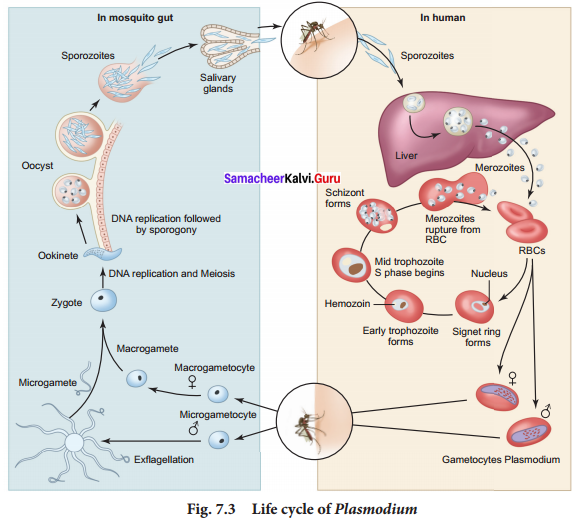
Exo-erythrocytic schizogony of Plasmodium takes place in __________
(a) RBC
(b) Leucocytes
(c) Stomach
(d) Liver
Answer:
(d) Liver

Question 3.
The sporozoites of Plasmodium vivax are formed from __________
(a) Gametocytes
(b) Sporoblasts
(c) Oocysts
(d) Spores
Answer:
(c) Oocysts

Question 4.
Amphetamines are stimulants of the CNS, whereas barbiturates are __________
(a) CNS stimulant
(b) both a and b
(c) hallucinogenic
(d) CNS depressants
Answer:
(d) CNS depressants

Question 5.
Choose the correctly match pair.
(a) Amphetamines – Stimulant
(b) LSD-Narcotic
(c) Heroin – Psychotropic
(d) Benzodiazepine – Pain killer
Answer:
(a) Amphetamines – Stimulant

Question 6.
The Athlete’s foot disease in human is caused by __________
(a) Bacteria
(b) Fungi
(c) Virus
(d) Protozoan
Answer:
(b) Fungi

Question 7.
Cirrhosis of liver is caused by chronic intake of __________
(a) Opium
(b) Alcohol
(c) Tobacco
(d) Cocaine
Answer:
(b) Alcohol

Question 8.
The sporozoite of the malarial parasite is present in __________
(a) saliva of infected female Anopheles mosquito.
(b) RBC of human suffering from malaria.
(c) Spleen of infected humans.
(d) Gut of female Anopheles mosquito
Answer:
(a) saliva of infected female Anopheles mosquito.

Question 9.
Where do the following events in the life cycle of Plasmodium takes place?
(a) Fertilization – __________
(b) Development of gametocytes – __________
(c) Release of sporozoites – __________
(d) Schizogony – __________
Answer:
(a) Fertilization – Gut of mosquito
(b) Development of gametocytes – Human RBC’s
(c) Release of sporozoites – From Mosquito to the human blood
(d) Schizogony – Human liver cells

Question 10.
Paratope is an __________
(a) Antibody binding site on variable regions
(b) Antibody binding site on heavy regions
(c) Antigen binding site on variable regions
(d) Antigen binding site on heavy regions
Answer:
(c) Antigen binding site on variable regions

Question 11.
Allergy involves __________
(a) IgE
(b) IgG
(c) IgA
(d) IgM
Answer:
(a) IgE

Question 12.
Spread of cancerous cells to distant sites is termed as __________
(a) Metastasis
(b) Oncogenes
(c) Proto-oncogenes
(d) Malignant neoplasm
Answer:
(a) Metastasis

Question 13.
AIDS virus has __________
(a) Single stranded RNA
(b) Double stranded RNA
(c) Single stranded DNA
(d) Double stranded DNA
Answer:
(a) Single stranded RNA

Question 14.
B cells that produce and release large amounts of antibody are called __________
(a) Memory cells
(b) Basophils
(c) Plasma cells
(d) killer cells
Answer:
(c) Plasma cells

Question 15.
Given below are some human organs.
Answer:
Identify one primary and one secondary lymphoid organ. Explain its role.
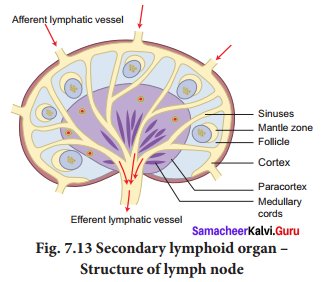
Liver, thymus, stomach, thyroid, tonsils Primary lymphoid organ – thymus Secondary lymphoid organ – tonsils Immunocompetency of T cells is achieved in Thymus Whereas tonsils help to fight viral and bacterial infections.

Question 16.
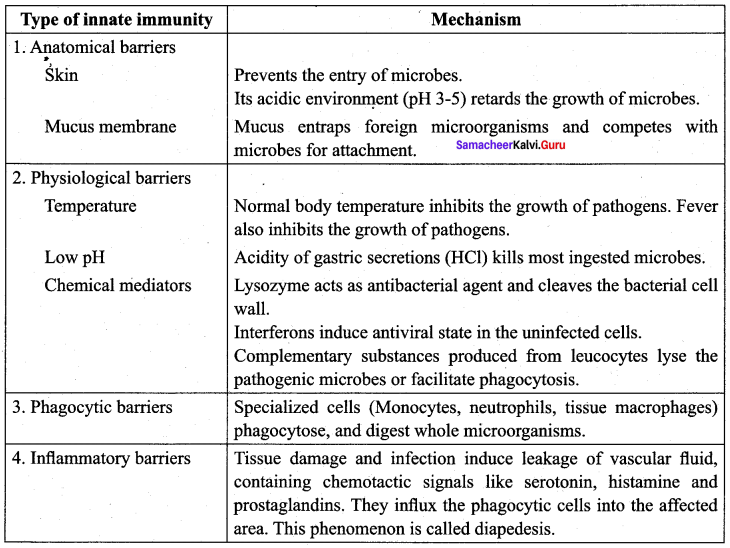
Name and explain the type of barriers which involve macrophages.
Answer:
Phagocytic barriers involves macrophages (monocytes, neutrophils) which phagocytose and . digest whole micro organisms.

Question 17.
What are interferons? Mention their role.
Answer:
Interferons are the antiviral proteins which induce antiviral state in the infected cells.

Question 18.
List out chemical alarm signals produced during inflammation.
Answer:
Serotonin, histamine and prostaglandins.

Question 19.
Explain the process of replication of retrovirus after it gains entry into the human body.
Answer:
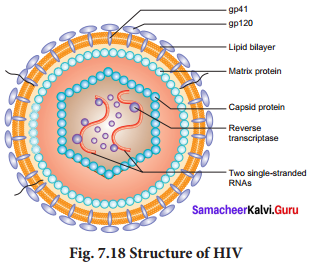
After getting into the body of the person, the retrovirus enters into macrophages where RNA genome of the virus replicates to form viral DNA with the help of the enzyme reverse transcriptase. This viral DNA gets incorporated into the DNA of host cells and directs the infected cells to produce viral particles. The macrophages continue to produce virus and in this way acts like a HIV factory.

Question 20.
Explain the structure of immunoglobulin with suitable diagram.
Answer:
An antibody molecule is Y shaped structure that comprises of four polypeptide chains, two identical light chains (L) of molecular weight 25,000 Da (approximately 214 amino acids) and two identical heavy chains (H) of molecular weight 50,000 Da (approximately 450 amino acids). The polypeptide chains are linked together by di-sulphide (S-S) bonds. One light chain is attached to each heavy chain and two heavy chains are attached to each other to form a Y shaped structure. Hence, an antibody is represented by H2 L2 The heavy chains have a flexible hinge region at their approximate middles Antigen binding
Samacheer Kalvi 12th Bio Zoology Solutions Chapter 7 Human Health and Diseases
Each chain (L and H) has two terminal They are C – terminal (Carboxyl) and amino or N-terminal. Each chain (L and H) has two regions. They have variable (V) region at one end and a much larger constant (C) region at the other end. Antibodies responding to different antigens have very different (V) regions but their (C) regions are the same in all antibodies. In each arm of the monomer antibody, the (V) regions of the heavy and light chains combines to form an antigen – binding

site shaped to ‘fit’ a specific antigenic determinant. Consequently each antibody monomer has two such antigen – binding regions. The (C) regions that forms the stem of the antibody monomer determine the antibody class and serve common functions in all antibodies.

Question 21.
What are the cells involved innate immune system?
Answer:
Cells involved in innate immunity are monocytes (macrophages), neutrophils, helper T-cells, B-cells, dendritic cells.

Question 22.
What is vaccine? What are its types?
Answer:
A vaccine is a biological preparation that provides active acquired immunity to a particular disease and resembles a disease causing microorganism and is often made from weakened or attenuated or killed forms of the microbes, their toxins, or one of its surface proteins. The vaccines are classified as first, second and third generation vaccines.

Question 23.
A person is infected by HIV. How will you diagnose for AIDS?
Answer:
A simple blood test is available that can determine whether the person has been infected with HIV. The ELISA test (Enzyme Linked Immunosorbent Assay) detects the presence of HIV antibodies. It is a preliminary test. Western blot test is more reliable and a confirmatory test. It detects the viral core proteins. If both tests detect the presence of the antibodies, the person is considered to be HIV positive.

Question 24.
Autoimmunity is a misdirected immune response. Justify.
Answer:
Autoimmune diseases : Autoimmunity is due to an abnormal immune response in which the immune system fails to properly distinguish between self and non-self and attacks its own body. Our body produces antibodies (auto antibodies) and cytotoxic T cells that destroy our own tissues. If a disease-state results, it is referred to as auto-immune disease. Thus, autoimmunity is a misdirected immune response.

Question 25.
List the causative agent, mode of transmission and symptoms for Diphtheria and Typhoid
Answer:
Samacheer Kalvi 12th Bio Zoology Solutions Chapter 7 Human Health and Diseases

Question 26.
A patient was hospitalized with fever and chills. Merozoites were observed in her blood. What is your diagnosis?
Answer:
Appearance of merozoites in a patients blood may be an indication of malarial parasite – plasmodium.

Question 27.

  1. Write the scientific name of the filarial worm that causes filariasis.
  2. Write the symptoms of filariasis.
  3. How is this disease transmitted?

Answer:

  1. Scientific name of the filarial worm – Wuchereria bancrofti
  2. Symptoms of filariasis – Inflammation of lymph nodes, obstruction of lymph vessels causes elephantiasis of limbs, genital etc.
  3. Mode of disease transmission : Vector transmission (female Culex mosquito)

Question 28.
List the common withdrawal symptoms of drugs and alcohol abuse.
Answer:
The withdrawal symptoms may range from mild tremors or convulsions, severe agitation and fits, depressed mood, anxiety, nervousness, restlessness, irritability, insomnia, dryness of throat, etc, depending on the type of drug abuse.

Question 29.
Why do you think it is not possible to produce vaccine against ‘common cold’?
Answer:
Vaccines target specific pathogens and elicit immunity. In case of common cold, more than 200 strains of viruses are responsible for causing the disease. Hence it is practically difficult to develop vaccine against it.

Samacheer Kalvi 12th Bio Zoology Human Health and Diseases Additional Questions and Answers

1 – Mark Questions

Question 1.
Pick out the disease which is caused by virus.
(a) Candidiasis
(b) Ascariasis
(c) Poliomyelitis
(d) Dysentery
Answer:
(c) Poliomyelitis

Question 2.
__________ test is done to confirm typhoid.
(a) ELISA
(b) Western blot
(c) Widal test
(d) Southern blot
Answer:
(c) Widal test

Question 3.
Match the following. Disease
Samacheer Kalvi 12th Bio Zoology Solutions Chapter 7 Human Health and Diseases
Answer:
(a) a – iv, b – iii, c – i, d- ii

Question 4.
Identify the mismatched pair.
Samacheer Kalvi 12th Bio Zoology Solutions Chapter 7 Human Health and Diseases
Answer:
(c) Measles – Intestine

Question 5.
Identify the wrong statement regarding polio disease.
(a) Polio is caused by a RNA virus.
(b) One of the infection site of polio is intestine.
(c) Culex mosquito acts as a vector for polio.
(d) Paralysis and respiratory failure are the symptoms
Answer:
(c) Culex mosquito acts as a vector for polio.

Question 6.
Yellow fever is a __________ type of disease.
(a) Neurotropic
(b) Viscerotropic
(c) Pneumotropic
(d) Dermotropic
Answer:
(b) Viscerotropic

Question 7.
Which one of the following pairs is wrong.
(a) Amoebiasis – Home fly
(b) African sleeping sickness – Tsetse flies
(c) Kala-azar – Sandfly
(d) Malaria – female Anopheles mosquito
Answer:
(d) Malaria – female Anopheles mosquito

Question 8.
__________ is the malignant form of malaria.
Answer:
P. falciparum

Question 9.
Schizogony of plasmodium parasite in human liver cells returns in __________
(a) sporozoites
(b) merozoites
(c) trophozoites
(d) schizont
Answer:
(b) merozoites

Question 10.
Incubation period of malaria is about __________
Answer:
12 days

Question 11.
Samacheer Kalvi 12th Bio Zoology Solutions Chapter 7 Human Health and Diseases
Answer:
(a) a – iii, b – i, c – iv, d – ii

Question 12.
Assertion (A): Plasmodium vivax is a digenic parasite
Reason (R): The primary host of P. vivax is man.
(a) Both (A) and (R) are true. (R) explains (A)
(b) (A) is true (R) is false
(c) Both (A) and (R) are false
(d) (A) is false (R) is true
Answer:
(b) (A) is true (R) is false

Question 13.
Assertion (A): Dermatomycosis is a cutaneous infection.
Reason (R): Fungus belongs to the order Trichophyton
(a) Both (A) and (R) are true. (R) explains (A)
(b) (A) is true (R) is false
(c) Both (A) and (R) are false.
(d) (A) is false (R) is true
Answer:
(a) Both (A) and (R) are true. (R) explains (A)

Question 14.
Assertion (A): Spleen is a primary lymphoid organ
Reason (R): Primary lymphoid organs trap antigen and destroy them.
(a) Both (A) and (R) are true. (R) explains (A)
(b) (A) is true (R) is false
(c) Both (A) and (R) are false.
(d) (A) is false (R) is true
Answer:
(c) Both (A) and (R) are false.

Question 15.
Assertion (A): Paratope is the antigen-binding site.
Reason (R): It is a part of antibody
(a) Both (A) and (R) are true. (R) explains (A)
(b) (A) is true (R) is false
(c) Both (A) and (R) are false.
(d) (A) is false (R) is true
Answer:
(b) (A) is true (R) is false

Question 16.
Assertion (A): HIV is a DNA virus.
Reason (R): HIV belongs to genus Lentivirus
(a) Both (A) and (R) are true. (R) explains (A)
(b) (A) is true (R) is false
(c) Both (A) and (R) are false.
(d) (A) is false (R) is true
Answer:
(d) (A) is false (R) is true

Question 17.
Secretion of HCL in stomach is an example for __________
(a) Anatomical barriers
(b) Phagocytic barriers
(c) Physiological barriers
(d) Inflammatory barriers
Answer:
(c) Physiological barriers

Question 18.
Identify the incorrect statement.
(a) Antibody Mediated Immunity was elicited by T cells.
(b) It is a character of vertebrates only
(c) Immunoglobulins act against pathogens and kill them.
(d) It is also called humoral immunity
Answer:
(a) Antibody Mediated Immunity was elicited by T cells.

Question 19.
Production process of blood cells in bone marrow is called __________
Answer:
haematopoiesis

Question 20.
Which of the following is not a feature of passive immunity?
(a) It is transient and less effective
(b) Immunological memory is present
(c) Immunity develops immunity
(d) Antibodies are obtained from out side
Answer:
(b) Immunological memory is present

Question 21.
__________ is a primary lymphoid organ of birds.
Answer:
Bursa of Fabricius

Question 22.
Match the following.
(a) Peyer’s patches (i) trachea
(b) BALT (ii) intestine
(c) Adenoid (iii) heart
(d) Thymus (iv) roof of the mouth
Answer:
a – ii b – i c – iv d – iii

Question 23.
Which is not a granulocyte?
(a) Lymphocytes
(b) Neutrophils
(c) Basophils
(d) Eosinophils
Answer:
(a) Lymphocytes

Question 24.
The L and H chains of immunoglobulin are joined by
(a) Hydrogen bonds
(b) disulphide bonds
(c) phosphodiester bonds
(d) ionic bond
Answer:
(b) disulphide bonds

Question 25.
__________ type of Immunoglobulin is involved in allergic reactions.
Answer:
IgE

Question 26.
Identify the wrong statement.
(a) Vaccine provide passive acquired immunity
(b) It is made from attenuated or killed microbes.
(c) Vaccines teach our body how to defend from microbes.
(d) MMR is a fist generation vaccine.
Answer:
(a) Vaccine provide passive acquired immunity

Question 27
__________ developed first vaccine for small pox.
Answer:
Edward Jenner

Question 28.
The enzyme attached to RNA of HIV is __________
(a) RNA polymerase
(b) reverse transcriptase
(c) primase
(d) endonuclease
Answer:
(b) reverse transcriptase

Question 29.
Infection of Ascariasis occur due to __________
(a) Sand fly
(b) contaminated food
(c) mosquito bite
(d) stagnant water
Answer:
(b) contaminated food

Question 30.
Which of the following statement(s) is true regarding cancer cells?
(a) Neoplasm or tumor cells show uncontrolled growth
(b) They are metastatic
(c) They lack contact inhibition
(d) They may be benign or malignant.
(a) (a) only
(b) (b) and (c)
(c) (d) only
(d) All the above
Answer:
(d) All the above

Question 31.
Study dealing with body’s defence mechanism against disease is called __________
(a) Pathology
(b) Immunology
(c) Microbiology
(d) Dermatology
Answer:
(b) Immunology

Question 32.
AIDS is characterized by sharp reduction in number of __________
(a) helper T cells
(b) killer T cells
(c) superior T cells
(d) B-cells
Answer:
(a) helper T cells

Question 33.
Plague and malaria are caused by __________ and __________ respectively.
(a) bacteria and virus
(b) fungi and protozoa
(c) bacteria and protozoan
(d) fungi and bacteria
Answer:
(c) bacteria and protozoan

Question 34.
A pair of fungal disease __________
(a) Amoebiasis, Kala-azar
(b) Candidiasis, Athlete’s foot
(c) Ascariasis, Filariasis
(d) Poliomyelitis, Amoebiasis
Answer:
(b) Candidiasis, Athlete’s foot

Question 35.
Plant source of Heroin is __________
(a) Poppy plants
(b) Cannabis plants
(c) Datura species
(d) Atropa species
Answer:
(a) Poppy plants

Question 36.
The test that confirms HIV positive is __________
(a) Western blot
(b) Northern blot
(c) Southern blot
(d) all the above
Answer:
(a) Western blot

Question 37.
Bacillary dysentery is caused due to __________
(a) Salmonella
(b) Shigella
(c) Clostridium
(d) Yersinia
Answer:
(b) Shigellosis

Question 38.
Cocaine is a __________ potent.
(a) Sedative
(b) Hallucinogen
(c) pain reliever
(d) neurotransmitter
Answer:
(b) Hallucinogen

Question 39.
Alkaloid found in tobacco is __________
(a) Atropine
(b) cocaine
(c) heroin
(d) nicotine
Answer:
(d) nicotine

Question 40.
__________ is a chronic memory disorder due to alcohol misuse.
(a) Cushing’s syndrome
(b) Turners’ syndrome
(c) Klinefelters’ syndrome
(d) Korsakoff syndrome
Answer:
(d) Korsakoff syndrome

2 – Mark Questions

Question 1.
What steps should be taken to maintain good health?
Answer:
Personal hygiene, regular exercise and balanced diet are very important to maintain good health.

Question 2.
Define disease.
Answer:
Disease can be defined as a disorder or malfunction of the mind or body. It involves morphological, physiological and psychological disturbances which may be due to environmental factors or pathogens or genetic anomalies or life style changes.

Question 3.
According to the WHO, what is health?
Answer:
The World Health Organization [WHO] defines health as ‘a state of complete physical, mental and social wellbeing and not merely absence of diseases’.

Question 4.
Differentiate between infectious and non-infections disease.
Answer:

  1. Infectious disease: Disease which are transmitted form one person to another are called infectious disease, e.g. Common cold
  2. Non-infectious disease: Disease which do not transmitted form one person to another are called non-infectious disease, e.g. Anaemia.

Question 5.
Name any two fungal disease and helminthic disease.
Answer:

  1. Fungal disease : Candidiasis, Athlete’s foot
  2. Helminthic disease : Ascariasis, Filariasis

Question 6.
Mention the causative organism of the following.

  1. Tetanus
  2. Bubonic plague
  3. Pneumonia
  4. Cholera

Answer:

  1. Tetanus : Clostridium tetani
  2. Bubonic plague : Yersinia pestis
  3. Pneumonia : Streptococcus pneumoniae
  4. Cholera : Vibrio cholerae

Question 7.
Classify viral disease based on the organ of infection.
Answer:

  1. Pneumotropic diseases
  2. Dermotropic diseases
  3. Viscerotropic diseases
  4. Neurotropic diseases

Question 8.
Write the symptoms of viral hepatitis.
Answer:

  1. Liver damage
  2. jaundice
  3. nausea
  4. yellowish eyes
  5. fever and pain in the abdomen.

Question 9.
Name the different species of malarial parasites and also mention which is the fatal one?
Answer:

  1. Plasmodium vivax
  2. Plasmodium ovale
  3. Plasmodium malariae
  4. Plasmodium falciparum .
  5. Plasmodium falciparum causes fatal malaria.

Question 10.
Name the causative agent and confirmatory test for Typhoid.
Answer:
Typhoid is caused by Salmonella typhi. Widal test can be done to confirm typhoid.

Question 11.
Mention the three phases in the life of plasmodium parasite with their respective host.
Answer:

  1. Schizogony occurs in man.
  2. Gamogony occurs in man.
  3. Sporogony occurs in gut of mosquito.

Question 12.
What causes shivering in malarial patient?
Answer:
After infection of RBC with sporozoite, when the RBC ruptures a toxic substance haemozoin is released which causes shivering chills and high fever followed by sweating.

Question 13.
Malaria Eradication programme launched by WHO is a failure. Why?
Answer:
In the 1950’s the World Health Organisation (WHO) introduced the Malaria eradication programme. This programme was not successful due to the resistance of Plasmodium to the drugs used to treat it and resistance of mosquito’s to DDT and other insecticides.

Question 14.
Filarial worm and Plasmodium both are digenic parasites. Man is a common host for both parasites. Name the other host.
Answer:
The other host of filarial worm is female Culex mosquito The other host of plasmodium is female Anopheles mosquito

Question 15.
Name the causative organism of filariasis and mention the site of infection of parasite.
Answer:
Causative organisms of filariasis is Wuchereria bancrofti (filarial worm). The site of infection is lymph vessels and lymph nodes.

Question 16.
What do you mean by the term personal hygiene?
Answer:
Personal hygiene refers to maintaining one’s body clean by bathing, washing hands, trimming fingernails, wearing clean clothes and also includes attention to keeping surfaces in the home and workplace, including toilets, bathroom facilities, clean and pathogen-free.

Question 17.
Define Immunity and Susceptibility.
Answer:
The overall ability of body to fight against the disease causing pathogen is called immunity. It is also called disease resistance and the lack of immunity is known as susceptibility.

Question 18.
How skin and mucus membrane act as barriers for infections?
Answer:
Skin prevents the entry of microbes. Its acidic environment (pH 3-5) retards the growth of microbes.

Question 19.
Mucus membrane entraps foreign microorganisms and competes with microbes for attachment. What is diapedesis?
Answer:
Tissue damage and infection induce leakage of vascular fluid, containing chemotactic signals like serotonin, histamine and prostaglandins. They influx the phagocytic cells into the affected area. This phenomenon is called diapedesis.

Question 20.
Write any two differences between CMI and AMI.
Answer:
Cell Mediated Immunity (CMI):

  1. In CMI, pathogens are destroyed by cells without producing antibodies.
  2. It is carried out by T cells, Macrophages, NK cells

Antibody Mediated Immunity (AMI):

  1. In AMI, pathogens are destroyed by antibodies.
  2. It is carried out by B cells, T helper cells, APC cells.

Question 21.
Define haematopoiesis.
Answer:
The process of production of blood cells in the bone marrow is called haematopoiesis.

Question 22.
Which is the primary lymphoid organs of birds? Mention its location and role.
Answer:
Bursa of Fabricius is a primary lymphoid organ of birds. It is attached to the dorsal side of the cloaca. B lymphocytes mature in the bursa and bring about humoral immunity.

Question 23.
What are the primary lymphoid organs of mammals?
Answer:
Bone marrow and thymus gland.

Question 24.
What are Peyer’s patches?
Answer:
Peyer’s patches are oval-shaped areas of thickened tissue that are embedded in the mucus- secreting lining of the small intestine of humans and other vertebrate animals. Peyer’s patches contain a variety of immune cells, including macrophages, dendritic cells, T cells, and B cells.

Question 25.
Point out any four peripheral lymphoid organs.
Answer:
Lymph nodes, spleen, tonsils, MALT.

Question 26.
Write a brief note on GALT.
Answer:
Gut-associated lymphoid tissue (GALT) is a component of the mucosa associated lymphoid tissue (MALT) which works in the immune system to protect the body from invasion in the gut.

Question 27.
Why secondary immune response is more effective than primary immune response?
Answer:
Due to the establishment of immunological memory of the first encounter, the secondary immune response highly intense and effective.

Question 28.
Name the Agranulocytes involved in immune response.
Answer:

  1. Lymphocyte
  2. Monocytes

Question 29.
Why dendritic cells are called so?
Answer:
Dendritic cells are called so because its covered with long, thin membrane extensions that resemble dendrites of nerve cells. These cells present the antigen to T-helper cells.

Question 30.
How many dendritic cells are identified? Name them.
Answer:
Four types of dendritic cells are known. They are langerhans, interstitial cells, myeloid and lymphoid cells.

Question 31.
What are Haptens?
Answer:
Haptens are substance that are non-immunogenic but can react with the products of a specific immune response.

Question 32.
Distinguish between Epitope and Paratope.
Answer:

  1. Epitope: Epitope is an antigenic determinant and is ‘ the active part of an antigen.
  2. Paratope: A paratope is the antigen – binding site and is a part of an antibody which recognizes and binds to an antigen.

Question 33.
Draw a simplified diagram of immunoglobulin.
Answer:
Samacheer Kalvi 12th Bio Zoology Solutions Chapter 7 Human Health and Diseases

Question 34.
On which basis, the antibodies are classified? Name them.
Answer:
The antibodies are classified into five major categories, based on their physiological and biochemical properties. They are IgG (gamma), IgM(mu), IgA (alpha), IgD(delta) and IgE (epsilon).

Question 35.
Name any four functions of antibodies.
Answer:
The functions of immunoglobulin are agglutination, precipitation, opsonisation, neutralization.

Question 36.
Which type of bonds are developed between an antigen and antibody? Name them.
Answer:
The bonds that hold the antigen to the antibody combining site are all non-covalent in nature. These include hydrogen bonds, electrostatic bonds, Van der Waals forces and hydrophobic bonds.

Question 37.
What is antibody affinity?
Answer:
Antibody affinity is the strength of the reaction between a single antigenic determinant and a single combining site on the antibody.

Question 38
What do you mean by third generation vaccine?
Answer:
Third generation vaccine contains the purest and the highest potency vaccines which are synthetic in generation. The latest revolution in vaccine is DNA vaccine or recombinant vaccine.

Question 39
Define vaccination.
Answer:
Vaccination is the process of administrating a vaccine into the body or the act of introducing a vaccine into the body to produce immunity to a specific disease.

Question 40.
Define allergy and allergen.
Answer:
The exaggerated response of the immune system to certain antigens present in the environment is called allergy (allo-altered, erg-reaction). The substances to which such an immune response is produced are called allergens.

Question 41.
What is Anaphylaxis?
Answer:
Anaphylaxis is the classical immediate hypersensitivity reaction. It is a sudden, systematic, severe and immediate hypersensitivity reaction occurring as a result of rapid generalized mast-cell degranulation.

Question 42.
Expand

  1. MALT
  2. NACO

Answer:

  1. MALT – Mucosal-Associated Lymphoid Tissue
  2. NACO – National AIDS Control Organisation

Question 43.
How will you define Autoimmunity?
Answer:
Autoimmunity is due to an abnormal immune response in which the immune system fails to properly distinguish between self and non-self and attacks its own body.

Question 44.
What do you mean by drug abuse?
Answer:
The intake of certain drugs for a purpose other than their normal clinical use in an amount and frequency that impair one’s physical, physiological and psychological functions is called drug abuse.

Question 45.
Name any 4 natural cannabinoids.
Answer:
Marijuana, Ganja, Hashish and Charas.

Question 46.
Mention any two drugs to treat insomnia patient.
Answer:

  1. methamphetamine
  2. Lysergic acid diethylamide (LSD)

Question 47.
Name the antibody responsible for allergic reaction. Also mention two chemicals released during allergic response.
Answer:
IgE (epsilon) antibody is responsible for allergic reaction. Histamine and serotonin are the chemicals released during allergic reaction.

Question 48.
Name an opioid drug and its source plant. How it is useful in medical field?
Answer:

  1. Morphine is an opioid drug which is extracted from flowers of the poppy plant.
  2. It is used as a strong pain killer during surgery.

Question 49.
What is withdrawal symptom? Name any two symptoms.
Answer:
If the intake of the drug or alcohol is abruptly stopped, he or she would develop withdrawal symptoms. In a sense, the body becomes confused and protests against the absence of the drug. The withdrawal symptoms are nervousness and insomnia.

Question 50.
Name the plant source of Cocaine and Heroin.
Answer:

  1. Cocaine is obtained from Erythroxylum coca.
  2. Heroin is obtained from poppy plant.

Question 51.
What is Liver cirrhosis?
Answer:
Alcohol interferes with the ability of the liver to break down fat. Over time fat accumulation and high levels of alcohol destroy the liver cells and a scar tissue grows in the place of dead cells. This scarring of the liver is called “Liver cirrhosis”.

Question 52.
Define Korsakoff syndrome.
Answer:
Korsakoff syndrome, a chronic memory disorder is most commonly caused by alcohol misuse.

Question 53.
What are the benefits of exercising our body?
Answer:
Participating in an exercise programme can:

  1. Increase self-esteem
  2. Boost self-confidence
  3. Create a sense of empowerment
  4. Enhance social connections and relationships

3 – Mark Questions

Question 54.
Write the name of causative agent, infection site, mode of transmission and any two symptoms of Chikungunya.
Answer:

  1. Causative agent – Alpha virus
  2. Infection site – Nervous system
  3. Mode of transmission – Aedes aegypti (Mosquito)
  4. Symptoms – Fever, headache, joint pain and swelling.

Question 55.
Draw and label the parts of Entamoeba histolytica.
Answer:
Samacheer Kalvi 12th Bio Zoology Solutions Chapter 7 Human Health and Diseases

Question 56.
Give a brief account of Kala-azar.
Answer:
Kala – azar or visceral leishmaniasis is caused by Leishmania donovani, which is transmitted by the vector Phlebotomus (sand fly). Infection may occur in the endothelial cells, bone marrow, liver, lymph glands and blood vessels of the spleen. Symptoms of Kala azar are weight loss, anaemia, fever, enlargement of spleen and liver.

Question 57.
Comment on Malaria vaccine.
Answer:
Malaria vaccine is used to prevent malaria. The only approved vaccine as of 2015 is RTS,S(Mosquirix). It requires four injections and has relatively low efficacy (26-50%). Due to this low efficacy, WHO does not recommend the use of RTS,S vaccine in babies between 6 lr and 12 weeks of age.

Question 58.
What is innate immunity?
Answer:
Innate immunity is the natural phenomenon of resistance to infection which an individual possesses right from the birth. The innate defense mechanisms are non-specific in the sense that they are effective against a wide range of potentially infectious agents. It is otherwise known as non-specific immunity or natural immunity

Question 59.
Explain

  1. Cell Mediated Immunity
  2. Antibody Mediated Immunity

Answer:

  1. Cell-mediated immunity: When pathogens are destroyed by cells without producing antibodies, then it is known as cell mediated immune response or cell mediated immunity. This is brought about by T cells, macrophages and natural killer cells.
  2. Antibody mediated immunity or humoral immunity: When pathogens are destroyed by the production of antibodies, then it is known as antibody mediated or humoral immunity. This is brought about by B cells with the aid of antigen presenting cells and T helper cells. Antibody production is the characteristic feature of vertebrates only.

Question 60.
Secondary response is a booster response – Explain.
Answer:
The secondary immune response occurs when a person is exposed to the same antigen again. During this time, immunological memory has been established and the immune system can start producing antibodies immediately. Within hours after recognition of the antigen, a new army of plasma cells are generated. Within 2 to 3 days, the antibody concentration in the blood rises steeply to reach much higher level than primary response. This is also called as “booster response”.

Question 61.
What are lymphoid organs? Mention its types.
Answer:
The organs involved in the origin, maturation and proliferation of lymphocytes are called lymphoid organs. Based on their functions, they are classified into primary or central lymphoid organs and secondary or peripheral lymphoid organs.

Question 62.
Classify antigens based on origin.
Answer:
On the basis of origin, antigens are classified into exogenous antigens and endogenous antigens. The antigens which enter the host from the outside in the form of microorganisms, pollens, drugs, or pollutants are called exogenous antigens. The antigens which are formed within the individual are endogenous antigens. The best examples are blood group antigens.

Question 63.
Point out the factors that determine the binding force between antigen – antibody reactions.
Answer:
The binding force between antigen and antibody is due to three factors. They are closeness between antigen and antibody, noncovalent bonds or intermolecular forces and affinity of antibody.

Question 64.
Why it is important to study antigen – antibody interaction?
Answer:
The chief application of antigen – antibody reactions are to determine blood groups for transfusion, to study serological ascertainment of exposure to infectious agents, to develop immunoassays for the quantification of various substances, to detect the presence or absence, of protein in serum and to determine the characteristics of certain immunodeficiency diseases.

Question 65.
Explain opsonisation property of antibodies.
Answer:
Opsonisation or enhanced attachment is the process by which a pathogen is marked of ingestion and destruction by a phagocyte. Opsonisation involves the binding of an opsonin i.e antibody, to a receptor on the pathogen’s cell membrane. After opsonin binds to the membrane, phagocytes are attracted to the pathogen. So, opsonisation is a process in which pathogens are coated with a substance called an opsonin, marking the pathogen out for destruction by the immune system. This results in a much more efficient phagocytosis.

Question 66.
Give an example for

  1. First generufkmvaccine
  2. Second generation vaccine
  3. Third generation vaccine

Answer:

  1. First generation vaccine – MMR vaccine
  2. Second generation vaccine – Hepatitis-B vaccine
  3. Third generation vaccine – DNA Vaccine

Question 67.
Name the diseases for which vaccines were developed by Louis Pasteur.
Answer:
Cholera, Anthrax and Rabies

Question 68.
How AIDS patient fail to develop immunity?
Answer:
AIDS is caused by Human Immuno Deficiency Virus (HIV). It selectively infects helper T cells. The infected helper T cells will not stimulate antibody production by B-cells resulting in loss of natural defence against viral infection.

Question 69.
Suggest few methods to prevent AIDS.
Answer:
Prevention of AIDS is the best option. Advocating safe sex and promoting regular check-up, safe blood for transfusion, use of disposable needles, use of condoms during sexual contact, prevention of drug abuse, AIDS awareness programme by NACO (National AIDS Control Organisation), NGOs (Non-Governmental Organisations) and WHO are to prevent the spreading of AIDS.

Question 70.
State immunological surveillance theory.
Answer:
The concept of immunological surveillance postulates that the primary function of the immune system is to “seek and destroy” malignant cells that arise by somatic mutation. The efficiency of the surveillance mechanism reduces either as a result of ageing or due to congenital or acquired immunodeficiencies, leads to increased incidence of cancer. Thus, if immunological surveillance is effective, cancer should not occur. The development of tumour represents a lapse in surveillance.

Question 71.
What is contact inhibition? How it is related to tumours growth?
Answer:
Normal cells show a property called contact inhibition, which inhibits uncontrolled growth. Cancer cells do not have this property. As a result, cancerous cells divide continuously giving rise to mass of tissues called tumours.

Question 72.
Differentiate between normal cells and cancer cells.
Answer:
Normal Cells:

  1. Small uniformly shaped nuclei Relatively large cytoplasmic volume
  2. Conformity in cell size and shape Cells arranged into discrete tissue
  3. May possess differentiated cell structures Normal presentation of cell surface markers
  4. Lower levels of dividing cells Cell tissues clearly demarcated

Cancer Cells:

  1. Large, variable shaped nuclei Relatively small cytoplasmic volume
  2. Variation in cell size and shape Disorganised arrangement of cells
  3. Loss of normal specialised features Elevated expression of certain cell markers
  4. Large number of dividing cells Poorly defined tumor boundaries

Question 73.
Write a note on Heroin.
Answer:
Heroin (smack) is chemically diacetyl morphine, which is white, odourless and bitter crystalline compound. It is obtained by acetylation of morphine, which is extracted from flowers of the poppy plant.

Question 74.
“Smoking and Tobacco chewing is injurious to health” – Comment on the statement.
Answer:
Tohacco is smoked, chewed and used as snuff. It increases the carbon monoxide content of blood and reduces the concentration of haem bound oxygen, thus causing oxygen deficiency in the body. Tobacco contains nicotine, carbon monoxide and tars, which cause problems in the heart, lung and nervous system. Adrenal glands are stimulated by nicotine to release adrenaline and nor adrenaline which increases blood pressure and heart beat.

Question 75.
Point out the symptoms of mental depression.
Answer:
Signs and symptoms of mental depression:

  1. Loss of self confidence and self esteem
  2. Anxiety
  3. Not being able to enjoy things that are usually pleasurable or interesting.

5-Mark Questions 

Question 76.
Name any five viral diseases, their causative agents, infection site, mode of transmission and their symptoms.
Answer:
Samacheer Kalvi 12th Bio Zoology Solutions Chapter 7 Human Health and Diseases

Question 77.
Describe the life cycle of plasmodium parasite.
Answer:
Plasmodium vivax is a digenic parasite, involving two hosts, man as the secondary host and female Anopheles mosquito as the primary host. The life cycle of Plasmodium involves three phases namely schizogony, gamogony and sporogony.

The parasite first enters the human blood stream through the bite of an infected female Anopheles mosquito. As it feeds, the mosquito injects the saliva containing the sporozoites. ‘The sporozoite within the blood stream immediately enters the hepatic cells of the liver. Further in the liver they undergo multiple asexual fission (schizogony) and produce merozoites. After being released from liver cells, the merozoites penetrate the RBC’s.

Inside the RBC, the merozoite begins to develop as unicellular trophozoites. The trophozoite grows in size and a central vacuole develops pushing them to one side of cytoplasm and becomes the signet ring stage. The trophozoite nucleus then divides asexually to produce the schizont. The large schizont shows yellowish – brown pigmented granules called Schuffners granules. The schizont divides and produces mononucleated merozoites. Eventually the erythrocyte lyses, releasing the merozoites and haemozoin toxin into the blood stream to infect other erythrocytes.

Lysis of red blood cells results in cycles of fever and other symptoms. This erythrocytic stage is cyclic and repeats itself approximately every 48 to 72 hours or longer depending on the species of Plasmodium involved. The sudden release of merozoites triggers an attack on the RBCs.

Occasionally, merozoites differentiate into macrogametocytes and microgametocytes. When these are ingested by a mosquitoe, they develop into male and female gametes respectively. In the mosquito’s gut, the infected erythrocytes lyse and male and female gametes fertilize to form a diploid zygote called ookinete. The ookinete migrates to the mosquito’s gut wall and develop into an oocyte.

The oocyte undergoes meiosis by a process called sporogony to form sporozoites. These sporozoites migrate to the salivary glands of the mosquito. The cycle is now completed and when the mosquito bites another human host, the sporozoites are injected and the cycle begins a new.

The pathological changes caused by malaria, affects not only the erythrocytes but also the spleen and other visceral organs. Incubation period of malaria is about 12 days. The early symptoms of malaria are headache, nausea and muscular pain. The classic symptoms first develop with the synchronized release of merozoites, haemozoin toxin and erythrocyte debris into the blood stream resulting in malarial paroxysms – shivering chills, high fever followed by sweating. Fever and chills are caused partly by malarial toxins that induce macrophages to release tumour necrosis factor (TNF-a) and interleukin.
Samacheer Kalvi 12th Bio Zoology Solutions Chapter 7 Human Health and Diseases

Question 78.
Give an account of helminthic disease.
Answer:
Helminthes are mostly endoparasitic in the gut and blood of human beings and cause diseases called helminthiasis. The two most prevalent helminthic diseases are Ascariasis and Filariasis. Ascaris is a monogenic parasite and exhibits sexual dimorphism. Ascariasis is a disease caused by the intestinal endoparasite Ascaris lumbricoides commonly called the round worms. It is transmitted through ingestion of embryonated eggs through contaminated food and water.

Children playing in contaminated soils are also prone to have a chance of transfer of eggs from hand to mouth. The symptoms of the disease are abdominal pain, vomiting, headache, anaemia, irritability and diarrhoea. A heavy infection can cause nutritional deficiency and – severe abdominal pain and causes stunted growth in children. It may also cause enteritis, hepatitis and bronchitis.

Filariasis is caused by Wuchereria bancrofti, commonly called filarial worm. It is found in the lymph vessels and lymph nodes of man. Wuchereria bancrofti is sexually dimorphic, viviparous and digenic. The life cycle is completed in two hosts, man and the female Culex mosquitoe. The female filarial worm gives rise to juveniles called microfilariae larvae. In the lymph glands, the juveniles develop into adults. The accumulation of the worms block the lymphatic system resulting in inflammation of the lymph nodes. In some cases, the obstruction of lymph vessels causes elephantiasis or filariasis of the limbs, scrotum and mammary glands.

Question 79.
Tabulate the various types of innate immunity and their action mechanism.
Answer:
Samacheer Kalvi 12th Bio Zoology Solutions Chapter 7 Human Health and Diseases

Question 80.
Point out the differences between active and passive immunity.
Answer:
Active Immunity:

  1. Active immunity is produced actively by host’s immune system.
  2. It is produced due to contact with pathogen or by its antigen.
  3. It is durable and effective in protection.
  4. Immunological memory is present.
  5. Booster effect on subsequent dose is possible.
  6. Immunity is effective only after a short period.

Passive Immunity:

  1. Passive immunity is received passively and there is no active host participation.
  2. It is produced due to antibodies obtained from outside.
  3. It is transient and less effective.
  4. No memory.
  5. Subsequent dose is less effective.
  6. Immunity develops immediately.

Question 81.
How primary immune response differ from secondary immune response?
Answer:
Primary Immune Response:

  1. It occurs as a result of primary contact with an antigen.
  2. Antibody level reaches peak in 7 to 10 days.
  3. Prolonged period is required to establish immunity.
  4. There is rapid decline in antibody level.
  5. It appears mainly in the lymph nodes and spleen.

Secondary Immune Response:

  1. It occurs as a result of second and subsequent contacts with the same antigen.
  2. Antibody level reaches peak in 3 to 5 days.
  3. It establishes immunity in a short time.
  4. Antibody level remains high for longer period.
  5. It appears mainly in the bone marrow, followed by the spleen and lymph nodes.

Question 82.
Explain the structure and role of thymus in primary lymphoid organ.
Answer:
Thymus is most active during the neonatal and pre-adolescent periods. The thymus is a flat and bilobed organ located behind the stemun, above the heart. Each lobe of the thymus contains numerous lobules, separated from each other by connective tissue called septa. Each lobule is differentiate into an outer cortex and an inner medulla. Within each lobule, the devoloping T cells called thymocytes are arranged into outer cortex and inner medulla. The inner medulla contains immature thymocytes and outer cortex has matured thymocytes. One of its main secretions is the hormone thymosin. It stimulates the cell to become mature and immunocompetent. By the early teens, the thymus begins to atrophy and is replaced by adipose tissue.

Question 83.
Describe the structure of lymph node with a labelled diagram.
Answer:
Lymph node has three zones. They are the cortex, paracortex and medulla. The outer most layer of the lymph node is called cortex, which consists of B-lymphocytes, macrophages, and follicular dendritic cells. The paracortex zone is beneath the cortex, which is richly populated by lymphocytes and interdigitating dendritic cells. The inner most zone is called the medulla

which is sparsely populated by lymphocytes, but many of Afferentymiatic them are plasma cells, which actively secrete antibody molecules. As the lymph enters, it slowly percolates through the cortex, paracortex and medulla, giving sufficient chance for the phagocytic cells and dendritic cells to trap the antigen brought by the lymph.
Samacheer Kalvi 12th Bio Zoology Solutions Chapter 7 Human Health and Diseases
The lymph leaving a node carries enriched antibodies secreted by the medullary plasma cells against the antigens that enter the lymph node. Sometimes visible swelling of lymph nodes occurs due to active immune response and increased concentration of lymphocytes. Thus swollen lymph nodes may signal an infection. There are several groups of lymph nodes. The most frequently enlarged lymph nodes are found in the neck, under the chin, in the armpits and in the groin.

Question 84.
Explain the types of cells involved in immune system.
Answer:
Lymphocytes: About 20-30% of the white blood cells are lymphocytes. They have a large nucleus filling most of the cell, surrounded by a little cytoplasm. The two main types of lymphocytes are B and T lymphocytes. Both these are produced in the bone marrow. B lymphocytes (B cells) stay in the bone marrow until they are mature. Then they circulate around the body. Some remain in the blood, while others accumulate in the lymph nodes and spleen. T lymphocytes leave the bone marrow and mature in the thymus gland. Once mature, T cells also accumulate in the same areas of the body as B cells. Lymphocytes have receptor proteins on their surface. When receptors on a B cell bind with an antigen, the B cell becomes activated and divides rapidly to produce plasma cells. The plasma cells produce antibodies. Some B cells do not produce antibodies but become memory cells.

These cells are responsible for secondary immune response. T lymphocytes do not produce antibodies. They recognize antigen-presenting cells and destroy them. The two important types of T cells are Helper T cells and Killer T cells. Helper T cells release a chemical called cytokine which activates B cells. Killer cells more around the body and destroy cells which are damaged or infected. Apart from these cells neutrophils and monocytes destroy foreign cells by phagocytosis. Monocytes when they mature into large cells, they are called macrophages which performs phagocytosis on any foreign organism.

Dendritic cells are called so because its covered with long, thin membrane extensions that resemble dendrites of nerve cells. These cells present the antigen to T-helper cells. Four types of dendritic cells are known. They are langerhans, interstitial cells, myeloid and lymphoid cells.

Question 85.
Write in detail about various types of antigen-antibody reactions.
Different types of antigen and antibody reactions:
Answer:
The reaction between soluble antigen and antibody leads to visible precipitate formation, which is Called precipitin reaction. Antibodies that bring about precipitate formation on reacting with antigens are called as precipitins. Whenever a particulate antigen interacts with its antibody, it would result in clumping or agglutination of the particulate antigen, which is called agglutination reaction. The antibody involved in bringing about agglutination reaction is called agglutinin.

Opsonisation or enhanced attachment is the process by which a pathogen is marked of ingestion and destruction by a phagocyte. Opsonisation involves the binding of an opsonin antibody, to a receptor on the pathogen’s cell membrane. After opsonin binds to the membrane, phagocytes are attracted to the pathogen. So, opsonisation is a process in which pathogens are coated with a substance called an opsonin, marking the pathogen out for destruction by the immune system. This results in a much more efficient phagocytosis.

The neutralization reactions are the reactions of antigen-antibody that involve the elimination of harmful effects of bacterial exotoxins or a virus by specific antibodies. These neutralizing substances i.e. antibodies are known as antitoxins. This specific antibody is produced by a host cell in response to a bacterial exotoxin or corresponding toxoid (inactivated toxin).

Question 86.
Describe the structure of HIV with a diagram.
Answer:
The human immunodeficiency virus belongs to the genus Lentivirus. When observed under the electron microscope, HIV is seen as a spherical virus, 100-120 nm in diameter, containing a dense .core surrounded by a lipoprotein envelope.The envelope has glycoprotein (gp) spikes termed gp 41 and gp 120. At the core, there are two large single stranded RNA. Attached to the RNA are molecules of reverse transcriptase.

Samacheer Kalvi 12th Bio Zoology Solutions Chapter 7 Human Health and Diseases
It also contains enzymes like protease and ribonuclease.The core is covered by a capsid made of proteins. This is followed by another layer of matrix proteins as shown above.

Question 95.
Suggest some of the ways to prevent drug and alcohol abuse.
Answer:

  1. Effectively dealing with peer pressure: The biggest reason for teens to start on drugs is due to their friends / peer groups imposing pressure on them. Hence, it is important to have a better group of friends to avoid such harmful drugs and alcohol.
  2. Seeking help from parents and peers: Help from parents and peer group should be sought immediately so that they can be guided appropriately. Help may even be sought from close and trusted friends. Getting proper advice to sort out their problems would help the young to vent their feelings of anxiety and guilt.
  3. Education and counselling: Education and counselling create positive attitude to deal with many problems and to accept disappointments in life.
  4. Looking for danger signs: Teachers and parents need to look for sign that indicate tendency to go in for addiction.
  5. Seeking professional and medical assistance: Assistance is available in the form of highly qualified psychologists, psychiatrists and de addiction and rehabilitation programmes to help individuals to overcome their problems.

Higher Order Thinking Skills (HOTs) Questions

Question 1.
Identify the mismatched pair and give reason.
(a) Plague – Yersinia pestis
(b) Filariasis – Wuchereria bancrofti
(c) Dermatomycosis – Trypanosoma gambiense
(c) Common cold – Rhino virus
Answer:
(c) Dermatomycosis – Trypanosoma gambiense is the mismatched pair. Dermatomycosis is a cutaneous infection caused by fungus.

Question 2.
In which form does the malarial parasite enter the human body through mosquito? What is the target site of parasite immediately after entering the host body?
Answer:

  1. Sporozoites.
  2. After entering the blood stream of host it finally reaches the liver cell.

Question 3.
A boy of ten years had suffered from chicken-pox. His grand mother consoled him that he is not expected to have it for the rest of his life. Whether his grandmother is right? If so how it happens?
Answer:
The infection produces not only antibodies but also generates memory in the lymphocytes. These cells recognize the pathogen on subsequent attack and generate antibodies to neutralize the pathogen, so his grandmother is right and the boy will not get the disease for rest of his life.

Samacheer Kalvi 12th Bio Zoology Chapter Wise Solutions PDF will help you to clear all doubts. Learn perfectly by using Samacheer Kalvi 12th Chapter 7 Human Health and Diseases Questions and Answers Bio Zoology Solutions PDF. Leave us a comment to clear your queries. Get instant updates by bookmarking our site. Get the best learning with the effective and excellent step by step Samacheer Kalvi 12th Bio Zoology Guide.

Samacheer Kalvi 12th Commerce Solutions Chapter 6 Money Market

Enhance your subject knowledge with Tamilnadu State Board Solutions for 11th Commerce Chapter 6 Money Market Questions and Answers and learn all the underlying concepts easily. Make sure to learn the subject from Tamilnadu State Board Solutions Chapter 6 Money Market Questions and Answers PDF on a day to day basis and score well in your exams. You can Download Samacheer Kalvi 11th Commerce Book Solutions Questions and Answers are given after enormous research by people having high subject knowledge and for better scoring grade. You can rely on them and prepare any topic of Commerce as per your convenience easily.

Tamilnadu Samacheer Kalvi 12th Commerce Solutions Chapter 6 Money Market

Students those who are looking for Tamilnadu State Board Solutions Chapter 6 Money Market Questions and Answers Concepts can find them all in one place from our site Tamilnadu State Board Solutions. Simply click on the links available to prepare the corresponding topics of Samacheer Kalvi 11th Commerce Book Solutions Questions and Answers easily. Clarify all your queries from chapter wise different questions to be familiar with the kind of questions appearing in the exam. Thus, you can increase your score and get higher grade in the final exam.

Samacheer Kalvi 12th Commerce Money Market Textbook Exercise Questions and Answers

I. Choose the Correct Answer:

Question 1.
The money invested in the call money market provides high liquidity with _____
(a) Low Profitability
(b) High Profitability
(c) Limited Profitability
(d) Medium Profitability
Answer:
(a) Low Profitability

Question 2.
A major player in the money market is the _____
(a) Commercial Bank
(b) Reserve Bank of India
(c) State Bank of India
(d) Central Bank
Answer:
(a) Commercial Bank

Question 3.
Money Market provides _____
(a) Medium-term Funds
(b) Short-term Funds
(c) Long-term Funds
(d) Shares
Answer:
(b) Short-term Funds

Question 4.
Money Market Institutions are _____
(a) Investment Houses
(b) Mortgage Banks
(c) Reserve Bank of India
(d) Commercial Banks and Discount Houses
Answer:
(d) Commercial Banks and Discount Houses

Question 5.
Risk in the Money Market is _____
(a) High
(b) Market Risk
(c) Low Credit and Market Risk
(d) Medium Risk
Answer:
(c) Low Credit and Market Risk

Question 6.
Debt Instruments are issued by Corporate Houses are raising short-term financial resources from the money market are called _____
(a) Treasury Bills
(b) Commercial Paper
(c) Certificate of Deposit
(d) Government Securities
Answer:
(b) Commercial Paper

Question 7.
The market for buying and selling of Commercial Bills of Exchange is known as a _____
(a) Commercial Paper Market
(b) Treasury Bill Market
(c) Commercial Bill Market
(d) Capital Market
Answer:
(c) Commercial Bill Market

Question 8.
A marketable document of title to a time deposit for a specified period may be referred to as a _____
(a) Treasury Bill
(b) Certificate of Deposit
(c) Commercial Bill
(d) Government Securities
Answer:
(b) Certificate of Deposit

Question 9.
Treasury Bills commands _____
(a) High Liquidity
(b) Low Liquidity
(c) Medium Liquidity
(d) Limited Liquidity
Answer:
(a) High Liquidity

Question 10.
Government Securities are issued by agencies such as _____
(a) Central Government
(b) State Governments
(c) Semi-government Authorities
(d) All of the above
Answer:
(d) All of the above

II. Very Short Answer Questions

Question 1.
Define the term “Money Market”.
Answer:
According to Crowther, ’’the money market is the collective name given to the various firms and institutions that deal in the various grades of near money”.

Question 2.
What is commercial bill market?
Answer:
The Commercial Bill is an instrument drawn by a seller of goods on a buyer of goods. A bill of exchange issued by a commercial organization to raise money for short-term needs. These bills are of 30 days, 60 days and 90 days maturity.

Question 3.
What is a CD market?
Answer:
Certificate of Deposits are short-term deposit instruments issued by banks and financial institutions to raise large sums of money. The Certificate of Deposit is transferable from one party to another. Due to their negotiable feature, they are also known as negotiable certificate of deposit.

Question 4.
What is Government Securities Market?
Answer:
A market whereby the Government or gilt-edged securities can be bought and sold is called ‘Government Securities Market’.

Question 5.
What are the Instruments of Money Market?
Answer:

  1.  Treasury Bills in the Treasury Market
  2. Money at Call and Short Notice in the Call Loan Market
  3. Commercial Bills and Promissory Notes in the Bill Market

Now in addition to the above, the following new instruments come into existence:

  1. Commercial Papers
  2. Certificate of Deposits
  3. Inter-Bank participation Certificates
  4. Repo Instruments

Question 6.
Explain the two oldest money markets.
Answer:

  1. Treasury Bills- These are very popular and enjoy a higher degree of liquidity since they are issued by the Government.
  2. Commercial Bills- It is an instrument drawn by a seller of goods on a buyer of goods.

Question 7.
What do you mean by Auctioning?
Answer:
A method of trading whereby merchants bid against one another and where the securities are sold to the highest bidder is known as‘auctioning’.

Question 8.
What do you mean by Switching?
Answer:
The purchase of one security against the sale of another security carried out by the RBI in the secondary market as part of its open market operations is described as ‘Switching’.

III. Short Answer Questions

Question 1.
What are the features of Treasury Bills?
Answer:

  1. Issuer
  2. Finance Bills
  3. Liquidity
  4. Vital Source
  5. Monetary Management

Question 2.
Who are the participants of Money Market?
Answer:

  1. Government of different countries
  2. Central Banks of different countries
  3. Private and Public Banks
  4. Mutual Funds Institutions
  5. Insurance Companies
  6. Non-Banking Financial Institutions
  7. RBI and SBI
  8. Commercial Banks
  9. State Governments
  10. Public

Question 3.
Explain the types of Treasury Bills.
Answer:
Treasury Bills are issued to the public and other financial institutions for meeting the short term financial requirements of the Central Government.
Treasury Bills may be classified into three!
They are:

  1. 91 days Treasury Bills
  2. 182 days Treasury Bills
  3. 364 days Treasury Bills

Question 4.
What are the features of Certificate of Deposit?
Answer:

  1. Document of title to time deposit
  2. It is unsecured negotiable instruments
  3. It is freely transferable by endorsement and delivery
  4. It is issued at discount to face value
  5. It is repayable on a fixed date without grace days

Question 5.
What are the types of Commercial Bill?
Answer:

  1. Demand and Usance Bills
  2. Clean bills and documentary Bills
  3. Inland bills and Foreign Bills
  4. Indigeneous Bills
  5. Accommodation and supply Bills

IV. Long Answer Questions

Question 1.
Define Money Market and Capital Market. Explain the difference between the Money -Market and Capital Market.
Answer:
(i) Money Market Definition: According to Crowther, “the money market is the collective name given to the various firms and institutions that deal in the various grades of near money.”
(ii) Capital Market Definition: According to Aran K. Datta, capital market may be defined as “a complex of institutions investment and practices with established links between the demand for and supply of different types of capital gains”.

S.No.FeaturesMoney MarketCapital Market
1.Duration of FundsIt is a market for short-term loanable funds for a period of not exceeding one year.It is a market for long-term funds exceeding period of one year.
2.Supply of FupdsThis market supplies funds for financing current business operations working capital requirements of industries and short period requirements of the government.This market supplies funds for financing the fixed capital requirements of trade and commerce as well as the long­term requirements of the government.
3.Deals with InstrumentsIt deals with instruments like commercial bills (bill of exchange, treasury bill, commercial papers etc.).It deals with instruments like shares, debentures, Government bonds, etc.,
4.Money ValueEach single money market instrument is of large amount. A treasury bill is of minimum for one lakh. Each certificate of deposits or commercial paper is for minimum of Rs 25 lakh.Each single capital market instrument is of small amount. Each share value is Rs 10. Each debenture value is Rs 100.
5.Role of Major InstitutionThe central bank and commercial banks are the major institutions in the money market.Development banks and Insurance companies play a dominant role in the capital market.

Question 2.
Explain the characteristics of Money Market.
Answer:

  1. Short-term Funds: It is a market purely for short-term funds or financial assets called near money.
  2. Maturity Period: It deals with financial assets having a maturity period upto one year only.
  3. Conversion of Cash: It deals with only those assets which can be converted into cash readily without loss and with minimum transaction cost.
  4. No Formal Place: Generally, transactions take place through phone, i.e., oral communication. Relevant documents and written communications can be exchanged subsequently.
  5. Sub-markets: It is not a single homogeneous market. It comprises of several sub-markets each specialising in a particular type of financing.
  6. Role of Market: The components of a money market are the Central Bank, Commercial Banks. Commercial banks generally play a dominant role in this market.
  7. Highly Organized Banking System: The Commercial Banks are the nerve centre of the whole money market. They are the principal suppliers of short-term funds.
  8. Existence of Secondary Market: There should be an active secondary market for these instruments.
  9. Demand and Supply of Funds: There should be a large demand and supply of short-term funds.
  10. Wholesale Market: It is a wholesale market and the volume of funds or financial assets traded in the market is very large.
  11. Flexibility: Due to greater flexibility in the regulatory framework, there are constant endeavours for introducing new instruments.
  12. Presence of a Central Bank: The central bank keeps their cash reserves and provides them financial accommodation in difficulties by discounting their eligible securities.

Question 3.
Explain the Instruments of Money Market.
Answer:

(i) Treasury Bills: Treasury bills are very popular and enjoy a higher degree of liquidity since they are issued by the Government. A Treasury bill is nothing but a promissory note issued for a specified period stated therein. The Government promises to pay the specified amount mentioned therein to the bearer of the instrument on the due date. The period does not exceed a period of one year.

(ii) Certificate of Deposits: Certificate of Deposits are short-term deposit instruments issued by banks and financial institutions to raise large sums of money. The Certificate of Deposit is transferable from one party to another. Due to their negotiable feature, they are also known as negotiable certificate of deposit.

(iii) Commercial Bills: The Commercial Bill is an instrument drawn by a seller of goods on a buyer of goods. It possesses the advantages like self-liquidating in nature, recourse to two parties, knowing exact date of transactions, transparency of transactions etc.,

Question 4.
Explain the features and types of Commercial Bills.
The features of the Commercial Bills are as follows:
Answer:

  1. Drawer
  2. Acceptor
  3. Payee
  4. Discounter
  5. Endorser
  6. Assessment
  7. Maturity
  8. Credit Rating

Types:

  1. Demand and Usance Bills: A demand bill is one wherein no specific time of payment is mentioned. So, demand bills are payable immediately when they are presented to the drawee.
  2. Clean Bills and Documentary Bills: Bills that are accompanied by documents of title to goods are called documentary bills. Clean bills are drawn without accompanying any document.
  3. Inland Bills and Foreign Bills: Bills that are drawn and payable in India on a person who is resident in India are called inland bills.
  4. Indigeneous Bills: The drawing and acceptance of indigenous bills are governed by native custom or usage of trade.
  5. Accommodation and Supply Bills: Accommodation bills are those wrhich do not arise out of genuine trade of transactions.

Question 5.
What are the features of Government Securities?
Answer:

  1. Agencies: Government securities are issued by agencies such as Central Government State Governments, semi-government authorities like local Government authorities.
  2. RBI Special Role: RBI takes a special and an active role in the purchase and sale of these securities as part of its monetary management exercise.
  3. Nature of Securities: Securities offer a safe avenue of investment through guaranteed payment of interest and repayment of principal by the Government.
  4. Liquidity Profile: The liquidity profile of gilt-edged securities varies. Accordingly liquidity profile of securities issued by Central Government is high.
  5. Tax Rebate: A striking feature of these securities is that they offer wide-range of tax incentives to investors.
  6. Market: As each sale and purchase has to be negotiated separately, the Gilt-Edged Market is an Over-The-Counter Market.
  7. Forms: The securities of Central and State Government take such forms as inscribed stock or stock certificate, promissory note and bearer bond.
  8. Participants: The participants in Government securities market include the Government sector comprising Central and State Governments
  9. Trading: Small and less active, banks and corporate holders who purchase and sell Government securities on the stock exchanges participate in trading.
  10. Issue Mechanism: The Public Debt Office (PDO) of the RBI undertakes to issue government securities.
  11. Issue opening: A notification for the issue of the securities is made a few days before the public subscription is open.
  12. Grooming Gradual: It is the acquisition of securities nearing maturity through the stock exchanges by the RBI.
  13. Switching: It is the purchase of one security against the sale of another security carried out by the RBI in the secondary market as part of its open market operations.
  14. Auctioning: A method of trading whereby merchants bid against one another and where the securities are sold to the highest bidder.

Samacheer Kalvi 12th Commerce Money Market Additional Questions and Answers

I. A. Choose the Correct Answer

Question 1.
Money market is a market for purely ______
(a) Short-term funds
(b) Long-term funds
(c) Medium-term funds
(d) None of these
Answer:
(a) Short-term funds

Question 2
______ deals with the financial assets and securities whose maturity period does not exceed one year.
(a) Money market
(b) Capital market
(c) Stock exchange
(d) Government bonds
Answer:
(a) Money market

Question 5.
Treasury Bills is an example of ______
(a) Capital market
(b) Money market
(c) Stock exchange
(d) None of these
Answer:
(b) Money market

Question 4
______ is a focal point for Central Bank intervention for influencing liquidity in the company.
(a) Capital market
(b) Money market
(c) Stock exchange
(d) Central Bank
Answer:
(b) Money market

Question 5.
Which is dealt with only those assets which can be converted into cash readily?
(a) Capital market
(b) Money market
(c) Stock exchange
(d) Bank
Answer:
(b) Money market

Question 6.
The issuers of certificate of deposits are ______
(i) commercial banks
(ii) cooperative banks
(iii) private company
(iv) financial institutions
(a) (i) and (ii)
(b) (i) and (iii)
(c) (i) and (iv)
(d) (ii) and (iii)
Answer:
(c) (i) and (iv)

B. Fill in the blanks:

  1. A market for the purchase and sale of Treasury Bills is known as _______
  2. Bills which are drawn and payable in India on a person who is resident of India are called _______

Answers:

  1. Treasury Bills Market
  2. Inland bills

II. Very Short Answer Questions

Question 1.
What is Grooming Gradual?
Answer:
Acquisition of securities nearing maturity through the stock exchanges by the RBI in order to facilitate redemption is described as ‘grooming’.

Question 2.
What is Indigenous Bills ?
Answer:
The drawing and acceptance of indigenous bills are governed by native custom or usage of trade.

Question 3.
What is Liquidity Profile?
Answer:
The liquidity profile of gilt-edged securities varies. Accordingly liquidity profile of securities issued by Central Government is high.

Question 4.
Who are Participants?
Answer:
The participants in Government securities market include the Government sector comprising Central and State Governments whose holdings represent governmental transfer of resources.

Question 5.
What is Wholesale Market?
Answer:
It is a wholesale market and the volume of funds or financial assets traded in the market is very large.

Question 6.
Who will subscribe certificate of deposits?
Answer:
Certificate of deposits are subscribed by individuals, corporations, trusts, associations and NRIs. It is a document of title to a time deposit. .

Question 7.
What are the components of money market?
Answer:
The components of a money market are the Central Bank, Commercial Banks, Non-Banking Financial Companies, Discount Houses and Acceptance Houses.

III. Short Answer Questions

Question 1.
What is sub-markets?
Answer:
It is not a single homogeneous market. It comprises of several sub-markets each specialising in a particular type of financing. E.g, Call Money Market, Acceptance Market, Bill Market.

Question 2.
Write any three differences between money market and capital market.
Answer:

FeaturesMoney MarketCapital Market
Duration of FundsIt is a market for short-term loanable funds for a period of not exceeding one year.It is a market for long-term funds exceeding period of one year.
Supply of FundsThis market supplies funds for financing current business operations working capital requirements of industries and short period requirements of the government.This market supplies funds for financing the fixed capital requirements of trade and commerce as well as the long-term requirements of the government.
Deals with InstrumentsIt deals with instruments like commercial bills (bill of exchange, treasury bill, commercial papers etc.).It deals with instruments like shares, debentures, Government bonds, etc.,

We as a team believe the information prevailing regarding the Tamilnadu State Board Solutions for 11th Commerce Chapter 6 Money Market Questions and Answers has been helpful in clearing your doubts to the fullest. For any other help do leave us your suggestions and we will look into them. Stay in touch to get the latest updates on Tamilnadu State Board Solutions for different subjects in the blink of an eye.
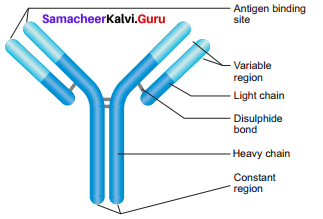
Samacheer Kalvi 12th Bio Zoology Solutions Chapter 4 Principles of Inheritance and Variation

Get Tamilnadu Board Class 12 Bio Zoology Solutions Chapter wise Study Material to score good marks in the exam. Various chapters with subtopics are explained clearly in Samacheer Kalvi Class 12 Bio Zoology Solutions Material. All the Samacheer Kalvi Class 12 Bio Zoology Book Solutions Chapter 4 Principles of Inheritance and Variation Questions, answers, Notes, Guide, Pdf along with the explanations are provided by the subject experts. Students can easily learn Tamilnadu Board Class 12 Chapter wise Bio Zoology with the help of the step by step guide provided on our site. Learn all the Samacheer Kalvi Class 12 Bio Zoology concepts to attempt the exam with more confidence. Read all the concepts of Tamilnadu Board Solutions for Class 12 Bio Zoology Chapter 4 Principles of Inheritance and Variation.

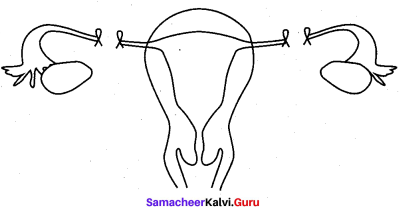
Tamilnadu Samacheer Kalvi 12th Bio Zoology Solutions Chapter 4 Principles of Inheritance and Variation

Whether you want to become an expert in Bio Zoology or to get good marks in the exam, you have one and only solution is practicing with Samacheer Kalvi 12th Bio Zoology Chapter wise Solutions. Strengthen your weakness by learning the Samacheer Kalvi 12th Bio Zoology Chapter 4 Principles of Inheritance and Variation Questions and Answers on our site. You can learn directly online on our website or learn offline by downloading Samacheer Kalvi 12th Bio Zoology Chapter wise material. Save your time and read Samacheer Kalvi 12th Bio Zoology Subject at your comfort level.

Samacheer Kalvi 12th Bio Zoology Principles of Inheritance and Variation Text Book Back Questions and Answers

Question 1.
Haemophilia is more common in males because it is a ____________
(a) Recessive character carried by Y-chromosome
(b) Dominant character carried by Y-chromosome
(c) Dominant trait carried by X-chromosome
(d) Recessive trait carried by X-chromosome
Answer:
(d) Recessive trait carried by X-chromosome

Question 2.
ABO blood group in man is controlled by ____________
(a) Multiple alleles
(b) Lethal genes
(c) Sex linked genes
(d) Y-linked genes
Answer:
(a) Multiple alleles

Question 3.
Three children of a family have blood groups A, AB and B. What could be the geno types of their parents?
(a) IA IB and ii
(b) IA 1O and IB IO
(c) IB IB and IA IA
(d) IA IA and ii
Answer:
(b) IA IO and IB IO

Question 4.
Which of the following is not correct?
(a) Three or more alleles of a trait in the population are called multiple alleles.
(b) A normal gene undergoes mutations to form many alleles
(c) Multiple alleles map at different loci of a chromosome
(d) A diploid organism has only two alleles out of many in the population
Answer:
(c) Multiple alleles map at different loci of a chromosome

Question 5.
Which of the following phenotypes in the progeny are ____________
(a) A and B only
(b) A,B only and AB
(c) AB only
(d) A,B,AB and O
Answer:
(d) A,B,AB and O

Question 6.
Which of the following phenotypes is not possible in the progeny of the parental genotypic combination IAIO × lAlB ?
(a) AB
(b) O
(c) A
(d) B
Answer:
(b) O

Question 7.
Which of the following is true about Rh factor in the offspring of a parental combination DdXDd (both Rh positive)?
(a) All will be Rh positive
(b) Half will be Rh positive
(c) About 3/4 will be Rh negative
(d) About one fourth will be Rh negative
Answer:
(d) About one fourth will be Rh negative

Question 8.
What can be the blood group of offspring when both parents have AB blood group?
(a) AB only
(b) A, B and AB
(c) A, B, AB and O
(d) A and B only
Answer:
(b) A, B and AB

Question 9.
If the childs blood group is ‘O’ and fathers blood group is ‘A’ and mother’s blood group is ‘B’ the genotype of the parents will be _________
(a) IAIA and IAIO
(b) IAIO and IBIO
(c) IAIO and IOIO
(d) IOIO and IBIB
Answer:
(b) IAIO and IBIO

Question 10.
XO type of sex determination and XY type of sex determination are examples of _________
(a) Male heterogamety
(b) Female heterogamety
(c) Male homogamety
(d) Both (b) and (c)
Answer:
(a) Male heterogamety

Question 11.
In an accident there is great loss of blood and there is no time to analyse the blood group which blood can be safely transferred?
(a) ‘O’ and Rh negative
(b) ‘O’ and Rh positive
(c) ‘B’ and Rh negative
(d) ‘AB’ and Rh positive
Answer:
(a) ‘O’ and Rh negative

Question 12.
Father of a child is colour blind and mother is carrier for colour blindness, the probability of the child being colour blind is _________
(a) 25%
(b) 50%
(c) 100%
(d) 75%
Answer:
(b) 50%

Question 13.
A marriage between a colour blind man and a normal woman produces _________
(a) All carrier daughters and normal sons
(b) 50% carrier daughters, 50% normal daughters
(c) 50% colour blind sons, 50% normal sons
(d) All carrier off springs
Answer:
(a) All carrier daughters and normal sons

Question 14.
Mangolism is a genetic disorder which is caused by the presence of an extra chromosome number.
(a) 20
(b) 21
(C) 4
(d) 23
Answer:
(b) 21

Question 15.
Klinefelters’ syndrome is characterized by a karyotype of _________
(a) XYY
(b) XO
(c) XXX
(d) XXY
Answer:
(d) XXY

Question 16.
Females with Turners’syndrome have _________
(a) Small uterus
(b) Rudimentary ovaries
(c) Underdeveloped breasts
(d) All of these
Answer:
(d) All of these

Question 17.
Pataus’ syndrome is also referred to as _________
(a) 13-Trisomy
(b) 18-Trisormy
(c) 21-Trisormy
(d) None of these
Answer:
(a) 13-Trisomy

Question 18.
Who is the founder of Modem Eugenics movement?
(a) Mendel
(b) Darwin
(c) Fransis Galton
(d) Karl pearson
Answer:
(c) Fransis Galton

Question 19.
Improvement of human race by encouraging the healthy persons to marry early and produce large number of children is called _________
(a) Positive eugenics
(b) Negative eugenics
(c) Positive euthenics
(d) Positive euphenics
Answer:
(a) Positive eugenics

Question 20.
The _________ deals with the control of several inherited human diseases especially inborn errors of metabolism.
(a) Euphenics
(b) Eugenics
(c) Euthenics
(d) All of these
Answer:
(a) Euphenics

Question 21.
“Universal Donor” and “Universal Recipients” blood group are _________ and _________ respectively.
(a) AB, O
(b) O, AB
(c) A, B
(d) B, A
Answer:
(b) O, AB

Question 22.
ZW-ZZ system of sex determination occurs in _________
(a) Fishes
(b) Reptiles
(c) Birds
(d) All of these
Answer:
(d) All of these

Question 23.
Co-dominant blood group is _________
(a) A
(b) AB
(c) B
(d) O
Answer:
(b) AB

Question 24.
Which of the following is incorrect regarding ZW-ZZ type of sex determination?
(a) It occurs in birds and some reptiles
(b) Females are homogametic and males are heterogametic
(c) Male produce two types of gametes
(d) It occurs in gypsy moth
Answer:
(b) Females are homogametic and males are heterogametic

Question 25.
What is haplodiploidy?
Answer:
In haplodiploidy, the sex of the offspring is determined by the number of sets of chromosomes it receives. Fertilized eggs develop into females (Queen or Worker) and unfertilized eggs develop into males (drones) by parthenogenesis. It means that the males have half the number of chromosomes (haploid) and the females have double the number (diploid).

Question 26.
Distinguish between heterogametic and homogametic sex determination systems
Answer:
Heterogametic Sex:

  1. Organisms producing two different types of gametes.
  2. Example : Human male.
  3. Sperm with X chromosome Sperm with Y chromosome

Heterogametic Sex:

  1. Organisms producing two different types of gametes.
  2. Example: Human female.
  3. Every egg produced contain X chromosomes.

Question 27.
What is Lyonisation?
Answer:
Lyonisation is a process of inactivation of one of the X chromosomes in some females.

Question 28.
What is criss-cross inheritance?
Answer:

  1. Inheritance of genes from a male parent to female child and then to male grandchild or female parent to male child and then to female grandchild.
  2. E.g., X-linked gene inheritance.

Question 29.
Why are sex linked recessive characters more common in the male human beings?
Answer:
Sex linked inherited traits are more common in males than females because, males are hemizygous and therefore express the trait when they inherit one mutant allele.

Question 30.
What are holandric genes?
Answer:
The genes present in the differential region of Y chromosome are called Y- linked or holandric genes. The Y linked genes have no corresponding allele in X chromosome.

Question 31.
Mention the symptoms of Phenylketonuria.
Answer:
Severe mental retardation, light pigmentation of skin and hair. Phenylpyruvic acid is excreted in the urine.

Question 32.
Mention the symptoms of Down’s syndrome.
Answer:
Severe mental retardation, defective development of the central nervous system, increased separation between the eyes, flattened nose, ears are malformed, mouth is constantly open and the tongue protrudes.

Question 33.
Differentiate Intersexes from Supersexes.
Answer:
Intersexes:

  1. Intersexes refers to the individuals having the characteristics of both female and male sexes and their sexual anatomy doesnot seem to fit the typical definition of male or female.

Supersexes:

  1. Supersexes ar formed as a result of abnormal combination of sex chromosomes.
  2. Example : Super males in humans humanbeings have 44+XYY chromosomes.

Question 34.
Explain the genetic basis of ABO blood grouping in man.
Multiple allele inheritance of ABO blood groups
Answer:
Blood differs chemically from person to person. When two different incompatible blood types are mixed, agglutination (clumping together) of erythrocytes (RBC) occurs. The basis of these chemical differences is due to the presence of antigens (surface antigens) on the membrane of RBC and epithelial cells. Karl Landsteiner discovered two kinds of antigens called antigen ‘A’ and antigen ‘B’ on the surface of RBC’s of human blood. Based on the presence or absence of these antigens three kinds of blood groups, type ‘A’, type ‘B’, and type ‘O’ (universal donor) were recognized. The fourth and the rarest blood group ‘AB’ (universal recipient) was discovered in 1902 by two of Landsteiner’s students Von De Castelle and Sturli.

Bernstein in 1925 discovered that the inheritance of different blood groups in human beings is determined by a number of multiple allelic series. The three autosomal alleles located on chromosome 9 are concerned with the determination of blood group in any person. The gene controlling blood type has been labeled as ‘L’ (after the name of the discoverer, Landsteiner) or I (from isoagglutination). The I gene exists in three allelic forms, IA, IB and 1°. IA specifies A antigen. IB allele determines B antigen and 1° allele specifies no antigen. Individuals who possess these antigens in their fluids such as the saliva are called secretors.

Each allele (IA and IB) produces a transferase enzyme. IA allele produces N-acetyl galactose transferase and can add N-acetyl galactosamine (NAG) and IB allele encodes for the enzyme galactose transferase that adds galactose to the precursor (i.e. H substances). In the case of IO/IO allele no terminal transferase enzyme is produced and therefore called “null” allele and hence cannot add NAG or galactose to the precursor.

From the phenotypic combinations it is evident that the alleles IA and IB are dominant to 1°, but co-dominant to each other (IA = IB). Their dominance hierarchy can be given as (IA=IB> 1O). A child receives one of three alleles from each parent, giving rise to six possible genotypes and four possible blood types (phenotypes). The genotypes are IAIA, IAIO, IBIB, IBIO, IAIB and IO IO

Question 35.
How is sex determined in human
Answer:
Samacheer Kalvi 12th Bio Zoology Solutions Chapter 4 Principles of Inheritance and Variation img 1
Genes determining sex in human beings are located on two sex chromosomes, called allosomes. In mammals, sex determination is associated with chromosomal differences between the two sexes, typically XX females and XY males. 23 pairs of human chromosomes include 22 pairs of autosomes (44A) and one pair of sex chromosomes (XX or XY). Females are homogametic producing only one type of gametes (egg), each containing one X chromosome while the males are heterogametic producing two types of sperms with X and Y chromosomes. An independently evolved XX: XY system of sex chromosomes also exist in Drosophila.

Question 36.
Explain male heterogamety.
Answer:
Male heterogamety (XY males) is a type of sex determination in which males produce two different types of gametes. For example, human males produce two kinds of sperms that is sperm with X-chromosome and sperms with Y-chromosome.

Question 37.
Brief about female heterogamety.
Answer:
Female heterogamety (ZO females) refers to the condition, where female produces two types of egg cells. Some with Z chromosome and some without Z chromosome.

Question 38.
Give an account of genetic control of Rh factor?
Genetic control of Rh factor
Answer:
Samacheer Kalvi 12th Bio Zoology Solutions Chapter 4 Principles of Inheritance and Variation img 2
Fisher and Race hypothesis: Rh factor involves three different pairs of alleles located on three different closely linked loci on the chromosome pair. This system is more commonly in use today, and uses the ‘Cde’ nomenclature. In the given figure, three pairs of Rh alleles (Cc, Dd and Ee) occur at 3 different loci on homologous chromosome pair-1.

The possible genotypes will be one C or c, one D or d, one E or e from each chromosome. For e.g. CDE/cde; CdE/cDe; cde/cde; CDe/CdE etc. All genotypes carrying a dominant ‘D’ allele will produce Rh+positive phenotype and double recessive genotype ‘dd’ will give rise to Rh negative phenotype.

Wiener Hypothesis:
Wiener proposed the existence of eight alleles (R1, R2, R0, RZ, r, r1, r11, ry) at a single Rh locus. All genotypes carrying a dominant ‘R allele’ (R1, R2 ,R0 ,Rz) will produce ‘Rh-positive’ ^phenotype and double recessive genotypes (rr, rr1, rr11, rry) will give rise to Rh-negative phenotype.

Question 39.
Explain the mode of sex determination in honeybees.
Haplodiploidv in Honeybees:
Answer:
In hymenopteran insects such as honeybees, ants and wasps, a mechanism of sex determination called haplodiploidy mechanism of sex determination is common. In this system, the sex of the offspring is determined by the number of sets of chromosomes it receives. Fertilized eggs develop into females (Queen or Worker) and unfertilized eggs develop into males (drones) by parthenogenesis. It means that the males have half the number of chromosomes (haploid) and the females have double the number (diploid), hence the name haplodiplody for this system of sex determination.

This mode of sex determination facilitates the evolution of sociality in which only one diploid female becomes a queen and lays the eggs for the colony. All other females which are diploid having developed from fertilized eggs help to raise the queen’s eggs and so contribute to the queen’s reproductive success and indirectly to their own, a phenomenon known as Kin Selection. The queen constructs their social environment by releasing a hormone that suppresses fertility of the workers.

Question 40.
Discuss the genic balance mechanism of sex determination with reference to Drosophila?
Answer:
XX-XY type (Lygaeus Type) sex determination is seen in Drosophila. The females are homogametic with XX chromosome, while the males are heterogametic with X and Y
Samacheer Kalvi 12th Bio Zoology Solutions Chapter 4 Principles of Inheritance and Variation img 3
chromosome. Homogametic females produce only one kind of egg, each with one X chromosome, while the heterogametic males produce two kinds of sperms some with X chromosome and some with Y chromosome.

The sex of the embryo depends on the fertilizing sperm. An egg fertilized by an ‘X’ bearing sperm produces a female, if fertilized by a ‘Y’ bearing sperm, a male is produced.

Question 41.
What are the applications of Karyotyping?
Answer:

  1. Karyotyping helps in gender identification.
  2. It is used to detect the chromosomal aberrations like deletion, duplication, translocation, non-disjunction of chromosomes.
  3. It helps to identify the abnormalities of chromosomes like aneuploidy.
  4. It is also used in predicting the evolutionary relationships between species.
  5. Genetic diseases in human beings can be detected by this technique.

Question 42.
Explain the inheritance of sex linked characters in human being.
Answer:
Haemophilia is commonly known as bleeder’s disease, which is more common in men than women. This hereditary disease was first reported by John Cotto in 1803. Haemophilia is caused by a recessive X-linked gene. A person with a recessive gene for haemophilia lacks a normal clotting substance (thromboplastin) in blood, hence minor injuries cause continuous ’bleeding, leading to death. The females are carriers of the disease and would transmit the disease to 50% of their sons even if the male parent is normal. Haemophilia follows the characteristic criss-cross pattern of inheritaitce.

Question 43.
What is extra chromosomal inheritance? Explain with an example.
Answer:
The cytoplasmic extra nuclear genes have a characteristic pattern of inheritance which does not resemble genes of nuclear chromosomes and are known as Extrachromosomal/ Cytoplasmic inheritance.

Question 44.
Comment on the methods of Eugenics.
Answer:
Eugenics refers to the study of the possibility of improving the qualities of human population. Methods of Eugenics:

  1. Sex-education in school and public forums.
  2. Promoting the uses of contraception.
  3. Compulsory sterilization for mentally retarded and criminals.
  4. Egg donation.
  5. Artificial insemination by donors.
  6. Prenatal diagnosis of genetic disorders and performing MTP
  7. Gene therapy
  8. Cloning
  9. Egg/sperm donation of healthy individuals.

Samacheer Kalvi 12th Bio Zoology Principles of Inheritance and Variation Additional Questions and Answers

1 – Mark Questions

Question 1.
If a colorblind female marries a normal male, their sons will be _________
(a) All normal visioned
(b) All color blinded
(c) One half normal visioned other half colorblind
(d) Three fourth colorblind one fourth normal
Answer:
(c) One half normal visioned other half colorblind

Question 2.
Excess hair growth on pinna is a feature noticed only in males because _________
(a) Males produce more testosterone
(b) gene responsible for the character is located in Y-chromosome
(c) Estrogen suppresses the character in females
(d) females act only as a carriers for this character
Answer:
(b) gene responsible for the character is located in Y-chromosome

Question 3.
ABO blood group is a classical example for _________
(a) Multiple allelism
(b) Pleotropism
(c) Incomplete dominance
(d) Polygenic mechanism
Answer:
(a) Multiple allelism

Question 4.
Unit of heredity is _________
(a) allele
(b) allelomorph
(d) gene
Answer:
(d) gene

Question 5.
Identify the proper dominance hierarchy.
(a) IB = 1° > IB
(b) IA = IB > 0
(c) IO = IB > 
(d) IB = IA > O
Answer:
(b) IA = IB > 0

Question 6.
Haemophilia is more common in human males than human females. The reason is due to ______
(а) X-linked dominant gene
(b) X-linked recessive gene
(c) Y-linked recessive gene
(d) Allosomal abnormality
Answer:
(b) X-linked recessive gene

Question 7.
Identify the correct statement.
(a) Homozygous sex chromosome (XX) produce males in Drosophila
(b) Homozygous sex chromosome (ZZ) determine female sex in birds
(c) Heterozygous sex chromosome (XO) determine male sex in grasshopper
(d) Heterozygous sex chromosome (ZW) determine male sex in gypsy moth
Answer:
(c) Heterozygous sex chromosome (XO) determine male sex in grasshopper

Question 8.
Which blood group doesnot possess antibodies?
(a) IAIB
(b) IOIO
(c) IAO
(d) IBIB
Answer:
(a) IAIB

Question 9.
Assertion (A): On diagnosis, Ramu is reported to have under developed testis and gynaecomastia.
Reason (R): His karyotype reveals XXY condition.
(а) A is right but R is wrong
(b) R explains A
(c) Both A and R are wrong
(d) Both and R are right but R is not the correct explanation of A
Answer:
(b) R explains A

Question 10.
Pick out the odd man out.
(a) Klinefelter’s syndrome
(b) Turner’s syndrome
(c) Huntington’s chorea
(d) 13-Trisomy
Answer:
(c) Huntington’s chorea

Question 11.
Pick out the odd one out regarding Mendelian disorder.
(a) Thalassemia
(b) phenylketonuria
(c) Albinism
(d) Huntington’s chorea
Answer:
(d) Huntington’s chorea

Question 12.
Samacheer Kalvi 12th Bio Zoology Solutions Chapter 4 Principles of Inheritance and Variation
Answer:
(a) A – iv, B – ii, D – i, D – iii

Question 13.
Identify the proper ratio of normal visioned individuals against colorblind individuals, if colorblind carrier female marries a normal male.
(a) 1 : 1
(b) 3 : 1
(c) 1 : 3
(d) All four are normal visioned
Answer:
(c) 1 : 3

Question 14.
Pick out the correct statement.
(i) Karyotyping helps in gender identification
(ii) Holandric genes are located on X-chromosome
(iii) Trisomy-21 is an allosomal abnormality
(iv) Cooley’s anaemia is an autosomal recessive disorder
(a) i, iii, iv are correct
(c) i and iv are correct
Answer:
(c) i and iv are correct

Question 15.
DOPA stands for _________
(a) 3,4 – dihydroxy phenyl acetate
(b) 3,4 – dihydroxy phenyle alanine
(c) 3,4 – dihydroxy phenyl asparate
(d) 3,4 – dihydroxy phenyle aldehyde
Answer:
(b) 3,4 – dihydroxy phenyle alanine

Question 16.
The type of antibody generated against Rh antigen is _________
(a) IgE
(b) IgG
(c) IgA
Answer:
(b) IgG

Question 17.
Which of the following symbol is used in pedigree analysis to represent unspecified sex?
Samacheer Kalvi 12th Bio Zoology Solutions Chapter 4 Principles of Inheritance and Variation img 4
Answer:
Samacheer Kalvi 12th Bio Zoology Solutions Chapter 4 Principles of Inheritance and Variation img 5

Question 18.
A colorblind man marries a woman with normal sight who has no history of color blindness in her family. What is the probability of their grandson being colorblind?
(a) 1/4
(b) 3/4
(c) 2/4
(d) 4/4
Answer:
(a) 1/4

Question 19.
Multiple alleles are located _________
(a) at different loci on homologous chromosome
(b) at same locus on homologous chromosome
(c) at different loci on non-homologous chromosome
(d) at different chromosomes
Answer:
(b) at same locus on homologous chromosome

Question 20.
Identify the incorrect statement regarding haplodiploidy.
(g) Haplodiploidy is noticed in honeybees and drosophila
(b) Unfertilized eggs develop into drones
(c) Fertilized eggs develop into queen and worker bees
(d) Males have half the total chromosomal number
Answer:
(a) Haplodiploidy is noticed in honeybees and drosophila

Question 21.
IA and IB genes of ABO blood group are _________
(a) Co-dominant
(b) Pleotropic
(c) Dominant and recessive
(d) Epistatic
Answer:
(a) Co-dominant

Question 22.
Which one of the following crosses show 3 : 1 ratio of normal visioned versus carrier blind?
(a) XC XC × X+Y
(b) X+ XC × XC Y
(c) X+XC × X+Y
(d) X+X+× XC Y
Answer:
(c) X+XC × X+Y

2 – Mark Questions

Question 1.
Define multiple allelism.
Answer:
When three or more alleles of a gene that control a particular trait occupy the same locus on the homologous chromosome of an organism, they are called multiple alleles and their inheritance is called multiple allelism.

Question 2.
Name the discoverers of antigen A, B and AB.
Answer:
Antigens A and Antigen B was discovered by Karl Landsteiner. Antigen AB was discovered by Von De Castelle and Sturli.

Question 3.
What happens if type A blood is injected to a person having B blood group? Explain the reason.
Answer:
When two different incompatible blood types are mixed, agglutination (clumping together) of erythrocytes (RBC) occurs. The basis of these chemical differences is due to the presence of antigens (surface antigens) on the membrane of RBC and epithelial cells.

Question 4.
State the allelic forms of I gene and mention its chromosomal location.
Answer:
The I gene exists in three forms: IA, IB and I°. The alleles are located on chromosome 9.

Question 5.
Write the possible genotypes for a person having B-blood group.
Answer:
The possible genotypes of a B-blood group person are IBIB or IBI°.

Question 6.
State Wiener Hypothesis on Rh-factor.
Answer:
Wiener proposed the existence of eight alleles (R1, R2, R0, Rz, r, r1, r11, ry) at a single Rh locus. All genotypes carrying a dominant ‘R allele’ (R1, R2 ,R0 ,Rz) will produce ‘Rh-positive’ phenotype and double recessive genotypes (rr, rr1, rr11, rry) will give rise to Rh-negative phenotype.

Question 7.
Distinguish between homogametic and heterogametic condition with example.
Answer:
Homogametic organism:

  1. Organism producing only one type of gametes.
  2. e.g. Human female (Only X)

Heterogametic organism:

  1. Organism producing two different types of gametes.
  2. e.g. Human Male (X and Y)

Question 8.
Name any four organism expressing ZW-ZZ type of sex determination.
Answer:
Gypsy moth, fishes, reptiles and birds.

Question 9.
Expand

  1. SRY
  2. TDF

Answer:

  1. SRY – Sex Determining region
  2. TDF – Testes Determining Factor

Question 10.
Define Barr body.
Answer:
In 1949, Barr and Bertram first observed a condensed body in the nerve cells of female cat which was absent in the male. This condensed body was called sex chromatin by them and was later referred as Barr body.

Question 11.
Based on Lyon’s hypothesis, mention the number of Barr bodies in XXY males, XO females.
Answer:

  1. XXY males – One Barr body.
  2. XO females – No Barr body.

Question 12.
State Lyon’s hypothesis.
Answer:
Lyon’s hypothesis states that in mammals the necessary dosage compensation is accomplished by the inactivation of one of the X chromosome in females so that both males and females have only one functional X chromosome per cell.

Mary Lyon suggested that Barr bodies represented an inactive chromosome, which in females becomes tightly coiled into a heterochromatin, a condensed and visible form of chromatin (Lyon’s hypothesis). The number of Barr bodies observed in cell was one less than the number of X-Chromosome. XO females have no Barr body, whereas XXY males have one Barr body.

Question 13.
Mention few X-linked inherited diseases.
Answer:
Red-green colour blindness or daltonism, haemophilia and Duchenne’s muscular dystrophy.

Question 14.
Define Karyotyping.
Answer:
Karyotyping is a technique through which a complete set of chromosomes is separated from a cell and the chromosomes are arranged in pairs. An idiogram refers to a diagrammatic representation of chromosomes.

Question 15.
Explain the inheritance pattern of Y-linked genes with example.
Answer:
Genes in the non-homologous region of the Y-chromosome are inherited directly from male to male. In humans, the Y-linked or holandric genes for hypertrichosis (excessive development of hairs on pinna of the ear) are transmitted directly from father to son, because males inherit the Y chromosome from the father. Female inherits only X chromosome from the father and are not affected.

Question 16.
Observe the symbol used in pedigree analysis and give the proper terms they represent.
Samacheer Kalvi 12th Bio Zoology Solutions Chapter 4 Principles of Inheritance and Variation img 6
Answer:
Samacheer Kalvi 12th Bio Zoology Solutions Chapter 4 Principles of Inheritance and Variation img 7

Question 17.
Write a brief note on pedigree analysis.
Answer:
Pedigree is a “family tree”, drawn with standard genetic symbols, showing the inheritance pathway for specific phenotypic characters. Pedigree analysis is the study of traits as they have appeared in a given family line for several past generations.

Question 18.
What do you mean by ‘Mendelian disorder’.
Answer:
Alteration or mutation in a single gene causes Mendelian disorders. These disorders are transmitted to the off springs on the same line as the Mendelian pattern of inheritance.
E.g., Thalassemia.

Question 19.
Name any four Mendelian disorders.
Answer:

  1. Thalassemia
  2. Albinism
  3. sickle cell anaemia
  4. Huntington’s chorea

Question 20.
What is the phenotype of

  1. IAIO
  2. IOIO

Answer:

  1. IAIO – A blood group person
  2. IOIO – O blood group person

Question 21.
On which chromosomes does HBA1 gene and HBB genes are located?
Answer:

  1. HBA1 gene is located on chromosome 16.
  2. HBB gene is located on chromosome 11.

Question 22.
Complete the equation.
Samacheer Kalvi 12th Bio Zoology Solutions Chapter 4 Principles of Inheritance and Variation img 8
Answer:
(a) A = Phenylalanine hydroxylase
(b) B = Tyrosinase

Question 23.
Write a note on Huntington’s chorea.
Answer:
Huntington’s chorea is inherited as an autosomal dominant lethal gene in man. It is characterized by involuntary jerking of the body and progressive degeneration of the nervous system, accompanied by gradual mental and physical deterioration. The patients with this disease usually die between the age of 35 and 40.

Question 24.
Comment on Trisomy-21.
Answer:
Trisomic condition of chromosome – 21 results in Down’s syndrome. It is characterized by severe mental retardation, defective development of the central nervous system, increased separation between the eyes, flattened nose, ears are malformed, mouth is constantly open and the tongue protrudes.

Question 25.
Mention the genetic makeup of Turner’s syndrome person and Klinefelter’s syndrome , person.
Answer:
Klinefelter’s syndrome – 44AA+XXY Turner’s syndrome – 44AA+XO

Question 26.
List out any four clinical symptoms of Klinefelter’s syndrome.
Answer:
Gynaecomastia, high pitched voice, under developed genetalia and tall with long limbs.

3 – Mark Questions

Question 27.
Write the types of sex-determination mechanisms does the following crosses as shown. Give an example for each.

  1. Female XX with Male XO
  2. Female ZW with Male ZZ

Answer:

  1. Male heterogamety. e.g., Human beings.
  2. Female heterogamety. e.g., Birds.

Question 28.
What are the enzymes encoded by the alleles IA, IB and I°?
Answer:
IA allele produces N-acetyl galactose transferase and can add N-acetyl galactosamine (NAG) and IB allele encodes for the enzyme galactose transferase that adds galactose to the precursor (i.e. H substances). In the case of IO/IO allele no terminal transferase enzyme is produced and therefore called “null” allele and hence cannot add NAG or galactose to the precursor.

Question 29.
Draw a tabular column representing various types of blood group in human beings, their phenotypes, genotypes, antigens and respective antibodies.
Answer:
Genetic basis of the human ABO blood groups:
Samacheer Kalvi 12th Bio Zoology Solutions Chapter 4 Principles of Inheritance and Variation img 9

Question 30.
Give an account on Rhesus factor.
Answer:
Rhesus or Rh – Factor: The Rh factor or Rh antigen is found on the surface of erythrocytes. It was discovered in 1940 by Karl Landsteiner and Alexander Wiener in the blood of rhesus monkey, Macaca rhesus and later in human beings. The term ‘Rh factor’ refers to “immunogenic D antigen of the Rh blood group system. An individual having D antigen are Rh D positive (Rh+) and those without D antigen are Rh D negative (Rh”)”. Rhesus factor in the blood is inherited as a dominant trait. Naturally occurring Anti D antibodies are absent in the plasma of any normal individual. However if an Rh” (Rh negative) person is exposed to Rh+ (Rh positive) blood cells (erythrocytes) for the first time, anti D antibodies are formed in the blood of that individual. On the other hand, when an Rh positive person receives Rh negative blood no effect is seen.

Question 31.
How Erythroblastosis foetalis can be prevented?
Answer:
If the mother is Rh negative and foetus is Rh positive, anti D antibodies should be administered to the mother at 28th and 34th week of gestation as a prophylactic measure. If the Rh negative mother delivers Rh positive child then anti D antibodies should be administered to the mother soon after delivery. This develops passive immunity and prevents the formation of anti D antibodies in the mothers blood by destroying the Rh foetal RBC before the mother’s immune system is sensitized. This has to be done whenever the woman attains pregnancy.

Question 32.
Explain XX-XO type of sex determination.
Answer:
Samacheer Kalvi 12th Bio Zoology Solutions Chapter 4 Principles of Inheritance and Variation img 10
XX-XO method of sex determination is seen in bugs, some insects such as cockroaches and grasshoppers. Pi The female with two X chromosomes are homogametic Gametes (XX) while the males with only one X chromosome are heterogametic (XO). The presence of an unpaired X chromosomes determines the male sex. The males PI Generation with unpaired ‘X’ chromosome produce two types of sperms, one half with X chromosome and other half without X chromosome. The sex of the offspring depends upon the sperm that fertilizes the egg.

Question 33.
Name the type of sex-determination mechanism of the following organisms.

  1. Gypsy moth
  2. Human beings
  3. Butterflies

Answer:

  1. Gypsy moth -ZW – ZZ type (ZW-females, ZZ – males)
  2. Human beings – XX – XY type (XX-females, XY – males)
  3. Butterflies – ZO – ZZ type (ZO-females, ZZ – males)

Question 34.
Complete the following cross.
AAZW × AAZZ (female) (male)
Answer:
Samacheer Kalvi 12th Bio Zoology Solutions Chapter 4 Principles of Inheritance and Variation img 11

Question 35.
Role of Y- chromosome is crucial for maleness – Justify.
Answer:
Current analysis of Y chromosomes has revealed numerous genes and regions with potential genetic function; some genes with or without homologous counterparts are seen on the X. Present at both ends of the Y chromosome are the pseudoautosomal regions (PARs) that are similar with regions on the X chromosome which synapse and recombine during meiosis. The remaining 95% of the Y chromosome is referred as the Non-combining Region of the Y (NRY).

The NRY is divided equally into functional genes (euchromatic) and non-functional genes (heterochromatic). Within the euchromatin regions, is a gene called Sex determining region Y (SRY). In humans, absence of Y chromosome inevitably leads to female development and this SRY gene is absent in X chromosome. The gene product of SRY is the testes determining factor (TDF) present in the adult male testis.

Question 36.
Color blindness is a perfect example for criss-cross of inheritance – Justify the statement.
Answer:
A marriage between a colour blind man and a normal visioned woman will produce normal visioned male and female individuals in F1 generation but the females are carriers. The marriage between a F1 normal visioned carrier woman and a normal visioned male will produce one normal visioned female, one carrier female, one normal visioned male and one colour blind male. Colour blind trait is inherited from the male parent to his grandson through carrier daughter, which is an example of criss-cross pattern of inheritance.
image 12

Question 37.
How the Karyotype of lymphocytes was prepared by Tjio and Levan?
Answer:
Preparation of Karyotype Tjio and Levan (1960) described a simple method of culturing lymphocytes from the human blood. Mitosis is induced followed by addition of colchicine to arrest cell division at metaphase stage and the suitable spread of metaphase chromosomes is photographed. The individual chromosomes are cut from the photograph and are arranged in an orderly fashion in homologous pairs. This arrangement is called a karyotype. Chromosome banding permits structural definitions and differentiation of chromosomes.

Question 38.
What is a genetic disorder? Mention its types?
Answer:
A genetic disorder is a disease or syndrome that is caused by an abnormality in an individual -DNA. Abnormalities can range from a small mutation in a single gene to the addition or subtraction of an entire chromosome or even a set of chromosomes. Genetic disorders are of two types namely, Mendelian disorders and chromosomal disorders.

Question 39.
Explain the genetic basis of Phenylketonuria.
Answer:
Phenylketonuria is an inborn error of Phenylalanine metabolism caused due to a pair of autosomal recessive genes. It is caused due to mutation in the gene PAH (phenylalanine hydroxylase gene) located on chromosome 12 for the hepatic enzyme “phenylalanine hydroxylase”.

This enzyme is essential for the conversion of phenylalanine to tyrosine. Affected individual lacks this enzyme, so phenylalanine accumulates and gets converted to phenylpyruvic acid and other derivatives. It is characterized by severe mental retardation, light pigmentation of skin and hair. Phenylpyruvic acid is excreted in the urine.
Samacheer Kalvi 12th Bio Zoology Solutions Chapter 4 Principles of Inheritance and Variation img 13

Question 40.
Give an account on Patau’s syndrome.
Answer:
Trisomic condition of chromosome 13 results in Patau’s syndrome. Meiotic non-disjunction is thought to be the cause for this chromosomal abnormality. It is characterized by multiple and severe body malformations as well as profound mental deficiency. Small head with small eyes, cleft palate, malformation of the brain and internal organs are some of the symptoms of this syndrome.

Question 41.
Define aneuploidy.
Answer:
Failure of chromatids to segregate during cell division resulting in the gain or loss of one or more chromosomes is called aneuploidy. It is caused by non-disjunction of chromosomes.

Question 42.
What do you mean by “syndrome”? Give two examples.
Answer:
Group of signs and symptoms that occur together and characterize a particular abnormality is called a syndrome, e.g., Down’s syndrome and Turner’s syndrome.

5 – Mark Questions

Question 42.
Explain in detail about Erythroblastosis foetalis.
Answer:
Rh incompatability has great significance in child birth. If a woman is Rh negative and the man is Rh positive, the foetus may be Rh positive having inherited the factor from its father. The Rh negative mother becomes sensitized by carrying Rh positive foetus within her body. Due to damage of blood vessels, during child birth, the mother’s immune system recognizes the Rh antigens and gets sensitized. The sensitized mother produces Rh antibodies. The antibodies are IgG type which are small and can cross placenta and enter the foetal circulation. By the time the mother gets sensitized and produce anti ‘D’ antibodies, the child is delivered.

Usually no effects are associated with exposure of the mother to Rh positive antigen during the first child birth, subsequent Rh positive children carried by the same mother, may be exposed to antibodies produced by the mother against Rh antigen, which are carried across the placenta into the foetal blood circulation. This causes haemolysis of foetal RBCs resulting in haemolytic jaundice and anaemia. This condition is known as Erythroblastosis foetalis or Haemolytic disease of the new bom (HDN).

Question 43.
Decribe female heterogamy and its types.
Answer:
Heterogametic Females:
In this method of sex determination, the homogametic male possesses two ‘X’ chromosomes as in certain insects and certain vertebrates like fishes, reptiles and birds producing a single type of gamete; while females produce dissimilar gametes. The female sex consists of a single ‘X’ chromosome or one ‘X’ and one ‘Y’ chromosome. Thus the females are heterogametic and produce two types of eggs. Heterogametic females are of two types, ZO-ZZ type and ZW-ZZ type.
Samacheer Kalvi 12th Bio Zoology Solutions Chapter 4 Principles of Inheritance and Variation img 14
ZO-ZZ Type:
This method of sex determination is seen in certain moths, butterflies and domestic chickens. In this type, the female possesses
single ‘Z’ chromosome in its body cells and is heterogametic (ZO) producing two kinds of eggs some with ‘Z’ chromosome and some without ‘Z’ chromosome, while the male possesses two ‘Z’ chromosomes and is homogametic (ZZ).
Samacheer Kalvi 12th Bio Zoology Solutions Chapter 4 Principles of Inheritance and Variation img 15
ZW-ZZ type:
This method of sex determination occurs in certain insects (gypsy moth) and in vertebrates such as fishes, reptiles and birds. In this method the female has one ‘Z’ and one ‘ W’ chromosome (ZW) producing two types of eggs, some carrying the Z chromosomes and some carry the W chromosome. The male sex has two ‘Z’ chromosomes and is homogametic (ZZ) producing a single type of sperm.

Question 44.
Write elaborately about the following Mendelian disorders.
Answer:
(a) Thalassemia
(b) Albinism
Answer:
(a) Thalassemia: Thalassemia is an autosomal recessive disorder. It is caused by gene mutation resulting in excessive destruction of RBC’s due to the formation of abnormal haemoglobin molecules. Normally haemoglobin is composed of four polypeptide chains, two alpha and two beta globin chains. Thalassemia patients have defects in either the alpha or beta globin chain causing the production of abnormal haemoglobin molecules resulting in anaemia.

Thalassemia is classified into alpha and beta based on which chain of haemoglobin molecule _ is affected. It is controlled by two closely linked genes HBA1 and HBA2 on chromosome 16. Mutation or deletion of one or more of the four alpha gene alleles causes Alpha Thalassemia. In Beta Thalassemia, production of beta globin chain is affected. It is controlled by a single gene (HBB) on chromosome 11. It is the most common type of Thalassemia and is also known as Cooley’s anaemia. In this disorder, the alpha chain production is increased and damages the membranes of RBC.

(b) Albinism: Albinism is an inborn error of metabolism, caused due to an autosomal recessive gene. Melanin pigment is responsible for skin colour. Absence of melanin results in a condition called albinism. A person with the recessive allele lacks the tyrosinase enzyme system, which is required for the conversion of dihydroxyphenyl alanine (DOPA) into melanin pigment inside the melanocytes. In an albino, melanocytes are present in normal numbers in their skin, hair, iris, etc., but lack melanin pigment.
Samacheer Kalvi 12th Bio Zoology Solutions Chapter 4 Principles of Inheritance and Variation img 16

Question 45.
Discuss any two Allosomal anomalies in human.
Allosomal abnormalities in human beings
Answer:
Mitotic or meiotic non-disjunction of sex chromosomes causes allosomal abnormalities. Several sex chromosomal abnormalities have been detected.
E.g. Klinefelter’s syndrome and Turner’s syndrome.

1. Klinefelter’s Syndrome (XXY Males): This genetic disorder is due to the presence of an additional copy of the X chromosome resulting in a karyotype of 47,XXY. Persons with this syndrome have 47 chromosomes (44AA+XXY). They are usually sterile males, tall, obese, with long limbs, high pitched voice, under developed genetalia and have feeble breast (gynaecomastia) development.

2. Turner’s Syndrome (XO Females): This genetic disorder is due to the loss of a X chromosome resulting in a karyotype of 45,X. Persons with this syndrome have 45 chromosomes (44 autosomes and one X chromosome) (44AA+XO) and are sterile females. Low stature, webbed neck, under developed breast, rudimentary gonads lack of menstrual cycle during puberty, are the main symptoms of this syndrome.

Higher Order Thinking Skills (HOTs) Questions

Question 1.
On analysis, a person’s karyotype reveals an extra one chromosome of twenty first pair. What does this condition represents? which type of symptoms can be noticed in the person?
Answer:

  1. Trisomy-21 or Down’s syndrome.
  2. Symptoms – Mental retardation, malformed ears, protruded tongue, mouth is constantly open etc.

Question 2.
A female whose blood group is AB- got conceived and later it is diagnoised that her – foetus possess B+. What measures would be taken to prevent the foetus from Haemolytic
disease of Newborn (HDN)
Answer:
If the mother is Rh negative and foetus is Rh positive, anti D antibodies should be administered to the mother at 28th and 34th week of gestation as a prophylactic measure. If the Rh negative mother delivers Rh positive child then anti D antibodies should be administered to the mother soon after delivery. This develops passive immunity and prevents the formation of anti D antibodies in the mothers blood by destroying the Rh foetal RBC before the mother’s immune system is sensitized. This has to be done whenever the woman attains pregnancy.

Question 3.
The following table shows the genotypes for ABO blood grouping and this phenotypes. Complete the table by filling the gaps.
Answer:
Samacheer Kalvi 12th Bio Zoology Solutions Chapter 4 Principles of Inheritance and Variation img 17

Question 4.
Give one example for each of the following group of drugs,

  1. Stimulants
  2. Analgesic
  3. Hallucinogens

Answer:

  1. Stimulants – Eg : Nicotine
  2. Analgesic – Eg : Opium
  3. Hallucinogens – Phencyclidine

Samacheer Kalvi 12th Bio Zoology Chapter Wise Solutions PDF will help you to clear all doubts. Learn perfectly by using Samacheer Kalvi 12th Chapter 4 Principles of Inheritance and Variation Questions and Answers Bio Zoology Solutions PDF. Leave us a comment to clear your queries. Get instant updates by bookmarking our site. Get the best learning with the effective and excellent step by step Samacheer Kalvi 12th Bio Zoology Guide.

Samacheer Kalvi 12th Bio Zoology Solutions Chapter 3 Reproductive Health

Get Tamilnadu Board Class 12 Bio Zoology Solutions Chapter wise Study Material to score good marks in the exam. Various chapters with subtopics are explained clearly in Samacheer Kalvi Class 12 Bio Zoology Solutions Material. All the Samacheer Kalvi Class 12 Bio Zoology Book Solutions Chapter 3 Reproductive Health Questions, answers, Notes, Guide, Pdf along with the explanations are provided by the subject experts. Students can easily learn Tamilnadu Board Class 12 Chapter wise Bio Zoology with the help of the step by step guide provided on our site. Learn all the Samacheer Kalvi Class 12 Bio Zoology concepts to attempt the exam with more confidence. Read all the concepts of Tamilnadu Board Solutions for Class 12 Bio Zoology Chapter 3 Reproductive Health.

Tamilnadu Samacheer Kalvi 12th Bio Zoology Solutions Chapter 3 Reproductive Health

Whether you want to become an expert in Bio Zoology or to get good marks in the exam, you have one and only solution is practicing with Samacheer Kalvi 12th Bio Zoology Chapter wise Solutions. Strengthen your weakness by learning the Samacheer Kalvi 12th Bio Zoology Chapter 3 Reproductive Health Questions and Answers on our site. You can learn directly online on our website or learn offline by downloading Samacheer Kalvi 12th Bio Zoology Chapter wise material. Save your time and read Samacheer Kalvi 12th Bio Zoology Subject at your comfort level.

Samacheer Kalvi 12th Bio Zoology Reproductive Health Text Book Back Questions and Answers

Question 1.
Which of the following is correct regarding HIV, hepatitis B, gonorrhoea and trichomoniasis?
(a) Gonorrhoea is a STD whereas others are not.
(b) Trichomoniasis is a viral disease whereas others are bacterial.
(c) HIV is a pathogen whereas others are diseases.
(d) Hepatitis B is eradicated completely whereas others are not.
Answer:
(c) HIV is a pathogen whereas others are diseases.

Question 2.
Which one of the following groups includes sexually transmitted diseases caused by bacteria . only?
(a) Syphilis, gonorrhoea and candidiasis
(b) Syphilis, chlamydiasis and gonorrhoea
(c) Syphilis, gonorrhoea and trichomoniasis
(d) Syphilis, trichomoniasis and pediculosis
Answer:
(b) Syphilis, chlamydiasis and gonorrhoea

Question 3.
Identify the correct statements from the following:
(a) Chlamydiasis is a viral disease.
(b) Gonorrhoea is caused by a spirochaete bacterium, Treponema palladium.
(c) The incubation period for syphilis is 2 to 14 days in males and 7 to 21 days in females.
(d) Both syphilis and gonorrhoea are easily cured with antibiotics.
Answer:
(d) Both syphilis and gonorrhoea are easily cured with antibiotics.

Question 4.
A contraceptive pill prevents ovulation by
(a) blocking fallopian tube
(b) inhibiting release of FSH and LH
(c) stimulating release of FSH and LH
(d) causing immediate degeneration of released ovum.
Answer:
(b) inhibiting release of FSH and LH

Question 5.
The approach which does not give the defined action of contraceptive is
Samacheer Kalvi 12th Bio Zoology Solutions Chapter 3 Reproductive Health
Answer:
(b) Vasectomy – Prevents spermatogenesis

Question 6.
Read the given statements and select the correct option.
Statement 1: Diaphragms, cervical caps and vaults are made of rubber and are inserted into the female reproductive tract to cover the cervix before coitus.
Statement 2: They are chemical barriers of conception and are reusable.
(a) Both statements 1 and 2 are correct and statement 2 is the correct explanation of statement 1.
(b) Both statements 1 and 2 are correct but statement 2 is not the correct explanation of statement 1.
(c) Statement 1 is correct but statement 2 is incorrect.
(d) Both statements 1 and 2 are incorrect.
Answer:
(c) Statement 1 is correct but statement 2 is incorrect.

Question 7.
Match column I with column II and select the correct the correct option from option the code given below
Samacheer Kalvi 12th Bio Zoology Solutions Chapter 3 Reproductive Health
Answer:
(d) A – (iv), B – (i), C – (ii), D – (iii)

Question 8.
Select the incorrect action of hormonal contraceptive pills from the following
(a) Inhibition of spermatogenesis.
(b) Inhibition of ovulation.
(c) Changes in cervical mucus impairing its ability to allow passage and transport of sperms.
(d) Alteration in uterine endometrium to make it unsuitable for implantation.
Answer:
(a) Inhibition of spermatogenesis.

Question 9.
What is amniocentesis? Why a statutory ban is imposed on this technique?
Answer:
Amniocentesis is a prenatal technique used to detect any chromosomal abnormalities in the foetus and it is being often misused to determine the sex of the foetus. Once the sex of the foetus is known, there may be a chance of female foeticide. Hence, a statutory ban on amniocentesis is imposed

Question 10.
Select the correct term from the bracket and complete the given branching tree
Samacheer Kalvi 12th Bio Zoology Solutions Chapter 3 Reproductive Health
(Barriers, Lactational amonerrhoea, Tubectomy, CuT)
Answer:
Samacheer Kalvi 12th Bio Zoology Solutions Chapter 3 Reproductive Health 4Samacheer Kalvi 12th Bio Zoology Solutions Chapter 3 Reproductive Health

Question 11.
Correct the following statements

  1. Transfer of an ovum collected from donor into the fallopian tube is called ZIFT.
  2. Transfering of an embryo with more than 8 blastomeres into uterus is called GIFT,
  3. Multiload 375 is a hormone releasing IUD.

Answer:

  1. Transfer of 8 celled blastomere collected from donor into the fallopian tube is called ZIFT.
  2. Transfering of an embryo with more than 8 blastomeres into uterus is called IUT.
  3. Multiload 375 is a copper releasing IUD.

Question 12.
Which method do you suggest the couple to have a baby, if the male partner fails to inseminate the female or due to very low sperm count in the ejaculate?
Answer:
Micro-testicular sperm extraction (TESE):
Microsurgical sperm retrieval from the testicle involves a small midline incision in the scrotum, through which one or both testicles can be seen. Under the microscope, the seminiferous tubules are dilated and small amount of testicular tissue in areas of active sperm production are removed and improved for sperm yield compared to traditional biopsy techniques.

Question 13.
Expand the following: (a) ZIFT (b) ICSI
Answer:
Zygote intra-fallopian transfer Intra-cytoplasmic sperm injection

Question 14.
What are the strategies to be implemented in India to attain total reproductive health?
Answer:

  • Creating awareness and providing medical assistance to build a healthy society.
  • Introducing sex education in schools to provide information about adolescence and adolescence related changes.
  • Educating couples and those in the marriageable age groups about the available birth control methods and family planning norms.
  • Creating awareness about care for pregnant women, post-natal care of mother and child and the importance of breast feeding.
  • Encouraging and supporting governmental and non-governmental agencies to identify new methods and/or to improve upon the existing methods of birth control.

Question 15.
Differentiate foeticide and infanticide.
Answer:
Female foeticide refers to ‘aborting the female in the mother’s womb’.
Female infanticide is ‘killing the female child after her birth’.

Question 16.
Describe the major STDs and their symptoms.
Answer:
Samacheer Kalvi 12th Bio Zoology Solutions Chapter 3 Reproductive Health
Cervical cancer:
Cervical cancer is caused by a sexually transmitted virus called Human Papilloma virus (HPV). HPV may cause abnormal growth of cervical cells or cervical dysplasia. The most common symptoms and signs of cervical cancer are pelvic pain, increased vaginal discharge and abnormal vaginal bleeding. The risk factors for cervical cancer include

  • Having multiple sexual partners
  • Prolonged use of contraceptive pills

Cervical cancer can be diagnosed by a Papanicolaou smear (PAP smear) combined with an HPV test. X-Ray, CT scan, MRI and a PET scan may also be used to determine the stage of cancer. The treatment options for cervical cancer include radiation therapy, surgery and chemotherapy.

Modem screening techniques can detect precancerous changes in the cervix. Therefore screening is recommended for women above 30 years once in a year. Cervical cancer can be prevented with vaccination. Primary prevention begins with HPV vaccination of girls aged 9-13 years, before they become sexually active. Modification in lifestyle can also help in preventing cervical cancer. Healthy diet, avoiding tobacco usage, preventing early marriages, practicing monogamy and regular exercise minimize the risk of cervical cancer.

Question 17.
How are STDs transmitted?
Answer:
Sexually transmitted diseases (STD) are called as Sexually transmitted infections (STI). Normally STI are transmitted from person to person during intimate sexual contact with an infected partner. Infections like Hepatitis-B and HIV are transmitted sexually as well as by sharing of infusion needles, surgical instruments, etc with infected people, blood transfusion or from infected mother to baby.

Question 18.
Write the preventive measures of STDs.
Answer:
Prevention of STDs:

  1. Avoid sex with unknown partner/ multiple partners
  2. use condoms
  3. In case of doubt, consult a doctor for diagnosis and get complete treatment.

Question 19.
The procedure of GIFT involves the transfer of female gametes into the fallopain tube, can gametes be transferred to the uterus to achieve the same result? Explain.
Answer:
Gamete intra-fallopian transfer (GIFT): Transfer of an ovum collected from a donor into the fallopian tube. In this the eggs are collected from the ovaries and placed with the sperms in one of the fallopian tubes. The zygote travels toward the uterus and gets implanted in the inner lining of the uterus.

Question 20.
Amniocentesis, the foetal sex determination test, is banned in our country. Is it necessary? Comment.
Answer:
Amniocentesis is a prenatal technique used to detect any chromosomal abnormalities in the foetus and it is being often misused to determine the sex of the foetus. Once the sex of ‘ the foetus is known, there may be a chance of female foeticide. Hence, a statutory ban on amniocentesis is imposed.

Question 21.
Open Book Assessment ‘Healthy reproduction, legally checked birth control measures and proper family planning programmes are essential for the survival of mankind’ Justify.
Answer:
Reproductive health and proper family planning programmes are highly essential for survival of mankind. Reproductive health refers to the state of physical, psycological and social well being merely in absence of illness in all matter related to reproductive system and its proper functioning. Family planning has the following health and social benefits.

  1. Protecting the health of women by reducing frequent pregnancies.
  2. Reducing abortions.
  3. Providing stable population growth.
  4. Assuming the infants well being by providing adequate time lapse between successive pregnancies.

Samacheer Kalvi 12th Bio Zoology Reproductive Health Additional Questions and Answers

1 – Mark Questions

Question 1.
Which of the following is Not a natural contraceptive?
(a) Rhythm method
(b) Lactational amenorrhoea
(c) Progestasert
(d) Continuous abstinence
Answer:
(c) Progestasert

Question 2.
Identify the fungal STD(s)
(i) Trichomoniasis
(ii) Genital herps
(iii) Candidiasis
(a) Only (i)
(b) Only (z’zz)
(c) Only (zv)
Answer:
(A) Only (iii)

Question 3.
Match the following.
Samacheer Kalvi 12th Bio Zoology Solutions Chapter 3 Reproductive Health
Answer:
(a) – iii, (b) – i, (c) – iv, (d) – ii

Question 4.
Pick out the incorrect statement regarding the character of an good contraceptive.
(a) It should be user friendly
(b) should not affect sexual drive
(c) side effects must be least
(d) should not be easily available
Answer:
(d) should not be easily available

Question 5.
Select the proper hormonal composition of oral contraceptive pills
(a) FSH & Prolactin (b) Prolactin & TSH
(c) TSH & FSH (d) FSH & LH
Answer:
(d) FSH & LH

Question 6.
Assertion (A): IUD’s are inserted in the ovary.
Reason (R): IUD’s Increases phagocytosis of the sperm.
(a) Both A and R are correct
(b) Both A and R are incorrect
(c) A is correct R is incorrect
(d) A is incorrect R is correct
Answer:
(d) A is incorrect R is correct

Question 7.
Identify the mismatched pair.
Samacheer Kalvi 12th Bio Zoology Solutions Chapter 3 Reproductive Health
Answer:
(c) Candidias (iii) Albugo candida

Question 8.
In India, family planning programme was initiated in
(a) 1961
(b) 1981
(c) 1951
(d) 1971
Answer:
(c) 1951

Question 9.
Assertion (A): Amniocentesis helps to diagnose the chromosomal aberrations in foetus. Reason (R): Amniocentesis is legalized is our country.
(a) Both A and R are wrong
(b) A is right and R is wrong
(c) R explains A
(d) A is wrong R is right
Answer:
(b) A is right and R is wrong

Question 10.
Legalized marriageable age of female in India is
(a) 19 years
(b) 20 years
(c) 18 years
(d) 21 years
Answer:
(c) 18 years

Question 11.
Identify the correct statement.
(a) Lactational amenorrhea is a permanent birth control method
(b) Condoms are made of polyethylene glycol and lambskin
(c) LNG -20 is a copper – releasing IUD
(d) Diaphragm covers the cervix there by preventing sperm entry
Answer:
(d) Diaphragm covers the cervix there by preventing sperm entry

Question 12.
According to WHO, India is the largest HIV affected country.
(a) first
(b) second
(c) third
(d) seventh
Answer:
(e) third

Question 13.
Identify the correct statement.
(a) MTP is the voluntary killing of infant.
(b) MTP is legalized in India from 1974.
(c) Performing MTP during second trimester is more risky.
(d) It is a surgical – based abortion.
Answer:
(c) Performing MTP during second trimester is more risky.

Question 14.
Saheli, contains a non-steroidal preparation called
Answer:
Centchroman

Question 15.
The average foetal heart beat rate is between beats per minute.
Answer:
120-160

Question 16.
World AIDS day is observed on
Answer:
11th July

Question 17.
Indian Government legalized MTP in
Answer:
1971

Question 18.
In chorionic villus sampling test, the tissue sample is taken from
(a) amniotic fluid
(b) placental tissue
(c) Intestinal villi
(d) foetal liver
Answer:
(b) placental tissue

Question 19.
In ZIFT technique, the zygote is transferred at the stage of
(a) 16 blastomere
(b) morula
(c) 12 blastomere
(d) 8 blastomere
Answer:
(d) 8 blastomere

Question 20.
Given below are the basic steps in IVF treatment cycle. Select the proper sequence.
(i) Ovarian stimulation
(ii)Egg retrieval
(iii) fertilization
(iv) Embryo culture
(v) Embryo transfer
(a) (ii) → (ii) → (v) → (i) → (iii)
(b) (i) → (iii) → (ii) → (v) → (iv)
(c) (i) → (ii) → (ii) → (iv) → (v)
(d) (ii) → (i) → (iii) → (v) → (iv)
Answer:
(c) (i) → (ii) → (ii) → (iv) → (v)

Question 21.
Enactment of _____ banned the identification of sex and to prevent the prenatal abortion.
(a) POGSOAct
(b) POTAAct
(c) PCPNDTAct
(d) GOONDAAct
Answer:
(c) PCPNDT Act

Question 22.
Which is NOT a national health care programme?
(a) Pradhan Mantri Surakshit Matritva Abhiyan
(b) Pradhan Mantri Fiscal BhimaYojana
(c) RMNCH + A approach
(d) Janani Shishu Suraksha Karyakaram
Answer:
(b) Pradhan Mantri Fiscal Bhima Yoj ana

Question 23.
______ is Known as anti-sterility vitamin.
Answer:
Vitamin-E

2 – Mark Questions

Question 1.
Name any four national level health care programmes run by Indian Government.
Answer:

  1. Janani Suraksha Yojana
  2. Shishu Suraksha Karyakaram
  3. RMNCH+A Programme
  4. Pradhan Mantri Surakshit Matritva Abhiyan

Question 2.
Comment on ‘Saheli’
Answer:
Saheli is an oral contraceptive pill provided by Central Drug Research Institute in Lucknow, – India. It contains a non-steroidal hormone preparation called centchroman.

Question 3.
What is Mayer – Rokitansky Syndrome?
Answer:
All women are bom with ovaries, but some do not have functional uterus. This condition is called Mayer-Rokitansky syndrome.

Question 4.
Point out any four STD’s caused by viruses.
Answer:

  1. Genital herpes
  2. Hepatitis-B
  3. Genital warts
  4. AIDS

Question 5.
Define Surrogacy.
Answer:
Surrogacy is a method of assisted reproduction or agreement whereby a woman agrees to carry a pregnancy for another person, who will become the newborn child’s parent after birth. Through In Vitro Fertilization (IVF), embryos are created in a lab and are transferred into the surrogate mother’s uterus.

Question 6.
Name the causative organism of

  1. Syphilis
  2. Genital warts

Answer:

  1. Syphilis is caused by Treponema palladium
  2. Genital warts caused by Human Papilloma vims.

Question 7.
Define Infertility.
Answer:
Inability to conceive or produce children even after unprotected sexual cohabitation is called infertility. That is, the inability of a man to produce sufficient numbers or quality of sperm to impregnate a woman or inability of a woman to become pregnant or maintain a pregnancy.

Question 8.
Expand the acronyms:

  1. GIFT
  2. ICSI

Answer:

  1. GIFT – Gamete Intra – Fallopian Transfer.
  2. ICSI – Intra Cytoplasmic Sperm Injection.

Question 9.
What is amniocentesis?
Answer:
Amniocentesis involves taking a small sample of the amniotic fluid that surrounds the foetus to diagnose for chromosomal abnormalities.

Question 10.
How copper IUD’s provide contraception?
Answer:
Copper IUD’s release free copper and copper salts into the uterus and suppress the sperm motility. They remain in uterus for 5-10 years.
Eg: NovaT, Cu T-380.

Question 11.
What do you mean by the term – coitus interruptus?
Answer:
Coitus interruptus is a oldest family planning method, where the male partner withdraws his penis before ejaculation, there by preventing the deposition of semen into vagina.

Question 12.
What is MTP?
Answer:
Medical Termination of Pregnancy (MTP) : Medical method of abortion is a voluntary or intentional termination of pregnancy in a non-surgical or non-invasive way. Early medical termination is extremely safe upto 12 weeks (the first trimester) of pregnancy and generally ,has no impact on a women’s fertility. Abortion during the second trimester is more risky as the foetus becomes intimately associated with the maternal tissue.

Question 13.
Which type of women are benefited by In Vitro Fertilization?
Answer:
IVF is used to treat women with blocked, damaged or absent fallopian tubes.

3 – Mark Questions

Question 1.
What are the steps taken by Government to overcome population explosion?
Answer:
To overcome the problem of population explosion, birth control is the only available solution.
People should be motivated to have smaller families by using various contraceptive devices. Advertisements by the Government in the media as well as posters/bills, etc., with a slogan Naam iruvar namakku iruvar (we two, ours two) and Naam iruvar namakku oruvar (we two, ours one) have also motivated to control population growth in Tamil Nadu. Statutory rising of marriageable age of the female to 18 years and that of males to 21 years and incentives given to pouples with small families are the other measures taken to control population growth in our country.

Question 2.
Lactational amenorrhoea – Comment.
Answer:
Menstrual cycles resume as early as 6 to 8 weeks from parturition. However, the reappearance of normal ovarian cycles may be delayed for six months during breastfeeding. This delay in ovarian cycles is called lactational amenorrhoea. It serves as a natural, but an unreliable form of birth control.

Question 3.
Write a note on sterilization procedure in the male.
Answer:
Vasectomy is the surgical procedure for male sterilisation. In this procedure, both vas deferens are cut and tied through a small incision on the scrotum to prevent the entry of sperm into the urethra. Vasectomy prevents sperm from heading off to penis as the discharge has no sperms in it.

Question 4.
Define Tubectomy.
Answer:
Tubectomy is the surgical sterilisation in women. In this procedure, a small portion of both fallopian tubes are cut and tied up through a small incision in the abdomen or through vagina. This prevents fertilization as well as the entry of the egg into the uterus.

Question 5.
Complete the table by filling the gaps.
Samacheer Kalvi 12th Bio Zoology Solutions Chapter 3 Reproductive Health
Answer:
A – Neisseria Gonorrhoea
B – AIDS
C- Jaundice

Question 6.
List various natural methods of birth control.
Answer:

  1. Periodic abstinence
  2. Coitus interruptus
  3. Lactational amenorrhea

Question 7.
What does ICSI stands for? Describe the technique.
Answer:
ICSI stands for Intra-Cytoplasmic Sperm Injection. In this method, a sperm is carefully injected into the cytoplasm of the egg and the zygote formed is allowed to divide till 8 celled stage and transferred to uterus. Fertilization occurs in 75-85% of eggs injected with sperm.

Question 8.
How LNG-20 act as contraceptive?
Answer:
LNG-20 is a Intra Uterine System of contraceptive method. It increases the viscosity of cervical mucus and thereby preventing the sperms from entering the cervix.

Question 9.
MTP is legalized in our country. Yes or No? Why?
Answer:
Yes. Government oflndia legalized MTP in 1971 for medical necessity and social consequences ’with certain restrictions like sex discrimination and illegal female foeticides to avoid its misuse. MTP performed illegally by unqualified quacks is unsafe and could be fatal. MTP of the first conception may have serious psychological consequences

Question 10.
Write the hormonal composition of oral contraceptive pills. Also explain their action mode.
Answer:
Oral contraceptive pills are enriched with synthetic progesterone and oestrogen hormones. These pills prevent the ovulation by inhibiting the secretion of LH and FSH hormones.

Question 11.
Suggest some methods to help infertile couples to have children.
Answer:

  1. Invitro fertilisation
  2. Zygote intra-fallopian transfer (ZIFT)
  3. Gamete intra-fallopian transfer (GIFT)
  4. Surrogacy

Question 12.
What are the characteristics of a good contraceptive?
Answer:
An ideal contraceptive should be user friendly, easily available, with least side effects and should not interfere with sexual drive.

Question 13.
Write is a note on foetoscope.
Answer:
Foetoscope is used to monitor the foetal heart rate and other functions during late pregnancy and labour. The average foetal heart rate is between 120 and 160 beats per minute. An abnormal foetal heart rate or pattern may mean that the foetus is not getting enough oxygen and it indicates other problems. A hand-held doppler device is often used during prenatal visits to count the foetal heart rate. During labour, continuous electronic foetal monitoring is often used.

Question 14.
How the technique of amniocentesis is performed?
Answer:
Amniocentesis is generally performed in a pregnant woman between the 15th and 20th weeks of pregnancy by inserting a long, thin needle through the abdomen into the amniotic sac to withdraw a small sample of amniotic fluid. The amniotic fluid contains cells shed from the foetus.

Question 15.
Mention the role of prolactin in lactational amenorrhoea.
Answer:
Suckling by the baby during breast-feeding stimulates the pituitary to secrete increased prolactin hormone in order to increase milk production. This high prolactin concentration in the mother’s blood may prevent menstrual cycle by suppressing the release of GnRH (Gonadotropin Releasing Hormone) from hypothalamus and gonadotropin secretion from the pituitary.

Question 16.
Name any one

  1. fungal STI
  2. Bacterial STI
  3. Protozoan STI

Answer:

  1. Fungal STI – Candidiasis
  2. Bacterial STI -Gonorrhoea
  3. Protozoan STI – Trichomoniasis

Question 17.
Why ultrasonography is performed for a carrying women?
Answer:
Ultrasonography is usually performed in the first trimester for dating, determination of the number of foetuses, and for assessment of early pregnancy complications.

Question 18.
Suggest any two simple precautions to avoid contracting RTFs.
Answer:

  1. Avoiding coitus with unknown/multiple partners.
  2. Use of condoms during coitus.

Question 19.
Name the most effective long-acting reversible contraceptive methods.
Answer:
Intrauterine devices and contraceptive implants.

5 – Mark Question

Question 1.
Give an detailed account on various natural methods of contraception.
Answer:
Natural method is used to prevent meeting of sperm with ovum, i.e., Rhythm method (safe period), coitus interruptus, continuous abstinence and lactational amenorrhoea.

a. Periodic abstinence/rhythm method: Ovulation occurs at about the 14th day of the menstrual cycle. Ovum survives for about two days and sperm remains alive for about 72 hours in the female reproductive tract. Coitus is to be avoided during this time.

b. Continuous abstinence is the simplest and most reliable way to avoid pregnancy is not to have coitus for a defined period that facilitates conception.

c. Coitus interruptus is the oldest family planning method. The male partner withdraws his penis before ejaculation, thereby preventing deposition of semen into the vagina.

d. Lactational amenorrhoea : Menstrual cycles resume as early as 6 to 8 weeks from parturition. However, the reappearance of normal ovarian cycles may be delayed for six months during breast-feeding. This delay in ovarian cycles is called lactational amenorrhoea. It serves as a natural, but an unreliable form of birth control.

Suckling by the baby during breast-feeding stimulates the pituitary to secrete increased prolactin hormone in order to increase milk production. This high prolactin concentration in the mother’s blood may prevent menstrual cycle by suppressing the release of GnRH (Gonadotropin Releasing Hormone) from hypothalamus and gonadotropin secretion from the pituitary.

Question 2.
What are IUD’s? Explain its way of functioning. Also describe their types.
Answer:
Intrauterine Devices (IUDs) are inserted by medical experts in the uterus through the vagina. These devices are available as copper releasing IUDs, hormone releasing IUDs and non- medicated IUDs. IUDs increase phagocytosis of sperm within the uterus. IUDs are the ideal contraceptives for females who want to delay pregnancy.

It is one of the popular methods of contraception in India and has a success rate of 95 to 99%. Copper releasing IUDs differ from each other by the amount of copper. Copper IUDs such as Cu T-380 A, Nova T, Cu 7, Cu T 380 Ag, Multiload 375, etc. release free copper and copper salts into the uterus and suppress sperm motility. They can remain in the uterus for five to ten years. Hormone-releasing IUDs such as Progestasert and LNG – 20 are often called as intrauterine systems (IUS). They increase the viscosity of the cervical mucus and thereby prevent sperms from entering the cervix. Non-medicated IUDs are made of plastic or stainless steel. Lippes loop is a double S-shaped plastic device.

Question 3.
Write in detail about cervical cancer.
Answer:
Cervical cancer is caused by a sexually transmitted virus called Human Papilloma virus (HPV). HPV may cause abnormal growth of cervical cells or cervical dysplasia.
The most common symptoms and signs of cervical cancer are pelvic pain, increased vaginal discharge and abnormal vaginal bleeding. The risk factors for cervical cancer include

  1. Having multiple sexual partners
  2. Prolonged use of contraceptive pills

Cervical cancer can be diagnosed by a Papanicolaou smear (PAP smear) combined with an HPV test. X-Ray, CT scan, MRI and a PET scan may also be used to determine the stage of cancer. The treatment options for cervical cancer include radiation therapy, surgery and chemotherapy. Modem screening techniques can detect precancerous changes in the cervix. Therefore screening is recommended for women above 30 years once in a year.

Cervical cancer can be prevented with vaccination. Primary prevention begins with HPV vaccination of girls aged 9-13 years, before they become sexually active. Modification in lifestyle can also help in preventing cervical cancer. Healthy diet, avoiding tobacco usage, preventing early marriages, practicing monogamy and regular exercise minimize the risk of cervical cancer.

Question 4.
List out the causes of fertility in human.
Answer:
Causes for male infertility:

  1. Undescended tests and swollen veins in scrotum
  2. Underdeveloped testes
  3. Tight clothing increases the temperature in scrotum and affect sperm production.
  4. Autoimmune response against own sperm.
  5. Usage of alcohol, tobacco, marijuana drugs etc.

Causes for female infertility:

  1. Malformation of cervix or fallopian tubes.
  2. Inadequate nutrition at puberty.
  3. Low body fat (anorexia = psychological eating disorder due to fear of gaining weight)
  4. Pelvic Inflammatory Disease (PID), uterine disorders, endometriosis.
  5. underdeveloped ovaries.
  6. Developing antibodies against sperm.

Common Causes for both the sexes:

  1. Tumours in pituitary or sex organs
  2. Inherited mutation of hormone synthesizing genes
  3. Long term stress
  4. Ingestion of toxins (Cadmium) & drugs
  5. Injuries to gonads
  6. Ageing

Higher Order Thinking Skills (HOTs) Questions

Question 1.
Dr. Sheela is a famous Gynaecologist at Poes garden. However illegally she performed amniocentesis for several pregnant illiterates and did MTP if identified as female foetus, on request. Under which act will she get arrested, if a complaint is filed against her.
Answer:
Dr. Sheela will be be arrested under PCPNDT Act – preconception and prenatal diagnostic technique Act-1994.

Question 2.
Identify the picture and describe the surgical procedure.
Answer:
The picture describes tubectomy.
Samacheer Kalvi 12th Bio Zoology Solutions Chapter 3 Reproductive Health

  1. Tubectomy is the surgical sterilization in woman.
  2. In this a portion of oviduct is cut and tied through vagina or minor incision in abdomen.
  3. It prevents fertilization and also the entry of egg to uterus.

Samacheer Kalvi 12th Bio Zoology Chapter Wise Solutions PDF will help you to clear all doubts. Learn perfectly by using Samacheer Kalvi 12th Chapter 3 Reproductive Health Questions and Answers Bio Zoology Solutions PDF. Leave us a comment to clear your queries. Get instant updates by bookmarking our site. Get the best learning with the effective and excellent step by step Samacheer Kalvi 12th Bio Zoology Guide.

Samacheer Kalvi 12th Bio Zoology Solutions Chapter 5 Molecular Genetics

Get Tamilnadu Board Class 12 Bio Zoology Solutions Chapter wise Study Material to score good marks in the exam. Various chapters with subtopics are explained clearly in Samacheer Kalvi Class 12 Bio Zoology Solutions Material. All the Samacheer Kalvi Class 12 Bio Zoology Book Solutions Chapter 5 Molecular Genetics Questions, answers, Notes, Guide, Pdf along with the explanations are provided by the subject experts. Students can easily learn Tamilnadu Board Class 12 Chapter wise Bio Zoology with the help of the step by step guide provided on our site. Learn all the Samacheer Kalvi Class 12 Bio Zoology concepts to attempt the exam with more confidence. Read all the concepts of Tamilnadu Board Solutions for Class 12 Bio Zoology Chapter 5 Molecular Genetics.

Tamilnadu Samacheer Kalvi 12th Bio Zoology Solutions Chapter 5 Molecular Genetics

Whether you want to become an expert in Bio Zoology or to get good marks in the exam, you have one and only solution is practicing with Samacheer Kalvi 12th Bio Zoology Chapter wise Solutions. Strengthen your weakness by learning the Samacheer Kalvi 12th Bio Zoology Chapter 5 Molecular Genetics Questions and Answers on our site. You can learn directly online on our website or learn offline by downloading Samacheer Kalvi 12th Bio Zoology Chapter wise material. Save your time and read Samacheer Kalvi 12th Bio Zoology Subject at your comfort level.

Samacheer Kalvi 12th Bio Zoology Molecular Genetics Text Book Back Questions and Answers

Question 1.
Hershey and Chase experiment with bacteriophage showed that
(a) Protein gets into the bacterial cells
(b) DNA is the genetic material
(c) DNA contains radioactive sulphur
(d) Viruses undergo transformation
Answer:
(b) DNA is the genetic material

Question 2.
DNA and RNA are similar with respect to
(a) Thymine as a nitrogen base
(b) A single-stranded helix shape
(c) Nucleotide containing sugars, nitrogen bases and phosphates
(d) The same sequence of nucleotides for the amino acid phenyl alanine
Answer:
(c) Nucleotide containing sugars, nitrogen bases and phosphates

Question 3.
A mRNA molecule is produced by
(a) Replication
(b) Transcription
(c) Duplication
(d) Translation
Answer:
(b) Transcription

Question 4.
The total number of nitrogenous bases in human genome is estimated to be about
(a) 3.5 million
(b) 35000
(c) 35 million
(d) 3.1 billion
Answer:
(d) 3.1 billion

Question 5.
E. coli cell grown on 15N medium are transferred to 14N medium and allowed to grow for two generations. DNA extracted from these cells is ultracentrifuged in a cesium chloride density gradient. What density distribution of DNA would you expect in this experiment?
(a) One high and one low density band
(b) One intermediate density band
(c) One high and one intermediate density band
(d) One low and one intermediate density band
Answer:
(d) One low and one intermediate density band

Question 6.
What is the basis for the difference in the synthesis of the leading and lagging strand of DNA molecules?
(a) Origin of replication occurs only at the 5’ end of the molecules
(b) DNA ligase works only in the 3’ → 5’ direction
(c) DNA polymerase can join new nucleotides only to the 3 ’ end of the growing stand
(d) Helicases and single-strand binding proteins that work at the 5’ end
Answer:
(d) Helicases and single-strand binding proteins that work at the 5’ end

Question 7.
Which of the following is the correct sequence of event with reference to the central dogma?
(a) Transcription, Translation, Replication
(b) Transcription, Replication, Translation
(c) Duplication, Translation, Transcription
(d) Replication, Transcription, Translation
Answer:
(d) Replication, Transcription, Translation

Question 8.
Which of the following statements about DNA replication is not correct?
(a) Unwinding of DNA molecule occurs as hydrogen bonds break
(b) Replication occurs as each base is paired with another exactly like it
(c) Process is known as semi – conservative replication because one old strand is conserved in the new molecule
(d) Complementary base pairs are held together with hydrogen bonds
Answer:
(b) Replication occurs as each base is paired with another exactly like it

Question 9.
Which of the following statements is not true about DNA replication in eukaryotes?
(a)) Replication begins at a single origin of replication.
(b) Replication is bidirectional from the origins.
(c) Replication occurs at about 1 million base pairs per minute.
(d) There are numerous different bacterial chromosomes, with replication occurring in each at the same time.
Answer:
(d) There are numerous different bacterial chromosomes, with replication occurring in each at the same time.

Question 10.
The first codon to be deciphered was which codes for
(a) AAA, proline
(b) GGG, alanine
(c) UUU, Phenylalanine
(d) TTT, arginine
Answer:
(c) UUU, Phenylalanine

Question 11.
Meselson and Stahl’s experiment proved __________
(a) Transduction
(b) Transformation
(c) DNA is the genetic material
(d) Semi-conservative nature of DNA replication
Answer:
(d) Semi-conservative nature of DNA replication

Question 12.
Ribosomes are composed of two subunits; the smaller subunit of a ribosome has a binding site for and the larger subunit has two binding sites for two
Answer:
mRNA, tRNA

Question 13.
Anoperonisa:
(a) Protein that suppresses gene expression
(b) Protein that accelerates gene expression
(c) Cluster of structural genes with related function
(d) Gene that switched other genes on or off
Answer:
(d) Gene that switched other genes on or off

Question 14.
When lactose is present in the culture medium:
(a) Transcription of lacy, lac z, lac a genes occurs
(b) Repressor is unable to bind to the operator
(c) Repressor is able to bind to the operator
(d) Both (a) and (b) are correct
Answer:
(d) Both (a) and (b) are correct

Question 15.
Give reasons: Genetic code is ‘universal’.
Answer:
The genetic code is universal. It means that all known living systems use nucleic acids and the same three base codons (triplet codon) direct the synthesis of protein from amino acids. For example, the mRNA (UUU) codon codes for phenylalanine in all cells of all organisms. Some exceptions are reported in prokaryotic, mitochondrial and chloroplast genomes. However similarities are more common than differences.

Question 16.
Name the parts marked ‘A’ and ‘B’ in the given transcription unit:
Answer:
Samacheer Kalvi 12th Bio Zoology Solutions Chapter 5 Molecular Genetics img 1

Question 17.
Differentiate – Leading strand and lagging strand
Answer:

  1. DNA polymerase I Involved DNA repair mechanism
  2. DNA polymerase II Involved DNA repair mechanism
  3. DNA polymerase III Involved in DNA replicaton

Question 18.
Differentiate – Template strand and coding strand.
Answer:

  1. Template Strand: During replication, DNA strand having the polarity 3’ → 5’ act as template strand.
  2. Coding Strand: During replication, DNA strand having the polarity 5’ → 3’ act as coding strand.

Question 19.
Mention any two ways in which single nucleotide polymorphism (SNPs) identified in human genome can bring revolutionary change in biological and medical science.
Answer:
Scientists have identified about 1.4 million locations, where single base DNA differences (SNPs – Single nucleotide polymorphism – pronounced as ‘snips’) occur in humans. Identification of ‘SNIPS’ is helpful in finding chromosomal locations for disease associated sequences and tracing human history.

Question 20.
State any three goals of the human genome project.
Answer:

  1. Identify all the genes (approximately 30000) in human DNA.
  2. Determine the sequence of the three billion chemical base pairs that makeup the human DNA.
  3. To store this information in databases.

Question 21.
In E.coli, three enzymes 0- galactosidase, permease and transacetylase are produced in the presence of lactose. Explain why the enzymes are not synthesized in the absence of lactose.
Answer:
In the absence of lactose, the repressor protein binds to the operator and prevents the transcription of structural gene by RNA polymerase, hence the enzymes are not produced. However, there will always be a minimal level of lac operon expression even in absence of lactose.

Question 22.
Distinguish between structural gene, regulatory gene and operator gene.
Answer:
Structure of the operon: Each operon is a unit of gene expression and regulation and consists of one or more structural genes and an adjacent operator gene that controls transcriptional, activity of the structural gene.

  1. The structural gene codes for proteins, rRNA and tRNA required by the cell.
  2. Promoters are the signal sequences in DNA that initiate RNA synthesis. RNA polymerase binds to the promoter prior to the initiation of transcription.
  3. The operators are present between the promoters and structural genes. The repressor protein binds to the operator region of the operon.

Question 23.
A low level of expression of lac operon occurs at all the time in E-coli. Justify the statement.
Answer:
One of the enzyme synthesized by lac operon is permease which is involved in the transport of lactose into the cells. If the lac operon gets inactivated, permease is not synthesized hence lactose cannot enter the cell. Lactose acts as a inducer, binding to the repressor protein and switch on the operator to initiate gene expression.

Question 24.
Why the human genome project is called a mega project?
Answer:
The international human genome project was launched in the year 1990. It was a mega project and took 13 years to complete. The human genome is about 25 times larger than the genome of any organism sequenced to date and is the first vertebrate genome to be completed. Human genome is said to have approximately 3 >109 bp. HGP was closely associated with the rapid development of a new area in biology called bioinformatics.

Question 25.
From their examination of the structure of DNA, What did Watson and Crick infer about the probable mechanism of DNA replication, coding capability and mutation?
Answer:
Inference of Watson and Crick on DNA replication: They concluded that each of the DNA strand in a helix act as template during DNA replication leading to formation of new daughter DNA molecules, which are complementary to parental strand, (i.e., Semi-conservative method of replication) Inference on coding capability: During transcription, the genetic information in the DNA strand is coded to mRNA as complementary bases, (except for uracil in place of thymine in RNA) Inference on mutation: Any changes in the nucleotide sequence of DNA leads to corresponding alteration in aminoacid sequence of specific protein thus confirming the validity of genetic code.

Question 26.
Why tRNA is called an adapter molecule?
Answer:
The transfer RNA, (tRNA) molecule of a cell acts as a vehicle that picks up the amino acids scattered through the cytoplasm and also reads specific codes of mRNA molecules. Hence it is called an adapter molecule. This term was postulated by Francis Crick.

Question 27.
What are the three structural differences between RNA and DNA?
Answer:
DNA:

  1. Sugar is deoxyribose sugar.
  2. Double stranded structure.
  3. Nitrogen bases are Adenine, Guanine, Cytosine and Thymine.

RNA:

  1. Sugar is ribose sugar.
  2. Single stranded molecule.
  3. Nitrogen bases are Adenine, Guanine, Cytosine and Uracil.

Question 28.
Name the anticodon required to recognize the following codons:
AAU, CGA, UAU, and GCA.
Answer:
UUA, GCU, AUA and CGU.

Question 29.
(a) Identify the figure given below
(b) Redraw the structure as a replicating fork and label the parts
(c) Write the source of energy for this replication and name the enzyme involved in this process.
(d) Mention the differences in the synthesis of protein, based on the polarity of the two template strands.
Answer:
(a) Replication fork
(b)
Samacheer Kalvi 12th Bio Zoology Solutions Chapter 5 Molecular Genetics img 2
(c) Deoxy nucleotide, triphosphate acts as a energy source for replication. DNA polymerase is used for replication
(d) mRNA contacting information for protein synthesis will developed from DNA strand having polariy 5’ → 3’

Question 30.
If the coding sequence in a transcription unit is written as follows:
5’ TGCATGCATGCATGCATGCATGCATGC 3’
Write down the sequence of mRNA.
Answer:
mRNA sequence is 3’ACGUACGUACGUUCGUACGUACGUACG5’

Question 31.
How is the two stage process of protein synthesis advantageous?
Answer:
The split gene feature of eukaryotic genes is almost entirely absent in prokaryotes. Originally each exon may have coded for a single polypeptide chain with a specific function. Since exon arrangement and intron removal are flexible, the exon coding for these polypeptide subunits act as domains combining in various ways to form new genes. Single genes can produce different functional proteins by arranging their exons in several different ways through alternate splicing patterns, a mechanism known to play an important role in generating both protein and functional diversity in animals. Introns would have arosen before or after the evolution of eukaryotic gene.

If introns arose late how did they enter eukaryotic gene? Introns are mobile DNA sequences that can splice themselves out of, as well as into, specific ‘target sites’ acting like mobile transposon-like elements (that mediate transfer of genes between organisms – Horizontal Gene Transfer – HGT). HGT occurs between lineages of prokaryotic cells, or from prokaryotic to eukaryotic cells and between eukaryotic cells. HGT is now hypothesized to have played a major role in the evolution of life on Earth.

Question 32.
Why did Hershey and Chase use radioactively labelled phosphorous and sulphur only? Would they have got the same result if they use radiolabelled carbon and nitrogen?
Answer:
Generally proteins contain sulphur but not phosphorous and nucleic acid (DNA) contains , phosphorous but not sulphur. Hence Hershey – Chase used radioactive isotopes of sulphur (35S) and phosphorus (32P) to keep separate track of viral protein and nucleic acid in culture medium. The expected result cannot be achieved, if radioactive carbon and nitrogen is used, since these molecules are present in both DNA and proteins.

Question 33.
Explain the formation of a nucleosome.
Answer:
Komberg proposed a model for the nucleosome, in which 2 molecules of the four histone proteins H2A, H2B, H3 and H4 are organized to form a unit of eight molecules called histone octamere.

The negatively charged DNA is wrapped around the positively charged histone octamere to form a structure called nucleosome. A typical nucleosome contains 200 bp of DNA helix. The histone octameres are in close contact and DNA is coiled on the outside of nucleosome.
Samacheer Kalvi 12th Bio Zoology Solutions Chapter 5 Molecular Genetics img 12

Question 34.
It is established that RNA is the first genetic material. Justify giving reasons.
Answer:
Three molecular biologists in the early 1980’s (Leslie Orgel, Francis Brick and Carl Woese) independently proposed the ‘RNA world’ as the first stage in the evolution of life, a stage when RNA catalysed all molecules necessary for survival and replication. The term ‘RNA world’ first used by Walter Gilbert in 1986, hypothesizes RNA as the first genetic on Earth. There is now enough evidence to suggest that essential life processes (such as metabolism, translation and splicing etc.,) evolved around RNA. RNA has the ability to act as both genetic material and catalyst. There are several biochemical reactions in living systems that are catalysed by RNA. This catalytic RNA is known as ribozyme. But, RNA being a catalyst was reactive and hence unstable.

This led to evolution of a more stable form of DNA, with certain chemical modifications. Since DNA is a double stranded molecule having complementary strand, it has resisted changes by evolving a process of repair. Some RNA molecules function as gene regulators by binding to DNA and affect gene expression. Some viruses use RNA as the genetic material. Andrew Fire and Craig Mellow (recipients of Nobel Prize in 2006) were of the opinion that RNA is an active ingredient in the chemistry of life.

Samacheer Kalvi 12th Bio Zoology Molecular Genetics Additional Questions and Answers

1 – Mark Questions

Question 1.
The term‘gene’was coined by ___________
Answer:
Wilhelm Johannsen

Question 2.
Whose experiment finally provided convincing evidence that DNA is the genetic material?
(a) Griffith experiment
(b) Avery, Macleod and McCarty’s experiment
(c) Hershey-Chase experiment
(d) Urey-Miller’s experiment
Answer:
(c) Hershey-Chase experiment

Question 3.
In Hershey – Chase experiment, the DNA of T2 phase was made radioactive by using ___________
(a) 32P
(b) 32S
(c) 35P
(d) 32S
Answer:
(a) 32P

Question 4.
A nucleoside is composed of ___________
(a) Sugar and Phosphate
(b) Nitrogen base and Phosphate
(c) Sugar and Nitrogen base
(d) Sugar, Phosphate and Nitrogenous base
Answer:
(c) Sugar and Nitrogen base

Question 5.
Identify the incorrect statement
(a) a base is a substance that accepts H+ ion
(b) Both DNA and RNA have four bases
(c) Purines have single carbon-nitrogen ring
(d) Thymine is unique for DNA
Answer:
(c) Purines have single carbon-nitrogen ring

Question 6.
Watson and Crick proposed their double helical DNA model based on the X-ray diffraction analysis of ___________
(a) Erwin Chargaff
(b) Meselson and Stahl
(c) Wilkins and Franklin
(d) Griffith
Answer:
(c) Wilkins and Franklin

Question 7.
The term ‘RNA world’ was first used by ___________
Answer:
Walter Gilbert

Question 8.
The distance between two consecutive base pairs in DNA is ___________
(a) 0.34 nm
(b) 3.4 nm
(c) 0.034 nm
(d) 34 nm
Answer:
(a) 0.34 nm

Question 9.
If the length of E. coli DNA is 1.36 mm, the number of base pairs is ___________
(a) 0.36 × 10⁶m
(b) 4 × 10⁶m
(c) 0.34 × 10⁻⁹nm
(d) 4 × 10⁻⁹m
Answer:
(b) 4 × 10⁶m

Question 10.
Identify the proper sequence in the organisation of eukaryotic chromosome.
(a) Nucleosome – Solenoid – Chromatid
(b) Chromatid – Nucleosome – Solenoid
(c) Solenoid – chromatin – DNA
(d) Nucleosome – solenoid – genophore
Answer:
(a) Nucleosome – Solenoid – Chromatid

Question 11.
Assertion (A) : Genophore is noticed in prokaryotes.
Reason (R) : Bacteria possess circular DNA without chromatin organisation.
(a) Both A and R are correct
(b) A is correct R is incorrect
(c) R explains A
(d) A is incorrect R is correct
Answer:
(c) R explains A

Question 12.
Assertion (A): Heterochromatin is transcriptionally active.
Reason (R): Tightly packed chromatin which stains dark.
(a) Both A and R are correct
(b) A is correct R is incorrect
(c) R explains A
(d) A is incorrect R is correct
Answer:
(d) A is incorrect R is correct

Question 13.
Assertion (A) : Semi-conservative model was proposed by Hershey and Chase.
Reason (R) : The daughter DNA contains only new strands.
(a) Both A and R are incorrect
(b) A is correct R is incorrect
(c) R explains A
(d) A is incorrect R is correct
Answer:
(a) Both A and R are incorrect

Question 14.
Komberg enzyme is called as _____
Answer:
DNA polymerase I

Question 15.
Replication of DNA occurs at __________ phase of cell cycle.
(a) M
(b) S
(c) G1
(d) G2
Answer:
(b) S

Question 16.
Semi-conservative model of replication was proved by __________
(a) Hershey and Chase
(b) Griffith
(c) Meselson and Stahl
(d) Macleod and McCarty
Answer:
(c) Meselson and Stahl

Question 17.
How many types of DNA polymerases does an eukaryotic cell possess?
(a) two
(b) three
(c) four
(d) five
Answer:
(d) Five

Question 18.
Identify the incorrect statement
(a) Replication occurs at ori – site of DNA
(b) Deoxy nucleotide triphosphate acts as a substrate
(c) Unwinding of DNA strand is carried out by topoisomerase
(d) DNA polymerase catalyses the polymerization at 3-OH
Answer:
(c) Unwinding of DNA strand is carried out by topoisomerase

Question 19.
The discontinuously synthesized fragments of lagging strand are called ________
Answer:
Okazaki fragments

Question 20.
Retroviruses possess ________ as genetic material.
Answer:
RNA

Question 21.
Which is NOT a part of transcription unit?
(a) Promoter
(b) Operator
(c) Structural gene
(d) Terminator
Answer:
(b) Operator

Question 22.
Goldberg – Hogness box of eukaryotes is equivalent to ________ of prokaryotes.
Answer:
Pribnow box

Question 23.
Okazaki fragments are joined by the enzyme ________ during DNA replication.
Answer:
DNA ligase

Question 24.
Samacheer Kalvi 12th Bio Zoology Solutions Chapter 5 Molecular Genetics img 3
Answer:
(a) A – iv, B – i, C – ii, D – iii

Question 25.
The RNA polymerase of prokaryotes binds with factor to initiate polymerization.
(a) rho
(b) theta
(c) sigma
(d) psi
Answer:
(c) sigma

Question 26.
Samacheer Kalvi 12th Bio Zoology Solutions Chapter 5 Molecular Genetics
(a) Capping
(b) Tailing
(c) Splicing
(d) Transcribing
Answer:
(c) Splicing

Question 27.
Which of the following feature is absent in prokaryotes?
(a) Prokaryotes possess three major types of RNAs
(b) Structural genes are polycistronic
(c) Initiation process of transcription requires ‘P’ factor
(d) Split gene feature
Answer:
(d) Split gene feature

Question 28.
Which of the following sequence has completely translated?
(i) AGA, UUU, UGU, AGU, UAG
(ii) AUG, UUU, AGA, UAC, UAA
(iii) AAA, UUU, UUG, UGU, UGA
(iv) AUG,AAU,AAC,UAU,UAG
(a) i and ii
(b) ii only
(c) i and iii
(d) ii and iv
Answer:
(d) ii and iv

Question 29.
Capping of mRNA occurs using __________
(a) Poly A residues
(b) Methyl guanosine triphosphate
(c) Deoxy ribonucleotide triphosphate
(d) Ribonucleotide triphosphate
Answer:
(b) Methyl guanosine triphosphate

Question 30.
One of the aspect is not a feature of genetic code?
(a) Specific
(b) Degenerate
(c) Universal
(d) Ambiguous
Answer:
(d) Ambiguous

Question 31.
Which of the triplet codon is not a code of proline?
(i) CCU
(ii) CAU
(iii) CCG
(iv) CAA
(a) i only
(b) ii and iv
(c) iii only
(d) all the above
Answer:
(b) ii and iv

Question 32.
Coding sequences found in split genes are called.
(a) Operons
(b) Introns
(c) Exons
(d) Cistron
Answer:
(c) Exons

Question 33.
Which of the following mRNA yields 6 aminoacids after translation?
(i) UCU UAU AGU CGA UGC AGU UGA AAA UUU
(ii) UGA AGA UAG GAG CAU CCC UAC UAU GAU
(iii) GUC UGC UGG GCU GAU UAA AGG AGC AUU
(iv) AUG UAC CAU UGC UGA UGC AGG AGC CCG
Answer:
(i) UCU UAU AGU CGA UGC AGU UGA AAA UUU

Question 34.
The transcription termination factor associated with RNA polymerase in prokaryotes is
(a) θ
(b) σ
(c) ρ
(d) ∑
Answer:
(c) ρ

Question 35.
In a DNA double strand, if guanine is of 30%, what will be the percentage of thymine?
(a) 100%
(b) 20%
(c) 10%
(d) 70%
Answer:
(b) 20%

Question 36.
Identify the triplet pairs that code for Tyrosine
(a) UUU,UUC
(b) UAU, UAU
(c) UGC, UGU
(d) CAU, CAC
Answer:
(b) UAU, UAU

Question 37.
Samacheer Kalvi 12th Bio Zoology Solutions Chapter 5 Molecular Genetics img 4
Answer:
A – ii B – i C – iv D – iii

Question 38.
AUG code is for __________
(a) Arginine
(b) Tyrosine
(c) Tryptophan
(d) Methionine
Answer:
(d) Methionine

Question 39.
The sequence of bases in coding strand of DNA is G A G T  T A G C A G G C, then the sequence of codons in primary transcript is
(a) C U C A U A C G C C C G
(b) C U C A A U C G U C C G
(c) U C A G A U C U G C G C
(d) U U C A A U C G U G C G
Answer:
(b) C U C A A U C G U C C G

Question 40.
The promoter region of eukaryote is __________
(a) TATAA
(b) AUGUT
(c) UUUGA
(d) AAAAU
Answer:
(a) TATAA

Question 41.
Match the following:
(A) AUG – (i) Tyrosine
(B) UGA – (ii) Glycine
(C) UUU – (iii) Methionine
(D) GGG – (iv) Phenylalanine
(a) A – iii B – i C – iv D – ii
(b) A – iii B – ii C – i D – iv
(c) A – iv B – i C – iii D – ii
(d) A – ii B – i C – iv D – iii
Answer:
(d) A – ii B – i C – iv D – iii

Question 42.
__________ number of codons, codes for cystine.
Answer:
Two

Question 43.
In sickle cell anaemia, the __________ codon of β – globin gene is modified.
(a) Eighth
(b) Seventh
(c) Sixth
(d) Nineth
Answer:
(c) Sixth

Question 44.
Pick out the incorrect statement.
(a) tRNA acts as a adapter molecule
(b) Stop codons donot have tRNA’s
(c) Addition of aminoacid leads to hydrolysis of tRNA
(d) tRNA has four major loops
Answer:
(c) Addition of aminoacid leads to hydrolysis of tRNA

Question 45.
Which of the following antibiotic inhibits the interaction between tRNA and mRNA?
(a) Neomycin
(b) Streptomycin
(c) Tetracycline
(d) Chloramphenicol
Answer:
(a) Neomycin

Question 47.
The cluster of genes with related function is called _________
(a) Cistron
(b) Operon
(c) Muton
(d) Recon
Answer:
(b) Operon

Question 48.
Repressor protein of Lac operon binds to __________ of operon.
(a) Promoter region
(b) Operator region
(c) terminator region
(d) inducer region
Answer:
(b) Operator region

Question 49.
Lac Z gene codes for __________
(a) Permease
(b) transacetylase
(c) β -galactosidase
(d) Aminoacyl transferase
Answer:
(c) β -galactosidase

Question 50.
Lac operon model was proposed by __________
Answer:
Jacob and Monod

Question 51.
Approximate count of base pair in human genome is __________
Answer:
3 × 10⁹ bp

Question 52.
Automated DNA sequences are developed by.
Answer:
Frederick Sanger

Question 53.
Which of the chromosome has higher gene density?
(a) Chromosome 20
(b) Chromosome 19
(c) Chromosome 13
(d) Chromosome Y
Answer:
(b) Chromosome 19

Question 54.
Number of genes located in chromosome Y is __________
(a) 2968
(b) 213
(c) 2869
(d) 231
Answer:
(d) 231

Question 55.
How many structural genes are located in lac operon of E.Coli?
(a) 4
(b) 3
(c) 2
(d) 1
Answer:
(b) 3

Question 56.
DNA finger printing technique was developed by
(a) Jacob and Monod
(b) Alec Jeffreys
(c) Frederick Sanger
Answer:
(b) Alec Jeffreys

Question 57.
In DNA fingerprinting, separation of DNA fragments is done by __________
(a) Centrifugation
(b) Electrophoresis
(c) X-ray diffraction
(d) denaturation
Answer:
(b) Electrophoresis

Question 58.
SNP stands for
(a) Single nucleotide Polymorphism
(b) Single Nucleoside Polypeptide
(c) Single nucleotide Polymorphism
(d) Single nucleotide polymer
Answer:
(a) Single nucleotide Polymorphism

Question 59.
Specific sequences of mRNA that are not translated are __________
Answer:
UnTranslated Regions (UTR)

Question 60.
Non-coding or intervening DNA sequence is called __________

Question 61.
_______ Intron is the monomer of DNA.
Answer:
Nucleotide

Question 62.
Which one of the following is wrongly matched?
(a) Transcription – Copying information from DNA to RNA
(b) Translation – Decoding information from mRNA to protein
(c) Replication – Making of DNA copies
(d) Splicing – Joining of exons with introns
Answer:
(d) Splicing – Joining of exons with introns

2- Mark Questions

Question 1.
Who proposed One gene – One enzyme hypothesis? Define it.
Answer:
George Beadle and Edward Tatum proposed One gene – One enzyme hypothesis which states that one gene controls the production of one enzyme.

Question 2.
Differentiate nucleoside from nucleotide.
Answer:

  1. Nucleoside: Nucleoside subunit is composed of nitrogenous bases linked to a pentose sugar molecule.
  2. Nucleotide: Nucleotide subunit is composed of nitrogenous bases, a pentose sugar and a phosphate group.

Question 3.
State the key differences between DNA and RNA.
Answer:
DNA:

  1. DNA is made of deoxyribose sugar.
  2. Nitrogenous bases of DNA are Adenine, Guanine, Cytosine and Thymine.

RNA:

  1. RNA is made of ribose sugar.
  2. Nitrogenous bases of RNA are Adenine, Guanine, Cytosine and Uracil.

Question 4.
Point out the nitrogenous bases of RNA.
Answer:
Adenine, Guanine, Cytosine and Uracil.

Question 5.
What makes the DNA and RNA as acidic molecules?
Answer:
The phosphate functional group (PO4) gives DNA and RNA the property of an acid at physiological pH, hence the name nucleic acid.

Question 6.
Which type of bond is formed

  1. between a purine and pyrimidine base?
  2. between the pentose sugar and adjacent nucleotide?

Answer:

  1. Purine and pyrimidine bases are linked by hydrogen bonds.
  2. Pentose sugar is linked to adjacent nucleotide by phosphodiester bonds.

Question 7.
DNA acts as genetic material for majority of living organisms and not the RNA. Give reasons to support the statement.
Answer:

  1. RNA was reactive and hence highly unstable.
  2. Some RNA molecules acts as gene regulators by binding to DNA and affect gene expression.
  3. Uracil of RNA is less stable than thymine of DNA.

Question 8.
Name any two viruses whose genetic material is RNA.
Answer:

  1. Tobacco Mosaic Virus (TMV)
  2. Bacteriophage 0B

Question 9.
What are the properties that a molecule must possess to act as genetic material?
Answer:

  1. Self replication
  2. Information storage
  3. Stability
  4. Variation through mutation

Question 10.
How many base pairs are present in one complete turn of DNA helix? What is the distance between two consecutive base pairs?
Answer:
There are ten base pairs in each turn with a distance of 0.34 x 10⁹m between two adjacent base pairs.

Question 11.
What is a genophore?
Answer:
In prokaryotes such as E. coli though they do not have defined nucleus, the DNA is not scattered throughout the cell. DNA (being negatively charged) is held with some proteins (that have positive charges) in a region called the nucleoid. The DNA as a nucleoid is organized into large loops held by protein. DNA of prokaryotes is almost circular and lacks chromatin organization, hence termed genophore.

Question 12.
Whqt is nucleosome? How many base pairs are there in a typical nucleosome?
Answer:
The negatively charged DNA is wrapped around the positively charged histone octamere to form a structure called nucleosome. A typical nucleosome contains 200 bp of DNA helix.

Question 13.
Expand and define NHC
Answer:

  1. NHC : Non-histone Chromosomal protein.
  2. In eukaryotes, apart from histone proteins, additional set of proteins are required for packing of chromatin at higher level and are referred as non – histone chromosomal proteins.

Question 14.
Differentiate between Heterochromatin and Euchromatin.
Answer:
Heterochromatin:

  1. Region of nucleus where the chromatin are loosely packed and stains light are called Heterochromatin.
  2. Transcriptionally inactive.

Euchromatin:

  1. Region of nucleus where the chromatin are tightly packed and stains dark are called Euchromatin.
  2. Transcriptionally active.

Question 15.
Which is the widely accepted model of DNA replication? Who has proved it?
Answer:
Semi-conservative replication model. It was proved by Meselson and Stahl in 1958.

Question 16.
Name the chemical substance which is called by the name

  1. Kornberg Enzyme
  2. Ochoa’s enzyme

Answer:

  1. DNA polymerase I is also known as Komberg enzyme.
  2. Polynucleotide phosphorylase is also known as Ochoa’s enzyme.

Question 17.
Name the various types of prokaryotic DNA polymerase. State their role in replication process.
Answer:

  1. DNA Polymerase I Involver in DNA repair mechanism
  2. DNA Polymerase II Involver in DNA repair mechanism
  3. DNA Polymerase III Involver in DNA replication

Question 18.
What is the function of Deoxy nucleotide triphosphate in replication?
Answer:
Deoxy nucleotide triphosphate acts as substrate and also provides energy for polymerization reaction.

Question 19.
Given below are some events of eukaryotic replication. Name the enzymes involved in the process.

  1. Unwinding of DNA
  2. Joining of Okazaki fragments
  3. Addition of nucleotides to new strand
  4. Correcting the repair

Answer:

  1. Helicase
  2. DNA ligase
  3. DNA polymerase
  4. Nuclease

Question 20.
Differentiate leading strand from lagging strand
Answer:
Leading strand:

  1. Leading strand has the polarity 3’ → 5’.
  2. Replication is continuous.

Lagging strand:

  1. Lagging strand has the polarity 5’ → 3’.
  2. Replication is discontinuous.

Question 21.
What are Okazaki fragments?
Answer:
The discontinuously synthesized fragments of the lagging strand are called the Okazaki fragments are joined by the enzyme DNA ligase.

Question 22.
What is a replication fork?
Answer:
At the point of origin of replication, the helicases and topoisomerases (DNA gyrase) unwind and pull apart the strands, forming a Y-Shaped structure called the replication fork. There are two replication forks at each origin.

Question 23.
Apart from DNA polymerase, name any other four enzymes which were involved in DNA replication of eukaryotic cell.
Answer:
DNA ligase, Topoisomerase (DNA gyrase), Helicase and Nuclease.

Question 24.
Who proposed the central dogma? Write its concept.
Answer:
Francis Crick proposed the Central dogma in molecular biology which states that genetic information flows as follows:
Samacheer Kalvi 12th Bio Zoology Solutions Chapter 5 Molecular Genetics img 5

Question 25.
Define transcription and name the enzyme involved in this process.
Answer:
The process of copying genetic information from one strand of DNA into RNA is termed transcription. This process takes place in presence of DNA dependent RNA polymerase.

Question 26.
What is TATA box? State its function.
Answer:
In eukaryotes, the promoter has AT rich regions called TATA box or Goldberg-Hogness box. It acts as a binding site for RNA polymerase.

Question 27.
Structural gene of eukaryotes differ from prokaryotes. How?
Answer:
In eukaryotes, the structural gene is monocistronic coding for only one protein whereas in prokaryotes the structural gene is polycistronic coding for many proteins.

Question 28.
What are the two major components of prokaryotic RNA polymerase? How do they act?
Answer:
Bacterial (prokaryotic) RNA polymerase consists of two major components, the core enzyme and the sigma subunit. The core enzyme (β1, β, and α) is responsible for RNA synthesis ” whereas a sigma subunit is responsible for recognition of the promoter.

Question 29.
Distinguish between exons and introns.
Answer:

  1. Exons: Expressed sequences (Coding sequences) of an eukaryotic gene
  2. Introns: Interveining sequences (non-coding sequences) of an eukaryotic gene

Question 30.
Define splicing.
Answer:
The process of removing introns from hnRNA is called splicing.

Question 31.
What is capping and tailing?
Answer:
In capping an unusual nucleotide, methyl guanosine triphosphate is added at the 5’ end of hnRNA, whereas adenylate residues (200-300) (Poly A) are added at the 3’ end in tailing.

Question 32.
If a double stranded DNA has 20% of cytosine, calculate the percentage of adenine in DNA.
Answer:
Cytdsine = 20, hence Guanine = 20
As per ChargafFs rule (A+T) = (G+C) =100
Percent of Thymine + Adenine = 20 + 20 = 100
(T + A) = (20 + 20) =100
(T + A)=100-(20 + 20)
T +A = 100 – 40
T + A = 60
Therefore the percent of Adenine will be 60/2 = 30%.

Question 33.
Mention the dual functions of AUG.
Answer:
AUG has dual functions. It acts as a initiator codon and also codes for the amino acid methionine.

Question 34.
How many codons are involved in termination of translation. Name them.
Answer:
Three codons terminate translation process. They are UAA, UAG and UGA.

Question 35.
Degeneracy of codon – comment.
Answer:
A degenerate code means that more than one triplet codon could code for a specific amino acid. For example, codons GUU, GUC, GUA and GUG code for valine.

Question 36.
Point out the exceptional categories to universality of genetic code.
Answer:
Exceptions to universal nature of genetic code is noticed in prokaryotic mitochondrial and chloroplast genomes.

Question 37.
What are non-sense codons?
Answer:
UGA, UAA and UAG are the non-sense codons, which terminates translation.

Question 38.
Name the triplet codons that code for

  1. Tyrosine
  2. Histidine

Answer:

  1. Tyrosine – UAU, UAC
  2. Histidine – CAU, CAC

Question 39.
Why hnRNA has to undergo splicing?
Answer:
Since hnRNA contains both coding sequences (exons) and non-coding sequences (introns) it has to undergo splicing to remove introns.

Question 40.
State the role of following codons in translation process

  1. AUG
  2. UAA

Answer:

  1. AUG is the initiator codon and also codes for methionine.
  2. UAA is a terminator codon.

Question 41.
Given below is mRNA sequence. Mention the aminoacids sequence that is formed after its translation.
Answer:
3’AUGAAAGAUGGGUAA5’
Methionine – Lysine – Aspartic acid – Glycine

Question 42.
Name the four codons that codes valine.
Answer:
GUU, GUC, GUA and GUG.

Question 43.
The base sequence in one of the DNA strand is TAGC ATGAT. Mention the base sequence in its complementary strand.
Answer:
The complementary strand has ATCGTACTA.

Question 44.
Why t-RNA is called as adapter molecule?
Answer:
The transfer RNA (tRNA) molecule of a cell acts as a vehicle that picks up the amino acids scattered through the cytoplasm and also reads specific codes of mRNA molecules. Hence it is called as adapter molecule.

Question 45.
What do you mean by charging of tRNA? Name the enzyme involved in this process.
Answer:
The process of addition of amino acid to tRNA is known as aminoacylation or charging and the resultant product is called aminoacyl- tRNA (charged tRNA). Aminoacylation is catalyzed by an enzyme aminoacyl – tRNA synthetase.

Question 46.
What are UTR’s?
Answer:
mRNA also have some additional sequences that are not translated and are referred to as Untranslated Regions (UTR). UTRs are present at both 5’ end (before start codon) and at 3’ end (after stop codon).

Question 47.
What is S – D sequence?
Answer:
The 5’ end of the mRNA of prokaryotes has a special sequence which precedes the initial AUG start codon of mRNA. This ribosome binding site is called the Shine – Dalgamo sequence or S-D sequence. This sequences base-pairs with a region of the 16Sr RNA of the small ribosomal subunit facilitating initiation.

Question 48.
Define translation unit.
Answer:
A translation unit in mRNA is the sequence of RNA that is flanked by the start codon on 5’ end and stop codon on 3’ end and codes of polypeptide.

Question 49.
Mention the inhibitory role of tetracycline and streptomycin in bacterial translation.
Answer:
Tetracycline inhibits binding between aminoacyl tRNA and mRNA.Streptomycin inhibits initiation of translation and causes misreading.

Question 50.
At what stage, does the gene expression is regulated?
Answer:
Gene expression can be controlled or regulated at transcriptional or translational levels.

Question 51.
What is a operon? Give example.
Answer:
The cluster of genes with related functions is called operon.
E.g: lac operon in E.coli.

Question 52.
Considering the lac operon of E.coli, name the products of the following genes.

  1. i gene
  2. lac Z gene
  3. lac Y gene
  4. lac a gene

Answer:

  1. i gene – repressor protein
  2. lac Z gene – fS-galactosidase
  3. Lac Y gene – Permease
  4. lac a gene – transacetylase

Question 53.
Expand

  1. ETS
  2. YAC.

Answer:

  1. ETS : Expressed Sequence Tags
  2. YAC : Yeast Artificial Chromosomes

Question 54.
Name the human chromosome that has

  1. most number of genes
  2. least number of genes

Answer:

  1. Chromosome 1 has maximum number of genes (2968 genes)
  2. Chromosome Y has least genes (231 genes)

Question 55.
What are SNPs? Mention its uses.
Answer:
SNPs : Single nucleotide polymorphism. It helps to find chromosomal locations for disease associated sequences and tracing human history.

Question 56.
Mention any four areas where DNA fingerprinting can be used.
Answer:

  1. Forensic analysis
  2. Pedigree analysis
  3. Conservation of wild life
  4. Anthropological studies

3 – Mark Questions

Question 57.
Classify nucleic acid based on sugar molecules.
Answer:
There are two types of nucleic acids depending on the type of pentose sugar. Those containing deoxyribose sugar are called Deoxyribo Nucleic Acid (DNA) and those with ribose sugar are known as Ribonucleic Acid (RNA). The only difference between these two sugars is that there is one oxygen atom less in deoxyribose.

Question 58.
Both purines and pyrimidines are nitrogen bases yet they differ. How?
Answer:
Both purines and pyrimidines are nitrogen bases. The purine bases Adenine and Guanine have double carbon – nitrogen ring, whereas cytosine and thymine bases have single carbon nitrogen ring.

Question 59.
How 5’ of DNA differ from its 3’?
Answer:
The 5’ of DNA refers to the carbon in the sugar to which phosphate (P04V) functional group is attached. The 3’ of DNA refers to the carbon in the sugar to which a hydroxyl (OH) group is attached.

Question 60.
State Chargaff’s rule.
Answer:
According to Erwin Chargaff,

  1. Adenine pairs with Thymine with two hydrogen bonds.
  2. Guanine pairs with Cytosine with three hydrogen bonds.

Question 61.
Chemically DNA is more stable than RNA – Justify.
Answer:
In DNA, the two strands being complementary, if separated (denatured) by heating can come together (renaturation) when appropriate condition is provided. Further 2 OH group present at every nucleotide in RNA is a reactive group that makes RNA liable and easily degradable. RNA is also known to be catalytic and reactive. Hence, DNA is chemically more stable and chemically less reactive when compared to RNA. Presence of thymine instead of uracil in DNA confers additional stability to DNA.

Question 62.
Write in simple about semi-conservative mode of DNA replication.
Answer:
Semi-conservative replication was proposed by Watson and Crick in 1953. This mechanism of replication is based on the DNA model. They suggested that the two polynucleotide strands of DNA molecule unwind and start separating at one end. During this process, covalent hydrogen bonds are broken. The separated single strand then acts as template for the synthesis of a new strand. Subsequently, each daughter double helix carries one polynucleotide strand from the parent molecule that acts as a template and the other strand is newly synthesised and complementary to the parent strand.

Question 63.
Draw a simplified diagram of nucleosome and label it.
Answer:
Samacheer Kalvi 12th Bio Zoology Solutions Chapter 5 Molecular Genetics img 6

Question 64.
What is a primer?
Answer:
A primer is a short stretch of RNA. It initiates the formation of new strand. The primer produces 3’-OH end on the sequence of ribonucleotides, to which deoxyribonucleotides are added to form a new strand.

Question 65.
Both strands of DNA are not copied during transcription. Give reason.
Answer:
Both the strands of DNA are not copied during transcription for two reasons.

  1. If both the strands act as a template, they would code for RNA with different sequences. This in turn would code for proteins with different amino acid sequences. This would result in one segment of DNA coding for two different proteins, hence complicate the genetic information transfer machinery.
  2. If two RNA molecules were produced simultaneously, double stranded RNA complementary to each other would be formed. This would prevent RNA from being translated into proteins.

Question 66.
What do you mean by a template strand and coding strand?
Answer:
DNA dependent RNA polymerase catalyses the polymerization in only one direction, the strand that has the polarity 3’→ 5’ acts as a template, and is called the template strand. The other strand which has the polarity 5’→ 3’ has a sequence same as RNA (except thymine instead of uracil) and is displaced during transcription. This strand is called coding strand.

Question 67.
Name the factors that are responsible for initiation and termination of transcription in prokaryotes.
Answer:

  1. Sigma factor is responsible for initiation of transcription.
  2. Rho factor is responsible for termination of transcription.

Question 68.
Name the major RNA types of prokaryotes and mention their role.
Answer:
In prokaryotes, there are three major types of RNAs: mRNA, tRNA, and rRNA. All three \ RNAs are needed to synthesize a protein in a cell. The mRNA provides the template, tRNA brings amino acids and reads the genetic code, and rRNAs play structural and catalytic role
during translation.

Question 69.
Define genetic code.
Answer:
The order of base pairs along DNA molecule controls the kind and order of amino acids found in the proteins of an organism. This specific order of base pairs is called genetic code.

Question 70.
Explain Wobble hypothesis.
Answer:
Wobble Hypothesis is proposed by Crick (1966) which states that tRNA anticodon has the ability to wobble at its 5’ end by pairing with even non-complementary base of mRNA codon.’ According to this hypothesis, in codon-anticodon pairing the third base may not be complementary.

The third base of the codon is called wobble base and this position is called wobble position. The actual base pairing occurs at first two positions only. The importance of Wobbling hypothesis is that it reduces the number of tRNAs required for polypeptide synthesis and it overcomes the effect of code degeneracy.

Question 71.
Explain the nature of eukaryotic ribosome.
Answer:
The ribosomes of eukaryotes (80 S) are larger, consisting of 60 S and 40 S sub units. ‘S’ denotes the sedimentation efficient which is expressed as Svedberg unit (S). The larger subunit in eukaryotes consist of a 23 S RNA and 5Sr RNA molecule and 31 ribosomal proteins. The smaller eukaryotic subunit consist of 18Sr RNA component and about 33 proteins.

Question 72.
Expand and define ORF.
Answer:
Any sequence of DNA or RNA, beginning with a start codon and which can be translated into a protein is known as an Open Reading Frame (ORF).

Question 73.
What are the components of initiation complex of prokaryotic translation?
Answer:
Initiation of translation in E. coli begins with the formation of an initiation complex, consisting of the 30S subunits of the ribosome, a messenger RNA and the charged N-formyl methionine tRNA (fmet -1 RNA fmet), three proteinaceous initiation factors (IF 1, IF2, IF3), GTP (Guaniner Tri Phosphate) and Mg 2+.

Question 74.
Explain the components of operon.
Answer:
Structure of the operon: Each operon is a unit of gene expression and regulation and consists
of one or more structural genes and an adjacent operator gene that controls transcriptional
activity of the structural gene.

  1. The structural gene codes for proteins, rRNA and tRNA required by the cell.
  2. Promoters are the signal sequences in DNA that initiate RNA synthesis. RNA polymerase I binds to the promoter prior to the initiation of transcription.
  3. The operators are present between the promoters and structural genes. The repressor protein binds to the operator region of the operon.

5 – Mark Question

Question 75.
Describe Hershey and Chase experiment. What is concluded by their experiment?
Answer:
Alfred Hershey and Martha Chase (1952) conducted experiments on bacteriophages that infect bacteria. Phage T2 is a virus that infects the bacterium Escherichia coli. When phages (virus) are added to bacteria, they adsorb to the outer surface, some material enters the bacterium, and then later each bacterium lyses to release a large number of progeny phage. Hershey and Chase wanted to observe whether it was DNA or protein that entered the bacteria. All nucleic acids contain phosphorus, and contain sulphur (in the amino acid cysteine and methionine). Hershey and Chase designed an experiment using radioactive isotopes of Sulphur (35S) and phosphorus (32P) to keep separate track of the viral protein and nucleic acids during the infection process.

The phages were allowed to infect bacteria in culture medium which containing the radioactive isotopes 35S or 32P. The bacteriophage that grew in the presence of 35S had labelled proteins and bacteriophages grown in the presence of 32P had labelled DNA. The differential labelling thus enabled them to identity DNA and proteins of the phage. Hershey and Chase mixed the labelled phages with unlabeled E. coli and allowed bacteriophages to attack and inject their genetic material. Soon after infection (before lysis of bacteria), the bacterial cells were gently agitated in a blender to loosen the adhering phase particles.

It was observed that only 32P was found associated with bacterial cells and 35S was in the surrounding medium and not in the bacterial cells. When phage progeny was studied for radioactivity, it was found that it carried only 32P and not 35 S. These results clearly indicate that only DNA and not protein coat entered the bacterial cells. Hershey and Chase thus conclusively proved that it was DNA, not protein, which carries the hereditary information from virus to bacteria.

Question 76.
Explain the properties of DNA that makes it an ideal genetic material.
Answer:
1. Self Replication: It should be able to replicate. According to the rule of base pairing and complementarity, both nucleic acids (DNA and RNA) have the ability to direct duplications. Proteins fail to fulfill this criteria.

2. Stability: It should he stable structurally and chemically. The genetic material should be stable enough not to change with different stages of life cycle, age or with change in physiology of the organism. Stability as one of property of genetic material was clearly evident in Griffith’s transforming principle. Heat which killed the bacteria did not destroy some of the properties of genetic material. In DNA the two strands being complementary.

if separated (denatured) by heating can come together (renaturation) when appropriate condition is provided. Further 2’ OH group present at every nucleotide in RNA is a reactive group that makes RNA liable and easily degradable. RNA is also known to be catalytic and reactive. Hence, DNA is chemically more stable and chemically less reactive when compared to RNA. Presence of thymine instead of uracil in DNA confers additional stability to DNA.

3. Information storage: It should be able to express itself in the form of ‘Mendelian characters’. RNA can directly code for protein synthesis and can easily express the characters. DNA, however depends on RNA for synthesis of proteins. Both DNA and RNA can act as a genetic material, but DNA being more stable stores the genetic information and RNA transfers the genetic information.

4. Variation through mutation: It should be able to mutate. Both DNA and RNA are able to mutate. RNA being unstable, mutates at a faster rate. Thus viruses having RNA genome with shorter life span can mutate and evolve faster. The above discussion indicates that both RNA and DNA can function as a genetic material. DNA is more stable, and is preferred for storage of genetic information.

Question 77.
How the DNA is packed in an eukaryotic cell? ft
Answer:
In eukaryotes, organization is more complex. Chromatin is formed by a series of repeating units called nucleosomes. Komberg proposed a model for the nucleosome, in which 2 molecules of the four histone proteins H2A, H2B, H3 and H4 are organized to form a unit of eight molecules called histone octamere. The negatively charged DNA is wrapped around the positively charged histone octamere to form a structure called nucleosome. A typical nucleosome contains 200 bp of DNA helix. The histone octameres are in close contact and DNA is coiled on the outside of nucleosome. Neighbouring nucleosomes are connected by linker DNA (HI) that is exposed to enzymes.

The DNA makes two complete turns around the histone octameres and the two turns are sealed off by an HI molecule. Chromatin lacking HI has a beads-on-a-string appearance in which DNA inters and leaves the nucleosomes at random places. HI of one nucleosome can interact with 33l of the neighbouring nucleosomes resulting in the further folding of the fibre.

The chrof&atin fiber in interphase nuclei and mitotic chromosomes have a diameter that vary between 200-300 nm and represents inactive chromatin. 30 nm fibre arises from the folding of nucfeosbme, chains into a solenoid structure having six nucleosomes per turn. This structure is stabilized by interaction between different HI molecules. DNA is a solenoid and packed about,%)_folds. The hierarchical nature of chromosome structure is illustrated.

Additional set of pteins are required for packing of chromatin at higher level and are referred to as non-histone chromosomal proteins (NHC). In*,a typical nucleus, some regions of chromatin are Ibosely packed (lightly stained) and are referred to as euchromatin. The chromatin that is,-tightly packed (stained darkly) is called heterochromatin. Euchromatin is transcriptionally active and heterochromatin is transcriptionally inactive.

Question 78.
Meselson and Stahl’s experiment proved the semi-coflBptervation mode of DNA replication. Explain.
Answer:
The mode of DNA replication was determined in 1958 by Meselson and Stahl. They designed an experiment to distinguish between semi-conservative, conservative and dispersive replications. In their experiment, they grew two cultures of E.coli for many generations in separate media. The ‘heavy’ culture was grown in a medium in which the nitrogen source (NH4CI) contained the heavy isotope 15N and the ‘ light’ culture was grown in a medium in which the nitrogen source contained light isotope 14H for many generations. At the end of growth, they observed that the bacterial DNA in the heavy culture contained only 15N and in the light culture only 14N. The heavy DNA could be distinguished from light DNA (15N from 14N) with a technique called Cesium Chloride (CsCl) density gradient centrifugation. In this process, heavy and light DNA extracted from cells in thtytwo cultures settled into two distinct and separate bands (hybrid DNA).

The heavy culture (15N) was then transferred into a medium that had only NH4CI, and took samples at various definite time intervals (20 minutes duration). After the first replication, they extracted DNA and subjected it to density gradient centrifugation. The DNA settled into a band that was intermediate in position between the previously determined heavy and light bands. After the second replication (40 minutes duration), they again extracted DNA samples,and this time found the DNA settling into two bands, one at the light band position and one at intermediate position. These results confirm Watson and Crick’s semi – conservative replication hypothesis.

Question 79.
Give a detailed account of a transcription unit.
Answer:
A transcriptional unit in DNA is defined by three regions, a promoter, the structural gene and a terminator. The promoter is located towards the 5 ’ end. It is a DNA sequence that provides binding site for RNA polymerase. The presence of promoter in a transcription unit, defines the template and coding strands. The terminator region located towards the 3’ end of the coding strand contains a DNA sequence that causes the RNA polymerase to stop transcribing. In eukaryotes the promoter has AT rich regions called TATA box (Goldberg- Hogness box) ‘ and in prokaryotes this region is called Pribnow box.

Besides promoter, eukaryotes also require an enhancer. The two strands of the DNA in the structural gene of a transcription unit have opposite polarity. DNA dependent RNA polymerase catalyses the polymerization in only one direction, the strand that has the polarity 3’→5’ acts as a template, and is called the template strand. The other strand which has the polarity 5’→ 3’ has a sequence same as RNA (except thymine instead of uracil) and is displaced during transcription. This strand is called coding strand

The structural gene may be monocistronic (eukaryotes) or polycistronic (prokaryotes). In eukaryotes, each mRNA carries only a single gene and encodes information for only a single protein and is called monocistronic mRNA. In prokaryotes, clusters of related genes, known as operon, often found next to each other on the chromosome are transcribed together to give a single mRNA and hence are polycistronic.

Question 80.
Explain the transcription process in prokaryotes with needed diagram.
Answer:
In prokaryotes, there are three major types of RNAs:
mRNA, tRNA, and rRNA. All three RNAs are needed to synthesize a protein in a cell. The mRNA provides the template, tRNA brings amino acids and reads the genetic code, and rRNAs play structural and catalytic role during translation. There is a single DNA-dependent RNA polymerase that catalyses transcription of all types of RNA. It binds to the promoter and initiates transcription (Initiation).
Samacheer Kalvi 12th Bio Zoology Solutions Chapter 5 Molecular Genetics img 7
The polymerases binding sites are called promoters. It uses nucleoside triphosphate as substrate and polymerases in a template depended fashion following the rule of complementarity. After the initiation of transcription, the polymerase continues to elongate the RNA, adding one nucleotide after another to the growing RNA chain. Only a short stretch of RNA remains bound to the enzyme, when the polymerase reaches a terminator at the end of a gene, the, nascent RNA falls off, so also the RNA polymerase. The RNA polymerase is only capable of catalyzing the process of elongation. The RNA polymerase associates transiently with initiation factor sigma (a) and termination factor rho (p) to initiate and terminate the transcription, respectively.

Association of RNA with these factors instructs the RNA polymerase either to initiate or terminate the process of transcription. In bacteria, since the mRNA does not require any processing to become active and also since transcription and translation take place simultaneously in the same compartment sincethere is no separation of cytosol and nucleus in bacteria), many times the translation can begin much before the mRNA is fully transcribed. This is because the genetic material is not separated from other cell organelles by a nuclear membrane consequently; transcription and translation can be coupled in bacteria.

Question 81.
Write the salient features of genetic code.
Answer:
The salient features of genetic code are as follows:

  1. The genetic codon is a triplet code and 61 codons code for amino acids and 3 codons do not code for any amino acid and function as stop codon (Termination).
  2. The genetic code is universal. It means that all known living systems use nucleic acids and the same three base codons (triplet codon) direct the synthesis of protein from amino acids. For example, the mRNA (UUU) codon codes for phenylalanine in all cells of all organisms. Some exceptions are reported in prokaryotic, mitochondrial and chloroplast genomes. However similarities are more common than differences.
  3. A non-overlapping codon means that the same letter is not used for two different codons. For instance, the nucleotide sequence GUTJ and GUC represents only two codons.
  4. It is comma less, which means that the message would be read directly from one end to the other i.e., no punctuation are needed between two codes.
  5. A degenerate code means that more than one triplet codon could code for a specific amino acid. For example, codons GUU, GUC, GUA and GUG code for valine.
  6. Non-ambiguous code means that one codon will code for one amino acid.
  7. The code is always read in a fixed direction i.e. from 5’→3’ direction called polarity.
  8. AUG has dual functions. It acts as a initiator codon and also codes for the amino acid methionine.
  9. UAA, UAG (tyrosine) and UGA (tryptophan) codons are designated as termination (stop) codons and also are known as “non-sense” codons.

Question 82.
Mutations on genetic code affects the phenotype. Describe with example.
Answer:
The simplest type of mutation at the molecular level is a change in nucleotide that substitutes one base for another. Such changes are known as base substitutions which may occur spontaneously or due to the action of mutagens. A well studied example is sickle cell anaemia in humans which results from a point mutation of an allele of β-haemoglobin gene (βHb).

A haemoglobin molecule consists of four polypeptide chains of two types, two a chains and two P-chains. Each chain has a heme group on its surface. The heme groups are involved in the binding of oxygen. The jruman blood disease, sickle cell anaemia is due to abnormal haemoglobin. This abnormality in haemoglobin is due to a single base substitution at the sixth codon of the beta globingene from GAG to GTG in p -chain of haemoglobin.

It results in a change of amino acid glufeniic acid to valine at the 6th position of the p -chain. This is the classical example of point mutation that results in the change of amino acids residue glutamic acid to valine. The mutant haemoglobin undergoes polymerisation under oxygen tension causing the change in the shape of the RBC from biconcave to a sickle shaped structure.
Samacheer Kalvi 12th Bio Zoology Solutions Chapter 5 Molecular Genetics img 8

Question 83.
Explain the mechanism of AteArperon of the E-coli.
Answer:
The Lac (Lactose) operon: The metabolism of lactose in E.coli requires three enzymes – permease, P-galactosidase (P-gat) and transacetylase. The enzyme permease is needed for entry of lactose into the cell, Pjgglactosidase brings about hydrolysis of lactose to glucose and galactose, while transacety gtransfers acetyl group from acetyl Co A to P-galactosidase. The lac operon consists of one-regulator gene (T gene refers to inhibitor) promoter sites (p), and operator site (o). Besides these, it has three structural genes namely lac z, y and lac a. The lac ‘z’ gene codes for P-gaiaqtttsidase, lac ‘y’ gene codes for permease and ‘a’ gene codes for transacetylase.

Jacob and Monod proposed the classical model of Lac operon to explain gene expression and regulation in E.coli. In lac a polycistronic structural gene is regulated by a common promoter and regulatory genfc When the cell is using its normal energy source as glucose, the ‘i’ gene transcribes a repressor mRNA and after its translation, a repressor protein is produced. It binds to the operator region of the operon and prevents translation, as a result, P-galactosidase is not produced. In the absence of preferred carbon source such as glucose, if lactose is available as an energy source for the bacteria then lactose enters the cell as a result of permease enzyme. Lactose acts as an inducer and interacts with the repressor to inactivate it.

The repressor protein binds to the operator of the operon and prevents RNA polymerase from transcribing the operon. In the presence of inducer, such as lactose or allolactose, the repressor is inactivated by interaction with the inducer. This allows RNA polymerase to bind to the promotor site and transcribe the operon to produce lac mRNA which enables formation of all the required enzymes needed for lactose metabolism. This regulation of lac operon by the repressor is an example of negative control of transcription initiation.
Samacheer Kalvi 12th Bio Zoology Solutions Chapter 5 Molecular Genetics img 9

Question 84.
What are the objectives of Human Genome project?
Answer:
The main goals of Human Genome Project are as follows:

  1. Identify all the genes (approximately 30000) in human DNA.
  2. Determine the sequence of the three billion chemical base pairs that makeup the human DNA.
  3. To store this information in databases.
  4. Improve tools for data analysis.
  5. Transfer related technologies to other sectors, such as industries.
  6. Address the ethical, legal and social issues (ELSI) that may arise from the project.

Question 85.
Write the salient features of Human Genome Project.
Answer:

  1. Although human genome contains 3 billion nucleotide bases, the DNA sequences that encode proteins make up only about 5% of the genome.
  2. An average gene consists of 3000 bases, the largest known human gene being dystrophin with 2.4 million bases.
  3. The function of 50% of the genome is derived from transposable elements such as LINE and ALU sequence.
  4. Genes are distributed over 24 chromosomes. Chromosome 19 has the highest gene density. Chromosome 13 and Y chromosome have lowest gene densities.
  5. The chromosomal organization of human genes shows diversity.
  6. There may be 35000-40000 genes in the genome and almost 99.9 nucleotide bases are exactly the same in all people.
  7. Functions for over 50 percent of the discovered genes are unknown.
  8. Less than 2 percent of the genome codes for proteins.
  9. Repeated sequences make up very large portion of the human genome. Repetitive sequences have no direct coding functions but they shed light on chromosome structure, dynamics and evolution (genetic diversity).
  10. Chromosome 1 has 2968 genes, whereas chromosome ’Y’ has 231 genes.
  11. Scientists have identified about 1.4 million locations, where single base DNA differences (SNPs – Single nucleotidepolymorphism – pronounce as ‘snips’) occur in humans. Identification of ‘SNIPS’ is helpful in finding chromosomal locations for disease associated sequences and tracing human history.

Question 86.
Describe the principle involved in DNA fingerprinting technique.
Answer:
The DNA fingerprinting technique was first developed by Alec Jeffreys in 1985. The DNA of a person and finger prints are unique. There are 23 pairs of human chromosomes with 1.5 million pairs of genes. It is a well known fact that genes are segments of DNA which differ in the sequence of their nucleotides. Not all segments of DNA code for proteins, some DNA segments have a regulatory function, while others are intervening sequences (introns) and still others are repeated DNA sequences. In DNA fingerprinting, short repetitive nucleotide sequences are specific for a person. These nucleotide sequences are called as variable number tandem repeats (VNTR). The VNTRs of two persons generally show variations and are useful as genetic markers.

DNA finger printing involves identifying differences in some specific regions in DNA sequence called repetitive DNA, because in these sequences, a small stretch of DNA is repeated many times. These repetitive DNA are separated from bulk genomic DNA as different peaks during density gradient centrifugation. The bulk DNA forms a major peak and the other small peaks are referred to as satellite DNA. Depending on base composition (A: T rich or G : C rich), length of segment and number of repetitive units, the satellite DNA is classified into many sub – categories such as micro-satellites and mini satellites, etc.

These sequences do not code for any proteins, but they form a large portion of human genome. These sequences show high degree of polymorphism and form the basis of DNA fingerprinting. DNA isolated from blood, hair, skin cells, or other genetic evidences left at the scene of a crime can be compared through VNTR patterns, with the DNA of a criminal suspect to determine guilt or innocence. VNTR patterns are also useful in establishing the identity of a homicide victim, either from DNA found as evidence or from the body itself.

Question 87.
Draw a flow chart depicting the steps of DNA finger printings technique
Answer:
Samacheer Kalvi 12th Bio Zoology Solutions Chapter 5 Molecular Genetics img 10

Higher Order Thinking Skills (HOTs) Questions

Question 1.
A mRNA strand has a series of triplet codons of which the first three codons are given below
(a) AUG
(b) UUU
(c) UGC
(i) Name the amino acid encoded by these triplet codons.
(ii) Mention the DNA sequence from which these triplet codons would have transcribed?
Answer:
(i) AUG codes for Methionine
UUU codes for Phenylalanine
UGC codes for Cysteine
(ii) TAC sequence of DNA is transcribed to AUG
AAA sequence of DNA is transcribed to UUU
ACG sequence of DNA is transcribed to UGC

Question 2.
Given below are the structures of tRNA molecules which are involved in translation process. In one tRNA, codon is mentioned but not the amino acid. In another tRNA molecule, amino acid is named and not the codon. Complete the figure by mentioning the respective amino acids and codons.
Answer:
Samacheer Kalvi 12th Bio Zoology Solutions Chapter 5 Molecular Genetics img 11

Question 3.
A DNA fragment possesses 32 adenine bases and 32 cytosine bases. How many total number of nucleotides does that DNA fragment contains? Explain.
Answer:
128 nucleotides. Adenine always pair Thymine base. If there are 32 adenine bases then there must be 32 Thymine bases. Similarly cytosine pairs with guanine. If cytosine bases are 32 in number the guanine bases will be equal to cytosine. So it make a total of 128 nucleotides.

Question 4.
Following is a DNA sequence representing a part of gene TAC TCG CCC TAT UAA CCC AAA ACC TCT using this derive A.

  1. The RNA transcript
  2. The spliced mRNA (consider all the codons with two Aderine bases are introns)
  3. The total number of aminoacids coded by the mRNA

Answer:

  1. RNA transcript: AUG UGC GGG AUA GGG UUU UGG AGA
  2. Spliced mRNA : AUG UGC GGG GGG UUU UGG
  3. 6 aminoacids are coded by mRNA

Question 5.
Complete the molecular processes by naming them

  1. DNA → DNA
  2. mRNA → Protein
  3. RNA transcript → mRNA

Answer:

  1. Replication
  2. Translation
  3. Splicing

Samacheer Kalvi 12th Bio Zoology Chapter Wise Solutions PDF will help you to clear all doubts. Learn perfectly by using Samacheer Kalvi 12th Chapter 5 Molecular Genetics Questions and Answers Bio Zoology Solutions PDF. Leave us a comment to clear your queries. Get instant updates by bookmarking our site. Get the best learning with the effective and excellent step by step Samacheer Kalvi 12th Bio Zoology Guide.